Supposed Suicide – An inquest was held on Wednesday evening on the body of Mr James Prater, found that morning in the Coate reservoir. Mr Prater for many years carried on a good business in Old and New Swindon as a bootmaker, and for some time past has lived retired. During the past three weeks he has been somewhat strange in his manner. On Saturday he accompanied his wife shopping and whilst she was in a shop he suddenly disappeared. His dog, which was with him, returned home on Monday. On Tuesday deceased’s hat was found on a bush by the side of the reservoir, and the next day his body was found in the water near. – The jury returned a verdict of found drowned.
Wilts and Gloucestershire Standard, Saturday, June 23, 1888.
James Prater Personal Estate £745 2s 10th August 1888
The Will of James Prater late of 47 Cheltenham Street New Swindon in the County of Wilts who died 18 June 1888 at Coate in the Parish of Liddington in the said County was proved at Salisbury by Maria Prater Spinster the daughter and Harry King Noble Railway Clerk both of New Swindon two of the Executors.
James was buried on June 13, 1888 in Radnor Street Cemetery plot E8587. He shares the grave with his wife Harriett who died in July 1901, his daughter Maria who died aged 80 years in March 1941 and Maurice Prater Evans. Maurice was the son of Caroline A. Gunnell, the Prater’s granddaughter, who lived with her grandmother at 47 Cheltenham Street. Maurice’s funeral took place on May 29, 1974.
Julia Ann Barnes and Dawn Rose were best friends and next door neighbours. That day in March 1963 the two girls were excited – they had a birthday party to go to. The school bus stopped at the junction of Wolsesly Avenue and Thornbridge Avenue where the girls jumped off and ran behind the bus to cross the road. They were struck by a school bus travelling in the opposite direction.
The news of their deaths reverberated through the Park South community and 60 years later is still remembered by one of the families who lived on that road.
In 1962 a series of articles in the Evening Advertiser featured families who had made their homes here in Swindon during the town’s expansion programme. George and Violet Phillips, who had moved from Bermondsey, South London, were interviewed. They spoke about how much they enjoyed living in Swindon, however, Violet said: “My only grievance is the schooling.”
Park South was built during the 1950s but by 1962 the area was still without a designated school and children were bussed to schools outside the area. The Phillips’ young daughter Cheryl aged 7 was one of those children ‘bussed’ to King William Street School in Old Town and George was concerned for her safety. As a member of the Park South Tenants Association George campaigned for building work to begin on a school in the area – and he took his concerns higher – first to the Mayor of Swindon and the Education Committee and then to Francis Noel-Baker, Swindon MP and eventually to the Minister of Education when members of the Park South Residents Association delivered a petition to the House of Commons.
It was anticipated that Park South Infants School would be ready for use by August 1963 and the Junior School a year later – but tragedy struck before then.
In June 1963, following the deaths of Julia Ann and Dawn, George made an official request that his daughter be transferred from King William Street School to Lawn Junior. He then withdrew his daughter from school in protest. George faced a hearing held by the Child Care Sub-Committee with the threat of a possible prison sentence if he did not return his daughter to school. But the campaign waged by George Phillips and the Park South Tenants Association did see changes implemented on the schools transport service. Children were accompanied and supervised on the buses; bus stops were relocated and a warning notice ‘Caution Children Alighting’ was displayed on the back of the vehicles.
Angie Phillips writes: “Ironically, even when the Park South Infant and Junior Schools were completed, our house, being in Thornbridge Avenue was not in the catchment area and all the children in our house subsequently attended Lawn Junior School … but not by bus!”
Julia Ann aged 6 and Dawn 5 and 1/2 were buried on March 20, 1963 in a joint funeral service; their graves side by side with identical memorials.
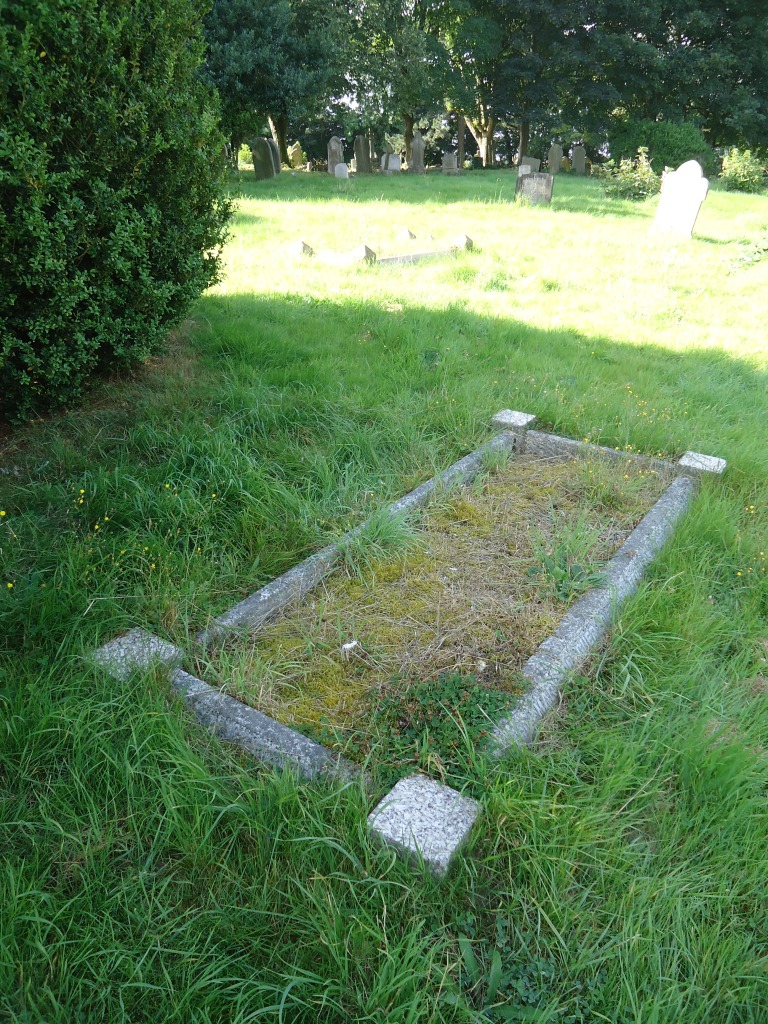
Unfortunately, the graves had become overgrown in recent years but in the autumn of 2023 cemetery volunteers Kevin and Jonathan cleared and tidied them up. It is the wish of the Phillips’ sisters Cheryl, Gina and Angie that the story of the two young friends is remembered and today they regularly attend the graves.
Jesse Eagles woke early and asked his wife if it was time to get up. On being told not yet, he turned over and went back to sleep – “a sleep from which he never awoke” as the Swindon Advertiser reported on July 17, 1909.
When the time comes this is how I would like to go. Peacefully, in my sleep with no prior warning, no lengthy, debilitating illness. But not yet, of course.
Sudden Death in Swindon
Mr J. Eagles of Clifton Street
Inquest and Verdict
The death occurred yesterday with painful suddenness, of Mr. Jesse Eagles, of 118 Clifton Street, Swindon. Deceased, who was a well known resident of the town, was a boilersmith by trade, and had been employed in the GWR Works for the past forty years. He was at work as usual on Wednesday until 5.30 p.m., and returned home and had his tea. In the evening he went out in his garden till nine o’clock, and later he retired to rest at the usual time. He awoke yesterday at four o’clock, and was then quite well, apparently. He remarked to his wife, “It is not time to get up yet, is it?” She replied in the affirmative, and deceased then went to sleep again – a sleep from which he never awoke. When his wife called him at five o’clock, there was no response, and she was alarmed. Medical aid was summoned, and Dr. Mason, from the GWR Surgery, attended, but he could only pronounce life extinct, death being attributed to heart failure.
Deceased, who was 60 years of age, leaves a widow and grown up family, for whom the deepest sympathy will be felt.
By the Foreman:- Deceased had no supper on Wednesday night. He was lying on his right side when witness found him.
By the Doctor:- He had not complained of shortness of breath when going up hill.
Dr. Woodgate Mason said he was called to the deceased about 5.15 that morning, and on arrival found him dead. In his opinion death was due to heart failure. He made an examination of the body, and found no marks of violence.
Extracts fromthe Swindon Advertiser, Friday, July 16, 1909
Jesse Eagles aged 60 years of 118 Clifton Street was buried on July 17, 1909 in grave plot E7453. His wife remained living at 118 Clifton Street where she died in 1921 and was buried with her husband.
The last serious act of vandalism to take place in Radnor Street Cemetery happened across one weekend several years ago.
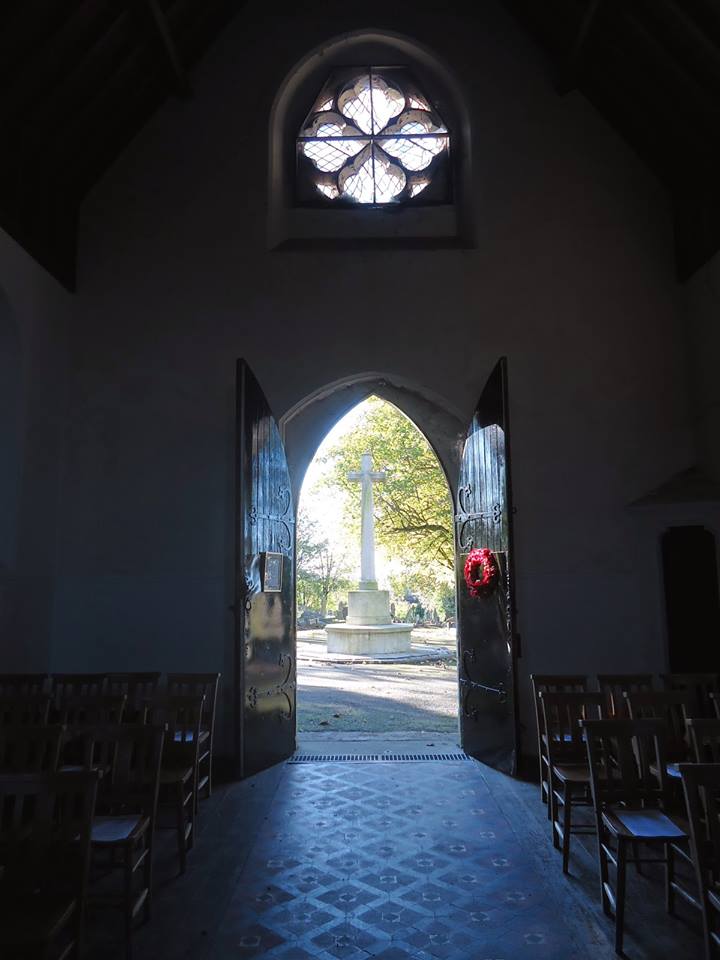
A break-in at the chapel saw windows smashed, including the rose window above the door. The intruders lit a fire in the vestry, the small room off the chapel, using a box of documents stored there.
The documents were ‘Form of application for permission to erect or restore a memorial’ and included the name and address of the owner of the grave and how much the memorial cost, invaluable information lost in the fire. One rare, surviving document includes the details of the Boucher family grave, naming the stonemason, the dimensions of the memorial and the inscription.
‘In loving memory of George Boucher died 8th July 1915 aged 61 years also Mary Boucher died 25th February 1943 aged 88 also Alice and Ethel their beloved daughters.
The owner of the grave was Annie Elizabeth Boucher who lived at 30 Swindon Road. The grave plot is C484 and the memorial cost in total £3 10s. Alice died in 1897 aged 16. Ethel died in 1956 aged 70.
George and Mary Anne were originally from Herefordshire where they married in 1877. They both came from farming families and were neighbours living in Cublington.
By 1881 they had moved to Swindon and lived in 19 Thomas Street, Rodbourne. George worked as a Machine Man in E & M Shop in the Works.
Ten years later and George was working as a machine manager in the Iron Works. The couple had seven children and were still living in Rodbourne at 54 Linslade Street.
By 1901 the family were living at 111 Linslade Street and the elder children had left home. Emily, aged 22 was working as a parlour maid while Ethel, 15 was a machinist in the shirt factory round the corner from Linslade Street.
At the time of the 1911 census the couple had just two children living at home in Linslade Street. William had followed his father into the Works as an engine fitter while Ethel remained employed at the Cellular Clothing Company in Rodbourne.
George died on July 8, 1915 and Mary Anne in 1943. Ethel was still living at 111 Linslade Street when she died in 1956, more than 50 years after the family originally moved there.
A 1917 Trade Directory lists Annie as a shopkeeper living at 30 Swindon Road, which was her last home in the 1960s. She died at the Cheriton Nursing Home on December 31, 1962. She is not buried in this family plot and does not appear to be buried elsewhere in Radnor Street Cemetery. She never married and left effects valued at more than £5,000 to the administration of two solicitors.
Esther Swinford published courtesy of James Turner and Local Studies, Swindon Central Library
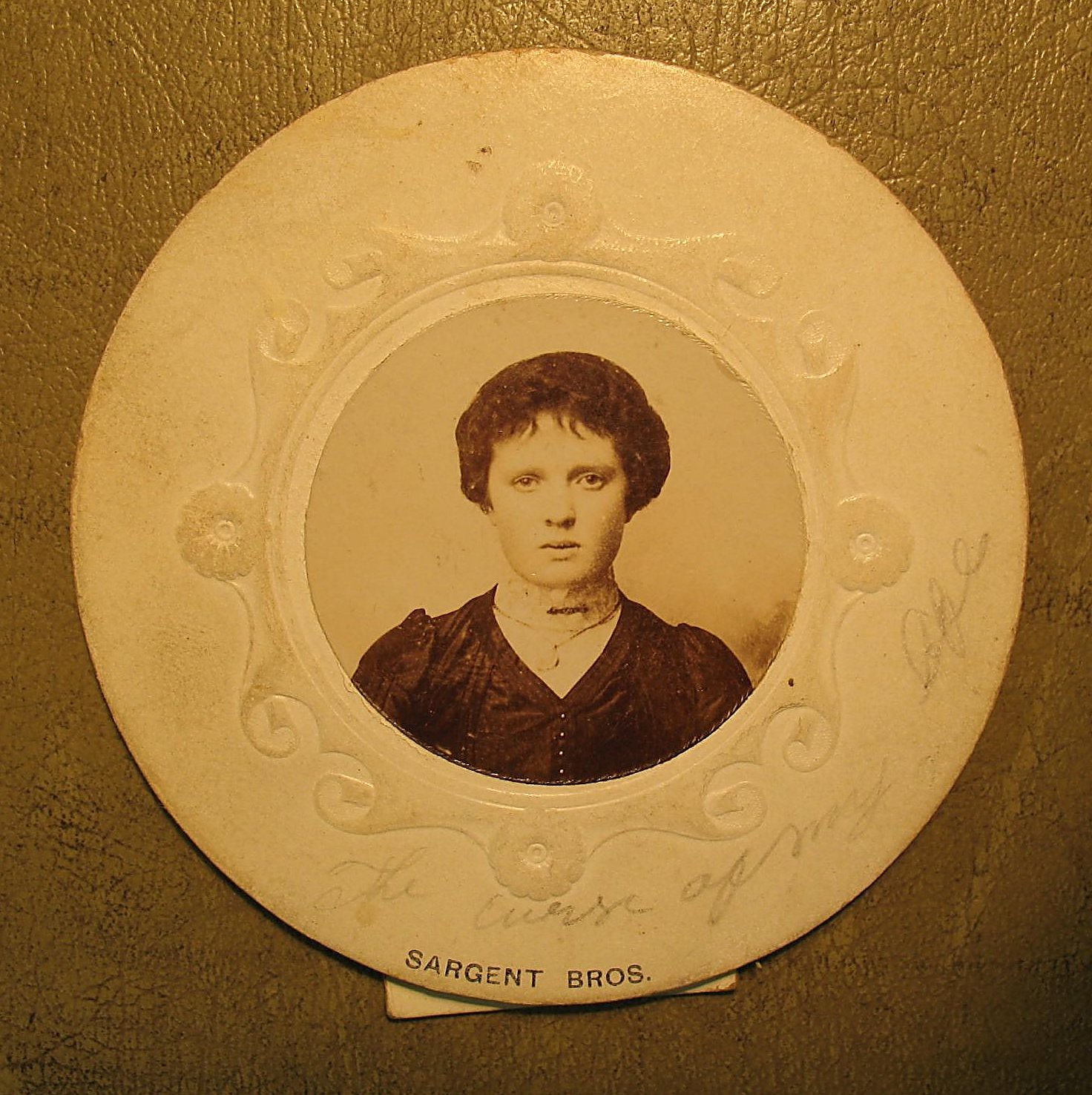
‘I watched him enter the pub from my seat beside the fireplace. What did she see in him? My sister said he was handsome in a dark and brooding fashion and that I was jealous.
She read too many romantic novels. Where she saw dark and brooding I saw surly and ill tempered, but she was right about one thing; I was jealous.
I was in love with Hetty and had been for several years, since she first began working at The Ship. She was pretty and vivacious with a kind word for everyone. Mr Matthews said she was one of the best barmaids he had ever employed. She was like one of the family, he used to say.
I watched Palmer walk over to the bar. He looked furtively around the near empty pub. I inclined my head in acknowledgement. I didn’t want to encourage him over to the vacant seat beside me.
I hadn’t seen him in many months. Rumour had it that he had left for Canada nursing a broken heart after Hetty broke off their engagement.
My sister said she’d heard he’d spent Hetty’s savings, all the money she had put away for their future home together, on other pastimes.
But he was obviously back now.
I watched as Hetty appeared behind the bar. She seemed unsurprised to see him and welcomed him with a polite smile, the smile she showed all her customers, the smile she always gave me. Nothing special.
He ordered a bottle of Bass and a cigar. She placed his drink in front of him and went out the back to get the cigar.
I watched as they exchanged a few words. I couldn’t hear what was said, but suddenly I noticed her expression change. The sound of the gunshot reverberated around the pub. He placed the gun on the bar.
I watched as he took a long, slow draught of beer. He lit his cigar and enjoyed a leisurely smoke while all hell broke out around him.
After his arrest they found a photograph of Hetty in his pocket. He had written across the bottom ‘the curse of my life.’
The Ship Inn, Westcott Place published courtesy of Local Studies, Swindon Central Library
The facts …
Esther, also known as Hester or Hetty, was born in Fairford, Gloustershire in 1883, the daughter of farm labourer Edwin Swinford and his wife Alice. By 1901 she had moved to Swindon where she worked as a barmaid at the Ship Inn for Mrs Isabella Groves. The following year the widowed Mrs Groves married Walter Ernest Matthews and together they continued to run the large establishment in Westcott Place.
It was Mr Matthews who paid for the funeral expenses while local people donated towards a memorial. A large cross stands on Hetty’s grave. The inscription reads:
In Memory of Esther Swinford who was the victim of the shooting tragedy in Swindon on Sep 18th 1903. Aged 19 years
“In the midst of life we are in death.”
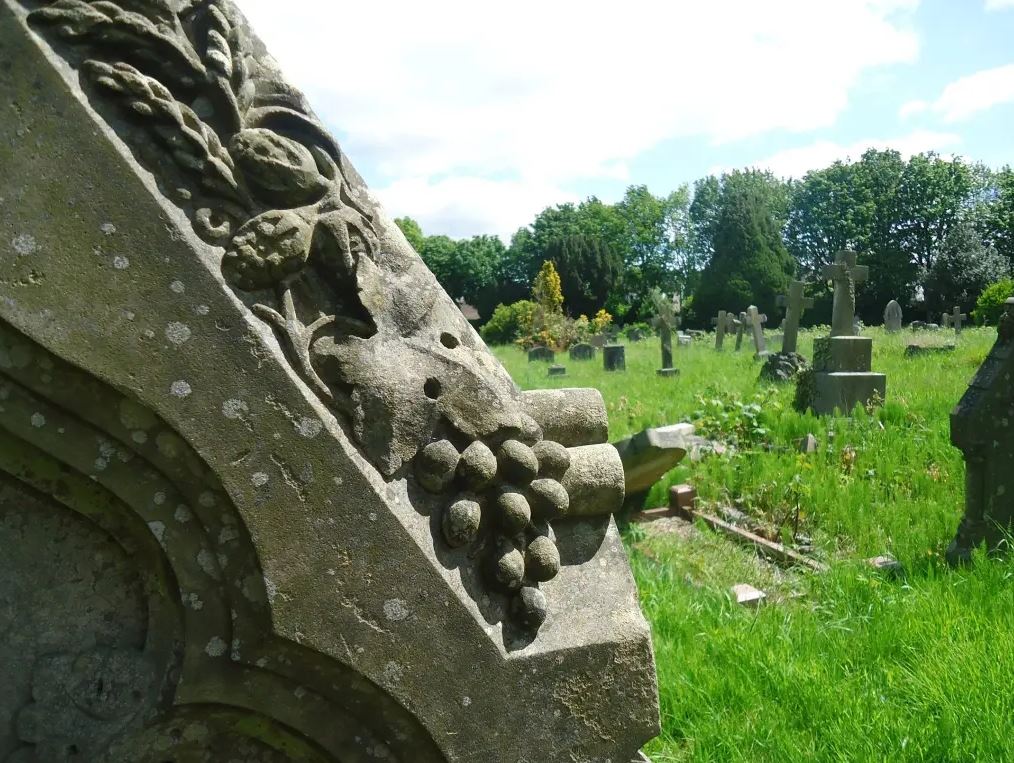
Cut into the stone is a cascade of passion flowers. Is this how Hetty’s death should be remembered, as a crime of passion, like something out of a romantic novel?
Hetty’s funeral took place on September 22. She was buried in plot A760 which she shares with one other who died in 1889; a railwayman by the name of George Frederick Palmer, could this just be a macabre coincidence?
Edward Richard Palmer hanged for the crime on November 17, 1903 in Devizes gaol.
The memorial was repaired and restored in 2009 by Highworth Memorials after a project by James Turner.
Following the verdict of the jury of ‘Suicide from drowning, while temporarily insane’ upon Sarah Richens, the Coroner’s attention turned to the pressing matter of the discourteously way in which he and the jury had been treated at the cemetery.
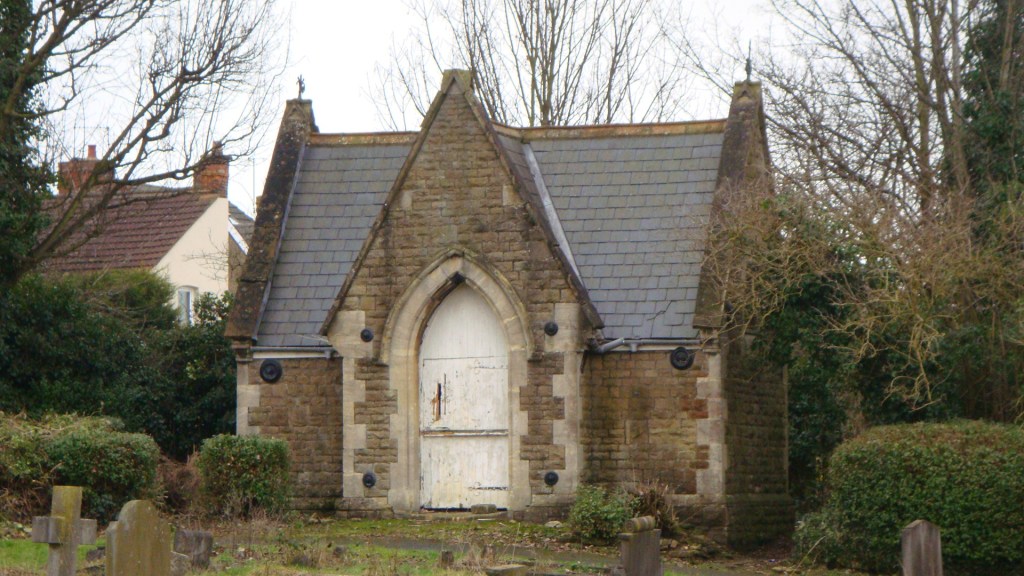
At the close of the inquest the coroner made some comments on how the jury and himself had been treated. When they arrived at the cemetery gates to go and view the body, about 4.45, they found the gates locked at the Ashford Road entrance. The police constable who was with them displayed some agility by climbing over the high iron gates and going down to the caretaker’s house and obtaining the keys.
Sergt. Everett informed the Coroner and jury that the caretaker of the cemetery was warned to have the gates open, as the inquest would be held at 4.30 p.m.
The Coroner asked the representatives of the Press to take notice of the facts, as the District Council ought to know that the Coroner and jury had been treated discourteously by having the gates locked against them.
A Juryman: I think they might also provide a light in the mortuary.
The Coroner: Yes, I think so too. We had no light whatever beyond a lighted match which one of the jurymen held.
The enquiry then closed.
The Swindon Advertiser, Friday, November 17, 1899.
The mortuary building, Chapel and Radnor Street Cemetery caretakers lodge were designed by popular local architect W.H. Read.
The body of an elderly woman was pulled out of Park Pond in November 1899. Discovered by Joseph Pinnegar she was later identified as Sarah Richens, aged 74, the wife of Joseph Richens of Tuck’s Cottages, Devizes Road,* Swindon.
At the subsequent inquest her financial sitation was examined in great detail to ascertain whether her death was an accident or something more sinister. It was revealed that Sarah and her husband survived on approximately 7s a week and that Sarah was known to beg for pennies in the street.
The jury returned a verdict of “Suicide from drowning, while temporarily insane.”
The Drowning Fatality at Old Swindon
Inquest and Verdict
As has already been announced in our columns, the woman whose dead body was taken out of the Park Pond, Swindon, last Friday, was afterwards identified as being that of Sarah Richens, wife of Joseph Richens, of Tuck’s Cottages, Devizes Road, Swindon. She was 74 years of age.
The inquest on the body was held at the Frome Hotel, Hythe Road, on Saturday, at 4.30 p.m., and a jury of whom Mr. T.P. Goodman was chosen foreman. The jury had some distance to walk to view the body – to the mortuary in the cemetery.
Returning to the Frome Hotel, the following evidence was taken:-
Joseph Richens, son of deceased, said he resided at home with his mother and father. Witness was employed at the VWH Repository, and helped to maintain his mother. Asked if he had ever heard her express a wish to destroy herself, witness said she had done so twice to his knowledge. There was nothing unusual about her behaviour when he left home to go to his work on Friday morning at half past eight. She was not at home when he returned to dinner, but he did not take any notice of it, because she often went round to her brother’s, Mr Thomas Wheeler’s, in Prospect.
The Coroner: Was she in receipt of parish relief?
Witness: Yes, sir, 3s. per week, and I had to pay 1s. a week.
The Coroner: What wages do you receive?
Witness: I get 15s. a week, sir.
The Coroner: And you help to maintain your mother out of that?
Witness: Yes.
The Coroner: Her brother is Mr. Thomas Wheeler, of this town, is he not? – Yes.
The Coroner: Has he assisted her?
Witness: No, not that I know of.
A Juryman: Does your father receive anything from the Hearts of Oak Benefit Society?
Witness: No, from the Foresters. He receives 3s. one week and 2s. another – 5s. a fortnight. Witness added that his father was almost an invalid. He had had rheumatic fever. He did not receive parish relief.
A Juryman said he must contradict the witness when he said that deceased’s brother never gave her any financial assistance, because he (the juryman) had seen Mr. Wheeler give her money.
Another Juryman asked the witness if he was aware that deceased begged coppers from persons passing her in the street. – The witness replied in the negative.
Joseph Pinniger, working foreman, in the employ of Mr. T.H. Deacon, at Park Farm, spoke of seeing the body in the water, and with assistance he got the woman out, but she was quite dead. This was before twelve o’clock on Friday. The woman could not have fallen into the water, as there was a rail fence around it, and she must have crept under the rail to get near the water. The pond was a rather deep one.
Dr. Carew Webb, assistant to Dr. J.C. Maclean, said he examined the body at the mortuary. There were no marks of violence, and death was evidently due to asphyxia, caused by drowning. Death had taken place within six hours previous to the time he saw her.
The jury returned a verdict of “Suicide from drowning, while temporarily insane.”
Extracts from The Swindon Advertiser, Friday, November 17, 1899.
Sarah Richens 65 years old of Tucks Cottages, Devizes Road was buried on November 14, 1899 in grave plot C691, a public grave, with four others.
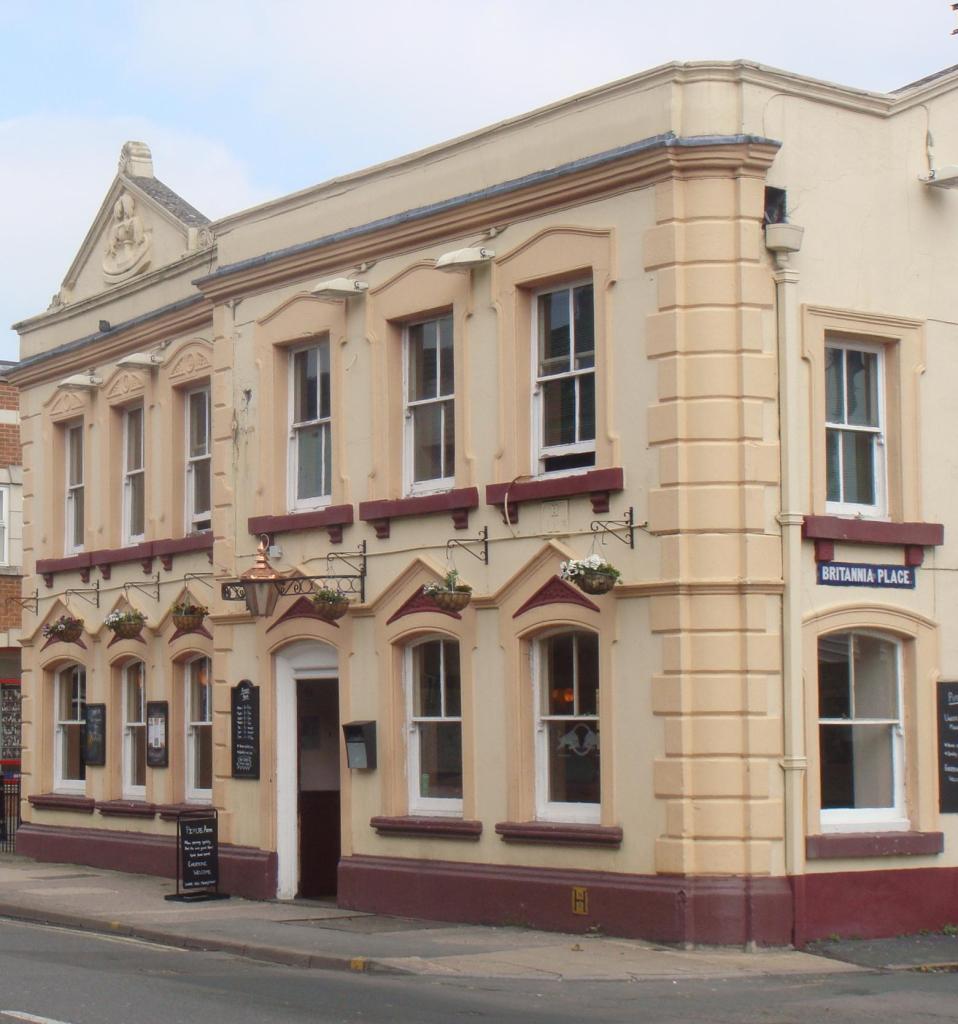
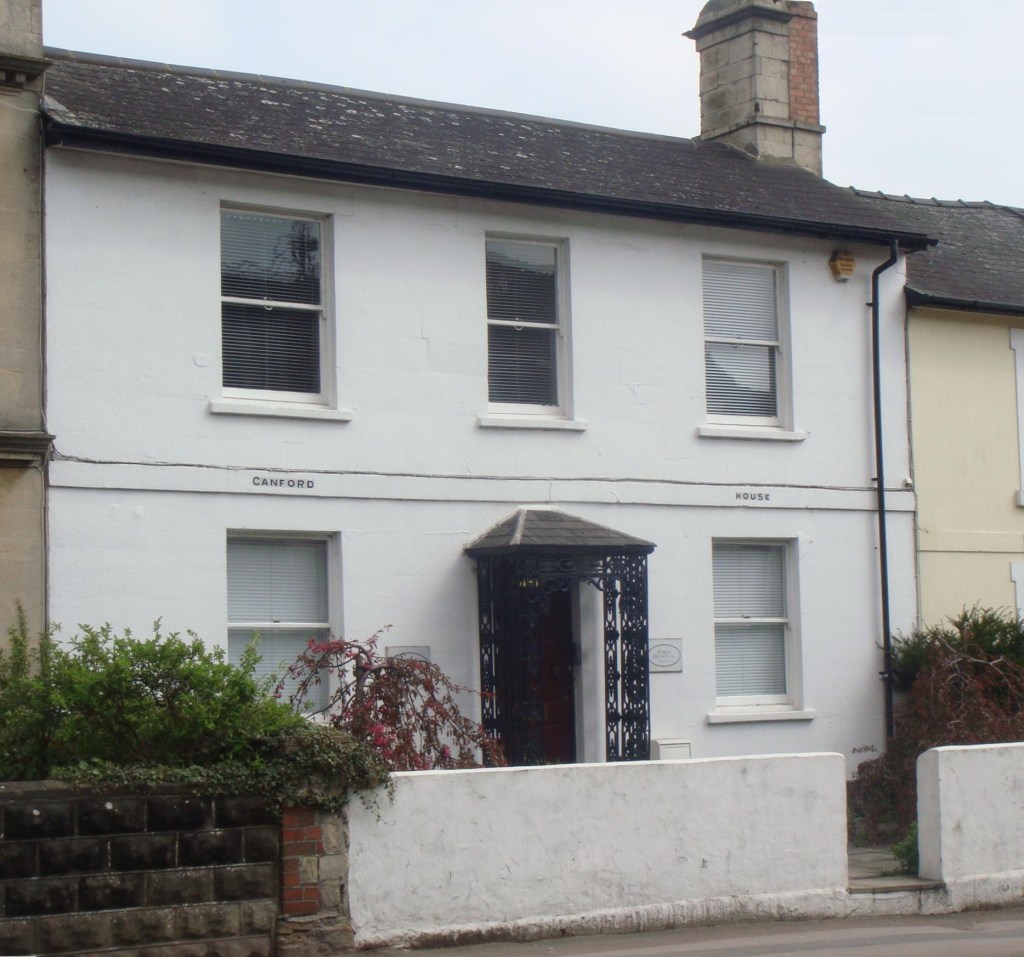
Properties on Devizes Road pictured more recently. My thanks to local historian David Lewis who responded to my email.
‘I found “Tuck’s Cottages” in Devizes Road on the 1901 census – 16,15,14,13 – William Morris’s house, then The Fountain, Lewisdale, then Tuck’s Cottages. You will have to make up your own mind where exactly they are.’
William Morris’s house
The pub formerly known as The Fountain (see motif in the pediment)
Frank Nutbeem was born in Wroughton in 1895 the youngest son of Robert William and Mary Nutbeem. By the time of the 1911 census Frank and his two brothers were living with their widowed mother at 24 Shelley Street. All three young men were employed in the Works, Frederick 20 as a Coach Finisher; Claude 17 as a Brass Finisher and Frank 16 as a Screwing Machine boy.
Frank had begun work as a 15 year old machine boy on August 8, 1910 at a daily rate of one shilling and two pennies. He would remain working in the Machine Shop (No 15) his entire working life, except for his service in the RAMC during the First World War.
Mr G. Culling, chairman of the GWR Swindon Division of the St. John Ambulance Association stated that the tragedy of this accident was one with which, ‘had it been required of him, he could have so efficiently dealt.’
Fatal Accident in Swindon GWR Works
Death of Mr F. Nutbeem: Ambulance Stalwart
A verdict of “Accidental death” was returned by Mr. Harold Dale, the Wilts Coroner, at the inquest at Gorse Hill Police Station, Swindon, on Tuesday, on Mr Frank Nutbeem (45), of 61 Grosvenor-road, Swindon, who was killed instantly when he was drawn into a machine while at work in the Swindon GWR works on Saturday morning.
Evidence of identification was given by his brother, Claude Nutbeem, who said his brother had been in good mental and physical health before the accident.
Fractured Skull
Dr. Frumin, GWR Medical Fund, said that he was called to No 15 Shop in the GWR works about 11.10 a.m. when he found Nutbeem lying entangled in a machine. His head and face was crushed and his body was acutely bent. He was dead.
His injuries were a severely crushed dome, and fractured skull in front and behind.
Samuel John Owen, Highworth-road, Stratton St. Margaret, a machine foreman in No. 15 Shop, said that Nutbeem, who was a chargeman machinist, had been working a Holroyd four spindle axle-box boring machine for the past 18 months. He had complete charge of the machine.
Owen said that about 10.55 on Saturday morning he was told that Nutbeem was caught in his machine, so he telephoned from his office for ambulance men. A doctor was called, and soon arrived.
At the scene of the accident he saw Nutbeem had been carried into his machine.
He was on his back, and his head was underneath the “bar.” He appeared then to be dead.
Nutbeem was wearing a warehouse jacket of a grey coarse canvas material. These coats were long, and were worn by all the machinists, though it was not compulsory. The costs were bought from a private concern by the men themselves.
Nutbeem’s coat was found round the “bar,” which had a protruding cutter.
Heard a Shout
Stephen John Hunt, a machinist, of 15, Alfred-street, Swindon, said that he worked by Nutbeem.
On Saturday morning he heard a shout, looked up, and saw Nutbeem was in the machine. He rushed round, and stopped the machine, when he found that Mr. Nutbeem had become entangled.
Regret and sympathy was extended to the relations by Mr. Ray Hobbs, representing the NUR (Swindon branch). Mr Hobbs paid high tribute to Mr. Nutbeem for his work in connection with the GWR No. 3 Division of the St. John Ambulance Brigade.
Mr Dale said that it was an unfortunate case in which a very good worker who was thoroughly used to his machine, had been accidentally caught in it.
Mr. Nutbeem, who was married with a family, was a prominent St. John Ambulance Brigade worker. During the last war he was a sergeant in the RAMC and was attached to the Swindon Unit of the Field Ambulance.
An Appreciation
Mr G. Culling, chairman of the GWR Swindon Division of the St. John Ambulance Association writes:
By the death of Mr Frank Nutbeem, the GWR Swindon Division of the St. John Ambulance Association has suffered a great loss.
Qualifying for his first ambulance certificate in 1912, he served during the last war with the Swindon unit of the Field Ambulance of the RAMC, attaining the rank of sergeant. Upon the formation of the Old Comrades Association he became a popular member and retained his membership until his death.
Upon returning to civil life he became closely associated with those who at the time were organising the local division of the St. John Ambulance Brigade and was quickly promoted to the ranks of Sergeant, Ambulance Officer and Brigade Superintendent – a position he held until his retirement from that body a few years ago.
Frank held a remarkable record in competitions and for some years captained teams which were successful both in local contests and those organised by the GWR Company, and his Swindon team has on two occasions been one of the representative teams of the Company in the inter-railway annual competitions in London. He was leader in 1928 of the local Great Western team, who succeeded at Paddington for the first time in winning the Directors’ Shield, and they won the same trophy again in 1936.
During the years 1932-1936 he served on the Swindon Divisional Ambulance Committee, and shewed great ability in organising classes and instructing pupils in first aid, and was instructor to the Great Western Ladies’ Class when this was formed. These abilities were recognised by the local authorities, who since 1938 had utilised him as instructor at classes organised under the ARP scheme. He was also a keen worker in similar services organised by the GWR Company.
“Nutty,” as he was familiarly known to a wide circle of friends, has passed over – the victim of an incident of rare tragic intensity – in circumstances with which, had it been required of him, he could have so efficiently dealt. The esteem and regard in which he was held was shewn on Sunday morning, when over 150 ambulance men at the Bridge-street Institute joined with Dr. Hick and the Ambulance Committee in paying a silent tribute to his memory and as an expression of their deep sympathy for Mrs. Nutbeem and her two daughters in their loss.
He held gold awards for prolonged efficiency in first aid to the injured. Of him it can truly be said that his life was dedicated to the service of others, thus upholding the motto of the Order of St. John: “For the benefit of humanity.”
North Wilts Herald, Friday, 25 October, 1940.
Frank Nutbeem 45 years old, of 61 Grosvenor Road, died at the Great Western Works. The funeral took place on October 24, 1940 when he was buried in grave plot C1682.
You may be interested in reading about another St John Ambulance stalwart, Jack Dixon. It is more than likely that Jack and Frank Nutbeem served alongside each other, taking part in the various competitions at which both were so successful.
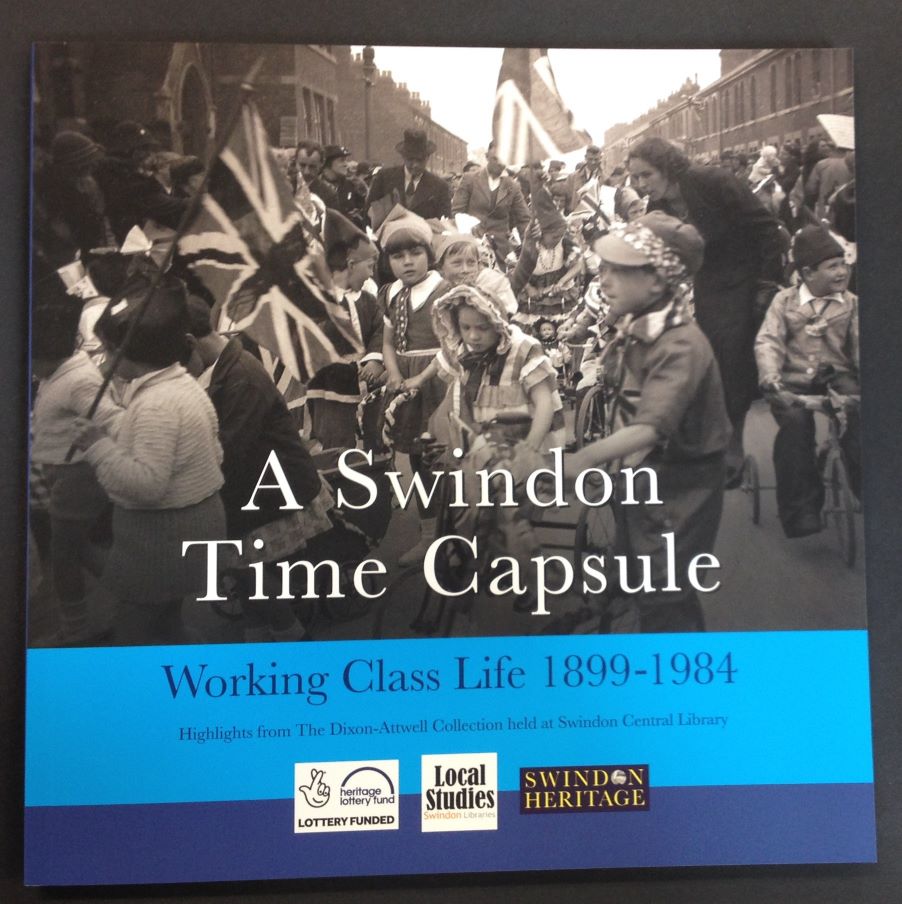
You can read about the life and times of Jack Dixon and the Dixon/Atwell family in the award winning book A Swindon Time Capsule – Working Class Life 1899-1984 by Graham Carter available from the Library Shop.
I can’t help but think those in authority found this boy an irritant. It looks as if he had been in trouble since a young child, receiving the birch at the age of just 11. He was obviously such a nuisance no one could be bothered to get his name right, and when he unexpectedly died the verdict was ‘food poisoning’ – probably!
Singular Death of a Reformatory Boy – An inquest was opened by Mr. Coroner Sylvester on Saturday as to the death of a youth named William Edward Archer, aged 15, belonging to Swindon. – Deceased was at the Reformatory. He was not strong, and had been medically attended off and on. He complained of feeling unwell on Friday, and was sent to bed, and told that if he felt worse a doctor should be sent for. His temperature was taken twice, and was normal; and he was seen during the night by Mr. Crichell, one of the labour masters, who asked him if he was in pain or wanted anything. He replied that he wanted nothing. When Crichell went through the ward shortly before six next morning he found him dead. Dr. Hubert Willcox said death was due to the presence of an irritant in the intestines, the exact nature of which could not be stated till the contents had been analysed. The inquest was adjourned till the 9th inst. for an analysis to be made.
Two jurymen remarked that they had other engagements for that date, Mr. W. Papps being a delegate at a Foresters’ meeting at Devizes, and Mr. E. Foreman having an engagement as market for a Yeomanry prize meeting. The Coroner declined to alter it, and summoned all to attend on the date named.
The Wiltshire Telegraph, Saturday, October 7, 1905.
Is this the same William Archer, aged 11, who was found guilty at the Petty Sessions in 1900 along with Henry Love 8, of stealing a tin of salmon from a grocer’s shop? The younger boy was bound over to be of good behaviour, while Archer was ordered to receive three strokes with the birch rod. The same day Archer was charged with two other lads with stealing a money-box from the top of the harmonium of a blind street musician. Further strokes of the birch were added to his punishment.
Edward William Archer was 15 years old when he died in 1905 at the Wiltshire Reformatory for Boys in Warminster. The subsequent verdict of the inquest was that the County Analyst, Dr Dyer, had made an exhaustive analysis of the stomach contents and could find no trace of any poison, irritant or otherwise, suggesting the cause of death might be ptomaine poisoning (food poisoning). The Coroner questioned whether the lad had eaten some fungus in mistake for a mushroom and said that the most suitable verdict would be that death was caused by acute inflammation of the stomach and intestines. The jury accordingly returned a verdict to this effect.
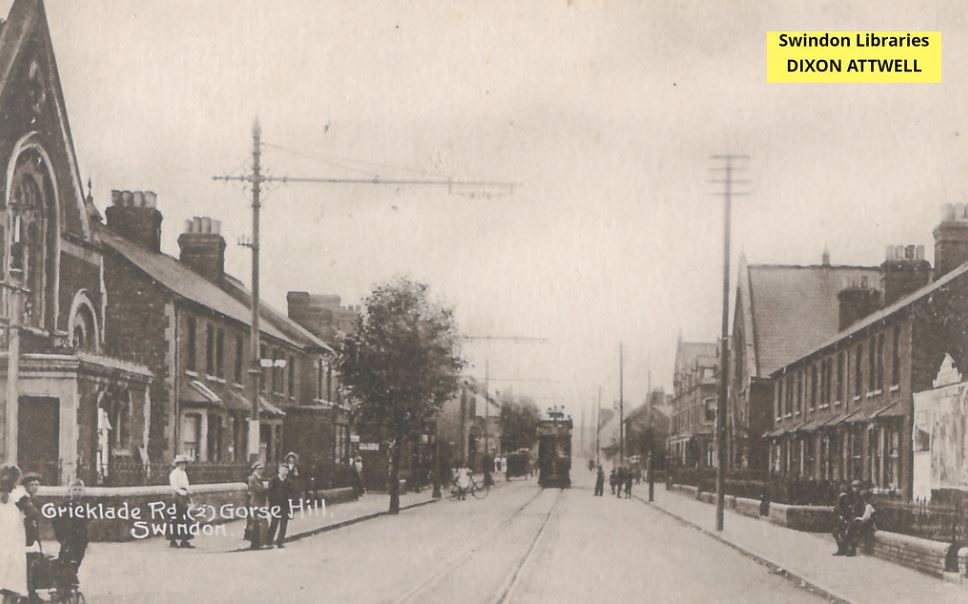
The boy who died in the reformatory is identified as Edward William Archer, the son of William James and Martha Archer. Between 1891 and 1909 the Archer family lived at various addresses in Gorse Hill. William James Snr worked as a general labourer and Martha as a laundress. At the time of the 1901 census the family lived at 21 Hinton Street. Eldest daughter Elizabeth 16 was a housemaid and Louisa 14 a tailoress. There were four younger boys William James 13, Edward William 11, Frederick George nine and five year old Arthur Walter.
Edward William Archer aged 15 is recorded as being buried on October 4, 1905 in grave plot C1646. The Radnor Street Cemetery index register records his home address as 21 Hinton Street; the chronological register includes his place of death as Warminster Reformatory. Edward William is buried with his sister Louisa who died in May 1905. She was 18 years old and her address is also given as 21 Hinton Street. Buried with them is their father William James Archer, aged 53 who died at the GWR Hospital and was buried on March 6, 1909. His home address was given as 1 Edinburgh Street, Gorse Hill. There is one other burial in this unmarked, public plot.
The Wiltshire Reformatory for Boys was inaugurated at a meeting of magistrates and other figures of authority at Devizes Town Hall in September 1855. The Reformatory in Warminster comprised 20 acres of land (later increased to 40 acres) where the boys received between 10 to 15 hours of education a week, spending the rest of the time working the land and growing produce that partly supported them. By 1902 additional phases of building had increased the accommodation capacity from 30 boys to 100. The Reformatory closed in 1925.
Gorse Hill images published courtesy of Local Studies, Swindon Central Library.
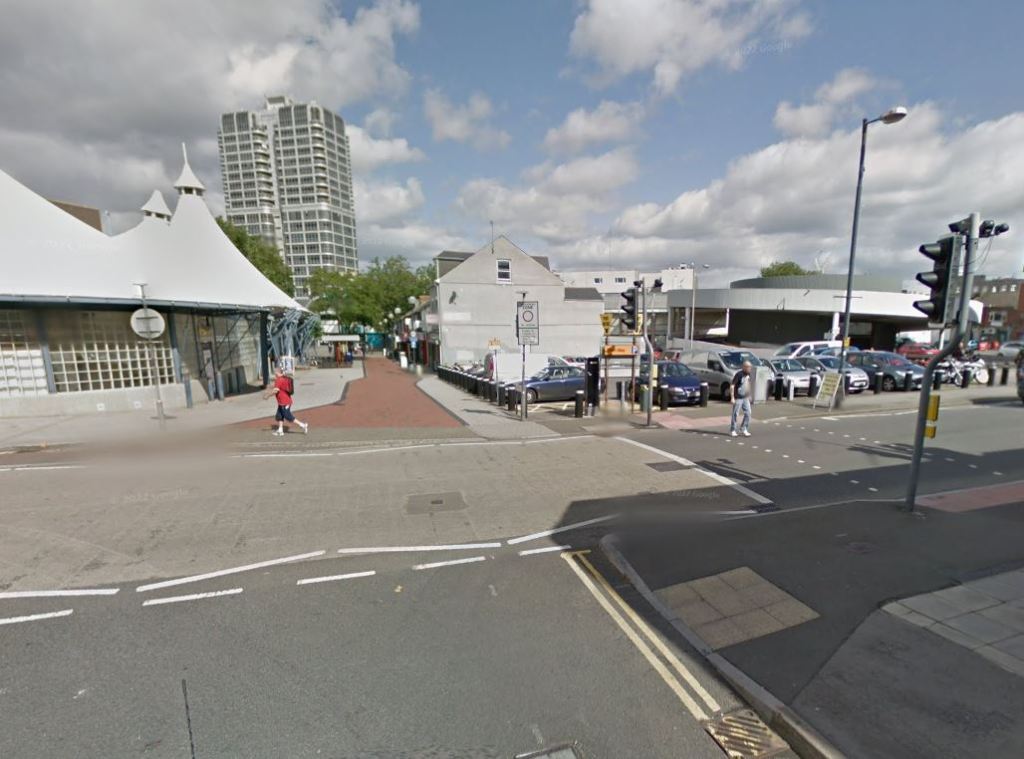
Sometimes the layout of the streets of Swindon has changed so little you can easily visualise a description in the newspaper. I regularly walk down Deacon Street from the cemetery, crossing at the traffic lights on Commercial Road close to the derelict Tented Market building. It does not take a lot of imagination to recreate this location as it was in 1905. Today the busy flow of traffic is one way coming up Farnsby Street and along Commercial Road. And more than 100 years ago it appears it was equally busy on one Saturday in 1905.
Image of Deacon Street published courtesy of Local Studies, Swindon Central Library.
Fatal Accident in Swindon
A Boy Killed
On Saturday about noon a shocking accident happened in Commercial Road, Swindon. A boy named Eyles, whose parents live in Dixon Street, was passing down Deacon Street. When at the corner near the Market Hall, a heavy vehicle drove down Commercial Road. The boy, who is slightly deaf, did not hear the approach of the vehicle, and was knocked down. The wheel went over his chest, and the injuries were so severe that he died shortly afterwards. He received treatment at the GWR Medical Fund Hospital. An inquest was held on Monday at the Mechanics’ Institute, before Mr J.W. Pridham, Deputy Coroner.
The following evidence was taken:
Arthur James Eyles, clerk in the GWR Works, father of the deceased, was the first witness called. He stated that he last saw his son alive at about nine o’clock on Saturday evening.
Benjamin Robert Dixon, 72, Deacon Street, Swindon, a fitter, said he was in Commercial Road when the accident occurred on Saturday about 12 o’clock. He first saw the child running across the road in front of a horse and dray. The horse was going at a jog-trot, and the driver appeared to be driving carefully. The dray was a brewer’s four-wheeled dray, and there were some empty barrels in it. It was going towards Faringdon Street, and was almost in the centre of the road. The child ran off the kerb just as the dray was passing and went under the horse’s head, and was knocked down, the wheels passing over the child’s chest. In witness’s opinion, it would have been impossible to have pulled up the horse in time to save the boy.
Albert Whitbread Fox, labourer in the GWR Works, said he was also in Commercial Road at the time of the accident, and saw the child run in front of the horse. The driver appeared to have control over his horse. Witness ran and picked the child up after the dray went over him, and helped to take deceased to the Medical Fund Hospital. He did not think the child had any reason to run in front of the horse.
Thomas Hunt, carter, in the employ of Messrs Horsell and Marson, of Wootton Bassett, said that on Saturday last about noon he was driving a dray down Commercial Road. The accident occurred at the corner of Deacon Street. The street was rather crowded at the time. The boy rushed across from the kerb and got knocked down by the horse. It was impossible for him to pull up the horse in time.
Dr. G. Rodway Swinhoe stated that he had a telephone message from hospital at about 12.8. He went to the hospital as soon as possible and found the child was dying. Another doctor was present a few minutes before him. On examining the body, he found that wheels had passed over the lower part of the chest, and death was due to shock caused by the accident. No limbs were broken.
A verdict of accidental death was returned.
The Evening Swindon Advertiser, Tuesday, February 14, 1905.
Deacon Street/Commercial Road pictured in 2009.
Seven year old Sydney Albert Eyles, Dixon Street was buried on February 17,1905 in grave plot E7318. Sydney is buried with his parents in a privately purchased grave plot. His mother Margaret Louisa died in January 1913 and his father Arthur James in 1951.













 Radnor Street Cemetery