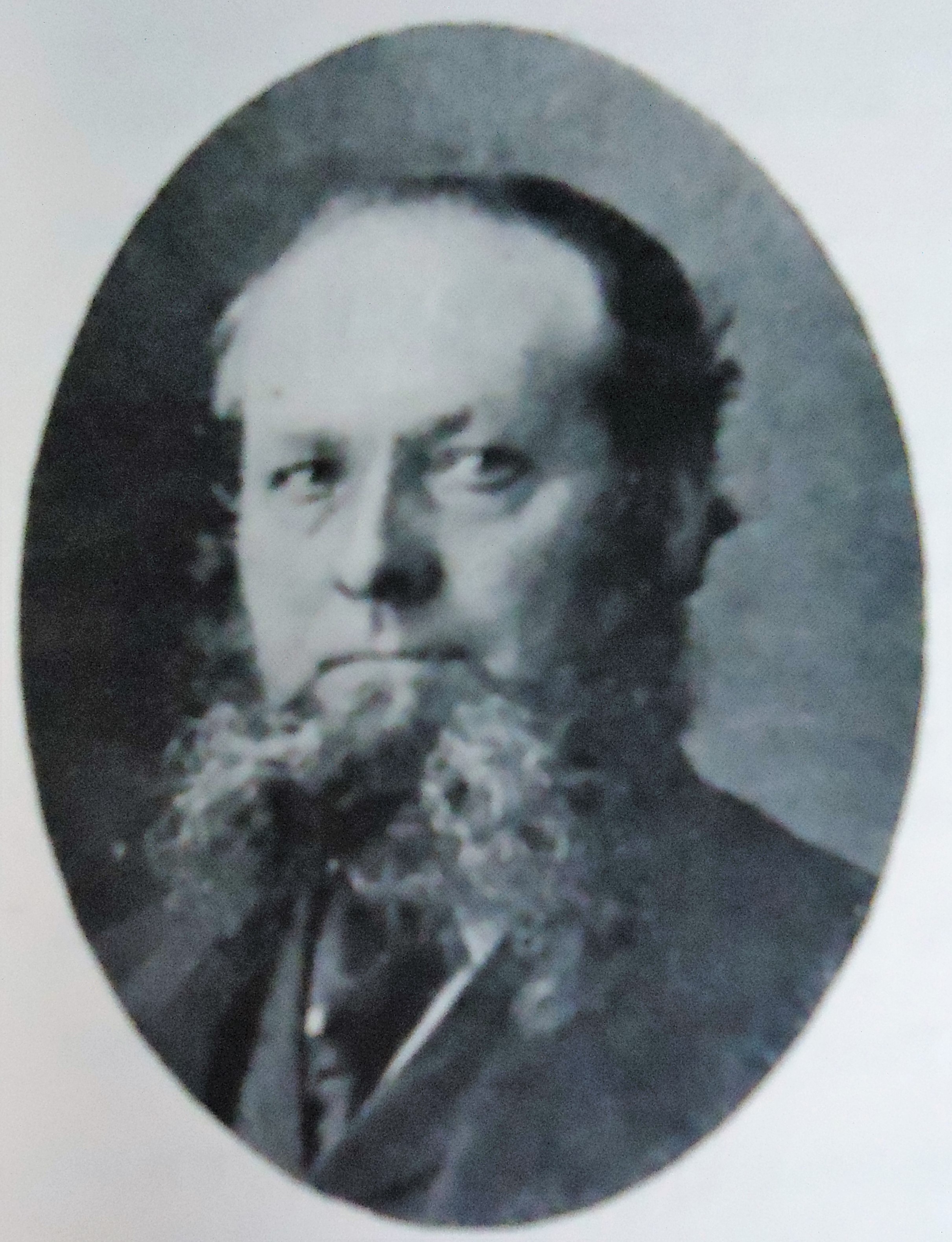
George Barefoot – an investor in people

The re-imagined story …

I’ve lived in New Swindon all my life. I was born in my gran’s bedroom in Bristol Street and I’ve never known anywhere else. But I’m tired of the close-knit railway community where everyone knows everyone else’s business, and a life confined to the Works and the railway village. I’m weary of seeing the same faces day in, day out, I don’t want to marry a boilermaker or a fitter and live the same life my mum and my Gran have.

“But that’s the strength of this place,” said Gran. “It’s knowing Mrs so and so’s baby is poorly or that Mr whatsit needs help with his shopping.” Gran was settling in for a long session, I could sense it. I offered her a piece of cake.

“When me and your Gramps moved here, I thought we had made the biggest mistake of our lives. All that was here was the Works and the company houses and that was it. No market, no shops, no church even, nothing.”

She took a sip of her tea.

“Is there any sugar in this?”

“Two spoons, Gran.”

“Your Gramps wanted to move out of London. He thought the kids would have a better future here. He thought living in the country would be healthy.” She shook her head sadly.

“The company houses looked nice enough from the outside but the railway village was worse than any East End slum. That first winter we lived here there was an outbreak of typhus. Six children died in Bristol Street. We were fortunate.”

She twisted the wedding ring on her gnarled finger, worn thin by hard toil.

“Did you ever consider moving back to London?”

“It wasn’t that easy and your Gramps had a good job in the Works here. He kept telling me we’d stick it out a bit longer, give it a chance, he’d say.”

“So, what persuaded you to stick it out?”

“Your grandfather and the men he worked with, they made the difference. Men like George Barefoot, elected on to the Mechanics’ Institute Council. Those men were investors; investors in people, they weren’t interested in share prices and profit. They wanted to protect their families and improve their standard of living. They wanted health care in a time when people didn’t call out the doctor because they couldn’t afford to. They were good men and they made the difference.”

“I’m glad your Gramps and George Barefoot gave New Swindon a chance.”

Gran spooned out the sugar from the bottom of her cup.

“Is there anymore tea in that pot? And make sure you put some sugar in this time.”

The facts …

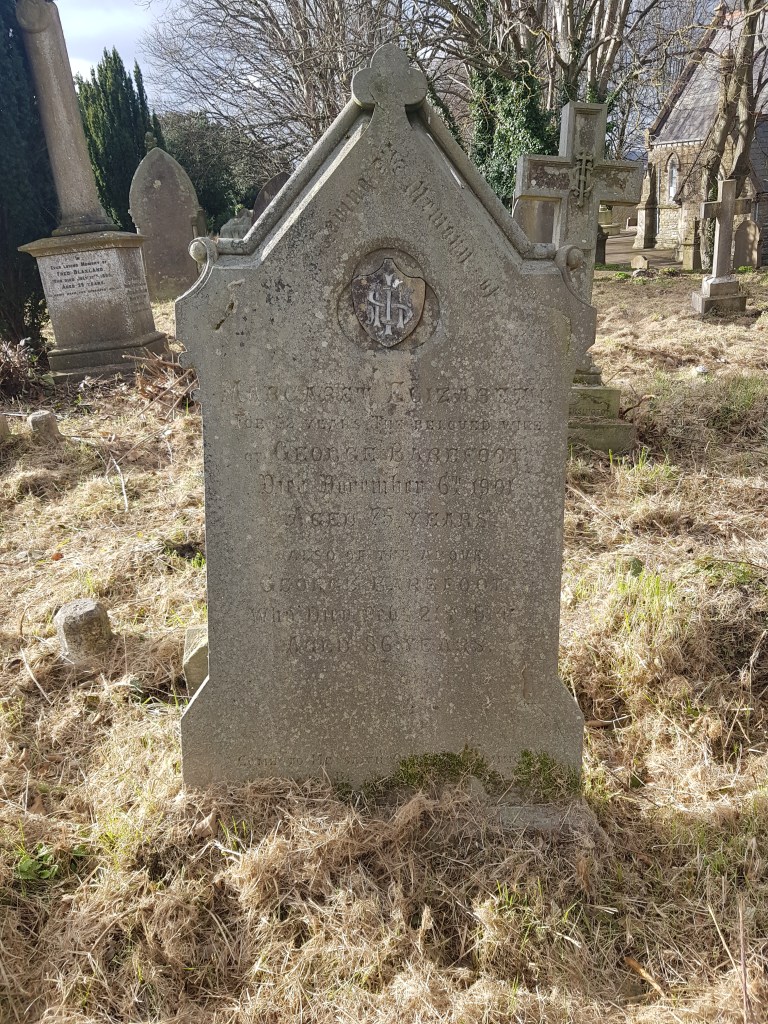
George Barefoot was born in Maidenhead in 1828. He married Margaret Elizabeth Williams, a dressmaker, at Holy Rood on December 23, 1848. George was transferred to Gloucester where on November 12, 1865 three of the couple’s children, John James, William Alfred and Mary Ellen, were christened at St James’s Church, Gloucester. The family’s address is given as Front Terrace. By 1869 the family had returned to Swindon.

That same year George Barefoot was elected on to the Mechanics’ Institute Council with 166 votes. The following year he was re-elected with an increased number of votes, topping the poll with 281. Election results continue to show his presence on the Council and in 1873 he is recorded as ‘George Barefoot Locomotive Department K shop 296 votes.

George Barefoot died at the age of 86 years. He was buried on February 26, 1914 in Radnor Street Cemetery in plot E7936

Death of Mr George Barefoot

The death took place on Saturday, at the residence of his son-in-law, Mr F. Edge, “Inglewood,” Deacon Street, Swindon, of Mr George Barefoot. The deceased gentleman who was very well known in Swindon, was born at Maidenhead in 1828, and commenced his working career as an office boy at Paddington Station. In 1847 he came to Swindon, being then at the age of 19, and was transferred for a few years to Gloucester, and finally returned to Swindon.

It is interesting to note that he was married at the old Parish Church by the then Vicar (the Rev. H.G. Baily), and he has, therefore, watched Swindon grow from what were practically two large villages into the large and enterprising town it is to-day.

He was a chargeman in the GWR Works for over 30 years, and he won the esteem and respect of all who knew him. In recognition of his faithful services the company granted him a pension on his retirement, and he went to live with his son-in-law and daughter.

He was always a prominent Conservative, and the late Sir Daniel Gooch used to speak of George Barefoot as his staunchest supporter in the Works. He had been a regular attendant at St. Mark’s Church.

A few weeks ago Mr. Barefoot had a stroke, and took to his bed, the end coming peacefully on Saturday. He leaves five children to mourn his death.

North Wilts Herald, Friday, February 27, 1914.
William Johnson – a little addicted to drink

The re-imagined story …

I should never have read the account of the inquest in the Adver. I knew there had been an accident, I knew he was dead, I didn’t need to know all the details or the extent of his injuries.

I’d only known him a few months but long enough. He was a lost soul. My mother always says I’m attracted to the poor little sods of this world.

He hadn’t yet told me what had gone wrong in his life, but something obviously had. At the inquest he was described as being a little addicted to drink. What a quaint expression. He drank for a reason and it wasn’t because he liked the taste of the beer.

He drank because he was lonely and sad and disappointed with how his life had turned out. When he wasn’t drunk he was angry and resentful but when he was drunk he was happy, or so he thought, but we both knew that wasn’t the case.

I tried to help. If we’d had longer together I might have made a difference, might have got to know the real man.

The facts …

The Fatal Accident Near Wootton Bassett

Inquest and Verdict

Mr W.E.N. Browne, Coroner, held an inquest at the Beaufort Inn, Wootton Bassett, on Saturday afternoon, on the body of William Johnson, who was killed by being knocked down by a train on the GWR near Wootton Bassett Station, the previous Thursday evening, as briefly reported in our last issue. Inspector Wheeler, of Chippenham, was present to watch the proceedings on behalf of the Great Western Railway Company. Mr T. Taylor was chosen foreman of the jury, who then proceeded to view the body, which was lying in an outhouse at the Beaufort Inn yard. The head and face was fearfully knocked about, and almost beyond recognition. The body had, however, been identified as that of William Johnson, 37 years of age, a native of Coventry, and for the past three years employed as a shop clerk in the GWR Works at Swindon. Deceased was a single man, living in lodgings at 41 Chester St., New Swindon. Deceased’s only brother, Thomas Johnson, who is also employed in the GWR Works and lives at Swindon, was present. Particulars as to the occurrence will be found in the following evidence:-

William Hyland, of Swindon, was the first witness called, and identified the body. He said deceased had worked with him in the same shop in the factory at Swindon- the carriage finishing shop. He last saw him alive on the previous Tuesday Morning at nine o’clock when they had a chat about the “Trip” and other matters. Deceased told him he was not going away this trip time; he had nothing whatever to do with the trip. Deceased has never appeared despondent, but was more of a lively, excitable nature, and much more so when he had beer. Deceased was addicted to drink a little. He had worked in the factory since 1888. Two years ago deceased had a fit in the Works and fell, receiving a blow in the head, which rendered him insensible, and he had to be carried out of the Works. Deceased had told him he had been abroad, having been in the army – the artillery. He was not married.

The next witness called was Matthew Henry Cameron, of Paddington, engine driver on the GWR. He said he was the driver of the express train leaving Bristol at 5.18 pm on the previous Thursday. This train usually ran to Swindon without stopping. When they got this side of Dauntsey on Thursday evening he did not see anyone on the line. The first intimation he received of anything being wrong was when they got close to the bridge about half a mile or so from Wootton Bassett Station. His mate blew the whistle, and he looked round to see what was the matter. The fireman then told him he thought a man had been knocked down by the engine. He immediately shut off the steam, pulled up the train as quickly as possible at Wootton Bassett station, and told the signalman to send someone back to the bridge, as he believed a man had been knocked down by the engine. He felt sure someone had been killed, as there were marks of blood and flesh on the engine. The train was going at a speed of fifty miles an hour. There was no level crossing near the spot where the man was knocked down, nor any public footpath. He believed the buffer plank of the engine must have struck the deceased.

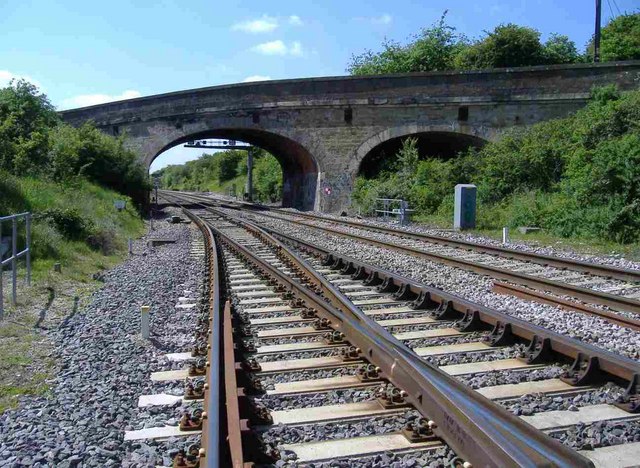
Skew Bridge Wootton Bassett

View of the Skew Bridge, Wootton Bassett published courtesy of Roger Cornfoot

Frederick Albert Hurson, fireman, also of Paddington, said he was on the same engine with the last witness. When near the skew bridge at Wootton Bassett he saw a man come down the bank on the Wootton Bassett side of the bridge and stop just by the side of the rails. He (witness) blew the whistle, and the man turned for a moment and looked toward him (witness), and just when the engine was close upon him he made a sudden movement as if he was going to cross the line in front of the engine. He (witness) asked the driver to see if the man was got across, and he looked and replied, “No,” He (witness) then looked on the side of the train again, and saw flesh and blood all up the side of the engine. They then pulled up the train at Wootton Bassett station, and informed the signalman of what had happened.

Thomas Johnson, a clerk in the GWR Works, living at 17, Clifton Street, New Swindon, said deceased was his only brother, and was a single man. He last saw him alive on the previous Monday evening at Swindon. Deceased then appeared to be in his usual health, and was going to the Mechanics’ Institute to see the evening news. Deceased had formerly lived with him. He had no reason to suppose that deceased would commit suicide. He was very much surprised when he heard the previous night what had occurred. He had no idea whatever that deceased came to Wootton Bassett the previous Thursday – he had never heard him speak of the place during the whole 2½ years he had been living at Swindon. He was not aware that deceased knew anyone at Wootton Bassett. – By the Coroner: He had not been altogether friendly with deceased lately. Deceased seemed to have a feeling of being jealous of his (witness’s) position in the Works. If he was at all despondent it was because he did not make such progress in the world as he would like to. Deceased was formerly in a good business as a watchmaker before he entered the army, and he might now have been in a comfortable position had he not been a little addicted to drink.

James Merrett, a labourer on the GWR, said he was working about a quarter of a mile from the scene of the occurrence on Thursday. He and a fellow workman saw the driver of the train shut the steam off, and after the train had passed they could see something lying on the four-foot way which ought not to be there. They went to examine it, and found it was the body of a man; he was quite dead. They sent for a doctor, and put the body on a trolley and took it to Wootton Bassett station. Witness added that he never saw any person on the line or inside the railway fence before the train came up. There was no public footpath near, but there was a path which was used by the packers working on the line, and at the entrance to it there was a notice board warning the public to keep off the line. – In reply to a juryman, witness said he found the body fifteen yards on the Wootton Bassett side of the bridge.

This concluded the evidence, and the Coroner briefly summed up, remarking that there was no evidence to show that deceased was temporarily insane at the time, or that he attempted to commit suicide.

The Jury returned a verdict of “Killed by a passing train.”

Extracts from the Swindon Advertiser, Saturday, July 18, 1891

At the time of the 1891 census William was lodging at 41 Chester Street with William Lang, his wife Mary and their infant son. William’s age is recorded as 39 years, born in Coventry, his occupation was Stores Keeper.

William’s funeral took place on July 13, 1891 and was conducted from his brother’s home in Clifton Street. He is buried in a public grave, plot B1964, with five other unrelated people.

Section B 3 of 3

Hungry for more history?

Sunday September 15 saw the last day of the fab Heritage Open Days 2024 event. Apparently Swindon had more events on offer than historic Bristol, so we were well proud. Thank you to the fantastic Karen Phimister for all her hard work.

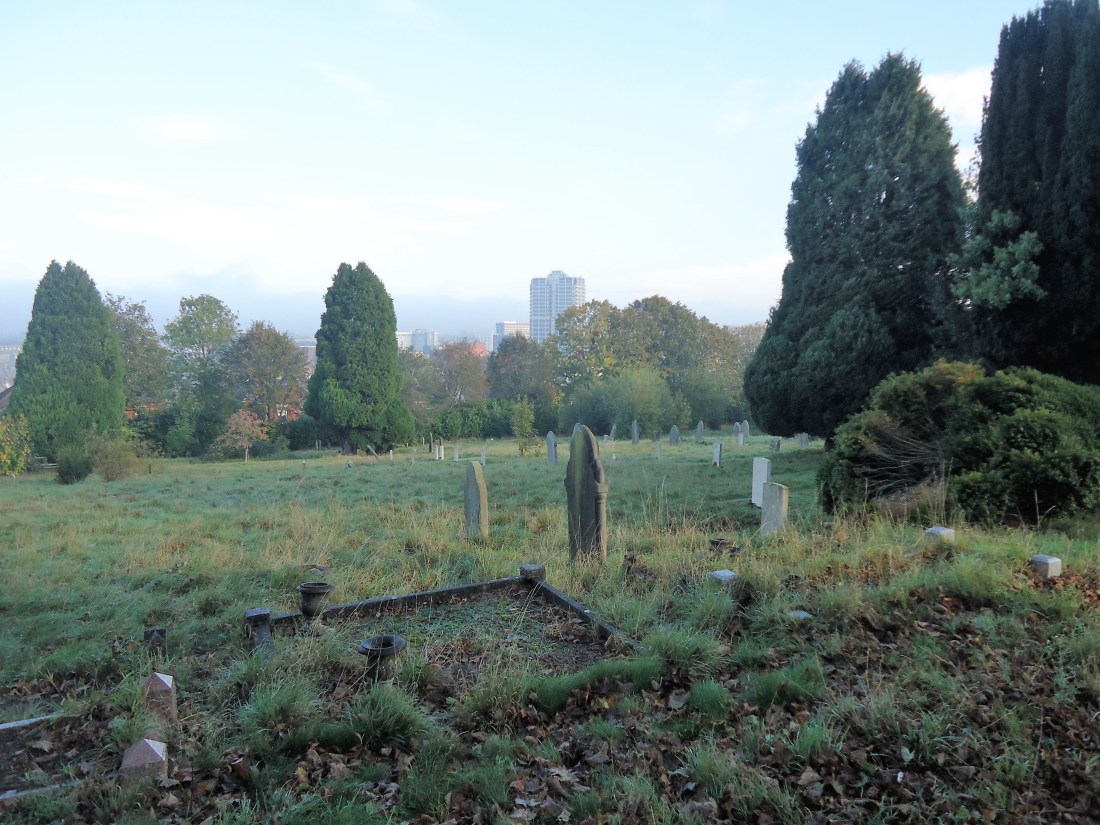
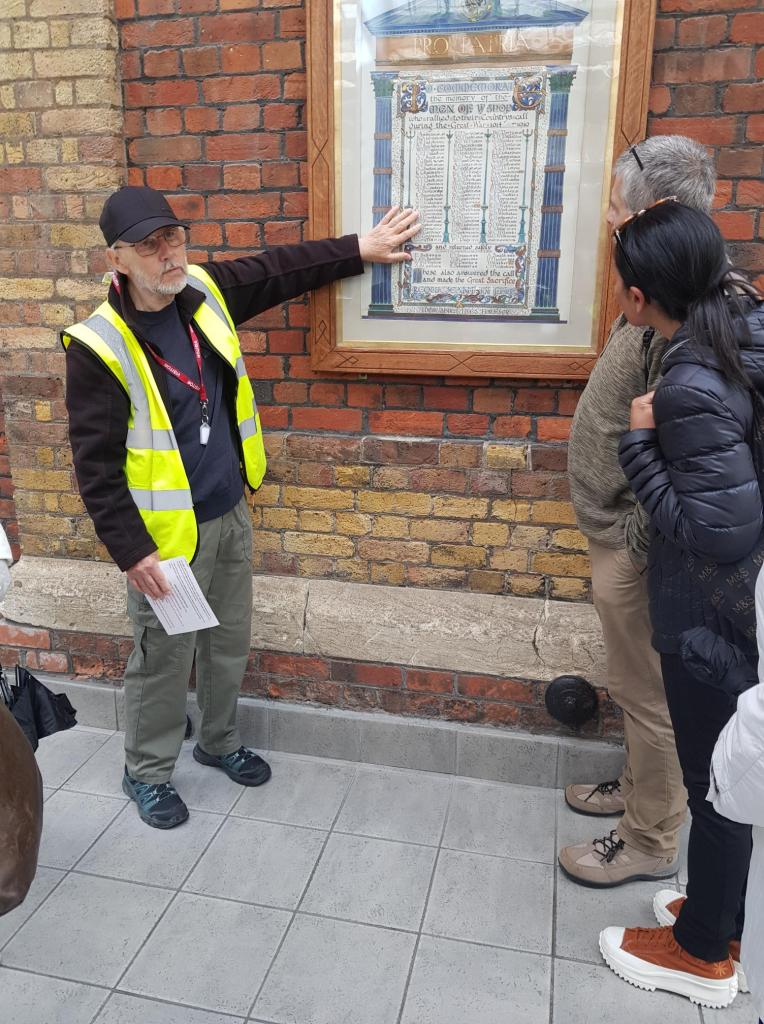
At Radnor Street Cemetery we welcomed more than 80 people to a guided cemetery walk. Yes, it was a bit crazy and yes, we were concerned that people couldn’t hear us, but we can’t turn people away and Andy and I both have loud voices!

I managed to attend quite a few other events (not as many as I would have liked) including an excellent talk at Swindon Central Library – Electric Wonderland? Women and the 1930s Modern Home by Sarah Yates.

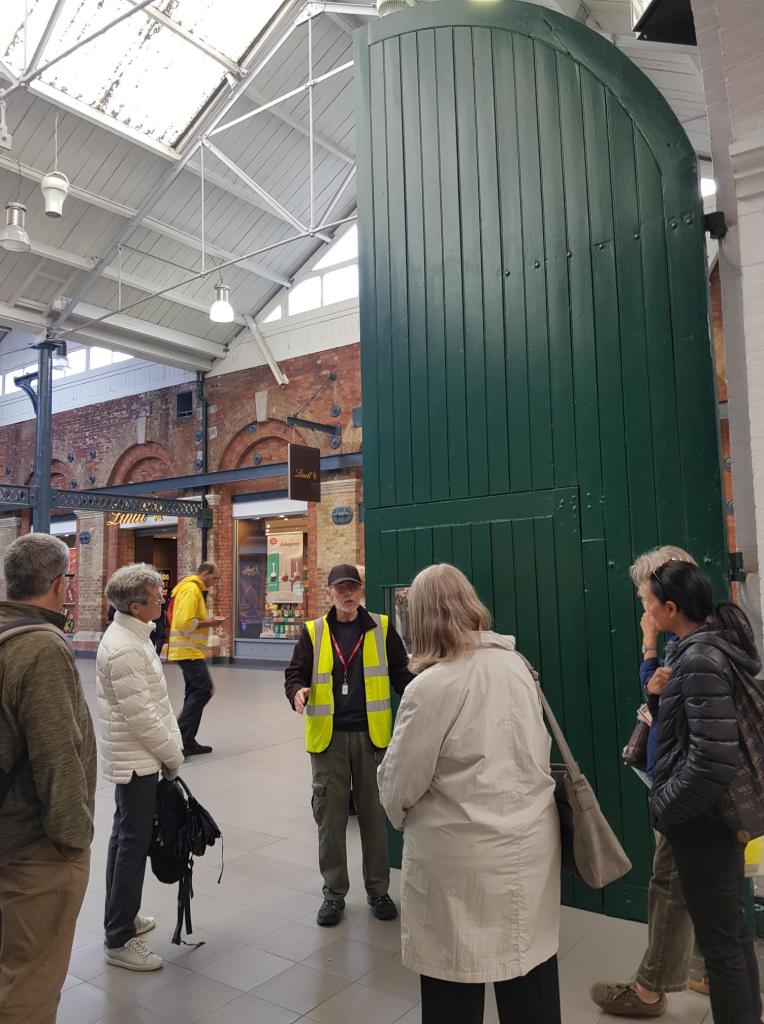
A guided tour of the Railway Village with Karen followed by a GWR Factory Tour with Gordon.

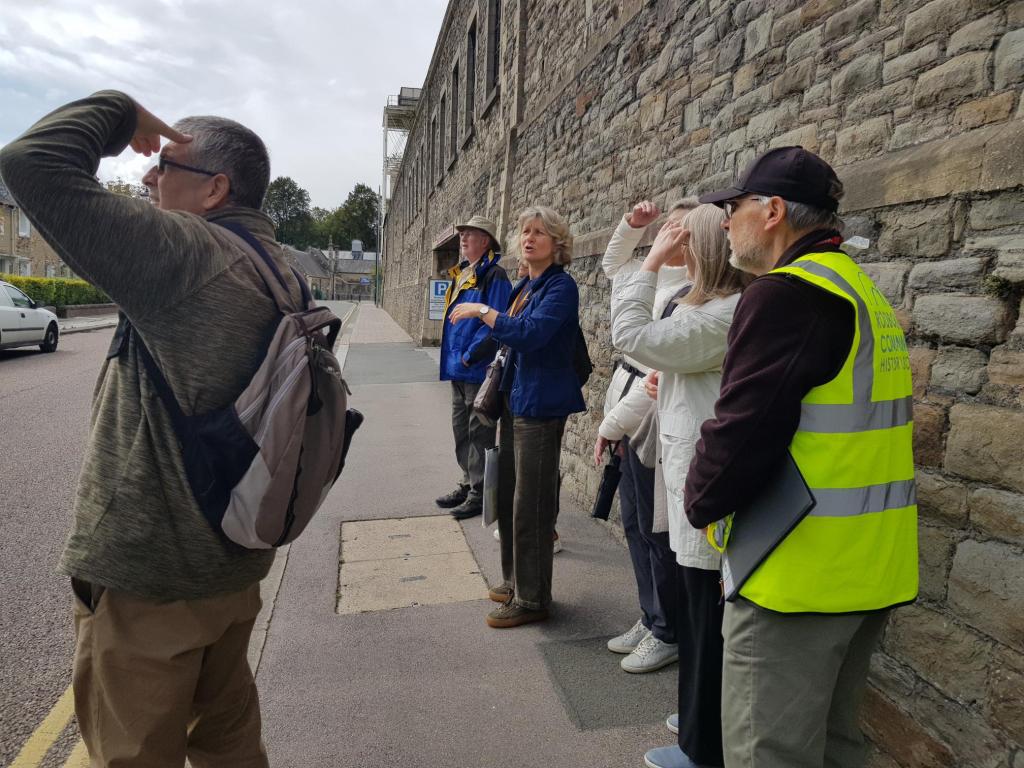
And then a guided tour of the Prospect Place Conservation Area with Michael and Geoff.

Here are a few photographs.

Radnor Street Cemetery guided walk

Guided tour of the Prospect Place Conservation Area

Railway Village with Karen

GWR Factory Tour with Gordon

And if you’re hungry for still more history join the Swindon Society for an Open Day this Saturday September 21, at the Lawn Community Centre on Guildford Avenue, running between 10.00am and 4.00pm.

William James Knee – newsagent and tobacconist

How good are you at dating photographs? This one is thought to have been taken around 1920. I have been unable to discover any details about this photograph taken outside W.J. Knee’s shop in Emlyn Square. What clues are there in the fashions? The girl at the centre of the group is holding a photograph – is this someone who has recently died or someone who has left Swindon to work abroad? And finally, is this a gathering of the Knee family?

The following two stories may help us date this photograph.

Postcard reproduction

William James Knee was the eldest of Arthur and Eliza Knee’s large family of 10 children. William was born in Melksham but by the time of the 1891 census the family had moved to Medgbury Road, Swindon where Arthur was employed as a Rivetter in the Works.

William also entered the GWR and in 1911 he was working as a labourer in Newport, Monmouthshire where he was lodging with a relative by the name of John Knee. That same year he left Newport to return to Swindon where he subsequently opened a newsagents shop on the corner of London Street and Emlyn Square.

Death of Mr W.J. Knee -The death has taken place at the Old Manor House, Salisbury, of Mr William James Knee, son of Mr and Mrs Arthur Knee, of 78 Medgbury Road, Swindon. Mr Knee, who was in his 46th year, carried on business as a newsagent in Emlyn square for a number of years. He had a breakdown in health and went to Salisbury for treatment of an internal complaint. He was well known in Swindon and was popular with many GWR employees. A telegram announcing his death was received this morning.

North Wilts Herald Friday January 10, 1930.

William was buried on January 13, 1930 in grave plot D494. His mother Eliza died in 1937 and his father Arthur in 1940 and both were buried with him.

The second story is that of William’s younger brother Dennis Arthur Knee.

Dennis was born in 1895 after the family arrived in Swindon, and at the age of 16 he was working as a Rivetter Carrier in the Works. But like so many men of his generation, Dennis would leave the Works to serve in the First World War. Unfortunately, Dennis’s attestation papers do not survive but we do know that in 1917 he was serving as a gunner with the Royal Marine Artillery on board HMS Vanguard. Dennis died on July 9, 1917 when the Vanguard sunk following a series of internal explosions while on a routine patrol in Scapa Flow. He was 22 years old and one of 843 out of 845 men who died that night.

Acting Bombardier Dennis Knee is remembered on the Portsmouth Naval Memorial.

Please get in touch if you have any further information about this photograph and/or the Knee family.

The Death of Mrs Swinhoe

The re-imagined story …

I stood across the road from Park House, amongst a group of women, all of whom had been in receipt of an act of kindness performed by Mrs Swinhoe.

She wasn’t a demonstratively affectionate person, not a woman to place an arm around your shoulder, or take your hand in hers. She wasn’t one for displays of emotion, but Mrs Swinhoe was one of the kindest women I have ever met.

She was a stalwart of St Mark’s Church, a member of several committees, a fund raiser and a generous benefactor. She would be greatly missed in the railway community.

Everyone in the railway village had been in receipt of her kindness at some time yet she had never sought comfort from a stranger, except on one occasion.

I was employed as a housemaid in the doctor’s residence when the Swinhoe family lived in London Street. It was a busy household as the property served as the doctor’s consulting room and the Swinhoe family was quickly growing, three little daughters and another child on the way when I joined the establishment in 1864.

Mrs Swinhoe’s confinement proved difficult when on May 19 two little girls were born and quickly named Eliphalette and Etheldreda. On June 20 the babes were baptised by their grandfather at St Michael’s Church in Cornhill in London, but the event was quite subdued; all was not well with the smaller baby Etheldreda.

I was with Mrs Swinhoe the day her baby died. I’d never seen sorrow like that before. I was fifteen years old. I didn’t know what to do or what to say. What words of comfort can you offer to a woman who has just held her baby while it died? I put my arms about her as she sobbed and sat with her until her husband returned from the Works where he had been attending an accident. I left them to their grief.

Mrs Swinhoe is to be laid to rest in Swindon’s cemetery on Kingshill. Her little daughter was buried in the churchyard at St Mark’s, but that is closed to burials now.

It must have been a dreadful thing – to be a doctor and unable to save your child.

London Street 5 (2)

The facts …

Diana Maria Matilda Wrench was born on June 17 1836 at St Michael’s Rectory, Cornhill in the City of London the daughter of Rev. Thomas William Wrench and his wife Diana Maria. She married George Money Swinhoe, a Practitioner Surgeon, at the church where her father officiated on August 13, 1859 and by the time of the 1861 census, they were living at 4 London Street, Swindon.

The couple went on to have a large family, seven daughters and five sons survived to adulthood. Diana died after a short illness and was buried in Radnor Street Cemetery on April 25, 1894. She was the first of six members of the Swinhoe family to be buried in the large family plot numbered E8228/29/30.

Death of Mrs Swinhoe

We regret to announce the death of Mrs Swinhoe, wife of Dr G.M. Swinhoe, of Park House, New Swindon. The deceased lady had been ailing only a day or two, and died somewhat suddenly on Sunday morning. Her death will be a great loss in St Mark’s parish, where she has been such an excellent worker for many years past. The circumstances are rendered still more sad by the fact that deceased’s son Dr. G.R. Swinhoe, returned with his bride from his honeymoon trip only a day or two previously.

On Sunday at St Mark’s church (where Dr Swinhoe is vicar’s warden), the organist, Mr Geo. Burrows, played the “Dead March in Saul” at each service.

In consequence of the sad event, a concert and operetta which was to have been rendered on Monday evening in the Mechanics’ Institute, New Swindon, and in which the Misses Swinhoe were to have taken part, was postponed.

It would be altogether superfluous for us to enter into panegyrics respecting the deceased lady, the long period Dr Swinhoe has been the friend in need to the great majority of the inhabitants of New Swindon, and the “right hand” Mrs Swinhoe has been to him, are too well known and appreciated to make the telling necessary. Suffice it, that the sad intelligence was received with profound and genuine regret throughout the neighbourhood. The deceased leaves in addition to her stricken husband seven daughters and five sons to mourn their irreparable loss.

The Funeral

Took place on Wednesday morning and was of a quiet and private character. The funeral cortege left the late residence of the deceased lady, Park House, about 11.15 am. The first part of the most solemn service was read at St Mark’s Church, by the Hon and Rev Canon Ponsonby, and there was a crowded congregation, a large number being unable to gain admission.

At the grave side this number was still further increased. The first part of the service being over, the procession wended its way towards the cemetery where the Rev Canon Ponsonby read the remaining portion of the burial services. The remains were buried in a bricked grave, lined with moss, primroses and other flowers. The coffin, which was of oak, with very massive brass fittings and a large Latin cross on the lid, born the following inscription: – “Diana Maria Matilda Swinhoe, Died 22nd April, 1894, Aged 56 years.” It was conveyed in a hearse, and completely covered with beautiful wreaths.

Messrs Chandler Bros. were the undertakers, and discharged the funeral arrangements in a most satisfactory manner. The coffin was made by Mr. T. Barrett.

Extract from the Swindon Advertiser April 1894.

Swinhoe family (2)

Diana Maria Matilda Swindon aged 56 years was buried on April 25, 1894 in grave plot E8229. 

Luke Higgs – a first class engineman

Luke Higgs

I could see Mr Higgs next door, standing at the bottom of his garden, looking out over the old canal. He was there most mornings, just standing and staring.

I picked up my basket of laundry and opened the back door. I could spare a few minutes chatting to him while I hung out the washing.

“Morning Mr Higgs,” I called. “Bit breezy! This washing should dry quickly enough.”

He was dressed in shirt sleeves even though it was a chilly January morning. I suppose he was used to being out in all weathers. He once told me that the old locos were open to the elements; no cab over the engineman then. Life for the drivers was hard in those early days.

It was all he talked about – the old days. The journeys he had done with the Royal family, how much the job had changed over the years.

He was hungry for news from the Works, but he had few visitors. Everyone was too busy, but I tried to find a few minutes in the day to talk to him, although I couldn’t bring him the conversation he wanted.

“Fifty-two years and two months, I worked for the Company,” he proudly told me, “and an unblemished career. I’m still fit and able to work but these new rules meant I had to retire.”

I’d read the newspaper reports published when he retired at Christmas. My husband Jack told me how Mr Higgs had fought the retirement ruling, but there was nothing the Company could do.

“I think he’d have taken any job going, but it just couldn’t be.”

I wasn’t so sure about that. Mr Higgs believed he was still fit enough to drive locos and that’s what he wanted to do. I don’t think a caretaker’s job would have suited him.

He turned his back on me as I started to peg out my washing. He didn’t seem to want to chat today.

“Everything alright Mr Higgs?”

He looked across towards the railway line.

“The wind must have changed direction,” he said. “I can’t hear the trains today.” He turned around and walked slowly back up the garden path.

“I think we might have some rain. Your washing won’t dry after all.”

canal route

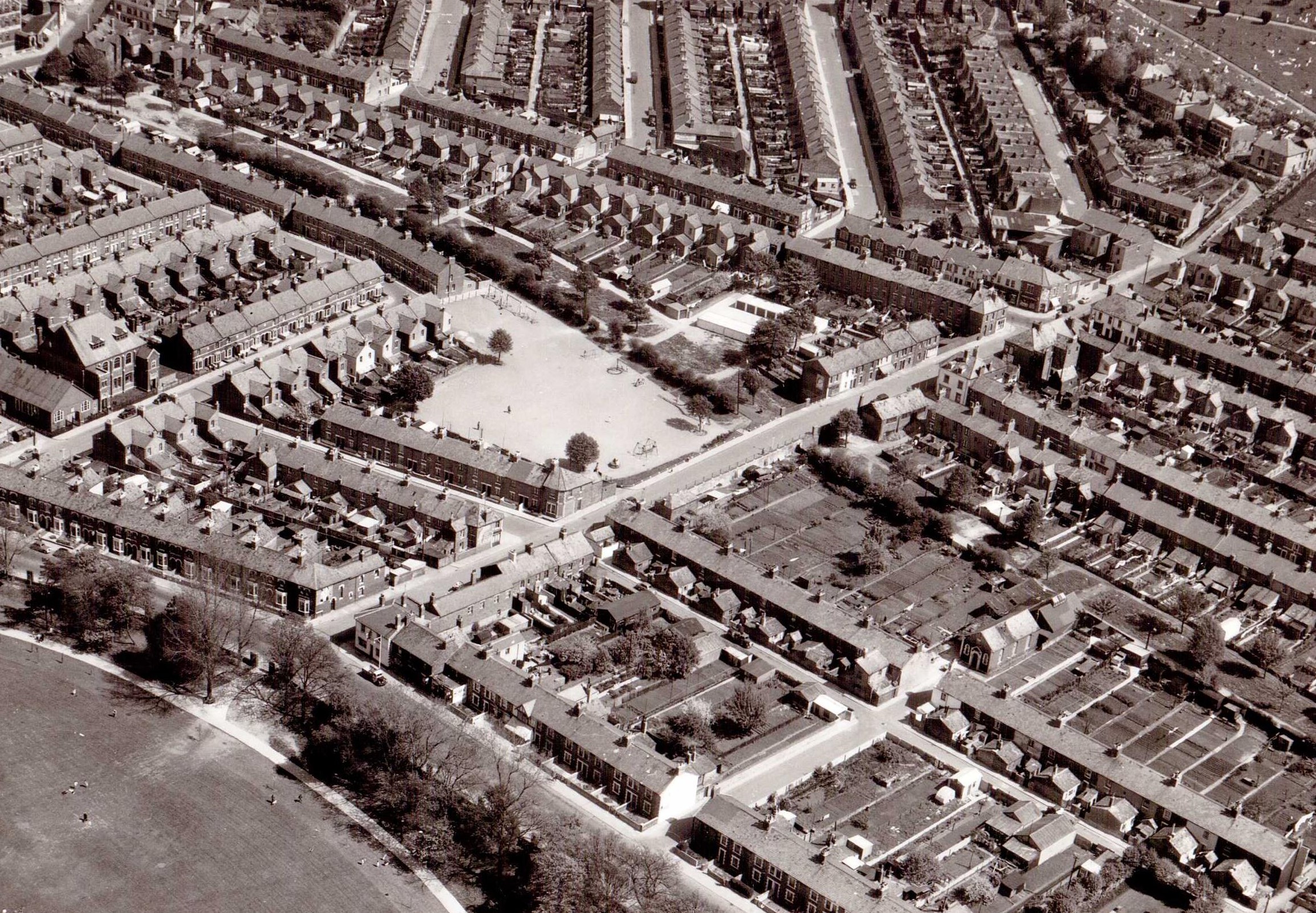
1950s photograph of Faringdon Road and the route of the old Wilts and Berks Canal

The facts …

Luke Higgs was born on December 3, 1834 and consistently gave his place of birth as London, Tower on census returns.

He married Margaret Beaupre in Bourne, Lincolnshire in October 1859. At the time of the 1861 census the couple were living at 20 Bath Street (now known as Bathampton Street) in the railway village, however their first child, a daughter Annie Agnes, was baptised at Holy Trinity Church, Paddington when they were living at 16 Waverley Road. The couple went on to have four more children and by 1871 the family was living at 19 Brunel Street. They soon moved to 8 College Street, their home for more than 40 years.

Luke entered the employment of the Great Western Railway in October 1852 just a few weeks before his 18th birthday. He worked first as an engine cleaner and lighter up before become a fireman in 1855. By 1861 he was working as an engineman and in a career that spanned more than 50 years.

Luke Higgs died at his home, 8 College Street, on March 12, 1913 aged 78. He left effects valued at £707 11s 3d (later resworn £642 11s 3d) to his wife. Margaret outlived him by a further twelve years. She died at 8 College Street on October 29, 1925 aged 90. They are buried together in plot D950 where they were later joined by their daughter Margaret Easley who died in 1953 and their grandson Elliott Tuckwell who died in 1967.


Retirement of a Railway Veteran

Over 50 Years’ Service

Mr Luke Higgs, of Swindon, who has just retired from his duties as driver on the Great Western Railway through the operation of the age limit of 70 years, has probably achieved a record of service, having been no less than 52 years and 2 months in the employ of the Company. It is remarkable that notwithstanding his great age he enjoys the best of health and looks a robust, able bodied man. He passed the eye sight and health test of the GWR doctor on 13 occasions, and when he passed last time his sight was exceptionally good.

Mr Higgs was born in London on December 3, 1834, his father being a noncommission officer in the Scots Fusilier Guards. Early in life he joined the service of the GWR and has grown in age with the railway, seeing many different systems in vogue during the half century. Improvements in the working of locomotives have of course come under his notice more particularly than any other, and he speaks of the time when there was no protection on the engines beyond the fire box, and no leg plates or cab, no steam pressure gauges, and no dry sand boxes. Those were hard times for enginemen, and great judgement was required to work the trains in safety.

He was fireman on the engine which took the late Prince Consort from Windsor to open Saltash Bridge in June 1857, and also filled a similar capacity on the train which conveyed the present King to Oxford, to open his college education, on Monday, Oct. 17, 1859. Not only that, but he has been fireman several times on the Royal train between Paddington and Windsor.

It is interesting to note that he was made a permanent engine driver the same day as the late Prince Consort died – December 14, 1861 – and ever since he has held a good reputation, so that when he retired there was not a black mark against his name. We are given to understand that he has the cleanest record on the Great Western line. In his career he has never lost an increase in wages or a premium, and has received from the Company £325 for good conduct whilst in their employ.

His varied experiences are of more than ordinary interest, and he modestly tells of incidents which would have turned but disastrously had it not been for his prompt actions. His advice in working trains has been frequently sought after by younger men, and many a good driver have been turned out of his engine. He was most economical in his work and studied the Company’s materials as though they were his own.

He is held in the highest esteem by all the officials with whom he came in contact, and all regret his retirement. The doctor who signed the last certificate said that Mr Higgs was well able to work for another five years, but of course the age limit had to be observed.

North Wilts Herald January 28th 1905

Luke and Margaret Higgs
Luke and Margaret Higgs with one of their daughters. Published courtesy of philstree18 from a public family tree on Ancestry.


Mrs Peddle and me

The re-imagined story …

Life’s circumstances can create some unusual friendships. In the case of Mrs Peddle and me it was the death of our husbands.

We didn’t have a lot in common. Mrs Peddle had money and I didn’t. I had a houseful of children and she had none.

I don’t think she much enjoyed living in Swindon. She told me she was born in a village called Keinton Mandeville in Somerset and she was a country girl at heart. Her back garden was full of old fashioned country flowers like night scented stock and grandmother’s bonnet. My garden was always full of washing.

I’d never known anywhere other than Swindon. I’d been born in the railway village and lived there until I got married. My dad was a railwayman and so was his dad and just about all the boys I grew up with ended up working in the railway factory. My husband Fred was a steam hammerman.

I don’t know why Mr and Mrs Peddle moved to Swindon in the first place. Mr Peddle had worked as a house painter and decorator. Perhaps he looked at all those red brick terrace houses and thought there would be plenty of work for him, but of course everyone took care of their own properties in those days. Few of us had the money for an interior decorator. So like every other man in town, Mr Peddle found himself sucked into the railway works.

Mrs Peddle would come across to my house most afternoons. She seemed to enjoy the noise and chaos the children created and I was grateful for someone to hold the baby while I caught up with some household jobs.

Then afterwards we’d have a cup of tea and we’d talk. We’d talk about really personal stuff, things I’d never spoken to anyone else about. She told me why she’d never had any children and I told her why I had so many.

Before the year was out I married William, one of Fred’s friends, and moved into his house in Clifton Street. He had lost his wife around the same time Fred died. I needed a breadwinner and he needed a mother for his children. More kids! And we soon had one of our own together.

After that I only saw Mrs Peddle occasionally. The intimacy of those few months in 1911 was gone. I’m not sure that either of us wanted to be reminded about some of those confidences we shared.

It’s a funny old world. Death drew us together but life pulled us apart.

James Peddle D (3)

The facts …

Emily Jane Louisa was baptised on August 27, 1865 at the parish church in Keinton Mandeville, Somerset, the daughter of John Cox, a labourer and his wife Matilda. Emily worked as a dressmaker until her marriage to James Peddle in the September quarter of 1887.

At the time of the 1891 census James was recorded as living at No. 12 York Place, Swindon, where he worked as a painter and glazier. On census night 1891 Emily was staying with her widowed mother back home in Keinton. By 1901 James and Emily were living at 76 Radnor Street, their home for more than ten years. On the 1911 census James is described as a house painter employed by the railway company. James and Emily had been married for 23 years and had no children.

James died on August 4, 1911 and was buried in plot D1473 on August 9.

In 1916 Emily married widower John Parker, a carpenter who worked in the railway factory. His wife Eliza had died in December 1914. John and Emily lived at 33 Wellington Street.

It was a brief marriage as Emily died on November 15, 1919. She was buried on November 21 with her first husband James Peddle in plot D1473.

John Parker outlived Emily by more than 30 years. He died on November 17, 1952 and was buried with his first wife Eliza in plot D1302, not too far from James and Emily.

John and Eliza Parker share their grave with their grandson Alan Parker who died in 1931 aged 8 years old.

54518772_2657598597614608_8771014343094435840_n

Image published courtesy of Robin Earle taken in the 1980s.

Have you seen the doctor?

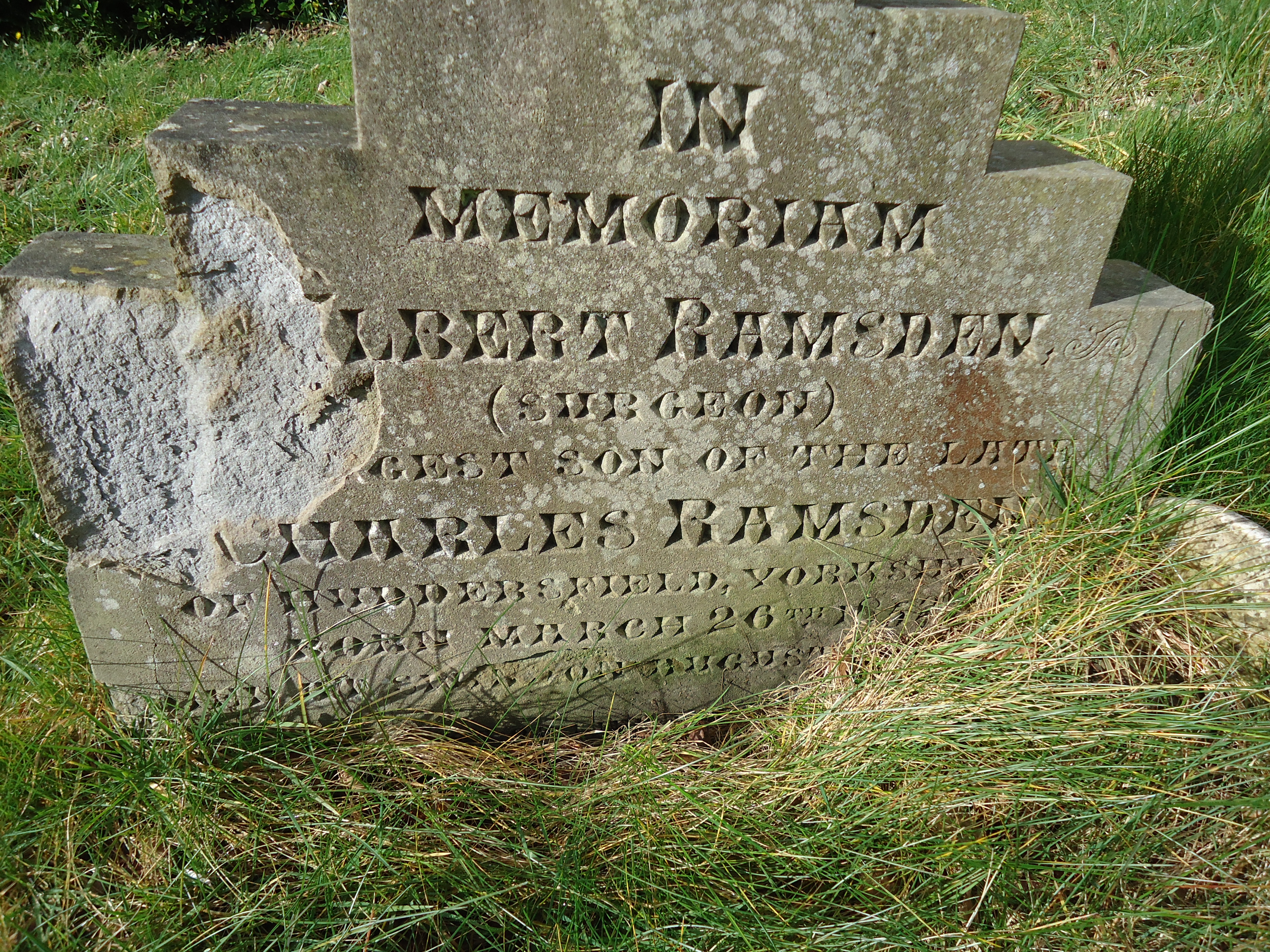
albert ramsden surgeon (2)

The re-imagined story …

Every Saturday Nan and me would come into town on the bus. We’d buy a bunch of flowers from a stall in the market and then walk up Deacon Street to the cemetery.

After we had spent a few moments looking at the wonky little headstone we would lay the flowers on the grave. Then I’d skip off down the steep path and out of the gate to Grandma’s house in Dixon Street, arriving at the front door ahead of Nan.

“Have you seen the doctor?” was the first thing she always said. Before “hello Marilyn, why aren’t you wearing a coat?” or “hello Marilyn I’ve got some chocolate cake in the pantry.”

Grandma was a wizen, little, ancient lady, who always dressed in black, I assumed in perpetual mourning for my dead Grandpa. Old ladies did that in my childhood. Of course, you don’t see that now. These days they get a tattoo and move on to a 50-year-old boyfriend. Grandma was my great-grandmother, someone to be revered and obeyed. That’s all changed as well.

When I was very young, I thought ‘the doctor’ was a relative of ours, but when I came to understand social politics I realised that’s wasn’t very likely; all the men in our family had been railwaymen.

Then one day Nan mentioned that the doctor was a surgeon, one of the GWR doctors employed at the Medical Fund Hospital. Perhaps he had performed some life saving operation on a family member. Perhaps that was why Grandma had been leaving flowers on the grave for more than 60 years.

Suddenly, as happens, life passed by. Grandma died and my much loved Nan took her place as the little old lady I took my children to visit on a Saturday afternoon. We didn’t call in at the cemetery first though as Nan lived just around the corner from us in Gorse Hill.

We talked about the past a lot, same as I find I do now, and then one day I asked her who the doctor was we used to visit in the cemetery.

She took her time replying and I wondered if she might have forgotten.

“When my mother, your Grandma, was young she worked for the railway doctors. The surgery was at Park House where Dr. Swinhoe lived, but the younger doctors lived in a house in London Street.” She paused for a moment and I sensed she was about to share a confidence that had not be spoken of for many years.

“Grandma used to do the washing for the young doctors, keep the house tidy and cook them a midday meal, returning in the afternoon to finish her duties. Remember mind, she was only 15 or 16. That was a lot of work for a young girl to be doing. That particular day, she left the meal for the doctors and went home for her own dinner.

“Just as she was about to leave her house a young boy knocked on the door with a note for her telling her not to return to work as one of the doctor’s had died suddenly. She would be expected at work the following morning. She never went back to her job or the house in London Street.”

It was a sad story. “Grandma must have been very fond of that doctor,” I said.

Nan sipped her tea and I could sense that wasn’t the end.

“It wasn’t that Marilyn. No one explained to her what had happened, or why he had died. She thought she had killed him.”

“Killed him?”

“She wasn’t a very good cook. Her family used to tease her and say one day she’d kill someone. That day she thought she had killed the doctor.”

Views of London Street taken in 2019

The facts …

Albert Ramsden was born in 1852 the son of Charles Ramsden and his wife Ann. At the time of the 1851 census, the year before Albert’s birth, the family was living at an address in the Beast Market, Huddersfield where Charles worked as a dry-salter. A dry-salter was a dealer in dry chemicals and dyes and in the 1857 Post Office Directory Charles is listed as living at 9 Beast Market, a dry-salter and oil merchant. By 1861 he was employing five men and two boys and obviously earning enough to pay for his son’s education. That same year Albert was a boarder at a school in Ramsden Street, Huddersfield, run by John Tattersfield.

Albert moved to Swindon in 1881. At the time of the census earlier that year he had been lodging at 35 Bromfelde Road, Clapham where he was described as a medical student. He had previously worked for Dr John Sloane at his large practise in Leicester.

Sudden Death of a Medical Man – An inquest was held at Swindon on Wednesday, August 31st on the body of Albert Ramsden, aged 29, who died suddenly on the previous Monday afternoon, at his lodgings No 5 London-street, Swindon, where he resided with four or five other gentlemen of the medical staff. It appears that deceased, when at dinner, rose suddenly and went into the drawing room where he stayed two or three seconds, and then upstairs. On entering his room shortly afterwards his body was found lying across the bed with the head on the floor. The four medical gentlemen present did what they could for him, but to no effect. Deceased it seemed had fallen in a fit, death resulting from a flow of blood to the head. A verdict was returned in accordance with the evidence. The deceased had only resided at Swindon three weeks, having been an assistant to Dr Sloane, of Leicester, for several years. He was a member of the Royal College of Surgeons, and had passed his examination as L.R.C.P. only four weeks previously.

Leicester Chronicle and Leicestershire Mercury, Saturday September 10, 1881.

Albert had died during an epileptic seizure. He was buried in plot A137, the 14th burial to take place in the new cemetery at Radnor Street.

albert ramsden surgeon

Henry Alfred Money – lost on a lads’ day out

A broken column like this memorial (see below) is symbolic of a life cut short, someone who died young and the story that goes with this grave in St. Mark’s churchyard has a very modern feel to it. 

Henry Alfred Money was the son of Thomas, an engine painter, and his wife Mary and in the 1860s the family lived at 8 Oxford Street in the railway village. 

Henry was a talented musician and played the violin. He was a member of the New Swindon Musical Classes and for many years had taken part in most of the New Swindon Musical entertainments. 

On the morning of Monday March 5, 1877 a body was found by the side of the railway track between Chippenham and Corsham. The young man had not been hit by a train but was lying in the ditch, his face covered by 3 or 4 inches of water.  The body was identified as 19-year-old Henry and at the inquest the following day the story unravelled.   

Henry and his friend Sutherland Polson set off for a lads’ day out on Sunday, March 4. They went first to Shrivenham, then to Wootton Bassett and then onto Bath. Arriving in Bath the two young men pretended they had come to the station to see some friends off. They were clearly larking about.  

They caught the 1 am mail train to Swindon and both fell asleep immediately they got on the train. When Sutherland awoke as the train pulled into Swindon he found his friend missing, his hat and stick left behind.   

At this point Sutherland must have panicked. He had no train ticket and no money on him. He gave his friends hat and stick to a porter and when asked for his details he gave a false name and address.   

Those called as witnesses at the inquest made no mention of the lads being drunk and in fact William Morrison, station inspector at Bath who was on duty that morning, made a point of saying that all the passengers who came out of the waiting room to board the mail train ‘seemed apparently sober.’  

The jury returned a verdict: Found dead by the side of the railway, apparently killed by a fall from the mail train.  

The funeral of the unfortunate young man took place on Saturday afternoon at St Mark’s burial ground, New Swindon, and was made the subject of a great demonstration, the route from the residence of the deceased’s mother in Oxford Street to the church being crowded by several thousand spectators.

The funeral cortege was made up as follows: – Firing party of 12 members of the 11th WRV Corps – Members of the Corps – The coffin, with deceased’s belt and hat, and several beautiful wreaths of flowers on the top, carried by rifle volunteers – The band of the 11th Wilts Rifles, 25 strong, wearing crape, with muffled drums, and playing the Dead March – About 60 friends, fellow clerks, and workmen of the rail mills – Upwards of 100 of the 11th and 16th WRV Lieut. Armstrong – and between 50 and 60 members of the Ancient Order of Foresters. The service was conducted by the Rev. George Campbell. The blinds at most of the houses on the route were drawn, and the utmost order prevailed.   

The inscription on the memorial reads:

Erected from the proceeds of a concert given by the New Swindon Amateur Minstrels (of which he was a prominent member) as a memento of their esteem.   

A young man with so much promise, lost on a lads’ day out.

Meet the Margetts family

When the churchyard at St. Mark’s was forced to close to new burials in 1881 it came as a great sadness to the railway families of New Swindon. During Victorian times death was a large part of life; there were funeral rituals to observe and traditions to be kept and large, municipal cemeteries were not so common outside the big cities. But now Swindon was to have one and the first families to have moved here in the 1840s were to be separated in death.

During my recent walk around the churchyard I came across the grave of George and Susannah Margetts. George was born in Buckingham in 1783 just as the Industrial Revolution was picking up pace and more than 50 years before the birth of New Swindon.

In 1841 George was landlord at The Ship in Wantage, Berkshire where he lived with his second wife Susannah and five of his 10 children. But by the late 1840s he had arrived in Swindon where the family lived in Exeter Street. Aged 67 he was working as a carpenter, presumably in the Works as he lived in one of the company houses. Still living with his parents was youngest son Samuel, an apprentice boilermaker.

Another son, Jesse, had also arrived in Swindon where he married Martha Townsend at St. Margaret’s church in Stratton St. Margaret on Christmas Eve, 1849. In 1851 he was living in Taunton Street with Martha and their 10 month old daughter named Susannah after his mother. Jesse worked as a labourer, again presumably in the Works as he too lived in the railway village. Jesse and Martha went on to have a large family of at least 10, possibly 12, children.

The first person buried in the St Marks grave plot was not George, but that of his six year old granddaughter Ellen, one of Jesse and Martha’s children, who died in 1862. There was obviously money enough to buy this plot and in due course an elegant headstone – not every family could afford this as is evident by the paucity of memorials in the churchyard. George died in 1868 having attained the impressive age of 85. His wife Susannah died in 1871.

When Jesse’s wife Martha died in 1885 she was buried in the new Swindon Cemetery, which later became known as Radnor Street Cemetery. She was buried in grave plot E8294.

Jesse quickly married again and in 1891 is living at 72 Albion Street with his second wife Eliza and his youngest son John who is employed as a boilermaker in the Works.

Eliza Margetts, Jesse’s second wife, died in 1904 and was buried in grave plot E7886.

When Jesse died the following year he had the choice of two wives and two burial spaces. He chose to be buried with his second wife Eliza. The remaining space in this grave was later occupied by his sister Rosa who died in 1920.

Sadly, the inscription on Martha’s headstone had partially disintegrated but the burial registers reveal that she does not lie here alone. Her son, also named Jesse, died in 1916 and was buried here with his mother.

I’m sure further research will discover plenty more members of the Margetts family buried in Radnor Street Cemetery, and maybe some at St. Mark’s before the churchyard was closed in 1881.