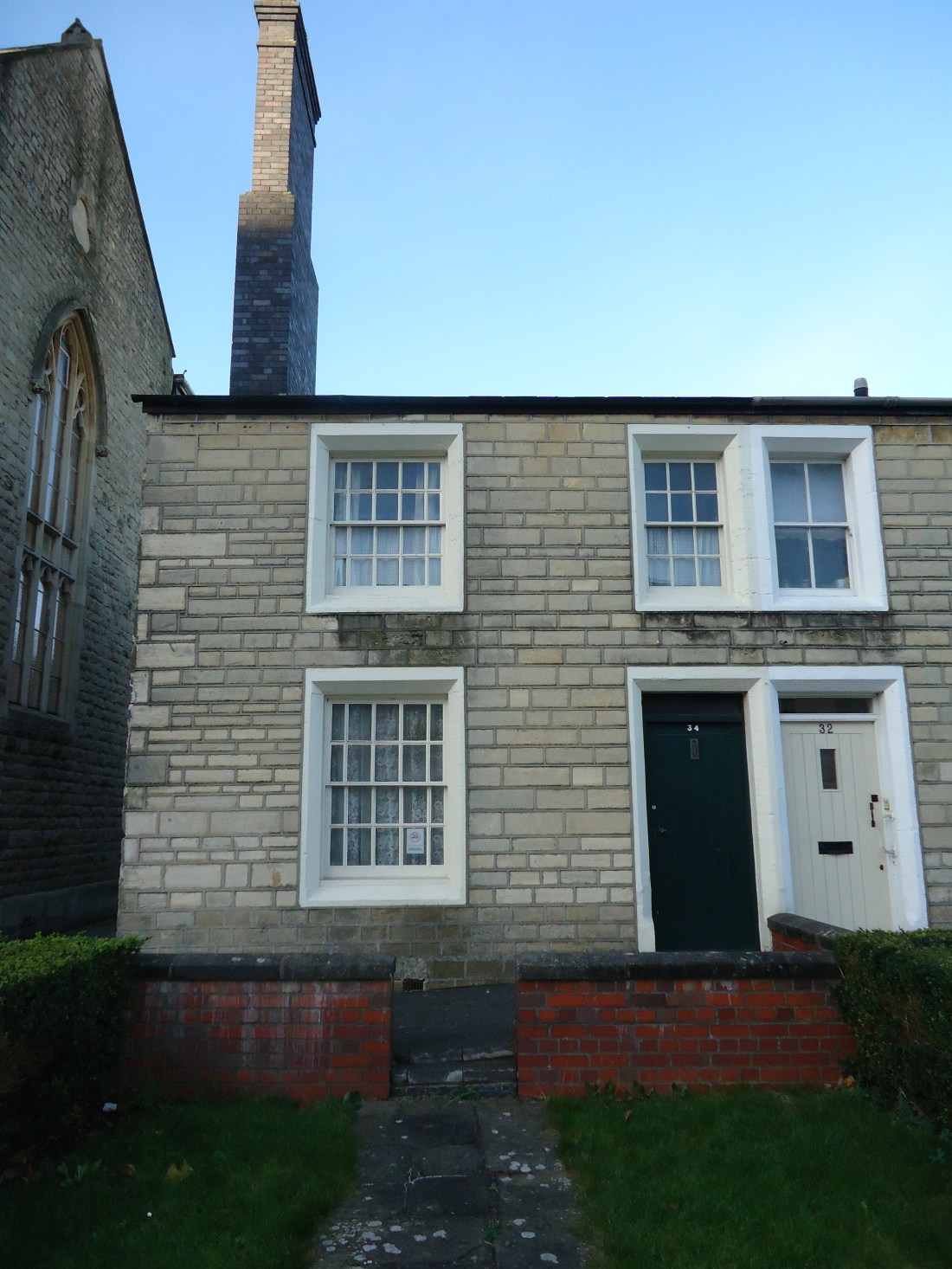
William and Isabel Hogarth and the old days

The re-imagined story …

My grandson is moving to Bristol next week. I shall miss him. He’s very good to me. But he says he’s bored with Swindon, says he needs a challenge.

I miss the old days though, and I miss men like William Hogarth. We worked together  in the boilermakers’ shop. He came to New Swindon in the very early years, I came from the same neck of the woods in 1856, a young married man with two small bairns. We had a lot in common.

Everything about the new town was challenging then; hard, but exciting at the same time. Everyone had arrived from somewhere else, had different accents, different ways of doing things, yet we all came together to create a community.

And after we built the Mechanics’ Institute, well there was always something going on there. Some weeks I was out every night at events and meetings and talks.

But now the youngsters say Swindon is boring. I suppose that’s the way of the young; looking for new challenges, new adventures.

I miss the old days though, and I still miss William Hogarth.
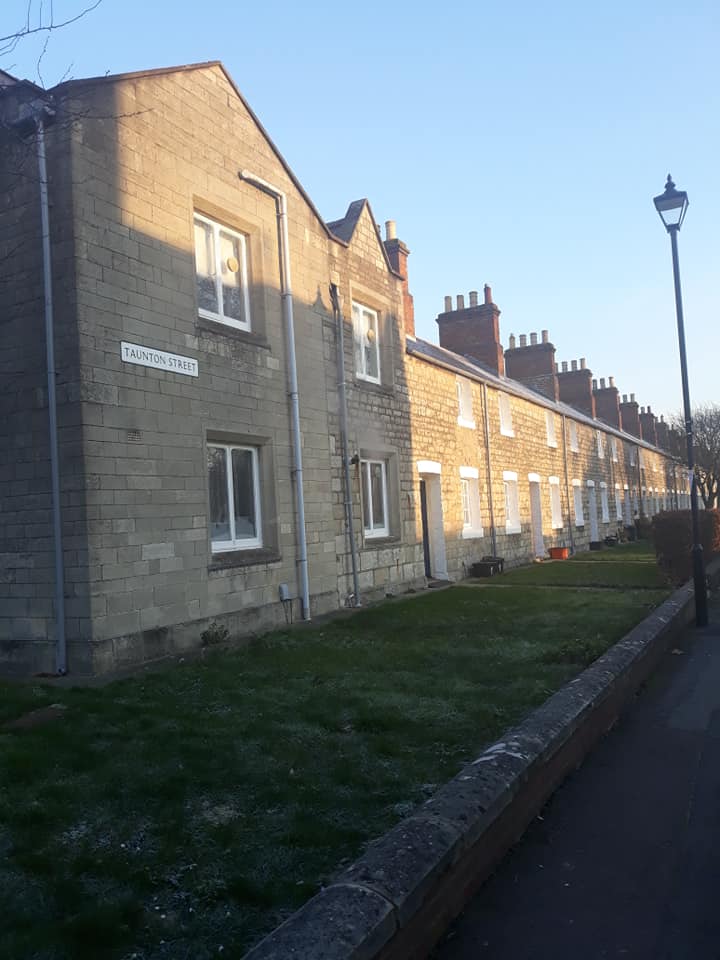
Taunton Street 2

The facts …

William Hogarth was born on May 13, 1811 at Bywell, Northumberland the son of Robert and his wife Anne White Hogarth.

He married Isabel[la] Johnson at St John’s Church, Newcastle upon Tyne on June 6, 1835. The couple’s eldest two daughters were born in Northumberland and a son, William, in Durham before the family moved south to Swindon and a home in Taunton Street. They had a further seven children, including a set of twins Thomas Oswald and George White Hogarth.

William became the first foreman in the smith’s shop at the Swindon Works and by 1861 the family were living at 7 Faringdon Street in one of the larger properties reserved for foremen.

Isabel(la) died on March 25, 1882 aged 65 and William died on August 17, 1885. They are buried together in plot A1082.

We are sorry to notice the death of another old and highly-esteemed New Swindon man in the person of Mr William Hogarth. We believe we are correct in saying Mr Hogarth came to Swindon some forty years ago, shortly after the starting of the railway works, and that for very many years past he had filled with perfect satisfaction to the railway officials the important position of foreman or superintendent of the smiths’ and boiler makers’ department. Up to the recent Trip holidays Mr Hogarth was in the enjoyment of his usual good health, but he was then seized with illness, which proved fatal on Monday last. The funeral of deceased took place on Thursday last, and was very largely attended, the department over which he had so long presided being closed in the afternoon to enable the workmen to attend and pay their respects to the memory of one with whom they had been for so many years on such close terms of intimacy.

The Swindon Advertiser, Saturday August 22, 1885.
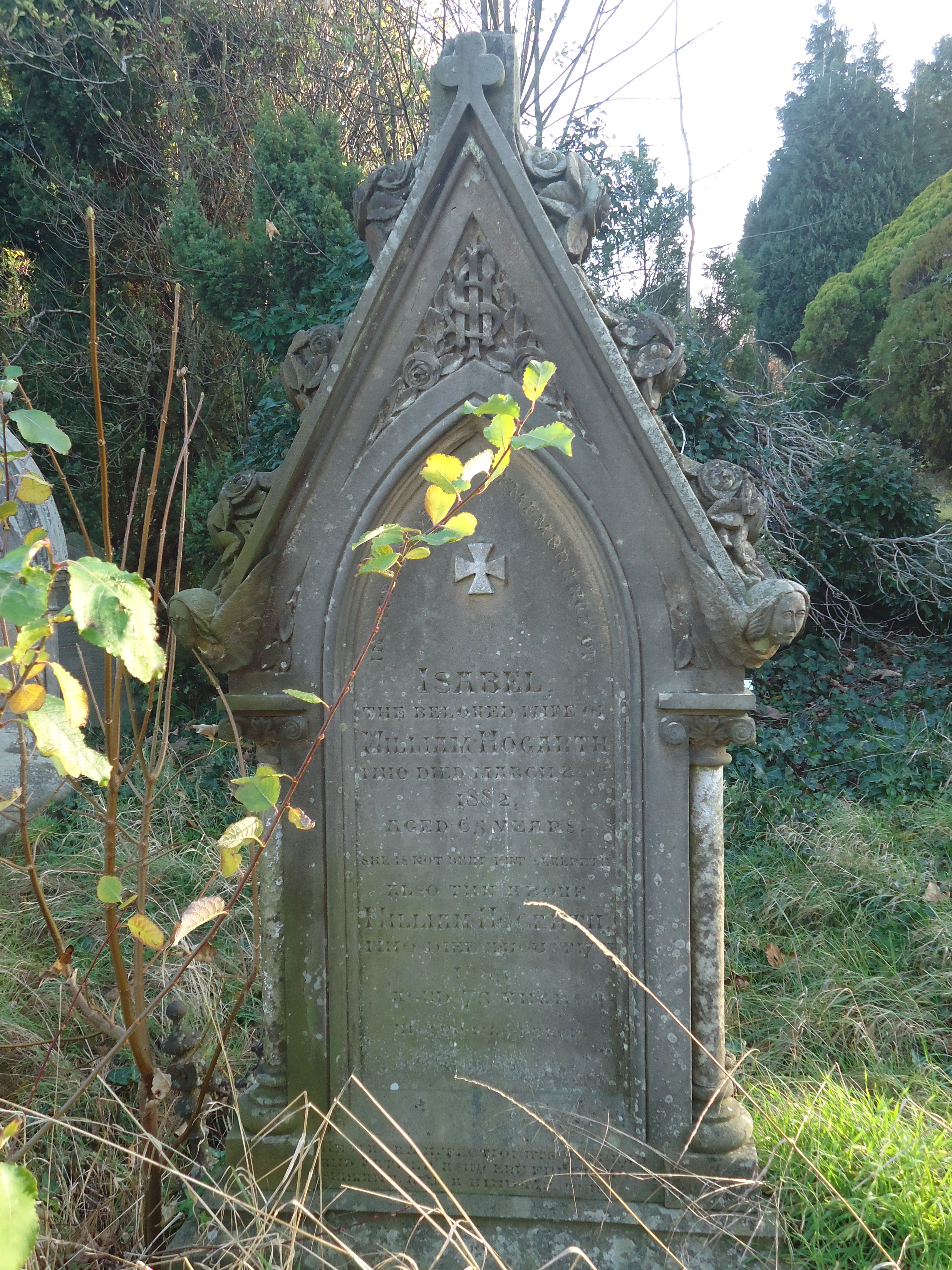
Isabel and William Hogarth (2)

Hogarth William 24 October 1885 Personal Estate £3,230 10s

The Will of William Hogarth late of 7 Faringdon Street New Swindon in the County of Wilts Mechanic who died 17 August 1885 at New Swindon was proved at the Principal Registry by William Hogarth of 27 Buckingham Street Brighton in the County of Sussex Proprietor of an Opera Company and Robert Hogarth of 5 Merton Street, New Swindon Mechanic the sons and Joseph Robinson of 9 Faringdon Street Mechanic the Executors.

Faringdon Street was later renamed Faringdon Road and the numbering was re-ordered.

You may also like to read

Thomas Oswald Hogarth – Howzat!

Charlotte Lawes and Sarah Nicholas – looking good, ladies

The re-imagined story …

The path from the Dixon Street cemetery gate to the one at Kent Road was steep and she usually had to pause half way up to catch her breath. It was a nice spot, her resting place, and she quite liked the one chosen by Charlotte Lawes and her neighbour Sarah Nicholas as well – not that she was planning on joining them anytime soon. Although many more journeys up Deacon Street carrying shopping might well finish her off, she thought.

She wondered what their funerals had been like. Did they have the full works, black coach and plumed horses? She had rather fancied a funeral like that herself until her daughter asked – “What, like an East End gangster?” That had rather put her off.

There were not many headstones in this part of the cemetery and some of those that remained were badly weathered. She wondered who they all were – the people buried on this, the steepest part of the cemetery. She sympathised with the funeral director and his men who had to carry the coffins up this steep slope. Two bags of shopping were quite heavy enough.

Right, she took a deep breath; not much further to the Kent Road gate. Goodbye Charlotte and Sarah until next week – looking good, ladies.

The facts …

When the cemetery opened in August 1881 the first burials took place in Section A. Perhaps the methodical Victorians planned it that way. Perhaps the families burying their loved ones had no choice. Perhaps Section A was the first area ready to receive burials in the hastily constructed cemetery.

August 6 – Frederick Gore, 54, a house painter plot A140; Albert Edward Wentworth, 1 month old, an infant plot A139 and three days later, Mary Grave Hill, 8 years old, a child A138. So many burials in August 1881 – Edwin Hemmings, undertaker; Benjamin Smith, auctioneers’ clerk; Thomas Basson, labourer and so many babies and children.

Section D and E boast many memorials. Some large and impressive – guardian angels, maidens weeping – some more modest, kerbstones around the plot bearing a name. In Section A there are few surviving headstones. There were probably never many anyway as this is where the early railwaymen and their families were buried. Difficult enough to pay for a funeral, let alone a gravestone. Difficult enough to live.

Charlotte Lawes lies alone in plot A539. She died on April 2, 1883 leaving a personal estate valued at £123 5s 6d to her sister Elizabeth Palmer. Perhaps Elizabeth paid for the headstone out of her inheritance.

Charlotte was born in Bath and baptised at St. James’ Church on February 8, 1818. Her mother’s name was Jane and her father John was a tailor. Charlotte had at least one sister, the aforementioned Elizabeth, and the family lived in Bathwick. By 1851 sister Elizabeth was married but Charlotte was still single and working as a barmaid in Bath.

On March 9, 1857 Charlotte married William Arundel Lawes in St Mark’s Church, Lyncombe. William was an engine fitter living in Swindon and considerably younger than Charlotte. The couple had no surviving children.

By 1861 the couple were living at 32 Westcott Place. Ten years later they were living in the railway village at 41 Taunton Street where William died the following year. He was buried in the churchyard at St. Mark’s, the church in the Railway Village, where Charlotte saw to it that he had a fine headstone, too.

Charlotte remained living at 41 Taunton Street where at the time of the 1881 census she is recorded as a widow aged 64 sharing her home with a boarder, John Newman 31, a draughtsman in the Works.

Like New Swindon itself, Section A was a busy place with people arriving all the time. John Crane, a 63 years old labourer from 20 Queen Street was buried in the plot next to Charlotte on March 13, 1883, shortly before she moved in. This grave plot appears to be a public one – no sold sign written in the burial registers.

It would be almost twenty years before anyone else joined Charlotte and John. Then on February 25, 1901 Sarah Nicholas was laid to rest next to Charlotte and another gravestone was erected. Sarah had died aged 81 at her home in Cheltenham Street. She left effects valued at £138 18s 1d to Edmund Jones, a builder, enough to erect this fine gravestone.

And so, the two women have lain in rest side by side for more than a century. Looking good, ladies.