For a certain generation of Swindonians the name Wise will be synonymous with the bakery at Headlands Grove, established in 1938 and which went out of business in 2001. However, this Wise family are railway through and through.
Charles Wise was a Railway Signal Inspector. In 1903 he is recorded in the UK Railway Employment records as having been employed by the GWR for 30 years.
Born in Ufton, Berkshire in about 1848 he married Jane Smith at St Mary’s Church, Reading on December 29, 1874. Their first child Charles was born in Wargrave and their second Thomas in Devizes. By 1879 they had arrived in Swindon where they were living at 14 Sanford Street, their home for more than 10 years.
A daughter Alice Mary who died aged just a year old in 1880, before the cemetery opened, was buried in St Mark’s churchyard and is remembered on this headstone.
Their youngest daughter Gertrude Grace trained as a teacher before marrying in 1917. Her husband was architect Granville Walter Henry George the son of local politician Reuben George.
Jane Wise died at her home 62 Eastcott Hill in August 1920. She was buried in grave plot A238 which she shares with her small son Sydney George who died in 1886 aged 3 years 4 months and her husband Charles who died in 1933 aged 85. Their fallen headstone has been cleared and cleaned by our volunteers.
Clara Acton was born in 1864. She married Rueben George in 1887 and the couple had three sons, Herbert, Granville and Stanley. By 1901 they were living at 132 Goddard Avenue.
Reuben George came from humble beginnings and spent a lifetime working for the good of the poor man. He became a local politician and founder of the Swindon branch of the Workers’ Education Association. Clara was described as being deeply interested in her husband’s work for the WEA and served on the Executive Committee for a number of years. Clara supported her husband as Mayoress during his mayoral year and reference is also made to the fact that she was connected to the Co-operative Society and also served on the Education Committee for some years.
But as we remember the great and many good works both Rueben George and Clara performed, there is no mention of the son they lost during the First World War. Their eldest son Herbert Gladstone George was a Battery Sergeant Major in the Royal Field Artillery, 6th Bde and serving in Lahore in 1917 when he took his own life. His military records state that he ‘Committed Suicide on May 7, 1917 whilst temporarily insane.’
Suicide, along with soldiers shot for military offences, was frequently seen to have brought disgrace upon their families. Today we are able to bring some humanity and compassion to the situation and on November 7, 2006 the British Government granted posthumous conditional pardons to all soldiers executed in WWI for military offences. It remains unknown whether Reuben and Clara were informed of the cause of their son’s death, and if so whether they would have been able to share that knowledge with anyone. The grief was probably too great.
Reuben George died in June 1936. Clara attended her husband’s funeral at Christ Church against the advice of her doctor. Just hours after the funeral on June 10 she was admitted to the Victoria Hospital where she lay seriously ill for several days. An emergency operation to amputate her arm was undertaken but Clara died hours later. She died on June 20, 1936, just 16 days after her husband.
Former Mayoress of Swindon
A large number of mourners attended the funeral, yesterday, at the parish church, Swindon, of Mrs Clara George, a former Mayoress of the borough, who died in Swindon Hospital exactly a fortnight after her husband, Alderman Reuben George, who died in the same hospital.
Mrs George was buried in the same grave as her husband. Both were 72 years of age, and had been closely identified with the Workers’ Educational Association and other social movements in the town.
The chief mourners were deceased’s two sons, Mr Granvill George, of Manchester, and Mr Stanley George, of Swindon; also a sister (Mrs Symonds) and three brother-in-law, all from Gloucester, of which city Alderman and Mrs George were natives.
Mr A.E. Douglas Smith represented Bristol University and the WEA (Bristol Centre), and Mr A.H. Shipman represented Sir James and Lady Currie.
Letters of condolence were received from the Archbishop of York and Mr Ramsay MacDonald, also from Miss May Morris of Kelmscott, daughter of the late William Morris.
Western Daily Press and Bristol Mirror, Thursday, June 25, 1936.
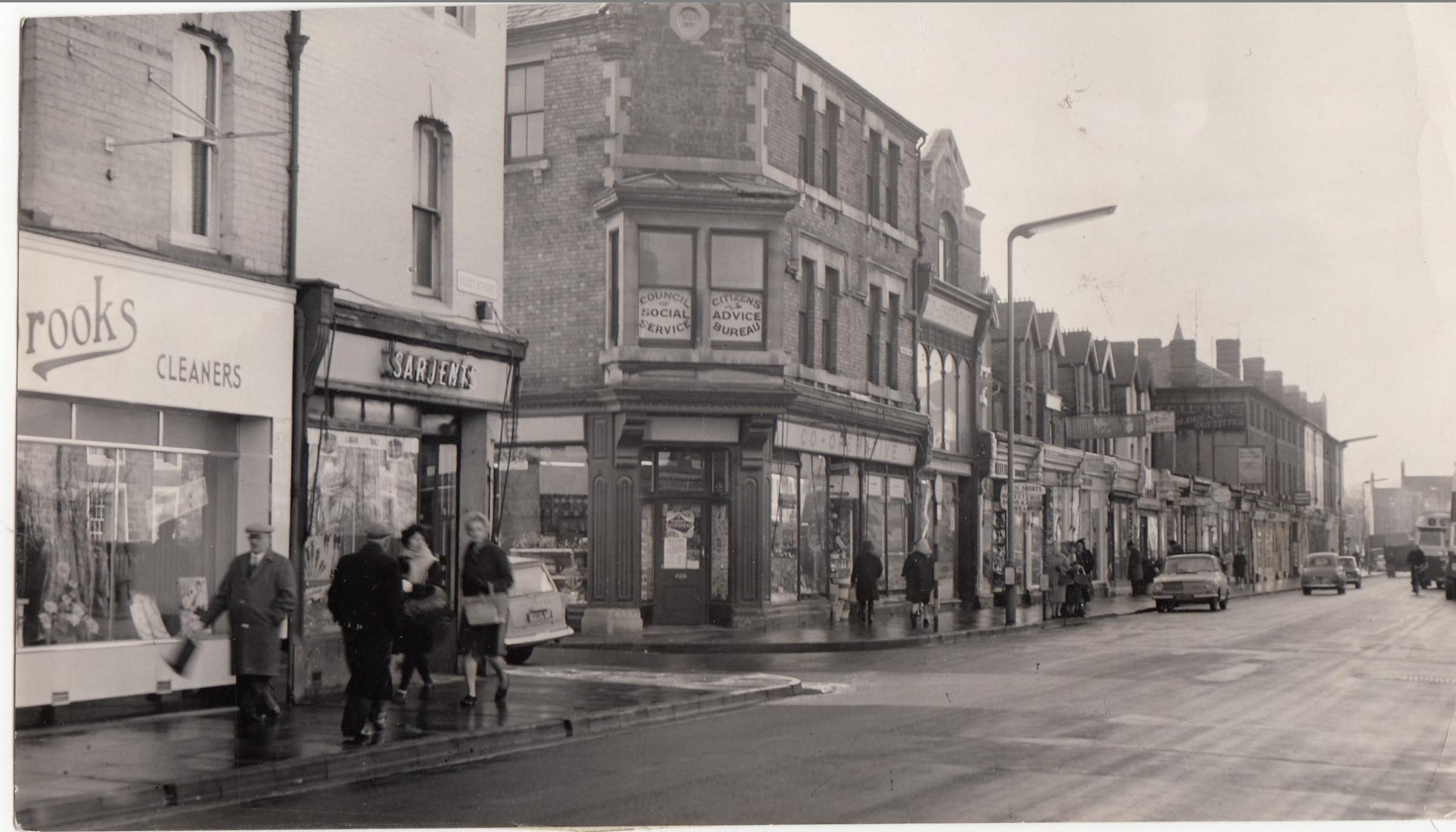
W.G. Little’s shop on the corner of Fleet Street and Catherine Street.
William Graham Little left a legacy that lived long in Swindon’s history.
William Little was born in Chippenham in 1856, the son of George Little, a linen and woollen draper, and his wife Dinah. William was the fourth of eleven children.
He moved to Swindon when he was 18 and began business as a door to door salesman. His first shop was at 32 Fleet Street where he sold clothes and fabrics.
At the time of the 1881 census he was living at 31/32 Fleet Street, his home for more than 40 years, where he employed his 19-year-old brother Albert as a tailor and cutter and his sister Sealy Anne 23, as his housekeeper.
As the business prospered he was able to build a shop in Faringdon Road. The ghost of an advertisement on the side of the building can still be seen – WGL 1892 draper, milliner.
Little served as a Councillor, a JP and an Alderman during the same period as Reuben George and James ‘Raggy’ Powell.
William Little died in 1927 aged 72. He left an estate of more than £56,000 worth today in the region of £2.5 million.
Little never married and seemed to be distanced from his family. He left his sister Frances (who had been his housekeeper at one point) £100 and the rest of his estate he left to Swindon. His family unsuccessfully contested the will but in 1932 the WG Little Scholarship and Band Concert Fund was established. His money was left in trust ‘for the promotion and advancement of education and recreation among the youth of the town.’
In 1965 an article in the Swindon Advertiser said that grants of £52,000 had been made since 1938. In 2012 a grant of £6,000 was paid to help recreate the Children’s Fete at Faringdon Road Park.
In the past, grants have gone towards helping support students at university but more recently payments have been made to buy uniforms for children of needy families transferring from primary school to secondary school.
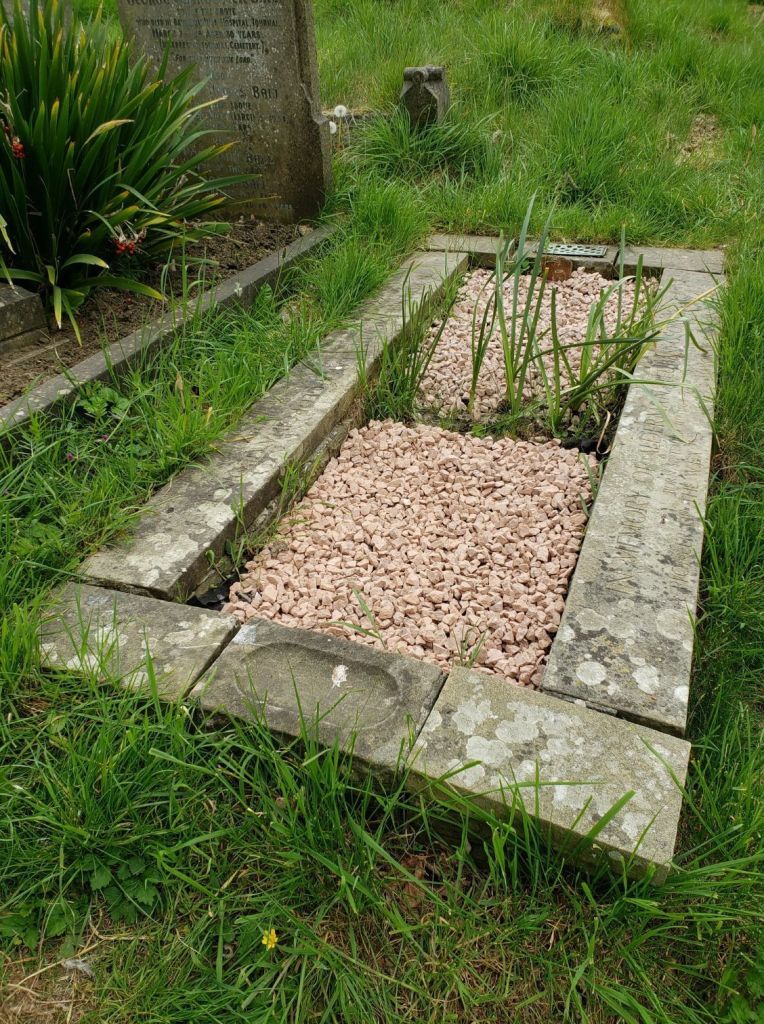
William Graham Little was buried on May 10, 1927 in plot D47A Radnor Street Cemetery.



 Radnor Street Cemetery