A literary legacy and the Misses Baden

The re-imagined story …

Everyone with the name Jefferies wanted to tell us their memories of the man, even those who were unrelated and had never met him. The Swindon Advertiser had already published a fulsome obituary notice on the local writer Richard Jefferies but Mr Morris wanted me to come up with something more, something from a different perspective.

I did a bit of research and discovered that Mrs Jefferies sisters lived in town, so I made an appointment to visit them.

Mrs Jefferies came from a large farming family. Her father had married twice and produced some fourteen children. Mrs Jefferies was the eldest of the second family. The sisters who lived at 20 Sheppard Street hailed from the first family and were considerably older than the recently widowed Jessie Jefferies.

Jessie Jefferies nee Baden
Mrs Jefferies, the former Jessie Baden

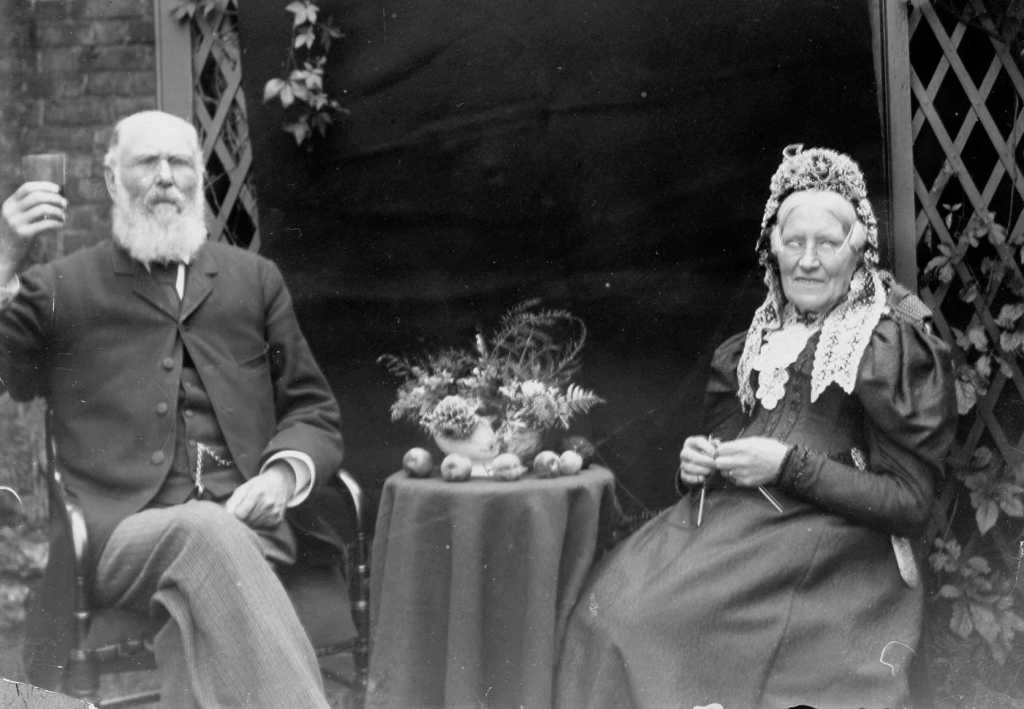
I was greeted at the front door of the red brick villa by Miss Blanche Baden who introduced herself as niece and companion to the Misses Baden. The two sisters were waiting for me in the parlour.

The ladies were dressed in the old country fashion and were frail and elderly. Miss Mary, the younger of the two, spoke for her sister Miss Emma, explaining that she had been deaf and dumb since birth.

Looking out across the road to the looming railway factory, Miss Mary talked about a childhood spent at Day House Farm and their near neighbours, the Jefferies family who lived on the farm at Coate.

In pride of place on the bookcase was a set of Jefferies books. I was invited to select a volume, each one a first edition, inscribed by their famous brother-in-law.

I wrote what I thought was an interesting piece about the Misses Baden and their literary legacy, but Mr Morris didn’t like it. I had missed the point of the exercise, I was told. He’d wanted more insight into Jefferies ambition, the political motivation of the man and what had driven him, not a non-story about two old ladies who had done nothing of note.

It was then that I decided the Swindon Advertiser was not the vehicle for my work and that I would devote my life to writing about the lives of women who had supposedly ‘done little of note.’

Richard Jefferies
Richard Jefferies

The facts …

Death of a Distinguished Wiltshire Man

A large circle of readers will be sorry to hear that Mr Richard Jefferies died at Goring on Sunday morning. He will be known to all classes of readers as the author of a charming series of books and fugitive articles on rural life and kindred subjects, that were as interesting to dwellers in town as to those in the country. He united to a singularly close insight into the natural workings of animal and vegetable life a power of description almost unrivalled. His books and articles were redolent of the air of the country, and dealt with nature in so picturesque and graphic a style that the dweller in a city might almost fancy himself in the midst of the scenes described. These scenes were mostly taken from his native county of Wiltshire. The son of a farmer, he soon fell to writing on his favourite subjects in local journals. He soon, however, went to London, where he at once made himself a name as a writer of books and contributor of essays to magazines and periodical literature. Many will remember the delightful freshness of “The Gamekeeper at Home,” which introduced him to the London public about ten years ago. This was followed at short intervals by “Wild Life in a Southern County,” “Round about a Great Estate,” “Hodge and his Masters,” “Nature near London,” “The Life of the Fields,” “Red Deer,” and “The Open Air,” the last of which was published two years ago. Mr Jefferies also wrote a number of works of fiction, which are certainly not so well known – and perhaps deservedly so – as his pictures on country scenes. Thus between 1874 and the present year he published “The Scarlet Shawl,” “Restless Human Hearts,” “World’s End,” “Greene Fern Farm,” “Wood Magic,” “Bevis, the story of a Boy,” “The Dewy Morn,” “After London, or Wild England,” and “Amaryllis at the Fair,” the last in the present year. Also he wrote in 1883 a work of great interest entitled “The Story of my Heart, an Autobiography.”

Extract from The Swindon Advertiser, Saturday, August 20, 1887.

Emma Jane and Mary Hannah Baden

Emma Jane Baden aged 76 years of 20 Sheppard Street was buried on March 24, 1894 in grave plot E7206. Mary Hannah Baden aged 79 years of 15 Avenue Road was buried with her sister on November 27, 1907.
Martha Hall – Richard Jefferies’ auntie

As part of our Swindon Suffragette festival in 2018 I conducted a ‘women only’ walk at Christ Church.

The magnificent Celtic Cross (see below) marks the grave of Martha and William Hall. The Celtic Cross is an ancient Christian symbol dating back to the 9th century and is particularly associated with Ireland. Martha’s husband William Hall was born in Longford, Ireland in 1815 and named his property on The Sands, Longford Villa after his birthplace.

Martha and William Hall

Martha’s father John Luckett Jefferies had left Swindon as a young man and moved to London where he worked as a printer. He married Frances Ridger in 1809 and they had five children born in London. But in 1816 John was forced to the leave job, the home and the life he loved in London to return to Swindon where the family farm at Coate was failing.

Today the farm at Coate is better known as the birthplace of naturalist, journalist and poet Richard Jefferies, the son of James Luckett Jefferies, Martha’s brother.

Martha was born on July 12, 1818, the first of the couple’s children to be born back home in Wiltshire. She was baptised at the old parish church of Holy Rood and married William there on June 30, 1849.

William Hall died on August 30, 1898 and Martha on January 22, 1902.

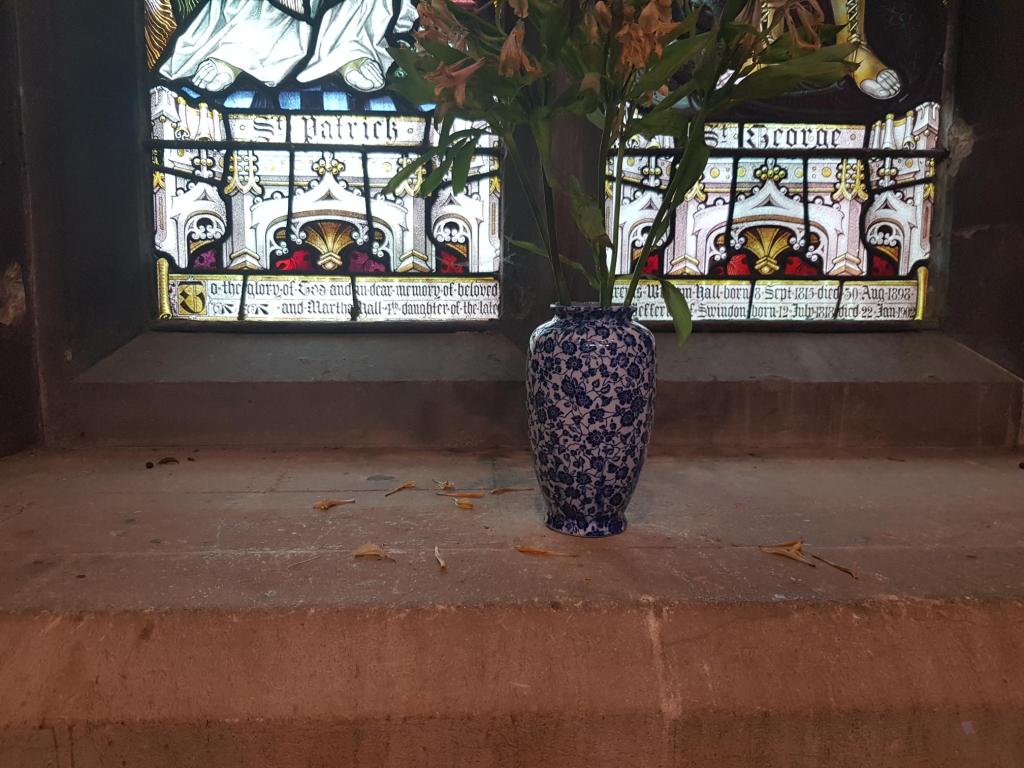
William and Martha Hall also have a stained glass window dedicated to them in Christ Church.

David Uzzell – a bit of a country rogue.

On his frequent visits to his grandmother Rachel in Swindon, Edward Thomas, literary critic, journalist, poet and biographer of Richard Jefferies, met David Uzzell – a man he referred to as ‘Dad Uzzell’

Uzzell was born in Ewen, Kemble, Gloucestershire in 1841 the son of John and Sarah Uzzell. He married Fanny Holliday on December 25, 1863 at Stratton, Gloucestershire. By 1871 they were living in Cirencester where David worked as a labourer. The couple had a six year old son William. By 1881 they were living at 95 Gloster Street, Cirencester where they would remain for many years before moving to Swindon by 1901. The couple lived at 6 John St Terrace where David worked as a Caretaker for the Salvation Army Barracks.

Uzzell has been described as a countryman, but also as a bit of a rogue. He taught Edward Thomas about country folklore and came to epitomise the agricultural labourer/poacher and fisherman that Edward later wrote about.

David Uzzell died at his home, 6 John St Terrace in December 1919 and was buried in grave plot B2190, a public grave, with four others. Fanny died three years later aged 85. She was buried on December 8, 1922 in grave plot C503, another public grave. She is buried with four others including her son William who died in 1925.

David Uzzell may have been a bit of a ‘country rogue’ but he has earned a place in literary history.

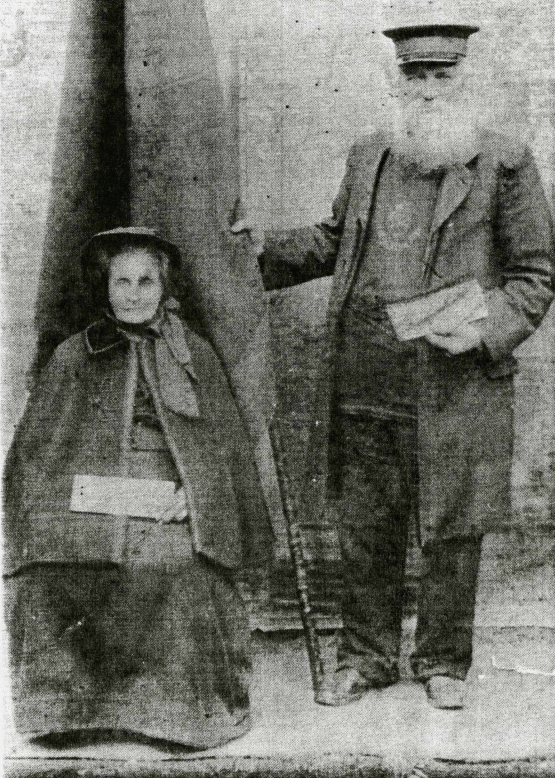
David Uzzell and his wife Fanny pictured holding their pension books.

You might also like to read:

War Poet Edward Thomas and his Swindon family

War Poet Edward Thomas and his Swindon family

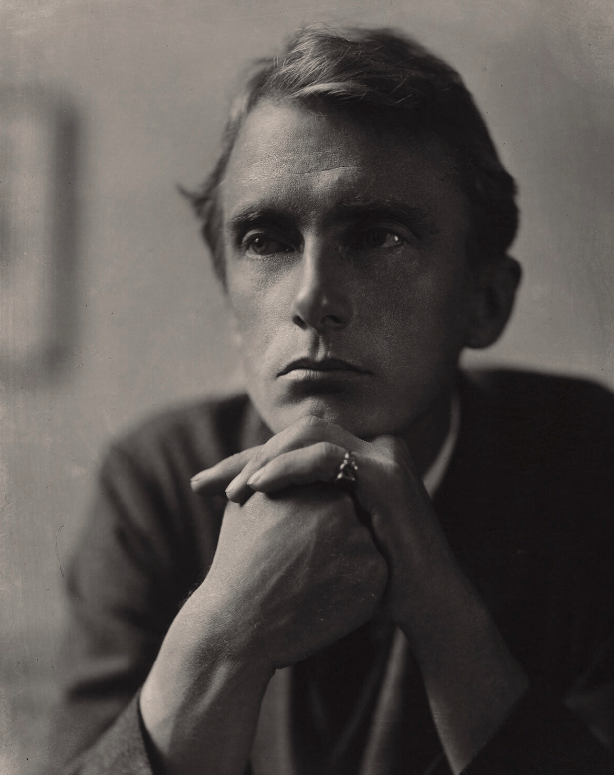
Edward Thomas was born in 1878 in Stockwell, South London. He began his writing career in 1906, working as a journalist, literary critic and book reviewer. Thomas began to write poetry in 1914 and today his name is associated with war poets Wilfred Owen and Rupert Brookes.

Edward Thomas enlisted with the Artists Rifles in July 1915 and was later commissioned into the Royal Garrison Artillery. He was killed in action at Arras on Easter Monday April 9, 1917 and is buried in the CWGC Agny Military Cemetery in the Pas de Calais region.

Thomas is mostly associated with South Wales where he maintained ties with his large extended family, and Steep in Hampshire where he lived with his wife and children (there is a study centre dedicated to him in the Petersfield Museum). His association with Swindon is perhaps less well known.

Edward Thomas’s father, Philip Henry Thomas was born in Tredegar in 1855, the son of Henry Eastaway Thomas an Engine Fitter. The Thomas family moved to Swindon in 1867 and appear on the 1871 census living at 5 High Street, later renamed Emlyn Square.

Henry Eastaway Thomas died shortly after the census was taken and was buried in the churchyard at St Mark’s on April 8, 1871. Sadly, the death of two of their sons occurred shortly afterwards, Daniel Eastaway Thomas in 1873 aged 12 years old and Edward Treharne Thomas in 1877 aged 11 years. Both boys are buried in St Mark’s churchyard though it is not know if they are together. According to this memorial (see below) youngest son Harry Eastaway Thomas died in South Africa in 1900.

By 1881 Rachel was living at 19 Cambria Place, which remained her home for the rest of her life.

Edward Thomas retained his close ties with Swindon, regularly visiting his grandmother Rachel at her home.

Death of Mrs R. Thomas. – A Swindon Octogenarian. – The death took place on Tuesday last, at her residence, 19 Cambria Place, Swindon, of Mrs Rachel Thomas, an old inhabitant of Swindon, who had attained to the great age of 86 years. She has been a widow since 1873. With her late husband, Mrs Thomas came to Swindon in 1867, from Tredegar, Mon., and Mr Thomas was employed in the GWR Works, which, like the town, was very small compared with its great extent today, and she lived to see many changes take place here. Mrs Thomas leaves a family of two children – a son and a daughter. The son is Mr P.H. Thomas, I.S.O., of the Board of Trade. It will be of added interest to our readers to know that a grandson of the deceased is Mr. Edward Thomas, author of the Life of Richard Jefferies, a work which has received most favourable notice in the London and Provincial Press. Mr Edward Thomas spent a whole summer in Swindon and district a year or two ago in collecting material for his work. Like Jefferies, he is a lover of nature, and when a boy used to live in Swindon with his grandmother.

Swindon Advertiser, Friday, December 31, 1909.

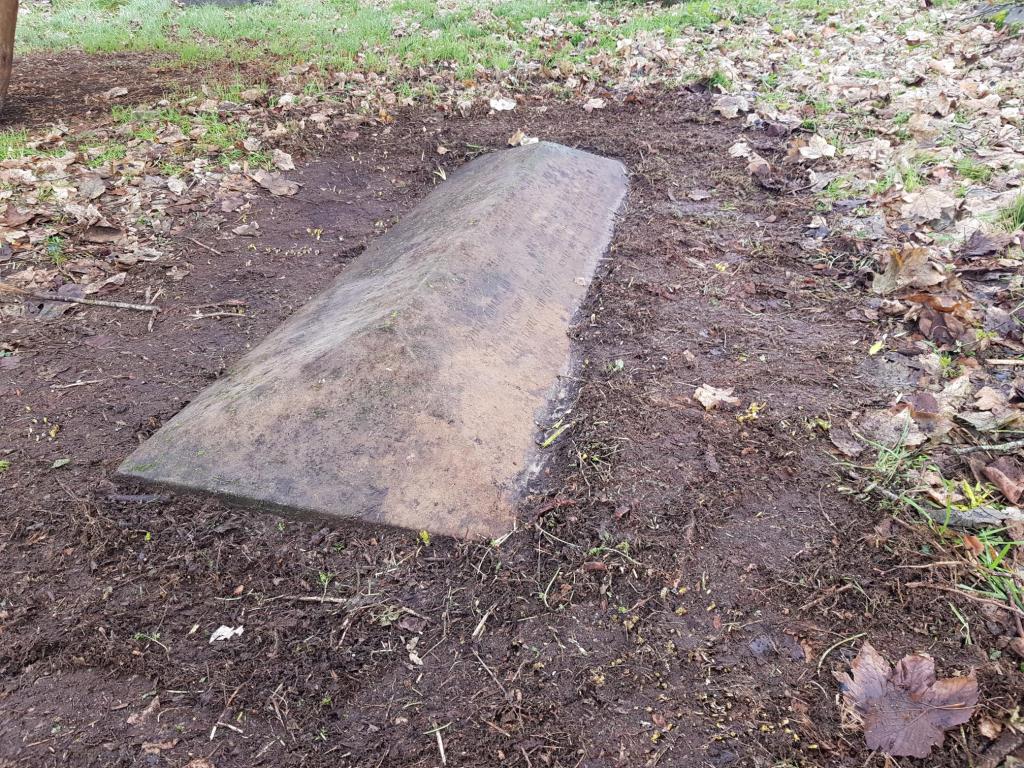
Rachel Thomas was buried on December 31, 1909 in grave plot C1609 where she lies alone.

On the reverse side of the memorial is the second verse of a hymn by Horatius Bonar.

Think truly and thy thought shall the world’s famine feed.

Speak truly and each word of thine shall be a fruitful seed

Live truly, and thy life shall be a great and noble creed

The plot has recently been cleared by Radnor Street Cemetery volunteer Jon.