Tydeman Bros and Sons Ltd.

Younger residents might not know the significance of some of the Swindon street names. If you live in Tydeman Street, Gorse Hill you might be interested in this story about the Tydeman family.
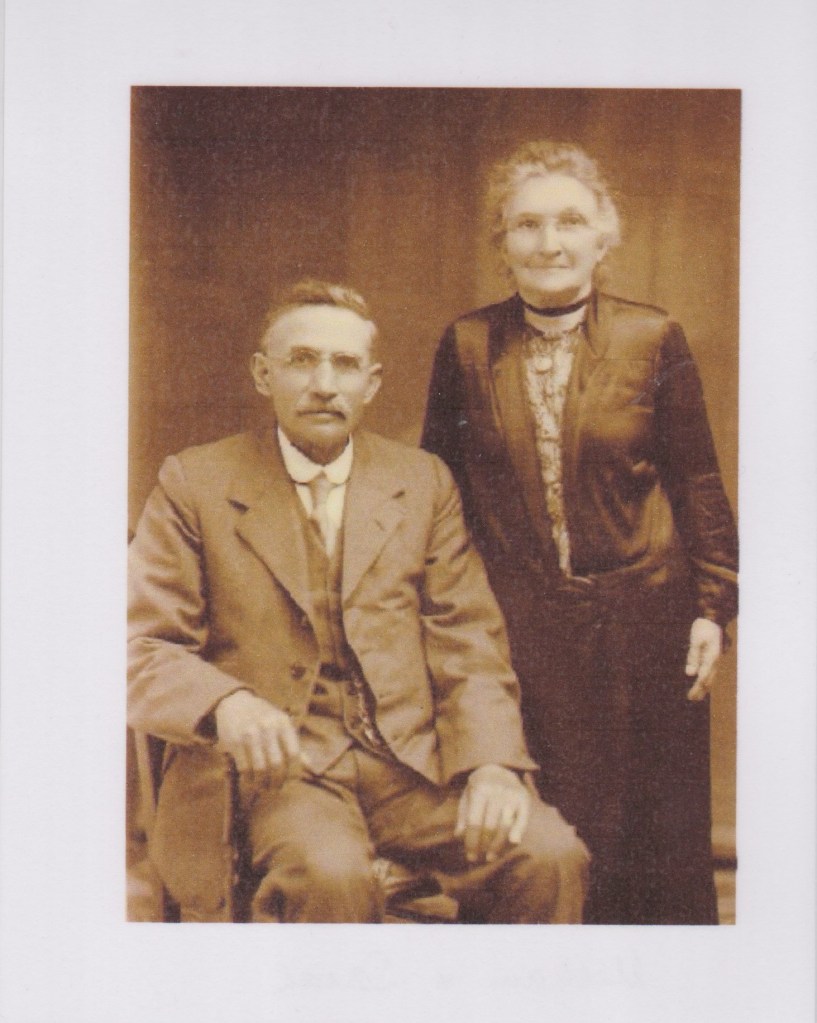
Published courtesy of Duncan and Mandy Ball

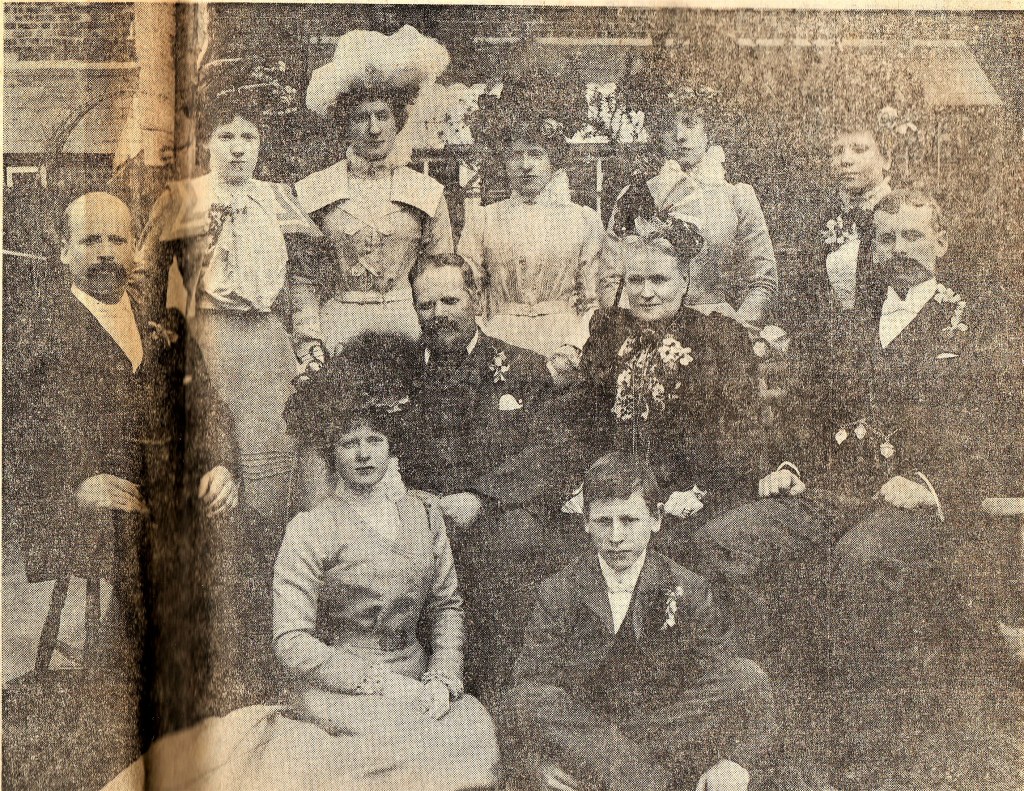
The son of a Police Sergeant, William Henry Tydeman married Sarah Anne Barnes in the parish church at Aldbourne on May 14, 1892. The couple moved to Swindon shortly afterwards and appear on the 1901 census living at 1 Edgware Road with their five young children, Elsie 7, Dorothy 6, Hilda 4, Henry 2 and 8 month old Lilian.

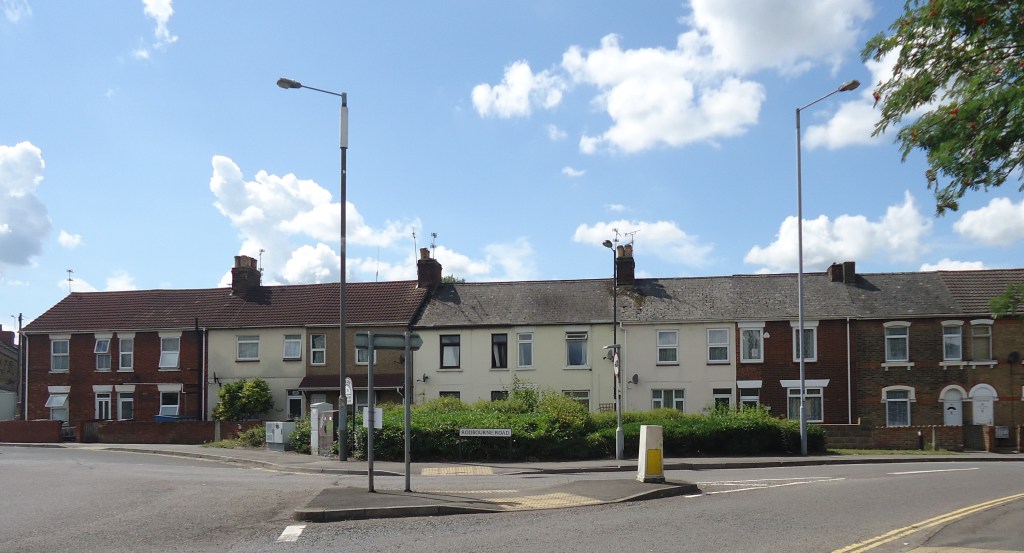
It was around this time that William went into partnership with his younger brother Walter and they began work on an ambitious building project in Rodbourne – nine houses in Linslade Street and eight in Jennings Street.

In 1904 the brothers advertised their business as ‘Contractors, Decorators and Undertakers at Sanford St. Swindon.’ In 1907 they built the Wesleyan Methodist Hall in Clarence Street, an iconic Swindon building, which was sadly destroyed by fire in 1977.

The business and the workforce grew following the First World War, eventually becoming Tydeman Bros. and Sons when the brothers two sons Henry and Nelson joined the firm. During the 1920s among their projects were 22 houses in Southampton Street, 19 houses in York Road and 16 houses in Iffley Road and more than 100 houses in the street that would bear their name, Tydeman Street.

In 1927 they were encouraging Swindonians to ‘Employ Your Own Townsmen – Tydeman Bros., Shopfitters, Builders & Undertakers Edgeware Rd. & Sanford St., Swindon. Inspect the Shopfront Alterations recently carried out by us at Messrs. Freeth & Son, Centre, Swindon, and the John Farmer Shoe Co., Regent Street, etc., Then send us your enquiries. Telephone 166.’

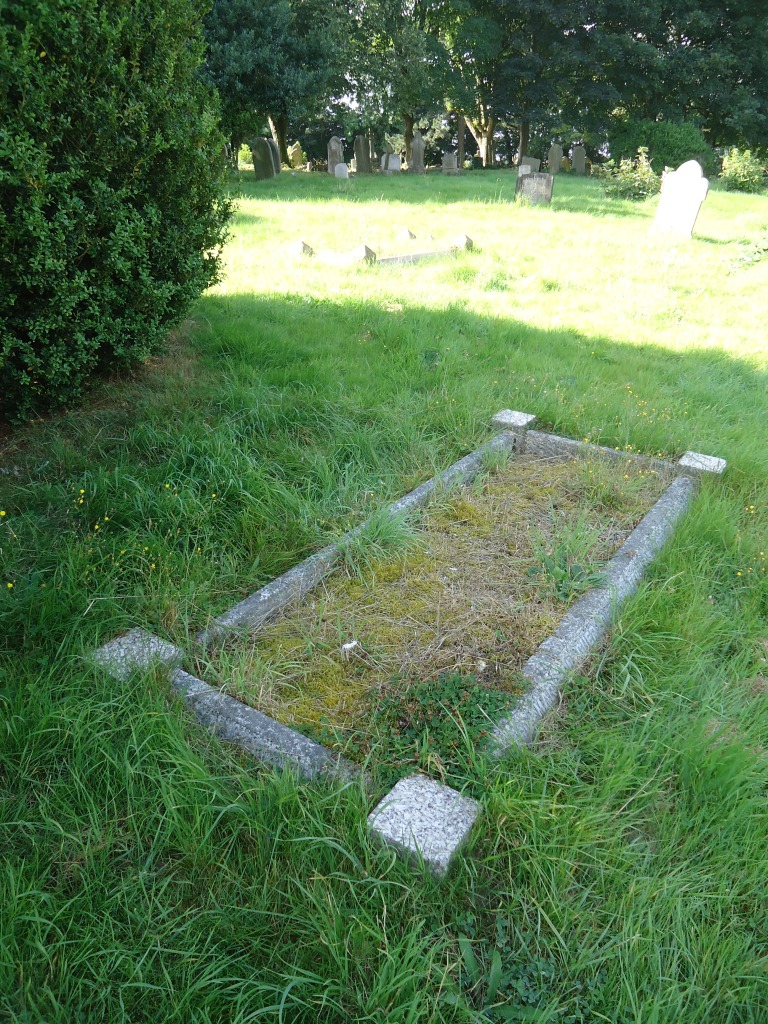
Sarah died in 1935 and was buried at Radnor Street Cemetery in grave plot D1310 with her daughter Hilda who had died in 1921, aged 25 years.
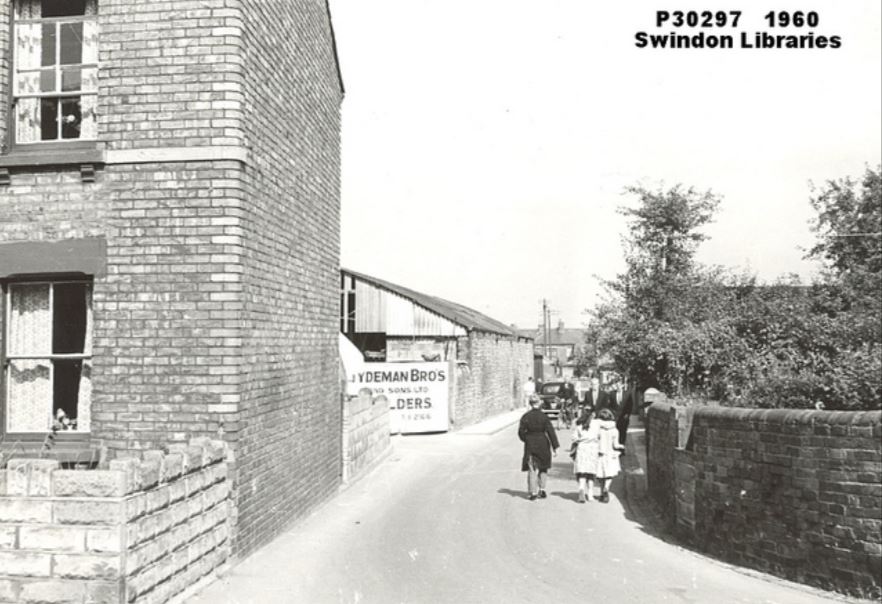
1960 image published courtesy of Local Studies, Swindon Central Library. Tydeman Bros off Cow Lane

Tributes to Mrs W.H. Tydeman

Funeral of Swindon Builder’s Wife

Mission Stalwart

The funeral of Mrs Tydeman, wife of Mr. W.H. Tydeman, of “Wanbourne,” 5 Downs View Road, Swindon, a member of the firm of Messrs. Tydeman Bros. and Sons Ltd., builders and contractors, took place last Thursday.

Mrs Tydeman had not been in good health for some months, but was taken seriously ill a week before her death on the previous Sunday. She was 73 years of age.

Although a native of Aldbourne, Mrs Tydeman had resided in Swindon for more than 40 years, during which time she made a host of friends, particularly in her connections with the Wesleyan Church.

Foundation Member

A foundation member of the Central Mission, which she had regularly attended since its inception, she gave endless time and energy to the furthering of the several activities with which she associated herself, and the many tributes received from the worshippers at the Mission bore evidence of her great work.

In his address during the service at the Central Mission Pastor J.W. Spargo, late of Swindon, and now residing at Reading, who assisted the Rev. R.A. Rogers in the service, spoke in feeling terms of Mrs Tydeman’s faith under adversity.

Mr F. Street was at the organ, and the hymns, “Jesu, the very thought of Thee” and “For all the Saints,” were sung. The lesson was taken from Psalm xxiii and a passage from Revelations.

The interment was at Radnor Street Cemetery, the committal sentences being pronounced by Pastor Spargo.

Mrs Tydeman is survived by a widower, one son, three daughters and one adopted son. Her mother also survives her at the age of 95 years.

Extracts from the funeral report published in the North Wilts Herald, Friday, 7 June, 1935.

A Prominent Methodist

Death of Mr W.H. Tydeman

A prominent Methodist, and a founder member of the well known Swindon firm of Messrs. Tydeman Bros and Sons, Ltd. Mr William Henry Tydeman, died at his home, 5 Downs View road, Swindon, on Saturday night two days before his 72nd birthday.

Mr Tydeman was a native of Donhead, South Wilts, his father being a sergeant in the Wilts Constabulary. He went to live at Upper Wanborough when he was about 13 years of age and was apprenticed to Mr Payne, builder of that village. On completion of his time he went to work in London. Later he spent a short period in the GWR Works and then, before branching out in business on his own account, was foreman for Mr George Whitehead, builder, of Swindon.

He and his brother, the late Mr Walter Edward Tydeman, founded the firm of Tydeman Bros. Some 40 years ago.

Built Central Mission

The firm of Tydeman Bros. built the Central Mission Hall, Clarence Street, Swindon, where Mr Tydeman was a prominent worshipper. He was a trustee of that church, and for a period of 25 years was superintendent of the Sunday school and church treasurer.

He was a keen sportsman and at one time belonged to the County Ground Bowling Club. He was also a life-long follower of Swindon Town Football Club.

Mr Tydeman, whose wife died five years ago, leaves three daughters – Mrs Ball, of 6 Cumberland Road, Mrs Austin, Bouverie Avenue, and Mrs Barrett, 48 Burford Avenue – one son, Mr W.H.T. Tydeman, who lives at 1, Edgware Road, Swindon, and an adopted son Mr Fred Vizor.

The funeral took place yesterday.

North Wilts Herald, Friday, 9 February, 1940

William Henry Tydeman was buried with his wife and daughter on February 8, 1940 in grave plot D1310.

George Bayliss – Your Majesty

The re-imagined story …

Swindon certainly pushed the boat out when King George V and Queen Mary came to town. The streets were all decorated and the people turned out in their thousands, cheering and waving their handkerchiefs as the royal car travelled down Regent Street.

The King’s first port of call on that April day in 1924 was to lay a wreath at the cenotaph, a gesture that gained him the respect of even the most anti royalist for the King was not that popular in some quarters so soon after the Great War. But not in our family – we were Royalists through and through – and after that visit in 1924 people used to call my Pops ‘Your Majesty.’

The Royal couple visited the Victoria Hospital and the Medical Fund building, but the highlight of the day for us was their tour of the Railway Works. I was working in the Carriage and Wagon Works, making luggage rack netting and we knew the Queen was going to be brought around. I don’t think I have ever been so nervous in all my life. She stood right behind me, watching me work. She smelt lovely, lilies of the valley. I didn’t dare look round, even when I heard her say ‘what nimble fingers you have young lady.’

But the star of our family show was my Pops, George Bayliss. Some 75 old railwaymen who had worked for the GWR for more than 50 years were introduced to the King and Queen that day and the King actually spoke to my Pops. It was all there, published in the Adver. He asked him how old he was – “I am 69, your Majesty, and I have had 58 years’ service,” to which the King replied “I hope to be as good a man as you are when I am your age.”

Afterwards a photograph was taken to commemorate the occasion. You can’t miss my Pops, sitting in the front row in his spotless white ducks, the white jacket and trousers worn by railwaymen in the old days. Pops took it all in his stride, but for me it was the proudest day of my life. The Queen admired my work and my Pops got to talk to the King. I wish I had a copy of that photograph.

The facts …

George was born in 1855 in Newark on Trent, Nottinghamshire the son of John Bayliss, a boiler maker and his wife Hannah. By 1881 he was living in Swindon and lodging at 17 Harding Street with Samuel Shallcroft and his wife and two daughters. He was 25 years old and working as an engine fitter.

George married Henrietta Kirby in 1882 and at the time of the census in 1891 they were living at 14 Charles Street, Rodbourne with their children William, Frederick, Walter, Lilian, Mabel and Edith. A seventh child, Beatrice May was born in 1893.

By 1901 the family had moved to 189 Rodbourne Lane, George’s home until his death in December 1926 aged 71 years old. George Bayliss was buried on December 11, 1926 in plot D760.

The home of George Bayliss in Rodbourne Road

The couple were non conformists and had children baptised on the Highworth Primitive Methodist Circuit and the Regent Primitive Methodist Circuit. George would no doubt have been happy to be buried in Radnor Street Cemetery where the burial ground was unconsecrated and the cemetery chapel non denominational.

Swindon Advertiser.

“He (Bayliss) is one of the old brigade and was conspicuous by the fact that he wore the old time white jacket and trousers. Though not worn nowadays, Mr Bayliss will not discard the old style and has a clean suit every week. His Majesty chatted with him for a few minutes and said to him “I hope to be as good a man as you are when I am your age.”

The photograph titled Swindon Works Veterans Inspected by Their Majesties the King and Queen on April 28th 1924 is published courtesy of Local Studies, Swindon Central Library, although the general consensus is that this is probably not the original. Carefully examination has revealed a couple of super imposed images, presumably those of men unable to attend on the day.

Rodbourne Man Killed – Fatal Accident in the GWR Works

How we like to moan about good old ‘health and safety’ regulations. What a nuisance it all is – well this is how life was before we had such protection.

When John Parkinson went to work that Tuesday in October 1901 it was just another day in the railway factory. By eight o’clock that evening he lay dead in the Medical Fund Hospital, his wife Kate a widow and his four young sons Ernest 8, George 6, Percy 4 and 2 year old Wilfred without their father.

The Fatal Accident in the GWR Works

A Rodbourne Man Killed

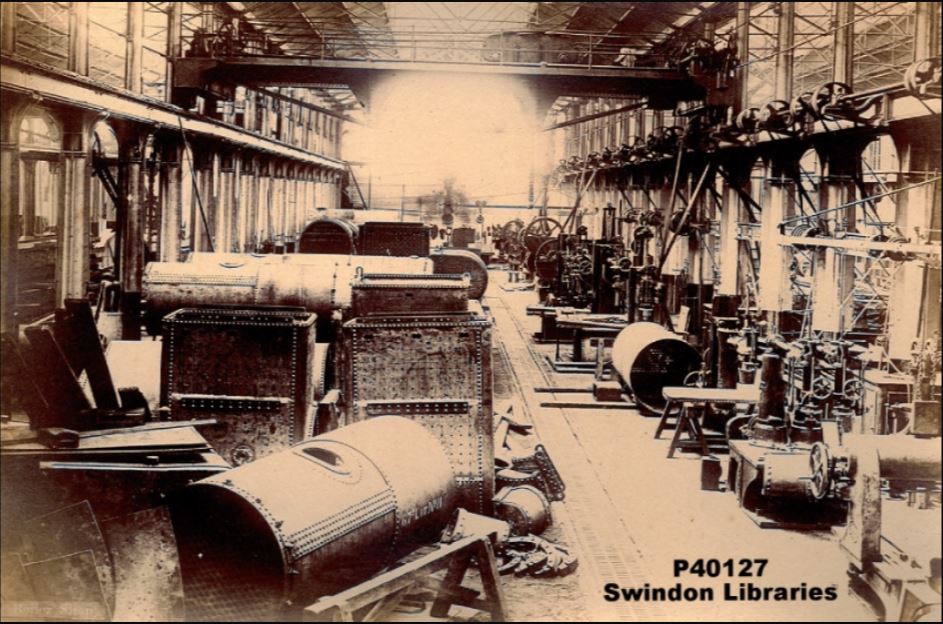
A terrible accident occurred in the GWR Works, Swindon, on Tuesday, which, unhappily, terminated fatally. A man named J.E. Parkinson, of 46, Linslade-street, Rodbourne, and engaged in the boiler shop of the GWR Works, was the victim, a large boiler falling on his back, and inflicting such injuries that his life was despaired of from the first. The accident happened about four o’clock on Tuesday last, and the unfortunate fellow, who was 31 years of age, was conveyed to the GWR Medical Fund Hospital, where Drs. Rodway and Astley Swinhoe attended to his injuries. The injuries to the back and sides were so terrible that it was utterly impossible to do anything more for the unfortunate man than give him stimulants and keep him warm. He only lingered four hours, passing away soon after eight o’clock in the evening. He leaves a widow, who is prostrated with grief, and four children.

GWR Boiler Shop c1886 – image published courtesy of Local Studies, Swindon Central Library.

The Inquest

Was held yesterday (Thursday) afternoon in the Council Chamber of the Mechanics’ Institution, by Mr Coroner W.E.N. Browne, and a jury, of which Mr. Thos. Tranter was chosen foreman. There were also present J.S. Maitland, Esq., H.M. Inspector of Factories, and Mr. A.E. Withy, representing the widow of deceased.

The Jury having viewed the body, the first witness called was William Simpkins, employed in the GWR Works, who was working on the boiler at the time of the accident. His evidence went to show that the boiler was mounted on trestles outside the shop. It had been there about three weeks. It was an ordinary engine boiler, and the trestles were standing on the bare ground. He did not notice anything wrong until a minute before the accident happened, and then he saw the trestles were sinking at one end. He gave the alarm, and one man was got out from the smoke box end, but the deceased was too late, and the boiler caught him as it tilted over.

By the Coroner: Is it usual to do this kind of work with the boiler mounted on trestles? Sometimes they are mounted on bogies, but they are done as much one way as another. – Has there ever been any accident before? Not to my knowledge.

By the Inspector: since the accident iron plates have been put under the trestles. Is that any improvement? Yes, undoubtedly.

By Mr Withy: Was it impossible for the man to get away after the warning was given? Quite impossible.

At this point a desire was expressed on the part of the jury to see the spot where the accident happened, to which the Coroner agreed.

Upon returning, Charles Bray, who was also working on the same job, gave evidence. He said that when the boiler began to slip, he shouted, and the man in the smoke-box end was got out. He then shouted to the man in the fire-box end, who said “What’s up?” He (witness) said that the boiler would fall presently, as the trestles were giving way. Parkinson then tried to get out, when the boiler went, crushing him between it and the packing.

By the Coroner: How long had the packing been there? I couldn’t quite say. – Were the trestles good? They were when they were put up. – Was there anything under the trestles- plate or anything? No. – Is this usual? Yes. – Was the boiler empty at the time? No, full of water, and deceased was marking what tubes had to come out.

Mr Llewellyn Dyer, foreman of the B Shop, was the next witness. In answer to the Coroner, he said that the trestles were quite strong enough. – Is it usual to put boilers on trestles? Yes, it is done every day. When they had sufficient bogies they were used, and when not they were put on the ground. – Had deceased stopped in the boiler, would he had been safer? Yes, I think so.

By the Inspector: Whose duty was it to see the boiler put on the trestles? My own nominally, but necessarily I have to leave details to others. – Will precautions be taken to prevent similar accidents in the future? You my take it from me, sir, such an accident will never occur again. – Witness went on to state that the ground on which the boiler stood was new ground, and had not, previous to a month ago, been used for the purpose for the past 30 years.

Dr. G. Rodway Swinhoe gave evidence that he attended the deceased soon after the accident, and found him suffering from very severe shock. After examination he was put to bed, and stimulants were administered, but he was too bad to be moved about. Deceased never recovered from the shock, and this was undoubtedly the actual cause of death.

The Jury returned a verdict of “Accidental Death,” caused by severe shock to the system, through the accident.

At the conclusion of the enquiry, Mr. Dyer stated that a communication would be sent to Mr. Maitland by the Manager of the Works stating what steps had been taken to prevent a recurrence of the unfortunate affair, at which the Inspector and Coroner expressed their satisfaction.

Swindon Advertiser, Friday, October, 18, 1901

The Fatal Accident in the GWR Works

Funeral of the Deceased

The body of John Ernest Parkinson, of Linslade Street, Rodbourne, who succumbed to injuries received in the GWR Works, Swindon, on Tuesday week, as already reported in our columns, was interred in the Swindon cemetery last Saturday morning. Nearly a hundred persons followed the coffin to the grave, the chief mourners being the deceased’s widow, his mother, and children. Mr. C. Hall and Mr F. Green, assistant foremen in the same shop that deceased worked in, followed many shop mates and others being present. The Rev. F.J. Murrell (Wesleyan) conducted the service, and the coffin, which was of elm with black fittings, was covered with floral tributes….

Mr Charles Dunn carried out the funeral arrangements.

Extracts from the Swindon Advertiser Friday October 25, 1901.

Linslade Street, Rodbourne c1920s image published courtesy of Local Studies, Swindon Central Library.

When John Ernest Parkinson married Maud Mary Kate Clack at St. Mark’s Church, Swindon in 1892 he gave his occupation as Cheese Monger and an address in London. By the time of the census in 1901 he describes his occupation as a Locomotive Boiler Tuber in the GWR Works here in Swindon.

His funeral took place on October 19, 1901 and he was buried in grave plot C1979 where he lay alone for 74 years. In 1975 his son George Clement Parkinson was buried in the same plot and two years after that Kate Parkinson (most probably George’s wife) joined them.

Thomas Messenger – Fatal Accident in the GWR Works

On Friday December 14, 1894 Thomas Messenger was involved in a fatal accident in the Timber Yard at the GWR Works. Back home in Linslade Street his wife Emma went into labour. Thomas died two days later. He was 31 years old and according to the report made to the Great Western Railway Board he had been employed in the Company for 5 years and 5 months, his daily rate of pay was 3s 2d.

Fatal Accident in the GWR Works – On Tuesday morning, Mr. Coroner Browne and a jury, of whom Mr W.J. Deavin was foreman, held an inquest at the Cricketers’ Arms, New Swindon, on the body of Thomas Messenger, aged 31 years, a labourer, employed in the Great Western Railway Works timber yard department. Mr T.O. Hogarth and Mr H. Hayward were present to watch the case on behalf of the GWR Company.

From the evidence adduced, it appeared that deceased was on Friday morning employed with other men in stacking timber. A “skid” – a piece of timber weighing some 7 cwt. – was used for sliding the timber on to a stock in order to save labour. Deceased placed the skid too far over the corner and it rebounded and stuck him in the head, causing a fracture of the skull.

A verdict of accidental death was returned. The jury gave their fees to, and also made a subscription on behalf of deceased’s widow, who is left with three children, and was confined on the morning of the accident. The sum handed to the widow was £1.

Wilts and Gloucestershire Standard, Saturday, December 22, 1894.

Thomas was buried on December 19 in a public grave plot B2264. His father, also named Thomas, was buried with him in 1902. They share the grave with a baby and an elderly widow, both unrelated.

Thomas and Emma had been married less than two years. Emma had already been widowed once before, left with two little daughters Martha and Amelia. Now she was on her own again with another child. The baby was baptised at the parish church in Latton on January 27, 1895. She was named Thomasina Polly Strong Messenger. Emma went on to marry for a third time in 1901. She died in 1943, aged 82.

Thomasina married, raised two children and died in High Wycombe in 1973, aged 79.

No 1 Shop, Timber Yard pictured in 1928. Image published courtesy of STEAM Museum.

Yesterday had been a good day

The re-imagined story …

‘A sound of breaking glass; she had been so close to sleep that at first she had thought she was dreaming.  But soon she heard the unmistakable sound of panic surge through the house.

She had done everything in her power for the man, three nights she sat with him until she felt that she could do so no longer and then it was decided to engage a nurse to take the night duty.

Yesterday had been a good day.  He had sat up in bed, even ate some toast and marmalade.  The doctor said the pneumonia wasn’t that bad, just on the right side.  Today had not been so good.

His condition had rapidly worsened.  She had tried to encourage him to sip a spoonful of broth, but he had taken no fluids all day; all she could do was keep his lips moistened.

She had sent word down to Morris Street, to let his wife know he had taken a turn for the worse.  Poor woman was worried out of her mind but what could she do with the little ones clinging to her skirts?

All day she had sat with him, her presence seemed to calm him, his ramblings were less wild when she held his hand.

“Sorry dad, I’m sorry dad,” he sobbed as he gripped the sweat soaked sheet.  He called for his mother and told Norah he loved her and the kids.

The facts …

At the time of the 1911 census James and Norah were living in Warmley, near Bristol where he worked as a pottery labourer in a brick and tile works. He was 24 and Norah was 21. They had a year old son Herbert and six month old twin daughters Norah and Kathleen. They had been married for five years.

By 1912 the family had returned to Swindon and were living at 16 Reading Street in the railway village where little Norah died aged 19 months old. She is buried in Radnor Street Cemetery in a large plot for infant burials B1317.

The inquest into the death of James Price took place at the Police Station at the top of Eastcott Hill. Norah told the court that her husband was 27 years of age, and a bombardier in the Reserve Battery of the Royal Field Artillery.  In private life he was a wagon painter.  She lived at 4, Morris Street, and her husband was billeted at 97 Lansdown Road.

The jury found that the deceased died from fracture of the base of the skull, due to leaping from the window while in a state of unsound mind.

Price JW

Gunner James William Price, aged 27 years, was buried on February 12, 1915 in plot B1777, a public grave where he lies with two others.

William and Arthur Henry Wall – died on the same day

The newspaper article provides a pretty comprehensive account of William’s service. His military records reveal that he enlisted in the 4th Wilts on September 14, 1914 aged 46 and served at home until January 2, 1916. On January 3, 1916, having transferred to the 22nd Wessex & Welsh Btn the Rifle Brigade, he was sent to the Western Front where he served for 325 days. On November 24, 1916, he was posted to Salonika where he served for 1 year and 215 days before being posted home on June 27, 1918, having previously transferred to the Royal Engineers.

William was discharged on August 10, 1918 as being no longer physically fit for War Service. He was 49 years and 11 months old and suffering from valvular disease of the heart (VDH).

He was awarded a weekly pension of 27 shillings for four weeks after which it dropped to just over 13 shillings, to be renewed after 48 weeks.

William had previously worked for more than twenty years as a Rivetter’s Holder Up in the GWR Works, a physically demanding job that he was now no longer strong enough to do.

William died on May 22, 1922 just hours before his son Arthur also died.

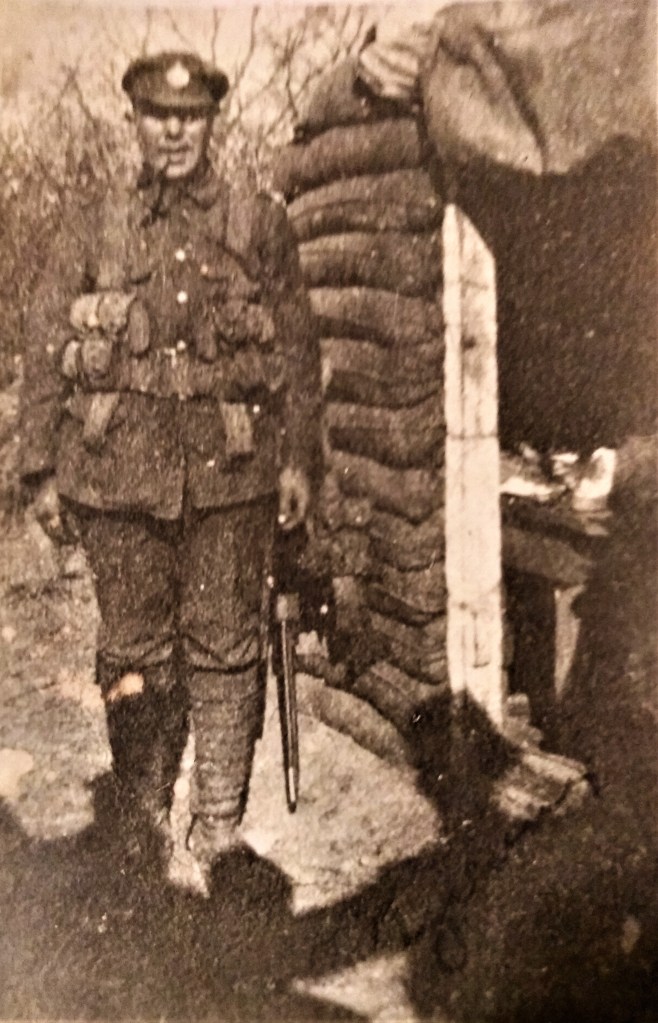
When Arthur Henry Wall enlisted at the Devizes recruitment office he stated that he was 19 years old and worked as a boilermaker. In fact he was only 16 years old and two years below the minimum age for enlistment.

He served a period of 140 days from January 12, 1915 to May 31, 1915 at home but on June 1, 1916 was posted to France, aged 17. However, on July 10 Arthur’s true age was detected and he was sent back to England as ‘underage and physically unfit for service.’

He spent the next year posted in England but on June 28, 1916 he returned to France and served more than 300 days. By now serving with the Bedfordshires, Arthur was gassed on May 12, 1918 and ten days later returned to England.

On November 23, 1918, he was discharged suffering from Defective Vision, Dyspnoea (a symptom of aortic insufficiency) and headache.

He was awarded a pension of 11 shillings a week from November 24, 1918 to be reviewed in 26 weeks’ time. In 1920, by now a married man, Arthur wrote to the Record Officer of the Bedfordshire Regiment asking if he could apply for further money under the Army Order 325/19 but was informed that only soldiers serving from the date of the pay increase on September 13, 1919 were entitled.

Like his father, Arthur also died of heart disease, a direct result of his military service.

United in Death

Father and Son Buried at the Same Time

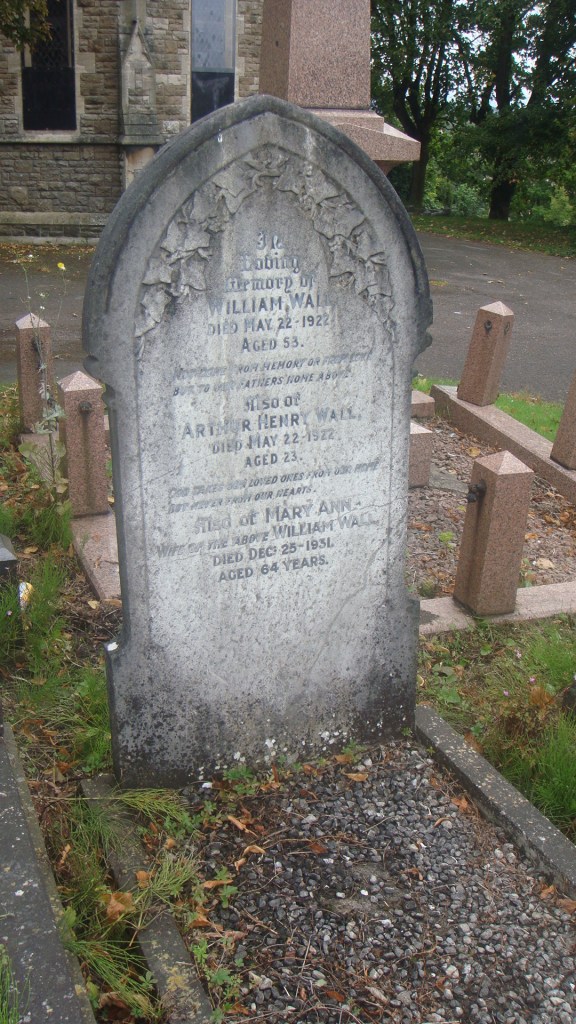
The burial of a father and a son who died on the same day took place at Radnor Street Cemetery, Swindon. The deceased were Mr William Wall, 35 Linslade Street, Swindon, and his son, Mr Arthur Henry Wall, 36 Jennings Street. Both had served in the war, and their death was directly attributable to the hardships endured on active service. The father, who was 53 years of age, served in the Army for 12 years, and during the war he was in Egypt, Greece, Serbia and Italy – first with the Wilts Regiment then the Rifle Brigade and was later attached to the Royal Engineers. In August, 1918 he was discharged as unfit for further service. His death occurred on May 22nd, just a few hours before his son passed away.

The latter was 23 years of age. When only 16 he joined the Wilts Regiment, and was later transferred to the Bedfords, and then to the 1st Herts. He saw service in France and Belgium, and was badly gassed in May, 1918. In November of the same year he was discharged.

It is a pathetic fact that although he did not know his father was so ill he had a sort of premonition that they would die at the same time, and expressed a wish that they might be buried together.

Wiltshire Times and Trowbridge Advertiser June 17, 1922.

Father and son were buried in plot E8206 where Mary Ann, William’s wife and Arthur’s mother, joined them following her death in 1931.

If you are wondering why they do not have a Commonwealth War Graves Commission headstone it is because their deaths occurred after August 31, 1921 the date on which the First World War officially ended.

First published on October 9, 2021.

John Henry Puzey – the hidden cost of war

John Henry Puzey was born on August 10, 1895 at Upper Stratton, the youngest of four sons. By the time of the 1911 census his parents John and Sarah with younger sons Alfred Robert and John Henry were living at 165 Redcliffe Street, Rodbourne. Three elder sons had followed their father into the GWR Works but John Henry had taken a different career path and at 15 was an apprenticed house decorator. A bit of a lad was John, so say those who remembered him.

John Henry Puzey enlisted at Swindon on October 7, 1915 with the Wilts (Fortress) R.E. (T) and was later transferred to the 3/1 Wessex Field Coy. R.E. serving in Salonika. On August 1, 1919 John Henry Puzey was examined at Tiflis prior to being demobilised. He signed the following statement: I do not claim to be suffering from a disability due to my military service. His signature reveals a shaky hand. On September 14, 1919 he was discharged from Fovant in Wiltshire, No. I Dispersal Unit. His Medical Category was described as A1. But John was clearly not in good mental health.

“His illness was not diagnosed as shell shock but merely a worsening of his mental state before WWI,” says his great niece, Mary. He was clearly suffering from what would now be called Post Traumatic Stress Disorder (PTSD). Whatever the terminology, whatever name you want to give it, John’s mind was destroyed by war.

John Henry Puzey was admitted to Roundway Hospital, the former Wiltshire County Lunatic Asylum, in Devizes, Wiltshire. His family visited him regularly, his brother Alfred taking over the responsibility after their mother’s death. Alfred would bring his little granddaughter Mary to see his brother. Mary recalls how when he was in good health he shopped in Devizes for the staff and went out with the staff football and cricket teams.

“During visits if he was well, we saw him in the canteen/visitors room. I remember one Christmas one of the inmates had painted an alpine scene around the walls. It was wonderful. In summer months we would walk around the grounds, which he helped to maintain. He always took us to the garden tool store room under the main hospital. He called this his dugout. To him it was a safe area the same as his dugout in Salonika,” said Mary.

John Henry Puzey died at Roundway Hospital on July 25, 1962. He was 66 years old. He left administration of his will to the brother who had visited him in hospital for all those years, retired boilermaker Alfred Robert Puzey. John Henry was buried in Radnor Street Cemetery on July 31, 1962. He shares plot D636 with his parents, John who died in 1928 and Sarah Ann who died in 1947.

Nash family – confectioners

The re-imagined story …

I used to love to go shopping. And do you know what my favourite shop was – Nash the confectioners, and not only when I was a child either. Sometimes I would call in when I was a grown up too, a young clerk in the Works, before I married and had children of my own. You don’t see sweet shops like that anymore, you don’t see sweets like that either, jars and jars of handmade confectionery.

It was a sad day when the last of the Nash family shops closed. Perhaps they couldn’t compete with the big manufacturers, the producers of those bags of gummy, plastic tasting sweets that tempt the children at the supermarket checkouts. Soulless places, those supermarkets. My granddaughter offered to take me to Asda Walmart on a shopping trip. Bah – that’s not a shopping trip, that’s a descent into Hades, I told her.

What I would give to take a walk down Regent Street again? Not the Regent Street of today but the old one, when ladies got dressed up to go down town. My first stop would be a wander around McIlroys and then a visit to Nash’s and a quarter of – now what would I choose, aniseed balls or pear drops, or maybe a bag of toffee, although my teeth are probably not up to that now. Happy days.

Regent Street

The facts …

William Nash was born on April 23, 1840 at Badbury the son of William and Jane Nash. His father died two months before William’s birth, leaving Jane to raise four young boys alone until she remarried in 1844. At the time of the 1851 census 11 year old William is living in Badbury with his mother, step-father William Jordan, his two brothers Thomas and George Nash and three half sisters Sarah, Ann and Emma Jordan.

William married at St. Mark’s Church on December 25, 1863. He was 23 and working as a labourer, his bride was 21 year old Elizabeth Hunt. The couple began their married life in London where their first child, Edmund William Nash was born. It seems likely that this is also where William saw the prospects of a career in the confectionery trade. Elizabeth’s brother and sister had both married into the Leach family, headed by Thomas Leach who had a confectionery business in Southwark.

On his return to Swindon William worked as a labourer in the railway works and Elizabeth as a mangler. In 1871 the couple lived at 2 Havelock Street with their growing family – Edmund 5, Clara 4, Thomas E. 2 and 8 month old Elizabeth M. It appears that the Nash couple were both prudent and focused, both working and saving to fulfil their ambition to open their confectionery business.

By the time of the 1881 census William had achieved this ambition. The family lived over their first shop at 32 Bridge Street. By then there were seven children, the youngest 4 month old Lily. Elizabeth’s sister Martha Hunt lived with the family working as an assistant in the shop.

And so the Nash empire expanded with shops at 64 and 65 Regent Street and 17 Regent Street as well as the original premises at 32 Bridge Street. Other family run shops opened at 104 Cricklade Road, 10 Wood Street, 32 Regent Circus and 167 Rodbourne Road, the last of the shops which eventually closed in the 1970s. The Nash family were famous for their award winning ice cream and also their bargain pack of assorted sweets – Penny Big Lots.

Death of Mr W. Nash – Mr W. Nash of Lypeatt House, Goddard Avenue, Swindon, died on October 29th after a long and painful illness. He will be remembered by many, having been formerly in business as a sweet manufacturer. He married a daughter of the late Mr Thomas Hunt, of Broad Town, who was well known in Primitive Methodist circles. He leaves a widow, six daughters and two sons. The funeral took place on Monday November 4th the cortege leaving Goddard Avenue at 3 o’clock for the Primitive Methodist Chapel, Prospect Place. The Rev. H. Pope Officiated at the chapel and also at the Cemetery.

Extracts from the North Wilts Herald, Friday, November 15, 1918.

William and Elizabeth Nash are buried together in plot E7604

Grateful thanks to Katie Brammer for sharing her family history research. Katie has been discovering the graves of her Nash family ancestors with the help of Radnor Street Cemetery volunteer Jon. This is the grave of William and Elizabeth Nash.

WANTED, a respectable GENERAL SERVANT, about 18, able to do plain cooking; sleeping out preferred; good character – Apply, Nash, Confectioner, Bridge Street, Swindon.

The Swindon Advertiser, Friday, September 2, 1904.

Joseph and Charles Williams – busy building Swindon

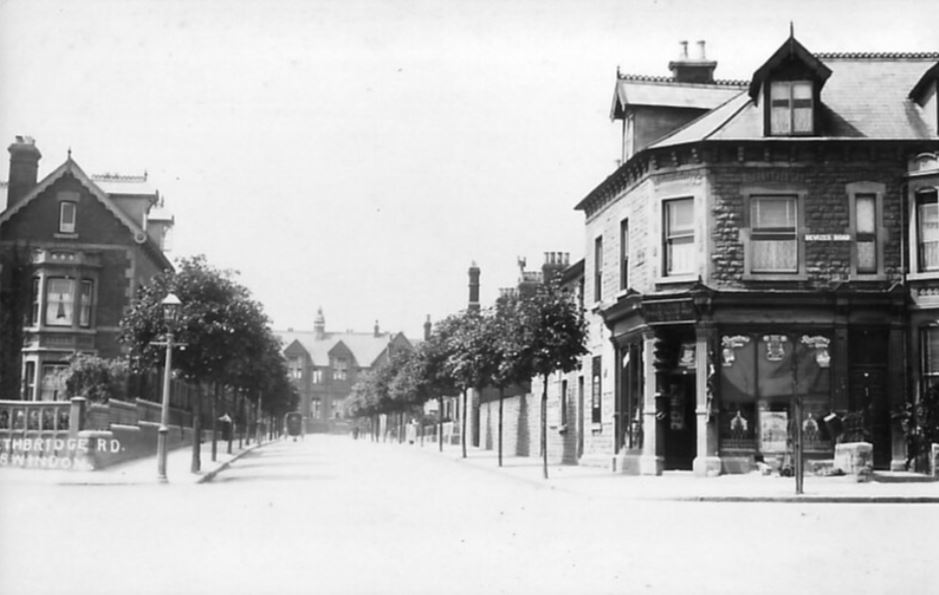
Lethbridge Road published courtesy of P.A. Williams and Local Studies, Swindon Central Library.

After a lifetime of hard graft, Joseph Williams had to face the humiliation of bankruptcy and the end of his business. Ultimately it proved too much to bear.

Joseph Williams was born in Shrivenham in 1841, the second son of Charles Williams, a carpenter and joiner, and his wife Lucy. He married Sarah Jane Painter at Christ Church on December 26, 1866 and the couple had two children, Frederick born in 1870 and Florence born five years later.

Joseph’s brother Charles combined two jobs, recorded as the licensee at the Dolphin, Rodbourne in 1881 but also working as a builder.

Both brothers worked hard, building their business, and building Swindon. By the 1880s both were well established. Elder brother Joseph was working in Stafford Street, Lethbridge Road, and Springfield Road. At the beginning of the 1890s he built more houses in Lethbridge Road, 17 in Albion Street and 22 in Morrison Street.

Charles was equally busy where he built 24 cottages in 1888 on the newly available Rolleston Estate. During 1897 he built a school in Euclid Street, 7 houses in St. Paul’s Street and 40 Houses in Redcliffe Street.

Perhaps the brothers were over ambitious. Perhaps they were not fully acquainted with their financial situation; too busy working.

In 1902 Charles built 28 houses in Morrison Street and in 1905 Joseph built 12 houses in Lansdown Road and that seems to be the end of the Williams’ building empire.

In 1906 Joseph sadly took his own life.

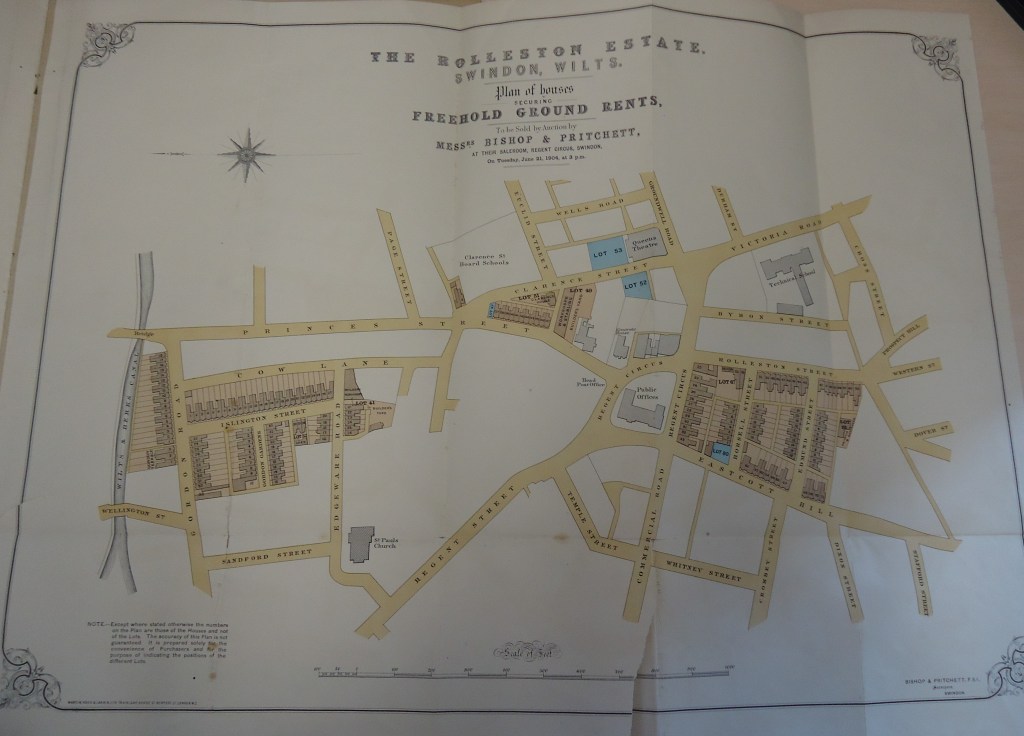
1904 map of the Rolleston Estate held in Local Studies, Swindon Central Library

Suicide of Mr Joseph Williams

Found Hanging in a Loft

Inquest and Verdict

Shortly before 11 o’clock on Friday morning a shocking discovery was made in a loft adjoining Clifton House, Devizes Road, [Lethbridge Road] Swindon, the body of Mr Joseph Williams being found hanging from a beam. Immediately the tragedy was revealed, Mr S.W. Filtness, who was engaged at his oil stores opposite, was summoned by Mr Williams’ daughter, and he at once proceeded to the loft and cut the body down, life being found to be extinct.

Mr Williams was missed for about half an hour. He had partaken of breakfast, and appeared as usual, and in cheerful spirits. After the meal he read his newspaper and shortly afterwards went out to fetch some wood. As he did not return, his daughter – Mrs Dismore – went to search for him. When the dreadful discovery was made, Dr. Lavery, who happened to be attending a case in Winifred Street, was called in and subsequently Dr. Reid, but they were only able to pronounce life extinct.

Needless to say, the news caused a good deal of sensation and spread with remarkable rapidity through the town. The deceased’s recent misfortunes have for some time been occupying general interest, and the incidents associated therewith had gained him the greatest sympathy. There is not the slightest doubt but that his mind had become seriously affected as the result of his troubles in this direction, and it will be remembered that prior to his examination in the Bankruptcy Court the state of his health was so distressing that he was compelled to leave the town to recuperate. He never completely regained his physical and mental strength, however, and, although his relatives had never heard him threaten to take his life, the news of his untimely end did not occasion absolute surprise amongst those who were painfully aware of his state of mind.

Mr Williams had resided in Swindon nearly the whole of his life, and, as a builder and contractor, was widely known and respected. He had, until latterly, led a very active life – in fact, his career had been one of hard work, with no indulgences, which makes his tragic end the more painful. Mr Williams has been responsible for many extensive contracts in Swindon and district, and was of course, a large employer of labour. Until within the last twelve months his upright, active and almost youthful bearing hardly betokened a man who had left three score years behind him. For the relatives of the deceased the deepest regret is felt.

Deceased, who is 63 years of age, was prominently connected with the Victoria Road Congregational Church, and was for many years a superintendent of the Sunday School.

The enquiry into the sad circumstances was held at the Fountain Inn, Devizes Road, on Friday afternoon. Mr Alfred Bowker was chosen foreman of the jury. Mr G.M. Butterworth watched the case on behalf of the relatives, of whom Mr C. Williams, deceased’s brother, was present. Supt. Robinson was also in attendance.

The formalities were of the briefest possible description, and the Coroner dispensed with his usual preliminary address to the jury.

Mrs Sarah Jane Williams was the first witness, and said: I live at Clifton House, No. 1 Lethbridge Road, Swindon, and I am the wife of the deceased, whose name is Joseph Williams, and his age was 63 last birthday. He was a builder and contractor. He has been ill for more than twelve months. At times he has been very quiet, and very depressed. He has never expressed the intention of doing harm to himself. He was perfectly well last night, and at breakfast time this morning, only depressed. He had been attended by a doctor, who saw him either on the previous Monday or Saturday.

Stephen William Filtness said: I was in a yard opposite to where Mr Williams lives, on Friday morning, when the deceased’s daughter, Mrs Dismore, came and fetched me about 11 o’clock. She asked me to see what was the matter with her father. I went into deceased’s workshop and up the ladder into the loft. I saw Mr Williams with the rope round his neck. He was suspended, and his feet were touching the ground. I cut him down, and went and found a policeman. Deceased was just warm, but I am quite certain he was dead.

P.C. Walter Shergold said: From information I received I proceeded to Joseph Williams’ loft I found the deceased lying on his back with a rope tightly round his neck. I slackened the rope round his neck and examined him to the best of my ability, and I found he was dead.

P.S. Buchanan said: From information I received I proceeded to the house where Mr Joseph Williams had lived. I found these papers written for his wife. I have read the papers.

Dr Charles Lavery said his partner (Dr. Rattray) had been in medical attendance upon the deceased for some time, chiefly for nervous breakdown. He never expressed any intention of taking his life.

The jury returned a verdict of “Suicide whilst temporarily insane.”

Extracts from the Faringdon Advertiser, Saturday, April 14, 1906.

Joseph was buried on April 11, 1906 in grave plot D1578. His wife Sarah Jane died in April 1929 aged 85 years and is buried with him. Their daughter Florence Mary Dismore joined them when she died in 1956 aged 80 years.

When probate was granted to his widow in 1919 Joseph’s effects were valued at £15.

At the time of the 1911 Charles Williams, Joseph’s brother, appeared living at the County Ground Hotel with his son, another Charles, who was the Hotel Proprietor. Charles was 62 and still describes himself as a builder. He lives with Mary, his wife of 43 years and the couple declare that of their five children, Charles (the hotel proprietor) is the only one still living.

The Boucher family paperwork

43731787_2357590734282064_2810830051103211520_n

The last serious act of vandalism to take place in Radnor Street Cemetery happened across one weekend several years ago.

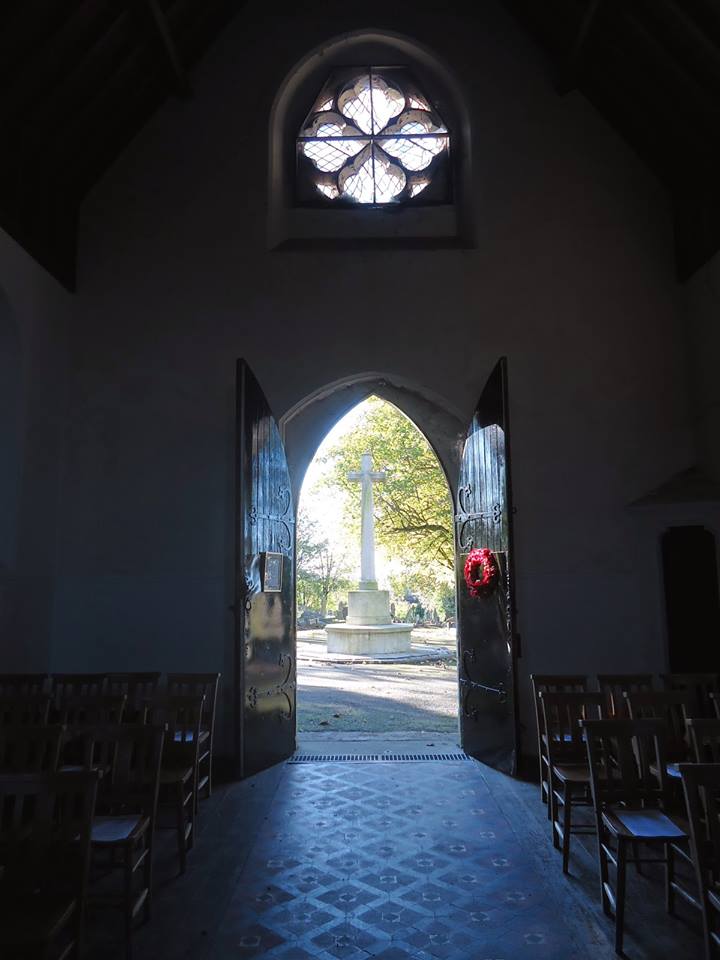
A break-in at the chapel saw windows smashed, including the rose window above the door. The intruders lit a fire in the vestry, the small room off the chapel, using a box of documents stored there.

The documents were ‘Form of application for permission to erect or restore a memorial’ and included the name and address of the owner of the grave and how much the memorial cost, invaluable information lost in the fire. One rare, surviving document includes the details of the Boucher family grave, naming the stonemason, the dimensions of the memorial and the inscription.

Boucher family

‘In loving memory of George Boucher died 8th July 1915 aged 61 years also Mary Boucher died 25th February 1943 aged 88 also Alice and Ethel their beloved daughters.

The owner of the grave was Annie Elizabeth Boucher who lived at 30 Swindon Road. The grave plot is C484 and the memorial cost in total £3 10s. Alice died in 1897 aged 16. Ethel died in 1956 aged 70.

George and Mary Anne were originally from Herefordshire where they married in 1877. They both came from farming families and were neighbours living in Cublington.

By 1881 they had moved to Swindon and lived in 19 Thomas Street, Rodbourne. George worked as a Machine Man in E & M Shop in the Works.

Ten years later and George was working as a machine manager in the Iron Works. The couple had seven children and were still living in Rodbourne at 54 Linslade Street.

By 1901 the family were living at 111 Linslade Street and the elder children had left home. Emily, aged 22 was working as a parlour maid while Ethel, 15 was a machinist in the shirt factory round the corner from Linslade Street.

At the time of the 1911 census the couple had just two children living at home in Linslade Street. William had followed his father into the Works as an engine fitter while Ethel remained employed at the Cellular Clothing Company in Rodbourne.

George died on July 8, 1915 and Mary Anne in 1943. Ethel was still living at 111 Linslade Street when she died in 1956, more than 50 years after the family originally moved there.

A 1917 Trade Directory lists Annie as a shopkeeper living at 30 Swindon Road, which was her last home in the 1960s. She died at the Cheriton Nursing Home on December 31, 1962. She is not buried in this family plot and does not appear to be buried elsewhere in Radnor Street Cemetery. She never married and left effects valued at more than £5,000 to the administration of two solicitors.