William Jasper Hall – DSM

The re-imagined story …

Mr King held a whole school assembly the day the news was published. William Hall had been awarded the DSM, the Distinguished Service Medal for Honours for Services in Action with Enemy Submarines.

William Hall hadn’t been a pupil at Jennings Street School. By the time the school opened he was working as an Engine Fitter ‘inside.’ It was this job that made him ideally suited for the role of Engine Room Artificer.

We all knew the Hall family. They lived at 77 Jennings Street. My auntie lived opposite them at number 4. Everyone knew everyone in Rodbourne in those days. We all shared in the glory of one of our own being so honoured.

Less than a year later we all mourned his death as well. He wasn’t killed in battle. To expect another act of heroism from one man would be too much. William Hall died of pneumonia and pleurisy – another form of drowning, only not at sea.

Perhaps Mr King held another assembly. I don’t know, I had left school by then and was waiting to start my own apprenticeship in the Works. I was too young to serve, much to the relief of my mother.

By 1918 everyone knew of someone who had died in the war. It was like that in Rodbourne. But not everyone knew someone who had won the DSM.

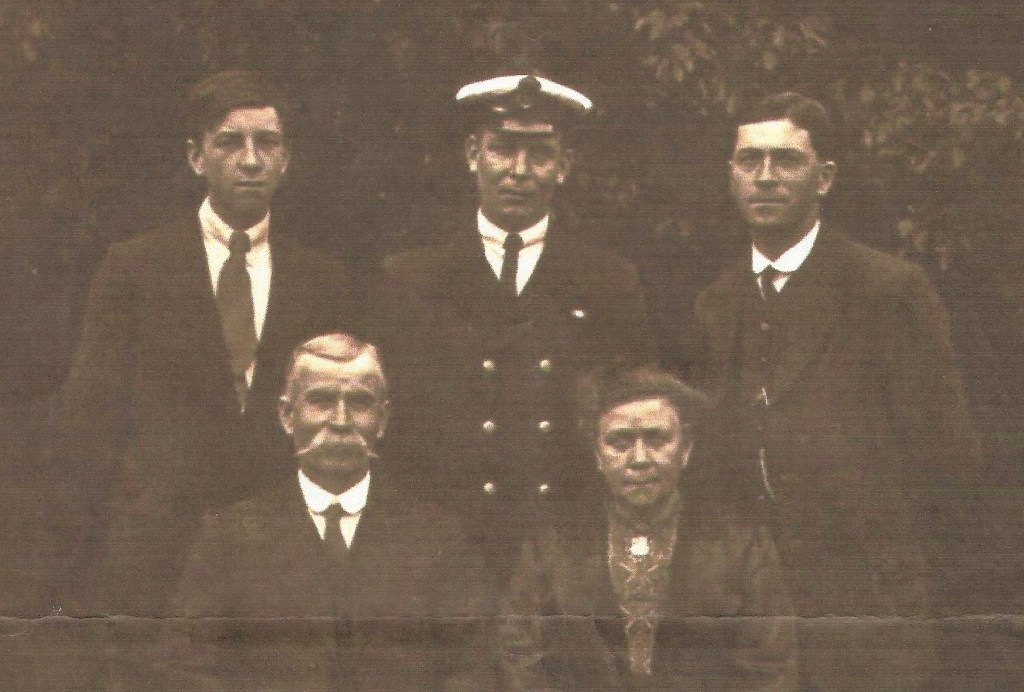
L to r Thomas Redvers Hall, William Jasper Hall and Frederick Charles Hall. Seated are their parents William Charles and Sarah (nee Kingdon) Hall.

The facts …

William Jasper Hall was born on November 6, 1888, the third child and second son of William Charles Hall and his wife Sarah. At the time of the 1891 census the family were living a 30 Jennings Street, Rodbourne on the very doorstep of the Great Western Railway Works. The family continued to live at various houses in Jennings Street.

William Jasper followed his father into the Works, entering the GWR Employment and a 7 year Fitters apprenticeship on his 14th birthday, November 6, 1902.

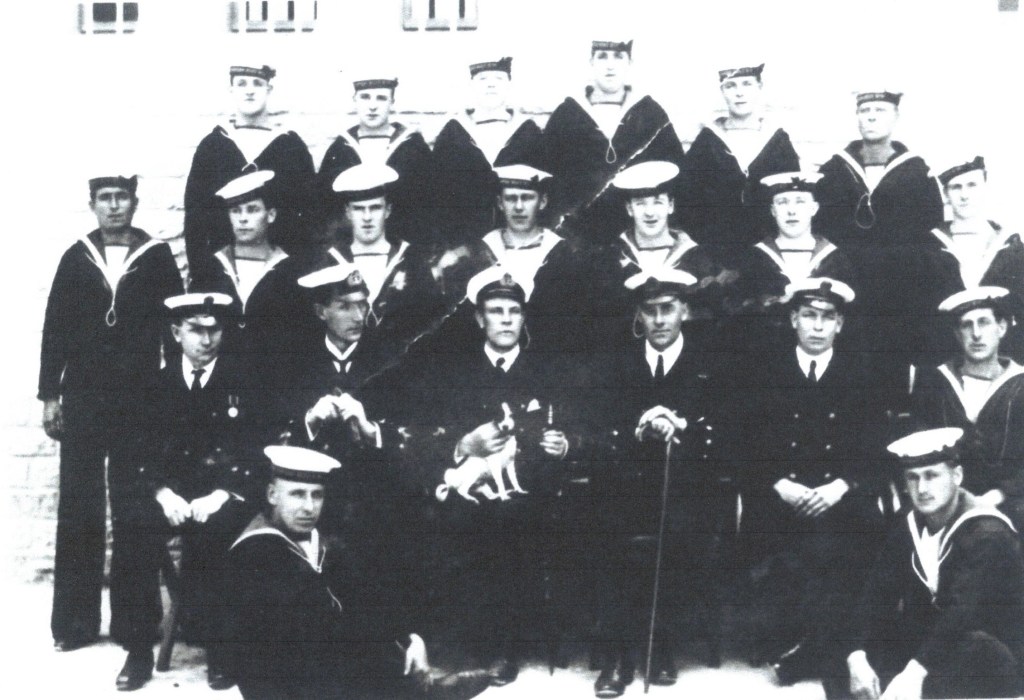
He enlisted in the Royal Navy on March 20, 1916 and completed his training period on the Victory II as an ERA (Engine Room Artificer) on April 28, 1916. His character and his ability were both described as Very Good.

William Jasper Hall seated second on right

His naval records reveal that he served on HMS Cormorant, a receiving ship at Gibraltar where he joined the Freemasons at the Masonic United Grand Lodge in 1916.

In September 1917 William was awarded the DSM (Distinguished Service Medal) for Honours for Services in Action with Enemy Submarines.

By 1918 he was back on Victory II, a shorebased depot for Royal Navy Divisions at Crystal Palace and Sydenham. From here he was admitted to the Royal Haslar Hospital in Gosport where he died on September 14, his cause of death pneumonia & pleurisy.

Family recollections are that William caught the Spanish Influenza with a poignant postscript to the story. His mother Sarah visited the hospital where she was able to care for her son during his final days. Sadly, Sarah contracted the ‘flu and died two weeks after her son.

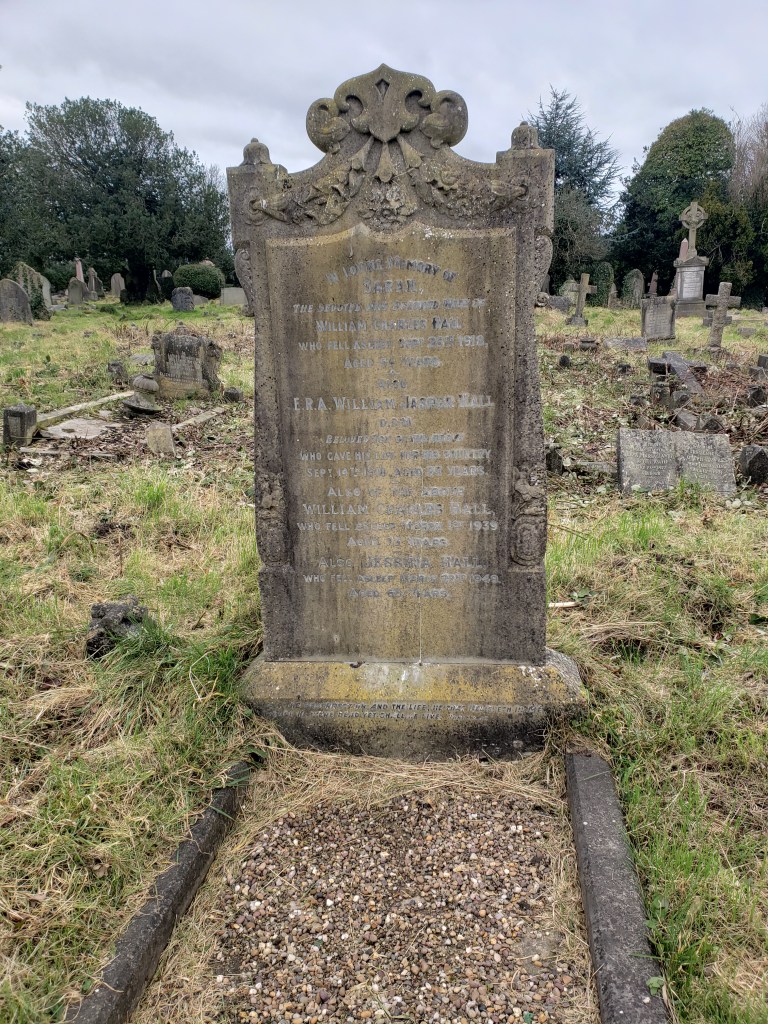
William was buried in plot E7464 on September 19. His mother Sarah was buried in the same plot on September 28. William Charles Hall died in 1939 and joined his son and wife. Jessina, William Jasper’s elder sister, died in 1949 and was buried in the plot with her brother and her parents.

Family photographs are published courtesy of the Hall family.

Originally published February 21, 2022.

War Memorial and a GWR Factory Tour

During this month of remembrance I will be telling the story of those who died in war.

The installation of war memorials in the GWR factory continued into the mid 1920s, as is evidenced by the following account. Today some of these memorials are mounted in the STEAM Museum while others are in the McArthur Glen Designer Outlet Village – the site of the former railway works. On these memorials are the names of men from particular workshops who served in the Great War – To the lasting memory of our comrades who fell in the Great War 1914-1918 (No 3 Shop) – In grateful memory of the following men of 19 & 20 Shops who gave their lives in the Great War.

Below you can read about the installation of a memorial to the men who worked in the iron foundries unveiled in 1925.

Published courtesy of Duncan and Mandy Ball.

Swindon Foundrymen’s Tribute

War Memorial Unveiled at GWR Works

Self Sacrifice

In the presence of a company numbering nearly 1,000 a memorial to the shopmen in the iron foundries of the Swindon GWR Works, who lost their lives in the war, and also to those who served but returned was unveiled last Saturday by Mr P.G. Hannington, manager of the Loco. Dept.

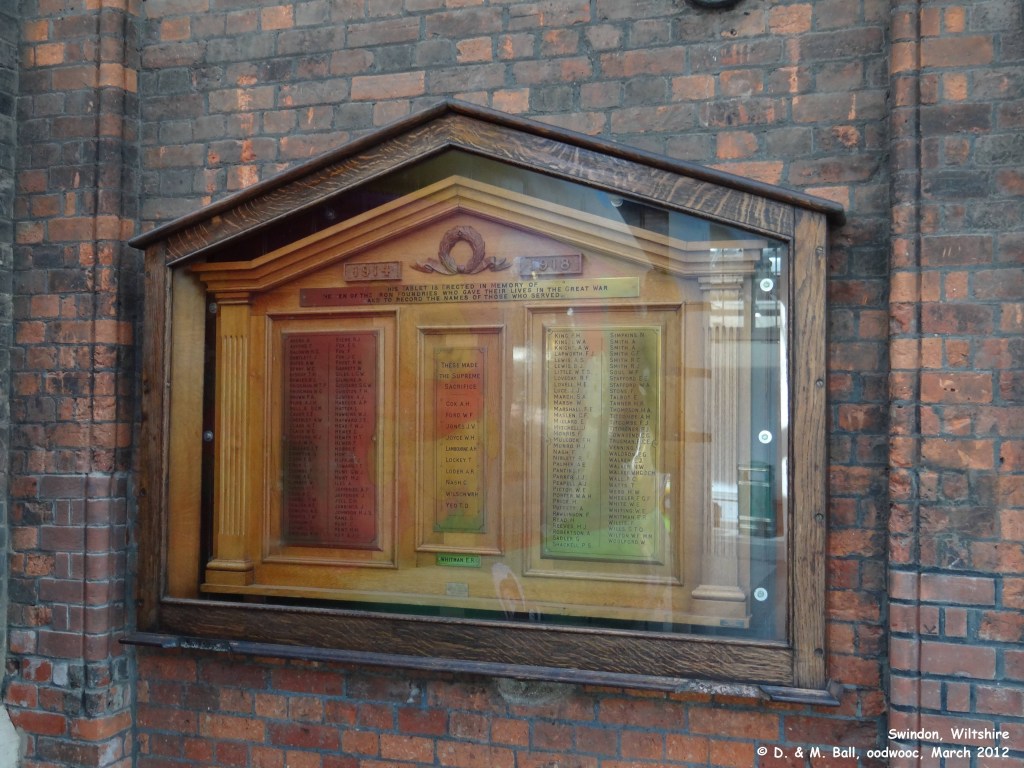
The tablet is of fumed oak with brass panels, and in the centre is a carved oak laurel leaf. It is inscribed: “This tablet is erected in memory of the men of the Iron Foundries who gave their lives in the Great War, and to record the names of those who served.”

On the centre panel are inscribed the names of the eleven shopmen who paid the supreme sacrifice. They were: A.H. Cox, W.R.H. Wilson, T. Lockey, W.H. Joyce, J.V. Jones, A.R. Loder, E.R. Whitman, A.H. Lambourne, T.D. Yeo, C. Nash, W.F. Ford.

The side panels contain the names of those who returned. These number 138.

A laurel chaplet with red carnations decorated the tablet, the inscription being: “In memory of the men of the Iron Foundries – ‘Their name Liveth for everymore.’”

Not Forgotten

In unveiling the memorial, Mr Hannington said that although some might think it was rather late to unveil a memorial for an occasion which ended six and a half years ago, it certainly proved that the men of the foundry had not forgotten the debt which they, and others with them, owed to their shopfellows who fell and served in the Great War. It was gratifying to know that the spirit which prompted them to erect the memorial still existed.

The tablet would not only remind those who were in the foundries at the present time of the the men who served, but it would serve to perpetuate the memory of the shop heroes for all time. “It is the spirit of self-sacrifice which will help us in all our troubles today,” said Mr Hannington. “Our country is now passing through a serious crisis, and we need to cultivate the right spirit, whether it be in the industrial or any other sphere. If we are willing to do our bit, and to do it thoroughly, as did those whom we are honouring today, then we stand a chance of winning the battle.

“If we trust wholly in God and do our work as unto Him who brought us through the great crisis of 1914-18, we shall not be ashamed when we come to render up our individual lives to the Source whence they come.”

The company stood while the “Last Post” was sounded, after which “Nearer, my God, to Thee” was sung.

Extracts from the North Wilts Herald, Friday, June 12, 1925.

Have you ever noticed the historic fixtures and fittings as you browse the rails in M&S? Have you looked up above the shop fronts and noticed the machinery still positioned there?

You might like to join the Rodbourne Community History Group on Saturday November 18 when these features will be pointed out along with other fascinating details and anecdotes of life in the railway factory.

To book a place contact the Secretary on 01793 616558 or email secretary@rodbournehistory.org. The tours start at 10am and last about 2 hours. Meet at the designer Outlet Reception Desk at the Kemble Drive entrance adjacent to the Pizza Outlet. There is no charge for these tours but donations are gratefully received. The Rodbourne Community History group is a not for profit group run by volunteers.

A public grave and an unusual discovery

As you look across the cemetery, you will see large areas without headstones or grave markers. But we know there are no empty burial spaces here as the cemetery was full when it closed in the 1970s.

These empty spaces are graves where families were unable to afford a headstone or memorial of any kind. There are also a large number of public graves where families were unable to afford even a burial plot. These plots often contain numerous burials, usually of unrelated persons. And then there are also the infant burial plots where the babies are buried and there are a large number of those in the cemetery.

I came across plot C63 while was researching the death of Emily Hobbs. Emily had died at the Stratton Infirmary aged 75 years old. Her home address was given as 34 Linslade Street and she was buried here on September 24, 1938.

When I looked at the plot details I soon discovered that this was a public plot, so I knew there would not be a headstone. But what surprised me was that there were four other people by the name of Hobbs already buried here when Emily died in 1938.

Research revealed that this plot was originally designated as a babies plot. The first burial to take place was that of Edgar Henry Smith a 10 week old baby who died in June 1896. A week later another baby was buried here 17 month old Grace Emily Hobbs from 31 Linslade Street. In February 1897 Laura Louise Hobbs aged 5 years old from 31 Linslade Street was buried here. In November of that year Myra Agnes Smith, little Edgar’s sister, was buried here aged 3 months old. And on February 13, 1909 the last burial of a baby was that of three day old Violet Mary Bishop. However, nine years before that, William John Hobbs aged 15 months of Groves Street was also buried here.

Could it be a coincidence that so many babies by the name of Hobbs were buried in this plot?

Emily Leviss married Charles Hobbs at St Leonard’s Church, Blunsdon on December 22, 1883. The young couple were both aged 20 and had to obtain the consent of their parents to marry. On the marriage certificate Charles’s father is named as William Hobbs a labourer but Emily has given no father’s name or details, suggesting that she was probably born illegitimately.

The couple moved to Rodbourne where they lived at various address in Groves Street, Linslade Street and Redcliffe Street.

In 1891 Emily and Charles are living at 31 Linslade Street. Charles works as a Blacksmith Striker in the Works. The couple have two children – five year old Frederick Thomas and Henry James aged 3. Living with them is Emily’s grandmother Hannah Matthews aged 75 who works as a Laundress. Charlotte M. Willis is visiting the family on census night.

By 1901 the family are living at 31 Linslade Street and by then they have another son Reginald Charles who is 7 years old.

But it isn’t until we get to the 1911 census that the full tragedy of the family comes to light. Charles and Emily are by then both 48 years old. Elder sons Frederick and Henry have moved out and moved on. Still living at home are Reginald Charles, Edward Alfred and youngest son Norman Stanley Leviss Hobbs aged just 2 years old. Charles and Emily have been married for 27 years and during that time Emily has had 10 children and 5 have died.

As well as the three children buried here Hubert Robert Hobbs died in 1904 aged 10 months and is buried in plot B1318. Florence Maud Hobbs died in January 1907 aged one year old and is buried in B1845.

When Emily’s husband Charles died in 1913, he was buried in grave plot C63 with his children, presumably at Emily’s request, and then when she died 25 years later she joined them. This is quite an unusual situation for a public grave. Perhaps it shows a more compassionate side of an authority that allowed this family to be reunited even though they could not afford to buy their own grave plot.

Martha and George Coster – another ordinary couple

The strapline for this blog is ‘Remembering the ordinary people of Swindon.’ This grave story is about one such ordinary family. George worked as a platelayer with the Great Western Railway, a job described by Will Thorne, a platelayer during this period as The most neglected man in the service. The poorest of any railway employee with little or no opportunity for promotion or advancement.

In 1870 George married Martha Robinson at the parish church in Wroughton where they had both grown up. George and Martha would have 10 children but sadly four of them died young. In 1881 they were living at 13 Oxford Buildings, Rodbourne with three of their children, George’s mother and an unnamed lodger described on the census returns as having “left house.”

By 1891 they were living a 21 Jennings Street where they would remain for more than 20 years. It was where Martha died in 1918.

How many meals did the family sit down to eat in the kitchen? How many Mondays had Martha toiled over the boiler in the scullery, pegging out washing on a line that stretched the length of the garden. Did she dust and polish or was there little furniture to fuss over in the house at No 21 Jennings Street?

Was George a keen gardener, when all that washing wasn’t hanging in the way? Or was he too exhausted after a day’s work to do yet more digging and shifting earth? Was he a member of the Even Swindon Working Men’s Club and Institute, cutting along the backsies for a swift half? Or did he prefer to drink in the Dolphin? But then again, perhaps as a Methodist he didn’t partake of Mr Arkell’s finest.

And what about Hilda, the daughter who was buried with George and Martha. She never married and worked as a domestic servant, that much we know. She died on July 6, 1936 at 30 Twickenham Road, Isleworth, not at her home in Maze Road, Kew, nor at 49 Paxton Road, Chiswick, the address recorded in the burial registers.

So many unanswered questions about one ordinary Rodbourne family.

Martha Coster died at her home in Jennings Street in May 1918 aged 70 years old. She was buried in grave plot C1952 on May 9. Her husband George Coster died at 92 Beaufort Terrace, Rodbourne Road on January 31, 1922. He left effects valued at £266 18s 8d to his daughter Kate Fisher. He was buried on February 4 with Martha. Hilda Coster died on July 6, 1936 aged 53. She was buried with her parents on July 10.

Sergeant Thomas Fletcher of the New Brunswick Regiment

Thomas Fletcher was born in Stratton St Margaret on February 2, 1885, the son of George and Martha Fletcher. On August 2, 1899 he began a 6 and a half year Blacksmithing apprenticeship in the Works.

By 1901 George and Martha had moved to 85 Redcliffe Street in Rodbourne. Here George worked as a carpenter in the Works and Thomas was employed as blacksmith, although not yet out of his apprenticeship.

The last time we see Thomas in Swindon is on the 1911 census when he is 26 years old and living with his parents in Redcliffe Street. When his father completed the census returns that year he stated that he and Martha had been married for 35 years and that they had 6 children, all of whom were still living. Sadly, that would all change.

Mark Sutton continues to be the most knowledgeable historian of Swindon’s sons who served in the First World War and wrote a book entitled Tell Them of Us. If you went to one of Mark’s talks or followed one of his walks here at Radnor Street Cemetery you left feeling you had met the men he talked about, that he had known them himself – and of course Mark has been able to fill in the details of what happened to Thomas Fletcher. He writes:

“He had served an apprenticeship in the Loco and Carriage Dept GWR before leaving for Canada in 1912. He worked then for the Canadian Pacific Railway Company Workshops at Montreal. He joined the army in November 1914.”

Tell Them of Us.

Sergeant Thomas Fletcher was killed in action on August 28, 1918 during fighting to retake the village of Cherisy. He was 33 years old. He is buried in the Sun Quarry Cemetery, Cherisy, France.

Mark made frequent visits to the Western Front battlefield cemeteries, visiting the graves of the Swindon men buried there. I wonder if he ever visited Thomas Fletcher? I bet he did.

Thomas’s father George died in 1923 and is buried in Radnor Street Cemetery in grave plot C1880 with his wife Martha who died in 1937 and their youngest daughter Catherine Shakespeare who died in 1954.

Clara Ellison – Head Teacher at Even Swindon Infants School

Clara Ellison had taught at Even Swindon School for 25 years when she resigned in 1908. Then aged 48 she might have expected to remain in post for a few more years. There is no mention that she was suffering from poor health so we have to ask did her husband’s bankruptcy case influence the members of the Swindon School Board?

Clara Illidge Shelton was born in 1860 in Birmingham, the daughter of William Shelton, a cab driver, and his wife Elizabeth. By the time of the 1881 census Clara was living in Eastbourne where she was employed as an assistant school mistress and lodged with William Cole and his family.

On December 1, 1883 Clara (by then living at 34 Wellington Street, Swindon) married John Ellison, a brass finisher in the Works, at St. Mark’s Church. Even Swindon Infant School was built in 1884, which is the earliest date at which Clara could have been teaching there. By 1891 the couple were living at 17 Linslade Street where John describes himself as a Brass Finisher and Clara as a School Board Teacher. They had two young sons, Gerald 6, and Wilfrid 4. Clara’s widowed mother Elizabeth lived with the family.

But was there a prejudicial attitude to Mrs Ellison prior to the events of 1908? In 1896 Mr Henry Day (Head Teacher at Even Swindon Mixed School) and Mrs Clara Ellison (Mistress at Even Swindon Infant School) both applied for an increase in their salaries. The School Management Committee initially recommended that they both receive a £10 annual increase whereupon Committee member Mr McRae immediately opposed both applications. In the case of Mr Day there was no seconder but Mr Keene also raised an objection in the case of Mrs Ellison. Some discussion followed when another member, Mr Sewell, entered a protest against Mrs Ellison holding the post, and ‘keeping a single girl out of work.’

But then came the matter of John Ellison’s bankruptcy in 1908 and a recommendation by the Teaching Staff Sub-Committee “that Mrs Ellison, head mistress of the Even Swindon Infant School be given three months’ notice to terminate her engagement.” Swindon Advertiser, Friday, May 22, 1908.

By August 1908 John’s bankruptcy examination was closed and Clara had resigned.

Even Swindon School published courtesy of Local Studies, Swindon Central Library

Presentation – On Wednesday afternoon, at the Even Swindon Infant School, Mrs Ellison, late headmistress, was the recipient of a very handsome pair of bronzes, given to her by the teachers (past and present) on the occasion of resigning her position as headmistress, which post she has held for 25 years. In making the presentation, Miss Witt said how very much they all felt the parting, but they hoped Mrs Ellison would be spared many years to enjoy the rest so thoroughly earned. – In reply, Mrs Ellison, thanking them, said how much she would value their beautiful present, and the very happy time spent amongst them would never be forgotten by her. She wished them every success, and trusted they would all work as happily together in the future as they had always done in the past.

Swindon Advertiser, Thursday, August 20, 1908.

Clara died the following year and was buried on October 1, 1909 in grave plot D128, a public grave, which she shares with her husband who died in 1924 and one other, probably unrelated, person.

Harold Wall – fishing for tiddlers

What were the events that led up to that fateful Tuesday morning in April 1938? Was Nellie frazzled with four young children under her feet as she tried to get on with her housework? Had she shooed Harold out of the house.

“For goodness sake Harry, get out from under my feet.”

Or had the boy taken advantage of the noise and busyness of the house to sneak out before his mother found him a job to do or an errand to run.

Perhaps Nellie didn’t even notice he had gone until there came a knock on the door.

Hawkins Street in Rodbourne

Swindon Boy Drowned

Fell Into Water Fishing for “Tiddlers”

Nine year old Harold Wall, of 13 Hawkins street, Swindon, went fishing for “tiddlers” in the Great Western Pump House Butts, alongside the Gloucester branch line at Rodbourne, Swindon, just after lunch on Tuesday*. He had not been there long when he fell in the water and was drowned. The water is well over six feet deep at the spot.

Shouts of other youngsters near by attracted the attention of some men working on allotments, and they rushed to the scene. At first they could not find the lad’s body, but eventually grappling irons were brought into use and his body was recovered.

A doctor and the police were quickly on the scene and Chief Officer T.W. Abrahams of the Swindon Fire Brigade, rushed to the field where Harold’s body lay with the oxygen resuscitation apparatus, but the doctor had already pronounced life extinct.

Mr Abrahams responded to a telephone call from Mr S.A. Shaw, of 28 Hawkins street Swindon.

Harold is the son of Mr and Mrs E.F. Wall and it is thought that he fell through the hedge which grows on the very edge of the water and was quickly submerged in deep water.

He was fishing quite near the pumping station at the far end of the Butts.

When the men from the allotments reached the spot where the boy had fallen through a narrow gap at the base of the thick hedge they could not force a way through, and valuable time was lost owing to the need for making a detour round the Pump House.

Mr Wall, the boy’s father, has been employed on the G.W.R. coal wharf.

At the inquest held at Gorse Hill Police Station last night, by the Wiltshire Coroner (Mr Harold Dale) the jury returned a verdict of “Accidental death.” They added that no blame attached to anyone.

North Wilts Herald, Friday, 22 April, 1938.

Harold Charles Wall was born in the December quarter of 1928, the eldest of Ernest Frederick and Nellie Wall’s large family. He was buried on April 22, 1938 in a public grave plot C632 with four others.

*Easter Sunday fell on April 17 in 1938. It is likely the children were on a school holiday the following week.

Heber Cox – a new life of opportunity

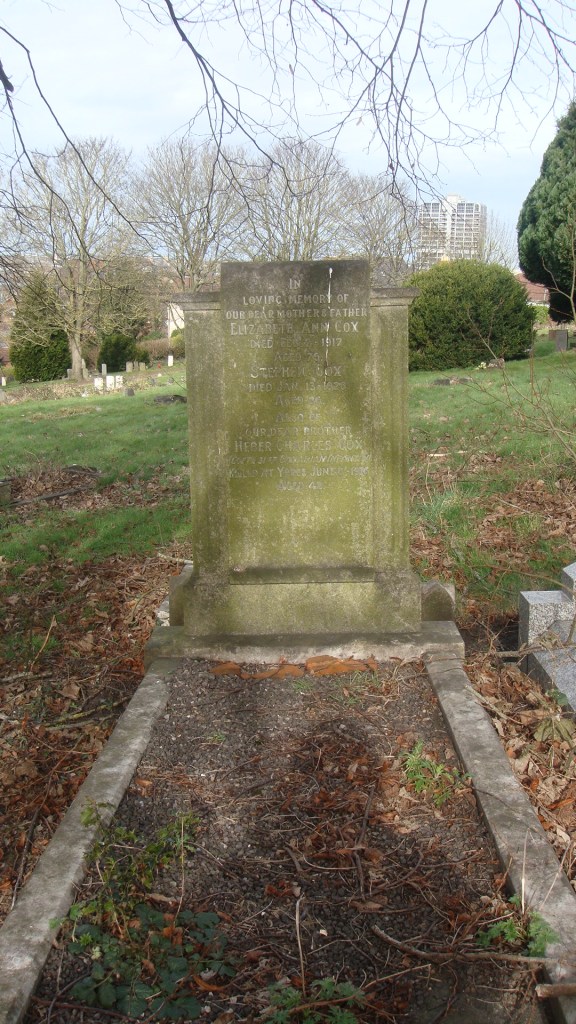
This is the final resting place of Stephen and Elizabeth Cox.  Elizabeth died in 1917 and Stephen in 1926.

Stephen was born in Aldbourne and Elizabeth in Marlborough but by 1871 they had moved to Swindon and between the years 1871 to at least 1881 they managed a beer house in Queen Street.

At the time of the 1891 census Stephen was farming at The Wharf in Stratton with the help of his son Heber.  When Stephen retired the couple moved to 32 Guppy Street in Rodbourne where they were living in 1901.

In 1908 Heber set sail upon the Sardinia, bound for Canada.  On the ships schedule Heber, then aged 34, describes himself as a farmer and states his ultimate destination as Calgary, all set, no doubt for a new life of opportunity.

But on November 14, 1914 and by then aged 40 and still single, Heber enlisted with the Canadian Overseas Expeditionary Force.  He served in the 31st Canadian Infantry and was killed in action at Ypres on June 6, 1916.  His name is mentioned on the Menin Gate memorial and here in Radnor Street on his parents’ headstone.

The Cost of a Kiss?

The re imagined story …

Arranging this evening had been an organisational nightmare, I can tell you. I had to persuade Daisy to come out with me in the first place, then I had to wait until she had a Saturday evening off work. Probably the most difficult task was getting my father to allow me the use of the pony and trap. I couldn’t tell him I planned to take a young lady for an evening drive, he already thought I was irresponsible and not to be trusted. In the end I told him a lie. I said a friend had to make an emergency trip into the Medical Fund Hospital. I could hardly have guessed how prophetic this would be.

I managed to drive the pony and trap out of the yard without him glimpsing me. He would surely have seen through my deception had he caught me wearing a new collar and my Sunday best jacket.

I pulled up outside the manor house and waited for Daisy. I didn’t really know what we could do or where we could go, I hadn’t planned that far ahead. But it was a beautiful evening so I suggested we go for a walk through the copse to the stream.

I parked the pony and cart at the road’s edge along Church Hill. Mol was a placid old horse, I knew she would stay where she was left. I never thought of the bend in the road or that the light might soon be fading. I never imagined there would be any other traffic at that time of the evening, quite forgetting the shopper’s bus from Moredon to Swindon.

All I could think about was Daisy and how beautiful she looked that summer’s evening and whether she would let me kiss her as we walked down by the stream.

We had hardly walked into the copse before we heard the sound of galloping horses and raised voices and the Moredon bus travelling down the hill at a furious speed. Suddenly there were shouts and screams and a splintering crash.

Daisy had already begun to run back to the roadside. The pony and trap still stood where I had left them, but all around was a scene of mayhem. The bus had crashed into the bank, throwing several passengers out of the vehicle and onto the road. The driver must have climbed out, or perhaps was thrown out, as he stood between the two horses holding their bridles, attempting to calm them.

Everything was in chaos. A woman lay on the ground beneath the bus while others were trapped inside. I saw one poor man so covered in blood I could hardly see his features.

Daisy rushed forward to be of assistance while I stood rooted to the spot. “What will I tell my dad?” I pleaded. Could the trap I had left unattended just beyond the bend in the road be the cause of this disaster? I could tell by the expression on Daisy’s face that she thought so.
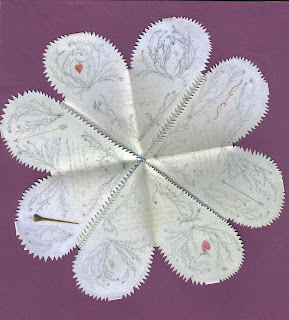
Valentine 2

The facts …

Road Car Accident at New Swindon

Several Persons Injured

One Man Dies

As already reported, an accident occurred on Saturday evening that to the 8.40 pm car from Moredon to Swindon, by which several persons received injuries, and unfortunately in one case a fatal result has followed. It appears that on Friday and Saturdays special cars are run to Moredon by the Swindon Road Car Company to enable persons to visit Swindon for shopping purposes, etc.

On Saturday last this car left Moredon as usual. On arriving at the Church Hill, Rodbourne, we are informed (and we give it with all reserve) that the driver did not put the brake full on, but allowed the horses to keep up the pace whilst descending the hill. The car was running on the right side of the road, and on turning the corner just below the churchyard a baker’s cart belonging to Mr H. Robins, baker, of Moredon, was seen. The driver immediately pulled to the left side, and ran into the bank, the swing turned the car over on its side. The occupants of the front seats were thrown out, and those inside were violently thrown about.

Assistance was soon to hand, and everything was done on the spot that was possible. Just after a waggonette belonging to Mr Hall, of New Swindon, and conveying a party of cricketers to Swindon, arrived. This party quitted the conveyance, and the injured were conveyed to the GWR Medical Fund Hospital therein. There were five adults and three children brought to the Hospital. After they had been attended to by Dr. G. Rodway Swinhoe, they were sent home with the exception of a man named Harry Marshall, a married man with a family, and residing at 17 Morse Street. He was suffering from a nasty scalp sound and an injury to his back. On enquiring this morning, we find he is progressing favourably.

Another man, named Herbert Newsome, a cripple, living with his parents in Spring Gardens, was found to be suffering from a cut on the forehead and chin. After receiving attention he was driven home. It appears however, that he suffers from bleeding, and on Tuesday it became so serious that he was removed to the Hospital about 2 am. Under the careful treatment of the staff the haemorrhage was stopped. He died, however, last evening and the cause of death will be the subject of an inquiry this afternoon. Deceased who was quite a young man had been a cripple for some seven years He was a member of the Wesleyan Chapel in Princes street and on the day of the accident was returning from the anniversary tea in connection with the Moredon Wesleyan Chapel in company with friends.

The Matron told us that the people presented an awful sight on their arrival at the Hospital on Saturday evening last ….

Extract from the Swindon Advertiser Friday June 9 1899

 At the inquest the bus driver told how he had worked around horses all his life and was an experienced coachman who had until recently lived in London. He said he had never had an accident before in his life.

A number of contributory factors to the accident were revealed – the bus was overloaded, braking equipment had failed and passengers said the driver was travelling too fast.

‘The Doctor’s Evidence

Dr G.R. Swinhoe said he was called to the cases at about 11 o’clock on Saturday night, and found two women and three men at the GWR Hospital, suffering from injuries received in the accident. They were all brought there in a carriage. Amongst them was the deceased, and when witness saw him he was told that he (deceased) was a “bleeder,” or a person who would bleed at the slightest scratch. Witness therefore attended him first. They did what they could for the man and put on such pressure as he could stand, and they apparently stopped all bleeding. He went home, but haemorrhage started again, and on Tuesday he was taken worse, and sent back to the Hospital. He (witness) would not have sent him out, but he had a little doubt as to whether he should or not, because he was not a factory hand. He eventually died from the effects of bleeding as a result of the accident. There were two cuts – one on the scalp and a very tiny one on the chin. It was this latter which caused the most trouble, for they could not get any pressure on it to stop the bleeding. Deceased must have lost a tremendous amount of blood before he came to the Hospital.

The Coroner said he thought they could all understand how the accident happened, and from the evidence no blame rested on the driver of the car.

The jury then returned a verdict of “Accidental death.”’

Extract from the Swindon Advertiser published Friday, June 16th 1899

Herbert Newsome was born in Twerton on Avon, the eldest son of Joshua and Lydia Newsome. At the time of the 1891 census the family were living at 6 Spring Gardens. Joshua was a general labourer in the GWR Works while Herbert worked as a Clothier’s Assistant. Herbert was buried in plot C934 on June 13, 1899.

You might also like to read a story I wrote some years ago about a local Valentine card (see above) that appeared on the Antiques Roadshow in 2008.

John and Alice Hayes

This story was submitted by their great-granddaughter.


‘John Henry Hayes was born 2 Nov 1872 to parents William (ox carter) and Mary of 27 The Street, Broad Hinton. He was the 7th of 8 children, having 3 brothers and 4 sisters.

Living in a rural community he initially trained as a blacksmith before entering the Great Western Railway as a springsmith. (1911 census gives his occupation as Blacksmith Striker GW Railway).

Circa 1898 John Henry, aka Jack, married Alice Maude Mary (nee Pyke born 1879 Wroughton).

They moved to 50 Summers St. Swindon and he became a churchwarden at the Rodbourne Road Methodist Chapel.  My father remembers having to play quietly on Sundays whilst his stern granny read her bible. He also remembers she didn’t cook on a Sunday so there were only ‘cold cuts’ for lunch.

I understand he taught other railway employees in his front room. I don’t know whether this was religious studies or reading/writing.

Their family expanded and by the 1911 census they had 3 living and 2 deceased children. To my knowledge there were a further 2 girls and a boy, 6 in all surviving to adulthood.

My grandfather, imaginatively named Thistle Ewart aka Tom, was his second child. He, together with his only child my father Barrie John, and myself all in our turn ‘went inside’ GWR/BREL.  We have a 4 generation plaque on the wall at Steam.

John Henry lost his wife in 1939 and passed away 11 Feb 1951.  He was buried at Radnor Street Cemetery Swindon, plot C4160′

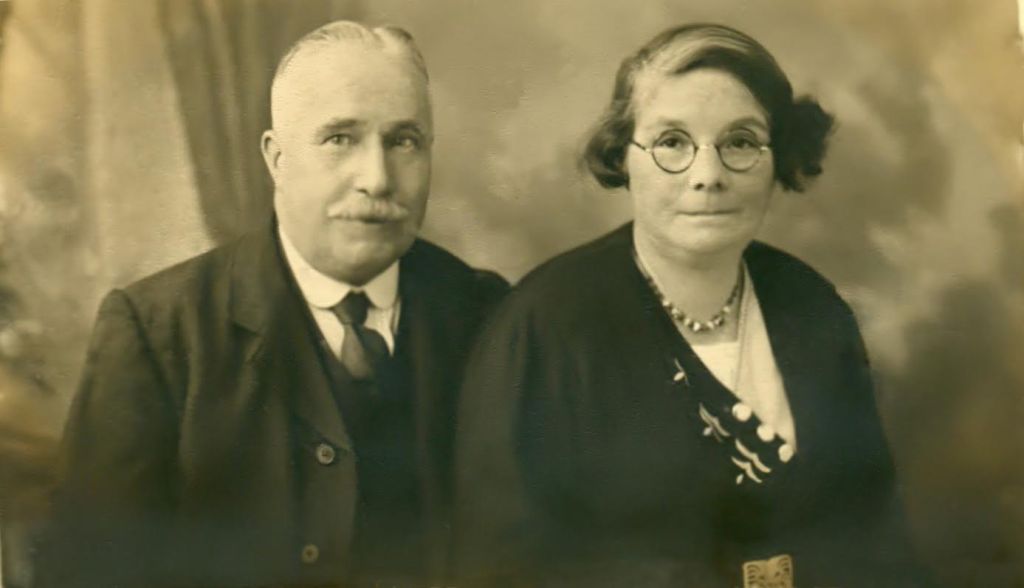
The attached photo is of John Henry and Alice taken in approx. 1934.

*The couple share their grave with Alice’s mother Jane who died in November 1926. Her last address was given as 50 Summers Street.