Charles Edward Hall of 75 Morris Street, Rodbourne.

The re-imagined story …

When I was a child I used to think Mr Hall was just an old man who tottered about in front of his house in Morris Street before turning round and going back inside. I used to wonder what the point of this all was as he went nowhere and saw nothing new. Occasionally someone would pass by and stop to talk to him, but that was about it.

How pointless, I thought as I kicked my football on the way to the Rec. Or sped past on an errand up the Lane for my mother, keen to get it done and to be off with my mates. Always in a hurry, well kids are, aren’t they? Mr Hall was just another old man who tottered about in front of his house. As children we give little thought to the old people we see shuffling about the streets, or the life they might have lived.

Now I’m an old man who totters about in front of my house. Of course, Morris Street is a bit different these days, but someone usually stops and has a few words with me. Helps pass the day. I suppose that’s what it was all about for Mr Hall.

The facts …

Swindon J.P. Dead

Mr C.E. Hall’s Services to Methodism

Former Councillor

Mr Charles Edward Hall, J.P., of 75 Morris street, Swindon, died early on Friday morning, aged 75 years.

Heart trouble had confined him to his home for the past eight years, and except for an occasional walk outside his home, Mr Hall had never been out in the town during this time. He had been bedridden for the past few months.

Many years ago Mr Hall took an active interest in the affairs of Swindon, and among other things was a town councillor. He only served for three years, however, and did not seek re-election, as the council work interfered with his church activities.

He was an ardent Methodist, and took a prominent part in the affairs of the Regent street Clifton street and Butterworth street churches. He had been a steward on the Swindon circuit, while he was twice elected president of the Swindon and district Sunday School Union.

50 Years with the GWR

He was appointed a J.P. to the Borough bench in 1912.

A native of Hook, Mr Hall came to Swindon in his youth, and worked in the Great Western Railway factory as a boilermaker. At the time of his retirement 12 years ago, he was a foreman, and had completed 50 continuous years of service. He was an enthusiastic trade unionist, and became a member of the Boilermakers’ Iron and Steel Ship Building Society in 1880.

In his younger days Mr Hall took a keen interest in politics, and was a staunch worker for the Liberal cause.

He leaves a widow and one son.

The Funeral

The funeral took place at Radnor street Cemetery on Monday afternoon. The service at the house and the committal at the grave were conducted by the Rev. Allison Brown. There were no flowers by special request.

The chief mourners included Mrs C.E. Hall (widow), Captain and Mrs. A.E. Hall, Mrs Rees, Mrs Barrett, Mrs Richardson, Mrs Winter, Mr H.W. Watkins Mr W. Watkins, Mr A.W. Head, and Mr Turk.

The funeral arrangements were carried out by Messrs. A.E. Smith and Son, 24 Gordon road, Swindon.

Magisterial Tribute

When the Swindon Borough police court magistrates met on Monday afternoon the chairman (Mr. A.W. Haynes), addressing the court, said that within the last few days the magistrates had lost a colleague in the person of Mr C.E. Hall better known as “Charlie.” He had been ill for a very long period but previous to his illness he was a regular attendant at the court.

“I have known him personally for a long period and he was very active in former days in many ways of life. He was very conscientious in everything he did and very much respected by all who met him. The Justices and their Clerk deeply sympathise with the widow and family in their bereavement,” said Mr. Haynes.

North Wilts Herald, Friday, 8 March, 1935
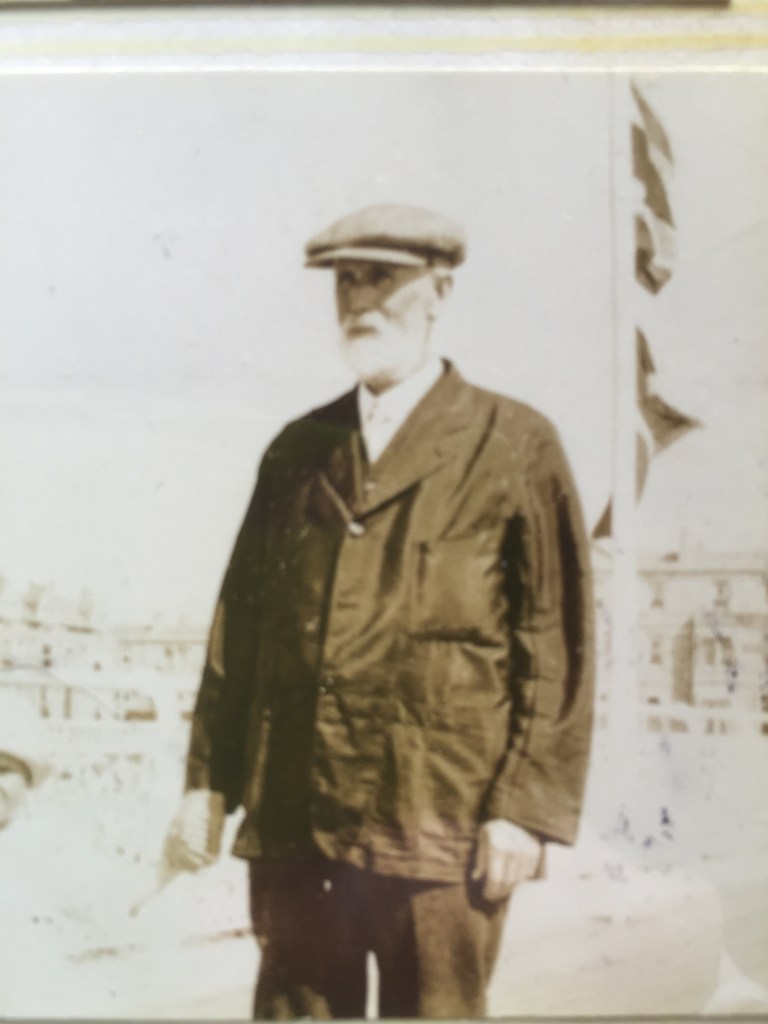
Charles Edward Hall was buried in Radnor Street Cemetery on March 4, 1935 in plot D951 which he shares with his first wife Emma Jane.

Photographs published courtesy of Cathy Moseley and the Hall Family Tree, Ancestry.

Joshua Jackson – India Mutiny Veteran

The Ruins of the British Residency, Lucknow attribution Vyom.Y.

Joshua Jackson’s obituary published in the Wiltshire Times and Trowbridge Advertiser Saturday 29 April, 1911 might be brief, but it provides a lot of information about the extraordinary life he led as a young man (see below).

Joshua was born in at Manchester on January 7, 1836, the second of James Jackson, an inn keeper, and his wife Hannah’s 8 children.

At the age of 19 Joshua joined the army and within two years he was serving in India with the 60th Rifles during the Indian Mutiny. As with most wars, the causes were several but a flashpoint came when the Sepoy soldiers of the Bengal Army were issued with the new Enfield rifle. The Enfield used cartridges that had to be bitten open, which both the Muslim and Hindu soldiers believed had been greased with animal fats, contravening their religious observances. This however was just one cause in a complicated situation which signalled a significant turning point in the relationship between Britain and India. Joshua was also involved in the Siege of Lucknow*, defending the garrison and the British Residency in that city from the Indian soldiers.

The outcome of the Mutiny was an end to the East India Company’s right to rule India. Britain made India a part of the British empire and instated a British Governor General. Twenty years after the war Queen Victoria became Empress of India and the Viceroy of India ruled in that country on her behalf.

From India, Joshua went to serve in China during the Second Opium War where in 1859 he saw action at the Battle of the Taku Forts.

Battle of Taku Forts 1859

But by 1865 he was back in England where on May 4 he married Sarah Ann Potts at St John’s Church, Frome in Somerset.

The 1871 census records the couple living in Frome with three children, Henry 5, Percy 3 and one-year-old Henrietta. By 1881 they had arrived in Swindon. The census of that year lists them as living at 47 Haydon Street. Joshua worked as an Engine Fitter in the GWR Works while Sarah raised their large family already numbering 7 children.

In 1891 the family were living at 28 Guppy Street, Rodbourne. Three sons had followed Joshua into the Works as apprentice fitters and turners while another three sons had been born in the intervening ten years. Guppy Street remained the Jackson’s family home where Joshua died in 1911 and Sarah in 1928. The couple are buried together in plot C301 with their only surviving daughter Henrietta who died in 1920.

It appears that the Jackson family were buried in a reused grave. The first person buried in this plot was John Meek who at the time of his death in 1897 was an inmate of the Stratton Workhouse. The grave was no doubt a public plot but purchased by the Jackson family at the time of Joshua’s death.

Death of a Mutiny Veteran

Funeral at Swindon

There was buried in Swindon Cemetery last Monday afternoon the mortal remains of Mr Joshua Jackson, an Indian Mutiny veteran. He was born at Manchester in 1836, and at the age of 19 years he enlisted in the old 60th Rifles, and two years later was drafted to India, seeing much active service in the Mutiny, but fortunately he escaped without a scratch. He also fought later in the China War, and was present at the taking of the Taku Forts. When he returned to England he left the Army in 1867 and settled down at Frome. Then he removed to Swindon and worked at his trade for many years in the GWR Works. He joined the Freemasons while at Frome 45 years ago, and when he came to Swindon he joined the Gooch Lodge, 34 years ago, becoming Tyler, a post he held till the time of his death, at the age of 75 years.

Deceased leaves a widow and ten children – eight sons and two daughters.

Besides the family mourners, a large number of Freemasons attended.

Wiltshire Times and Trowbridge Advertiser Saturday 29 April 1911.

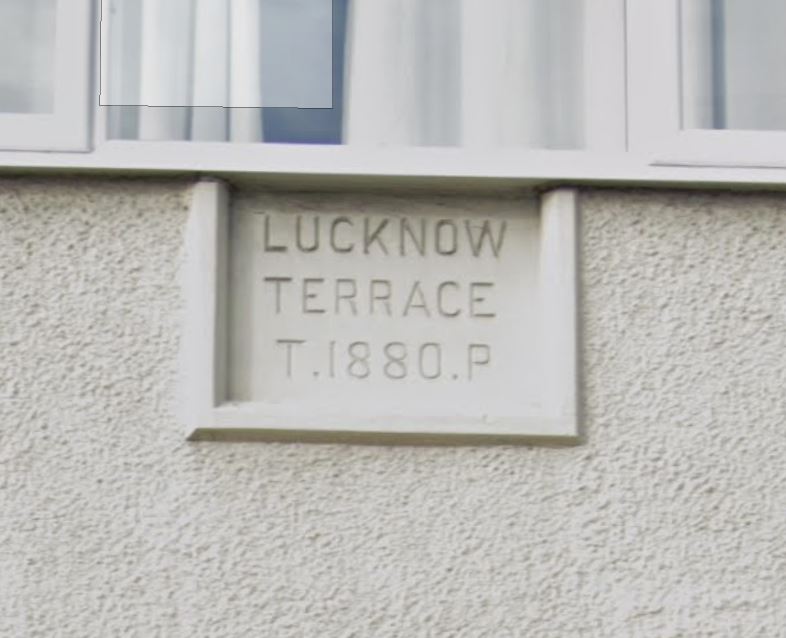
*As you walk along Rodbourne Road past Ron’s Stores, look up and above the terrace of houses you will notice in the brickwork an inscription that reads Lucknow Terrace.

Ellen Amanda Alley – an ordinary woman

Today I am returning to one of my favourite Swindon families, the Alley family. You’ll see the name feature frequently on this blog. My interest in this amazing family was initially piqued by Emma Louisa Hull, the eldest daughter of George Richman and Emma Alley. I discovered Emma Louisa had joined the Women’s Freedom League and served a prison sentence in the formidable Holloway Prison for protesting in the Votes for Women campaign.

Then there were her six sisters, all independent, career women who ran their own businesses, including Mabel who was awarded the BEM (British Empire Medal) for fifty years service to the community as Postmistress at the Wescott Place Sub Post Office.

And in September 2022 I was able to welcome to the cemetery three members of the extended family; Di and George from Australia and Kay from Canada.

Now I have been able to discover the burial place of Ellen Amanda Alley, the daughter and 5th surviving child of Frederick Alley and his wife Elizabeth. Ellen was born in 1876 and is recorded on the 1881 census living with her parents and six siblings at 65 Gooch Street. By 1891 fourteen year old Ellen was working as a baister at Compton & Son, a clothing factory which employed a large female workforce situated on Station Road. The family were then living at 108 Princes Street.

In 1897 Ellen married Charles [Herbert] Thomas, a boilersmith employed in the GWR Works, and the young couple began married life with Ellen’s parents in the crowded Alley home at 9 Gordon Road.

The 1911 census lists Ellen and Charles living at 94 Bruce Street, Rodbourne with their three daughters Ada, Elsie and Gladys.

It would appear that Ellen led a quiet life fulfilling a typically female role, unlike her seven, trailblazing female cousins. But did she? So often the lives of women go unrecorded. I would urge all the women out there to write down the story of their life. Collect and record the lives of your mothers, grandmothers, aunts, female cousins, friends and neighbours. Set up a Facebook page and let’s link everyone in – make one huge history page for the ‘ordinary’ women out there. What do you think? Shall I get us started?

Ellen Amanda Thomas died on January 2, 1924 at the Victoria Hospital. She was buried on January 5 in grave plot D615. Her last address was at 32 Morris Street, Rodbourne.

Photographs are published courtesy of Wendy Burrows – family historian extraordinaire!

James Spackman – a well-known builder and contractor

Published courtesy of P.A. Williams and Local Studies, Swindon Central Library.

James Spackman was born in Wootton Bassett in 1844 the son of Richard and Mary Ann Spackman. He was born into a ready made family firm where he began work as a plasterer alongside his father and uncle.

However, following his marriage to Margaretta Pozzi, the daughter of Italian born jeweller (and sometime innkeeper) James set about building his own dynasty.

By 1881 James and his family had moved into Swindon and were living at 2 Merton Street. At the time of the 1891 census they were living at 1 Clifton Street where James described himself as a builder. Working alongside him were his two sons Hubert (sometimes called Herbert) and Charles who were both carpenter’s apprentices.

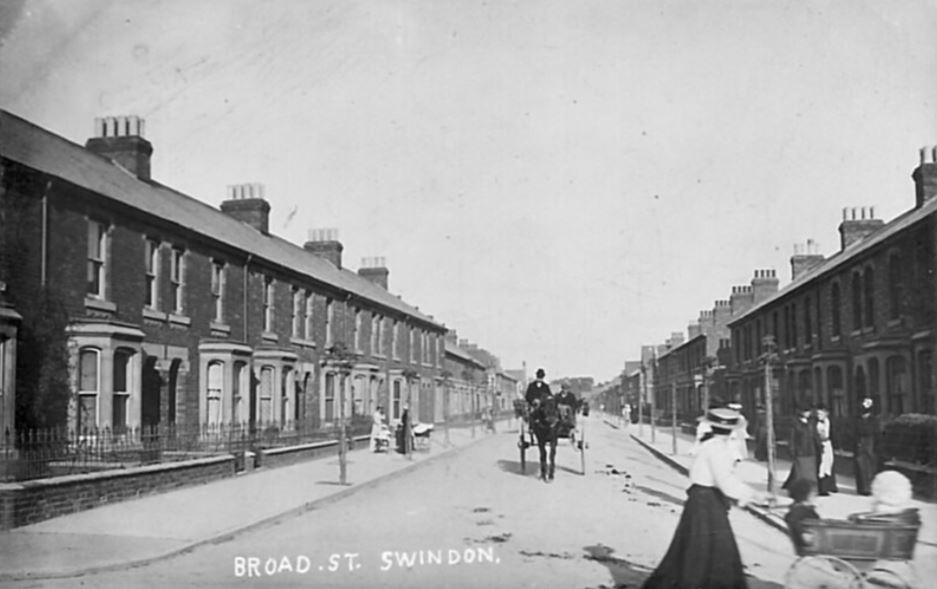
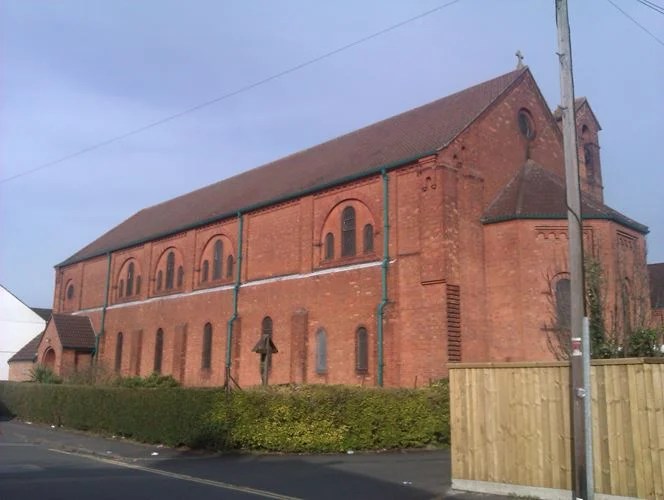
The Spackman family business went from strength to strength as the firm built properties in Broad Street, Volta Road and Ponting Street. They began work on St Augustine’s Church in Rodbourne in 1907 and in 1931 they built the sacristy at Holy Rood R.C. Church. They built villas in Bath Road and Okus Road, which became Spackman family homes.

James Spackman died in 1930 at the age of 87 and was described as a well-known builder and contractor in the obituary (see below) published in the North Wilts Herald. He was buried in grave plot E8540 with his wife Margaretta who had died in 1918. They were joined by their unmarried daughter Florence Alice who died in 1961.

The Radnor Street Cemetery burial registers list the grave of James’s son Charles Mortimer Spackman who died in 1945 aged 72 years. He is buried in grave plot C1192 with his wife Annie and their infant son Herbert who died in September 1899 just days old.

New Church, Swindon – The foundation stone of a new church, to be dedicated to St. Augustine, was laid recently at Swindon. The plans have been prepared by Mr W.A. Masters, architect, of Swindon, and the contract let to Messrs. H. & C. Spackman, builders, Swindon, at 3,100l (£3,100). The plan is of the Basilican type and the first portion to be erected at once will be the nave to accommodate 500 persons. It will be constructed of brick throughout.

The Builder May 4, 1907.

Death of a Swindon J.P.

Former Member of Town Council

The death took place at his residence, 8, Okus road, Swindon, on Thursday in last week, of Mr James Spackman, J.P., at the age of 87 years.

Mr Spackman was a native of Wootton Bassett, but had lived the greater part of his life in Swindon and was a well-known builder and contractor.

For a number of years he was a member of the Swindon Town Council, but retired from municipal life about ten years ago.

Mrs Spackman died in 1918.

There are four sons and two daughters, two of the sons being Messrs. H. and C. Spackman, builders and contractors of Hunt street.

Mr Spackman was one of the founders of Sanford street Congregational Church, and had held the office of deacon since it was founded.

The funeral took place at Radnor Street Cemetery, Swindon, on Saturday.

The service was conducted at the house and graveside by the Rev. A.R. Smart. The chief mourners were: Messrs. H.J. Spackman, C.M. Spackman and E.A. Spackman (sons), Mrs Fulton and Miss F. Spackman (daughters), Messrs R. Spackman, H. Spackman, A. Spackman, and R. Spackman (grandsons).

North Wilts Herald, Friday, December 12, 1930.

You might also like to read

Henry Charles Cook – builder

Thomas and John George – leaving their mark on Swindon

George Ewart Hobbs – A Swindon Radical

We’re often asked if there is anyone famous buried in Radnor Street Cemetery. Well George Ewart Hobbs is definitely up there when it comes to homegrown brilliance. George was an example of a self taught man with an exceptional intellect. He left school at the age of 13 to begin a lifetime of working ‘inside’ (as the locomotive factory was called) as did every other schoolboy who lived in Rodbourne.

The UK Railway Employment Records 1833-1956 state his first job description was that of ‘boy.’ He would later become an apprentice fitter and turner, then a chargeman and eventually a foreman.

He married Agnes Ann Thomas in 1901 and the couple had two children Dorothy, and Ivor, who sadly died aged 2 years old.

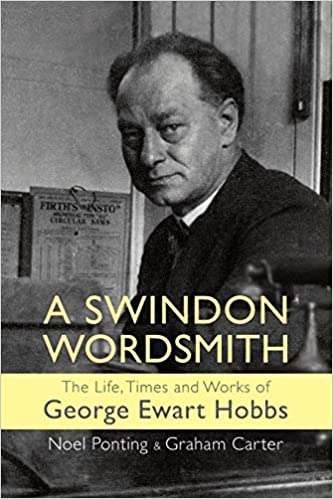
And I’m not going to tell you anymore about George as my friends Noel Ponting and Graham Carter have already done that in two meticulously researched and readable books – A Swindon Wordsmith and A Swindon Radical. Both books can be purchased in the Library Shop, Swindon Central Library or from the publishers Hobnob Press.

George Ewart Hobbs died on December 22, 1946 aged 63 years. He lies in an unmarked grave in Radnor Street Cemetery, which he shares with his young son Ivor and his mother-in-law Eliza Anne Thomas. His wife Agnes died in 1964 and was the last person buried in this family grave, plot number C3617.

Radnor Street Cemetery Walk

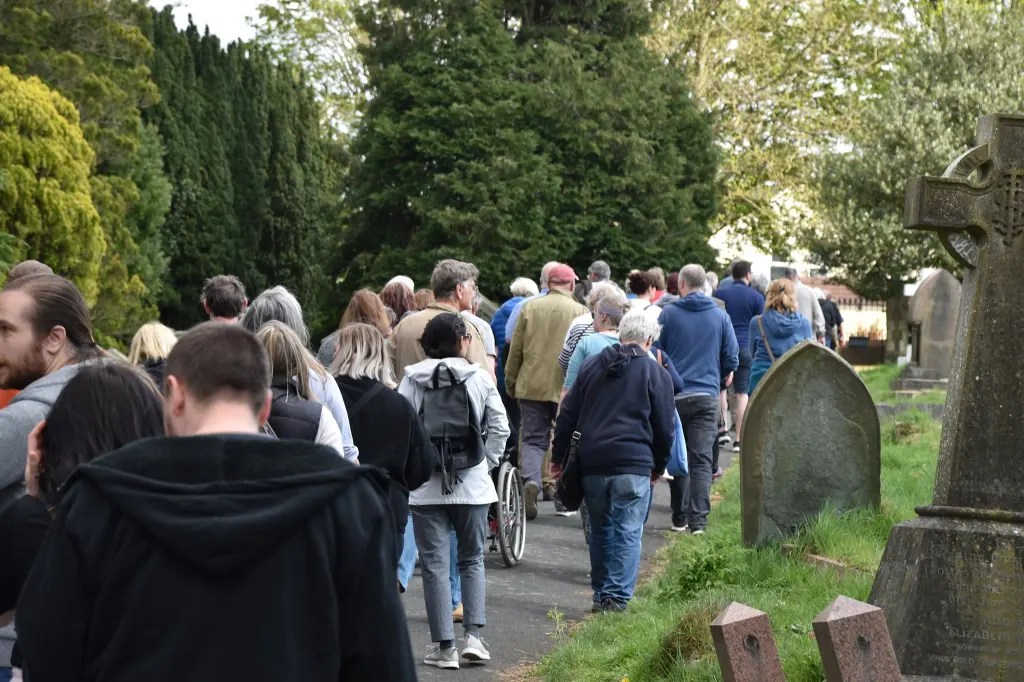
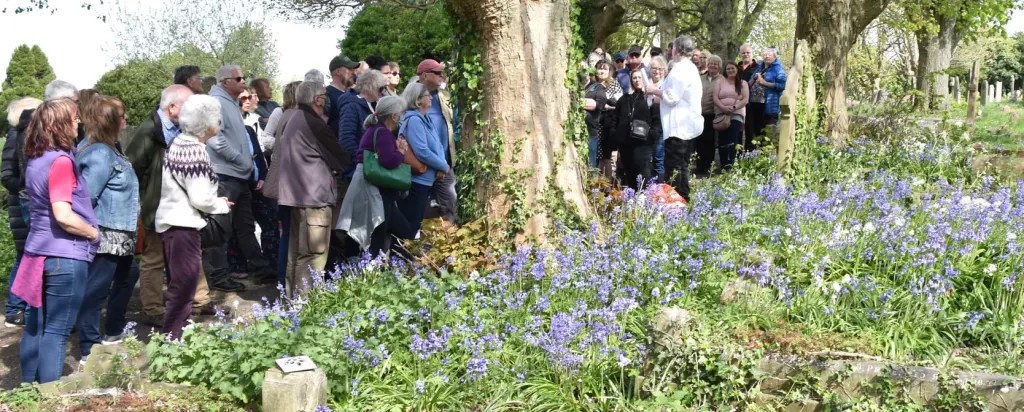
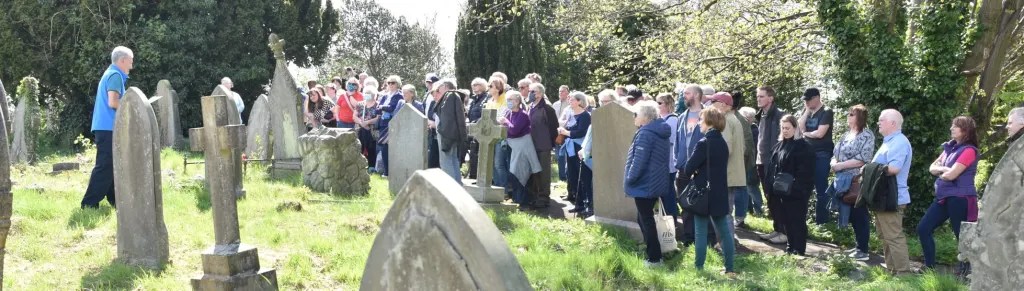
We were delighted (and somewhat overwhelmed) to welcome more than 90 visitors to the cemetery for our first guided walk in two years.

The sun shone, although there was a chill in more exposed areas, and cardigans and coats were donned at various points, but no one seemed to mind.

One local family joined us across their garden fence in Kent Road with waves and smiles, proving that a cemetery walk can include humorous interludes as well as respectful remembrances.

Our thanks to everyone who joined us and our apologies to those we didn’t get around to speaking to (or got called away mid-conversation). It was wonderful to see you all.

We will be publishing a list of dates for more walks during the summer months.

Our thanks to Royston Cartwright, Swindon history friend, for his photographs, published below.