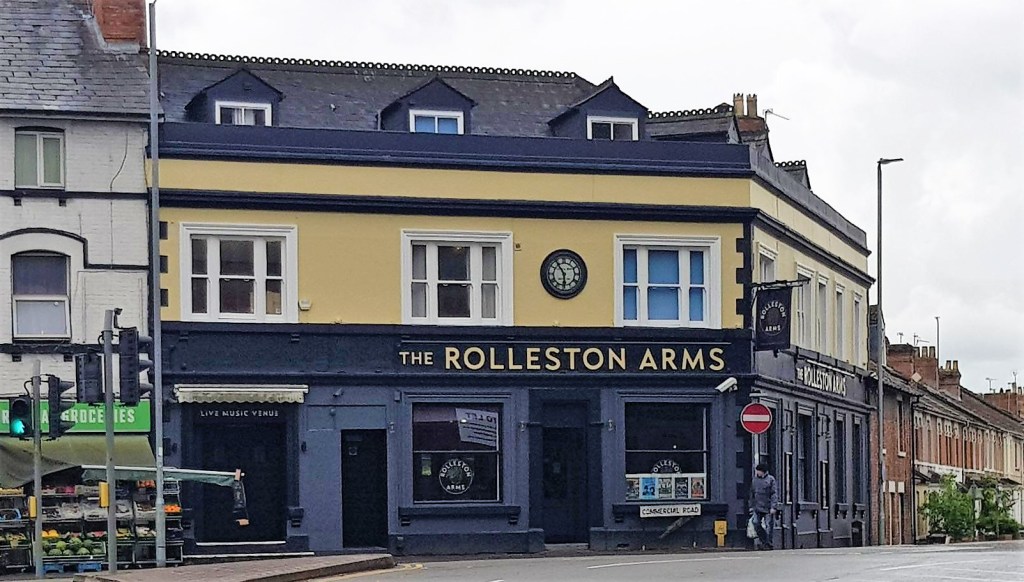
Today the Rolleston Arms is looking very smart with a new coat of paint and new signage. John Horsell, responsible for developing the new Rolleston Estate in 1890, was the first landlord. Charles Iles was landlord for more than 10 years until his death in 1938.
The Late Mr C.E. Iles
Funeral of a Swindon Licensee
The funeral of Mr Charles Edward Iles, licensee of the Rolleston Hotel, Swindon, who died after a long illness, on 21 March, took place last Thursday afternoon. The service at St Paul’s Church was conducted by the Vicar, the Rev. C.F. Harman, who also officiated at the interment in Radnor street cemetery.
Mr Iles, who leaves a widow, was a native of Swindon, and was 46 years of age. As a youth he was apprenticed as a boilermaker in the GWR Works, and served in the Royal Navy as an artificer from 1914 until 1920 when he was invalided out of the service.
He was licensee of the Foresters, Stroud, for three years, before taking over the Rolleston Hotel, where he has been for the last 12 years. Mr Iles was a member of the Western District United Service Lodge No. 2258 and Chapter Eliot.
The chief mourners were: Mrs Eva Iles (widow), Mr Charles E. Iles (father), Mrs Lawrence (aunt), Miss T. Gascoyne (friend), Mrs D. Kent (sister in law), Miss C. Warren (sister in law) Mrs Wenban (aunt), Mr A. Gerring (cousin), Mr H. Kent (brother in law), Mrs H. Kent and Mrs W. Harris (sisters in law), Mr Eli Mort, Mr J. Coster and Mr Harry Waters (uncles), Mr B. Menham, Mr W. Gascoyne, Mrs W. Gascoyne, Mr Johnson, Mr Cavel (representing Golden Carp Angling Association), Mr and Mrs C. Salmon, Mr Graham Davies, Mr Hayball, Mr J. Spackman and Mr N. Davies (representing Swindon Licensed Victuallers’ Association), Mr H.A. Reeves, Mr G. Beburn, Mr G. Wakefield, Mr F. Burchell, Mr Glass, Mr R. Matthews (representing Cirencester Brewery Co. Ltd.), Mr Halfpenny, Mr Charlie Baxter, Mr Watson and Mr Gilbey (representing A.S.E.).
Funeral arrangements were carried out by Messrs A.E. Smith and Son, 24, Gordon road, Swindon.
North Wilts Herald, Friday, 1 April, 1938.
Charles Edward Iles was buried in grave plot A352 on March 26, 1938. This was previously a public, children’s grave and two burials took place in the first year the cemetery was opened. Three year old Tom Wootton was buried here on October 20, 1881 and the following day Violet Lilian Murray aged 2 was buried in the same plot. The Iles family purchased the grave plot more than 50 years later when Charles died. His wife Eva remarried in 1941 and was buried with him when she died in 1979.
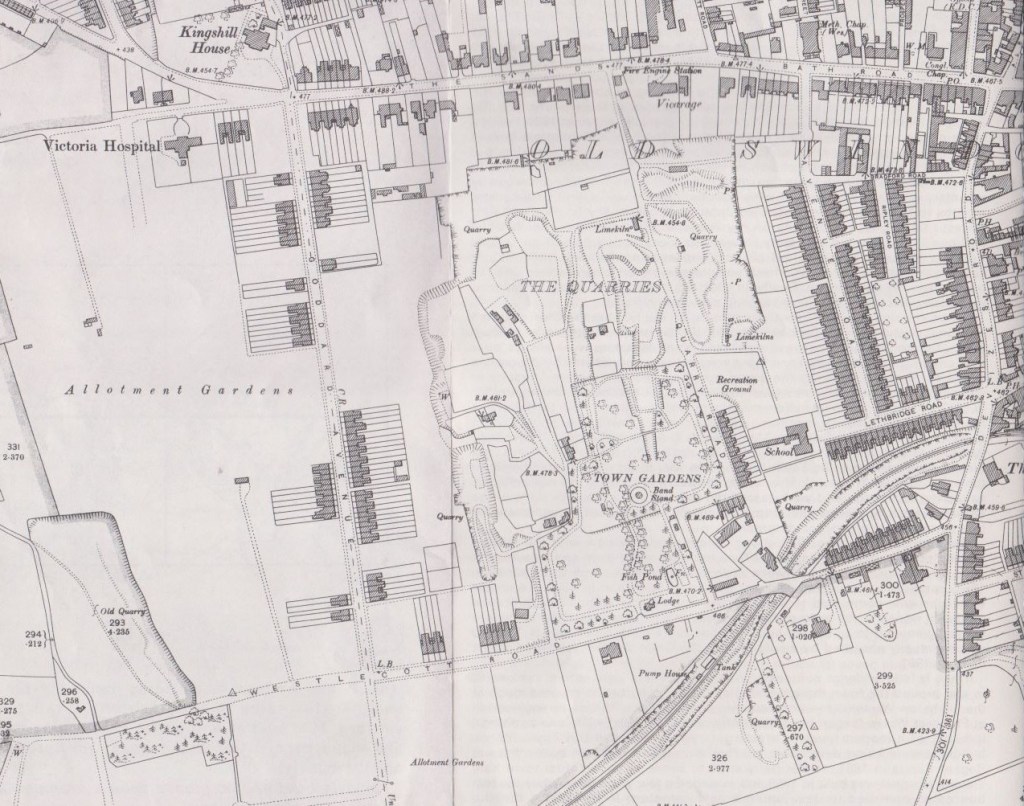
The 1900 map of Swindon reveals a number of quarries in the area of Old Town. Town Gardens was laid out on worked out quarries but the area behind it is possibly still being quarried in 1900. Then there is an Old Quarry at the end of Westlecott Road and smaller outcrops either side of the railway line.
But given that the inquest took place in the Globe Tavern on the corner of North Street I’m guessing that Lott’s fatal accident took place in the sand and gravel pit in the area that is now Savernake Street and play park. (At this time inquests usually took place in a public building close to the site of the accident, most frequently in a public house).
Lott King was born in Castle Eaton and during his lifetime was employed in a variety of jobs, for example, a carter, a labourer and, this his last job, a labourer in a stone quarry. He married widow Leah Matthews in 1870 and raised three step children as well as the couple’s own four children. In 1896 Lott and Leah were living at 4 Eastcott Hill, a short walk to Lott’s place of work.
On Monday afternoon last Mr W E N Browne, County Coroner, held an inquest at the Globe Tavern, Swindon, on the body of Lot King, a labourer, aged 51 years, who was killed in a sandpit on the Rolleston Estate by the fall of a massive stone, weighing nearly three tons, on Saturday last, about noon. Mr T H Williams was chosen foreman of the jury, Mr A. E. Withy was present to represent Messrs Bishop and Pritchett, the lessees of the sand quarry. The jury having viewed the body, the follow evidence was taken:-
James Telling said he was working with deceased on Saturday. They were breaking stone. Asked how the accident happened, witness said he expected it was owing to the heavy rain of the previous night. The whole depth of the quarry was 40ft., but not at the spot where they were working. The stone which fell weighed between two and three ton. The stone did not project, and they did not see any danger of the stone falling, so they continued with their work. The sand slipped from underneath the stone, and it fell quite suddenly, striking deceased on the head, or he would have been buried beneath it. Deceased had no time to get out of the way. At the time of the accident there was only deceased and witness working in the sandpit.
By Mr Withy: He had been working in the quarry some 18 months, and only the day before the accident he got up on the stone to examine it. Witness had ascertained since the accident that there was a joint in the stone and it was that which caused the one portion to fall.
Henry Trueman, a young man in the employ of the New Swindon Urban District Council, said he was drawing stone from the quarry when the accident happened, about noon on Saturday. The stone suddenly gave way, and fell, hitting deceased on the head. Deceased lived for about a quarter of an hour after the doctor’s arrival.
Dr Muir, of Stratton, said he happened to be at Dr Rattray’s on Saturday when a messenger came, and witness went to the sand quarry. Deceased was dying when he arrived. He was internally injured, but the cause of death was the blow on the head. Death was due to shock and concussion of the brain.
Richard Albert Page, the working foreman on the Rolleston Estate said he had employed five men at the quarry but there were only two there on Saturday. The pit was full of sand, with some great boulder stones. Deceased had previously let down some other stones near, which he considered dangerous.
By Mr Withy: The stone fell over, due, he believed, to rain of the previous night getting into the joint.
The Coroner, said it appeared there was no blame to be attached to anyone.
The jury concurred and returned a verdict of ‘Accidental death,’ They passed a vote of condolence with the widow and family of deceased.
The jury, and three of the witnesses gave their fees to the deceased’s widow, the sum total being 11s 3d.
Swindon Advertiser Saturday December 19, 1896
Savernake Street play park in 1984 published courtesy of Carter Collectables.
Lott was buried on December 16, 1896 in grave plot C352. My guess is that this was possibly a public grave. The jurors gave their fee to the family, which suggests they were in dire straits following the death of the breadwinner. The grave was later purchased by the Theobald family.
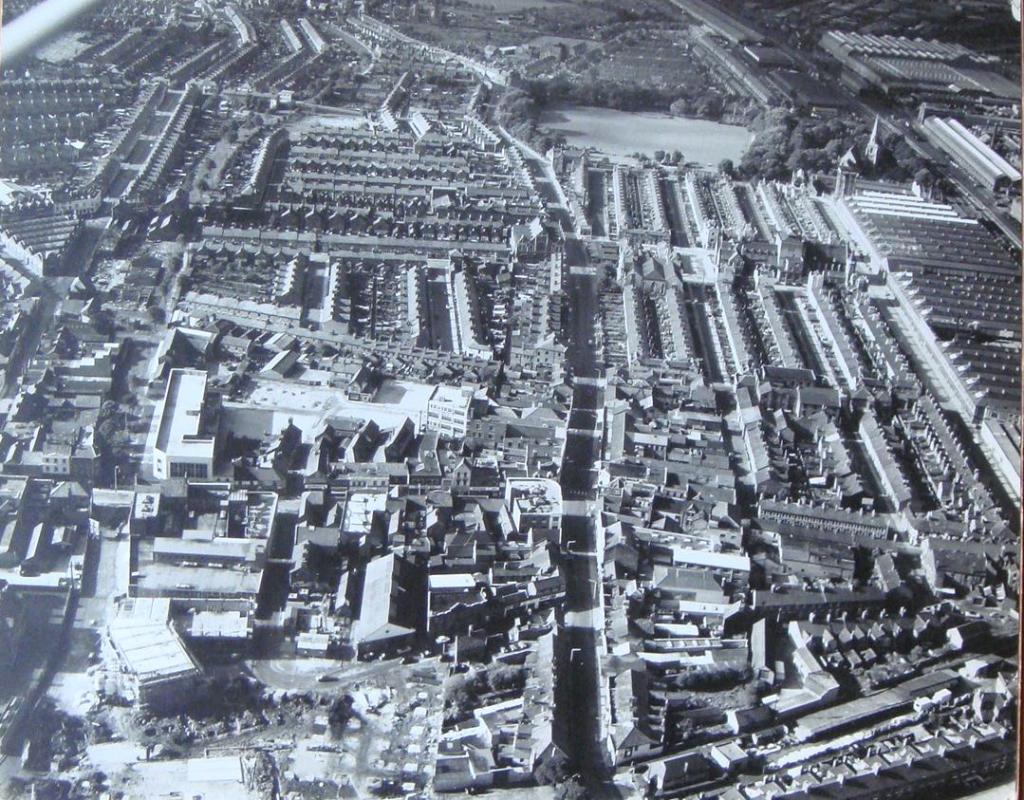
Aerial view of the town centre as demolition begins
The re-imagined story …
Can you remember the town centre as it used to be? I can. All those rows of old Victorian terrace houses, empty and boarded up. What a sight that was. What a disgrace.
Then at last our old fashioned railway town, for so many years stuck in the 19th century, was entering the 20th. There were even plans to demolish the railway village in the 1960s. Knock the lot down, I said.
We were so excited when we saw the new plans for the town centre. We were to have a ‘shopping mall.’ I’d never heard of such a thing – a shopping mall. Swindon was going to become like something out of the American films.
How excited we had been to see the new college rise out of the demolition waste from Horsell Street, all gone at last. And most of Rolleston Street and Byron Street as well.
I don’t get out much these days but this week my granddaughter took me into town to have my Covid booster jab. I thought we were to go to the old railway museum along Faringdon Road until she told me we were to go to STEAM – the museum they built in one of the original railway buildings.
I suggested we had tea in McIlroys afterwards but apparently it was closed more than twenty years ago and demolished soon after. That beautiful store, I couldn’t believe that. I asked her to drive down Regent Street so I could see the changes, but she said its pedestrian only these days.
The town centre has changed out of all recognition. All those terrace houses gone, Brunel Street, Davis Street and most of Havelock Street.
But the old railway village is still there. All tidied up and smart, apart from that dreadful old Mechancis’ Institute building, derelict for more than 35 years now. Knock it down I say.
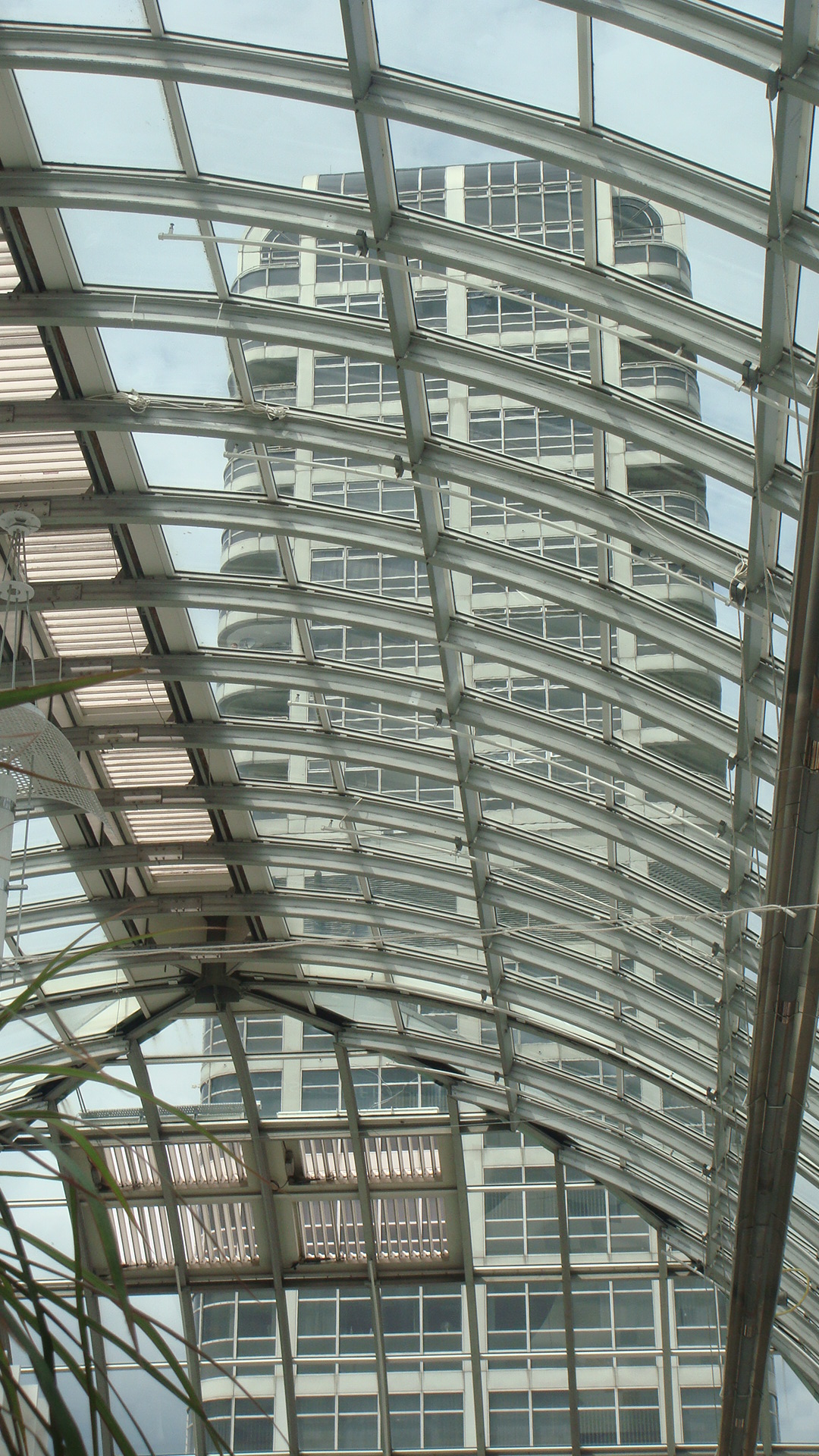
David Murray John Tower built in 1974-6 on the site of the old gas works.
The facts …
The Rolleston Estate, a large land holding that originally belonged to the Vilett family, was crucial to the development of New Swindon. In the 1880s the vast area of prime building land was held in chancery following the bankruptcy of its then owner Colonel William Vilett Rolleston, and was actively holding up the expansion of the town.
But by February 1885 it looked like things might be moving. At a meeting of the New Swindon Local Board it was announced that plans had been submitted by Messrs Maxwell and Tuke of Manchester, surveyors to the Bury Union Building and Investment company, for the development of laying out the Rolleston Estate for building purposes.
Construction began in 1890 when builders William Crombey, a former engine driver from Durham, and John Horsell, who lived in neighbouring Commercial Road, got the ball rolling. They soon began work on streets that would eventually be named Curtis, Crombey and Deacon Streets.
John Horsell was born in 1848 the second son of Charles Horsell, a slater and plasterer and his wife Ann. He married Mary Jane Godwin at Christ Church on 10th February 1872. His address at the time of his marriage was 61 Newport Street and his occupation was that of Surveyor’s Clerk. The couple went on to have eight children.
His obituary published in the North Wilts Herald provides details of his career and his involvement in the development of the town centre at the end of the 19th century.
The Rolleston Estate – Horsell Street now lies beneath the Regent Circus development built in 2014.
Death of Mr John Horsell
The announcement will be received with sincere regret by his many friends of the death of Mr John Horsell, which took place at his residence in Rayfield Grove, Ferndale Road, Swindon, about 10 o’clock on Sunday morning. For the past 20 years the deceased had been a sufferer from gout, which became acute some six years since, and he had been practically an invalid during the last twelve months. His end, however, came somewhat unexpectedly.
The late Mr Horsell would have been 60 years of age had he lived until next May. He was born in what was then Old Swindon. Having left school he went into the office of Messrs Bradford & Foote, solicitors, and afterwards into that of Mr William Read, assistant overseer. After his marriage Mr Horsell became the landlord of the Cold Harbor Inn, Broad Blunsdon, where he remained about a couple of years. He then took the Ely Inn, Wroughton, and was there something like 18 months. Returning to Swindon, he received the appointment of assistant overseer, which he retained for 13 years. For some time after this he carried on the duties of tax collector duties which he had also discharged for some little time prior to his securing the assistant overseership. Then he went into the building business, and took a no mean part in the development of the town. He erected the Rolleston Arms Hotel in Commercial Road, and was proprietor there for eleven years. He has since carried on building operations in the Ferndale Road area, where he resided until his death.
In his time Mr Horsell had interested himself in many friendly and other kindred societies. He was a prominent Odd-Fellow and Forestry, and was a member of the former society for 36 years. He was also a Buffalo, and his enthusiasm for angling was remarkable. Altogether his career has been a varied and many respects a useful one.
A widow and seven children – fours sons and three daughters – are left to mourn a severe loss. Mr Horsell’s two youngest daughters left for Canada a few months ago, one to be married.
Funeral
Many manifestations of regret were in evidence at the funeral, which took place yesterday afternoon. The cortege left Rayfield Grove at 2 o’clock, and proceeded to St. Barnabas’ Church, where the first part of the service was conducted by the Rev. P. Maddocks (vicar). The same gentleman performed the last rites at the graveside in the Cemetery, where a respectful crowd of onlookers had assembled…
Deceased was for 20 years an enthusiastic member of the local Fire Brigade, and to show their last respects to a former comrade the following members attended in uniform and headed the cortege – Ex-Deputy Capt. T. Munday, Lieut. E.R. Bowering, Foreman Selby, Engineer Eden, and Fireman F. Reeve, C. Greenaway, R. Hinton, W. Ludlow and W.H. Gill. There also followed Mr W.H. Smith (secretary of the Swindon and District Licensed Victuallers’ Association of which the deceased was a former secretary). The coffin was of polished elm, with brass fittings, and the breast-plate was inscribed as follows:-
John Horsell,
Died January 13th, 1907
Aged 59 years
List of floral tributes …
The undertakers were Messrs. H. Smith & Son, of Gordon Road, Swindon.
The North Wilts Herald, Friday, January 18, 1907
John was buried in plot D30 in Radnor Street Cemetery on January 17, 1907. His grave is next to that of his son Albert John Horsell Licensed Victualler at the Rifleman’s Arms Hotel. His funeral took place on March 25, 1903. He was just 30 years old. He is buried in plot D29 with his infant son William who died aged 1 year old.
Under construction – the Regent Circus development in Swindon opened in October 2014.





 Radnor Street Cemetery