Home From South Africa.
Archdeacon’s Five Months’ Leave
Native of Swindon
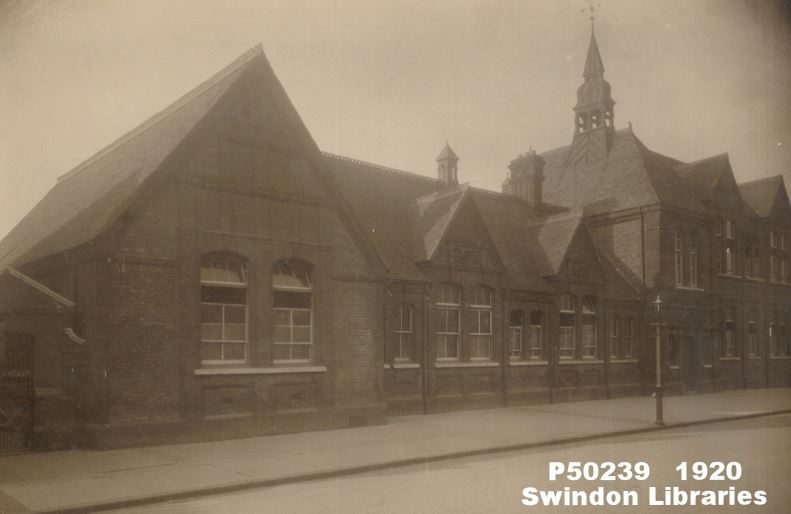
After a trip from South Africa aboard the Llanstephan Castle, the liner in which a mystery illness caused four deaths on the way, Archdeacon Samuel Christelow, of Southern Rhodesia, has arrived in Swindon on five months’ leave. Swindon born and bred – he is an old Sanford-street scholar – Archdeacon
Christelow has been working in the mission field in South Africa for 30 years,
that time being spent in periods of five years in the Dark Continent broken up
by spells on leave.
Swindon born and bred – he is an old Sanford-street scholar – Archdeacon
Christelow has been working in the mission field in South Africa for 30 years,
that time being spent in periods of five years in the Dark Continent broken up
by spells on leave.
Plenty of Travel.
The diocese of Southern Rhodesia includes part of Bechuanaland, Mashonaland and Matabeleland, and the Archdeacon is also Director of Missions for the whole diocese. This mission work affords him plenty of travel – chiefly by car – throughout the whole territory in which are one and a half million natives and 65,000 whites. The whites are chiefly concentrated in Salisbury and Bulawayo. A good deal of translation work occupies Archdeacon Christelow’s attention, for he has an excellent knowledge of the languages of the country. He speaks Chishona, the language of Mashonaland, Zulu in Matabeleland, and Sechuana, which is spoken in Bechuanaland. “I learned the languages fairly quickly,” he told me. “I used to have to go off on trips lasting several weeks with natives who could not speak a word of English, so of course I had to learn. Most of my journeys then were done on foot, although I sometimes had a horse, but these animals were inclined to get horse sickness. We had to take all food with us to last for journeys of several hundred miles, covering about 25 or 30 miles each day. Occasionally, of course, I was able to shoot some game.”Native Problems
Of the changes which had taken place in his 30 years’ experience of the country, Archdeacon Christelow said: “The attitude of the Government towards mission work has changed. It is much more sympathetic and shows it in various ways; among them it has started a scheme for providing medical aids for there is very little medical work indeed, most of it having been done by the missionaries, who also had to fill the roles of dentists, builders and carpenters. “The Government has also begun a series of clinics. Extracts from the North Wilts Herald, Friday, 4 March, 1938. Widowed and retired he returned to Swindon where he lived with his sister Rosa at 125 Goddard Avenue. He died in St Margaret’s Hospital in 1972 and is buried in plot D1587.
You might also like to read:
Up at the Castle
Widowed and retired he returned to Swindon where he lived with his sister Rosa at 125 Goddard Avenue. He died in St Margaret’s Hospital in 1972 and is buried in plot D1587.
You might also like to read:
Up at the Castle



 Radnor Street Cemetery