The Pitt and Osman family – a life in service

Today few occupations can guarantee a job for life but in the 19th century it was quite different. In 1871 there were 1.4 million women in domestic service – 6.5% of the total female population. One in three girls between the ages of 15-20 worked as kitchen maids and housemaids – and one record breaking Swindon family notched up an incredible combined service of over 160 years extending across three generations.

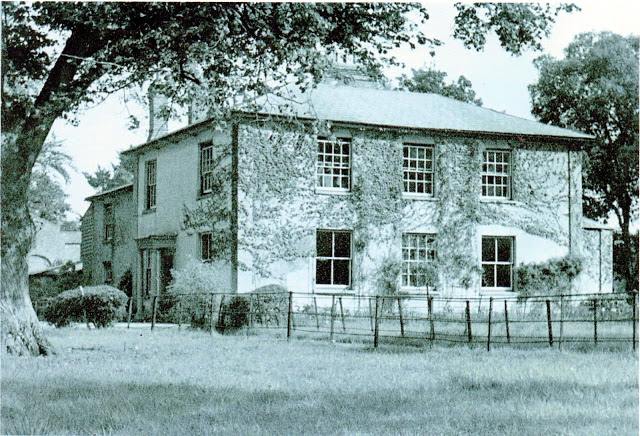
In 1818 James and Elizabeth Pitt moved to their new home, one of three stone built tied cottages in Mannington Lane. An agricultural labourer, James was first employed by tenant farmer Richard Dore King at Mannington Farm and later by Richard Strange who in 1835 signed a 12-year lease on the 237-acre farm.

The Pitt couple had five daughters, Eliza, Leah, Jane, Mary Ann and Martha, all baptised at St. Mary’s Church, Lydiard Tregoze and of whom four were destined for employment at Mannington Farm.

Eldest daughter Eliza worked as a ‘house servant’ for over 24 years. In the 1860s the going rate for a housemaid was £14 per year, all found, the hours were long and the work hard. Leah served the Strange family at Mannington Farm for just two years due to her untimely death at the age of just 18. She died on October 26, 1841 in Cricklade where she was then working in service.  The cause of her death was given as ‘Visitation of God.’

Third daughter Jane put in an impressive 24 years’ service at Mannington Farm.  She began work in 1839, first as a house servant then after her marriage to groom Thomas Osman in 1859, as a dairymaid.  Fourth daughter Martha also began her working life as a house servant at Mannington. By 1871 she had been promoted to Lady’s Maid to Richard Strange’s daughter Julia.

Elizabeth Pitt died in 1871 and her husband James in 1882.  An elaborate and expensive memorial, probably erected by their appreciative employer, marks their grave in the churchyard at St. Mary’s, Lydiard Tregoze.

Julia Strange took over the running of the farm after her father’s death and by 1891 there was a whole host of Pitt descendants employed in the household, including Martha aged 52 and Jane Osman’s two daughters, 21 year old Julia who is a housemaid and Louisa 28, cook. The Mannington Farm tenancy changed hands in the late 1890s ending over seventy years of Pitt/Osman family service to the Strange family.

Julia Strange moved to Didcot. She died at Acland Home, Oxford in 1911 and was buried with her parents in Radnor Street Cemetery in a grave spanning three plots.

Jane Osman died aged 73 at her home, Mannington Cottage, in 1899 by which time the ancient churchyard at St. Mary’s was closed. Her husband Thomas died in 1909 and her sister Martha Pitt in 1909. All three are buried in Radnor Street Cemetery, close to the Strange family grave, neighbours in death as in life.

The Strange family grave

James and Elizabeth’s grave in the churchyard at St. Mary’s, Lydiard Tregoze.

You may also like to read:

The Old Congregational Church

Rev Thomas Trafford Shipman

The re-imagined story …

We gathered outside the farmhouse where father fired the traditional shots above the rooftop to ward off evil spirits. Then the little party of ladies and gentlemen consisting of father and I, Uncle Richard, Charles and Letty, Thomas Plummer and his sister Ellen then set off down the carriageway from Hook to Lydiard House and the parish church of St Mary’s.

Although barely eight o’clock in the morning our friends and neighbours came out of their cottages, throwing showers of rice and as we made the short walk children linked hands and barred our way until Uncle Richard threw them some coins.

Those family and friends who had not joined our merry parade were already seated in the box pews. The beautiful little parish church with its monuments to the St John family. The ancient font where Letty and I had been baptised and where I in turn would bring the child I carried to be christened and blessed by Rev. Shipman.

Rev. Shipman knew I was expecting a baby and he knew Will was not the father, but he made no judgement.

“You’re not the first bride and you won’t be the last who walks down this aisle carrying a child who is not the grooms,” he said. “Do you love Will?”

It seemed a strange, romantic kind of thing for a clergyman to ask. I’d expected him to tell me to repent of my sins, to look to Christ for forgiveness and guidance.

Will was a good man. I’d known him all my life, we had grown up together. He was reliable and dependable and hard working and his prospects were good. But he didn’t make the breath catch in my throat or the heat surge throughout my body.

Will promised he would look after me all the days of our life. He did not promise to transport me to unprecedented levels of physical delight, as Ambrose had. He probably wouldn’t even know what that meant. He does not use flowery language, or pay me extravagant compliments.

Ambrose St John, a cousin of Lord Bolingbroke, had whispered fancy words into my receptive ear, and played my body with his expert lovemaking. And then he had left. I was not the woman I had been before he kissed me, before he touched me, but he had not reached my heart.

St Mary's pews 2

Will was aiting for me at the church door where Letty fussed with my sash and straightened my bonnet.

“I know,” he whispered. “And I love you.”

Rev. Shipman baptised our daughter on Michaelmas Eve. We brought two more babies to St Mary’s to be blessed by the kindly clergyman, but he would not be officiating at the baptism of our next child.

Rev. Shipman died recently following a short illness. Sadly, he will not rest at St Mary’s among the parishioners he served so well. The churchyard is closed and discussions are in progress as to where the people of Lydiard Tregoze shall bury their dead.

The funeral of Rev Thomas Trafford Shipman takes place tomorrow in St Mary’s Church with the interment at Radnor Street Cemetery in Swindon. I will be there, with my husband.

The facts …

Thomas Trafford Shipman was born in Sedgebrook, Lincolnshire in 1831, the younger son of William Shipman, a farmer, and his wife Harriet.

After studying at St Catherine’s, Cambridge he was made deacon at Carlisle in 1856 and ordained the following year. He served as a curate at Barbon, Westmorland 1856-58 and at Christ Church, Carlisle in 1858-59. He was Rector at Scaleby, Cumberland from 1859-1866 and at Nether Denton from 1866-1872 when he became Vicar at Aspatria, a position he exchanged for one at Lydiard Tregoze where he was instituted on April 1, 1879.

He married Margaret Sidney Roper-Curzon at St Mary’s, Cheltenham on October 13, 1859. Thomas was 28 and Margaret 24. The couple had four children, daughters Alice, Ethel and Mary and a son Francis Trafford Shipman. The 1881 census records Thomas and Margaret with their three daughters living at the Rectory, Lydiard Tregoze.

new rectory

The Rectory, Lydiard Tregoze – published courtesy of Roger Ogle

Thomas died suddenly in 1884 and is buried in Radnor Street Cemetery.

Thomas Trafford Shipman (2)

Canon Brian Carne writes in Notes on Rectors, Curates, and Patrons published in Friends of Lydiard Tregoz Report No. 38 published in 2005.

“Shipman’s death must have been sudden, because it became a legend. Right up to the 1960s it was said – at least by Mrs Large – that he appeared at the top of the rectory stairs to presage the death of the current incumbent.”

Martha Hale – a small life

The re-imagined story …

I bought Martha’s little oak gate leg table that always stood in her hall. I remember a vase of seasonal flowers always stood there; daffodils in the spring, sweet peas in the summer, dahlias and chrysanthemums in the autumn and evergreens in the winter.

It would break her heart to see her home being picked over like this, but what else could he do. Martha’s youngest son Owen took over the farm after she died but now he was retiring and moving away. He was taking just a few personal possessions with him.

His six cows stood mournfully lowing in the stalls as the auctioneer sold off the livestock while the furniture gathered across generations of the Philmore family was examined by neighbours who barely remembered them.

The ten-acre farm on Hook Street had been home to the Philmore family for more than four generations and a hundred years. Martha had been baptised and married in St Mary’s Church and in turn had brought her babies there to be baptised. Her parents were buried in the churchyard and her husband and daughter next to them.

This image has an empty alt attribute; its file name is charles-hale-3.jpg

I sat by Martha’s bedside in the bedroom beneath the eaves of the thatched roof; the room where she had been born. Her life had been a small one, intimately interwoven with farm and church, family and friends. She had barely moved out of the parish throughout her life, but in death she was to be separated from all this. There were no more burial spaces in the churchyard, when Martha died, she was buried alone in Swindon Cemetery.

I never went to the funeral. It was just too sad, I couldn’t bear it. I offered instead to get a tea ready for the mourners. They would need something to revive their spirits, Swindon Cemetery was a bleak place in January. I put a small pot of snowdrops on the hall table, just as Martha would have done.

This image has an empty alt attribute; its file name is martha-hale-lydiard-tregoze.jpg

The facts …

Once part of the Midgehall estate, Creeches, the ten-acre holding close to the Old School House, belonged to the Earls of Clarendon until 1860 when the Clarendon properties at Lydiard Tregoze were sold to Henry Meux, head of the Meux brewery. In 1906 Lady Bolingbroke bought the farm for £995 9s 8d.

Creeches was included in the Lydiard Park Estate sale of 1930.  The farm was described as a very desirable small holding of rich meadow land, the house was built of stone with a thatched roof, six rooms and usual offices.  The farm buildings included a cowstall and yard, stable and cart shed.  The property was let on a Michaelmas Tenancy to Mr A.H. Lopes at a rent of £45 a year.

With no interested buyer, the farm was retained by the St John family until after the death of Lady Bolingbroke in 1940 when what remained of the estate went on the market.  A copy of the sale catalogue bears a pencilled note that the property sold for £1,275 although other sources say it was bought by Amy Woolford for £1,405.

Martha was baptised at St Mary’s on June 9, 1816. She married Charles Hale at St Mary’s on October 18, 1836. The couple had six children, Thomas, Ann, Mary, Charles, Jane and Owen.

After her marriage to Charles Hale the family lived first at Toothill Cottages and then in a cottage next to the Sun Inn at Lydiard Millicent before returning to Creeches to look after Martha’s elderly parents.

By the time Martha died in 1890 the churchyard at Lydiard Tregoze was closed, and the burial ground at Hook not yet opened. Martha was buried at Radnor Street Cemetery in Swindon. Her gravestone is exactly the same design as the one on her husband and daughter’s grave at St Mary’s.

The spelling of the  name of the 10-acre farm on Hook Street, close to the Old School House, varied across the 19th century cemetery. In 1805 it was known as Cruises, in 1828 as Cruches and by 1888 it appears in records as Creeches.

Creeches Farm pictured in the late 19th century published courtesy of Lydiard Park.

Heritage Open Day event

As part of the Heritage Open Days event this September, I will be conducting short, guided churchyard walks at St. Mary’s Church, Lydiard Park. These will take place at 2pm and 3pm Saturday September 11 (today) and Sunday September 12 (tomorrow) and at the same time next weekend Saturday 18 and Sunday 19 September.

This memorial, just inside the churchyard gates, records the burial of Jonas Clarke who died on March 31, 1862 aged 74. The names of his two young grandchildren Cordelia Ann Carey and her brother Jonas Carey are also mentioned although they are not recorded in the burial registers so it is possible they were buried elsewhere.

Jonas was born in Minety in 1787 where he spent his early adult life. He married Elizabeth Fitchew in 1816 but the marriage proved to be unsuccessful and by 1818 he had entered into a relationship with Alice Pinnell. The couple had seven children but had to wait more than thirty years for the death of Elizabeth before they could marry.

Their children were baptised at All Saints’ Church, Oaksey and St Michael’s, Brinkworth and took the names Clarke Pinnell. Various Clarke Pinnell marriages took place at St. Mary’s, Lydiard Tregoze including a double wedding on May 4, 1841 when Sarah Clark Pinnell married Thomas Hall, a yeoman from Broad Blunsdon and her sister Jane married Francis Carey, a yeoman, also from Broad Blunsdon. The girls’ parents Jonas and Alice were eventually able to marry at St. Mary’s in 1853.

Jonas Clarke, farmed at Wick Farm just beyond the entrance to Lydiard Park, next to the Rectory, from about 1839 until his death in 1862, when his son Jonas Jnr took over. Farm accounts dated 1869 reveal that during the month of June, Wick Farm produced an average of three cheeses a day, over 90 in total during that month. In October of the same year there were 110 cheeses in the cheese room weighing over three tons.

The area around St. Mary’s church and Lydiard House was developed in the 1980s and 90s when street names were often taken from ancient field names. Two fields on Wick Farm called Green Down and the Green Down Mead were adopted for the new Secondary School. (The school has since changed its name to Lydiard Park Academy). The Prinnells estate takes its name from one of the Wick Farm fields, as does the area known as Freshbrook.