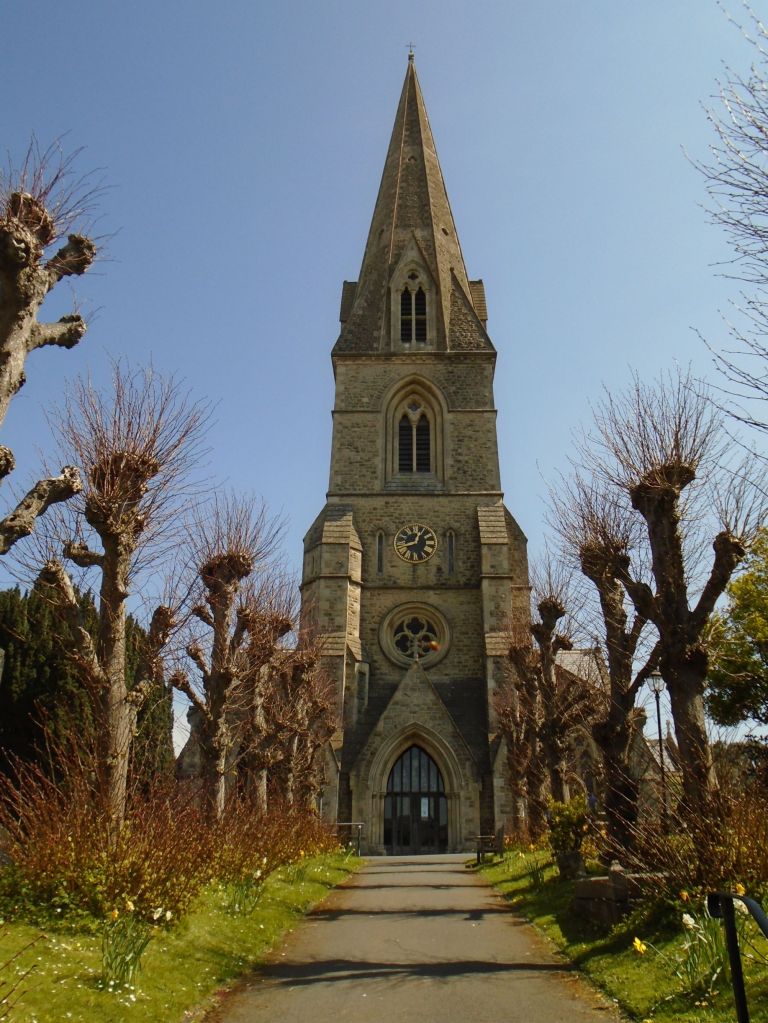
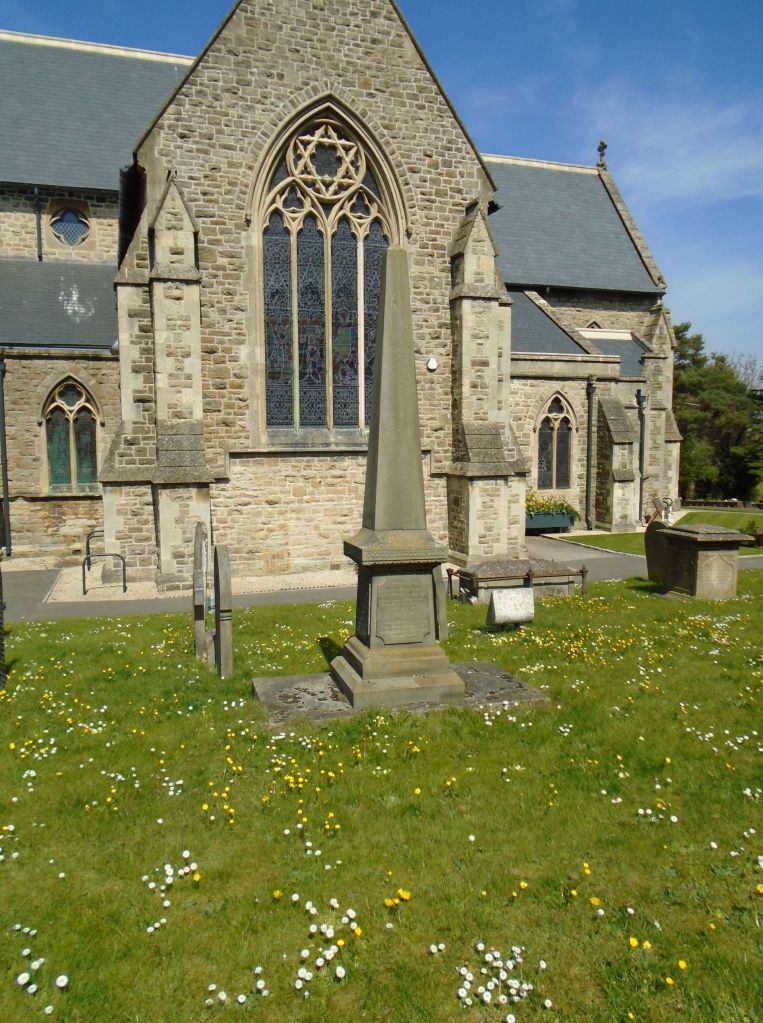
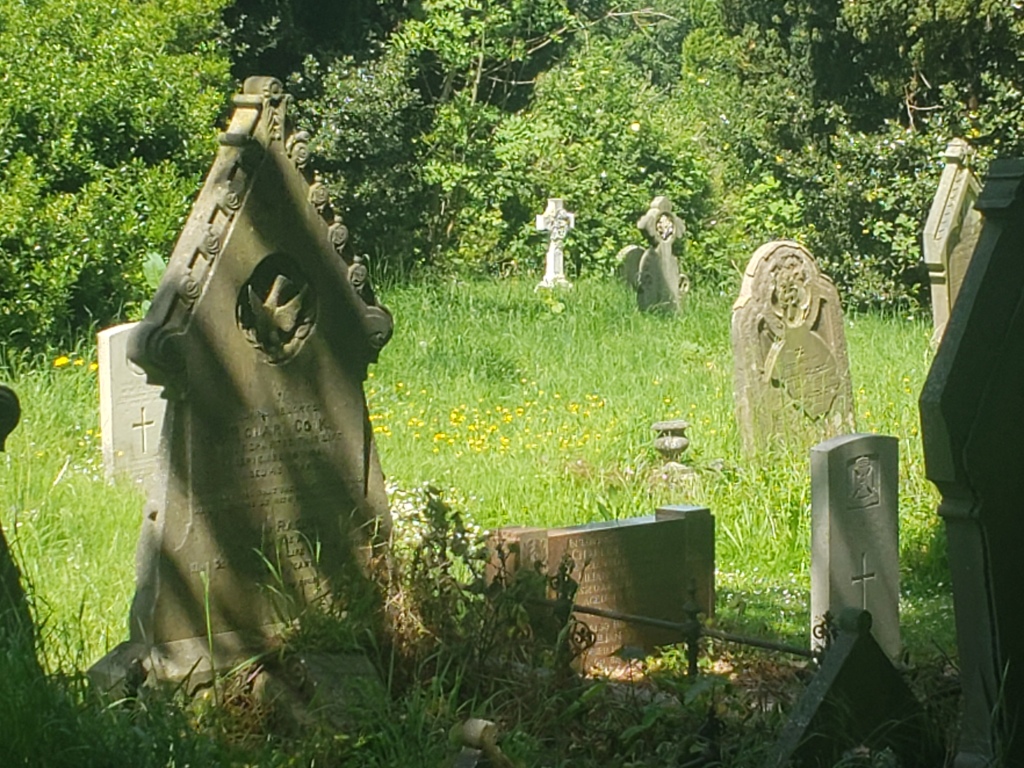
In previous years Andy and I have conducted the occasional guided churchyard walk at Christ Church. Built in 1851 the churchyard is the final resting place of many of Swindon’s Victorian entrepreneurs and, of course, the ordinary, working class people as well. Our much loved and sadly missed Radnor Street Cemetery colleague Mark Sutton rests here.
By the 1840s the medieval parish church of Holy Rood, close to the Goddard family home at The Lawn was proving inadequate to cater for the needs of the rapidly growing industrial Swindon.
A church had stood on the site since the end of the 12th century, possibly longer, but with the arrival in 1847 of an energetic young clergyman Rev. H.G. Baily came the impetus to build a new church.
Fashionable architect Gilbert Scott received the commission to design the new church hot on the heels of his success at St. Mark’s in the Railway Village.
The new church was built at a cost of £8,000, funding was originally sought through the Church Rate, a tax imposed on all householders whether or not they attended Church of England services. Unpopular, especially among non-conformists, this was eventually abandoned and the debt remained outstanding until 1884.
The consecration ceremony at Christ Church took place on November 7 1851 officiated by the Rt. Rev. Dr. Ollivant, Bishop of Llandaff, a mere 17 months after the foundation stone was laid on land at the top of Cricklade Street donated by Ambrose Goddard.
Pew listings for the newly opened church record that Ambrose Lethbridge Goddard paid for the first two pews on the south side of the Nave to seat twelve family members and another nine sittings in the South Transept for his servants.
The Goddard family are remembered in many of the fixtures and fittings in the church. In 1891 the reredos (panelling behind the altar) was presented by Pleydell and Jessie Goddard in memory of their brother Ambrose Ayshford Goddard. In 1906 the brother and sister dedicated the pulpit to the memory of their parents while the previous year Edward Hesketh Goddard presented the font in memory of his wife.
Despite the grandeur of the building, the people of Swindon preferred their order of service to be plain and simple. While Rev. J.M.G. Ponsonby battled to maintain unpopular High Church ritual at St. Mark’s, at Christ Church there was an absence of all pomp. Documents reveal that there was no surpliced choir, that altar lights were never used and that the preacher dressed in a black gown.
Builder Thomas Turner and his wife Mary. The Turner home is now the site of Queen’s Park.
The Toomer family memorial. The Toomer family home was the former Swindon Museum and Art Gallery in Bath Road.
This is the New family memorial. Swindon school teacher Edith Bessie New moved to London and joined the Women’s Social and Political Union (WSPU) becoming an active, militant Suffragette, continuing a personal campaign for women’s rights throughout her lifetime. She is buried in the cemetery at her last home Polperro, Cornwall.
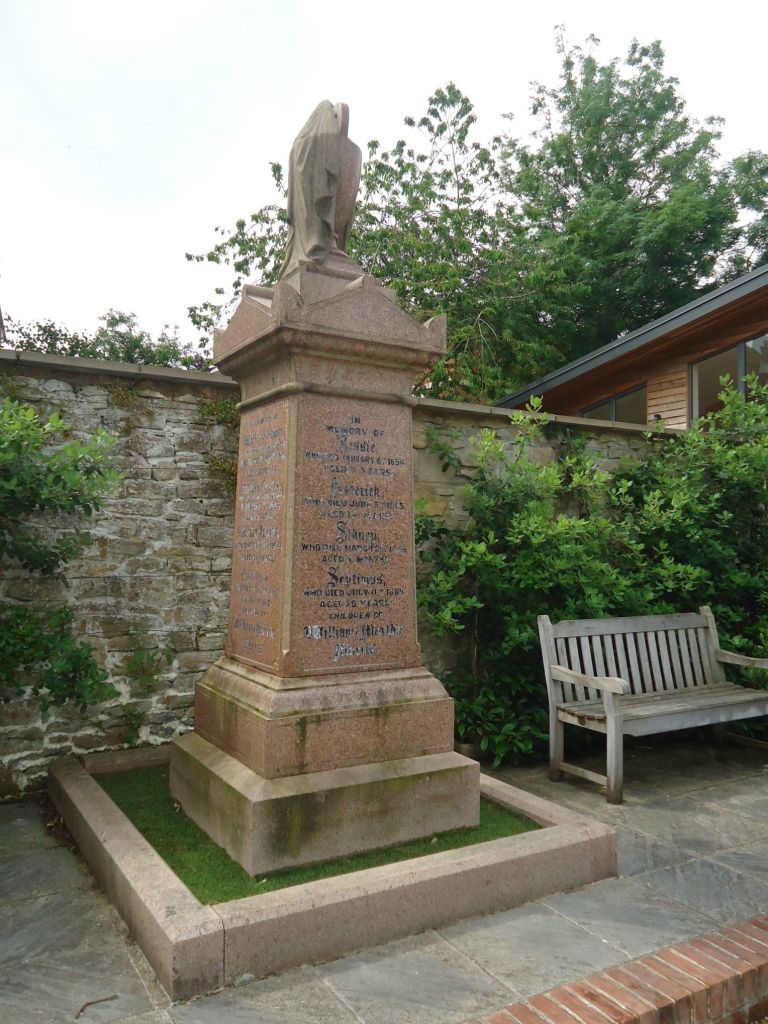
The Morris family memorial. William Morris was the founder of the Swindon Advertiser.
When my much loved Auntie Ruth died more than thirty years ago I was surprised at the number of ladies who attended her funeral and sang with great gusto. It was unexpected as I was her only living relative and she had few friends, so I was anticipating a small and sad funeral. I later discovered that these ladies were members of the church, and although my auntie had not attended for many years, they accompanied every funeral, adding their voices to the hymns and responses.
Andy Binks, my cemetery walk colleague, likes to read out a letter published in the Swindon Advertiser in 1902 where uninvited mourners were definitely not appreciated. Our next guided walk is on Sunday June 1, meet at the chapel at 1.45 pm for a 2 pm start. I’m sure Andy will ready out this letter; it’s the reference to womanly instincts that amuses him.
Correspondence
Disgraceful Scenes
To the Editor of the Swindon Advertiser
Sir, – It has been my sad duty to visit the Swindon Cemetery rather frequently of late, and I have been struck with what I can only call the disgraceful scenes which are allowed almost daily to take place in what should be a sacred ground. Whenever there is a funeral, one notices the same crowd of women trampling over the graves to obtain a sight of the mourners and to discuss the qualities of the deceased. One day last week I happened to be there whilst three funerals took place, and the crowd appeared quite to forget the sadness of the occasion, their only object being to get a glimpse of all three gatherings.
Surely the officials must know these heartless gossips by now, and they should be given the power to prevent their admittance to the Cemetery grounds.
To any person who has a dear one resting there, it is painful to think that his or her last resting place is being trampled upon by women whose curiosity tide what should be their best womanly instincts.
Thanking you in anticipation. – I remain, yours truly,
In 1869 the people of New Swindon went to the polls to vote upon the question of a new cemetery. More than 480 votes were cast, 153 in favour of a new cemetery, 333 against, influenced no doubt by the Great Western Railway Company’s announcement that they intended to oppose the proposal.
The Wilts & Gloucestershire Standard reported – ‘The question, therefore, resolves itself into a sentimental grievance on the part of the Dissenters, who object to be buried in the churchyard. The proper course to have pursued would doubtless have been for the Dissenters to form a company, as was suggested by one of the speakers at a former meeting, and not to put an unnecessary tax on Churchmen and Dissenters alike.’
But the cemetery problem did not, and could not, go away. There were more meetings and discussions and William Morris continued to publish letters in his newspaper, the Swindon Advertiser. Then, more than eleven years later the matter appeared to have been resolved, but not without further problems as William Morris discusses in this hard hitting, editorial.
“Swindon, with its eighteen or twenty thousand of population, is drifting, or rather had drifted, into a position which even the smallest of communities might desire to avoid. For long anterior to the time when it was counted a public duty to decently house the living, the work of providing a last resting place for the dead was undertaken, and has always been most religiously adhered to. But Swindon, as we have said, has drifted into that unique, and we do not hesitate to say disgraceful, position of having literally no place to bury its dead.
This, we know, is practically to close all means for burying the dead in the ecclesiastical district of St Mark’s, New Swindon, for there is absolutely no other place beside the churchyard of St Mark’s in which interments can take place.
Then, as to the churchyard of the Old Town district. It has but very little more burying space left than has the churchyard of St Mark’s. So full has the yard become, and so far have the graves advanced westwards, the interments having been commenced in the eastern part and gradually worked on westward, that poor Cook, the unfortunate man who, the other day, was found dead in the snow at Walcot, now lies in his grave within ten or twelve yards of the very spot where he left his cart in Brock-hill on the night of the dreadful snow storm.
It cannot be long before, in the interest of the public health, this burying place also will be peremptorily closed. And what have we then? Absolutely nothing in the shape of accommodation for the burial of the dead out of the population of a parish of from eighteen to twenty thousand inhabitants: Is there in the whole country another town in such a pitiable, or, rather, disgraceful, position?
In addition to the two churchyards, there are, or rather have been – for the bodies have been sometime since removed from one of the places, the ground being required for building purposes – four other burial places connected with Non-conformist chapels – if, indeed, a strip of land, about ten feet wide, between the front of a chapel and a public street, can be called a burial ground. And, then, one of the two remaining graveyards – the old Independent yard, in Newport street, has been closed for very many years, thus leaving one place only in the parish in addition to the two churchyards – the small yard in Prospect belonging to, and exclusively used by, the Particular Baptists, for the interment of the dead of the whole parish, which, on a very moderate computation, cannot be less than from two hundred and fifty to three hundred per annum.
We believe we are within the mark when we say that by utilizing every foot of ground in all the available graveyards in the parish there could not be made room enough for the decent burial of one year’s dead without using ground “over again” and disturbing the remains of those who have pre-deceased friends and relatives still living only a few years.
And this is what a place like Swindon has come to! We hesitate not to say it is simply disgraceful, and when the reason for it all is understood, no right minded person can help pronouncing it contemptible.
The question of providing a public Cemetery is no new thing in Swindon. Twenty years ago it was regularly and persistently advocated on the ground that without such a convenience the inhabitants did not enjoy that full religious liberty to which they were entitled, and which the providing of a public Cemetery would give them. But the insidious priestly intrigues of those who are interested only in the narrowest and most exclusive of sectarian bigotry always succeeded in crippling every effort that was made.
In Swindon, for many years past, there has appeared no possible chance of carrying out so important a work as that of providing a public Cemetery on the simple basis of the duty we owe each other on the platform of equal rights in all matters of conscience and religious liberty.
Again and again, for years past, efforts have been made to avoid the difficulty in which the parish is now placed. Public meetings were held, resolutions passed, and committees formed, but it was always so managed that nothing further could be done. At one time elaborate statistics and statements were read to show that the existing burial space would be sufficient for years to come; at another time the always “sure card” of increased rates and unnecessary expense was played, and always, with the same result as now, a great deal being done “on paper,” but nothing anywhere else.
A loan of £10,000 has been applied for, and that sum the parish – that is, the parish less Walcot and Broome Farms – will have to repay. Land has been secured upon which this £10,000 will be expended in a hurry, and money spent in a hurry on public works is too often little better than squandered. But worse by far than this is the prospect of the parish having a year’s dead thrown on its hands with nowhere to place it. Progress is bound up hand and foot in that most tenacious of all bondages – red tape; on sanitary grounds every burying place in the parish ought to be peremptorily closed forthwith, and men, women, and children will continue to die. The work has now to be done under the most ruinous of conditions, and under the most unfavourable of all circumstances, and for no better reason, we hesitate not to assert, that in the past, reasons, which should have had no influence with reasonable and rational men for one moment, have been allowed to be all powerful and to stand in the way of anything and everything being done.
Extracts from The Swindon Advertiser – Saturday, February 5, 1881.
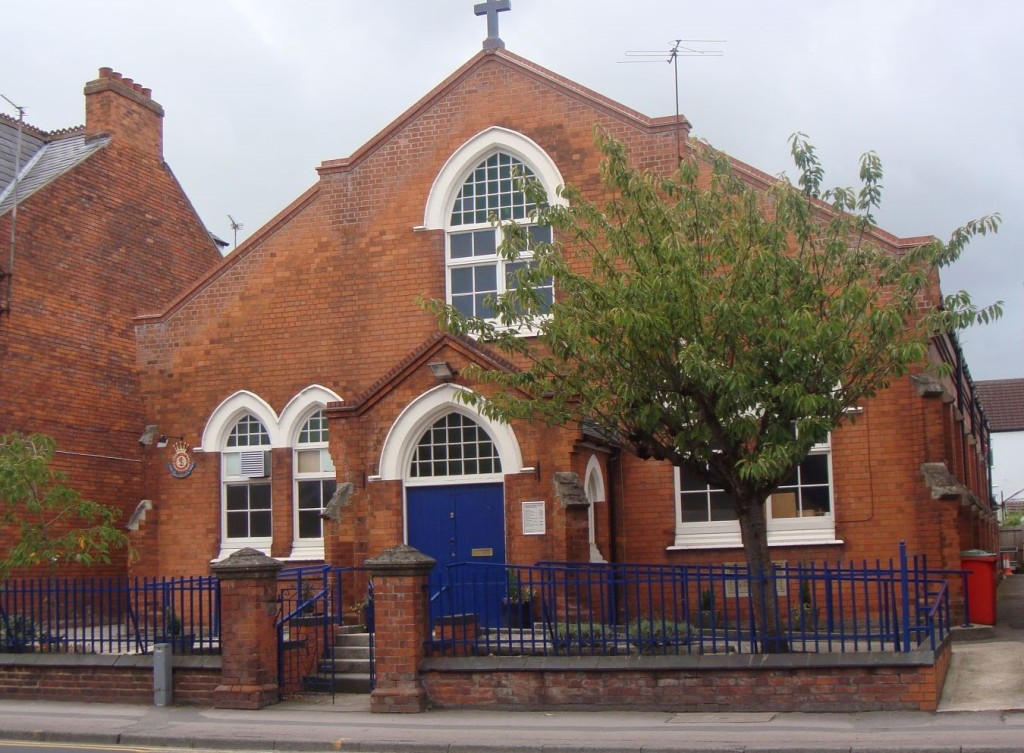
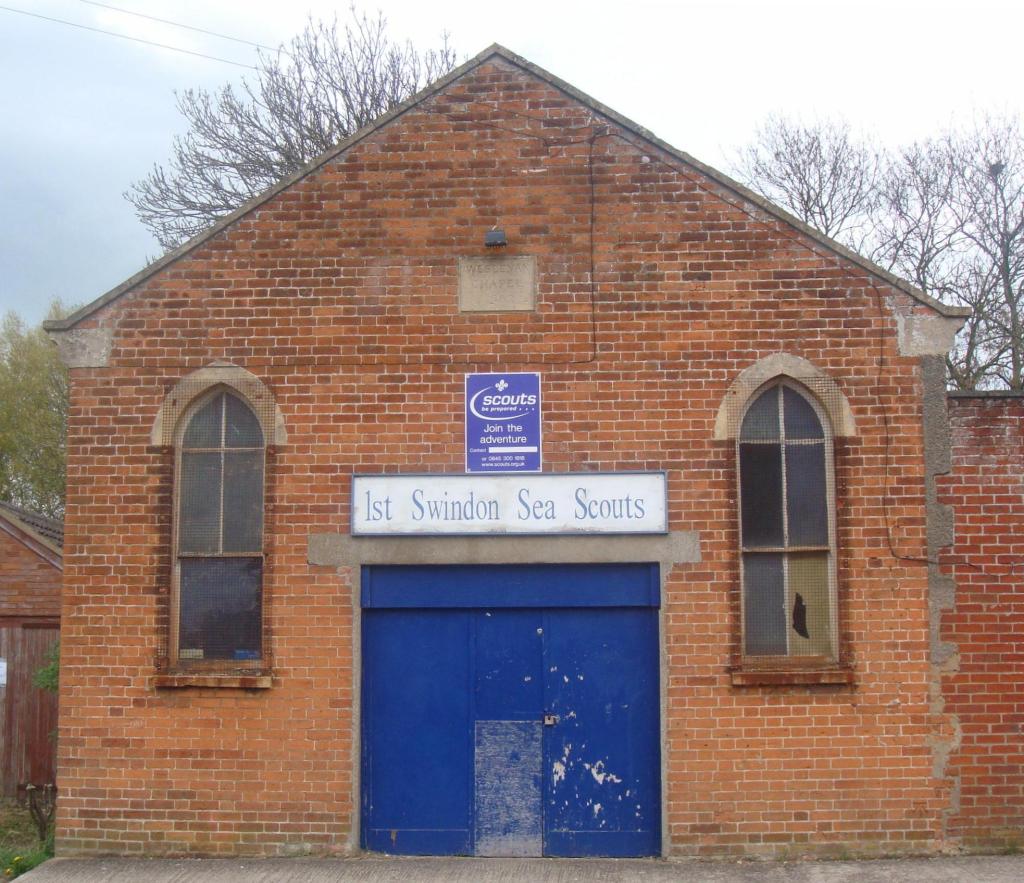
Just a few of Swindon’s non-conformist churches and chapels
The history of Radnor Street Cemetery began long before James Hinton sold the 11½ acre plot of land on Kingshill; long before popular local architect W.H. Read was commissioned to design the cemetery and Messrs. Phillips and Powell and George Wiltshire won the contract to lay out the ground and construct the requiste buildings.
Read here about the campaign that began in earnest in 1869 – more than ten years before the cemetery was built.
A CEMETERY FOR SWINDON. The question, shall Swindon have a cemetery, and in this matter be put on a par with other towns and villages? has again cropped up.
There no single question where the principles of right and good taste are more clear than they are in this question of a public cemetery. There is no call made by the religious liberty we as a nation enjoy more emphatic than is the call that each religious denomination should enjoy the right to consign its dead to the earth after its own fashion. Yet there are to found those who can stand in the way of this right being granted, and who can prate loudly about increased burdens on the shoulders of the poor, and such like prattle, without the real interests the poor being for one moment seriously thought of, and we are therefore to see a pretty squabble before this question, ” Shall Swindon have a Cemetery” is settled.
A short time since a proposition was before the nonconformist bodies of our town for providing a purely unsectarian cemetery, open to all parties, influenced by none. This plan it was perfectly within the power of those whom it would have served to have adopted, and have made successful. Had it been adopted it would have carried with it this recommendation—it would have been in strict conformity with the very principles of nonconformity: it would been established on purely independent grounds, and no man against his will would been compelled to pay a single farthing.
But no sooner was this independent course suggested to those who profess to love and live by independency, than there were found those who could cry out most lustily, “We don’t want to be independent; let tax others for that which we are asking.” The scheme was in consequence knocked in the head, and now we have the question, “Shall a cemetery be provided by a rate on all property within the parish claiming the attention of ratepayers.”
There is this to be said in favour of the proposition as it now stands before ratepayers: a public burying place is a public necessity, and should, therefore, be provided for out the most broadly collected public fund we have. The public weal demands that the dead body should be at once consigned to the earth this being so it surely can be no act of injustice if we call upon the public purse for funds to accomplish that which the public weal demands.
There is another aspect to this question to which we need not refer beyond this: In a town like Swindon, with its two churches, established as by law, and its twelve chapels, established inconformity with the consciences of men, that religious liberty upon which we so much pride ourselves, and which has been fought for, through many generations, cannot said truly to exist among us long as we are deprived of the opportunity of burying our dead after our own fashion; so long as it remains the power of one man to harrow and distress the feelings, by an arbitrary act. Of those who dare to hold independent views on some mere matter of detail in the great scheme of God’s religion. But, as we have said, we are to have a fight over this cemetery business, and Saturday next is appointed for the first great marshalling of the forces.
There was a skirmish on Saturday last, but it was mere babbling piece of business; the fight has yet to come.
Extracts taken from a report written by William Morris and published in The Swindon Advertiser Monday February 1, 1869.
During our Swindon Suffragette festival in 2018 I led a guided walk around Christ Church churchyard, visiting some of the notable women buried there.
There is a lot known about William Morris, founder of the Swindon Advertiser. He was outspoken and challenging in the columns of his newspaper. He was a member of the Local Board of Health (the local authority of his day). He travelled widely and wrote several books.
But it is less easy to find out what his wife did. Maybe she belonged to clubs and served on committees, in keeping with her husband’s status in Swindon, but it is difficult to find out how she spent her time. That is, if she had any to spare.
Martha was baptised in Wroughton on July 14, 1823, the daughter of shopkeeper James Howe and his wife Mary. At the time of the 1841 census Martha worked as a servant at Salthrop.
Martha and William married in the parish church at Walcot, Somerset on September 8, 1845. William described his occupation as Printer. He was under the age of 21 and Martha was two years older.
At the time of the 1851 census the couple lived in Victoria Street. William described himself as a Letter Press printer employing two men. He was 25 and Martha 27. They had been married less than six years and Martha already had three children. Jessie 4, William 3 and Frederick 1. (Jessie died in 1853 and was buried in Wroughton, most probably in a Howe family grave). Also living with them was William’s brother and sister. Henry Morris was 14 and described as a letter press printer and 12 year old Elizabeth was described as a servant. Obviously family members had to pull their weight.
By 1861 Martha had had another five children – Walter 9, Samuel 7, Valentine 5, Jessy 3 (named after the daughter who had died) and 7 month old Edwin. And that wasn’t the end – by 1871 Martha had had another three children – Kate 9, Septimus 7 and Mark 4 – 11 children in all.
Martha died on December 14, 1886 aged 64. I was hoping to find an obituary in William’s paper. There is a death notice, but again it’s all about William rather than Martha.
It reads:
For 41 years the faithful and devoted wife of William Morris (Editor and Proprietor of the ‘Swindon Advertiser’).
He also publishes a rather flowery poem by G.J. Davis, but the last few lines are rather nice.
Oft to the worthless, men memorial raise,
To keep their memories fresh. Beneath the sun
Our love will never die, thou gentle one!
Administration of Martha’s will was left in the hands of her son William Edwin Thomas Morris and her effects were valued at £151 8s 3d.
She was buried in Christ Church churchyard on December 18 and is remembered on the Morris family memorial there.
The ‘fur coated women of Old Town’ received a bad press when the Swindon Advertiser interviewed local bus drivers and conductresses during the Second World War.
“They expect to be picked up and put down outside their own homes, regardless of the approved stopping places, take twice as long as the average passenger to leave the bus because they are too busily engaged in a conversation which almost monopolises the vehicle, and invariably need change from a half crown or a note,” reported the Advertiser.*
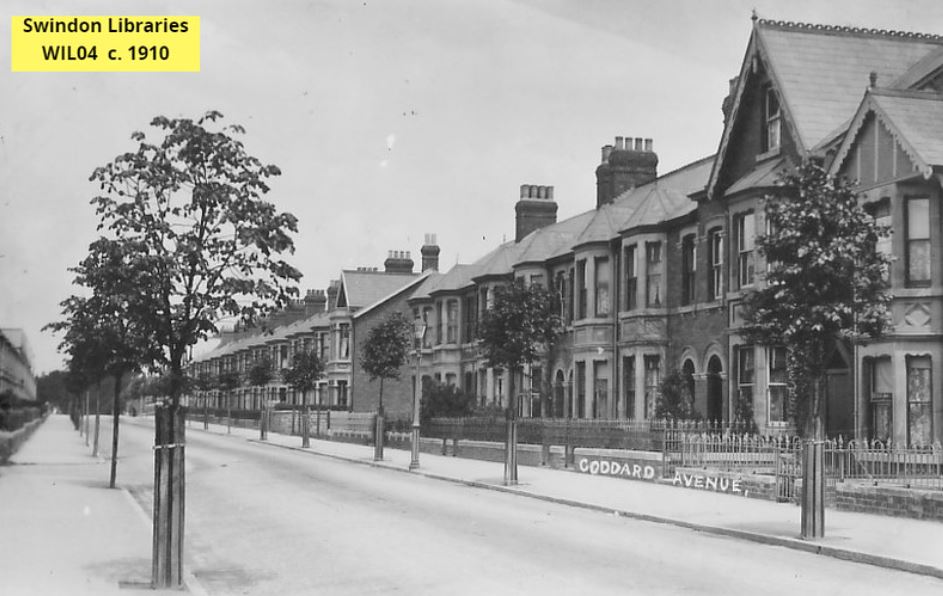
Read about some of the former residents of Goddard Avenue who were hopefully less annoying!
Newspaper proprietor William Edwin Morris, eldest son of Advertiser founder William Morris, lived at Frampton Villa, home to this branch of the Morris family for more than twenty years.
Like his father William Edwin was at the forefront of Swindon society involved in various commercial and public duties. William had worked on his father’s newspaper for more than twenty years before becoming Town Surveyor, a position he held for another twenty years.
A man of apparently inexhaustible energy, William served on both the New and Old Swindon Local Boards. He was a member of the School Board for Rodbourne Cheney and a member of the Highway Board until its abolition in 1894. One of the first members of the Swindon Volunteer Fire Brigade, William served as Captain of the Brigade for more than twenty years. A Freemason, a Forester and an Oddfellow, William was also a member of the Wilts Rifle Volunteers and a life governor of Swindon Victoria Hospital.
Death of Mr W.E. Morris, of Swindon
The death took place on Tuesday, in last week at his residence, at Frampton Villa, Devizes road, Swindon, after a prolonged and painful illness, of Mr. William Edwin Morris. The deceased gentleman, who was born on March 28th, 1848, in Swindon, was the eldest son of the late Mr William Morris, and at an early age entered the printing business carried on by his father, in which he took a part until 1880, when he was appointed surveyor to the Old Swindon Urban District Council. He was for several years a member of that Council, and resigned in order to undertake the duties of the surveyorship. He was also a member of the New Swindon Local Board up to the time that its place was taken by the Urban District Council. He was a member of the Rodbourne School Board previous to the absorption of Rodbourne into the Swindon School Board district, and held a seat on the old Highway Board.
Together with the late Mr William Affleck, Mr Morris was instrumental in forming the Swindon Fire Brigade, he was captain for a number of years, and in that capacity took part in many Lord Mayors’ Shows. An ardent Volunteer, the deceased gentleman for a long time held the rank of Sergeant in the Old Swindon Corps, and was one of the best and most successful shots in the detachment.
He was one of the early members of the Gooch Lodge of Freemasons, and held the post of first Grand Master of the “Castle” Lodge of Odd Fellows, being also Secretary of the Lodge for some time. He was a liberal subscriber to the Victoria Hospital, the Horticultural Society, and many other organisations, and took a warm interest in everything that affected the welfare of the town of Swindon, with which he had been so closely identified all his life.
He married in 1876 a daughter of Mr George Summers, of Romsey, and has had 13 children, of whom ten survive, with the widow, to mourn his loss. Mr Morris’ health has been a serious cause for solicitude to his family for a considerable time past, and some months ago he took a trip to Morocco and the Canaries. He returned very little if anything the better for the holiday, and a visit to Scotland was similarly disappointing in its results. His condition gradually grew worse, and he had been confined to his room practically since Christmas. On Tuesday he passed suddenly, but peacefully away.
The funeral took place on Saturday afternoon amidst every sign of respect. At the parish church the first portion of the service was conducted by the Rev. Prebendary W.B. Pitt, rector of Lydington, Wilts, who officiated at the graveside in the cemetery. The mourners included Messrs. W. Summers Morris, M.F. Morris, G.S. Morris, and S.H. Morris (sons), S.P. Morris, E.J. Morris, and F.A. Morris (brothers), John Morris, Dover, (uncle), Sydney Watmore (Hampton Hill), F.W. Watmore (Portsmouth), S.E.C. Price (Teddington), and W. Willes (cousins), E.E. Morris (nephew), W.E. Smith, and A.H. Walters (brothers-in-law). Besides these, there were some 20 members of the Fire Brigade in full-dress uniform. Deceased had been captain of the Brigade for over 20 years, and had only recently resigned. A large number of the “Swindon Advertiser” employes, of which firm deceased was senior partner, and a goodly number of the tradesmen of the town, also attended. The floral tributes included many beautiful wreaths from sympathising friends.
The Wiltshire Advertiser Thursday, May 1, 1902.
William Edwin Morris died on April 22, 1902 at the aged of 54. He was buried on April 24, in grave plot E7951. He is buried with his wife Bessie who died in 1939 and their daughter Nellie who died in 1958.
William’s modest, somewhat neglected, kerbstone grave marker is in stark contrast to that of his father’s in the churchyard at Christ Church.
On January 18, 1905 Mabel Plaister married William Summers Morris at St. Mark’s Church. William was the grandson of William Morris, founder of the Swindon Advertiser. Their son was born on March 22, 1906. Two months after the birth of their baby William Summers Morris was found drowned in the Thames at Molesey Lock near Hampton Court. He had been missing from his Swindon home for a week.
Mabel Maria Edith Catherine Harriett was the fourth child and eldest daughter of James Plaister and his wife Symper Rosa. The couple’s first three children were born in Wolverhampton. By the time of Mabel’s birth they were living in Swindon, although Mabel was baptised at St Barnabas’ Church, Bristol on June 1, 1879.
At the time of the 1881 census the family were living at 20 Read Street, alongside the canal. Ten years later James and Symper Rosa had moved to 1 Park Terrace with their nine children, Sarah Terry who was Symper Rosa’s niece and a boarder William Preston, a Steam Engine Fitter and Turner. James was employed as a railway clerk in the Works where five of his sons would follow him. Daughters Rosa and Lilian both became schoolteachers but the census returns make no record of Mabel’s occupation. Perhaps as the eldest daughter she was consigned to a domestic role helping her mother.
Following the discovery of his brother-in-law, Charles A. Plaister travelled to Surrey where he identified the body and appeared as a witness at the inquest. Here he read a very long statement written by William before his death in which he expressed sorrow and regret for the action he had taken. He referred to his financial difficulties and said he had been pressed by his creditors, which led him to take the step he did.
Mr F.A. Morris, William’s uncle, said his nephew had never spoken of any financial difficulties and that family members would have helped in any way they could had they known. William’s stationery, newsagents and book seller’s business appeared to be doing well.
The coroner suggested a verdict of “found drowned” which the jury duly returned.
But what happened to Mabel? Well, first she buried her husband. William’s funeral took place on June 2 at St. Mark’s, the church where they had been married less than 18 months previously. Two weeks later she had her three month old baby son baptised William James George Summers Morris at the same church. Then like other women in her position, she got on with the job of living and raising her young child.
In 1911 Mabel and her five year old son were living with the large Plaister family at 26 The Mall, Swindon. She never remarried and at the time of her death in 1936 she was still living at 26 The Mall with her two unmarried sisters, Lilian and Rosa. She was buried with her husband and her parents in a large double plot D105/6. Her sisters joined them when Rosa died in 1962 and Lilian in 1963.
Mabel’s will was proved at Winchester on May 4 with probate going to her brother Charles Anthony Plaister, a retired stores superintendent, who had served as Mayor of Swindon in 1918/1919. Her effects were valued at £274 5s 10d.
The Swindon Advertiser, Saturday, September 10, 1881.
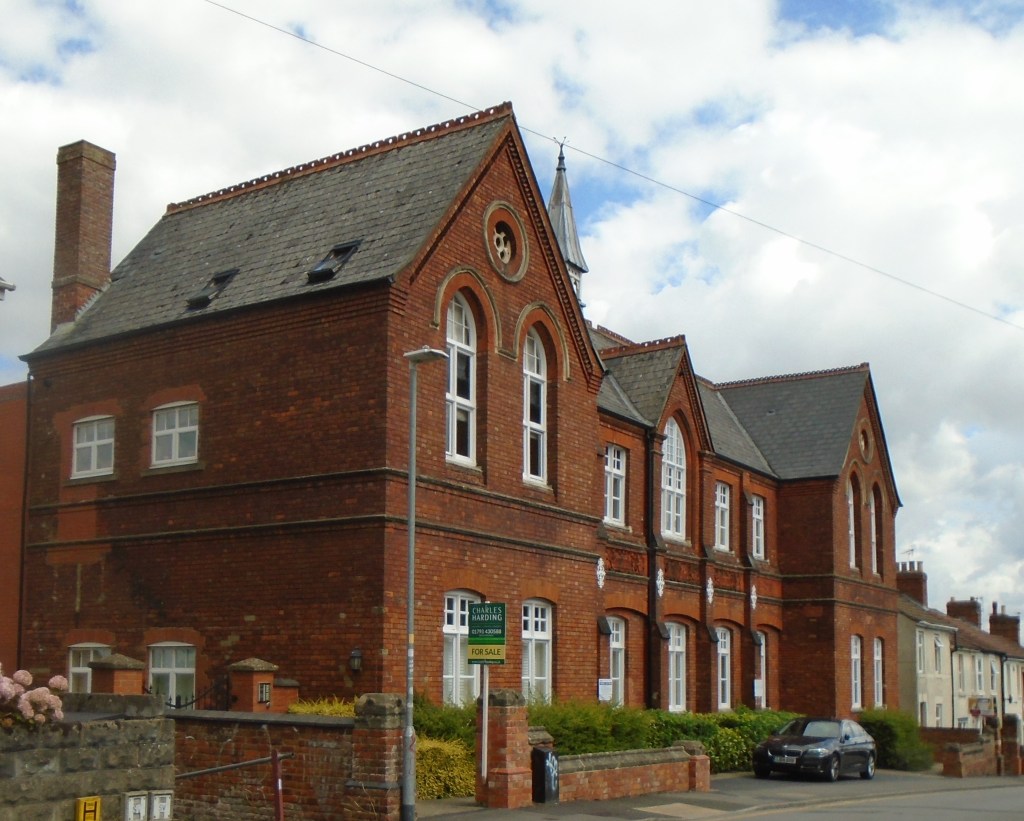
Gilbert’s Hill School – A letter was read from the mistress of the Gilbert’s Hill School pointing out that the making of the cemetery would cut off one of the principal roads by which her children came to school, and asking that some arrangement should be made for allowing children to pass through the cemetery at certain times during the day. – It was decided to send the letter to the Burial Board.
Swindon School Board. – fortnightly meeting
The Swindon Advertiser, Saturday, July 30, 1881.
The next question considered was one of considerable importance to the children attending the Gilbert’s hill School and the welfare of that school. When the new Cemetery was laid out a member of the Cemetery Committee pointed out to his fellow committee men that unless the bottom fence was set back four or five feet so as to allow of a footpath being formed the district known as Kingshill would be entirely severed from the town, and the new schools could only be reached by a long circuitous route. The answer this member received was that the committee had nothing to do with footpaths, and that the public must look after themselves. The Board finding that their scholars were not allowed to use the old track through the Cemetery ground, wrote to the Burial Board and asked them to allow the children use of the footpath as heretofore, in reply to which the Board wrote stating that they had considered the application and while they would have been glad, if possible, to accommodate the School Board, they could not see their way clear to do so. – The Board considered the question at some length, and it was suggested that the Clifton-street children were sent to the Westcott street schools, but it was pointed out that those schools were already crowded.- The Board saw many difficulties arising from the closing of the road, and a committee, consisting of the Chairman, Rev H.G. Baily and Rev J. Chew, was appointed to further consider the matter, and report thereon.










 Radnor Street Cemetery