The trail blazing Maria Matthews

Maria

When Maria Matthews died in 1940 the local press reported that she was the first woman to serve on the Poor Law Board of Guardian but in reality, she was one of four trailblazing women so to do.

The Local Government Act of 1894 brought in reforms that allowed women to serve on parish and district councils. These reforms extended to the election of the Poor Law Board of Guardians and for the first time women were eligible to be guardians.

Elections took place in December 1894 and when the Poor Law Guardians met at the Stratton St. Margaret Workhouse on 2 January 1895 the names of four women were among their numbers.

Maria was the wife of master tailor Jesse Matthews. Together the couple ran two businesses, a tailor’s shop in Regent Street and a newsagent’s business in Fleet Street. Jesse had both a drink and gambling addiction and in 1886 was declared bankrupt. Maria headed their large family and business concerns alone after Jesse’s death in 1905.

The funeral took place on March 2, 1940 of Mrs Maria Matthews who died at her home in Kent Road aged 97 years old. The Rev Joseph Coombes conducted the service at Mrs Matthews’ former home and afterwards at Radnor Street Cemetery. 

Matthews family

And then I was contacted by Shelley Hughes, a descendant of Maria’s, who supplied some of the above information.

Shelley writes: “I found Maria living with her Mapson (Mother’s brother) aunt and uncle in Wootton Bassett when she was just eight years old in 1841. I believe she was sent to live with them after her father died in 1838. Maria’s older brother (age 10), younger sister (age 6) and their grandmother continued to live with her mother in Cirencester. I just discovered on the 1841 census that Jesse Matthews and his family lived just a few houses away from Maria and her aunt and uncle. The age difference was considerable at the time with Maria age 8 and Jesse age 17, but they must have known each other.”

And in addition to this extra information, Shelley has sent me another fantastic photograph of Maria, Jesse and their family taken in around 1893, just a year before her election onto the Poor Law Board of Guardians.

You may also like to read:

The Matthews family

Elizabeth Williams – a forceful character

The Matthews family

The Matthews family is another story I keep returning to although a recent attempt to track them all down has proved frustrating.

Maria Smith and Jesse Matthews married in 1867 and during 38 years of marriage produced 16 children, 13 of whom survived to adulthood.

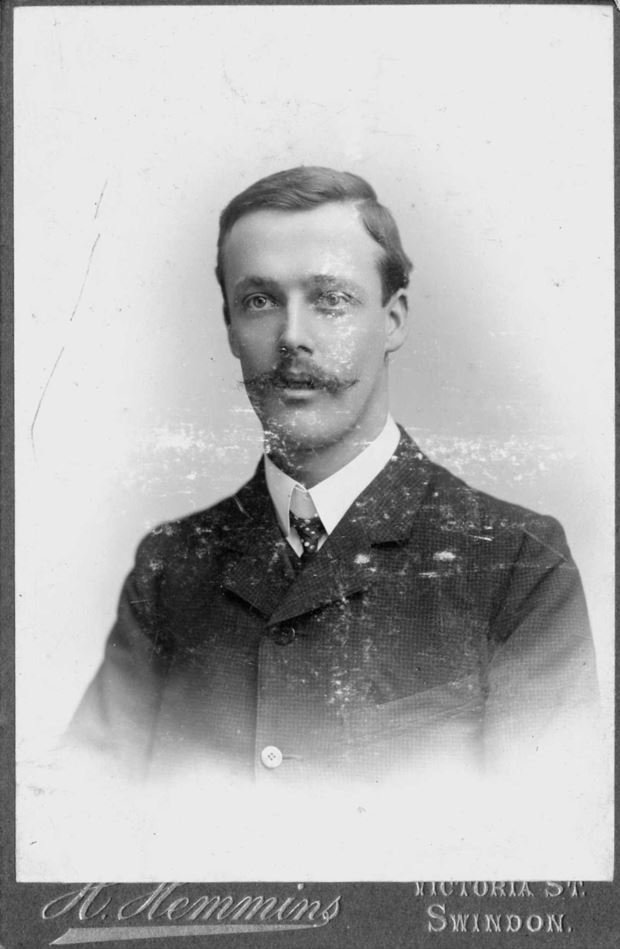
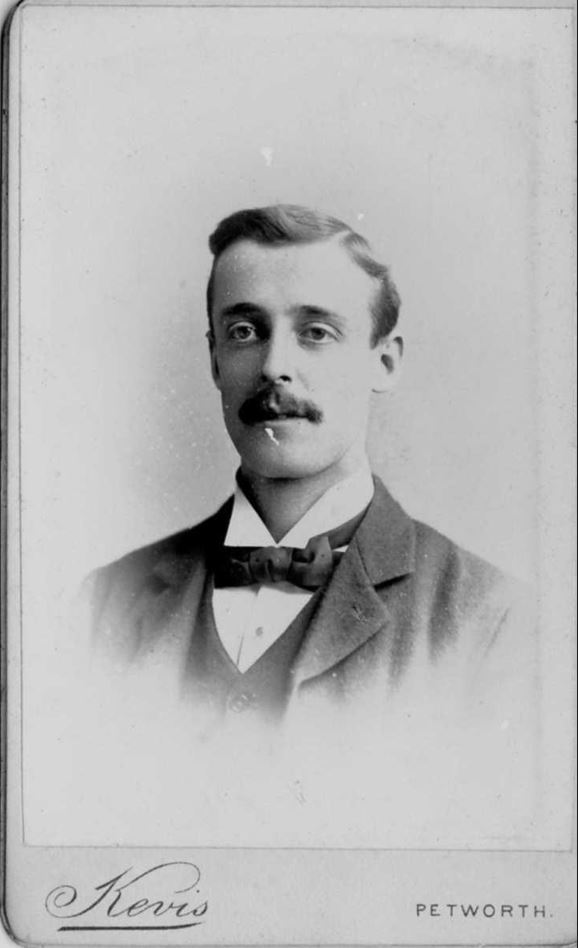
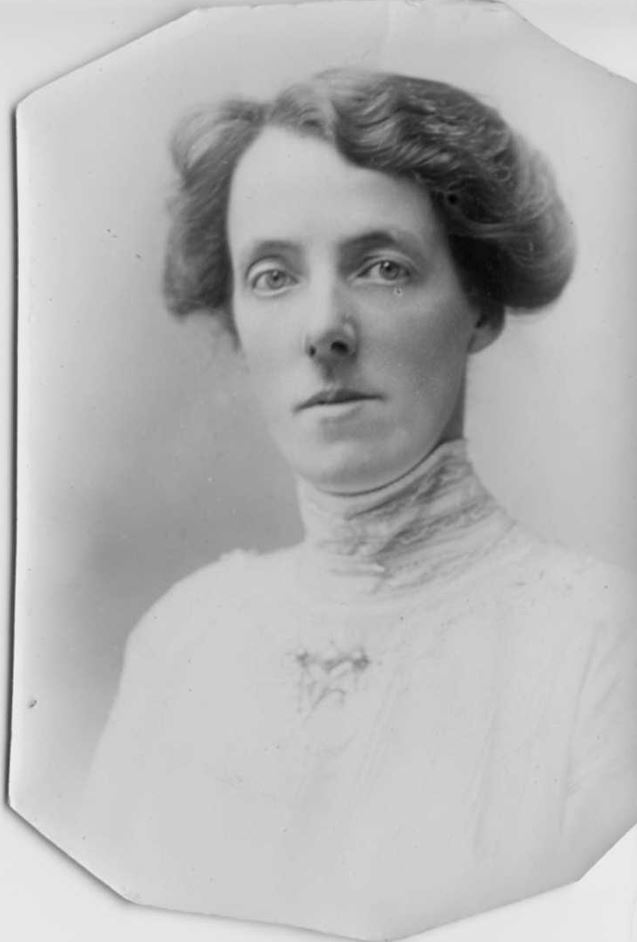
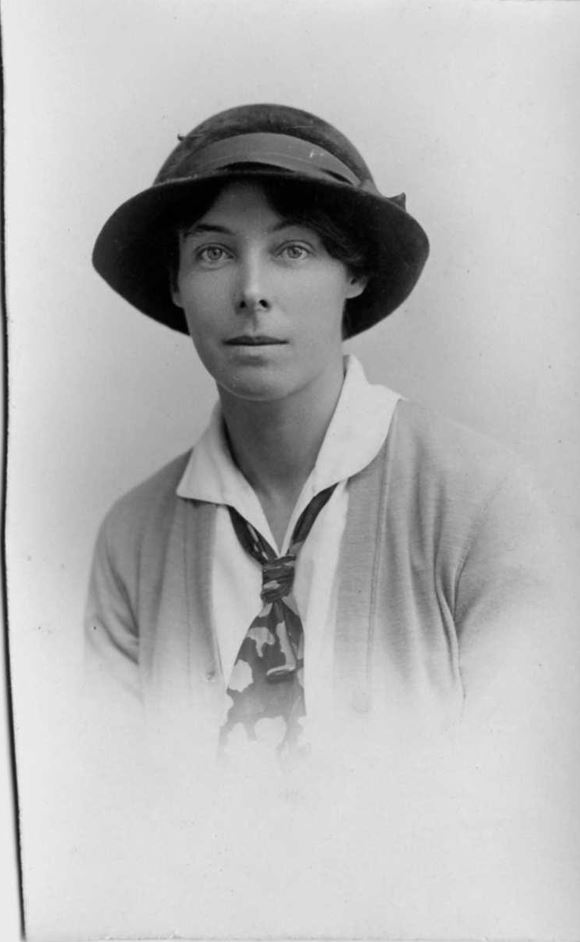
Unfortunately, there is no key to this magnificent family portrait taken in around 1893, but it has been possible to identify some of the siblings by later photographs.

Ada Maria Matthews

Ethel Sarah Matthews

George Stephens Matthews

Walter W.J. Matthews

Edward Thomas Matthews

Emmeline Dorcas Matthews

Mary Catherine Bramble Matthews

Gertrude Amelia Matthews

Frances Josephine Matthews

Winifred Dorothy Matthews

All of the 10 sisters were apprenticed to trades and at least two became teachers. Eldest daughters Ada and Ethel both emigrated to Canada with possibly a third, Emmeline, joining them.

In 1901 daughter Jessie Ellen Matthews (born in 1876) worked alongside her brother Walter in a Stationer’s shop they ran together at 14 Victoria Street. In 1905, the year her father died in tragic circumstances, Jessie married Stephen William Filtness at the Wesley Chapel, Faringdon Road where the family worshipped. Sadly, Jessie was admitted to the Wiltshire County Lunatic Asylum in Devizes on June 10, 1911 where she died on August 9. She is buried in grave plot E7455 where she was later joined by her mother-in-law Mary Elizabeth Filtness who died in 1912; her husband Stephen William who died in 1931 and his sister Mary Sophia Boxall who died in 1932.

Jesse Matthews died in 1905 and Maria in 1940. They are buried in grave plot E7389 with their baby granddaughter Rosemary Gay who died aged 4 days old in 1929.

My research into the Matthews family continues. Many thanks go to Shelley Hughes who has provided so much information and so many photographs and to Prof John Gregory for his gift of Memories of Another Age – Frances Josephine Gay 1886-1974. Frances was a writer, teacher and founder member of the Richard Jefferies Society. Copies of this book are available in Local Studies, Swindon Central Library. Frances was Jesse and Maria’s second youngest daughter.

You can read more about Maria Matthews here.

Elizabeth Williams – a forceful character

Image published courtesy of Local Studies, Swindon Central Library.

Opportunities for women to serve in public office in the 19th century were few and far between but in 1894 significant changes came about. The Local Government Act of that year removed restrictive property, gender and status qualifications, enabling single and married women to vote and stand for election on the newly constituted urban rural district councils.

The local government reforms also extended to the Poor Law Board of Guardians, a bastion of male dominance, responsible for apportioning poor relief and in charge of the local Workhouse.

On January 2, 1895 the new Board of Guardians met for the first time. The Returning Officer laid before the Board his certificate of the result of the Elections of Guardians and Rural District Councillors with the names of four women among their number; Miss Elizabeth House, Mrs Elinor L. Buller, Mrs Elizabeth Williams and Mrs Maria Matthews. Three of these remarkable women are buried here in Radnor Street Cemetery.

The first four women elected to the Highworth & Swindon Poor Law Board of Guardians came from widely different backgrounds.

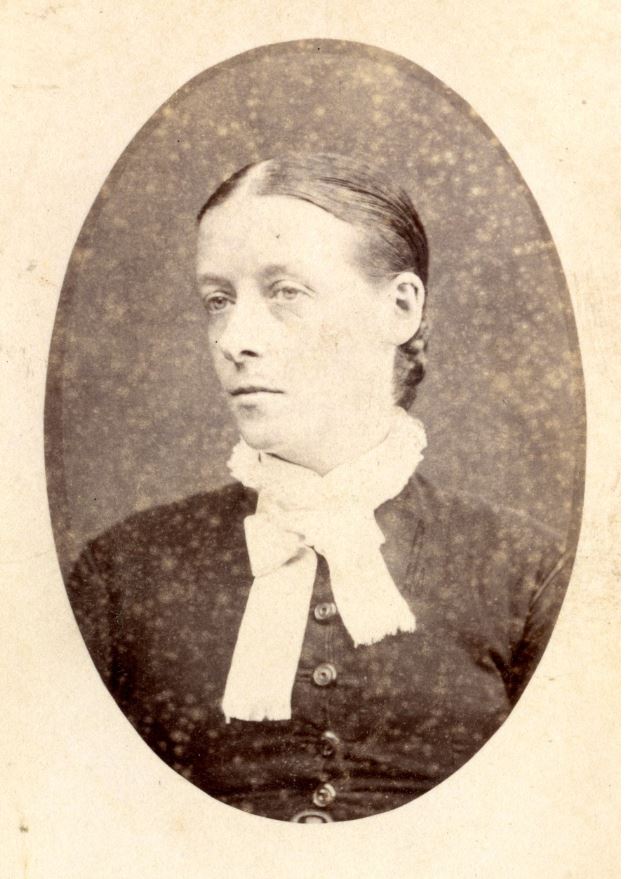
Elizabeth Williams was born in Wanborough in 1846 in a house attached to the Shepherd’s Rest public house. She was one of ten children, nine daughters and a son Henry who died aged 10. Her father Thomas Edwards, was an agricultural labourer and by the age of 15 Elizabeth was working as a general servant in Upper Stratton. Elizabeth married Henry Williams, a gas and water fitter and they had three children. The family lived at various addresses in Swindon and at the time of Elizabeth’s election to the Board of Guardians they lived at 23 Oxford Terrace, Faringdon Road.

Elizabeth served on the Ladies Workhouse Visiting and Boarding Out Committee for many years and in 1901 she was elected on to a new committee set up to address the payment of the Foster Children’s Quarterly Clothing Allowance. In 1902/3 Elizabeth also served on the Finance and House Committee where she objected to the proposal to award the Workhouse Master Mr Kilby seven guineas for his services in the preparation of Dietary Tables.

Elizabeth was a devout Primitive Methodist and strictly teetotal. Her great granddaughter Mrs Hazel Grace tells of how Elizabeth once tried to stop the male inmate’s Christmas beer allowance, a matter recorded in the Minute Book on November 20, 1901 during a discussion about the Workhouse Christmas dinner. The amendment ‘that no Beer be given but that Tea, Coffee or aerated waters be substituted,’ was proposed by local businessman Henry Raggett and seconded by Mrs Williams. However, the amendment was defeated by 16 votes to 12 and the inmates received their Christmas cheer.

In later years Elizabeth lived with her granddaughter’s family and Hazel remembered her great grandmother as a forceful character.

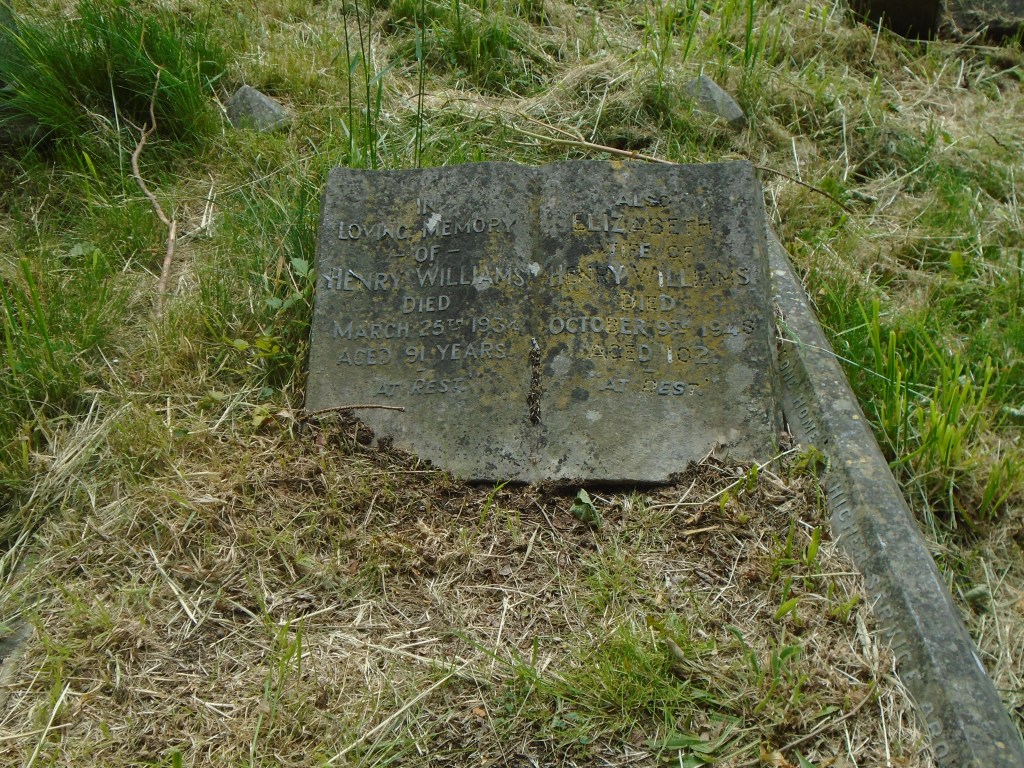
Elizabeth Williams died in 1948, aged 102. She is buried here, her grave marked by a headstone in the shape of an open book, symbolic of a love of learning and religious faith.

You might also like to read:

The trail blazing Maria Matthews