George Brunger – the man who saved the Medical Fund

This article was written by Graham Carter, Swindon Advertiser columnist, and published in the Autumn 2016 edition of the Swindon Heritage Magazine.

Milton Road Baths published courtesy of Local Studies, Swindon Central Library.

Grandpa, the man who saved the Medical Fund

Swindon’s GWR Medical Fund was famously a blueprint for the National Health Service when it was introduced in 1948, but what is often overlooked is the crisis that seemed destined to destroy the organisation during the First World War.

And while the name of George W. Brunger isn’t often remembered as one of the visionaries of a railway town with a health service more than a century ahead of its time, as chairman for 29 years and its last, then he deserves a special place in Swindon’s history.

And George’s granddaughter, Maggie, along with her elder brother Alan, who spent hours recording ‘Grandpa’s’ oral memoirs’ before his death in 1964, have been piecing together the family history.

It tells of how George, who had previously only been an ordinary member of the Medical Fund, stumbled on a crisis meeting at Milton Road Baths – now the Health Hydro – and took control of its destiny.

“Grandpa was returning home from a union meeting in London,” said Maggie. “After disembarking from the train in Swindon, he was walking home when he heard a commotion coming from the Medical Fund building, and decided to go in.”

Formed in 1847, the Medical Fund provided a comprehensive ‘cradle to grave’ service and operated its own hospital, but exactly a century ago, in the last weeks of 1916 faced a huge dilemma because of the First World War.

Many local men were occupied with the Railway Works’ contribution to the war effort, George himself working as a fitter in AE Shop, making heaving guns. But many of the town’s men were away on active service, so subscriptions were critically low, and the crisis meeting was called to find solutions for an organisation that had exhausted its credit at the bank, so its cheques for doctors’ salaries were bouncing.

With the management committee and members arguing over a proposal to increase subscription rates, the closure of the Medical Fund altogether was a very real prospect.

“Grandpa entered the meeting, which was in uproar, and pointed out that they would stay there all night and still not get anywhere. So he suggested that a special committee be appointed to investigate their problems, and report back to members.

“His motion was passed unanimously, with seven people nominated; and Grandpa was the seventh.”

After a few weeks’ deliberation, the special committee reported in February 1917, in a hall that was packed to overflowing.

Surprisingly, it recommended only a penny-a-week increase in subscriptions, rather than the threepence suggested by the management committee, whose view was backed up by the Medical Fund’s lawyer.

When the members overwhelmingly supported the penny plan, it was effectively a vote of no confidence in the management committee, and most of them resigned.

George felt obliged to stand for election to the new committee of 15, and after the man he proposed as chairman refused the post, he put himself forward, and was elected.

Then aged 35, he would remain chairman until the Medical Fund was dissolved to make way for the introduction of the National Health in 1948, apart from when he took a year off and was vice-chairman in 1924.

In interviews with his grandson, Alan, in later years, he revealed that many of the ideas adopted by the Medical Fund during his time as chairman were his own.

Aneurin Bevan, the Minister of Health who was in charge of introducing the NHS, naturally interviewed George during visits to see how the Swindon model worked, and they must have had discussions about the handling of doctors, which was a key issue when the NHS was eventually formed.

A major cause of the Medical Fund’s financial problems were the huge salaries commanded by the three senior doctors they employed who were based at Park House in the Railway Village. George’s novel solution was actually to increase the salaries of junior doctors, while slashing those of the senior ones, including Dr Swinhoe, at the top of the pyramid.

His dealings with the Medical Fund inevitably brought George into contact – but also conflict – with management.

As a humble fitter – his union activities prevented him from progressing up the managerial ladder – he found himself in meetings with the railway company’s Swindon top-brass, but stood his ground.

He was once ordered to remove his hat when meeting FW Hawksworth, but told the Chief Mechanical Engineer: “I haven’t come here to undress!”

George had come from humble beginnings, but showed himself to be a committed and fearless young man.

Born in Maidstone in 1881, when he was 17 he lied about his age, claiming to be 18, so he could enlist in the Royal Engineers.

He quickly found himself in South Africa with the outbreak of the Boer War, the following year, and, apart from a long spell recovering from dysentery, fought much of the campaign, receiving clasps on his medals from six key battles, including the reliefs of Mafeking and Ladysmith.

After the war he stayed in South Africa to work in the diamond-mining boom, but returned to Britain in 1906, and soon married a local Maidstone girl Lillian Price.

They were married on Boxing Day 1906, but instead of honeymooning, after the ceremony they took the train to Swindon to begin a new life.

Arriving at 9.30pm, with snow on the ground, they walked from the railway station to their lodgings in Rodbourne, with a canary in a cage among the wedding presents they carried with them.

They later set up a permanent home at 40 Kingshill Road.

Always a union man, and an official for the Amalgamated Engineering Union (now the AUEW), George was also one of the founders of the Labour Party in Swindon, and served the party on the Town Council from 1919 to 1932.

As Chairman of the Housing Sub-committee in 1922 he oversaw the building of Swindon’s first (and one of the country’s first) council housing estates, at Pinehurst.

Such was the demand for houses that the queue of people outside the Brungers’ home in Kingshill, applying directly to George to move them up the list, led to the family calling the front room ‘the office’.

“He would have been mayor,” said Maggie, who lives in the United States but has been on an extended visit to her home town. “But my grandmother, who was very retiring, wouldn’t have it.”

He retired from both the Railway Works and the Medical Fund in 1947.

Maggie was 16 when he died, and missed the funeral because she was taking O Level exams on the day. Remarkably, his death occurred the day after Maggie’s brother Alan left Swindon to emigrate to Canada.

“He was a lovely old man,” said Maggie. “And of course to me he was always an old man. He was not a big talker, but he was well respected.

“I remember his black leather boots, which he kept by the fireplace, his red hair and his big hands. Every time I go up the beautiful stairs in the Health Hydro, I like to think of him grasping the rails.”

These days the committee room where George presided is often empty, while the smaller of the building’s two swimming pools is also closed, perhaps permanently.

The building was once a jewel in Swindon’s crown, and says as much about the vision and approach of Swindon’s leaders in past times – men like George Brunger – as the Mechanics’ Institute.

With its washing baths, swimming baths and even Turkish and Russian baths, it represented arguably the best leisure facilities enjoyed by any British workers at the time, as well as the medical facilities and services also available to members of the Medical Fund and their families.

But the building faces an uncertain future, just as it did, exactly a century ago, when destiny brought George Brunger, with perfect timing, to its doors.

Graham Carter

George Brunger died at St Margaret’s Hospital in June 1964 and is buried in grave plot C956, which he shares with his wife Lillian who died in 1955.

George William Brunger

Swindon Heritage was a quarterly local history magazine co-founded by Graham Carter, the late Mark Sutton and myself and was published from 2013-2017. Back copies are still available at the Swindon Library Shop, Swindon Central Library and at the cemetery chapel during our guided walks.

Diana Dors and the Fluck family

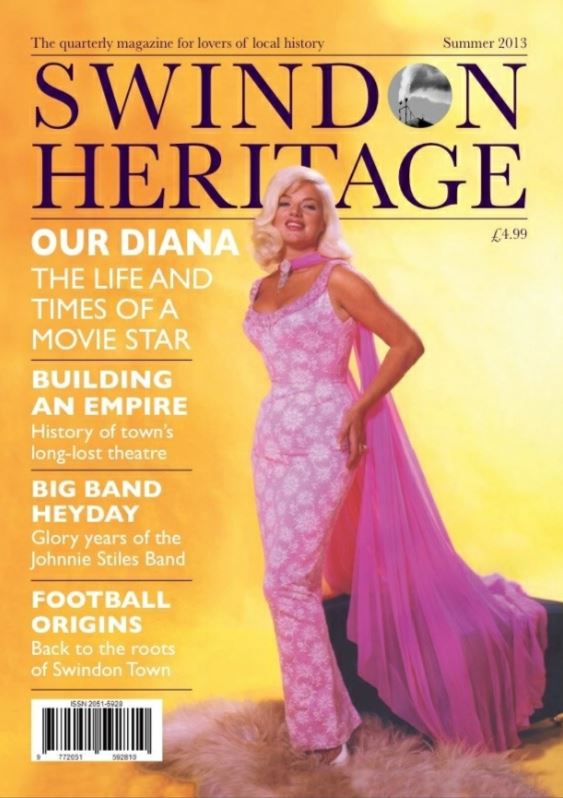
Witty, outrageous Diana Dors provided the media with a whole raft of risqué quotes. Born in Swindon in 1931 she went on to become our very own blonde bombshell, Britain’s answer to Marilyn Monroe. She was bold and brassy and lacked the vulnerability of Marilyn Monroe and sadly, today her sleazy lifestyle is better remembered than her considerable acting ability. But it could be said that Diana like Marilyn was a product of her success and the men who used and exploited her during a lucrative career in the 50s and 60s.

24th October 1953: Film star Diana Dors (1931 – 1984)

She seldom returned to Swindon having left the town behind and following the death of her parents there remains little trace of Diana. Or does there?

Diana’s mother, Winifred Maud Mary was born in Chewton Mendip, Somerset in 1890, the daughter of Mercy Georgina and Elijah Payne. Her first husband, William George Padget, was killed in action in 1916 during the First World War. In 1918 she married for a second time. Albert Edward Sidney Fluck was a railway clerk in the GWR Works. Their only child, Diana Mary Fluck, was born in a nursing home in Kent Road and grew up in a house in Marlborough Road. Her ambition to act, sing and dance became apparent at a very early age and was encouraged by her mother. Her precocious beauty and ambition saw her enrolled at the Academy of Music and Dramatic Art at just 14 years old. Diana would later say:

“They asked me to change my name. I suppose they were afraid that if ‘Diana Fluck’ was in lights and one of the lights blew …” A classic Diana quip. The surname Diana chose was her maternal grandmother’s maiden name, Dors.

Diana’s father Albert Edward Stanley Fluck was born on October 10, 1893 in Swindon and baptised on November 12 at St. Mark’s Church, Kingsholm, Gloucester, the church in which his parents had married in 1892. His father Albert Edward Fluck was a railway clerk and had moved to Swindon in around 1889 and can be found lodging with the Jones family at 40 Oriel Street at the time of the 1891 census.

November 1968: Diana Dors (1931-1984) with her husband Alan Lake in a car after their wedding. (Photo by Keystone/Getty Images)

By 1901 the Fluck family were living at 11 Poulton Street, Gorse Hill – Albert E. Fluck 35 a clerk at the GWR Works, Ada 34 and Albert E.S. aged 7. Lodging with the family was George J. Sarwell 37, a Church of England clergyman.

Albert Edward Fluck died on January 24, 1907 aged 40 years. His funeral took place on January 30 and he is buried in Radnor Street Cemetery in plot C1800.

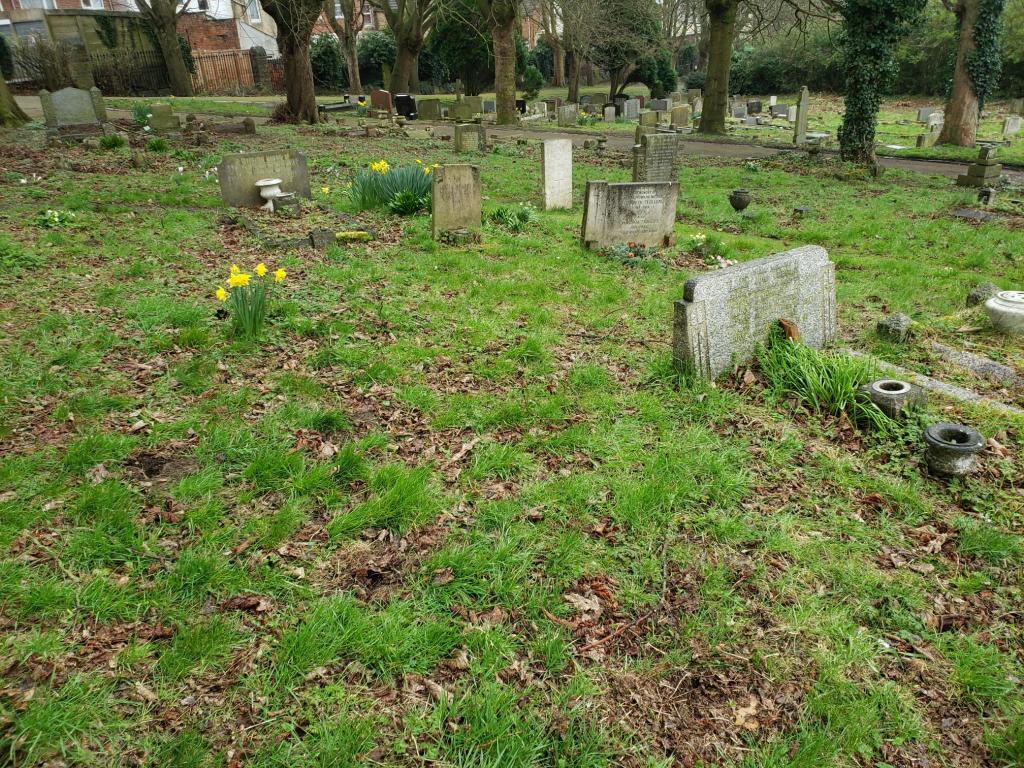
The area in which grave plot C1800 is located

Ada went on to marry widower Albert Ausden a scaffolder employed in the GWR Works. At the time of the 1911 census the family were living at 19 Cambria Place with Albert’s three children Rupert, Florrence and George and her two children Albert, then aged 17, and Gweneva Fluck 7.

Ada died in 1948 aged 81 years and is buried with Albert Fluck in plot C1800. Their daughter Gweneva died in 1966 and is also buried with them.

There does not appear to be a headstone on the Fluck family grave. Probably back in 1907 there was not the money to pay for one. I suspected their granddaughter Diana Dors probably had something big and showy, but surprisingly she hasn’t. Diana died in 1984 aged 52. She was buried in Sunningdale Catholic Cemetery. Her third husband Alan Lake took his own life just five months later. He is buried alongside her and the two have identical headstones.

Image published courtesy of Dizi Daisy

On your marks

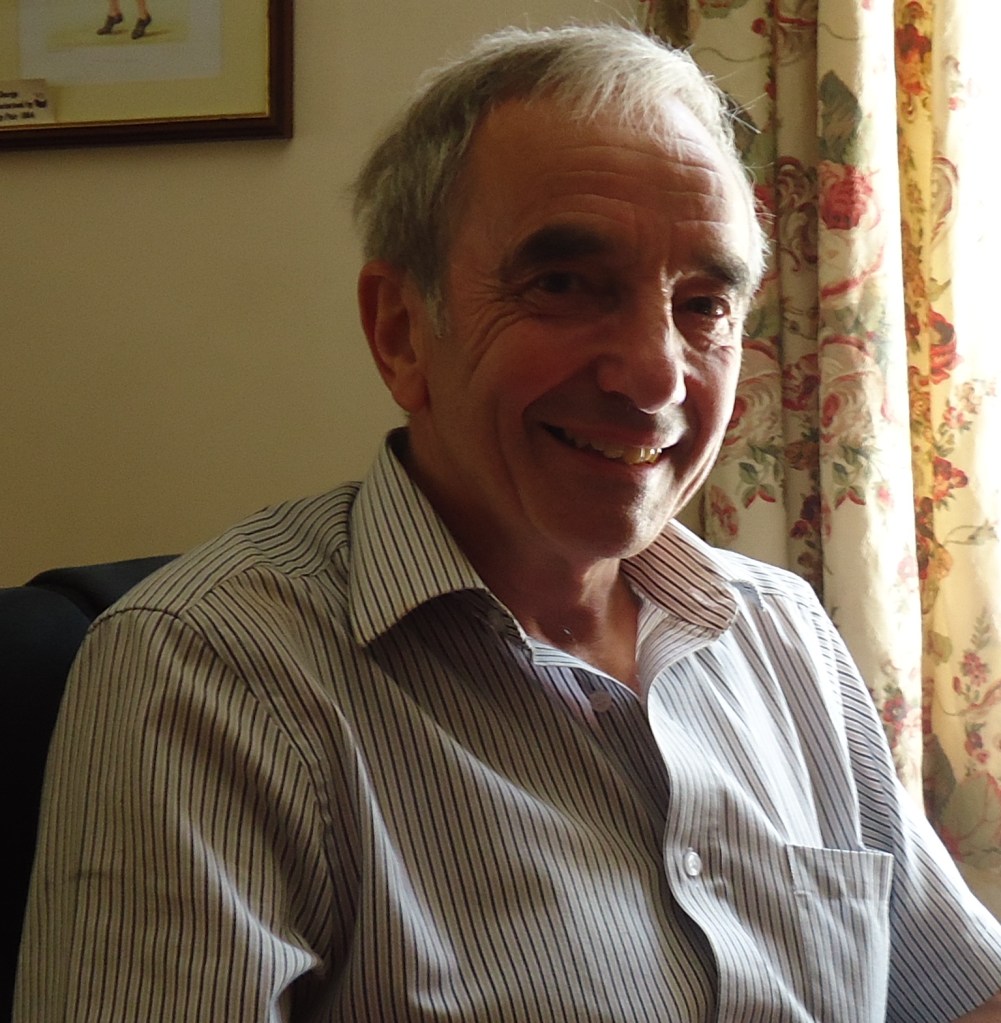
In the summer of 2013 I had the privilege of interviewing Bob Townsend at his home in Wroughton. I knew him as a member of the Swindon Society, but he had many more strings to his bow! Here is the article published in the Swindon Heritage Magazine in the 2013 Autumn edition.

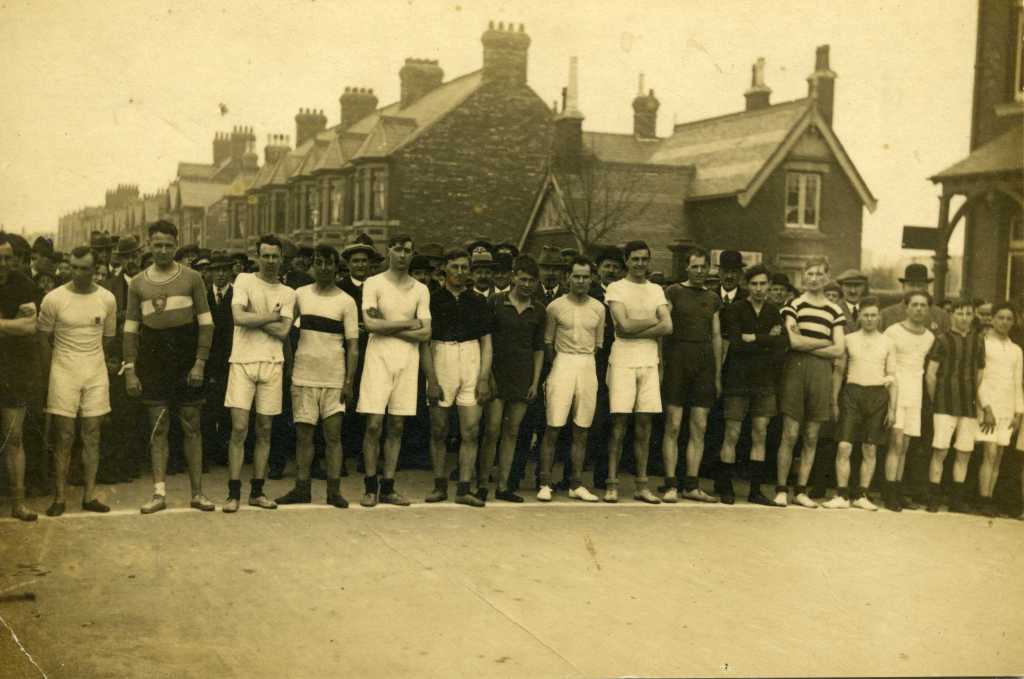
On March 19, 1921, a crowd gathered at the County Ground to see history being made – but this time they weren’t there for the football.

They had come to see the first road race organised by the newly founded Swindon Athletic Club, over three miles.

Swindon historian Bob Townsend’s father William, a 17-year-old novice, not only ran in that historic race, but won it.

And so began a long family association with the club that would last for more than 60 years.

“Some of the lads joked that it might as well have been called the Townsend Athletic Club,” said Bob, who joined the committee in his teens and was chairman for more than 20 years, following in his father’s footsteps as President.

Bob got the running bug when his father organised the Swindon School Championships, held at Ferndale Road School in the mid 1950s. “I was in my last year at school and dad asked if I fancied comming down and having a run,” said Bob, so he and his older brother John joined the Townsend training camp and were soon making headlines on the sports pages of the Evening Advertiser.

In May 1961, at the RAOC Depot Hawthorne, the Adver reported: “Leading all the way, and taking turns to set the pace, the brothers shook of Brooksby (Salisbury Athletic Club) at the halfway mark and increased their lead, eventually to lap two of the competitors.” Both achieved a personal best over three miles, with John finishing first and Bob close behind.

Bob has competed in events all over the country, running in cross country and road races of varying distances.

He set the Wiltshire record for the 3,000m senior steeplechase championship when the Wiltshire Athletic Association held the event at Marlborough College in the 1960s, and twice won the Wiltshire Cross Country Championship.

In 1965 he ran the course in 33.07 minutes, coming in 200 yards ahead of the rest of the field – just one of the many occasions when he “finished before anyone else did” as he modestly puts it.

Bob was selected three times for the British Rail Staff Association (BRSA) team to compete in the prestigious Railwaymen’s International Cross Country Championship. At Leipzig in 1962 the British team came second in both the men’s and women’s overall championship.

In 1981 the club celebrated its 60th anniversary with a jubilee run. Bob is picture wearing number 502 and one of the original 1921 vests.

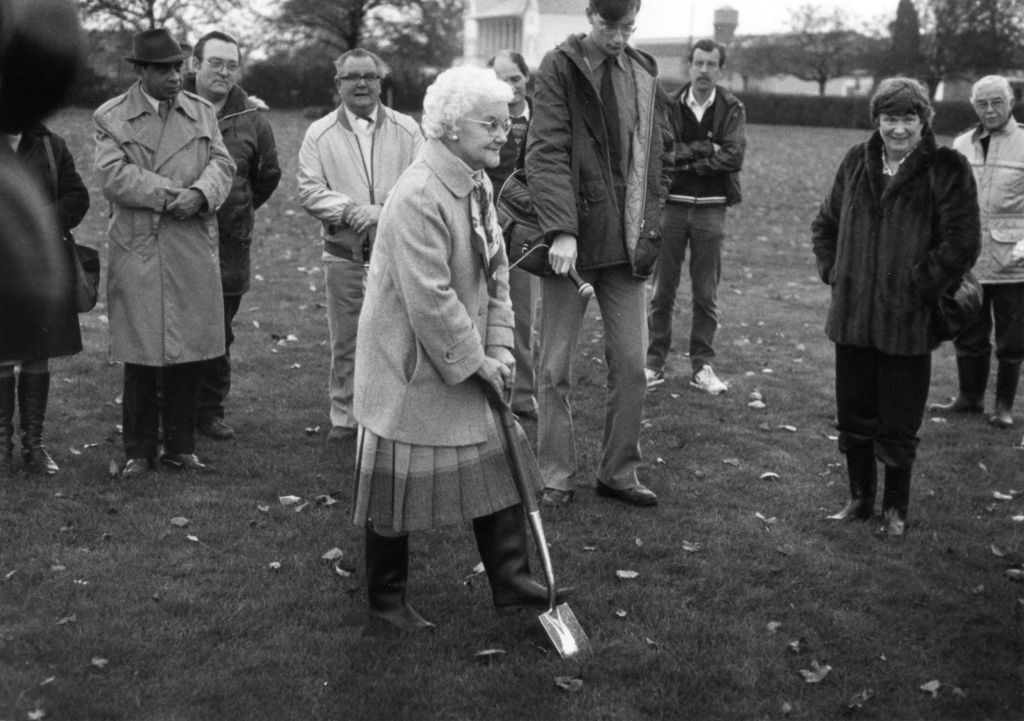
In the early days the club had no running track and their headquarters were on the County Ground car park, so when Swindon finally did get a track, in 1984, it was fitting that Bob’s mother Emily was asked to cut the ceremonial first sod.

Although Bob’s competitive running career began to tail off in the 1980s, his involvement with the sport continued.

He served on the Wiltshire Athletic Association, where he was secretary and team manager of the Cross Country Championships for 27 years. He did everything from finding a course to typing up the race schedule and ordering the medals.

Today he helps organise the Lions Disabled Games, hed every August at the County Ground track – a meeting that attracts teams from all over the country.

“It’s a wonderful afternoon,” he said.

The Swindon AC name has now gone, but the club lives on because it amalgamated with Swindon Road Runners in 1996 to become Swindon Harriers.

And, driven by the ‘marathon mania’ of the 1980s and no doubt the legacy of London 2012, athletics in Swindon goes from strength to strength.

Bob reflects on his early days with Swindon AC when the average entry for a County Champtionship numbered 40-50.

“My dad wouldn’t believe it today to see 500 entries in a Swindon half marathon,” he says.

The Townsend family are at the heart of Swindon athletics history, and although Bob is reluctant to talk about his own achievements, both on and off the track, he does recall when the story came full circle at Babbacombe in Devon in the 1960s.

“I won the mile handicap and an old man came out of the crowd waving his programme at me.

“‘I’ve been coming to his meeting for more than 30 years,’ he said, ‘and about 30 years ago another boke called Townsend from Swindon won this race.’

“That was my dad,” said Bob, proudly.

Bob died in August following a long battle with Alzheimer’s. His funeral took place yesterday at Immanual Church, Upham Road, Swindon where a large congregation of family and friends celebrated his life and said goodbye.

Swindon AC’s first race, in March 1921, with Bob Townsend’s father William, aged 17, second from the right.

Swindon wins South of the Thames Cross Country Championships, Sevenoaks, Kent 1961.

The British Rail Sports Association athletics team bound for Leipzig, East Germany, in 1962 – Bob is pictured seventh from the left.

The club’s 60th anniversary race in 1981. Bob is pictured wearing number 502 and one of the original 1921 vests.

Bob’s mother Emily cutting the first sod at the County Ground athletics track in 1984.

Bob (right) and his brother John.

Photographs published courtesy of Bob Townsend.

All things Swindon Heritage

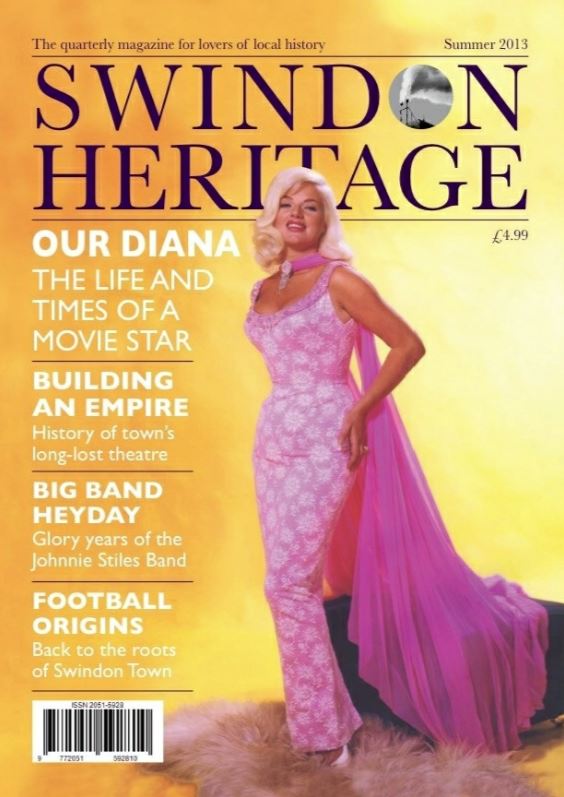
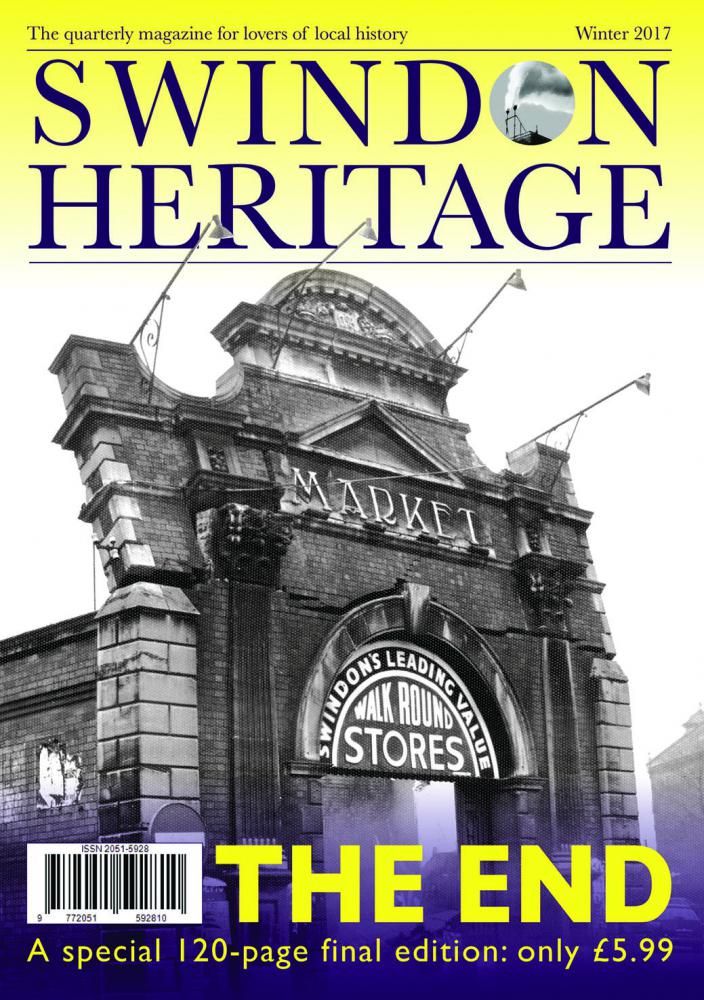
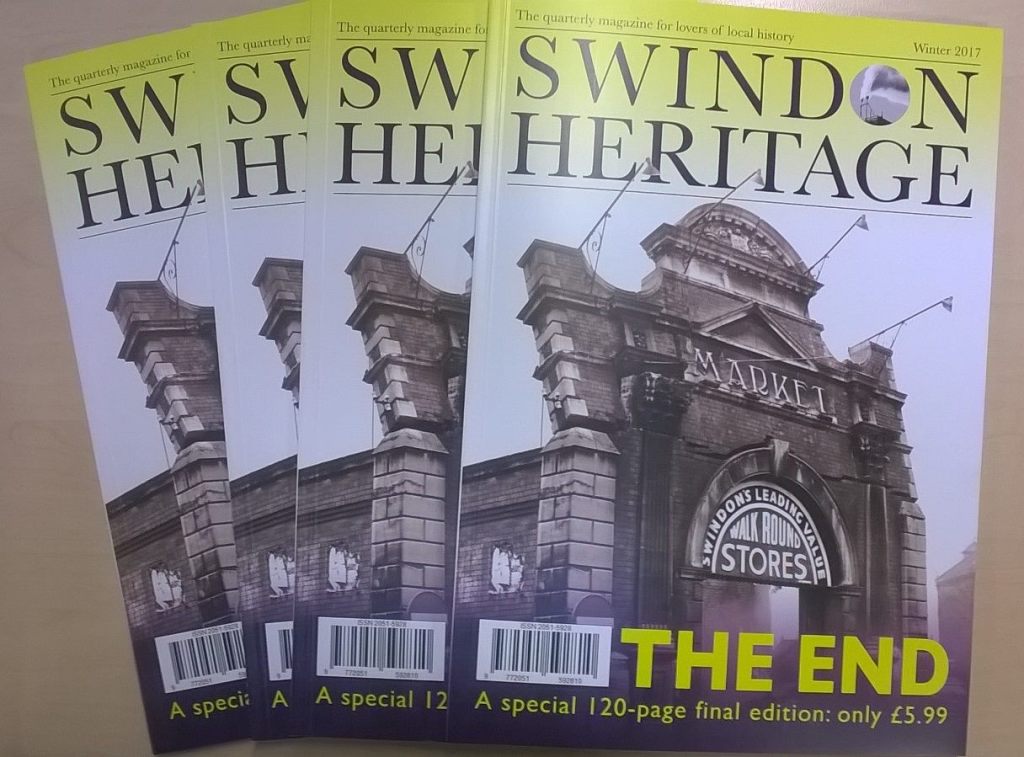
In 2013 Graham Carter, Mark Sutton and I launched Swindon Heritage with the strapline ‘the quarterly magazine for lovers of local history,’ which it was.

We bought together local historians and writers from across the Swindon district. Early contributors included Clive Carter, Historic Surveys Draughtsman at the Wiltshire Buildings Record; Mark Child, author of numerous books about Swindon including The Swindon Book and The Swindon Book Companion available from Hobnob Press and Noel Ponting, co author with Graham Carter of the Life, Times and Works of George Ewart Hobbs and A Swindon Radical: Life between the Wars with George Ewart Hobbs, also available from Hobnob Press.

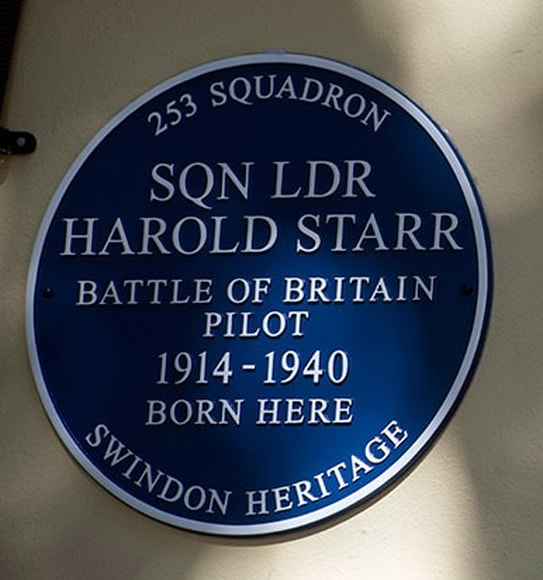
Stalwart members of the Swindon Heritage team, Andy Binks and Noel Beauchamp are today behind the Swindon Heritage Blue Plaques project. Visit the website to see where these are situated.

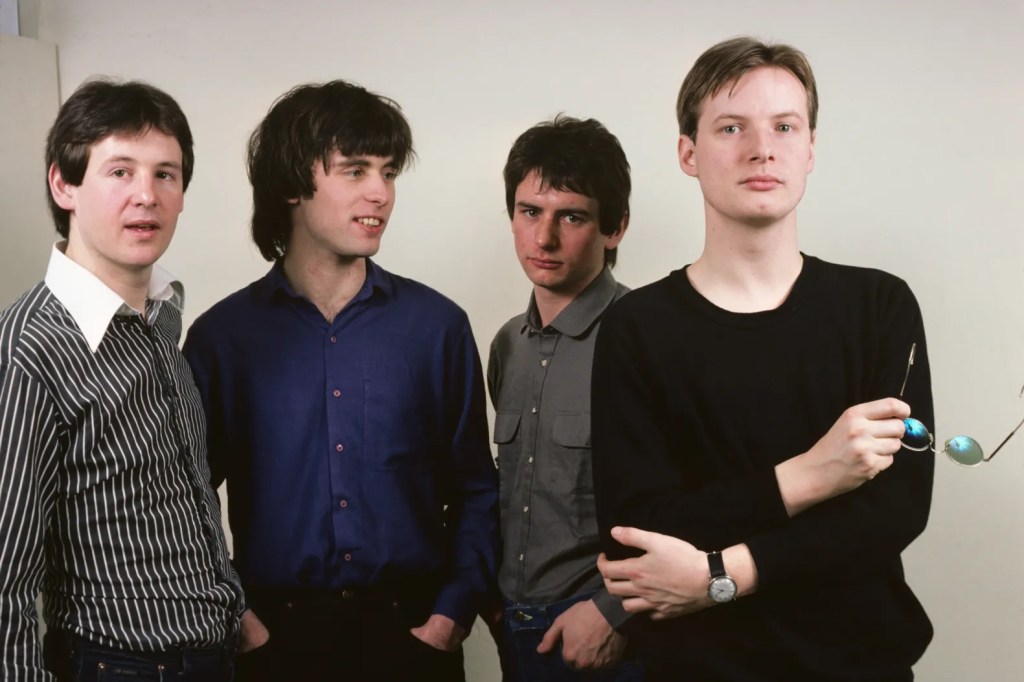
After 5 years and 21 editions Swindon Heritage went out on a high note with a long anticipated interview with Andy Partridge of XTC fame.

Back editions of Swindon Heritage magazine are available on our guided cemetery walks. Our next walk is on Sunday April 28, 2024. We meet at the chapel at 1.45 pm for a 2 pm start.

Swindon and District History Network

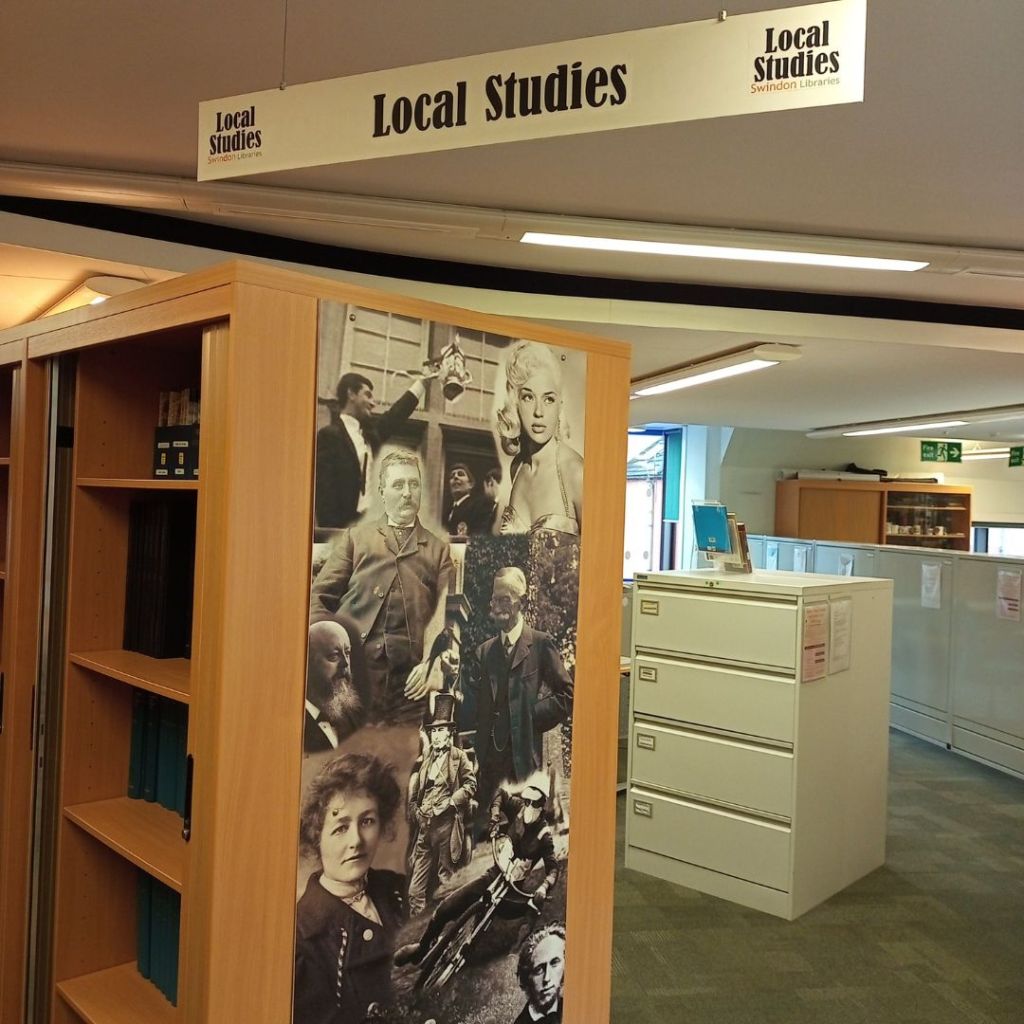
Last evening I attended the 50th meeting of the Swindon and District History Network. The Network was formed as an initiative by staff in Local Studies at Swindon Central Library to bring together all the various history societies, writers and researchers who regularly used the resources there, to share and support their work. More than thirteen years later the Network continues to thrive and this week saw new and existing members squeeze into the Reading Room in Central Library to celebrate and share our projects.

The Network has been hugely supportive to me as both an individual and as a member of the Swindon Heritage magazine team (published 2013-2017). As one of the original members of the Network, I took the opportunity to thank those societies who opened their archives, contributed articles and supported the magazine across five busy years of publication. I spoke about Mark Sutton, military and local historian, author and co-founder of Swindon Heritage who sadly died last year and is greatly missed on the local history scene in Swindon.

This coming weekend – September 9 and 10 – sees Swindon’s history on display during the Heritage Open Day events (8-17 September) when local history groups show Swindonians what a fascinating history their town has. I will be at the Heritage Apple Day event with the Friends of Lydiard Park in the Walled Garden at Lydiard House on Sunday, September 10 – 11-4 pm.

Our next guided cemetery walk takes place on Sunday September 17. Meet at the Chapel in Radnor Street Cemetery for 2 pm.

Local history is alive and busy in 21st century Swindon – come and join us.

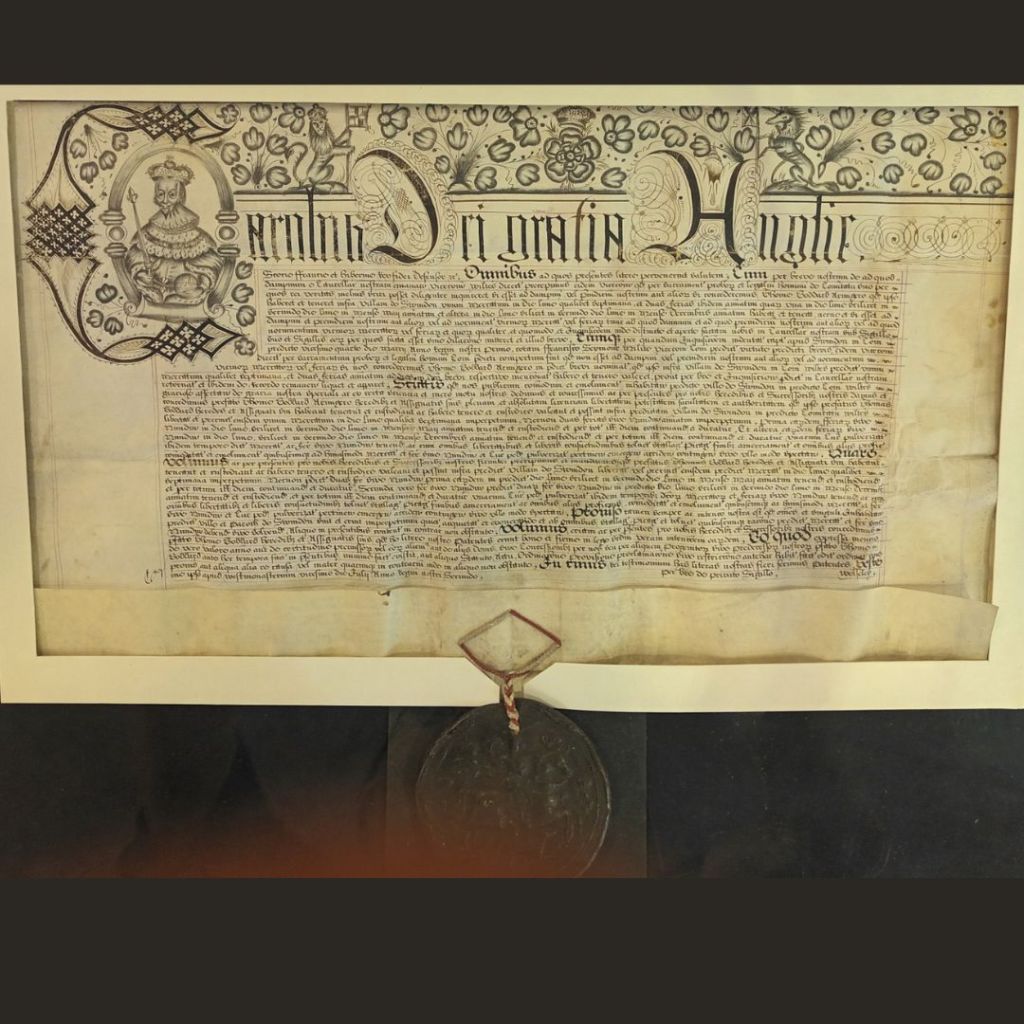
Swindon’s Market and Fair Charter 1626 on display in Central Library, ground floor.

Florence Rhoda Wilcox – midwife

Florence Rhoda Wilcox was born in Clifton, Bristol, the eldest of three daughters. Her father, Philip Weldon Roberts, was a Pattern Maker and by 1901 the family had moved to Swindon where they lived at 18 Kent Road.

Florence worked as a music teacher when in 1912 she married John Wilcox and the couple moved into number 61, Kent Road. Sadly, their marriage was a short one as John was killed during the first World War. He was serving as a First Engineer in the Merchant Navy and was drowned on May 28, 1917 when his ship was struck by an enemy submarine in the English Channel.

Back home in Swindon Florence made some life changing decisions when on August 14, 1920 she enrolled as a midwife. By the mid 1920s Florence had converted her house in Kent Road into a small maternity home, the Haven Nursing Home, where she worked alongside fellow midwife Gertrude Tucker.

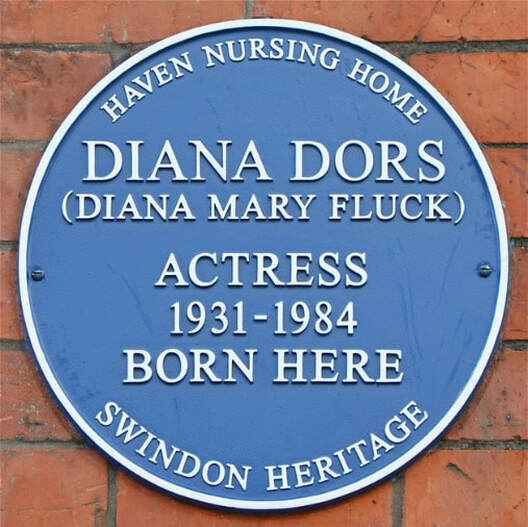
In 1931 numbers 61 and 62 served as both Nursing Home and doctor’s practise and it was on October 23 of that year that Mary Fluck was admitted for what proved to be a traumatic birth during which both mother and baby nearly died. It is likely that Florence and Gertrude were both on duty that day, assisting the doctor during this difficult confinement. The baby who made such a dramatic arrival was named Diana Mary Fluck. She later went on to change her name to Diana Dors and became a film star, Britain’s answer to Marilyn Monroe.

The nursing home remained in operation until the mid 1930s and most probably closed with the opening of the Kingshill Maternity Home.

In 2017 a Swindon Heritage blue plaque was installed on the property to mark the birthplace of Diana Dors.

Florence and Gertrude both moved to Paignton in Devon. Gertrude died aged 59 years at Waterside House, Waterside Road, Paignton and was buried on January 14, 1938 in Radnor Street Cemetery in grave plot D721. Florence died at the same address in February 1952 aged 70. She was buried with Gertrude.