For more than 15 years a small group of volunteers have been working to bring the history of the cemetery alive again and the cemetery chapel has been central to our work.
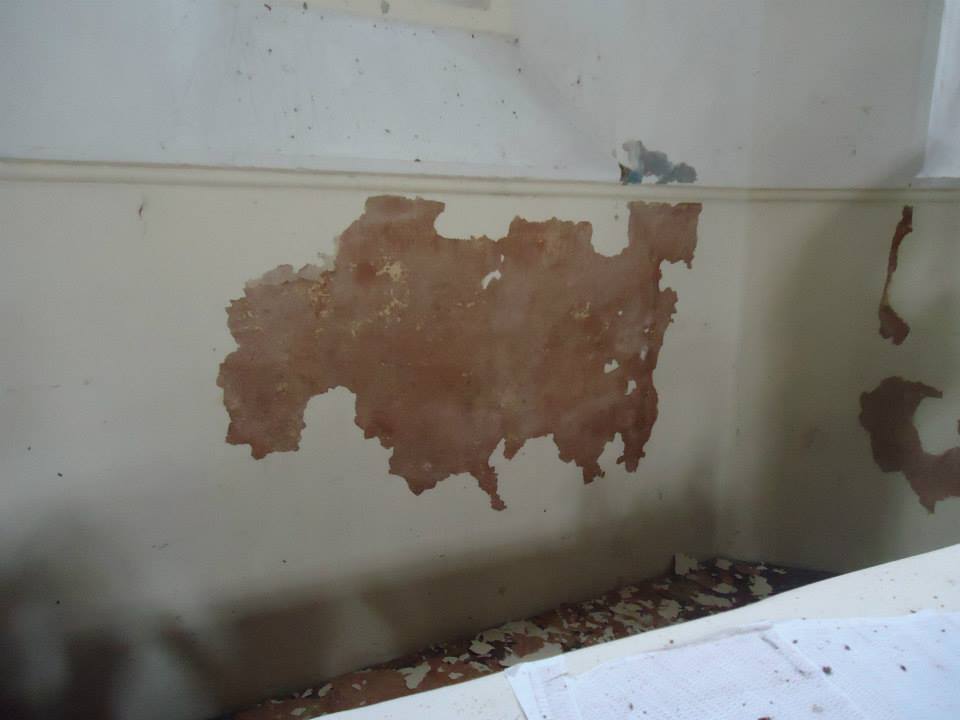
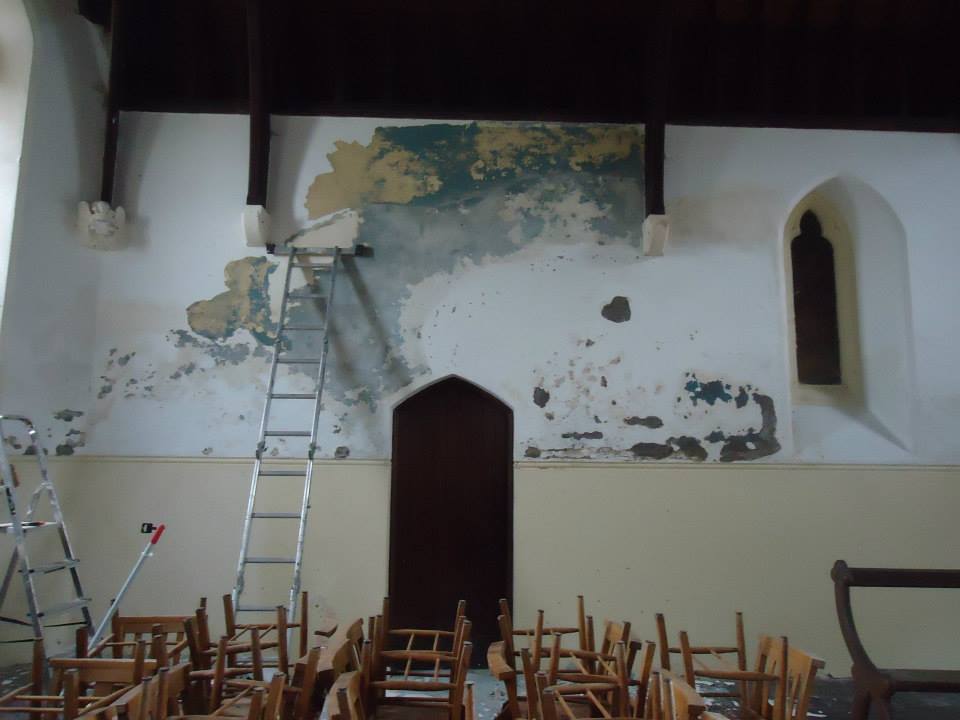
The chapel was designed in 1881 in the Gothic Revivalist style by popular local architect William Henry Read (who is buried in the cemetery). The cemetery chapel was non denominational and the burial plots in the cemetery were unconsecrated, at last the non-conformist residents of Swindon could be buried according to their own beliefs. Built to seat 100 people the chapel is austere and unfussy and painted white throughout, but this was not the original colour scheme. During repair and restoration work undertaken in 2013 we discovered that the upper walls were painted dark blue with the lower section a dark red, another fascinating aspect of the history of the building.
The cemetery chapel is central to the activities we hold, especially the Service of Remembrance. However, in recent years the numbers who attend this service have increased to such an extent that we are no longer able to meet in the chapel. Instead we gather round the Cross of Sacrifice, the Commonwealth War Graves memorial. At the end of the service the scouts place a cross on each of the 104 Commonwealth War Graves.
In 2014 we hosted the launch of Swindon in the Great War, a four year project to commemorate the events of the First World War. An exhibition of First World War artefacts and photographs at the end of the commemoration period was a great success.
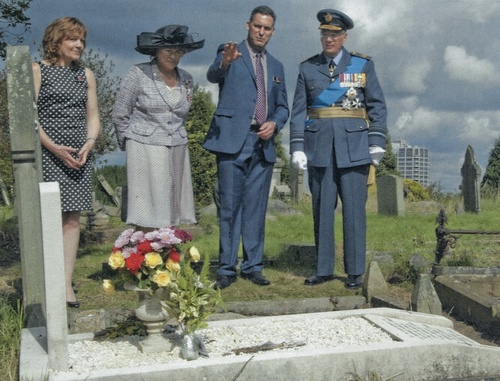
And in 2015 the Duke of Gloucester was guest of honour at a Battle of Britain 75th anniversary commemorative event held at the cemetery. The Battle of Britain Memorial Flight flew over Radnor Street Cemetery and the grave of Squadron Leader Harold Morley Starr, a Swindon born pilot who was shot down by enemy aircraft above Kent on August 31, 1940.
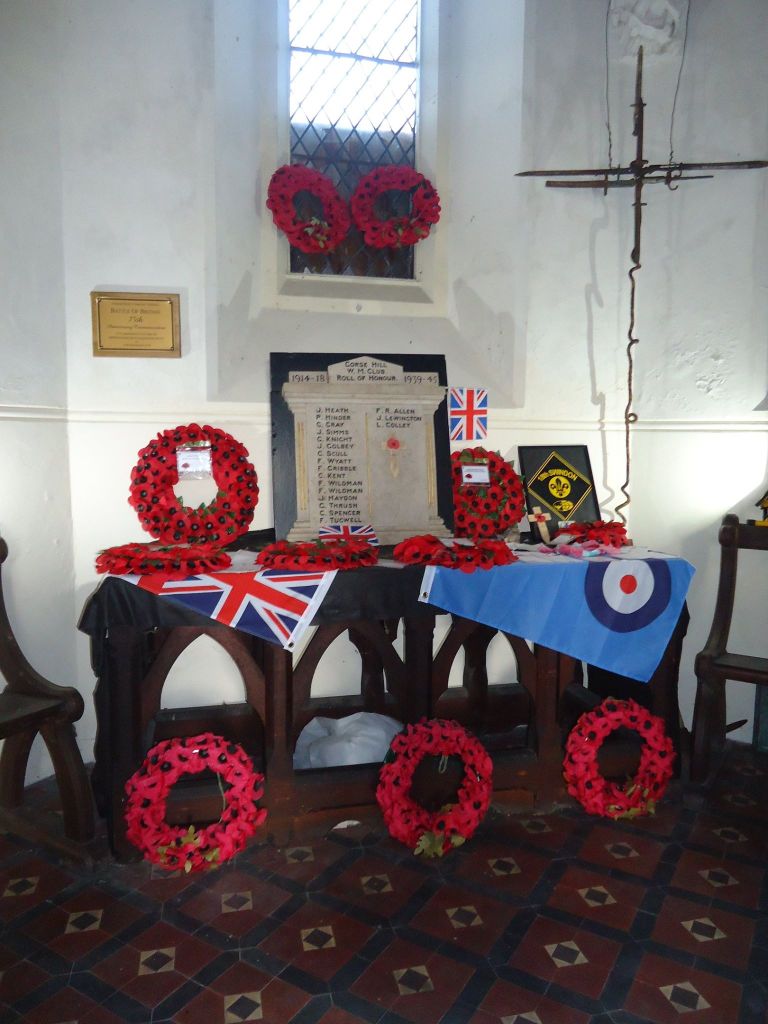
Launch of Swindon in the Great War commemorations 2014restoration and redecoration work in 2013Remembrance Day 2015 and the Trinity Wesleyan Methodist War memorial rescued from a garden in Gorse Hill
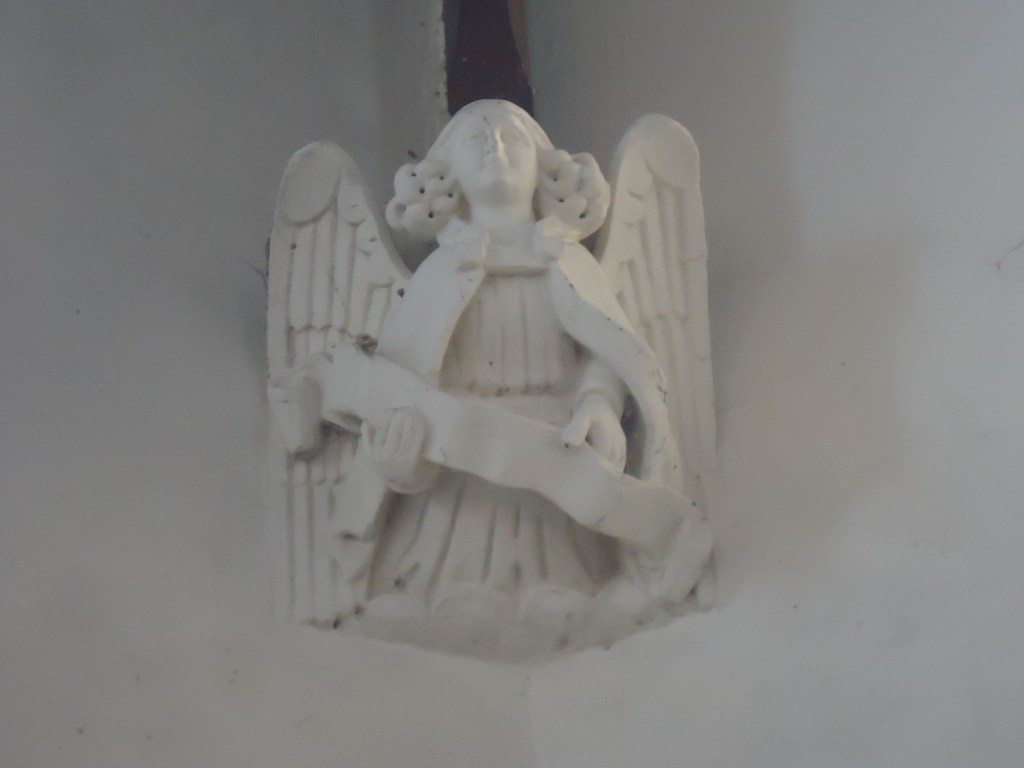
The Sanford Street School Roll of Honour was placed in the cemetery chapel for safekeepingThis commemorative plaque was placed in the cemetery chapel for safekeepingAngel bosses in the Chapel roof
The Duke of Gloucester at the grave of Squadron Leader Harold Morley Starr
Local schoolchildren designed stained glass windows for the chapel as part of the 2015Battle of Britain 75th anniversary commemorations.
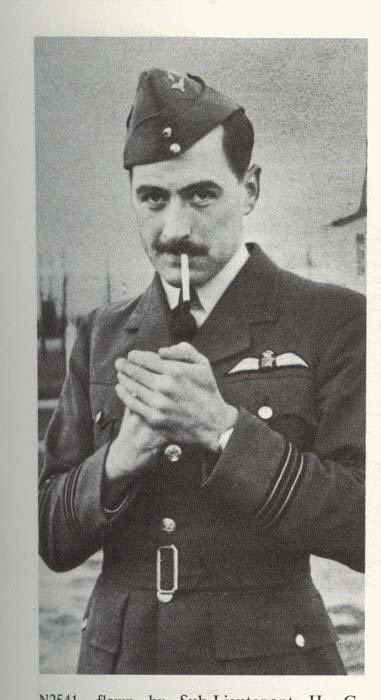
Squadron Leader Harold Morley Starr
Join us for a guided cemetery walk on September 15, 2024 to celebrate Heritage Open Days. Meet at the chapel at 1.45. Walk begins at 2 p.m.
If you are in the habit of cutting through the cemetery to reach your destination you will appreciate what an inconvenience it is to find the gates locked.
This is just the situation in which William Richard Crook found himself on October 17, 1882. The 25 year old carpenter did what any able bodied young man would do and climbed over the fence.
However, he had been spotted by the fiercesome cemetery caretaker Charles Brown. Brown’s care of his kingdom and its deceased residents was exemplary. He had less patience with the general public!
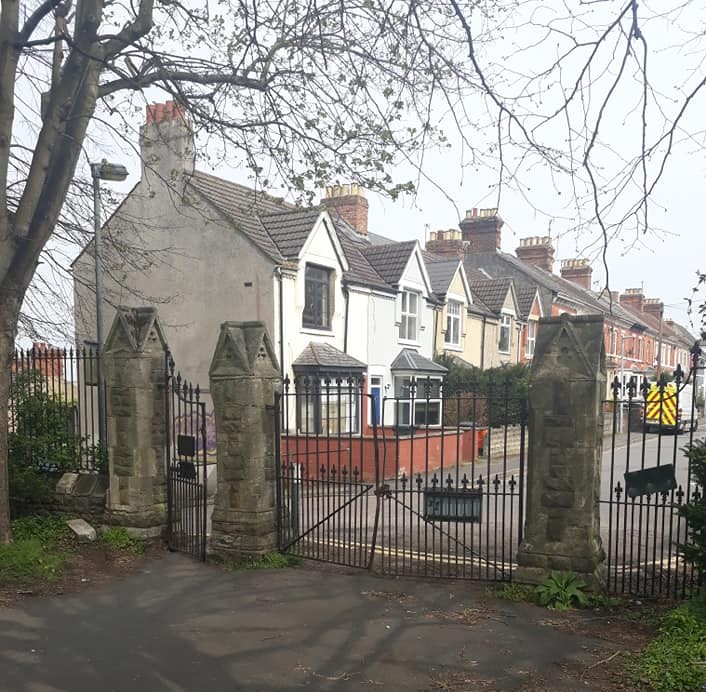
Radnor Street gate
Damaging the Cemetery Fence – William Crook, carpenter, Swindon-road, was charged by the Burial Board with damaging the fencing at the Swindon Cemetery, on the 17th inst. Charles Brown, caretaker, proved seeing defendant climb over the rails of the cemetery when he found the gate locked. – Defendant admitted the offence, and was ordered to pay 1s damage, 1s fine, and 7s costs, the Bench cautioning him not to offend again.
The Swindon Advertiser, Monday, October 30, 1882.
Dixon Street gate
William was born in Pewsey in about 1858, the younger son of George and Amaryllis Crook. By 1871 the family had moved to Swindon and were lodging at 4 Union Street.
William married Alice Pauline Carlton the same year in which he was charged with damaging the cemetery fence. The couple went on to have two children, Victor and Lilian, and by 1891 William was working as a publican at the Oddfellows Arms in Queen Street.
He died at the prematurely young age of 35 years old in 1893 and, of course, his last resting place was in the cemetery, the scene of his fence vaulting crime. I wonder if Charles Brown ever made the connection.
William lies in an unmarked, public grave B1702 which he shares with three others, including his son Victor who died in 1899 aged 15.
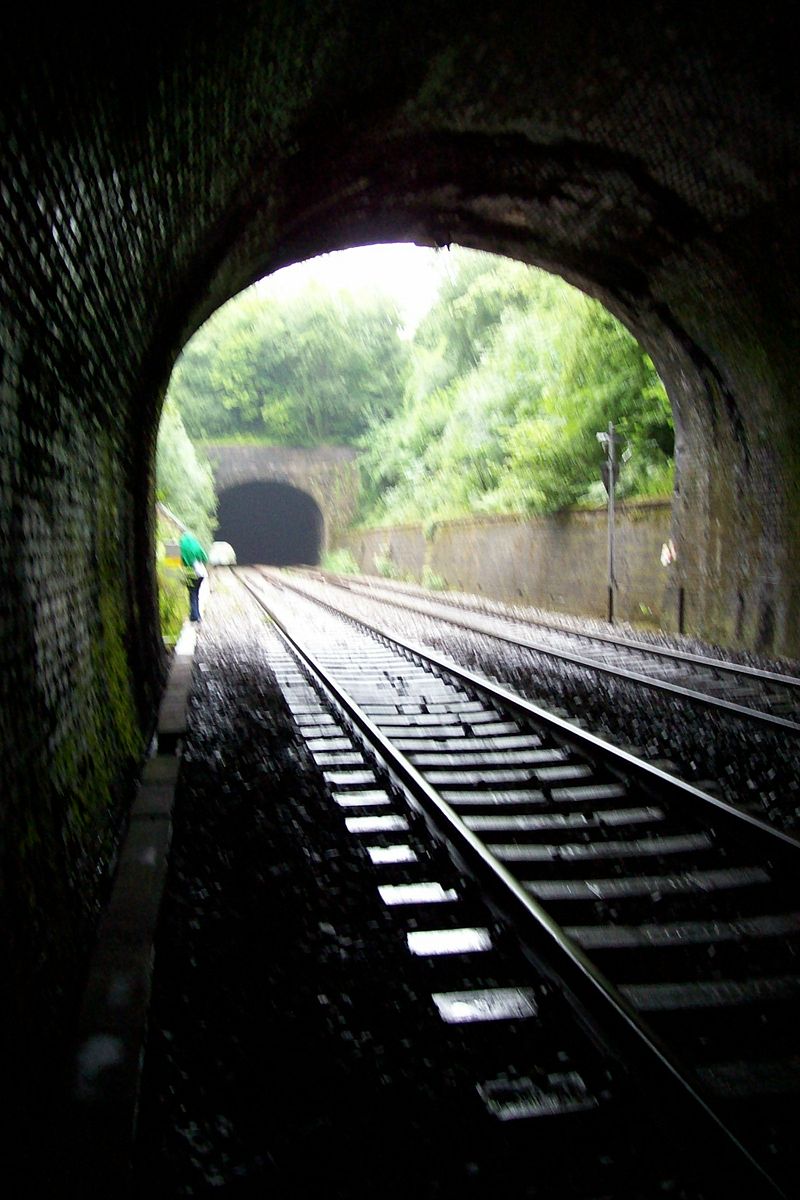
‘Mother always said there was nothing I could have done to help, but I never believed her. Today I can still hear the cries of the men, although mother said that wasn’t possible, they were too deep in the tunnel and I was too far away. But I wasn’t.
What she didn’t know was that I was there, by the mouth of the tunnel as the ballast train screeched through. I was the first person on the scene, a 10-year-old boy walking home from school across the railway line.
I knew the platelayers were at work in the Sapperton tunnel that day in April 1896. I had seen them arrive with their truck and their tools while I was about my early morning tasks on the farm. A section of the tunnel was under repair and I wished I could see inside.
The tunnel was a feat of engineering carved beneath the Cotswold escarpment and a source of wonderment to this 10-year-old boy. By the end of that day in April 1896 the Sapperton tunnel would be the stuff of nightmares, a scene that would haunt me for years.
For weeks afterwards it was all anyone talked about in the village. How the gang of five men had been warned of the approach of a down train and had stepped out of the way on to the other set of metals. They did not notice that an up ballast train had entered the tunnel. Two men were killed instantly, their bodies mutilated in a shocking manner.
And I saw it all. At first I thought all were dead, but then came the moaning and the cries as the two who were less severely injured began to move.
I crept closer. In the light of their lantern I could see a man still lying on the track, his arm wrenched from his body, blood seeping from his head.
Sapperton Railway Tunnel
Help was slow in coming. The three surviving men were eventually picked up by a passenger train passing through the tunnel half an hour after the accident. At Stroud they were taken from the railway station to the hospital, causing a painful sensation in the town.
The men who died were named as H. Ballard and E. Greenaway. Another, J. Hillsley sustained concussion of the brain, scalp wounds and bruised limbs while W. Pointer was sent home from hospital during the course of that evening. The man with the severed arm died on the way to hospital. His name was Frederick Gee.
Mother said there was nothing I could have done to help, but I never believed her.’
The facts …
Platelayer – a man employed in laying and maintaining the railway track. The poorest of any railway employee with little or no opportunity for promotion or advancement. ‘The most neglected man in the service.’ (Will Thorne, Victorian platelayer).
Ganger Frederick Gee 47 was married to Mary Ann nee Willis and left seven children, five under the age of 10 years including a baby son just a few months old, when he died working in the Sapperton tunnel in April 1896. Frederick was buried in Radnor Street Cemetery where in 1900 the couple’s sixteen-year-old daughter Rosa Ethel was buried alongside him and four years later their son Harry Howard, aged 21.
In just a few short years Mary Ann lost her husband and two of her children, but she was made of stern stuff.
On March 14, 1907 Mary Ann set sail from Liverpool on board the SS Cymric with her four youngest sons Sidney 17, Ernest 15, Frank 13 and eleven-year-old Wilfred, to begin a new life in the United States of America.
The family arrived in Boston, Massachusetts on March 25 and in the 1910 US census they can be found living in Forest Dale, Salt Lake City, Utah.
In 1917 Mary Ann, then aged 62, married William A. Tolman. William Augustus Tolman was 69, a widower and a member of a prominent pioneering family in the Church of Jesus Christ of Latter Day Saints (the Mormons). William’s father Cyrus had arrived in Salt Lake City, Utah in 1848 with Brigham Young’s second company.
Theirs was a brief marriage. William died from smallpox in 1920. He was buried in the family plot at Oakley Cemetery, Cassia County, Idaho with his first wife Marintha.
Mary Ann died in 1929 aged 71. She had survived the death of two husbands, two sons and a daughter.
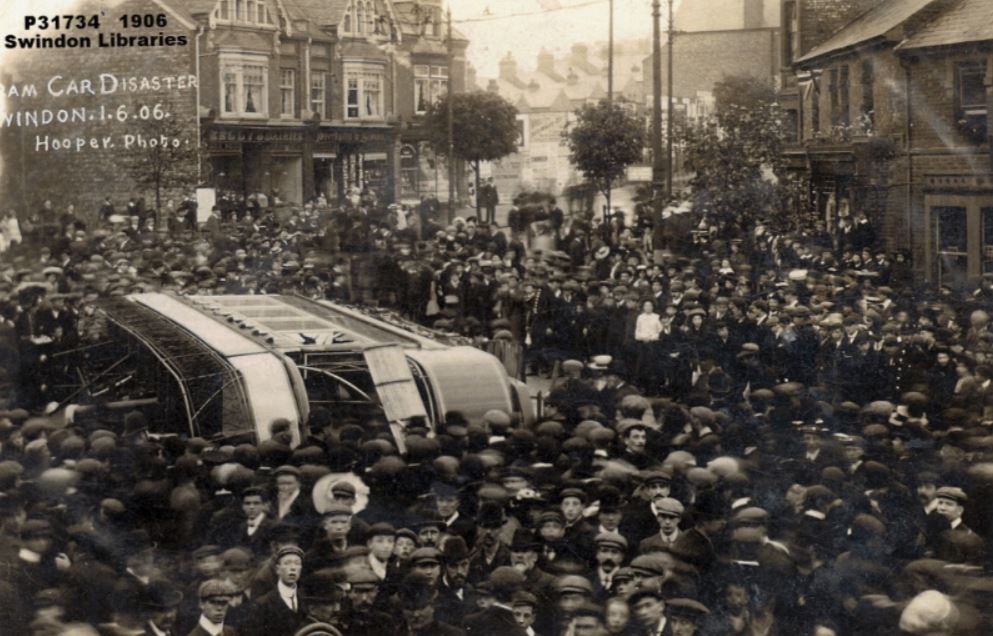
We could all see that the tram was travelling too fast and people on the street began to move, clearing a path. When the accident happened, it was as if in slow motion; until the screech of metal on metal and the screams of the passengers plunged the scene into sharp and noisy relief.
As the tram swerved and toppled over some of those travelling on the open top were thrown to the ground. Surely, they could not hope to survive.
The visitors to the Bath and West Show who thronged down Victoria Road stood in shocked disbelief. For a split second there was a silence, a nothingness and then onlookers surged forward to help.
I was just returning to the studio from an assignment and had my camera with me. I briefly considered taking photographs of the scene, but just as quickly decided against it. I left my equipment in the foyer at the Empire Theatre and joined those helping to rescue the trapped and injured passengers.
Local photographer William Hooper published a postcard photograph of the crash scene that same day. I knew then that I didn’t have what it took to be a commercial photographer and I resigned from my position before my employer had an opportunity to dismiss me.
I took up a clerical job in the Works soon after. When I retired forty years later my colleagues presented me with a camera!
The facts …
Runaway Tram Car
Dashes Down a Swindon Hill and Overturns
Four Passengers Killed and 30 injured
Somerset Farmer loses his life
Dorchester People Injured
A serious tram accident occurred at Swindon on Thursday evening. In consequence of the Bath and West of England Agricultural Show, the electric cars, which are Corporation property, were very heavily laden, and No 11 car, which is registered to carry 56 passengers, was descending Victoria road, a steep decline connecting the old and new parts of Swindon, with a load of between seventy and eighty people. Midway down the hill, the car got beyond control and at the foot of the hill ran on to the uprails at a crossing, and overturned.
The passengers on the top were precipitated into the road like stones out of a catapult, some being thrown a considerable distance. There were a great many people about at the time, and for some moments the greatest consternation prevailed. A few cool heads were soon on the spot to render assistance. The shrieks and groans of the injured filled the air, and one spectator says that blood ran into the gutter in streams. Scarcely a single passenger escaped without injury, although one or two who saw their danger had jumped off before it was too late.
Dr. Lavery, who lives close by, came on the scene, and was soon followed by Drs. Waiters. Dalea Gordon, Ducane, and the officials from the Great Western Surgery. Dazed and unconscious, the victims lay strewn about the roadway for many yards. The doctors and ambulance men rendered first aid to the more serious cases, and conveyances were summoned and the victims conveyed to the Victoria Hospital.
All the injured were transferred to the Victoria Hospital where they were given further treatment. Unhappily, the injuries in two cases proved fatal. Mr Edwin H. Croad, proprietor of the Railway Hotel, Swindon died on the way to the hospital while Mr Harry Dyke, brewer’s agent, of Swindon succumbed to his injuries shortly after admission. Two other victims died later. The roll of injured contains the names of about 30 persons, and others who were merely bruised or shaken went direct to their homes.
William Hooper photograph published courtesy of P.A. Williams and Local Studies, Swindon Central Library
The Dead
Harry Dyke, brewer’s agent, Goddard-avenue, Swindon.
E.H. Croad, Railway Inn, Newport Street, Swindon.
Rowland J. Dunford, Nables’ Farm, Draycot Cerne, Chippenham.
Charles Phippen, farmer, Weston Bampfylde, Sparkford Bath.
The two first names died soon after admission. In all cases death is supposed to be due to fracture of the skull.
How the Accident happened
General comment is that the car was carrying far too many passengers; indeed, eye witnesses and many of the passengers declare that it was grossly overcrowded. In descending Victoria road, the brakes either did not act, or were overpowered, and the momentum acquired in descending this steep thoroughfare hurried it along at a pace which convinced passing pedestrians, and even the passengers themselves, that an accident was inevitable. Whatever the feelings of the passengers were, no panic was displayed.
There was an absence of screaming, one and all awaiting with a grim quietness the denouement which all felt was bound to come. The car kept to the rails going down the hill. At the bottom is a sharp curve into Regent circus. On reaching the bend, it ran on to the up line, rocked heavily, and then fell over on its side with great force. It was exceedingly fortunate that there was no car on the up line or the loss of life must have been much great.
Lyons, the driver, stuck to his car to the last. He is said to have been an experienced motor man. He received some slight injuries to his side, but soon recovered. The conductor, who was on top of the car, was picked up in a dazed condition, but he pulled himself together in a few minutes. Lyons declares that he put on his brakes on reaching the hill, and applied them as hard as he could. He never let go of these until the car toppled over, and did all that he could to avert the disaster.
The trams belong to the Corporation of Swindon, and there is no doubt that the matter of compensation will have to be faced by the town authorities. The overcrowding allegations give a further serious aspect to the matters. Passengers are booked on a way bill, similar to the system followed in Bristol, the deviation being that the bill, instead of being placed in a prominent position within the car, is kept in portfolio form, and checked by the inspector whenever he mounts the platform. This way bill doubtless will be produced when required at the official enquiries which will be held, and, if accurately entered up, should show the exact number of persons who were riding. This can be further checked by the number of punched tickets issued.
This is not the first mishap which has occurred at the foot of Victoria road, although, fortunately, the previous accident was not attended with serious consequences. Warnings have more than once been uttered emphasising the necessity for special care being exercised in the descent of the hill, and at the annual dinner of the Chamber of Commerce, Mr A.E. Withey, a prominent local solicitor, expressed strong views on the question.
Taunton Courier and Western Advertiser 6th June 1906 (extracts)
Edwin Herbert Croad, the 60-year-old proprietor at the Railway Hotel, Newport Street, Swindon was buried in plot E8374 in Radnor Street Cemetery on June 6. William Hooper got a photo of the funeral as well.
Swindon Corporation was found liable for more than £7,000 compensation and costs and was forced to increase the rates for three years to pay the bill.
William Hooper photograph published courtesy of P.A. Williams and Local StudiesSwindon Central Library.
I have Swindon photographer William Hooper to thank for my appearance on Time Team.
As a nerdy little kid, I was already interested in archaeology (in particular the Neolithic period) and the inspiration for my obsession was all down to a photograph that hung in my grandpa’s study.
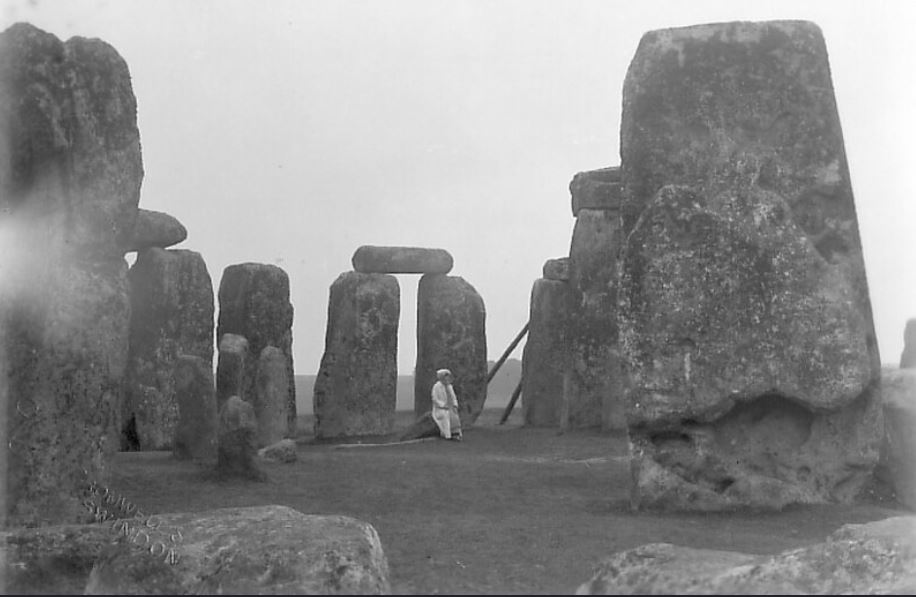
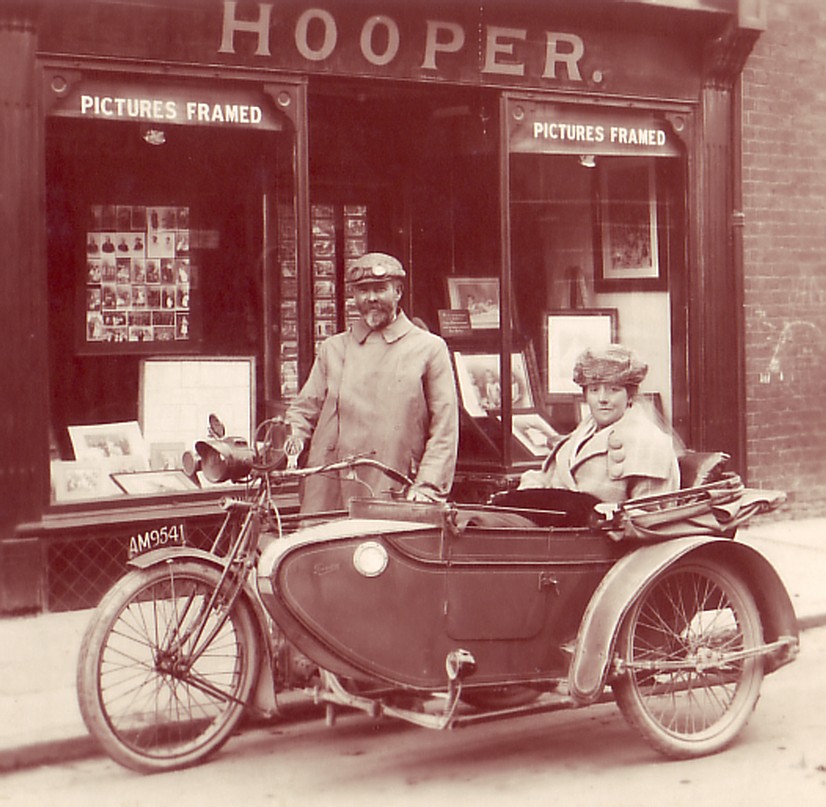
William Hooper has become famous for his Edwardian Swindon street scenes, but William and his wife Mary were not averse to getting on their bikes and venturing beyond Swindon. In the early days they travelled quite literally by push bike, graduating to a motor bike and sidecar as they travelled the Wiltshire countryside and beyond. Between 1905 and 1910 they took a series of stunning photographs of Avebury and Stonehenge.
The photograph in my grandpa’s study was of an ethereal woman dressed in white, sitting on a fallen boulder within the stone circle. These days you have to have permission and a very special reason for being allowed access to the stone circle but in 1910 the historic monument was still in private ownership, the property of Sir Edmund Antrobus 4th Baronet. Perhaps anyone could rock up and take a few photographs.
Image published courtesy of P.A. Williams and Local Studies, Swindon Central Library
Skip on twenty years or so and with my degree in archaeology under my belt, I volunteered for a brand-new television programme that was thought by many to be doomed before it even made it to the screen. Television producer Tim Taylor had the crazy idea of making a programme featuring scruffy, hippy looking student types digging trenches in muddy fields. The premise of the programme was that the team would turn up at a site of archaeological interest, dig for three days and then reveal the history of that site. For twenty years Time Team brought archaeology to the masses and achieved viewing figures in excess of 2 million per episode.
I was a regular participant on the show, taking part on a number of digs, working alongside my university professor Mick Aston and national treasure Phil Harding. There are photographs of us in trenches and in various pubs mulling over the findings of the day’s dig.
I’ve recently moved to a cottage in Avebury (the magnetism of those stones still draws me) and it has long been my intention to pay my respects at the grave of William Hooper, the man who sparked my interest and gave me a lifelong love of history.
I’ve been told his grave in Radnor Street Cemetery is difficult to find. Now, where is John Gater and his geophysical wizardry when you need him?
Image published courtesy of P.A. Williams and Local Studies, Central Library
The facts …
William Hooper was born in Windrush near Burford in 1865 and moved to Swindon and a job in the Works in 1882. In 1886 he was involved in a serious accident during which his leg was so badly crushed that he would eventually have it amputated at the knee.
William returned to his job in the railway factory where in 1891 he worked as a labourer and ten years later as a stationary engine driver. However, the work became too difficult for him and it was then that he decided to turn what had previously been a hobby into a business.
He opened his first photographic studio at 2 Market Street in around 1902, later moving to 6 Cromwell Street where he and his wife Mary remained until they retired in 1921.
Mary Stroud was born in Hereford where he father James worked as a Railway Guard. The family later moved to 22 Merton Street in Swindon. Mary and William married in 1890.
At the time of the 1911 census William, then aged 47, describes himself as a Photographer – Portrait and Landscape, his wife Mary as assisting in the business, but Mary did more than just ‘assist.’
In the extensive Hooper archive available online courtesy of P.A. Williams on the Swindon Local Studies flickr account, we glimpse Mary ‘assisting’ not only in the studio, but out on the road, travelling with her husband across Wiltshire on a variety of vehicles from a tandem to a motorbike and sidecar.
The couple never had any children of their own but were very close to Mary’s two nephews who also worked in the business with them from time to time.
William died in 1955 followed by Mary a short while later. They are buried here with Mary’s parents James and Ellen Stroud.
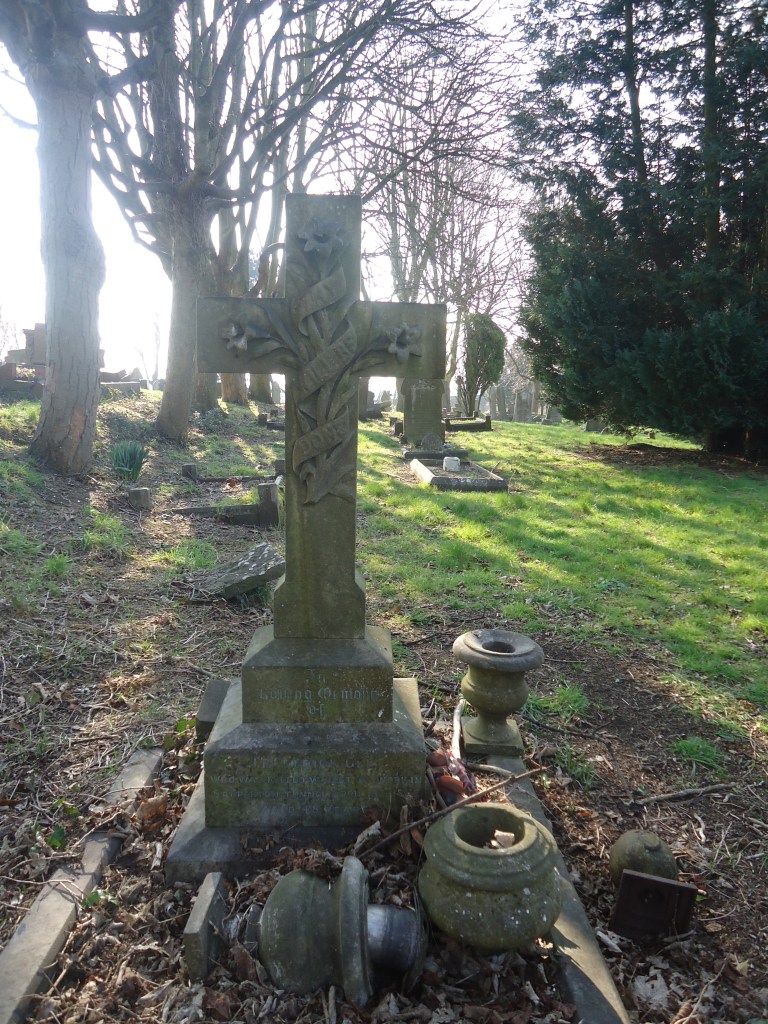
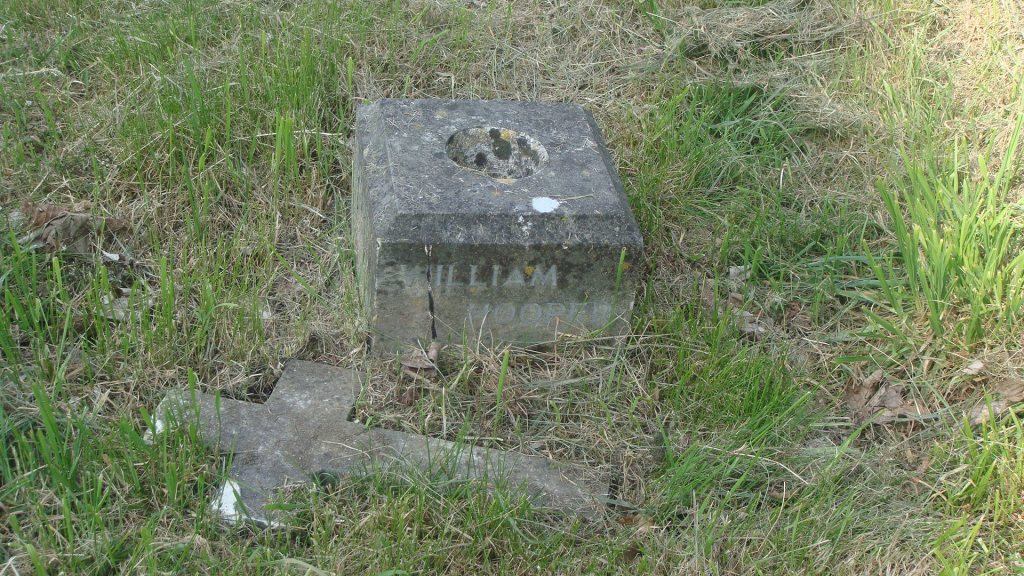
The modest memorial is a small cross on a plinth, sadly broken and difficult to find when the grass grows long. But the Hooper name lives on in the many photographs of Swindon William left us – with Mary’s assistance.
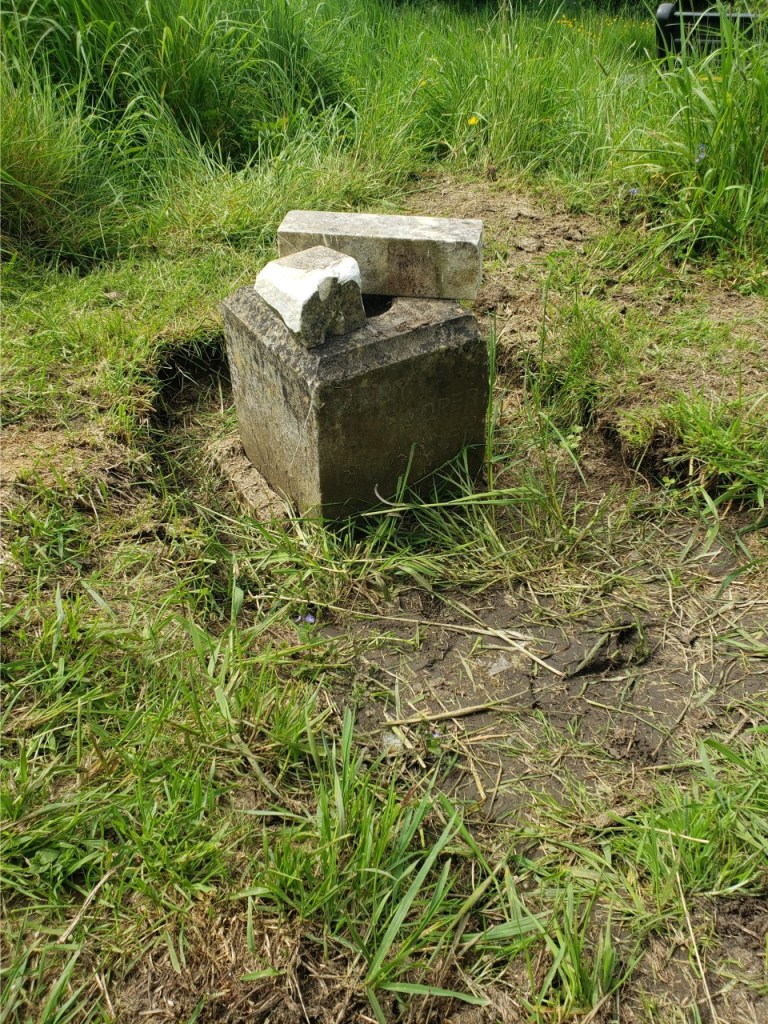
The Radnor Street Cemetery volunteers have revealed the battered William Hooper memorial and cleared the area around it. Unfortunately the cross is now badly broken.
For nearly a hundred years the cemetery was well maintained, the graves cared for by families, the gardens by groundsmen. And then the cemetery closed to new burials and families did not visit so often and nature began to reclaim the ancient Howse’s Coppice.
In 2005 the cemetery was designated a Local Nature Reserve. Areas of grass were left to grow long, providing habitat for insects. Hedgerows, corridors for wild life to move across the site, were maintained and bird and bat boxes were installed in the mature trees.
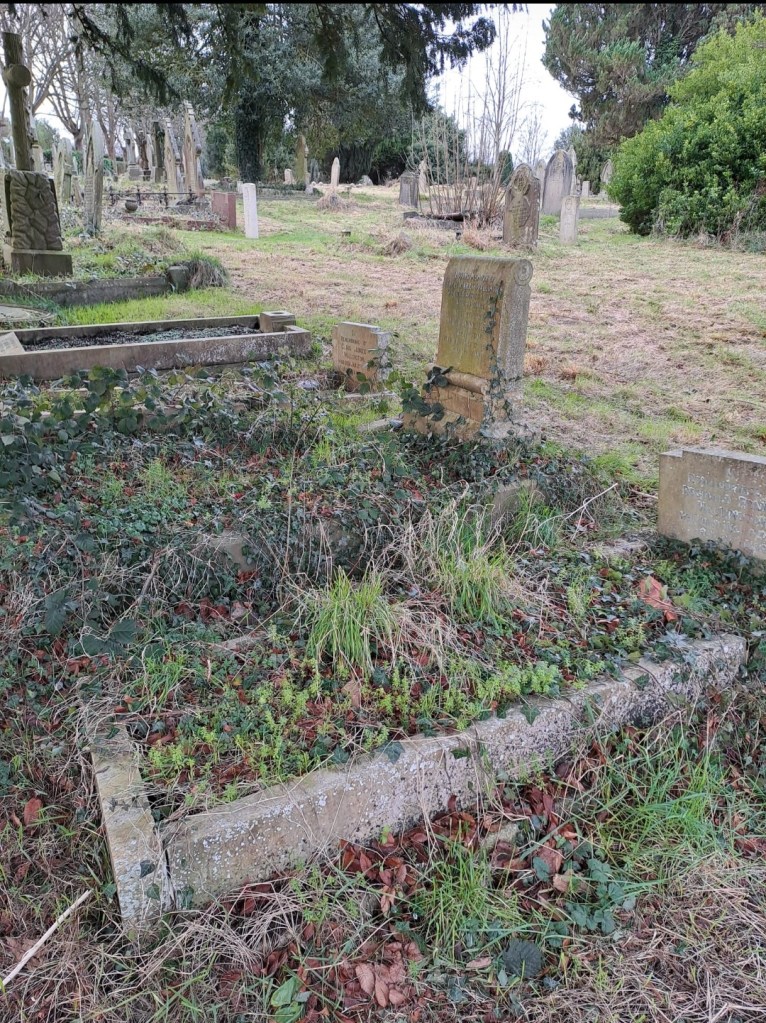
Following the financial crash of 2008 and subsequent local government spending cutbacks the cemetery was left to rest in peace. Today the plane trees are broad and lush, the grasses grow tall and some think it is a disgrace that the cemetery is so neglected, but there is a small group of volunteers who keep the history of the cemetery alive. Regular guided cemetery walks are attended by a growing number of people who come to listen to the story of Swindon’s history.
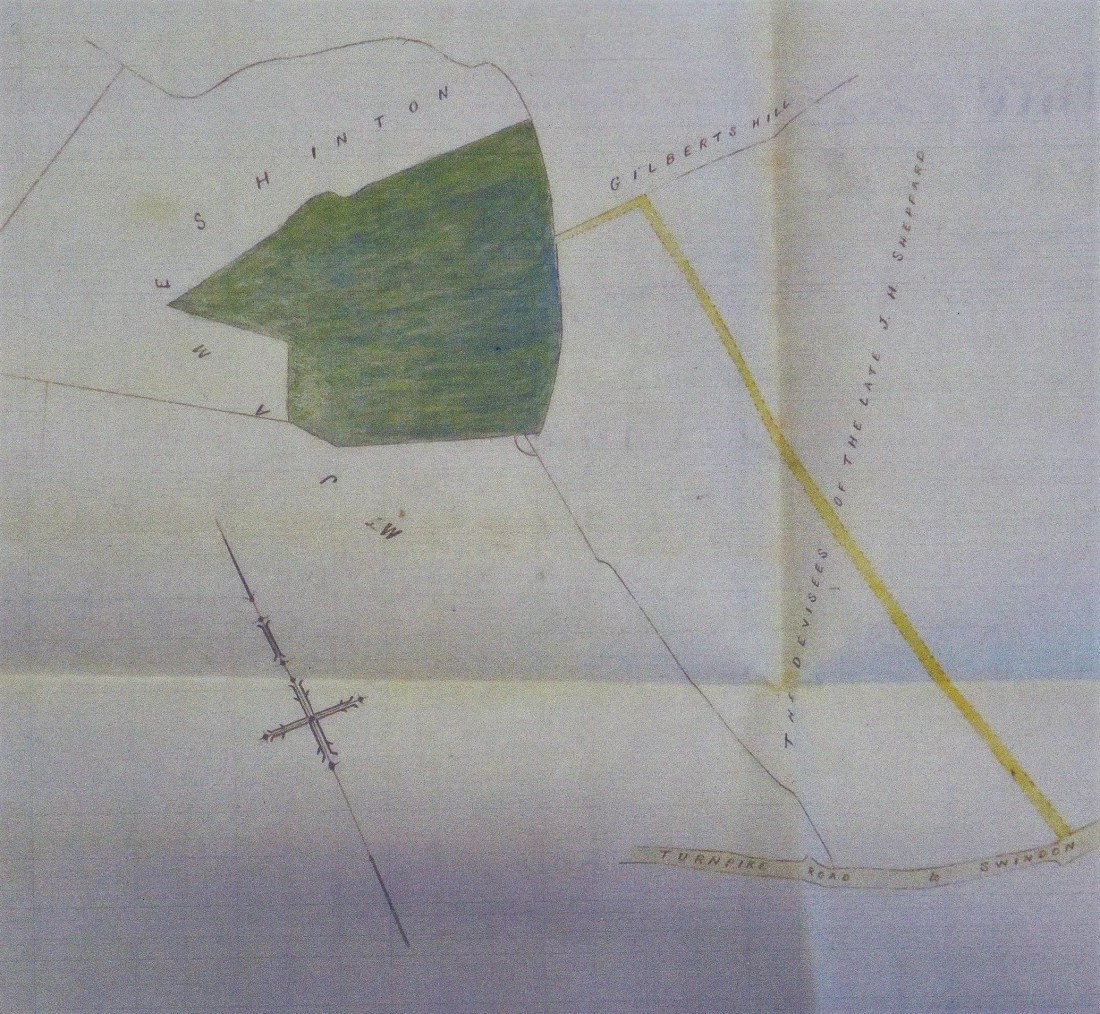
Documents held in the Wiltshire and Swindon History Centre, Chippenham trace the history of Howse’s Coppice back forty years before the cemetery was laid out. The land then belonged to James Bradford and appears on the Tithe Map details of 1840 where it is described as a coppice ground (an area of managed woodland) formerly called Wibley’s but later known as Howse’s Coppice.
James Bradford was a solicitor who lived and worked at a property in the High Street, Old Swindon, close to what was then the King of Prussia public house. His wife, Annica Werden Bradford, was a member of the Goddard family. James died in August 1861 and the following year Annica sold the coppice ground to John Harding Sheppard for £559 14s.
John Harding Sheppard was a farmer and brewer and owned large tracts of land across both New and Old Swindon, including the Kingshill area where Howse’s Coppice stood.
In 1871 the executors of Sheppard’s will, his sons John and William, sold Howse’s Coppice, by then described as a close of land, to James Edward Goddard Bradford, bringing it back into the possession of the Bradford family.
In 1878 James Hinton bought Howse’s Coppice, which formed part of the plot he would eventually sell to the Cemetery Committee two years later.
Howse’s Coppice was all that remained of ancient woodland that had once stood on Swindon’s doorstep before the arrival of industrialisation and the railways.
Sale of Property – Pursuant to advertisement in our paper, Mr. Dore submitted for sale the landed estate of the late John Harding Sheppard, Esq., This estate being situated on the Sands, and to the West between Old and New Swindon, has been considerably enhanced in value of late years, and a brisk competition for the various lots was anticipated. Some of the lots were not sold, consequent upon the reserved price not being reached. Though every lot obtained bidders. A piece of pasture land near Kingshill, and known as “Howse’s Coppice Ground,” 4a 3r 38s was knocked down to Mr J.E.G. Bradford for £490. Two pieces of land situate on the Sands, at Swindon – one having a frontage of 83 feet, and an average depth of 360 feet, and containing 2r 27p the other with a frontage of 80 feet, and containing 2r 18p, were sold to Mr Kinneir and Mr Lansdown, respectively for £220 and £235. The spacious premises occupied by Mr Matthews, draper, High-street, realised £1160, Mr Bradford being the purchaser. The house in the Square occupied by the late Mr J.H. Sheppard, was sold to Mr Kinneir for £1220, and, after a spirited competition, Mr Kinneir was declared the purchaser of the premises lately held By Mr Kimberley, for £400. The White Hart Inn, Newport-street, and six cottages adjoining, fell to Mr R. Bowly, at £1070; a dwelling house near to this lot, producing £13 a year, was purchased by Mr Jason Hutt, at £185. The Running Horse Inn, mill, land, and cottages, were purchased by Mr John Jacobs, for £680; two cottages near fetched £180 from the same purchaser. The house occupied by Mr. Oakford, in Wood street was bought by Mr Westmacott, for £420.
Wilts and Gloucestershire Standard, Saturday, October 8, 1870
It was a bitterly cold morning but we were the best dressed passengers on the platform at Swindon Junction that Boxing Day in 1906.
Uncle Alfred had polished his top hat to a shine and Bill looked prosperous, if a bit portly, with his fob watch chain stretched across his ample stomach.
I wasn’t sure how we would keep the children neat and tidy for the duration of the journey, but so far, they have been very well behaved.
We managed to find seats all together in one carriage, although it was a bit of a squeeze and Fred almost sat on Annie’s hat.
Aunt Charlotte would have loved all this.
My mother came prepared with a picnic hamper and enough food to sustain us on an expedition across the dark continent, never mind a trip to Cardiff.
No sooner had we passed through the station at Wootton Bassett Junction than my mother was handing round the scotch eggs.
We were met at Cardiff station by Florence’s uncle who took us to the church at Canton where the wedding ceremony took place and then it was back to the Davies’s home in Conbridge Road for the wedding breakfast.
The other day I was looking through some of my old bits and pieces with Maisie, my granddaughter. I’m moving in with her and her husband, I just can’t manage living alone anymore. I have to get rid of so much. It’s difficult.
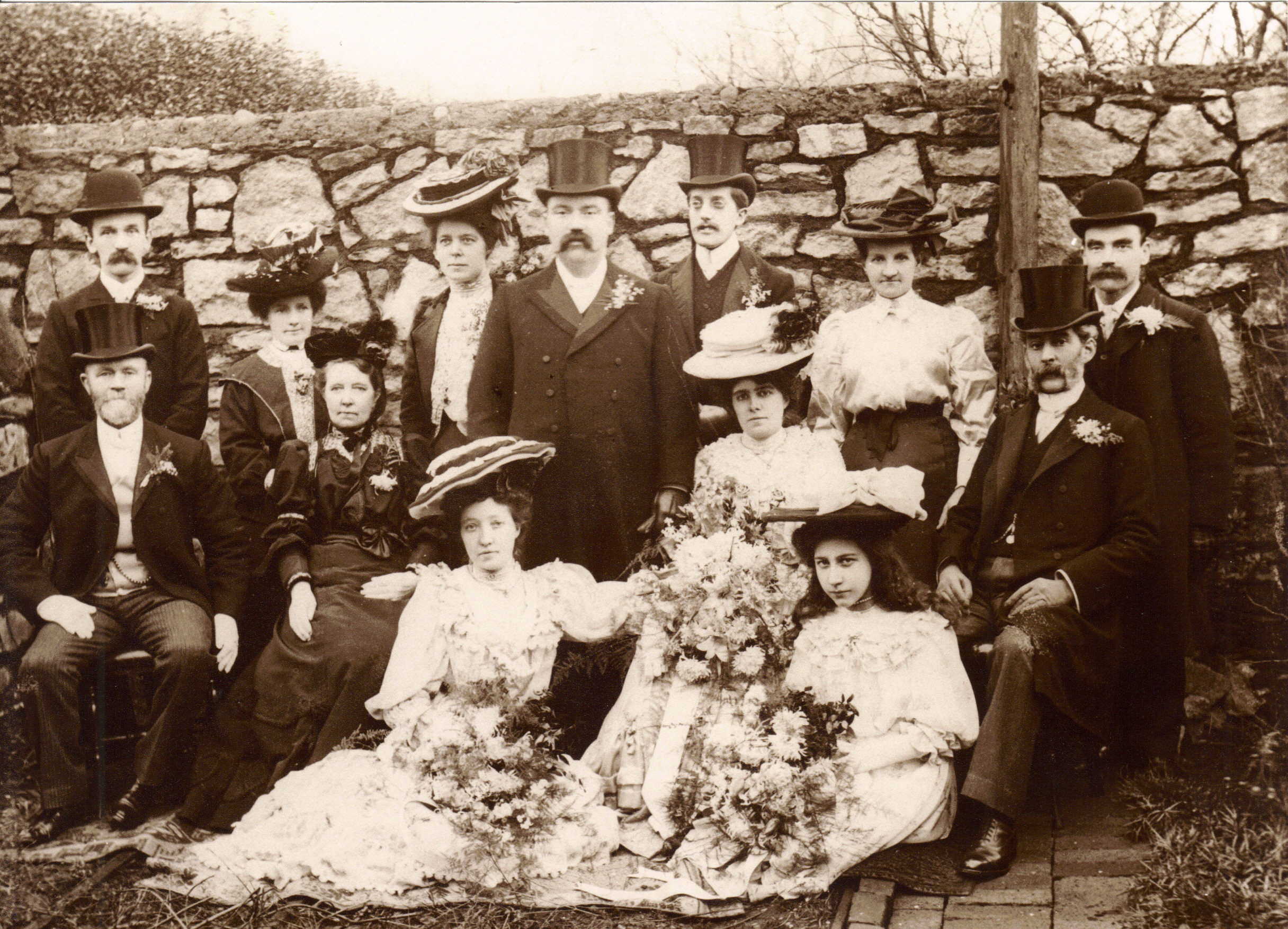
Maisie found Florence and Bill’s wedding photograph taken in the back garden in Canton on Boxing Day 1906.
“I love the ladies dresses,” said Maisie as she studied the sepia image. “Who are they all?”
I pointed out Uncle Alfred and Bill and Florence.
“I can’t remember who the others are, they are all members of the bride’s family.”
“They look a serious bunch,” she pulled a straight face. “Where are the Drinkwaters?”
“We were laughing and talking behind the photographer. I remember he asked us to be quiet as we were too much of a distraction.”
Aunt Charlotte would have loved that.
The facts …
Alfred Drinkwater was born in Barton St Michael, Gloucestershire in 1848. He married Charlotte Dent at St Mark’s Church, Gloucester on April 12, 1869. The couple had a large family of eight sons and four daughters.
Alfred worked as an engine cleaner, a fireman and a 1st Class Engineman (Engine Driver) The family moved from Gloucester to Reading, eventually arriving in Swindon in the mid-1890s. There is a family story that he once drove Queen Victoria’s train.
Charlotte died at the family home in Theobald Street and was buried in Radnor Street Cemetery in plot D1453 on June 29, 1904.
Alfred outlived her by almost 30 years. He died at 112, Millbrook Street, Gloucester on July 26, 1932, his body returned to Swindon and the plot he shares with his wife.
Alfred and Charlotte’s nine-year-old daughter Nellie died in 1895. She is buried in Radnor Street Cemetery in plot B2398.
The couple’s eldest son Alfred James Henry served a six-year apprenticeship in the railway factory where he worked as a fitter. He married Annie Cummins in 1892 at St Mark’s, Swindon. The couple never left Swindon and their last family home together was at 27 Whitehead Street. Alfred James Henry died in 1949 and his wife Annie died the following year, 1950. They are buried together with Alfred’s parents. The cremated remains of L.C. Drinkwater, probably Alfred and Annie’s daughter Lilian Charlotte, were interred in the family plot in 1989.
William Charles John Drinkwater and his wife Florence, the couple who married in Cardiff on Boxing Day 1906, were living at 40 Montagu Street, Rodbourne at the time of the 1911 census. They later moved to Wales. William died in the Pontypool and District Hospital on July 9, 1942 and Florence died at her home, 21 Saint Matthews Road, Pontypool on June 5, 1958.
Additional family history information obtained from Public Member’s Trees on http://www.ancestry.co.uk.
We gathered outside the farmhouse where father fired the traditional shots above the rooftop to ward off evil spirits. Then the little party of ladies and gentlemen consisting of father and I, Uncle Richard, Charles and Letty, Thomas Plummer and his sister Ellen then set off down the carriageway from Hook to Lydiard House and the parish church of St Mary’s.
Although barely eight o’clock in the morning our friends and neighbours came out of their cottages, throwing showers of rice and as we made the short walk children linked hands and barred our way until Uncle Richard threw them some coins.
Those family and friends who had not joined our merry parade were already seated in the box pews. The beautiful little parish church with its monuments to the St John family. The ancient font where Letty and I had been baptised and where I in turn would bring the child I carried to be christened and blessed by Rev. Shipman.
Rev. Shipman knew I was expecting a baby and he knew Will was not the father, but he made no judgement.
“You’re not the first bride and you won’t be the last who walks down this aisle carrying a child who is not the grooms,” he said. “Do you love Will?”
It seemed a strange, romantic kind of thing for a clergyman to ask. I’d expected him to tell me to repent of my sins, to look to Christ for forgiveness and guidance.
Will was a good man. I’d known him all my life, we had grown up together. He was reliable and dependable and hard working and his prospects were good. But he didn’t make the breath catch in my throat or the heat surge throughout my body.
Will promised he would look after me all the days of our life. He did not promise to transport me to unprecedented levels of physical delight, as Ambrose had. He probably wouldn’t even know what that meant. He does not use flowery language, or pay me extravagant compliments.
Ambrose St John, a cousin of Lord Bolingbroke, had whispered fancy words into my receptive ear, and played my body with his expert lovemaking. And then he had left. I was not the woman I had been before he kissed me, before he touched me, but he had not reached my heart.
Will was aiting for me at the church door where Letty fussed with my sash and straightened my bonnet.
“I know,” he whispered. “And I love you.”
Rev. Shipman baptised our daughter on Michaelmas Eve. We brought two more babies to St Mary’s to be blessed by the kindly clergyman, but he would not be officiating at the baptism of our next child.
Rev. Shipman died recently following a short illness. Sadly, he will not rest at St Mary’s among the parishioners he served so well. The churchyard is closed and discussions are in progress as to where the people of Lydiard Tregoze shall bury their dead.
The funeral of Rev Thomas Trafford Shipman takes place tomorrow in St Mary’s Church with the interment at Radnor Street Cemetery in Swindon. I will be there, with my husband.
The facts …
Thomas Trafford Shipman was born in Sedgebrook, Lincolnshire in 1831, the younger son of William Shipman, a farmer, and his wife Harriet.
After studying at St Catherine’s, Cambridge he was made deacon at Carlisle in 1856 and ordained the following year. He served as a curate at Barbon, Westmorland 1856-58 and at Christ Church, Carlisle in 1858-59. He was Rector at Scaleby, Cumberland from 1859-1866 and at Nether Denton from 1866-1872 when he became Vicar at Aspatria, a position he exchanged for one at Lydiard Tregoze where he was instituted on April 1, 1879.
He married Margaret Sidney Roper-Curzon at St Mary’s, Cheltenham on October 13, 1859. Thomas was 28 and Margaret 24. The couple had four children, daughters Alice, Ethel and Mary and a son Francis Trafford Shipman. The 1881 census records Thomas and Margaret with their three daughters living at the Rectory, Lydiard Tregoze.
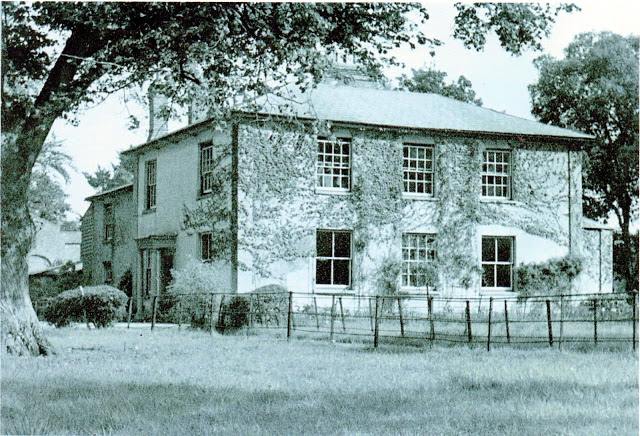
The Rectory, Lydiard Tregoze – published courtesy of Roger Ogle
Thomas died suddenly in 1884 and is buried in Radnor Street Cemetery.
Canon Brian Carne writes in Notes on Rectors, Curates, and Patrons published in Friends of Lydiard Tregoz Report No. 38 published in 2005.
“Shipman’s death must have been sudden, because it became a legend. Right up to the 1960s it was said – at least by Mrs Large – that he appeared at the top of the rectory stairs to presage the death of the current incumbent.”
Have you picked up your copy of Moonies, Movers and Shakers yet (available from the Library Shop, Central Library, Hobnob Press and Amazon)? If so, you will have read about Frank Wallington.
Frank Samuel Wallington was born in Gloucester in 1865, the son of Francis and Mary Ann Wallington. By 1871 the family had moved to Swindon where Francis worked as a fireman on the locos, eventually progressing to engine driver.
By 1891 Frank had completed his engine fitter’s apprenticeship in the Swindon Works and had moved to London where he boarded with his brother William in Plumstead.
He joined The Association of Wiltshiremen in London (The Moonies in London) and from 1893-1901 acted as Honorary Secretary. Frank eventually emigrated to the United States where he died in Eton, Georgia in 1936.
But other members of the family stayed in Swindon and found their final resting place in Radnor Street Cemetery.
Cemetery volunteer Bex discovered the family graves and what a fantastic job she made of clearing them.
Francis Wallington died aged 49 years at his home 4 Edgeware Road in May 1884 and was buried in grave plot A287. His wife Mary Ann survived him by more than 30 years and died aged 85. She was buried with him on May 31, 1916. These are Frank Samuel Wallington’s parents.
George Harry Wallington and his wife Maud Annie Kate are buried in neighbouring plot A288. George was another of Francis and Mary Ann’s sons and brother of Frank Samuel Wallington.
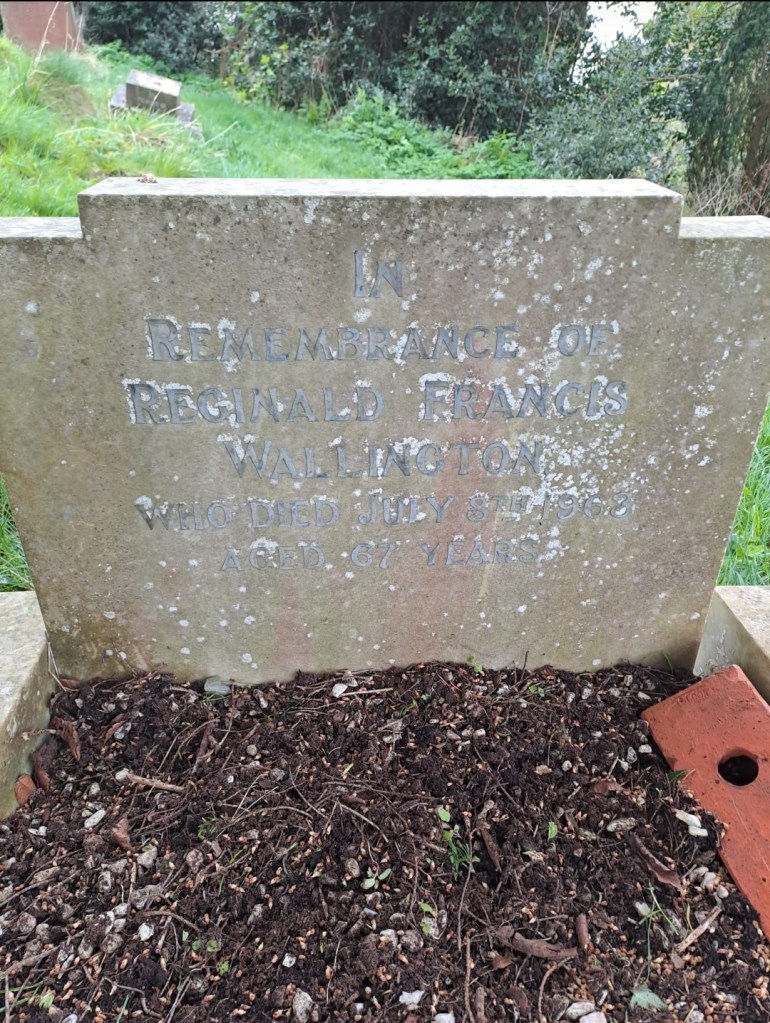
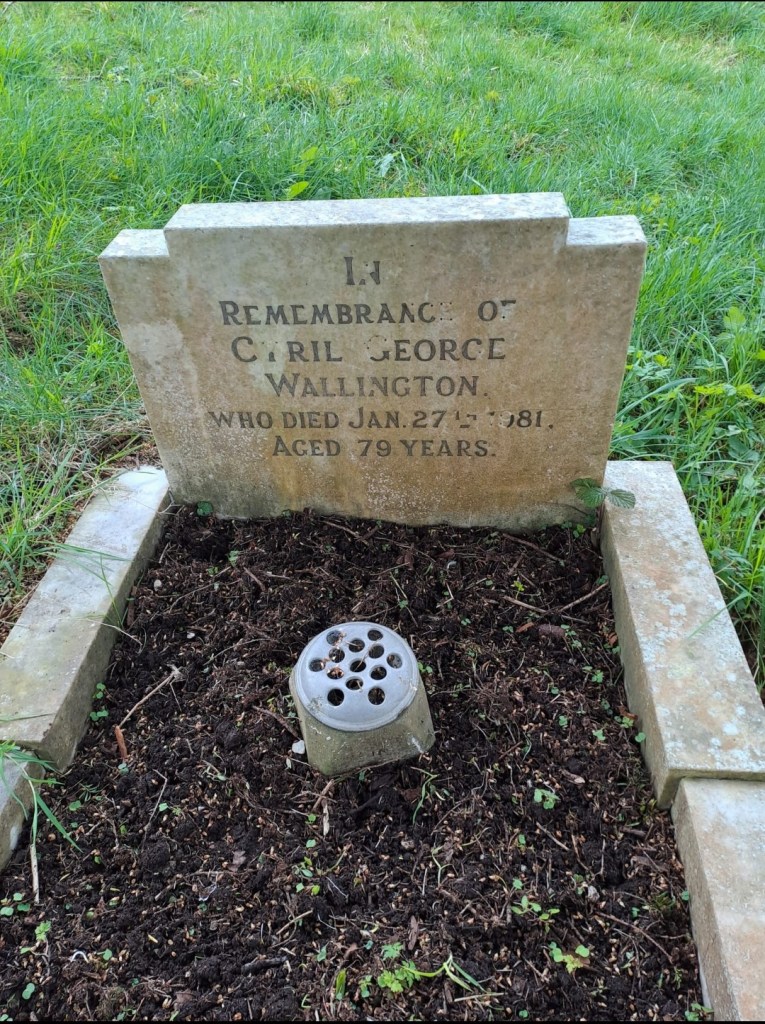
Buried next to George and Maud are their two sons, Reginald Francis Wallington who died in 1963 and Cyril George Wallington who died in 1981.
Before and after photographs of the Wallington family graves.
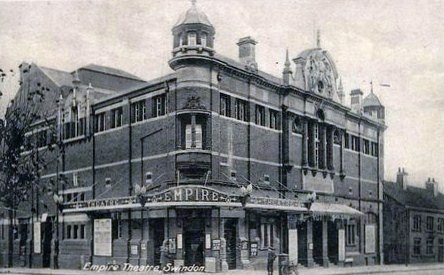
My grandfather always lingered awhile at the corner of Clarence Street opposite the site of the old Empire Theatre. He would grip my hand tightly and recall the tale of little Freddy Whitby.
I know the story well as he never failed to mention it. It was only much later that I fully understood; well you don’t as a child, do you? It was one of Pop’s stories, like the ones about the war, stories you heard all the time as a child and yet could only recall in fragments as an adult. How many times have you wished you’d asked about this or that, wished you had listened more carefully?
The Empire Theatre has long gone and there are traffic lights at the busy junction now, so as I wait for the traffic to come to a halt, I too think of little Freddy Whitby.
Freddy Whitby was 10 years and 10 months old on that fateful Friday in June 1911. He was on his way to school from his home in Swindon Road. At the corner of Clarence Street Freddy stepped off the pavement as if to cross, but then he hesitated before breaking into a run.
A witness said when he saw the car so near him Freddy appeared scared and dazed, and knowing not what to do stood absolutely still.
The driver of the car was racehorse trainer Mr W.T. Robinson from Broome Manor who was on his way to the GWR Station to catch the nine o’clock express train to London.
Mr Robinson told the inquest how he had been blowing the whistle all down the street from the tramlines and how, realising the danger the boy was in, he slammed on his brakes. The left headlamp clipped young Freddy, knocking him off balance and under the front wheel of the car.
Mr Finn, a butcher, was on his way to work when he too saw the accident. He ran across the street and picked up the boy, carrying him to Dr Lavery’s surgery just around the corner in Regent Circus.
The children on their way to Clarence Street School gathered round.
“Who is it?” they asked one another, but nobody seemed to know the boy.
Complaining of pain in his stomach Freddy was transferred to the Victoria Hospital where he was subsequently operated on for an internal haemorrhage.
The operation had proved successful and Freddy was showing signs of recovery when he died suddenly on Saturday morning. A post mortem revealed that the injuries had been slight and it was believed that Freddy had died from shock.
“I never even knew him,” Pop used to say, which always struck me as odd. Why, half a century later, did he still grieve for the boy knocked down on the corner of Clarence Street that he never knew?
But perhaps that was why? Nobody had known Freddy Whitby. Had he been walking to school with a group of boys, or even just one friend, that accident might never have happened? I think my Pop believed that had he been that one friend, Freddy Whitby would have lived. Throughout his long life my Pop somehow felt responsible for the death of Freddy Whitby…’
The facts …
At the inquest Freddy’s father described his son as being a very nervous boy who had poor eyesight and wore glasses. The family had previously been living in Liverpool, Freddy had only been in Swindon since Tuesday of the previous week and the streets were new to him, he told the court.
The Swindon Advertiser reported that ‘the accident again calls attention to the danger of children crossing the streets on going to school when motor cars are frequently passing.’
The Deputy Chief Constable suggested that in future motorists travelling from Old Town to the GWR station should proceed by way of Drove Road to avoid the Clarence Street schools’ area.
Freddy’s funeral took place on June 14, 1911. He is buried in plot B2238 in a grave he shares with three other children; Herbert Mark Keen who died in July 1894 aged 12 months; Oswald Hall who also died in July 1894 aged two years and an eight-week-old baby George Henry Clifford who died a month after Freddy in 1911.
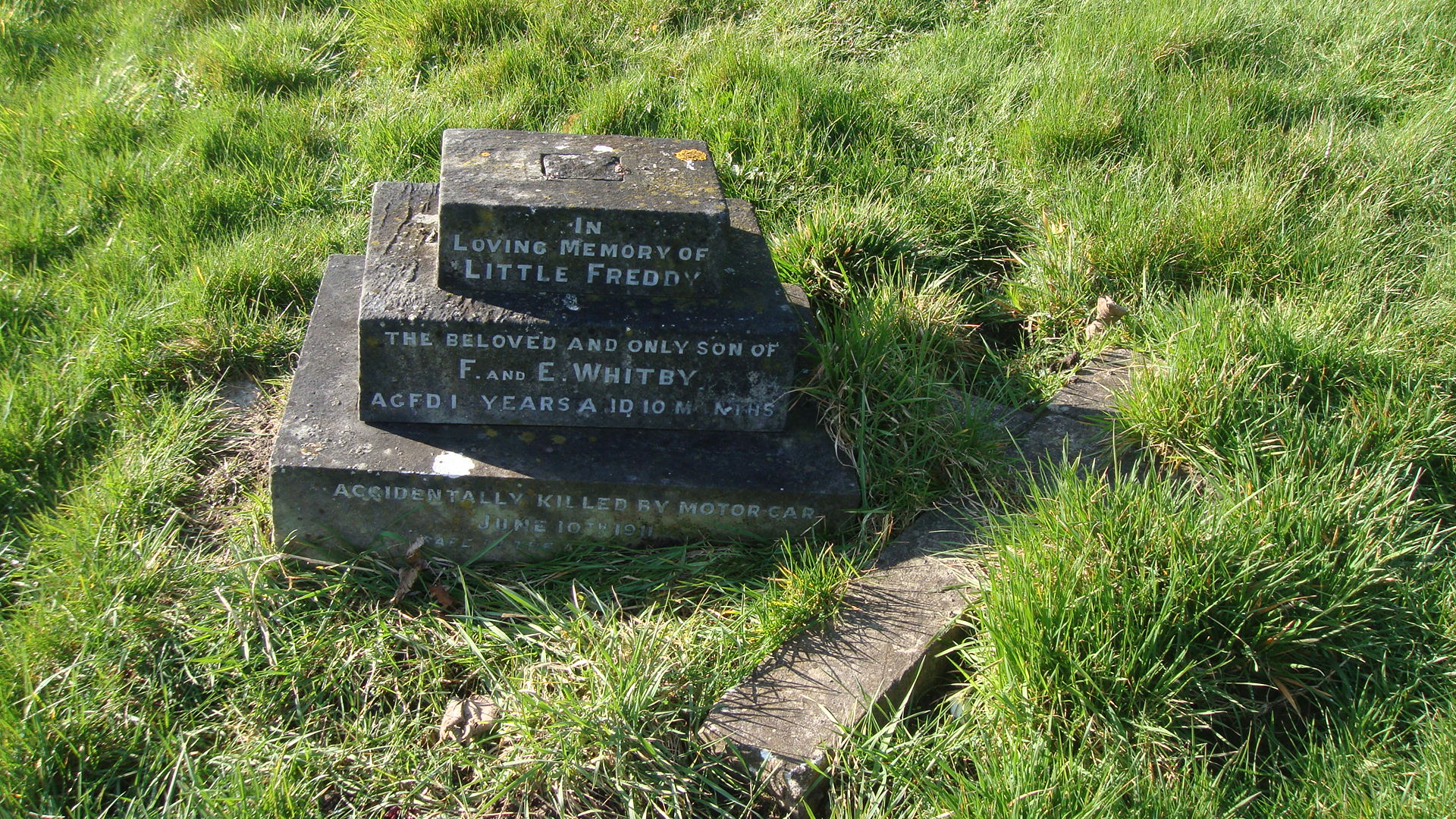
The grave is marked by a memorial to Freddy, a cross toppled off long ago and lies in the grass. The inscription reads: In Loving Memory of Little Freddy the beloved and only son of F. and E. Whitby aged 10 years and 10 mths Accidentally killed by motor car June 10th 1911.