Samuel Johnson Pocock – butcher

The re-imagined story …

Mother liked to favour Mr Pocock with all her butchery requirements. She said he knew a thing or two about beef, which you would rather hope so, as a butcher and a farmer, but my sister thought there was more to it than that.

My sister believed that Mother might be ‘sweet’ on Mr. Pocock.

“He does have very twinkly eyes – for a butcher,” she added.

My brother and I looked up from the copy of the newspaper we were perusing at the kitchen table.

“Father passed away several years ago and Mr Pocock is also a widowed gentleman. There would be nothing inappropriate in a ‘friendship’ developing.” said my sister. “And as the eldest I think you should suggest that she invite him to Sunday lunch,” she declared.

“Yes,” my brother piped up. “I think you should take the bull by the horns.”

I remember mother being very upset when Mr Pocock passed away. Perhaps my sister was right after all.

The facts …

Death of Mr S.J. Pocock

Swindon has lost a well-known resident by the death of Mr. Samuel Johnson Pocock, who passed away at his residence, 17, Wood Street, on Saturday night.

Mr Pocock, who was 68 years of age, came of a well-known family of farmers in West Wilts, and more than half a century of his life was spent in that part of the country. In 1900 he came from Melksham to Swindon, and in conjunction with is son, Mr Percy Pocock, took over the old-established purveying business of Keylock & Co. The deceased was acknowledged to be one of the best judges of cattle in the district, and his services as an adjudicator were greatly in request at the Christmas shows. He was the first president of the Swindon Master Butchers’ Association.

Some six months ago Mr. Pocock’s health showed signs of failing, and it became necessary for him to go to London to undergo an operation. This proved so far successful that the patient experienced considerable relief and was able to return to Swindon. He did not, however, resume business pursuits, but for a while took up his residence with some friends at Corsham. Eventually he came back to Swindon, and it has for some time been apparent that his life could not be prolonged. He finally took to his bed about a fortnight since.

Mr Pocock, whose wife pre-deceased him 14 years ago, leaves a son and a daughter.

North Wilts Herald, Friday, February 9, 1917.

Burial Registers

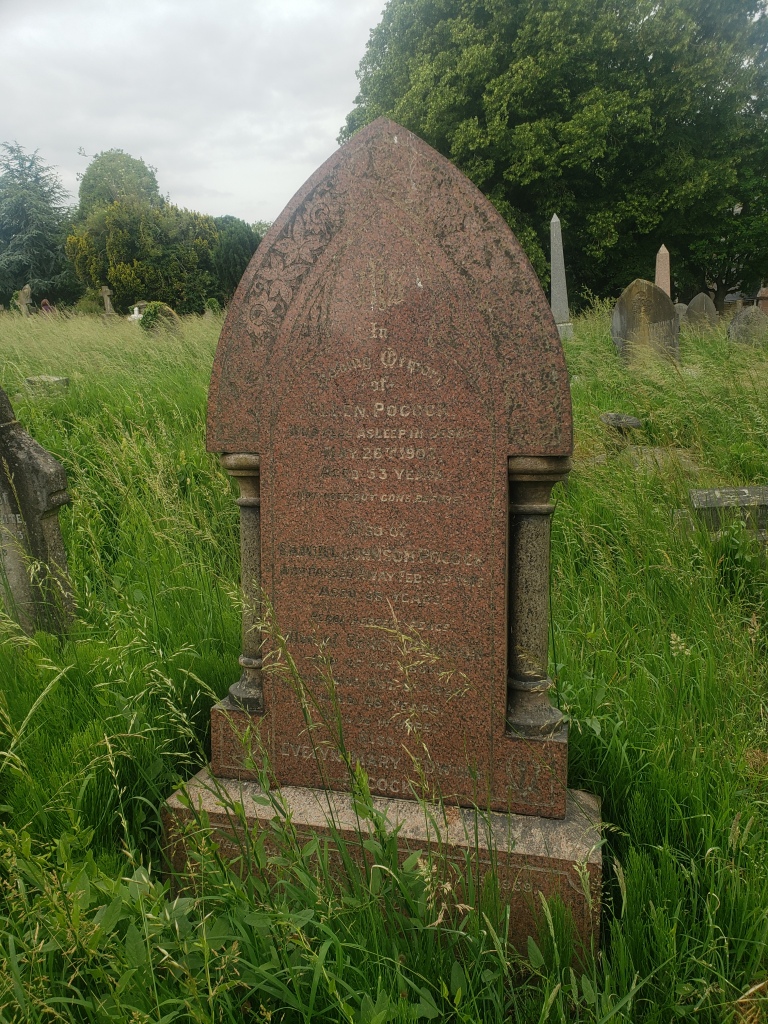
Samuel Johnson Pocock 68 years 17 Wood Street burial 7th February 1917 grave plot E7508

He is buried with:-

Evelyn Mary Edwina Pocock 81 years died St Margaret’s Hospital, Stratton – home 72 Croft Road, Swindon. Burial 5th November 1969.

Percy Johnson Pocock Butcher 48 years 17 Wood Street, burial 11th October, 1925.

Ellen Pocock, wife of – Pocock 53 years 17 Wood Street, burial 29th May 1902.

W.H. Read – local architect

The re-imagined story …

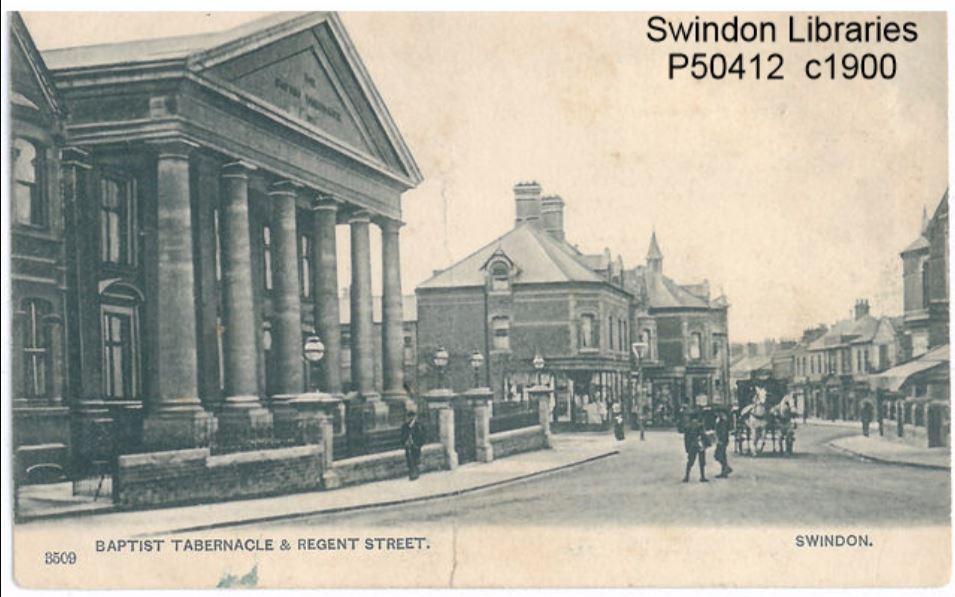
They began dismantling the Baptist Tabernacle as if it were a child’s construction kit. The classically designed building dominated the top end of town but not everyone was a big fan. Some said it was too posh for Swindon and that it didn’t sit well among the other red brick buildings in the town centre.

Gran was a Sunday School teacher at the Tabernacle and insisted we grandchildren attend. My sister and I were reluctant bible students. I’d have rather been up the Rec playing football with my mates and my sister was terrified the building would fall down about our ears. Any number of pictures and paintings would fail to cheer up that dank schoolroom and my sister was forever watching out for falling lumps of masonry.

Baptist Tabernacle

Demolition of the Baptist Tabernacle published courtesy of Local Studies, Swindon Central Library.

And that’s what sounded the final death knell for the building. It wasn’t demolished by the Council as everyone has repeated for the last forty or more years, but by the Baptist church itself. The congregation was too small and the reduced income not enough to pay for the vast amount of repair work necessary.

Today it is difficult to imagine a magnificent, classically designed building with a colonnade of six Tuscan columns and a flight of stone steps the width of the building lording it over the shops in Regent Street.

I would have liked to have one last look around inside, for old times’ sake. I’d have liked to have stood in the pulpit, forbidden to us as children. Neither were we allowed to hang over the gallery to see who sat below us, we soon felt the warmth of Gran’s hand if we stood up in our seat.

Funnily enough my sister wouldn’t have stepped inside that building again if you paid her.

Baptist Tabernacle 2

The Baptist Tabernacle in its heyday – published courtesy of Local Studies, Swindon Central Library.

The facts …

William Henry Read was a popular and prolific local architect whose commissions included the Victoria Hospital, the Anderson’s Almshouses in Cricklade Street and the Baptist Tabernacle.

He was born at Croft House, Swindon in 1850 the son of surveyor William Read and his wife Louisa and educated at Henry C. Lavander’s Grammar School in New Park Street, Devizes. The family later moved to 31 Wood Street and William Henry married Susannah Elizabeth Chandler, the girl who lived next door, in 1876.

The couple lived at Moravia, 10 Bath Road where they raised their family of four sons, William, Kenneth and Norman, and a daughter Grace.

William died at his Bath Road home on Sunday November 3, 1901. The announcement in the local press noted that ‘although a prominent townsman [he] took small part in local government.’

mortuary

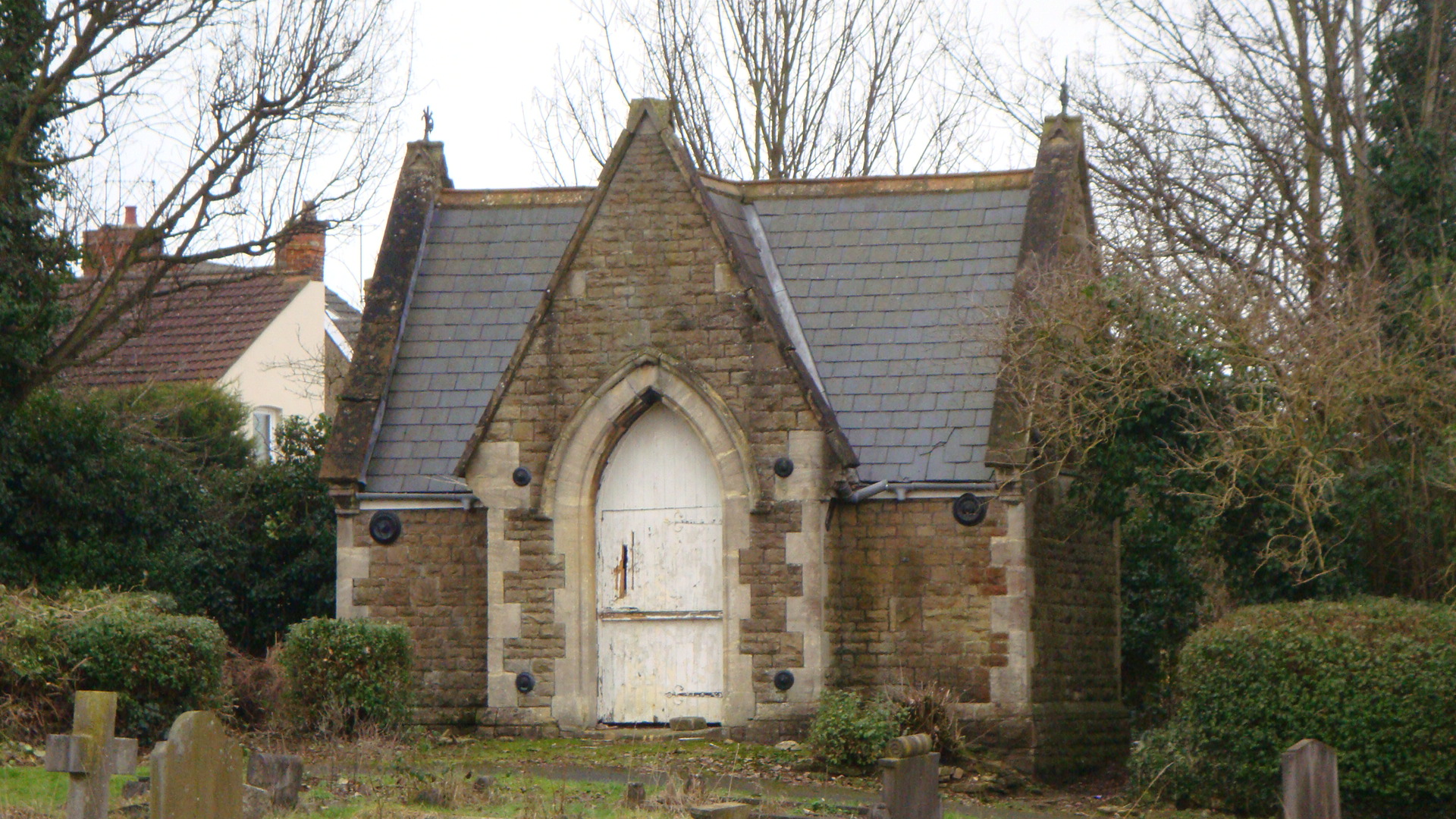
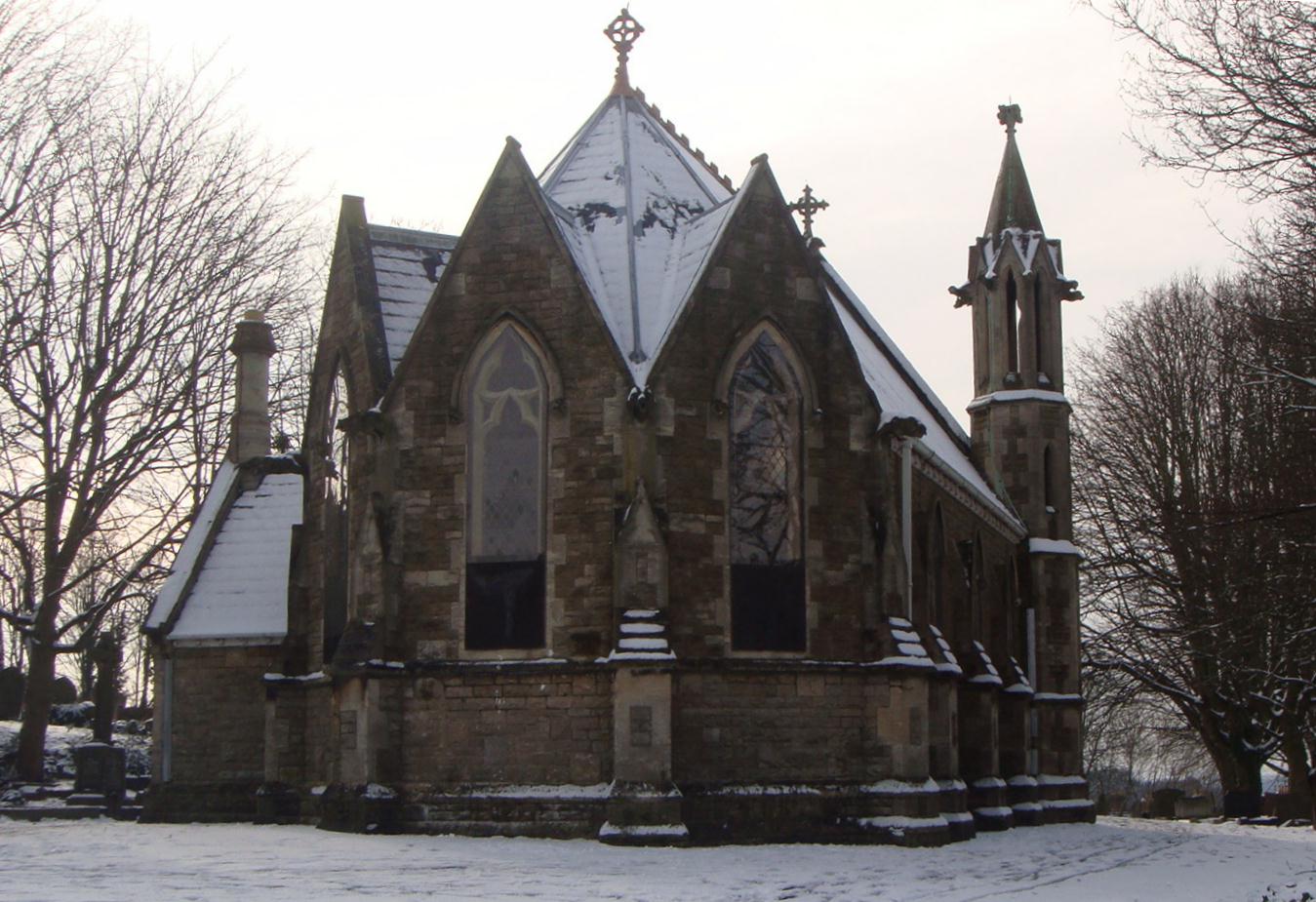
William designed the chapel, mortuary building and caretakers lodge at Radnor Street Cemetery in 1881 where he was buried twenty years later. He must have liked how it all turned out! Susannah died on March 21, 1903 and is buried with her husband.

chapel in the snow

The best bits of the Baptist Tabernacle building materials were sold off. The portico was bought by artist Stanley Frost, the columns, bases and façade wall went elsewhere. People had big plans, which sadly never came to fruition. Then in 2006 Swindon Borough Council bought back the remains at a cost of £360,000 but so far their plans to incorporate them into a town centre regeneration project have failed to materialise and these remain in storage.

William Henry and Susannah Read


Down Your Way – Princes Street

photograph published courtesy to Local Studies, Swindon Central Library.

Building on Princes Street dated from about 1876. In Roadways published in 1979, Peter Sheldon and Richard Tomkins state that the name commemorates Prince Albert Victor, Duke of Clarence, son of Queen Victoria and Prince Albert.

Demolition on the Victorian houses took place in the 1960s. Photograph taken during the 1960/70s redevelopment shows the Courts and in the distance the Police Station, since demolished as well.

Read about some of the residents below:

All photographs published courtesy of Local Studies, Swindon Central Library.

Stephen and Augusta Nicholas

Dabchick Thomas Sawyer

Albert and Elizabeth Beak – safe in the arms of Jesus

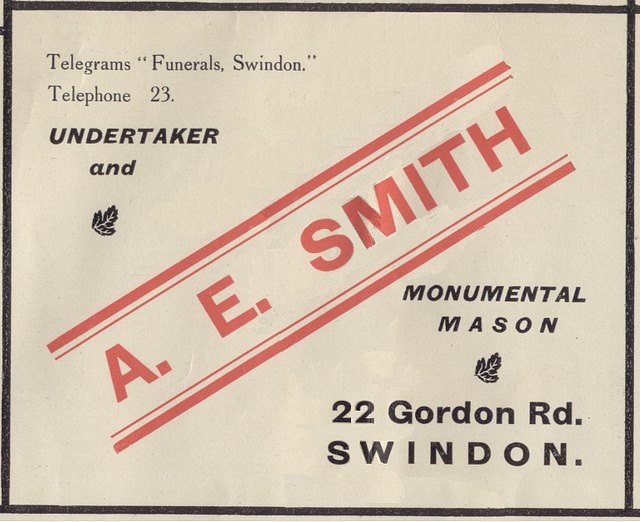
Henry Smith – undertaker and monumental mason

advertisement published courtesy of A.E. Smith

The re-imagined story …

My friend Albert Smith had his career planned well ahead. To be honest I suppose most of us boys did. We all knew we would follow our fathers into the Works, but Albert had a different career path. He was going to be an undertaker – death was big business in the 1880s.

“He’s a canny bloke, that Henry Smith,” my father said. He had worked alongside Albert’s father in the Carriage and Wagon Works before Mr Smith made undertaking his chosen profession. “Have you seen the size of that new cemetery they’re building on Kingshill? Perhaps it’s something you could be thinking about.”

I looked at him in horror. He laughed when he saw my expression.

“Don’t worry boy, I’ve already spoken for you.”

I don’t think I would have been cut out to be an undertaker, not like Albert. I think it’s more of a calling.

“Everyone dies, boy,” said my father. “Everyone dies.”

Henry Smith’s working notebook

The facts …

A.E. Smith was founded around 1880 by Henry Smith a carpenter and joiner. The early premises were situated in Gordon Road, Swindon next to what is now the Princes Street car park. 

At the time of the 1911 census Henry lived at 1 Clifton Street, close to the cemetery where he had spent so many hours.  He died there on November 14, 1917.  He left £3,072 17s 6d to be administered by his three sons.  Albert Edward had taken over the funeral business while James Henry Smith was a railway official and Joseph William a railway storekeeper.

Henry was buried in Radnor Street Cemetery on November 17th.  The service was conducted by Mr Spargo and naturally the funeral was performed by his son.  Henry lies in plot D191.

In the mid 1960’s A.E. Smith & Son moved to their present site in Queens Drive, Swindon and these premises have been expanded and refurbished as the business continued to grow.

The business finally passed out of the Smith family in 1976 when it was acquired by Lodge Brothers, another family firm of funeral directors founded by James Lodge in 1780.

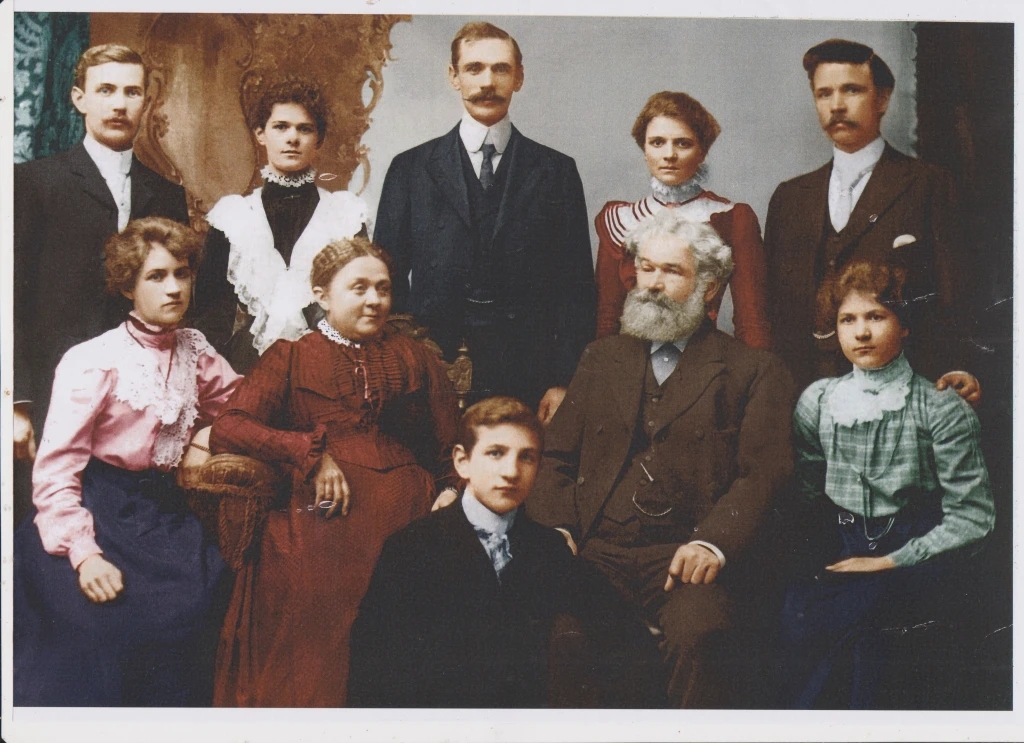
The Smith family

Death of Mr. H. Smith – Mr Henry Smith passed away on Wednesday at his residence in Clifton Street after being ill for a considerable time. He was 75 years of age. Mr. Smith was a very well known and highly respected resident, and was formerly a member of the New Swindon District Council and of the Town Council. He went to London when a young man, but returned to Swindon and obtained a position in the GWR Works. When he left the Works he commenced business on his own account as a carpenter and undertaker. He married the eldest daughter of the late Mr. James Sextone, of Burderop. Deceased leaves a sorrowing widow, with four sons and four daughters. The funeral will take place tomorrow (Saturday.)

North Wilts Herald, Friday, November 16, 1917.

An old photo of Henry Smith’s memorial which has recently been renovated and restored.

Thomas Barter – Victim of fatal accident in the Works

There are some obvious points raised in the following inquest; to establish that machinery and practises in the Works were not at fault and that proper medical attention was received by the victim.

But what I find astonishing is that a 55 year old man, already identified as having a weak heart, and who had previously suffered a rupture and was wearing a truss, was continuing to work as a smith in the Works.

The Fatal Accident in the GWR Works

Inquest This Morning

Mr W.E.N. Browne, County coroner, held and inquest this morning at the Clifton Hotel, New Swindon, on the body of Thomas Barter, a GWR employee, aged 55 years, and lately residing at 59, Radnor Street, Swindon. Deceased, who was a widower, was accidentally struck with a hammer by his mate, and two days after affair died through the injuries received.

Mr J. Gregory was chosen foreman of the jury. Mr. C.R. Pendock, Inspector of Factories, was in attendance.

Mr George Finch, son-in-law of deceased, was called, and said that the latter was a smith in the GWR Works. On Tuesday last he went home about mid-day, and the daughter told witness that he had complained of having had a blow. Later in the day, Dr. Maclean was sent for. Before going home deceased had called in at the Surgery, but a surgery doctor was not sent for afterwards. Witness saw deceased the evening of the next day, and he appeared to be gradually sinking.

By the Coroner: Witness had made no complaint about insufficient attention on the part of the surgery doctors.

By Inspector Pendock: Witness believed that deceased had suffered from a weak heart for some six months before the accident.

By a Juror: A Surgeon was at the Surgery when deceased called and attended to him.

William Berry, who was engaged with deceased in making crown bar ends, said he was striking side blows at the bar, and deceased was stood on his left. The bar happening to swerve witness missed the bar and struck the deceased in the lower part of the stomach. Deceased said he was hurt, but acknowledged to witness that it was a pure accident and not witness’s fault at all. Deceased worked for three-quarters of an hour after the accident, and then he put his coat on and said he was going out to see a doctor.

By the Inspector: Had you been long accustomed to the work?

Witness: Yes, sir. Six years. I have known the deceased for 15 years, and never known him to have a misword with anyone in the shop. He was the best man I ever worked with in my life.

The Inspector: The work you were engaged on was nothing unusual?

Witness: No, Sir. We have made thousands of these same things.

The Inspector: Was the bar hanging by a chain at one end?

Witness: Yes, sir, and in a crane and block at the other.

The Inspector: Did the chain give way at all?

Witness: No sir.

David Jeans, another workmate of deceased, gave similar evidence, and added that he (witness) had gone to the foreman after the occurrence, and made him acquainted with the facts of the same. The foreman promptly ordered witness to take deceased to see a doctor, but deceased said he would go by himself. Witness saw deceased at his home on Wednesday. He was then too ill to speak much, but made witness understand it was all an accident. He said he had gone to the Surgery on the Tuesday, but witness could not gather whether or not deceased had seen a doctor there.

The Inspector: You don’t make any complaint of the appliances you use for this work?

Witness: No, sir, not at all. We have made thousands.

The Inspector: They are properly fitted to the work, and no blame attaches to the Company?

Witness: That is so.

Dr. Carew Webb, assistant to Dr. Maclean, said he was called in on Wednesday evening, and examined the deceased. There was a certain amount of tenderness on the lower side of the abdomen, but no marks of bruising, nor was there any swelling or anything to suggest any serious internal injury. Deceased had been previously ruptured, and at the time of the accident was wearing a truss. The hammer must hit the truss, or the accident might have proved fatal sooner than it did. Witness saw deceased on Thursday morning, and he seemed a little brighter then but on the way to the station later, witness was stopped and asked to go to the house. When he arrived there the man was dead. They told him at the house that deceased had vomited a great deal before he died. Having heard from Dr. Maclean that deceased had suffered from heart disease, witness gave it his opinion that the immediate cause of death was heart failure, due to a weak heart, and accelerated by the accident.

The Coroner then asked Dr. Gardner, of the GWR Surgery, if he wished to say anything, as it had got about the town that the deceased was neglected at the Surgery. Dr. Gardner said that he himself had seen the deceased, and ordered him to go home and keep to his bed, and that the doctor would call in the morning. The doctor did call, but found Dr. Maclean had been called in.

A verdict in accordance with Dr. Webb’s testimony was returned.

Swindon Advertiser, Saturday, August 19, 1899.

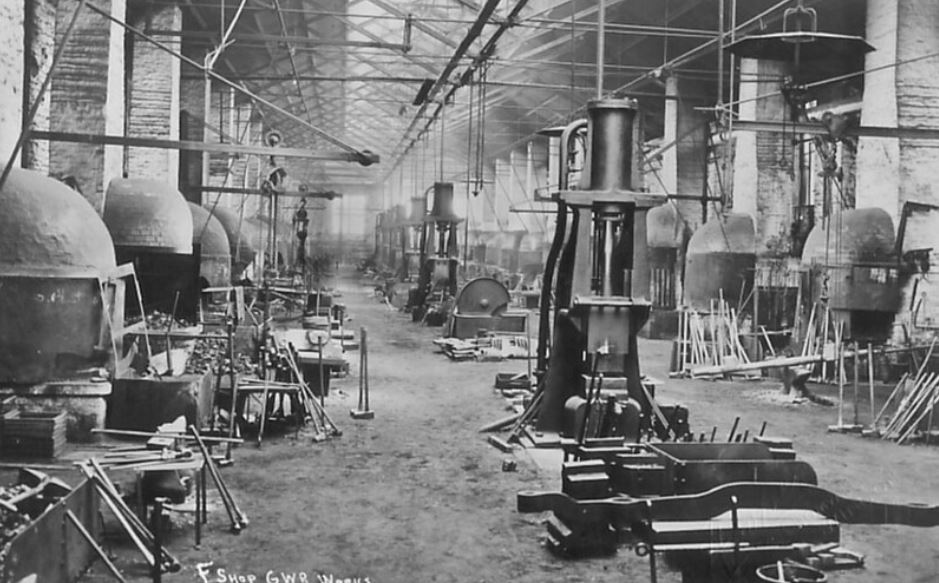
F Shop, GWR Works where Thomas Barter was employed published courtesy of Local Studies, Swindon Central Library.

The Fatal Accident in the GWR Works

Funeral of the Deceased

A Large Gathering

The funeral of the poor unfortunate victim of the accident which occurred in the GWR Works last Tuesday took place on Saturday afternoon. Owing to the popularity of Mr. T. Barter amongst his shopmates, the funeral was largely attended, over 100 mourners following. The procession was formed at deceased’s late residence in Radnor Street, and wended its way to the Cemetery where the interment took place, the officiating clergyman being the Rev. J.W. Fish, of Stratton.

Deceased had been in the habit of attending the Clifton Street Primitive Methodist Chapel for many years, and was only recently appointed as one of the trustees of the new building fund.

The coffin was conveyed on a handbier, the bearers being Messrs. D. Jeanes, D. Hunt, Wm. Harvey, Alf Reece, Jas Welch and Thos Brett, all shop mates of the deceased.

The Swindon branch of the A.S.E. was represented by the Secretary (Mr B. Johnson). Deceased was a prominent member of this Society and was Secretary of the Superannuation Fund for this district.

Deceased’s only sister (Miss Barter) was unable to be present as she crossed to Ostend on the morning of deceased’s death.

Last evening a memorial service was held at the Clifton Street Chapel, when an appropriate sermon was preached by the Rev. J.W. Fish, who took for his text the following words “There is but a step between me and death.” The rev. gentleman dwelt upon deceased’s life in connection with their church, and also of the good feeling which existed between him and his fellow workers. The congregation joined in singing the special hymn “Sleep on beloved,” and Mrs Westmacott sang as a solo “We shall meet at the beautiful gate.”

No flowers were sent by special request.

Extracts from Swindon Advertiser, Monday, August 21, 1899.

Clifton Street Primitive Methodist Chapel published courtesy of Paul Williams

The funeral took place on August 19, 1899 when Thomas Barter was buried in grave plot D23.

The pig on the chapel

People who attend our walks do so for a variety of reasons. Sometimes it is to visit the cemetery they remember from childhood when they accompanied a parent to visit a family grave. Some join us because they’ve only just discovered there is a cemetery in the centre of town. Then some years ago a visitor joined us to see if the pig on the chapel still survived. The pig (although I think it is probably a boar) is a gargoyle on the east facing wall and remains in good condition, as you can see here.

The same visitor then cast her eye around the lush, summer cemetery and mentioned that one of the grasses dated back to ‘the time of the dinosaurs.’

Now I’m no horticulturalist, but Andy and Noel were able to identify the grass as the horsetail. The RHS website describes the horsetail as ‘an invasive deep rooted weed with fast growing rhizomes (underground stems) that quickly send up dense stands of foliage.’

The fir tree like plants can grow up to 60 cm (2ft) tall with roots as deep as 2m (7ft) making them difficult to dig out. Fortunately there are no such triffid like examples in the cemetery and before too long the grass cutters will be out to cut them down and minimise the spread. But what about the claim that the horsetail dates back to the time of the dinosaurs.

Apparently ancient civilizations used the horsetail to stop bleeding and heal wounds. Although the plant is believed to have medicinal properties there is not sufficient research to confirm that it is safe and effective for human use.

And then, trawling through weed related pages on the internet I came across a ‘prehistoric’ reference on a Wikipedia page.

‘Equisetum is a ‘living fossil’ the only living genus of the entire subclass Equisetidae, which for over 100 million years was much more diverse and dominated the understorey of late Paleozoic forests.’

So our visitor was right. I learn something new every day spent in the cemetery.

The Pitt and Osman family – a life in service

Today few occupations can guarantee a job for life but in the 19th century it was quite different. In 1871 there were 1.4 million women in domestic service – 6.5% of the total female population. One in three girls between the ages of 15-20 worked as kitchen maids and housemaids – and one record breaking Swindon family notched up an incredible combined service of over 160 years extending across three generations.

In 1818 James and Elizabeth Pitt moved to their new home, one of three stone built tied cottages in Mannington Lane. An agricultural labourer, James was first employed by tenant farmer Richard Dore King at Mannington Farm and later by Richard Strange who in 1835 signed a 12-year lease on the 237-acre farm.

The Pitt couple had five daughters, Eliza, Leah, Jane, Mary Ann and Martha, all baptised at St. Mary’s Church, Lydiard Tregoze and of whom four were destined for employment at Mannington Farm.

Eldest daughter Eliza worked as a ‘house servant’ for over 24 years. In the 1860s the going rate for a housemaid was £14 per year, all found, the hours were long and the work hard. Leah served the Strange family at Mannington Farm for just two years due to her untimely death at the age of just 18. She died on October 26, 1841 in Cricklade where she was then working in service.  The cause of her death was given as ‘Visitation of God.’

Third daughter Jane put in an impressive 24 years’ service at Mannington Farm.  She began work in 1839, first as a house servant then after her marriage to groom Thomas Osman in 1859, as a dairymaid.  Fourth daughter Martha also began her working life as a house servant at Mannington. By 1871 she had been promoted to Lady’s Maid to Richard Strange’s daughter Julia.

Elizabeth Pitt died in 1871 and her husband James in 1882.  An elaborate and expensive memorial, probably erected by their appreciative employer, marks their grave in the churchyard at St. Mary’s, Lydiard Tregoze.

Julia Strange took over the running of the farm after her father’s death and by 1891 there was a whole host of Pitt descendants employed in the household, including Martha aged 52 and Jane Osman’s two daughters, 21 year old Julia who is a housemaid and Louisa 28, cook. The Mannington Farm tenancy changed hands in the late 1890s ending over seventy years of Pitt/Osman family service to the Strange family.

Julia Strange moved to Didcot. She died at Acland Home, Oxford in 1911 and was buried with her parents in Radnor Street Cemetery in a grave spanning three plots.

Jane Osman died aged 73 at her home, Mannington Cottage, in 1899 by which time the ancient churchyard at St. Mary’s was closed. Her husband Thomas died in 1909 and her sister Martha Pitt in 1909. All three are buried in Radnor Street Cemetery, close to the Strange family grave, neighbours in death as in life.

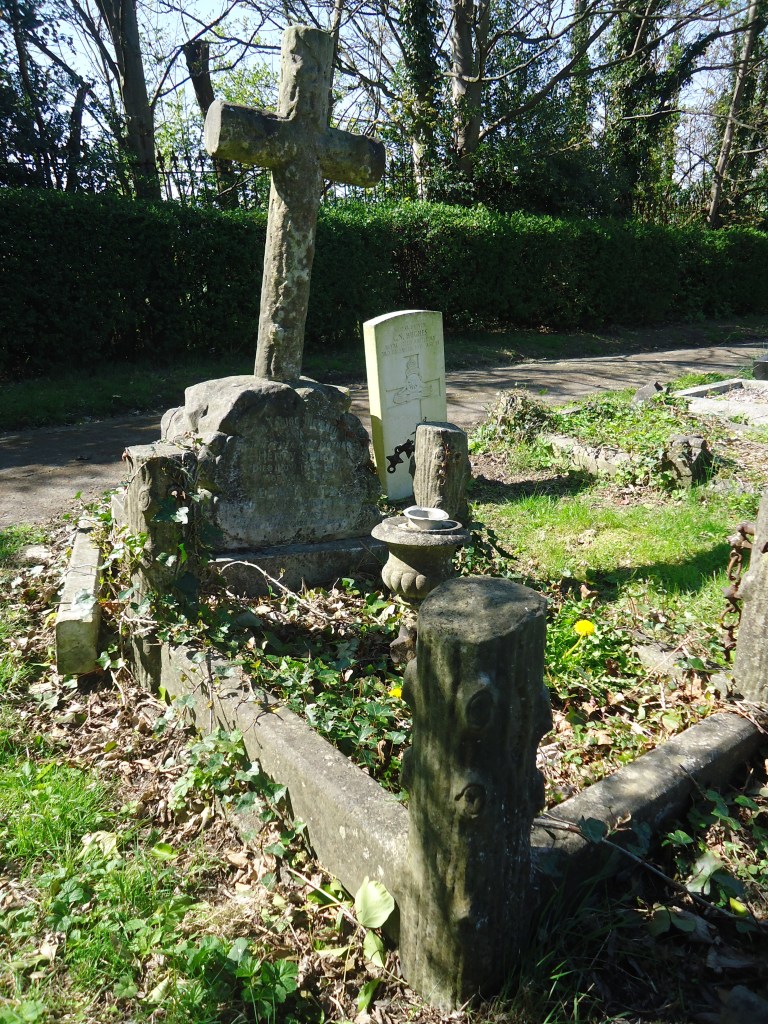
The Strange family grave

James and Elizabeth’s grave in the churchyard at St. Mary’s, Lydiard Tregoze.

You may also like to read:

The Old Congregational Church

Wilmer Bradford Wilmer – coal merchant

The re-imagined story …

I’m not sure about central heating – not that we’re going to be able to put ours on this winter! Personally, I don’t think you can beat an open fire. I can remember sitting in my nan’s house, all of us clustered around the coal fire, our faces red hot while up in the bedrooms the temperature was sub-zero. Nan often had ice on the inside of the bedroom windows, no double-glazing in those days.

I remember the coalman delivering by horse and cart. He used to stop outside our house and put a nosebag on the old horse. I never saw him clean, the coalman not the horse – infact, I think the horse might have been cleaner.

Nan used to complain about the mess the coal fire created and I suppose we have to blame climate change on all that muck belching out into the atmosphere. She eventually invested in a two bar electric heater with a coal effect. All the warmth and none of the dirt, except she couldn’t afford to use that in the end. A bit like us with the central heating. We won’t be able to have ours on this winter.

The facts …

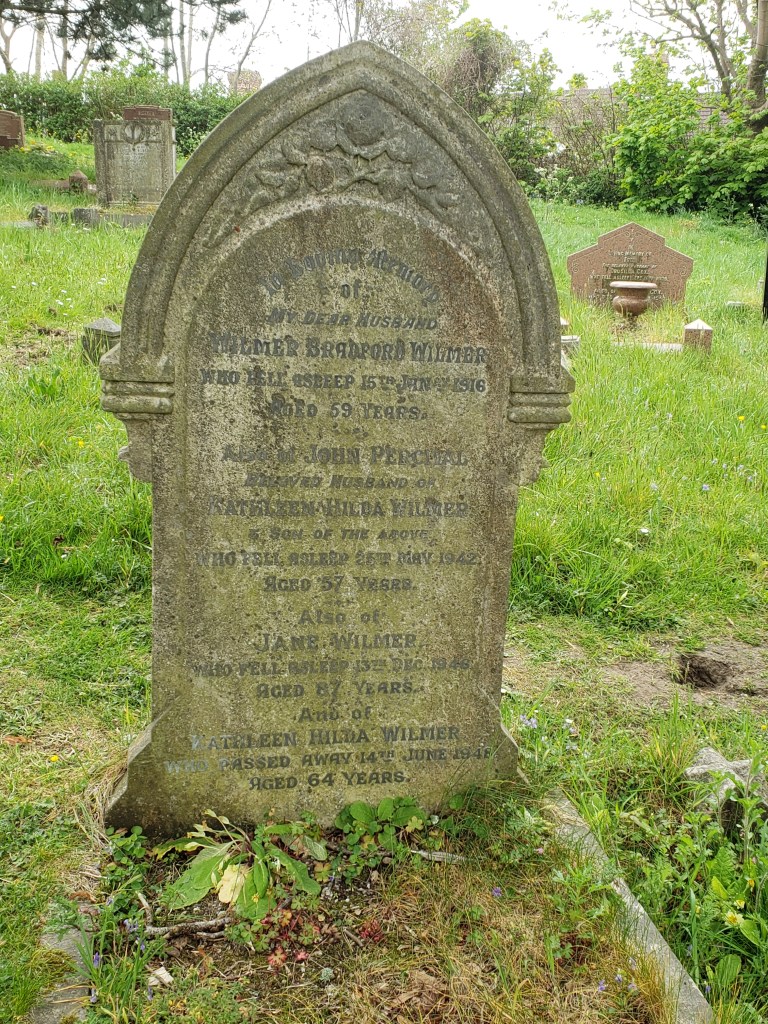
Death of Mr W.B. Wilmer

The death took place on Saturday at his residence, 96, Goddard Avenue, Swindon, of Mr. Wilmer Bradford Wilmer. The deceased, who was 59 years of age, came to Swindon from Paignton, Devon, 14 years ago, and started business as a coal merchant. For the scene of his operations Mr Wilmer chose a field at the end of St. Margaret’s Road, and commenced business in a small way. At this time Mr. Wilmer was a perfect stranger to the town, but by dint of hard work and careful trading he slowly but surely built up a sound and extensive business. It was not long before he was appointed agent for the Midland and South Western Junction Railway Company, whose lines his wharf adjoins and in this way he became one of the best known men in the town.

Mr Wilmer had been ailing for a considerable time, but his illness, due to an internal complaint, did not become serious until a month ago, and that it would have a fatal termination was not contemplated by his family until four days before his death.

The funeral took place on Wednesday at the Cemetery, where the burial service was conducted by the Rev. C.A. Mayall. The chief mourners were. Mr J.P. Wilmer (son), Mr and Mrs C. Love (sister and brother-in-law) Mr G. Ashworth, Mr. W. Beer, Mr. W.B. Armitage, and Mr E. Mackelden.

Mr Wilmer and family 96 Goddard Avenue, wish to thank all those friends who so kindly sent letters of sympathy during their sad bereavement.

Extract from North Wilts Herald, Friday, January 21, 1916.

Wilmer Bradford Wilmer was born in about 1857 the youngest son of Benjamin and Jane Wilmer. Benjamin was the publican at the Cross Keys Public House in Caxton, Cambs.

It would appear that the move to Swindon got off to a bit of a rocky start for Wilmer. In 1902 Wilmer was declared bankrupt with liabilities of over £1,000. He declared to the bankruptcy court that he was “absolutely without any estate, and admitted being a bankrupt before, in the year 1889.” – Wilts & Gloucestershire Standard Saturday 31st May 1902.

The family had arrived in Swindon sometime between 1891 and 1901 when Wilmer is recorded as a Stock Broker Agent living at 96 Goddard Avenue with his wife Jane and their two children, John P. 16 an architect’s apprentice and two year old Lilian. Their home in 1891 was in Batley, Yorks where Wilmer and Jane had married in the September quarter of 1883. He describes himself on the census of that year as “Living on own means.” They then spent some time in Paignton, Devon where daughter Lilian was born, before coming to Swindon.

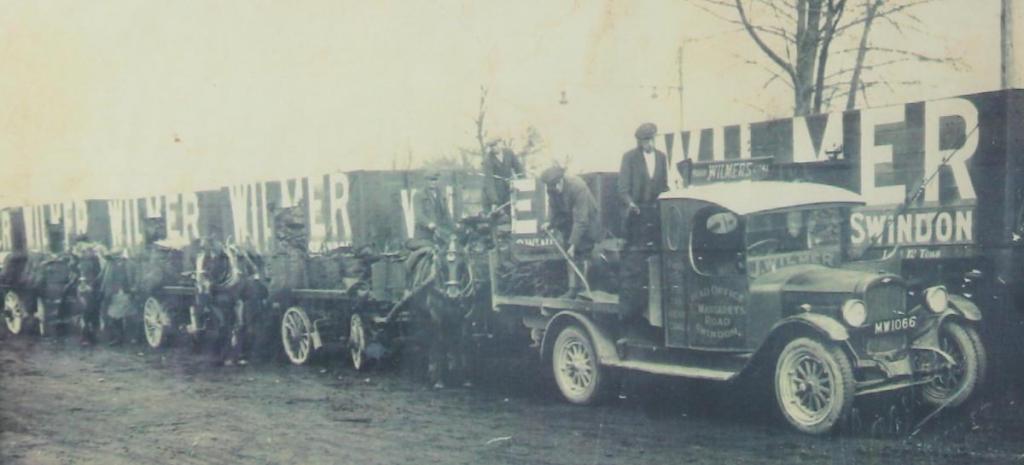
Whatever had happened in Wilmer’s past, he soon managed to get his act together and established a business that would survive beyond his death and through several generations of the Wilmer family, until in 2015 when cousins Ken and John Wilmer made the difficult decision to sell the family business.

John told the Swindon Advertiser: “We were coming to the yard as toddlers but when we were teenagers we started helping out a bit more. Once we got our driving licences I think we were a bit more useful and we went all over the county delivering. Life was simpler back then,” he said.

Swindon Advertiser 20th April 2015

Herbert Henry Hole – killed in the GWR Works

So, where did responsibility lie for the death of Herbert Hole? Described as ‘a fully qualified man and a good man’ it seems unlikely it was due to his incompetence. Investigations later that day revealed a previously unseen flaw in the hydraulic press, which had been working constantly for 19½ years. Today we bemoan the curse of ‘health and safety regulations.’ I dare say Mrs Hole and her family would tell us how fortunate we are to have such laws in place.

Fatality in the GWR Works

The circumstances attending the sad death of Herbert Henry Hole, aged 53 years, of 20, Curtis Street, Swindon, a fitter in the GWR Works, who was killed by an accident, were inquired into before M A.L. Forrester, Coroner for North Wilts, on Friday afternoon in last week at the Mechanics Institution, Swindon.

Mr O.A. Shinner, H.M. Inspector of Factories, of Bristol, was in attendance.

Arthur Herbert Hole, a fitter, who said he left home only two days ago and went to Grimsby to work, identified deceased as his father, 53 years of age, who had been in the employ of the GWR Co. a number of years, and was engaged in the stamping shop.

Dr W. Boxer Mayne said he was called to the Hospital about 4.30 p.m. on Wednesday. He found deceased suffering from a deep and extensive wound in the neighbourhood of the rectum. There was also the evidence of the fracture of the pelvis. He died in a few minutes from shock following the injuries.

Alfred Edward Mayor, of 28, Oriel Street, Swindon, hydraulic forgeman in the factory, said he and deceased were working on two hydraulic presses in the Stamping Shop. On Wednesday afternoon one of the presses was out of work, and deceased came there to put a guage on the dies of the press which was out of work. Whilst he was doing this witness was working the other press. About 3.50 p.m. witness heard a banging noise, and on looking round he saw deceased lying on the floor. Witness went to pick deceased up, but found his left foot was pinned down by a piece of iron (the crosshead of the machine). With assistance, witness raised the iron, and got deceased up and found he was seriously injured. Witness had left the machine ready for Hole to do the work. He was down on the block, and witness told him it was all right. He told deceased not to touch the lever, or the press would go up. Deceased could work the guage without touching the lever.

By Mr Skinner: The machine was not doing any work at the time of the accident. Deceased was doing some work to the guage.

Thomas Axford, of 161, Victoria Road, Swindon, GWR foreman, said he was in charge of the shop where deceased was working. Witness was 15 yards away from the scene of the accident at the time, and heard the noise. On turning round he saw deceased on the ground. Witness fetched an ambulance and also telephoned for a doctor, who quickly arrived. The same day, about 6 p.m. witness examined the machine and found an unseen flaw in the tie-rod coupling the top piston of the cylinder to the bottom one. The effect or result of the accident was that the tie-rod broke. Deceased was evidently knocked down. Someone must have touched the lever for the tie-rod to break. Deceased was standing near the lever, and in witness’s opinion the lever must have been touched or the tie-rod would not have broken. After the accident the lever showed that the machine was on the down stroke ready to press. This showed that the machine had moved on the up-stroke about an inch and then come down. The water was not shut off on the main during meal hours or for repairs. Every machine had a separate valve. Deceased was a fully qualified man and a good man.

By Mr Shinner: There was no particular pressure put on to cause the accident. There must have been pressure, and an improper pressure put on accidentally. The machine had been working constantly for 19½ years.

The jury, of whom Mr Waldon was foreman returned a verdict of “Accidental death,” and passed a vote of condolence with the widow and family of deceased in their great bereavement.

The Faringdon Advertiser, Saturday July 14, 1917.

Capture

Photograph published courtesy of Local Studies, Swindon Central Library.

Was this the type of machine at which Herbert Hole was fatally injured?

Herbert’s funeral took place on July 9, 1917. He is buried in Radnor Street Cemetery in plot D1624 with his wife Priscilla and son A.P. Hole.

Emily Read – killed in house fire

Today the frontage of number 76 Deacon Street is much altered. It is difficult to imagine the horror of that night in May, 1895 when fire broke out in one of the bedrooms.

It seems likely that the Read family had not long lived in Deacon Street. The census returns of 1891 list William and Emily as living at 38 Eastcott Hill.

Burning Fatality at New Swindon

Sad Death of a Woman

Narrow Escape of her Children

Considerable excitement prevailed in the neighbourhood of Deacon Street, New Swindon, at a late hour on Thursday night, by a fire which occurred at No. 76. It appears that the house is occupied by Mr Wm. Reed, an engine driver on the GWR, and his wife and two children.

Reed left home on Thursday morning to attend to his duties, telling his wife he should not be home again until Friday afternoon (yesterday), he having to go to South Wales with a train. Reed’s wife appears to have retired to rest with her children about the usual hour on Thursday night. By some means at present unexplained, the lamp which was used in the bedroom either burst when it was being blown out or fell over.

The room in which the mother and her children sleeping together was soon ablaze. A neighbour who had gone to bed about ten o’clock says he heard something like the fall or explosion of a lamp, but apparently the first alarm was given by a youth named Tipper, living in Curtis street, who was passing at the time. Assistance was promptly to hand, and ably rendered by Mr Dade and Mr Mercer, each of whom succeeded in rescuing a child by breaking the windows and effecting an entrance into the bedroom.

Firemen Munday and Flowers were on the spot within three minutes of the call being given, but prior to their arrival Mr Mercer had succeeded by the aid of buckets of water hand up to him, in extinguishing the fire although he was nearly choked in doing so by the dense volumes of smoke. The fire was put out in about fifteen minutes.

Mrs Reed, it appears, was in flames, and she ran downstairs with her youngest child. She went into a neighbour’s and there explained that she was in the act of turning down the lamp to blow it out, when it exploded and set the place on fire. The poor woman was burnt in a shocking manner, and though medical aid was sought and everything done for her the poor woman succumbed just before 2 o’clock yesterday (Friday) morning. One of the children was also very badly burnt.

An inquest was held on the body of the unfortunate woman yesterday (Friday) afternoon, at the Rolleston Arms hotel, before Mr Coroner Browne and a jury, of whom Mr Alfred Adams was foreman. After viewing the body and the scene of the (fire) the following evidence was taken.

George Wm Singler said deceased was his step sister and he lodged with her. The last time he saw her alive on Thursday was at seven o’clock in the evening. He was away from home when the fire occurred. He identified the bottom of the lamp produced as the one deceased always used to take upstairs with her when she went to bed.

Thomas Mercer, living next door to deceased, said that between 9.30 and 10.30 the previous evening, he was in bed when he heard a cry of “Fire”. He got out of bed and went downstairs. He got up outside the house and rescued one of the children out of the cot in the bedroom, bringing the child through the window. He could not see deceased. The room was all in flames. He called for water and put the fire out. There was one other child in the room. He heard a lamp burst just before he heard “fire” called out. The fire only lasted about a quarter of an hour. He did not know whether the lamp fell or was knocked over. The mother and youngest child had gone when he got in at the window. The fire was nearly out when the fire brigade arrived.

Sarah Beamish, living in the same street, said she was at her gate and heard something burst. She ran to the gate, and Mrs Read then ran down stairs. The door was locked, and they could not force it open. Some men broke the window and she got through. Deceased was in flames, but was burning round the neck only. Deceased walked into witness’s and said she turned the lamp down to blow it out when it exploded. She repeated this statement several times. Deceased thought the lamp was turned too low; it was not the blowing that made it explode. All her clothes were burnt off. By the foreman: It was not more than five minutes after the explosion that Mrs Reed was outside. She then sent for medical assistance, but she died at 1.50 a.m. that (Friday) morning. Both children were brought out of the bedroom window. Witness said everything was done for deceased that could be done.  Her husband (Mr Reed) left at 4 a.m. on Thursday, and would be back until that (Friday) afternoon.

The Coroner adjourned the inquest until Wednesday next, to enable an analysis of the oil to be taken and obtain the flashing point of same.

The Swindon Advertiser, Saturday, June 1, 1895.

Emily Read was buried in Radnor Street in plot B2426 on June 3, 1895. She lies in a public grave with two others, most probably, unrelated people.

William married the widowed Mary Jerome four years later. The 1901 census finds them living at 19 Gloucester Street with Mary’s 23 year old daughter, Seline Jerome and William’s two little girls who had survived the blaze, Winifred Emily, 11 and Elsie May, 9.

*Read is misspelt as Reed in some instances.