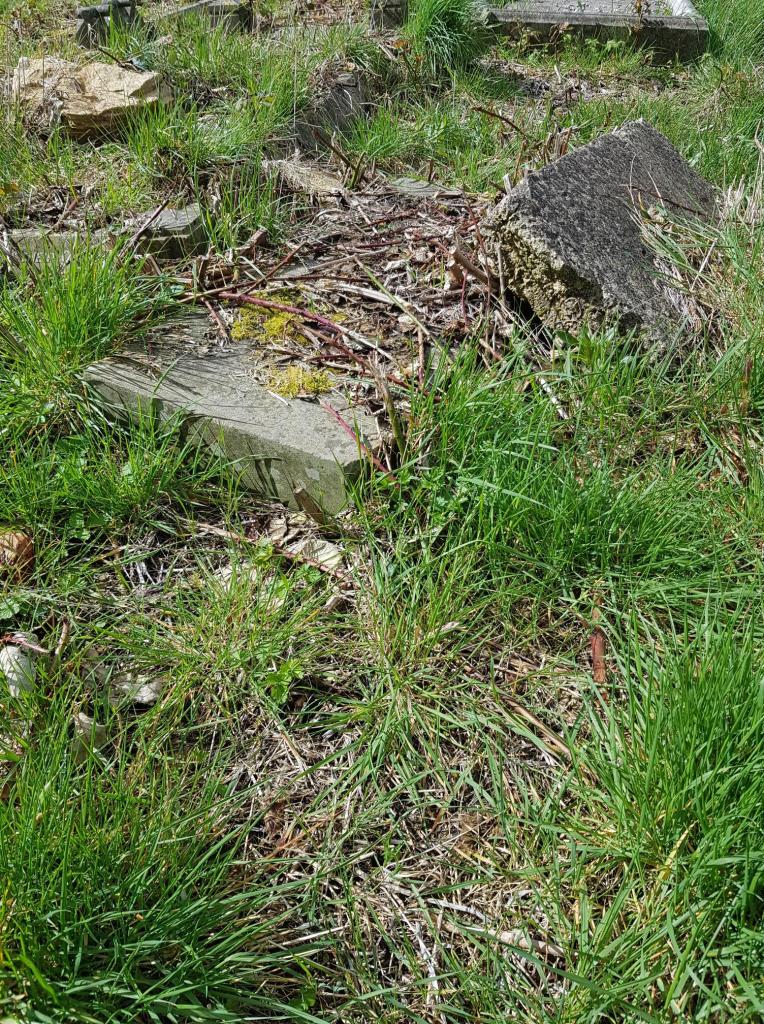
This week our volunteers uncovered a collapsed and partially buried headstone and in so doing revealed a whole family history.
The newly discovered inscription reads:
Thomas Pickett
Who entered into rest
March 19, 1903
Aged 65 years
Also of Lucy
The beloved wife of the above
Who died August 27th 1913
Aged 74 years
Also in memory of Elizabeth
Wife of Arthur Thompson
Their daughter
Who died March 20th 1948
Aged 77 years
Also Edith their daughter
Who died March 22nd 1955
Also two sons and two daughters
Interred in St Mark’s Churchyard
Thomas’s record of railway employment reveals he was employed as a fireman on February 4, 1864 on a daily rate of 3 shillings. By 1871 he was working as an Engine Turner and in 1873 as a Goods Engineman. He resigned on February 12, 1898 when he received a cheque for £70 ‘on account of old age.’ His service record includes a handful of disciplinary cautions and fines during a career spanning more than 30 years.
On the domestic front Thomas married Lucy Telling in 1858. By 1871 they were living at 42 Fleet Street with their three children Thomas 11, Emily 2 and Elizabeth 5 months. By 1881 they were at 15 Sanford Street with Elizabeth 10, Emily 7 (the earlier child by this name had died) and Edith 4 years old.
At the time of the 1911 census Lucy was still living at 15 Sanford Street. She states that she is a widow and that she has had 10 children of whom 4 are still living and 6 had died. She lives with her daughter Edith who states her profession as that of Head Teacher.
Lucy died at her home in Sanford Street on August 27, 1913. Her effects were valued at £208 15s with administration awarded to her son Thomas Pickett, also a schoolmaster.
Before and after photographs – an amazing discovery by our volunteers, enabling the story of the Pickett family to be told and remembered.
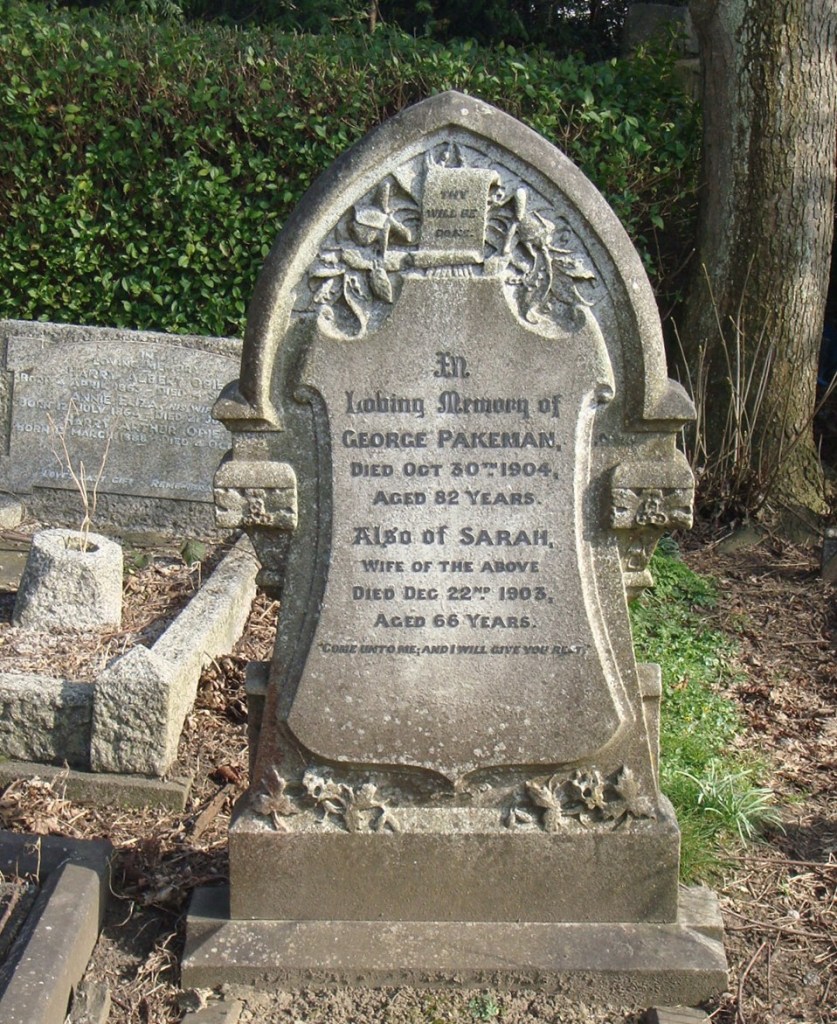
During more than 100 years in business, Pakeman Brothers advertised themselves as a Civil and Military Tailor, which is hardly surprising!
Founder George Pakeman was born in Uxbridge, Middlesex in 1822, the son of John, a tailor, and his wife Jane Pakeman. He followed his father into the tailoring business, but not the family firm. In 1859 he married Sarah Philpott and by 1863 the couple had moved from Canterbury, Kent and set up in business at 22 High Street, Old Swindon.
But prior to that George can be found on the 1851 census as ‘Master Tailor in the Regiment’ at Ashton Barracks, Hartshead, Ashton Under Lyne, Lancashire. However, it was only when I searched for George’s obituary that I discovered the full extent of his military career.
The remains of Mr George Pakeman, one of Swindon’s Crimean veterans, were on Wednesday interred in the Cemetery, Swindon. Deceased, who had served in the trenches before Sebastopol, and had been engaged at the battles of Alma and Inkerman, left the army with the rank of sergeant, after having acted for about ten years as master tailor in the depot of the 50th Regiment at Canterbury.
The Western Daily Press, Bristol, Thursday, November 3, 1904.
George died at his home (appropriately named Inkerman) 129 Goddard Avenue, on October 30, 1904. He was buried on November 2 in grave plot E8617 joining his wife Sarah who died the previous year.
This newly discovered history reveals George Pakeman as a member of the growing number of recently located Crimean veterans buried in Radnor Street Cemetery.
When William ‘Wally’ Richardson died suddenly in 1911 he was known to have a collection of football memorabilia including his own medals and team photographs of Swindon Town FC. Wally’s football career as left back with Swindon Town began in 1890/1 and spanned the teams’ transition from an amateur club to a professional one in 1894/5.
William ‘Wally’ Richardson was born in Edinburgh in 1869 and came to Swindon in around August 1889 – not as a professional footballer but as an engine fitter and a job in the GWR Works. At the time of the 1891 census he was lodging with Charles E. Chappell and his family at 17 Marlborough Street and was already playing with the Swindon team.
The 1911 census taken shortly before Wally’s death records him living at 8 Marlborough Street with his wife Kate. The couple had been married for 20 years. Sadly, two of their three children had died in childhood.
On Wednesday afternoon the mortal remains of the late Mr William Richardson, who was a popular member pf the Swindon Town F.C. in the old amateur days, and for the first few seasons after the Club embraced professionalism, were interred at the Swindon Cemetery amidst many tokens of sympathy and respect.
“Wally” Richardson, as he was known to his intimates, was by birth a Scotsman, and it was in his native City of Edinburgh that he served his apprenticeship as a fitter. Twenty two years ago last May he came South, and after working for the GWR Co. at Newton Abbot, until August of the same year, he was transferred to Swindon. As soon as he came to the railway town, Mr Richardson commenced playing for the Town Football Club, and very soon made himself indispensable to the team in the left full-back position. Wally Richardson’s first season with the Club commenced in 1890, and when the Club became a professional Club, he signed forms for them and continued playing for several seasons. It was exactly 19 years ago, last Easter that “Wally” went down to Warminster to play in a six-a-side contest for a silver shield. The Swindon party won the shield, and, if we remember rightly, the trophy was given to the Swindon Schools’ League to be played for annually by the boys. Mr. Richardson had a most interesting collection of photographs of Swindon football teams for various seasons, and the medals won in his favourite pastime. Everybody regarded “Wally” as an excellent sportsman in the best sense of the word, and his rather sudden death on Saturday, after an attack of dropsy, will be regretted by a large following of friends.
Extracts from the Swindon Advertiser Friday July 7, 1911.
William ‘Wally’ Richardson was buried on July 5, 1911 in plot E7317, a grave he shares with his daughter Daisy who died in 1903.
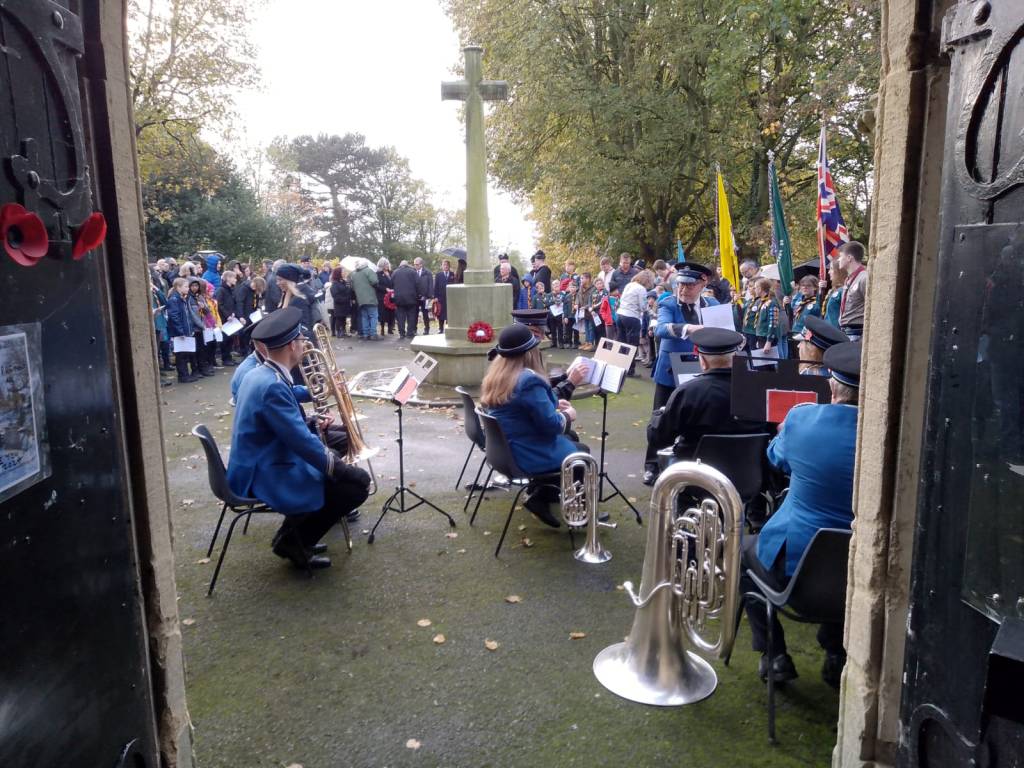
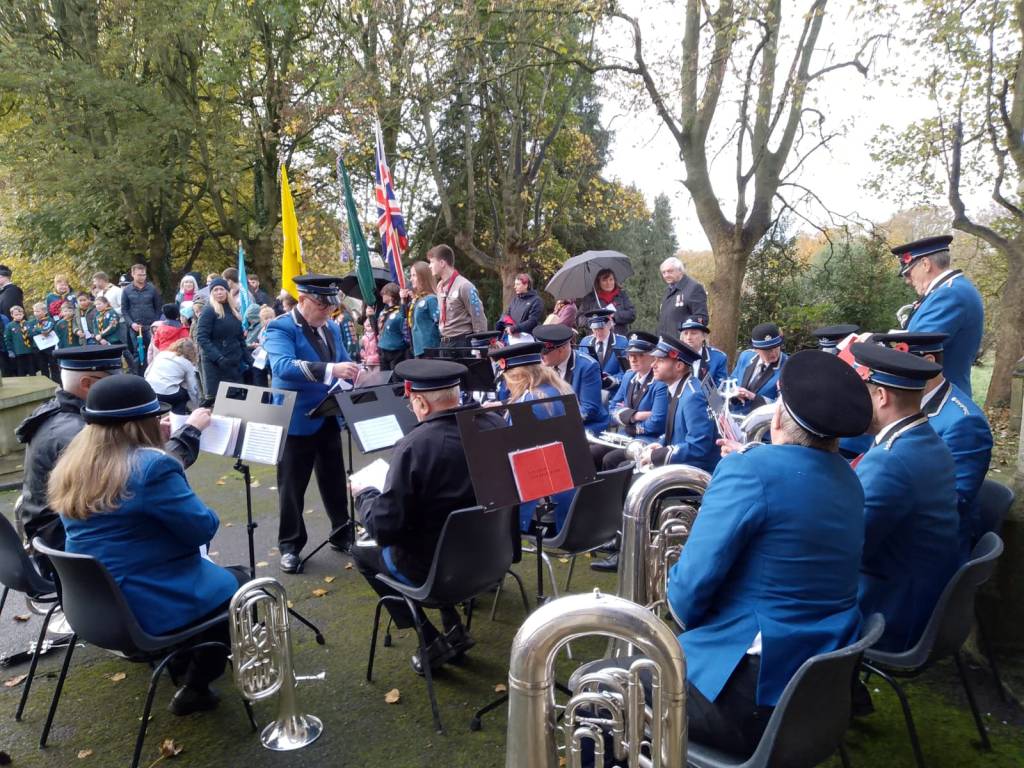
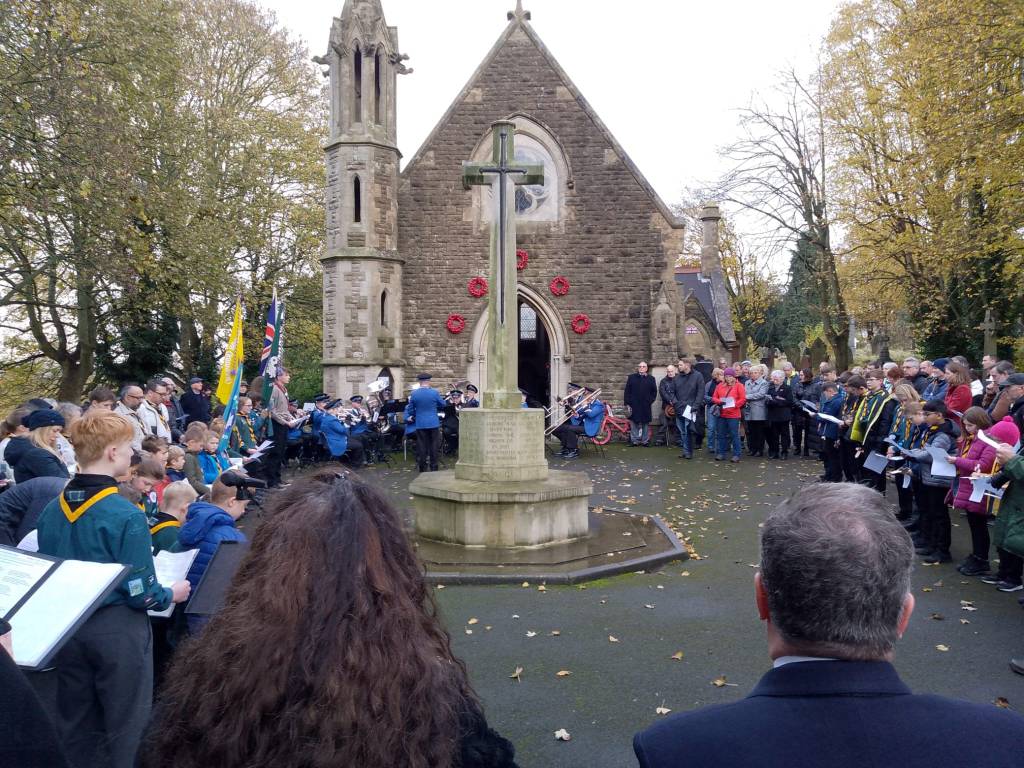
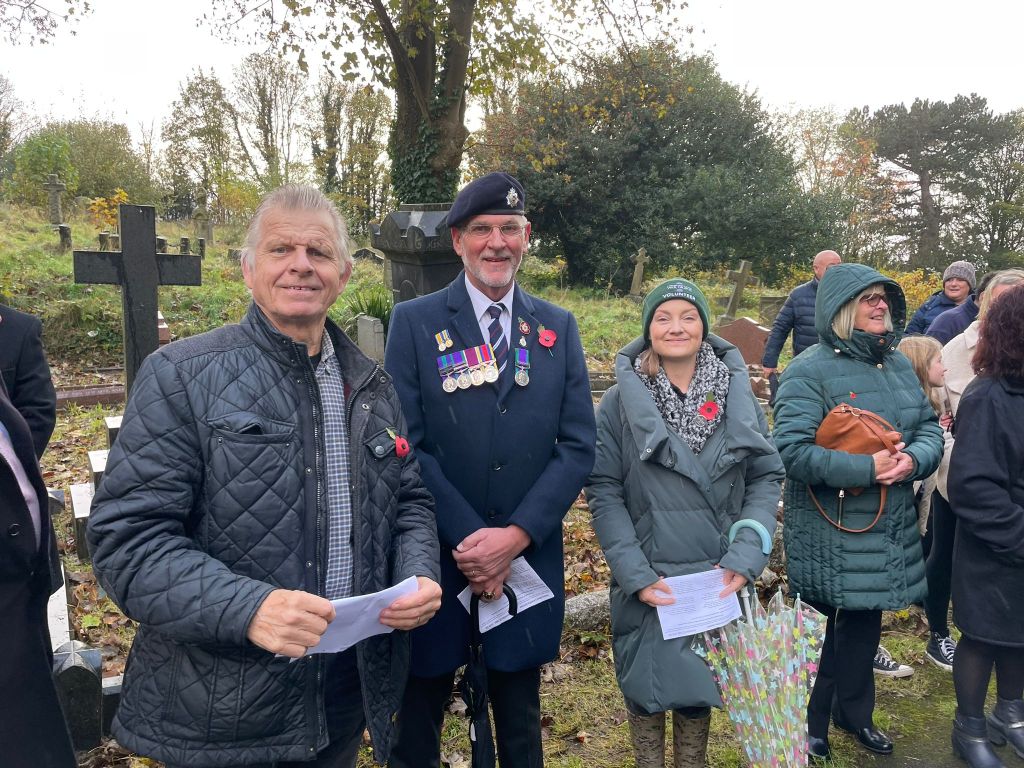
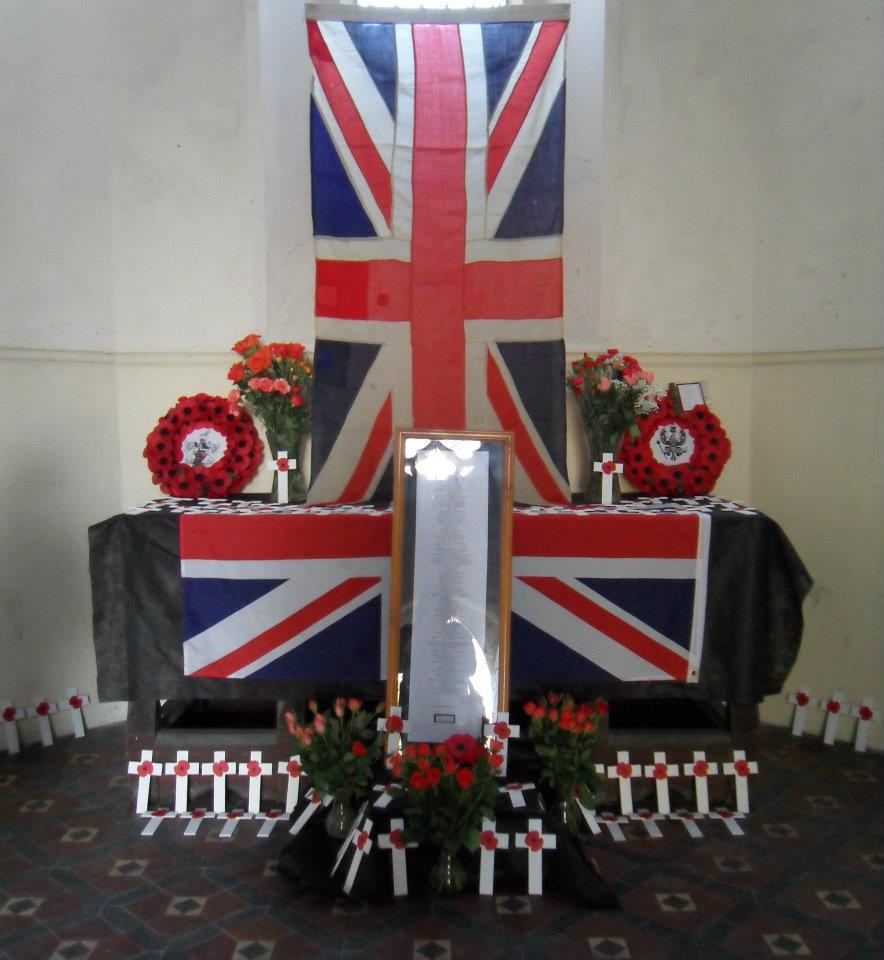
Join us tomorrow (Sunday November 12 at 2 pm) for a Service of Remembrance in Radnor Street Cemetery when we will commemorate all those who have died in war and as a result of their military service. We will also be unveiling a plaque dedicated to Mark Sutton.
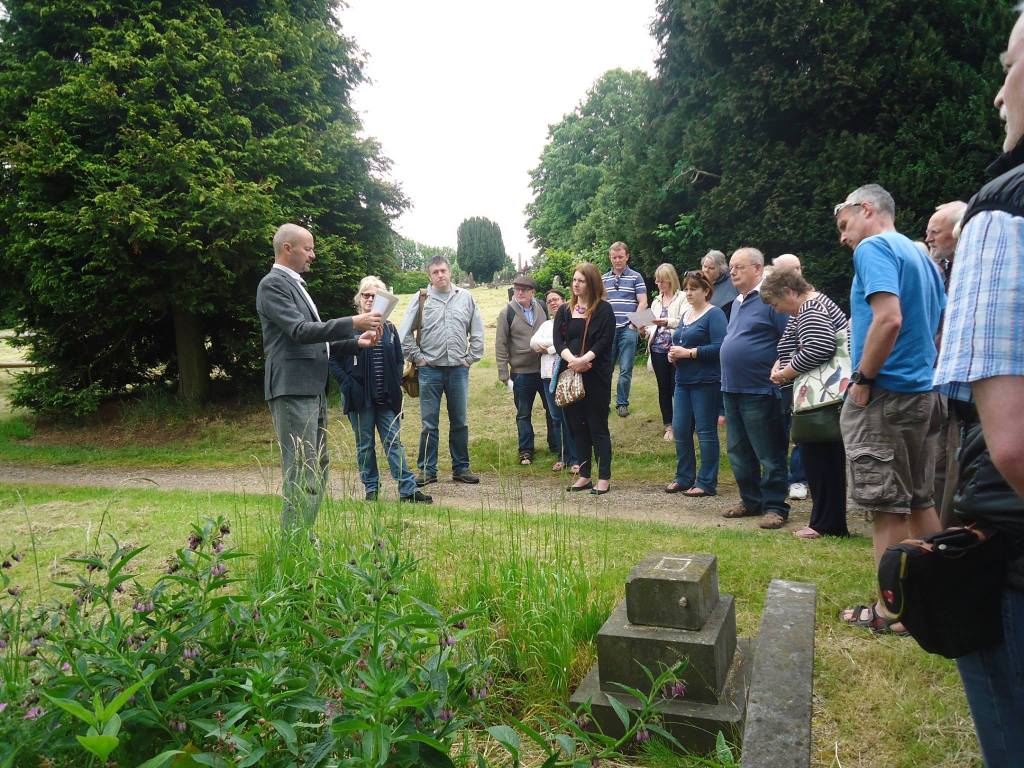
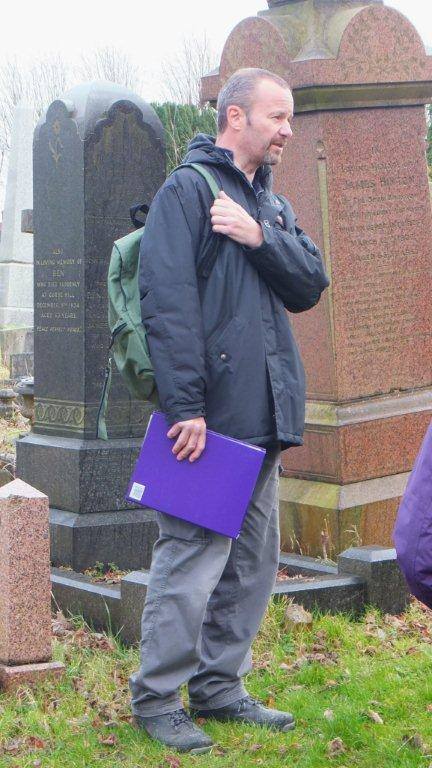
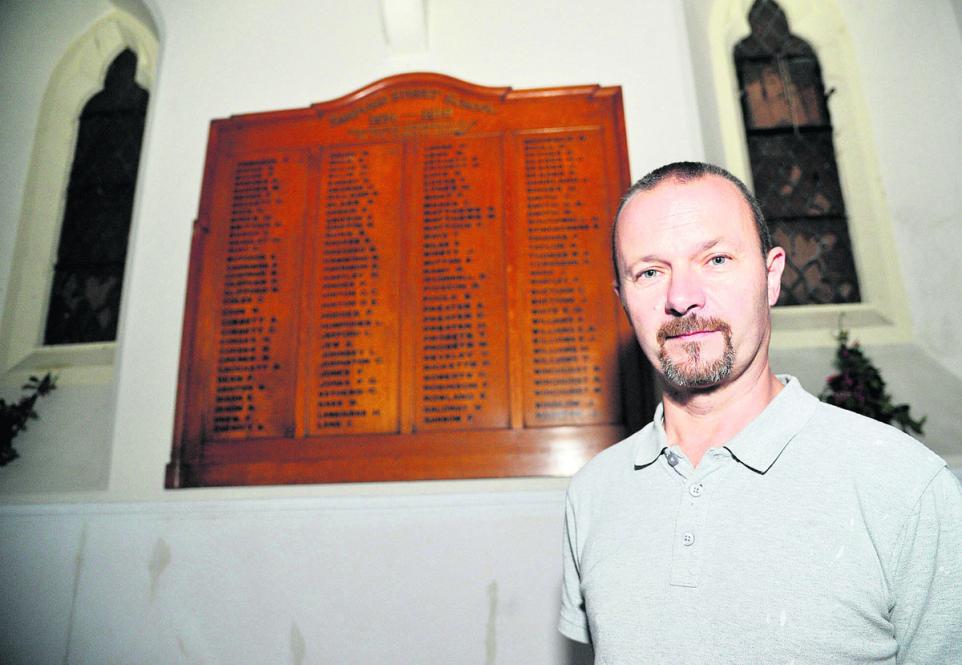
Radnor Street Cemetery was a very special place to Mark. For many years he conducted guided walks around the war graves, remembering the Swindon men who served in the Great War.
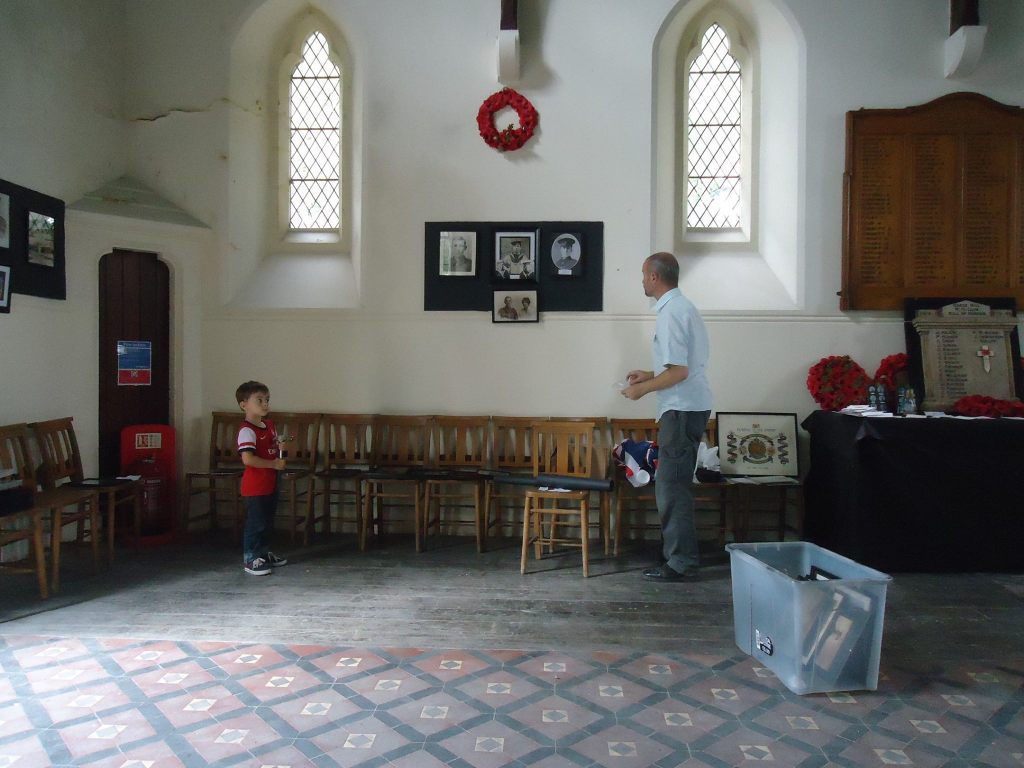
He organised the Remembrance Day Service at the cemetery conducted first by his father Dennis and later by the clergy from St. Marks, and he maintained the cemetery chapel where he saw the installation of several memorial plaques.
Mark was an inspiration and a friend and will always be remembered here at Radnor Street Cemetery.
Fred and Emily’s boy didn’t have a grave, so they made a memorial for him in Radnor Street Cemetery.
Fred and Emily married in middle age. He was 45 and she was 41. They had both been previously widowed. Emily had a daughter Elsie Louise, Fred doesn’t appear to have had any children by his first wife. And then along came little Fred. Was he the apple of their eye? Was he their pride and joy?
Fred was a Lance Corporal in the 2nd Battalion of the Wiltshire Regiment when he was killed in action on May 30, 1918. He was 19 years old. He has no known grave and is remembered on the Soissons Memorial.
Emily died in December 1926 and is buried with her first husband John Williams in plot number A2494. Fred died in February 1932 and is buried with his first wife in plot number B2331.
The memorial to their son stands on Emily’s grave.
The original British Expeditionary Force crossed the Aisne in August 1914 a few kilometres west of Soissons, and re-crossed it in September a few kilometres east. For the next three and a half years, this part of the front was held by French forces and the city remained within the range of German artillery.
At the end of April 1918, five divisions of Commonwealth forces (IX Corps) were posted to the French 6th Army in this sector to rest and refit following the German offensives on the Somme and Lys. Here, at the end of May, they found themselves facing the overwhelming German attack which, despite fierce opposition, pushed the Allies back across the Aisne to the Marne. Having suffered 15,000 fatal casualties, IX Corps was withdrawn from this front in early July, but was replaced by XXII Corps, who took part in the Allied counter attack that had driven back the Germans by early August and recovered the lost ground.
The Soissons Memorial commemorates almost 4,000 officers and men of the United Kingdom forces who died during the Battles of the Aisne and the Marne in 1918 and who have no known grave.
The memorial was designed by G.H. Holt and V.O. Rees, with sculpture by Eric Kennington. It was unveiled by Sir Alexander Hamilton-Gordon on 22 July 1928.
During this month of remembrance I will be telling the stories of those buried in the cemetery who died as a result of their military service.
Originally published on January 30, 2022.
The re-imagined story …
Who would have thought the country could be so excited at the prospect of going to war? Perhaps it was the heat – it was unseasonably hot, that second week in August 1914.
Thousands of soldiers, some said more than 17,000, arrived in Swindon with as many as five or six soldiers billeted in one house. Even the school buildings were temporarily used as barracks, delaying the return after the summer holiday, much to the excitement of the children. Common sense did eventually prevail and they were soon returned to the classroom.
The normally quiet streets of Swindon were transformed by military movements – soldiers on route marches and long columns of motor lorries and ambulances.
The excitement was palpable – after all, it would all be over by Christmas. What an opportunity to travel for the young men who only ever expected to see the inside of the Works. No one could have ever imagined how it would all play out, the crippling injuries, the dreadful death toll, the loss.
The shops were busy, even though tradesmen were encouraged to supply their regular customers with no more than their usual requirements. Panic buying was discouraged but those who had the wherewithal stocked up on essentials.
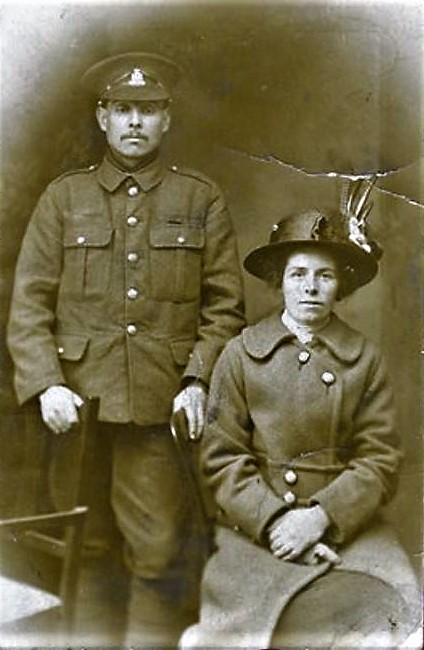
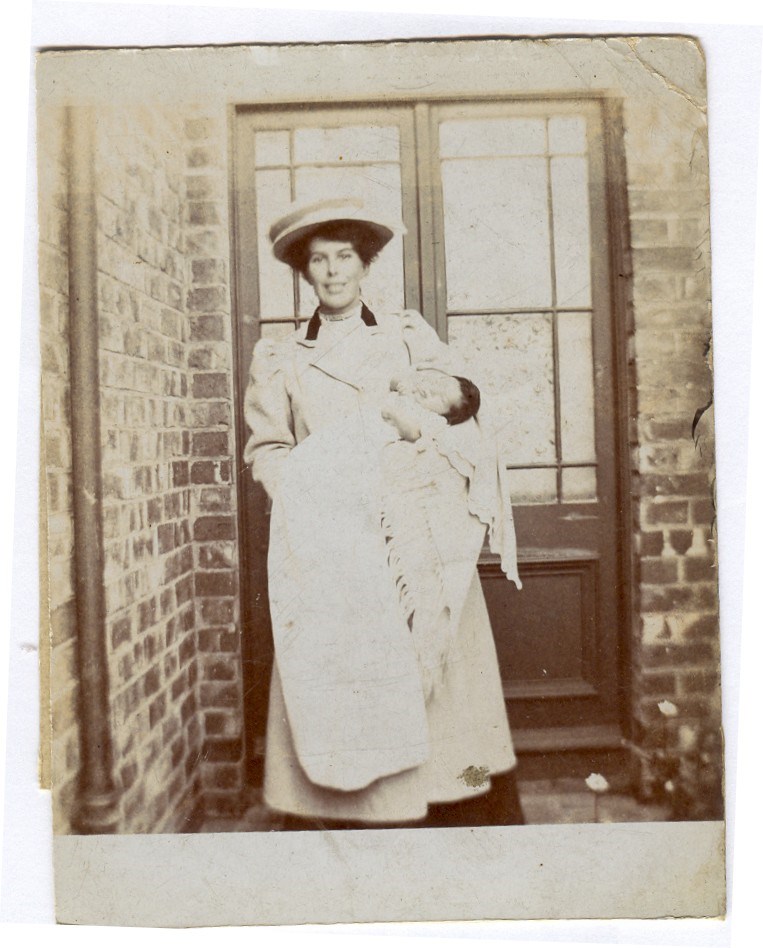
And even the photographic studios were busy, the appointment books full day after day. Young lads having their photographs taken with friends as they went on their way to enlist at the Recruitment Office. Sweethearts photographed to mark a hastily announced engagement and the promise of a wedding. A young mother and baby whose photograph would nestle in a father’s top pocket, gazed on in some filthy trench on the Western Front.
But William Pitt was different. He had already seen war at first hand. He had served in India and South Africa. A look in his eyes said he wanted no more of it.
Celia wore her best coat, the one with the big buttons, and her hat with the feathers and the bow. They both stared into the camera. After all, it would all be over by Christmas.
The facts …
When William James Pitt died in 1917 he had served his country well, but of course that didn’t mean he had a fine funeral and a headstone on his grave – not then. But a hundred years later his record of service was rediscovered and the Commonwealth War Graves Commission added him to their records and erected a headstone to commemorate his sacrifice.
William James Pitt was born in 1871 in Newport, Monmouthshire. He married Celia Sarah Davis on November 25, 1905 at the Register Office here in Swindon. William worked as a Boiler Maker and Labourer in the Loco Works and the 1911 census shows the couple living at 12 Hawkins Street, Rodbourne with their four young children. They went on to have another two children.
William enlisted in Swindon on October 20, 1914. He was a member of the National Reserve having previously served in the Royal Warwick Regiment. He had served in India for 5 years and 4 months; South Africa 1 year and 9 months and Bermuda 11 months.
He took ill while serving as a railway guard. His medical records include the following report:
‘Originated at Newton Tony April 1915 History of repeated colds during past winter, April 1915 16 days in Hosp: with so called ‘influenza’ after this kept losing flesh, cough did not leave him July 11th again reported sick, admitted to Hosp: with pleurisy, tuberculosis of lung developed caused by ordinary military service exposure whilst on duty. Has cough, pains in chest, rapid pulse, loss of weight & night sweats.‘
He was suffering from Tuberculosis (lung) & Pleuritic adhesions and was declared unfit for militaryservice. The cause of his illness was exposure & getting constantly wet and not caused by active service or climate, but by ordinary military service (exposure whilst on duty). He was discharged in September 1915 in consequence of being no longer physically fit, having served 346 days.
Celia and baby
The family history information on the Ancestry website tells how William’s daughter Violet remembered playing round her father’s feet in the kitchen, making dens under the blanket that covered his knees. She remembered that when he came back from the war he was ill and had to live in a special shed in the garden of 21 Hawkins Street.
William died on July 17, 1917 at 21 Hawkins Street. He was 45 years old. The cause of death was Pulmonary Tuberculosis. He was buried in Radnor Street Cemetery on July 21 in plot B1854, a public or pauper’s grave, which he shares with three other unrelated persons. Their names are inscribed at the bottom of the Commonwealth War Graves headstone.
Celia later worked as a cleaner at the Civic Offices in Euclid Street but how she managed in those early post war years with six children to raise alone has passed out of family memory. She later lived at 142 County Road, opposite the football ground. She died there in 1947 having survived yet another world war.
During this month of remembrance I will be telling the stories of those buried in Radnor Street Cemetery who died as a result of their military service.
The Commonwealth War Graves headstone on grave plot C3653 commemorates two military heroes who served in not only the Great War but in the South African campaign as well.
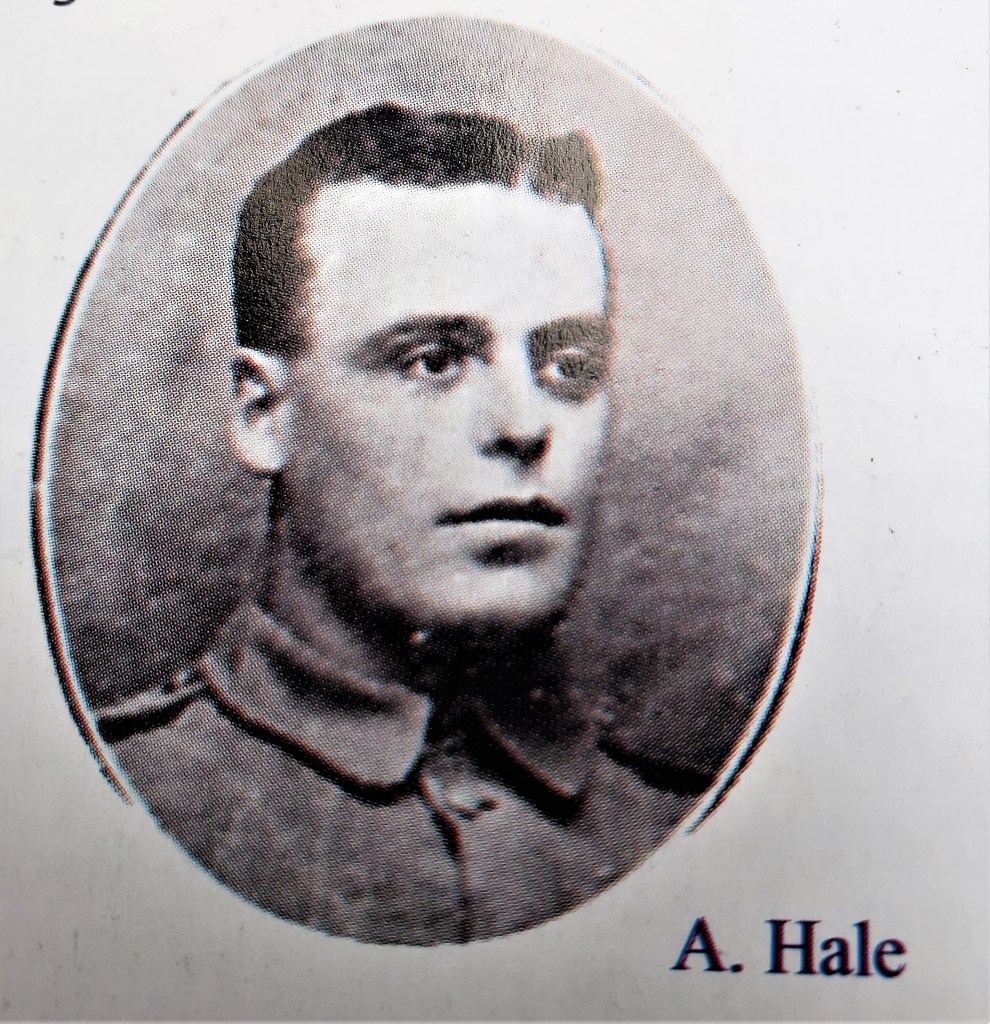
Alfred Hale born in c1869 in Enford, Wiltshire was about 17 years old when he enlisted with the Wiltshire Regiment in 1886. Having served for 7 years he was transferred to the Reservist List. In 1894 he married Mary Jane Paradise at the church of St. Mary the Virgin, Devizes. He was recalled to serve in 1898 and again in 1900. (A son born that same year was named Frederick William Mafeking). He was discharged and added to the Reservist List in 1902. Having received the Queen’s South African Medal with clasps he might have expected that this was the end of his military career. However, in September 1914 he was recalled to serve yet again, by then he was 44 years old.
Perhaps Mary Jane was used to being a soldier’s wife. Perhaps she never expected her husband would return from that terrible war in South Africa. But the outbreak of the Great War in 1914 must have brought a whole new level of worry when her eldest son Alfred enlisted and her husband was recalled.
3655 Pte Alfred Hale was discharged unfit to serve on September 25, 1916. He had cataracts in both eyes. His medical records state that his condition was not the result of and not aggravated by his military service and that an operation was advised. Alfred returned to his home at 163 Beatrice Street, Gorse Hill. He died at the London Hospital on November 7, 1919 aged 49. He was buried in grave plot C3653 on November 13, 1919.
200214 Pte Alfred Hale, aged 24 was serving in Israel and Palestine when he died from pneumonia on February 21, 1919. He was buried in Ramleh War Cemetery. He left £30 11s 11d to his mother, which included a War Gratuity of £26 10s.
Father and son are both remembered on a CWG headstone. The inscription reads:
3655 Private A. Hale
Wiltshire Regiment
7th November 1919 Aged 49
Also in memory of his son
200214 Pte A. Hale
Wiltshire Regiment
21.2.1919
Sharing the grave with Alfred is Mary Jane, his wife, who died in 1958 aged 85 years old. The inscription reads ‘Rest After Weariness.’ Buried with them is their son Frederick William Mafeking who died in 1953 and George Saloway, their daughter’s husband, who died in 1954.
During this month of remembrance I will be telling the story of those who died in war.
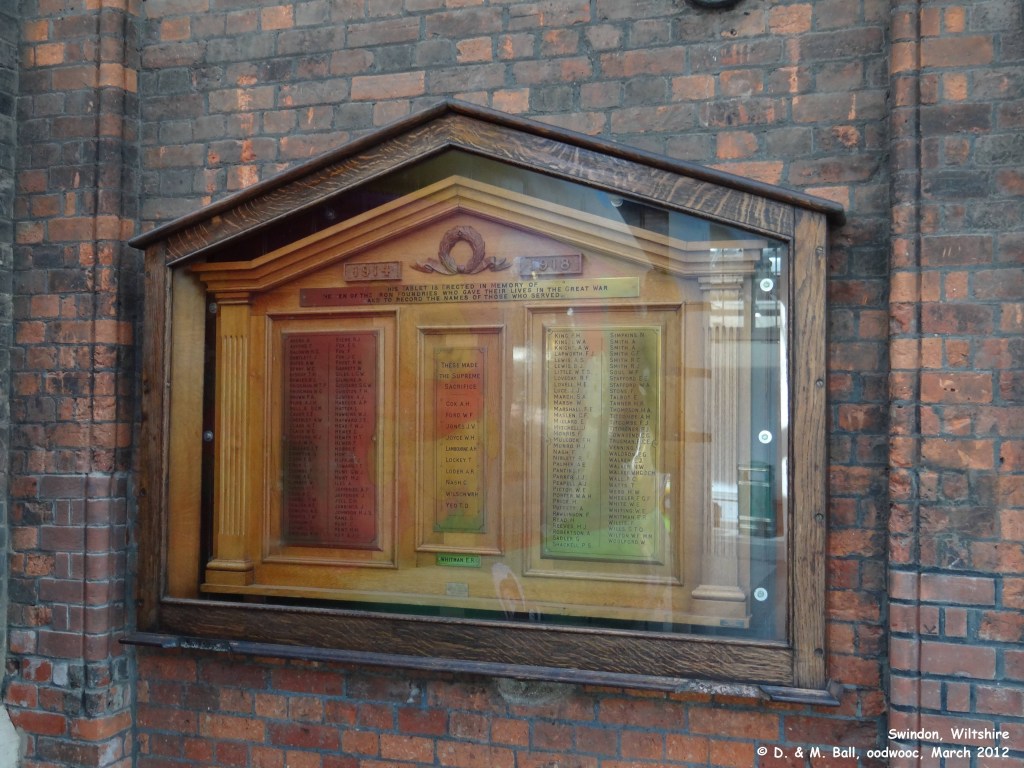
The installation of war memorials in the GWR factory continued into the mid 1920s, as is evidenced by the following account. Today some of these memorials are mounted in the STEAM Museum while others are in the McArthur Glen Designer Outlet Village – the site of the former railway works. On these memorials are the names of men from particular workshops who served in the Great War – To the lasting memory of our comrades who fell in the Great War 1914-1918 (No 3 Shop) – In grateful memory of the following men of 19 & 20 Shops who gave their lives in the Great War.
Below you can read about the installation of a memorial to the men who worked in the iron foundries unveiled in 1925.
In the presence of a company numbering nearly 1,000 a memorial to the shopmen in the iron foundries of the Swindon GWR Works, who lost their lives in the war, and also to those who served but returned was unveiled last Saturday by Mr P.G. Hannington, manager of the Loco. Dept.
The tablet is of fumed oak with brass panels, and in the centre is a carved oak laurel leaf. It is inscribed: “This tablet is erected in memory of the men of the Iron Foundries who gave their lives in the Great War, and to record the names of those who served.”
On the centre panel are inscribed the names of the eleven shopmen who paid the supreme sacrifice. They were: A.H. Cox, W.R.H. Wilson, T. Lockey, W.H. Joyce, J.V. Jones, A.R. Loder, E.R. Whitman, A.H. Lambourne, T.D. Yeo, C. Nash, W.F. Ford.
The side panels contain the names of those who returned. These number 138.
A laurel chaplet with red carnations decorated the tablet, the inscription being: “In memory of the men of the Iron Foundries – ‘Their name Liveth for everymore.’”
Not Forgotten
In unveiling the memorial, Mr Hannington said that although some might think it was rather late to unveil a memorial for an occasion which ended six and a half years ago, it certainly proved that the men of the foundry had not forgotten the debt which they, and others with them, owed to their shopfellows who fell and served in the Great War. It was gratifying to know that the spirit which prompted them to erect the memorial still existed.
The tablet would not only remind those who were in the foundries at the present time of the the men who served, but it would serve to perpetuate the memory of the shop heroes for all time. “It is the spirit of self-sacrifice which will help us in all our troubles today,” said Mr Hannington. “Our country is now passing through a serious crisis, and we need to cultivate the right spirit, whether it be in the industrial or any other sphere. If we are willing to do our bit, and to do it thoroughly, as did those whom we are honouring today, then we stand a chance of winning the battle.
“If we trust wholly in God and do our work as unto Him who brought us through the great crisis of 1914-18, we shall not be ashamed when we come to render up our individual lives to the Source whence they come.”
The company stood while the “Last Post” was sounded, after which “Nearer, my God, to Thee” was sung.
Extracts from the North Wilts Herald, Friday, June 12, 1925.
Have you ever noticed the historic fixtures and fittings as you browse the rails in M&S? Have you looked up above the shop fronts and noticed the machinery still positioned there?
You might like to join the Rodbourne Community History Group on Saturday November 18 when these features will be pointed out along with other fascinating details and anecdotes of life in the railway factory.
To book a place contact the Secretary on 01793 616558 or email secretary@rodbournehistory.org. The tours start at 10am and last about 2 hours. Meet at the designer Outlet Reception Desk at the Kemble Drive entrance adjacent to the Pizza Outlet. There is no charge for these tours but donations are gratefully received. The Rodbourne Community History group is a not for profit group run by volunteers.
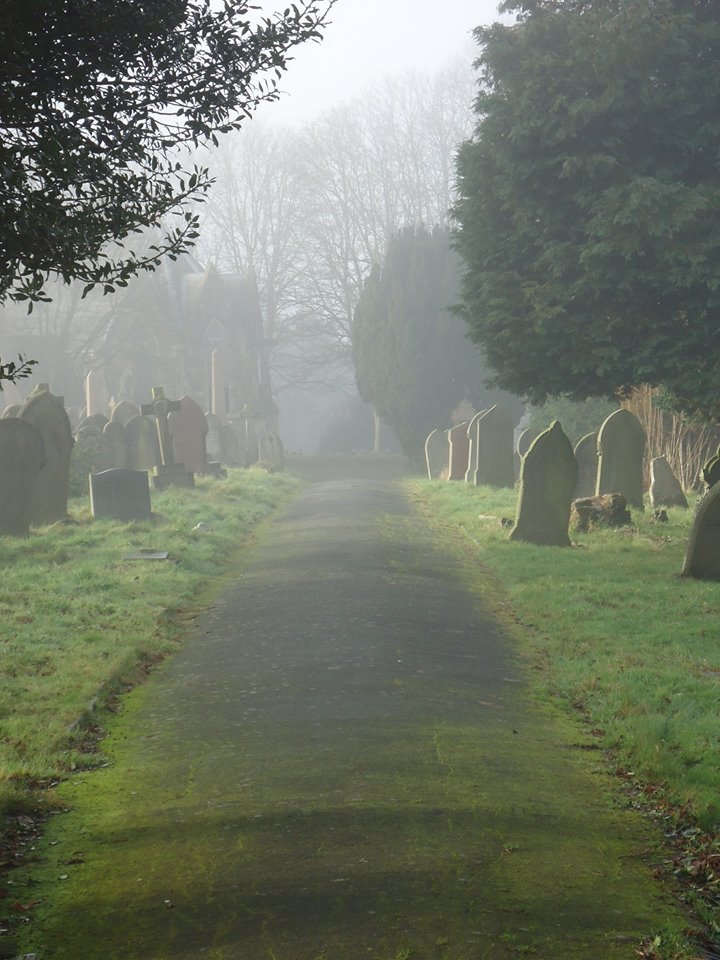
I am frequently asked if I have ever seen a ghost in the cemetery and have been told by others of their own paranormal experiences, but I don’t tend to go in for ghostly graveyard stories. For me Radnor Street Cemetery is a place of beauty and serenity and it’s the life and times of those buried there that interest me.
As a team of volunteers it is our mission to remember. We remember those who served in war; those who served in the industry of our town; those ordinary men and women, some of whom devoted their lives to good works, and those who had such short lives they are in danger of being forgotten.
On Remembrance Day November 12 we will be honouring Mark Sutton who spent all his life remembering others and doing good works. We hope you will join us for a Service at the Cross of Sacrifice at 2 pm followed by the unveiling of a plaque dedicated to Mark.