Zacharias Peskett – Medical Fund Society Treasurer

Saturday July 8 sees Swindon celebrate the 75th anniversary of the NHS with the Mechanics’ Institution Trust. Events in the Emlyn Square area include an exhibition in the Central Community Centre with a talk on the GWR Medical Fund by Adam Busby at 4 pm. Visit the Railway Village Museum open 11-3 and join a walking tour of the Railway Village focussing on ‘Health.’ The Bakers Café will be open for refreshments.

And read below about one of those pioneering members of the GWR Medical Fund Society.

Swindon

Obituary

The death occurred on Thursday morning at his residence, 6, Milton Road, Swindon, of Mr Zacharias Peskett, an old and highly respected resident of Swindon. For the long period of 44 years he had been in the service of the GWR Company, and for over 30 years he had uninterruptedly held office as treasurer of the GWR Medical Fund Society. He was generally esteemed as an upright and honourable man, and was a valued servant of the company. He was in his 70th year.

Western Daily Press, Bristol, Friday, May 29, 1914.

The Late Mr Z. Peskett,

Funeral

The esteem in which the late Mr Zacharias Peskett, of 6, Milton Road, Swindon, was held by his former colleagues in the GWR Works and by the officials of the GWR Medical Fund Society – an organisation with which his name had been prominently associated for more than 30 years – was exemplified on Tuesday afternoon, when the funeral took place at Swindon Cemetery amid every manifestation of sorrow and respect.

The cortege left Milton Road at 3.15 and proceeded to St. Mark’s Church, where a short but impressive service was conducted by the Rev. Lionel Calway.

The coffin, on which was a large cross of white flowers from the family and other beautiful floral tributes, was conveyed on a four-wheel bier, Messrs J. Lawrence, E. Griffiths, W. Sansum, T. Jackson. R.A. Zebedee and Humphries (representatives of the Medical Fund Society) acting as bearers.

Then followed a hand-bier on which were placed the wreaths, and in charge of Mr Peskett’s personal staff – Messrs. T.H. Westbury, C.E. Knapp, J. Clark and Angle. Behind the mourning coaches walked the Rev. H.J. Parker (pastor of South Street Baptist Chapel, where deceased formerly worshipped), representatives of the Medical Fund Society and the Sick Fund Society and many old friends and former colleagues of the late Mr. Peskett.

Long list of mourners …

From St. Mark’s Church the coffin was borne to the Cemetery, the route chosen being Cambria Bridge Road, Radnor Street and Clifton Street. The Blinds at many of the houses on the way to the Cemetery were drawn as a mark of respect to the deceased.

At the graveside the cortege was joined by a large number of sympathisers, and the service was impressively conducted by the Rev. L. Calway. The coffin was of polished elm, with heavy brass furnishings, and the breast plate was inscribed as follows:-

Zacharias Peskett,

Died May 28th, 1914.

Aged 69 years.

Many beautiful floral tributes were sent by relatives and friends…

The funeral arrangements were satisfactorily carried out by Messrs. H. Smith & Sons.

Extracts from the North Wilts Herald, Friday, June 5, 1914.

Zacharias Peskett was buried on June 2, 1914 in plot D1297, a grave he shares with his wife Annie who died in December 1924.

Ann Elizabeth Harvey – Inn Keeper

Image of William Street with Park Hotel on the corner published courtesy of Local Studies, Swindon Central Library.

The licensing trade was a close knit community in Swindon during the late 19th and early 20th century. You might even say it was something of a family affair. However, running a pub probably didn’t feature in Ann Harvey’s plans for the future when she moved here in the 1860s.

Ann Elizabeth Ford married engine fitter William Harvey in the parish church of St Philip & St Jacob, Bristol on October 6, 1856.  In 1861 the young couple lived at 4 Regent Terrace, Bristol with their three year old son William John. By 1871 they had moved to Swindon and were living at 20 Gloucester Street when William died in 1877 leaving Ann with five young children to raise.

That same year Edwin Harvey, builder and beerseller, was landlord at a beerhouse, a property he most probably built himself, and which later became known as Park Hotel. According to an application for a beer and cider license made by Edwin in 1879, the beerhouse had previously been owned by his deceased brother William, Ann’s husband. In 1879 Edwin applied for the license. He states “of which premises the trustees of the will of the late William Harvey, deceased, are the owners …Presumably he was unsuccessful as he tried again in 1880 when it was reported in the Swindon Advertiser “Removal of the license of the King of Prussia Inn in High Street, Swindon, from the premises now occupied, to premises now occupied by Edwin Harvey, at present with an out-door license, and known as the Park Tavern, in William Street, Kingshill.

By the time of the 1881 census Ann Elizabeth Harvey was in charge and Inn Keeper at 1 Cambria Bridge Road. Living with her were her sons, Ozias 19, a carpenter and George 17, a riveter’s apprentice. Her daughters were Emma Mary 15 who worked in the business as a barmaid and Isabella Ann 12 and Elizabeth Alice 10 who were both still at school. Lodging with them was William Crombey.

In due course Ann’s son Ozias would briefly take over the Park Hotel/Inn and in 1901 Ann, aged 64, was living with her daughter Isabella Groves who was the landlady at the Ship Hotel, Westcott Place.

Ann died later that year and was buried on October 23 in grave plot D17a alongside the cemetery chapel. Her eldest daughter Emma Mary Linsell was buried with her following her death in 1921.

Ann’s three daughters married men who all worked in the licensing trade while her sons Ozias and George worked alongside her at Park Hotel. A family affair.

You may also like to read:

William Crombey – builder

Esther Swinford – victim of a shooting tragedy

Sergeant Thomas Fletcher of the New Brunswick Regiment

Thomas Fletcher was born in Stratton St Margaret on February 2, 1885, the son of George and Martha Fletcher. On August 2, 1899 he began a 6 and a half year Blacksmithing apprenticeship in the Works.

By 1901 George and Martha had moved to 85 Redcliffe Street in Rodbourne. Here George worked as a carpenter in the Works and Thomas was employed as blacksmith, although not yet out of his apprenticeship.

The last time we see Thomas in Swindon is on the 1911 census when he is 26 years old and living with his parents in Redcliffe Street. When his father completed the census returns that year he stated that he and Martha had been married for 35 years and that they had 6 children, all of whom were still living. Sadly, that would all change.

Mark Sutton continues to be the most knowledgeable historian of Swindon’s sons who served in the First World War and wrote a book entitled Tell Them of Us. If you went to one of Mark’s talks or followed one of his walks here at Radnor Street Cemetery you left feeling you had met the men he talked about, that he had known them himself – and of course Mark has been able to fill in the details of what happened to Thomas Fletcher. He writes:

“He had served an apprenticeship in the Loco and Carriage Dept GWR before leaving for Canada in 1912. He worked then for the Canadian Pacific Railway Company Workshops at Montreal. He joined the army in November 1914.”

Tell Them of Us.

Sergeant Thomas Fletcher was killed in action on August 28, 1918 during fighting to retake the village of Cherisy. He was 33 years old. He is buried in the Sun Quarry Cemetery, Cherisy, France.

Mark made frequent visits to the Western Front battlefield cemeteries, visiting the graves of the Swindon men buried there. I wonder if he ever visited Thomas Fletcher? I bet he did.

Thomas’s father George died in 1923 and is buried in Radnor Street Cemetery in grave plot C1880 with his wife Martha who died in 1937 and their youngest daughter Catherine Shakespeare who died in 1954.

Mary Ridge – from Kentisbury to Swindon

The barely discernible inscription on this headstone reads Mary Ridge died June 1, 1891 aged 87 years – Thy will be done.

Mary Parcells/Parsells was born in Kentisbury, Devon is around 1809. She married William Ridge in 1846 in the Barnstaple registration district. At the time of their marriage Mary was about 37 years old and considerably older than her husband. She also had a three year old son, Arthur Parcells and had given birth to twin daughters Emily and Mary Ridge. She had a third daughter Elizabeth in 1850.

Mary raised her family in this beautiful area on the North Devon coast. In 1861 the family were living at Hele Cottage in the Village of Heal where William worked as a Sawyer but sadly, by 1871 William had died. Mary continued to live at Hele Cottage with her daughter Mary and a young domestic servant called Mary Annie along with two lodgers, Emma Spratt, a schoolmistress and William Vincent Bowen Hewett, a Lieutenant in the Royal Marines (on half pay).

In 1881 Mary can be found on the census of that year living with her daughter Elizabeth and son-in-law Edwin Sims at 59 Wellington Street, Swindon. Edwin worked as a Coach Painter in the Works and the couple had a family of five children. (It would seem that the census enumerator mis-transcribed Mary’s age, stating that she was 51 years old when she was closer to 71).

Eventually all Mary’s daughters made their way to Swindon. Emily was the last to marry in 1906 at the age of 59. After a lifetime working in domestic service with a period as a lodging house keeper, Emily married widower William Henry Lawrence, a checker in the GWR Works.

By the time of the 1891 census Edwin Sims had been promoted to Foreman of the Painters Shop and the family were living at 4 Temple Street where Mary died a few weeks later.

Mary was buried on June 5, 1891 in grave plot B2024. Her daughter Elizabeth Sims, wife of Edwin Sims, died in 1899 and was buried with her mother. Another daughter, Mary Small, wife of John Small, died in 1903 and was buried with her mother and sister.

The burial registers indicate that this plot was originally a public grave. Perhaps the two brothers-in-law ultimately bought the grave to memorialise their two wives, sisters Mary and Elizabeth, and their mother-in-law Mary Ridge.

Robert Martin – Grenadier Guard and Crimean Veteran

Queen Victoria and Prince Albert with their sons inspect the wounded Grenadier Guards at Buckingham Palace February 20, 1855.

In 1861 Robert Martin, Grenadier Guard, was part of the District Foot Guards Detachment based at North Camp Aldershot. The Grenadier Regiment of Foot Guards had served with distinction during the Crimea War, seeing action at the Alma (1854), Inkerman (1854) and Sebastopol (1854-1855). His military career was drawing to a close.

Robert Martin was born in 1834 in Lolworth, Cambridgeshire, the son of agricultural labourer William Martin and his wife Sarah. At the time of the 1851 census Robert was also working on the land. Was he restless? Did he see his future as just more of the same? Was he looking for an adventure when he decided to join the army?

Robert was no doubt grateful to have survived the horror of the Crimea War. On Christmas Day 1863 he married Harriett Kimberely at St Andrew’s Church, Bordesley, Birmingham. She was 20 years old, the daughter of John Kimberley, a victualler from Small Heath. Robert was 29 and working as a railway servant.

The couple moved around a fair bit and lived in Birmingham and Aberdare before rocking up at Swindon in the late 1870s. In 1881 they were living at 25 Carfax Street – Robert worked as a Railway Guard and his two sons, Alfred 14 and William 11 were Telegraph Messengers.

Harriett died in 1882 and the following year Robert married Fanny Maria Roberts at St. Mark’s Church. They went on to have a daughter, Daisy Harriett Gertrude Maude.

In addition to serving in the military for eight years, Robert Martin worked for the GWR for 43 years. It was said that his ‘familiar figure will be greatly missed on Swindon GWR platform.’

Death of a Crimean Veteran

An old GWR Guard

Mr R. Martin, of Swindon

The Funeral

There was laid to rest in Swindon Cemetery on Sunday afternoon the mortal remains of the late Mr Robert Martin, who passed away in his 72nd year at his residence, 25, Carfax Street, Swindon, last week, after a very short illness.

Mr Martin, whose familiar figure will be greatly missed on Swindon GWR platform, had been in the service of the Co. for the long period of 43 years, during 39 of which he was a passenger guard. During his extended period of service, he gained the entire confidence of all the officials of the line, and he was very popular with regular passengers. His upright soldierly bearing and his pleasant manner made him one of the most familiar figures on the line.

On reaching the allotted span, in January, 1904, he retired from the Company’s service, and his colleagues then, to show their esteem and appreciation, presented him with a silver teapot.

Deceased, who was twice married, leaves a widow and family of five grown-up children – three sons and two daughters.

In his younger days, Mr Martin served for eight years in the Grenadier Guards. He saw active service in the Crimea, and was proud of his possession of Crimean and Turkish medals, with the Sebastopol clasp.

The Funeral

Was very numerously attended, there being an exceptionally large crowd assembled in the Cemetery. The first portion of the burial service was conducted at St. John’s Church, by the Rev A.G. Gordon Ross, Vicar of St. Mark’s, who also officiated at the graveside. In addition to the family mourners, there was a large attendance of railway men and local Volunteers…

Following the family mourners came Mr John Brewer (GWR Stationmaster), and Inspector Rochester, and about forty guards, ex-guards, porters, and other officials on the line. Then came about thirty Volunteers, under Sergt. Ellwood. The coffin, which was covered with beautiful wreaths, was of polished oak, with brass fittings, and on the breast plate was the following inscription:- “Robert Martin, died Sept. 18th, 1905, aged 71 years.”

Mrs Martin and family desire to tender their sincere thanks to numerous friends for all kind expressions of sympathy with them in their bereavement.

Extracts from the Swindon Advertiser, Friday, September 29, 1905.

Robert Martin aged 71 years, died at his home in 25 Carfax Street and was buried in grave plot C1694. He is buried with his second wife, Fanny Maria ‘who died on her way to hospital’ July 1911. Robert’s first wife, Harriett died in January 1882 at the age of 38 years and is buried alone in grave plot E7001.

Death of Mrs R. Brunsden

By 1911 the population of Swindon was more than 50,000 with the Great Western Railway the largest employer by a country mile. You might think that the Radnor Street Cemetery residents would probably have a history of employment in the Works, and of course you would be correct. But just occasionally I discover a family with a history seeped in Swindon’s agricultural past.

Chiseldon Church by Kate Tryon

Rachel Hancock was baptised at the parish church Chiseldon on April 24, 1836, the daughter of William Hancock, an agricultural labourer, and his wife Mary.

By 1851 Rachel aged 15 was working as a house maid for Thomas Choules 60, a farmer at Badbury. Choules farmed 326 acres and employed 13 labourers. Living with him was his wife Mary 68 and his nephew Robert 24, a farm bailiff.

An entry in the Chiseldon parish registers record the baptism of Alfred Thomas the son of Rachel Hancock Single woman on April 25, 1851. (Could this be our Rachel?) At the time of the 1861 census Thomas is living with William and Mary Hancock in Badbury (Rachel’s parents). In the 1871 census I discovered Robert Choules living with his family in Swindon where he worked as a Railway Watchman. Boarding with him was Thomas Hancock 19, (is this our Alfred Thomas?)

Rachel married close neighbour Henry Brunsden on October 14, 1858. The couple married at St. James’s Church, Paddington, perhaps because they didn’t want a big, local wedding, perhaps because their first child (John) Henry Brunsden had been born the previous year.

I can’t discover the whereabouts of Rachel on the 1861 census (possibly a mis-transcription) but by 1871 the family are at Snodshill Farm where Henry employs 5 men and a boy, along with two live in servants – Mary Cox 17, a general domestic and Elizabeth Cook 15, a nursemaid. Henry and Rachel have seven children and Henry’s brother John also lives with them.

And Rachel’s life continues to be mis-recorded, right up to the very end.

Inquest at Coate

On Wednesday morning, with painful suddenness, the death occurred of Mrs Rachel Brunsden, widow of Mr Henry Brunsden* of Lane Farm Coate.

Deceased had not been ill for quite three years although she was 75 years of age, and therefore it was found necessary for an enquiry into the circumstances to be held.

Mr Brunsden and his wife have been well known and respected in the neighborhood for many years, and there are a number of grown up sons. Prior to their retirement for their active agricultural pursuits they tenanted the land adjoining the homestead in which they have resided for so many years.

An inquest was held the same evening by Mr A.L. Forrester at the farmhouse.

Ernest Brunsden (son) said his mother went to bed the previous night apparently in her usual health. She rose at 7 o’clock that morning and went downstairs, where she prepared breakfast.

She then took it upstairs on a tray for her husband, who was in bed. Afterwards, when she brought the tray down subsequent to partaking of her own breakfast, she complained of a pain round her heart, and almost immediately after fell down dead.

Dr Beatty said he was sent for, but could only pronounce life extinct. Death was due to heart failure.

A verdict was returned in accordance with the medical evidence.

North Wilts Herald April 12, 1912.

*Henry Brunsden was still alive at the time of Rachel’s death.

Lower Snodshill Farm where Rachel lived for most of her married life

Rachel was buried on April 13, 1912 (when the burial registers record her home address as Love’s Farm) in grave plot C1856. Henry died the following year, aged 88, and was buried with Rachel on October 25, 1913.

Henry James Fortune – Assistant Secretary to the Medical Fund Society

Henry James Fortune was 82 years old when he died in 1943. He had lived an eventful life but was there anyone still around who remembered him as a young man? His wife Nellie had died 20 years previously.

So, let’s go back to the beginning.

Henry James Fortune was born on July 5, 1861, in Mells, Somerset, the son of John Fortune, a policeman, and his wife Mary.

As a young man, a little older than 15 when boys these days are still in school, Henry joined the navy. His service records describe him as 5ft 1½ ins, light brown hair, blue eyes, fair complexion. The first ship he served on was HMS Impregnable. On census night 1881 Henry, aged 19, was serving on the HMS Temeraire in the Grand Harbour, Malta. His last service date was April 22, 1886 and the last ship he served on was the HMS Hercules.

By 1886 Henry was settled in Swindon, employed as a Stores Clerk in the GWR Works. The following year he married Ellen Louisa House at Holy Trinity Church, Frome. At the time of the 1891 census he was living at 26 Taunton Street aged 29 years when he describes himself as a Fitters Labourer (another change of occupation?) – Ellen and their two children are visiting her parents in Frome.

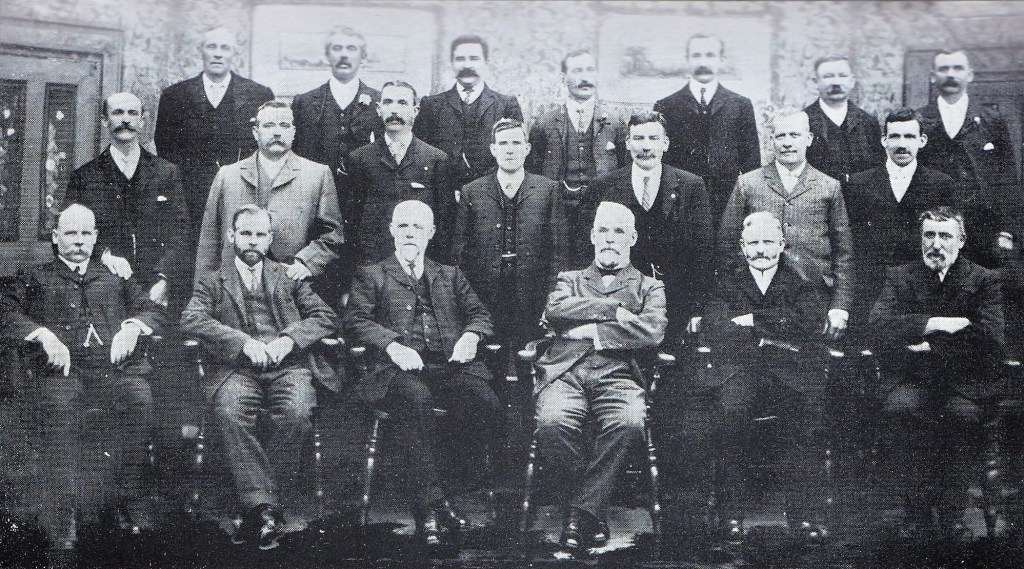
Henry was nominated for election to the Management Committee of the GWR Medical Fund Society in 1904 and in 1907 is pictured on a formal photograph seated next to Zacharias Peskett, the long serving treasurer.

On the 1911 census returns the Fortune family are living at 20 Oxford Street where 49 year old Henry works as a railway clerk. The couple have been married 23 years during which time they had 12 children of whom sadly 4 have already died.

In 1939 he was at 246 Ferndale Road, a widowed retired Railway Clerk living with Leonard and Edith Brain (daughter and son-in-law) and their family.

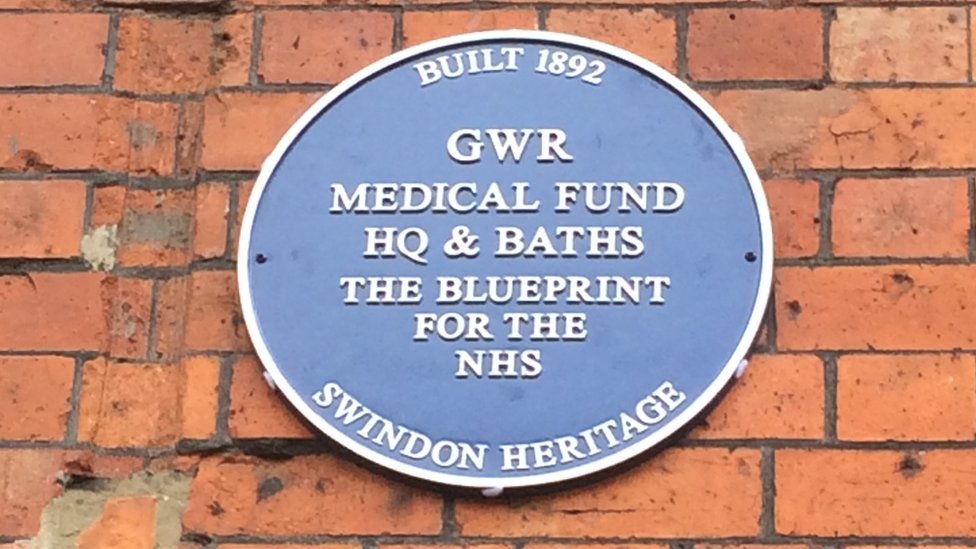
The GWR Medical Fund Society, like many other similar organisations across the country, provided a blueprint for the National Health Service established in 1948. Henry had been gone nearly five years by then. For those who remained on the Medical Fund Committee it must have been a time of mixed feelings. Free health care for all but with that came the eventual dismantling of the Medical Fund and 100 years of endeavour in Swindon.

Henry James Fortune died in St. Margaret’s Hospital aged 82 years. His funeral took place on December 30, 1943 when he was buried in grave plot C3868 with his wife Ellen who had died in 1923.

Charles Godfrey Montague Deacon – Tell Them of Us

Before he died on September 27, 1918 Charles Godfrey Montague Deacon had his family firmly on his mind.

Charley was born in 1886, one of William and Rose Deacon’s seven children. He grew up at 4 Western Street where William worked as a brickmaker. When Charley left school he became an assistant in an ironmongers.

Like so many others, Charley’s military records are lost, but we know that he served as a private in the 15th Battalion Lancashire Fusiliers and that he died of his wounds (Gas) in one of the Exeter War Hospitals. He was 33 years old.

The UK Army Register of Soldiers’ Effects 1901-1929 reveal an account of Charley’s money and where he wished it to go.

He left £35 3s 9d (about £35.15) and with no wife or children he divided his money between members of his family. To his widowed mother Rose he left £5 0s 7d (about £5.03). He left the same amount to each of his two surviving brothers, Irving Tom and Percival Oscar. To his sisters Daisy, Flossie and Hilda (the wife of Thomas Mott), he left £5 0s 6d each (about £5.02).

His last two bequests reveal another family tragedy. In the autumn of 1916 Charley’s brother Louis Stanley Deacon was ‘found drowned.’ He left a wife and several children. Charley left £3 7s (about £3.35) to ‘GW Bizley Guardian of children of Bro Louis’ and £1 13s 6d (about £1.67) to his nephew Sidney.

Charley gave his life for his country and the money he had saved to his family.

Charles Godfrey Montague Deacon was buried on October 2, 1918 in plot number B2819 which he shares with his brother Louis, his father William and his mother Rose.

Georgina Frances Verschoyle Pt 2

Today I’m returning to the story of Georgina Verschoyle and although I am no nearer to understanding how or why she came to be living in Swindon, I do know more about her life here.

A view of St Mark’s Church taken from Radnor Street Cemetery

Following her death a lengthy obituary was published in the parish magazine of St. Mark’s Church.

Requiescat in Pace

Miss Verschoyle died on Dec. 20, and was laid to her rest in the Swindon cemetery on Sat., Dec. 23rd. Her health had been failing for several years, and though the end did not seem near to her friends, she was not strong enough to stand against a bad attack of Influenza, that scourge of our country at the present time.

Many who read these lines, perhaps far away now, will remember the time when she came to Swindon thirteen years ago. In those days Church life was just starting in S. Mark’s Parish. She threw herself with untiring energy into the work as a volunteer helper, and indeed continued as such to the end.

Before she had been in the parish many weeks she obtained the Vicar’s permission to commence a Bible Class for Men. The attempt was a decided success. A good number joined at once, and between 50 and 60 men have assembled, while on one of the last occasions when she presided over her Class at the new Parish Rooms, over seventy men were in attendance.

During the whole of the same period she has conducted a large Mothers’ Meeting, and for the last few years a Bible Class for Women at S. John’s. Unlike many of the kind, these classes have never diminished in the numbers of those attending them. People who have experience in such matters know well that classes such as these can only be kept together for so long a period by diligent and unceasing work and earnest prayer.

It is however in the District that we think that Miss Verschoyle’s work has chiefly been done. Well trained in Church work in earlier days at Clewer, Guildford, Market Drayton, S. Giles’, Reading, and S. Luke’s, Torquay, she had attained the habit of regular and systematic visiting. From early morning to late evening she was to be seen every day in all weathers going to all parts of the parish amongst the sick and the whole, bearing the message of comfort. Her daily visits to the dying were a striking feature of her work. Many a one in Paradise will, we believe, thank God for that regular earnest teaching which helped to bring the soul out of darkness into the light of Christ, while many a one living now, who may read these words will gratefully acknowledge that the turn in his life was due to her sympathy and help.

Miss Verschoyle knew the secret of success, viz., that no work for God can prosper unless His help is sought. She was regularly to be seen in her place at the daily Services of the Church, gathering strength into her own life, that she might be the better able to impart it to others. Indeed the Church was very dear to her; she enriched it with many costly gifts, and as each Festival came round, she spent time, money, and labour in decorating the Font with flowers.

We need scarcely say that she was beloved and respected by those amongst whom she worked. While we thank God for her work in the Parish, let us pray to Him to send to our Parish other such workers, and let us ask Him to give us grace to profit by her teaching and example, that when the great day comes, we may be found worthy to be on the King’s right hand among those to whom the word of comfort shall be spoken, “Come, ye blessed of my Father, inherit the kingdom prepared for you from the foundation of the world.

Inside St Mark’s Church, Swindon

The Late Miss Verschoyle.

Dear Friends,

It has been suggested to me that some of those who have known Miss Verschoyle and her work in the parish may like to place some kind of memorial to her in S. Mark’s Church, where she was so constant a worshipper. I do not think it would be suitable to have an organised collection for such a purpose as this, but if any of those who read these words like to send a contribution, great or small, I will very gladly receive it. The nature of the memorial must be decided by the amount contributed. Yours truly, Maurice Ponsonby.

Throughout the year fund raising updates appeared in the parish magazine until in November the Rev. Ponsonby declared it was probably time to close the account and think about how the money should be spent.

I wonder if anyone can tell us what kind of memorial was chosen for Miss Verschoyle and whether it still survives in St. Mark’s today.

Fr Toby from St. Mark’s has sent the following words and kindly offered to provide a photograph.

The memorial is a window in the south aisle depicting Matt 15.28. The dedication on a plaque underneath reads: “This window is given by many friends in grateful memory of Georgina Verschoyle who fell asleep on Dec. 20th 1893 after 13 years of unceasing labour for God in this parish. Requiescat in pace.” 

Clara Ellison – Head Teacher at Even Swindon Infants School

Clara Ellison had taught at Even Swindon School for 25 years when she resigned in 1908. Then aged 48 she might have expected to remain in post for a few more years. There is no mention that she was suffering from poor health so we have to ask did her husband’s bankruptcy case influence the members of the Swindon School Board?

Clara Illidge Shelton was born in 1860 in Birmingham, the daughter of William Shelton, a cab driver, and his wife Elizabeth. By the time of the 1881 census Clara was living in Eastbourne where she was employed as an assistant school mistress and lodged with William Cole and his family.

On December 1, 1883 Clara (by then living at 34 Wellington Street, Swindon) married John Ellison, a brass finisher in the Works, at St. Mark’s Church. Even Swindon Infant School was built in 1884, which is the earliest date at which Clara could have been teaching there. By 1891 the couple were living at 17 Linslade Street where John describes himself as a Brass Finisher and Clara as a School Board Teacher. They had two young sons, Gerald 6, and Wilfrid 4. Clara’s widowed mother Elizabeth lived with the family.

But was there a prejudicial attitude to Mrs Ellison prior to the events of 1908? In 1896 Mr Henry Day (Head Teacher at Even Swindon Mixed School) and Mrs Clara Ellison (Mistress at Even Swindon Infant School) both applied for an increase in their salaries. The School Management Committee initially recommended that they both receive a £10 annual increase whereupon Committee member Mr McRae immediately opposed both applications. In the case of Mr Day there was no seconder but Mr Keene also raised an objection in the case of Mrs Ellison. Some discussion followed when another member, Mr Sewell, entered a protest against Mrs Ellison holding the post, and ‘keeping a single girl out of work.’

But then came the matter of John Ellison’s bankruptcy in 1908 and a recommendation by the Teaching Staff Sub-Committee “that Mrs Ellison, head mistress of the Even Swindon Infant School be given three months’ notice to terminate her engagement.” Swindon Advertiser, Friday, May 22, 1908.

By August 1908 John’s bankruptcy examination was closed and Clara had resigned.

Even Swindon School published courtesy of Local Studies, Swindon Central Library

Presentation – On Wednesday afternoon, at the Even Swindon Infant School, Mrs Ellison, late headmistress, was the recipient of a very handsome pair of bronzes, given to her by the teachers (past and present) on the occasion of resigning her position as headmistress, which post she has held for 25 years. In making the presentation, Miss Witt said how very much they all felt the parting, but they hoped Mrs Ellison would be spared many years to enjoy the rest so thoroughly earned. – In reply, Mrs Ellison, thanking them, said how much she would value their beautiful present, and the very happy time spent amongst them would never be forgotten by her. She wished them every success, and trusted they would all work as happily together in the future as they had always done in the past.

Swindon Advertiser, Thursday, August 20, 1908.

Clara died the following year and was buried on October 1, 1909 in grave plot D128, a public grave, which she shares with her husband who died in 1924 and one other, probably unrelated, person.