George Money Swinhoe – Swindon doctor

The re-imagined story …

I remember wondering why Dr Swinhoe had a sword on the top of his coffin. I kept pulling on my mother’s coat and asking – ma, ma until in exasperation she hissed at me ‘because he served in the Crimea War.’

Well, of course, I was none the wiser.

It was only years later that I learned about that bloody war where some 500,000 lost their lives due to the incompetence of commanding officers and the appalling conditions in the hospital in the converted barracks at Scutari. This was the war in which Florence Nightingale transformed nursing practices in the battlefield hospitals and back home here in England.

The Crimea War was the greatest military horror in a generation, that is until millions were sent to their death in the Great War.

Dr Swinhoe served as a medical officer in the Crimea War and I served as one in the Second World War. I didn’t get a sword though, shame about that!

Dr George Money Swinhoe

The facts …

Impressive Funeral Ceremony

Marked Expression of Public Esteem and Sympathy

The large crowds of people which followed the remains of the late Mr G.M. Swinhoe to their last resting place in the Swindon Cemetery on Saturday afternoon bore eloquent testimony to the very high and general esteem in which the deceased gentleman was held by all classes, for in these crowds were to be seen those of the very poorest circumstances mingling with those occupying important positions in connection with the public life of the town. It was a raw cold afternoon, and yet this did not deter these people from turning out in their hundreds to pay a last tribute of respect to the dead – to the memory of one who in his life time had been to so very many “a guide, philosopher, and friend.”

The solemn cortege was timed to leave the deceased gentleman’s late residence, Park House, Church Place, at two o’clock, but some time before this hour arrived, a very large number of people took up their position at a respectful distance from the house and patiently awaited the appearance of the coffin, which punctually at two o’clock, was borne out of the house. It was entirely covered with the Union Jack, and upon it, resting among a wealth of lovely flowers, was to be seen the trusty sword which the dead Crimean veteran carried with him during that eventful period in English history when he was attached to the medical staff. Within an area of but a few yards four Union Jacks could be observed flying at half mast – that at the GWR Medical Fund Hospital; that at the GWR Mechanics’ Institution; that at the Swimming Baths, and that in the Park over which Park House commands such an extensive view.

A minute or two after the hour had struck, the solemn procession moved slowly towards St Mark’s Church, where Mr Swinhoe was a regular worshipper, and where he for many years discharged the duties of Churchwarden. At the entrance to the Church the crowd was even greater than at Park House. Everyone wanted to gain admission to the sacred building, but accommodation was limited, and the police, of whom there were many on duty, firmly but gently had to stem the tide of those who sought to be present at the service. As it was, the Church was full almost to suffocation, but at no time was there any unseemly rushing, so well was the crowd controlled.

The service, conducted by the Rev. A.G.G. Ross MA Vicar of St Mark’s was of a most quiet and impressive character. As the coffin was borne into the Church, followed by the mourners, “Rock of ages” was sung as the processional hymn. Then the 90th Psalm, “Lord, Thou has been our dwelling place in all generations,” was chanted, the full Choir being present, after which Canon Ponsonby, formerly Vicar, read the Lesson from I. Cor., 15th chapter, from 20th verse. “But now is Christ risen from the dead.” The hymn, “Peace, perfect peace,” was then sung, after which, while the congregation stood, and as the funeral procession moved out of the Church, Mr E. Miles, the organist, played the “Dead March” in Saul.

All along the route to the Cemetery hundreds of people followed, and pedestrians going about their ordinary business stood and uncovered as the procession passed. At the Cemetery between three hundred and four hundred people had assembled. The grave, the same in which the remains of Mrs Swinhoe were interred some fourteen years ago, not far from the Cemetery Chapel, was within a roped enclosure outside which the people were kept back by the police, under the Deputy Chief Constable (Supt. Robinson) and Inspector Moore. The police, however, had not the slightest difficulty in controlling the crowd, no attempt being made to in any way break through the barrier.  As the funeral procession approached the grave the 130th Psalm, “Out of the depths have I cried unto Thee, O Lord,” was chanted. At the graveside the Rev. A.G.G. Ross performed the last portion of the solemn rite; then the hymn, “Now the labourer’s task is o’er,” was sung, and the impressive ceremony concluded.

The following members of the Committee of the GWR Medical fund Society acted as bearers: Messrs H. Morris (Chairman), William Humphries, W. Sansum, A Watson, B. Wheel, and Z. Peskett.

The grave is a brick one, and had been very beautifully lined with moss, snowdrops, violets primroses, crocuses, and auriculas. The remains were enclosed in an unpolished oak coffin, with a brass Latin cross down the full length of the lid, and at the foot was a brass plate bearing the following inscription: George Money Swinhoe, Died Feb 27th, 1908, Aged 77 years.

List of mourners and floral tributes …

Many of the officials connected with the Medical Fund Society carried wreaths.

In the procession of vehicles, it should be added, was to be noticed the deceased gentleman’s carriage in which he covered so many of his no doubt fatiguing rounds.

Extracts from the Swindon Advertiser, Friday March 6, 1908.
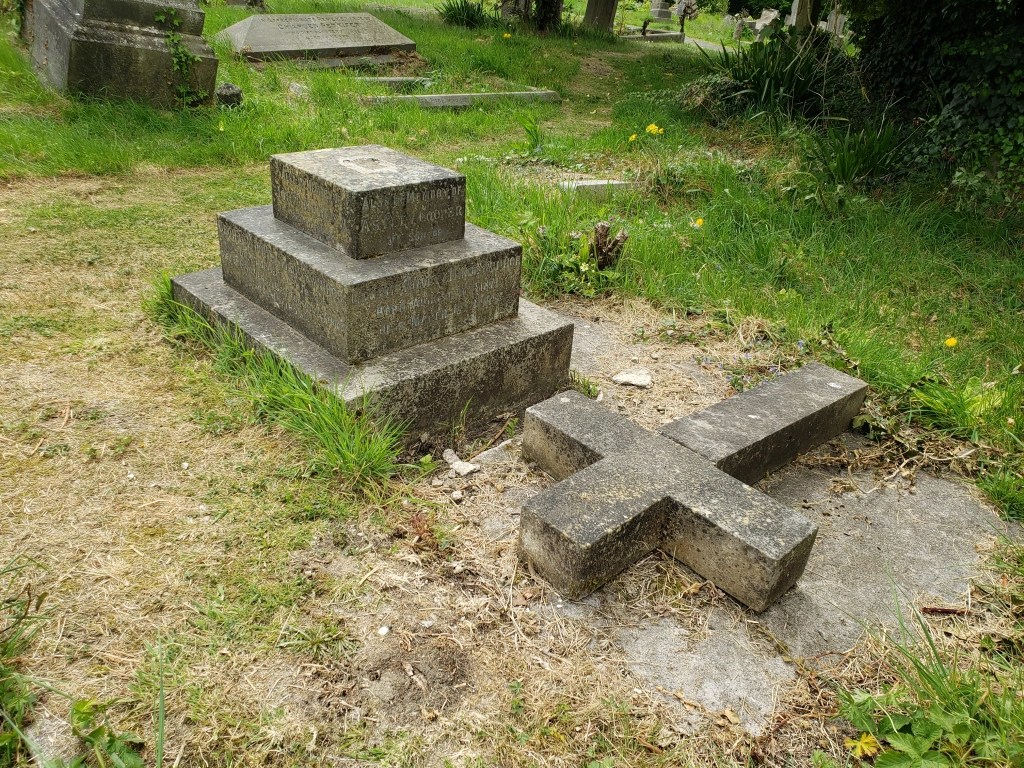
George Money Swinhoe 77 years of Park House was buried on February 29, 1908 in a large grave plot numbered E8228/29/30 which he shares with his wife and four sons.

You may also like to read:

Maurice Carew Swinhoe – banana planter and exporter

The Death of Mrs Swinhoe

John and Honor Iles – a little life

And then there are the little lives, the quiet lives, the people who leave little trace. No children, no legacy, no letters, no diaries. No death notice in the local newspaper, no lengthy obituary.

John Iles was born in 1820, possibly in Broad Blunsdon, maybe in Lydiard Tregoze. Born before the introduction of civil registration, there is no birth certificate for him. Neither can I find a baptism entry but we know that by 1841 he was living in the parish of Lydiard Tregoze where he worked as a labourer.

Honor was baptised at the parish church in Lyneham on May 18, 1817, the daughter of John and Mary Burchell, and grew up in the Preston area of Lyneham.

John and Honor were married at St Mary’s Church, Lydiard Tregoze on November 12, 1844. John signed his name in the parish register, Honor made her mark. They both gave their address as Mannington, Lydiard Tregoze. John was a labourer, Honor a servant. Perhaps they worked for Richard Strange, farmer at Mannington Farm. There was little else there in that part of the parish. Or was John working at the recently built GWR Maintenance and Repair Works in New Swindon, just a short walk across the fields? Or maybe he was a builders’ labourer employed by J & C Rigby who were building the GWR company houses.

In 1851 they were living in Moredon, Rodbourne Cheney – John worked as a ‘rail labourer’. Seven years married and no children. Children were not planned in the mid-19th century – they were either conceived or they weren’t. There was little choice. There were old wives’ tales and potions and prayers, to encourage or prevent a birth. Perhaps Honor tried them all. Perhaps there was a child, born between 1844 and 1851, maybe more than one, but they failed to thrive and appear on subsequent census returns. By 1861 the couple were living in Even Swindon. John and Honor had been married 17 years and Honor was 44, perhaps the likelihood of a child was now remote.

In 1861 they were living in Even Swindon, lodging with William and Jane Handy. In 1871 they were living in Cow Lane and in 1881 they were at 22 Eastcott Villas, still in the same area. Then suddenly it was all over. John died in January 1889 aged 69 years. He was buried on January 26 in grave plot E8467. Honor died that same year, aged 72 years and was buried with him.

And marking their grave is this substantial memorial. Who paid for it? Who installed it? Perhaps the lives of John and Honor were not so little, not so quiet, after all. Perhaps there is a whole lot about them left to be discovered.

William Laverick – Forge Foreman

The re-imagined story …

New Swindon has been much criticised for its rows and rows of red brick housing, but it wasn’t always like that. In the beginning there was the Works and the company houses, constructed from stone quarried locally at Kingshill and Bath and Corsham. But granddad said those early cottage were built just for show.

“Railway men and their families began arriving in such numbers that those building their homes couldn’t finish them quickly enough. The first cottages were little more than hovels, just two rooms often with two large families sharing one property.”

Mr granddad used to say Swindon was a work in progress.

“The whole place was one big building site.”

Granddad could remember Bath Street before it was renamed Bathampton Street and Faringdon Street before it became Faringdon Road.

“Mr Hall lived at number 1, Mr Laxon at number 2 and the Laverick family at number 3,” he recalled. “Mr William Laverick senior lived there first and then his son, William junior took on the property.

There was a sad story surrounding young Mr William Laverick, but granddad would never tell me what it was.

“Old Mr Laverick was the Superintendent at the Wesleyan Sunday School. My mother would have had me go, but my father wasn’t insistent so I managed to avoid it.” That made him chuckle, which brought on his cough.

My granddad used to say Swindon was a work in progress. I wonder what he would say if he could see it now.

Wesleyan Methodist Chapel published courtesy of Local Studies, Swindon Central Library.

The facts …

William Laverick was born in Bedlington, Northumberland on September 16, 1843 the son of William and Mary Ann.

He entered employment in the GWR Works on July 3, 1858 as a Door Boy in the Loco Factory before beginning his apprenticeship as a forgeman in 1860. In 1885 he was made a foreman.

The family were Wesleyan Methodists and William Laverick senior was Superintendent of the Wesleyan Methodist Sunday School for 35 years.

William Laverick junior and his wife Maria had a large family and the registers for the Wesleyan Methodist Chapel, Faringdon Road list the baptisms of six of their children.

Sadly, four of their children died young – Henry Allen Laverick at 9 months old and Arundel Laverick also died before his first birthday. Francis Charles died aged 2 and James Lightford Laverick aged 6 years. James died shortly after the opening of Radnor Street Cemetery and is buried in plot A100. Henry Allen died the following year and is buried in plot E7035. The other two children died before the cemetery opened in 1881 and are most likely buried in the churchyard at St. Marks. There is a mention of the four children on William’s memorial, but the inscription is badly weathered and incomplete.

William was admitted to the County Asylum at Devizes on July 22, 1890 where he died on November 9, aged 46 years.

William was buried in plot A2497 on November 13. In the 1891 census William’s widow Maria continued to live at number 3 Faringdon Street with her three remaining children, William Richard a 19 year old Engine Pattern Maker apprentice, Muriel Beatrice, 18, and six year old Arthur George. She married Francis Davies Morgan in 1895. Maria died in 1904 and is buried with her first husband in Radnor Street Cemetery.

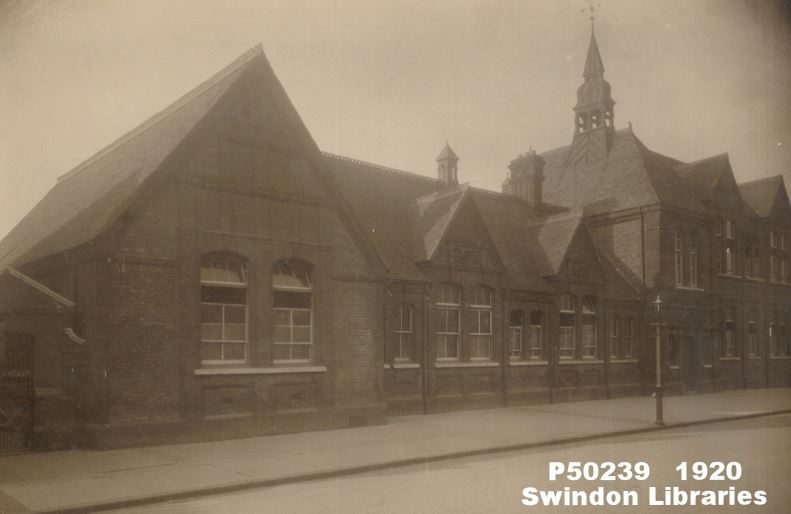
Sanford Street School War Memorial

Image published courtesy of Local Studies, Swindon Central Library.

Ten years ago Mark Sutton was instrumental in seeing the Sanford Street School War Memorial removed to Radnor Street Cemetery Chapel. Swindon Council’s children’s department had moved out of the former school during 2012 and the building was empty and vulnerable, its future hung in the balance – demolition was even being suggested!

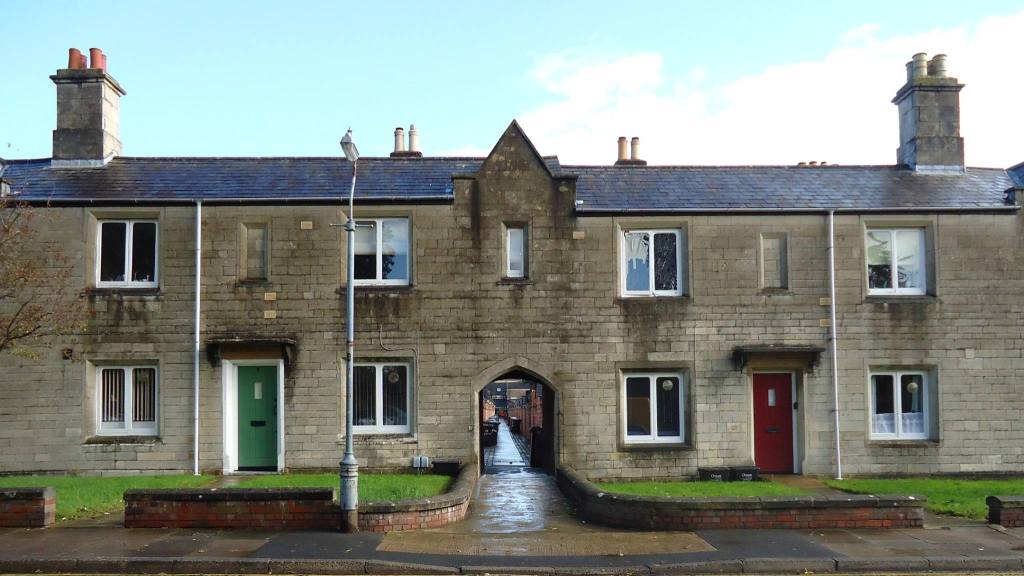
Today the building is known as the Swindon Community Hubb and is run by Voluntary Action Swindon, accommodating the Citizens Advice Bureau, Swindon Advocacy Movement and the Swindon Carers Centre among many other local voluntary organisations.

Yesterday I was fortunate enough to attend the unveiling of a portrait of the architect Brightwen Binyon and to listen to Martin Robins, a pupil from 1961-66, talking about his long association with the school.

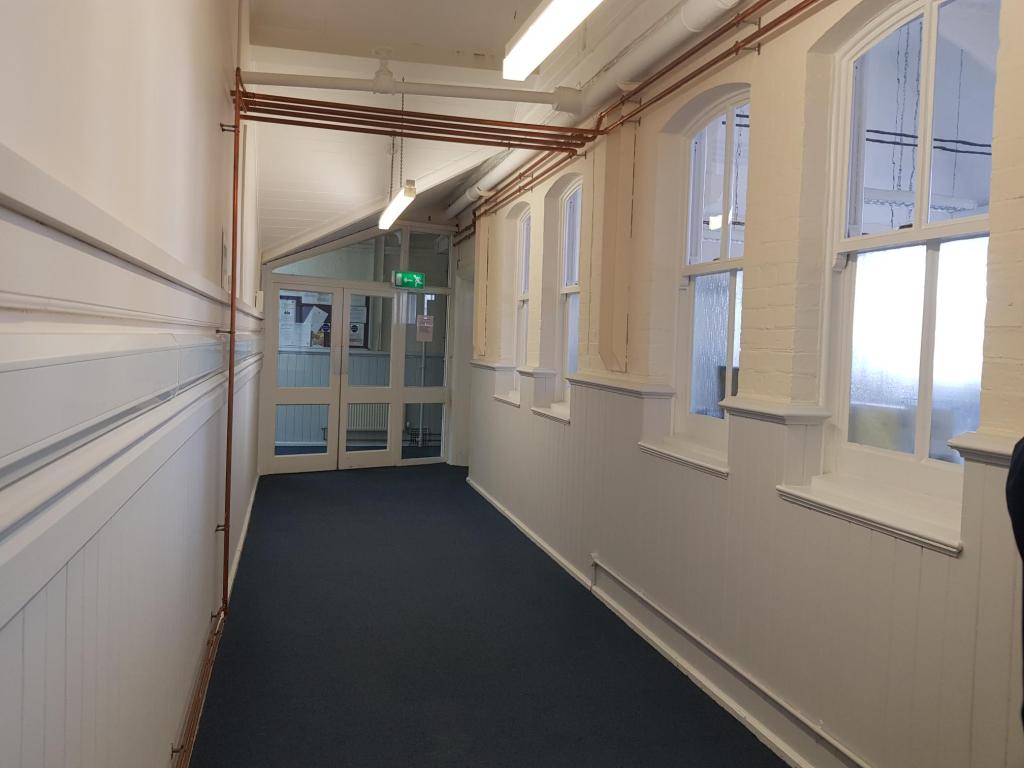
Guests were also able to join James Moss on a tour of the building, which still includes many original features.

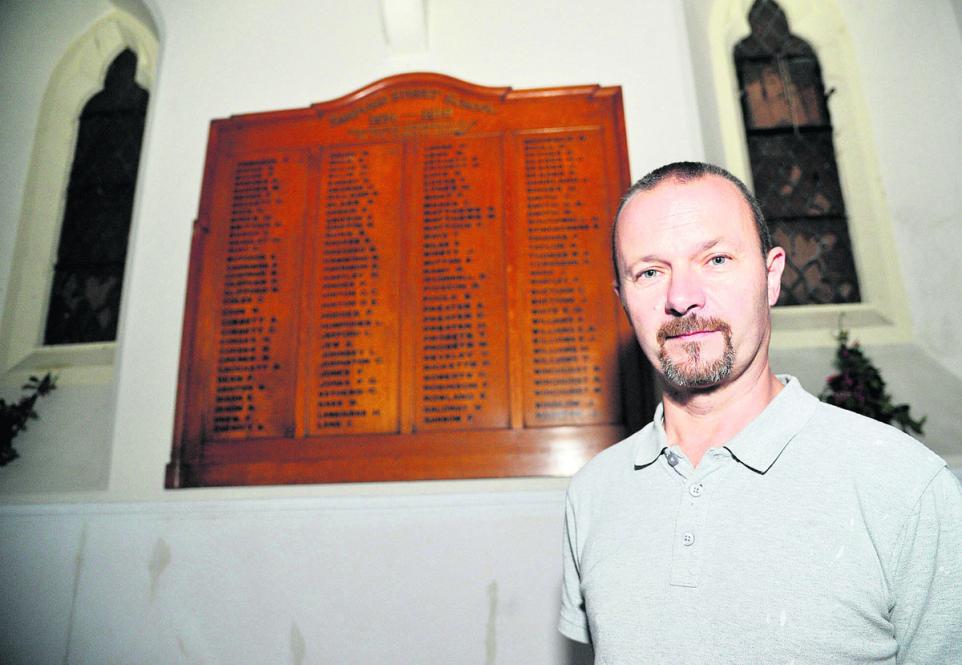
The memorial in the Radnor Street Cemetery Chapel includes the names of several sets of brothers who died in the First World War. Mark knew the history of all of them – how they lived and how they died.

The memorial can be viewed during our guided walks when the chapel is open. Our next walk is on Sunday May 7, meet at the chapel for 2 p.m. For more information visit our Facebook page.

Mark Sutton and the Sanford Street School War Memorial

Portrait of Brightwen Binyon – architect of Sanford Street School

Edmund Miller Odey – 50 years in the railway works

In 1924 King George V and Queen Mary made a visit to Swindon and the GWR Works. The town definitely pushed out the boat for the royal visit and there are numerous photographs of them on their tour of the railway factory. This photograph is entitled Swindon Works Veterans Inspected by Their Majesties the King and Queen April 28, 1924. The photograph shows 75 men who had completed 50 years in the railway works. In the back row, second from the right, is Mr Edmund Miller Odey.

Edmund was born in Chiseldon in 1859, one of John and Matilda Odey’s five sons. As a sixteen-year-old Edmund began his 5-year apprenticeship in the Smith’s shop on March 20, 1875. Boys were often employed in the Works at a younger age but could not officially begin their apprenticeship until their 16th birthday. His daily rate of pay was 10d (that’s about 5p today) in the first year rising to 2/6 (about 13p) in his final and fifth year. Edmund worked all his life as a Smith’s striker, a physically demanding job, which he was still doing up to his 65th birthday at the time of the royal visit.

He married in 1892 and he and his wife Mary Ann had 10 children of whom 6 had died by 1911. The family lived at a number of different addresses across Swindon – their first home together was in Radnor Street, then by 1901 they were at 3 John Street, in 1909 they were at 4 John Street and in 1911 they were at 5 John Street. All this suggests to me that they did not own their own home but were renting, probably moving frequently.

Mary Ann died in 1914 and she is also buried here in Radnor Street Cemetery but not with Edmund.

So, where does Edmund lie after all those years of hard graft in the mighty GWR factory? He died in July 1928, not many years after that feted royal visit, and he is buried in grave plot C219 a public grave, once commonly called a pauper’s grave.

You might also like to read:

George Bayliss – Your Majesty

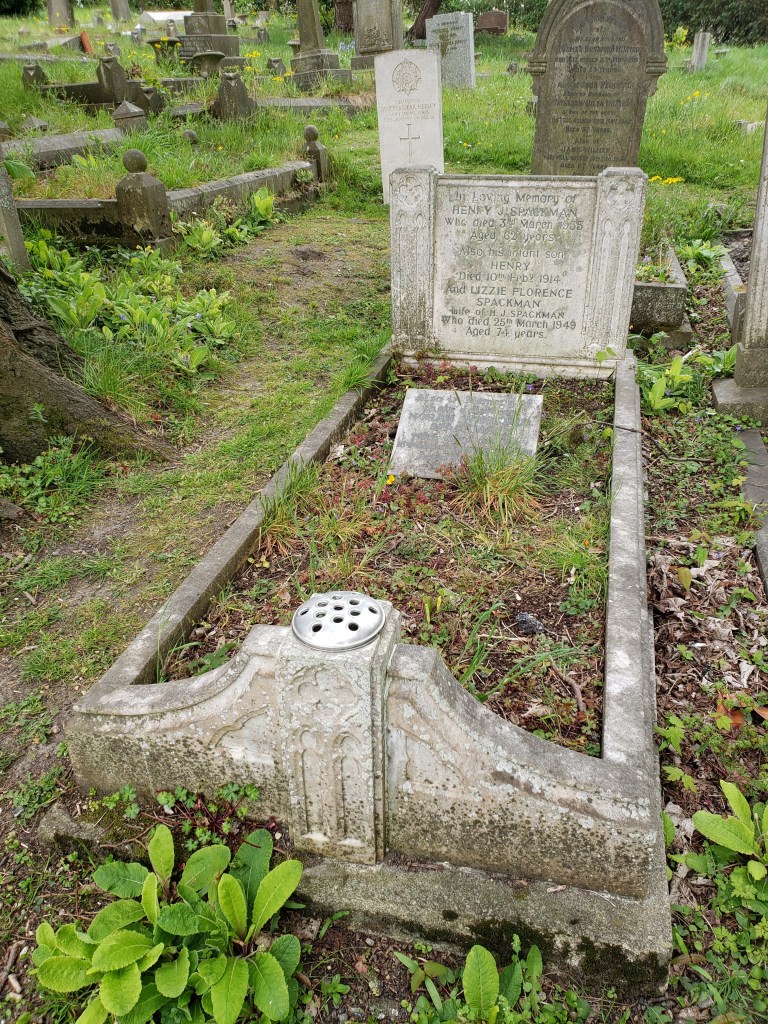
Henry John Spackman – boiler inspector

I can’t help wondering what kind of life Lizzie Florence Spackman had and whether she had much influence in the decisions made on her behalf. She grew up in a railway family and married a railway man, but could she have anticipated how her life would turn out.

Lizzie was born in 1874, the middle daughter of William and Elizabeth Richards’ three girls. By 1881 Lizzie’s mother had died and the three young sisters were living with their father and two elder half brothers in Carfax Street. In 1898 she married Henry John Spackman, a Boilersmith. He was 25 and she was 23.

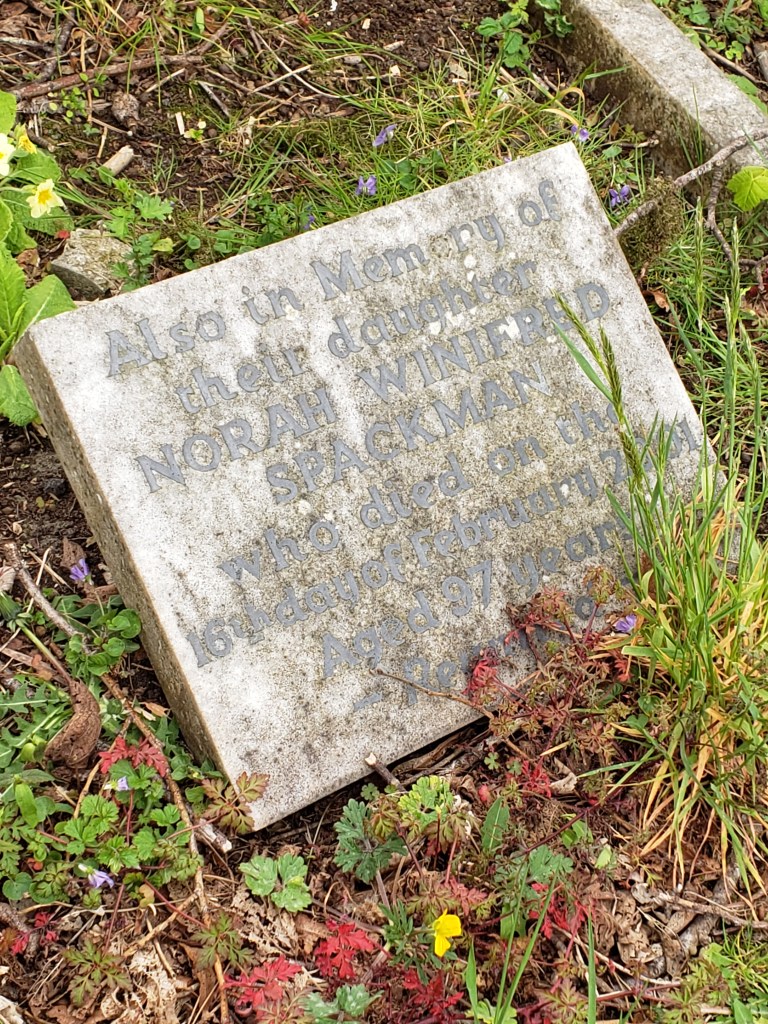
Henry and Lizzie lived at various addresses in Rodbourne and Westcott during the early years of their marriage. Their eldest daughter Dorothy was baptised at St. Marks’s Church on December 11, 1899 when the family lived at 22 Ford Street. Their second daughter, Norah Winifred, was baptised at St. Augustine’s on December 3, 1903 when they lived at 6 Bruce Street. Then at sometime around 1909 the family left for India where their third daughter, Marjorie Johanna was born in 1910 in Madras. Lizzie would live in India for the next 17 years until they returned to 13 Summer Street, Rodbourne in 1927.

What an adventure? Or was it a nightmare? Did Lizzie love India or was she homesick for Swindon? Once back in England the family settled down in Chiseldon, where Henry was obviously busy – but what about Lizzie? Did she enjoy her new life in the Wiltshire village or did it seem grey and lacklustre after the vibrancy of India? What was on the Spackman family menu – roast beef and Yorkshire pudding or curry?

There’s a lot about Henry in the following report, which is fair enough I suppose as it is his obituary. But I can’t help wondering what kind of life Lizzie had.

Photograph of the former railway works taken from the cemetery

A Broken Link,

Death at Chiseldon of Mr H.J. Spackman

The funeral of Mr Henry John Spackman, who died at The Gables, Hodson road, on Sunday, took place yesterday.

Mr Spackman, who was 62 years of age, was employed in the Great Western Railway Works, Swindon, as a young man. At the age of 25 he went to Madras as a boiler inspector and at a later date was appointed chief foreman. He remained in India until November, 1927, when he returned to England to go into retirement at Chiseldon.

Mr Spackman who had taken a great interest in the Chiseldon Hospital Carnival and in all forms of sport, played for Swindon Town on the Croft, and he was the possessor of a Wilts Cup medal. He gained this while playing for Trowbridge Town against Swindon. He leaves a widow and three daughters. Two of his daughters are married, they are Mrs C. Woods-Scawen, of Madras, and Mrs B. Lillie, of Shanghai. His other daughter, Miss Nora Spackman, resides with her mother at Chiseldon.

The funeral service at the Parish Church, Chiseldon, was conducted by the Vicar (the Rev. C. Foster Palmer) and the interment was in Radnor Street Cemetery, Swindon.

The family mourners were Mrs Spackman (widow), Miss N. Spackman (daughter), Mrs Webb (sister), Mr W. Spackman (brother), Mrs G. Tucker (niece), and Mrs A. Hunt (cousin).

Others present at the church were Mr. and Mrs H. Howell, Mr Hargreaves, Mr and Mrs H. Hewlett, Mr A. Hewlett, Mr J. Walters, Mr E. Walters, Mr H. Walters, Mr Phillips, Mr C. Frost, Sergt. A. Cook, Mr R. Culverwell, Mr R. Finn, Capt. Johnson, Mr H. Drewitt, sen., Mr H. Drewitt, Mr. C. Goldsmith (representing the 18 Overseas Club) Mr F. Blackford, Mr. Lucas, Mr H. Cavill, Mr F. Horsington, Mr A.A. Jarman, Mr and Mrs B. Davis, Mr C. Dommett, Mr D. Richards, Mr W. Long, Mr and Mrs W. Oakey, Mrs Beamish, Mr Gilbert Whiting, Mrs Dench, Mr Street and Mr A. Green.

The funeral arrangements were carried out by Mr John C. Liddiard, of New road, Chiseldon.

North Wilts Herald, Friday, 8 March, 1935.

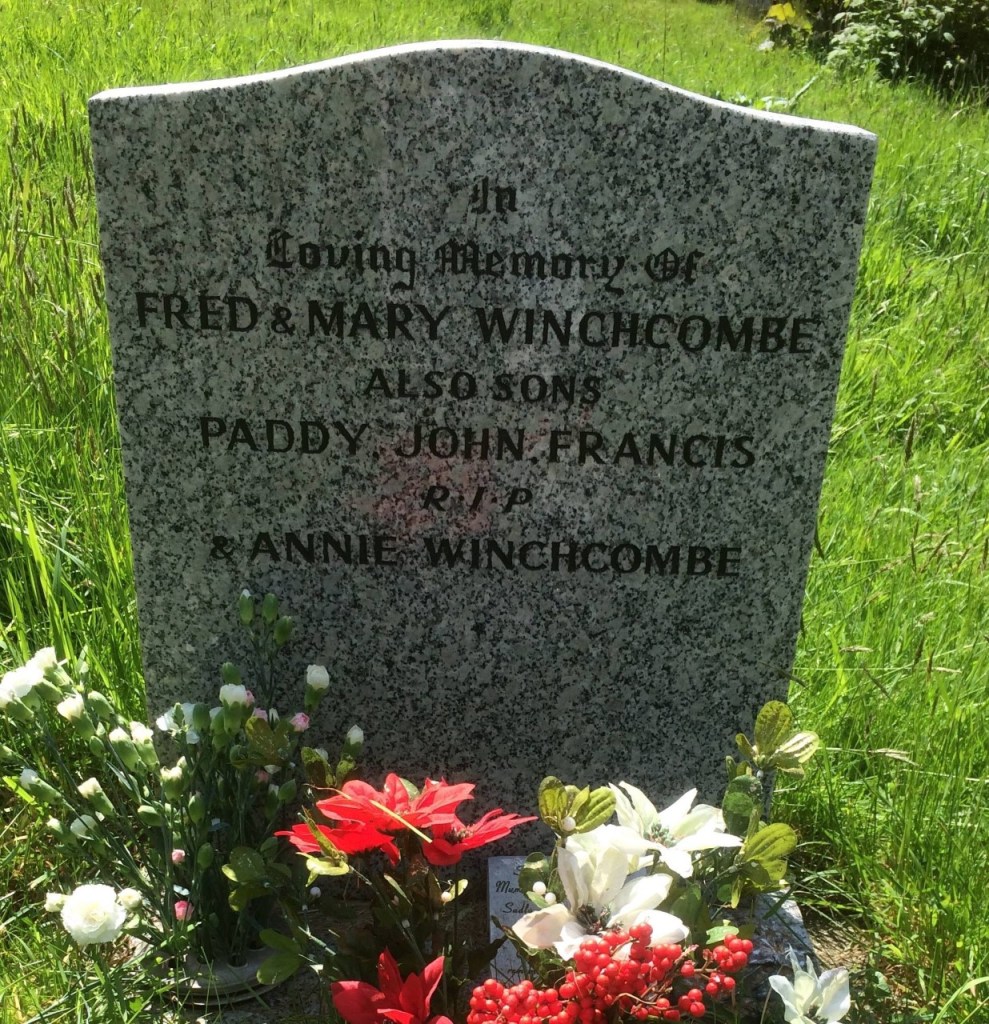
Fred and Mary Winchcombe

This is the last resting place of Fred and Mary Winchcombe who married in 1911 and had a family of six sons and two daughters. Mary died in 1951 and Fred in 1964.

Several years ago their granddaughter, Mary, joined us on one of our walks and kindly sent me the following information about her grandparents.

Fred Winchcombe worked in the GWR and walked in from Chiseldon each day. He and the men he walked in with had the habit of taking a quick pint in the Patriots Arms on the way in, and one day he met up with recruitment men from Kings Troop.

Grandad took the King’s Shilling and joined Kings Troop and was posted to Ireland. He was stationed just outside of Kilkenny and the only watering hole deemed safe for the troops to drink in (he was CofE) was Mastersons Hotel in Kilkenny High Street. This was owned by Mary Morrisey’s uncle, and she worked there. Mary was Roman Catholic.

They met, fell in love and Fred asked her to marry him. Her family were not opposed as long as Fred changed religion. He did, they were married in Holy Rood Church, Swindon.

They started married life in Chiseldon, but as Mary insisted on walking into Swindon every day for Mass, Fred moved them to 10 Union Street, Old Town where they raised their children in a two up two down terraced house with outside toilet and no bathroom.

Mary very much wanted to go back to Ireland to see her own parents and siblings, but both parents died before they ever managed to save enough money for her fare.

Toxopholite – a most unusual name

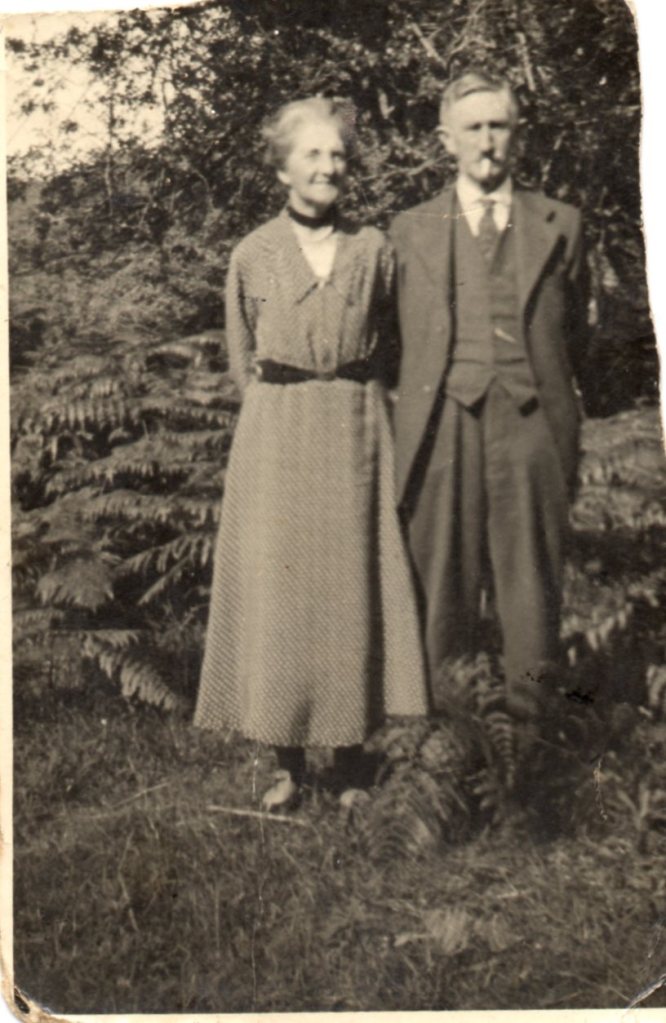
If you’ve ever thought Victorian names were boring, all those William and Mary Ann’s, think again. Meet Toxopholite John Douglas Cooke.

Was he the first Toxopholite in the family? Did he pass the name on to subsequent generations? And what did they call him for short?

“Come in Toxopholite, your tea’s ready” is a bit of a mouthful to shout down the street.

Toxopholite and Amy Cooke

The man with such an unusual name had a complicated family background. Family historians suspect he was born illegitimately and that he amplified his details with an elaborate backstory – he would later declare that he was born in India on September 23, 1861.

He was baptised Toxophilite John Penery at St Andrew’s Church, Plymouth on January 4, 1860 when his birthdate was given as September 23, 1859 and his parents named as Edwin and Mary Jane Penery. His mother later married William Butterworth Cooke, an officer in the Royal Artillery, in Plymouth in 1867. Perhaps Toxopholite was never told the truth about his birth and was supplied with this story by his mother.

Toxopholite married Amy Kate Lavallin in 1883 and entered the employment of the GWR as a clerk the following year. By 1891 the family had moved to Swindon where they lived at 28 Havelock Street. They later moved to a house in Maidstone Road and by 1911 they were living at 13 Kent Road. The couple had five children, according to the details they submitted at the time of the 1911 census.

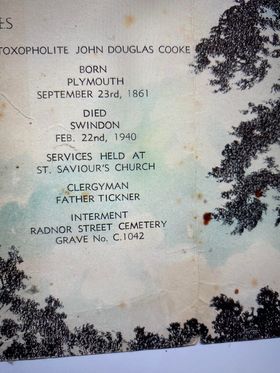
Toxopholite’s last home was 133 Kingshill Road where he died on February 22, 1940. He was buried in grave plot C1042.

The meaning of the name Toxopholite (or Toxophilite) is a student or lover of archery. It is derived from ‘Toxophilus – the schole or partitions of shooting’ a book about longbow archery dedicated to Henry VIII and written by Roger Ascham, a 16th century scholar and tutor to Elizabeth I.

Many thanks to Diana for her help.

John William Jolliffe – down your way

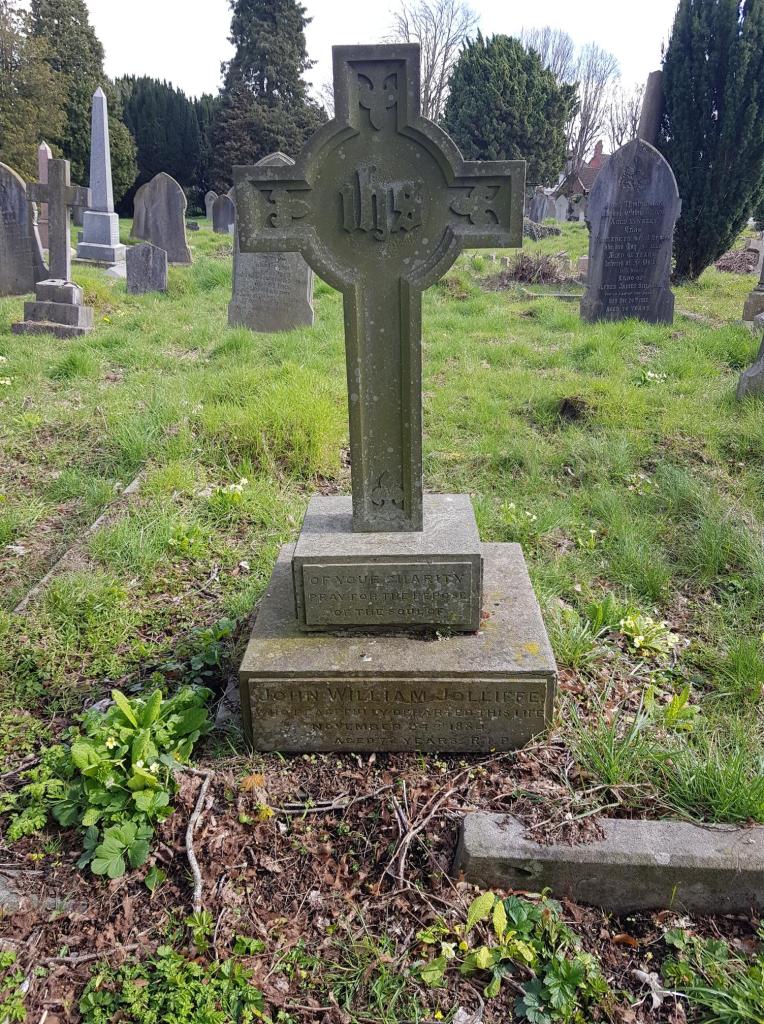
Our Victorian town centre streets are frequently named after the great and the good of Swindon – take Jolliffe Street, for instance. Built in around 1891 this street was named after John William Jolliffe, surveyor and collector for the New Swindon Local Board district.

John William Jolliffe was born in 1838, the son of John, a builder, and his wife Elizabeth. John William grew up, married his wife (another Elizabeth) and spent most of his life living on the Isle of Wight. In 1861 he was living in Newchurch, Ryde, Isle of Wight and described himself on the census of that year as a Master Builder employing 50 men.

At the time of the 1871 census he was living in High Halden in Kent where he was employed as Clerk of Works in Building. He moved to Swindon soon after this to a post as Surveyor of Swindon New Town Local Board. His first job was to oversee the building of the new sewerage works in Even Swindon. He appears to have specialised in the building of sewage treatment plants including work at Gorse Hill and at the time of his sudden death he was working on improvements in the disposal of sewage in the town.

Sudden death of Mr J.W. Jolliffe – Our readers will hear with regret of the almost sudden death of Mr J.W. Jolliffe, for some years surveyor and collector for the Swindon (New Town) Local Board District, which took place on Monday morning last. Although in his 73rd year, Mr Jolliffe was up to the time of his death apparently a hale and hearty man. In fact, all the previous week he was about the town as usual, and attended to his duties up to Saturday evening. On Sunday evening he was seized with spasms round the heart, and appeared to suffer much pain. His son fetched Dr. Howse, who attended, and the pain abated. At 1 a.m., however, the deceased was taken worse, and medical aid was again sought, but this time it was of no avail, Mr Jolliffe breathing his last before 2 a.m.

The deceased came to Swindon some 12 or 14 years ago to superintend the carrying out of the new sewerage works which was executed to convey the sewage of the town to the farm at Even Swindon, having previously been in business at Ryde, in the Isle of Wight, as a builder.

When the late Mr W. Read resigned the office of Surveyor the Local Board appointed him their surveyor, collector, and inspector of nuisances. Since then the district has grown rapidly – in fact more than doubled – and some twelve months ago the Board felt that the duties of the office of surveyor were so great that they relieved Mr Jolliffe of his duties as inspector of nuisances.

Recently he has been engaged on many important works. The Gorse Hill Sewerage was carried out from his plans and under his supervision. The whole of the private streets at Even Swindon, at Gorse Hill, and many on the Kingshill Estate have been made by him and since dedicated to the board. At the time of his death he was engaged on the plans for a fresh means of disposal of the sewage at the farm, and also on the plans of the proposed new bridge at the end of Wellington street.

The general regard and esteem in which the deceased was held by his neighbours was evidenced on Thursday at the funeral, which took place at the Swindon Cemetery. In addition to members of the New Town Board there were most of the builders and architects of the town, representatives of the Old Town Board, of the GWR Co’s, permanent way and mechanical engineering staff, of the Gas Company, Canal Company, and many tradesmen, with whom the deceased has been brought into business relation.

The religious portion of the ceremony was conducted by the Rev. Father Eikerling and the choir of the Roman Catholic church, of which deceased was a member. At the cemetery chapel the rev. gentleman delivered an impressive address, extolling the many virtues of the deceased, pointing out the lessons to be learnt from such a life and death. The service was fully choral, and was watched by a large crowd of sympathising friends. The deceased leaves a widow some three or fours years his senior. We hear that A Solemn Requiem will be sung for the soul of the deceased this (Saturday) morning at the Holy Rood Church by the members of the St. Cecilias Society, the deceased having been an honorary member of that society.

The Swindon Advertiser, Saturday, November 29, 1884.

John William Jolliffe was buried on November 27, 1884 in grave plot E8290. His wife Elizabeth died in 1885 and is buried with him.

And if you are wondering about the derivation of the name Sheppard Street; this was named after prosperous landowner John Henry Harding Sheppard who owned great tracts of land in this part of New Swindon. You will also find John, Henry and Harding Streets in this area of town.

You may also like to read:

W.H. Read – local architect

W.H. Read – the continuing story

Ethel Mary Franklin – undertaker’s daughter

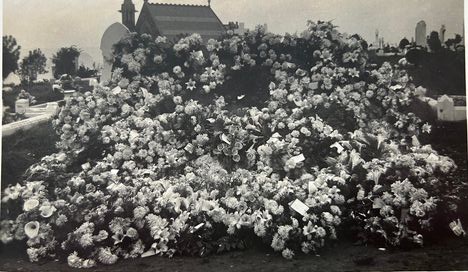
And this week I have received another old cemetery photograph taken at the funeral of Ethel Mary Franklin in 1925 – a beautiful display of floral tributes with the cemetery chapel in the background.

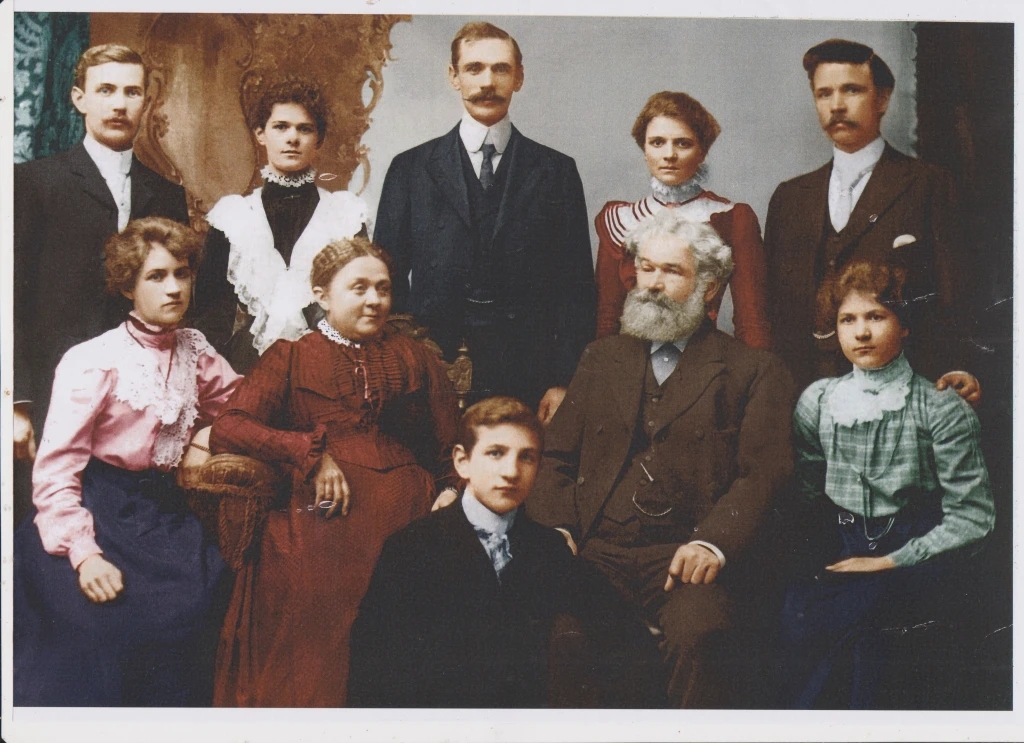
Ethel Mary was born in 1882, the seventh child of Henry Smith and his wife Emma. At the time of the 1891 census Henry was living at 12 Sanford Street with his large family. He would soon leave his job in the GWR Works and set up in business as a carpenter and undertaker. By 1901 he was living in Gordon Road where the firm of A.E. Smith had their premises for more than 50 years.

Ethel appears on the census of that year as an 18 year old pupil teacher. By 1911 she was 28 years old and living with her parents, her sister, her nephew and an elderly, widowed aunt, at 1 Clifton Street. Ethel was working as a school teacher at one of the Swindon Board Schools.

On April 26, 1913 she married railway clerk Arthur Henry Franklin at the Wesley Chapel, Faringdon Road. A daughter named Ruth Gertrude, was born in September the following year and a son Eric Sutton in 1919.

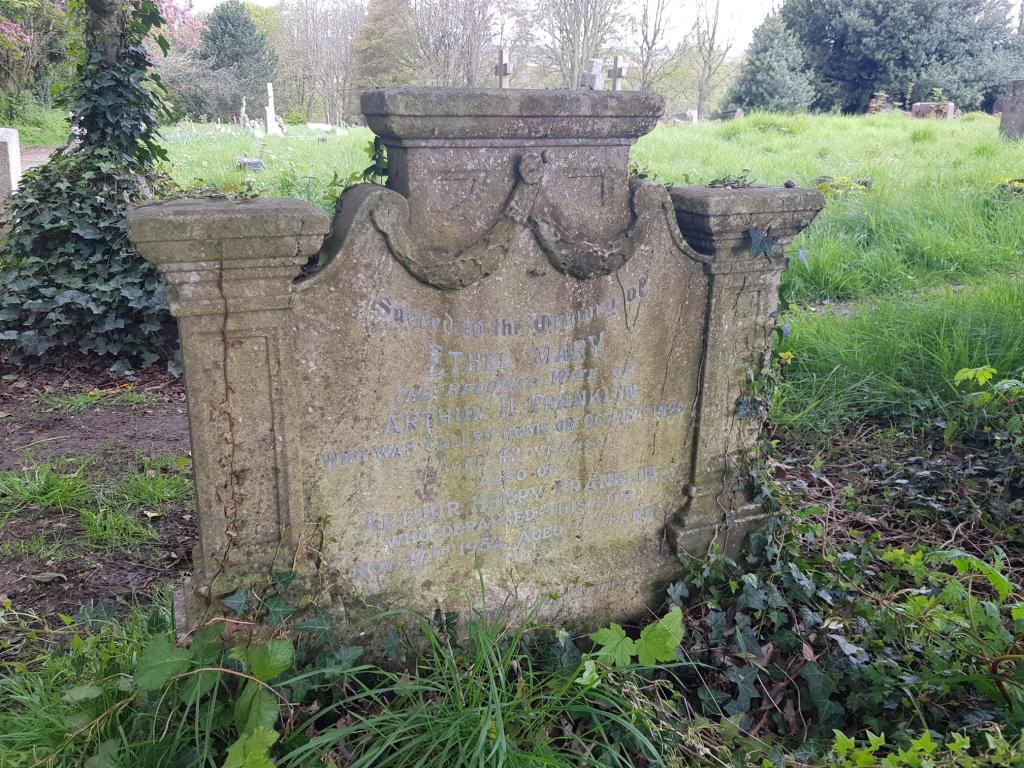
Arthur served in the war as a clerk in the Army Corps and returned safely to the family home at Langleigh, Kingshill Road. Ethel, Arthur, Ruth and little Eric settled down for the rest of their lives, but sadly it was not to be a happy ending. Tragedy struck when Ethel was admitted to the Victoria Hospital in 1925. Infection set in when a swab was accidently left inside her during an operation and Ethel died on October 18, 1925. Her funeral took place on October 22 when she was buried in grave plot D189 close to the grave of her parents.

Arthur remarried and when he died in 1954 he was buried with Ethel. Ruth, their daughter who was just 11 years old when her mother died, went on to become a nurse. Their son Eric became first an architect and then served at Dunkirk and Monte Cassino during the Second World War.

This photograph of the floral tributes on Ethel’s grave was sent to me by Steve, who also supplied the Smith family photograph when he attended one of our cemetery walks some years ago.

You may also like to read:

Henry Smith – undertaker and monumental mason