When the Rolling Mills opened in the 1860s the large contingent of incoming workers from Wales were housed in a building better known as the Barracks. The story goes that the Welsh women couldn’t get along together and that they used to fight and argue, but my Nana didn’t hold with that.
The former GWR lodging house, known as the Barracks, later became a Wesleyan Chapel image published courtesy of Local Studies, Swindon Central Library.
“We had to live in dreadful conditions; if it hadn’t been for the other women, I don’t know how I would have survived. Two years we were there. It felt more like ten.
“We couldn’t keep the place clean, the water closets were permanently blocked and we had nowhere to put our rubbish or the ashes from the fire. There was always someone sick. It was all down to the water see, ‘unfit for drinking purposes,’ the public health inspector said. Two days a week we had water, Wednesday and Saturdays, and then it came from the canal.
Five hundred people there were crammed into that building. I had small children, why we all did, I don’t know how they all survived, many didn’t, I know. My sister Gwen gave birth in that place. I don’t know how they expected people to live like that.
The company cottages were bad enough, but that building. In the early days the men used to call it the Barracks. I don’t know about barracks, more like a prison it was.
When they started building the cottages at Cambria Place I used to go along every day. I used to will that little house along. I loved every square inch of that place. Mind after two years in that hell hole it was like living in heaven.”
Cambria Place
The facts …
“I consider this building in its present state quite unfit for human habitation and dangerous to the health of the district,” Inspector Henry Haynes wrote to the monthly meeting of the New Swindon Local Board held on 2nd August 1866. What had once been intended as a model lodging house for the single men in the railway village was an unmitigated disaster.
Designed to accommodate young men in single rooms with a variety of communal facilities the lodging house, complete with Gothic turrets, was built to ease overcrowding in the GWR company houses. Unpopular from the outset, the building soon became known as the Barracks. Constrained by GWR rules and regulations the young men moved out, preferring to lodge in the cramped conditions of the railway village cottages instead.
The building stood empty until the construction of the new Rolling Mills in 1861 saw an influx of migrant Welsh workers and their wives and children. The GWR Company responded by converting the Barracks into supposedly family friendly accommodation.
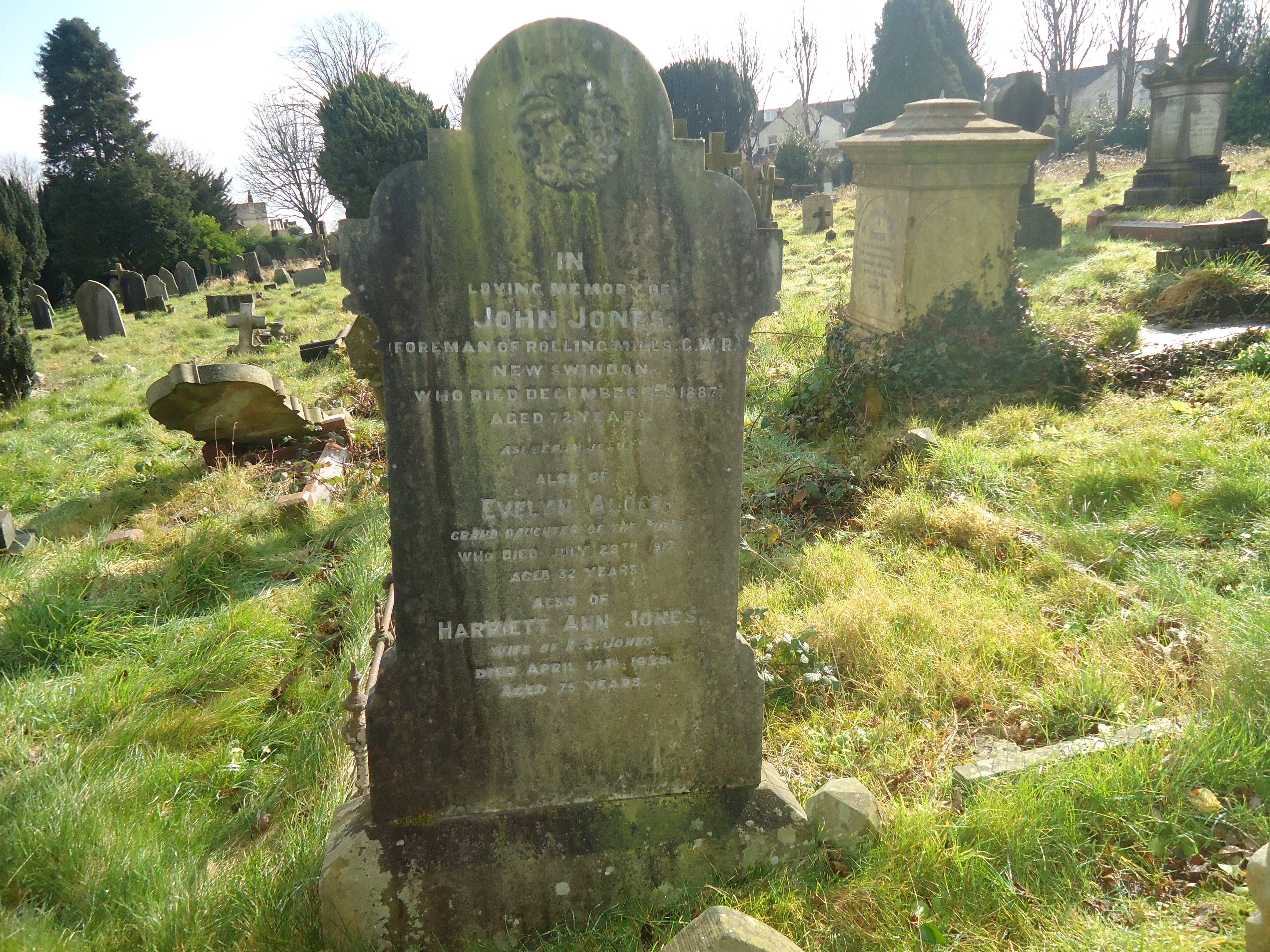
This is the final resting place of John Jones, who as can be seen from the inscription on the headstone, was foreman of the Rolling Mills. John was born in Tredegar, Monmouthshire on March 13, 1815.
In 1851 John was living at Thomas Road, Llanelly with his wife Sarah, and their children. Edwin 14, (already working as a forgeman), Elizabeth 13, Isabella 11, Ephraim 9, Emma 7, Enos 5 and Elijah S. who was 5 months old.
John was a highly experienced worker by the time he entered the GWR service here in Swindon on May 25, 1861. As a Foreman Roller he was paid 7 shillings a day (that’s 35p) although worth considerably more 155 years ago.
The Rolling Mills opened in the 1860s and saw the arrival of a large Welsh community in Swindon. In 1869 the manager Mr Ellis told the Advertiser there were about 310 men employed in the Rolling Mills, divided into a day and a night shift working alternate weeks.
The arrival of so many families placed huge pressure on the available accommodation in New Swindon. The first Welsh families in the Barracks lived in appalling, insanitary conditions, and work soon began on Cambria Place and it was here at No 22 that we find John and his family living in 1871.
John died in December 1887 and is buried in Plot E8296 in Radnor Street Cemetery with his granddaughter Evelyn Alder who died in 1917 aged 32 and his daughter in law Harriett Ann Jones (Evelyn’s mother) who was the wife of Elijah Stockham Jones, John’s youngest son.
Unfortunately Frederick William Darling’s military records have not survived. We do know, however, that he served with the Royal Army Ordnance Corps in France during the First World War. The RAOC was responsible for supplying weapons, ammunition and equipment to the British Army. It has to be asked if his wartime experiences contributed to the state of his mental health and the onset of neurasthenia.
Neurasthenia is described as an ill-defined medical condition characterized by lassitude, fatigue, headache, and irritability, associated chiefly with emotional disturbance.
Frederick was born on March 22, 1888 the son of Richard and Louisa Darling and baptised at St. Marks Church on April 16. Frederick William was one of eight children and grew up in Horsell Street. His father worked as a blacksmith in the GWR Works as did Frederick and his elder brother Charles.
Frederick married Ella F. Wills at the church of the Holy Apostles, Charlton Kings, Gloucester on August 1, 1921. The couple later moved to Cardiff where Frederick died on September 2, 1927.
Cardiff Man’s End
Neurasthenic Poisoned By Gas
Dr R.J. Smith, the Cardiff Coroner, on Monday enquired into the death of Frederick William Darling (39), a blacksmith, who was found dead near a gas oven. Darling had suffered for two years with neurasthenia, and his widow, Mrs Ella Fanny Darling, informed the Coroner that he was in Whitchurch Mental Hospital last May, but was discharged on probation in July, when he seemed much better. During the war he served with the Royal Army Ordnance Corps.
Cecil Elder deposed to finding Darling in a house at Bloom Street, Canton, Cardiff and Dr. Pittard said death was due to coal gas poisoning.
A note left by Darling, addressed to his mother, read: “Don’t worry; I cannot live this life any longer.”
The Coroner returned a verdict of “Suicide while of unsound mind,” and expressed sympathy with the relatives.
Frederick was buried on September 7, 1927 in grave plot C1889. He is buried with his parents Richard, who died in 1926 and Louisa who died in 1945.
Arthur Lancelot Darling was Frederick’s younger brother. He was born on June 14, 1894. Aged 16 he was working as a machineman in the Works.
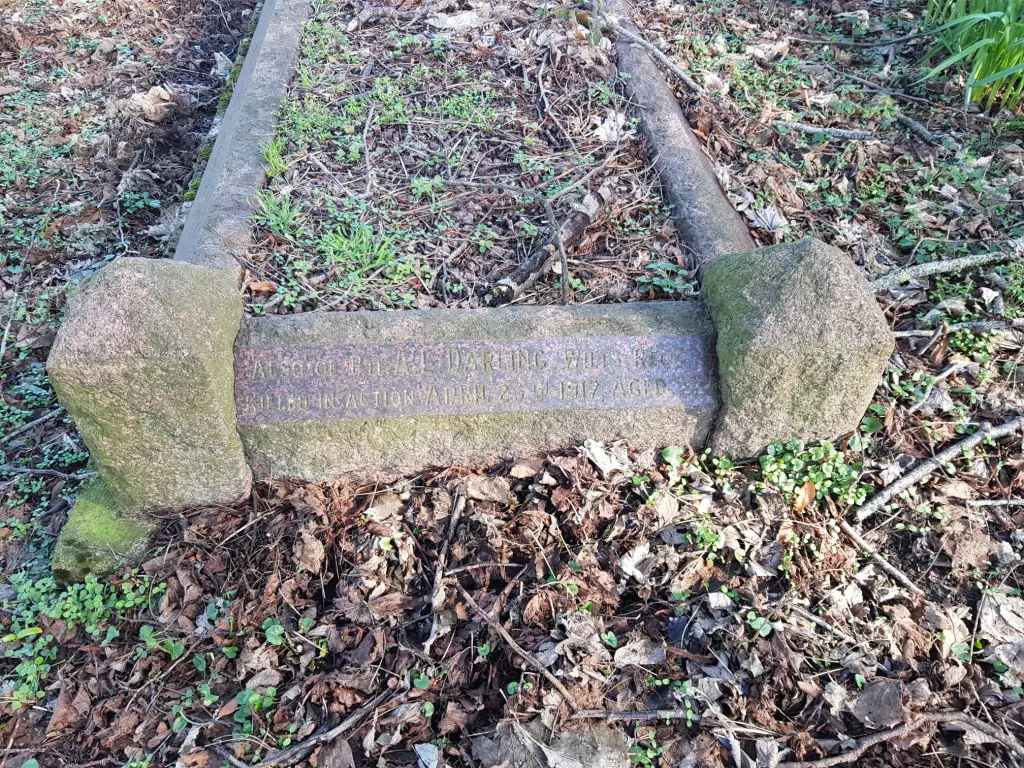
Arthur served in the 7th Battalion of the Wiltshire Regiment and was killed in action in Salonika on April 24, 1917. He was 22 years old. There was no body to bury – he was presumed dead. Arthur is commemorated on the Dorian Memorial in Greece and on his parent’s grave in Radnor Street Cemetery.
Word quickly travelled around the Works. Lord Bolingbroke was trying to silence the hooter. The Swindon Advertiser had published in full his application for the abolition of the Works hooter. This wasn’t his first attempt. In 1868 he successfully forced the GWR to dampen the noise by erecting a screen around the hooter. However, the workmen complained that this rendered the hooter ineffective and the screen was removed.
Now his Lordship was at it again, complaining that the early morning call disturbed his sleep and was injurious to his health.
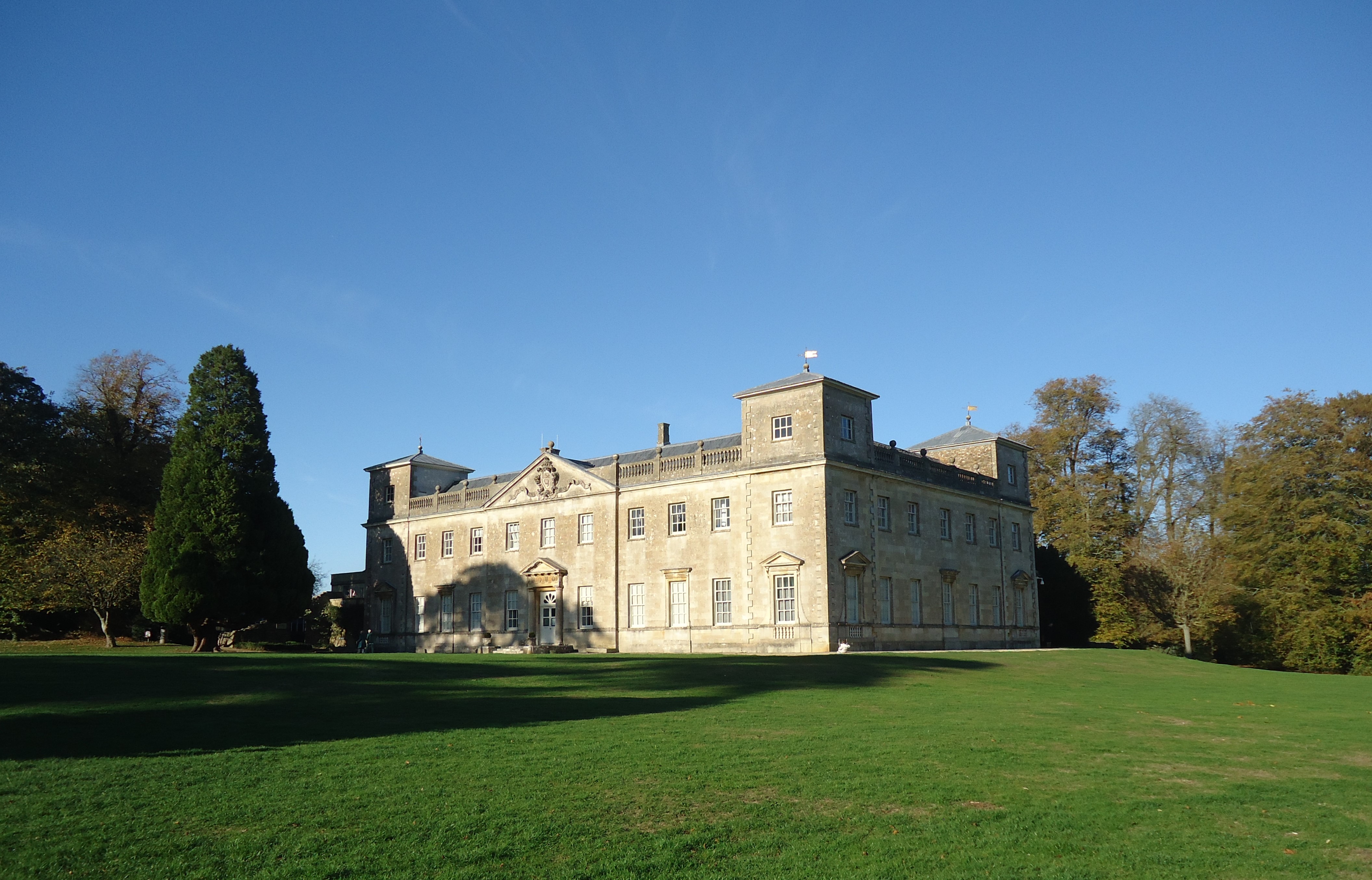
Lord Bolingbroke lived in a mansion at Lydiard Park, about 2½ miles west of the railway works, as the crow flies, but you could hardly describe him as a resident. For many years he had lived on the continent returning to Lydiard Park for barely two months of the year during the shooting season.
Unlike us working men Lord Bolingbroke could lie abed as long as he liked. To be late to work for us was to lose pay and unlike his lordship we do not have fancy timepieces to waken us. I am sure without the blast of the hooter I should lose many morning quarters.
The hooter punctuated the daily routine of the railway factory and we depended upon it. And not only us railway workers. Other employers such as Arkell’s brewery in Kingsdown supported keeping the hooter. It was even suggested that Lord Bolingbroke’s tenants probably found it useful.
We resolved to challenge his lordship and who better to lead us into battle than Mr Frederick O’Conor, a newly elected member of the Mechanics’ Institute Council.
A campaign headquarters was established at the Mechanics’ Institute and a petition was drawn up. More than 4,335 signatures were obtained and when the pieces of paper were pasted together they measured 43 yards in length.
The matter went to Whitehall and despite the fact that Bolingbroke was the only complainant, he won the day and the licence to operate the hooter was revoked. But with Mr O’Conor at the helm we were not to be defeated.
Despite the decision by Whitehall, the Mechanics’ Institute Council and the working men of Swindon united and carried on the battle for the hooter.
We held another protest meeting at the Mechanics’ Institute where the case was reassessed, and reason won over entitlement. The hooter was reinstated.
The facts …
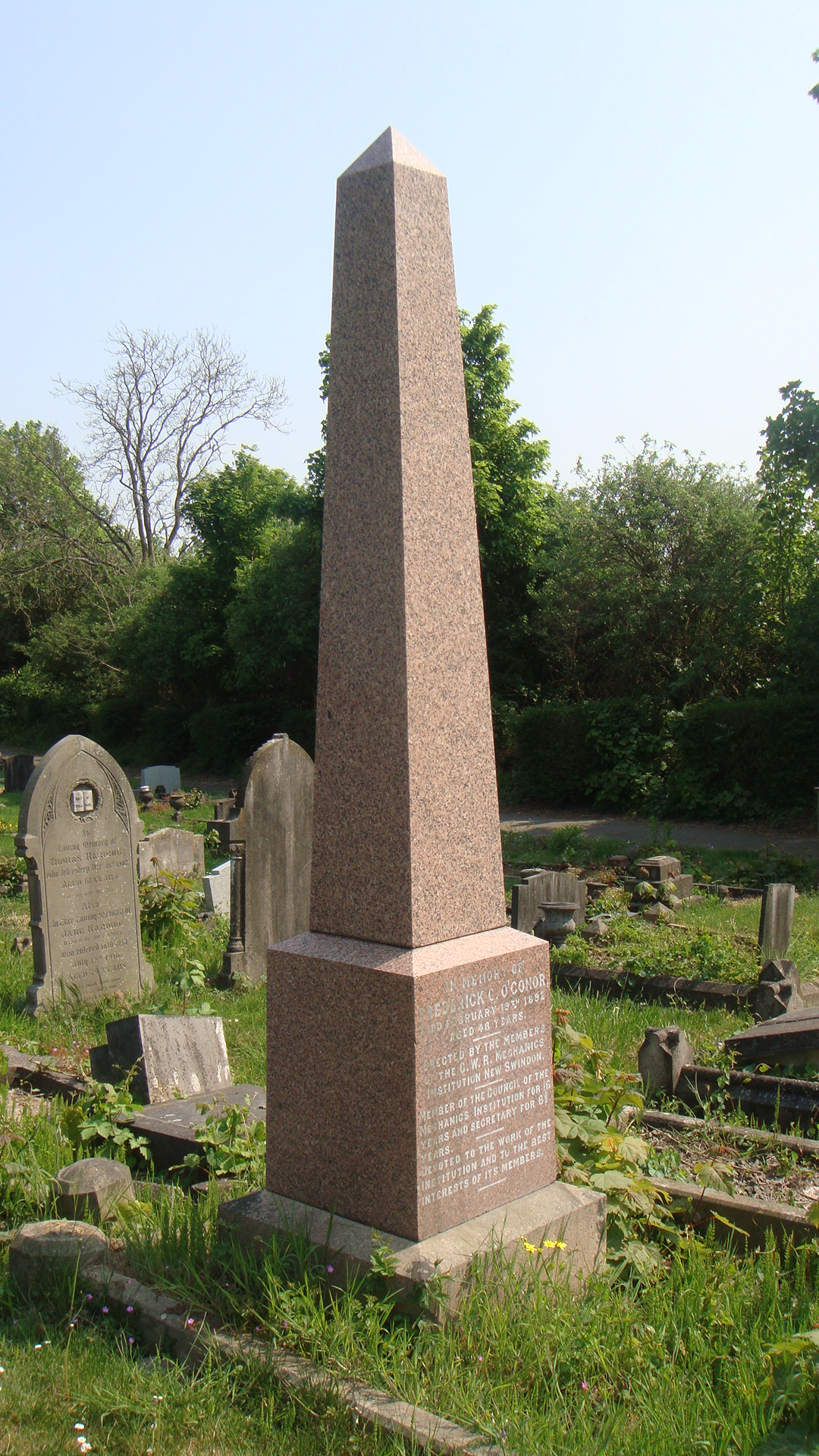
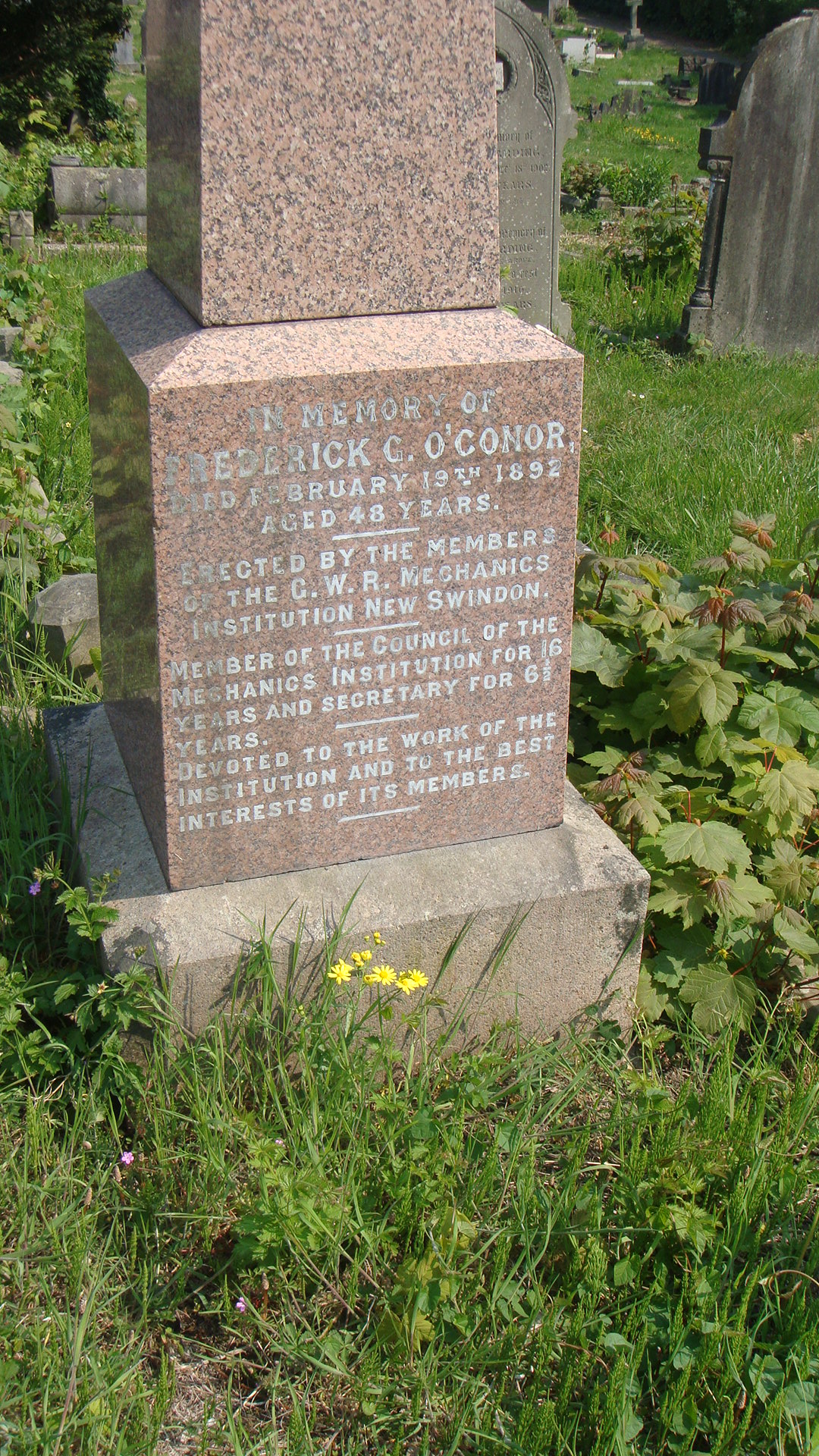
Frederick George O’Conor was born in Swindon in 1843 the son of John and Mary O’Conor. In 1865 he entered work in the service of the Great Western Railway as a clerk in the loco office at Swindon Works.
In April 1876 he married Mary Adelaide Kerr. The couple had two daughters, Mary born in 1878 and Adelaide born in 1879. His wife died shortly after the birth of their second daughter.
Frederick died on February 19, 1892 following a long illness, most likely tuberculosis. He was just 48 years old.
In a lengthy obituary the Advertiser referred to his many other involvements. He was chairman of the local education committee, a member of the Wilts Archaeological Society and a prominent member of St. Mark’s Church.
The funeral at St Mark’s was attended by a large congregation and members of the Mechanics’ Institute Council followed behind the hearse as the cortege made its way to Radnor Street Cemetery where the service at the graveside was concluded by Rev. Ponsonby.
The magnificent pink granite obelisk was erected by the members of the GWR Mechanics’ Institution.
Today it comes as something of a shock when we read about boys as young as 13 and 14 employed in the railway works. The work was heavy, the working day long, and it was a dangerous environment. Accidents were frequent and sometimes fatal.
Rumour circulated throughout the Works that young Enoch Wall had lost his life due to the negligence of a fellow workman. Do you think the jury came to the correct verdict?
Enoch Wall was born on February 19, 1871 the second youngest of James and Elizabeth’s fourteen children. The UK Railway Employment Records state that he began a fitters apprenticeship on his fourteenth birthday earning a daily rate of 10d (about 4 pence) and that he was ‘Killed 15/10/85.’
The Fatal Accident in the GWR Works
On Saturday morning Mr Coroner Baker opened an enquiry at the Cricketer’s Arms inn, New Swindon, on the body of the lad Enoch Wall, aged 14 years and 8 months, son of Mr Wall, permanent way inspector, GWR, who was killed in the Works on the previous Thursday under circumstances briefly reported in these columns. The body was lying at the mortuary attached to the Accident Hospital. A good deal of interest appeared to attach to the proceedings, in consequence of a rumour being circulated that the deceased lost his life through the carelessness of a fellow workman. Mr W.E. Morris was elected foreman of the jury. Mr E.C. Riley attended and watched the proceedings on behalf of the GWR officials, and the deceased’s brother was also present. The first witness examined was,
Arthur Thos. Gillmore, of 24, Eastcott Hill, a fitter in the GWR Works, who said he knew the deceased, who was an apprentice with the engine fitters. On Thursday morning the deceased was assisting him, at about 10.45, to put in a left hand distance buffer to an engine tender. Deceased was at the end of the buffer holding it up with his two hands, the end of it being against his chest. Witness was in the pit under the tender working at the spring of the buffer. The first warning he had of anything moving was the engine striking his head, and then he heard some one call out. He dropped into the pit immediately, at the same time putting out his arm and pushing the deceased out. Witness noticed then that the tender was moving, and saw that the deceased had been jammed by the engine. The tender moved on from the engine and deceased staggered out, crying out “Oh, oh,” once or twice before he fell.
In answer to the foreman, witness said he heard no warning at all of the engine coming up. Men were always working about there, and there should be a warning given. The first he heard was someone crying out “hey,” after he had been struck by the moving engine; it was a lad who called out to him. The deceased had been jammed before witness knew the engine was moving.
By the jury: His work was generally in a most dangerous place. He had heard that there was a man to give them warning, but he did not know if this was so in this shop – there was in the shop he generally worked in, but this was in the paint shop, where he had been sent to look to a weak spring. Was sure no signal was given him or deceased to look out on this occasion.
Peter Neal, Eastcott Hill, labourer in the Works, said he was employed to get engines in and out of the paint shop. On Thursday morning he was in charge of the traversing table, and had orders to get three engines out. After they had moved one engine on to the table he went into the shop to see if there was anyone in the way. Not seeing anyone he gave the signal to the engine driver to move, at the same time calling “Look out,” in case there was anyone working where he could not see. The engine moved against the one deceased was working at, and he got caught.
By the Foreman: Generally he went up the shop to see if anyone was working before shunting. It was his duty to do so. He did not go all the way up this morning. He scarcely ever did go all the way unless he knew there was someone in the way.
By the jury: If he had gone up to where the deceased was the accident would not have happened, but he did not know there was anyone there.
At this point the coroner said the evidence was taking such a turn that he thought it most desirable that the jury should view the spot where the accident happened. This the jury did, and saw the working of the table. On returning to the jury room, the Coroner said he was glad this course had been taken. He had no idea when he commenced taking Neal’s evidence what the nature of the case was. Under the circumstances he thought it best to adjourn the enquiry until Tuesday, when all the evidence possible to get would be taken. The witnesses and jury were then bound over in the sum of £10 to appear on Tuesday.
On the enquiry being resumed on Tuesday, the witness Gillmore was re-called, and his evidence was read over to him.
Walter Hunt deposed: I live at 11, Cromwell Street, and am foreman of the west yard, GWR Works. I have been so employed over five years. Peter Neal has been employed there all the time. When I receive orders from any of the foremen to move engines from the paint shop I invariably give Neal orders to do it, and it is then his duty to get the engine out on to the travelling table and run it up on to the bank. He has entire charge of the table for the time being, and his instructions from me are to stand between the engine to be moved and the table, and give the signal. He has not to go into the shop. There is another man to go round and see that no one is in the way.
The witness Peter Neal was re-called, and repeated his evidence on oath, after having been cautioned by the Coroner. He said it was his duty to see the road clear before he gave the signal to the engine-man to move. He did so on this occasion to the best of his ability. He went into the shop and looked down the engines, but could see no one, so he gave the signal to move. The engine ran freer than usual. There was generally another man to look to the inside of the shop, but this man was not present when this engine was moved. There generally were four or five men to move an engine, but on this occasion there were only three. He had done the job hundreds of times, but never had anything happen before. He never remembered men working at buffers in this shop. He should like to add that before he commenced to remove these engines he went to the chargeman and asked him to send another man to help him, but he refused to let him come.
William Thrush, labourer, of Shaw, said he generally assisted in moving engines from the paint shop, but on Thursday, when the accident happened, he was sent to another shop. When he was present it was his duty to look round and see that no one was in the way. He took his instructions generally from Jesse Townsend, the chargeman, but was often called by Neal. He always went down the shop to see if anyone was working between the engines, as men were often up underneath the working parts. On Thursday he was not sent for at all.
The Jury said they would like to see the chargeman, Townsend, and he was sent for. In the interval the evidence of
Dr. Bromley was taken. He said he was called to see the deceased at 10.55 a.m. on Thursday in the paint shop. He found him on a stretcher, dead, and had the body removed to the mortuary, where he found his ribs fractured and lungs punctured, injuries which would cause instantaneous death.
Jesse Townsend, residing at Even Swindon, foreman of labourers in the west yard, said when the accident happened he was engaged in the Paint Shop moving a lathe. Neal come to him and asked for Thrush to help move some engines. He told him he did not think Thrush was in, but on Neal saying he knew he was he said “All right, he would send him directly.” He did not send him, as it slipped his memory. Had never neglected to send before.
By the foreman: It was necessary to have four men to move an engine out – not less.
This was the whole of the evidence. The Coroner briefly summed up, asking the jury to pin their attention to what they heard there, and disabuse their minds of anything they had heard outside. Neal was in charge of the shunting engine in question, and was evidently trying to do four men’s work with three men. He had looked down the shop and given warning, and it was for the jury to say whether in their opinion Neal was guilty of negligence; if he was not, he was not responsible, and it was a clear case of accident. If, on the other had, they considered he was guilty of gross negligence, then it was a clear case of manslaughter. Those were the two points for the jury to consider. – The jury deliberated for about a quarter of an hour, and brought in the following verdict: – “That the deceased was accidentally killed by being crushed between an engine and tender. The jury are of opinion that the witness Townsend was guilty of some negligence in not sending help when asked by Neal, and that Neal exceeded his duty in attempting to do two men’s work.” The jury also added a rider to their verdict recommending the officials in the Works to arrange for a better system of scotching wheels, to prevent engines bumping as in this case.
The Swindon Advertiser, Saturday, October 24, 1885.
Enoch was buried in Radnor Street Cemetery on October 19, 1885 in grave plot E8580 where he would lie alone for almost 40 years years. His brother Lewis was buried with him on February 2, 1924 aged 56. Lewis’s wife Anne joined them in July 1935 when she died aged 71 years. Enoch and Lewis’s parents are buried in the neighbouring plot. In all those years the family had lived at 5 Wellington Street.
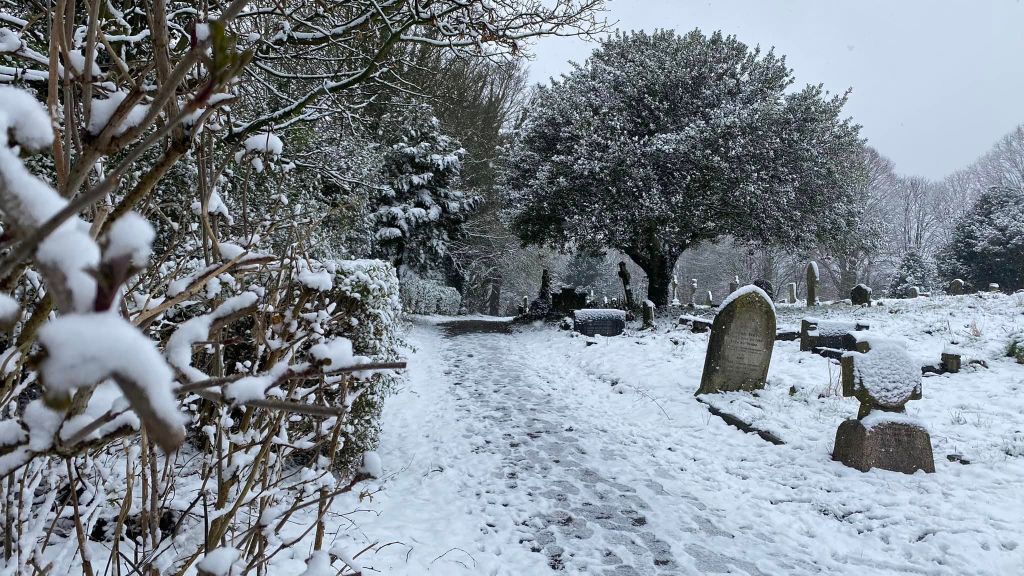
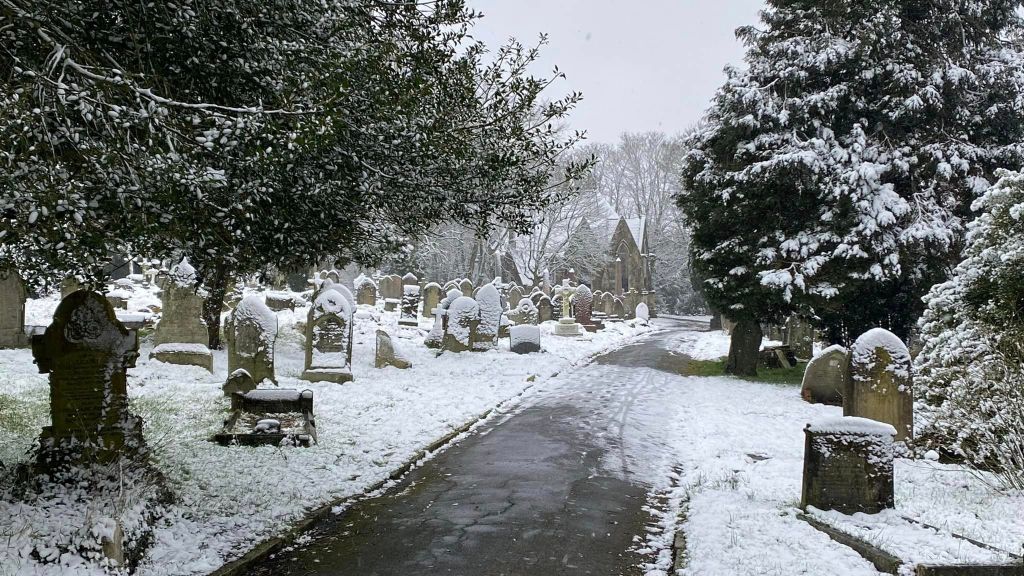
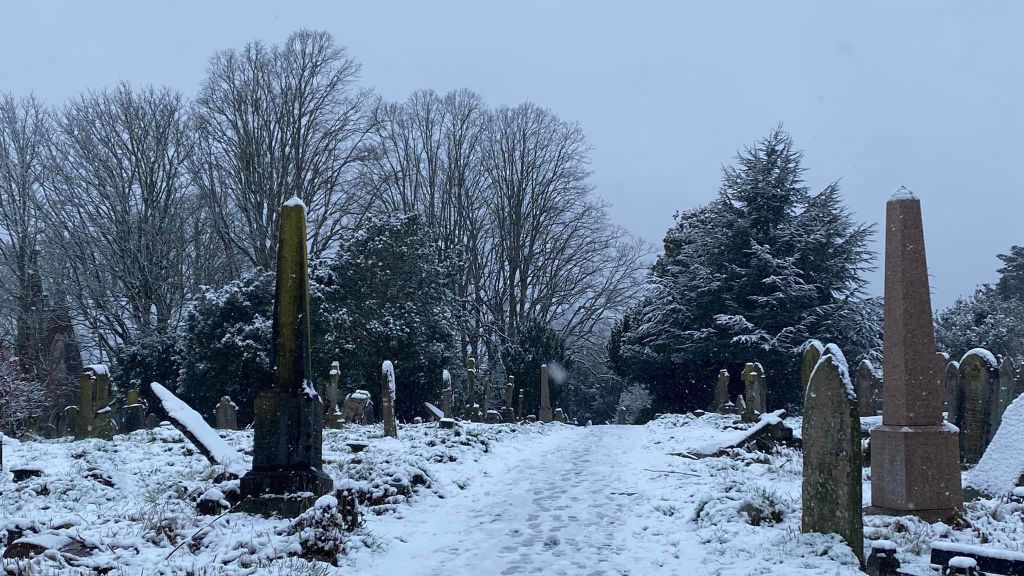
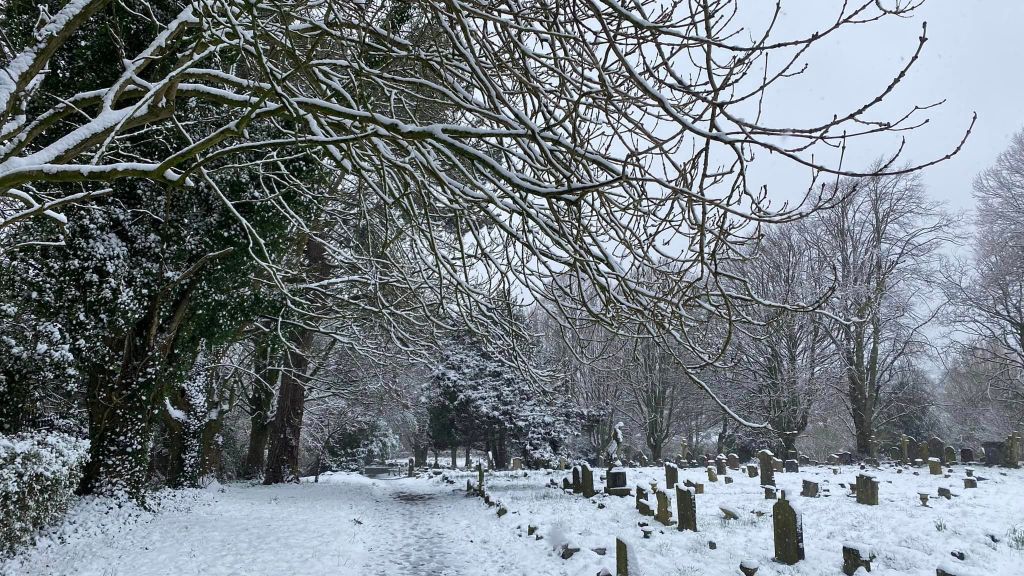
I didn’t manage to get up to the cemetery during the snow this week, but fortunately cemetery follower Paul Langcaster did. Thank you Paul for allowing me to publish your photographs here.
What you will read published below is a shocking story told in brutal and stark language. This is a newspaper report unlike anything we would read today. Yet it might sound a very modern story, violent and tragic, and at the heart of it a little girl, much loved by both parents.
The Swindon Tragedy
The Inquest
Eyewitnesses Stories
Verdict of Felo de Se
On Saturday, the Deputy Coroner (Mr J. W. Pridham) held an inquest in the Boardroom at the Stratton Workhouse on the body of John Page Smith, who died at the Workhouse Infirmary on Friday morning, as the result of a shot wound self-inflicted, after shooting his wife, in Bridge Street on Thursday afternoon, as already reported in our columns.
Mr W.H. Kinneir was present to watch the proceedings on behalf of Mrs Smith and her relations.
Mr G.M. Butterworth was present representing the police and members of the deceased’s family.
Mr H. Scotton, of Highworth, brother of Mrs Smith, Dr. Du Cane, and Dr. Muir, were present, and Supt. Robinson and Inspector Miller also attended the enquiry.
Mr Charles W. Barnes was the foreman of the jury, who viewed the body, which was lying in the mortuary.
The Coroner’s Statement
The Coroner, in opening the inquiry, briefly and lucidly explained the facts of the case. He said the deceased man was a solicitor’s clerk, and was formerly employed in Swindon. He was married to the young woman who was now lying in the Victoria Hospital, Swindon, seven years ago, and there was one child of the marriage. For some time past the couple had lived apart, he at Bristol and his wife in the neighbourhood of Swindon. Deceased had recently had the custody of the child. He (the Coroner) understood that Smith returned to Swindon from Bristol for the Easter Holidays. On Thursday afternoon last, Smith and his wife and child were seen outside the GWR Station, Swindon, about four o’clock. They walked along Station Road to the corner of Bridge Street, and were heard to be quarrelling. At the corner of Bridge Street, the man left his wife, but quickly returned, fired at her with a revolver, and then fired upon himself. These were briefly the facts.
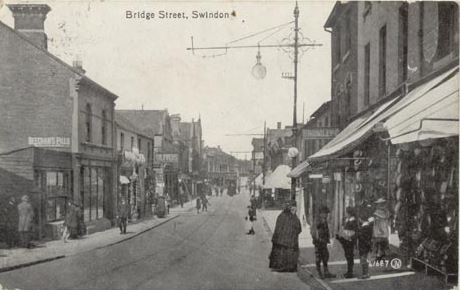
old image of Bridge Street
Evidence of Identification
The first witness called was Wm. Hodges Smith, of 56 North Street Swindon, builder’s assistant. He was very much affected.
The Coroner: You had the bringing up of the deceased? – Yes.
What was his age? – Thirty-two.
He has been living at Bristol? – Yes.
At what address? – Small Street Court.
When did he come to see you last? – On Friday.
Were you aware that he had any firearms or weapons in his possession? – I had not the least idea.
How long had he been living apart from his wife? – I could not say. It might be three years, it might be four years.
A Juror: Did he often come and see you at Swindon? – Not very often.
The Coroner: Did he have the custody of the child? – During the past fortnight. The child was much attached to him.
Medical Evidence
Dr. Du Cane was next called. He said on Thursday afternoon at four o’clock I went to the Great Western Station at Swindon. I passed the deceased, his wife, and the little child, on Bullen’s Bridge, Station Road. The man was speaking in an excited manner to his wife. The child was crying. I returned within five minutes, and saw that deceased had his wife by the arm. On seeing me he let go. I went to my house, which was within a few hundred yards, and told my wife I was going again up the street as I was certain something serious was going to happen. I saw from my window the wife leave her husband and go round the corner into Bridge Street. The child then left her father, and went round the corner after her mother. The deceased immediately after also followed. I at once followed and the next moment four or five shots rang out. I ran quickly up the street and found deceased lying on his back bleeding from a wound in the right temple. I judged from his condition that he was beyond medical skill. I then gave my attention to the wife, and conveyed her to the Victoria Hospital. The woman was shot in the neck, and the left temple. After attending to Mrs Smith, I attended the deceased at Stratton Infirmary. There was a wound above the right temple penetrating at least four inches into the brain. Blood and brain matter were coming out of the wound. I attended to the wound and requested Inspector Miller to have pen and paper in readiness in case the man should recover consciousness and make a statement. I attended the man up to his death on Friday morning.
A juror: Did you see the shot fired? – No.
old image of Bullen’s Bridge
Evidence of Eyewitnesses of the Tragedy
Florence Tegg, 78 Bridge Street, Swindon, domestic servant in the employ of Mr Vincent, Bridge Street, was the next witness called. She said I was dusting the shelf in the kitchen on Thursday afternoon. My companion Louisa Hawkins was with me. I saw a man and a woman and a child outside, and I thought they were quarrelling.
What made you think they were quarrelling? – She wanted to go one way and he wanted her to go another. He put his arm round her and pushed her up against the window at No. 2 Bridge Street.
What next did you see? – I saw him hit her about three times with his fist. He struck her in the chest.
What else? I was getting from one chair to another to get a better view when I saw the man pull the woman’s head towards him and then I heard a shot, though I did not see the pistol. I heard four reports, and I saw the man fall down. I did not see any more as I was told to get down.
Louisa Hawkins, another servant in Mr. Vincent’s employ, gave corroborative evidence. She was with Tegg in the kitchen and saw the man and woman quarrelling.
She added: I saw the man fire at the woman with a revolver, and then turn the revolver upon himself. I didn’t stop to see any more from the kitchen but ran into the street. The man was then lying down.
The Deputy Coroner: How many reports did you hear altogether? Four.
A juror: Did you hear deceased threaten his wife in any way? – No.
Police Inspector’s Evidence
Inspector Geo. Miller next gave evidence. He said: On Thursday afternoon last just before 4 p.m., I received information and went into Bridge Street. I found the deceased lying on his back on the pavement opposite No. 2 Bridge Street. He was bleeding very much from a wound in the right temple. Between his legs and near his right hand was a revolver, which I took possession of, and produce. I found five empty cartridges. I got a horse and trap, under Dr. Du Cane’s instructions, and took the deceased to the Victoria Hospital, and then to Stratton. On searching deceased’s clothing I found a packed of oxalic acid and a number of cartridges in his right hand pocket. The cartridges were similar to the empty ones found. I also found a letter written on foolscap and addressed to Mr. Scotton. It had been returned unopened and unread.
The Coroner: Does the jury want the letter read?
The Foreman: No, I think not.
A juror: Does it supply a motive for the crime?
The Coroner: In my opinion it does, but we are here only to ascertain the cause of death.
It was decided that it was not necessary for the letter to be read.
Inspector Miller continuing said: There was also on him a gun license dated 15th April, 1905, taken out at Bristol.
The Coroner: It would be necessary for him to take out a gun licence in order to enable him to carry a revolver.
Mr. Butterworth: It would be, under the new Act.
Inspector Miller added that he found 13 5d in money on deceased. He added that deceased never recovered consciousness, but his wife did.
A juror: Did you hear either of them speak? – I only heard the woman speak.
Dr. David Muir, of Stratton, Medical Officer at the Workhouse, was the next witness. He said: I called at the Infirmary on Thursday night and saw deceased. He was suffering from a gun-shot wound in the right temple. He was in a moribund condition. He died on Friday morning at two o’clock. He never regained consciousness.
The Summing Up
This was all the evidence, and the Coroner briefly summed up. He said it was shown in the evidence that deceased and his wife had been living apart for some little time. On Thursday afternoon about four o’clock they met outside the GWR Station, and, according to Dr. Du Cane’s evidence, they were quarrelling. This was continued in Bridge Street according to the evidence of the witnesses Tegg and Hawkins. It was also clear that Smith shot at his wife two or three times, and then turned the revolver upon himself.
Without further remarks, the Deputy Coroner asked the jury to consider their verdict.
The Verdict
After a minute’s consultation the jury returned a verdict: That the deceased met his death as the result of a self inflicted wound and also found the deceased wilfully and maliciously shot himself. This, of course, is a verdict of felo de se.
The Deputy Coroner in reading the formal verdict, described the deceased as a solicitor’s clerk.
Mr G.M. Butterworth intimated that the deceased had been erroneously described as a solicitor’s clerk. He had for years been acting as a general agent.
The Deputy Coroner accordingly altered the description.
Before the Court closed Supt. Robinson addressing the Coroner said: Perhaps you will allow me to make a statement. When the Inspector took the deceased to the Victoria Hospital, he was told the man could not be admitted. It appeared in one of the local papers that there had been some unpleasantness between the police and the Hospital officials and that that was the reason the man was not admitted. I wish to say that that has no reference to myself whatever. The most amicable relations exist between myself and the Hospital officials.
Mr W.H. Kinneir: I may say on Supt. Robinson’s behalf, that the matter in question a matter that occurred some time ago – happened before Supt. Robinson came to Swindon.
We may point out that the statement complained of as appearing in a local paper was not made in the “Swindon Advertiser.”
With regard to the verdict returned by the jury we might point out that in criminal law, to constitute a felo de se – that is, a felon as regards one’s self, the suicide must be of years of discretion and in his right senses.
Funeral of Smith
The funeral of deceased took place on Tuesday in Swindon Cemetery. The utmost secrecy had been kept regarding the hour of interment, but, of course, it became known to a few, particularly those resident near the Cemetery, and a crowd of some 100 or 150 persons, chiefly women, assembled. Superintendent Robinson was present, together with Detective Sergt. Moore, P.S. Buchanan, and a few Constables, and perfect order was maintained.
The coffin was conveyed from the Stratton Infirmary between nine and ten o’clock, reaching the Cemetery at half-past ten. The mourners were a few of deceased’s relatives. The special service was conducted at the graveside by the Rev. Arthur T. Tasker, curate at St. Paul’s Church, Swindon.
The coffin, on which was placed a few wreaths, was of polished elm, with massive registered fittings. The inscription on the breastplate was as follows:- “John Page Smith, died April 28th, 1905, aged 32 years.” Immediately after the service, the grave was covered in, and the crowd quietly dispersed.
The funeral arrangements were satisfactorily carried out by Mr Fred J. Williams, acting for his father, Mr Joseph Williams, of Bath Road.
Mrs Smith Progressing Favourably
On enquiry at the Victoria Hospital at three o’clock this afternoon, our representative was informed that Mrs Smith has made excellent progress, and there is little doubt that she will completely recover. She is able to take plenty of nourishment.
It is stated that Mrs Smith has repeatedly enquired as to her little daughter, and has been informed that she is well and cared for. Mrs Smith has also been deemed sufficiently recovered to be informed of her husband’s death.
Swindon Advertiser, Friday, May 5, 1905
John Page Smith died on April 28 and was buried in Radnor Street Cemetery on May 2 in grave plot B1689. He is buried with four others in a public plot.
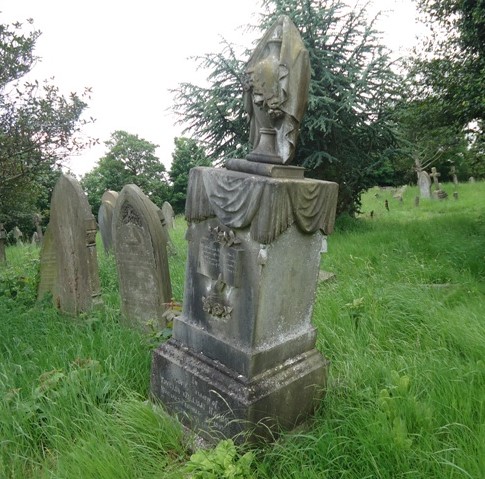
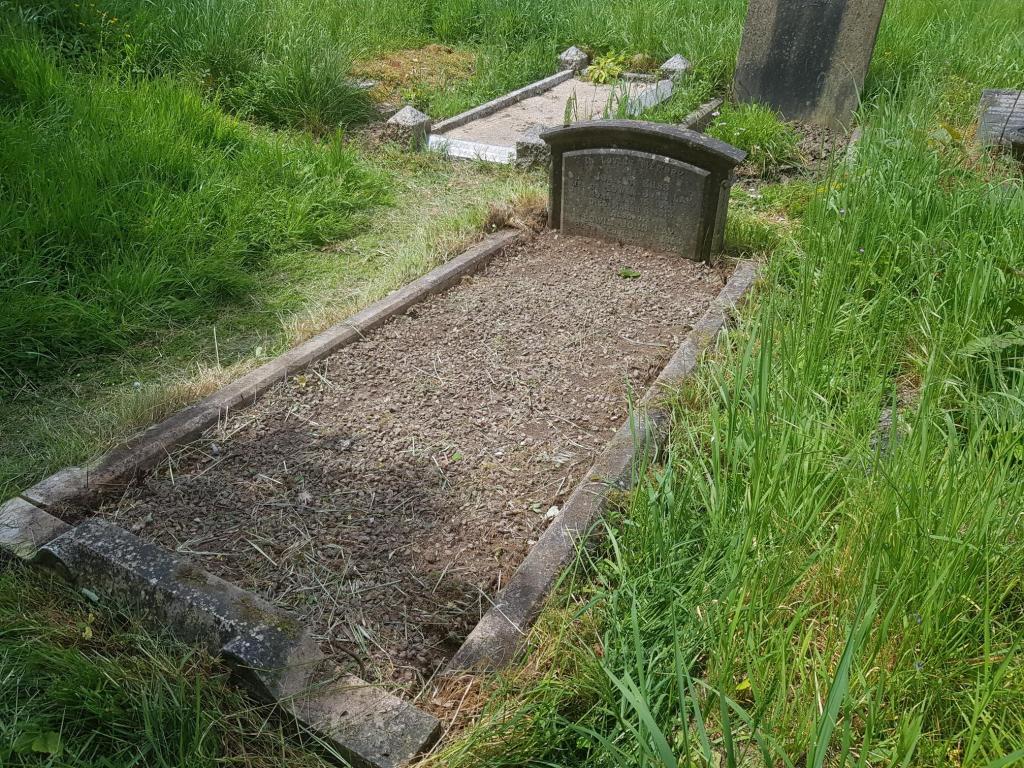
This impressive monument suggests to me it was originally meant to mark the final resting place of an entire family, but there is only one person buried here, Thomas William Harry.
Among some fine examples of Victorian funeral iconography there is the urn symbolising immortality, heavily draped signifying mourning. Books are a reference to scholarly habits and religious faith. There is a book beneath the urn and one opened on the first verse of a hymn – Hiding in Thee.
It reads:
O safe to the Rock that is higher than I
My soul in its conflicts and sorrows would fly
So sinful, so weary, Thine, Thine would I be,
Thou blest Rock of Ages, I’m hiding in Thee.
Written by William Orcutt Cushing with music by Ira David Sankey.
This is the last resting place of Thomas William Harry, born in Swindon in 1863 the eldest child of William and Mary Harry. This young couple were among the advance guard that moved from South Wales when the new Rolling Mill opened at the Works.
It is likely their first home was in the Barracks, the unpopular lodging house in the railway village that became a Wesley chapel, then the Railway Museum and then a youth project called The Platform.
By 1871 the Harry family were living at 7 Cambria Place, a two up two down terraced house in to which they managed to squeeze William, Mary and their five sons, Mary’s mother, two nephews (both employed at the Works) and two nieces.
William and Mary eventually returned to Wales to run a pub in Jenkins Town near Swansea. They took their four younger children with them but the four elder boys stayed in Swindon and lived at 12 Clifton Street. Head of the household was young Thomas, aged 18 and an apprentice fitter at the Works.
Thomas eventually left the works to set up in business as a grocer in a shop on Park Lane. He married in 1890 and in 1895 his son Cyril Arthur was born. Sadly, Thomas died before the little boy was two years old.
Thomas’ brother Henry known as Harry (making him Harry Harry) took over not only Thomas’s business interests but in 1909 married his widow as well.
Funeral of Mr T.W. Harry. – The funeral of Mr T.W. Harry, whose death was recorded in our last weekly issue, took place on Saturday afternoon at the Swindon Cemetery. The mournful cortege left deceased’s late residence, Bath Road, Old Swindon, at 2.15, the mourners being Mr H. Harry, Mr W. Harry, Mr C. Harry, and Mr A. Harry (brothers), Mr D. Harry and Mr Evan Harry (uncles), Mr F. Williams, Mr J. Williams, and Capt J.G. Morris (brothers-in-law), Mr A.W. Burson (partner), Mr G. Howells, etc. Upwards of 60 members of the Swindon Trader’s Association were present, including the president (Mr W.G. Little) and the secretary (Mr J.S. Protheroe), and representatives also attended of the deacons, the Sunday School, and the Christian Endeavor Society in connection with the Baptist Tabernacle, where deceased was a prominent member.
The bearers and representatives of the firm (Messrs Freeth & Son) included Mr Frank Burson, Mr Woolfrey, Mr Sutton, Mr Banwell, Mr Carver, Mr Hancock, Mr Strong, Mr Galpin, and others. A short service was held at the Tabernacle previous to the internment, the Rev F. Pugh (pastor) officiating. In addressing the large congregation Mr Pugh referred to his having baptised deceased as a member of the Church, and touched upon Mr Harry’s earnest and self-sacrificing labors on behalf of movements associated with the Tabernacle. He also paid a feeling tribute to deceased’s personal character and worth. Mr. Pugh conducted the service at the grave-side, which was witnessed by a large number. The coffin was of polished and panelled Canadian elm, with plain brass furniture, the brass plate being inscribed: “Thomas William Harry, died Feb. 2. 1897, aged 34 years.” Numerous floral offerings were received …
The funeral arrangements were efficiently carried out by Mr A.J. Gilbert, of Swindon. At the morning service at the Tabernacle on Sunday the pastor preached an impressive sermon on “The Passing of Jordan” from Joshua iii, 17, and made special reference to the circumstances of Mr Harry’s life and death. During the service deceased’s favourite hymns, “Hiding in Thee,” and “He fell asleep” were sung.
Extracts from the North Wilts Herald, Friday, February 12, 1897.
Today we celebrate International Women’s Day with the story of Joanna C. Lay.
It’s difficult to imagine a farm located in what is now Corporation Street, Swindon but this is where Joanna Cuss Smith and her seven siblings grew up.
When Joanna was born in 1851 her father worked as a master butcher with a shop in Wood Street but by 1861 he also farmed 110 acres at Lower Eastcott Farm, employing three men and two boys.
Joanna married jeweller Edwin John Lay in the summer of 1884. The couple had three sons and lived at 17 Bath Road, an elegant establishment opposite Apsley House.
Sometimes there is not much I can add to a sympathetic obituary published in the local media – so let me hand you over to the Swindon Advertiser.
Death of Mrs E.J. Lay
Well Known Swindon Lady
We regret to have to announce the death of Mrs Joanna Lay, wife of Mr Edwin J. Lay, watchmaker and jeweller of 17, Bath Road, Swindon. The deceased lady was a member of a very old Swindon family, being the eldest daughter of the late Mr Edward Smith, butcher and farmer, who carried on business in the town for many years at High Street and Eastcott Farm.
Mrs Lay possessed a great personal charm, a kindly nature, and thoughtful disposition, which she had always exhibited from her girlhood upwards. She was 62 years of age, and had been ailing a few weeks, but not seriously ill. Then she had an attack of bronchitis.
On Friday her condition was better, but on Saturday she had a relapse, and passed peacefully away.
The deceased lady leaves a sorrowing husband and a family of three sons – two of whom are in South Africa – to mourn the loss of a loving and devoted wife and mother.
Funeral at Swindon
Attended by a large number of sympathising friends, the funeral of the late Mrs Edwin Lay, of Bath Road, took place at Swindon on Wednesday afternoon.
Enveloped in a profusion of beautiful floral tributes, the coffin was conveyed from the deceased’s residence to the Baptist Church on a hand-bier. The deceased lady was a prominent member of the Tabernacle, being for 27 years the Secretary of the Sewing Circle (with Mrs W. Clappen as President), and the respect and esteem in which she was held by the members of the congregation was strikingly testified to by the large number of people who attended the funeral service. Conducted by the Pastor (Rev. J. Ivor Cripps) and the Rev. F.C. Shellard, the service was of an impressive character. The hymns, “Come let us join our friends above,” and “Calm on the bosom of thy God,” were sung, and in the course of the service the Pastor paid a touching tribute to the memory of the deceased. They looked upon something that day, he said, as something incredible, something which they found difficult to believe was true, for less than a fortnight ago Mrs Lay gave, at the annual Church social, a report on behalf of the Sewing Circle, and only last Sunday week was present at the Sacrament. He left to others who knew her more intimately the honour of praising her, but he knew her enough to say that she was one of the silent, quiet and faithful workers on whom the substance of Church life relies and depends. What she did she did faithfully and well, and those who were acquainted with her work could say that hers was indeed a place of honour in the Church.
The interment subsequently took place at the Cemetery, where the last sacred rites were performed by the Rev. J. Ivor Cripps.
Extracts from the Swindon Advertiser, Friday, March 14, 1913.
Joanna Cuss Lay 62 years of 17 Bath Road buried 12 March 1913 in grave plot E7310. Joanna is buried with her husband E.J. Lay.
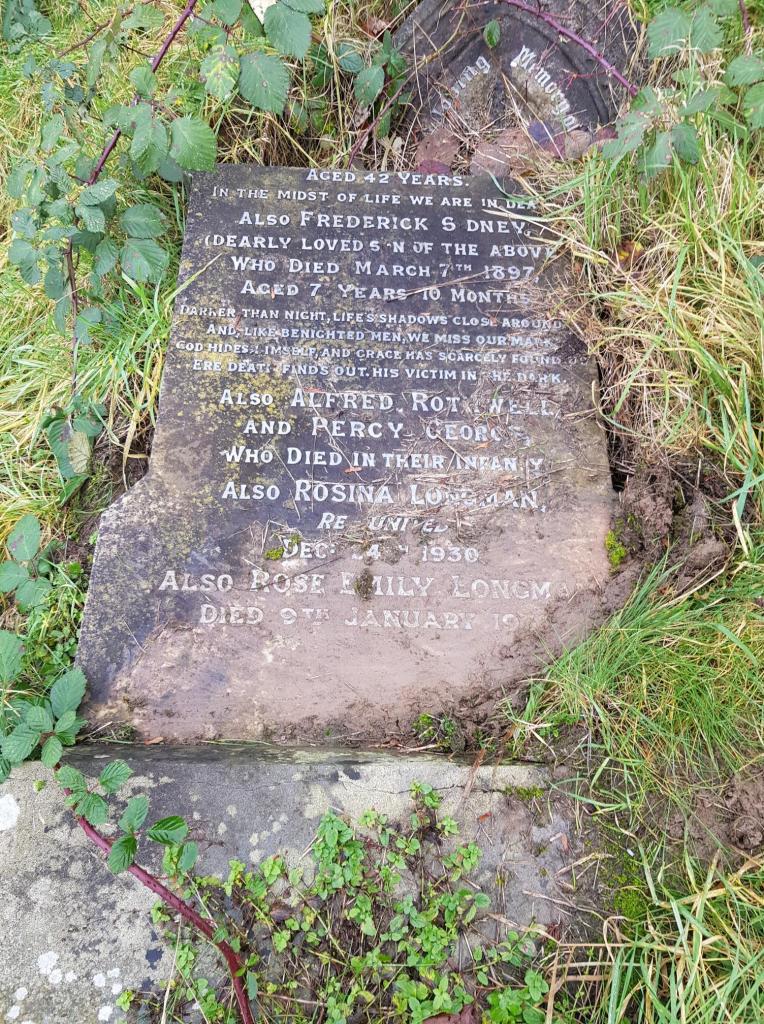
A fallen headstone, a neglected grave and a tragic story.
Arthur Longman’s family recognised the reoccurrence of his depression and anxiety. Arthur himself was obviously frightened and at the inquest it was revealed he had asked for help:
‘Deceased at one time expressed a wish to go to an asylum to be taken care of, but Dr Maclean considered that there was no necessity for him going there.’
Could there ever have been more damaging medical advice?
Arthur was born in 1850 in the village of Penselwood, Somerset, the son of Isaiah and Jane Longman. He married Rosina Flood in the March quarter of 1875.
At the time of the 1881 census Rosina was single handily running the family’s drapery business in Faringdon Street and caring for her five year old son. The census enumerator has written on the census form – Husband in Asylum. Arthur is recorded on that census as a patient in the Wilts County Lunatic Asylum, Devizes.
In 1891, the year before his death, Arthur states his occupation as Draper and Auctioneer. Rosina works as Draper & Milliner & Dress [maker]. Their eldest son Arthur 15, works as a draper & clothier’s assistant. There are a further four children, Charles 9, Rosina 7, Emme 3 and one year old Frederick. The couple have a heavy workload. But despite the family’s concerns little was done to help Arthur.
Sad Death of a Swindon Tradesman – On Monday morning Mr Arthur Longman, draper, of Faringdon street, New Swindon, committed suicide in his own house under painful circumstances. It is supposed that he rose about 4 a.m. according to his custom, and at 6.30 a.m., on his wife going downstairs she was horrified to find the body of her husband. Dr. Howse was at once summoned, but found life extinct. – An inquest was held at the Cricketer’s Arms, New Swindon, on Tuesday morning, by Mr. Coroner Browne and a jury, of whom Mr A. Adams was foreman, and the following evidence taken:-
Sidney Longman, a guard on the Midland and South Western Junction Railway, said deceased, who was 42 years of age, was his brother, and had been in business in Swindon about 20 years. He was sent to Devizes asylum about ten years ago owing to an attack of suicidal mania, being there about six months, when he came out practically cured. Deceased worried a great deal lately about a business which he had put his father-in-law into. He also worried a great deal about his new business at Gorse Hill, but witness thought there was no necessity for it. When he saw deceased last he told him that he had had a letter from his father asking him if he was any better in health, and told witness he wished he could say that he was.
Arthur Longman, deceased’s son, said he assisted his father in managing the business. He had noticed a change in his habits lately and he seemed depressed in spirits. Witness went out with him as usual on Sunday, and deceased went to church in the evening. It was nothing unusual for deceased to get up in the morning before any one else. On Monday morning witness got up about 6.30 and found deceased lying across the table in the kitchen. The room was not deranged in any way with the exception that the lamp on the table was knocked over. Deceased at one time expressed a wish to go to an asylum to be taken care of, but Dr Maclean considered that there was no necessity for him going there.- Dr Howse said he was called to deceased about 7 o’clock on Monday morning. He was quite dead, death being the result of haemorrhage caused by the wound in the throat.- The jury returned a verdict of “Suicide whilst of unsound mind,” and gave their fees to the Swindon Victoria Hospital.
Extracts from the Swindon Advertiser, Saturday November 5, 1892.
What happened to the family in the aftermath of Arthur’s violent death? Well, Rosina stayed in Faringdon Street and carried on with the business with the help of her son Arthur. She died on December 24, 1930 at 32 Faringdon Street and was buried with her husband and their young son Frederick Sidney who died in 1897 aged 7 years 10 months in grave plot A783 . The last person buried in this large plot was daughter Rose Emily Longman who died in 1953. Two young sons who died in infancy are also remembered on the headstone.
The inscription includes a verse from the hymn Hark! Hark, My Soul by Frederick W. Faber.
Darker than night, life’s shadows close around us
And, like benighted men, we miss our mark
God hides Himself, and grace has scarcely found us
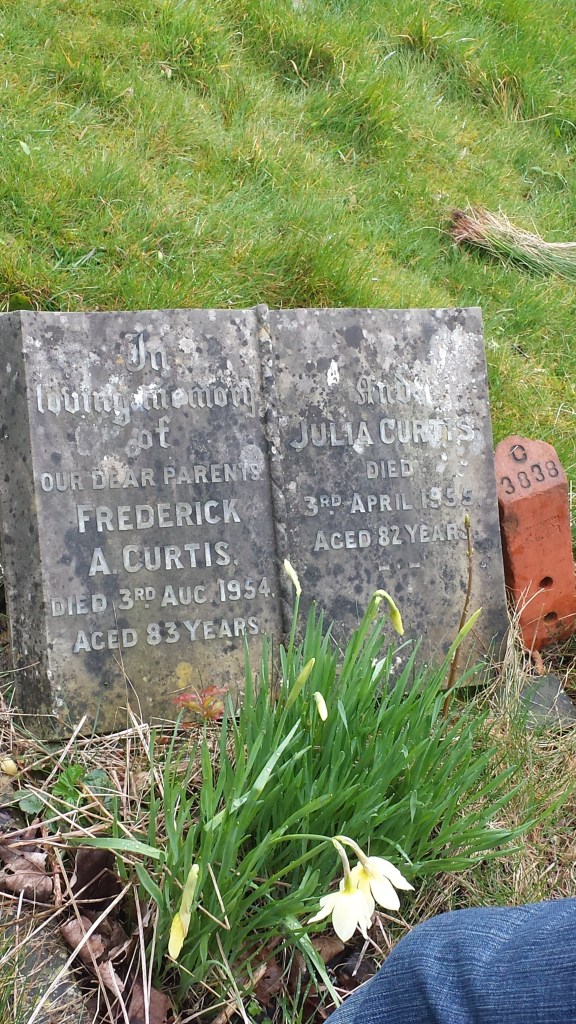
I am always thrilled to discover information from relatives about those buried in Radnor Street Cemetery. I recently received these details and photographs from Michelle who writes:
‘Please see attached images for Frederick Arthur Curtis and Julia Curtis who are buried in Radnor Street cemetery.
Fred and Julia came from Bristol and moved to Swindon between 1894 and 1896. In the 1901 census they are recorded as living at 31 Clifton Street and in 1911 at 163 Westcott Place and stayed there until they passed away. Their daughter Alice then lived there. Frederick was a shoemaker/boot repairer.
They had a 8 children of whom 3 died and we presume they would be in Radnor Street somewhere.
I hope the above and attached is of interest. If you have any information on whether Elsie Curtis who died aged 7 in 1906, Thomas Edward Curtis who died aged 14 in 1920 (we believe in some sort of vehicle accident and perhaps with a tram) or Frank Albert Curtis who died aged 8 in 1922 are buried in the cemetery we’d love to find them.
This is my husbands family and he grew up living next door to his grandmother at 164 Westcott Place. We now live on Kingshill Road and often take a walk around the cemetery and visit his great grandparents.’
Frederick was born in 1871, the son of William Curtis, also a boot maker, and his wife Ann. At the time of the 1891 census the family lived at 8 Bedford Place, Bristol. He married Julia Watts (dates seem to vary between various Curtis family historians) and by 1901 they had moved to Swindon.
I was able to tell Michelle that Frank is buried with his parents. Sadly, the other two children are in public graves, buried with (probably) unrelated people and with no headstone, but she was happy to receive the details and will now visit these graves as well.










 Radnor Street Cemetery