Robert Laxon – first secretary of the Medical Fund

I was surprised to find these two decorative headstones when I started researching Robert Laxon and Jason Johnson, two of the early settlers in the railway village. I had wrongly made the assumption that they would not have left enough money to pay for something like this. But the more I looked into their lives the more interesting I found these two men.

This is the last resting place of Robert Laxon who died at his home No 2 Faringdon Street on January 16, 1890 aged 86.

Robert was born in Lowestoft on May 10, 1804 and grew up in Gt Yarmouth, Norfolk. By 1835 he had married his wife Maria (who is buried here with him) and the couple were living in the parish of St Pancras in London.

The couple had a large family – two sons and six daughters, the youngest three children were born in Swindon. Robert’s sons, Robert and Frederick both became coppersmiths while the girls worked as dressmakers and tailoresses. Matilda had worked as a Pupil Teacher and in the 1871 census Maria describes herself as a bookseller, but eventually all the women earned their living by sewing.

The UK Railway Employment Records state that Robert’s service with the GWR began in December 1838 at Paddington where he worked as a coppersmith and that he was Foreman in K Shop of the Loco factory by June 24, 1843, the first to hold that position.

Robert held another first – in 1853 he was the first secretary of the Medical Fund. He also belonged to both the Oddfellows and the Ancient Order of Foresters, two Friendly Societies, which provided insurance, pensions and a banking service for members, so he was a careful and a canny man. When he died he left £878.

The employment records state that Robert left the GWR employment on January 16, 1890 – the date that he died. Did he continue working until his death? It is quite possible.

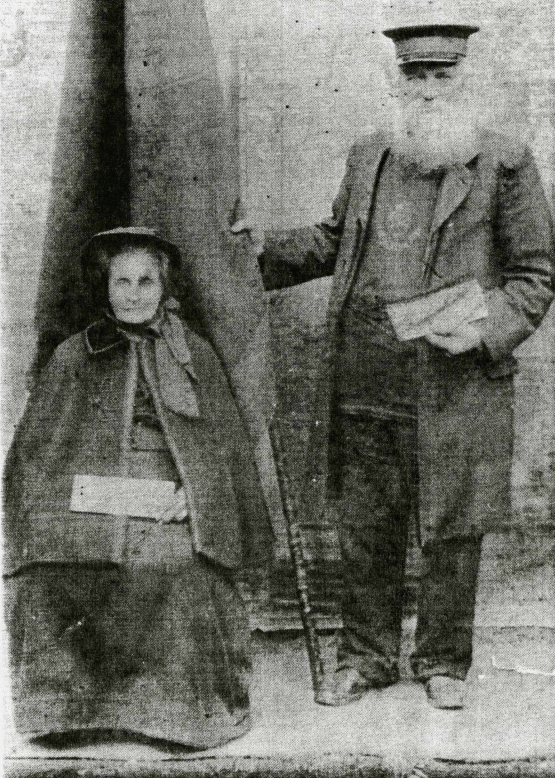
Robert Laxon pictured in old age

Death of an Old Forester. – On Thursday last, there passed from our midst, one of the oldest Foresters in Wiltshire, in the person of Bro. Robert Laxon, at the ripe old age of 85 years. Bro. Laxon was one of the founders of Forestry in Swindon, being one of the opening members of Court Briton’s Pride, No. 1597, of which Court he remained a member till the time of his death. For nearly 50 years he took an active part in the work of Forestry, not only in Swindon, but in the district round about. Bro. Laxon honourably filled the various offices of his Court for many years, holding the important office of treasurer. On Tuesday last, by the wish of his friends, he was accorded a Forester’s funeral. The brethren met at the Court House, the Union Hotel, at 2 o’clock, and having donned the funeral regalia of the Order, marched to Bro. Laxon’s house; the procession being headed by the D.C.R. Bro. T. Smith and Bro. J. Mitchel, P.D.C.R. At the house the workmen from the K shop (where Bro. Laxon was foreman), the foremen from the GWR Works, and other friends joined the procession, which numbered upwards of 100. At the grave the Forester’s funeral service was read by the D.C.R., Bro. T. Smith. Afterwards the brethren marched back to the Court House, where they separated. Bro. Dean, D.S., Bro. Baker, D.T., and Bro. G. Thomas were unavoidably absent.

In the year 1840 Mr R. Laxon was employed by the firm of Braithwaits, the engineers in London. The GWR Company being in want of a coppersmith, borrowed Mr Laxon from the above firm, to work for them at Paddington. After a month or two the railway company took him into their employ entirely. For some time he remained at Paddington, eventually being sent by the company to work at Swindon in the year 1844 (the Swindon Works being then in its infancy). Mr Laxon was placed in charge of the coppersmiths shop, their being two coppersmiths and one apprentice employed here at that time. After a short time, Mr Laxon was made foreman, which honoured position he has held till the time of his death.

Swindon Advertiser, January 25, 1890.

You might also like to read:
Jason Johnson – a homegrown railwayman

William Henry Bennett – Press Reader

We tend to think that back in the day people remained pretty much where they were born, growing up, marrying and dying in the same village or somewhere very close. But it has always been a fact of life that people went where the work was and Swindon is a perfect example. Take William Henry Bennett and his wife Edith, buried in Radnor Street Cemetery.

William and Edith married at St Michael’s Church, Wood Green on April, 8, 1888. William was a 32-year-old widower and Edith was just 20 years old. At the time of their marriage they both lived in Wood Green. William worked as a Press Reader and the couple lived at various addresses in Kentish Town and Camden for most of their married life.

But by the time of her death in 1931 Edith was living at 43 Stafford Street, Swindon. William died less than three years later when he was also living at 43 Stafford Street. Their eldest daughter Elizabeth Mary Sophia is buried with them and at the time of her death in 1952 she was living at 14 Prospect Hill.

So, what had brought the family to Swindon? Not a job in the Works, which is what invariably was once the attraction. The clue comes with Elizabeth Mary Sophia’s home in Prospect Hill in 1952.

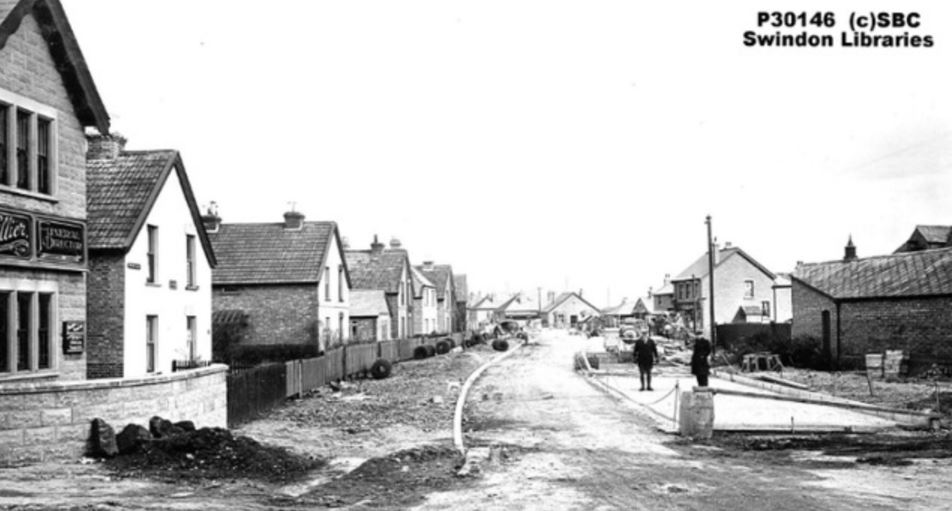
Prospect Hill begins at the Beehive pub on the corner of Western Street with the Rehoboth Chapel opposite and climbs up to the junction with North Street. Prospect Hill doesn’t appear to come within any of the Swindon Borough Council’s Conservation Areas, which is a bit of a shame as it is one of the streets that links the history of the two towns, Old and New Swindon.

When the railway settlement at the bottom of the hill was first built in the 1840s the amenities were pretty poor. The only shops were in Old Swindon, which constituted a long, muddy walk for the housewives across fields and up Prospect Hill. Development of this area began in 1869 when the Berkshire Estates Company laid out Dover Street, Western Street, North Street and Prospect Hill with part of Cross Street, although building was not completed until after 1885.

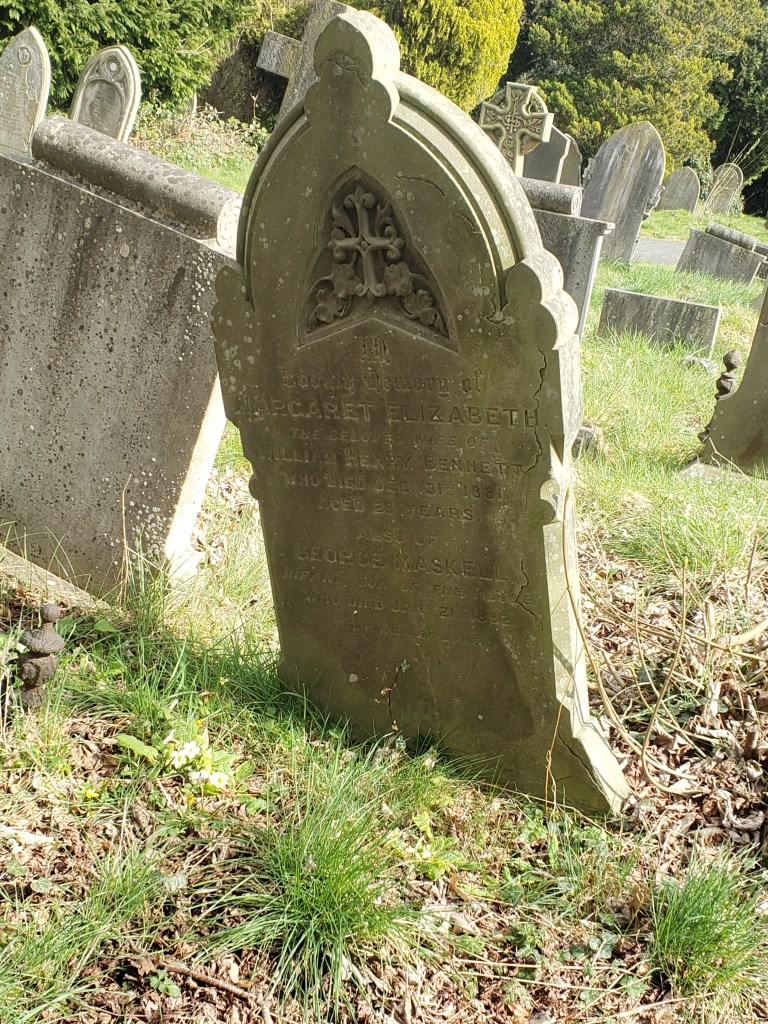
The 1911 census records George Smith living at No. 14 Prospect Hill with his son Arthur. George worked as a groom, most probably for one of the wealthy Old Swindon families, while Arthur was an Engine Fitter’s labourer in the GWR Works; a family embracing both halves of Swindon’s history. But George and Arthur were only tenants at No 14, the house belonged to our William Henry Bennett. In 1881, twenty years earlier, William was working as a jobbing printer and lived at No. 14 with his first wife Margaret Elizabeth.

Sadly, Margaret died in January 1882 aged just 29 years old, shortly after giving birth to a baby boy. Her son, George Maskell Bennett, died later that same month. They are buried together in Radnor Street Cemetery in plot E8212.

When did William decide to move to London? Perhaps he could not face living at No. 14 where he and Margaret had excitedly prepared to welcome their baby? 

When he eventually returned to Swindon with his second wife Edith, more than 20 years later, they made their home in Stafford Street. However, he had obviously held on to the house in Prospect Hill during the time he lived in London as this is where his daughter Elizabeth Mary Sophia ended her days in 1952.

Edith died on September 10, 1931 at 43 Stafford Street. William died on May 2, 1934 at the Stratton Infirmary and was buried with Edith in plot C2A close to the cemetery chapel. Their daughter Elizabeth Mary Sophia was buried with them in 1952.

Margaret and her baby are buried not too far away.

Prospect Hill

The grave of William, Edith and Elizabeth Bennett

Helene Celine Sawyer – distinguished public servant

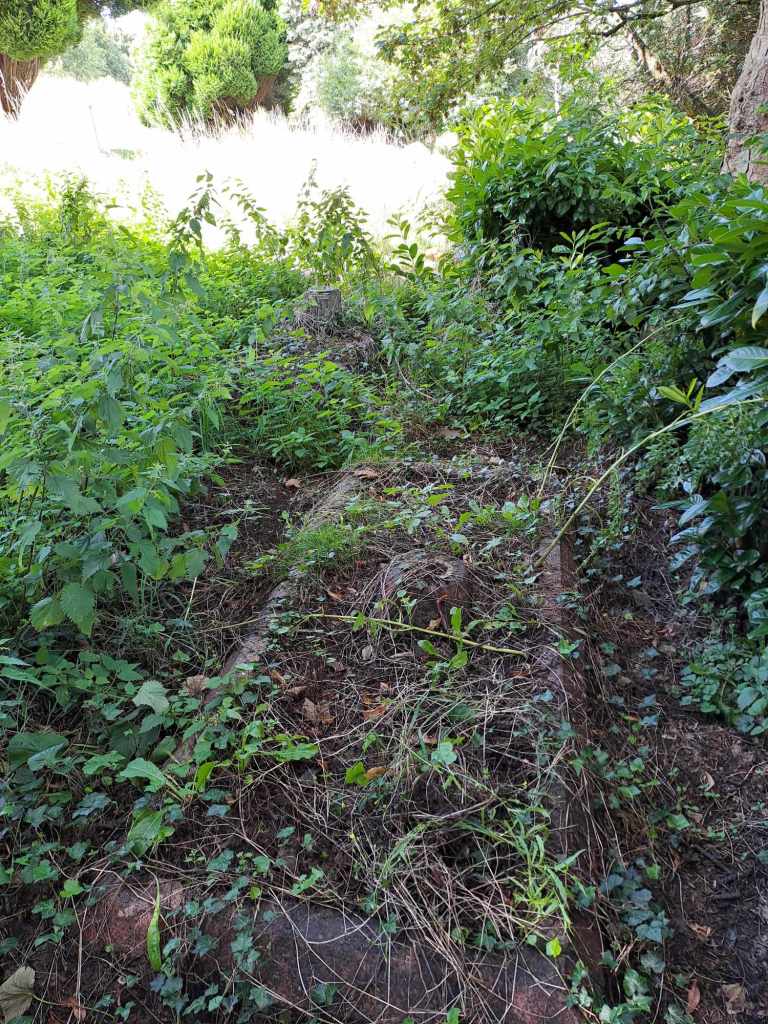
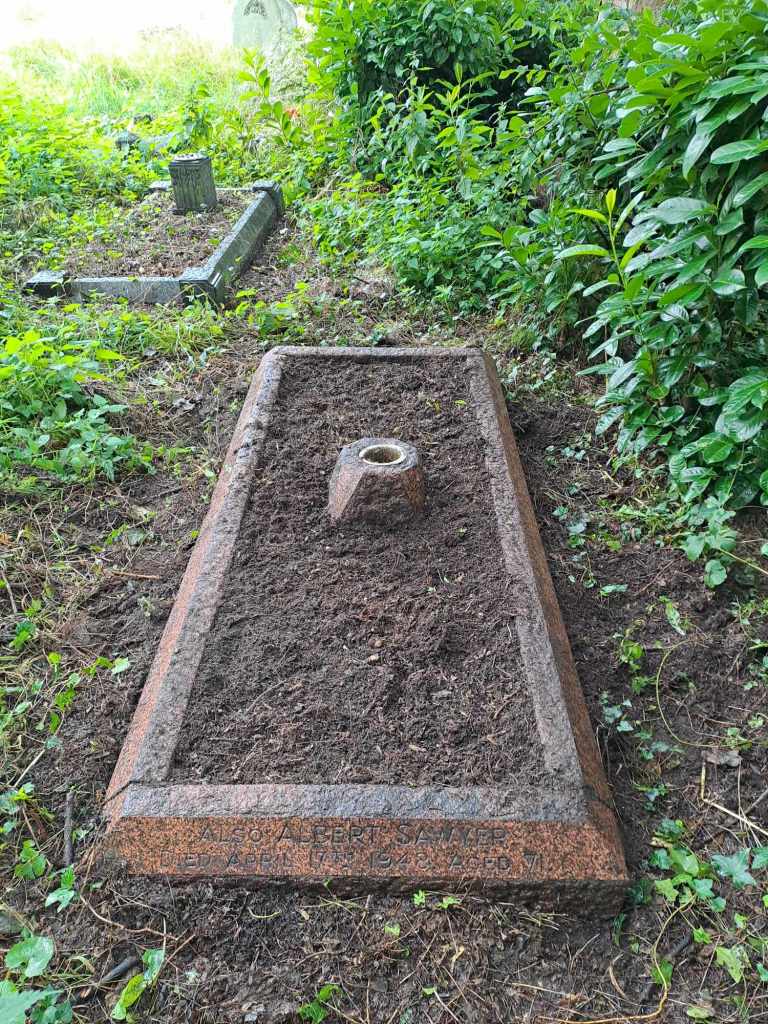
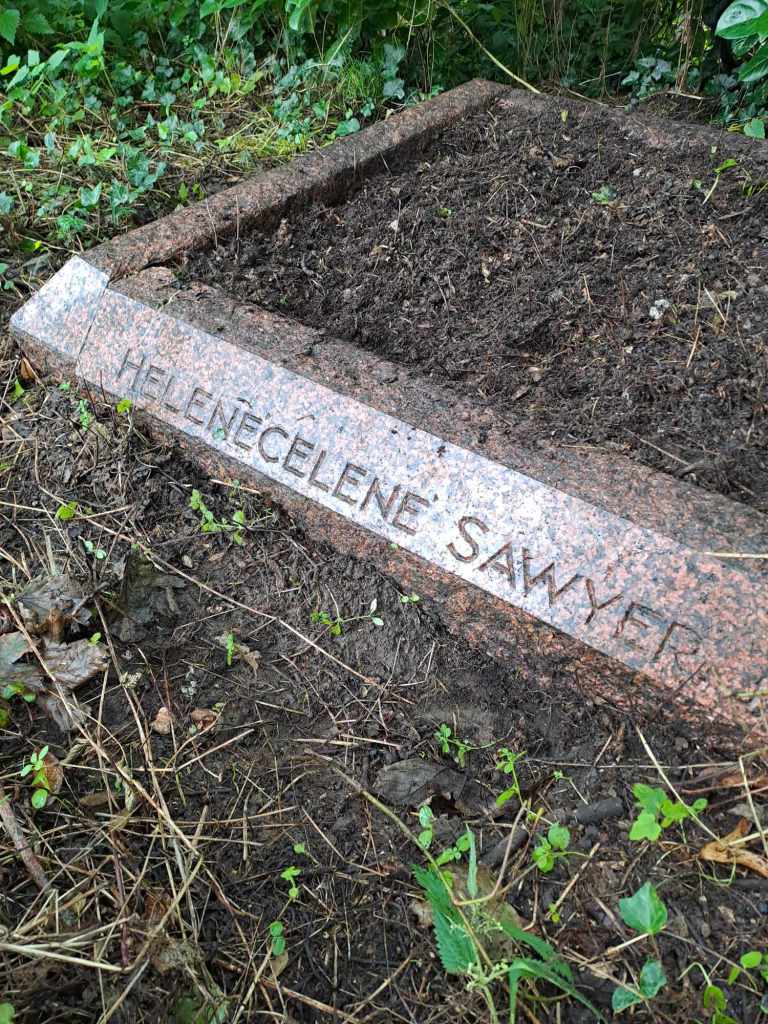
Helene Celine Sawyer is buried in a dark and overgrown area of the cemetery and when I first wrote about her I thought she had no headstone or memorial. I bemoaned the fact that often the people who worked the hardest for others during their lifetime leave no lasting memorial following their death, but since then one of our cemetery volunteers has been able to find Helene’s grave.

Helene Celine was born in Stroud, Gloucestershire in 1877, the eldest child in a family of eleven. Her father Thomas Hobbs was a butcher, her mother Elizabeth was born in Switzerland. Following the death of her husband in 1896, Elizabeth became Sub Post Mistress at the Post Office in Westcott Place where Helene was working at the time of her marriage to Albert Sawyer, a brass finisher in the railway works. The couple were married at St Mark’s Church, Swindon on September 21, 1902 and moved into 72 Dean Street where they would live together for the next 31 years.

Helene and her husband Albert were both members of the Swindon Labour Party and Helene was involved with other local organisations such as the Workers’ Educational Association (WEA) and the Young Men’s Christian Association (YMCA).

Helene began her lifetime of public service as a member of the Swindon and Highworth Board of Guardians where she was described as an energetic member of that committee. She continued to work with the Wiltshire Public Assistance Committee, which replaced the Board of Guardians following the Local Government Act 1929.

In 1920 Helene was appointed a Justice of the Peace, one of 234 women magistrates created nationwide, and was the first to serve on the Swindon Bench. The long list of names was published in the Women’s Freedom League newspaper, The Vote, where the women were described as having “rendered themselves conspicuous by distinguished public service.”

Helene had been suffering from failing health for some months during 1933 and died at her home on December 11. She was 56 years old. The obituary published in the North Wilts Herald on December 15 noted that Helene “had always carried out her duties very rigorously and with a great deal of judgement and sagacity” and that her work with the Children’s Court would always been remembered.

The funeral took place on Friday, December 15 with the service at St Mark’s Church followed by interment in Radnor Street Cemetery. Helene lies in plot B2647 where her husband was also buried in 1948. The cremated ashes of their only daughter, Kathleen were interred with them following her death in 1986.

James and Elizabeth Murgatroyd – two of Swindon’s ordinary people

Swindon Borough Council have been busy at Radnor Street Cemetery in recent weeks and have cleared a great swathe of brambles from Section E, a particularly difficult area to navigate. Section E has probably the greatest collection of headstones and memorials in the cemetery and as Noel, Andy and I took a walk, Andy’s eye was drawn to the grave of James and Elizabeth Murgatroyd.

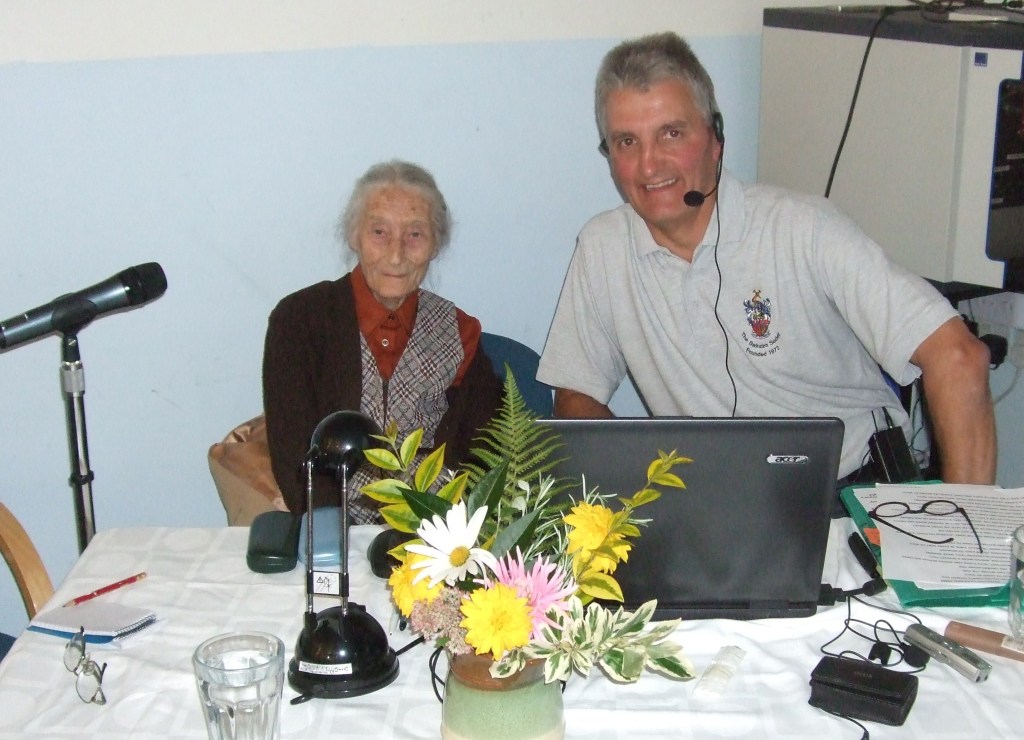
Joyce Murgatroyd was a great friend of Andy’s for many years. Teacher, artist, poet, musician and repository of Swindon’s history, Joyce died in 2017 aged 100 years.

I have written about Joyce’s family, including her great grandmother Sarah Peaple and cousin Elsie Morse but have never looked into the history of her husband Henry Murgatroyd’s, family.

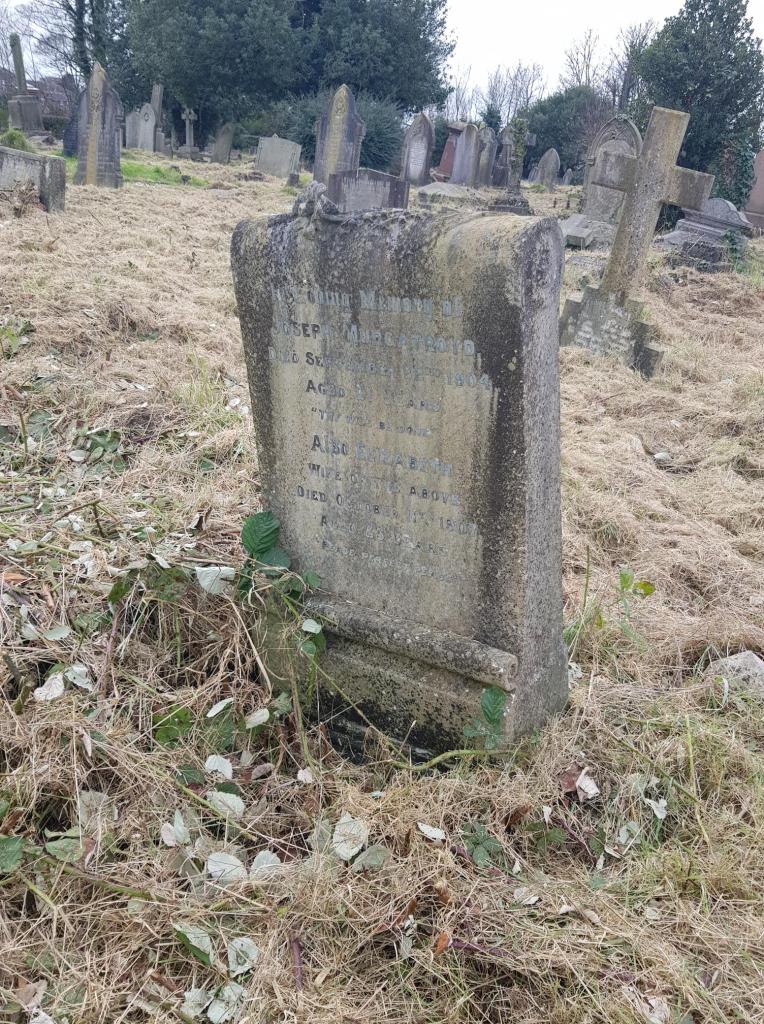
The headstone we discovered was that of Joseph Murgatroyd, born in Bradford in 1823. He married Elizabeth Dewhirst at St. Peter’s Church, Bradford on August 26, 1844. At the time of the 1851 census Joseph and Elizabeth were living in Okehampton Street, Exeter where Joseph’s occupation was engineer. They had two children Alfred, 5 and Priscilla, 3. It seems as if they may have already lived in Swindon at some point as this is where Priscilla was born.

By 1861 they were living at No 7, Alliance Terrace, Bridge Road, Swindon where Joseph was a Fitter & Turner at the Engine Factory. Their eldest son had died by that time – now their family comprised three children, Priscilla 13, Alfred Edwin 3 and one year old Sarah.

In 1871 they were living at 8 York Place before moving to 12 Sheppard Street, which would remain Joseph’s home until he died. His funeral took place on September 21, 1904 when he was buried in plot E7809. Elizabeth died in 1907 at her son’s home, 54 Eastcott Hill. Her funeral took place on October 15 when she was buried with Joseph. Their son Alfred Edwin, his wife Ellen and their daughter Annie Irene are buried in E7810, the neighbouring plot.

Joyce and Andy pictured together getting ready for a Swindon Society presentation in 2012.

Sadly, I did not establish a link to Joyce and Henry Murgatroyd, but I have been able to add another account to the Radnor Street Cemetery archives remembering Swindon’s ordinary people.

William Henry Selby – honourable in all his dealings

Many of the men who built Swindon were incomers to the town, but William Henry Selby was homegrown.

William Henry Selby was baptised at Holy Rood, the old Swindon parish church in the Lawn, on April 27, 1834, the son of Thomas Selby, bricklayer and his wife Mary. On the 1841 census the 7 year old boy is living in Dammas Lane with his parents and four siblings, Daniel 8, John 5, Jane 4 and 3 months old George.

William followed his father into the building trade, working as a stonemason. In 1863 he married Mary Ann Saddington, a domestic servant working for the Goddard family at the Lawn at the time of her marriage. In 1871 the census reveals the couple were living at William’s boyhood home with his widowed mother and their own three children. William would live his whole life in the house where he was born.

William’s name first appears in trade directories in the 1870s and across the years his sons Albert Henry and George Alexander Selby would join him in the business. Between 1896 and 1900 the family business built more than 50 houses across both Old and New Swindon from St. Margaret’s Road and Goddard Avenue to Graham Street and Rosebery Street.

Image of St Margaret’s Road published courtesy of Local Studies, Swindon Central Library.

William died April 14, 1899 aged 66 years. He was buried in plot E8088 on April 19, which he shares with his son George Alexander who died in 1923 and Julia Barnett, possibly a family member, who died in 1953 aged 91 years.

Death of Mr W.H. Selby

Another link between the Swindon of the past and that of the present has been snapped by the painfully sudden death of Mr W.H. Selby, builder. Mr Selby had not enjoyed the best of health of late, but he moved about with his wonted activity, and his friends did not entertain any forebodings. About 9.30 on Friday night, however, Mr. Selby was taken ill in Victoria Street, and within a few minutes he had breathed his last. He was assisted in the direction of his home as far as the Goddard Arms Hotel, where, in view of his condition, it was thought advisable to complete the journey in a cab. Mr Selby was accordingly driven home, where he expired in the course of half an hour, his death having been brought about by a paralytic stroke. The deceased’s figure was very familiar in Swindon, and the news of his death will be heard with great regret. Three generations of Mr Selby’s ancestors have been associated with Swindon, and have carried on successful businesses as builders in the town; and Mr Selby himself well perpetuated the tradition, winning much respect as a tradesman of the best type, upright, faithful, and honorable in all his dealings. Deceased was an enthusiastic horticulturist, and did a lot of hard work as a member of the Swindon Horticultural Society. His chief hobby was fruit and flower growing, and the success of his efforts in this direction may be gauged by the fact that he has won numerous prizes at the Crystal Palace shows against the strongest opposition. His local triumphs have been almost innumerable.

The interment took place on Wednesday at the Cemetery amid many tokens of sorrow and regret. The cortege left deceased’s residence at three o’clock, and proceeded to Christ Church, where the service was read by the Rev N.E. Howe (vicar). The procession then wended its way to the Cemetery, where the last solemn rites were performed by Mr. Howe. The principal mourners were Mr. T. Selby (brother) and Mrs T. Selby, Miss Annie Selby (sister). Messrs Albert, George and Lewis Selby (sons), Miss Louisa Selby (daughter), and Mr and Mrs Smith (cousins). A large number of friends followed. Wreaths were sent by the family, Mr Wheeler, Mr and Mrs F. Williams, Mr and Mrs Fenton, Mr and Mrs Day, Mr and Mrs White, Mr and Mrs Croad, Mr and Mrs D. Lane, Mr and Mrs Cockbill, Miss Kinneir, and the Committee of the Swindon Horticultural Society. The coffin was of polished panelled elm, with massive brass fittings, bearing the inscription, “William Henry Selby, died April 14th, aged 65 years.” The funeral arrangements were satisfactorily carried out by Mr F.J. Williams, acting for Mr. J. Williams.

North Wilts Herald, Friday, April 21, 1899.


Whitworth Road and the Broadway pictured during the 1930s when William Henry Selby’s firm was building a house for N.L. Selby in 1937. Published courtesy of Local Studies, Swindon Central Library.

John and Alice Hayes

This story was submitted by their great-granddaughter.


‘John Henry Hayes was born 2 Nov 1872 to parents William (ox carter) and Mary of 27 The Street, Broad Hinton. He was the 7th of 8 children, having 3 brothers and 4 sisters.

Living in a rural community he initially trained as a blacksmith before entering the Great Western Railway as a springsmith. (1911 census gives his occupation as Blacksmith Striker GW Railway).

Circa 1898 John Henry, aka Jack, married Alice Maude Mary (nee Pyke born 1879 Wroughton).

They moved to 50 Summers St. Swindon and he became a churchwarden at the Rodbourne Road Methodist Chapel.  My father remembers having to play quietly on Sundays whilst his stern granny read her bible. He also remembers she didn’t cook on a Sunday so there were only ‘cold cuts’ for lunch.

I understand he taught other railway employees in his front room. I don’t know whether this was religious studies or reading/writing.

Their family expanded and by the 1911 census they had 3 living and 2 deceased children. To my knowledge there were a further 2 girls and a boy, 6 in all surviving to adulthood.

My grandfather, imaginatively named Thistle Ewart aka Tom, was his second child. He, together with his only child my father Barrie John, and myself all in our turn ‘went inside’ GWR/BREL.  We have a 4 generation plaque on the wall at Steam.

John Henry lost his wife in 1939 and passed away 11 Feb 1951.  He was buried at Radnor Street Cemetery Swindon, plot C4160′

The attached photo is of John Henry and Alice taken in approx. 1934.

*The couple share their grave with Alice’s mother Jane who died in November 1926. Her last address was given as 50 Summers Street.

George Bishop – publican turned farmer

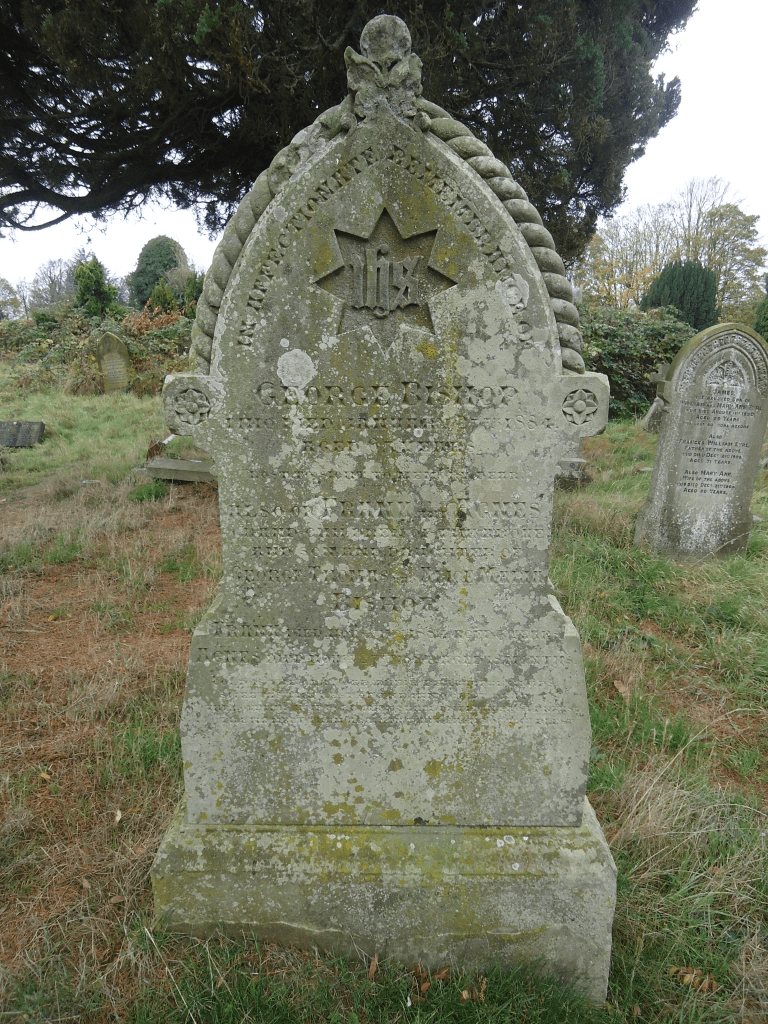
Sometimes a headstone can tell you a surprising amount of family history, although this one is becoming rather difficult to read.

Here is the story of a publican turned farmer and his two little grandchildren who were born and died during the 10 year gap between the 1881 and 1891 censuses.

George Bishop was baptised at the parish church in Wroughton on December 9, 1821, the son of Elizabeth Bishop, a servant, who did not provide a father’s name for the entry in the parish records. However, when George married Sarah Turner in 1846 he submitted his father’s details as George Gardener, a gardener.

Image of Bridge Street taken in c1925 published courtesy of Local Studies, Swindon Central Library.

At the time of the 1851 census George was recorded as a beerhouse keeper living on Eastcott Hill. A beerhouse was a premises licensed to sell only beer (no spirits). Beer could be brewed on the premises or purchased from a brewer. By 1861 George was landlord at a pub in Bridge Street, presently unidentified. (Could it have been the Sun Inn whose first recorded landlord was Robert Bishop – see Last Orders by John Stooke?) 

George and his family were still at No 55 Bridge Street in 1871. It must have been a large establishment as the census records for that year show the names of six boarders living there on census night.

George Bishop had been a publican for more than thirty years when at the end of the 1870s he gave it all up to become a farmer. At the time of the 1881 census George was farming 10 acres at Nore Marsh Farm in Wootton Bassett where he died on January 27, 1884. The cause of death was recorded as ‘syncope owing to diseased heart.’

His personal estate was valued at £126 14s 2d, administration of which was left to his only son George Thomas (his wife Sarah died in 1872 and is buried in St. Mark’s churchyard.)

Just months after George’s death the family were to gather again for the funerals of two little children. Three year old Frank Bishop was buried with his grandfather on November 21, 1884 and just eight days later one year old Agnes joined them. Frank and Agnes were the children of George Thomas Bishop and his wife Alice.

Almost 80 years after the sad events of 1884, a fourth and final burial took place in the Bishop family grave plot. On November 20, 1963 William Henry Bishop was buried alongside his grandfather and the remains of his little brother and sister, Frank and Agnes. He was 85 years old.

George Henry Flewellen – one of the best known locomotive railway inspectors on the GWR

George Henry Flewellen was born on August 4, 1861, the youngest of John and Betsy Flewellen’s five children and grew up in the hamlet of Ford, Wiveliscombe Somerset. He began working for the GWR in June 1878. At the time of the 1881 he was living in Bristol with his mother and stepfather. Aged 19 George worked for the GWR as an engine cleaner.

On August 12, 1889 he married Ada Elizabeth Horton at St Luke’s Church, Bristol.  By 1891 the Flewellen family were living in Devonport and George states his occupation as railway engine driver. The couple had two children who survived childhood, Henry born in Bristol in about 1895 and Winifred born in Taunton in about 1897. By the time of the 1911 census the family had settled in Swindon and were living at 23 County Road.

This photograph was taken by Swindon photographer William Hooper, it is believed, in the garden at the back of his studio at 6 Cromwell Street. It was taken on the occasion of the marriage of Henry John Flewellen and his bride Elsie M. Parker in 1917. This may have been a regular ‘professional’ assignment for Hooper, but I wonder if the two families were possibly friends of Hooper’s through his membership of the Open Brethren Movement.

The groom’s father, George Henry Flewellen, is pictured standing left, his hand on the shoulder of the seated woman in front of him, his wife, Ada.

The photograph is kindly published by P.A. Williams on the Local Studies, Swindon Central Library flickr page, among more than 1,131 images by William Hooper and other local photographers.

George had a long and illustrious career in the GWR (see below). He retired in 1926 and enjoyed a retirement of some 15 years, relatively unusual as many old railwaymen died within a year or two of finishing work.

Inspector George Henry Flewellen, who retired on August 4, is one of the best known locomotive railway inspectors on the G.W.R., which company he has served since 1878, when he commenced as an engine cleaner. He had thus completed 48 years’ service. Mr. Flewellen had been associated with many of the most notable developments in locomotive operation and train running on the G.W.R. He was on the City of Truro when it gained the world’s highest authenticated speed record, touching 102.3 m.p.h. down Wellington Bank with an Ocean Mail special. This was in May, 1904. He continued on the same train, but with the old single locomotive, No. 3065, Duke of Connaught, which ran the 118 ½ miles from Bristol, to Paddington, via Bath, in 99 min. 46 sec. start-to-stop, incidentally covering the 81 ¾ miles from Wootten Bassett to Westbourne Park in 62 min. 55 sec., maximum speed 91.8 m.p.h. He was in charge when H.M. the King drove the engine Windsor Castle for a short distance in 1924. The photograph reproduced shows him standing alongside the engine which inaugurated the Swindon-Paddington run at an average speed of 61.8 m.p.h.

newspaper cutting

George and Ada’s last home together was 23 Wills Avenue. George died at St Margarets Hospital, Stratton and was buried in Radnor Street Cemetery on April 30, 1941. He was 79 years old. Ada died less than two years later, also at St. Margarets Hospital. She was 77 years old. She was buried with her husband in grave plot C4863 on December 22, 1942.

You might also like to read:
William and Mary Hooper rock up at Stonehenge

David Uzzell – a bit of a country rogue.

On his frequent visits to his grandmother Rachel in Swindon, Edward Thomas, literary critic, journalist, poet and biographer of Richard Jefferies, met David Uzzell – a man he referred to as ‘Dad Uzzell’

Uzzell was born in Ewen, Kemble, Gloucestershire in 1841 the son of John and Sarah Uzzell. He married Fanny Holliday on December 25, 1863 at Stratton, Gloucestershire. By 1871 they were living in Cirencester where David worked as a labourer. The couple had a six year old son William. By 1881 they were living at 95 Gloster Street, Cirencester where they would remain for many years before moving to Swindon by 1901. The couple lived at 6 John St Terrace where David worked as a Caretaker for the Salvation Army Barracks.

Uzzell has been described as a countryman, but also as a bit of a rogue. He taught Edward Thomas about country folklore and came to epitomise the agricultural labourer/poacher and fisherman that Edward later wrote about.

David Uzzell died at his home, 6 John St Terrace in December 1919 and was buried in grave plot B2190, a public grave, with four others. Fanny died three years later aged 85. She was buried on December 8, 1922 in grave plot C503, another public grave. She is buried with four others including her son William who died in 1925.

David Uzzell may have been a bit of a ‘country rogue’ but he has earned a place in literary history.

David Uzzell and his wife Fanny pictured holding their pension books.

You might also like to read:
War Poet Edward Thomas and his Swindon family

Georgina Frances Verschoyle

On the perimeter of the cemetery in Section E is the grave of Georgina Frances Verschoyle.

Georgina was born in Dublin in about 1831, the second child and eldest daughter of Robert Verschoyle and his wife Catherine Curtis. Robert and Catherine were married by licence on August 20, 1824 at the parish church of Bathwick St. Mary, Somerset. By the time of the 1841 census they were living in Eaton Square that exclusive housing development once known as a ‘City of Palaces’ owned by the Grosvenor family and laid out by T & L Cubitt in 1827.

The Irish Verschoyle family were of Dutch origin. Some sources say they were Huguenots who fled to Ireland to escape religious persecution others that they had travelled to Ireland with William of Orange.

Georgina’s grandfather was the Rev James Verschoyle, Bishop of Killala, described as reforming and innovative and the last bishop to hold the title in that diocese. Her father Robert was a wealthy landowner with property in Ireland although he lived most of his adult life in England.

Transcription errors in the spelling of the unfamiliar Verschoyle name make it difficult to track Georgina through the online census returns, but by 1881 we find her living at 1 Victoria Cottages, Tormoham, Devon in a lodging house run by Jane Gardner.

In 1891 she was living with her youngest sister Augusta and her husband Alfred M. Drummond, a retired Army Captain, in Fitzjohns Avenue, Hampstead.

So how did Georgina come to be living in Swindon for the last years of her life? For a possible connection we have to turn to her brother, Henry William Verschoyle.

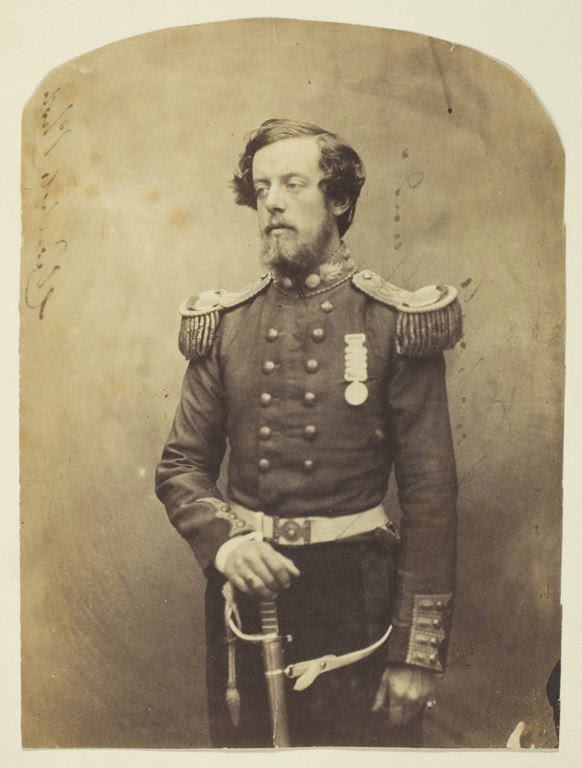
Captain Henry William Verschoyle served in the Grenadier Guards in the Eastern campaign of 1854-55, probably better known today as the Crimea War. Henry saw action in the battles of Alma, Balaklava and Inkermann where he carried the regimental colours. He fought at the siege and the fall of Sebastopol and was wounded in the trenches on September 5, 1855. Captain Verschoyle was promoted to Lieutenant Colonel on January 15, 1861. He died on August 21, 1870.

But how does this explain Georgina’s presence in Swindon more than twenty years later?

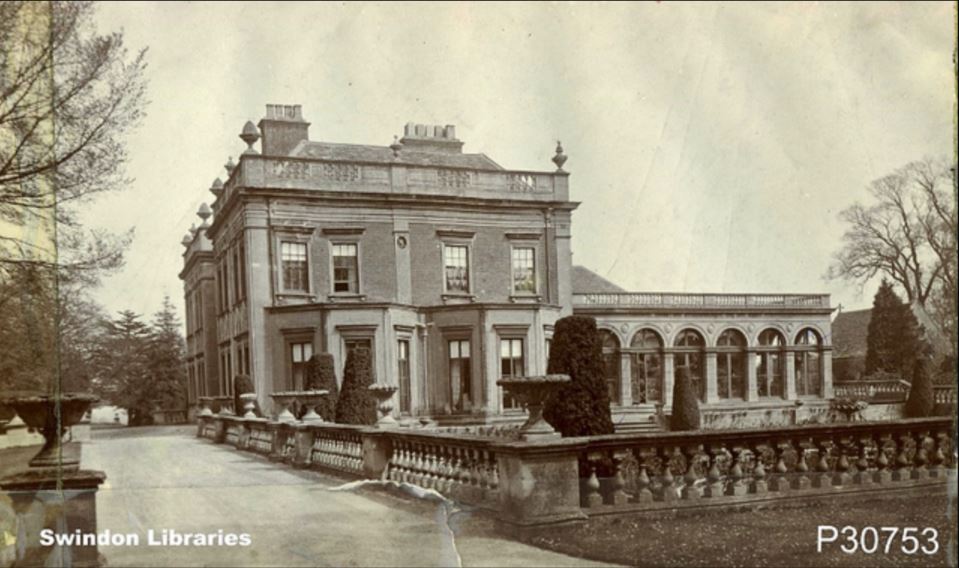
In 1856 Henry William Verschoyle married Lucy Clarissa Goddard in Christ Church, Swindon. Lucy Clarissa was the daughter of Ambrose Goddard, Lord of the Manor, and his wife Jessie Dorothea Lethbridge. In 1851 Lucy Clarissa was living at The Lawn, the Goddard family home, with her father and three sisters, Emma, Julia and Adelaide.

Lucy Clarissa and Henry William Verschoyle went on to have a family of four daughters and a son and lived at 6 Wilton Crescent, Belgrave Square, so were near neighbours of Henry’s mother Catherine in Eaton Square.

But even this doesn’t answer the question of how Georgina spent the last years of her life in Swindon.

Perhaps Lucy Clarissa had returned to stay at the Goddard family home in the 1890s but would that have been encouragement enough for Georgina to move to Swindon, and if so why didn’t she stay in The Lawn, it would have been plenty big enough?

The Lawn, Swindon published courtesy of Local Studies, Swindon Central Library.

My research into the life and times of Georgina Frances Verschoyle continues, but for the time being this is all I can discover about her.

The facts …

Death announcement

Verschoyle On the 20th inst at New Swindon, Georgina Frances Verschoyle aged 64.

Reading Mercury Saturday December 30, 1893.

Radnor Street Cemetery Burial Registers

Verschoyle Georgina F. 64 years 6 Queen Ann Buildings burial 23rd December, 1893 plot E8474

Probate

Georgina Frances Verschoyle of 4 Queen Anne’s buildings, Farringdon Street, New Swindon Wilts Spinster died 20 December 1893 Probate London 19 November to Arthur Robert Verschoyle esquire Effects £6560 3s 2d

You might also like to read:

The Goddard family tomb and Swindon’s first ‘modern’ burial ground