John Whitehead Spargo – a popular pastor


Central Hall, Clarence Street published courtesy of Local Studies, Swindon Central Library.

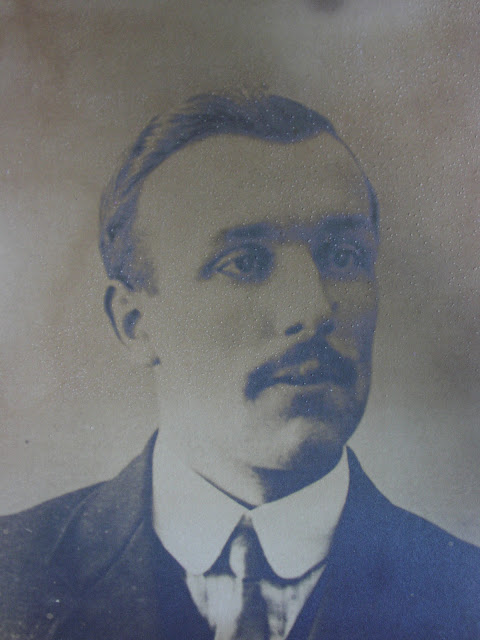
Rev John Whitehead Spargo was born in 1875, the eldest son of Samuel Spargo, a joiner, and his wife Maria Ann. He married Isabella Maud Walford in 1904 and the couple had three children, one of whom died in infancy. At the time of the 1911 census Pastor Spargo was working as a Wesleyan Methodist Missioner in Reading. By 1917 he had moved to a post at the Central Mission Hall in Clarence Street, Swindon.

Pastor Spargo’s name appears frequently in the Radnor Street Cemetery burial registers during his seven year ministry in Swindon. In 1919 he conducted the funeral of Frederick Cosway 14, Frederick Rawlinson 14 and Stanley Palmer 13, three boys killed in an explosion at the Chiseldon Military Camp.

A Popular Pastor

Mr Spargo Leaves Swindon Brotherhood

After seven years’ work in Swindon as missioner to the Central Mission, Pastor Spargo has left to take up his duties in a new sphere of work at Finsbury Park, London. He gave his farewell address at the Brotherhood on Sunday.

Speaking to a large audience, Pastor Spargo said he was sorry that his long connection with the Swindon Brotherhood was coming to an end. He was grateful to have had the opportunity of being connected with the various societies and organisations identified with the Swindon Brotherhood. If there had ever been a cry for help and need in Swindon, the Brotherhood always heard and responded to that cry.

The Pastor took as the subject of his address, “God’s Fellow Workers.” He remarked that as members of the Brotherhood it was their high privilege to labour for Jesus Christ and to promote the principles laid down by Him. It was a mistake to think that everlasting happiness meant contentment and rest, for there could be no happiness without work.

In his opinion, lasting happiness would be having a vocation, and understand work in the right spirit. All the great men of the past had been people with great tasks, and the glorious heroes of the faith had been men and women with something to do.

But before the Brotherhood as a movement could get to work, the individual member must himself work, and before they could bring repentant sinners to Jesus Christ they themselves must first come repentant to God. He (the speaker) believed that Christ came into the world to pardon sin, but that belief was not one iota of good to him or to any-one else unless he possessed a practical experience of that belief.

Brotherhood’s Work

Continuing, Pastor Spargo said that he did not believe the world of to-day was in the state which God meant it to be, for He could not be satisfied with a world in which there was so much sin abounding. There was, then, a glorious work before the Brotherhood, although it might not be a romantic work. But every man in the Brotherhood could help to make Swindon a better town with the help of God, for if God made a man, then surely He could use him, although he might possess but one single talent. The speaker concluded by saying that if they of the Brotherhood could but appreciate the height, the depth, the strength and the glory of God, then they could make this world a place in which it would be more difficult to do evil, and more easy to follow the right.

Pastor Spargo was then presented with a cheque for £5 on behalf of the Brotherhood Committee by Mr Cotsell, and with a further £5 which had been given by private subscription as tokens of the great esteem in which the missioner was held by all members of the Brotherhood.

In presenting the gifts, Mr. Cotsell said that Pastor Spargo’s presence created an atmosphere, and he always felt that something was missing when the pastor was not on the platform. He expressed his heartfelt gratitude to the retiring missioner for all the work which he had done for the Swindon Brotherhood.

There was a crowded congregation at the evening meeting at the Mission, when Pastor Spargo delivered his farewell address on “God’s way of working” to a company numbering over a thousand.

North Wilts Herald, Friday, August 22, 1924.
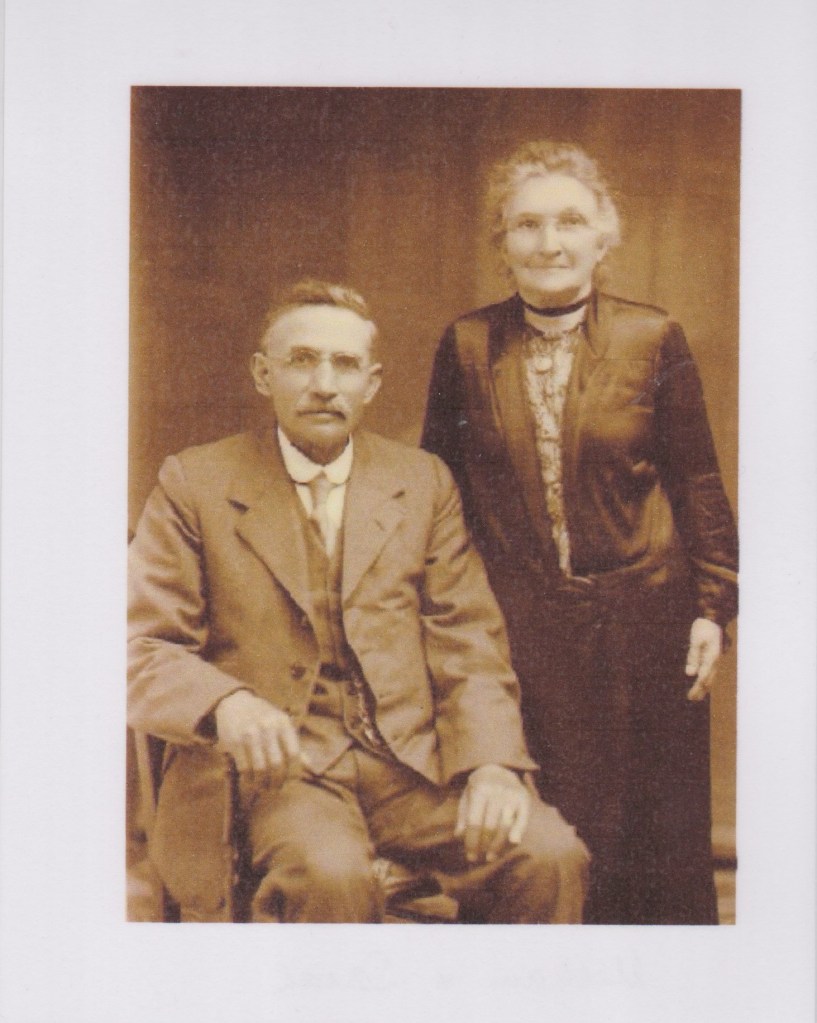
William and Sarah Tydeman

Although Rev Spargo left Swindon in 1924, he retained his connection with the congregation at the Central Mission Hall, particularly with the Tydeman family and in 1935 he returned to conduct the funeral of Sarah Tydeman.

Rev John Whitehead Spargo died in 1960 in Ware, Hertfordshire.
William Joseph Hobbs – during a fit of temporary insanity

The re-imagined story …

I went to school with Lucy Hobbs. She lived with her dad and her uncle’s family at 13 Omdurman Road. The two brothers were well known in Gorse Hill. Lucy’s dad was a bricklayer and his brother John was a carpenter. I never knew Lucy’s mother, she had died when Lucy was very young.

It always appeared to be a happy, busy home but you can never tell what pain and sorrow people live with. Neighbours said William had never recovered from the death of his wife. Williams’ bereavement might seem in the past to others, but for him it must have been a daily presence.

I lost touch with the family as we all grew older. I heard that the eldest son, William joined the navy and Beatrice went into service but I don’t know what became of the other son. My friend Lucy married and left Swindon to live in London.

We’ve had tough times as a family, but I can’t imagine the desperation Lucy’s father must have felt. How does anyone do what he did, he could have seen no hope for the future.

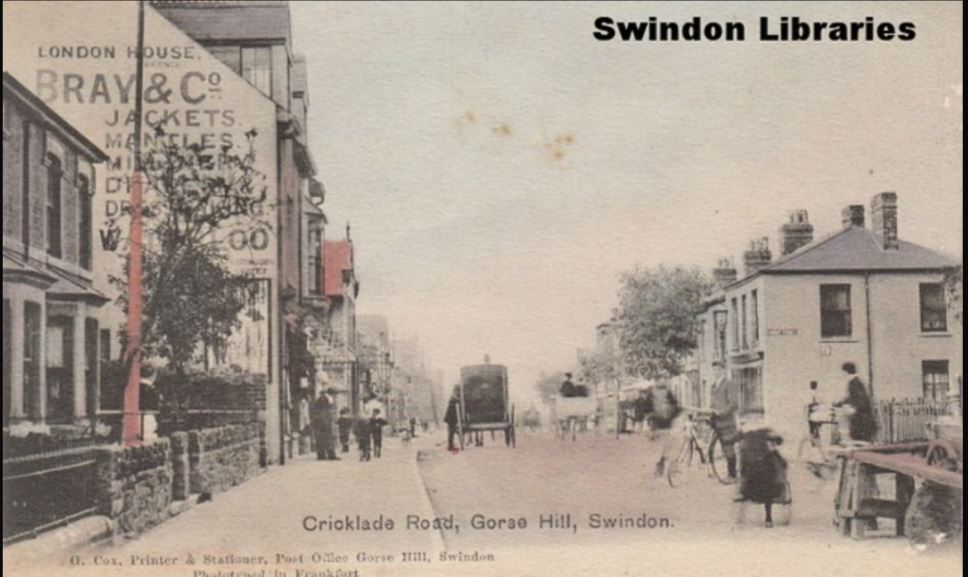
Cricklade Road, Gorse Hill.

View of Cricklade Road, Gorse Hill published courtesy of Local Studies, Swindon Central Library.

The facts …

William Joseph Hobbs was born in 1868 in Poulton, Gloucestershire, the eldest of William and Sarah Ann’s nine children. William senior worked as a stonemason and both sons William Joseph and John William followed him into the building trade.

William Joseph Hobbs married Jennetta Williams on October 4, 1890 at the parish church in Poulton and by the time of the 1891 census the couple were living at 3 Ferndale Road with the two younger Hobbs brothers, John William and Tom.

William and Jennetta had four children, William Joseph, Henry Charles, Beatrice May and Lucy Amelia Jennetta who were all baptised at St Barnabas Church, Gorse Hill. The youngest child, Lucy, was baptised on April 7, 1911 aged 14 and is described in the register as ‘Candidate for Confirmation.’

Jennetta’s death was registered at Marylebone district in the June quarter of 1899. She was 34 years old and died leaving William with four children to raise. Somewhat surprisingly William did not remarry as most men left in this predicament usually did. At the time of the 1901 census he is living at 53 Ferndale Road with his four children aged 8, 7, 5 and 3, with a housekeeper Emily Button.

The newspaper account reads:

Railway Tragedy

A terribly mutilated and decapitated body of a man was found on the GW Railway Highworth branch line at Swindon at 5.30 Saturday morning. The discovery was made by a shunter, the body lying across the six foot way with the neck across the metals in such a manner as to indicate deliberate design. Enquiries set on foot by the police led to the identification of the body as that of a bricklayer named William James [Joseph] Hobbs, a widower, who, up to a fortnight or so ago, had been lodging in Cheltenham Street, New Swindon. He was stated to be in comfortable circumstance, although he had not been at work lately.

The [Gloucester] Citizen Monday 30 September 1912.

Swindon

A Case of Suicide

During a fit of temporary insanity was the verdict at which a coroner’s jury arrived on Monday, when sitting to inquire into the death of a man whose decapitated body was found on the GWR line near the Swindon goods station on Saturday. It was said that the deceased – William Joseph Hobbs, a bricklayer, 44 years of age – had behaved somewhat queerly of late, but beyond being irregularly employed there was little to worry him. He was a widower.

The [Gloucester] Citizen, Tuesday October 1st, 1912

The entry of William’s death in the Radnor Street Cemetery burial registers reads:

William Joseph Hobbs 44 found on GWRailway 13 Omdurman Street 1st October 1912 plot A5.

William was buried in a public or pauper’s grave with two other unrelated people.

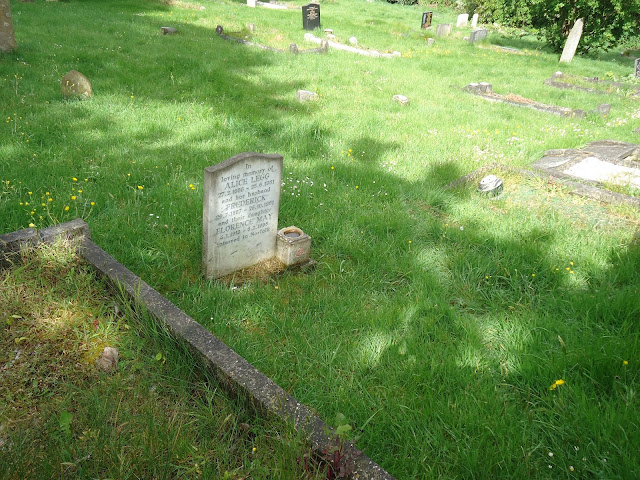
Alice and Frederick Legg

This is the story of Alice and Frederick Legg.

Alice Legg was not a local girl. She was born in Wimbledon in 1886, the daughter of Frederick and Catherine Lovegrove.

Her first job was as a kitchen maid at a private girl’s school in Wimbledon. The duties of a kitchen maid were many and varied and involved a lot of cleaning and some cooking under the supervision of the cook. In this her first job, Alice was roughly the same age as the pupils at the school.

At the time of her marriage in 1911 Alice was working as a domestic servant for a Wine & Spirit retailer. Her husband Frederick was born in 1887, possibly in Faringdon.

They married at All Saints Church, Wimbledon on June 5, 1911. Both Alice and Frederick give their address as 65 Norman Road. The UK Railway Employment Records state that Frederick had begun working for the GWR here in Swindon on May 29, 1911 as a Boilermakers Helper, just weeks before his wedding.

Frederick later worked as Watchman in the Loco Manager’s office. He left the Works on Jan 4, 1943. The couple’s last home together was at 75 Okus Road.

Alice died at the Isolation Hospital. Frederick died at 432 Ferndale Road, most probably the home of one of their children.

The couple died within months of one another. Alice in June 1961 and Frederick in October of the same year.

Alice and Frederick’s story was kindly given to me by a Radnor Street Cemetery follower who joined one of our guided cemetery walks some years ago.

William Graham Little – Swindon philanthropist

Faringdon House

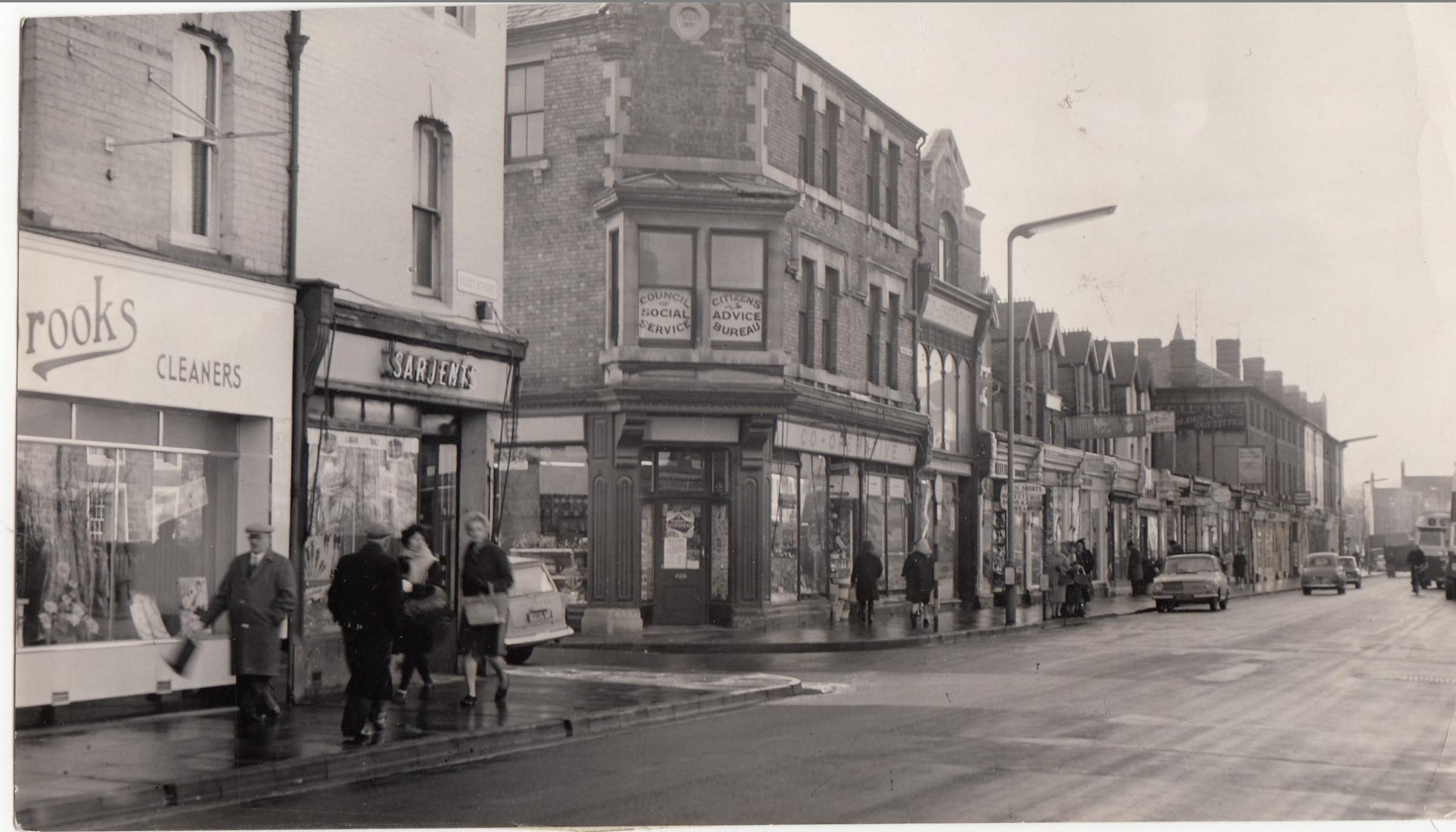
W.G. Little’s shop on the corner of Fleet Street and Catherine Street.

William Graham Little left a legacy that lived long in Swindon’s history.

William Little was born in Chippenham in 1856, the son of George Little, a linen and woollen draper, and his wife Dinah. William was the fourth of eleven children.

He moved to Swindon when he was 18 and began business as a door to door salesman. His first shop was at 32 Fleet Street where he sold clothes and fabrics.

At the time of the 1881 census he was living at 31/32 Fleet Street, his home for more than 40 years, where he employed his 19-year-old brother Albert as a tailor and cutter and his sister Sealy Anne 23, as his housekeeper.

As the business prospered he was able to build a shop in Faringdon Road. The ghost of an advertisement on the side of the building can still be seen – WGL 1892 draper, milliner.

Little served as a Councillor, a JP and an Alderman during the same period as Reuben George and James ‘Raggy’ Powell.

William Little died in 1927 aged 72. He left an estate of more than £56,000 worth today in the region of £2.5 million.

Little never married and seemed to be distanced from his family. He left his sister Frances (who had been his housekeeper at one point) £100 and the rest of his estate he left to Swindon. His family unsuccessfully contested the will but in 1932 the WG Little Scholarship and Band Concert Fund was established. His money was left in trust ‘for the promotion and advancement of education and recreation among the youth of the town.’

In 1965 an article in the Swindon Advertiser said that grants of £52,000 had been made since 1938. In 2012 a grant of £6,000 was paid to help recreate the Children’s Fete at Faringdon Road Park.

In the past, grants have gone towards helping support students at university but more recently payments have been made to buy uniforms for children of needy families transferring from primary school to secondary school.

William Graham Little was buried on May 10, 1927 in plot D47A Radnor Street Cemetery.

William Graham Little

You might also like to read:-

Reuben George and the Christmas card

James ‘Raggy’ Powell – one of nature’s princes

Charles Morkot – one time engine driver of the Flying Dutchman

Charles Morkot never appears to have lived in Swindon. Perhaps his two sons made a case for his burial in Radnor Street Cemetery following the dramatic circumstances of his death.

Charles Morkot was born in 1832 at Goring, Oxford, the son of agricultural labourer James and his wife Ann. Like his father, Charles began his working career as an agricultural labourer. However, the UK Railway Employment Records 1833-1956 (available to view on Ancestry) record that Charles began work as an Engineman with the GWR on April 24, 1856, shortly after his marriage to Susan Jane Hinton Shrimpton on April 5.

At the time of the 1861 census Charles had moved his family to Aston, Warwickshire where he worked as a Railway Engine Fireman. He progressed his career to become an Engine Driver and for sometime was employed on the record breaking Flying Dutchman loco. The Flying Dutchman was in operation between 1849 and 1892 travelling from Paddington to Exeter (and later Penzance) reaching speeds of 60 miles an hour in 1876.

Good Friday 1898 and George was enjoying his day off working in his garden at 5 Primrose villas, Kingston Road, Southall. He got up early and told his daughter Nellie that he was off to collect some manure for the garden from the stables at the “Three Tuns.” Returning with the wheelbarrow he told Nellie there were two more loads for the taking, and set off again.

Nellie told the Coroner’s Court that she saw him bring the three barrow loads home. She went into the garden where her father had been planting potatoes and spoke to him. She then saw a pint bottle with a Whitbread’s label on it, and remarked. “You have a little bottle here.” He replied, “Yes; the man in the yard said, ‘Here, Charlie, have a drink.'” He told her not to take it indoors, as it was a drop of beer. Nellie left him to his gardening and went back into the house.

Within minutes Charles staggered into the kitchen. The Whitbread bottle contained not a swig of refreshing beer; Charles had taken a fatal gulp of carbolic acid. Charles asked for a drink of water after which he appeared unable to talk again.

James D. Windle, the attending doctor, said he knew Charles had ingested carbolic acid by the smell on his breath. He washed out the patients stomach but Charles died from ‘coma and failure of the heart produced by poison.’ He had drank about one-third of the bottle. Less than a teaspoonful would have been fatal.

Annie Sanger, wife of the landlord of the “Three Tuns,” William Gladman, cabman, and local resident Henry Woodward were all called as witnesses but no one had any information on the mystery man in the yard who had given Charles the fatal drink.

The Coroner thought the best thing would be to adjourn the case for a few days. The carbolic might have been purchased somewhere. In the meantime they might try to discover who gave deceased the bottle. If whoever did so would come forward and say so they would be out of the difficulty, but in the event of his not doing so, they must try to find him.

The report in the Middlesex County Times concluded:

The Coroner: It is a matter of great public importance. Cases in my experience are every now and then cropping up which can be traced to carelessness of some kind, and it will put people on their guard. There was more than that in the present case. Deceased had said “A man in the yard gave it me to drink”; had he meant suicide he would not have said that. There was somebody who gave him the bottle, but had not the manliness to come forward and say so. A few days longer may find it out. He might know nothing of this inquiry, and when it goes forth he may come forward and help to clear it up.

Dr Vere Benson re-opened the inquiry in the hope that further evidence might be forthcoming. Two new witnesses, Phillip Rouse, groom and a man by the name of Fox, employed by the District Council, were called to give evidence but neither could add any additional information.

The report continued:

‘The Coroner then put the three following questions to the jury: – (1) Was the cause of death, in their opinion, carbolic acid poisoning? (2) Did deceased drink it in mistake for beer? (3) Did the evidence given prove to their satisfaction how he came into possession of the bottle? To the first two questions, the foreman answered in the affirmative, and to the third a negative reply was given. The verdict was therefore as follows: “That deceased died from the effect of carbolic acid poisoning, but that the evidence was not sufficient to show how he came by it, and that death was due to misadventure.”

To this, at the request of the jury, was attached the following rider: “That the practice of putting carbolic into vessels other than bottles properly labelled is highly dangerous and reprehensible.”

Charles Morkot, 65 years old, of 5 Primrose Villas, Kingston Road, Southall was buried on April 15, 1898 in Radnor Street Cemetery in grave plot C28. His wife Susan Jane Hinton Morkot was buried with him following her death in 1912. Other persons buried in the grave are Charles and Susan’s daughter Harriett Ellen Ham who died in 1954 and her husband Charles Ham who died in 1933. The cremated ashes of their daughter Nellie Lilian Jane Horley and her husband George G. Horley were interred in 1984 and 1963 respectively.

You might also like to read the story of Charles Morkot’s daughter-in-law.

Celia Morkot – the first woman employed in the Works

Edith and Samuel Whiteman in pictures

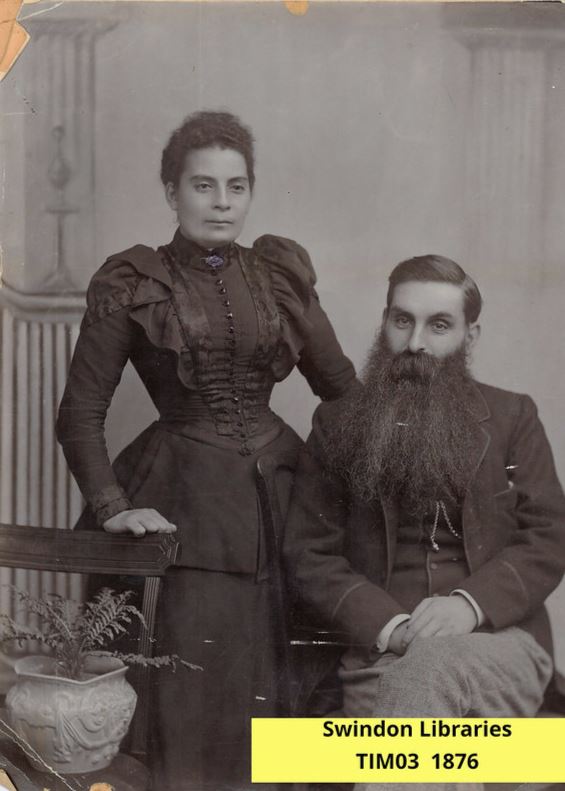
It is always a wonderful surprise to find images and family memories about those buried in Radnor Street Cemetery. This week I came across a photograph on the fantastic Local Studies Flickr page and a comprehensive, illustrated family tree on Ancestry posted by Steve Clements.

My first find was a studio portrait of Edith Jemima nee Ricketts and her husband Samuel John Whiteman published courtesy of Brian Timbrell. The couple look young, despite Samuel’s impressive beard, and I wonder if this photograph might have been taken on the occasion of their marriage (look at Edith’s nipped in waist!). Edith and Samuel were married at St. Stephen’s Church, Kensington on April 17, 1876. They were both 24 years old.

Samuel was born in 1851 in Chippenham, the son of George, a smith, and his wife Elizabeth. Edith was also born in 1851 in Down Ampney, Gloucestershire, the daughter of Richard Ricketts and his wife Elizabeth.

At the time of the 1881 census the couple lived 8 Read Street with their two children Edith and Francis (a second son Lancelot was born in 1883) and two boarders Robert Dean and Caroline Hewer who were possibly members of Edith’s extended family from Down Ampney. Samuel worked as a clerk in the GWR Works. In later years Edith worked from home as a dressmaker.

The couple lived at various addresses across Swindon – in 1891 they were at 178 Clifton Street and in 1901 at 51 Curtis Street. In 1911 they lived with their daughter and her family at 14 Curtis Street before moving to 7 Curtis Street where Edith died in 1923. She was buried on August 1 in a public grave, plot C482. Samuel outlived Edith by a further 16 years. He died in 1939 and was buried on November 11 in a public grave, plot C696. His last address was 4 Temple Street.

Edith and Samuel pictured with their little granddaughter Eileen Edith Young

Sadly, as both these graves are public plots there is no headstone on either of them, so it is especially pleasing to remember Edith and Samuel with photographs.

A Veteran Forester

Death of Mr S.J. Whiteman of Swindon

The funeral took place on Saturday of Mr Samuel John Whiteman, aged 88 years, of 4 Temple street. He had been in ill health for some six years and had been confined to his bed for the past 12 months.

Mr Whiteman was born at Chippenham and came to Swindon when a young man. When 19 he entered the service of the GWR Co., being employed as a clerk in the Q Shop, and later in the Accounts Department. He retired from the Works some 35 years ago, and was for some years in the employ of Mr. L. J. Chappell, then owner of the Swindon Motor Coy., retiring on his 72nd birthday.

Mrs Whiteman died 16 years ago. He is survived by one daughter and two sons, also three grandchildren and five great-grandchildren.

Mr Whiteman was one of the oldest members of Court Briton’s Pride, North Wilts District A.O.F.

The first portion of the service was held at St. Paul’s Church by the Rev. M.C. Melville (curate) and the interment was at Radnor Street Cemetery.

The Chief mourners were: Mr Frank Whiteman and Mr Lancelot Whiteman (sons), Mr R. Dean (brother-in-law), Mr J. Dean (nephew), Mr E.H. Elliott and Mr B.W. Phillips (friends).

The funeral arrangements were carried out by Messrs A.E. Smith and Son, of Gordon road.

North Wilts Herald, Friday, 17 November, 1939.

Charles and George Pettifer – builders


Image of Albert Street and Little London published courtesy of Local Studies, Swindon Central Library.

Charles Pettifer married Elizabeth Hawks in the summer of 1847. They were both born in Bampton in Oxfordshire and they set up home in the village at a house in Lavender Square where they were living at the time of the 1851 census. Isn’t that a lovely address – Lavender Square? I bet it’s all quaintly Cotswoldy now. In 1851 there was probably no running water, the privy was at the bottom of the garden and it was cold and damp.

Charles and Elizabeth first appear in Swindon on the 1871 census. Charles had previously worked as a cordwainer (a shoemaker) but once he arrived in Swindon he states that his occupation was that of a mason. That might sound like an astonishing career change, but as his father was a stonemason I’m guessing he had learned the trade alongside him. In 1871 Charles and Elizabeth were living with their two sons George 23, a bricklayer and Alfred 17, a bricklayer’s labourer, at 2 Eastcott Lane.

For a description of this amazing photograph visit the flickr page, Local Studies, Swindon Central Library.

Charles had already set up in business by then and in 1875 he was joined by George. In the early days the Pettifers worked almost exclusively at the top end of Victoria Road, then called Victoria Street North. In 1872 they built houses and a workshop in that area and in 1877 they built a house, stable and workshop on the corner of Victoria Street North and King John Street and several cottages in Albert Street.

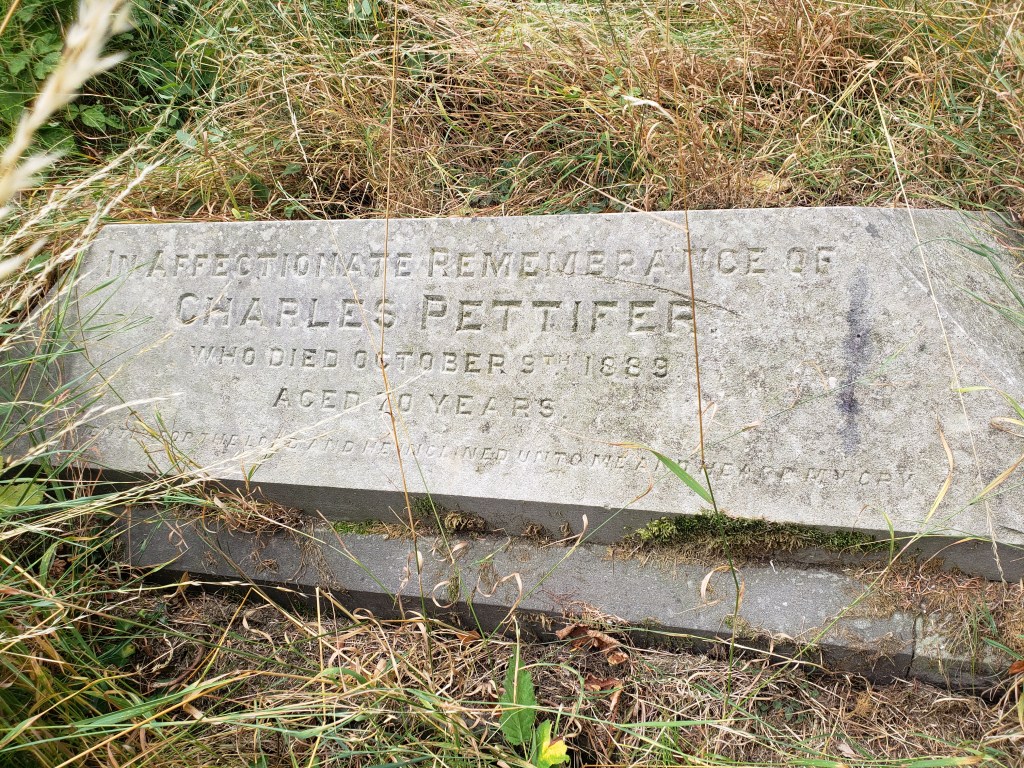
They continued in partnership until around 1881. Charles died in 1889 and was buried in grave plot E8304 on October 14.

George married Ruth Hill, a widow, in 1884. They were married for thirteen years when George died in 1897. They do not appear to have had any children. Ruth married again in 1900. Her third husband was George Popjoy, a joiner, so possibly a colleague of her second husband, George Pettifer. Ruth died on May 11, 1905 and was buried with George Pettifer (her second husband) in grave plot D33.

You might also like to read:

William Crombey – builder

James Spackman – a well-known builder and contractor

Job Day – Clerk of the Works

William Crombey – builder

There is no entry for builder William Crombey in the comprehensive Architects and Building Craftsmen with Work in Wiltshire compiled by Pamela M. Slocombe and published by the Wiltshire Buildings Record in 2006. In that excellent book Roadways published in 1979 by Peter Sheldon & Richard Tomkins, Crombey Street is given a construction date of 1891 and a description that William Crombey was a local building speculator who developed much of the Rolleston Estate.

His death warranted just a brief mention in the Swindon Advertiser and so far I haven’t been able to discover an obituary, yet a search through the local newspapers reveal just how busy Mr Crombey actually was.

Crombey Street area of SwindonMarket bottom left

New Swindon Local Board

New Streets and New Buildings

The following plans were presented and passed:- Three new streets on the Rolleston Estate, to be known as Deacon Street, Curtis Street and Cromby Street; hotel and stable in the new road, for Mr W Cromby; nine shops and dwelling houses in Commercial Road for Mr W. Cromby; six houses in Lorne Street for Mr W. Bennett; one cottage in a new street at Gorse Hill for Mr C. Davis; alteration to the Three Cups Coffee Palace, Regent Street, for Mr S.B. Foss; additions to house in Dover street, for Mr E. Chamber; two new cottages in a new road abutting on to Rolleston Street and Eastcott Hill, for Mr E. Chambers; a house and shop and seven cottages in Maxwell Street, for Mr C. Williams; an assembly room for Mr A.E. Withy, to be erected near his house; one house in Gordon Road, Princes Street, for Mr J. Webb; eleven houses in Dean Street, for Mr T. George; fourteen houses in Deacon Street, ten in Cromby Street and two in Curtis street for Messrs Cromby and Horsell; additions at rear of 35, Regent Street, for Mrs S.J. Coleman; four houses in Victoria Road, for Mr H.C. Cook. One plan that of a house and shop to be erected in Groundwell Road, for Mr J.E. Campbell, was disapproved, owing to no sewer being shown on the plan.

Swindon Advertiser, Saturday, July 26, 1890.

So, why has William Crombey received so little attention in the history of the building of Swindon? Perhaps one reason could be that his day job was that of an Engine Driver.

William was born in Houghton le Spring, Durham in about 1825. He first appears in Swindon on the 1861 census when he was one of three boarders lodging at 15 Fleet Street. By 1881 he was lodging with Anne Elizabeth Harvey at Park Hotel, Cambria Bridge Road and in business with her brother-in-law Edwin Harvey. The partnership was dissolved ‘by mutual consent’ in March 1884. However, this was not the only partnership in which William was involved as he was also working with John Horsell. This partnership was dissolved on March 1, 1891, which is hardly surprising as William was obviously terminally ill and died on March 13.

His personal estate was valued at £1,463 1s 6d and probate was awarded to George James Harvey of Newport the son of his landlady Anne Elizabeth Harvey and nephew of his old business partner Edwin Harvey. William does not appear to have married or left any family. He was buried in Radnor Street Cemetery on March 16, 1891 in plot E8003.

William’s various properties came on the market on May 2, 1892 and were auctioned by Messrs Bishop & Day. These included No 1 Brunel Street ‘a freehold dwelling house and shop at the corner of Brunel and Cromwell Streets; adjoining Regent Street (the chief thoroughfare), and near the New Market; a spacious and lofty Building readily converted into Commodious Business Premises;’ No 23 William Street which contained a ‘palisaded forecourt,’ a spacious Corner Shop, Bakery and Residence No 1, Cambria Bridge Road; A Capital Shop and Residential Premises, No 2, Cambria Bridge Road; A Capital Shop and Residence, No 3, Cambria Bridge Road and A Capital Shop and Premises, with a slaughter house, No 4. Cambria Bridge Road.

Swindon Advertiser April 23, 1892.

You might also like to read:

John Horsell – builder and licenced victualler

Henry Charles Cook – builder

Thomas and John George – leaving their mark on Swindon

William and Albertina Haynes

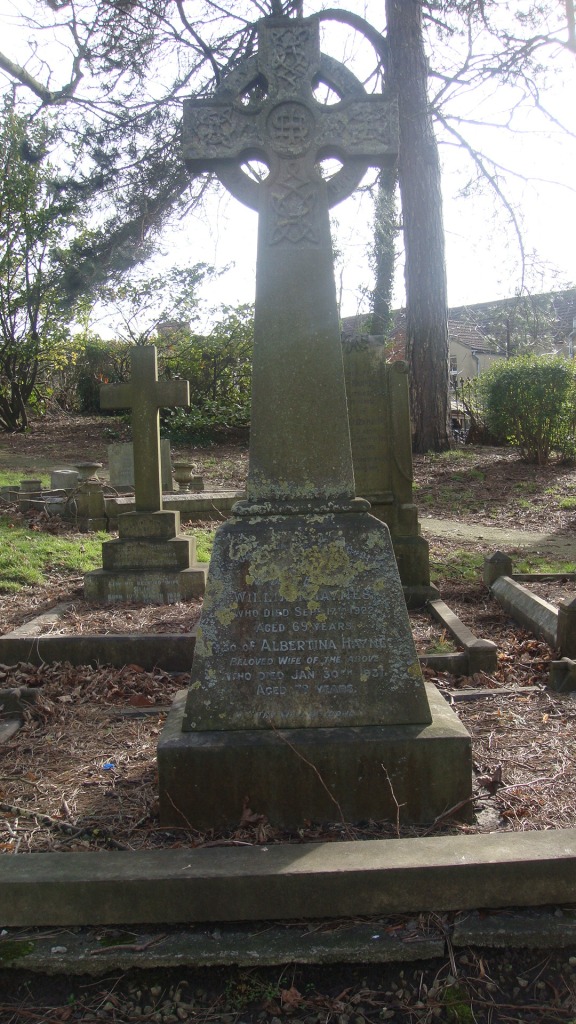
This magnificent Celtic Cross shouts wealth and must have been a pretty expensive monument in its time.

The Celtic Cross design combines the ancient Celtic circle symbol with the Christian cross, and was usually a free standing stone monument. In Ireland examples have been found dating back to the 7th century.

In the mid 19th century there was a Celtic Revival when monuments like this became extremely popular and the Celtic Cross has since become associated with graveyard memorials. The Celtic Cross on the Haynes grave includes the letters IHS symbolising the Greek spelling of Jesus Christ.

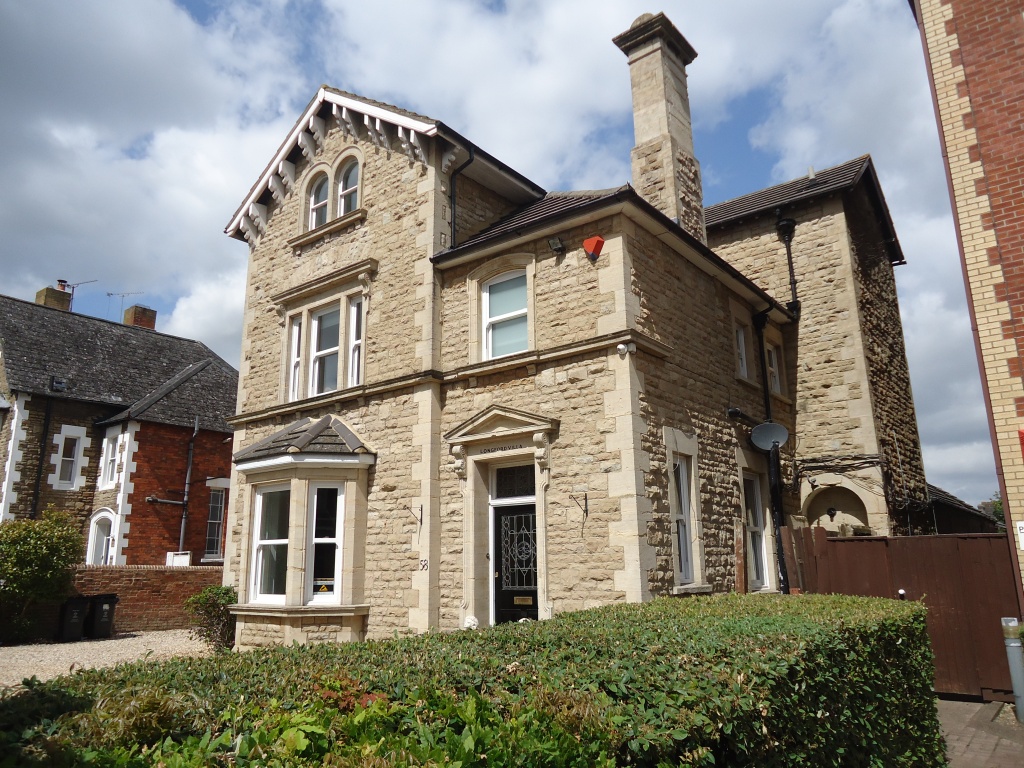
This is the final resting place of William and Albertina Haynes. In their retirement the couple lived at Longford Villa one of those impressive Victorian properties on Bath Road.  William died on September 17, 1922 and Albertina on January 30, 1931.

William had grown up in Fairford where his father worked as a confectioner.  He moved to Purton to begin an apprenticeship in Edward Kempster’s grocer’s shop, which is how he met his future wife.  Albertina was the daughter of Richard Newman who was a Beer House Keeper in Purton.

The couple married in the summer of 1879 and by the time of the 1881 census they were living at 5 Westcott Place where they ran a grocer’s shop.  William employed two assistants including his younger brother Hubert.

By 1891 the establishment had grown somewhat. The couple had six children and employed three grocery assistants and two domestic servants.

Researching the census returns I think the Haynes grocers shop was in the large premises on the corner of Westcott Place and Read Street, which has various signs outside today.

When William died in 1922 he left £65,473 9s 8d worth several million pounds today, an impressive amount of money for those post war times and more than enough to pay for this magnificent memorial.

You might like to visit Swindon Bottles for information about many other Swindon based firms.

James Lott – Ironmongers

James Lott opened his ironmongery business in around 1873. By 1881 he was living above the shop at 91 Regent Street with his wife Ellen and their four young children. However, the changeable fortunes of James Lott saw him forced to declare himself bankrupt in 1889.

But by 1891 business was booming again when James was based at numbers 50 and 51 Regent Street. In 1907 he was advertising “the most varied and up-to-date stock of Brushes, Copper Flower Vases and Kettles, Cutlery, Electro-plated Goods, Curb Fenders, Fire Irons and Brasses, Expanding Wood Trellis, Wire Netting, Garden Arches and Tools, General and Furnishing Ironmongery of every description.”

The 1911 census lists him as living above his shop at 5 Temple Street with his wife Ellen and youngest daughter Maud, an elementary school teacher. Temple Street today is unrecognisable from the busy shopping thoroughfare it once was linking Commercial Road with Regent Street. Temple Street has been the scene of several major reconstruction projects in the past 100 years. Today it is the site of work in progress on a Premier Inn due for completion later this year. Pictured below is the large gap left following the demolition of the Baptist Tabernacle.

This image of the site of the demolished Baptist Tabernacle is published courtesy of Local Studies, Swindon Central Library.

And it is still possible to find evidence of James Lott’s work in the pavements around town.

Death of Mr J. Lott

An Old and Respected Swindon Tradesman

The death has occurred of Mr J. Lott, head of the firm of Messrs. Lott & Sons, of Regent street, Swindon.

Mr Lott was one of the oldest tradesman in Swindon. Born near Holsworthy in Devon he came to the railway town in the early ‘70s, and by his energy and enterprise built up the present extensive business.

Mr Lott was connected with the Gooch Lodge of Freemasons, of which he was a Past Master, and was much respected in the town.

The funeral has been fixed for Monday. Mr. Lott was 76 years of age.

Swindon Advertiser Saturday, 10 December, 1921.

Late Mr J. Lott,

Masonic Funeral at Swindon Yesterday

The funeral of Mr J. Lott, of Swindon, took place yesterday afternoon. The Rev. J.E. Rogers officiated, and the masonic ovation at the graveside was delivered by the Rev. W.L. Waugh, Provincial Grand Chaplain.

The mourners were Mr. J.D. Lott and Mr C.R. Lott (sons), Mr E.W. Lott and Master Stanley Smith (grandsons), Mr J.W. Smith (son-in-law), Mr E.W. Daniel (Hendon) and Mr J. Daniel (nephews), Mr A.S. Deacon, Ald. E. Jones, Mr S. Chappell, Mr T. Butler, Mr F.C. Phelps, Mr A.R. Bray (Bristol), Mr W.E. Chappell, Mr J. Wilmer and Mr H. Mitchcock.

The Freemasons, of which deceased was a Past Provincial Grand Officer, were represented by Brs. A.E. Bottomley, D.C.A Morrison, H.J. Hamp, E.O. Twitcher, A.G. While, J.S. Protheroe, T. Mundy and D.A. Lane. Deceased’s employees also attended.

The floral tributes included one from the widow, and others from sons, sons and daughters-in-law and grandchildren, the Wiltshire Lodge of Freemasons and the staff at Regent street.