John James Kendall was born in Bromsgrove in about 1884, the son of John Kendall, a nail maker, and his wife Ellen.
He married Agnes Winifred Jasper in the December quarter of 1906. At the time of the 1911 census they were living at 61 Hillfield Road, Sparkhill, Birmingham. They had been married for four years and during that time three children had been born, however, sadly two had died. John’s brother Bertie lodged with the couple and he and John both worked as ‘bread deliverer’s.’
Again the loss of military records hide the full story of the tragic death of John James Kendall. What action had he already seen, if any? Was it the fear of what lie ahead that caused his mental breakdown, or was it due to the recent seizure he had suffered and a lack of treatment for his epilepsy? Perhaps the death of his two young children years previously had led to undiagnosed depression.
Soldier’s Suicide
Followed Epileptic Fit
“Death from haemorrhage through cutting his throat while insane” was the verdict of a Swindon jury on Wednesday respecting the suicide of John James Kendall (34), a private in the Worcester Regiment, billeted at 24, Winifred Street, and whose wife and children live at Sparkhill, Birmingham.
Mr G.H. Russell was foreman of the jury. Evidence of identification was given by a brother, Lance-Corporal Bertie Walter Kendall, Machine Gun Corps, who had the “wounded” stripe and leaned heavily on a stick. In reply to the Coroner he said there was no strain of insanity in the family.
Frank Arthur Jackson, another private in the same battalion as deceased in the Worcester Regt., said he was billeted at 24, Winifred Street. On Monday Kendall was going on leave, and he went from the house to catch the 4.15 p.m. train. At 9.55 he returned to the house, and surprised to see him, the landlady asked how it was that he had not gone home. He said “I don’t know: I’ve lost my mind. I’ll think in a minute.” He sat down and had supper and asked witness for a cigarette. About a quarter to eleven he went out into the garden. Ten minutes later witness went out to look for him. He called, and at the second call of “Jack, where are you?” he heard a murmur. He went down to the end of the garden and found Kendall lying on the ground, smothered in blood and with a razor by his side.
“No one could get into the yard except through the house?” asked the Coroner.
“Not so far as I know,” replied the witness.
Lieut. Francis William Hartley, RAMC said he was called to the house close on midnight and found Kendall in a precarious condition, with his throat badly cut. First aid had been rendered. He died as the ambulance from the camp hospital arrived at the door. Death was due to the haemorrhage.
“Had you attended the man?” asked the Coroner?
“Yes, frequently,” said the doctor. “He was often complaining of illness – rheumatism, pains in the head, indigestion, and other small ailments. On Saturday, after he had been on light duty, he came to me and said that he felt a lot better and would I put him on full duty. I asked him if he thought he could stand it, and he replied “Yes.”
“There was no symptom of insanity, then?” the Coroner asked.
“Not at the moment,” the doctor replied. “He had an epileptic fit on August 8th, and his brain was affected for some time afterwards.”
You saw him in the fit? – Yes.
The jury returned the verdict, as stated, that the man cut his throat while insane.
North Wilts Herald, Friday, August 24, 1917.
John was buried in a public grave, plot B1883 on August 25, 1917. The interment was conducted by an army chaplain.
Two years after this tragic event Agnes and her two daughters, Hilda May aged 9 and Winifred aged 2, born just months before her father’s death, left Britain for a new life in the USA. On October 8, 1919 they boarded the White Star Liner, the Adriatic and set sail for New York. Agnes died in Monmouth County, New Jersey in 1941.
I used to love to go shopping. And do you know what my favourite shop was – Nash the confectioners, and not only when I was a child either. Sometimes I would call in when I was a grown up too, a young clerk in the Works, before I married and had children of my own. You don’t see sweet shops like that anymore, you don’t see sweets like that either, jars and jars of handmade confectionery.
It was a sad day when the last of the Nash family shops closed. Perhaps they couldn’t compete with the big manufacturers, the producers of those bags of gummy, plastic tasting sweets that tempt the children at the supermarket checkouts. Soulless places, those supermarkets. My granddaughter offered to take me to Asda Walmart on a shopping trip. Bah – that’s not a shopping trip, that’s a descent into Hades, I told her.
What I would give to take a walk down Regent Street again? Not the Regent Street of today but the old one, when ladies got dressed up to go down town. My first stop would be a wander around McIlroys and then a visit to Nash’s and a quarter of – now what would I choose, aniseed balls or pear drops, or maybe a bag of toffee, although my teeth are probably not up to that now. Happy days.
Regent Street
The facts …
William Nash was born on April 23, 1840 at Badbury the son of William and Jane Nash. His father died two months before William’s birth, leaving Jane to raise four young boys alone until she remarried in 1844. At the time of the 1851 census 11 year old William is living in Badbury with his mother, step-father William Jordan, his two brothers Thomas and George Nash and three half sisters Sarah, Ann and Emma Jordan.
William married at St. Mark’s Church on December 25, 1863. He was 23 and working as a labourer, his bride was 21 year old Elizabeth Hunt. The couple began their married life in London where their first child, Edmund William Nash was born. It seems likely that this is also where William saw the prospects of a career in the confectionery trade. Elizabeth’s brother and sister had both married into the Leach family, headed by Thomas Leach who had a confectionery business in Southwark.
On his return to Swindon William worked as a labourer in the railway works and Elizabeth as a mangler. In 1871 the couple lived at 2 Havelock Street with their growing family – Edmund 5, Clara 4, Thomas E. 2 and 8 month old Elizabeth M. It appears that the Nash couple were both prudent and focused, both working and saving to fulfil their ambition to open their confectionery business.
By the time of the 1881 census William had achieved this ambition. The family lived over their first shop at 32 Bridge Street. By then there were seven children, the youngest 4 month old Lily. Elizabeth’s sister Martha Hunt lived with the family working as an assistant in the shop.
And so the Nash empire expanded with shops at 64 and 65 Regent Street and 17 Regent Street as well as the original premises at 32 Bridge Street. Other family run shops opened at 104 Cricklade Road, 10 Wood Street, 32 Regent Circus and 167 Rodbourne Road, the last of the shops which eventually closed in the 1970s. The Nash family were famous for their award winning ice cream and also their bargain pack of assorted sweets – Penny Big Lots.
Death of Mr W. Nash – Mr W. Nash of Lypeatt House, Goddard Avenue, Swindon, died on October 29th after a long and painful illness. He will be remembered by many, having been formerly in business as a sweet manufacturer. He married a daughter of the late Mr Thomas Hunt, of Broad Town, who was well known in Primitive Methodist circles. He leaves a widow, six daughters and two sons. The funeral took place on Monday November 4th the cortege leaving Goddard Avenue at 3 o’clock for the Primitive Methodist Chapel, Prospect Place. The Rev. H. Pope Officiated at the chapel and also at the Cemetery.
Extracts from the North Wilts Herald, Friday, November 15, 1918.
William and Elizabeth Nash are buried together in plot E7604
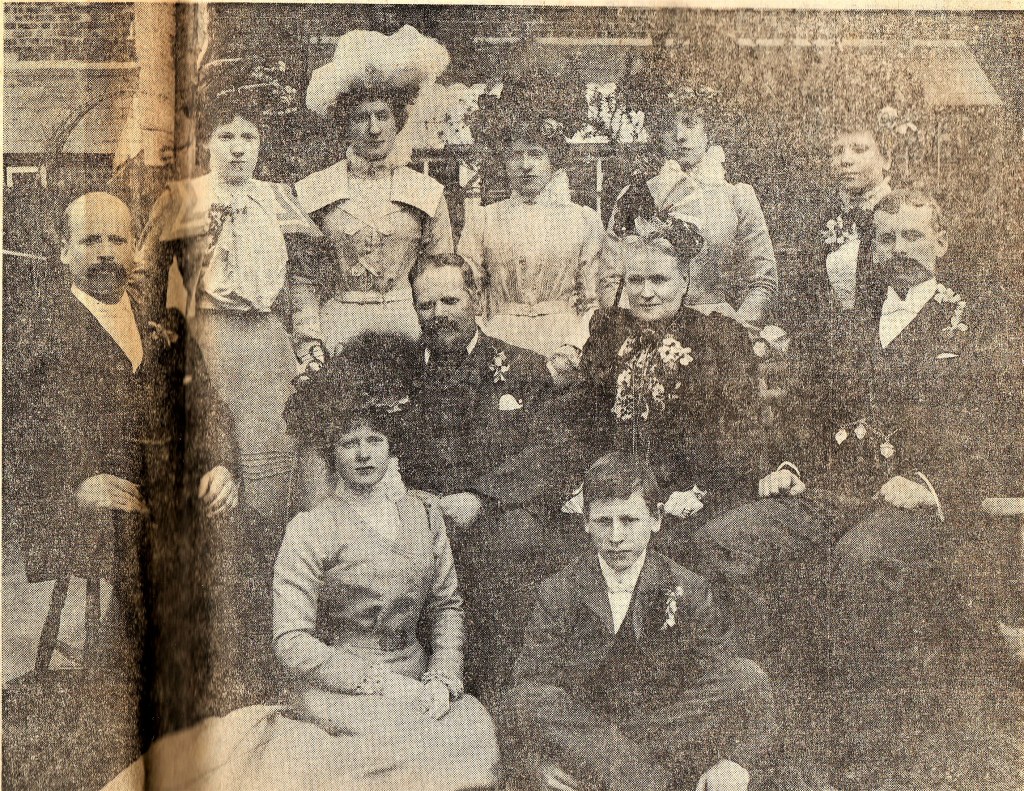
Grateful thanks to Katie Brammer for sharing her family history research. Katie has been discovering the graves of her Nash family ancestors with the help of Radnor Street Cemetery volunteer Jon. This is the grave of William and Elizabeth Nash.
WANTED, a respectable GENERAL SERVANT, about 18, able to do plain cooking; sleeping out preferred; good character – Apply, Nash, Confectioner, Bridge Street, Swindon.
The Swindon Advertiser, Friday, September 2, 1904.
I decided I’d join the guided walk around the cemetery on Sunday. I’d seen people on the walks before and to be honest I was surprised just how many turned out each time.
I lived in Clifton Street and had grown up on the cemetery doorstep, so to speak. As a kid I’d learned to ride my bike there and made snowmen on the rare occasions we had a fall of snow. It was my route to school and a short cut to town and as a teenager I’d walk through it most days to meet my mate Josh. It was as familiar to me as my own back garden. The cemetery held little fear for me, now, after all these years.
It had closed in the 1970s, long before I was born. Years ago, the council used to keep it nice and tidy. The wardens held various events here and I remember coming to a nature day and helping to put up bat boxes. These days it is very overgrown and neglected.
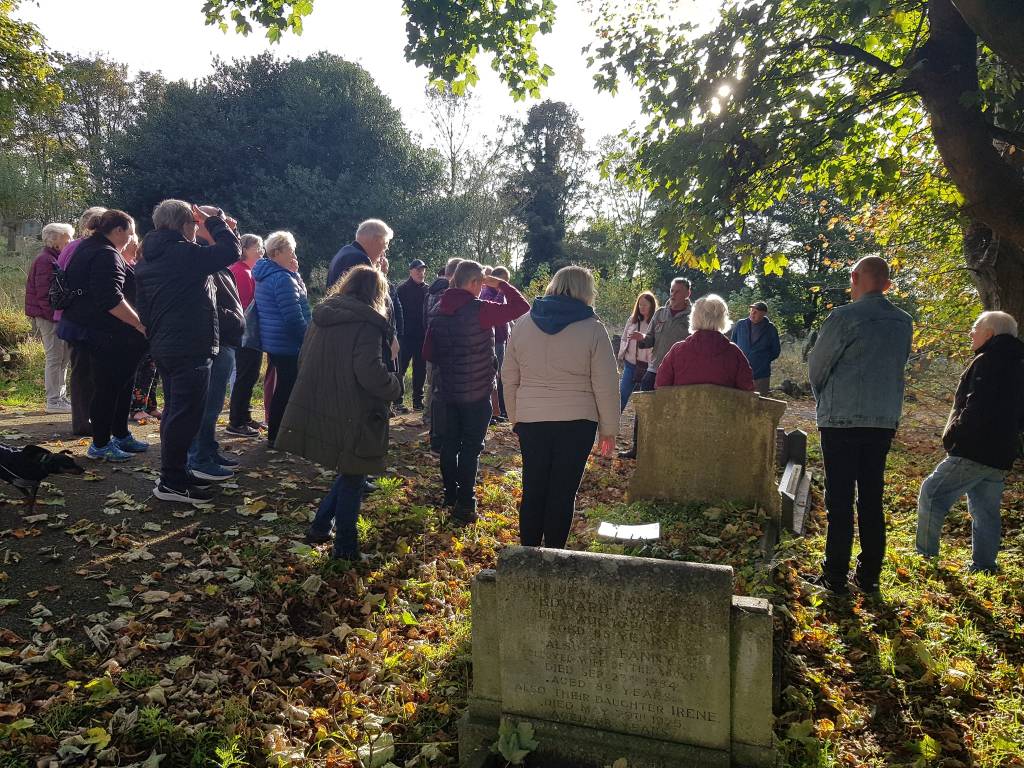
People began arriving at the chapel just before 2pm and as usual there was quite a crowd. The walk was led by a couple of older people. The woman gave us a short, potted history of the cemetery and the man told us a few do’s and don’ts. They were both quite funny actually, and made a good double act.
Then they led us around the cemetery, taking it in turns to talk about half a dozen graves and the people who were buried there. I was surprised at just how interesting it all was. I don’t know what I expected; something ghoulish and creepy, maybe a bit weird.
One of the old ladies started talking to me and took my arm as we were led away from the footpath and across the graves to where the two guides had stopped. I didn’t notice where we were heading.
“Do you think we could take the arm off?” asked Josh as he looked around for something to wield. “Wait up.”
He lived just a few doors from the cemetery gates and was gone just minutes, returning with a hammer.
“Go on. Have a go.”
I swung the heavy hammer but lost my grip and let it fall to the ground.
“Not like that, you idiot.” He began to swivel on the balls of his feet, like the athletes do when they throw the hammer. On the third revolution he let the hammer go. He was surprisingly accurate and the arm of the stone girl flew off.
“What the … Josh!”
We’d hung about in the cemetery loads of times, but we’d never done any damage before.
“Go on – have another go.”
“No.”
“Scared? Chicken?”
“It don’t seem right.”
“Well no one’s gonna complain. They’re all dead.”
I picked up the hammer. Perhaps if I just swung it around a bit maybe Josh would be satisfied. I raised it to elbow height and just as I swung it, a woman shouted out. I lost my balance and lurched at the memorial. The hammer flew out of my hands and knocked the head off the stone girl.
The woman continued to shout. As we turned round I could see she was keying a number into her mobile phone. No prizes for guessing who she was calling.
We legged it all the way down to the Radnor Street cemetery gate. I could hardly breath and my heart was beating furiously in my chest. We ran down the steep steps by the school and on to William Street, cutting through to Albion Street and the old canal walk, but Josh was laughing; laughing and laughing and laughing.
I’d have never done it – if I’d known the story of the girl and her dog – I’d never have done it.
The facts …
Doreen was tragically killed when the wheel of a timber wagon trailer ran over her body after she fell from her bicycle. The fourteen-year-old sustained multiple injuries and died at the scene of the accident in Stone Lane, Lydiard Millicent on August 23, 1938.
Doreen was the younger of George and Catherine Ind’s two daughters and with her sister Iris was cycling to their Aunt’s house in Upper Stratton when the accident occurred.
Iris gave evidence at the inquest held the day after her sister’s death. She told how the two girls were cycling round a bend in the road on Stone Lane, keeping as near as possible to the near side. Doreen was in the front and Iris behind her.
Iris described how a lorry with a timber wagon trailer approached them on the road. The wheel of the trailer knocked her sister’s wheel causing her to wobble on her bicycle. She tried to pedal, but there was no room. Doreen fell into the road and the back, nearside wheel of the trailer went over her.
“Before the wheel went over her I called twice to the man to stop.”
The funeral took place at St Paul’s Church on August 27 followed by the burial at Radnor Street Cemetery.
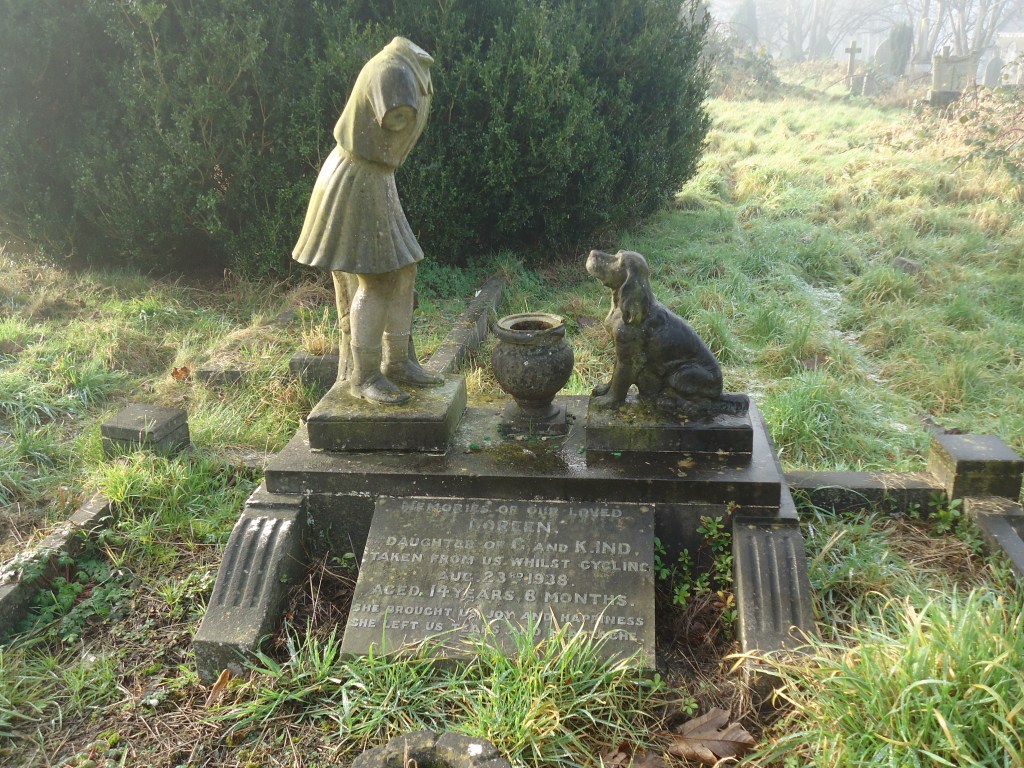
Doreen’s parents erected an unusual and poignant memorial to their daughter, depicting a girl holding out a ball to her pet dog. George died in 1947 and his wife Catherine in 1964 and they are buried with Doreen in a large double plot.
In 2009 a local resident walking through the cemetery disturbed a couple of boys attacking with a sledgehammer this unusual memorial of a girl holding out a ball to her dog. As you can see Doreen’s memorial is badly damaged, one of the last serious acts of vandalism to have occurred in the cemetery in recent years.
Photograph of Doreen’s intact memorial was taken in 2000 and is published courtesy of D & M Ball.
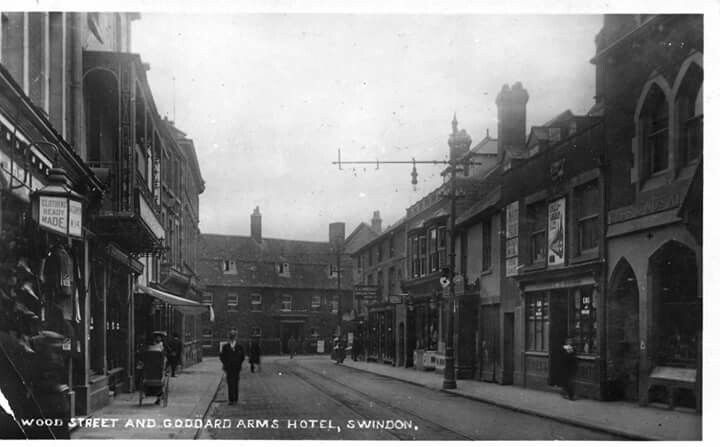
Goddard Arms Hotel published courtesy of Local Studies, Swindon Central Library
Two young women each murdered by a sweetheart ten years apart have some striking similarities but a very different response from people in the town where they lived.
Swindonians were shocked by the murder of 19 year old Esther Swinford in 1903 but when Frances Hunter was shot by her sweetheart in one of the outbuildings at the Goddard Arms Hotel they were shocked but for quite different reasons.
Walter James White was told that Frances had previously been in a relationship with a married man. He went to her workplace at the Goddard Arms Hotel and challenged her.
In his statement he said that Frances had confessed she had disgraced him and she hoped that God would forgive her. “I told her she would never deceive anybody else as I was going to kill her.”
White was found standing over the young woman’s body, a revolver in his hand. He coolly advised the manager of the hotel to send for the police.
White’s defence counsel pleaded that White was in “such a perturbed state he was not responsible.” A petition signed by 4,000 Swindonians, including that of the mayor and deputy mayor, was sent to the home secretary pleading for mercy, but White was found guilty and executed at Winchester prison on June 15, 1914.
Frances lies buried in an unmarked, pauper’s grave in Radnor Street Cemetery. There was no funeral fund for Frances, no impressive memorial on her grave site.
Esther Swinford’s story is well known here in Swindon. Frances’s story seldom gets a mention.
I knew what went on at No. 11; all of us girls did. And despite what our mothers believed we all knew what went on between a man and a woman as well; what we didn’t know was how to prevent the consequences. This was what led so many girls to come knocking on Mrs Stretch’s lodging house door, and not just girls either, women young and not so young, single and married.
But the case of Martha Scriven proved to be different. For one thing she didn’t live locally and she was a widow. It was only when the case came to court that the full details came out.
Martha Scriven was 27 years old and recently widowed when she came to Swindon in November 1895. With a three-year-old son and believing herself to be pregnant Martha was in a desperate situation. She travelled down from London shortly after the death of her husband to visit his family who lived at Can Court, a farm on the outskirts of Swindon.
You had to ask yourself why she didn’t stay with the Scriven family and not with Mrs Stretch but that was only one of many questions we asked each other.
She walked past our house a couple of times, usually in the company of a man, but it wasn’t what we all thought at the time. It turned out he was her late husband’s brother and he had put her in touch with Mrs Stretch who in turn knew Mrs Lazenby. We all knew Mrs Lazenby as well.
“There’s many a woman very grateful to Mrs Lazenby,” some said.
Not Martha Scriven, I can tell you.
Image published courtesy of Local Studies, Swindon Central Library
The facts …
Martha died on December 5, 1895. The cause of death was ‘exhaustion from peritonitis set up by punctured wound in the uterus and intestines.’ At the inquest the attending doctor thought it was unlikely Martha had been pregnant at the time the procedure was undertaken.
During the investigations a piece of slippery elm bark was found at 11 Queen Street. This was believed to be the instrument used to induce the abortion and which perforated Martha’s uterus.
Emily Lazenby was charged with the wilful murder of Martha Scriven and with ‘feloniously using a certain instrument.’ She was sentenced to seven years’ imprisonment in Aylesbury prison but apparently she did not serve her entire sentence. She was released on 13th September, 1900 to an address in New Swindon and a job as a French Polisher.
Mary Jane Stretch was sentenced to five years and sent to Aylesbury Prison. She was released on 18th May, 1899 to 29 Regent Street. Edwin Scriven, Martha’s brother in law who had made the arrangements, was also sentenced to five years imprisonment and sent to Parkhurst Prison. He was released early to take up a position as a groom.
Martha was buried in plot E7201 in Radnor Street Cemetery, a pauper’s grave. In 1902 Mary Jane Stretch was back in Swindon and living at 36 Catherine Street. She died in that same year and in a cruel ironic twist is buried in plot E7072 just a few rows away from Martha’s grave.
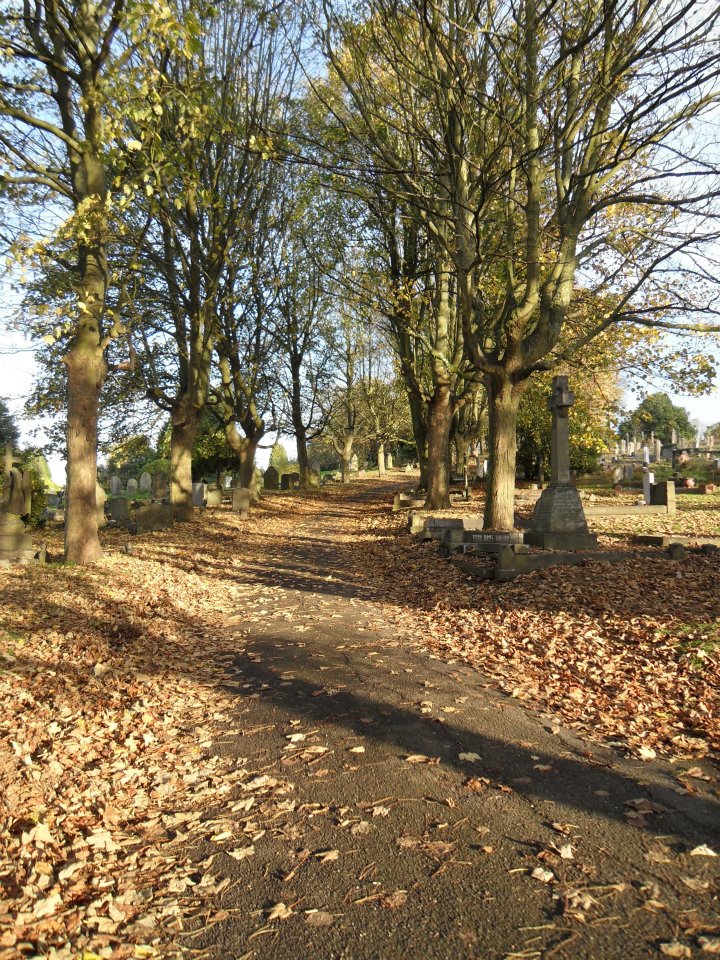
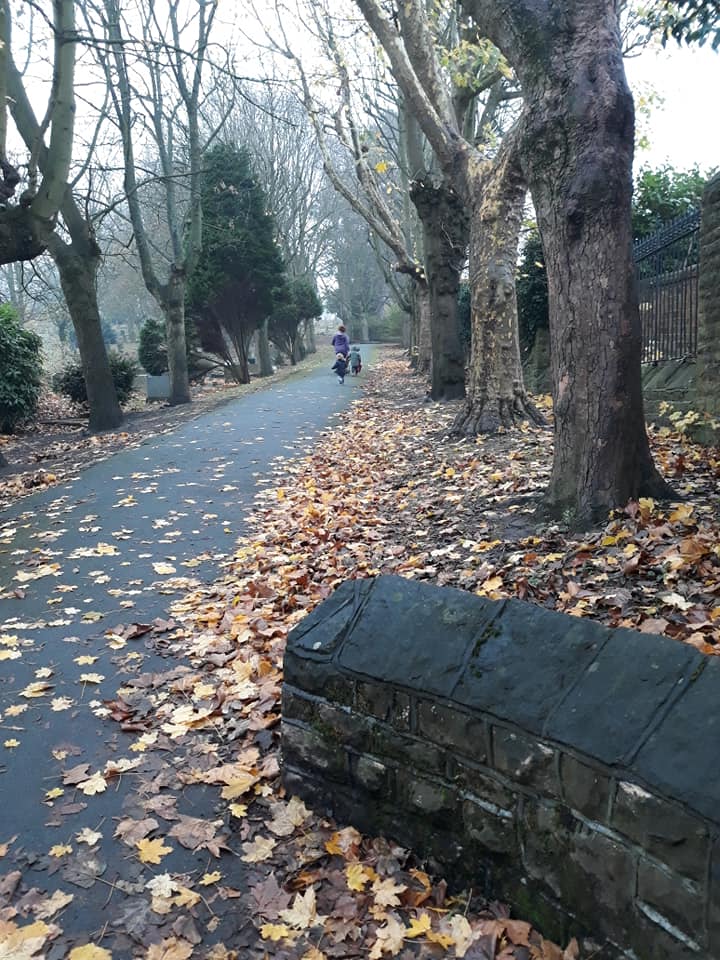
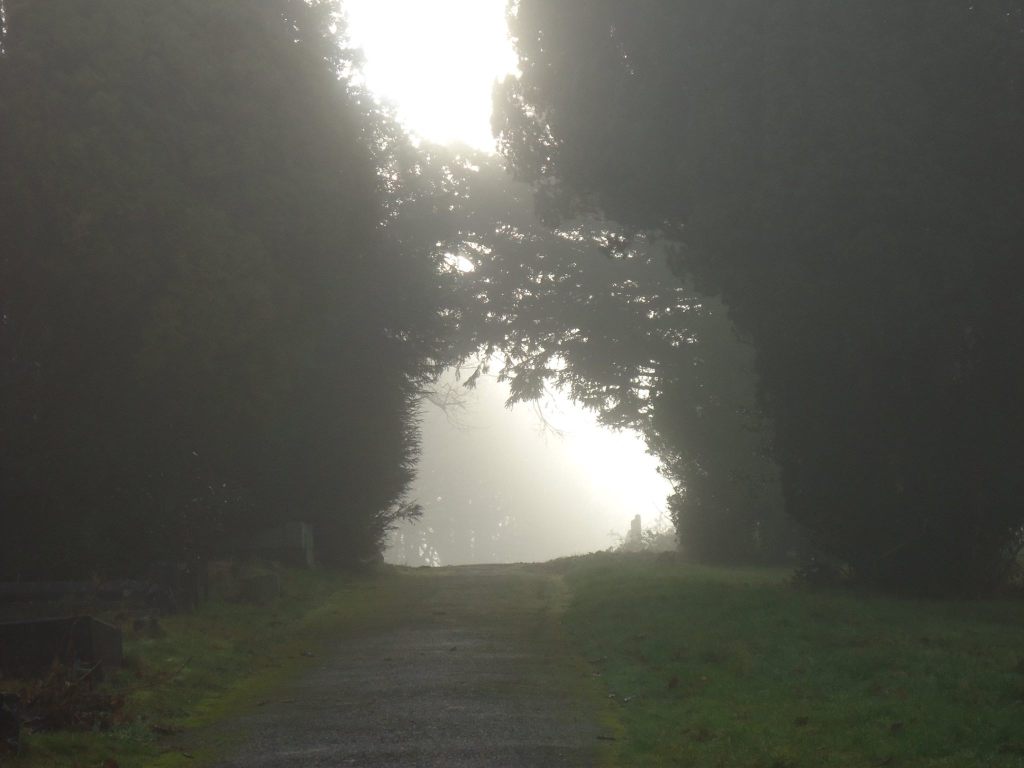
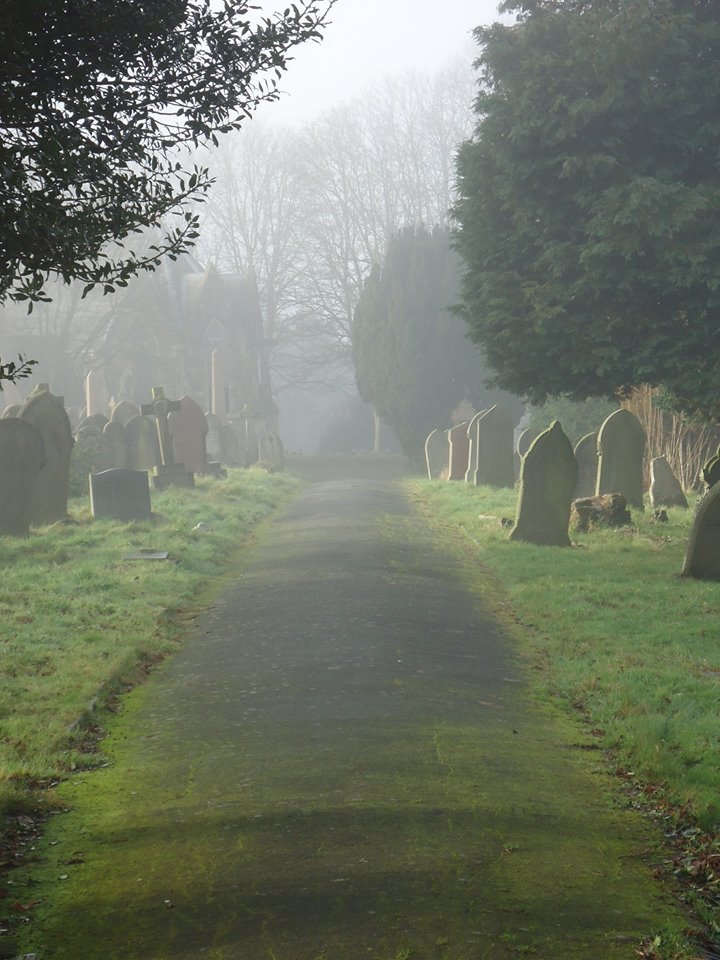
It is the season of mists and mellow fruitfulness and time for a virtual walk among the memorials at Radnor Street Cemetery.
Branches creak and the leaves are swept off the trees across the cemetery on the hill today. Doesn’t the cemetery look beautiful in its Autumn finery? But then it always looks beautiful to me. I shall don my raincoat and carry an umbrella as the weather forecast is not good, but you can put on the kettle, make a cup of tea and join me from the comfort of your sitting room. The sun is shining and I’m wrapped up warmly, so off we go.
These photographs have been taken across a 20 year period. There have been some changes. Remembering Mark Sutton.
To Autumn by John Keats
Season of mists and mellow fruitfulness, Close bosom-friend of the maturing sun; Conspiring with him how to load and bless With fruit the vines that round the thatch-eves run; To bend with apples the moss’d cottage-trees, And fill all fruit with ripeness to the core; To swell the gourd, and plump the hazel shells With a sweet kernel; to set budding more, And still more, later flowers for the bees, Until they think warm days will never cease, For summer has o’er-brimm’d their clammy cells.
Who hath not seen thee oft amid thy store? Sometimes whoever seeks abroad may find Thee sitting careless on a granary floor, Thy hair soft-lifted by the winnowing wind; Or on a half-reap’d furrow sound asleep, Drowsed with the fume of poppies, while thy hook Spares the next swath and all its twined flowers: And sometimes like a gleaner thou dost keep Steady thy laden head across a brook; Or by a cider-press, with patient look, Thou watchest the last oozings, hours by hours.
Where are the songs of Spring? Ay, where are they? Think not of them, thou hast thy music too,— While barred clouds bloom the soft-dying day, And touch the stubble-plains with rosy hue; Then in a wailful choir the small gnats mourn Among the river sallows, borne aloft Or sinking as the light wind lives or dies; And full-grown lambs loud bleat from hilly bourn; Hedge-crickets sing; and now with treble soft The redbreast whistles from a garden-croft, And gathering swallows twitter in the skies.
Written September 19, 1819 and first published in 1820.
Or you may like to join us on our last guided cemetery walk of 2024 today, Sunday 27. Meet at the cemetery chapel 1.45 for a 2pm start.
Father spread the newspaper across the kitchen table. It took him some time to find the report he sought as Mr Morris had seen fit to hide it on the fifth page of his periodical. The attempt on the Queen’s life had happened two days previously and was old news by then.
Father cleared his throat before speaking. In his melodious Welsh voice he announced – ‘An attempt to shoot the Queen was made on Thursday evening at Windsor station.’
Father had a magnificent voice. I loved to hear him sing in the Baptist Chapel in Cambria Place where we attended every Sunday. Mind he had some keen competition, lot of good Welsh voices there were there.
Mother was less enthusiastic. ‘Likes to hear the sound of his own voice,” she said, which I thought was a compliment – until I grew older.
That evening he read to us the report of the attempt on the Queen’s life. In his rich tenor voice he presented the scene – the poorly clad, starving clerk and the brave Eton schoolboy who belted him round the head, the crowds, the police – it was like something out of a Penny Dreadful!
We later learnt that the Royal Train on which the royal party travelled that day was driven by a Mr. John Hudson Read. And then would you believe it, two years later he moved into the house next door to us. There’s famous he was. I used to tell the story to my children but they were less impressed. I suppose it was old news by then.
The facts …
Attempt to shoot the Queen
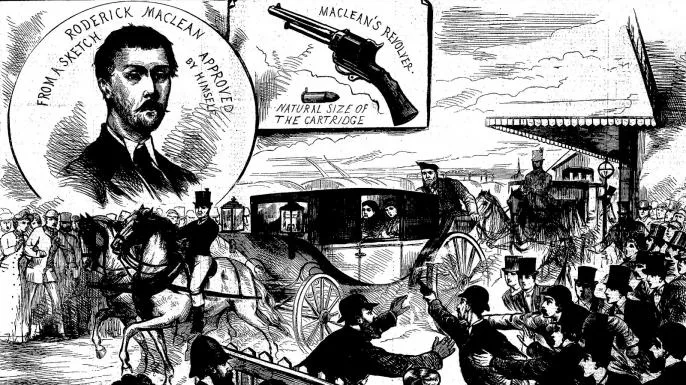
An attempt to shoot the Queen was made on Thursday evening at Windsor station. The name of the miscreant is said to be Robert Maclean, who was poorly clad, and who states that he is a clerk out of employment.
The particulars of the foolhardy act are as follow :- The Queen, who had been spending acouple of days at Buckingham Palace, left London in the afternoon for Windsor Castle. The Royal train arrived at Windsor about half past five o’clock, a large crowd having assembled to witness the arrival of the Sovereign. On alighting from the train her Majesty at once entered a carriage which was in waiting to convey her to the Castle, when just as she was about to drive oft a man who had been standing with others at the entrance to the station yard suddenly fired a revolver at the Royal carriage, but happily the shot did not take effect.
The fellow was about to fire a second time, when the pistol was wrenched from his grasp by a bystander, and he was at once seized by the police, who, however, had some difficulty in preventing him being lynched by the crowd. It is stated that at the moment the pistol was fired the crowd was cheering the Queen, who, it is thought, did not hear the report; but of course her Majesty was quickly apprised of the attempt which had been made upon her life, and, with her usual solicitude for others, she at once caused inquiries to be made as to whether any one had been struck by the pistol-charge.
Some doubt exists as to whether a bullet was really fired or not, as no trace of one has been found. The pistol, which was a six chambered one, was found to be loaded with two blank cartridges and two containing bullets. Several other cartridges were found on the person of the would be assassin. Maclean is thought to be of unsound mind.
This is the sixth outrage which has been perpetrated on the person of the Sovereign. The first occurred in June, 1840, when the Queen was fired at by Oxford. The next was in May, 1842, the would be assassin being John Francis. Two months later a man named Beau presented a pistol at her, but without firing it. In June, 1850, her Majesty was struck in the face by a fellow named Pate as she was walking out; and in 1872 a lad named Arthur O’Connor presented an unloaded pistol at her as she was entering Buckingham Palace.
The Prisoner Before the Magistrates,
Windsor, Friday afternoon.
The prisoner was driven to the Town-hall in an open fly at half-past one to-day, in charge of Supt. Hayes and a plain clothes official. He has a very wretched look, and is a man very much of the Lefroy type. He looks unclean and unshaven, and has a slight black moustache. He was immediately taken before the bench of magistrates, the Mayor of Windsor presiding Mr Stevens, solicitor to the Treasury prosecuted on behalf of the Public Prosecutor. Amongst the magistrates present were Alderman Chamberlain, and Mr G. Poole.
In reply to the Mayor, the prisoner said in a most off-handed manner and in a firm voice that his name was “Maclean-Roderic Maclean.” Supt. Hayes was then sworn. – Mr Stevenson said he was instructed to prosecute by the Secretary of State.- Supt. Hayes that her Majesty arrived at the station at 5-25 yesterday. She was accompanied by the Princess Beatrice, and Mr Brown was sitting behind the carriage. As the carriage started and had got half way to the gate he heard a report, and looked to the left, when he saw the prisoner. Prisoner here asked whether he was allowed to ask any questions. The Mayor said certainly he would, presently.
Examination continued: He looked to the left and saw the prisoner in the act of presenting a pistol at her Majesty. He did not hear more than one shot fired. The prisoner was about 150 yards from the carriage where the shot was fired when he first saw the prisoner. He was holding the pistol straight out in the direction of the carriage. He immediately sprung on him, and collared him by the collar and neck. He stopped to take the pistol from him when a young man named James Burnside subsequently got possession of the pistol, and handed it over to him. He produced the pistol, which had been in his possession ever since; he put it in his pocked immediately he put prisoner against the wall, assisted by Inspector Fraser and others. Prisoner said, “Don’t hurt me, I will go quietly.”
A little Eton boy came up and gave him a blow on his head, and he then took prisoner to the police station, and when there he asked him his name and address. He gave his name and address, and said he had been in Windsor about a week. On the way to the Police-station in the cab prisoner said, “I was starving, or I should not have done this.” At the station when charged he said, “Oh, the Queen!”
He examined the pistol. It was a German pin-fire revolver; it had two empty cartridge cases in it, that was to say exploded cartridges. Three were full whole cartridges, and two chambers empty. He drew the cartridges, and produced them. He searched the prisoner, and on him found 14 other cartridges of the same make. They were in a piece of rag. He found other articles of no value, including a pocket book, a knife, etc. Amongst other things a letter was found. It was taken from him by Inspector Fraser. The letter was then read, in which prisoner stated that he would not have dared the crime had the sum of 10s been given to him instead of 5s being offered the insultingly small sum of 6s. He was compelled to commit this crime against the bloated aristocrat, headed by that old lady “Mrs Vic.”
Witness further said that at 10.30 this morning prisoner said he wished to make a further statement, “I have a complete answer to the charge.” He then wrote a letter which was now put in and read, in which prisoner said he was not guilty of shooting at the Queen with intent to do grievous bodily harm, his object was only to cause the public alarm, with the result of having his grievances redressed. Such was the pecuniary strait in which he was.
All the circumstances tended to prove this statement. Had he cared to have injured the Queen he would have fired at her when she was getting out of the carriage. As it was he shot at the wheels but the pistol kicked and the bullet might have hit the carriage door. The only consolation he could offer the Queen was this statement, and he offered it if the charge of intent to do the Queen grievous bodily harm was withdrawn, and a charge of attempting to intimidate others substituted he would do all in his power to elucidate the mystery, and to bring the matter to a speed issue. At the end of the letter prisoner said that was the whole truth. The prisoner was remanded.
Mr Sykes asked me to sing All Things Bright and Beautiful. He listened very carefully; his head tilted on one side. There was a brief pause after I stopped.
“Well Ada,” he said, “I’m sure we can find a place for you in the chorus.”
I was so excited I could have given him a big hug, but that would have been entirely inappropriate. You didn’t hug a gentleman like Mr. Sykes.
My ma said I was born to sing. She said that I sang even as a baby in my crib. “You never wailed or screamed like the other babies,” she said, “you sang.”
I’ve been singing ever since. I especially love to sing in church. My favourite hymn is Rock of Ages, I love the rise and swell of the music. And I sing at my work, but I try not to be too enthusiastic as Mrs Morse has delicate hearing and she usually asks me to close the green baize door while I’m in the kitchen.
But I had never sung in public before and I never dreamed I would one day stand on the stage at the Mechanics’ and sing before an audience. I could scarce believe Mr. Sykes might even consider me.
It was my best friend Polly who suggested I audition for the chorus in the Mechanics’ Institution pantomime that year – Babes in the Wood, or Harlequin and the Cruel Uncle.
Opening night was just days away and this was to be our dress rehearsal. “Let’s put you next to Letitia, just follow her lead,” Mr Sykes had said at our last rehearsal. Letitia Jones was one of the principal singers in the chorus. She had a beautiful voice, a bit on the quiet side, I always thought, but melodious none the less.
Polly was waiting in the wings when I arrived. She was in conversation with Letitia and had her back towards me, but I could hear them talking as I approached.
“I hope Ada Firebrace doesn’t stand next to me again. She quite puts me off,” said Letitia.
“I never expected Mr. Sykes would engage her,” I heard Polly say. “I hoped he might tell her … you know … tell her what an awful voice she has. Then perhaps she would stop singing morning, noon and night.”
I stood stock still. Letitia had seen me walk across the stage and was grimacing and nodding at Polly with the intention of warning her that I approached. It was too late.
I never spoke to Polly again and I didn’t take part in the Mechanics’ Institution pantomime that year either. But I did save up my pennies and took some singing lessons with Mrs Sykes.
Ma says my voice is more beautiful than ever now. I have no desire to sing before an audience anymore, but I will always have kind memories of Mr Sykes.
The facts …
The Late Mr Albert Sykes
In accordance with the recommendation in the report, Mr Spencer proposed that a large portrait be obtained of the late Mr Albert Sykes, and placed in the Reading Room. Mr Sykes, he remarked, was a man who in his day and generation did a great work for New Swindon, and many men had been indebted to him for his musical tuition. Mr. Sykes was a useful man on the Council of the Institute, a capital librarian during the time he held that position, and he was also the father and founder of music in Swindon.
Mr A.W. James seconded the proposition, which was carried unanimously.
Mr Morris said he was pleased to know that the Council were thus going to recognise Mr Sykes’ services, and he hoped the same course would be adopted with regard to the late Mr J.H. Preece and the late Mr F.G. O’Connor.
The Swindon Advertiser, Saturday, May 5, 1894.
The two Sykes brothers were born in Leeds – Albert in 1823 and Joah in 1824. On the 1841 census they are living in Hunslet where their father John worked as a surveyor of roads. Albert was working as a mechanics’ apprentice while Joah was a potter’s apprentice.
Albert began work as a fitter and turner in the GWR factory in September 1847 later working as a shop clerk.
The 1851 census shows Joah still living in Hunslet with his wife and baby daughter. He is working as a whitesmith (someone who works with tin). Joah joined his brother in New Swindon around 1853 where he worked as a blacksmith in the railway factory. At the time of the 1861 census he is living with his wife and their five children at 1 East Place in a property they share with Peter Vizard, his wife and two daughters; Thomas Toombs, his wife and their three children and a lodger by the name of Jeremiah Walker!
By 1871 Joah and his family are living at 25 Reading Street, which remained his home until his death in 1910.
On first coming to New Swindon Albert lived in Westcott Place. Then he spent 20 years living in Fleet Street before moving to Victoria Road where he and his wife opened a music school.
Both Joah and Albert were talented musicians. Joah played the oboe and both brothers were involved with musical events at the Mechanics’ Institute where Albert conducted the Mechanics’ Institutes’ Choral and Orchestral Union.
The two Sykes brothers are typical of those early settlers who left their home, their family and friends to move to New Swindon and once here immersed themselves in the life of the community.
Albert died on February 27, 1894. His funeral took place on March 3, 1894 and he is buried in plot E8362 with his wife Mary Hannah, son Albert and nephew Herbert Francis Sykes – Joah’s son.
Joah was elected to the Council of the Mechanics’ Institution in 1870. He was a member of the Liberal Association with a reputation for being a radical and he was a member of the Methodist Chapel in Faringdon Road.
Joah died on February 17, 1910. He is buried in plot E8364 close to his brother Albert, with his wife Ellen and two of their daughters. Emily is described on the 1901 census returns as being an ‘imbecile from birth’.
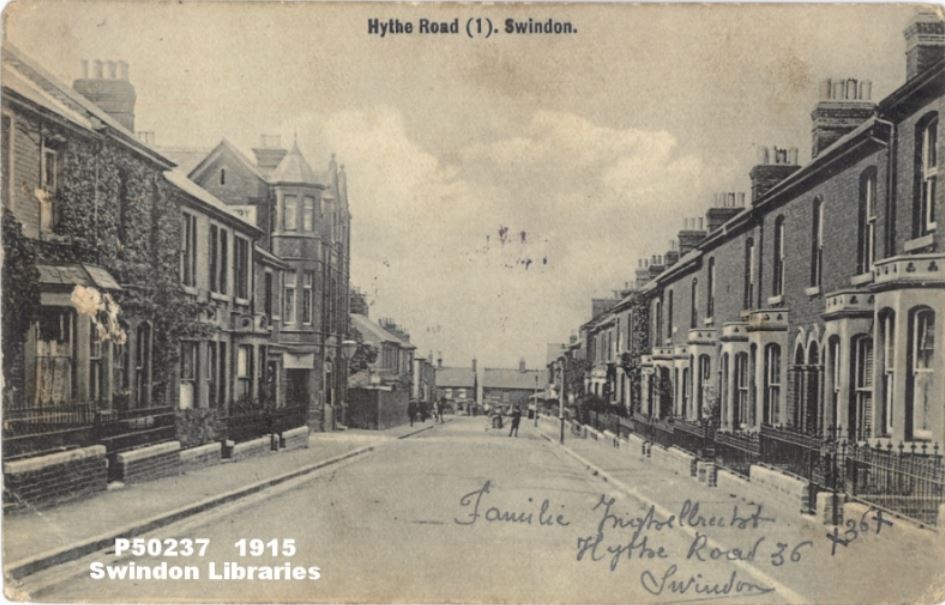
Friday January 3, 1908 proved to be a busy day for North Wilts Coroner Mr A. L. Forrester – Inquests in Swindon – Five on one day – A Record for the Borough. Three of the inquests took place at the Frome Hotel, Hythe Road. The first was described as ‘an extraordinary case’ and involved the sudden death of Mrs Ann Smith, aged 72 and some ‘remarkable evidence’ given by Eliza Adams during which she traded insults with the attending doctor, Dr Hirsch.
The second inquest was that of Charles Joseph Birchell, aged 25, a groom. Evidence was given by Frederick Goddard, 17, of Newport Street Swindon, who said ‘last Friday he was leaving his house, when he heard a pony gallop by. He looked along the house, and saw Burchell fall from the pony’s back. He ran to the spot and found Burchell unconscious. He picked him up and carried him into his (witness’s) house. Dr. Reid was sent for, and he on arrival ordered his removal to the Victoria Hospital. The pony did not stop, but galloped on up the street. Deceased lived at Prospect Villa, Wroughton Road.’
Dr J.C. Reid said on Friday last he was called to see deceased, who was suffering from concussion and laceration of the brain due to an accident. Burchell died at the Victoria Hospital on Wednesday evening as the result of secondary hemorrhage of the brain, owing to the shock caused by the accident.
The jury returned a verdict of accidental death.
Charles Joseph Birchell was buried in grave plot B2095, a public grave, on January 6, 1908, with three other unrelated persons.
The third inquest was into the sudden death of Charles Hillier, employed as a coachman by Captain T. Hooper Deacon, JP, of Kingshill House.
Hillier was waiting to convey his employer home after a New Year’s Eve party in Overton when it transpired that Hillier had fallen from the Brougham and died instantly.
A post mortem examination revealed that Hillier’s heart was “twice its ordinary size” and that he had died due to “valvular disease.”
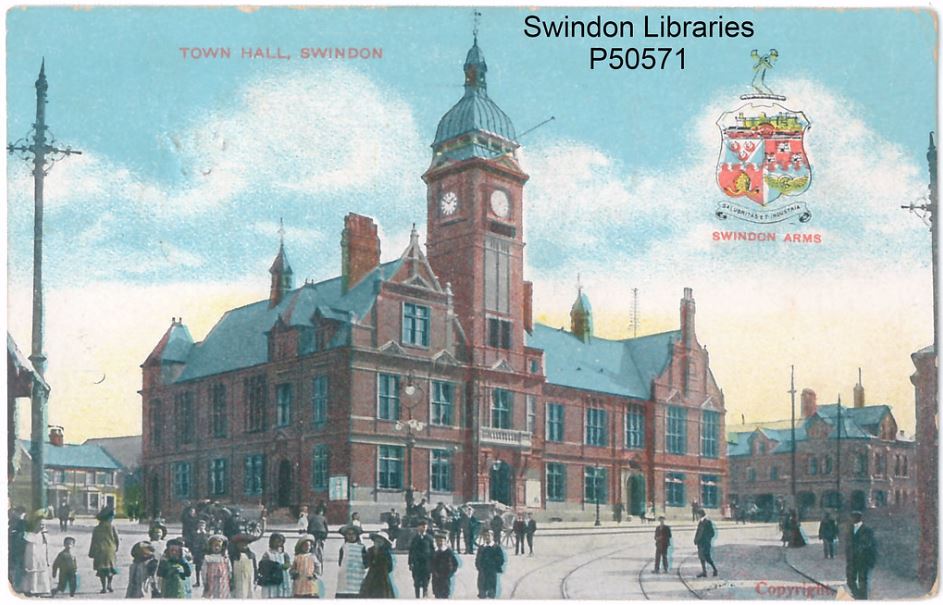
Coroner A.L. Forrester now headed off to the Committee Room at the Town Hall and the inquest of John Mason, aged 72.
A former railway labourer, John had suffered “a stroke of paralysis” some seven years prior to his death. Dr. Waters was called to John’s home in Byron Street. He pronounced “the cause of death was in his opinion, heart failure brought on by paralysis.”
John was buried on January 7, 1908 in grave A2470, a privately purchased family grave.
The final inquest on this busy day was that of Sarah Birch aged 83 who died peacefully in her sleep at her daughter’s home 46 Eastcott Hill. A verdict of “heart failure” was given.
No doubt Mr Forrester was pleased to have concluded the day’s business and returned to his home!
It was usually the wind that caused the horses to be skittish but that early morning in June there was not so much as a breath of air. Brayhead, a handsome chestnut stallion, was looking agitated as Tom led him out of the stable into the yard. Most of the horses were already on their way to the gallops on Russley Downs, but I held back.
Tom was an experienced stable lad and perfectly capable of handling the horse, but I was just a little concerned. Brayhead was edgy, stepping backwards in circles each time Tom tried to get into the saddle. Eventually he was up and slipping his feet into the stirrups.
“A bit frisky today,” he laughed as he pulled on the reins to guide the animal’s head in the right direction. I followed behind as we joined the string of racehorses heading out across the Wiltshire countryside. Once on the open downs Brayhead took off in an explosion of speed. I wondered if Mr Robinson had noticed.
On our way back to the yard I noticed the horse was sweating profusely, yet the exertion had failed to exhaust him. In fact, quite the opposite and Tom continued to have difficulty keeping him under control.
Again, I was at the rear of the string of horses returning to Foxhill House. It was normal practice to take them to their stable and rub them down after their exercise, but when I arrived back at the yard the other horses and riders were being led into the paddock.
I could hear Brayhead snorting and stamping in his stable, but otherwise it was eerily quiet in the yard, despite the number of people gathered around the figure on the ground.
Tom died from his injuries three days later. Afterwards, I wished I had voiced my concerns that morning, approached Mr Robinson, done something.
views across Liddington Castle, Wiltshire.
The facts …
Serious Accident at a Racing Stable – On Monday morning an accident which proved to be of a serious nature occurred at the well known Foxhill Stables at Lydington, near Swindon. It appears that while the horses were out for their morning exercise Mrs Langtry’s Brayhead started rearing, and fell back on a lad named Tom Whiteman. Assistance was soon at hand, but it was easily visible that a serious accident had happened. Dr J. Campbell Maclean, from Swindon, was sent for, and his assistant (Dr. C. Carew Webb) was soon at the stables, and made an examination, which proved that the lad was suffering from a fractured pelvis, and was badly injured in the abdomen. He ordered his removal to the Swindon Victoria Hospital. The patient lies in a very dangerous condition, and his recovery is not expected.
The Warminster and Westbury Journal Saturday June 17, 1899
Brayhead was a chestnut stallion owned by the actress Lillie Langtry. Mrs Langtry is remembered for her numerous affairs, most famously with Albert, Prince of Wales (later Edward VII) and Prince Louis of Battenberg.
Mrs Langtry owned a number of racehorses, purchased under the name of Mr Jersey. In 1899 the five-year-old Brayhead was one of several horses in training with William ‘Jack’ Robinson at Foxhill. Wiltshire.
Tom Whiteman 39, died in the Victoria Hospital on June 15. He was buried two days later in Radnor Street Cemetery in plot C1237, a public or pauper’s grave, with five other unrelated people.
Mr W.J. Robinson and the Foxhill stables – published courtesy of the Illustrated Sporting and Dramatic News, March 11, 1899.















 Radnor Street Cemetery