Corporal Charles Edward Stroud – Tell Them of Us

Charles Edward Stroud was born on March 8, 1894 the son of William Henry Stroud, a storekeeper in the railway factory, and his wife Elizabeth Mary. William and Elizabeth had a large family of nine children but by the time of the 1911 census only four were still living.

We can find out a lot about Charles’ working life thanks to the UK Railway Employment Records 1833-1956 available on Ancestry.

Charles began work in the railway factory on June 1, 1908 as a 14 year old office boy. On December 6, 1909 he transferred to R shop to begin a five year fitting and turning apprenticeship. These records were meticulously updated and the last entry referring to Charles reads: War – Military duty, last at work 29/8/1914. Apprenticeship terminated.

Sadly, we know little about Corporal Stroud’s military career. You may wonder why so many of the WWI servicemen’s’ records are lost. In September 1940 the War Office repository in Arnside Street, London was hit during a bombing raid, destroying more than half the military records stored there. What remains of these records (referred to as the ‘burnt documents’) are available to view on microfilm at the National Archives and also online at Ancestry and Find My Past. There is roughly a 40% chance of finding the service record of a WWI soldier. But before you get started on your research why not visit Local Studies at Central Library, Swindon where the staff will be able to help you.

The go-to-book for information on Swindon men who served is Tell Them of Us by Mark Sutton. We have a few copies for sale, available during our cemetery walks. (Our next walk is Sunday October 29, meet at the chapel for 2 pm).

Corporal Charles Edward Stroud served with the 2nd Battalion of the Wiltshire Regiment. He died of wounds on March 6, 1916 at the General Hospital Cambridge. His body was returned to 41 Stanier Street, Swindon and the funeral took place on March 11. He is buried in plot D1501 with his parents. He was 21 years old.
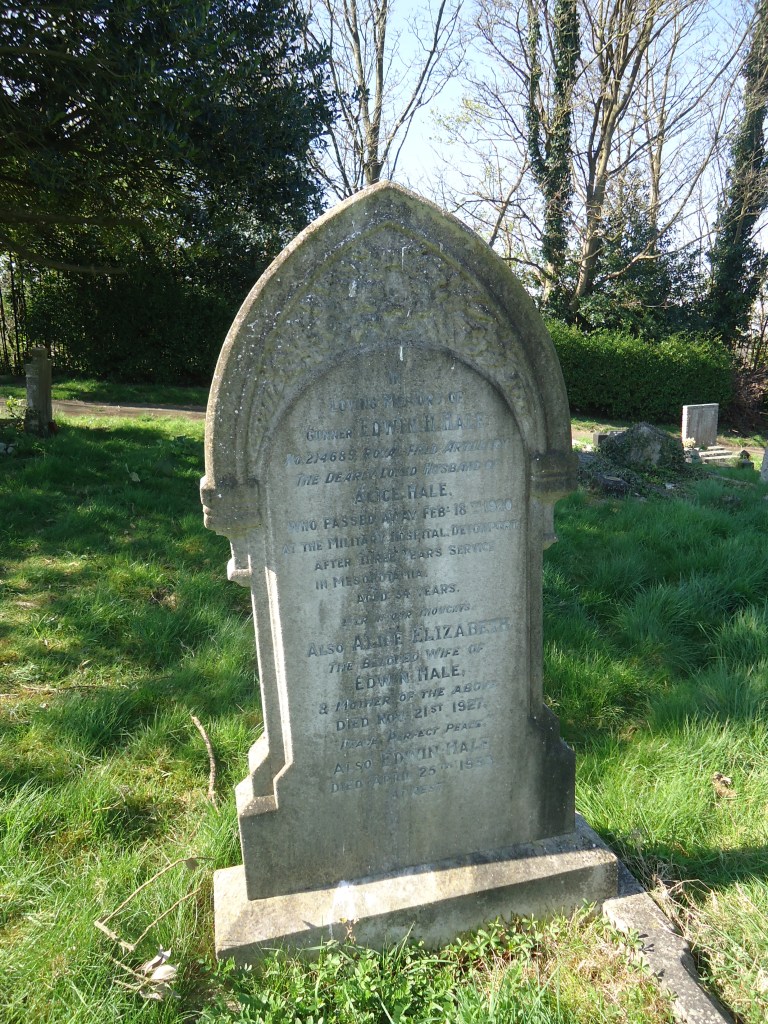
Gunner Edwin Henry Hale – served in Mesopotamia

If you’re familiar with the CWGC commemorative headstones it might surprise you to know that this is one too. Families were given the choice of an official headstone or one of their own choosing and this is what the family of Edwin Henry Hale did.

Edwin Henry Hale was born on March 30, 1885, the only child of Edwin and Alice Elizabeth Hale. He was baptised at St. Paul’s Church on April 7, 1885 just around the corner from the family home at 2 Regents Place.

In May 1899 as a fourteen year old boy he entered the employment of the GWR as an office boy while he waited to begin an apprenticeship. Six months later in September 1899 he began a six and a half year apprenticeship in the Coach Trimming Shop.

In 1908 Edwin married Alice G. Gleed at St. Mark’s Church and by the time of the census in 1911 the couple were living at 53 Sydney St. Hornsey, London N.1. They had been married for three years but had no children.

Edwin’s military records did not survive the bombing during the Second World War, so the inscription on this headstone is crucial to our understanding of his military service during the First World War.

Gunner Edwin H. Hale gave three years service in Mesopotamia. Historically the area of Mesopotamia was situated between the Tigris and Euphrates rivers and today is home to Syria, Turkey and most of Iraq.

During the 1914-18 war the conditions on the battlefields were horrendous. Temperatures regularly reached 120 degrees Fahrenheit (49 degrees centigrade) in this arid desert area, which was prone to flooding. More than 12,600 soldiers died of sickness; 51,800 were wounded with 3,900 dying of their wounds; 11,000 were killed in action and 13,400 reported missing or taken prisoner.

And yet somehow Edwin survived this and was brought back to England. Sadly, he didn’t make it home to Swindon though, dying on February 18, 1920 at the Military Hospital in Devonport.

Alice Elizabeth Hale, Edwin’s mother died on November 21, 1927 and his father Edwin died on April 25, 1933. They were buried in the same plot with their only son.

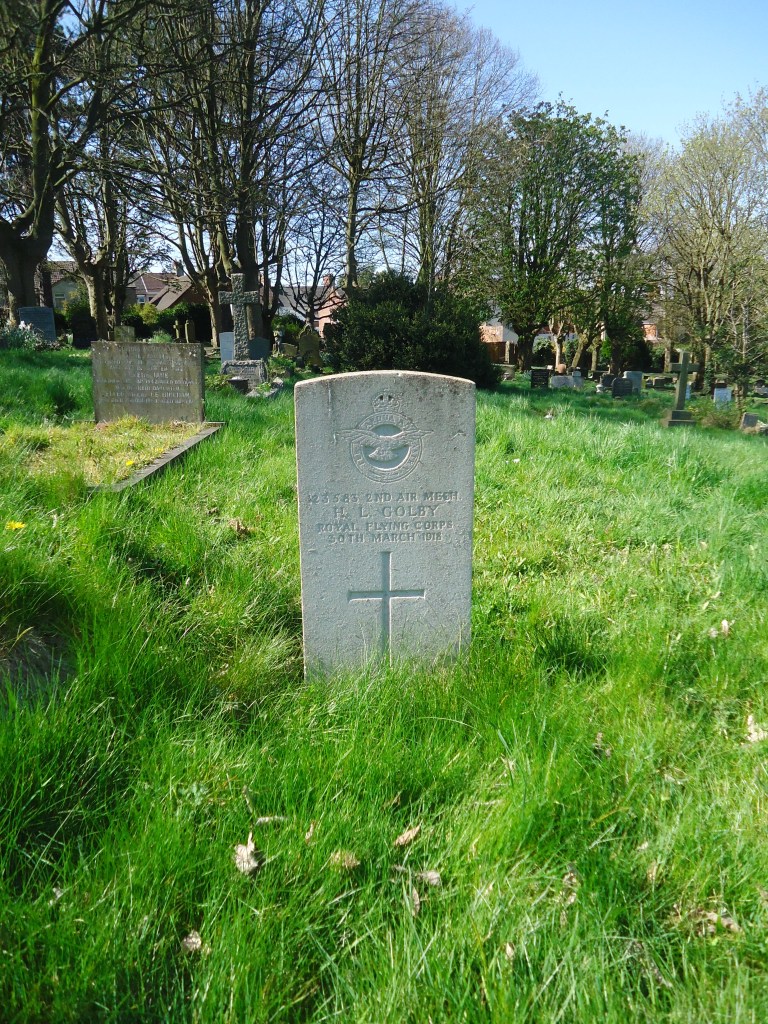
Horace Lett Golby – Tell Them of Us

Horace Lett Golby was born on April 18, 1887 the youngest of five children. He grew up living at various addresses in Gorse Hill where his father James worked as a house painter. As a 15 year old boy he began a 6 year carpentry apprenticeship in the GWR Works.

On April 5, 1915 he married Ethel Florence Phillip at the parish church in Seend, Wiltshire, the bride’s home parish. He was 28 and she was 25. Their daughter Dorothy Mary was born on January 22, 1916 and later baptised in the church where her parents had married.

Most of Horace’s military records are lost. All we know is that he served as an Air Mechanic 2nd Class in the Royal Flying Corps, the precursor of the RAF. He died on March 30, 1918 at the Military Isolation Hospital in Aldershot. The Army Registers of Soldier’s Effects reveal he left £7 8s 6d to his widow.

We know nothing about his military service, nor about the kind of man he was. What were his hobbies, did he play football or cricket, did he like gardening? A life sacrificed in war, but still remembered 105 years later.

Horace was buried on April 3, 1918. He shares a grave with his mother Mary who died in December 1913 and his father who died in 1939.

Mary Ann Ball – a mother’s story

For so many women wartime losses came at an age when they would have expected, or at least hoped, that their life was entering a more peaceful phase; when the worry of raising a family was past.

Mary Ann faced some tough challenges during her lifetime. She was 61 years old when her second son, George Glendower Ball, died in 1918 during the First World War. George Glendower Ball was rejected for military service twice before successfully enlisting with the Norfolk Regiment. 33800 Private George Glendower Ball died in the Bavarian War Hospital, Tournai on March 7, 1918, his 30th birthday. He is buried in the Tournai Communal Cemetery.

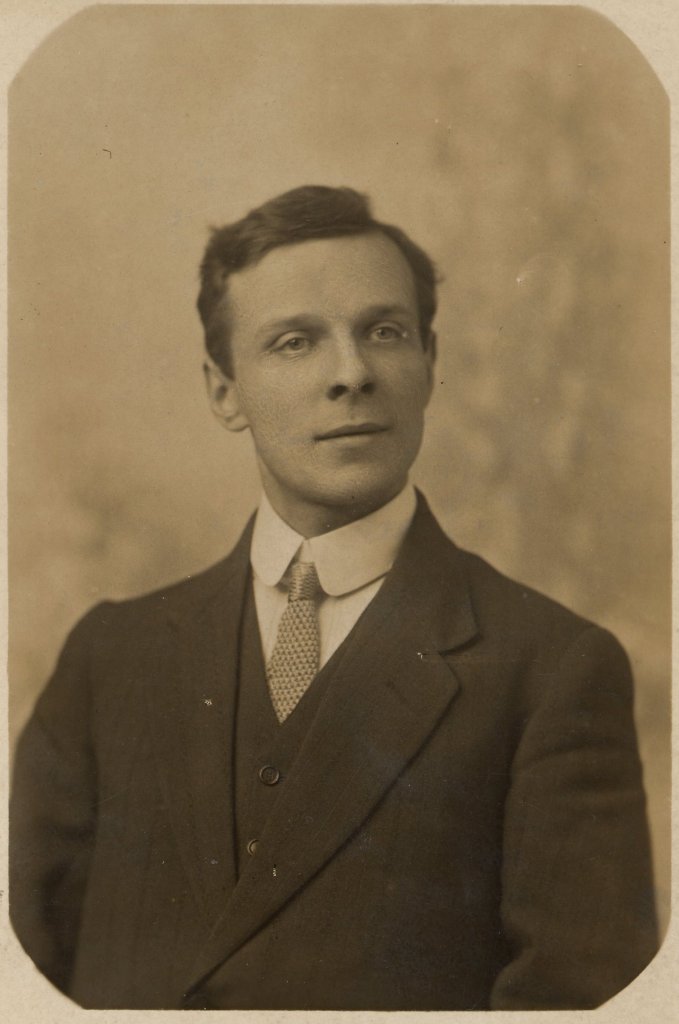
Photograph of George Glendower Ball published courtesy of Duncan and Mandy Ball.

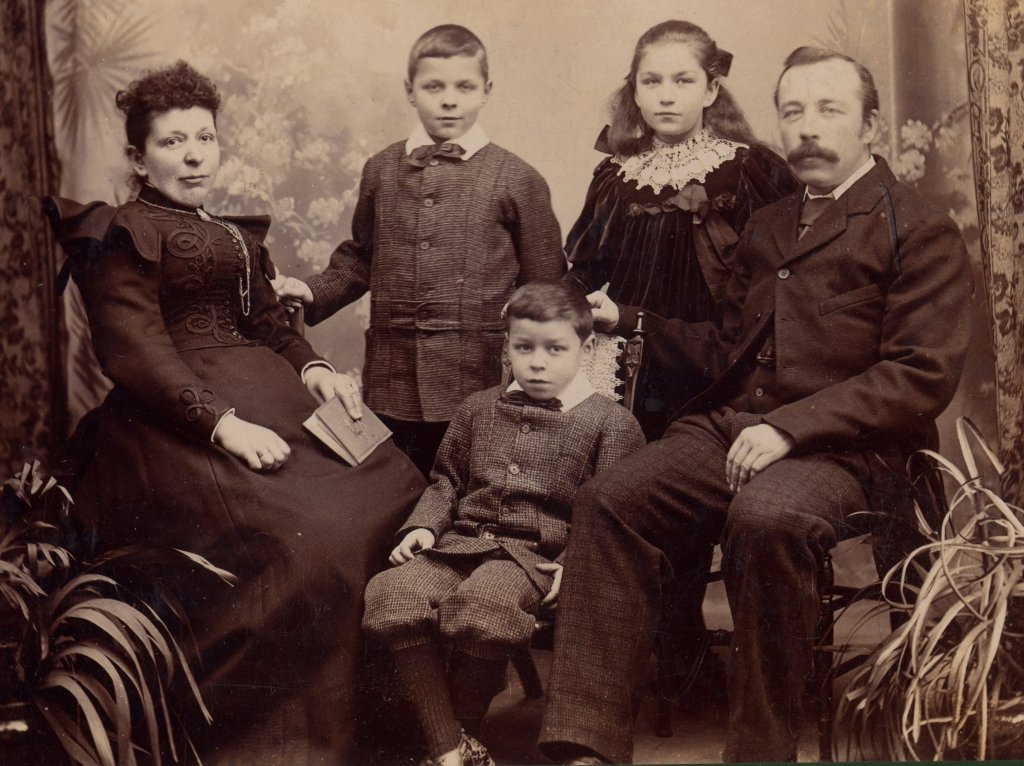
Born in Bristol in 1857 Mary Ann married George Ball in 1885 and by 1891 the couple were running the Temperance Hotel on Station Road. The census returns of that year record their four young children William 5, Millicent 4, Glendower 3 and Samuel just three months old. What the stark facts and figures of subsequent census returns are unable to convey are the tragic circumstances surrounding their eldest son. William had contracted measles at the age of two, which left him disabled; he never appeared in any family photographs.

This photograph of Mary Ann and her family is published courtesy of Duncan and Mandy Ball.

In 1922, when Mary Ann was 65, her husband George was killed in a railway accident when he was struck down while crossing the line at Shrivenham station. Then two years later her disabled son William died aged 48. Mary Ann died just a few months later.

Mary Ann is one of the extraordinary ordinary people buried in Radnor Street Cemetery.

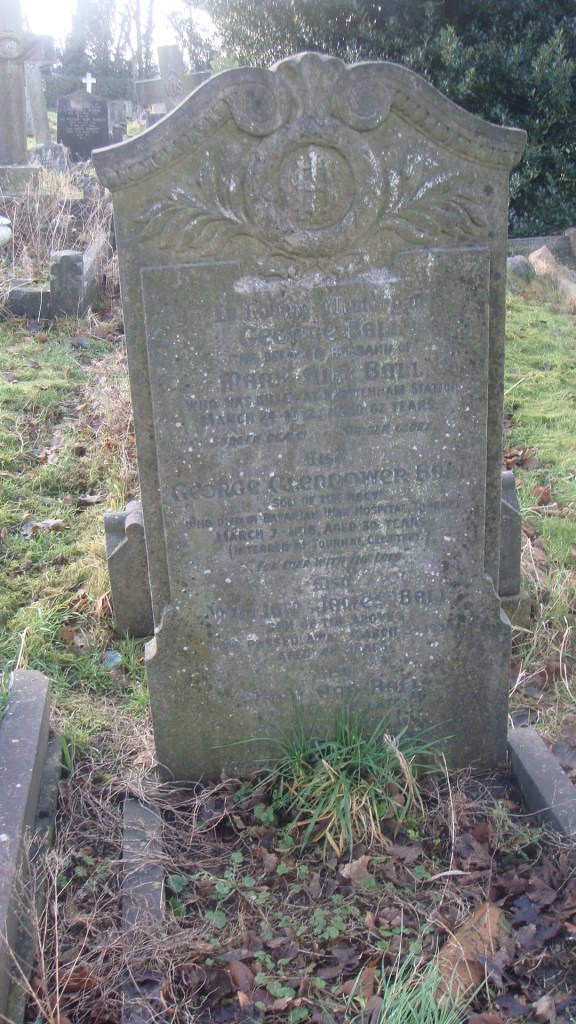
The parents and their son are buried together in grave plot D1305. Their son George Glendower Ball is mentioned on their headstone.

Air Mechanic 1st Grade Charles Henry Wiltshire

This is the last resting place of Charles Henry Wiltshire, one of 104 war graves here in Radnor Street Cemetery.

Charles was born in 1897, the youngest of ten children. His father William was an engine driver and in 1901 the family lived at 32 Regent Circus. In 1911 the family were living at 57 Eastcott Hill. On the census of that year Mary Ann declared that the couple had been married 32 years and 2 of their 10 children had previously died. She could hardly have anticipated the war that was to follow and the loss of yet another child.

Charles’s service records date from May 1, 1916 when he enlisted as an 18 year old. At the time of his death he was an Air Mechanic First Class in the Royal Naval Air Service.

Charles was invalided out of the Royal Naval Air Service on September 1, 1917. His service records state that he was suffering from tuberculosis caused by his military service. He died on October 16, 1918 at the family home, 39 Commercial Road. He was buried on October 22 in grave plot A2459 and later awarded an official Commonwealth War Graves headstone. He is buried with his father William who had died in 1913 and escaped the fear of seeing his young son in service during war time.

Charles’s mother, Mary Ann, was buried with her husband and son following her death in 1927. The last person to be buried in this grave was Winifred Jessie Wiltshire, William and Mary Ann’s daughter, who died in 1948 following yet another world war.

The story of Charles Wiltshire was remembered at our recent special event at the cemetery.

You may like to read:

The Airspeed Oxford propeller unveiled

#TellThemofUs

#MarkSutton

Tenders for work

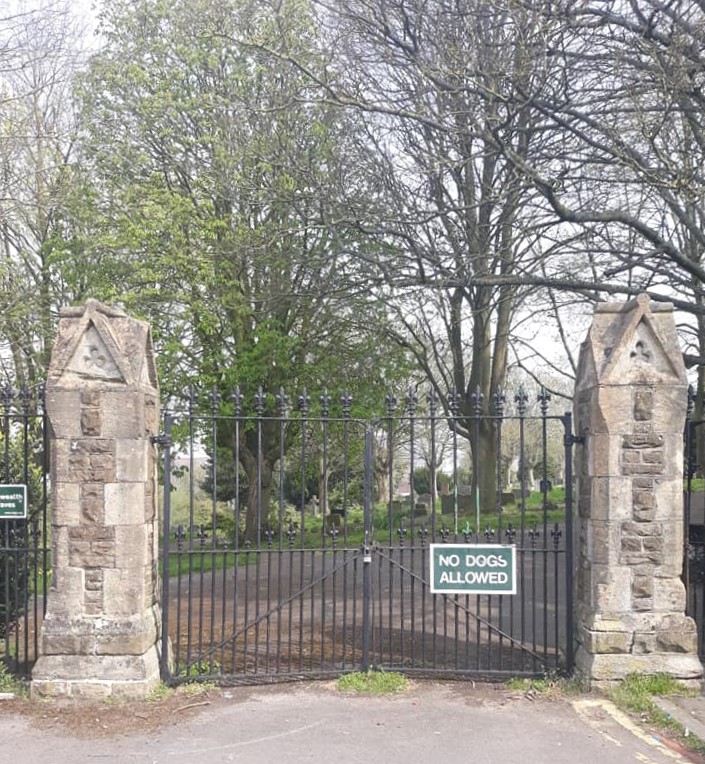
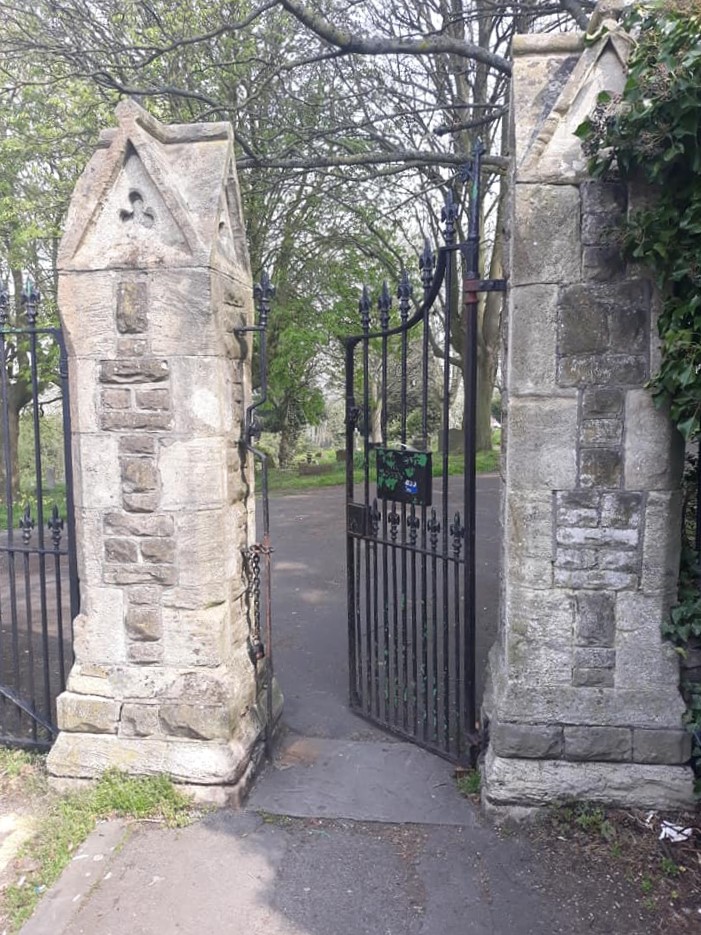
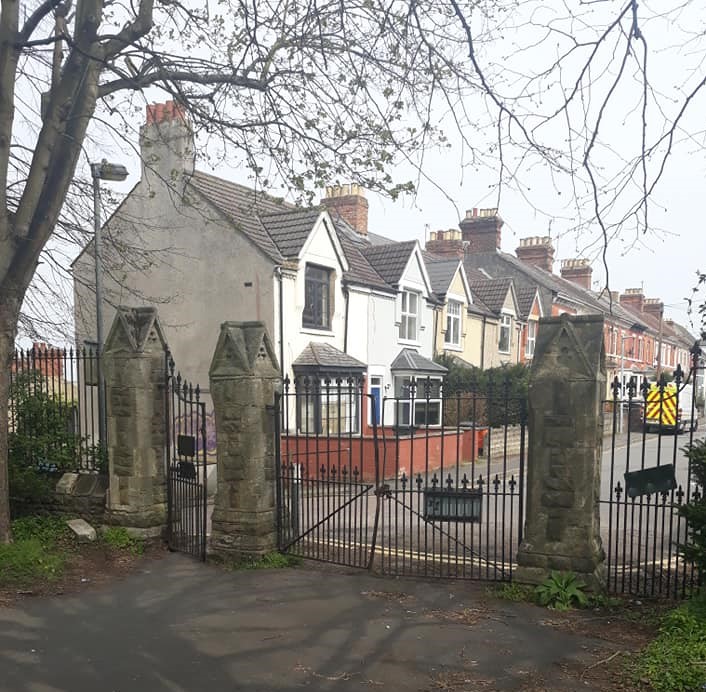
It was always Mark’s dream to see the cemetery gates and railings painted black with the fleur de lis finials burnished in gold. Custodian of the military history of the cemetery, Mark was a painter and decorator by trade and the state of the cemetery railings was a source of professional frustration for him. Today the gates and railings reveal a motley coat of green and black paint, which came first is difficult to work out.

In 1885, just four years after the cemetery had opened, it would seem the railings were already in need of maintenance.

The Swindon Burial Board are desirous of receiving tenders for the following work:- Clean and Paint, with two coats of good oil paint, the whole of the iron fencing around the Cemetery; Paint twelve seats with three coats of good oil paint; Size and Varnish the outside of the chapel door.

For further Particulars, apply to the Caretaker, The Cemetery Lodge.

Tenders to be sent to me the undersigned, on or before the 11th day of May, 1885.

The Board do not bind themselves to accept the lowest or any Tender.

H.F. Townsend

42, Cricklade Street, Swindon, 22nd April, 1885.

The North Wilts Herald, Friday, April, 24, 1885.

Kent Road gate

Clifton Street gate

Clifton Street gate

Radnor Street gate

Dixon Street gate

#TellThemofUs

#MarkSutton

Sergeant Thomas Fletcher of the New Brunswick Regiment

Thomas Fletcher was born in Stratton St Margaret on February 2, 1885, the son of George and Martha Fletcher. On August 2, 1899 he began a 6 and a half year Blacksmithing apprenticeship in the Works.

By 1901 George and Martha had moved to 85 Redcliffe Street in Rodbourne. Here George worked as a carpenter in the Works and Thomas was employed as blacksmith, although not yet out of his apprenticeship.

The last time we see Thomas in Swindon is on the 1911 census when he is 26 years old and living with his parents in Redcliffe Street. When his father completed the census returns that year he stated that he and Martha had been married for 35 years and that they had 6 children, all of whom were still living. Sadly, that would all change.

Mark Sutton continues to be the most knowledgeable historian of Swindon’s sons who served in the First World War and wrote a book entitled Tell Them of Us. If you went to one of Mark’s talks or followed one of his walks here at Radnor Street Cemetery you left feeling you had met the men he talked about, that he had known them himself – and of course Mark has been able to fill in the details of what happened to Thomas Fletcher. He writes:

“He had served an apprenticeship in the Loco and Carriage Dept GWR before leaving for Canada in 1912. He worked then for the Canadian Pacific Railway Company Workshops at Montreal. He joined the army in November 1914.”

Tell Them of Us.

Sergeant Thomas Fletcher was killed in action on August 28, 1918 during fighting to retake the village of Cherisy. He was 33 years old. He is buried in the Sun Quarry Cemetery, Cherisy, France.

Mark made frequent visits to the Western Front battlefield cemeteries, visiting the graves of the Swindon men buried there. I wonder if he ever visited Thomas Fletcher? I bet he did.

Thomas’s father George died in 1923 and is buried in Radnor Street Cemetery in grave plot C1880 with his wife Martha who died in 1937 and their youngest daughter Catherine Shakespeare who died in 1954.

Charles Godfrey Montague Deacon – Tell Them of Us

Before he died on September 27, 1918 Charles Godfrey Montague Deacon had his family firmly on his mind.

Charley was born in 1886, one of William and Rose Deacon’s seven children. He grew up at 4 Western Street where William worked as a brickmaker. When Charley left school he became an assistant in an ironmongers.

Like so many others, Charley’s military records are lost, but we know that he served as a private in the 15th Battalion Lancashire Fusiliers and that he died of his wounds (Gas) in one of the Exeter War Hospitals. He was 33 years old.

The UK Army Register of Soldiers’ Effects 1901-1929 reveal an account of Charley’s money and where he wished it to go.

He left £35 3s 9d (about £35.15) and with no wife or children he divided his money between members of his family. To his widowed mother Rose he left £5 0s 7d (about £5.03). He left the same amount to each of his two surviving brothers, Irving Tom and Percival Oscar. To his sisters Daisy, Flossie and Hilda (the wife of Thomas Mott), he left £5 0s 6d each (about £5.02).

His last two bequests reveal another family tragedy. In the autumn of 1916 Charley’s brother Louis Stanley Deacon was ‘found drowned.’ He left a wife and several children. Charley left £3 7s (about £3.35) to ‘GW Bizley Guardian of children of Bro Louis’ and £1 13s 6d (about £1.67) to his nephew Sidney.

Charley gave his life for his country and the money he had saved to his family.

Charles Godfrey Montague Deacon was buried on October 2, 1918 in plot number B2819 which he shares with his brother Louis, his father William and his mother Rose.

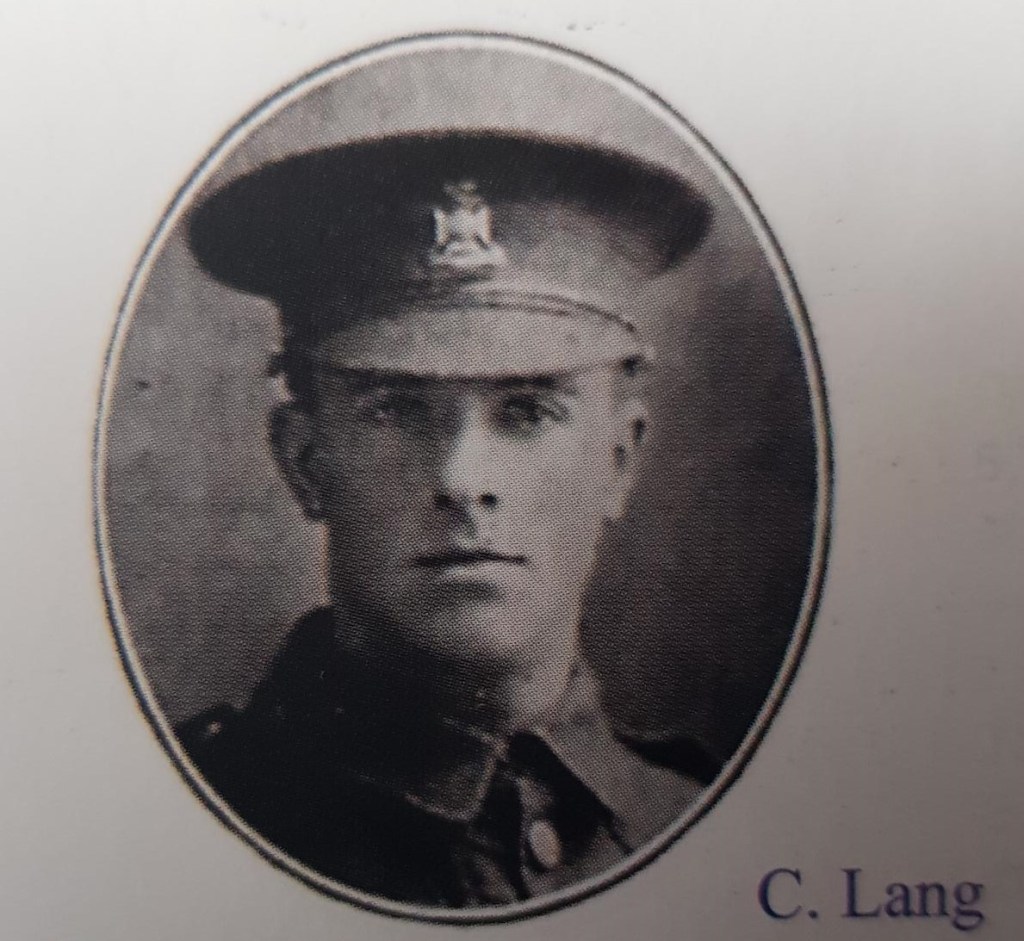
Cecil Arthur Lang and his family

February 1915 – Coach bodymaker Francis Richard Lang had two sons serving in the war and he was sick with worry. At work his foreman showed him a letter he had received from his son at the front; all was well with him. But this good news was of no consolation to Francis. The distraught father left for work as normal that final day but was not seen again until his body was found at Coate Water. He had taken his own life. A razor and empty case and a pocket knife were found in his clothes.

And so, Mercy, his wife, was left alone to worry about her boys until the inevitable happened.

Cecil Arthur Lang was born on March 19, 1882 and baptised at Holy Trinity Church, Dalston, East London, one of 11 children born to Francis Richard and Mercy Caroline Lang. By 1892 the family had moved to Swindon and in 1911 the census of that year states that along with their father, five sons worked in the railway factory. Eldest son, also named Francis Richard, was a Railway Coach Bodymaker, Leonard, Arthur and Walter were Carriage Fitters & Turners while Cecil, aged 21, was a Coach Bodymaker. The census reveals that of Francis and Mercy’s 11 children, 3 had already died. A heavy loss for parents and one that was going to increase.

Cecil Lang 26, was killed in action on June 16, 1915. He is remembered on the Menin Gate in Ypres. On his parents’ memorial in Radnor Street Cemetery, he is reported as ‘missing’. Some families could never accept that their loved ones had been killed, but continued to hope they might be found and eventually return home.

On our recent guided walk, cemetery volunteer Jon explained that in addition to the official Commonwealth War Graves, the volunteers also tend to family graves that include an inscription to a fallen serviceman. It may not be possible to restore this monument with its tall standing stone cross, but the volunteers will maintain the grave.

Mercy died on May 19, 1927 and is buried here with her husband in grave plot B3293.

We will remember them.

#TellThemofUs #MarkSutton

Pte. William Henry Thomas – art student

What did the future have in store for William Henry Thomas? It could have been so different. His mother Amy died in 1903. She at least was spared the horror of the First World War. The last time Henry saw his son he was an art student.

William Henry Thomas was born in 1888, the only son of Henry William and Amy Thomas and baptised at St Paul’s Church on March 25. He grew up at The Eagle Hotel where his father was licensed victualler. The Eagle stood on the corner of Regent Street and College Street and was demolished during the redevelopment of the area.

Read more about the Eagle here.

A Swindon Soldier’s Death

The distressing news is to hand of the death – killed in action on May 25th – of Pte. William Henry Thomas, of the H.A.C. He was the only son of Mr H.W. Thomas, of 63 Bath Road, Swindon, and was 29 years of age. Previous to joining the Army, about 18 months ago, Pte. Thomas had been studying art in London. He had been at the front since November last.

North Wilts Herald, Friday, June 1, 1917.

Until 9 April 1917, the Allied front line ran practically through the village of St. Laurent-Blangy. The trench (known to the Germans as Mindel Trench and called in 1918 McLaren Trench) was taken by the 9th (Scottish) Division on 9 April 1917, and the cemetery was made by the side of the trench after the battle. It was used by fighting units and field ambulances until September 1918, and was at times called Stirling Camp and St. Laurent-Blangy Forward Cemetery. Mindel Trench British Cemetery contains 191 burials of the First World War, nine of which are unidentified. The cemetery was designed by N A Rew.

From the Commonwealth War Graves website.

Thomas W.H. William Henry

Private 5116 A Company 1st Battalion

Honourable Artillery Company

Died of Wounds 25 May 1917 29 years old

Son of H.W. and Amy Thomas of 63 Bath Road

C24 Midel Trench British Cemetery St Laurent Blangy

One of the bells in Christ Church was bought by his father in memory of him in 1923.

Tell Them of Us by Mark Sutton