Younger residents might not know the significance of some of the Swindon street names. If you live in Tydeman Street, Gorse Hill you might be interested in this story about the Tydeman family.
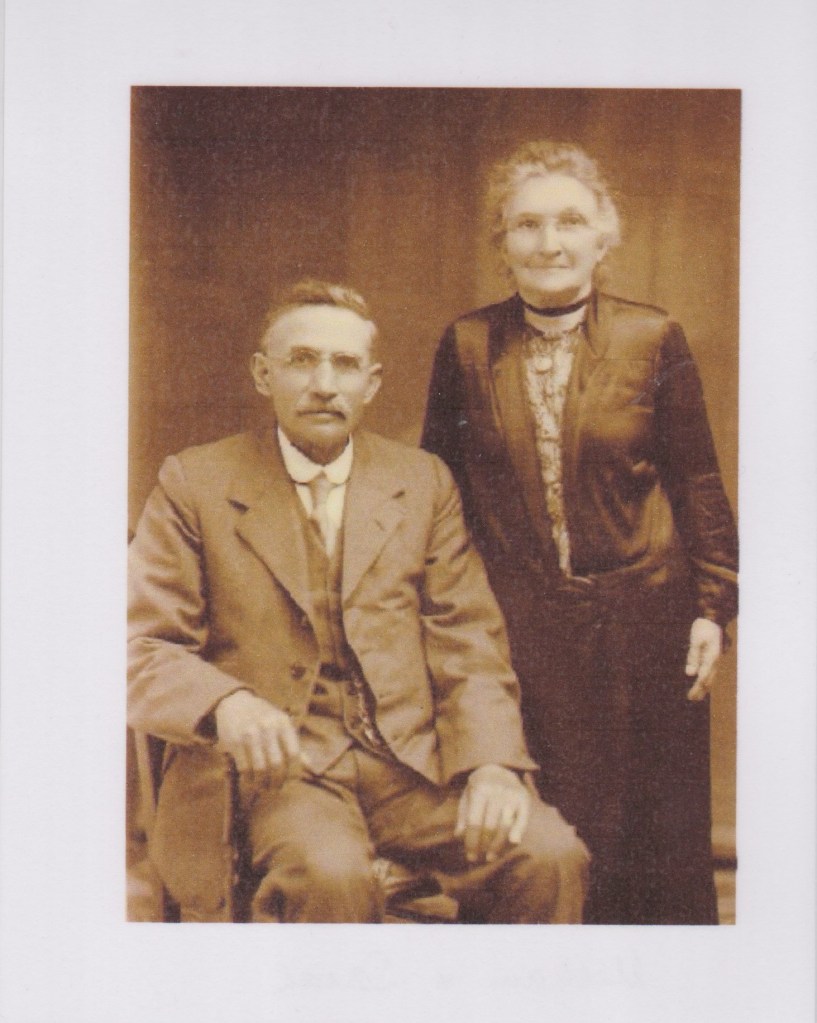
The son of a Police Sergeant, William Henry Tydeman married Sarah Anne Barnes in the parish church at Aldbourne on May 14, 1892. The couple moved to Swindon shortly afterwards and appear on the 1901 census living at 1 Edgware Road with their five young children, Elsie 7, Dorothy 6, Hilda 4, Henry 2 and 8 month old Lilian.
It was around this time that William went into partnership with his younger brother Walter and they began work on an ambitious building project in Rodbourne – nine houses in Linslade Street and eight in Jennings Street.
In 1904 the brothers advertised their business as ‘Contractors, Decorators and Undertakers at Sanford St. Swindon.’ In 1907 they built the Wesleyan Methodist Hall in Clarence Street, an iconic Swindon building, which was sadly destroyed by fire in 1977.
The business and the workforce grew following the First World War, eventually becoming Tydeman Bros. and Sons when the brothers two sons Henry and Nelson joined the firm. During the 1920s among their projects were 22 houses in Southampton Street, 19 houses in York Road and 16 houses in Iffley Road and more than 100 houses in the street that would bear their name, Tydeman Street.
In 1927 they were encouraging Swindonians to ‘Employ Your Own Townsmen – Tydeman Bros., Shopfitters, Builders & Undertakers Edgeware Rd. & Sanford St., Swindon. Inspect the Shopfront Alterations recently carried out by us at Messrs. Freeth & Son, Centre, Swindon, and the John Farmer Shoe Co., Regent Street, etc., Then send us your enquiries. Telephone 166.’
Sarah died in 1935 and was buried at Radnor Street Cemetery in grave plot D1310 with her daughter Hilda who had died in 1921, aged 25 years.
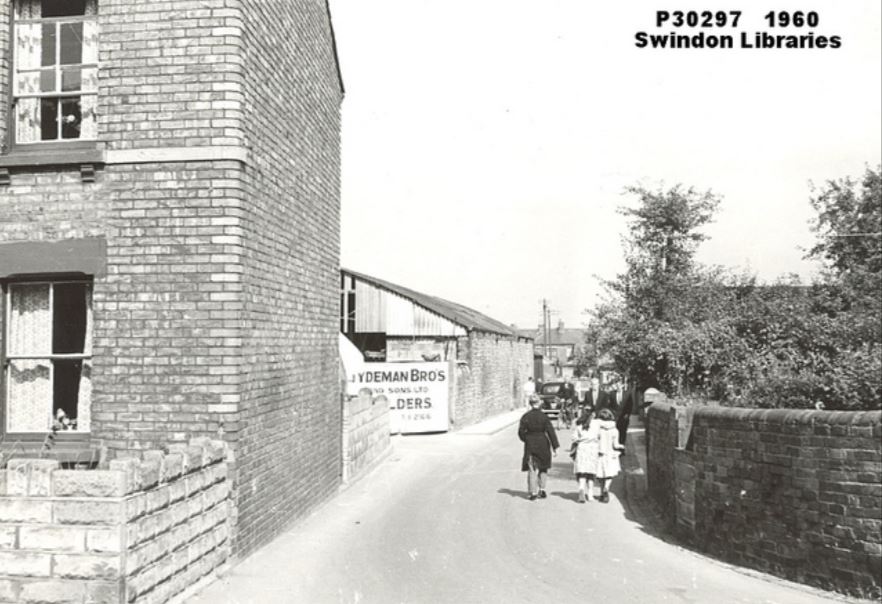
1960 image published courtesy of Local Studies, Swindon Central Library. Tydeman Bros off Cow Lane
Tributes to Mrs W.H. Tydeman
Funeral of Swindon Builder’s Wife
Mission Stalwart
The funeral of Mrs Tydeman, wife of Mr. W.H. Tydeman, of “Wanbourne,” 5 Downs View Road, Swindon, a member of the firm of Messrs. Tydeman Bros. and Sons Ltd., builders and contractors, took place last Thursday.
Mrs Tydeman had not been in good health for some months, but was taken seriously ill a week before her death on the previous Sunday. She was 73 years of age.
Although a native of Aldbourne, Mrs Tydeman had resided in Swindon for more than 40 years, during which time she made a host of friends, particularly in her connections with the Wesleyan Church.
Foundation Member
A foundation member of the Central Mission, which she had regularly attended since its inception, she gave endless time and energy to the furthering of the several activities with which she associated herself, and the many tributes received from the worshippers at the Mission bore evidence of her great work.
In his address during the service at the Central Mission Pastor J.W. Spargo, late of Swindon, and now residing at Reading, who assisted the Rev. R.A. Rogers in the service, spoke in feeling terms of Mrs Tydeman’s faith under adversity.
Mr F. Street was at the organ, and the hymns, “Jesu, the very thought of Thee” and “For all the Saints,” were sung. The lesson was taken from Psalm xxiii and a passage from Revelations.
The interment was at Radnor Street Cemetery, the committal sentences being pronounced by Pastor Spargo.
Mrs Tydeman is survived by a widower, one son, three daughters and one adopted son. Her mother also survives her at the age of 95 years.
Extracts from the funeral report published in the North Wilts Herald, Friday, 7 June, 1935.
A Prominent Methodist
Death of Mr W.H. Tydeman
A prominent Methodist, and a founder member of the well known Swindon firm of Messrs. Tydeman Bros and Sons, Ltd. Mr William Henry Tydeman, died at his home, 5 Downs View road, Swindon, on Saturday night two days before his 72nd birthday.
Mr Tydeman was a native of Donhead, South Wilts, his father being a sergeant in the Wilts Constabulary. He went to live at Upper Wanborough when he was about 13 years of age and was apprenticed to Mr Payne, builder of that village. On completion of his time he went to work in London. Later he spent a short period in the GWR Works and then, before branching out in business on his own account, was foreman for Mr George Whitehead, builder, of Swindon.
He and his brother, the late Mr Walter Edward Tydeman, founded the firm of Tydeman Bros. Some 40 years ago.
Built Central Mission
The firm of Tydeman Bros. built the Central Mission Hall, Clarence Street, Swindon, where Mr Tydeman was a prominent worshipper. He was a trustee of that church, and for a period of 25 years was superintendent of the Sunday school and church treasurer.
He was a keen sportsman and at one time belonged to the County Ground Bowling Club. He was also a life-long follower of Swindon Town Football Club.
Mr Tydeman, whose wife died five years ago, leaves three daughters – Mrs Ball, of 6 Cumberland Road, Mrs Austin, Bouverie Avenue, and Mrs Barrett, 48 Burford Avenue – one son, Mr W.H.T. Tydeman, who lives at 1, Edgware Road, Swindon, and an adopted son Mr Fred Vizor.
The funeral took place yesterday.
North Wilts Herald, Friday, 9 February, 1940
William Henry Tydeman was buried with his wife and daughter on February 8, 1940 in grave plot D1310.


 Radnor Street Cemetery