Thomas Durkin – Irish haymaker

Image published courtesy of the Dixon-Atwell Donation and Swindon Local Studies

Sad death of an Irish haymaker

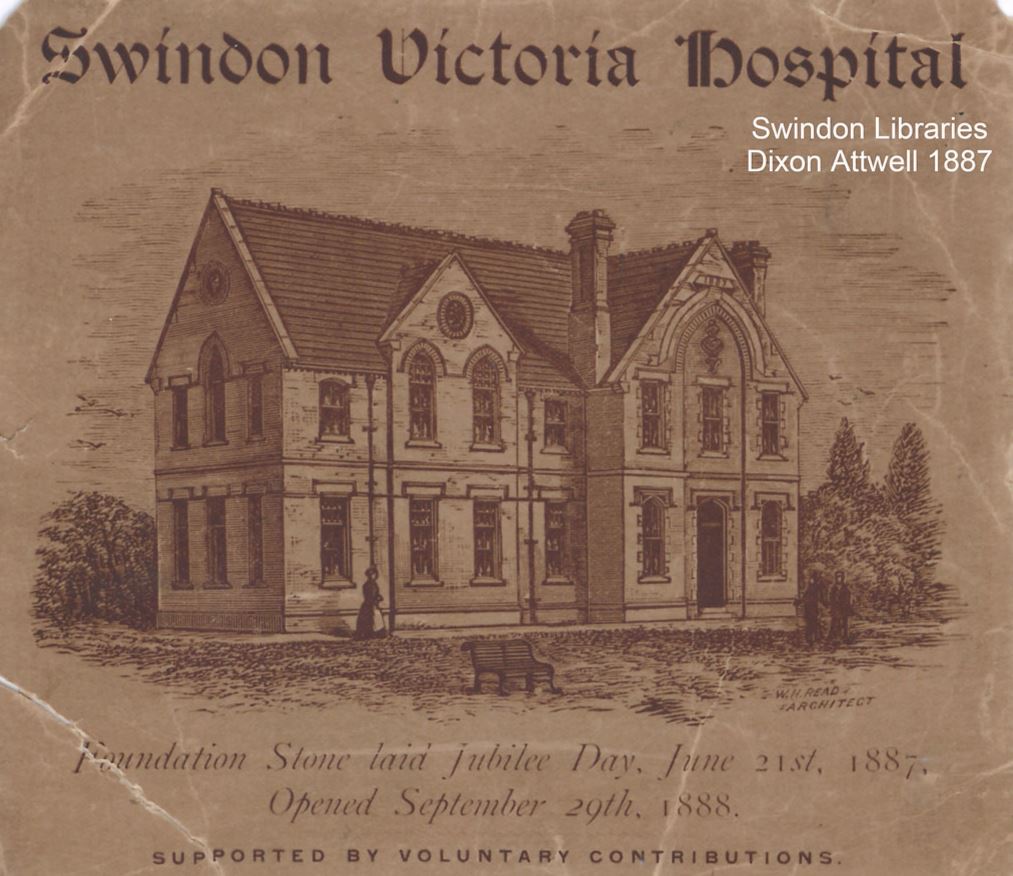
Mr Coroner Browne and a jury, of whom Mr George Wiltshire was foreman, held an inquiry at the Swindon Victoria Hospital on Tuesday evening into the cause of the death of Thomas Durkin, an Irishman, who died at the hospital the morning from injuries to his spine, received whilst at work the previous Thursday, under circumstances given in the evidence below.

William Durkin, deceased’s brother, said he and deceased and two other brothers came over from County Mayo, Ireland, last month to work for Mr S. Davis, of Rove’s Farm, Sevenhampton, Highworth, where deceased had worked each haymaking season during the past six years.

The accident to deceased happened last Thursday. Witness was working with him in the hayfield. Deceased was on the top of a load of hay, and, as it was leaning over somewhat, they decided to bind it before leaving it for the night. Three men, including witness, were pulling at the line on the ground to tighten in, and deceased was also pulling at it on the load, when suddenly the rope broke and deceased fell backwards from the load on to the ground. There was some knots in the rope, but he had not known it break before.

Deceased had been working as usual all day, and the accident happened late in the afternoon. Deceased must have been close to the edge of the load or he would not have fallen right off. After the accident deceased was attended by Dr Rowatt, and on Friday morning Mr. Davis had him removed to the Victoria Hospital.

A juryman expressed his opinion that the rope should have been produced for inspection by the jury.

George Fisher, farm labourer, in Mr Davis’s employ, said he tied the line on the waggon before commencing to bind the load. It was a “regular cart line,” and strong enough to have “stood a smartish weight.” Mr Davis explained to the jury that deceased was standing too near the edge of the load. Had he been in his proper place when the line broke he would have fallen on the load.

Dr J.C. Maclean said he was called to see deceased at the hospital at eleven o’clock on Friday morning. He found him suffering from spinal injury. All that could be done was done for deceased, but he did not get better and died that morning (Tuesday) about four o’clock. The immediate cause of death was injury to the spine caused by the fall.

This was all the evidence, and the Coroner briefly summed up, observing that he did not think any blame could be attached to anyone. The jury concurred, and returned a verdict to the effect that the immediate cause of death was injury to the spine caused by a fall from a waggon accidentally.

The jury expressed their sympathy with deceased’s brothers in their bereavement under such singularly sad circumstances.

The Swindon Advertiser, Saturday, July 14, 1894.

Undated postcard of Seventhampton published courtesy of Swindon Museum and Art Gallery

Thomas Durkin 38 years, who died at the Victoria Hospital, was buried on July 12, 1894 in grave plot B2269. This was probably a public grave which was later purchased by the Holmes family in 1909.

Details from Wilts Book

During the excitement of writing and producing the first edition of Swindon Heritage, co founder Mark Sutton provided a book he thought might be of interest. I remember it was quite a large book, the binding broken and the pages loose, but I now can’t remember the title. In it were short biographies of the great and the good of Wiltshire. Mark photographed those pages with a particular reference to Swindon and saved them on a CD ROM on which he wrote ‘Details from Wilts Book.’

Here is one of those biographies …

James Carson Rattray M.D., Granville Bath Road, Swindon; son of the late William Rattray of Edinburgh; born at Penicuik, Midlothian, May 1st, 1864; educated at Edinburgh University; M.B., C.M., and M.D. Edin. Member of the British Medical Association; Hon. Surgeon to the Swindon Victoria Hospital. Recreation; motoring, orchid growing, and is noted for breeding Scotch deerhounds, for which he has taken many First Prizes, Medals, and Championships.

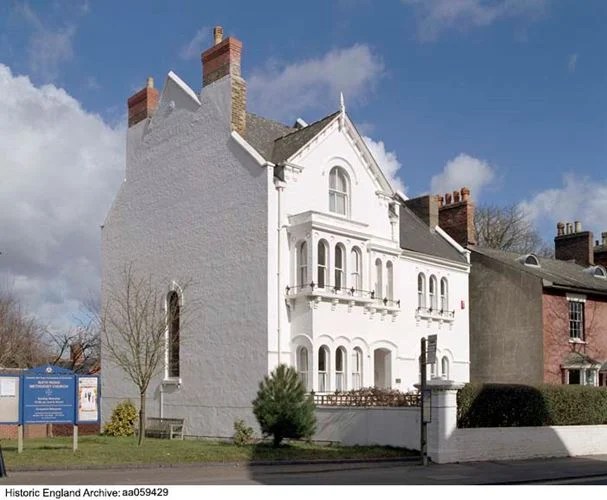
Granville House published courtesy of Historic England

James Carson Rattray can be found living and working as a General Medical Practitioner in Purton in 1888 aged 26. By 1901 he was living at Granville House, Bath Road where several members of the Rattray family had joined him – brother Sam, also a doctor; Pat, another brother, a dental student and sisters Bella who was his housekeeper and Mary.

James Carson Rattray died on November 19, 1906 while staying at 5 Albyn Place, Aberdeen. He was buried in North Merchiston Cemetery, Edinburgh.

Ella Saunders

I am grateful for a lot of things, and like most of us I sometimes need to be reminded to stop moaning and reflect upon them.

Two of my children suffered an appendicitis in their early teens. It was a painful experience for them and an anxious time for me, but thanks to modern medicine and our marvellous NHS they both recovered.

Little Ella Saunders was not so fortunate.

Ella’s father was a Pork Butcher. The family business was a shop next to the Rolleston Arms pictured in this postcard view of Commercial Road. The 1911 census tells us that William and Maria had been married for 12 years and had four children, Ethel 10, Edna 8, Ella 5 and two year old Erica. The four girls were baptised together on May 1, 1911 at St. Mark’s Church.

Obituary – Much sympathy will be felt with Mr and Mrs W.T. Saunders, of 72 Commercial Road, Swindon, in the loss which they have sustained by the death of their six years old daughter, Ella. The child was operated upon for appendicitis at the Victoria Hospital, but died after a only six days’ illness. The interment took place at Swindon Cemetery on Good Friday amid many manifestations of sorrow, a very touching feature being the presence of a number of the deceased child’s fellow scholars.

The service was conducted by the Rev. E.F. Winnington-Ingram. There were a large number of beautiful floral tributes including one “With deepest sympathy from the staff, College Street Infant School” and “In loving memory to Ella from teachers and scholars, St. Mark’s Sunday School ‘Jesus called little children to Him’”.

North Wilts Herald April 12, 1912.

Image published courtesy of Local Studies, Swindon Central Library

Ella was buried on April 9, 1912 in grave plot B2938. William died in 1928 and Maria in 1953 and were both buried with her.

Ethel Mary Franklin – undertaker’s daughter

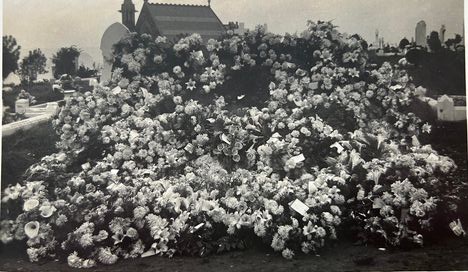
And this week I have received another old cemetery photograph taken at the funeral of Ethel Mary Franklin in 1925 – a beautiful display of floral tributes with the cemetery chapel in the background.

Ethel Mary was born in 1882, the seventh child of Henry Smith and his wife Emma. At the time of the 1891 census Henry was living at 12 Sanford Street with his large family. He would soon leave his job in the GWR Works and set up in business as a carpenter and undertaker. By 1901 he was living in Gordon Road where the firm of A.E. Smith had their premises for more than 50 years.

Ethel appears on the census of that year as an 18 year old pupil teacher. By 1911 she was 28 years old and living with her parents, her sister, her nephew and an elderly, widowed aunt, at 1 Clifton Street. Ethel was working as a school teacher at one of the Swindon Board Schools.

On April 26, 1913 she married railway clerk Arthur Henry Franklin at the Wesley Chapel, Faringdon Road. A daughter named Ruth Gertrude, was born in September the following year and a son Eric Sutton in 1919.

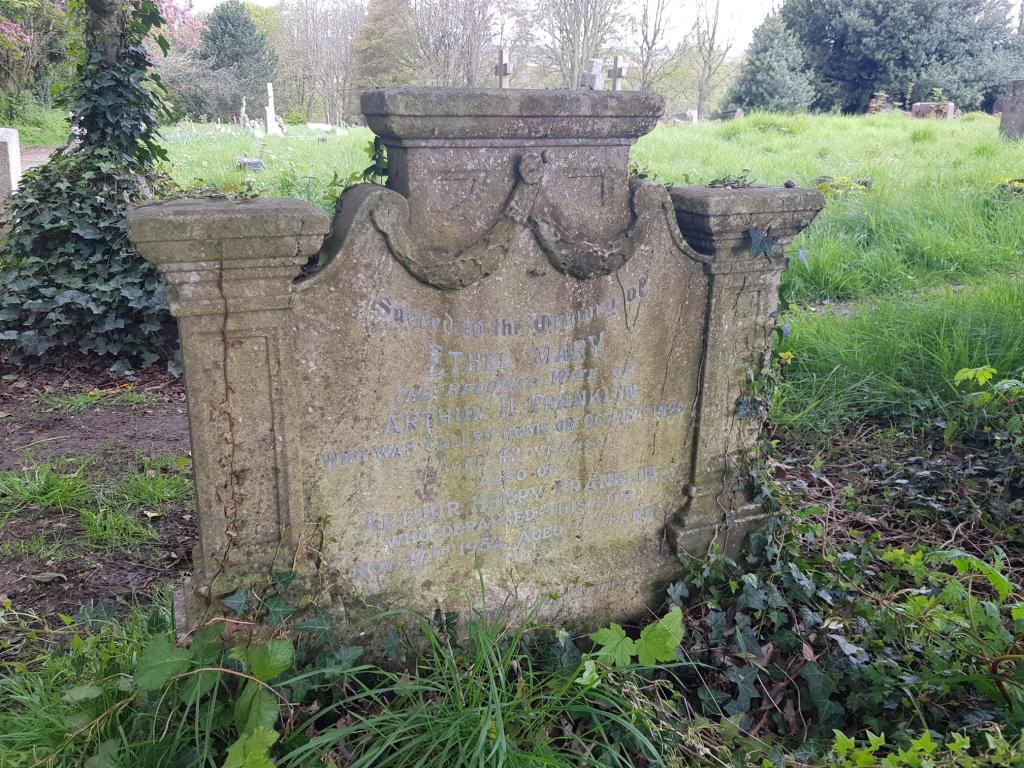
Arthur served in the war as a clerk in the Army Corps and returned safely to the family home at Langleigh, Kingshill Road. Ethel, Arthur, Ruth and little Eric settled down for the rest of their lives, but sadly it was not to be a happy ending. Tragedy struck when Ethel was admitted to the Victoria Hospital in 1925. Infection set in when a swab was accidently left inside her during an operation and Ethel died on October 18, 1925. Her funeral took place on October 22 when she was buried in grave plot D189 close to the grave of her parents.

Arthur remarried and when he died in 1954 he was buried with Ethel. Ruth, their daughter who was just 11 years old when her mother died, went on to become a nurse. Their son Eric became first an architect and then served at Dunkirk and Monte Cassino during the Second World War.

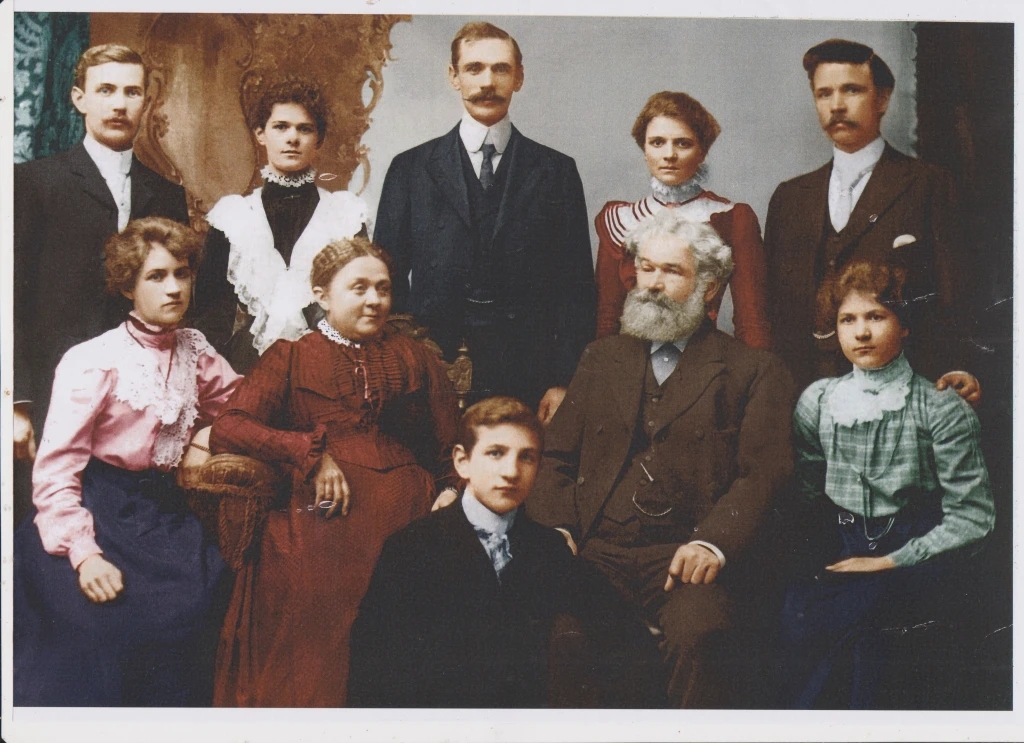
This photograph of the floral tributes on Ethel’s grave was sent to me by Steve, who also supplied the Smith family photograph when he attended one of our cemetery walks some years ago.

You may also like to read:

Henry Smith – undertaker and monumental mason

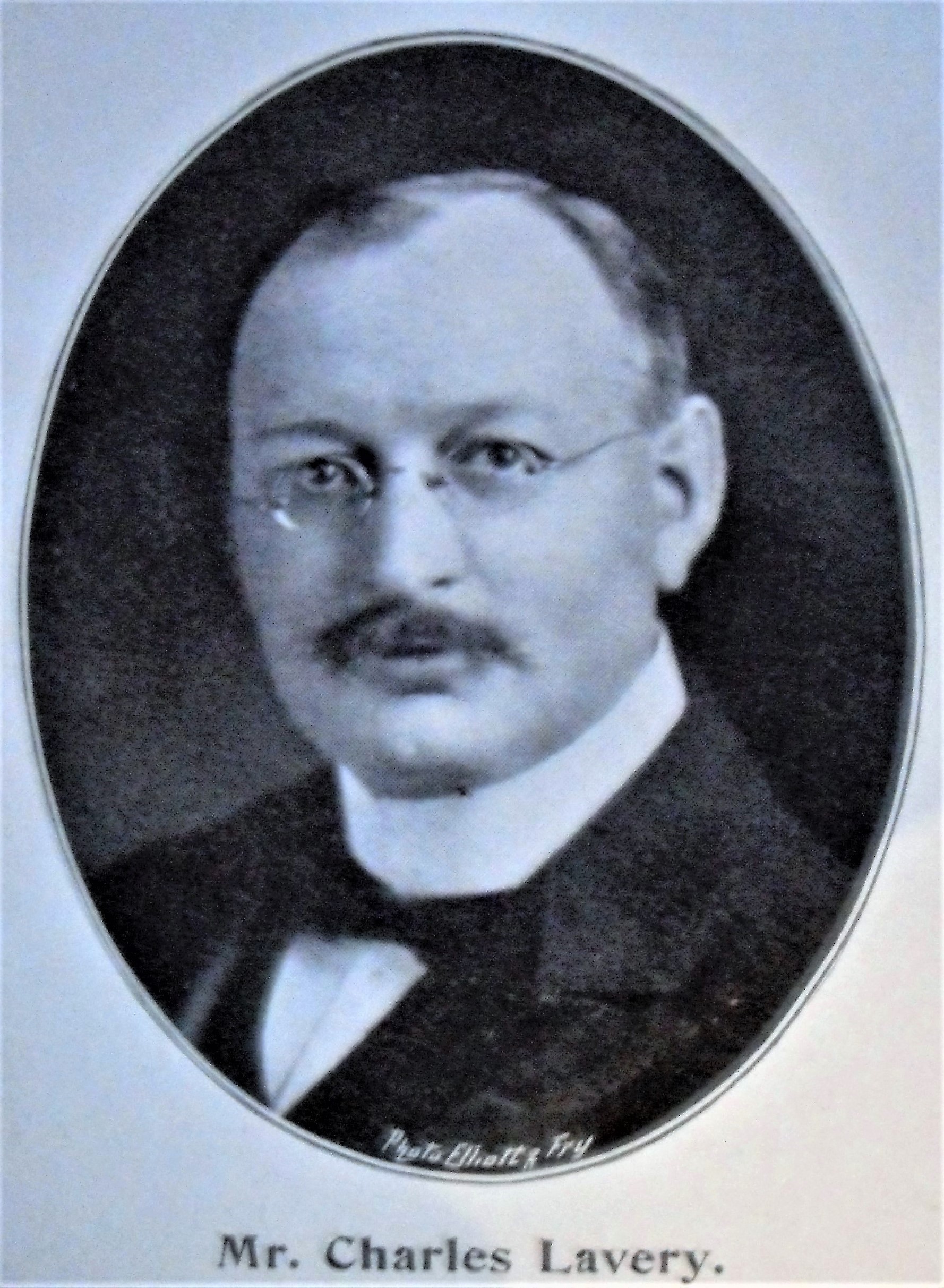
Charles Lavery – Swindon’s oldest doctor

The re-imagined story …

When Dr Lavery told me I needed to have my tonsils removed I had nightmares for weeks and it was all my granddad’s fault.

My tonsils were repeatedly getting infected and Dr Lavery said it was affecting my general health and they need to come out. No one could understand why I was so frightened. Dr Lavery even arranged for me to visit the Victoria Hospital and talked me through what he said was a very simple operation, but I wasn’t having any of it – the explanation or the operation. In the end dad said everyone should stop pandering to me and a date was arranged. 

When it was all over and I had recovered, mum asked me why I had been so frightened.

“Granddad told me when he had to have his tonsils out the doctor did it on the kitchen table with his mother’s carving knife.”

I won’t repeat here what my mum said to my granddad.

VLUU L100, M100  / Samsung L100, M100

The facts …

Swindon’s Oldest Doctor

Solemn Requiem Mass Sung by Bishop

Solemn requiem Mass was sung by the Bishop of Clifton, at Holy Rood Roman Catholic Church, Swindon, on Saturday for Swindon’s oldest medical man, Dr Charles Lavery (72) MB., Ch.B.

Dr Lavery, who was a cousin of the Bishop, had been a medical practitioner in Swindon for 46 years.

He was a member of the British Medical Association, and was a prominent member of the Holy Rood Roman Catholic Church. He was married in 1901, and his wife died in 1924. He leaves four sons, one of whom, Dr Anthony Lavery, carries on his father’s practice.

At the Mass those assisting the Bishop were Canon Noonan (Swindon), Father Louis Valluet (Devizes), Father Sweeney (Fairford), and Father Meynet (Malmesbury). Other priests attending were Dr Staunton (Cirencester), Dr Grimshaw (St Joseph’s, Fishponds, Bristol). Father Judge (Weston Super Mare, and formerly of Swindon), Canon Cashman (Bristol), and Father Chamonin (Malmesbury).

The chief mourners were deceased’s four sons, and others included the Rev. Ronald Royal (vicar of St Mark’s Church, Swindon) and the Rev. J. Tickner (curate at St Mark’s). Dr Dunstan Brewer, M.O.H. of Swindon (representing the British Medical Association) and many local doctors.

The Bishop afterwards officiated at the graveside.

Extracts taken from the Western Daily Press Monday 19th December 1938

Dr Lavery is mentioned in many of the stories in the Radnor Street Cemetery archives. You might like to read the following:

Poor Little Freddy Whitby

Joseph and Charles Williams – busy building Swindon

Swindon Tram Disaster

Drowning Fatality at New Swindon