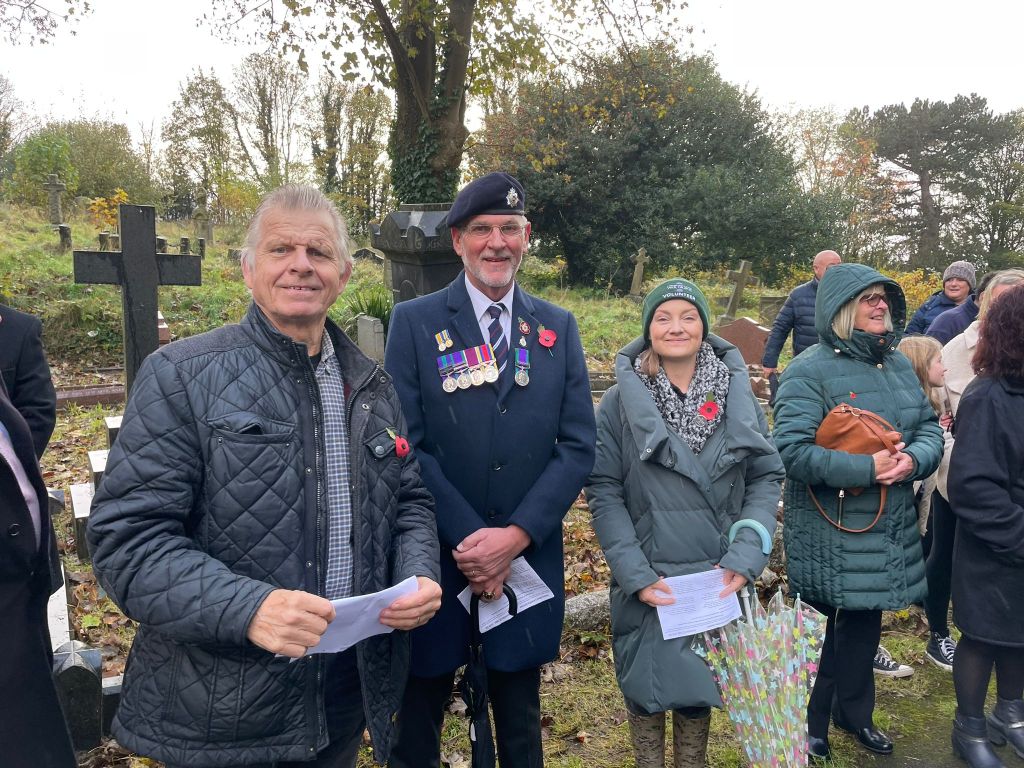
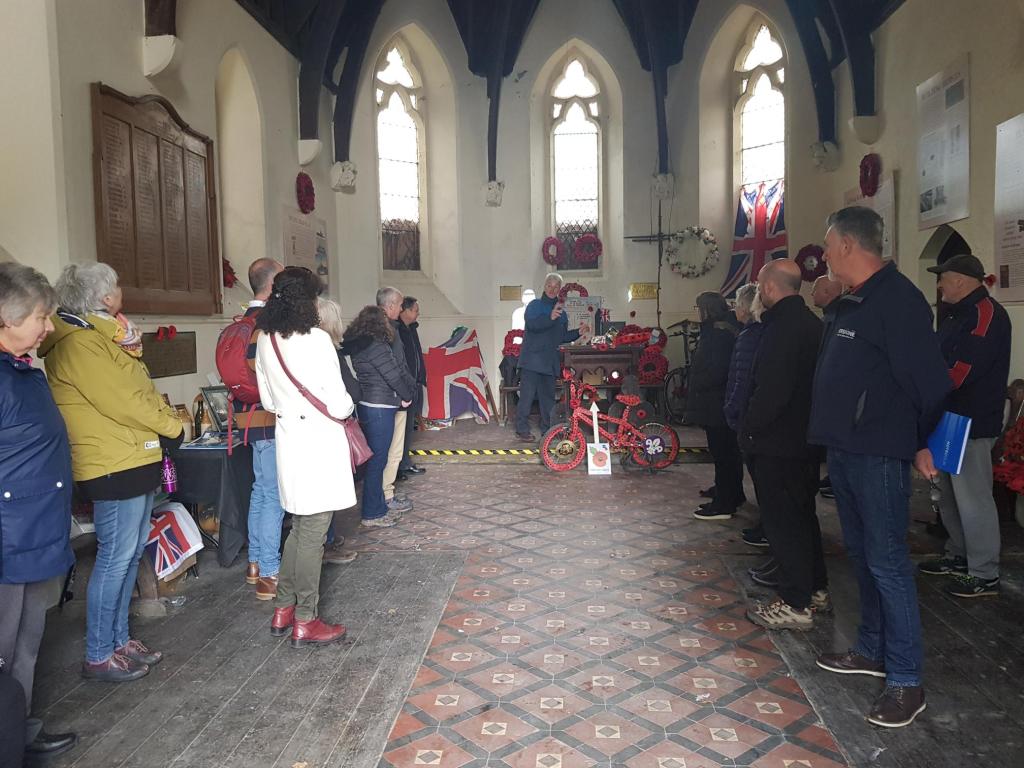
Thank you to everyone who joined us on Sunday for a guided cemetery walk. We are always so fortunate with the weather and following a morning of rain we enjoyed a dry and pleasant afternoon.
This week Andy, Kevin and I told the stories of Trooper Cecil Howard Goodman and Scout leader William Rowland Bird among others and I will (eventually) sort out the story of Olive Henry, which has left me in confusion over recent weeks.
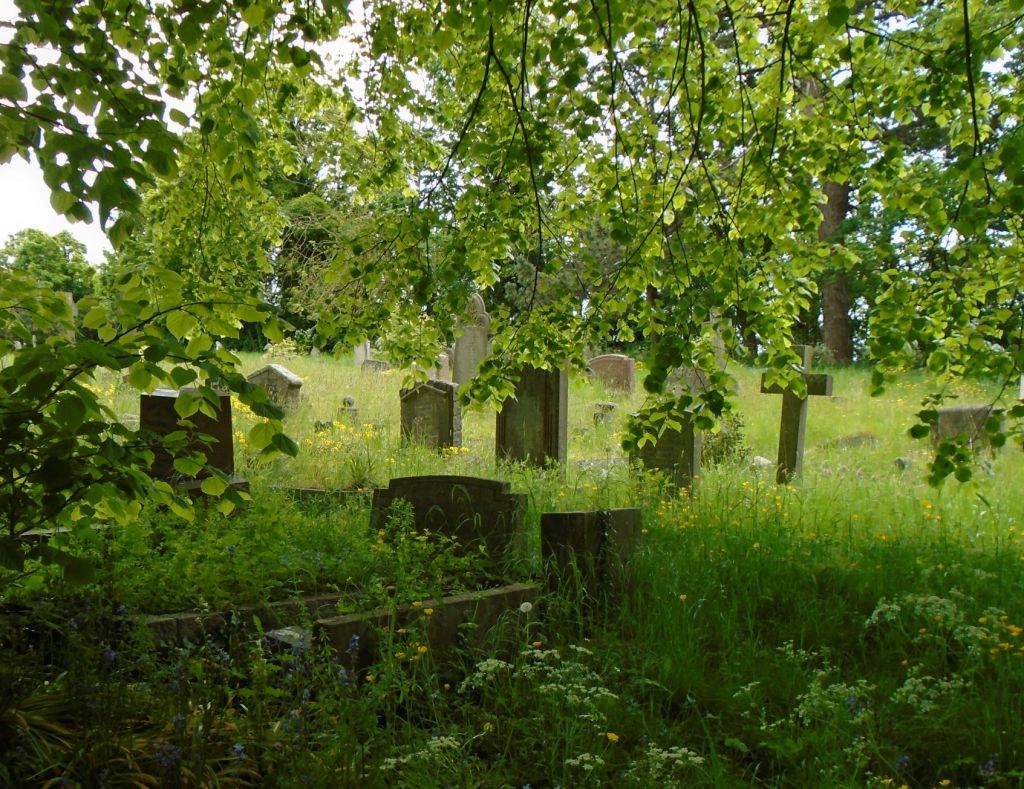
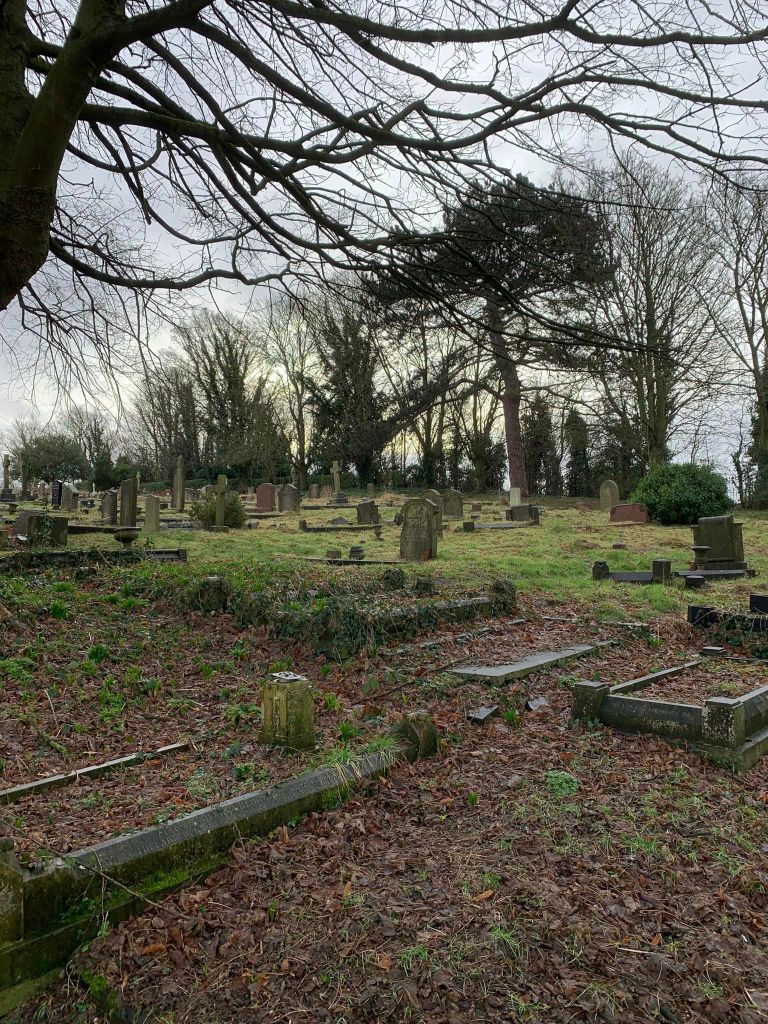
Here are a few cemetery photographs. Our next walk is on Sunday May 26.
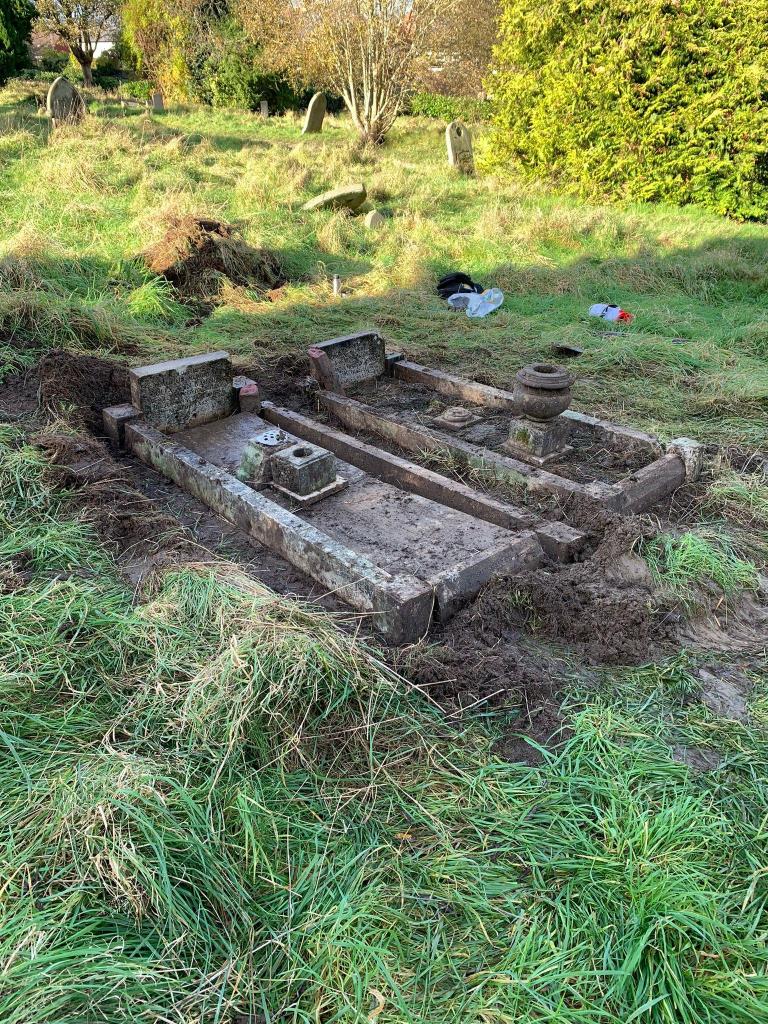
The cemetery volunteers have done an incredible job of clearing and revealing the grave of Scottish rugby international Dr. Charles Reid. In doing so they have also revealed the fallen headstone of the Cocks family buried in the row behind.
Here is another family who moved across the country and a head of household who changed his occupation, presumably to one that was more lucrative.
William Cocks was a joiner at the time of his marriage to Sarah Townsend Ulett in 1864. His father Thomas was a cabinet maker so both men were skilled craftsmen.
At the time of the 1871 census William was living at 45 Cheltenham Street where he worked as a Coach Body Finisher in the GWR. Sarah and the children were staying with her parents in Birmingham but she obviously joined him at some point as their son Ernest Albert was born in Swindon in the autumn of 1871.
By 1881 the family were living in High Wycombe where William then worked as an Insurance Agent. Perhaps work in the railway factory was too insecure at this time. In 1891 they were in Hungerford where William worked for the Super Prudential Assurance Company and in 1901 William and Sarah were living at 8 Turl Street, Swindon. William aged 66 was still working as an insurance agent and their son Ernest as a dispenser. Two daughters had married – Pauline lived with her husband Walter William Poulston in Brecon where they worked as Hairdresser and Fancy Dealers and where her spinster sisters Lillian and Eugenie often stayed. Ada married Albert John Gomm and lived in 15 Durham Street, Swindon in the 1940s.
The Cocks family headstone cleaned up after its reveal
Sarah Townsend Cocks died aged 69 years at her home 8 Turl Street. She was buried on May 15 in grave plot E8445. Her son Ernest Albert Cocks, the only one of her children who was born in Swindon died later that same year aged 34 years. He was buried on November 6 with his mother. William Cocks moved to Bristol where he lived with his unmarried daughter Eugenie at 2 Rookery Road, Knowle. He died in January 1918 aged 82 years and was buried with his wife and son. The last person buried in this family grave is Albert John Gomm, the husband of Ada Frances, who died in 1947 and was buried on April 3.
In 1913 the Swindon Ratepayers’ Association met to discuss how the local authority was handling some major projects, including the Swindon (Radnor Street) Cemetery.
Generally speaking things seemed fairly satisfactory. Thirty years after the opening of the cemetery they were happy to reveal it was ‘practically’ free from debt.
There was one last comment in reference to the amount originally paid for the 11 acres of land purchased on which to lay out the cemetery. In 1881 the land was owned by entrepreneurial local businessman (and Local Board Member) James Hinton who was always quick to recognise a profit making opportunity.
A ‘working’ cemetery is one thing, a closed one quite another. A working cemetery has expenses but it also has an income. Unfortunately, Radnor Street Cemetery, closed to new burials for some 50 years, generates no income and in these straightened financial times there is little public money left for maintenance.
There is a lot of excitement within Swindon Borough Council about the imminent opening of the ‘new’ museum in the Civic Offices, Euclid Street. In this new (and very welcome) climate of heritage appreciation perhaps Radnor Street Cemetery will soon bask in the glory too.
Municipal Matters
Meeting of the Swindon Ratepayers’ Association
A meeting of the Swindon Ratepayers’ Association, convened to discuss three questions of absorbing interest to those concerned in the government of the town – the Poor Law administration, the derelict canal, and the various undertakings of the Council – was held at the Town Hall on Wednesday evening. Major F.G. Wright presided…
As regards the Swindon Cemetery, it is now practically free from debt, the annual charges for interest and sinking fund on a small out-standing loan only amounting to about £27 per annum.
As you are aware, we have purchased land for a new cemetery at Whitworth Road, which is now being laid out, and which will be ready for use probably by next spring. Before the new cemetery was purchased, the loss on the Swindon Cemetery every year used to amount to something a ½d rate. Last year, nothwithstanding the increased charges arising out of the purchase of the new cemetery at Rodbourne, instead of being a loss, there was a slight profit after paying all working expenses and interest and sinking fund charges. This was brought about by a revision on the scale of charges in the Swindon Cemetery, etc., the income for the past year on the Swindon Cemetery being no less than £923, as against £621 in 1910, £638 in 1911 and £856 in 1912. Of course, this will not continue in future years, as there will be additional working expenses when the new cemetery is opened.
Only 10 acres of land are at present being laid out at the Whitworth Road Cemetery, but this is expected, will last at least 20 or 30 years. The total area of land purchased in 35 acres, and theremainder will be let out and will produce an income. The Swindon Cemetery will also last for a great many years yet. The purchase money paid for the 35 acres of land at Whitworth Road was £3,016, while the purchase money for the 11 acres at Swindon Cemetery was £3,970. I leave you to form your own opinion on the favourable nature of these transactions…
Extracts from the North Wilts Herald, Friday, October 31, 1913.
Cemetery volunteers at work clearing the paths
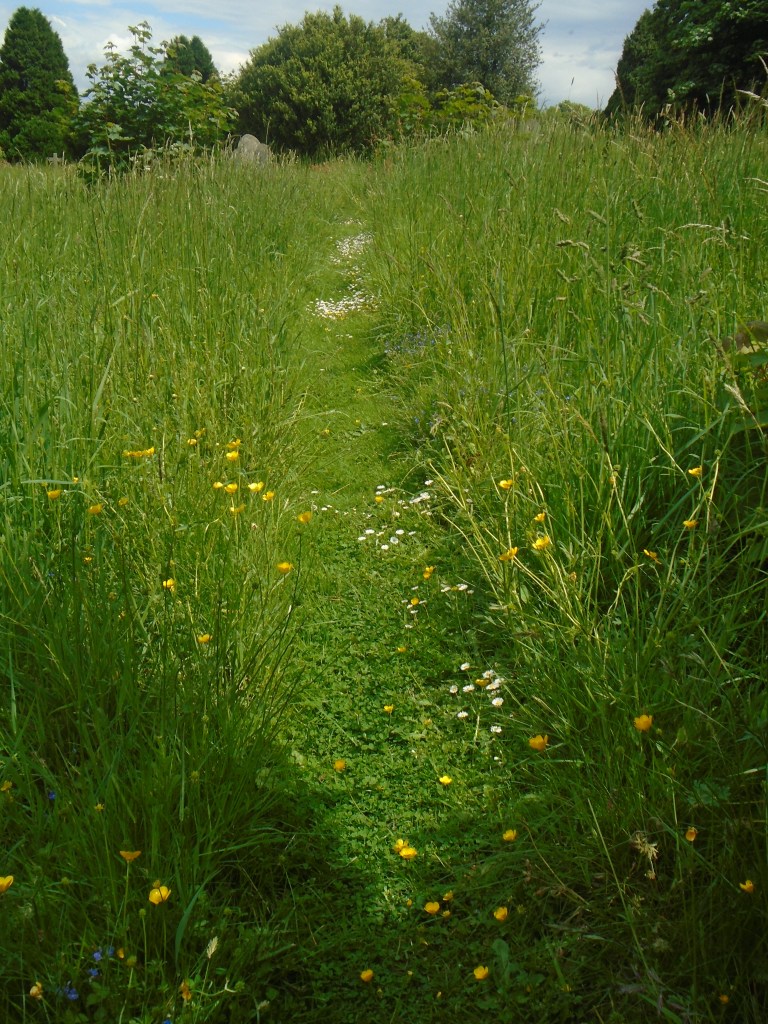
Cemetery volunteers maintain mown paths creating access to the Commonwealth War Graves Commission graves.
If, like me, you enjoy walking through old cemeteries and reading the inscriptions on the headstones you will find the views of this ‘Spectator’ thought provoking. At the beginning of 1881 the cemetery question was upper most in the thoughts of many Swindonians.
A cemetery should be a wooded garden, with walks and avenues and glades according to its size, and not, as in most villages now, a stonemason’s yard, studded with squat temples and tombs, or with tall, meaningless headstones so mouldy that it would be nearly impossible to read the inscriptions, even if the undertakers did not have them made as illegible as possible, in order to “make business” of the work of cleaning them out. These headstones are the destruction of all beauty or solemnity in a graveyard. Nothing uglier or more meaningless in form has ever been conceived by man, and nothing worse adapted for exhibiting an inscription. If they are upright, they gradually sway out of the perpendicular with their own weight; and if they are flat, they destroy the reverential vegetation which else, without means, watchfulness or exertion, would, but for the stones, clothe the surface of the grave. They are, besides, utterly needless. What is required by each grave is a number cut in granite – cut solid, we mean, not out of granite – a number distinguishable for centuries, and referring to a granite tablet, which need not be more than six inches by a foot, with an inscription identifying, describing, and, if you will, praising the dead. – Spectator
The SwindonAdvertiser, Monday, January 3, 1881
Swindon Borough Council workers have recently done a grand job at the cemetery. I am sharing here some photographs taken by Kevin a CWGC and dedicated Radnor Street Cemetery volunteer.
This path clearing project is a work in progress by our own dedicated volunteers
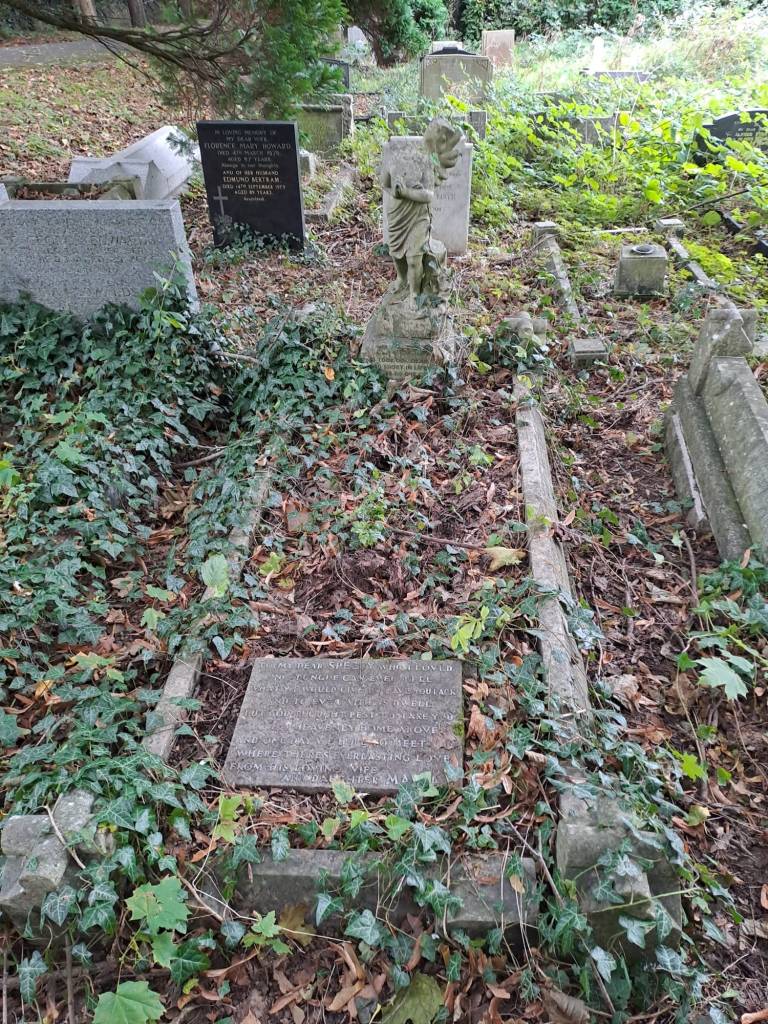
We frequently receive comments on the condition of the graves in Radnor Street Cemetery. ‘Why is the cemetery not better cared for? Why doesn’t someone look after the graves? It’s a disgrace!’
The cemetery is more than 140 years old. It opened in 1881 and was full by the 1970s when it was closed to new burials. Today the finances of the local authority are severely constrained and restricted to essential services only. Where once there was a team of groundsmen and gravediggers employed in the cemetery now only essential maintenance takes place.
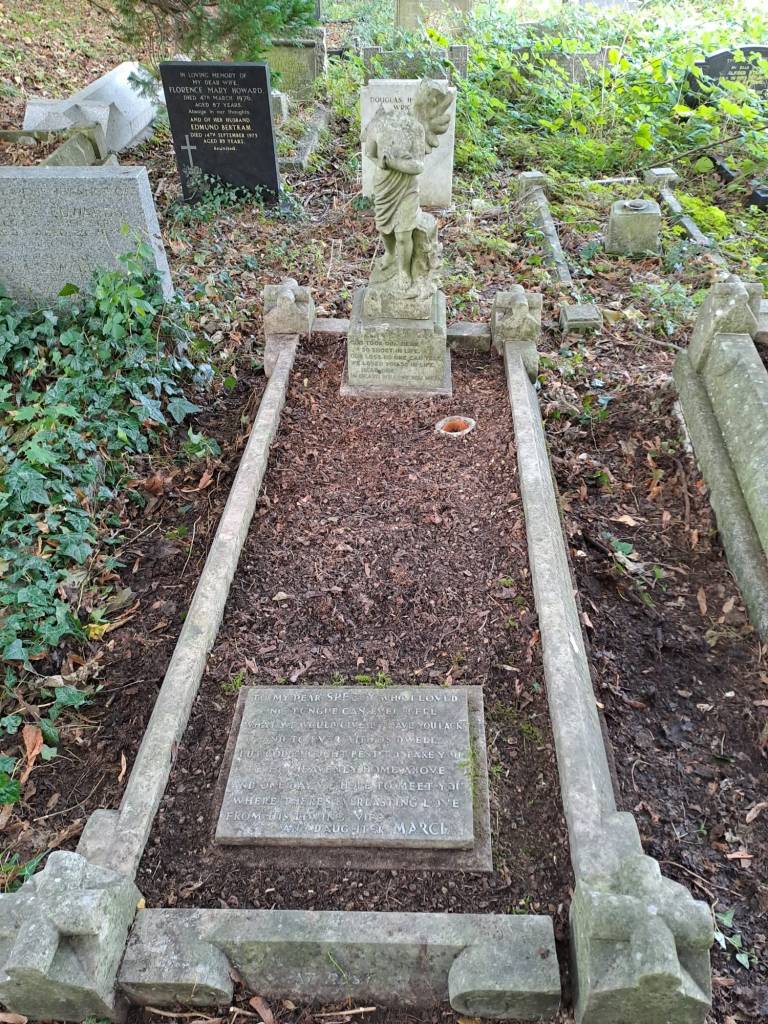
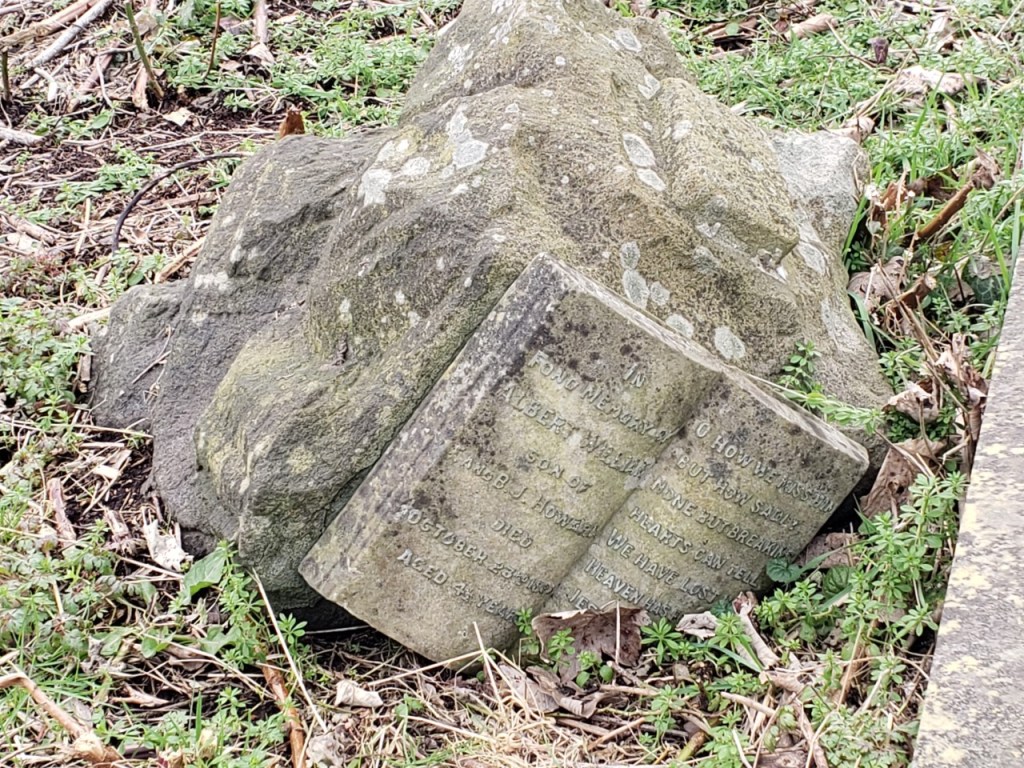
The graves were once cared for by family members, but circumstances change, people move away and I’m guessing that is the case with the grave of little Albert William Howard. Has the memorial always stood at this angle where now the inscription is sliding into the soil? His parents were able to purchase a grave plot (not everyone could) and this substantial memorial must have cost a fair bit of money. The inscription begins ‘O how we miss him’ the names of his parents weathered and difficult to read. A death certificate might provide further details but without financial resources this is not possible. The burial registers have already provided essential information – there is probably little more to learn.
When Albert died in 1899 the family lived at 13 Medgbury Road, but by the time of the 1901 census this was the home of Arthur Doell, a weighbridge clerk, and his family. What happened to Albert’s parents? Why did they move away from Medgbury Road? Where did they go? More than a hundred years later it is hardly likely there is anyone left who even knows about Albert or where he is buried.
It’s easy to put a disparaging remark on a social media platform, but not very helpful. Better still, why not join our dedicated band of cemetery volunteers? Contact us via this blog and we’ll get back to you.
Albert William Howard was buried on October 28, 1899 in grave plot C45. The burial registers state that he was 4 years old – his memorial says he was 4½.
I never knew my two cousins Charles and Walter Hughes. I was born nearly twenty years after they both died in the Great War. In our family it felt as if the war never really ended. My gran lost four grandsons, boys she had helped to raise. Families were close in those days.
After the war, how did the families carry on? How did they pick up their lives with an empty place at the table and unslept beds in the back bedroom? A best suit hanging in the wardrobe; boots in the passage way. Family photographs where a pictured son, sometimes two, are forever missing. How did siblings feel, growing up, growing old, living years of which a brother was robbed?
Gran kept photographs of her boys on the mantelpiece for the rest of her life. I often wonder what happened to them after she died. No doubt one of my aunties took them. One thing I can guarantee, they will still be in one of the family homes, their names remembered once in awhile.
The facts ….
One Rodbourne family lost two sons in the First World War. Albert and Minnie Hughes lived all their married life in the streets alongside the railway factory, raising four sons and a daughter.
Their third son, Charles Normandale Hughes, was a driver with the Royal Field Artillery. He died on December 3, 1918 in Manchester. He was 19 years old. His war records are lost. His grave in plot D192 in Radnor Street Cemetery is marked by an official Commonwealth War Graves headstone.
Charles is buried with his parents and another family member E. Hughes, most probably a cousin. In 1995 the cremated remains of his sister Muriel May were interred in the grave. Muriel was just four years old when war broke out and claimed her elder brothers. She was 84 years old at the time of her death.
Albert and Minnie’s eldest son Walter George David Hughes joined the 97th Field Company Royal Engineers and was killed in action on June 26, 1916. He was 23 years old. He is buried in the Ville Sur Ancre Communal Cemetery.
Charles and Walter’s names appear on the Roll of Honour, now on display in the Civic Offices in Euclid Street. For nearly 100 years it hung in the old Town Hall and for many of those it remained hidden behind curtains after the building became used as a dance studio.
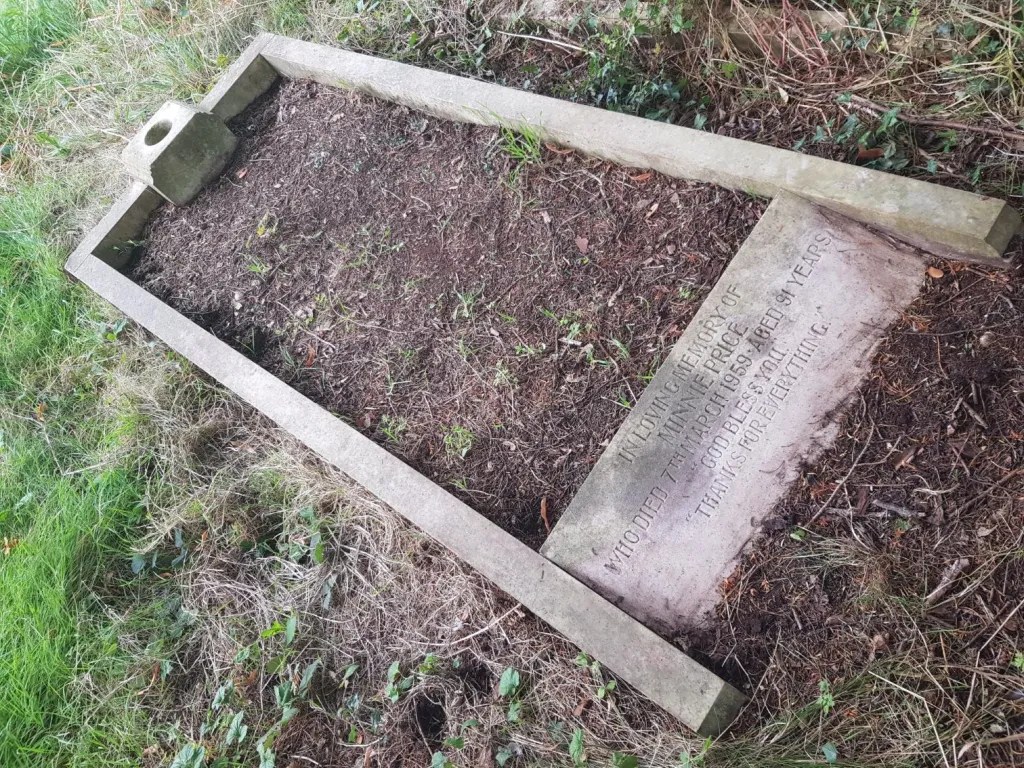
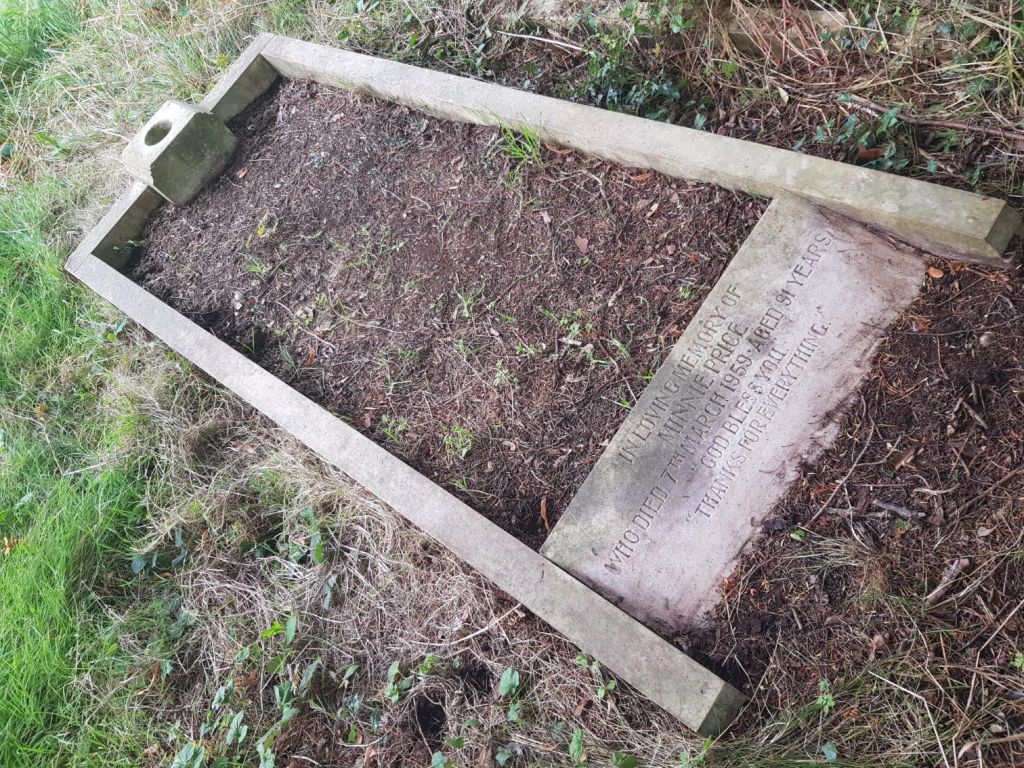
Charles received an official Commonwealth War Graves headstone and the Hughes family remembered their other lost son Walter on their own grave in Radnor Street Cemetery. Sadly, until recently the kerbstone memorial had lay discarded in nearby bushes. Radnor Street Cemetery war graves volunteers Jon, Dave and Brian have recently reunited the kerbstone with the family grave.
Join us today at 2 pm for a Service of Remembrance at the Cross of Sacrifice in Radnor Street Cemetery. During the service a plaque will be unveiled dedicated to Mark Sutton.
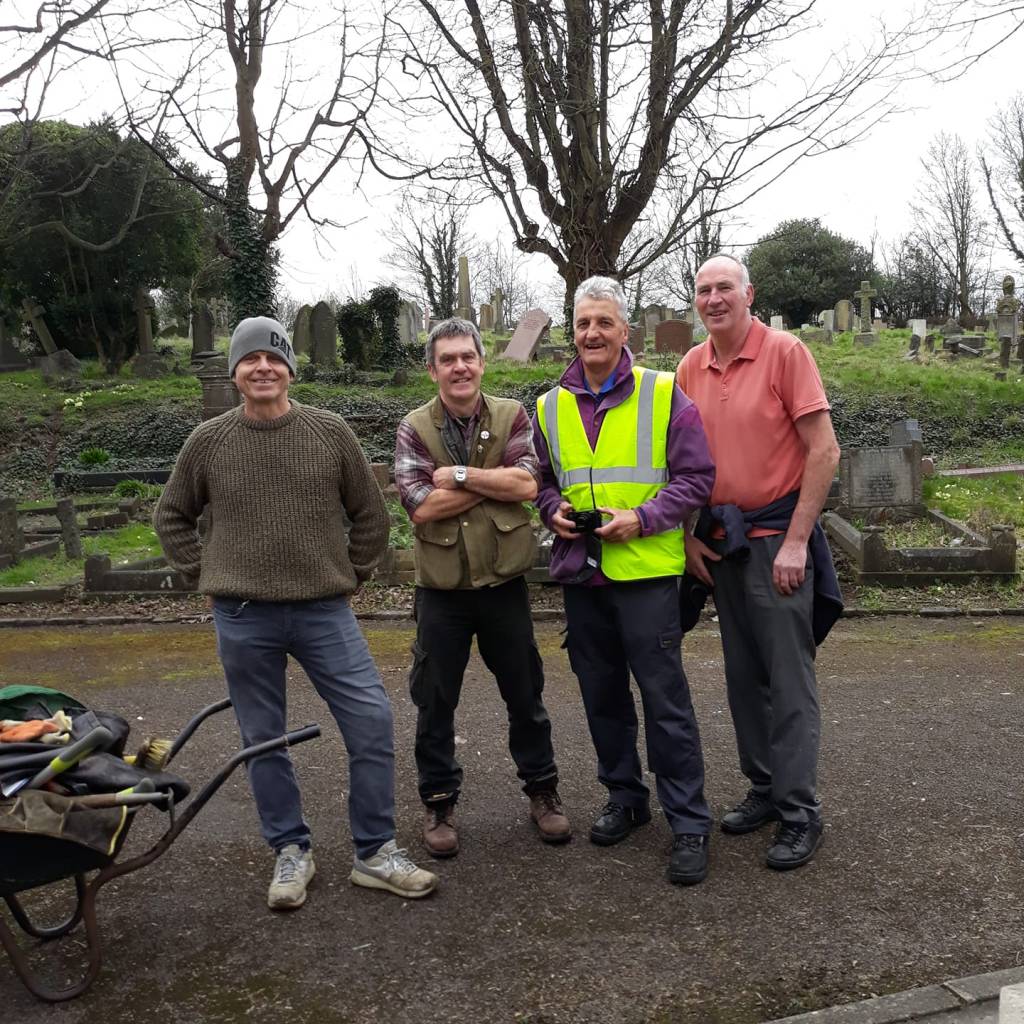
In the beginning there were just two members of the Radnor Street Cemetery volunteers. Pictured below with Andy are Jon and David shortly after appointing Brian as their new apprentice. More than six years on and the group is considerably larger and Brian has ‘done his time.’*
The original objective of the group was to care for the Commonwealth War Graves. Today the volunteers are members of the CWGC Eyes On Hands On initiative, keeping the area around the war graves clear and reporting any concerns over safety or damage to the headstones. They are also recording family memorials that mention service personnel lost or missing in war. Their latest project is an attempt to secure recognition by the CWGC for a soldier who died in the Victoria Hospital, Swindon in 1918 from broncho pneumonia having recently been discharged from the army as unfit for service. We believe that his death may have been as a result of his military service. If successful this will be the second WWI soldier to be so recognised in the past two years.
But this is only part of the volunteers work, as you can see from the photos below.
Would you like to join them?
You can contact us in a number of ways. You can leave a message here on this blog or on our Radnor Street Cemetery Facebook page and we also have a Twitter (now known as X) feed @StreetRadnor.
Why not come along to our next guided cemetery walk when Jon will be able to tell you more and answer your questions?
Our last walk of this season will be on Sunday October 29, meet at the cemetery chapel for 2 pm.
*finished his apprenticeship
Before and after … Kent Road gate
Read about Bob Menham, Swindon Town FC goal keeper.

















 Radnor Street Cemetery