Swindon Tram Disaster

The re-imagined story …

We could all see that the tram was travelling too fast and people on the street began to move, clearing a path. When the accident happened, it was as if in slow motion; until the screech of metal on metal and the screams of the passengers plunged the scene into sharp and noisy relief.

As the tram swerved and toppled over some of those travelling on the open top were thrown to the ground. Surely, they could not hope to survive.

The visitors to the Bath and West Show who thronged down Victoria Road stood in shocked disbelief. For a split second there was a silence, a nothingness and then onlookers surged forward to help.

I was just returning to the studio from an assignment and had my camera with me. I briefly considered taking photographs of the scene, but just as quickly decided against it. I left my equipment in the foyer at the Empire Theatre and joined those helping to rescue the trapped and injured passengers.

Local photographer William Hooper published a postcard photograph of the crash scene that same day. I knew then that I didn’t have what it took to be a commercial photographer and I resigned from my position before my employer had an opportunity to dismiss me.

I took up a clerical job in the Works soon after. When I retired forty years later my colleagues presented me with a camera!

cemetery views (26)

The facts …

Runaway Tram Car

Dashes Down a Swindon Hill and Overturns

Four Passengers Killed and 30 injured

Somerset Farmer loses his life

Dorchester People Injured

A serious tram accident occurred at Swindon on Thursday evening. In consequence of the Bath and West of England Agricultural Show, the electric cars, which are Corporation property, were very heavily laden, and No 11 car, which is registered to carry 56 passengers, was descending Victoria road, a steep decline connecting the old and new parts of Swindon, with a load of between seventy and eighty people. Midway down the hill, the car got beyond control and at the foot of the hill ran on to the uprails at a crossing, and overturned.

The passengers on the top were precipitated into the road like stones out of a catapult, some being thrown a considerable distance. There were a great many people about at the time, and for some moments the greatest consternation prevailed. A few cool heads were soon on the spot to render assistance. The shrieks and groans of the injured filled the air, and one spectator says that blood ran into the gutter in streams. Scarcely a single passenger escaped without injury, although one or two who saw their danger had jumped off before it was too late.

Dr. Lavery, who lives close by, came on the scene, and was soon followed by Drs. Waiters. Dalea Gordon, Ducane, and the officials from the Great Western Surgery. Dazed and unconscious, the victims lay strewn about the roadway for many yards. The doctors and ambulance men rendered first aid to the more serious cases, and conveyances were summoned and the victims conveyed to the Victoria Hospital.

All the injured were transferred to the Victoria Hospital where they were given further treatment. Unhappily, the injuries in two cases proved fatal. Mr Edwin H. Croad, proprietor of the Railway Hotel, Swindon died on the way to the hospital while Mr Harry Dyke, brewer’s agent, of Swindon succumbed to his injuries shortly after admission. Two other victims died later. The roll of injured contains the names of about 30 persons, and others who were merely bruised or shaken went direct to their homes.
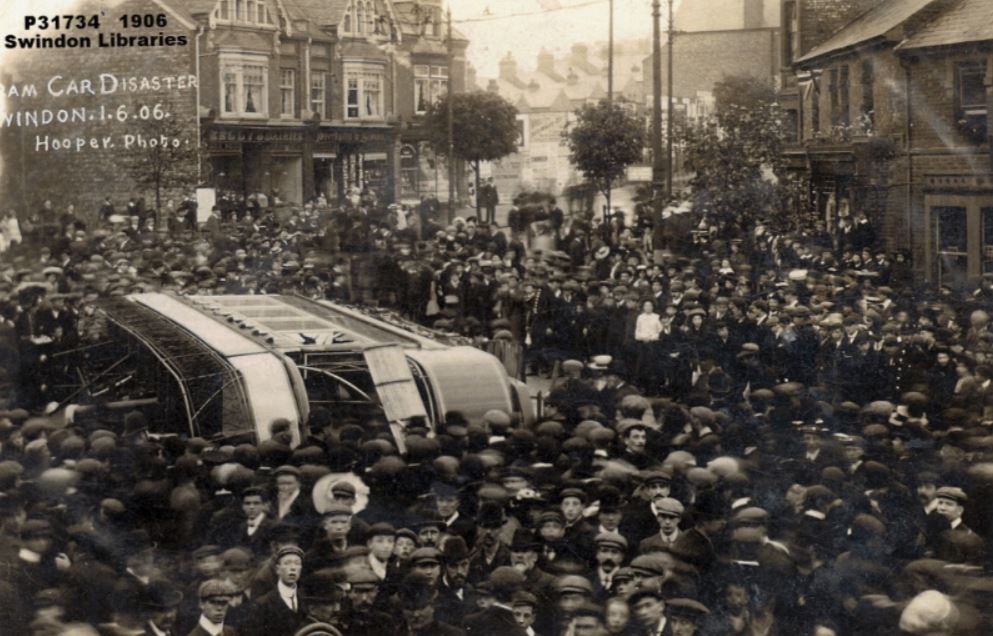
Hooper
William Hooper photograph published courtesy of P.A. Williams and Local Studies, Swindon Central Library

The Dead

Harry Dyke, brewer’s agent, Goddard-avenue, Swindon.

E.H. Croad, Railway Inn, Newport Street, Swindon.

Rowland J. Dunford, Nables’ Farm, Draycot Cerne, Chippenham.

Charles Phippen, farmer, Weston Bampfylde, Sparkford Bath.

The two first names died soon after admission. In all cases death is supposed to be due to fracture of the skull.

How the Accident happened

General comment is that the car was carrying far too many passengers; indeed, eye witnesses and many of the passengers declare that it was grossly overcrowded. In descending Victoria road, the brakes either did not act, or were overpowered, and the momentum acquired in descending this steep thoroughfare hurried it along at a pace which convinced passing pedestrians, and even the passengers themselves, that an accident was inevitable. Whatever the feelings of the passengers were, no panic was displayed.

There was an absence of screaming, one and all awaiting with a grim quietness the denouement which all felt was bound to come. The car kept to the rails going down the hill. At the bottom is a sharp curve into Regent circus. On reaching the bend, it ran on to the up line, rocked heavily, and then fell over on its side with great force. It was exceedingly fortunate that there was no car on the up line or the loss of life must have been much great.

Lyons, the driver, stuck to his car to the last. He is said to have been an experienced motor man. He received some slight injuries to his side, but soon recovered. The conductor, who was on top of the car, was picked up in a dazed condition, but he pulled himself together in a few minutes. Lyons declares that he put on his brakes on reaching the hill, and applied them as hard as he could. He never let go of these until the car toppled over, and did all that he could to avert the disaster.

The trams belong to the Corporation of Swindon, and there is no doubt that the matter of compensation will have to be faced by the town authorities. The overcrowding allegations give a further serious aspect to the matters. Passengers are booked on a way bill, similar to the system followed in Bristol, the deviation being that the bill, instead of being placed in a prominent position within the car, is kept in portfolio form, and checked by the inspector whenever he mounts the platform. This way bill doubtless will be produced when required at the official enquiries which will be held, and, if accurately entered up, should show the exact number of persons who were riding. This can be further checked by the number of punched tickets issued.

This is not the first mishap which has occurred at the foot of Victoria road, although, fortunately, the previous accident was not attended with serious consequences. Warnings have more than once been uttered emphasising the necessity for special care being exercised in the descent of the hill, and at the annual dinner of the Chamber of Commerce, Mr A.E. Withey, a prominent local solicitor, expressed strong views on the question.

Taunton Courier and Western Advertiser 6th June 1906 (extracts)

Edwin Herbert Croad, the 60-year-old proprietor at the Railway Hotel, Newport Street, Swindon was buried in plot E8374 in Radnor Street Cemetery on June 6. William Hooper got a photo of the funeral as well.

Swindon Corporation was found liable for more than £7,000 compensation and costs and was forced to increase the rates for three years to pay the bill.

5492314454_778d094bbc_b
William Hooper photograph published courtesy of P.A. Williams and Local StudiesSwindon Central Library.

William and Mary Hooper rock up at Stonehenge

The re-imagined story …

I have Swindon photographer William Hooper to thank for my appearance on Time Team.

As a nerdy little kid, I was already interested in archaeology (in particular the Neolithic period) and the inspiration for my obsession was all down to a photograph that hung in my grandpa’s study.

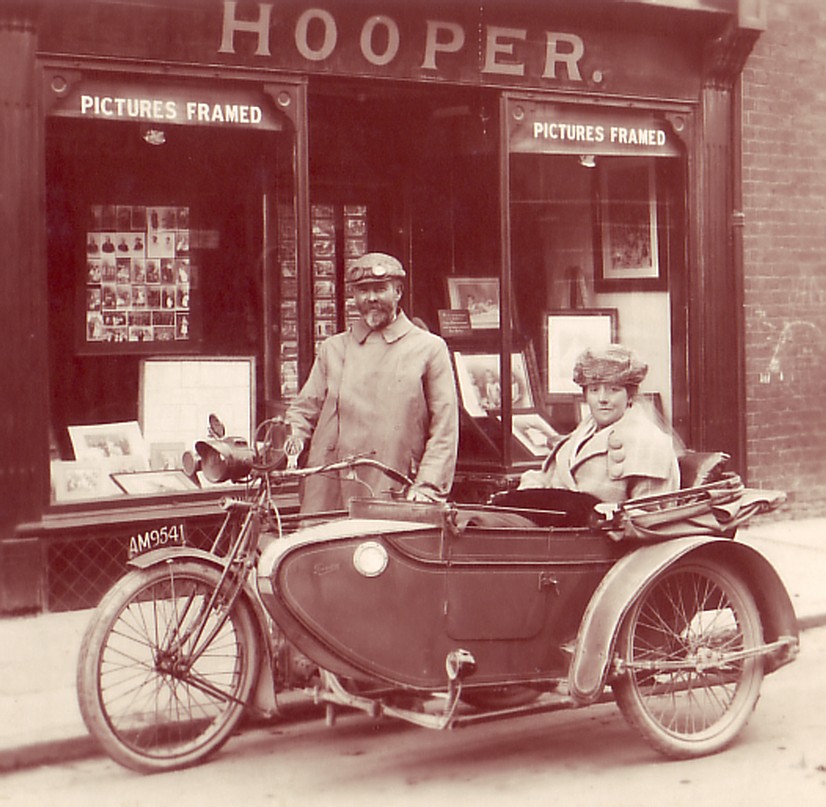
William Hooper has become famous for his Edwardian Swindon street scenes, but William and his wife Mary were not averse to getting on their bikes and venturing beyond Swindon. In the early days they travelled quite literally by push bike, graduating to a motor bike and sidecar as they travelled the Wiltshire countryside and beyond. Between 1905 and 1910 they took a series of stunning photographs of Avebury and Stonehenge.

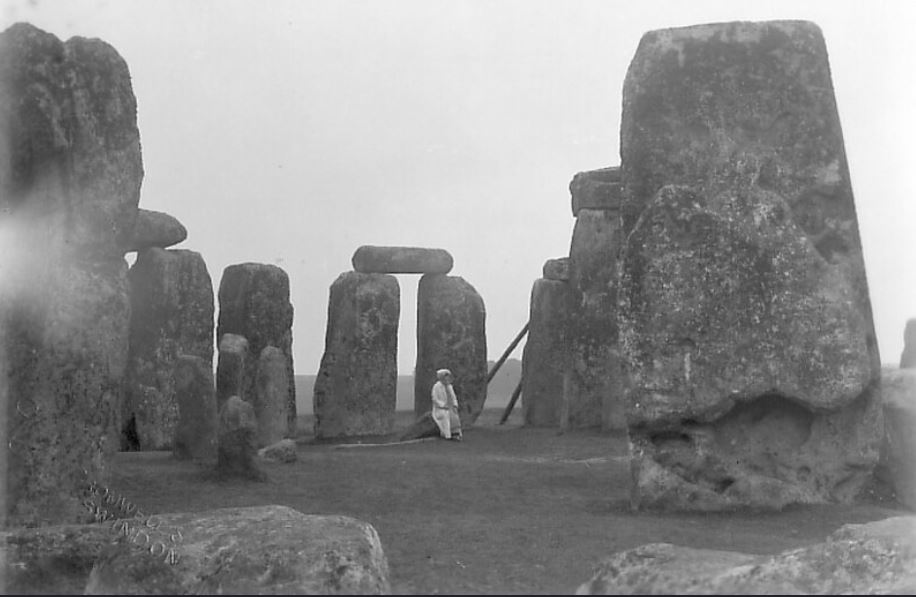
The photograph in my grandpa’s study was of an ethereal woman dressed in white, sitting on a fallen boulder within the stone circle. These days you have to have permission and a very special reason for being allowed access to the stone circle but in 1910 the historic monument was still in private ownership, the property of Sir Edmund Antrobus 4th Baronet. Perhaps anyone could rock up and take a few photographs.

This image has an empty alt attribute; its file name is stonehenge-4.jpg
Image published courtesy of P.A. Williams and Local Studies, Swindon Central Library

Skip on twenty years or so and with my degree in archaeology under my belt, I volunteered for a brand-new television programme that was thought by many to be doomed before it even made it to the screen. Television producer Tim Taylor had the crazy idea of making a programme featuring scruffy, hippy looking student types digging trenches in muddy fields. The premise of the programme was that the team would turn up at a site of archaeological interest, dig for three days and then reveal the history of that site. For twenty years Time Team brought archaeology to the masses and achieved viewing figures in excess of 2 million per episode.

I was a regular participant on the show, taking part on a number of digs, working alongside my university professor Mick Aston and national treasure Phil Harding. There are photographs of us in trenches and in various pubs mulling over the findings of the day’s dig.

I’ve recently moved to a cottage in Avebury (the magnetism of those stones still draws me) and it has long been my intention to pay my respects at the grave of William Hooper, the man who sparked my interest and gave me a lifelong love of history.

I’ve been told his grave in Radnor Street Cemetery is difficult to find. Now, where is John Gater and his geophysical wizardry when you need him?

This image has an empty alt attribute; its file name is william-and-mary-hooper-2.jpg
Image published courtesy of P.A. Williams and Local Studies, Central Library

The facts …

William Hooper was born in Windrush near Burford in 1865 and moved to Swindon and a job in the Works in 1882. In 1886 he was involved in a serious accident during which his leg was so badly crushed that he would eventually have it amputated at the knee.

William returned to his job in the railway factory where in 1891 he worked as a labourer and ten years later as a stationary engine driver. However, the work became too difficult for him and it was then that he decided to turn what had previously been a hobby into a business.

He opened his first photographic studio at 2 Market Street in around 1902, later moving to 6 Cromwell Street where he and his wife Mary remained until they retired in 1921.

Mary Stroud was born in Hereford where he father James worked as a Railway Guard. The family later moved to 22 Merton Street in Swindon. Mary and William married in 1890.

At the time of the 1911 census William, then aged 47, describes himself as a Photographer – Portrait and Landscape, his wife Mary as assisting in the business, but Mary did more than just ‘assist.’

In the extensive Hooper archive available online courtesy of P.A. Williams on the Swindon Local Studies flickr account, we glimpse Mary ‘assisting’ not only in the studio, but out on the road, travelling with her husband across Wiltshire on a variety of vehicles from a tandem to a motorbike and sidecar.

The couple never had any children of their own but were very close to Mary’s two nephews who also worked in the business with them from time to time.

William died in 1955 followed by Mary a short while later. They are buried here with Mary’s parents James and Ellen Stroud.

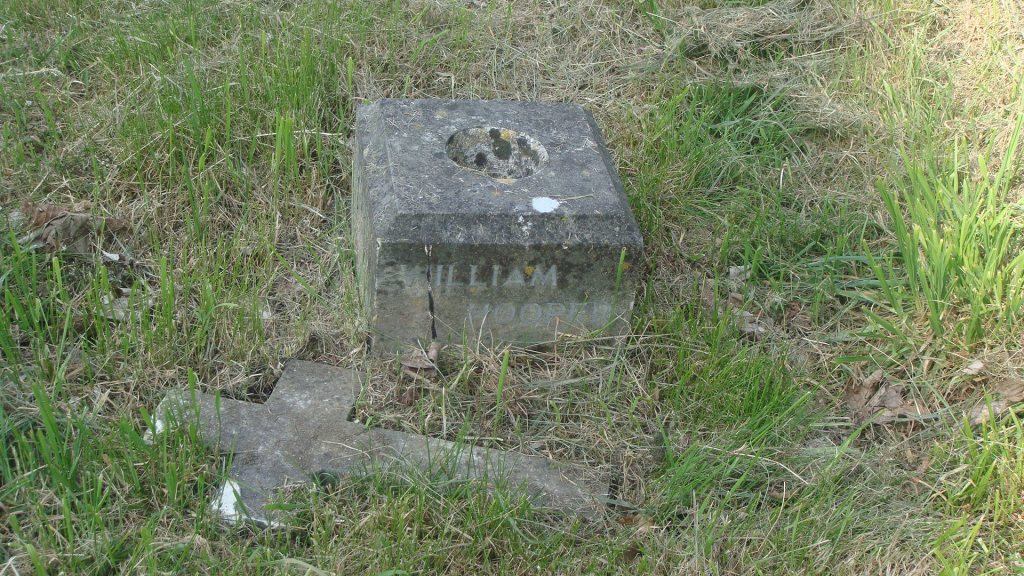
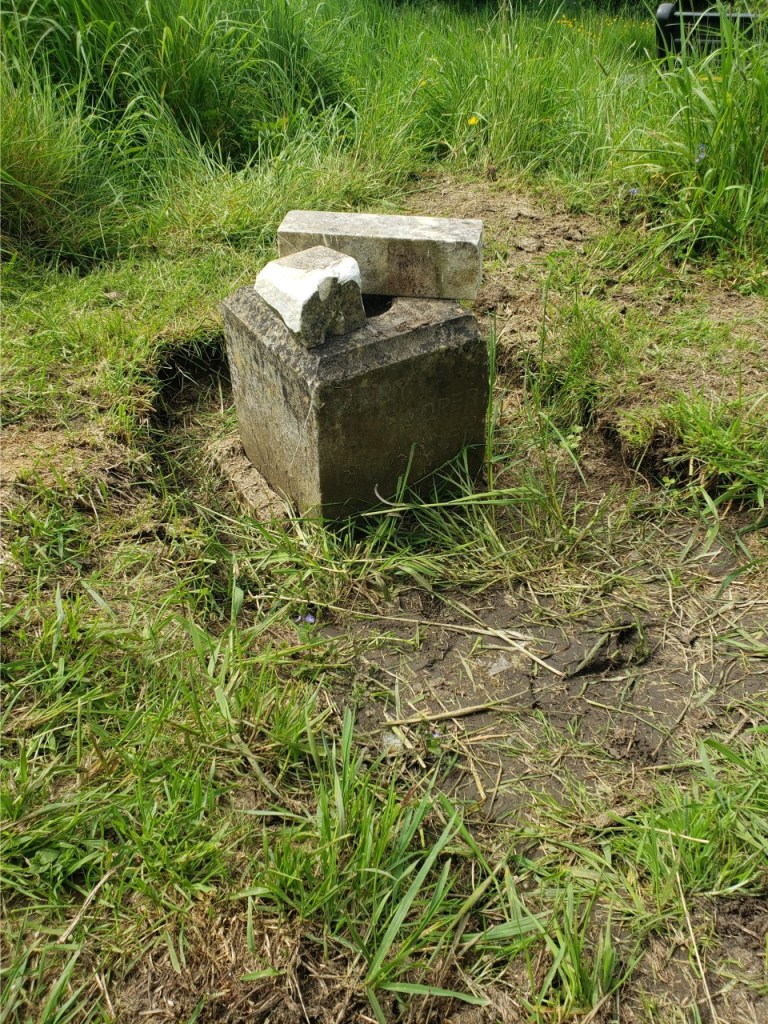
The modest memorial is a small cross on a plinth, sadly broken and difficult to find when the grass grows long. But the Hooper name lives on in the many photographs of Swindon William left us – with Mary’s assistance.

The Radnor Street Cemetery volunteers have revealed the battered William Hooper memorial and cleared the area around it. Unfortunately the cross is now badly broken.

You may also like to read:

Alice Kate Richards – smile please!

Eleanor Stroud

Swindon Photographers

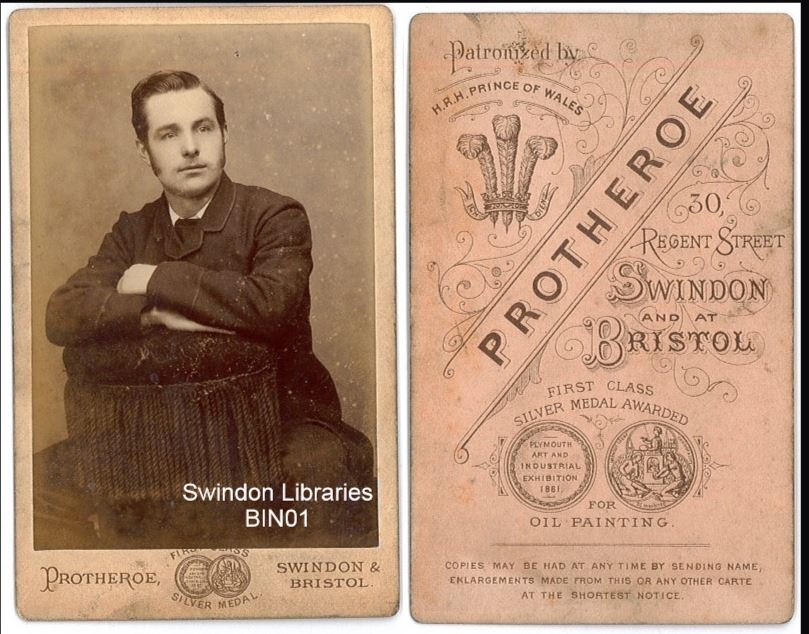
Swindonians were an adventurous lot, embracing new ideas and new inventions. In the early 19th century photography exploded in a blaze of magnesium and by the 1860s the popular carte de visite had become affordable to all but the very poorest in society.

In 1861 Richard Keylock Passmore, one of the first Swindon based photographers, was established at Victoria Street. By 1895 there were six local photographers listed in Kelly’s Directory with two in Regent Street and one in Regent Circus.

In 1889 James Smith Prothero had a studio at 30 Regent Street where he worked alongside his nephew Thomas Henry Simons who eventually took over the business. James Prothero died in Mumbles, Glamorganshire in 1929 and is buried in Radnor Street Cemetery. You can read more about him here.

Perhaps the most ‘famous’ of Swindon’s photographers is William Hooper who began his business following a disabling accident in the GWR Works which led to his dismissal on medical grounds. Hooper’s photographic career spanned more than 20 years and today his collection is managed by his descendent Paul A. Williams. William Hooper died in 1955 and is buried in Radnor Street Cemetery. You can read more about him here.

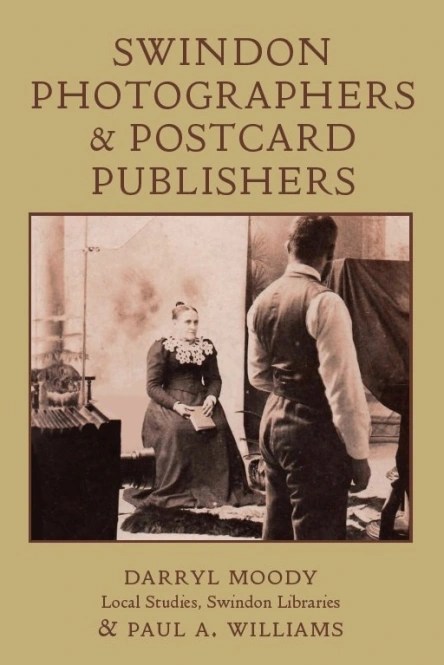
You might also like to read Swindon Photographers & Postcard Publishers by Darryl Moody and Paul A. Williams available from the Library Shop.

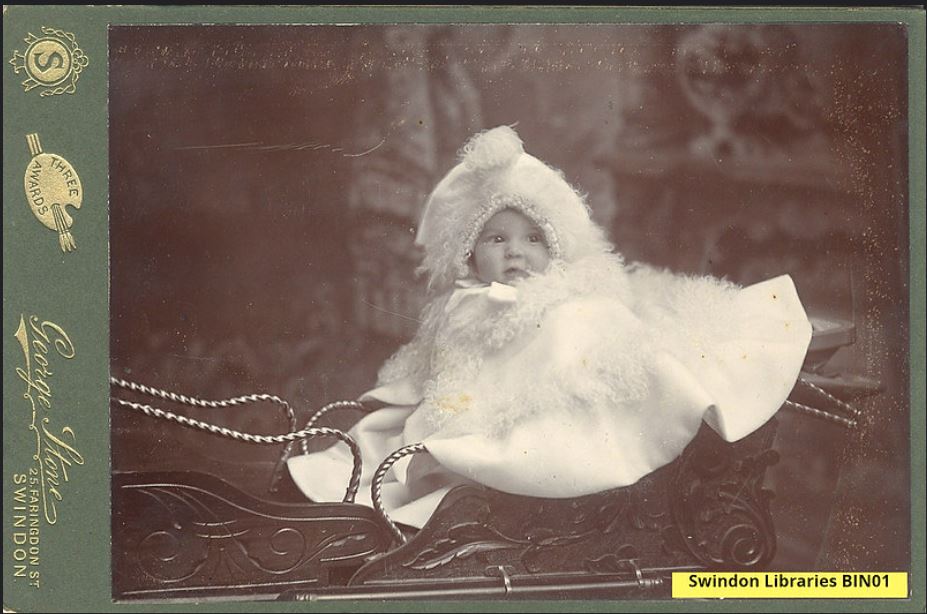
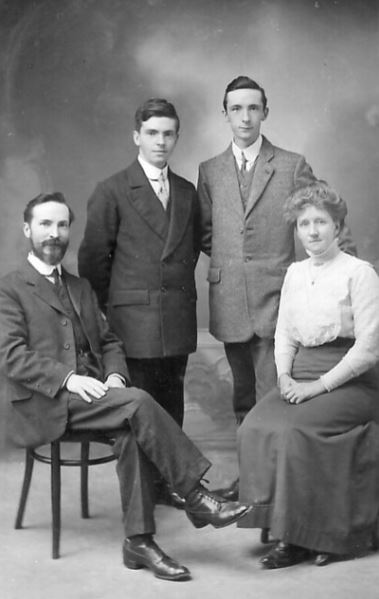
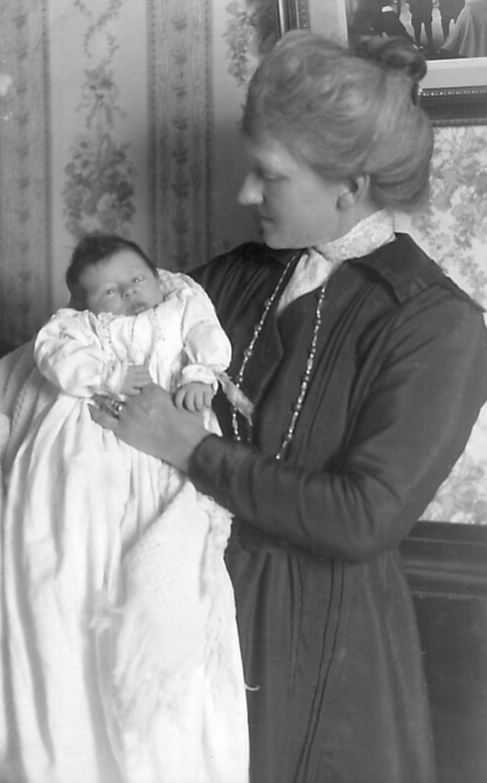
Carte de visite and cabinet card photographs survive in great numbers but sadly, unless in a family collection, most are identifiable. Local Studies at Swindon Central Library have reproduced some of their collection on their website. Here are just a few, people I am sure must now lie in Radnor Street Cemetery, if only I knew their names.

Eleanor Stroud

In a blogpost last year I mentioned that there were very few old photographs of the cemetery. There were only three pre-dating the 1920s and two of these were taken by William Hooper.  And then when I looked more closely into the work of this prolific Swindon photographer I found another taken at the funeral of his mother-in-law Eleanor Stroud.

Eleanor (sometimes known as Ellen) was born in Aldbourne in 1834, the daughter of agricultural labourer Thomas Brind and his wife Mary. She married James Stroud, also from Aldbourne, a railway guard, in 1864.

In 1871 Eleanor and James lived in Leominster with their two little daughters, Mary Jane 3 and Alice Kate 1. By 1881 the family had moved to 22 Merton Street, Swindon. On census night James and his daughters were at home. Eleanor, meanwhile, was employed as a monthly nurse at number 10 Merton Street where Annie Hacker had given birth three days previously.

In 1891 Mary Jane married William Hooper, a stationery engine driver with a passion for photography.

Two years later James Stroud was involved in a fatal shunting accident at Tetbury Road station when he was crushed between a waggon and the goods shed. He was brought to the GWR Medical Fund Hospital in Swindon but sadly died as a result of his injuries the following day on January 14, 1893.

After the death of her husband Eleanor lived with her elder daughter Mary Jane and her husband William Hooper. By 1911 William was working full time as a Portrait and Landscape Photographer. Eleanor is pictured here with William and Mary in their roof garden at Cromwell Street.

Eleanor Stroud died at her daughter’s home 6 Cromwell Street. She was buried on April 29, 1915 in grave plot A823 alongside her husband. William took this photograph at her funeral.

You may also like to read

William and Mary Hooper rock up at Stonehenge

Alice Kate Richards – smile please!

Shops and Businesses

Swindon once had some wonderful shops and businesses – drapers, ironmongers, department stores and more photographers than you could shake a stick at.

Take a walk down memory lane and read about those business men and their families who now reside in Radnor Street Cemetery.

c1910 E. Hayball, North Wilts Dairy, 1 Hythe Road.

Read all about Ernest Hayball – Dairyman

c1910 Limmex, Corner of the High Street and Wood Street

Read all about Samuel Joseph Limmex – Ironmonger

c1912 William and Mary Hooper, 6 Cromwell Street.

Read all about William and Mary Hooper rock up at Stonehenge

1913 Bays & Co. Castle Works, Wood Street.

Read all about The Busy Rye Family

1961 Horders Drapers, High Street.

Read all about Horder Bros – Drapers, Milliners, Mantle Makers and Costumiers

1956 Morse’s Department Store, 10-12 Regent Street.

Read all about Mr Levi Lapper Morse – the End of an Era

1973 A.E. Tunley, Gloucester Street.

Read all about Albert Edward Tunley

Alice Kate Richards – smile please!

When you have a professional photographer in the family you can be guaranteed some super snaps – and Alice Kate Stroud had one of Swindon’s best.

Alice Kate Stroud was born in Hereford on February 27, 1870 the younger of James and Ellen’s (Eleanor) two daughters. The family lived at 49 Portland Street, Hereford where James worked as a railway guard. It was probably inevitable that they would eventually end up in Swindon and in 1881 they were living at 22 Merton Street, a property they shared with Edwin and Louisa Brittain.

In 1892 Alice married railway clerk Thomas Richards and by 1901 Alice, Thomas and their two sons Leslie & Stanley were living at 15 Medgbury Road, next door to Alice’s in-laws. But by 1911 they were living at 10 London Street where they would remain for the rest of their lives.

So, who was this talented photographer of whom you speak, I hear you ask?

Well, in 1890 Alice’s elder sister Mary Jane Stroud married William Hooper.

Ah, now you understand.

Alice was photographed by Hooper as a young woman and appears frequently in many Hooper family photographs. We see her with her sister on a boat on Coate Water; with her husband and two sons; cradling her little granddaughter Mary and we watch her grow old alongside Mary Jane and William Hooper.

Alice died in 1958 at Kingsdown Nursing Home and was buried in grave plot D1030 which she shares with her in-laws Maria and Richard Nathaniel Richards. Thomas Richards died at 10 London Street and was buried with his parents and his wife on October 14, 1959.

Images are published courtesy of P.A. Williams and Local Studies, Swindon Central Library.

You may also like to read:

William and Mary Hooper rock up at Stonehenge

George Henry Flewellen – one of the best known locomotive railway inspectors on the GWR

George Henry Flewellen was born on August 4, 1861, the youngest of John and Betsy Flewellen’s five children and grew up in the hamlet of Ford, Wiveliscombe Somerset. He began working for the GWR in June 1878. At the time of the 1881 he was living in Bristol with his mother and stepfather. Aged 19 George worked for the GWR as an engine cleaner.

On August 12, 1889 he married Ada Elizabeth Horton at St Luke’s Church, Bristol.  By 1891 the Flewellen family were living in Devonport and George states his occupation as railway engine driver. The couple had two children who survived childhood, Henry born in Bristol in about 1895 and Winifred born in Taunton in about 1897. By the time of the 1911 census the family had settled in Swindon and were living at 23 County Road.

This photograph was taken by Swindon photographer William Hooper, it is believed, in the garden at the back of his studio at 6 Cromwell Street. It was taken on the occasion of the marriage of Henry John Flewellen and his bride Elsie M. Parker in 1917. This may have been a regular ‘professional’ assignment for Hooper, but I wonder if the two families were possibly friends of Hooper’s through his membership of the Open Brethren Movement.

The groom’s father, George Henry Flewellen, is pictured standing left, his hand on the shoulder of the seated woman in front of him, his wife, Ada.

The photograph is kindly published by P.A. Williams on the Local Studies, Swindon Central Library flickr page, among more than 1,131 images by William Hooper and other local photographers.

George had a long and illustrious career in the GWR (see below). He retired in 1926 and enjoyed a retirement of some 15 years, relatively unusual as many old railwaymen died within a year or two of finishing work.

Inspector George Henry Flewellen, who retired on August 4, is one of the best known locomotive railway inspectors on the G.W.R., which company he has served since 1878, when he commenced as an engine cleaner. He had thus completed 48 years’ service. Mr. Flewellen had been associated with many of the most notable developments in locomotive operation and train running on the G.W.R. He was on the City of Truro when it gained the world’s highest authenticated speed record, touching 102.3 m.p.h. down Wellington Bank with an Ocean Mail special. This was in May, 1904. He continued on the same train, but with the old single locomotive, No. 3065, Duke of Connaught, which ran the 118 ½ miles from Bristol, to Paddington, via Bath, in 99 min. 46 sec. start-to-stop, incidentally covering the 81 ¾ miles from Wootten Bassett to Westbourne Park in 62 min. 55 sec., maximum speed 91.8 m.p.h. He was in charge when H.M. the King drove the engine Windsor Castle for a short distance in 1924. The photograph reproduced shows him standing alongside the engine which inaugurated the Swindon-Paddington run at an average speed of 61.8 m.p.h.

newspaper cutting

George and Ada’s last home together was 23 Wills Avenue. George died at St Margarets Hospital, Stratton and was buried in Radnor Street Cemetery on April 30, 1941. He was 79 years old. Ada died less than two years later, also at St. Margarets Hospital. She was 77 years old. She was buried with her husband in grave plot C4863 on December 22, 1942.

You might also like to read:

William and Mary Hooper rock up at Stonehenge