Visitors walking around the Avebury landscape today can only wonder at its significance and marvel at its continued survivial. Burial ground is now at a premium but back in the Bronze Age there was no such problem. The Avebury area was a desirable and important site for burials and evidence remains in the surrounding countryside. A hundred round burial mounds have been identified, some raised over an individual burial others over multiple occupancy graves, many of them ploughed almost flat during agricultural activity across the millennia.
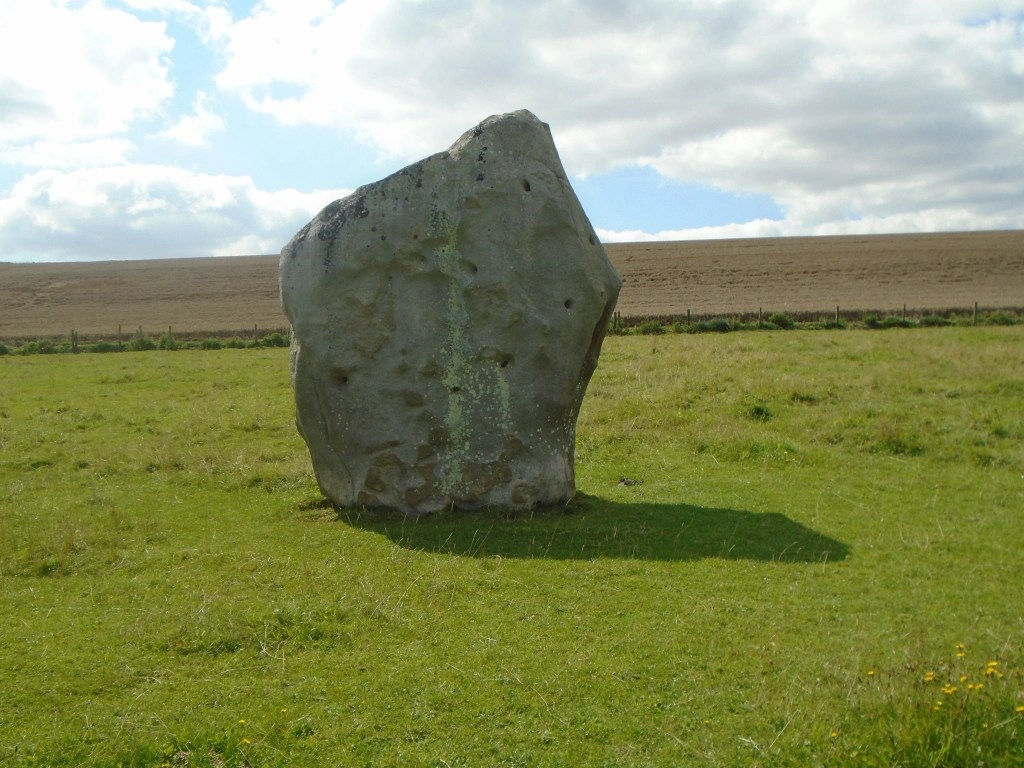
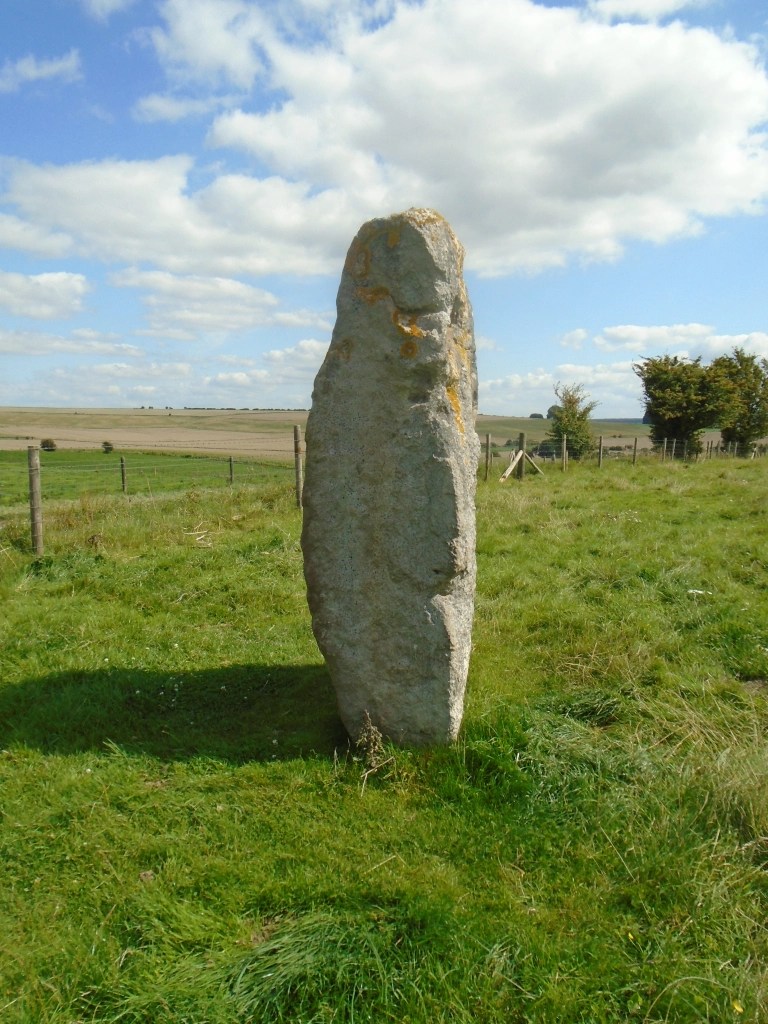
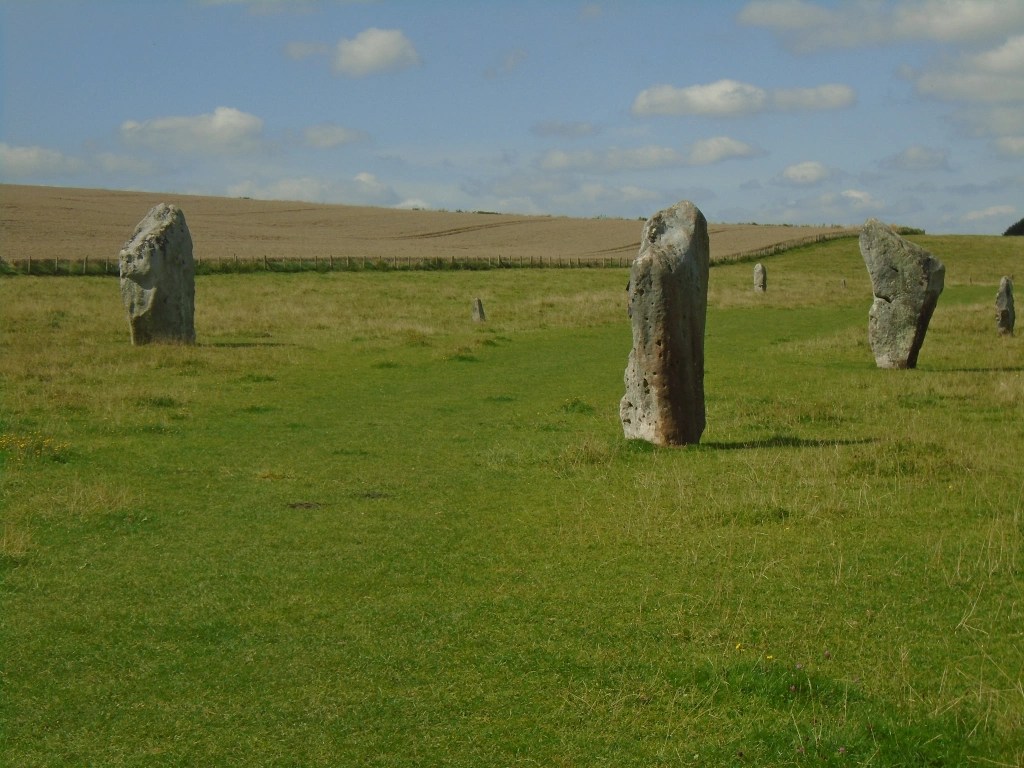
Travelling the West Kennet Avenue is a journey back through time, despite the busy roads which run parallel. Approximately a third of the avenue is flanked by pairs of stones, one diamond shaped, one straight and it has been suggested that these shapes may represent the female and male form. This avenue continues for more than a mile and a half from the southern entrance of the Avebury henge to a double stone circle on Overton Hill, now known as the Sanctuary. Built more than 4,000 years ago, the burial of a young man was discovered here, next to one of the stones.
Nearby West Kennet Long Barrow is the longest of around fourteen long barrows in the Avebury area and is believed to have been constructed in around 3700 BC. It has been excavated just twice, once in 1859 and again in the 1950s. West Kennet Barrow contains five chambers linked by a corridor and contains a total of 36 burials.
But there was another type of burial at Avebury, which is both surprising and shocking to the modern visitor – the burial of the stones. Across the centuries some of the stones were destroyed for practical purposes – to make more easily workable agricultural land and to provide building material – but less obvious and more intriguing is the burial of numerous stones. There was a time, probably from the 5th century through to the turbulent religious Tudor period, when the stones were regarded as a shameful relic of our pagan past and the theory is that the residents of Avebury were encouraged to bury theirs.
William Stukeley, an 18th century antiquarian first recorded that stones at Avebury had been buried in great pits. Then two nineteenth century clergymen A.C. Smith and W.C. Lucas came to the same conclusions and in the 1930s Avebury resident Alexander Keiller went a step further. Keiller was responsible for excavating and re-erecting 50 stones in the henge and the West Kennet Avenue.
Despite the throng of visitors and the persistent traffic, Avebury retains its mystical and mesmerising atmosphere and one blog visit is nowhere near enough. See tomorrow’s instalment for my visit to St. James’s churchyard.


 Radnor Street Cemetery