If Ada Hack’s grave ever had a headstone it has sadly been lost.

Ada Hack stood for election to the Swindon School Board in 1883. There was some opposition to her suitability, although not on account of her gender or her teaching experience. The 33-year-old mother of two had taught for 12 years in Board Schools and had run a private, middle class school of her own but W.H. Stanier, chief clerk to William Dean, Chief Locomotive Engineer for the Great Western Railway, challenged her impeccable qualifications, arguing that she was a relative newcomer to Swindon, so apparently didn’t know how the town worked. Ada responded by drawing attention to the election of Rev Ponsonby in 1880 when he too was a newcomer to the town.
Ada was born in Lambeth in 1850, the daughter of Charles Brocklehurst, a merchant clerk, and his wife Eliza. She studied at the British and Foreign School Society’s Training College for Mistresses in Stockwell, South London. She married Ebenezer Hack, a postal clerk, in 1880 and soon after moved to Swindon.
Standing as an Independent candidate, Ada voiced her opinion that school boards had nothing to do with politics and that political interest should not override the interests of the children. As a Quaker, Ada was against corporal punishment, conceding while it may be necessary to use the cane on some occasions, but she had never had cause to use it.
Ada came top of the 1883 poll, beating her nearest rival by more than 650 votes and defeating two newspaper proprietors, William Morris of the Swindon Advertiser and Joshua Piper of the North Wilts Herald. Her nomination was said to have received support from ‘some members of the Bristol and London school boards and from women all over the country.’
Having secured an unqualified victory in 1883 Ada unfortunately made little impression on the running of the School Board as she attended few meetings due to ill health. She was persuaded to stand for re-election in 1886 much against her wishes and received just 394 votes, finishing 14th in the poll.
But this was not the end of her involvement in the public sector. Ada became a member of the Women’s Peace and Arbitration Association and also the Moral Reform Union, an organisation that pressed for the need to eradicate sexual double stands in society and focused on the Contagious Diseases Acts, and the poor moral conduct of public figures.
At the time of the 1891 census Ada lived at 26 Belle Vue with her husband and two young sons where she described her occupation as ‘Artist Sculp.’
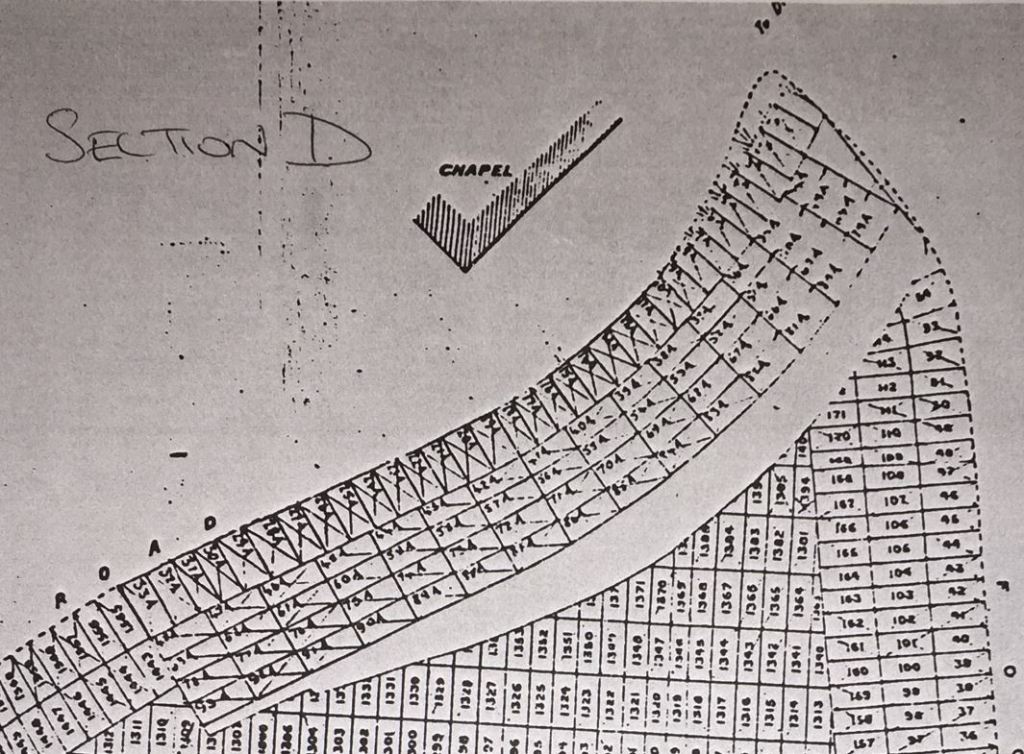
The 1883 newcomer to Swindon died at her home, Elm Villa, Wellington Street in January 1931. She is buried in grave plot D89A, close to the cemetery chapel, with her husband Ebenezer Benjamin, her son John Victor Campbell Hack and her daughter-in-law Alice Margaret Louisa Hack.
 Radnor Street Cemetery