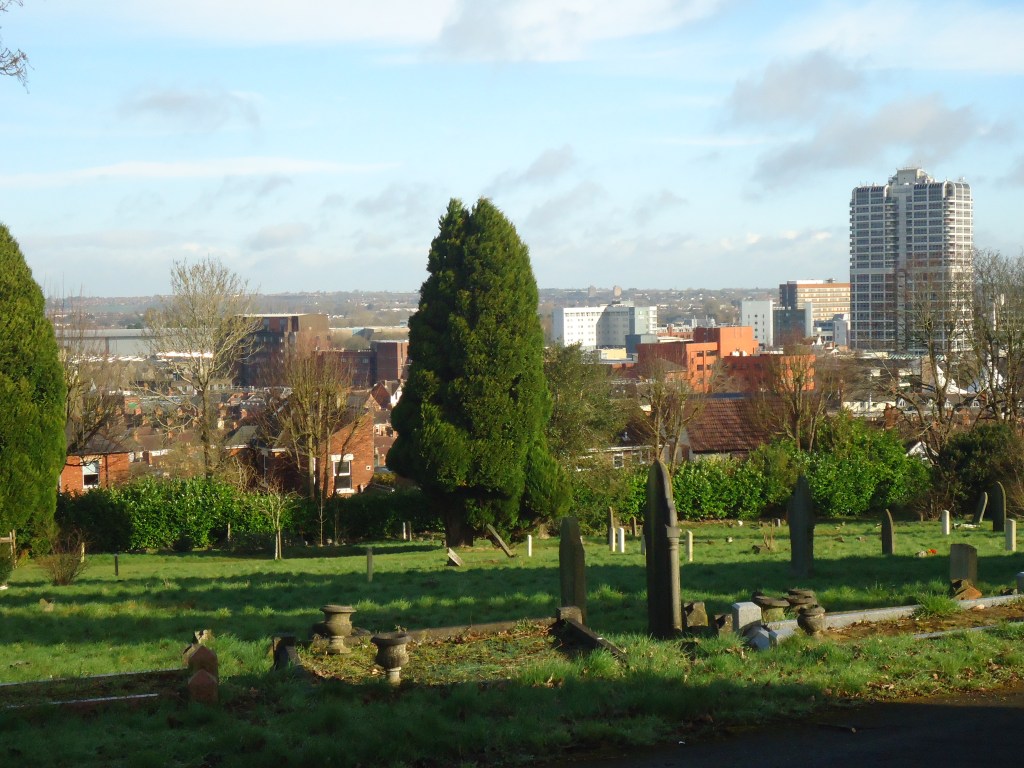
Unlike Highgate Cemetery in London, Radnor Street Cemetery is not a tourist destination. Plenty of Swindonians don’t even know of its existence. There are no elaborate mausolea, no Egyptian Avenue or Terrace Catacombs and although at first sight there appear to be large numbers of headstones, the vast majority of graves are unmarked.
The GWR Works opened in 1842 and employed more than 1,700 men twenty years later. At the same time a shortage of burial spaces in the town became of critical concern, but the Radnor Street cemetery was not opened until 1881.
Highgate Cemetery has been the setting for numerous books, several films and in the 1970s was subject to a bizarre vampire obsession. Radnor Street cemetery online archives include just a few early 20th century photographs and a 1980s music video filmed by Swindon music legend XTC.
Highgate Cemetery is famous for being famous; for the number of people of note and celebrities interred there. Radnor Street cemetery is all about working class history. The men who rose through the ranks of the railway engineering hierarchy and others who spent a lifetime on the factory floor in the GWR Works. Those men who served in two world wars and died as the result of their service. The women who trained as nurses, who taught in Swindon’s schools, worked in factories, shops and offices and raised large families who began the cycle all over again.
This is Swindon’s working class history – stories of the triumphs and the tragedies and the sheer hard work.
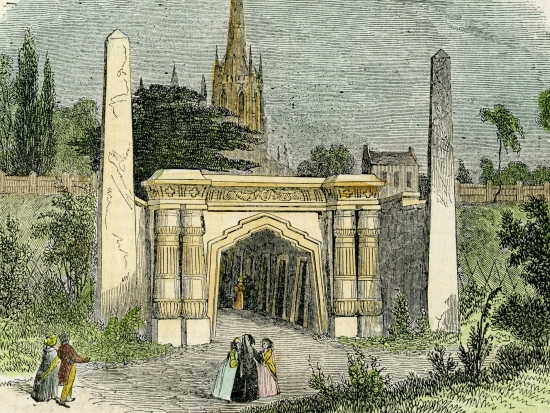
The Egyptian Avenue at Highgate Cemetery

 Radnor Street Cemetery