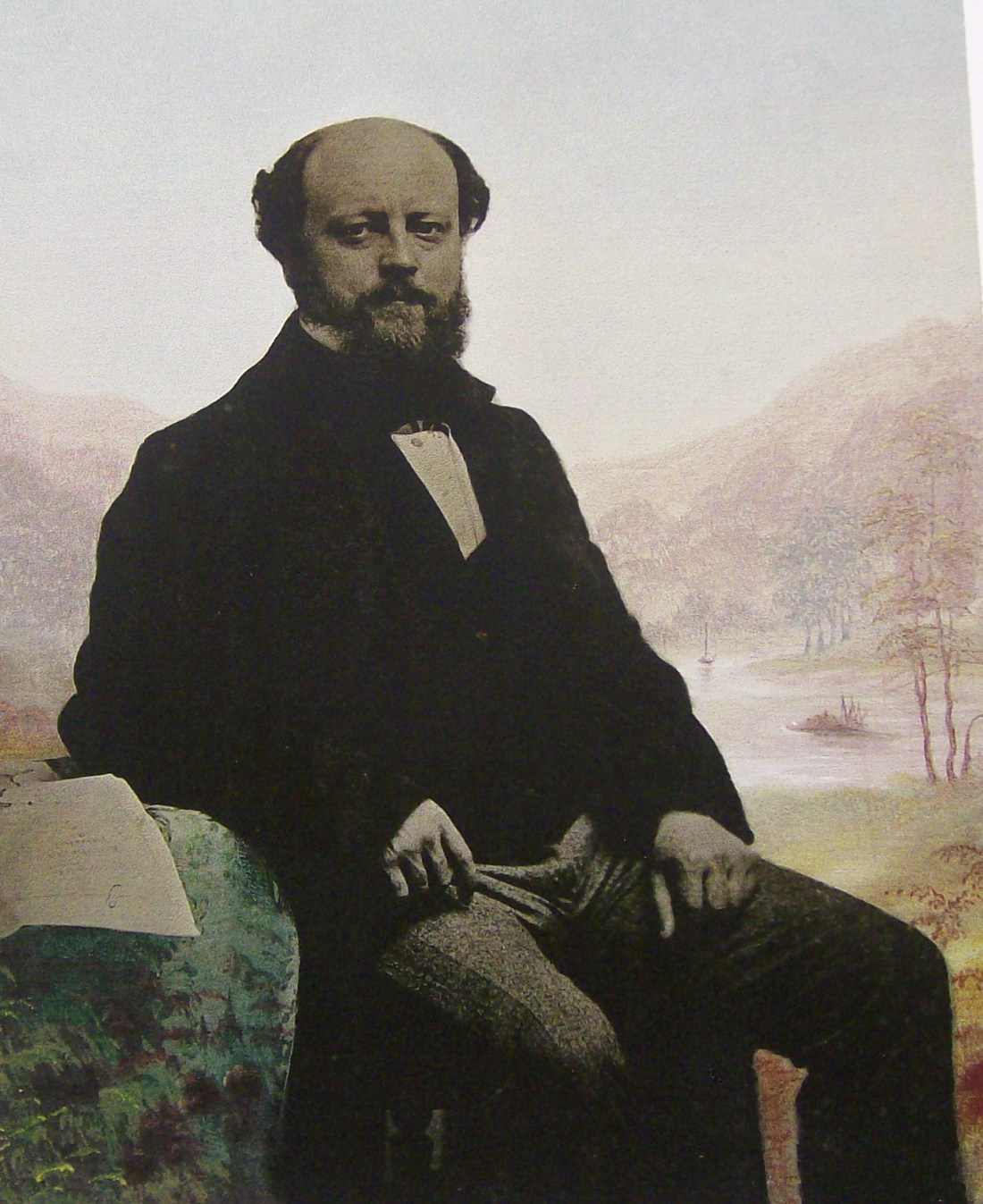
The re-imagined story …
Father adjusted his spectacles and carefully turned the pages of the Swindon Advertiser. “Mr Morris has written an excellent editorial,” he said. “I’d like to read it aloud to you.”
I sat in Mother’s chair by the kitchen range and picked up the mending from her workbox.
Tom and Owain looked up from their books; both were studying for a mathematics qualification at the Mechanics’ Institution. They had precious little time for their studies after a long day in the Works, but we all knew how important this matter was to Father.
He began reading in his measured, melodious voice, his Welsh accent still rich and strong after so many years living in Swindon.
“…But Swindon, as we have said, has drifted into that unique, and we do not hesitate to say disgraceful, position of having literally no place to bury its dead.”
The ‘cemetery question’ as it had become known, had raged for many years and was particularly personal to our family.
We worshipped in the Britannia Chapel, better known now as the Cambria Baptist Chapel. In the early days, when Father and Mother first moved here from Tredegar, the services were still delivered in the Welsh language. That was not the case so much now, but whenever the congregation met for social events the conversation in Welsh still buzzed around the room.
The stone-built chapel backed on to the canal and had no burial ground, which was a source of great sorrow to those who worshipped there. The same could be said for the members of the numerous other non-conformist chapels and churches across the town with no special place to bury their dead.
But now the problem had become even greater. The burial ground at St Mark’s was to be closed and there would then be no burial places in Swindon at all.
Mr Morris explained the long history of the cemetery question in great detail in this week’s edition of his newspaper. Anyone unfamiliar with the disgraceful story would find it difficult to believe, but for my family it was close and personal.
Father had long been a member of the community who agitated for a separate burial ground where non-conformists could bury their loved ones to our own traditions by one of our own ministers.
When Mother died, we had no option but to lay her to rest in the waterlogged and overcrowded churchyard at St Mark’s. And when my eldest brother Gwyn passed away there was no room for him to join her.
“So now the Local Board members are rushing around like headless chickens, writing obsequious letters to the Queen’s ministers while the burial ground at St Mark’s is closed and the people of Swindon have nowhere to bury their dead,” said Tom.
Father folded the newspaper and placed it in his lap. He removed his spectacles and I noticed again how careworn he looked these days, much older than his years.
“My greatest sorrow is that when my times comes, I shall be unable to lie at rest with your mother.” I reached across to touch his hand. “But God willing, Swindon will eventually get its own burial ground, free from the constraints of the established church.”


Victorian non-conformist churches and chapels in the Swindon district.
Top row, left to right: Salvation Army Citadel, Devizes Road; Railway Mission, Wellington Street (demolished); Primitive Methodist Chapel, Butterworth Street.
Bottom row, left to right: Cambria Baptist Chapel; Moravian Church, Dixon Street; Rehoboth Chapel, Prospect Hill; Wesleyan Chapel, Haydon Wick; Rodbourne Baptist Church.
The facts …
In 1869 the people of New Swindon went to the polls to vote upon the question of a new cemetery. More than 480 votes were cast, 153 in favour of a new cemetery, 333 against, influenced no doubt by the Great Western Railway Company’s announcement that they intended to oppose the proposal.
The Wilts & Gloucestershire Standard reported – ‘The question, therefore, resolves itself into a sentimental grievance on the part of the Dissenters, who object to be buried in the churchyard. The proper course to have pursued would doubtless have been for the Dissenters to form a company, as was suggested by one of the speakers at a former meeting, and not to put an unnecessary tax on Churchmen and Dissenters alike.’
But the cemetery problem did not, and could not, go away. There were more meetings and discussions and William Morris continued to publish letters in his newspaper, the Swindon Advertiser. Then, more than eleven years later a crisis situation was reached.
The Editorial
“Swindon, with its eighteen or twenty thousand of population, is drifting, or rather had drifted, into a position which even the smallest of communities might desire to avoid. For long anterior to the time when it was counted a public duty to decently house the living, the work of providing a last resting place for the dead was undertaken, and has always been most religiously adhered to. But Swindon, as we have said, has drifted into that unique, and we do not hesitate to say disgraceful, position of having literally no place to bury its dead.
A fortnight since we published in these columns a letter addressed to the vicar and churchwardens of St Mark’s, New Swindon, from the Home Secretary, in which the following sentence occurs. – “I hereby give you notice by direction of the Right Honorable Sir William Vernon Harcourt, one of her Majesty’s Principal Secretaries of State, that it is his intention to represent to Her Majesty in Council, that for the protection of the public health no new burial ground shall be opened in the parish of New Swindon, in the County of Wilts, without the approval of one of such Secretaries of State, and that burials be discontinued forthwith and entirely in the parish church of St Mark’s, New Swindon, in the County of Wilts; and also in the churchyard, except as follows: “In such vaults and graves as are now existing in the churchyard, burials may be allowed, on condition that every coffin buried therein be separately enclosed by stonework or brickwork properly cemented.”
This, we know, is practically to close all means for burying the dead in the ecclesiastical district of St Mark’s, New Swindon, for there is absolutely no other place beside the churchyard of St Mark’s in which interments can take place.
Then, as to the churchyard of the Old Town district. It has but very little more burying space left than has the churchyard of St Mark’s. So full has the yard become, and so far have the graves advanced westwards, the interments having been commenced in the eastern part and gradually worked on westward, that poor Cook, the unfortunate man who, the other day, was found dead in the snow at Walcot, now lies in his grave within ten or twelve yards of the very spot where he left his cart in Brock-hill on the night of the dreadful snow storm.
It cannot be long before, in the interest of the public health, this burying place also will be peremptorily closed. And what have we then? Absolutely nothing in the shape of accommodation for the burial of the dead out of the population of a parish of from eighteen to twenty thousand inhabitants: Is there in the whole country another town in such a pitiable, or, rather, disgraceful, position?
In addition to the two churchyards, there are, or rather have been – for the bodies have been sometime since removed from one of the places, the ground being required for building purposes – four other burial places connected with Non-conformist chapels – if, indeed, a strip of land, about ten feet wide, between the front of a chapel and a public street, can be called a burial ground. And, then, one of the two remaining graveyards – the old Independent yard, in Newport street, has been closed for very many years, thus leaving one place only in the parish in addition to the two churchyards – the small yard in Prospect belonging to, and exclusively used by, the Particular Baptists, for the interment of the dead of the whole parish, which, on a very moderate computation, cannot be less than from two hundred and fifty to three hundred per annum.
We believe we are within the mark when we say that by utilizing every foot of ground in all the available graveyards in the parish there could not be made room enough for the decent burial of one year’s dead without using ground “over again” and disturbing the remains of those who have pre-deceased friends and relatives still living only a few years.
And this is what a place like Swindon has come to! We hesitate not to say it is simply disgraceful, and when the reason for it all is understood, no right minded person can help pronouncing it contemptible. In answer to this it may, no doubt, be said Swindon has a Burial Committee of the two Local Boards, to be some day converted into a Burial Board, and that the two Local Boards are acting in concert with a view of providing a Cemetery, that they have submitted plans, and have made an application to borrow ten thousand pounds sterling for the purpose of carrying out the works.
But what can all this be worth in the estimation of those who are acquainted with the parochial history of Swindon for the past ten or twenty years. What, indeed, can it be worth in the face of such reports of the proceedings of the Local Board as we had to publish in our last issue? The question of providing a public Cemetery is no new thing in Swindon. Twenty years ago it was regularly and persistently advocated on the ground that without such a convenience the inhabitants did not enjoy that full religious liberty to which they were entitled, and which the providing of a public Cemetery would give them. But the insidious priestly intrigues of those who are interested only in the narrowest and most exclusive of sectarian bigotry always succeeded in crippling every effort that was made.
In Swindon, for many years past, there has appeared no possible chance of carrying out so important a work as that of providing a public Cemetery on the simple basis of the duty we owe each other on the platform of equal rights in all matters of conscience and religious liberty. There would seem to have been a sad falling off in the stuff of which the present race of Nonconformists are made compared with that of those days when the old chapel and graveyard in Newport street was first built and opened. There must have been a time in the history of the place when men were ready, if need be, to suffer for conscience sake. But there also has been a time when those who dared to resist the fascination of the sanctimonious look, the hypocritical whine, or an imaginary wishing of saintly hands, have had to submit to a social ostracism, and to find themselves the subject of lies and slanders innumerable, and of all uncharitableness.
But it has not been in the interest of an arbitrary and dogmatic religious intolerance alone that the providing of a public Cemetery for Swindon has been opposed. For the past twenty years or more no plan or scheme for the general benefit of the parish has been brought forward without its being met by the claims of certain property in the parish to be exempt from liability to contribute to any of the costs that might follow. In the interest of these claims the parish was divided into two Local Board districts, with a rural district outside of both districts, but still within the parish. We doubt if another such extraordinary division of a parish containing an area of 2,766 acres only is to be met with in the United Kingdom. And the same thing is now being suffered in the matter of the Cemetery question. The two Local Board districts are united for the purposes of a Burial Board. But the Walcot and Broome Farms are excluded, and by means those living on these farms are going to obtain their right of burial we are at a loss to know. This, however, may be a small matter compared with the all important one of the present position of the parish with respect o the burial of its dead. Again and again, for years past, efforts have been made to avoid the difficulty in which the parish is now placed. Public meetings were held, resolutions passed, and committees formed, but it was always so managed that nothing further could be done. At one time elaborate statistics and statements were read to show that the existing burial space would be sufficient for years to come; at another time the always “sure card” of increased rates and unnecessary expense was played, and always, with the same result as now, a great deal being done “on paper,” but nothing anywhere else. The present position of the parish in the matter is so well described in the pathetic appeal addressed by the Swindon New Town Local Board to the Local Government Board in London that we cannot do better than reproduce it in this place. It was as follows:-
1. That your petitioners, the Swindon New Town Local Board, in conjunction with the Old Swindon Local Board, have, subject to the approval of the Local Government Board, agreed for the purchase of a plot of land within their district to form a cemetery for the use of the inhabitants of their district and of the district of the Old Swindon Local Board, which site has been approved by Her Majesty’s Home Secretary, and a local enquiry was held by an inspector, appointed by the Local Government Board, on the 23rd of November last, in reference to the application of the said Local Board for the sanction of the Local Government Board to a loan for the purpose of laying out and construction of such cemetery.
2. That, in accordance with the instruction of the said inspector, on the 24th day of December last your petitioners, the said Local Boards, forwarded plans with estimates in details of such cemetery, and at the same time applied to the said Local Government Board for sanction for loans amounting to £10,000 to enable them to lay out and construct the said cemetery, but no answer has as yet been received to their application.
3. That your petitioners are only waiting for the sanction of the Local Government Board to such loan for the purpose of enabling them to carry out the necessary works, to at once commence the laying out of such cemetery, and the preparation of the same for the reception of interments.
4. That your petitioners have been shown a notice sent to the vicar and churchwardens of the parish of St Mark’s, New Swindon, informing them of the intention of Her Majesty’s Principal Secretary of State to apply to Her Majesty in Council for an order discontinuing burials forthwith and entirely in their churchyard, except as therein mentioned.
5. That as there is no other burial ground within the district of Swindon New Town (which contains a population of 15,000), there will be no place for the inhabitants to bury their dead until the proposed new cemetery has been laid out and prepared for interments.
6. That the closing of the said churchyard before such cemetery has been laid out and completed will cause great inconvenience and hardship to the inhabitants of the district of Swindon New Town.”
It will be in the recollection of our readers that this was to have been a joint memorial by the Local Board and the Vicar and Churchwardens of St Mark’s. But for a reason which will be found embodied in a letter, which we publish in another column, the Hon. and Rev. M. Ponsonby refused to sign the memorial. Indeed, it is clear from the letter that it is due to the Vicar’s action that the order for the closing of the churchyard for interments has been brought about.
We admit we cannot read the terms of the order “that burials be discontinued forthwith and entirely” as the Hon. and Rev. M Ponsonby interprets them when he says – “The order for closing will probably not be issued for a few months,” the ordinary meaning of the word forthwith being given in our dictionaries as immediately; without delay; directly. But otherwise the Vicar’s letter is most satisfactory, and enunciates a doctrine in every way more satisfactory than that taught in the time of his predecessor to the effect that “when the yard was full the ground might be gone over again.” The Hon. and Rev. M. Ponsonby has come very recently on the scene of action, and is therefore untrammelled by the course hitherto so persistently pursued by those who, in the interest of Mother Church, have disregarded an absolute sanitary requirement, and have so successfully played the part of the dog in the manger for no better purpose than that “the Church” might have the exclusive right of burying the dead.
But again we ask: How does the parish stand in this matter? A loan of £10,000 has been applied for, and that sum the parish – that is, the parish less Walcot and Broome Farms – will have to repay. Land has been secured upon which this £10,000 will be expended in a hurry, and money spent in a hurry on public works is too often little better than squandered. But worse by far than this is the prospect of the parish having a year’s dead thrown on its hands with nowhere to place it. Progress is bound up hand and foot in that most tenacious of all bondages – red tape; on sanitary grounds every burying place in the parish ought to be peremptorily closed forthwith, and men, women, and children will continue to die. The work has now to be done under the most ruinous of conditions, and under the most unfavourable of all circumstances, and for no better reason, we hesitate not to assert, that in the past, reasons, which should have had no influence with reasonable and rational men for one moment, have been allowed to be all powerful and to stand in the way of anything and everything being done.
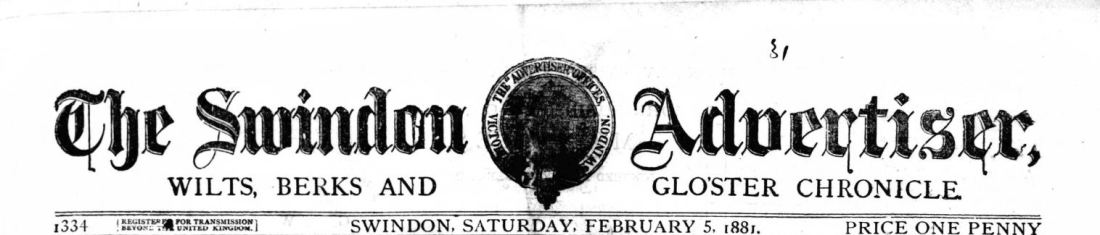
The Swindon Advertiser – Saturday, February 5, 1881.

Coming next …
James Hinton – a good and trusted and esteemed servant – I will admit to having a grudging admiration for Mr. James Hinton, but I wouldn’t say I actually liked him.
published on Radnor Street Cemetery blog January 17, 2019.

 Radnor Street Cemetery
My husband’s family were Undertakers in Swindon and are mentioned in the census of Mechanics Institute, although name spelt wrongly.
LikeLike
Hi – I have seen the name Skerten in the early Radnor Street cemetery burial registers. I’d be very interested in knowing more about the family and their business.
LikeLike