Frederick George Leighfield – landlord at the Mechanics’ Arms

Mechanics' Arms

The image of the Mechanics’ Arms is published courtesy of Mr D. New and Local Studies, Swindon Central Library.

The re-imagined story …

My dad used to drink in the Mechanics’ Arms so when he said they were looking for a barmaid I decided to apply. We lived just around the corner in Wellington Street, so not far to walk home at the end of the evening. Dad knew Mr and Mrs Leighfield well.

“They’re a nice couple. They’ll look after you well – won’t take advantage of you.” Dad knew most of the regulars, all men from the Works.

Mrs Leighfield told me to call in on Tuesday afternoon.

It was pandemonium when I got there, yet no one seemed to know what was going on.

“There’s been an accident.”

“Has anyone sent for Dr Swinhoe?”

“He’s on his way.”

“Do they need any help in there?”

“We could hear a woman screaming, but it’s all gone quiet now.”

I decided not to hang around. There was nothing I could do anyway.

The pub was closed that evening, but the news was already spreading. Dad couldn’t believe it.

“He was such a nice man. Always had a cheery word for everyone, even though his health was poor.”

I decided against applying for the barmaid’s job, although I felt a bit guilty. Mrs. Leighfield probably needed the help more than ever now, but I just couldn’t face going in that kitchen where it had all happened.

The facts …

Swindon

An inquest was held by the county coroner (Mr A.L. Forrester), at the Mechanics’ Arms Inn, on the body of Frederick George Leighfield, the landlord of the house, who committed suicide by cutting his throat. The evidence showed that deceased had been unwell and depressed. On Tuesday afternoon his wife found him in the kitchen in the act of cutting his throat. He had succeeded in inflicting a severe wound with a razor, and although he received immediate attention, he succumbed early on Thursday morning. The jury returned a verdict of “Suicide while temporarily insane.”

The Western Daily Press, Bristol Monday August 23, 1909

Funeral on Sunday

Impressive Service in Swindon Cemetery

The funeral of the late Mr Frederick G. Leighfield, of the Mechanics’ Arms Inn, Cheltenham Street, whose sad death was recorded in our columns last week, took place in Swindon Cemetery on Sunday afternoon, the mortal remains being laid to rest in the same grave as those of his father, the late Mr Alfred Leighfield, who died two and a half years ago.

The cortege left deceased’s late residence at 3 pm and proceeded direct to the Cemetery, where a short service was conducted in the Chapel by the Rev. F.C. Shellard, Baptist Minister, who also officiated at the graveside.

The coffin, which was covered with lovely floral tributes, was conveyed in a hearse, and the chief mourners were in four carriages, whilst a very large concourse of people in the Cemetery, but the best of order was maintained, and the roped enclosure was kept clear by a number of policemen, under Inspector Buchanan and Sergt. Millard.

A number of members of the Swindon and District Licensed Victuallers’ Association, of which Mr Leighfield was a member, also attended to pay their tribute of respect to the memory of deceased.  

The coffin was of polished elm, with brass fittings, and the breast-plate bore the following inscription: “Frederick George Leighfield, died Aug 19th, 1909, aged 39 years.”

The funeral arrangements were satisfactorily carried out by Messrs H. Smith and Son, of Gordon Road.

Extracts printed from The Swindon Advertiser Friday August 27 1909


Charles and Elizabeth Hitchings and their famous granddaughter

Radnor Street Cemetery followers will surely recognize the name Cleo Laine. Jazz singer and actress, her long and illustrious 50+ year career took off when she joined the Johnny Dankworth Band in 1951. The couple later married and went on to co-found the charity The Wavendon Allmusic Plan and created the Stables theatre in the grounds of their home near Milton Keynes. Cleo Laine received an OBE in 1977 and was made a DBE in 1997.

But did you know that her grandparents, Charles and Elizabeth Hitchings, are buried in Radnor Street Cemetery?

Dame Cleo Laine

Clementine Dinah Hitchings was born in Southall on October 28, 1927, the daughter of a Jamaican father Alexander Sylvin Campbell and Minnie Blanche Hitchings who was born in Wiltshire. Alexander and Minnie were an unconventional couple. For a start they were unwed and it seems likely Minnie already had a husband when they first met.

Minnie Blanche Hitchings was born in 1889 in Cleverton,Wiltshire the daughter of Charles Hitchings and his wife Elizabeth. The 1891 census finds the family living at Cleverton where 27 year old Charles describes himself as a ‘farmer and dealer.’ The young couple have three children, Arthur 6, Ethel 4 and one year old Minnie.

By 1901 Charles had brought his family to Swindon where he ran a Grocer’s shop at 24 Little London. The 1901 census records him as Charles Hitchings 37, Grocer Shopkeeper born in Lea. His wife Elizabeth, also 37, was born in Fulham, London and they now had five children – Arthur 16, who worked as a clothier’s assistant, Ethel 14, Minnie 11, Emily 7 and four year old Frank.

Charles Hitchings

In 1903 the family lived at 38 Belle Vue Road where Charles died suddenly on Sunday July 5, 1903. Mr W.E. Nicolson Browne (county coroner) held an inquest where it was heard that the deceased complained of pains near his heart after which he shortly fell dead. A verdict of “Death from syncope” was recorded and on July 8, 1903 39-year-old Charles Hitchings was buried in Radnor Street Cemetery in plot A404.

Did Elizabeth move back to family in London? It was there just five years later that she died in the Metropolitan Hospital. Her body was returned to Swindon where she was buried in Radnor Street Cemetery in plot A784, a public grave, on December 4, 1908.

By 1911, then aged 22, Minnie was working as a waitress in an hotel at No. 1 Bridge Street run by Henry Moore. Perhaps this was where she met Frederick W.H. Bullock whom she married in 1913. The couple left Swindon and moved to Hounslow but the marriage soon ran into trouble and by 1921 Minnie had left Frederick. By 1925 Minnie had met Jamaican born Alexander and the couple had their first child.

Clementine Dinah (Cleo Laine) was born in 1927 before her parents married in 1933. Dame Cleo is recorded as saying it was only when she applied for a passport as an adult that she learned her parents were not married at the time of her birth.

Sir John Dankworth was created a knight in 2006. He died in 2010 aged 83. The couple have two children, their daughter Jacqui is a singer/actress and their son Alec is a bassist and composer. Their granddaughter Emily Dankworth is also a jazz singer/songwriter.

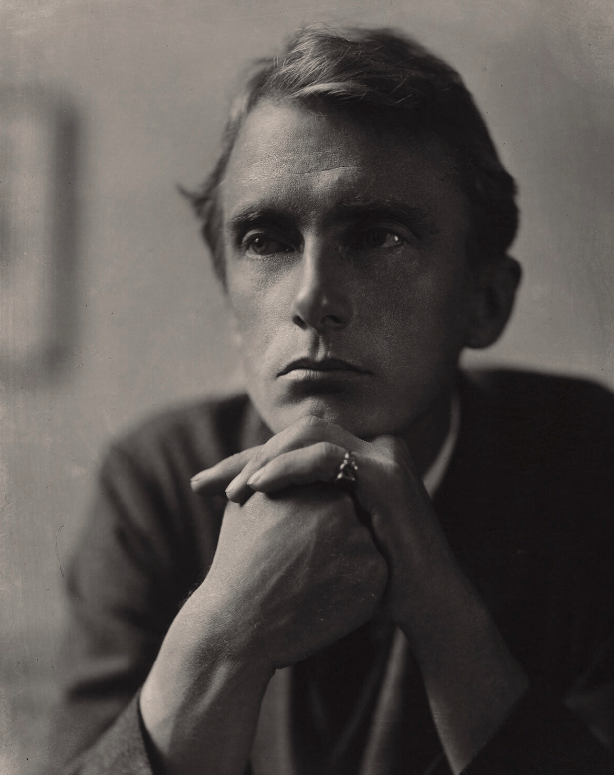
War Poet Edward Thomas and his Swindon family

Edward Thomas was born in 1878 in Stockwell, South London. He began his writing career in 1906, working as a journalist, literary critic and book reviewer. Thomas began to write poetry in 1914 and today his name is associated with war poets Wilfred Owen and Rupert Brookes.

Edward Thomas enlisted with the Artists Rifles in July 1915 and was later commissioned into the Royal Garrison Artillery. He was killed in action at Arras on Easter Monday April 9, 1917 and is buried in the CWGC Agny Military Cemetery in the Pas de Calais region.

Thomas is mostly associated with South Wales where he maintained ties with his large extended family, and Steep in Hampshire where he lived with his wife and children (there is a study centre dedicated to him in the Petersfield Museum). His association with Swindon is perhaps less well known.

Edward Thomas’s father, Philip Henry Thomas was born in Tredegar in 1855, the son of Henry Eastaway Thomas an Engine Fitter. The Thomas family moved to Swindon in 1867 and appear on the 1871 census living at 5 High Street, later renamed Emlyn Square.

Henry Eastaway Thomas died shortly after the census was taken and was buried in the churchyard at St Mark’s on April 8, 1871. Sadly, the death of two of their sons occurred shortly afterwards, Daniel Eastaway Thomas in 1873 aged 12 years old and Edward Treharne Thomas in 1877 aged 11 years. Both boys are buried in St Mark’s churchyard though it is not know if they are together. According to this memorial (see below) youngest son Harry Eastaway Thomas died in South Africa in 1900.

By 1881 Rachel was living at 19 Cambria Place, which remained her home for the rest of her life.

Edward Thomas retained his close ties with Swindon, regularly visiting his grandmother Rachel at her home.

Death of Mrs R. Thomas. – A Swindon Octogenarian. – The death took place on Tuesday last, at her residence, 19 Cambria Place, Swindon, of Mrs Rachel Thomas, an old inhabitant of Swindon, who had attained to the great age of 86 years. She has been a widow since 1873. With her late husband, Mrs Thomas came to Swindon in 1867, from Tredegar, Mon., and Mr Thomas was employed in the GWR Works, which, like the town, was very small compared with its great extent today, and she lived to see many changes take place here. Mrs Thomas leaves a family of two children – a son and a daughter. The son is Mr P.H. Thomas, I.S.O., of the Board of Trade. It will be of added interest to our readers to know that a grandson of the deceased is Mr. Edward Thomas, author of the Life of Richard Jefferies, a work which has received most favourable notice in the London and Provincial Press. Mr Edward Thomas spent a whole summer in Swindon and district a year or two ago in collecting material for his work. Like Jefferies, he is a lover of nature, and when a boy used to live in Swindon with his grandmother.

Swindon Advertiser, Friday, December 31, 1909.

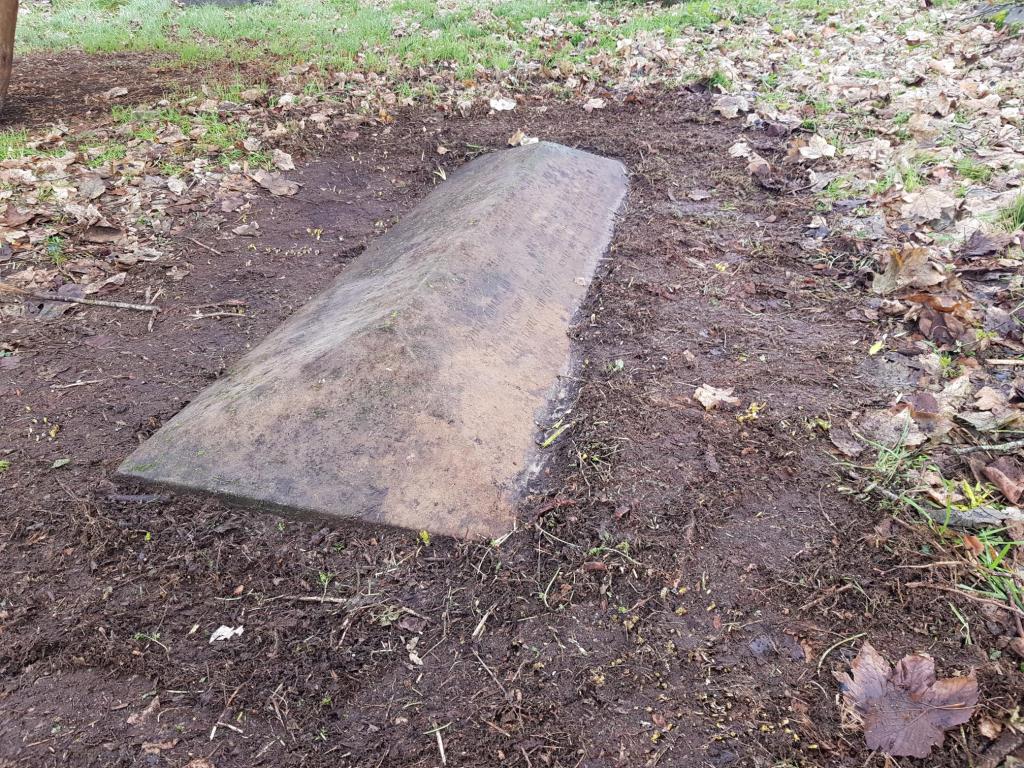
Rachel Thomas was buried on December 31, 1909 in grave plot C1609 where she lies alone.

On the reverse side of the memorial is the second verse of a hymn by Horatius Bonar.

Think truly and thy thought shall the world’s famine feed.

Speak truly and each word of thine shall be a fruitful seed

Live truly, and thy life shall be a great and noble creed

The plot has recently been cleared by Radnor Street Cemetery volunteer Jon.

Pretty things for pretty women

Pretty things; pretty things for pretty clothes to be worn by pretty women. Can they have any idea how these buttons are made or the conditions under which they are produced?

Macassar and manila shells were sourced from exotic places for the iridescent pearl buttons; hoofs and horns for the more mundane, everyday buttons were collected from the slaughter houses, stinking and crawling with maggots.

Small workshops huddled around filthy court yards where entire families labour in the dust and dirt and noise. The men sort through the shells, sawing and shaping the raw materials, deciding where to make the best cut. Women’s work; a light but practised touch was required to polish the buttons as the materials were fragile and easily broken. And the girls, sewing the buttons on cards, 14 to each card. They were expected to sew more than 3,500 buttons each day. The button manufacturer paid one penny sometimes a penny ha’penny a card and for her labours the girl might earn 7 shillings for a long, hard working week.

Pretty things; pretty things for pretty clothes to be worn by pretty women.

pearl buttons 2

The facts …

Emma Bradley was born in 1855 and Sarah in 1860, the younger daughters of James Bradley, a miller (a milling machine operator) and his wife Maria.

In 1861 the family lived at Poole Street, (3 Court 3 House) Erdington, Aston Manor, Birmingham. Eldest daughter Mary Theresa 17 worked as a Glass Button Cutter while second daughter Ann Maria 11 worked as a Pearl Button Carder. James 9 and Emma 6 were at school and youngest child Sarah was just 9 months old.

At the time of the 1871 census Emma was working as a general servant at the home of Charles Watson, a pearl button manufacturer, but by 1881 she was back home in Poole Street with her widowed father James and her sister Sarah. Emma worked as a button polisher and Sarah as a press worker.

What brought the Bradley sisters from Birmingham to Swindon? Sarah Bradley married William Stanley, a blacksmith, in 1888. By 1891 they were living in two rooms in 14 Princes Street, Swindon and William was employed in the railway factory.

Emma appears in Swindon on the 1911 census as boarding at 30 Fleet Street where she works in a clothing factory, most probably Compton’s who had a factory in Sheppard Street.

The two sisters lived together again at the end of their lives. Emma died on March 3, 1924 at 52 Deacon Street. Sarah died on November 18, 1936 and her husband William on December 10, 1939 both at 52 Deacon Street. The two sisters and Sarah’s husband William are buried together in plot E8124.

Emma Bradley

Fanny and Nellie Maud Harris

I try to remember to tread carefully when I am researching other people’s family histories. It is not always immediately obvious what the relationships might be nor what tragedy could be lying in wait.

When I first stopped at this headstone I suspected the two women buried here were mother and daughter, but their relationship was not as it might at first appear.

Fanny Dyer was born in about 1861 in Woodchester, Gloucestershire, the daughter of David Dyer, a train examiner, and his wife Emily. On December 26, 1881 she married William Henry Harris in All Saints Church, Gloucester. The couple had one son, William Henry David. Sadly, by the time of the 1891 census Fanny was widowed and living with her eight year old son William and her parents David and Emily Dyer at 47 Gooch Street. She was 29 and worked as a dressmaker.

On October 19, 1907 Fanny’s son William Harris married Nellie Maud Wakelin at the church of St. Mary & St John in Cowley, Oxford. Nellie’s father George Wakelin and Fanny Harris signed the register as witnesses. Some four weeks later the young couple’s daughter Nellie was born.

At the time of the 1911 census William and Nellie were living at 91 Cardiff Road, Reading. They had been married 3 years and had two children but only their son, William Henry aged 1 was living with them. Back in Swindon Fanny was living with her widowed father David at 4 Islington Street and little Nellie Harris aged 3 was living with her.

As we can see from this headstone Fanny died on March 2, 1936 when she was living at an address in Commercial Road, Swindon. Nellie would have been approximately 29 years old at the time of her grandmother’s death.

The next time I can find Nellie is on the 1939 List when she is a resident at the Wilton Certified Institution, Kingsway House, Wilton, Wiltshire classified as a Certified Mental Defective. One of the most shocking aspects of family history research is discovering the terminology once given to people with physical or mental disabilities.

Nellie Maud died on December 12, 1967. The burial registers record that she died at Cotshill Hospital, Chipping Norton, although a home address of 18 Northern Road, Swindon is also included. Formerly a workhouse, Cotshill Hospital had various classifications across the years and is described post 1948 as an Acute, Mental Hospital.

This is only a snapshot of Fanny and Nellie’s life, the reality was probably more nuanced. Perhaps Nellie spent long periods living with her family. Perhaps it was only the death of Fanny that necessitated her move into an institution.

This stylish headstone memorialises these two women, and so do I.

James Henry Thomas – he knew his place.

The re-imagined story …

Now I don’t know your political persuasion, and to be quite honest, neither do I want to know it. Nothing starts a row quicker than a political argument. I can rub along with most people, but politics – bah – I keep my opinion to myself and I’d ask you to do the same.

My old man always said only ever trust the pound in your pocket. But it was the pound in his pocket that saw the end of Jimmy Thomas’s political career, so to speak.

Jimmy and I worked together. Well, I say ‘worked together’ we both worked for the GWR, but then so did most of Swindon. I worked as a boiler smith while Jimmy was an engine driver, so our paths seldom crossed, but everyone knew Jimmy.

His political career took off in Swindon, but my memory of him was always as a working man and a trade unionist, but mostly a working man. He had come up the hard way, he knew what it was like for us.

When the scandal broke there were some who found it difficult to believe what we were reading in the newspapers. But there were many who said his head had been turned hobnobbing with all those fine folk; that he had become a ‘Champagne Socialist’ and that he’d lost touch with his roots.

I kept my opinions to myself, but I tell you what convinced me that whatever he had done or not done, Jimmy was still that working class man who had pulled himself up by his bootstraps. Just five days after his death his ashes were returned to Swindon and buried in Radnor Street Cemetery. It must have been his wishes, to return to the place where his political career had taken off. Buried with the old railwaymen he had worked alongside. He knew his place.

The facts …

Born in Newport, Monmouthshire in 1874, the illegitimate son of Elizabeth, a domestic servant, James Henry Thomas was raised by his grandmother Ann. In 1881 the six year old boy lived at 40 George Street, Newport with his mother’s three siblings and his grandmother, who supported the family by taking in washing.

Nine year old Thomas began part time work as an errand boy, leaving school at the age of 12. After a succession of jobs he joined the GWR, beginning his railway career as an engine cleaner, then a fireman eventually becoming an engine driver and transferring to Swindon at the end of the 19th century.

His trade union career began when he joined the Amalgamated Society of Railway Servants in South Wales as a 15 year old, becoming chairman of the local union branch in 1897. His political career began in Swindon when he took W.H. Stainer’s Queens Ward seat in the 1901 local elections.

Thomas went on to become chairman of the Finance and Law committee in 1904/5 and the Electricity and Tramways committee in 1905/6.

Elected onto the national executive committee of the ASRS in 1902, Thomas became the youngest ever president just three years later. In 1906 he became organising secretary, a full time post, which saw him leave the GWR and Swindon.

He stood for parliament as Labour candidate for Derby in the 1910 general election, a constituency he represented until the devastating events of 1936.

In what had previously been an unblemished political career, Thomas was found guilty by a Tribunal of Inquiry of leaking budget secrets to his stockbroker son Leslie and Sir Alfred Butt, Conservative MP for Balham & Tooting.

And a £15,000 handout paid by wealthy businessman Alfred ‘Cosher’ Bates was claimed to be an advance for Thomas’s as then unwritten autobiography.

Despite the guilty verdict, Thomas continued to protest his innocence. In an emotional statement made to the House of Commons on June 11, 1936 he declared he never ‘consciously gave a Budget secret away,’ and that he had now only his wife who still trusted him and loved him.

Thomas’s period of public service included a world war and a national depression. A champion for the working man, he also enjoyed the trappings of public life which earned him the title of ‘Champagne Socialist.’

In retirement Thomas eventually wrote ‘My Story’ the previously untold autobiography whose so say ‘advance’ had contributed towards his downfall.

He died at his London home on Friday January 21, 1949 aged 74 years. His ashes were later returned to Swindon where he is buried in Radnor Street Cemetery.

‘Jimmy’ Thomas left £15,000

In his will, published yesterday, the Right Hon. James Henry Thomas, P.C., former Cabinet Minister and ex-engine driver, who died last January, left £15,032 (net £10,949).

He left all diaries and documents of a political or historical nature and his collection of cartoons to his trustees to dispose of “as they shall think fit.” He made similar directions about articles presented to him by heads of States Ministers of the Crown, and public bodies.

Yorkshire Observer Bradford, Wednesday, 23 November 1949.

James Henry Thomas PC (Casket Ashes) 74 years Dulwich (place of death) 107A Thurlow Park Road (address) 26th January 1949 (burial) plot number E7807

1901 census

6 Salisbury Street,

James H. Thomas 27 Railway Engine Driver born Mon. Newport

Agnes Thomas wife 28 born Mon. Newport

Anthony J. Thomas son 1 year old born Mon. Newport

Elizabeth Hill widow visitor 67 born Mon. Newport

George House – a Swindon veteran

It is seldom we have the opportunity to read the words of an ordinary railwayman. When George House died in 1903 the Advertiser republished extracts from an earlier interview made in 1899.

The facts …

The Oldest GWR Employee

Reminiscences of Early Days in Swindon

As showing what a contrast there is between Swindon of today and of Mr House’s youth, we cannot do better than reproduce an interview with Mr House, which was published in the “Advertiser” in April 1899. A representative of this paper called upon Mr House in the latter part of April of that year, and found him reading his “Evening Advertiser,” and quite delighted to have a chat about his early days in Swindon. The interviewer commenced the conversation:-

“Good evening, Mr House; and is it true that I behold in you the oldest railway servant in the United Kingdom? A correspondent, in answer to a request in the ‘Advertiser’ so informs me?” I said when Mr House had assured himself that I was comfortably seated in his cosy room.

“Yes; I think so,” was his ready response. “I have a record of over 60 years’ service with the GWR Company. I started work with them in the construction of the line there under the supervision of Brunel.”

“When did you come to Swindon?” I queried.

“In 1838” was the reply, “there was no railway station here then, and no factory. When the coaches began to run from Bristol to Swindon the only place where passengers could alight was at Hay Lane.”

“You almost remember the open carriages then?”

“Yes, very well. And the coaches used to leave here at eight o’clock at night, and get to London some time in the morning. It was travelling in those days and no mistake. The ladies’ dresses used to be entirely spoilt by the smoke and dirt in one journey.”

“Now as to the GWR Works at Swindon, which was the first shop built?”

“Well, when I came here there was no factory at all. Not a stick nor stone. I assisted to fix up the first machinery. The D Shop, F Shop, and G Shop were the first shops that were erected.”

“How many men were employed here when you first came to Swindon?”

“Well, there were practically no men employed here till I and others came from Maidenhead, and Messrs Whitworth, of Manchester, fitted up some machinery. Then, for a start, there were not so many men employed as there are clerks now.”

“What a number of dead and gone faces such remembrances must bring before you. The chiefs of the Works, foremen and others, for instance.”

“Yes, I think I have a record in that direction, for I have worked under no less than five managers and eight foremen at the Swindon Works. I can tell you their names in a moment.”

“Who were the managers?”

“Well, first, there was Mr Sturrock, then Mr Rae, and Mr William Gooch (brother to Sir Daniel Gooch). And in more recent times the late Mr Samuel Carlton, and Mr G.J. Churchward.”

“You say you have worked under eight different foremen: who were they?”

Yes, there was Charles Hurt, Alf. Cootes, Peter Bremner, Dodson, Robinson, E. Dingley, William Booth, and A. Nash.”

“Of course, in those early days there was no Mechanics’ Institute. What recreation was provided for the workmen?”

“Oh, there used to be a small theatre in the Works – in the O Shop. Here a dancing class was held, and amateur theatricals were performed there. The Mechanics’ Institute was not built till several years later. Lord Methuen came down and laid the first stone, and a fete was held to celebrate the event. I remember well the Great Exhibition of 1851. All of us workmen who had joined the Mechanics’ Institution – in fact, every one of the employees of the Company who were working here then – were given an free railway pass to London to go and see the Exhibition. On another occasion when we were give a free trip to London, I took my wife and family of ten children. And when we arrived at Paddington, I hailed a cabby, who stared at my family, and remarked, “What’s this, sir, a whole school!”

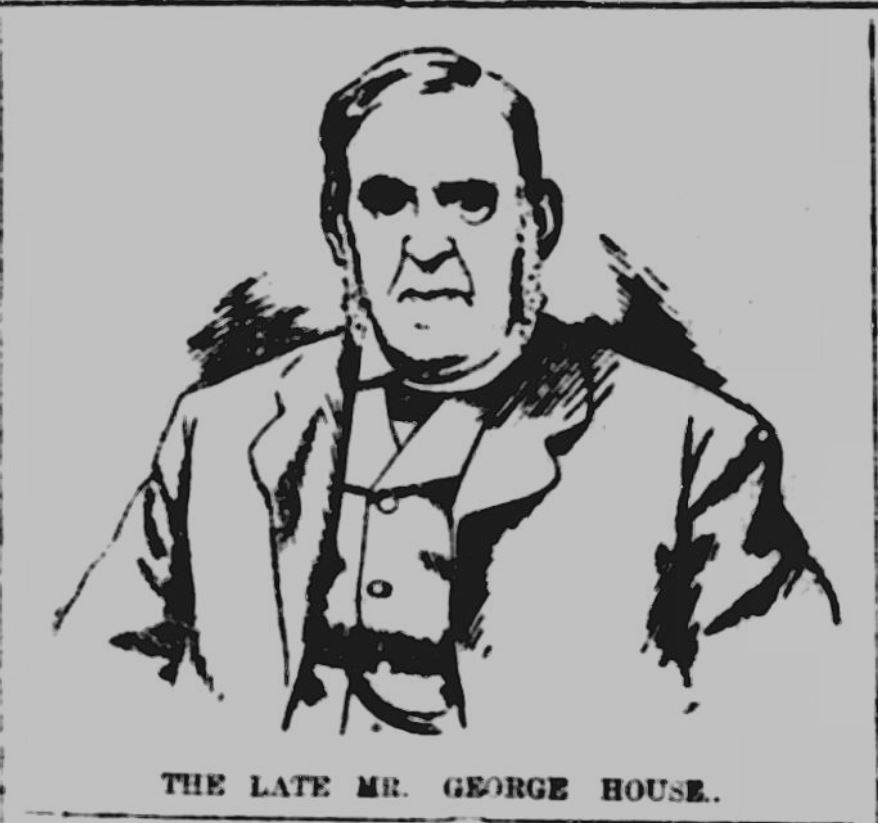
The Late Mr George House

Funeral Last Saturday

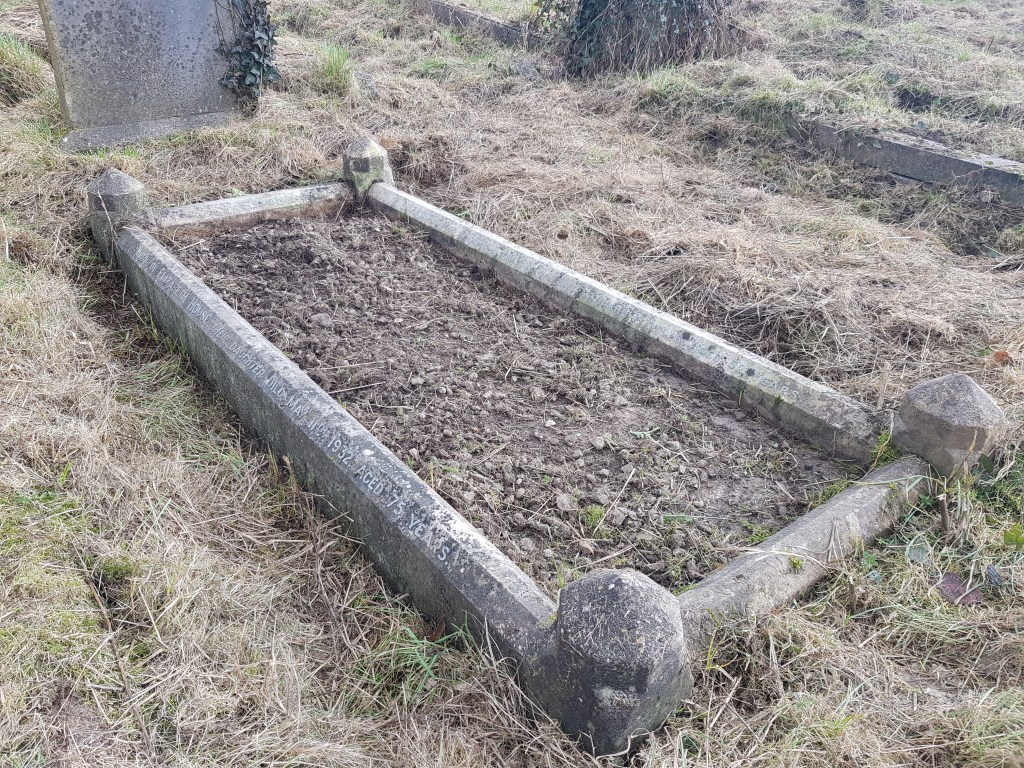
The funeral of the late Mr George House, of Taunton street, took place on Saturday afternoon amidst every sign of mourning. The cortege left deceased’s late residence shortly after 2.30 pm for St. Mark’s Church, where the first part of the sad service was impressively read by Canon, the Hon Maurice Ponsonby, vicar and rural dean, who also officiated at the graveside in the Cemetery, where a goodly number of persons had assembled to pay their last mark of respect to one who chief aim in life was the care of his less fortunate brethren. The body was enclosed in a beautiful casket of polished elm, with heavy brass furniture, the breast plate bearing the following inscription:-

George House

Died January, 1903,

The funeral arrangements were carried out by Mr H. Smith, of Gordon Road.

Extracts from The Swindon Advertiser, Friday, January 16, 1903