Thomas George – Wanborough farmer

Thomas George had three very different occupations during his lifetime – that of Engine Fitter and Turner; Beerhouse keeper and finally farmer!

Thomas was born in about 1848 in Pencombe, Herefordshire, the son of Timothy and Martha George. By 1871 he was living in Swindon at 43 Taunton Street lodging with George Miggens and his family and working as a Turner. The following year he married Lucena Rathbone at St John’s Church, Bedminster.

By 1881 Thomas was a beer house keeper and green grocer living at Bridge House, 34 Fleet Street with Lucena and their four sons. Lucena died in 1889 aged 42. She was buried on February 27 in grave plot E8225.

In 1890 Thomas married Mary Smith Thomson and in 1891 the couple are recorded on the census as living in Park Lane in a property called Rathbone Villa, presumably named after his first wife. Lucena’s seven sons still lived at home with Thomas and their stepmother Mary. The elder three, William, Henry and Albert were all Engine Turner apprentices.

And then in his fifties Thomas decided to try his hand at farming. As a child growing up in Herefordshire there had been periods when he had lived with both his grandfather and his uncle on farms in Yarpole and Lucton. So, at around the turn of the 20th century, Thomas moved to Kite Hill, Wanborough where he remained until his death in 1930.

Mary, his second wife, died in 1920 and was buried in grave plot E8086 with her parents George and Mary Smith Thomson and her sister Agnes Cooper Thomson.

In 1922, in his mid 70s, Thomas married again. His third wife was Catherine Burns Thomson, his second wife’s sister.

Thomas died in 1930 and was buried on November 12 in grave plot E8087. Catherine died just six months later and was buried with him.

The late Mr T. George – The funeral of Mr T. George, who died at his residence, “Blenheim,” Kite Hill, Wanborough, took place at Swindon Cemetery on Wednesday, the first part of the service being at St. Mark’s Church. The family mourners were: Mr W.T. George (New Cross, London), Mr H. George (Swindon), Mr S. George (Wanborough), Mr P. George (Clydach, Swansea), (sons), and Mr S. Mills (Swindon). (cousin)

Others present were: Messrs. A.W. Norris, G. Turner and G. Gibbs. Floral tokens were received from Mrs George (widow), Mr and Mrs W.T. George, Mr and Mrs S. George and son, Mr and Mrs P. George, Ernest and Olive George, Mr and Mrs Allen (Bristol), Mr S. Mills and family, Mr and Mrs G. Turner and Mrs Bray, Mr and Mrs H. Stratford, Mr and Mrs Cook, Mr and Mrs Norris and Mr and Mrs G. Gibbs.

The coffin was inscribed, “Thomas George, fell asleep Nov. 7th, 1930, aged 83 years.”

The deceased was an old member of the ASE, and formerly a well-known Swindonian, having being employed in the GWR Works. He was a member of the 2nd Wilts Battalion Volunteers, and was the last surviving non-commissioned officer. Subsequently he held an off-licence in Fleet Street and the Volunteer Inn. Leaving urban pursuits behind 34 years ago, he started farming at Wanborough, and continued until a short while ago. His local friends and neighbours came to regard him as a very straightforward man, who took much interest in national affairs.

North Wilts Herald, Friday, November 14, 1930
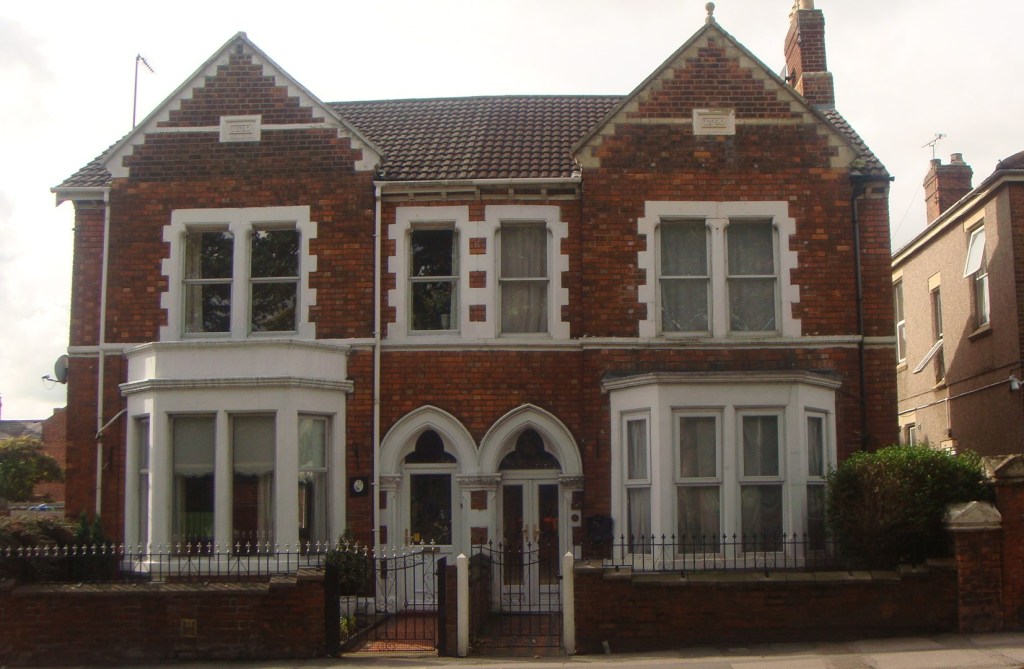
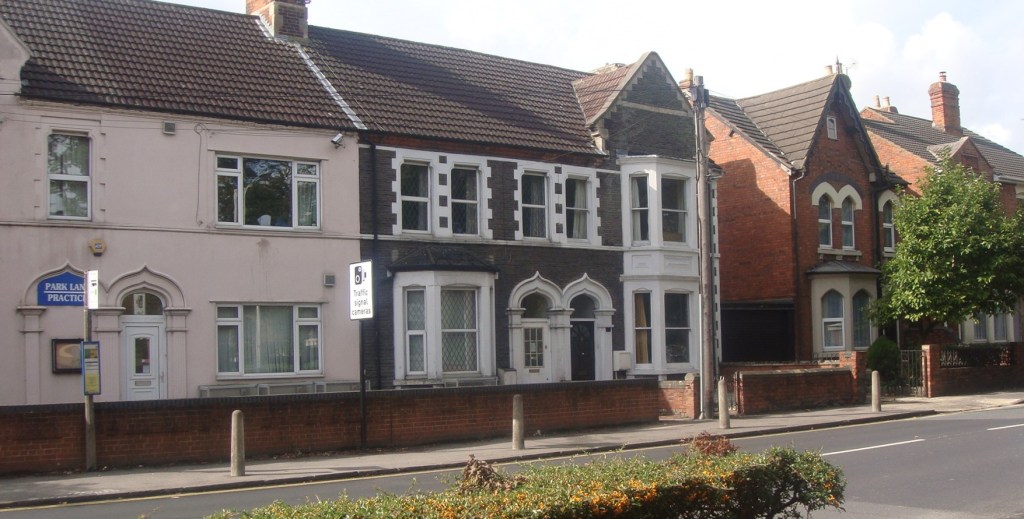
Recent views of houses in Park Lane. Could one of these be Rathbone Villa? We’d love to hear from you if it is.

Olive Henry – a life recovered

Thanks to readers of the Radnor Street Cemetery blog it seems that not only have we filled in the missing details of Olive Henry’s life, but the volunteers have revealed I was looking in the wrong place for her grave.

The portable (and therein lies the problem) grave marker had been rested against the wrong grave. When further investigations were made Olive’s grave was discovered to be completely hidden and further back from the path. Here she is buried with her baby son with the details of her husband’s burial in Lisbon, Portugal also recorded.

So, at last we have the complete story and the correct grave recorded.

Death of Mrs. Olive Henry

Swindon Conservative Party’s Loss

Funeral Tributes

The funeral of Mrs Olive Henry of 7, College-street, Swindon, who died on 20 May, took place on Saturday. The interment was at Radnor Street Cemetery, following a service at the Sanford Street Congregational Church, Swindon. The Rev. A.R. Smart officiated.

Mrs Henry, who was 69 years of age, was born in Swindon, but had spent most of her life abroad. When she was 12, her brother took her to Portugal, where she lived until the death of her husband, only a year after her marriage. She then returned to Swindon, and left again after the death of her infant son, to qualify as a nurse at the Brighton and Sussex Hospital. She was then appointed Matron to the Eastern Telegraph Co., at Durban, South Africa, retiring 14 years ago and returning to live with her sister, Mrs. Gabb, in College Street Swindon.

Sincer her retirement she had taken a keen interest in the affairs of the Conservative Association, being at one time secretary and later president of the Women’s Section, King’s Ward “A.”

Extract

Many thanks to Ken Gamston who sent me this newspaper obituary this morning.

William and Maud Brotheridge

Could this be a wedding photograph of William and Maud? She looks very young; only 20 years old at the time of their marriage in 1893. William was 8 years older and had already seen service in the Warwickshire Regiment.

We find them next on the 1901 census living at Wroughton Road. William is working as a ‘Collector and Salesman for Singer Sewing Machines.’ The family had moved around with the elder children’s birthplaces recorded as Cheltenham and Fairford.

By 1911 they were living in Ashton Keynes with further children born in Swindon, Faringdon, Stanford in the Vale and Ashton Keynes. By then Maud had had 10 children, 9 of whom were still living. At least 3 more sons were born between 1911 and 1915 but only one survived to adulthood.

Another baby, Thomas Reginald Brotheridge, was born in 1915 and died aged just 7 months old when the family were living at 90 Montagu Street. By then war was raging. William and Maud’s eldest son, also named William, had joined his father’s old regiment, the Warwickshires. On May 27, 1918 he was on board the Leasowe Castle, an armed troop transport ship, when it was torpedoed and sank off the coast of Alexandria. A total of 83 officers and men were drowned that day, including 21 year old William. He is remembered on the Chatby Memorial in Egypt. He left a small sum of money, including a War Gratuity of £17, to his mother, as previously agreed with his father.

William and Maud were just one of many Rodbourne couples who lost a loved one during that awful conflict.

Montagu Street, Rodbourne

Maud died in February 1924 at 90 Montagu Street. She was 51 years old – no age to die, we would say now. She had given birth to at least 13 children and along with the babies she lost she also lost a son to war.

She was buried in Section Lower C grave plot C3953 where in 1934 her daughter Elizabeth Maud Mary joined her. Elizabeth was 38 years old and unmarried.

William Brotheridge died at 86 Montagu Street in November 1941. He was laid to rest with his wife and daughter.

Down Your Way – Taunton Street

We are extremely lucky to still have the Railway Village for in the 1960s it was under threat of demolition. Purchased by the local authority in 1966 the 19th century cottages were in a state of dilapidation and Swindon Borough Council was intent upon a project of demolition and rebuilding. However, a passionate local campaign and the vocal support of Sir John Betjeman, Poet Laureate, rescued the village and a programme of renovation began.

Without these properties it would be difficult to imagine the lives of the first railway families who arrived in Swindon in the 1840s. But today you can still walk down the backsies and hear the distant echoes of children at play; hear the tramp of the men’s feet as they return home after a hard day’s work and re-imagine life in Swindon 180 years ago.

Green, G. Peter M.; Swindon Railway Village, c.1935; STEAM – Museum of the Great Western Railway; http://www.artuk.org/artworks/swindon-railway-village-c-1935-65327

If you lived in Taunton Street you rubbed shoulders with royalty – railway royalty, that is. The first members of the Mechanics’ Institute Council Mr Grandison and Mr Fairbairn, lived in Taunton Street. Even old Mr Hurst, the first locomotive driver on the GWR, lived there although that was much later. Read more …

Thomas Oswald Hogarth – Howzat!

Peter Bremner was born in Dundee in about 1819 and arrived in Swindon around 1848. It is possible the family came straight from France where a daughter Erskine was born in 1847. For more than 35 years Peter lived at 5 Taunton Street at the very centre of life in New Swindon. Read more …

Peter Bremner – railway pioneer

It is seldom we have the opportunity to read the words of an ordinary railwayman. When George House died in 1903 the Advertiser republished extracts from an earlier interview made in 1899. Read more …

George House – a Swindon veteran

Another family on the move

The cemetery volunteers have done an incredible job of clearing and revealing the grave of Scottish rugby international Dr. Charles Reid. In doing so they have also revealed the fallen headstone of the Cocks family buried in the row behind.

Here is another family who moved across the country and a head of household who changed his occupation, presumably to one that was more lucrative.

William Cocks was a joiner at the time of his marriage to Sarah Townsend Ulett in 1864. His father Thomas was a cabinet maker so both men were skilled craftsmen.

At the time of the 1871 census William was living at 45 Cheltenham Street where he worked as a Coach Body Finisher in the GWR. Sarah and the children were staying with her parents in Birmingham but she obviously joined him at some point as their son Ernest Albert was born in Swindon in the autumn of 1871.

By 1881 the family were living in High Wycombe where William then worked as an Insurance Agent. Perhaps work in the railway factory was too insecure at this time. In 1891 they were in Hungerford where William worked for the Super Prudential Assurance Company and in 1901 William and Sarah were living at 8 Turl Street, Swindon. William aged 66 was still working as an insurance agent and their son Ernest as a dispenser. Two daughters had married – Pauline lived with her husband Walter William Poulston in Brecon where they worked as Hairdresser and Fancy Dealers and where her spinster sisters Lillian and Eugenie often stayed. Ada married Albert John Gomm and lived in 15 Durham Street, Swindon in the 1940s.

The Cocks family headstone cleaned up after its reveal

Sarah Townsend Cocks died aged 69 years at her home 8 Turl Street. She was buried on May 15 in grave plot E8445. Her son Ernest Albert Cocks, the only one of her children who was born in Swindon died later that same year aged 34 years. He was buried on November 6 with his mother. William Cocks moved to Bristol where he lived with his unmarried daughter Eugenie at 2 Rookery Road, Knowle. He died in January 1918 aged 82 years and was buried with his wife and son. The last person buried in this family grave is Albert John Gomm, the husband of Ada Frances, who died in 1947 and was buried on April 3.

A piece of Paradise

If you are looking for an escape this beautiful April Sunday you will find a piece of paradise in the churchyard at St. James’s, Avebury.

As you might expect the parish church of St James’s, Avebury is an ancient one. A place of worship has existed on this site for more than a thousand years and evidence of those Anglo Saxon builders remain in the church today, including masonry, window apertures and the tub font.

The present church includes a magnificent 15th century rood loft saved by the parishioners a century later when such features were banned. Concealed behind a lathe and plaster construction on the east wall of the nave it was rediscovered during restoration work in the early 19th century. Outside in the churchyard the headstones are arranged in neat rows, although unfortunately few survive from the early history of the church.

Lying in their own piece of paradise is the fittingly named Paradise family. James Paradise was born in Avebury, the son of Francis and Hester Paradise, and was baptised in St James’s on March 29, 1763. On December 11, 1794 he married Susanna Townsend at Winterbourne Monkton. The parish register for that church reveals that James made a firm signature while Susanna made just her mark.

Susanna returned to James’s home in Avebury where she raised a large family of 13 children, all of whom were baptised at St. James’s church. Her first child, a daughter named Hester after the child’s paternal grandmother, was baptised on November 1, 1795 and her last, another daughter, Jane on December 6, 1821.

James appears to have spent his working life as a labourer, although when he made his Will in 1834 he describes himself as a Yeoman. James died in March 1837. His detailed Will runs to four pages, but Susanna’s, written in 1838, is much more straightforward.

This is the last Will and Testament of me Susanna Paradice of the parish of Avebury in the County of Wilts Widow I give and bequeath all my monies and securities for money wearing apparel Personal Estate and Effects whatsoever and wheresoever unto & equally between all my daughters who shall be living at the time of my decease and I hereby appoint Hester Underwood wife of George Underwood sole Executrix of this my Will hereby revoking all former Wills by me at any time heretofore made and declaring this only to be my Will In witness whereof I have to this my last Will and Testament set my hand and affixed my seal this fifteenth day of August one thousand eight hundred and thirty eight Susanna Paradice – Signed by the Testatrix Susanna Paradise in the presence of us present all the same time who have hereunto subscribed our names as witnesses this fifteen day of August one thousand eight hundred and thirty eight John Whittington Solcr Bristol Robert Coles his Clerk.

Susanna died in January 1841 aged 66 years and was buried on January 8 with her husband James. Susanna’s five daughters were all still living at the time of her death.

Eldest daughter Hester, whom Susanna made her executrix, married George Underwood, a sawyer, in 1821. She had just one surviving daughter, Ann. Hester died in 1845.

Second daughter Sarah married agricultural labourer George Coleman in 1831. When she made her Will (valued at a Personal Estate of £22) she appointed Thomas Kemm, gentleman farmer at Avebury Manor, as her Executor. Sarah died on April 11, 1884 aged 84.

Third daughter Ann married James Dew, a master Carpenter on July 4, 1839. She died in 1865 aged 55.

Fourth daughter, Eliza married William Maton, a joiner, on February 12, 1835. Eliza had two sons, John and James. On April 9 1849 they set sail on the Tory for a new life in New South Wales.

Youngest daughter Jane Paradise married Thomas Blake, a saddler, on October 20, 1842. Jane had at least seven children and died in 1908 at the age of 86.

While James and Susanna’s daughters lived long and eventful lives their sons were not so fortunate, four of them dying at a tragically young age.

The burial registers record that Richard Paradise died aged 9 was buried on January 7, 1815. His death had occurred ‘by an accident from an Horse.’

Next to be buried in the churchyard at Avebury was James and Susanna’s eldest son George. Born in 1797 George died in 1817 aged 19 years.

On February 4, 1830 William Paradise was buried next to his brothers George and Richard. He died aged 23 years and according to the burial registers he was ‘accidently killed.’ Aaron Paradise died in 1832 aged 20 years old and joins the sad row of brothers reunited in death.

Today the churchyard at St. James is a tranquil place, despite the many visitors who visit historic Avebury, a tourist attraction since time immemorial.

The Church of St. James’s, Avebury

Paradise family graves

The four widowed Sendell sisters

I read a lot of newspaper reports as part of my cemetery research and I’ve noticed that both the style of writing and the content has changed considerably over the years.

Back in the 19th century local newspapers published at great length meetings of governing bodies in the town – the Local Board Meetings (precursor of Swindon Borough Council) for both Old and New Swindon, the Swindon School Board and the Mechanics’ Institute Council to mention just three. Columns and columns of tightly packed print recording who said what to and about whom! The Great Western Railway featured prominently as might be expected with reports of social events, the retirement of old railwaymen, accidents and inquests where all the gory details were reported.

And then there are the odd gossipy bits that creep in. In Arthur Jefferies Lewis White’s obituary there is a reference to his widow with the comment –

Mr White’s widow is a Swindon lady, formerly a Miss Sendell. She will be the fourth widow in the family of the Sendells – three other sisters having lost their husbands.

So, of course, that set me off on the search of these sisters.

The first of the three sisters to marry was the eldest Ellen who married Herbert Henry Llewellyn a railway clerk. The couple lived at 23 Dixon Street where Herbert died in 1898 aged just 27. Ellen returned to the family home where she can be found on the 1911 census. She died at St. Margaret’s Hospital on May 23, 1943 and was buried with her husband.

The next sister to marry was Kate and her story requires more research. Kate married George Astill a draper in 1904 at St. Saviour’s Church, Brixton Hill, South London. Their son Reginald was born in Otago, New Zealand but baptised in the UK in June of that year before George and Kate returned to New Zealand. On April 6, 1912 Kate and her 3 year old son arrived in London without her husband George. Was this just a holiday; a family visit? Did she plan to return? George died the following year in New Zealand. Kate’s last home was 344 Western Avenue, Acton. She died in the Central Middlesex Hospital in 1956.

Youngest daughter Margaret married Charles Robert Tippetts in the Wesley Chapel, Faringdon Street on April 19, 1915. He died in 1928 and Margaret died two years later. They are buried together in grave plot E8204, next to Margaret’s parents.

Emily Sendell was born in 1876, the third of four surviving daughters. Her parents Henry and Lucy married in Chipping Norton in 1870. They can be found living in Bristol at the time of the 1881 census with 5 of their 8 children. By 1891 they had moved to 15 Theobald Street where the family would remain for more than 55 years until Lucy’s death in 1933. Emily was the last sister to marry. She was 42 years old when she married Arthur Jefferies Lewis White in 1917 at Christ Church. Arthur died in 1919. Emily outlived him by some 40 years. She died in the Cheriton Nursing Home in 1968 aged 92 years. She was buried in plot E8134A next to Arthur.

Perhaps it’s a shame that journalism has changed so much over the years! I might never have discovered these family stories without the gossipy bit in the newspaper.

This is the grave of Lucy and Henry Sendell who died in 1933 and 1935 respectively. Their daughter Margaret Tippetts and her husband are buried in the neighbouring grave.

The grave of Herbert Henry Llewellyn and Nellie (Ellen nee Sendell).

Remembering Henry John Hatter

What impression can a 20 year old make on history? Unmarried and without children, once his parents and his sister died, who would remember Henry John Hatter. He didn’t die on a battlefield as so many young men would during two World Wars. Unless we order his death certificate we will not know what killed him.

More than 100 years after his death, we can remember him.

Henry John Hatter was born on June 4, 1884 in Swindon. His father Henry was a Sawyer and Machine Man in the Works. His mother Selina was a housewife. The following year a daughter was born. The family was complete.

Henry John began work as an office boy in the GWR Works on July 18, 1897 aged 14. Just after his birthday in June 1904 he transferred to the General Manager’s Office at Paddington. He proved to be a popular member of staff.

By special request we give a portrait of Mr. H.J. Hatter, who death occurred at the end of February. Mr Hatter, who was only 20 years of age, was a member of the staff of the General Manager’s office, having come to London from the Locomotive Engineer’s office, Swindon, as recently as July last. In this short time he had established himself a favourite with his office colleagues and with the Athletic Association, of which he was regarded as a promising member. His early death caused much sympathy and regret both at Paddington and Swindon.

Great Western Railway Magazine 1905

Henry John Hatter of 31 Granville Street died aged 20. He was buried on March 3, 1905 in grave plot E8612.

Selina Hatter died in 1915 at her home in Granville Street. Henry died a year later. They are buried with their son. Mabel Louise became a teacher. She never married. She died on March 26, 1948. Who would remember Henry John now, or her come to that. We can.

A baby to watch over

The re-imagined story

Mam would take flowers up to the cemetery every week. People did in those days, but what I thought was odd was that Mrs Adlam always went with her.

Mam would knock on her door at number 18 and they would walk together up Cambria Bridge Road to the cemetery in Radnor Street.

Mam looked after a few graves in the cemetery, alternating the flowers each week. She’d tidy up Pop and Nanny Williams grave, then she would move on to Gramps and Grandma Griffiths and then Auntie Hilda and Uncle Len. Dad grew the flowers in his greenhouse otherwise it would have cost her a small fortune, he used to say.

But quite why Mrs Adlam joined her, I could never understand. Well, not then I couldn’t.

Mrs Adlam was from Somerset originally and had spent the first years of her married life living in Frome. The Adlam’s were a big family, more than ten children she had. Two of the sons went to America but most of the others lived around and about in Swindon.

She lost two babies when they lived away, Mam told me, and another child buried in the churchyard at Rodbourne Cheney. One little boy was only 12 days old. That wasn’t unusual either in those days. All those dreadful diseases that swept through families. Our mam was one of the fortunate ones. Tidy little family we were, just the four of us, all grown up with families of our own.

Two babies left behind, buried in Frome. I wonder if anyone looked after their little graves. Now I understood why Mrs Adlam visited the cemetery in Radnor Street with our mam. It was her way of being close to her babies.

Of course she is long dead herself now and buried with her husband. But recently another burial was made in the family plot. A little baby just three weeks old, Mrs Adlam’s great-grandson. At last she has a baby she can watch over.

The facts …

Sarah Elizabeth Smith was baptised on May 4, 1856 at the parish church in Marston Bigott, Somerset, the illegitimate daughter of Mercy Smith.

She married Thomas Adlam at the same church on April 19, 1877. Thomas states his occupation as a Rivetter and that he was the son of Thomas Adlam, a gardener. Sarah Elizabeth was of full age and written across the space where father’s name and occupation is required is written ‘illegitimate.’

At the time of the 1881 census Thomas and Elizabeth were living at 2 Cottages, Nunnery Lane, Frome. They already had three children, William Henry aged 3, Eleanor Sarah 2 and Ernest Thomas five months old. Eleanor died later that year and was buried at Holy Trinity church, Frome on July 6. Oswell Joseph Adlam was buried in the same churchyard on October 16, 1888. He was just 12 days old.

By the 1890s the family had moved to Swindon where Thomas had a job in the Works. On February 2, 1893 Mercy Alice was baptised at St Augustine’s and on July 29 1896 their youngest daughter and last child, Dora May was baptised at St Barnabas Church when they lived at 51 Ferndale Road.

By 1911 Thomas and Sarah had moved to 18 Cambria Place where they lived with their three youngest children. Alice Mercy 20 who worked as a shop assistant in a drapers, Reginald Frank 18, an apprentice brass finisher in the works (and part time student) and fourteen year old Dora. Sarah declares that she and Thomas have been married 34 years and that they had 11 children, seven of whom are living and four who have died by 1911. The fourth child could be son Gilbert who left for the USA and about whose date of death there seems to be some confusion.

Sarah died on March 7, 1920 and was buried in plot E8190. Her son Ernest Thomas died in Southmead Hospital Bristol and was buried with her on May 29, 1936. Husband Thomas spent his last years living with his married daughter Dora M. Baker at 38 Osborne Street. He died in May 1946 aged 93 years old and was buried in the same plot on May 20. The last burial in the grave was that of Peter William Graville the three week old son of Marie Helena, Thomas and Sarah’s granddaughter.

Percy Adlam was born in Frome in 1883 and died in 1890 aged 6 and a half years old. He was buried on January 7, 1890 at Rodbourne Cheney.  

Adlam, Sarah Elizabeth of 18 Cambria Place Swindon Wiltshire died 7 March 1920 Administration Salisbury 26 April to Thomas Adlam boilersmith Effects £382 0s 10d.

Minnie Louisa Day – a soldier’s wife

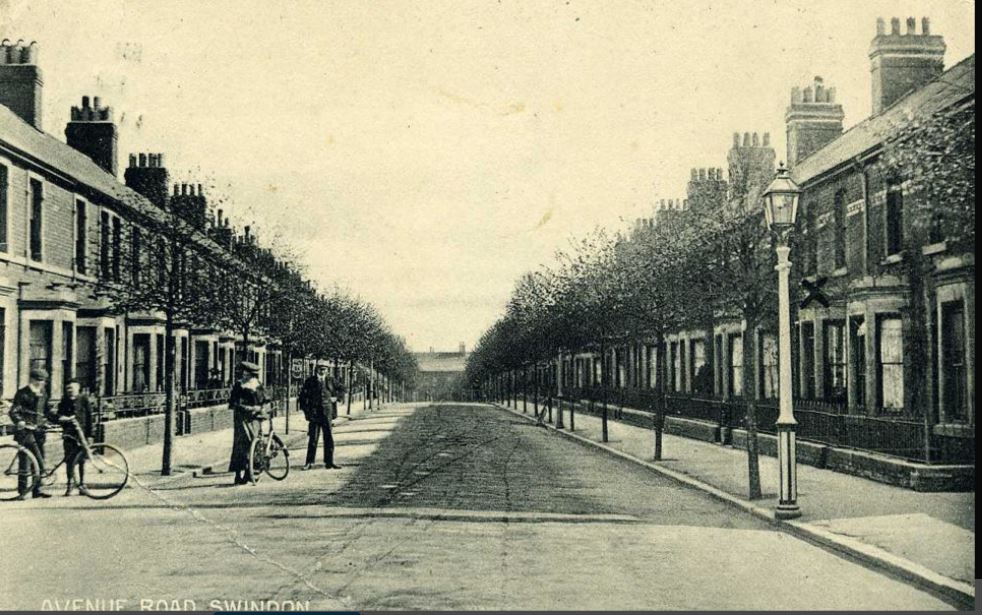
Every cemetery story is a recognition, a celebration of a life, but sometimes that story is one so sad it is difficult to write and to read. Such is the story of Minnie Louisa Roach whose future looked promising when she was born in 1874. Her father John Roach was an erector employed in the Works, her mother was Louisa Roach and she had a brother William born in 1873. By the turn of the new century the family were living in Avenue Road.

Image published courtesy of Swindon Museum and Art Gallery

Minnie married Frederick William Gilchrist, a railway clerk, at the Wesleyan Chapel Bath Road on March 23, 1901. He was 38 years old and she was 26. They began married life at 39 Dean Street, but sadly less than 3 years later Frederick died.

A Well Known Volunteer

For 7 Years Bugle-Major

The death took place on Thursday, Dec. 31st at his residence, 4 Lethbridge-road, Swindon, of Mr F.W. Gilchrist, a well-known Swindonian, who has been a great sufferer for the past two years or more, his illness being induced by the after effects of influenza. He has been taken in
the prime of life – he was only 40 years of age, – and leaves a sorrowing widow, but no children. Deceased, who was the son of Capt. G. Gilchrist, of the Royal Artillery, was for many years employed in the Drawing Office, GWR Works, Swindon. But he was best known to the public as a prominent member of the Wilts Rifle Volunteers. He was a man of fine physique and good soldierly bearing. He was a member of the F and G Companies for 27 years, during 7 of which he held the position of bugle-major.

Extracts from The Swindon Advertiser, Friday, January 8, 1904.

Minnie moved back into 45 Avenue Road where she lived with her widowed mother. In 1913 she married again. Her second husband was Frederick Charles James Perry Day, the illegitimate son of Kate Day. Frederick was a coach body maker in the GWR Works and had spent most of his life living with Charles and Elizabeth Davies, presumably relatives, at 101 Stafford Street. At the time of her second marriage Minnie was 39 and Frederick 34. They should have been looking forward to a long and financially secure marriage, but of course a war was just around the corner and Frederick enlisted.

Perhaps the fear and anxiety proved too much for Minnie. She died in 1917, a patient in the Devizes Asylum.

A Soldier’s Wife’s Death – The death took place on Tuesday, at the age of 42 years, of Minnie Louisa Day, wife of Corporal Day, RFA now on active service at Salonika.

Deceased was the only daughter of the late Mr John Roach, of 45, Avenue Road, Swindon, and leaves her husband, an only brother, and a widowed mother to mourn a heavy loss.

The funeral took place on Saturday at Swindon Cemetery amid many tokens of respect on the part of friends and neighbours.

Amongst the beautiful wreaths was the following – “With deep sympathy and in grateful remembrance of much kindness shown in 1907 – from Mrs L.A. Baugh – ‘Thy will be done.’”

The relatives of deceased desire to return sincere thanks for the many kind expressions of sympathy received in their sad bereavement.

North Wilts Herald, Friday, May 25, 1917.

Stafford Street

Minnie was buried in grave plot E7888 on May 19, 1917. The burial registers record her address as 101 Stafford Street, the home where Frederick grew up. She was buried with Charles Henry Davies who had died in 1904 and was later joined in 1919 by Elizabeth, his wife, the couple who had raised Frederick.