The re-imagined story …
I have Swindon photographer William Hooper to thank for my appearance on Time Team.
As a nerdy little kid, I was already interested in archaeology (in particular the Neolithic period) and the inspiration for my obsession was all down to a photograph that hung in my grandpa’s study.
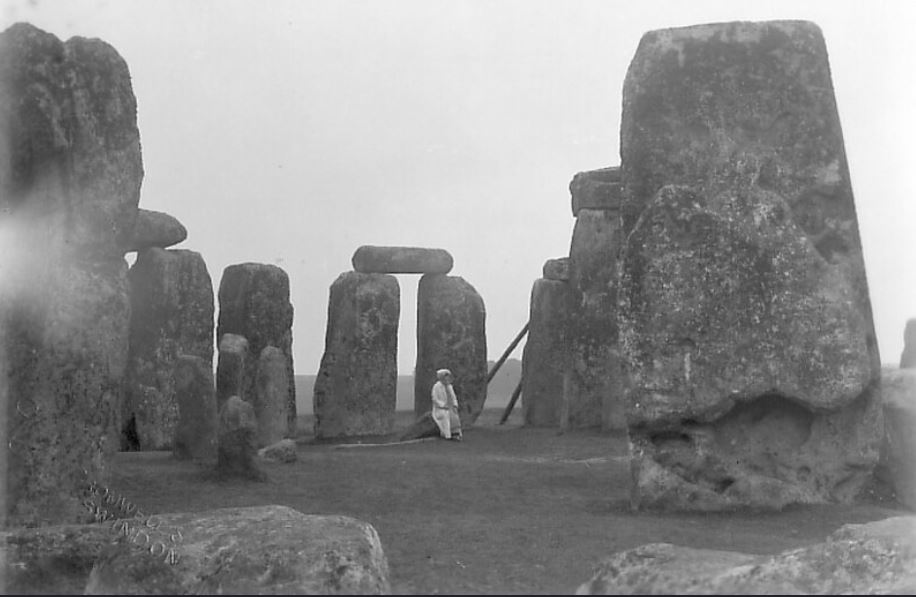
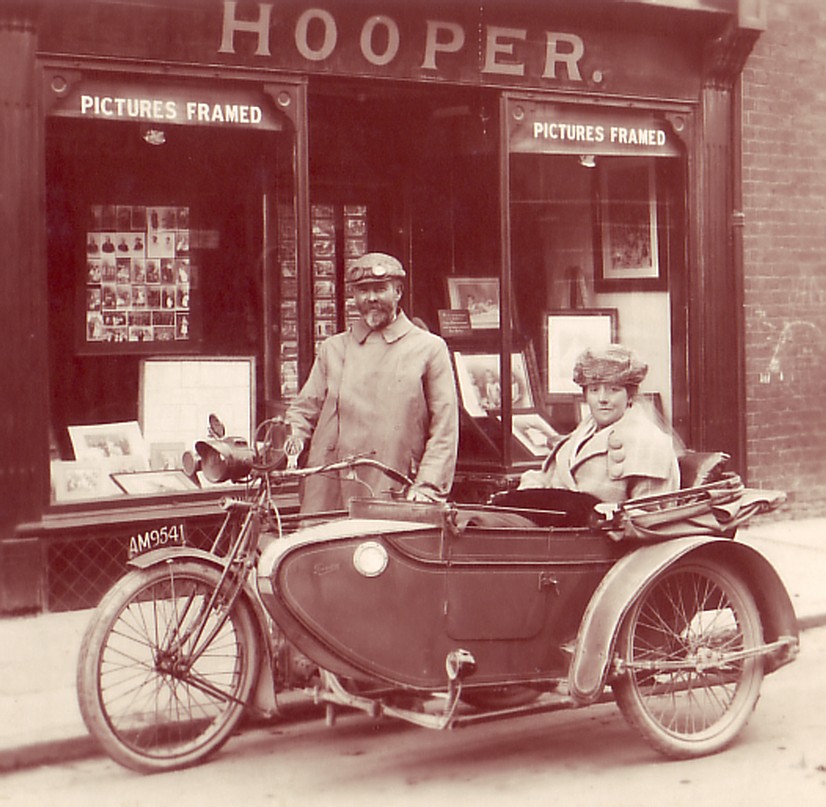
William Hooper has become famous for his Edwardian Swindon street scenes, but William and his wife Mary were not averse to getting on their bikes and venturing beyond Swindon. In the early days they travelled quite literally by push bike, graduating to a motor bike and sidecar as they travelled the Wiltshire countryside and beyond. Between 1905 and 1910 they took a series of stunning photographs of Avebury and Stonehenge.
The photograph in my grandpa’s study was of an ethereal woman dressed in white, sitting on a fallen boulder within the stone circle. These days you have to have permission and a very special reason for being allowed access to the stone circle but in 1910 the historic monument was still in private ownership, the property of Sir Edmund Antrobus 4th Baronet. Perhaps anyone could rock up and take a few photographs.
Skip on twenty years or so and with my degree in archaeology under my belt, I volunteered for a brand-new television programme that was thought by many to be doomed before it even made it to the screen. Television producer Tim Taylor had the crazy idea of making a programme featuring scruffy, hippy looking student types digging trenches in muddy fields. The premise of the programme was that the team would turn up at a site of archaeological interest, dig for three days and then reveal the history of that site. For twenty years Time Team brought archaeology to the masses and achieved viewing figures in excess of 2 million per episode.
I was a regular participant on the show, taking part on a number of digs, working alongside my university professor Mick Aston and national treasure Phil Harding. There are photographs of us in trenches and in various pubs mulling over the findings of the day’s dig.
I’ve recently moved to a cottage in Avebury (the magnetism of those stones still draws me) and it has long been my intention to pay my respects at the grave of William Hooper, the man who sparked my interest and gave me a lifelong love of history.
I’ve been told his grave in Radnor Street Cemetery is difficult to find. Now, where is John Gater and his geophysical wizardry when you need him?
The facts …
William Hooper was born in Windrush near Burford in 1865 and moved to Swindon and a job in the Works in 1882. In 1886 he was involved in a serious accident during which his leg was so badly crushed that he would eventually have it amputated at the knee.
William returned to his job in the railway factory where in 1891 he worked as a labourer and ten years later as a stationary engine driver. However, the work became too difficult for him and it was then that he decided to turn what had previously been a hobby into a business.
He opened his first photographic studio at 2 Market Street in around 1902, later moving to 6 Cromwell Street where he and his wife Mary remained until they retired in 1921.
Mary Stroud was born in Hereford where he father James worked as a Railway Guard. The family later moved to 22 Merton Street in Swindon. Mary and William married in 1890.
At the time of the 1911 census William, then aged 47, describes himself as a Photographer – Portrait and Landscape, his wife Mary as assisting in the business, but Mary did more than just ‘assist.’
In the extensive Hooper archive available online courtesy of P.A. Williams on the Swindon Local Studies flickr account, we glimpse Mary ‘assisting’ not only in the studio, but out on the road, travelling with her husband across Wiltshire on a variety of vehicles from a tandem to a motorbike and sidecar.
The couple never had any children of their own but were very close to Mary’s two nephews who also worked in the business with them from time to time.
William died in 1955 followed by Mary a short while later. They are buried here with Mary’s parents James and Ellen Stroud.
The modest memorial is a small cross on a plinth, sadly broken and difficult to find when the grass grows long. But the Hooper name lives on in the many photographs of Swindon William left us – with Mary’s assistance.
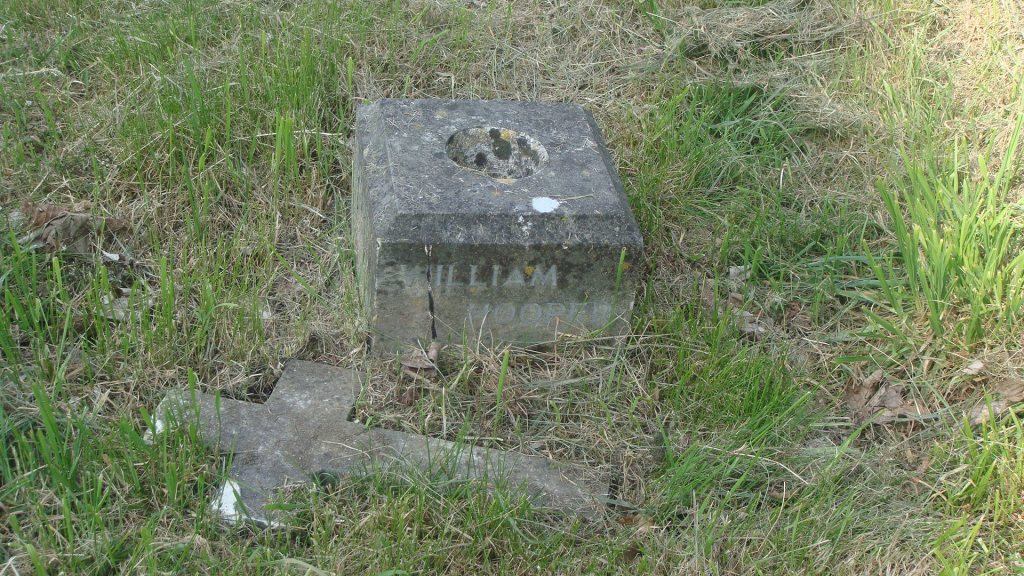
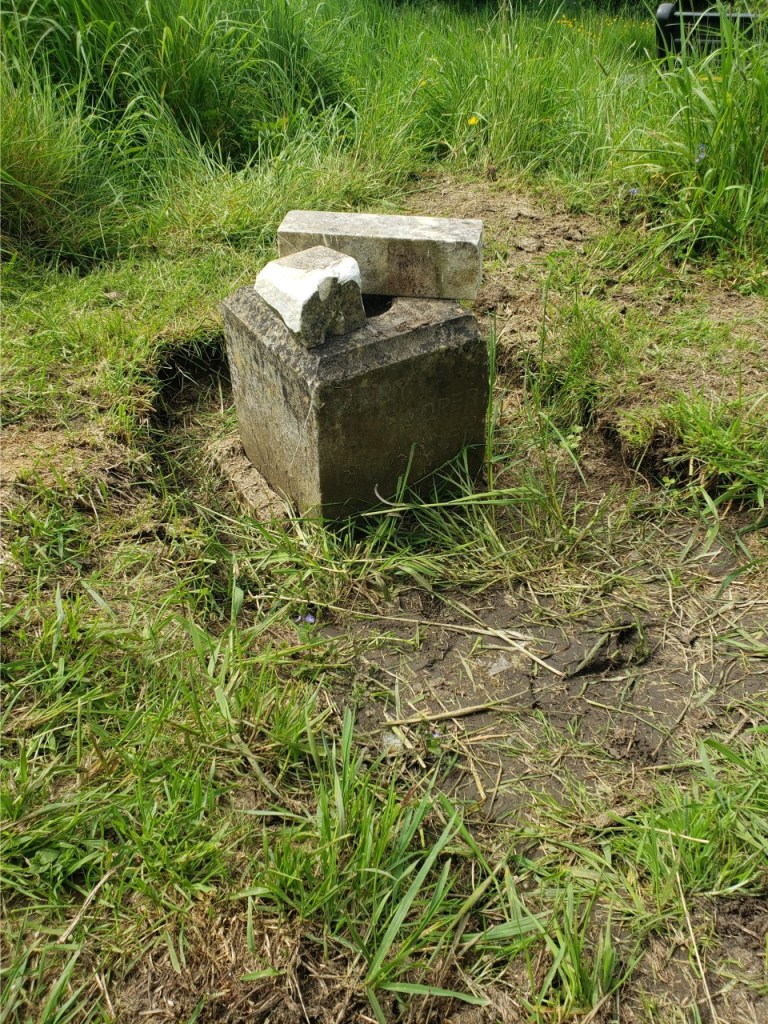
The Radnor Street Cemetery volunteers have revealed the battered William Hooper memorial and cleared the area around it. Unfortunately the cross is now badly broken.
You may also like to read:

 Radnor Street Cemetery
That’s a great Stonehenge photo and a great story. One minor point – in 1910, Stonehenge was indeed still in private ownership, but it belonged to Sir Edmund Antrobus (4th Baronet). The Chubbs didn’t buy it until a few years later. Thanks for posting, and good luck finding the grave.
LikeLike