Views of a Spectator

If, like me, you enjoy walking through old cemeteries and reading the inscriptions on the headstones you will find the views of this ‘Spectator’ thought provoking. At the beginning of 1881 the cemetery question was upper most in the thoughts of many Swindonians.

A cemetery should be a wooded garden, with walks and avenues and glades according to its size, and not, as in most villages now, a stonemason’s yard, studded with squat temples and tombs, or with tall, meaningless headstones so mouldy that it would be nearly impossible to read the inscriptions, even if the undertakers did not have them made as illegible as possible, in order to “make business” of the work of cleaning them out. These headstones are the destruction of all beauty or solemnity in a graveyard. Nothing uglier or more meaningless in form has ever been conceived by man, and nothing worse adapted for exhibiting an inscription. If they are upright, they gradually sway out of the perpendicular with their own weight; and if they are flat, they destroy the reverential vegetation which else, without means, watchfulness or exertion, would, but for the stones, clothe the surface of the grave. They are, besides, utterly needless. What is required by each grave is a number cut in granite – cut solid, we mean, not out of granite – a number distinguishable for centuries, and referring to a granite tablet, which need not be more than six inches by a foot, with an inscription identifying, describing, and, if you will, praising the dead. – Spectator

The Swindon Advertiser, Monday, January 3, 1881

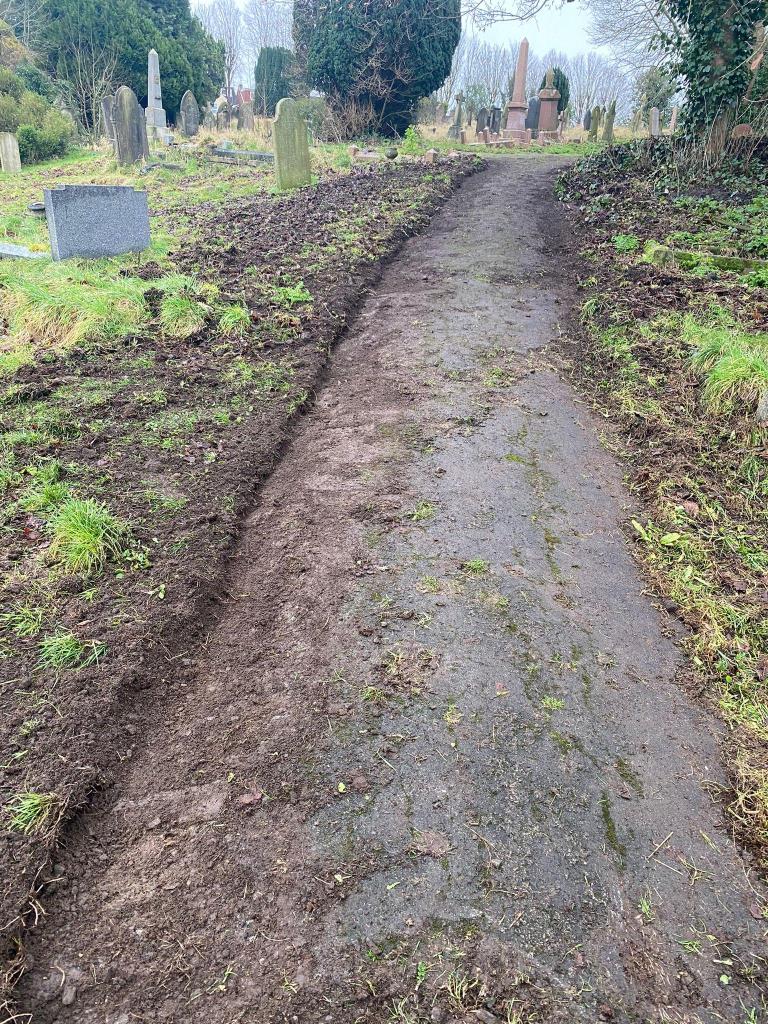
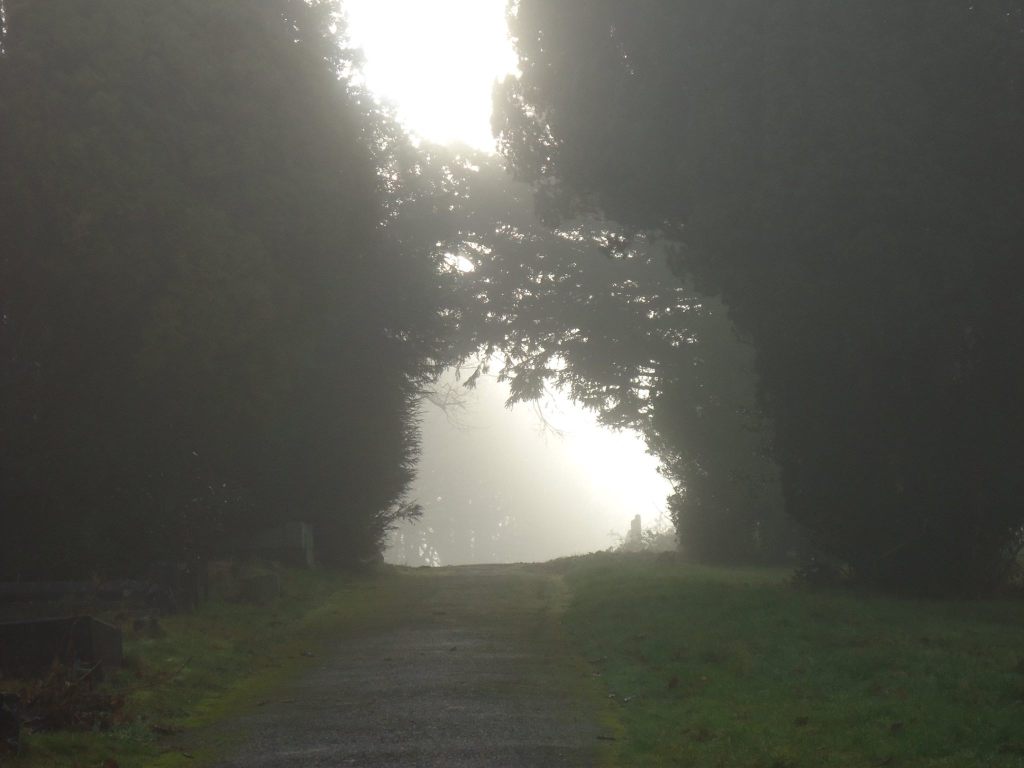
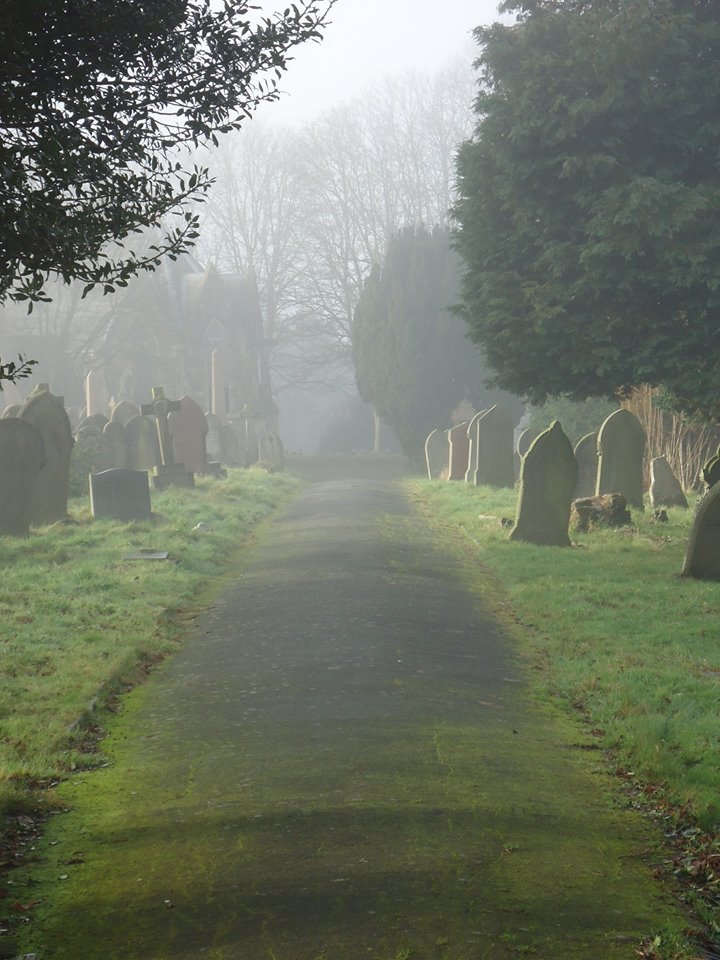
Swindon Borough Council workers have recently done a grand job at the cemetery. I am sharing here some photographs taken by Kevin a CWGC and dedicated Radnor Street Cemetery volunteer.

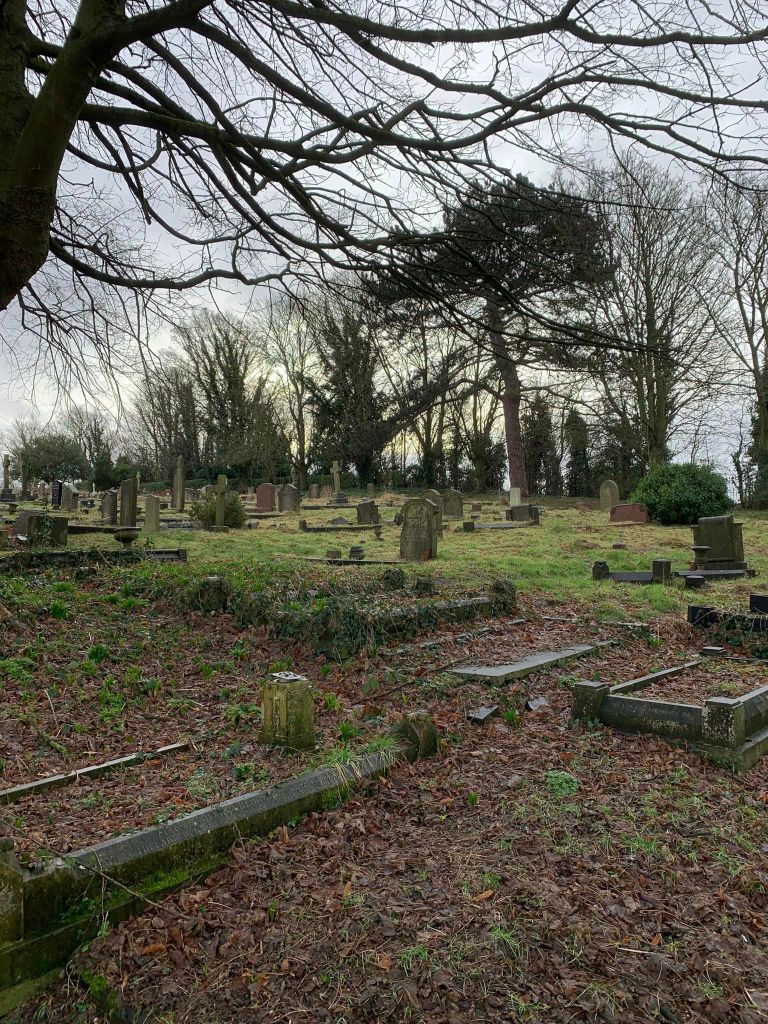
This path clearing project is a work in progress by our own dedicated volunteers

The Summer Cemetery

Listening to Storm Jocelyn battering Britain, I’m looking forward to kinder, calmer climes. While the bluebells hunker down and the ox-eye daisies rest their roots, let’s revisit the summer cemetery.  With our guided walks paused during the winter months, we are compiling our 2024 calendar of events – dates to be announced soon.

Meanwhile, you might like to check out our video page where you can see Noel’s sunny reports from New Zealand.

Honesty

I took advantage of a dry spell in the recent turbulent weather to make a visit to the cemetery, my first this year.

Everywhere was look surprisingly unscathed by the recent tempest, although I didn’t venture far from the paths where I could see the work of the dedicated volunteers who have returned after the Christmas holiday.

It’s still rather early for the hardy little snowdrop to make an appearance, but I did see a single sprig of Lunaria, an old fashioned cottage garden plant more commonly known as honesty. And what more symbolic plant could there be for a burial ground, for at the end of life there can only be honesty.

Happy New Year 2024

As we begin this New Year of 2024 I hope you will permit me a little self-indulgence.

This blog is dedicated to remembering the ordinary people of Swindon. There are more than 550 stories on the Radnor Street Cemetery blog. Stories about shopkeepers, boilermakers, loco drivers, coachmakers, fitters and turners and the women who, perhaps surprisingly, were social workers, J.P.s, magistrates and business women, as well as wives and mothers.

We have readers from across the globe, although this might just be Noel, who has done a lot of travelling in 2023. Our cemetery walks led by tour guide Andy (who manages to fit them in around his cricket watching calendar) continue to attract on average 50+ people. Our team of gardening volunteers continues to grow under the leadership of Jon. There are 104 Commonwealth War Graves, which the team care for in their role as Eyes On, Hands On volunteers. In recent months they have discovered the graves of veterans of the Crimea and Boer Wars and even the Zulu War.

It is hoped that Swindon Borough Council, in this new era of heritage awareness and appreciation, will recognise the importance of Radnor Street Cemetery and join us in preserving the history of this special place.

The inspiration for this blog has come from several sources – firstly The Gentle Author who has been writing the Spitalfields Life blog for more than 14 years, posting daily stories about London’s east end. Then there is Sheldon K. Goodman of Cemetery Club fame, a cemetery aficionado par excellence. And finally my friend Mark Sutton who sadly died in 2022.

Mr Nicholas Webb Baker – A Veteran Forester

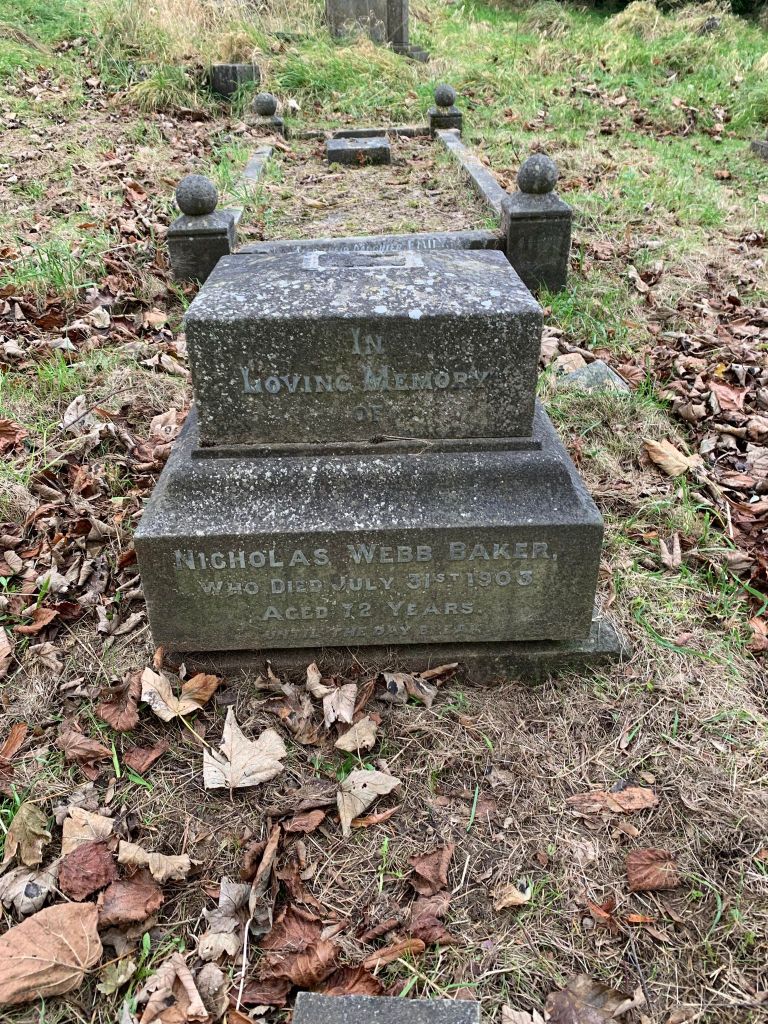
The cemetery volunteers have been busy this weekend and Kevin has discovered another interesting character and a rather magnificent memorial by the chapel. Mr Nicholas Webb Baker is buried in a ‘black-lined brick grave’ according to the newspaper report.

The Late Mr N.W. Baker

A Veteran Forester

The Funeral

The numerous friends of Mr N.W. Baker of 33, Rushey Platt, Swindon, will deeply regret to hear that he passed away suddenly on Friday morning, at his residence. He had been ailing for some time, but was not seriously ill. Had he lived till to-morrow he would on that day have celebrated his 73rd birthday.

For the long period of 44 years, Mr Baker was time-keeper in the GWR Works, retiring from that post about six years ago.

By members of the AOF deceased was well known and highly respected throughout North Wilts. For a great number of years, he was Treasurer of the North Wilts District AOF which position he held at the time of his death. He was Secretary of Court “Briton’s Pride,” AOF for 36 years, and only retired from that office a month ago, owing to failing health.

Deceased leaves a widow and seven grown-up children – five sons and two daughters – for whom the deepest sympathy will be felt.

Bro. Baker was elected to the post of Treasurer of the North Wilts District, AOF, just 20 years ago, viz., in 1883 he succeeding Bros. J.W. Painter. Prior to that time, Bro. Baker was for a few years – from 1876 to 1879 – District Secretary, retiring in 1879 when Bro. T. Hill was elected.

The funeral cortege left deceased’s late residence, No 33 Rushey Platt, at four o’clock. The coffin, which was covered with beautiful wreaths, was conveyed in a hearse, the chief mourners following in carriages, while there was a large and representative number of Foresters, representing Courts in Swindon, Aldbourne, Avebury, Faringdon and Highworth.

The officiating minister was the Rev J. Jones (Primitive Methodist Superintendent), and the Foresters’ Burial Service was most impressively read by Bro. Tom Smith, PD.C.R. and District Trustee.

The remains of deceased were interred in a black-lined brick grave, and the breast-plate on the coffin bore the following inscription:

Nicholas Webb Baker,

Died July 31, 1903,

Aged 72 years.

Extracts from the Swindon Advertiser, Friday, August 7, 1903.

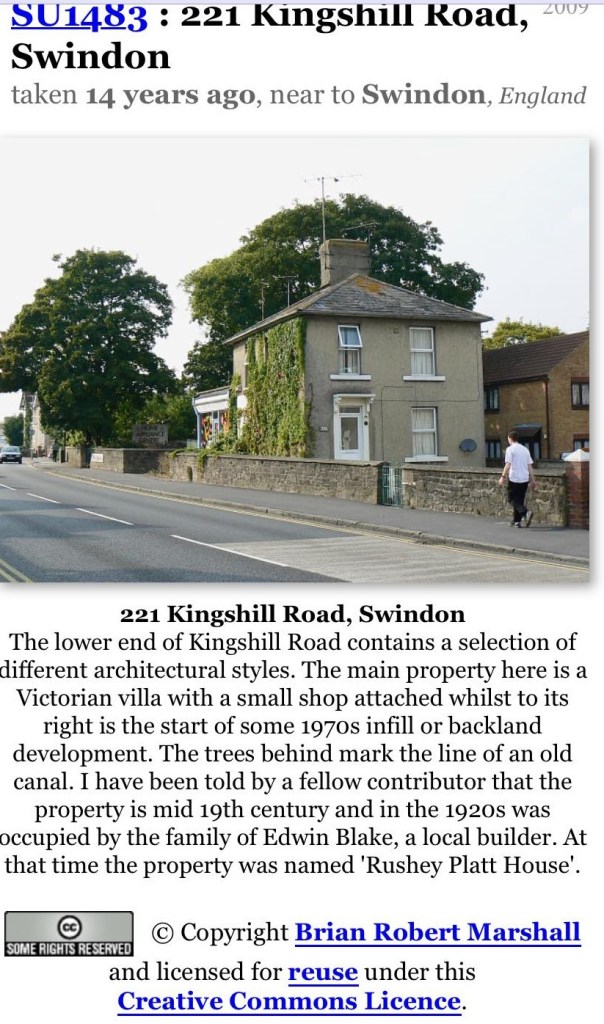
And it seems likely this was the former home of Mr Baker.

Nicholas Webb Baker died at his home, Rushey Platt House, on July 31, 1903. He was buried on August 4 in Radnor Street Cemetery in grave plot D1557, which he shares with his wife Elizabeth.

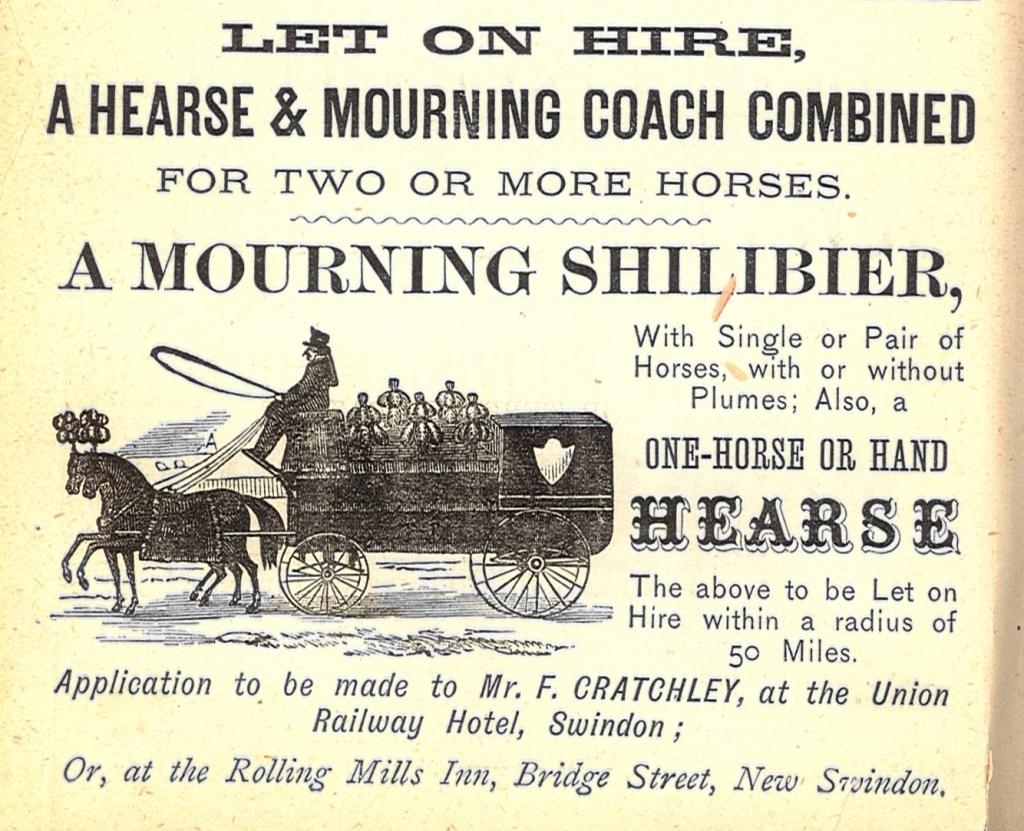
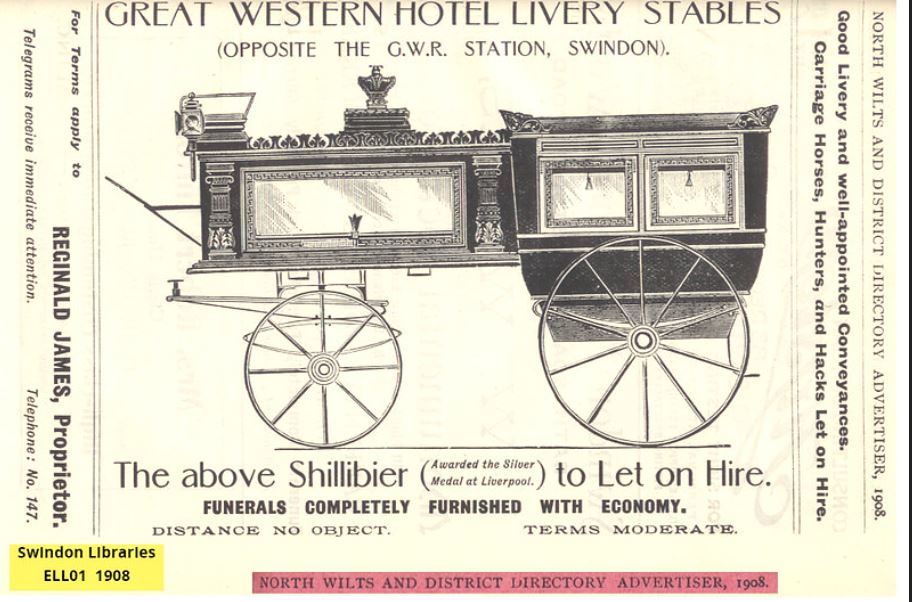
When funerals were big business

The new Swindon Cemetery opened in August 1881 and by the end of that year 94 funerals had taken place.

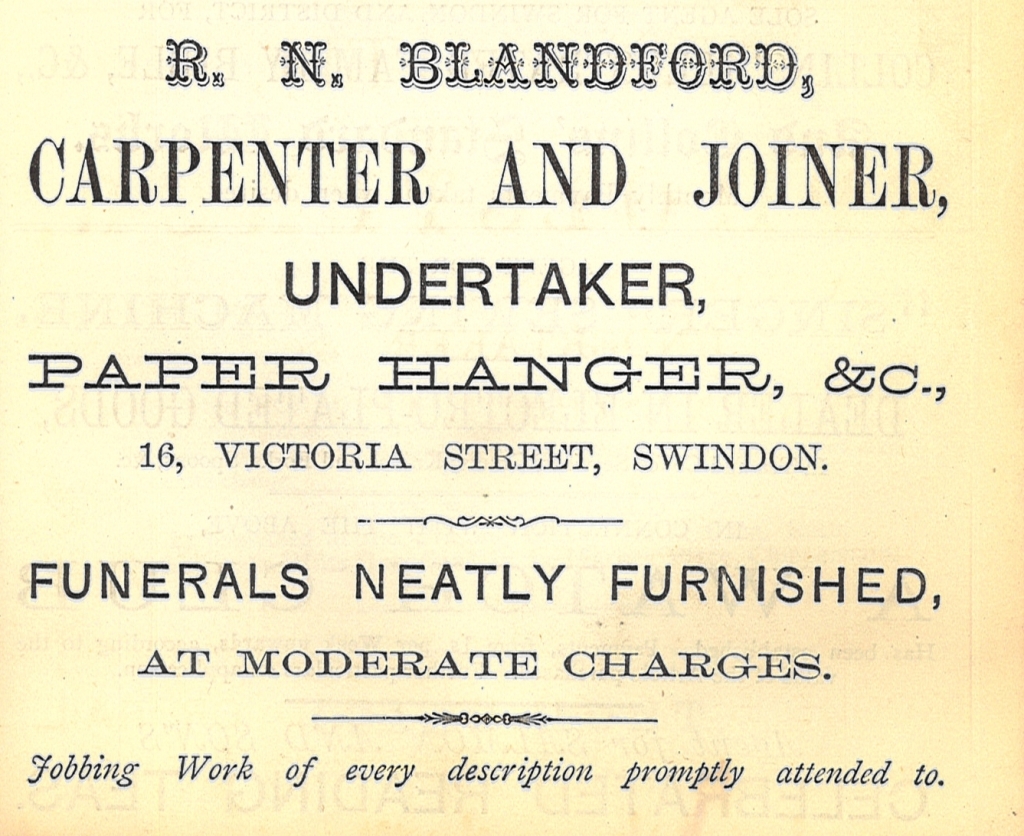
The first burial was that of Frederick Gore whose funeral was furnished by Richard Skerten. With premises at 1 Queen Street, New Swindon, Richard Skerten was a Joiner and Undertaker employing three men and one boy in 1881. His son Arthur, based at nearby 5 King Street, was also a carpenter, joiner and undertaker (these occupations frequently went hand in hand.)

Edward Hemmings at 22a Fleet Street looked set to be busy with the opening of the new cemetery until his own unfortunate demise when he became the 5th person to be buried there in August 1881. His brother Frederick took over the business in 1882 and makes a regular appearance in the registers thereafter.

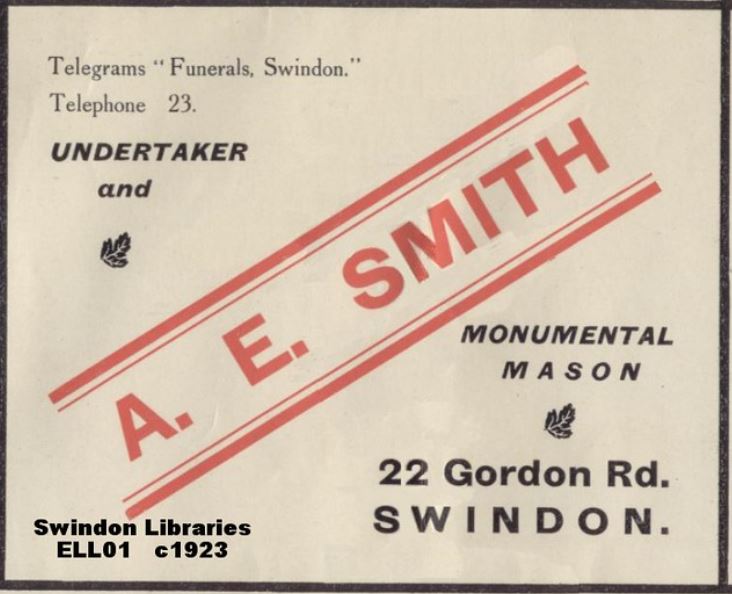
Probably the undertaker most associated with Radnor Street Cemetery is Henry Smith and the family business he established. Omnipresent in the cemetery from the 1880s and throughout the 20th century, the firm of A.E. Smith continues in business to this day with premises at Queens Drive, Swindon.

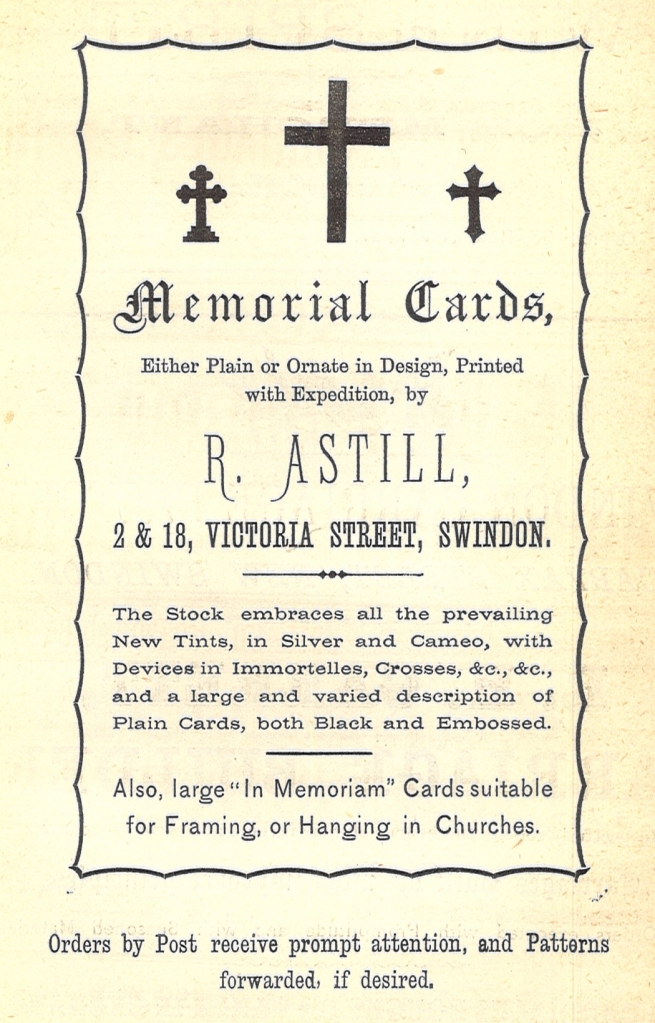
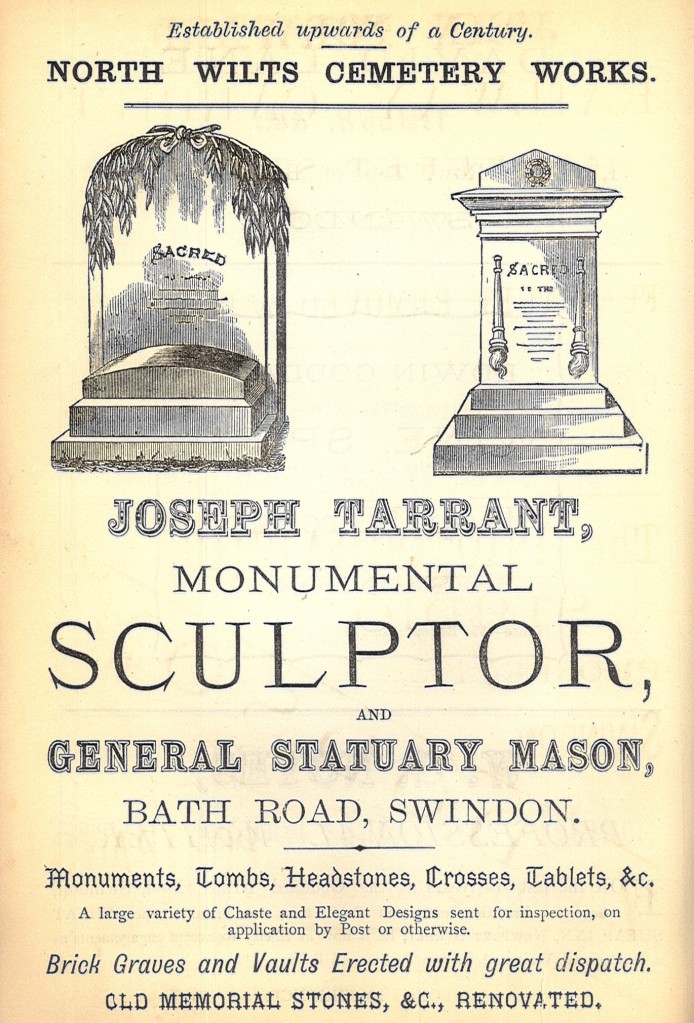
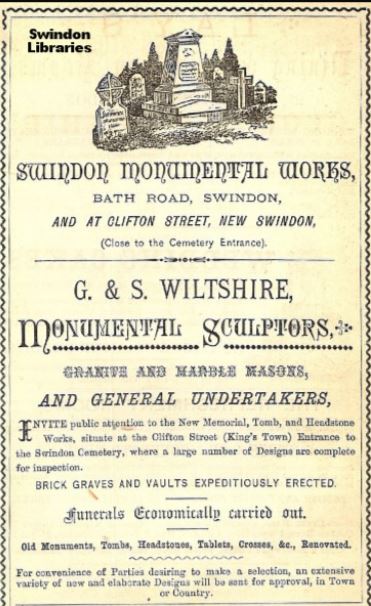
And then there were Memorial Cards and mourning attire and monuments and memorials and yes, there was a Swindon business to provide all of these services.

Albert William Howard

We frequently receive comments on the condition of the graves in Radnor Street Cemetery. ‘Why is the cemetery not better cared for? Why doesn’t someone look after the graves? It’s a disgrace!’

The cemetery is more than 140 years old. It opened in 1881 and was full by the 1970s when it was closed to new burials. Today the finances of the local authority are severely constrained and restricted to essential services only. Where once there was a team of groundsmen and gravediggers employed in the cemetery now only essential maintenance takes place.

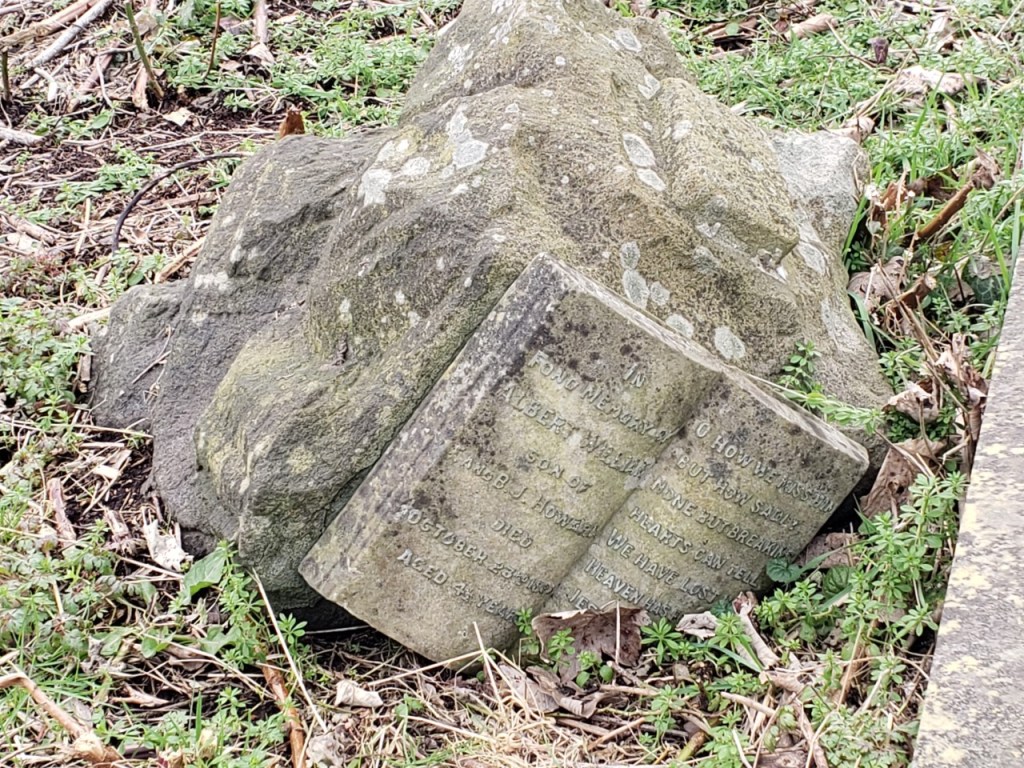
The graves were once cared for by family members, but circumstances change, people move away and I’m guessing that is the case with the grave of little Albert William Howard. Has the memorial always stood at this angle where now the inscription is sliding into the soil? His parents were able to purchase a grave plot (not everyone could) and this substantial memorial must have cost a fair bit of money. The inscription begins ‘O how we miss him’ the names of his parents weathered and difficult to read. A death certificate might provide further details but without financial resources this is not possible. The burial registers have already provided essential information – there is probably little more to learn.

When Albert died in 1899 the family lived at 13 Medgbury Road, but by the time of the 1901 census this was the home of Arthur Doell, a weighbridge clerk, and his family. What happened to Albert’s parents? Why did they move away from Medgbury Road? Where did they go? More than a hundred years later it is hardly likely there is anyone left who even knows about Albert or where he is buried.

It’s easy to put a disparaging remark on a social media platform, but not very helpful. Better still, why not join our dedicated band of cemetery volunteers? Contact us via this blog and we’ll get back to you.

Albert William Howard was buried on October 28, 1899 in grave plot C45. The burial registers state that he was 4 years old – his memorial says he was 4½.

The Pickett family

This week our volunteers uncovered a collapsed and partially buried headstone and in so doing revealed a whole family history.

The newly discovered inscription reads:

Thomas Pickett

Who entered into rest

March 19, 1903

Aged 65 years

Also of Lucy

The beloved wife of the above

Who died August 27th 1913

Aged 74 years

Also in memory of Elizabeth

Wife of Arthur Thompson

Their daughter

Who died March 20th 1948

Aged 77 years

Also Edith their daughter

Who died March 22nd 1955

Also two sons and two daughters

Interred in St Mark’s Churchyard

Thomas’s record of railway employment reveals he was employed as a fireman on February 4, 1864 on a daily rate of 3 shillings. By 1871 he was working as an Engine Turner and in 1873 as a Goods Engineman. He resigned on February 12, 1898 when he received a cheque for £70 ‘on account of old age.’ His service record includes a handful of disciplinary cautions and fines during a career spanning more than 30 years.

On the domestic front Thomas married Lucy Telling in 1858. By 1871 they were living at 42 Fleet Street with their three children Thomas 11, Emily 2 and Elizabeth 5 months. By 1881 they were at 15 Sanford Street with Elizabeth 10, Emily 7 (the earlier child by this name had died) and Edith 4 years old.

At the time of the 1911 census Lucy was still living at 15 Sanford Street. She states that she is a widow and that she has had 10 children of whom 4 are still living and 6 had died. She lives with her daughter Edith who states her profession as that of Head Teacher.

Lucy died at her home in Sanford Street on August 27, 1913. Her effects were valued at £208 15s with administration awarded to her son Thomas Pickett, also a schoolmaster.

Before and after photographs – an amazing discovery by our volunteers, enabling the story of the Pickett family to be told and remembered.

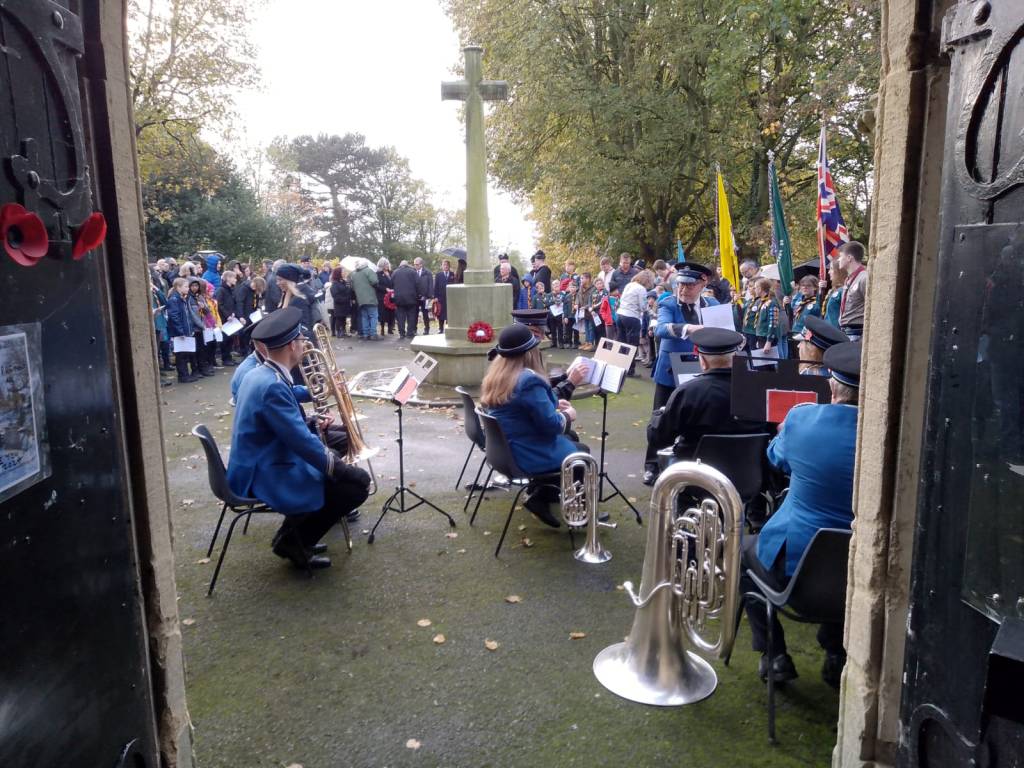
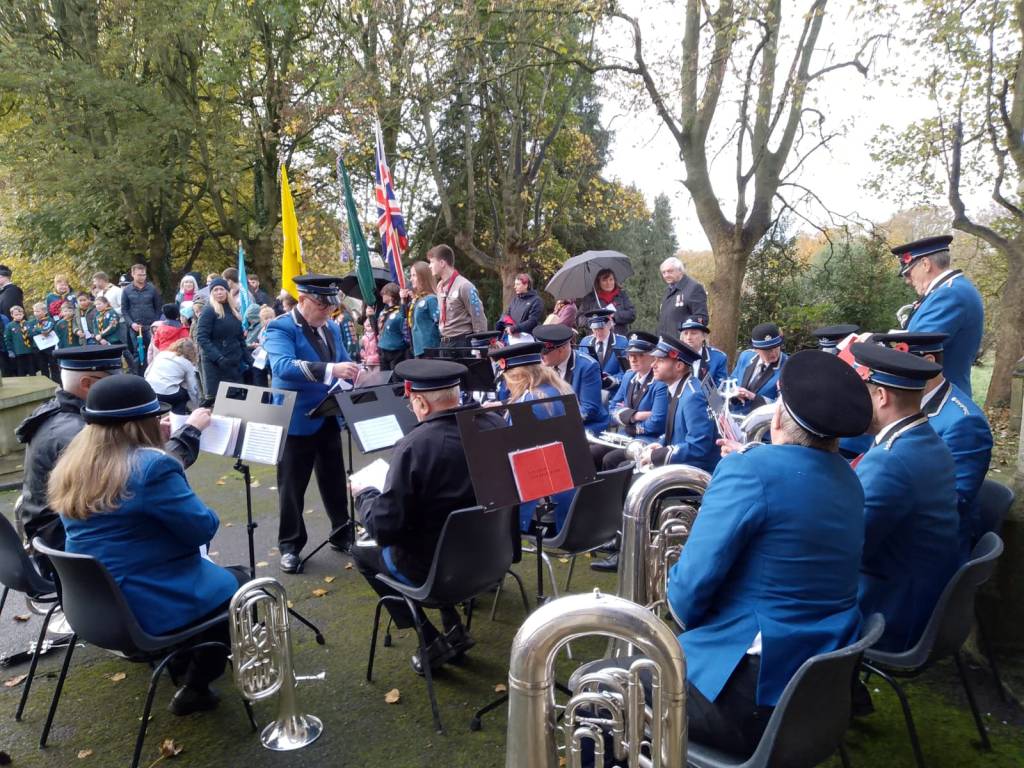
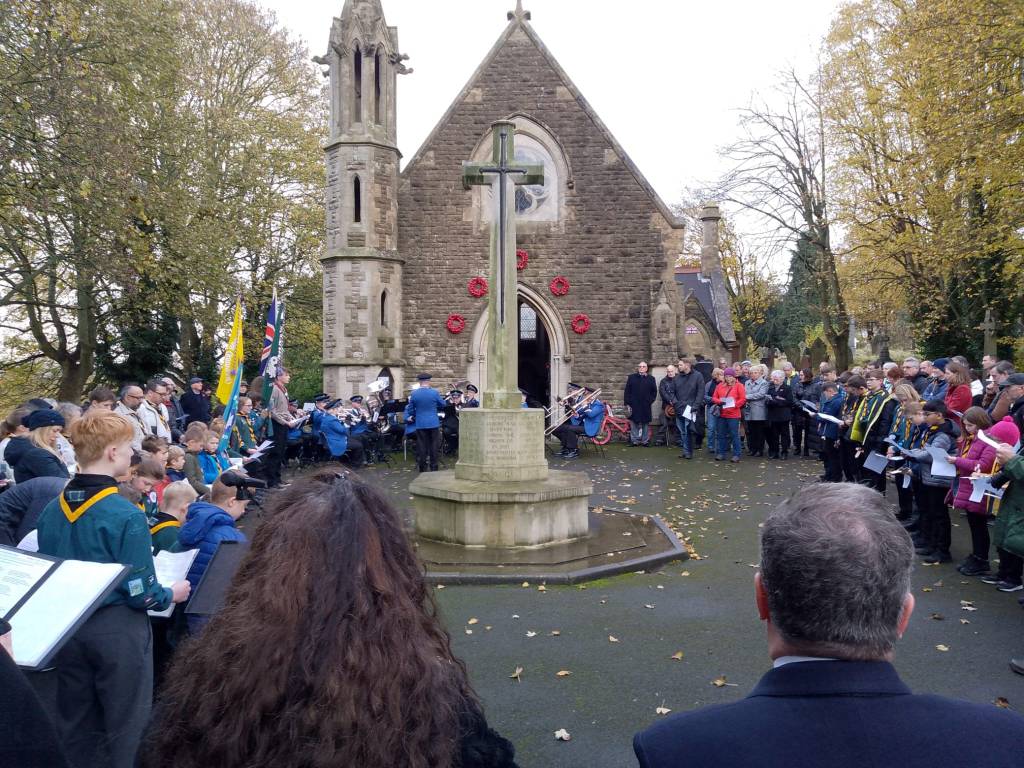
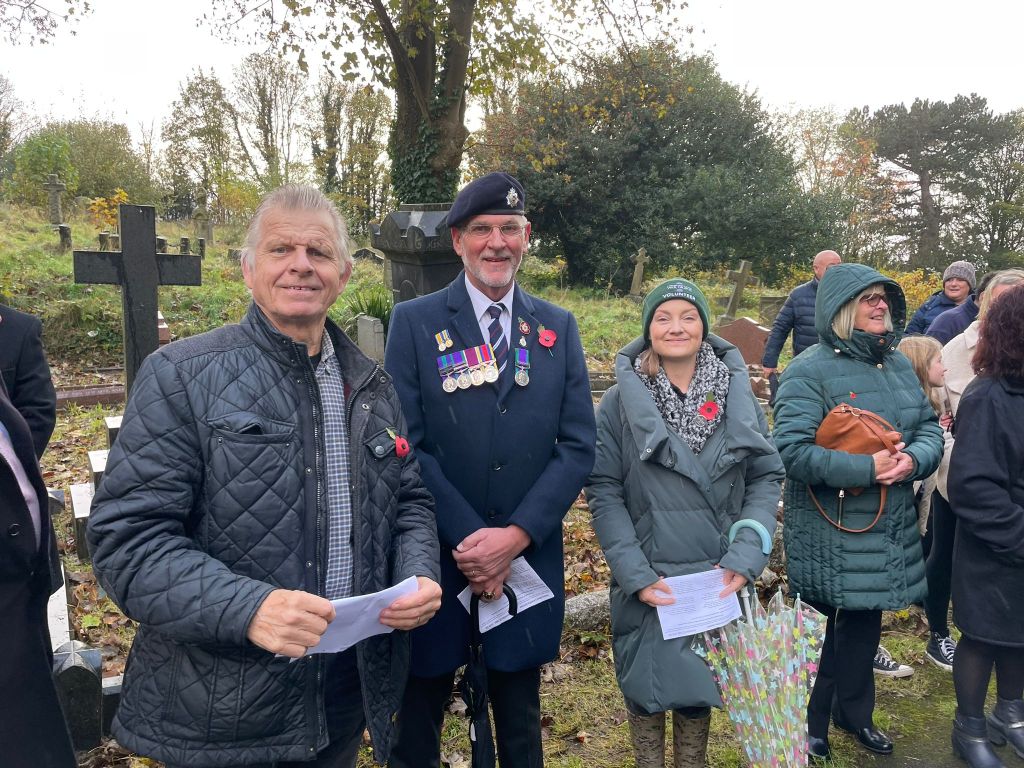
Remembrance Day Service

It was wonderful to have so many people join us for a Service of Remembrance at Radnor Street Cemetery.

“When you go home, tell them of us and say, for your tomorrow, we gave our today.”

Three of our volunteers – Brian, Kevin and Bex.

Theresa Sutton and her two grandsons unveil a plaque dedicated to Mark Sutton.

Thanks go to:

Andy Binks, Noel Beauchamp, Paul Gentleman and Graham Carter

Father Toby Boutle and the clergy from St. Mark’s Church

Wroughton Silver Band

18th Swindon Scouts

Sir Robert Buckland MP for Swindon South

Heidi Alexander Labour Parliamentary Candidate for Swindon South

Cllr Barbara Parry Mayor of Swindon

Remembering …

I am frequently asked if I have ever seen a ghost in the cemetery and have been told by others of their own paranormal experiences, but I don’t tend to go in for ghostly graveyard stories. For me Radnor Street Cemetery is a place of beauty and serenity and it’s the life and times of those buried there that interest me.

As a team of volunteers it is our mission to remember. We remember those who served in war; those who served in the industry of our town; those ordinary men and women, some of whom devoted their lives to good works, and those who had such short lives they are in danger of being forgotten.

On Remembrance Day November 12 we will be honouring Mark Sutton who spent all his life remembering others and doing good works. We hope you will join us for a Service at the Cross of Sacrifice at 2 pm followed by the unveiling of a plaque dedicated to Mark.