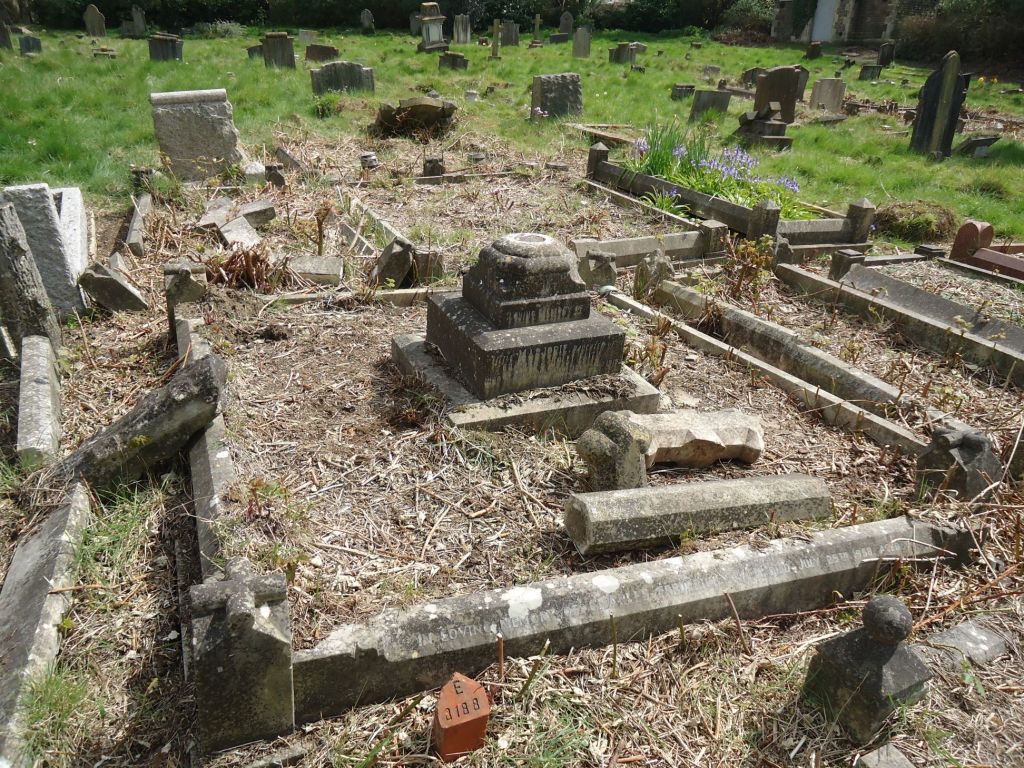
Joseph Wilkinson – a link with Swindon’s Past

Sometimes an obituary is written so evocatively that there is little I could possibly add. This is the story of Joseph Wilkinson who moved to Swindon in the 1870s and worked in the new Carriage and Wagon Works under Joseph Armstrong.

Death of Mr Joseph Wilkinson

A Highworth Octogenarian

Link with Swindon’s Past

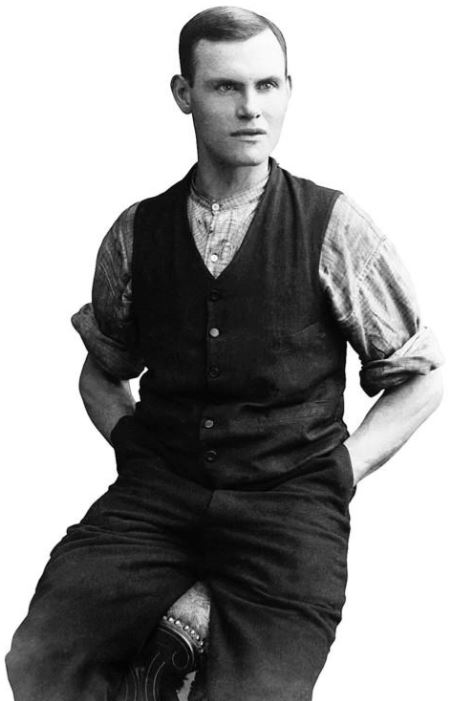
By all the older generation of Swindonians, and especially by those who have been connected with the GWR Works, the news will be received with unfeigned regret that Mr Joseph Wilkinson, formerly a foreman over the Wagon Works, has passed away at Highworth, at the ripe age of 83 years.

Mr Wilkinson was an interesting link with Swindon’s past. Born at Marshe (Yorkshire), in 1828 he migrated at an early age to Chester where he followed his occupation as a coach builder. Thirty-five years ago he came to Swindon with the late Mr. Holden, and took up the position of foreman over the new wagon works, under Mr. Armstrong. Mr Wilkinson held the foremanship continuously for many years. Until 13 years ago he enjoyed capital health, even for his advanced age, and then, acting under medical advice, he retired at the age of 70 years. It is interesting to note that Mr. Wilkinson is believed to be the first foreman who received a pension under the superannuation scheme, which was initiated shortly before his retirement.

Upon his retirement the old gentleman went to live at Highworth, where he was liked and respected by all with whom he came in contact. Since this time Mr Wilkinson’s health had been gradually failing. He had been ailing off and on every since; and a couple of months ago he was taken ill with heart disease. Dr. Powell and Dr Lewty did all that medical skill could devise but inspite of their attentions Mr Wilkinson passed away on Saturday evening.

While he was in Swindon, Mr. Wilkinson took an active interest in the affairs of the Faringdon Street Wesley Church, where he was an assistant class leader but since his removal to Highworth failing health prevented him from participating in this branch of public service. His first wife predeceased him by 28 years, and it was while in Swindon that Mr Wilkinson married his second wife. Thirteen years ago Mr. Wilkinson’s second wife also died; but a family of one son and three daughters are left to mourn their loss.

The Swindon Advertiser, Friday, May 19, 1911.
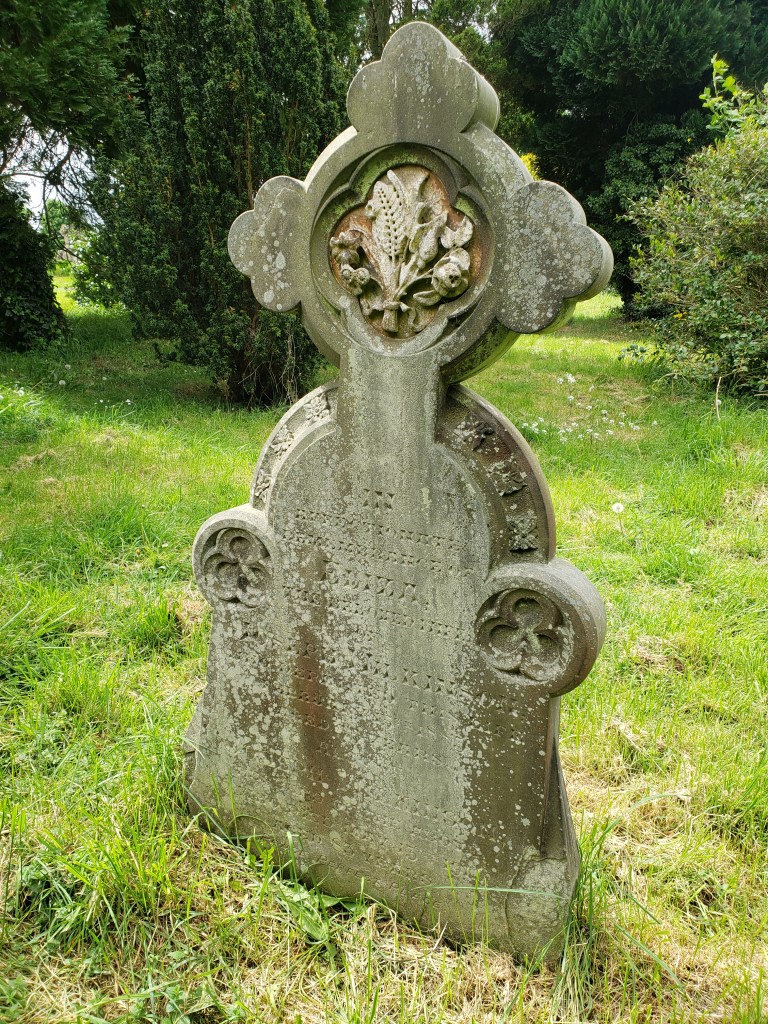
Joseph Wilkinson was buried on May 17, 1911 in grave plot A641 where he joined his first wife Eliza who died in 1883

War Memorial and a GWR Factory Tour

During this month of remembrance I will be telling the story of those who died in war.

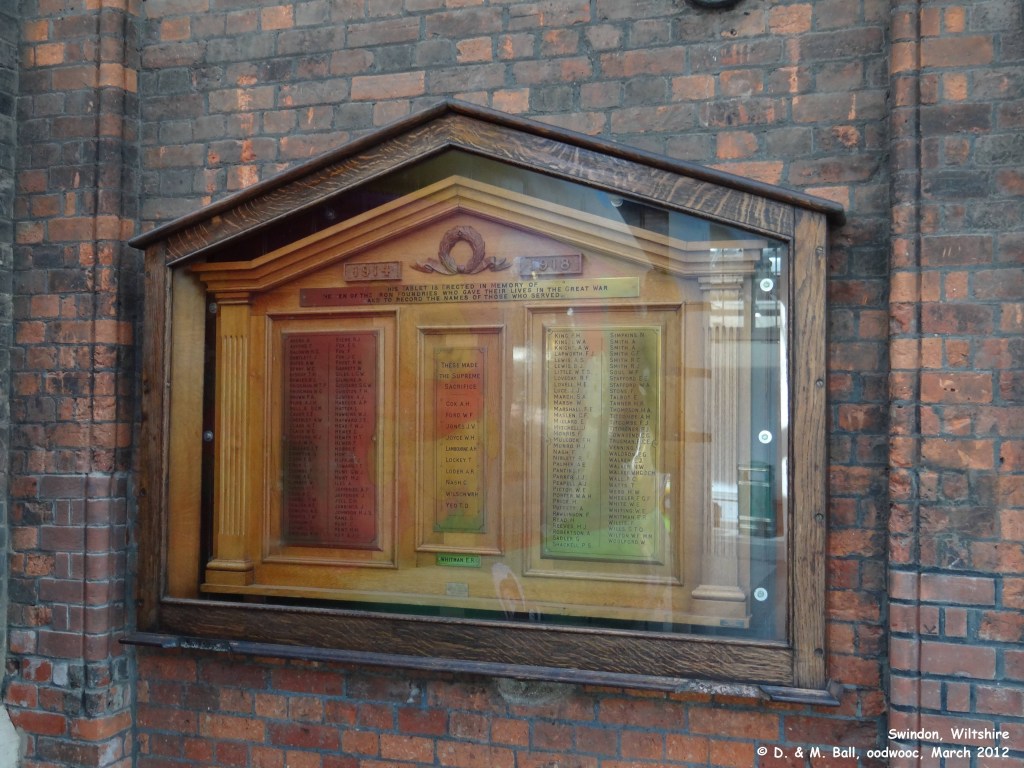
The installation of war memorials in the GWR factory continued into the mid 1920s, as is evidenced by the following account. Today some of these memorials are mounted in the STEAM Museum while others are in the McArthur Glen Designer Outlet Village – the site of the former railway works. On these memorials are the names of men from particular workshops who served in the Great War – To the lasting memory of our comrades who fell in the Great War 1914-1918 (No 3 Shop) – In grateful memory of the following men of 19 & 20 Shops who gave their lives in the Great War.

Below you can read about the installation of a memorial to the men who worked in the iron foundries unveiled in 1925.

Published courtesy of Duncan and Mandy Ball.

Swindon Foundrymen’s Tribute

War Memorial Unveiled at GWR Works

Self Sacrifice

In the presence of a company numbering nearly 1,000 a memorial to the shopmen in the iron foundries of the Swindon GWR Works, who lost their lives in the war, and also to those who served but returned was unveiled last Saturday by Mr P.G. Hannington, manager of the Loco. Dept.

The tablet is of fumed oak with brass panels, and in the centre is a carved oak laurel leaf. It is inscribed: “This tablet is erected in memory of the men of the Iron Foundries who gave their lives in the Great War, and to record the names of those who served.”

On the centre panel are inscribed the names of the eleven shopmen who paid the supreme sacrifice. They were: A.H. Cox, W.R.H. Wilson, T. Lockey, W.H. Joyce, J.V. Jones, A.R. Loder, E.R. Whitman, A.H. Lambourne, T.D. Yeo, C. Nash, W.F. Ford.

The side panels contain the names of those who returned. These number 138.

A laurel chaplet with red carnations decorated the tablet, the inscription being: “In memory of the men of the Iron Foundries – ‘Their name Liveth for everymore.’”

Not Forgotten

In unveiling the memorial, Mr Hannington said that although some might think it was rather late to unveil a memorial for an occasion which ended six and a half years ago, it certainly proved that the men of the foundry had not forgotten the debt which they, and others with them, owed to their shopfellows who fell and served in the Great War. It was gratifying to know that the spirit which prompted them to erect the memorial still existed.

The tablet would not only remind those who were in the foundries at the present time of the the men who served, but it would serve to perpetuate the memory of the shop heroes for all time. “It is the spirit of self-sacrifice which will help us in all our troubles today,” said Mr Hannington. “Our country is now passing through a serious crisis, and we need to cultivate the right spirit, whether it be in the industrial or any other sphere. If we are willing to do our bit, and to do it thoroughly, as did those whom we are honouring today, then we stand a chance of winning the battle.

“If we trust wholly in God and do our work as unto Him who brought us through the great crisis of 1914-18, we shall not be ashamed when we come to render up our individual lives to the Source whence they come.”

The company stood while the “Last Post” was sounded, after which “Nearer, my God, to Thee” was sung.

Extracts from the North Wilts Herald, Friday, June 12, 1925.

Have you ever noticed the historic fixtures and fittings as you browse the rails in M&S? Have you looked up above the shop fronts and noticed the machinery still positioned there?

You might like to join the Rodbourne Community History Group on Saturday November 18 when these features will be pointed out along with other fascinating details and anecdotes of life in the railway factory.

To book a place contact the Secretary on 01793 616558 or email secretary@rodbournehistory.org. The tours start at 10am and last about 2 hours. Meet at the designer Outlet Reception Desk at the Kemble Drive entrance adjacent to the Pizza Outlet. There is no charge for these tours but donations are gratefully received. The Rodbourne Community History group is a not for profit group run by volunteers.

William Beames – tired of life

During September I frequently travelled by train from Swindon to Gloucester. It is a relatively short journey, some 45 minutes, through attractive Gloucestershire countryside stopping off at the small stations of Kemble, Stroud and Stonehouse and passing through the Sapperton tunnel.

Sapperton tunnel is, in fact, two tunnels separated by a short gap. Work began in 1839, a difficult building project not finished until 1845. Maintenance work was (and continues to be) ongoing. Back in the day a terrifying place in which to work with poor visibility on a busy rail route.

In 1896 an accident occurred resulting in four fatalities. Was this the accident William Beames witnessed, the effects of which caused his own tragic death later that same year?

This newspaper report contains some disturbing descriptions.

A Suicide’s Death – Tired of Life

Shortly after the above, Mr Browne held an inquest at the Carpenter’s Arms, Gorse Hill Swindon, on the body of William Beames, aged 48 years, a platelayer on the GWR Works, of 86 Bright Street, Gorse Hill. Deceased, it may be remembered, attempted to commit suicide by cutting his throat with a pocket knife at Wootton Bassett, in August last, and although the wound healed up he died on Saturday last from other complaints, after lingering for upwards of three months, his death being accelerated by his own rash act. Mr A. Bowker was chosen foreman of the jury, and the following evidence was taken:

P.S. Goddard, stationed at Wootton Basset, said that on the 17th August last, at about a quarter to seven o’clock in the morning, deceased came to his house and made motions to go into his house. He could not speak. Witness removed an handkerchief he was wearing, and then saw a tremendous gash in his throat. Dr Wride happened to be passing at the time, and witness called him in. The doctor dressed the wound, and gave him some warm milk with a little whisky in it, afterwards telling witness to take the man to the hospital. He (witness) obtained a brougham, and conveyed Beames to Swindon Victoria Hospital, where he was refused admission. Witness then took the sufferer to his home at Gorse Hill. He had previously asked him where he lived, but Beames could not speak, and therefore wrote his name and address on a piece of paper. Witness asked him why he did such a foolish thing, and Beames replied, “Because I am tired of this world.” Afterwards deceased was taken to the hospital at Stratton Workhouse. Witness went the next day to a field where Beames said he had been when he cut his throat, and there saw a large quantity of congealed blood. Witness found a pocket knife in his pocket, which he now produced.

Sarah Beames, wife of deceased, who appeared to be very ill, said her husband had been in a low depressed state since his father’s death in June last. Deceased was a platelayer in the GWR Works. Deceased was also troubled about a platelayer who was killed on the line at Stroud some time ago; he worked in the same gang. Deceased left home on Friday, the 14th August, and she heard no more of him until he was brought home on the following Tuesday. He was in the Workhouse Hospital eleven weeks, and then he was brought home where he was attended by a doctor.

Mr Thomas Hartigan, assistant to Dr Rattray, said he attended deceased up to the time of his death. Previous to that he had been attended by Drs. Wride, Pearmen, and Muir, alternately. He was suffering from a wound in the throat, and bronchitis. He died of dilated heart caused by the bronchitis, accelerated by the injury to his throat. The wound in the throat had quite healed up. The immediate cause of death was heart disease.

The jury returned a verdict accordingly.

Swindon Advertiser Saturday December 19, 1896.

cemetery views (73)

William Beames was 48 years old. He was buried on December 17, 1896 in grave plot C199. This is a public grave. He was buried with five other unrelated persons.

You may also like to read:

Frederick Gee – platelayer

Peter Bremner – railway pioneer

If there was a memorial to Peter Bremner, this is where it would be

The common belief is that the early railwaymen who arrived in Swindon in the 1840s are mostly buried in the churchyard at St. Mark’s.

There are a great many burials in that small churchyard; so many that by the 1870s there were extreme concerns that burial space was fast running out. Drainage of the churchyard was also a problem, restricting usage of a large area. All this contributed to the long, ongoing debate about the need for a new burial ground. Eventually resolved in 1880, Radnor Street Cemetery opened in 1881 and soon became the last resting place of many of the old railwaymen.

There are many of their stories told here on the Radnor Street Cemetery blog; this is that of Peter Bremner.

Peter Bremner was born in Dundee in about 1819 and arrived in Swindon around 1848. It is possible the family came straight from France where a daughter Erskine was born in 1847. For more than 35 years Peter lived at 5 Taunton Street at the very centre of life in New Swindon.

Death of a railway official – Our readers, especially the old hands of the GWR Works, will hear with regret of the death of Mr Peter Bremner, who has occupied the position of foreman for many years past, he being one of the earliest arrivals on the establishment of the works. His kindly disposition made him many friends. The funeral will take place this (Saturday) afternoon, at 2-45, and will no doubt be largely attended.

The Swindon Advertiser, Saturday, September 18, 1886.

Funeral of Mr Peter Bremner – The funeral of the late Mr. Peter Bremner, of 5, Taunton Street, New Swindon, took place on Saturday afternoon, admidst many manifestations of the respect and esteem in which deceased was held. For 40 years Mr. Bremner, who had reached the age of 67 years, had been in the service of the GWR Company, and during a great part of that time as foreman, he, at the time of his death, being foreman of the G (Millwrights’) Shop, GWR Works, New Swindon. As a foreman, the deceased was respected by all above and below him, those under his charge especially valuing his good qualities, and he had also obtained the esteem of a large circle of friends. That this was the case was evidenced by the fact that nearly 400 persons joined in the funeral procession on Saturday, and the route was lined with spectators. Mr. F. Hemmings, of Fleet Street, New Swindon, was the undertaker, and he carried out the funeral arrangements in the most satisfactory manner. The coffin was of polished oak, with black furniture, and bore the following inscription:- “Peter Bremner, died September 15th, 1886, aged 67 years. Through the Cross to the Crown.” On the handleplates were the words “Praise the Lord.” A number of beautiful wreaths were contributed, including one from Mrs. Swinhoe, one from Mr. S. Carton and Mr. J. Haydon as “a tribute of respect and esteem from the managers for an old and valued servant,” from Mr. and Mrs McCulloch, Mr and Mrs Batchelor; from the fellow foreman of deceased in the Locomotive Department of the GWR Works; and a magnificent artificial wreath supplied by Mr. Hemmings, from the workmen employed under the deceased. On a card attached to this wreath was the following inscription:- “In affectionate remembrance of Peter Bremner, the much respected foreman of the G Shop, GWR Works, Swindon, this wreath is placed by the workmen formerly employed under him as a mark of the general respect he merited.”

The chief mourners were:- Mr. J. Bremner (son of the deceased), Mr W.D. James (grandson in law) and Mr. E.C. Riley. In the procession were included many of the deceased’s fellow foremen, about 160 of the employes in the G Shop, and many friends. The procession included three carriages in addition to the hearse. The funeral cortege left disceased’s residence at about three o’clock, and proceeded to St. Mark’s Church, where the first portion of the burial service was conducted by the Rev. H.W. Boustead. By way of Church Place, and Cambria Bridge, the procession marched to the cemetery. There was a large number present. The remainder of the burial service having been read, the body was lowered to its last resting place, and after a final look at the coffin the procession returned to Taunton Street, where its members dispersed.

Extracts from the North Wilts Herald, Friday, September 24, 1886.

Peter Bremner died aged 67 years at 5 Taunton Street. His funeral took place on September 18 when he was buried in grave plot A1057 with his wife Annie who had died in February of that same year.

You may also like to read:

James Fairbairn – pioneer railwayman

Robert Laxon – First Secretary of the Medical Fund

Jason Johnson – a homegrown railwayman

George House – a Swindon veteran

George Hemsley – co-founder of the New Swindon Co-operative Society

William Thomas and a life in the railway factory

William Thomas spent his entire working life in an iron foundry; first in his home town of Llanelly, Breconshire where he worked as a ‘Baller.’ By 1871 he appears on the census returns here in Swindon living at 13 Cambria Place with his wife Cecilia and his two daughters. His job description is ‘rail rougher.’

In 1915 Alfred Williams published a book entitled ‘Life in a Railway Factory.’ It was a controversial book; a warts and all description of working ‘Inside.’ It didn’t go down well with the Great Western Railway where Alfred had worked as a hammerman for 23 years. Today it provides us with a first hand account of what it was really like in the Works at that time.

If you have a railway ancestor who appears on the census returns as a ‘baller’ or a ‘puddler’ and you’ve thought this sounds a rather quaint occupation – well, this is what it involved.

Punchings and drillings are also treated by the process known as “puddling.” In this case, the furnaces will have a cavity in the floor, into which the small scrap material is shovelled or tipped. The door is now made fast and the heat applied, which must not be too fierce, however, or the whole mass would soon be burned and spoiled. When the drillings and chippings have cohered, the puddler, by an aperture through the iron door, inserts a steel bar, curved at the end, and prises the lump and turns it over and over. This is called “balling up.” By and by, when the iron is thoroughly heated and fairly consistent, it is brought to the “shingler,” who soon gives it shape and solidity. 

Alfred Williams writes:

You can always tell these young men of the steam-hammer or rolling mills, whenever you meet them. They are usually lank and thin and their faces are ghastly white. Their nostrils are distended; black and blue rings encircle their eyes. Their gait is careless and shuffling, and their dress, on a holiday, is a curious mixture of the rural and urban styles. On week-days they are as black as sweeps, and the blacker they are the better, in their opinion, for they take pride in parading the badge of their profession and are not ashamed of it as are their workmates who dwell in the town.

William and Cecilia Thomas continued to live in the Welsh enclave around Faringdon Road and Cambria Place. William died in 1899. He was 73 years old and the burial registers describe his occupation as ‘puddler.’ Whether he was still working until the time of his death remains unknown, but it is quite likely.

Cecilia died at her home 4 Park Terrace in 1901 and was buried in grave plot D46 where she joined William. Their beautiful pink granite memorial describes Cecilia (and presumably William as well) as ‘Angels Waiting.’

Joseph Armstrong – Chief Superintendent of the Locomotive, Carriage and Wagon Departments

One of the most important people in Swindon’s history not buried in Radnor Street Cemetery is Joseph Armstrong.

Joseph Armstrong’s funeral was described as a spectacle seldom seen, with ‘the whole town and neighbourhood showing every possible honour to the memory of the deceased.’

Image published courtesy of Local Studies, Swindon Central Library.

The railway works closed for the day and an estimated 6,000 people lined the streets between Armstrong’s home at Newburn House, through Rodbourne and to the church of St. Mark’s.

During the first week of June 1877 Joseph Armstrong had left Swindon for a short holiday. He was suffering from heart disease and exhaustion exacerbated by his heavy workload. He died on June 5 at Matlock Bath.

Joseph Armstrong was born in 1816 in Bewcastle, Cumberland. Throughout his railway career he worked for the Liverpool and Manchester Railway, the Hull and Selby Railway, the London and Brighton Railway and the Shrewsbury and Chester Railway before arriving in Swindon in 1864. He was appointed the second only Chief Superintendent of the GWR Locomotive, Carriage and Wagon Works succeeding Daniel Gooch where he was responsible for the construction of all new engines, carriages and wagons and in charge of 12,900 employees.

A non-conformist, Joseph Armstrong was a staunch supporter of the need for a burial ground where non conformists could bury their loved ones according to their own beliefs and without the strictures of the established church. Sadly, at the time of his death just such a cemetery was still the subject of rancorous debate. It would be another four years before Radnor Street Cemetery was opened.

The strength of feeling at the time of Armstrong’s death is conveyed in the following extract from the editorial written by William Morris, published in the Swindon Advertiser.

Today an elaborate Grade II listed monument stands on the Armstrong family grave in St. Mark’s churchyard.

And this brings us to the lesson of Mr Armstrong’s death, and of the work and duty it has thrown upon us. We believe it was his desire to secure for others that liberty of religious thought which he enjoyed himself. And that this end might be secured he had taken an active interest in obtaining for the large and populous parish of Swindon that burial accommodation which the religious liberty of the subject demands should be provided for every parish, and the proposition to provide which for Swindon has been met and opposed by so many wretched subterfuges. We may treat with proper contempt the wretched work of bedaubing tombs and harrowing widowed hearts; but, as we have said we cannot afford to submit to such obstructions to our progress, to such evidences or the existence among us of a dogmatic priestly rule, altogether out of accord with the spirit of the age in which we live. This, then, is a work Mr Armstrong has left us to do – to provide a cemetery without priestly rule – a place of interment where we may bury our dead without the danger of having our feelings outraged by some impertinent and officious interloper who, by bell and book, would consign us to eternal punishment if we dared dispute his authority.

The Swindon Advertiser Saturday, June 16th, 1877

Extract from the editorial – written by William Morris

and a letter to which he refers in this lengthy editorial.

To the Editor of the Swindon Advertiser

Sir – Will you kindly allow me a space in your paper to lay before the people of Swindon the facts of a case upon which I think they should give judgment.

On Wednesday in Whitsun-week, (as you announced in your paper), a man named Benjamin Browning, of New Swindon, died suddenly, and his remains were interred at St. Mark’s on the following Sunday. His widow caused a tombstone to be erected to his memory, and underneath the usual inscription were placed the Latin initials R.I.P. Requiescat in pace or “May he rest in peace.” The Rev. George Campbell, vicar of St. Mark’s, seeming to consider these initials illegitimate, had them effaced with a covering of cement, and now in their stead there is a patch of a different shade to the stone.

I respectfully ask you, Sir, and the people of Swindon, if this is fair or Christian in a burial ground which, if it is not a public one, is the only one in the town for all denominations. And I ask also if the Rev. George Campbell has acted legally in defacing the property of another person?

There is something so simple, so sweet, and so impressive in the sentence for which those initials stand, that I think none could dislike it but those (if there be such a class of People) who do not wish the departed to rest in peace.

I am, Sir, yours respectfully,

James O’Connell,

23, Taunton-street, New Swindon, June 12th.

The Dickson dynasty

Andrew James Campbell Dickson left his home in Fife, Scotland for a new job and a new life in New Swindon. By 1861 he was living at 37 Taunton Street. He could hardly have imagined this move would establish a Swindon railway dynasty that would last for more than 100 years.

By 1871 Andrew was working as an Engine Driver. However, when he died in 1876 his occupation was given as Railway Clerk. In her book Railway Voices – Inside Swindon Works Dr. Rosa Matheson suggests “Whether Andrew had to give up as an ‘engine driver’ because of an accident is not actually known but it is a probable explanation. Records show that the GWR often found light work for long service, infirm or disabled firemen and engine drivers.” Andrew was buried in St. Mark’s churchyard.

Now we move on to trace the fortunes of his eldest son Matthew.

Born in Temple, Midlothian on February 11, 1857 Matthew was a wee boy when the family moved to Swindon. On official documents throughout his long life Matthew declares his birthplace as Scotland, but he could have had few memories of that place. However, there were many men of Scottish origin in the railway village in those early years; perhaps Scottish customs and traditions (and accents) were familiar to Matthew.

In 1872 fifteen year old Matthew began a 6 year apprenticeship in the Carriage Finishing Shop. His career would last an astonishing 52 years and in 1924 he was presented to King George V and Queen Mary when they made a visit of Swindon and the Works. A commemorative photograph was taken in which Matthew stands in the 3rd row 4th from the right.

Matthew married Kate Henley at the Wesleyan Chapel, The Planks on July 23, 1881. The couple lived at 76 Commercial Road where Matthew died in 1930 and Kate in 1939 and would remain the family home until 1968. Kate is captured there on the 1939 wartime census when she is described as ‘incapacitated.’ Living with her are her daughters Ellen 54, who is also described as incapacitated and Florence 49 who is unemployed. How on earth did these women survive?

Matthew died on February 9, 1930 and was buried in grave plot C89 with his mother-in-law Elizabeth Henley who died in 1898. He was joined by Kate in 1939 and their two daughters, Ellen Kate who died in 1968 and Florence May who died in 1973.

But the story does not end there …

John Kelynack – chief clerk of the GWR Chief Mechanical Engineer’s Department

When John Kelynack retired from the position of chief clerk of the GWR Chief Mechanical Engineer’s Department he received numerous presents; including a cheque from the GWR Enginemen’s and Firemen’s Mutual Assurance Sick & Superannuation Society and ‘a handsome barometer.’

Like so many of his generation John Kelynack appears to have had an inexhaustible enthusiasm for life, although perhaps his rather severe countenance in this press photograph might suggest otherwise.

His 47 year career with the GWR began when he was 16 years old and had taken him from working as a Time & Storekeeper at Penzance station to that of chief clerk in the GWR Chief Mechanical Engineer’s Department with responsibility for more than 1,600 employees.

Among his other responsibilities across the years was vice president, trustee and hon treasurer of the Mechanics Institution along with chairman of the GWR Medical Fund and president of the GWR Staff Gleemen. He taught Evening Classes at Swindon College and was churchwarden at St Augustine’s Church in Rodbourne. He also worked for a whole list of other organisations mentioned in the obituary below.

John Kelynack was born February 1, 1877 in Penzance the son of a cabinet maker John Kelynack and his wife Mary. In 1905 he married Margaret Ethel Maud Hiscock at The Wesley Methodist Chapel in Bath Road, Swindon. The couple did not have any children.

Mr J. Kelynack Dies at 69

Former Chief Clerk to Swindon C.M.E.

Mr John Kelynack, who retired from the position of Chief Clerk of the GWR Chief Mechanical Engineer’s Department at Swindon Works in February, 1941, died at 38, Goddard avenue, Swindon in the early hours of this morning. He was 69 years of age.

Mr Kelynack, who was a native of Cornwall, joined the GWR on 27, November, 1893 at Penzance. Four years later, (15 March, 1897) he was transferred to Swindon as a clerk in the Mileage and Accounts Section. In the evenings he took advantage of the night classes provided by the Education authority to gain a good grounding in accountancy under the late Mr Walter Johnson, chartered accountant.

Promotion Steps

Subsequently he went to the London School of Economics for further study in accountancy and office organisation and, after two years, returned as teacher to the Swindon night classes, where he was originally under Mr Johnson.

On 19 May, 1913, Mr Kelynack was appointed assistant to the clerk-in-charge, Locomotive Acccounts, and in March of the following year he became clerk-in-charge.

On the amalgamation of the Locomotive with the Carriage and Wagon Accounts in 1917, he was appointed clerk in charge of the whole accounting staffs.

Next step in his promotion was to the office of Assistant Chief Clerk on 21 February, 1918, and on the death of Mr A.J.L. White in October, 1929, he reached the top rung of the ladder as Chief Clerk.

Throughout his career he was closely identified with the introduction of new and improved methods of railway accountancy. He was the moving figure behind the great changes that took place in the counting and office methods of the GWR Medical Fund Society, and also rendered valuable assistance in the revision of the Society’s rules.

Church Work

For 30 years Mr Kelynack worked hard for St. Augustine’s Church, and was the first warden appointed by the Vicar.

Other offices held by him during his career included trustee, vice-president and hon. treasurer of the GWR Medical Fund Society; hon. treasurer of the GWR Enginemen and Firemen’s Mutual Assurance Society, trustee and hon. treasurer of the GWR Mechanics’ Institute, Swindon, trustee of the GWR Sick Fund; vice-president and hon. auditor of the GWR (Swindon) Athletic Association; member of the committee of the GWR (London) Lecture and Debating Society, president of the GWR (Swindon) Accounts Staff Gleemen and the GWR (Swindon) Retired Workmen’s Association.

He was also chairman of directors of the Swindon Permanent Building Society, and a member of the Remembrance Lodge of Freemasons.

Mrs. Kelynack died several years ago.

Swindon Advertiser Monday July 22, 1946.

John Kelynack died in July 1946 aged 69 years. His burial took place on July 26 in grave plot C10, joining his wife who had died 12 years previously.

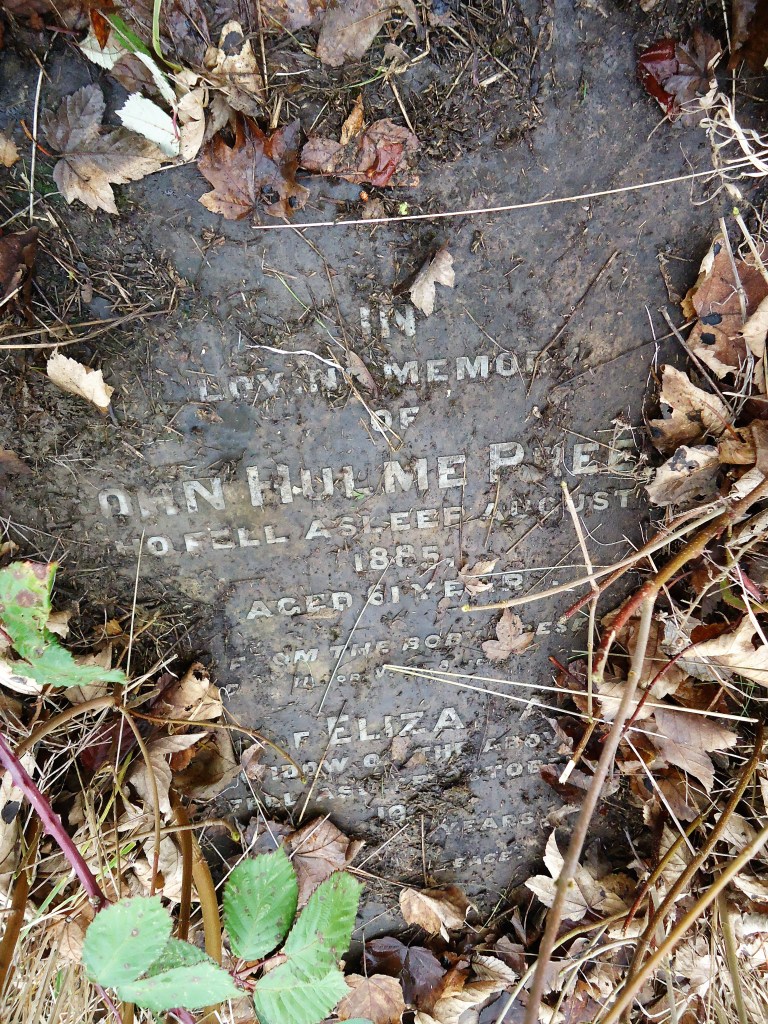
John Hulme Preece – a devoted Christian

John Hulme Preece was born on January 1, 1824 at Tenbury, Worcestershire, the son of a Baptist Minister. He married Eliza Sarah Whitmore in the December quarter of 1853 and by 1855 the couple were living in Swindon. The UK Railway Employment Records 1833-1956 state that John began work as a railway clerk in the Locomotive Department on February 2, 1855.

The couple joined the Independent Church, Victoria Street in 1861. This church was demolished in the 1960s for a road widening scheme.

John and Eliza lived first at Union Villa where Eliza ran a Seminary for Young Ladies. They later moved to 8 Gloucester Terrace which had a larger schoolroom and remained their home until John died in 1885 and Eliza in 1905.

In 1861 John was elected to the Council of the Mechanics’ Institution, the first clerk to be elected. Previously it was felt that only railwaymen would be able to appreciate the needs of those working on the shop floor. But John soon proved his worth and the following year was elected as Secretary of the Mechanics’ Institute, a role he fulfilled with energy and commitment until his death.

Trevor Cockbill makes many references to John in his definitive book about the Mechanics’ Institution – Finest Thing Out published in 1988. He describes him as being a quiet, gentle, studious man of a modest and retiring nature. A devoted Christian who was deeply interested in scholarship and education.

Swindon

The death is announced of Mr. John Hulme Preece, who has been for 26 years secretary of the New Swindon Mechanics’ Institute. Mr. Preece who was 61 years of age, was for about 30 years a clerk at the Great Western Railway Works.

Reading Mercury Saturday 29 August 1885.

The Funeral of the late Mr. John Hulme Preece, whose death on the previous Thursday evening we noticed in our last issue, took place on Monday afternoon, at the Cemetery, and afforded another instance, had it been necessary, of the very general respect in which the deceased was held. The coffin, which was conveyed to the cemetery without the customary pall on a portable bier, was completely covered with floral wreaths and offerings. In addition to the relations of the deceased, who had preceded the funeral cortege to the cemetery, there was a very large representation of the Council of the Mechanics’ Institute, and of the G.W.R. Clerks, to the number of over 150.

Extracts from he Swindon Advertiser, Saturday, August 22, 1885.

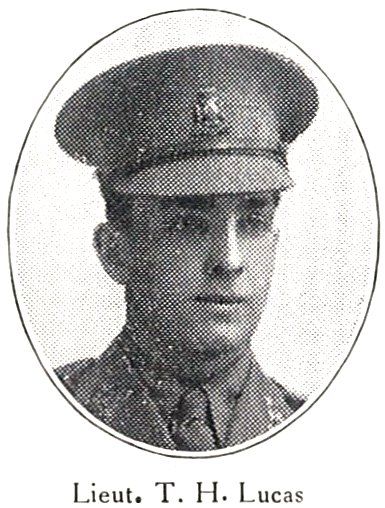
Thomas Henry Lucas – Lieutenant in the RAF

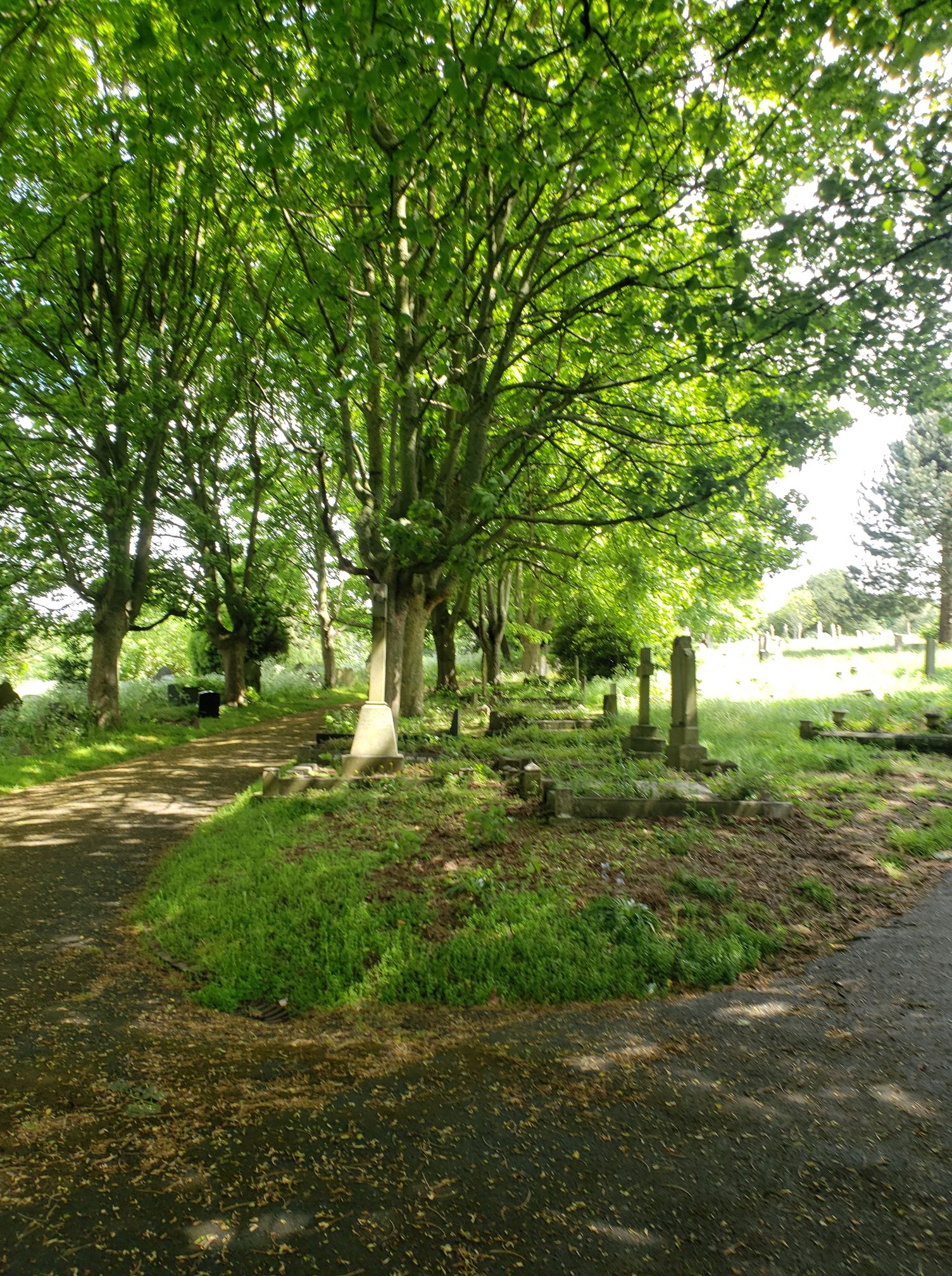
Graves appear and disappear with the passing seasons here in Radnor Street Cemetery. At the moment the grass is tall and the brambles rampant, but in the autumn the Borough Council will come and mow and perhaps this large family grave will reappear again.

Research has revealed several stories associated with this double grave, which extends across plots E8188 and E8189. The first story involves not a burial but a dedication on the kerbstone surround of the plot.

To the dear memory of Thomas Henry Lucas Lieutenant RAF Killed whilst flying in Egypt May 15, 1918 aged 27 years.

Thomas Henry was born in November, 1890 the son of William and Minnie Lucas, and baptised at St. John the Evangelist (a Chapel of Ease in the parish of St. Mark’s) on January 25, 1891. In May 1905 he began a 6½ year apprenticeship as a Coach Finisher in the Carriage & Wagon Works, later transferring to the Coach Body Making Shop.

Some of his military records survive and we know that he served with the Hampshire Regiment and also the Royal Air Force. He was killed in action on May 15, 1918 and is buried in the Cairo War Memorial Cemetery, Egypt. Were his grieving parents able to visit his grave? It is unlikely.

Thomas’s will was proved in 1919 when his address was given as 6 Lorne Terrace, Station Road. Administration went to his father William, a chargeman in the Works. His effects were valued at £360.

The first burial in this plot took place on January 3, 1920, that of five year old Marjorie Violet L. Faith, the daughter of Charles Frederick Faith and Violet Frances Euphemia Faith nee Lucas. (Charles was buried in this plot when he died in 1958).

Thomas’s parents William Henry and Minnie Sarah were buried here in 1942 and 1951 respectively, but there is one last story to tell.

The household at 6 Station Road was always a large and busy one. In 1901 William and Minnie Lucas lived there with their three children Violet 17, Minnie 14 and 10 year old Thomas. There were also two boarders living with them and on census night they had four visitors as well. And then there was their 18 year old domestic servant Mary Ann Gee. Mary Ann never married and remained with the family for many years. At the time of her death in 1948 she lived with William and Minnie at 67 County Road. She died that same year when she was also buried with them.