Joanna C. Lay – silent, quiet and faithful worker

Today we celebrate International Women’s Day with the story of Joanna C. Lay.

It’s difficult to imagine a farm located in what is now Corporation Street, Swindon but this is where Joanna Cuss Smith and her seven siblings grew up.

When Joanna was born in 1851 her father worked as a master butcher with a shop in Wood Street but by 1861 he also farmed 110 acres at Lower Eastcott Farm, employing three men and two boys.

Joanna married jeweller Edwin John Lay in the summer of 1884. The couple had three sons and lived at 17 Bath Road, an elegant establishment opposite Apsley House.

Sometimes there is not much I can add to a sympathetic obituary published in the local media – so let me hand you over to the Swindon Advertiser.

Death of Mrs E.J. Lay

Well Known Swindon Lady

We regret to have to announce the death of Mrs Joanna Lay, wife of Mr Edwin J. Lay, watchmaker and jeweller of 17, Bath Road, Swindon. The deceased lady was a member of a very old Swindon family, being the eldest daughter of the late Mr Edward Smith, butcher and farmer, who carried on business in the town for many years at High Street and Eastcott Farm.

Mrs Lay possessed a great personal charm, a kindly nature, and thoughtful disposition, which she had always exhibited from her girlhood upwards. She was 62 years of age, and had been ailing a few weeks, but not seriously ill. Then she had an attack of bronchitis.

On Friday her condition was better, but on Saturday she had a relapse, and passed peacefully away.

The deceased lady leaves a sorrowing husband and a family of three sons – two of whom are in South Africa – to mourn the loss of a loving and devoted wife and mother.

Funeral at Swindon

Attended by a large number of sympathising friends, the funeral of the late Mrs Edwin Lay, of Bath Road, took place at Swindon on Wednesday afternoon.

Enveloped in a profusion of beautiful floral tributes, the coffin was conveyed from the deceased’s residence to the Baptist Church on a hand-bier. The deceased lady was a prominent member of the Tabernacle, being for 27 years the Secretary of the Sewing Circle (with Mrs W. Clappen as President), and the respect and esteem in which she was held by the members of the congregation was strikingly testified to by the large number of people who attended the funeral service. Conducted by the Pastor (Rev. J. Ivor Cripps) and the Rev. F.C. Shellard, the service was of an impressive character. The hymns, “Come let us join our friends above,” and “Calm on the bosom of thy God,” were sung, and in the course of the service the Pastor paid a touching tribute to the memory of the deceased. They looked upon something that day, he said, as something incredible, something which they found difficult to believe was true, for less than a fortnight ago Mrs Lay gave, at the annual Church social, a report on behalf of the Sewing Circle, and only last Sunday week was present at the Sacrament. He left to others who knew her more intimately the honour of praising her, but he knew her enough to say that she was one of the silent, quiet and faithful workers on whom the substance of Church life relies and depends. What she did she did faithfully and well, and those who were acquainted with her work could say that hers was indeed a place of honour in the Church.

The interment subsequently took place at the Cemetery, where the last sacred rites were performed by the Rev. J. Ivor Cripps.

Extracts from the Swindon Advertiser, Friday, March 14, 1913.

Joanna Cuss Lay 62 years of 17 Bath Road buried 12 March 1913 in grave plot E7310. Joanna is buried with her husband E.J. Lay.

You might also like to read:

Elsie Wootten White – wartime volunteer

Harriett Annie Veness – political activist

Edith Whitworth – Mrs Great Heart

Celia Morkot – the first woman employed in the Works

Ada Ellen McHardy – always happy, always in a hurry.

A fatal road traffic accident and a mysterious ‘dark shadow’ on the road made front page news in the North Wilts Herald, Friday January 15, 1937.

Ada Ellen McHardy died of her injuries following the accident at the Bath Road and Goddard Avenue junction when she was struck by a car driven by Mr Edwin Bradley. Witnesses at the inquest referred to a ‘large black shadow’ seen on the road when wet, although it was not explained whether this shadow contributed to Mr Bradley’s driving or Mrs McHardy’s ability to safely navigate the road.

Ada Ellen Cave was born in Bath in 1860 the eldest of ten children. Her father Isaac W. Cave was an engine fitter and turner who moved to Swindon from Wolverton. In 1882 Ada married Robert S. McHardy, a clerk in the railway works. The couple and their two children lived at 24 Sheppard Street before moving to 53 Newhall Street, Ada’s home for many years.

Ada was a member of the Baptist Tabernacle and heavily involved with the work of the church (see newspaper report below). At her funeral the Rev. C.H. Cleal quoted – “As a writer in the Swindon Press rightly said of her. ‘She was always happy, always in a hurry, seemingly, to be about her Master’s business, possessing the helping hands of Martha, and the loving heart of Mary. She has left Swindon the poorer by her death.’”

Ada’s funeral took place on January 16, 1937. She is buried in grave plot D166 which she shares with her husband who died in 1902.

Swindon Resident Killed in Road Accident

Motor Car Driver Exonerated from Blame at the Inquest

Mrs Ada Ellen McHardy, president of the Swindon Women’s Free Church Council, was knocked down by a motor-car on Tuesday night and received injuries from which she died early on Wednesday.

The accident took place on Tuesday at about 7.45 at the junction of Bath-road and Goddard-avenue.

The car, which was driven by Mr Edwin Bradley, of 55, Okus-road, Swindon, was going along the Bath-road. Mrs McHardy was taken to the Victoria Hospital with head and leg injuries and died at 6.30 on Wednesday morning without regaining consciousness. She lived at 151 Goddard-avenue, and was 77 years of age.

For about 60 years Mrs McHardy had been a keen member and worker for the Baptist Church in Swindon, and it was only a month ago that she had a presentation made to her on her resignation of the post of secretary of the Baptist Women’s League of the church after 28 years’ service. In the year 1920 she was appointed a Deacon of the church, and for a few years occupied the office of Elder.

For 12 years she has represented the Church on the Wilts and East Somerset Association Executive Committee and was called to the presidency of the association for the year 1929. Always keenly interested in the young people, she was for many years a Sunday school teacher and was with her class last Sunday morning. She was a great help to the church in visiting the sick, while the Sewing Circle claimed her services since its formation nearly 50 years ago.

During Carnival week she was always a hard-working collector for the hospital, working for the council, and also at the stall run by the Free Church Council.

Loyal Worker

When Mrs J.F. Marquis, secretary of the Swindon Women’s Free Church Council, was informed by a “Swindon Advertiser” reporter of Mrs McHardy’s death, she expressed considerable concern. “I always found her a most conscientious and loyal worker,” said Mrs Marquis. “She was a woman of very high Christian character. She conducted our executive and general meetings most ably, and she will be greatly missed. I think I shall be expressing the general view of all the Free Church women of the town, especially those connected with the Baptist Church, when I say how sorry I am to hear the news.”

Mrs Marquis pointed out that this is the second loss that the Women’s Free Church Council has sustained during the past few months, Mrs Harrison, the vice-president, having died a short while ago. On Monday Mrs McHardy presided at a meeting of the council, when the question of filling the vacancy created by Mrs Harrison’s death was discussed.

The daughter of an engineer in the Great Western Railway Swindon Works, Mr Isaac William Cave, Mrs McHardy had lived in Swindon all her life. She was one of a family of ten, five girls and five boys, of whom two sisters and three brothers are living. She married Mr Robert Stewart McHardy, who was employed as a draughtsman in the Swindon Works of the railway and was a well-known figure in the town. Her husband died some years ago. For many years he was choirmaster at the Tabernacle. She had two children, a son and a daughter.

Before her marriage, Mrs McHardy was employed as a teacher at a College-street school. Her son is the Rev. Robert McHardy, B.Sc., of Chorley Wood, a Baptist minister, who received his education at Swindon College, and later at Aberystwyth University. Her daughter, Ethel, was also in the scholastic profession before her marriage to Mr Ernest Hughes, of Trowbridge. Her brother-in-law, Mr J. Ballinger, of 20, Goddard-avenue, is senior master at Even Swindon school.

The Inquest

A large black shadow which only appears on the road after rain, at the Bath-road and Goddard-avenue junction, in Swindon, was referred to by witnesses at the inquest at Old Town Police Station yesterday afternoon.

A verdict of “Accidental death” was returned, and the jury exonerated the driver of the car from blame.

Police Constable Worth, who was called to the scene of the accident, said he took up a position in Bath-road, over which a vehicle might normally be expected to travel. At the spot were three lights – a large green overhead lamp and two ordinary street lamps.

“Between two of the lights – the green one and a yellow,” he said, “was a large black shadow extending to Goddard-avenue in a triangular shape.

Witness went on to say that when he visited the scene on Wednesday night, the shadow was not there. Apparently it was only caused when the roads were wet.

In advising the jury, the Deputy-Coroner (Mr Harold Dale) said they should consider the question of a black patch which was caused by the green lights and the smaller ones.

Evidence of identification was given by Rev. R.S. McHardy, a son, who said his mother’s hearing was good but not perfect, while her eyesight was good.

Dr Christina Alexandra Gunn said Mrs McHardy was admitted to hospital about 8 o’clock. She was semi-conscious, and had a depressed fracture of the skull above the left eye and a fracture of the left leg. She died at 6.30 a.m. from hemorrhage of the brain as a result of the fracture of the skull.

Driver’s Story

The driver of the car. Edwin Bradley, 55 Okus-road, Swindon, said that on 12 January about 7.55 p.m. he was driving his car along Bath-road towards Okus-road.

“I passed Goddard-avenue,” witness went on “And the only person I saw was someone who stepped right in front of my car. There was no traffic about and I saw no other pedestrians.”

Answering the Deputy-Coroner, Mr Bradley said he did not see Mrs McHardy at all until she was directly in front of his car on the offside. She was then hardly more than a foot away from the front of the car.

“I pulled up as soon as I could – in the length of my car – and immediately jumped out.” The offside headlamp struck the woman and she was thrown forward.

It was a dark night and raining at the time. He had his side lights and a spot light on.

Asked by Mr Lemon if he had since visited the scene of the accident and noticed anything peculiar, witness said that in between the streets lamps was a black shadow, just where the accident happened. His speed was between 15 and 20 m.p.h.

“A Black Spot.”

Mr W.J. Colman, 77, Goddard-avenue, Swindon, said he was walking down the avenue towards Bath-road. “On reaching the junction I saw a car approaching from Bath-road. I stood on the zero (sic) to let it pass and it had gone 10 to 12 yards towards Okus-road when it pulled up with a sudden jerk.

“I walked along and found a woman on the ground lying about two feet directly in front of the car.”

Mr Colman said he noticed particularly a black spot in the road where the rays of overhead lights ended.

Mrs McHardy was lying seven or eight feet out from the kerb.

Mr Anthony Snow, foreman of the jury, expressed sympathy with the relatives, while similar sentiments were expressed by Mr H. Lemon, solicitor, Swindon, on behalf of Mr Bradley.

Mr D.C.A. Morrison, solicitor, Swindon, appeared on behalf of relatives of Mrs McHardy.

North Wilts Herald, Friday, 15 January, 1937.

Florence Jane Maddocks – Vicar’s wife

There is no doubt Florence Maddocks played an important role in the Gorse Hill community as the wife of Rev Maddocks at St Barnabas Church.

Florence was born in Manchester on January 6, 1856, the daughter of a solicitor’s clerk, William Sherratt, and his wife Sarah Jane. She married Philip Maddocks at St Mary’s Church, Birkenhead, Cheshire on July 6, 1880.

At the time of the 1881 census Philip was curate at St Peter’s Church, Burnley but for some reason Florence was boarding with her baby daughter Florence at the home of Charles Behenna and his wife Winifred at St Oswald in Cheshire.

Ten years later the Rev Maddocks was living at St Barnabas Vicarage, 268 Cricklade Road with his wife Florence and their ten year old daughter Florence Ida Louise. A son, Cyril, was born the following year but died in 1895 aged three years old. A second daughter, Philippa, was born in 1897.

It is sad and frustrating that so little can be discovered about a woman who played such an active role in the Gorse Hill community. Perhaps someone out there knows more about her.

The Late Mrs Maddocks

Funeral on Saturday

Amidst every manifestation of sorrow and regret on all sides, the funeral took place on Saturday last of Mrs Maddocks, wife of the Rev. Philip Maddocks (Vicar of St. Barnabas, Gorse Hill), who painfully sudden death was recorded in our columns last week. The mortal remains of the deceased lady were laid to rest in Swindon Cemetery, alongside the grave of her only son, Cyril, who fell asleep on Feb. 25, 1895, at the age of three years.

Holy Communion was celebrated in St. Barnabas Church, Gorse Hill, at ten o’clock, by the Rev. G.J. Saywell, curate: The organist, Mr. James Gaskell, played “No shadows yonder,” from A.R. Gaul’s “Holy City,” and also a selection from a Requiem of Anderton’s.

The funeral service took place at 12.45 in the same church, and the sacred edifice was crowded with parishioners and friends, anxious to take part in the solemn service. Canon the Hon. M. Ponsonby (Vicar of St Mark’s Church, and Rural Dean), officiated, assisted by the Rev. G.J. Saywell.

After the service at the church, the funeral procession wended its way to the Cemetery, where the last sad rites were performed at the graveside by Canon Ponsonby. Rain fell heavily during the long journey from Gorse Hill, but the sun shone out brightly as Canon Ponsonby solemnly delivered the committal sentences.

The coffin was of polished oak, with massive brass furniture, and the breast-plate born the following inscription:- “Florence Jane Maddocks, died 2nd April, 1902, aged 46 years.” The funeral arrangements were most satisfactorily carried out by Messrs Chandler Bros., of Swindon.

The floral tributes were most numerous and beautiful, and covered the space of two graves.

At St. Barnabas Church yesterday, the services were conducted by the Rev. G.J. Saywell, who made fitting allusion to the great blow the Vicar and the whole parish had received.

Extracts from the Swindon Advertiser, Monday, April 7, 1902.

Mabel Maria Edith Summers Morris

On January 18, 1905 Mabel Plaister married William Summers Morris at St. Mark’s Church. William was the grandson of William Morris, founder of the Swindon Advertiser. Their son was born on March 22, 1906. Two months after the birth of their baby William Summers Morris was found drowned in the Thames at Molesey Lock near Hampton Court. He had been missing from his Swindon home for a week.

Mabel Maria Edith Catherine Harriett was the fourth child and eldest daughter of James Plaister and his wife Symper Rosa. The couple’s first three children were born in Wolverhampton. By the time of Mabel’s birth they were living in Swindon, although Mabel was baptised at St Barnabas’ Church, Bristol on June 1, 1879.

At the time of the 1881 census the family were living at 20 Read Street, alongside the canal. Ten years later James and Symper Rosa had moved to 1 Park Terrace with their nine children, Sarah Terry who was Symper Rosa’s niece and a boarder William Preston, a Steam Engine Fitter and Turner. James was employed as a railway clerk in the Works where five of his sons would follow him. Daughters Rosa and Lilian both became schoolteachers but the census returns make no record of Mabel’s occupation. Perhaps as the eldest daughter she was consigned to a domestic role helping her mother.

Following the discovery of his brother-in-law, Charles A. Plaister travelled to Surrey where he identified the body and appeared as a witness at the inquest. Here he read a very long statement written by William before his death in which he expressed sorrow and regret for the action he had taken. He referred to his financial difficulties and said he had been pressed by his creditors, which led him to take the step he did.

Mr F.A. Morris, William’s uncle, said his nephew had never spoken of any financial difficulties and that family members would have helped in any way they could had they known. William’s stationery, newsagents and book seller’s business appeared to be doing well.

The coroner suggested a verdict of “found drowned” which the jury duly returned.

But what happened to Mabel? Well, first she buried her husband. William’s funeral took place on June 2 at St. Mark’s, the church where they had been married less than 18 months previously. Two weeks later she had her three month old baby son baptised William James George Summers Morris at the same church. Then like other women in her position, she got on with the job of living and raising her young child.

In 1911 Mabel and her five year old son were living with the large Plaister family at 26 The Mall, Swindon. She never remarried and at the time of her death in 1936 she was still living at 26 The Mall with her two unmarried sisters, Lilian and Rosa. She was buried with her husband and her parents in a large double plot D105/6. Her sisters joined them when Rosa died in 1962 and Lilian in 1963.

Mabel’s will was proved at Winchester on May 4 with probate going to her brother Charles Anthony Plaister, a retired stores superintendent, who had served as Mayor of Swindon in 1918/1919. Her effects were valued at £274 5s 10d.

Helene Celine Sawyer – distinguished public servant

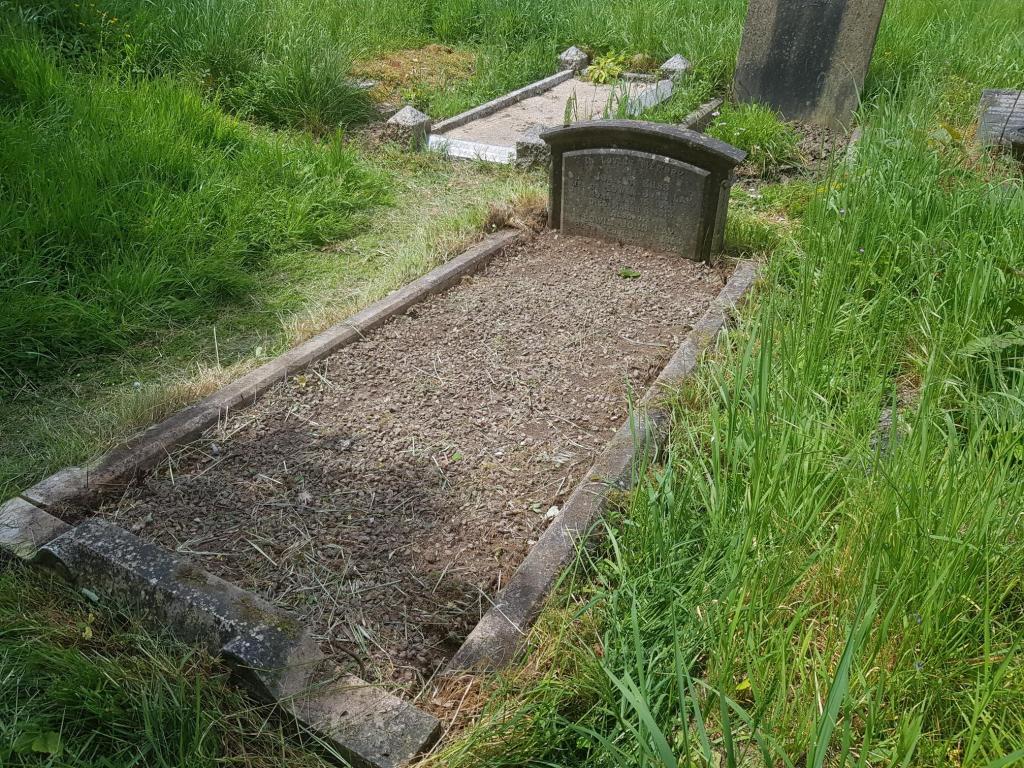
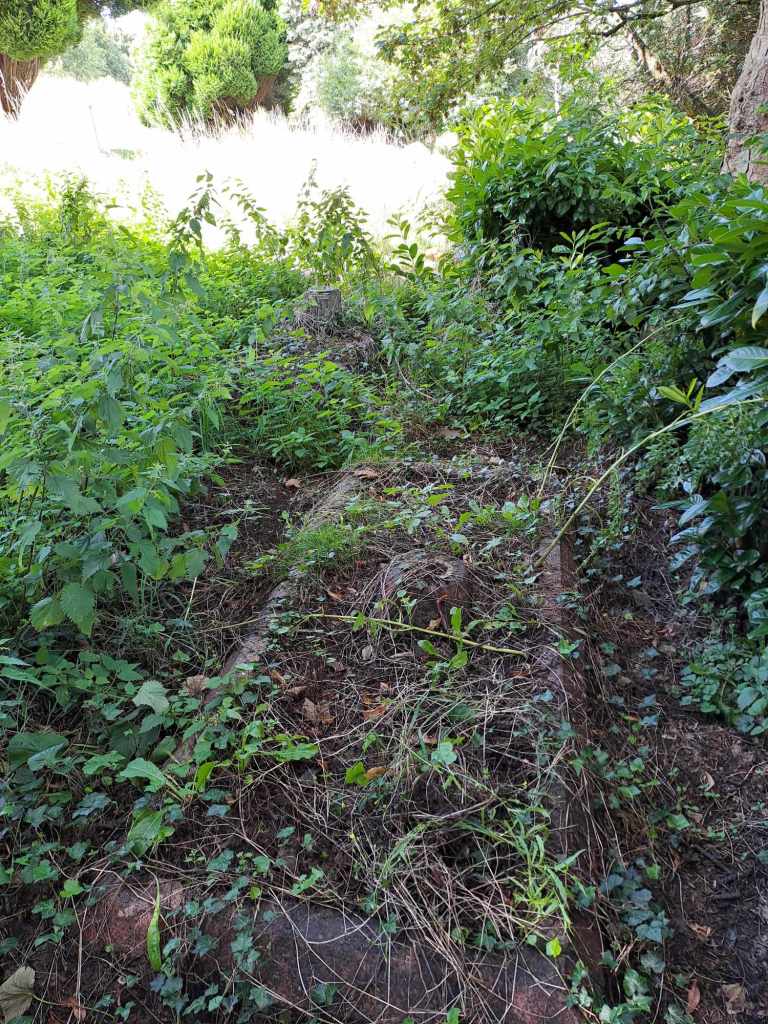
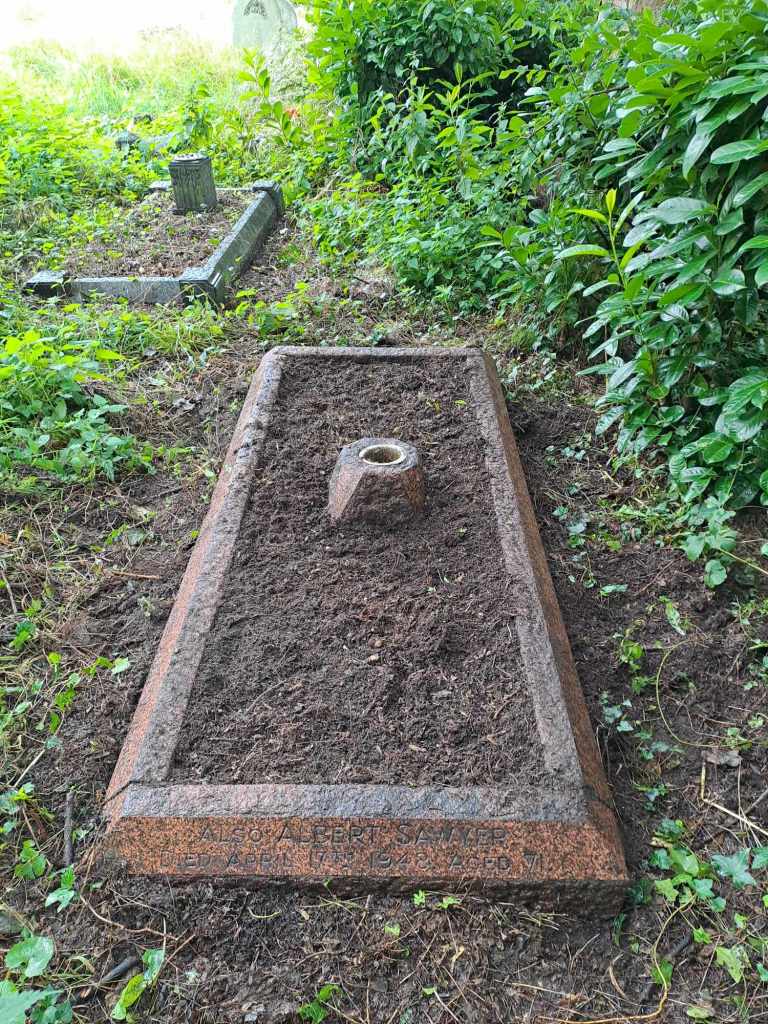
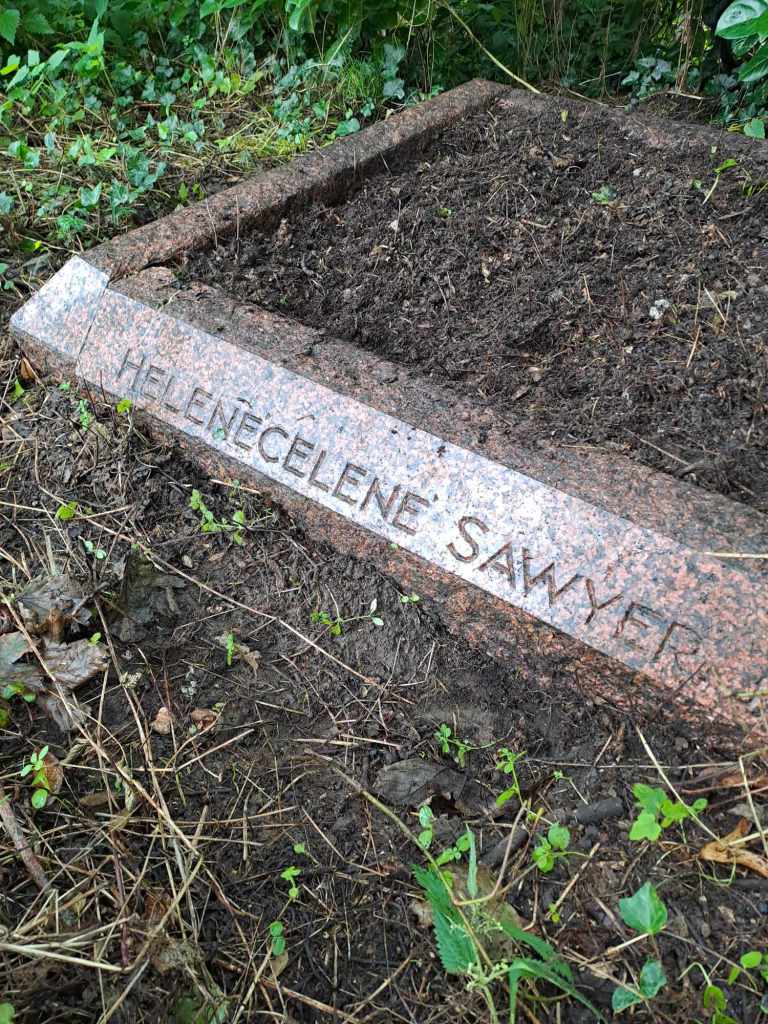
Helene Celine Sawyer is buried in a dark and overgrown area of the cemetery and when I first wrote about her I thought she had no headstone or memorial. I bemoaned the fact that often the people who worked the hardest for others during their lifetime leave no lasting memorial following their death, but since then one of our cemetery volunteers has been able to find Helene’s grave.

Helene Celine was born in Stroud, Gloucestershire in 1877, the eldest child in a family of eleven. Her father Thomas Hobbs was a butcher, her mother Elizabeth was born in Switzerland. Following the death of her husband in 1896, Elizabeth became Sub Post Mistress at the Post Office in Westcott Place where Helene was working at the time of her marriage to Albert Sawyer, a brass finisher in the railway works. The couple were married at St Mark’s Church, Swindon on September 21, 1902 and moved into 72 Dean Street where they would live together for the next 31 years.

Helene and her husband Albert were both members of the Swindon Labour Party and Helene was involved with other local organisations such as the Workers’ Educational Association (WEA) and the Young Men’s Christian Association (YMCA).

Helene began her lifetime of public service as a member of the Swindon and Highworth Board of Guardians where she was described as an energetic member of that committee. She continued to work with the Wiltshire Public Assistance Committee, which replaced the Board of Guardians following the Local Government Act 1929.

In 1920 Helene was appointed a Justice of the Peace, one of 234 women magistrates created nationwide, and was the first to serve on the Swindon Bench. The long list of names was published in the Women’s Freedom League newspaper, The Vote, where the women were described as having “rendered themselves conspicuous by distinguished public service.”

Helene had been suffering from failing health for some months during 1933 and died at her home on December 11. She was 56 years old. The obituary published in the North Wilts Herald on December 15 noted that Helene “had always carried out her duties very rigorously and with a great deal of judgement and sagacity” and that her work with the Children’s Court would always been remembered.

The funeral took place on Friday, December 15 with the service at St Mark’s Church followed by interment in Radnor Street Cemetery. Helene lies in plot B2647 where her husband was also buried in 1948. The cremated ashes of their only daughter, Kathleen were interred with them following her death in 1986.

Georgina Frances Verschoyle

On the perimeter of the cemetery in Section E is the grave of Georgina Frances Verschoyle.

Georgina was born in Dublin in about 1831, the second child and eldest daughter of Robert Verschoyle and his wife Catherine Curtis. Robert and Catherine were married by licence on August 20, 1824 at the parish church of Bathwick St. Mary, Somerset. By the time of the 1841 census they were living in Eaton Square that exclusive housing development once known as a ‘City of Palaces’ owned by the Grosvenor family and laid out by T & L Cubitt in 1827.

The Irish Verschoyle family were of Dutch origin. Some sources say they were Huguenots who fled to Ireland to escape religious persecution others that they had travelled to Ireland with William of Orange.

Georgina’s grandfather was the Rev James Verschoyle, Bishop of Killala, described as reforming and innovative and the last bishop to hold the title in that diocese. Her father Robert was a wealthy landowner with property in Ireland although he lived most of his adult life in England.

Transcription errors in the spelling of the unfamiliar Verschoyle name make it difficult to track Georgina through the online census returns, but by 1881 we find her living at 1 Victoria Cottages, Tormoham, Devon in a lodging house run by Jane Gardner.

In 1891 she was living with her youngest sister Augusta and her husband Alfred M. Drummond, a retired Army Captain, in Fitzjohns Avenue, Hampstead.

So how did Georgina come to be living in Swindon for the last years of her life? For a possible connection we have to turn to her brother, Henry William Verschoyle.

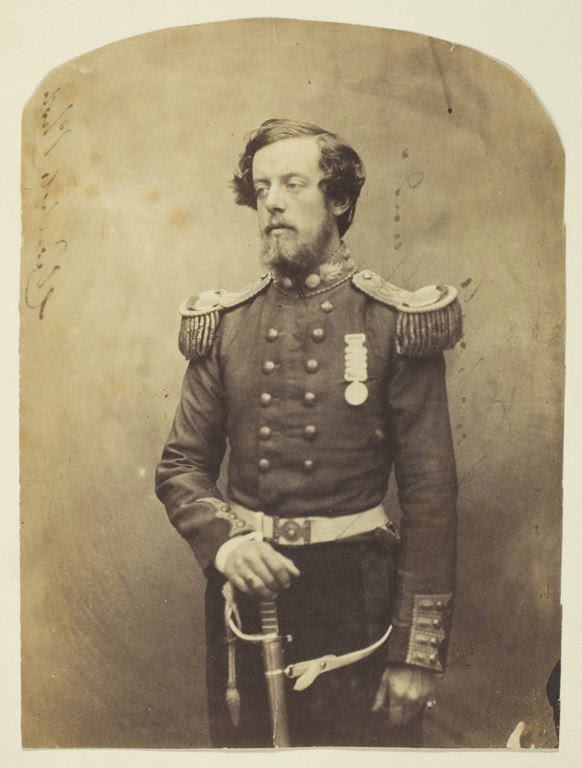
Captain Henry William Verschoyle served in the Grenadier Guards in the Eastern campaign of 1854-55, probably better known today as the Crimea War. Henry saw action in the battles of Alma, Balaklava and Inkermann where he carried the regimental colours. He fought at the siege and the fall of Sebastopol and was wounded in the trenches on September 5, 1855. Captain Verschoyle was promoted to Lieutenant Colonel on January 15, 1861. He died on August 21, 1870.

But how does this explain Georgina’s presence in Swindon more than twenty years later?

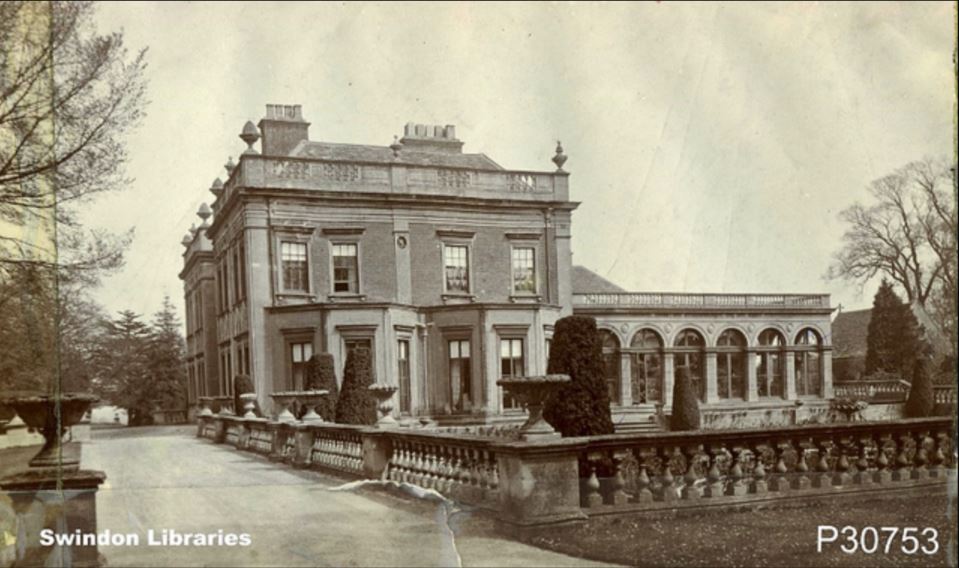
In 1856 Henry William Verschoyle married Lucy Clarissa Goddard in Christ Church, Swindon. Lucy Clarissa was the daughter of Ambrose Goddard, Lord of the Manor, and his wife Jessie Dorothea Lethbridge. In 1851 Lucy Clarissa was living at The Lawn, the Goddard family home, with her father and three sisters, Emma, Julia and Adelaide.

Lucy Clarissa and Henry William Verschoyle went on to have a family of four daughters and a son and lived at 6 Wilton Crescent, Belgrave Square, so were near neighbours of Henry’s mother Catherine in Eaton Square.

But even this doesn’t answer the question of how Georgina spent the last years of her life in Swindon.

Perhaps Lucy Clarissa had returned to stay at the Goddard family home in the 1890s but would that have been encouragement enough for Georgina to move to Swindon, and if so why didn’t she stay in The Lawn, it would have been plenty big enough?

The Lawn, Swindon published courtesy of Local Studies, Swindon Central Library.

My research into the life and times of Georgina Frances Verschoyle continues, but for the time being this is all I can discover about her.

The facts …

Death announcement

Verschoyle On the 20th inst at New Swindon, Georgina Frances Verschoyle aged 64.

Reading Mercury Saturday December 30, 1893.

Radnor Street Cemetery Burial Registers

Verschoyle Georgina F. 64 years 6 Queen Ann Buildings burial 23rd December, 1893 plot E8474

Probate

Georgina Frances Verschoyle of 4 Queen Anne’s buildings, Farringdon Street, New Swindon Wilts Spinster died 20 December 1893 Probate London 19 November to Arthur Robert Verschoyle esquire Effects £6560 3s 2d

You might also like to read:

The Goddard family tomb and Swindon’s first ‘modern’ burial ground

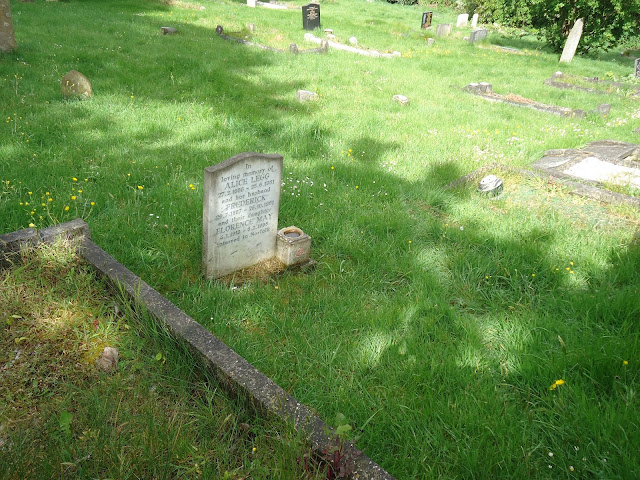
Alice and Frederick Legg

This is the story of Alice and Frederick Legg.

Alice Legg was not a local girl. She was born in Wimbledon in 1886, the daughter of Frederick and Catherine Lovegrove.

Her first job was as a kitchen maid at a private girl’s school in Wimbledon. The duties of a kitchen maid were many and varied and involved a lot of cleaning and some cooking under the supervision of the cook. In this her first job, Alice was roughly the same age as the pupils at the school.

At the time of her marriage in 1911 Alice was working as a domestic servant for a Wine & Spirit retailer. Her husband Frederick was born in 1887, possibly in Faringdon.

They married at All Saints Church, Wimbledon on June 5, 1911. Both Alice and Frederick give their address as 65 Norman Road. The UK Railway Employment Records state that Frederick had begun working for the GWR here in Swindon on May 29, 1911 as a Boilermakers Helper, just weeks before his wedding.

Frederick later worked as Watchman in the Loco Manager’s office. He left the Works on Jan 4, 1943. The couple’s last home together was at 75 Okus Road.

Alice died at the Isolation Hospital. Frederick died at 432 Ferndale Road, most probably the home of one of their children.

The couple died within months of one another. Alice in June 1961 and Frederick in October of the same year.

Alice and Frederick’s story was kindly given to me by a Radnor Street Cemetery follower who joined one of our guided cemetery walks some years ago.

In Memory of Mary Jane Gunter

I thought I would rescue the identity of the woman buried in this grave before the inscription disintegrated completely. It turned out this was the easy bit.

At the time of the census 1881, a few months before she died, Mary Jane and her husband Joseph were living at 40 Prospect Hill where Joseph worked as a furniture broker. Joseph was 29 years old and Mary Jane was 23. The couple had married on December 18, 1880 at the parish church, Cirencester, less than a year before Mary Jane died. The burial registers record that Mary Jane Gunter lived at 14 Haydon Street when her funeral took place on November 21. She was buried in grave plot A404, only the 62nd burial to take place in what was then a new cemetery.

Ten years later, on the 1891 census returns Joseph described himself as a widower working as an Engine Fitter’s Labourer and lodging with the Hand family at 128 William Street. Life didn’t treat Joseph kindly. In 1901 he was a patient at the district asylum in Devizes. In 1907 he was a patient in an asylum in Dorset where he died in 1910.

I then checked the grave plot details to see if Joseph was buried with Mary Jane, but what I discovered was not what I had expected. Although a privately purchased grave with a substantial memorial in place, 22 years later the plot was reused.

Charles Hitchings a grocer and shopkeeper lived with his wife Elizabeth and their family at 38 Belle Vue Road where he died suddenly on Sunday July 5, 1903. Mr W.E. Nicolson Browne (county coroner) held an inquest where it was heard that the deceased complained of pains near his heart after which he shortly fell dead. A verdict of “Death from syncope” was recorded and on July 8, 1903 39-year-old Charles Hitchings was buried in plot A404.

And then 35 years later grave plot A404 was used for the third and final time. Charles Edward Iles aged 74 and formerly of the Rolleston Hotel, died in the Stratton Infirmary and was buried on October 5, 1938.

Was there any family connection between Mary Jane and the two men later buried with her? Am I missing a clue somewhere?

You might also be like to read:

Charles and Elizabeth Hitchings and their famous granddaughter

Elizabeth Williams – a forceful character

Image published courtesy of Local Studies, Swindon Central Library.

Opportunities for women to serve in public office in the 19th century were few and far between but in 1894 significant changes came about. The Local Government Act of that year removed restrictive property, gender and status qualifications, enabling single and married women to vote and stand for election on the newly constituted urban rural district councils.

The local government reforms also extended to the Poor Law Board of Guardians, a bastion of male dominance, responsible for apportioning poor relief and in charge of the local Workhouse.

On January 2, 1895 the new Board of Guardians met for the first time. The Returning Officer laid before the Board his certificate of the result of the Elections of Guardians and Rural District Councillors with the names of four women among their number; Miss Elizabeth House, Mrs Elinor L. Buller, Mrs Elizabeth Williams and Mrs Maria Matthews. Three of these remarkable women are buried here in Radnor Street Cemetery.

The first four women elected to the Highworth & Swindon Poor Law Board of Guardians came from widely different backgrounds.

Elizabeth Williams was born in Wanborough in 1846 in a house attached to the Shepherd’s Rest public house. She was one of ten children, nine daughters and a son Henry who died aged 10. Her father Thomas Edwards, was an agricultural labourer and by the age of 15 Elizabeth was working as a general servant in Upper Stratton. Elizabeth married Henry Williams, a gas and water fitter and they had three children. The family lived at various addresses in Swindon and at the time of Elizabeth’s election to the Board of Guardians they lived at 23 Oxford Terrace, Faringdon Road.

Elizabeth served on the Ladies Workhouse Visiting and Boarding Out Committee for many years and in 1901 she was elected on to a new committee set up to address the payment of the Foster Children’s Quarterly Clothing Allowance. In 1902/3 Elizabeth also served on the Finance and House Committee where she objected to the proposal to award the Workhouse Master Mr Kilby seven guineas for his services in the preparation of Dietary Tables.

Elizabeth was a devout Primitive Methodist and strictly teetotal. Her great granddaughter Mrs Hazel Grace tells of how Elizabeth once tried to stop the male inmate’s Christmas beer allowance, a matter recorded in the Minute Book on November 20, 1901 during a discussion about the Workhouse Christmas dinner. The amendment ‘that no Beer be given but that Tea, Coffee or aerated waters be substituted,’ was proposed by local businessman Henry Raggett and seconded by Mrs Williams. However, the amendment was defeated by 16 votes to 12 and the inmates received their Christmas cheer.

In later years Elizabeth lived with her granddaughter’s family and Hazel remembered her great grandmother as a forceful character.

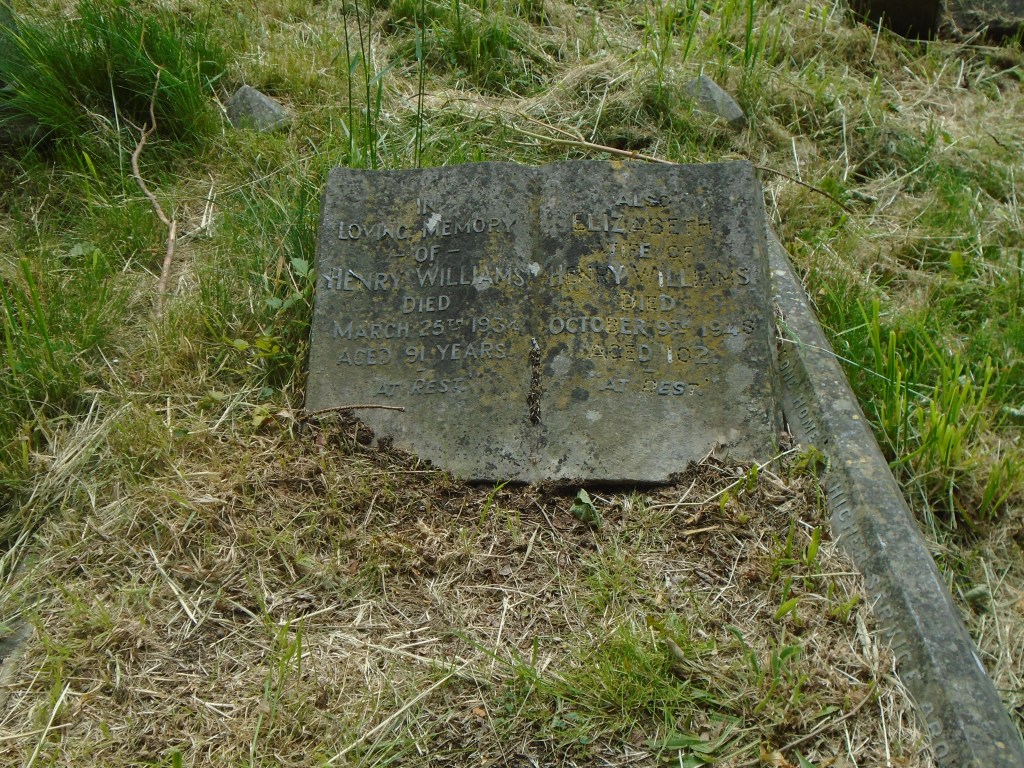
Elizabeth Williams died in 1948, aged 102. She is buried here, her grave marked by a headstone in the shape of an open book, symbolic of a love of learning and religious faith.

You might also like to read:

The trail blazing Maria Matthews

Ada Hack – first woman member of Swindon School Board

If Ada Hack’s grave ever had a headstone it has sadly been lost.

Ada Hack stood for election to the Swindon School Board in 1883. There was some opposition to her suitability, although not on account of her gender or her teaching experience. The 33-year-old mother of two had taught for 12 years in Board Schools and had run a private, middle class school of her own but W.H. Stanier, chief clerk to William Dean, Chief Locomotive Engineer for the Great Western Railway, challenged her impeccable qualifications, arguing that she was a relative newcomer to Swindon, so apparently didn’t know how the town worked. Ada responded by drawing attention to the election of Rev Ponsonby in 1880 when he too was a newcomer to the town.

Ada was born in Lambeth in 1850, the daughter of Charles Brocklehurst, a merchant clerk, and his wife Eliza. She studied at the British and Foreign School Society’s Training College for Mistresses in Stockwell, South London. She married Ebenezer Hack, a postal clerk, in 1880 and soon after moved to Swindon.

Standing as an Independent candidate, Ada voiced her opinion that school boards had nothing to do with politics and that political interest should not override the interests of the children. As a Quaker, Ada was against corporal punishment, conceding while it may be necessary to use the cane on some occasions, but she had never had cause to use it.

Ada came top of the 1883 poll, beating her nearest rival by more than 650 votes and defeating two newspaper proprietors, William Morris of the Swindon Advertiser and Joshua Piper of the North Wilts Herald. Her nomination was said to have received support from ‘some members of the Bristol and London school boards and from women all over the country.’

Having secured an unqualified victory in 1883 Ada unfortunately made little impression on the running of the School Board as she attended few meetings due to ill health. She was persuaded to stand for re-election in 1886 much against her wishes and received just 394 votes, finishing 14th in the poll.

But this was not the end of her involvement in the public sector. Ada became a member of the Women’s Peace and Arbitration Association and also the Moral Reform Union, an organisation that pressed for the need to eradicate sexual double stands in society and focused on the Contagious Diseases Acts, and the poor moral conduct of public figures.

At the time of the 1891 census Ada lived at 26 Belle Vue with her husband and two young sons where she described her occupation as ‘Artist Sculp.’

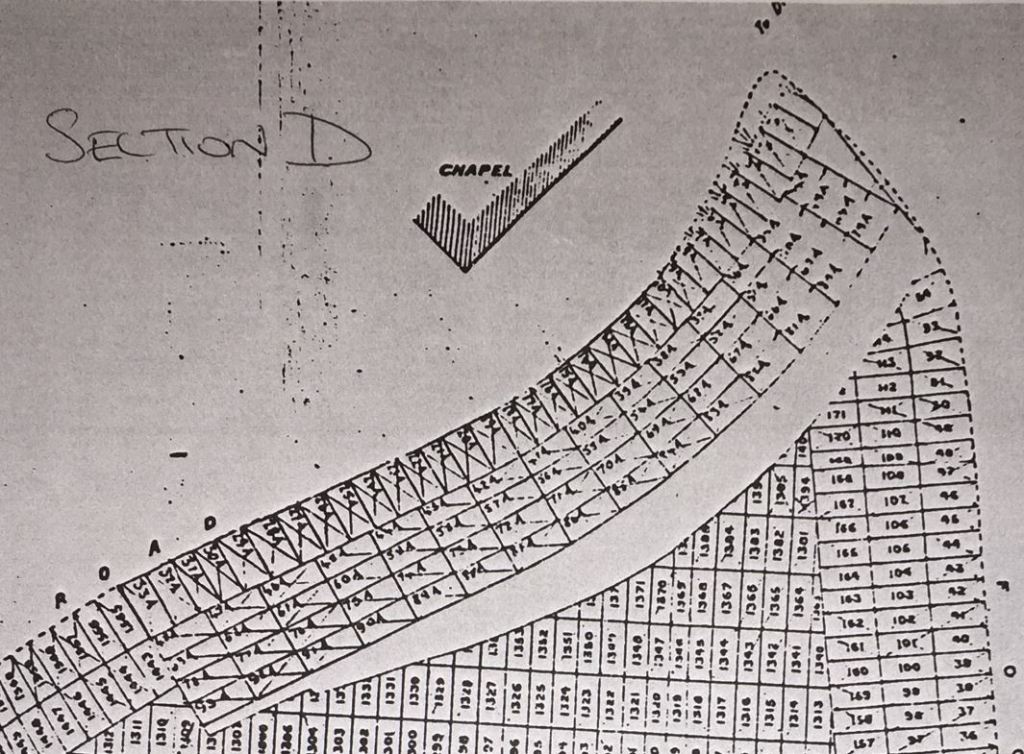
The 1883 newcomer to Swindon died at her home, Elm Villa, Wellington Street in January 1931. She is buried in grave plot D89A, close to the cemetery chapel, with her husband Ebenezer Benjamin, her son John Victor Campbell Hack and her daughter-in-law Alice Margaret Louisa Hack.