W.J.C. Plaister – Running Shed foreman

Back in the day people worked until they couldn’t work any longer. Engine Maker and Fitter George House continued to work into his 80s and Robert Laxon was working as a foreman in the Copper Smith Shop into his late 70s. By 1930 the GWR introduced the compulsory retirement age of 66 years but William John Culley Plaister was forced to retire in 1932 aged 61 years. It would be good to think he had a nice little nest egg that made this possible but unfortunately it was ill health that forced him to retire early.

Sadly, William didn’t have long to enjoy his retirement or to indulge his hobbies of cricket and football.

Running Shed Foreman

Mr W.J.C. Plaister Retires After 18 Years’ Service

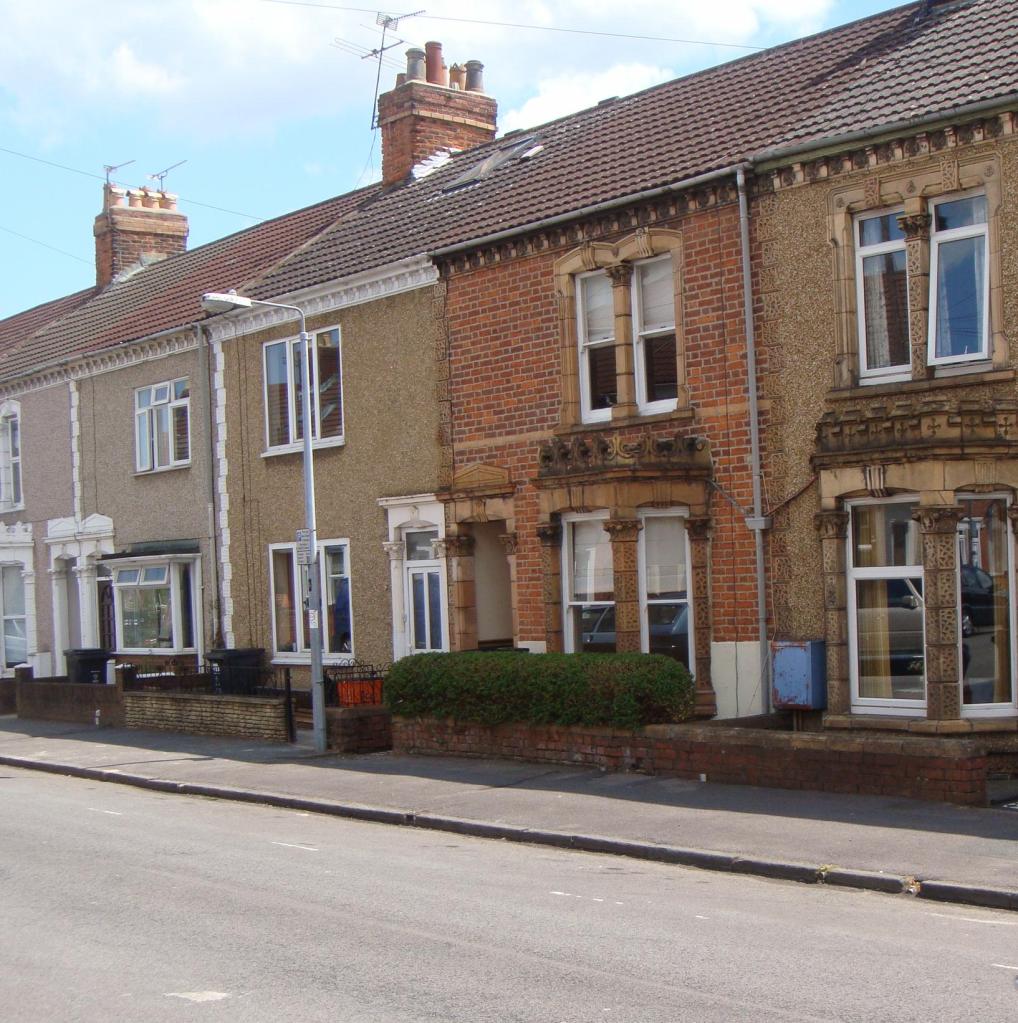
Mr W.J.C. Plaister, of 24 Exmouth street, Swindon, who for the past 18 years has been mechanical foreman of the GWR Running Sheds, was the recipient of a barometer, presented to him by his colleagues, on his retirement.

The presentation was made in the Running Shed mess room by Mr A. Tyrell, Mr W.N. Pellows, superintendent of the division, was to have made the presentation, but was unable to attend.

Mr. Plaister has been forced by ill health to retire earlier than he should have done. He was very popular with his staff, and during his 18 years’ service has taken a keen interest in the social side.

He was president of the cricket and football clubs, and had taken an active interest in these two branches of the Running Shed’s sports activities.

As trustee of the N.G. Sick and Benevolent Fund, he has given valuable assistance in many ways.

North Wilts Herald, Friday, September 2, 1932.

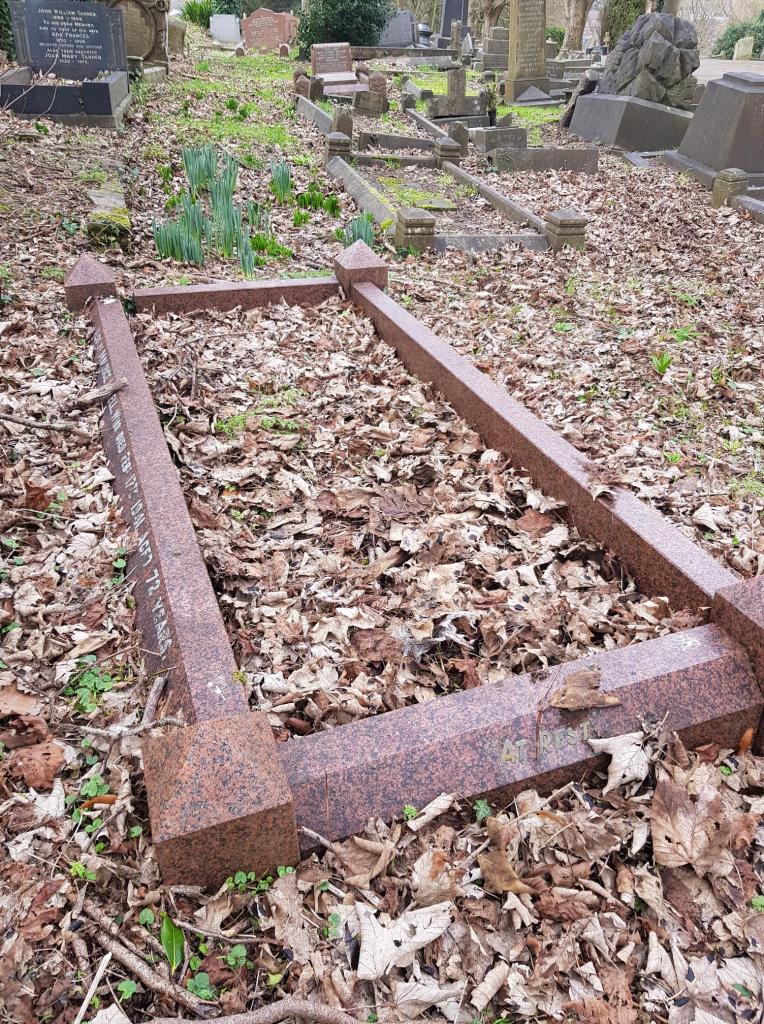
William John Culley Plaister died on May 11, 1940 aged 69 years. He was buried in grave plot E7254. His brother John Cyprus Plaister and his wife Florence Louisa are buried in the neighbouring plot E7253.
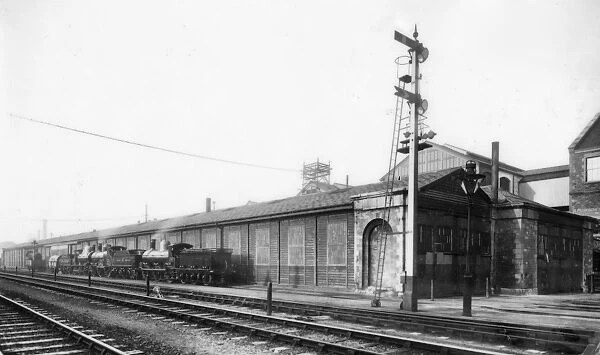
The old Running Shed c1910.

Eleanor Stroud

In a blogpost last year I mentioned that there were very few old photographs of the cemetery. There were only three pre-dating the 1920s and two of these were taken by William Hooper.  And then when I looked more closely into the work of this prolific Swindon photographer I found another taken at the funeral of his mother-in-law Eleanor Stroud.

Eleanor (sometimes known as Ellen) was born in Aldbourne in 1834, the daughter of agricultural labourer Thomas Brind and his wife Mary. She married James Stroud, also from Aldbourne, a railway guard, in 1864.

In 1871 Eleanor and James lived in Leominster with their two little daughters, Mary Jane 3 and Alice Kate 1. By 1881 the family had moved to 22 Merton Street, Swindon. On census night James and his daughters were at home. Eleanor, meanwhile, was employed as a monthly nurse at number 10 Merton Street where Annie Hacker had given birth three days previously.

In 1891 Mary Jane married William Hooper, a stationery engine driver with a passion for photography.

Two years later James Stroud was involved in a fatal shunting accident at Tetbury Road station when he was crushed between a waggon and the goods shed. He was brought to the GWR Medical Fund Hospital in Swindon but sadly died as a result of his injuries the following day on January 14, 1893.

After the death of her husband Eleanor lived with her elder daughter Mary Jane and her husband William Hooper. By 1911 William was working full time as a Portrait and Landscape Photographer. Eleanor is pictured here with William and Mary in their roof garden at Cromwell Street.

Eleanor Stroud died at her daughter’s home 6 Cromwell Street. She was buried on April 29, 1915 in grave plot A823 alongside her husband. William took this photograph at her funeral.

You may also like to read

William and Mary Hooper rock up at Stonehenge

Alice Kate Richards – smile please!

Maurice Uzzell, Louisa and little Lily

Maurice Uzzell, who was buried in grave plot D64A, has been relatively easy to research. He has a pretty unusual surname and his branch of the family kept in close contact, which all helps the researcher.

Born in 1868 in Christian Malford, Wiltshire, Maurice was the fourth child of Henry and Hannah Uzzell. In 1871 aged 2 years old he is living in the village with his parents and two elder brothers. By 1881 the family was complete – a daughter and two more sons – and they all lived at 35 Leigh Cottages, Christian Malford. The two elder sons Charles 17 and Stephen 15 were working as agricultural labourers, Maurice 13, was still at school.

Drawn to the bright lights of Swindon, by 1891 Charles 27, Maurice 22 and Fred 19 were boarding with Jesse & Mary Scott (formerly Uzzell and their elder sister) at 67 Jennings Street, Rodbourne. Charles and Maurice worked as labourers and Fred as a blacksmith’s labourer, so probably fair to assume they were all employed in the GWR Works.

In 1896 Maurice married Louisa Worts – so let’s have a look at Louisa. Born in 1855 in Leyton, Essex by 1891 Louisa was living with her widowed mother and her sister and brother-in-law in Colebrook Road, Walthamstow where she worked as a laundrymaid.

In the 1901 census Maurice is living at 61 Clifton Street where he works as a Wood Turner in the GWR Works. Living with him are Louisa, his brother Fred and – hello – a niece – Lily Uzzell aged 10 born in Walthamstow.

An Uzzell family search found all his brothers (and Ellen) and it seemed none of them had ever lived in Walthamstow. Only Louisa (nee Worts) had lived in Walthamstow. Was young Lily her daughter, born before her marriage to Maurice?

In 1911 Maurice and Louisa lived alone at 61 Clifton Street. Louisa declared they had been married for 14 years and had no children.

But what happened to little Lily? Did she die in childhood? If so she is not buried with Louisa and Maurice. Did she marry? I can’t find a name or place that matches.

Louisa died in 1931 and is buried in the area close to the cemetery chapel with this discreet pink memorial. Maurice died in 1941. Probate of his estate was awarded to William Scott, railway clerk, most probably the son of Jesse and Mary Scott who Maurice lodged with in Jennings Street as a young man. Maurice is buried here with Louisa.

Fred Uzzell, Maurice’s younger brother who lived with him in 1901 and then moved to Kingshill Road, was buried close to him in the cemetery in grave plot D234.

This branch of the Uzzell family has been relatively straightforward to trace. But what happened to little Lily? I’d love to know.

You may also like to read:

David Uzzell – a bit of a country rogue

A new headstone and a soldier remembered

Private George James Smith pictured with his mother and two sisters published courtesy of an Ancestry public family tree.

Radnor Street Cemetery closed to new burials in the 1970s but the occasional interment (usually cremated remains) does still take place where there is room in a family grave. More unusual is the installation of a new headstone, although in recent weeks this has also taken place.

The new headstone commemorates Frederick Smith and his wife Elizabeth who died in 1917 and 1918 respectively and their son-in-law William “Alf” Penney who died in 1960. The inscription on the headstone also commemorates Frederick and Elizabeth’s son Private George James Smith who was killed in action in Salonika during WWI.

George James Smith was born on March 7, 1895 one of the four surviving children of Frederick and Elizabeth Smith. Frederick worked as an Iron Dresser in the GWR Works and George grew up at 87 Linslade Street, Rodbourne. He too entered the Works and as a 15 year old worked first as a cleaner, then a call boy and by 1913 he was a time and storekeeper. The UK Railway Employment Records 1833-1956 include an added comment to George’s employment record “25 Apl ’17 Reported by War office as missing.”

George was serving in the 7th Battalion of the Wiltshire Regiment in Salonika when he was declared missing presumed dead. He is remembered on the Doiran Memorial, Greece. George has no known grave but this new headstone in the cemetery will be cared for by our team of CWGC Eyes On Hands On volunteers.

Florence Gladys Richards – accounts clerk

Female clerks photographed in 1916

You might be surprised to know that women were employed in the GWR Works from as early as 1874. It was not only Swindon’s sons who could benefit from a father employed in the Works but so could Swindon’s daughters.

By the 1870s the GWR was finding it difficult to recruit skilled men to move to Swindon. The problem was caused by a shortage of jobs for young women, the railwaymen’s daughters. The men wouldn’t move their families to Swindon if there was no work for their daughters. Joseph Armstrong, Locomotive, Carriage and Wagon Superintendent, addressed the problem by extending the Carriage Works on London Street and creating a separate upholstery department for the employment of girls only.

Women were probably most obvious in the Works during WWII when they were employed in engineering and other roles previously unavailable to them. Many were sorry to leave when servicemen returned to take up their jobs once again.

The employment of women as clerks, once traditionally a male role, began in about 1910 and by 1915 was increasing rapidly. In 1914 sixteen year old Florence Gladys Trehorne started work in the accounts department where her father Edwin also worked. Florence started work on April 6, 1914 joining others such as Winifred Sims, Grace Wright and Lilian Plaister, who went on to become supervisor.

After eight years Florence resigned from her job just two days before her wedding on July 5, 1922 (married women were then not allowed to continue working in the GWR) when she married Percival Stanley Richards at Trinity Presbyterian Church, Victoria Road. Perhaps Florence was looking forward to leaving her job and stepping off the 9-5 treadmill. Perhaps she was looking forward to being a housewife and all that cooking and cleaning!

Sadly, Florence died on July 26, 1928, aged 30 years. She was buried in grave plot D149 with her father Edwin Charles Trehorne who died in 1923. Her mother Amelia Ellen Trehorne died in 1940 and joined them both. Florence does not appear to have had any children. Percival never remarried. He moved back to Bath where he died in 1974.

You may also like to read:

Celia Morkot – the first woman employed in the Works

Phyllis Peters – Railway Clerk

Lorna Dawes – in her own words

A Bench with a View

It was a blustery Monday at the cemetery with a chill in the air and rain on the wind, but it didn’t prevent me from stopping at my favourite bench.

There are four benches (I’m honour bound to keep the 4th one secret) in the cemetery; but this is my favourite one with a view across what was previously known as New Swindon, a railway town.

Here the eye is drawn to the housing development built in the early 2000s on the site of the ‘A’ (Erecting) Shop. A Shop covered more than 11 acres (coincidentally the same size as Radnor Street Cemetery) and was one the largest covered workshops in the world. The red brick apartment blocks, clearly seen from the bench, and the surrounding houses are named in honour of George Jackson Churchward Locomotive Works Manager at the GWR Swindon Works 1902-1916 and Chief Mechanical Engineer from 1916 until his retirement in 1922.

From this bench you can see what remains of the 19th century railway works, more familiar to a younger generation as the McArthur Glen Designer Outlet Village and the railway village, the company houses once home to the early workforce. So many of those railway men and their families moved up the hill to rest in peace in this cemetery.

It was at this bench that I composed the ghostly story of Edie and her soldier son – a tribute to one Swindon family, yet typical of so many others.

This is my favourite bench. Perhaps we’ll meet here one day.

Elizabeth and George Atkins – reunited

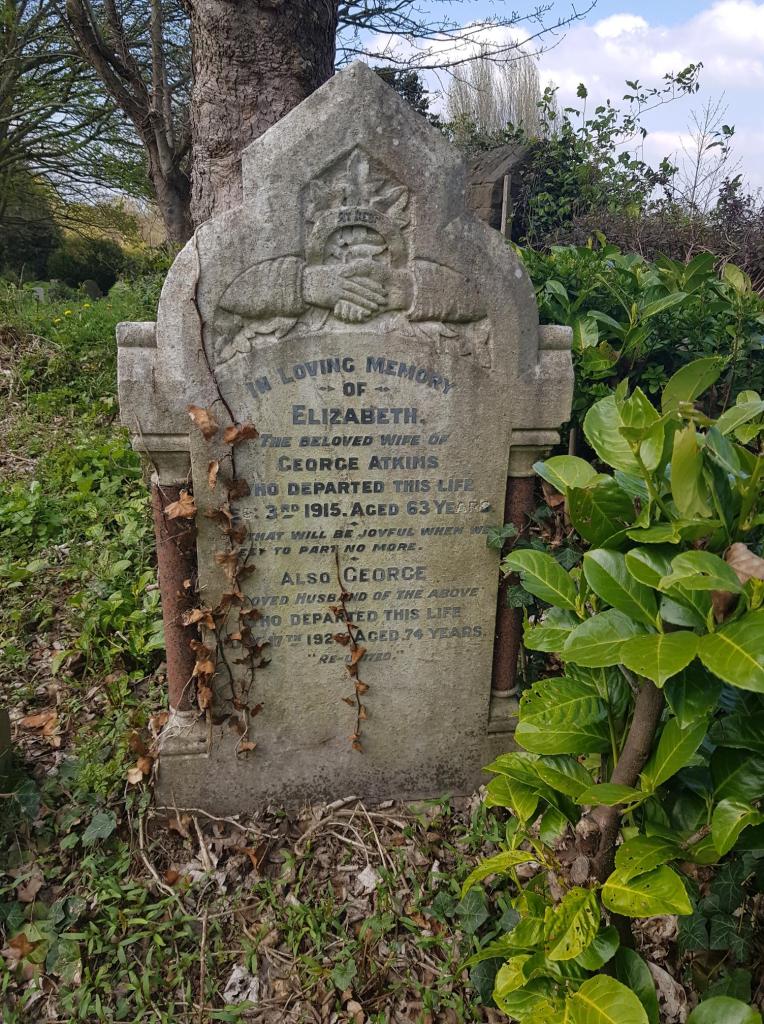
In recent years the hedge on the periphery of the cemetery has engulfed this headstone, so it was fortuitous that I was passing just after it had been trimmed and was able to take a photograph. A very elegant memorial, this headstone is full of funerary iconography and symbolism and tells us much about the couple’s relationship and religious faith.

The clasped hands is a symbol dating back to Greek and Roman funeral art. Interpretations of this symbol include the parting of a couple by death but also their reunion in the afterlife. In this example the hands are surrounded by ivy leaves which in turn represent friendship and immortality. The columns at either side of the inscription represent the entrance to heaven and the afterlife. So there is quite a lot going on here!

It would be fair to assume that the couple had a strong faith.

Their marriage banns were read at Christ Church but the marriage does not appear to have taken place there. Their first two children were baptised at the Faringdon Road Wesleyan Chapel where the couple worshipped and where they could possibly have been married.

By 1881 they were living at 7 Mount Pleasant, a short terrace of houses situated between Havelock Street and Brunel Street, lost beneath the 1970s development of the town centre. Originally from Birmingham, George worked as a brass finisher in the railway factory.

By 1891 George Elizabeth and their four children, Grace, John, Joseph and George were living at 92 Westcott Place. They would later live at 166 Westcott Place where Elizabeth died in 1915.

Elizabeth, aged 60 years, was buried in grave plot B3329 on December 8, 1915. George died aged 74 years at 49 Shelley Crescent (most likely Shelley Street) and was buried with Elizabeth on July 21, 1926. Elizabeth and George Atkins, reunited.

Harry James Davis – Swindon Veteran of Industry

In December 1930 more than 200 men retired from the Great Western Railway Works, an event of such importance to warrant a detailed article in the first January edition of the North Wilts Herald published in 1931.

The names and addresses of those men forced to retire under the introduction of the 66 years age limit were recorded in appreciation of their long years employed in the Works. Men who had joined the company in the 1880s and 90s; men like Harry James Davis.

Harry James Davis was born in 1869, the eldest of Harry Edward and Louisa Elizabeth Davis’s 13 children. The family moved to Swindon when Harry was a baby and he grew up in the railway village.

Harry began a 7 year engine turning apprenticeship on his 14th birthday, October 16, 1883. Like all the apprentices at that time he started on a daily rate of 10d rising to 3/- in 1890 at the end of his apprenticeship.

He married Rose Ann Gibson at St. Mark’s Church on July 16, 1894 and the couple had two sons, Harry John and Cyril George. By the time of the 1901 census they were living at 118 Dean Street, which would remain their home until Harry’s retirement in 1931. By 1939 he was living at 94 Manchester Road and at the time of his death in 1954 he was living at 64 Beckhampton Street.

Mr Harry James Davis: Chargeman fitter of 118, Dean Street, served practically the whole of his 48 years in G Shop. He had charge of the work in connection with Didcot Provender Stores, and also hydraulic work from Swansea and Cardiff Docks.

For the last seven years he was in charge of the Central Boiler Station, and during that period he saw the whole of the loco type boilers for stationary purposes done away with and the latest mechanical chain grates and pulverised coal plants substituted.

Mr Davis belongs to a well known musical family and in his young days helped to start the Blue Band, now defunct. He began his schooling in one of the GWR cottages in Bath street. The central boiler staff presented him with a wallet of notes and a box of cigars.

Swindon Veterans of Industry – North Wilts Herald, Friday, January 2, 1931.

The grave of Harry James Davis and his wife, son and daughter-in-law.

Harry James Davis’s grave in the foreground. His parents are buried in the plot with the pink granite kerbstone surround close to the path.

Harry James Davis died in 1954 and was buried in grave plot D75A, just a stone’s throw from his parents. He is buried with his wife Rose Ann who died in 1930, his son Harry John Davis who died in 1961 and his wife Gwendoline Sarah Katherine Davis who died in 1972.

You may also like to read:

Harry Edward Davis – 115 Dean Street

George Albert Hallard – Swindon Veteran of Industry

Swindon Veterans of Industry

Harry Edward Davis -115 Dean Street

The architectural details on houses in Dean Street differ considerably even though it is basically another long road of red brick terrace houses – a familiar sight in Swindon. Building began in about 1890 with a number of Swindon builders working there, the first of them Thomas George in 1890 who was later joined by his brother John on further work in 1892 and 1894.

One Swindon family obviously enjoyed living there, within easy reach of the railway factory – and each other.

Harry Edward Davis was born in 1850 when his parents were living at New Bread Street, Bristol. He married Louisa Miller in 1868 and they soon moved to Swindon where their son Harry James Davis was born, the eldest of their 13 children. They first made their home in the railway village living in Taunton Street and Exeter Street between 1871 and 1881. In 1891 they were living at 15 Cambria Place, a small cottage built in the 1860s, with 10 of their children aged 8 months to 20 years old.

Sometime before 1901 they moved to 115 Dean Street where Harry was working as a Railway Storekeeper. They still had 6 children living at home aged between 12 and 25 years and Louisa’s widowed father James Miller – oh, and a lodger.

Three doors down their son Harry James Davis lived at No 118 with his wife Rose Ann and their two sons Harry John and Cyril George.

And when the family took up residence in Radnor Street Cemetery they were near neighbours again.

Harry Edward Davis died at his home in 1922 and was buried in grave plot D25A where he joined his daughter Louisa Maud who died in 1920. Harry’s wife Louisa Elizabeth died in 1924 and was buried with them.

Eldest son Harry James Davis died in 1954 and was buried in grave plot D75A, just a stone’s throw from his parents. He is buried with his wife Rose Ann who died in 1930, his son Harry John Davis who died in 1961 and his wife Gwendoline Sarah Katherine Davis who died in 1972.

Then just towards the back of this section alongside the chapel, Hard Edward’s son Wilfred Charles Davis lies in grave plot D45A. Wilfred died in 1964 and is buried with his wife Kathleen who died in 1968.

Harry Edward and Louisa Elizabeth. I rather think this family photograph was taken on TRIPwhat do you think?

Two views of Dean Street named after William Dean Chief Locomotive Engineer at the GWR Swindon Works 1877-1902.

The grave of Harry Edward Davis, his wife and daughter.

Harry Edward Davis’s grave to the bottom of the photo and behind it that of his son Harry James Davis and his family.

Robert Dibbs and TRIP week

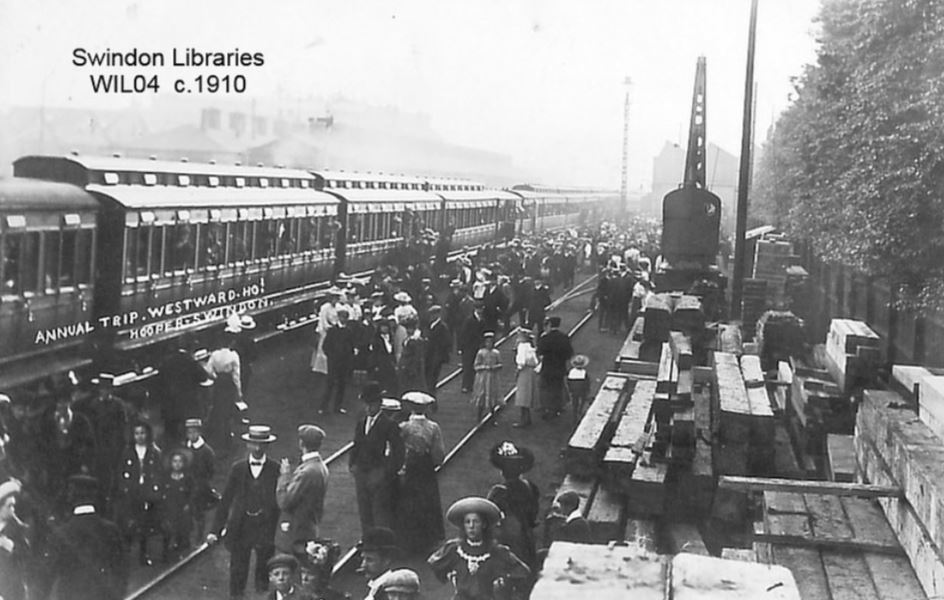
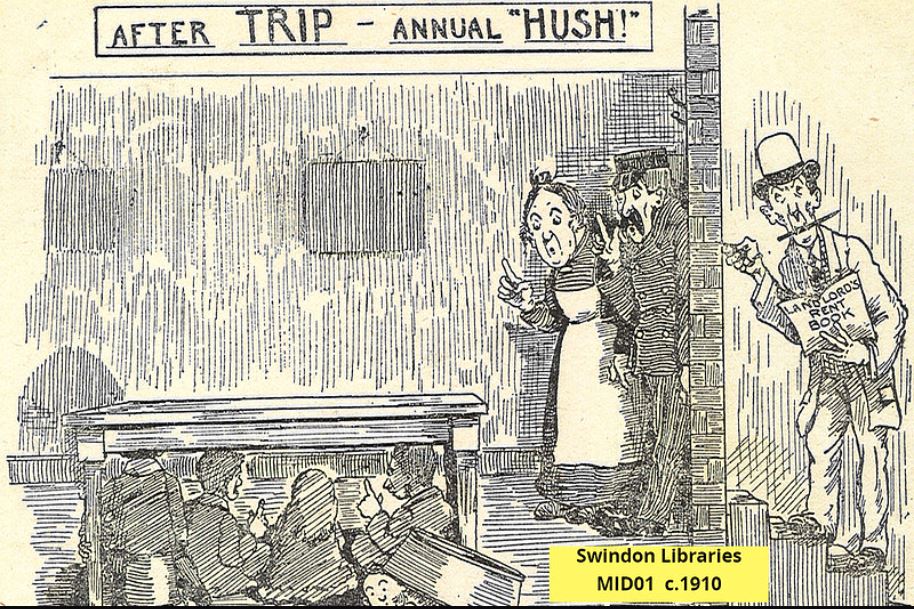
If you worked for the Great Western Railway in the Swindon Works, you joined the Mechanics’ Institution. The requirement was pretty much essential and the benefits extensive and if you weren’t a member you could not go on TRIP. Not a trip or the trip but TRIP.

TRIP began with a day’s outing to Oxford in 1848 for some 500 members of the Mechanics’ Institution. At its peak in 1924 29,000 people travelled in 31 trains numbering 520 coaches to seaside (and other) destinations across the UK.

It’s fair to say Swindon pretty much emptied during TRIP. With the Works closed, some shops cut their prices, others cut their opening hours. But who would have guessed that TRIP would impact upon a funeral.

Robert Dibbs, the landlord of the Red Cow Inn in Princes Street, died suddenly during the night of 11/12 July 1888 and was found by his daughter sitting in his armchair in the bar-parlour ‘quite dead.’ An inquest returned a verdict of ‘death from heart disease’.

Before moving to Swindon Robert Dibbs had previously served in the Mounted Police in London. He had subsequently joined the Swindon Troop of the Wilts Yeomanry where he held the rank of sergeant and as such was accorded a military funeral. However, there was a problem – it was TRIP week.

The Swindon Advertiser reported in the Saturday edition July 21, 1888:-

The mortal remains of the late Mr Robert Dibbs were interred with military honours on Monday afternoon. Deceased had been a member of the Swindon Troop of the Wilts Yeomanry ever since its re-establishment, five years since, having been promoted to the rank of sergeant. Previous to his coming to Swindon, Mr Dibbs had been in the Mounted Police in London for several years. Not only did the members of the Swindon Troop of Yeomanry attend the funeral, but also as many members whose service could be enlisted of the Swindon Companies of Rifle Volunteers. And it was most unfortunate, from more than one point of view, that the funeral should have occurred during the Great Western “Trip” week, seeing that the greater part of the Volunteers were away from the town, and were thus prevented from attending. Every endeavour was made to obtain the services of a band, but without success, for only portions of the various bands of the town were available, and the consequence was that the musical part of the military funeral service had to be dispensed with. Notwithstanding that the circumstances were against a good muster turning out to pay respect to their late brother in arms, yet the numbers, both of the Yeomanry Cavalry and the Volunteers, were far in excess of what might have been expected.

Image published courtesy of Local Studies, Swindon Central Library.

Robert Dibbs was buried on July 16, 1888 in grave plot E8312 which he shares with his son George Dibbs who died in 1895.

Read about the phenomenon that was - TRIP The Annual Holiday of GWR’s Swindon Works by Rosa Matheson.