Samuel Carlton – held in esteem

The GWR provided for their workers from the ‘cradle to the grave’ or so the history books would have you believe.

The Mechanics’ Institution out of which came so many fine things – a library for the use of the working man, opportunities for further education and so many other initiatives to improve the lot of the working class – well that was down to the men employed in the Works.

The men were also quick to acknowledge those they respected, contributing from their hard earned wages towards a memorial. A walk around the cemetery will quickly reveal an inscription to that effect on numerous headstones.

Close to the chapel is a magnificent pink granite obelisk above the grave of Samuel Carlton with the inscription  – ‘This Memorial was erected by Officials and Workmen of the Great Western Railway and other Friends, To mark the esteem in which he was held during the 32 years he was Manager of the Locomotive Works at Swindon.’

20230526_132229

Death of Mr S Carlton

Swindon has lot another well-known inhabitant in the person of Mr Samuel Carlton who died on Tuesday night, after but a brief illness, the result of a chill.

As the manager of so large an affair as the locomotive department of the GWR Works at Swindon for over 40 years, Mr Carlton was necessarily brought into contact with many thousand of workmen, and these are scattered all over the world, and will learn with regret of the death of their old chief, who died in harness so shortly before his intended retirement on a pension from the company he has served so long and well.

The deceased gentleman had a blunt style with him, that stood no humbug, but those who knew him knew that a kind heart was within. The greatest evidence that can be afforded of his proper treatment of those under him is the fact that during the long number of years he has had control of a large body of skilled workmen such a thing as a strike or dispute as to wage has never occurred.

Every object for the social well-being of the men met with ready support from him, as musicians and others will be most ready to acknowledge. In fact, Mr Carton had the making or unmaking of many an institution that perhaps will not realise this properly until some other chief, without the knowledge of humanity possessed by Mr Carlton may shew it them. But we hope this will not be the case.

A life-long worker, for he is said to have started work at eleven years of age, the deceased was able to appreciate the difficulties of a workman’s life and to thoroughly understand his requirements. He, like his old chief, Mr Joseph Armstrong, rose with the GWR Company. He served his apprenticeship in the engineering departments of the L. and NWR Works at Edge Hill (Liverpool) and Crewe, and, having subsequently spent 10 years in the same service, left it for an appointment under Messrs Pearson and Co., marine engineers, of Liverpool. On resigning his position he was engaged by the Vulcan Foundry Co., at Warrington, and at length, in 1855, accepted a position under the company of which he has been the trusted chief and adviser for over 40 years.

Mr Carlton was first engaged by the GWR Company for their works at Stafford Road, Wolverhampton, under the direction of Mr Joseph Armstrong. A short time after his employment there he was selected as foreman of the fitting, erecting, and machine shop; and in 1864, Mr Carlton followed Mr Armstrong, who had removed there, receiving the appointment of manager of the Locomotive Department, which he filled up to his death.

Since his appointment to the charge of the department, the number of employees had doubled. Besides being one of the oldest of the company’s officials, he was one of the ablest and most practical, and he had much to do with the extensions and developments of the company’s system during late years.

His original genius was shown in his authorship of several railway patents, including fastening for securing engine, carriage and wagon tyres to the wheels – a system now largely used both at home and in the colonies.

When it is remembered the great extension the GWR Co. has made of its mileage by amalgamation and otherwise during the period of Mr Carlton’s service, it will be readily understood how much the company has had to rely on such officers as he. In local affairs of a public character, Mr Carlton had no particular ambition, although at one time he was a member of the New Swindon Local Board. His aim had more in concerns more directly associated with the workmen, such as the Swindon Building Society, the Mechanic’s Institute, the Park, etc.

In 1891 he was the recipient of a beautiful framed address from the foremen of the department under his control congratulating him his restoration to health, and hoping that he would be spared for many years to come. He leaves a widow and seven children to mourn their loss, and we are sure the thousands of workmen who have worked under him, and the inhabitants of the town generally, will join in sympathy with their great trouble.

The funeral will take place today (Saturday), at the Cemetery, the procession leaving the deceased’s residence at noon, for St Mark’s Church. It is expected a vast concourse will attend at the cemetery which will be reached at one o’clock.

The Swindon Advertiser, Saturday, March 28, 1896.

Funeral of the late Mr. Samuel Carlton – The remains of the late Mr Samuel Carlton, whose demise was recorded in our last issue, were conveyed to their last resting place in Swindon Cemetery on Saturday last, in the presence of an immense concourse of people.

The funeral cortege left deceased’s late residence, Marlow House, at noon, and proceeded to St Mark’s church, where the first portion of the service was conducted by the vicar, the Hon. Canon Ponsonby, assisted by the Rev. A.G. Ross (curate).

The coffin was borne on a shillibeer, eight foremen from the GWR Works acting as bearers. Following the coffin were 13 mourning coaches, in which were the chief mourners including deceased’s widow and sons and daughters. About 500 mourners followed on foot, there being present representatives from all the shops in the Works. At the cemetery there was a vast concourse of people to witness the concluding portion of the service, which was conducted during a blinding hailstorm which proved most discomforting to the mourners. The grave was literally covered with beautiful wreaths and crosses.

Wilts and Gloucestershire Standard, Saturday, April 4, 1896.

Samuel Carlton was born in Manchester on December 15, 1829.  He trained as an engineer and in the 1861 census he was living in Wolverhampton.  He had moved around the large railway centres during his early career as can be seen from the birthplaces of his children in 1861.  The eldest was born in Crewe, the next in Liverpool and the two younger ones in Wolverhampton.

Samuel Carlton joined the GWR and worked under Joseph Armstrong at Wolverhampton.  He came down to Swindon with Armstrong soon after the 1861 census.  At the time of the following census ten years later Samuel was living at a house called Elm Villa, a former inn, on Wellington Street.  He describes himself as a Civil Engineer and Manager of the Railway Works.

Samuel retired in 1895 and died the following year after what appears to be a very short illness.  

Samuel Carlton is buried here with his wife Adelaide and his daughter Alma. There is also a dedication to his son Thomas William Carlton, Captain of the Honourable Artillery Company who died on a voyage to South Africa and was buried at sea.

You may also like to read:

Adelaide Carlton – on the move

George Money Swinhoe – Swindon doctor

The re-imagined story …

I remember wondering why Dr Swinhoe had a sword on the top of his coffin. I kept pulling on my mother’s coat and asking – ma, ma until in exasperation she hissed at me ‘because he served in the Crimea War.’

Well, of course, I was none the wiser.

It was only years later that I learned about that bloody war where some 500,000 lost their lives due to the incompetence of commanding officers and the appalling conditions in the hospital in the converted barracks at Scutari. This was the war in which Florence Nightingale transformed nursing practices in the battlefield hospitals and back home here in England.

The Crimea War was the greatest military horror in a generation, that is until millions were sent to their death in the Great War.

Dr Swinhoe served as a medical officer in the Crimea War and I served as one in the Second World War. I didn’t get a sword though, shame about that!

Dr George Money Swinhoe

The facts …

Impressive Funeral Ceremony

Marked Expression of Public Esteem and Sympathy

The large crowds of people which followed the remains of the late Mr G.M. Swinhoe to their last resting place in the Swindon Cemetery on Saturday afternoon bore eloquent testimony to the very high and general esteem in which the deceased gentleman was held by all classes, for in these crowds were to be seen those of the very poorest circumstances mingling with those occupying important positions in connection with the public life of the town. It was a raw cold afternoon, and yet this did not deter these people from turning out in their hundreds to pay a last tribute of respect to the dead – to the memory of one who in his life time had been to so very many “a guide, philosopher, and friend.”

The solemn cortege was timed to leave the deceased gentleman’s late residence, Park House, Church Place, at two o’clock, but some time before this hour arrived, a very large number of people took up their position at a respectful distance from the house and patiently awaited the appearance of the coffin, which punctually at two o’clock, was borne out of the house. It was entirely covered with the Union Jack, and upon it, resting among a wealth of lovely flowers, was to be seen the trusty sword which the dead Crimean veteran carried with him during that eventful period in English history when he was attached to the medical staff. Within an area of but a few yards four Union Jacks could be observed flying at half mast – that at the GWR Medical Fund Hospital; that at the GWR Mechanics’ Institution; that at the Swimming Baths, and that in the Park over which Park House commands such an extensive view.

A minute or two after the hour had struck, the solemn procession moved slowly towards St Mark’s Church, where Mr Swinhoe was a regular worshipper, and where he for many years discharged the duties of Churchwarden. At the entrance to the Church the crowd was even greater than at Park House. Everyone wanted to gain admission to the sacred building, but accommodation was limited, and the police, of whom there were many on duty, firmly but gently had to stem the tide of those who sought to be present at the service. As it was, the Church was full almost to suffocation, but at no time was there any unseemly rushing, so well was the crowd controlled.

The service, conducted by the Rev. A.G.G. Ross MA Vicar of St Mark’s was of a most quiet and impressive character. As the coffin was borne into the Church, followed by the mourners, “Rock of ages” was sung as the processional hymn. Then the 90th Psalm, “Lord, Thou has been our dwelling place in all generations,” was chanted, the full Choir being present, after which Canon Ponsonby, formerly Vicar, read the Lesson from I. Cor., 15th chapter, from 20th verse. “But now is Christ risen from the dead.” The hymn, “Peace, perfect peace,” was then sung, after which, while the congregation stood, and as the funeral procession moved out of the Church, Mr E. Miles, the organist, played the “Dead March” in Saul.

All along the route to the Cemetery hundreds of people followed, and pedestrians going about their ordinary business stood and uncovered as the procession passed. At the Cemetery between three hundred and four hundred people had assembled. The grave, the same in which the remains of Mrs Swinhoe were interred some fourteen years ago, not far from the Cemetery Chapel, was within a roped enclosure outside which the people were kept back by the police, under the Deputy Chief Constable (Supt. Robinson) and Inspector Moore. The police, however, had not the slightest difficulty in controlling the crowd, no attempt being made to in any way break through the barrier.  As the funeral procession approached the grave the 130th Psalm, “Out of the depths have I cried unto Thee, O Lord,” was chanted. At the graveside the Rev. A.G.G. Ross performed the last portion of the solemn rite; then the hymn, “Now the labourer’s task is o’er,” was sung, and the impressive ceremony concluded.

The following members of the Committee of the GWR Medical fund Society acted as bearers: Messrs H. Morris (Chairman), William Humphries, W. Sansum, A Watson, B. Wheel, and Z. Peskett.

The grave is a brick one, and had been very beautifully lined with moss, snowdrops, violets primroses, crocuses, and auriculas. The remains were enclosed in an unpolished oak coffin, with a brass Latin cross down the full length of the lid, and at the foot was a brass plate bearing the following inscription: George Money Swinhoe, Died Feb 27th, 1908, Aged 77 years.

List of mourners and floral tributes …

Many of the officials connected with the Medical Fund Society carried wreaths.

In the procession of vehicles, it should be added, was to be noticed the deceased gentleman’s carriage in which he covered so many of his no doubt fatiguing rounds.

Extracts from the Swindon Advertiser, Friday March 6, 1908.

George Money Swinhoe 77 years of Park House was buried on February 29, 1908 in a large grave plot numbered E8228/29/30 which he shares with his wife and four sons.

You may also like to read:

Maurice Carew Swinhoe – banana planter and exporter

The Death of Mrs Swinhoe

George Henry Barefoot – like father, like son.

There is nothing I can add to the history of George Henry Barefoot that isn’t already mentioned in this detailed obituary (see below). Born in 1850 he was the first generation of Swindon-born railwaymen. Like his father he entered fully into the life of the railway town, supporting and working with the Mechanics’ Institution.

Published courtesy of Local Studies, Swindon Central Library.

Death of Mr G.H. Barefoot

A Sudden End

A well-known resident of Swindon passed away on Saturday night, when Mr George Henry Barefoot, foreman of the coppersmiths in the GWR Works, expired with painful suddenness after having pursued his daily avocation throughout the morning. Deceased went home to dinner in the ordinary way and partook of a meal. He then suggested to his niece, who had been keeping house for him at 19, William Street, since the death of his wife 11 months ago, that they should go to the football match together. He washed and changed, but on coming downstairs he complained of pains in the head and commenced vomiting. His condition grew worse, and Drs. Gilmore and Mason, of the GWR Medical Fund staff, bestowed upon him constant attention, but the end came at 10.45 p.m. The late Mr Barefoot had suffered from diabetes for two years, but he appeared to have completely recovered from this malady, and his death arose from an unexpected and a tragic relapse.

Born at Swindon in October, 1850, Mr Barefoot had attained the age of 61 years and his is a rare case of a man of advanced years predeceasing his father. Mr George Barefoot, who, at the great age of 83 years, is still hale and hearty and vigorous.

In January, 1864, deceased entered the locomotive department of the Great Western Railway at Gloucester – whither he went as a child for a few months – as an apprentice to the trade of a copper and tin-smith. He was transferred to the Swindon Works whilst still an apprentice in 1868, and continued to remain there up to his death. Being a workman of exceptional ability, he was promoted to a foremanship in 1900 in succession to Mr Laxon, and enjoyed the esteem of everyone with whom he was associated.

Mr Barefoot was a Forester and an Odd-Fellow, but, apart from his Works career, he was during his long residence in Swindon chiefly identified with the evolution of the GWR Mechanics’ Institute, which he had been instrumental in helping forward for a considerable period. He was a member of the Council for no less than 26 years, and when he had to retire upon his preferment to the status of a foreman 11 years ago it was realised that his services were so valuable that he quickly returned to take part in the deliberations of that body as a foremen’s representative.

He acted as secretary to the Juvenile Fete for about 13 years and at the time when the Institute were prominently concerned in conducting the education of the town Mr Barefoot was much to the fore.

In his young days he was more fortunate than most lads, for he received a good foundation of knowledge at Sir Thomas Rich’s Grammar School at Gloucester, and this advantage was of practical use to him throughout his career.

For many years he acted as MC of the Institute dancing class, acting in that capacity before the time of Mr A. Warburton, at whose death he again undertook the work, and it is interesting that he is the immediate predecessor of Mr F.H. Howard in conducting the class.

The late Mr Barefoot married Miss Mary Ann Berry, a native of Swindon, who, as stated above, died nearly twelve months ago. A family of four remains – one son and three daughters. All are married, and the former – Mr A.G. Barefoot resides at Birmingham, whilst the three daughters are Mrs G.F. Randell (Swindon), Mrs H. Moody (Australia), and Mrs H. Bryant (Swindon). The greatest sympathy will be extended to them in their unexpected bereavement.

Funeral

The funeral, which took place on Wednesday, was an impressive tribute to one who enjoyed high esteem. Leaving deceased’s late residence in William Street promptly at 2.20, the long procession was headed by a hand bier bearing beautiful floral offerings, and then followed the shillibier and eight carriages, while the followers on foot, who walked in double file, numbered quite 140.

The cortege wended its way to St. Mark’s Church, where deceased had been a worshipper, and which was almost filled with mourners.  The service here was taken by the Rev K.M.S. Graeme (curate), who also performed the last rites at the Cemetery, where in spite of the miserable weather, a good number, apart from the followers were present. Deceased was buried with his wife and adjacent to the grave containing his mother’s remains.

Long list of mourners…

Mr A Tyler represented the Stores Department clerical staff. K Shop of the Works, of which deceased had charge, was specially closed for the occasion, and considerably more than 100 men took a respectful part in the sad ceremony.

The coffin was of polished elm with brass fittings, and it bore the following inscription:

George Henry Barefoot

Died Jan. 7th, 1911

Aged 61 years.

A long list of floral tributes, including:-

A token of sympathy and esteem from the men and boys of K. Shop.

A token of respect from the GWR Foremen’s Association.

The funeral arrangements were in the hands of Messrs H. Smith & Son, Gordon Road.

Extracts from North Wilts Herald, Friday, January 13, 1911.

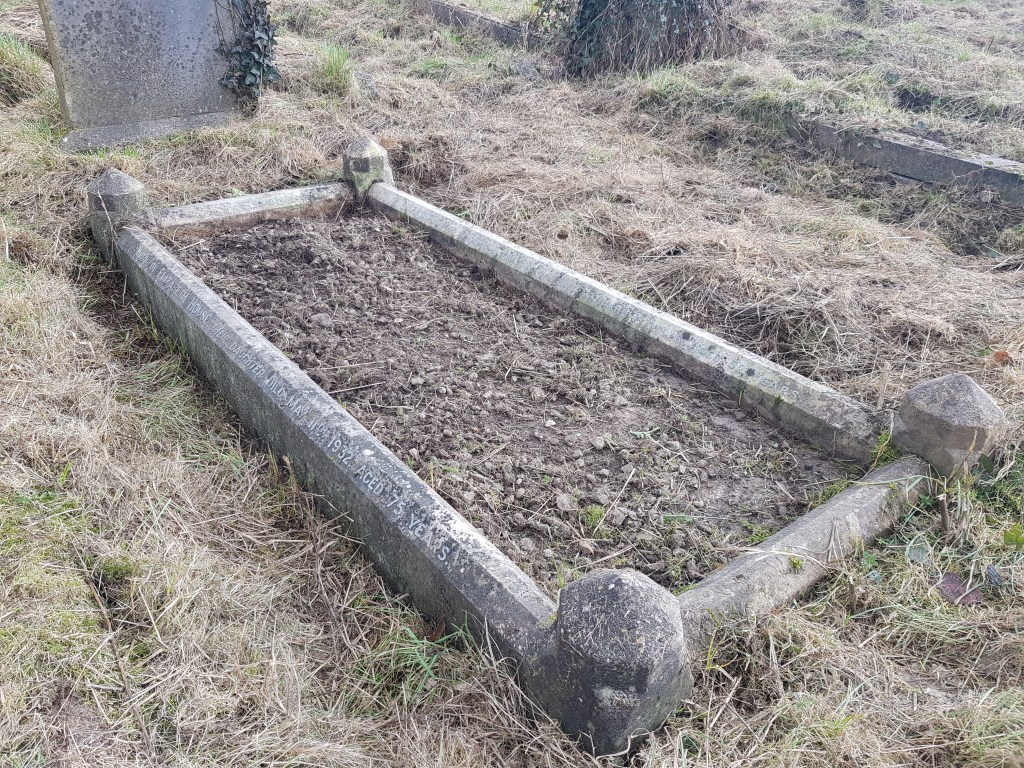
George Henry Barefoot was buried in Radnor Street Cemetery on January 11, 1911 in grave plot E7793 which he shares with his wife Mary Ann and in the neighbouring plot to his mother Mary Elizabeth Barefoot and later his father, George Barefoot.

You might also like to read:

George Barefoot – an investor in people

George House – a Swindon veteran

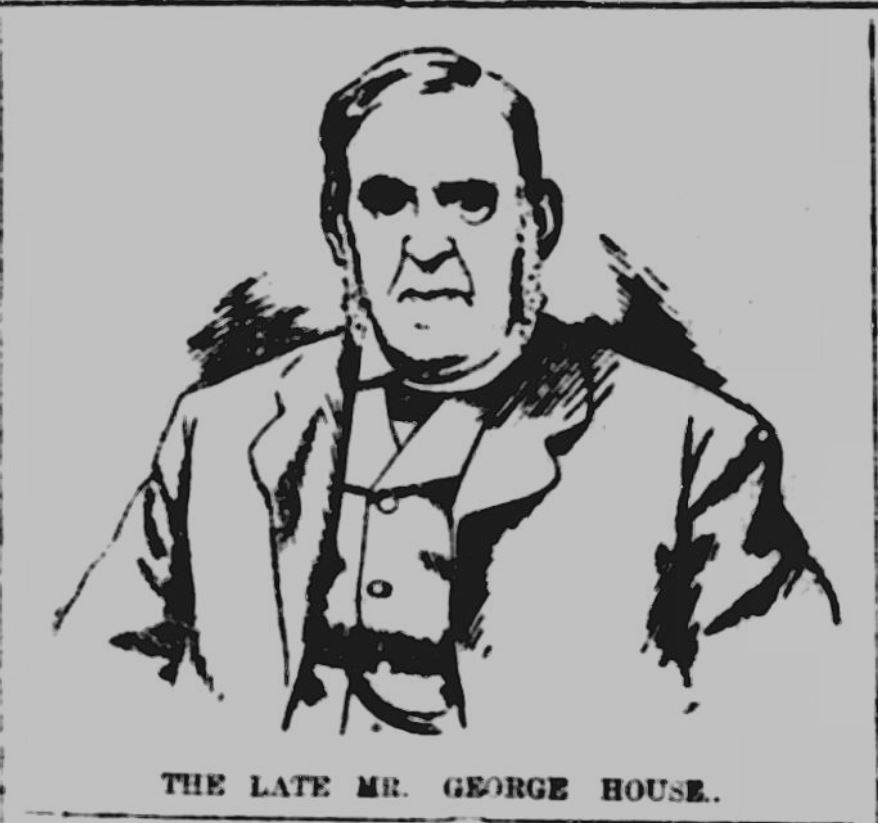
It is seldom we have the opportunity to read the words of an ordinary railwayman. When George House died in 1903 the Advertiser republished extracts from an earlier interview made in 1899.

The facts …

The Oldest GWR Employee

Reminiscences of Early Days in Swindon

As showing what a contrast there is between Swindon of today and of Mr House’s youth, we cannot do better than reproduce an interview with Mr House, which was published in the “Advertiser” in April 1899. A representative of this paper called upon Mr House in the latter part of April of that year, and found him reading his “Evening Advertiser,” and quite delighted to have a chat about his early days in Swindon. The interviewer commenced the conversation:-

“Good evening, Mr House; and is it true that I behold in you the oldest railway servant in the United Kingdom? A correspondent, in answer to a request in the ‘Advertiser’ so informs me?” I said when Mr House had assured himself that I was comfortably seated in his cosy room.

“Yes; I think so,” was his ready response. “I have a record of over 60 years’ service with the GWR Company. I started work with them in the construction of the line there under the supervision of Brunel.”

“When did you come to Swindon?” I queried.

“In 1838” was the reply, “there was no railway station here then, and no factory. When the coaches began to run from Bristol to Swindon the only place where passengers could alight was at Hay Lane.”

“You almost remember the open carriages then?”

“Yes, very well. And the coaches used to leave here at eight o’clock at night, and get to London some time in the morning. It was travelling in those days and no mistake. The ladies’ dresses used to be entirely spoilt by the smoke and dirt in one journey.”

“Now as to the GWR Works at Swindon, which was the first shop built?”

“Well, when I came here there was no factory at all. Not a stick nor stone. I assisted to fix up the first machinery. The D Shop, F Shop, and G Shop were the first shops that were erected.”

“How many men were employed here when you first came to Swindon?”

“Well, there were practically no men employed here till I and others came from Maidenhead, and Messrs Whitworth, of Manchester, fitted up some machinery. Then, for a start, there were not so many men employed as there are clerks now.”

“What a number of dead and gone faces such remembrances must bring before you. The chiefs of the Works, foremen and others, for instance.”

“Yes, I think I have a record in that direction, for I have worked under no less than five managers and eight foremen at the Swindon Works. I can tell you their names in a moment.”

“Who were the managers?”

“Well, first, there was Mr Sturrock, then Mr Rae, and Mr William Gooch (brother to Sir Daniel Gooch). And in more recent times the late Mr Samuel Carlton, and Mr G.J. Churchward.”

“You say you have worked under eight different foremen: who were they?”

Yes, there was Charles Hurt, Alf. Cootes, Peter Bremner, Dodson, Robinson, E. Dingley, William Booth, and A. Nash.”

“Of course, in those early days there was no Mechanics’ Institute. What recreation was provided for the workmen?”

“Oh, there used to be a small theatre in the Works – in the O Shop. Here a dancing class was held, and amateur theatricals were performed there. The Mechanics’ Institute was not built till several years later. Lord Methuen came down and laid the first stone, and a fete was held to celebrate the event. I remember well the Great Exhibition of 1851. All of us workmen who had joined the Mechanics’ Institution – in fact, every one of the employees of the Company who were working here then – were given an free railway pass to London to go and see the Exhibition. On another occasion when we were give a free trip to London, I took my wife and family of ten children. And when we arrived at Paddington, I hailed a cabby, who stared at my family, and remarked, “What’s this, sir, a whole school!”

The Late Mr George House

Funeral Last Saturday

The funeral of the late Mr George House, of Taunton street, took place on Saturday afternoon amidst every sign of mourning. The cortege left deceased’s late residence shortly after 2.30 pm for St. Mark’s Church, where the first part of the sad service was impressively read by Canon, the Hon Maurice Ponsonby, vicar and rural dean, who also officiated at the graveside in the Cemetery, where a goodly number of persons had assembled to pay their last mark of respect to one who chief aim in life was the care of his less fortunate brethren. The body was enclosed in a beautiful casket of polished elm, with heavy brass furniture, the breast plate bearing the following inscription:-

George House

Died January, 1903,

The funeral arrangements were carried out by Mr H. Smith, of Gordon Road.

Extracts from The Swindon Advertiser, Friday, January 16, 1903