Henry Hustings – Swindon’s Jack of All Trades

The re-imagined story …

Mr Hustings gave me a job when no one else would.

I’d returned from the war pretty much fit for nothing. But my wounds were not obvious. I had not lost a limb, I was not scarred or hideous to look upon.

I suffered from being subjected to heavy shelling, day after day, week after week, from living on the edge of terror.

Others seem to return home unaffected from the hell they had endured, although I would question that. I don’t think any returning soldier was the man he had been when he left for the war. Even now, twenty years later, you can see the men ravaged by their experiences. The men who drink too much, the men whose temper is easily ignited, the men who retreat into silence. We all carry our wounds, the obvious ones and the hidden ones.

Mr Hustings must have wondered if he had been ill advised employing me. I’m sure plenty of his other workmen must have thought so to. At first I couldn’t go up a ladder, but there were plenty of jobs I could do at the yard. Gradually my life became more of the now and less of the then. My confidence grew, my health improved and I began to pull my weight in the firm.

I shall add Mr Hustings to the memory of those others I mourn. He gave me a job when no one else would, he gave me back my life.
The facts …

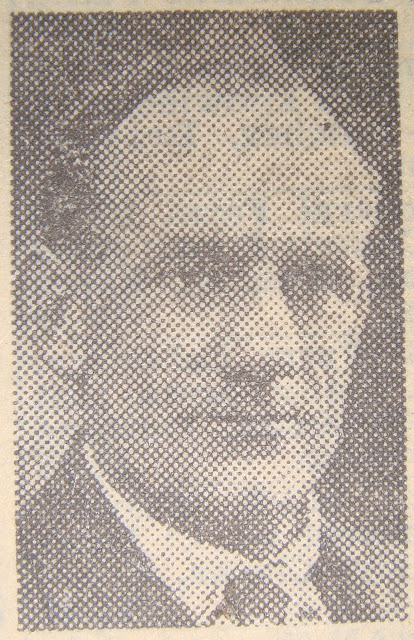
With just a week left to complete his term of office as Mayor, Councillor H.R. Hustings died suddenly at the Victoria Hospital on Sunday, October 27, 1940.

A tough speaking, no nonsense Labour politician, Henry Russell Hustings, Swindon’s 40th successive Mayor, took office on Thursday, November 9th 1939 as the town got to grips with the black out, air raid warnings and wartime restrictions.

A former trade union organiser for the National Union of Vehicle Workers and the Transport and General Workers’ Union, Henry had enjoyed a varied working life and the Swindon Advertiser styled him as the ‘Jack of All Trades Mayor.’

His first job was with a firm of agricultural engineers in Dorset followed by stints as a traction engine driver, shop assistant, porter, engine driver in a laundry, miner, stoker, baker and in 1939 he was a window cleaning contractor.

Henry was born in 1883 in the Dorset village of Hilton to John W. Hustings and his wife Susan. In 1903 he married Alice Maud Ball and the couple had four children.

A member of the Labour party since 1919 Henry began his political career in Devizes in 1921 where he was the first Labour member of the Town Council. By 1927 he was living at 38 Regent Circus, Swindon and represented the West Ward on the Swindon Town Council.

Councillor Hustings was a founder member of the Unemployed Association, launched at a time when Swindon had more than 5,000 unemployed. In 1939 he was President of both the Swindon branch of the Labour Party and the Swindon Trades Council. He also served on the Management Committee of the Swindon Co-operative Society, the Council of Social Service, the local Food Control Committee and the Western Area Federation of Trades Councils.

On August 22, 1940 Henry launched Swindon’s own Spitfire Fund. The aim was to raise £5,000 and in less than a week the fund stood at £245. By October Swindonians had raised £3,300 and were well on the way to achieving their target. Donations came from across the Swindon and district area. Two little girls sold some of their toys and gave the 8 shillings they had raised to the fund while Kingsdown brewer J. Arkell & Sons presented the Mayor with a cheque for £100.

At the time of the Mayor’s death the fund stood at £3,956, just over £1,000 short of its £5,000 target.

“The fund had a very good start, but it seems to have slowed down during the last two or three weeks,” said Mr Raymond Thompson, director and general manager of the Swindon Press who was behind the last desperate drive to complete the fund. “We owe this and a lot more to our late Mayor.”

In just seven days generous Swindonians had donated £1,352 to complete the project inaugurated by Henry Hustings. A cheque for £5,308 was presented to Col J.J. Llewellin, Parliamentary Secretary to the Minister of Aircraft Production by Swindon’s MP Mr W.W. Wakefield in January 1940.

Henry’s death at the age of 57 followed recent surgery from which it was thought he was making a good recovery, and came as a great shock to fellow members of the Council.

The funeral service conducted by Major W.J. Hills of the Salvation Army took place at the Mission Hall followed by interment at Radnor Street Cemetery.

“Representatives of practically every industrial and social organisation in the town and district took their place in the cortege, and also paid their last tribute at the graveside at Radnor Street Cemetery,” reported the Advertiser.

“The public life of Swindon will be much poorer by the passing of Councillor Hustings,” Mr G.A. Marshman, presiding magistrate said paying tribute to a man who had devoted his life to the underdog – Swindon’s Jack of All Trades Mayor Henry Russell Hustings.

Surprisingly there is no headstone to mark Henry’s grave.
Adelaide Carlton – on the move

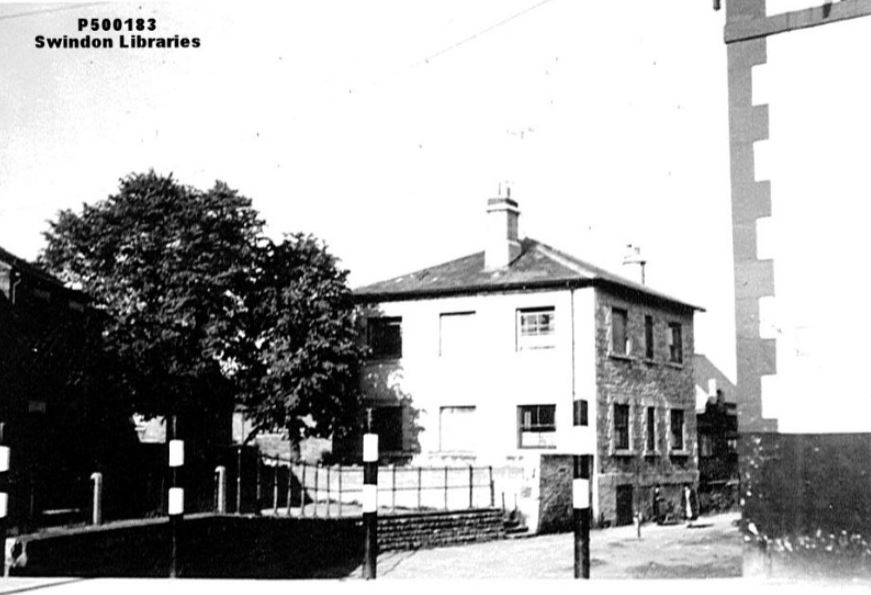
Elm Villa published courtesy of Local Studies, Swindon Central Library.

We tend to mistakenly believe that in the past people lived and died in the area in which they were born, but in Swindon this was far from the case. The town of New Swindon was built on the migration of skilled railway workers arriving from all over the UK and Adelaide Carlton’s husband was one of them.

Samuel Carlton began his long and successful career as an apprentice at the Edge Hill and Crewe Works before moving on to marine engineers Pearson & Company and then to the Vulcan Foundry before joining the Great Western Railway at Wolverhampton.

In 1851 he was lodging at 12 Liverpool Street, Crewe with John Aston and his family, quite possibly a relative of dressmaker Adelaide Aston, whom he married that same year. Adelaide was born in Dudley, Staffordshire in 1834 and was only 17 years old when she married Samuel. She would spend the next 26 years producing babies and moving house.

Adelaide’s first child, Thomas William was born in 1852 and baptised at Christ Church, Crewe. Nine more children would follow and the birthplace of each one would log Samuel’s career progress and the many homes Adelaide would find herself living in.

In 1861 the family were living in North Road, Wolverhampton but Adelaide would soon be packing up the numerous knick knacks beloved by the Victorian middle-class housewife as they were on the move. In 1864 Joseph Armstrong, Superintendent of the Northern Division of the Great Western Railway at the Wolverhampton Works, moved to Swindon and an appointment as Locomotive, Carriage and Wagon Superintendent of the GWR. A year later Samuel followed him down to Swindon when Armstrong appointed him as manager of the Locomotive Works.

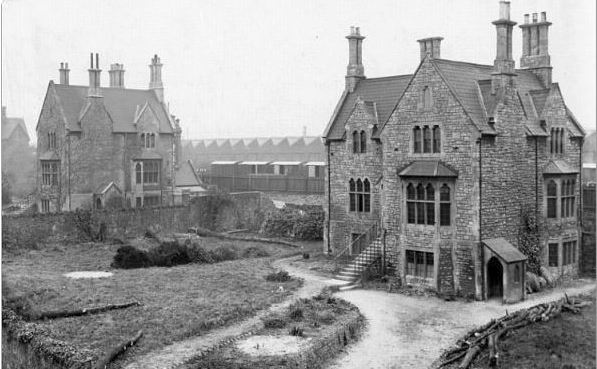
Marlow House left of image

At last Adelaide would be able to make a settled home for her growing family, but even once they arrived in Swindon that was not the case. Between 1871 and 1891 Adelaide and her family lived first at Elm Villa in Wellington Street before moving to Clifton House and then Marlow House, two managers’ properties built to the north of Swindon station.

Samuel retired in 1895 and died the following year. But Adelaide would occupy one more home before she joined her husband in Radnor Street Cemetery. For just a few brief years she lived at Lyndhurst House in Devizes Road with her unmarried daughter May and Minnie Nurden, a domestic servant. It was here that she died on July 19, 1901 following a long illness. She was 67 years old. Her funeral was described as being ‘of a very quiet character,’ much like Adelaide’s life had been. The first part of the service took place, quite fittingly, at St. Saviour’s, the little wooden church in Ashford Road which had been built by railway workers in 1889.

The pink granite obelisk memorial on Samuel and Adelaide’s grave was raised by the subscription of colleagues at the Swindon Works. The inscription reads:

This Memorial was erected by Officials and Workmen of the Great Western Railway and other Friends, to Mark the Esteem in which he was held during the 32 years he was Manager of the Locomotive Works at Swindon.

The grave covers two plots E8276 and E8277 and a note is mentioned in the registers, somewhat unusually, that it is a brick grave 7ft deep. Samuel and Adelaide were joined by their eldest daughter Alma when she died in 1948 at the grand old age of 91. There is also a memorial to the couple’s eldest son Thomas William who died on May 14, 1896 during a voyage to South Africa and was buried at sea.

You may also like to read:

Samuel Carlton – held in esteem

Henry Raggett – a humble God fearing Christian

The re-imagined story …

“Did you know that Raggett Street is the only street in Swindon with no front doors?”

“Well, that can’t be right. How would people get into their houses?”

“I’m telling you – there are no front doors on Raggett Street.”

“Look, there’s a front door at the top, on the corner.”

“That’s 124 Stafford Street.”

“What about on the opposite corner? There’s a front door, I can see it from here.”

“That’s 123 Stafford Street.”

“But they’re both in Raggett Street.”

“Oh no they’re not.”

“Was there ever a Mr. Raggett?”

“I’m guessing so.”

But there are no front doors on Raggett Street?”

“Nope.”

“And no houses either?”

“Nope.”

“Unbelievable.”

Raggett Street

The facts …

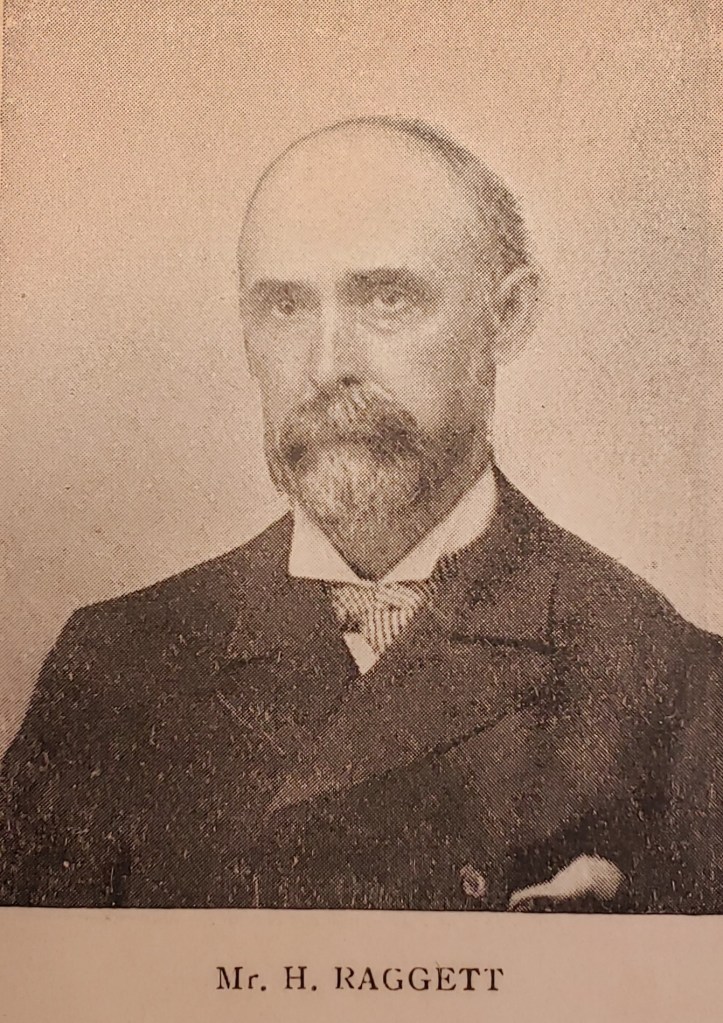
Henry Raggett, grocer and tailor, had a shop on the corner of Eastcott Hill and Stafford Street at the end of the 19th century.

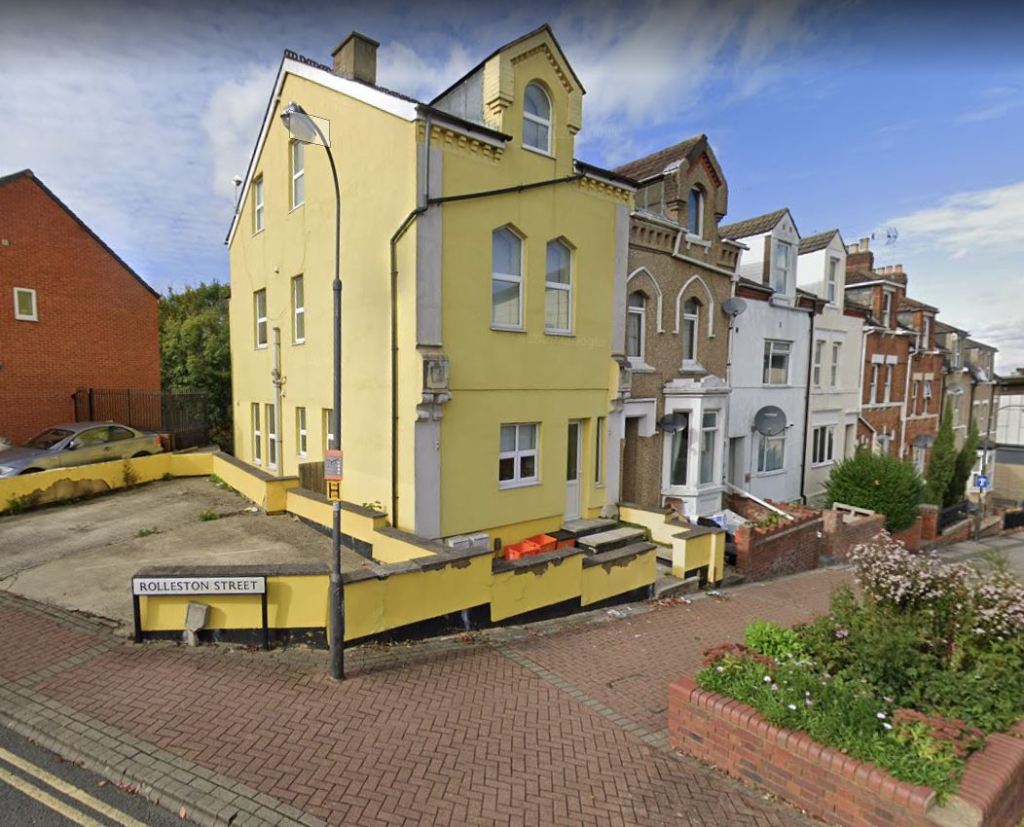
Henry’s home was at 35 Rolleston Street, one of the few houses to avoid demolition in the 1960s when the college was built. A substantial property, which no doubt was pretty impressive in its day. In his will Henry left £2,584 which would be worth today in the region of £300,000.

Rolleston Street

A prosperous, middle class Edwardian tradesman, but Henry had a tough act to follow.

Henry’s wife was the former Amy Edna Morse, the elder sister of Levi Lapper Morse. Amy’s father Charles had been a shopkeeper in Stratton but Levi went on to far greater things.

Henry is buried with his daughter Milinda who died aged 28 in 1905 and his son Henry Charles Edgar who died the same year as Henry, aged 21.

Henry’s widow Amy went on to marry Silas Riddick, a retired outfitter and tailor from Wootton Bassett in 1912. However it was with her first husband Henry Raggett that Amy chose to be buried when she died in 1931 aged 80.

Extract from the funeral report

Funeral of Mr Henry Raggett

Impressive Obsequies

Very solemn and impressive were the funeral rites which accompanied the interment of the remains of Mr Henry Raggett in Swindon Cemetery on Wednesday. The body was brought from London on Saturday and taken to the residence in Rolleston Street, whence the funeral procession started about 3 o’clock.

At Prospect Place Primitive Methodist Chapel a service was held. This proved to be in accord with the sentiments and feelings of the numerous congregation who had assembled, and at times was deeply affecting and moved many to tears.

For the occasion the pulpit was draped in black cloth. The service opened with a hymn, after which the Rev. J. Neville offered prayer. Another hymn having been sung the Rev. S. Ainsworth read an appropriate lesson from I Corinthians and then the well known “Lead, kindly light” was rendered.

The Rev. J.E. Sunderland delivered a short address. Speaking as the representative of the Brinkworth and Swindon District of the Primitive Methodist Connexion, he paid a warm tribute to the memory of their deceased brother, whom he had had the privilege of knowing for a quarter of a century. He had watched his life and had marked his conduct and spirit in church life, and he had learned to trust him. He had admired him and the more he had known him the more he had respected and reverenced his sterling character. They had known something of him as a citizen. He had been interested in imperial affairs; he had taken a deep interest in their municipal and local matters; and he had been concerned for the welfare of the poor and for the good government of his neighbors. But beneath and through and around all those their dear brother was a Christian – a humble God fearing Christian.

He was a Churchman, a Free Churchman and a Primitive Methodist Free Churchman. He loved their church and he gave to it his supreme thought and the consecration of all his powers. He counted no sacrifice too great if he might promote its interest in any respect whatever.

They had gathered there from the town and neighborhood to show their regard and respect for him. They all felt that they had lost a trusted councillor, a wise guide, a devoted member of their church and a worker of whom they need not be ashamed for rightly dividing the word of truth. His memory would be blessed and he would live among them for many a day.

North Wilts Herald Friday May 6, 1904.

A short street that runs between Stafford Street and Dixon Street was named in his honour.

Henry Charles Cook – builder

St Margaret’s Road published courtesy of P.A. Williams and Local Studies, Swindon Central Library.

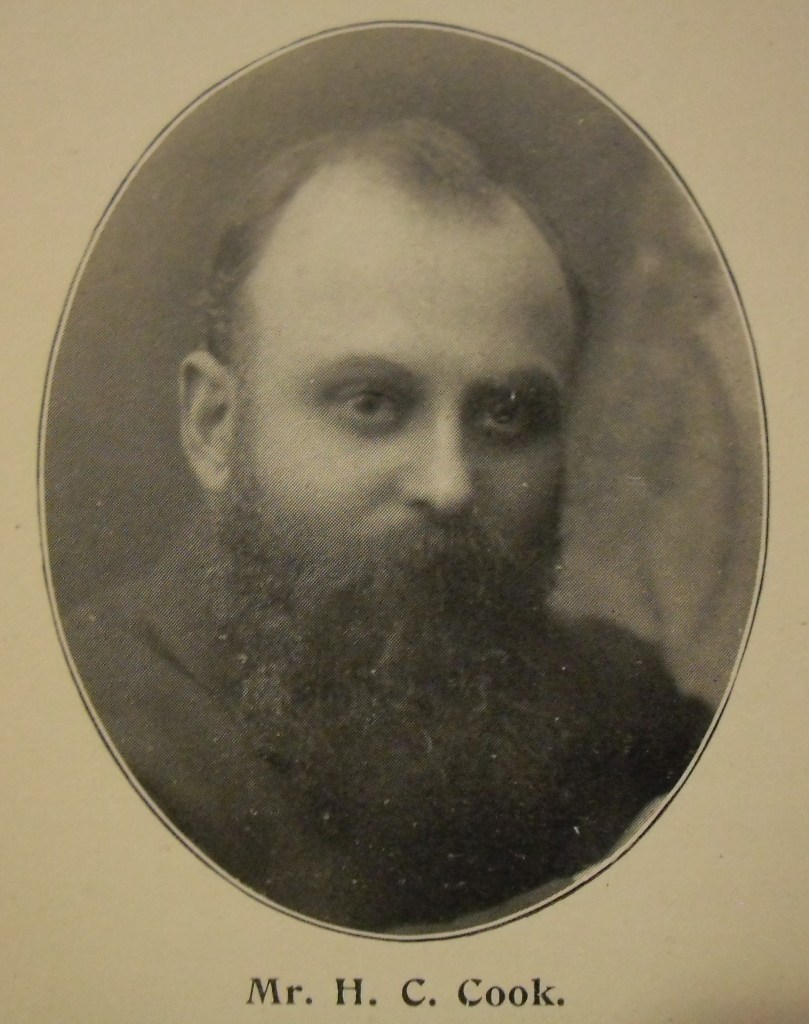
Henry Charles Cook was born in Bledington, Gloucestershire in 1860 the son of Charles Cook, a carrier, and his wife Jemima. By 1881 Henry had moved to Swindon with his mother and her second husband Thomas Smith where the family lived at 19 Prospect Hill. Henry, then aged 21, was working as a plumber and glazier. In 1882 Henry married Elizabeth Jane Carpenter and the couple went on to have three children, William, Daisy and Frederick.

Henry’s building business was soon up and running with projects in progress by 1884. He built numerous properties in Gorse Hill including houses in Florence Street, Omdurman Street and in 1907 he built property in Osbourne Terrace, a new street off Ferndale Road. But he didn’t confine himself to this area of town. In 1897 he was building in St Margaret’s Road and Goddard Avenue and in 1903 he built 23 houses in Devizes Road. During the 1920s Henry’s firm returned to Gorse Hill where they built more than 25 houses in Harcourt Road and another 9 properties just round the corner in Cobden Road.

And like so many men of his generation, Henry took an active part in the civic, political and religious life of the town.

Elizabeth died in 1925 aged 66 and was buried on June 13 in Radnor Street Cemetery plot E8273. Henry died at his home, 59 Broome Manor Lane, ten years later. He was buried with his wife on August 14, 1935.

Death of Mr H.C. Cook

Well Known Swindon Methodist

The death occurred on Saturday night, at his residence, 59, Broome Manor lane, Swindon, of Mr Henry Charles Cook, who for 50 years had been prominent in the business and civic life of Swindon. He was 75 years of age.

Mr Cook came to Swindon as a youth and was apprenticed to the decorating trade. He began in business on his own account as a very young man, later taking up building, and was in business in the town for over 60 years, for a great part of that time at his present premises in Wood Street.

Mr Cook had been an Alderman of the Borough and had served capably as chairman of the Education Committee. He was also active in Methodist circles in the town, being attached to the Regent Street church; he was Circuit Steward for many years, and was a splendid delegate to conference. He was an ex-president of the Swindon Liberal Association.

Mrs Cook died ten years ago, and there are left three children – Mr W.H. Cook, chemist, of Faringdon; Mrs J.B. Hodges, of Andover; and Mr F.C. Cook of Wood street, Swindon.

The Funeral

The funeral took place on Wednesday. The service took place at the Regent Street Methodist Church, and was conducted by the Rev. T. Allison Brown, the interment being at Radnor Street Cemetery.

The principal mourners were Mr and Mrs W.H. Cook Faringdon (son and daughter in law), Mr and Mrs J.B. Hodges, Andover (son in law and daughter), Mr S.C. Cook, Swindon, (son), Mrs Button and Mrs Cull, Swindon (sisters), Mr B.W. Cook, Faringdon, (grandson), Mr K.L.W. Cook, Swindon, (grandson), Messrs W.H. Kent, F. Tucker, W. Smith, E. Liddiard and Covey.

Messrs A.E. Smith and Son, Gordon Road, Swindon, had charge of the funeral arrangements.

Extracts published from North Wilts Herald, Friday, 16 August, 1935

Goddard Avenue published courtesy of P.A. Williams and Local Studies, Swindon Central Library.

You might also like to read

James Spackman – a well known builder and contractor

Thomas and John George – leaving their mark on Swindon

Harry C. Preater and the Red Cross Penny A Week Fund

Area around the chapel where Harry C. and Lilian Preater are buried

The re-imagined story …

Every week I watched my mum put a penny on the mantlepiece and then I watched her struggle to pay her bills through the rest of the week. A penny went a long way in those days, but that penny would stay on the mantlepiece until Mrs Morse called to collect it. Mum never missed a week.

I knew mum’s brother Ernie had died in the Great War – what we were now calling the First World War. Most Swindon families had lost a loved one. Just twenty years had passed and the grief was still raw.

There were a couple of photographs of Ernie that hung on the parlour wall during my childhood. One of him at a family wedding and another of him in uniform just before he left for France. Looking back, I wonder why I didn’t know his story, I just knew he had died in the war. I suppose mum wanted to remember him as he lived not as he died.

It was years afterwards, when Mr Preater died, that I understood why mum saved her precious pennies and I discovered how my uncle Ernie had died.

Ernie had enlisted with the 1st Wilts at the outbreak of war. He had survived numerous, hard fought battles but was eventually caught and taken prisoner. The conditions in the German Prisoner of War camps were appalling, the men were half starved, kept alive only by the food parcels sent by the Swindon Committee for the Provision of Comforts for the Wiltshire Regiment and later the Red Cross.

Ironically, Ernie was put to work on railway buildings behind the German lines until, suffering from malnutrition and exhaustion, he became too weak to work. At the end of the war the prisoners were released, left to find their own way home, their health destroyed. Men like Charles Haggard who died within weeks of his return. Ernie didn’t even make it home.

The Duke of Gloucester’s Red Cross Penny a Week Fund was established in 1939 to support the various services provided by the Red Cross. My mum gave up her pennies to help another woman’s loved one survive a prisoner of war camp and come home.

Harry C. Preater

The facts …

Harry Charles Preater is buried with his wife Lilian in plot D65A close to the cemetery chapel. Harry was the eldest of Charles and Mary Jane’s nine children and when he left school he began work as a clerk. He later went on to run the family garage at Whale Bridge.

H.C. Preater Ltd.

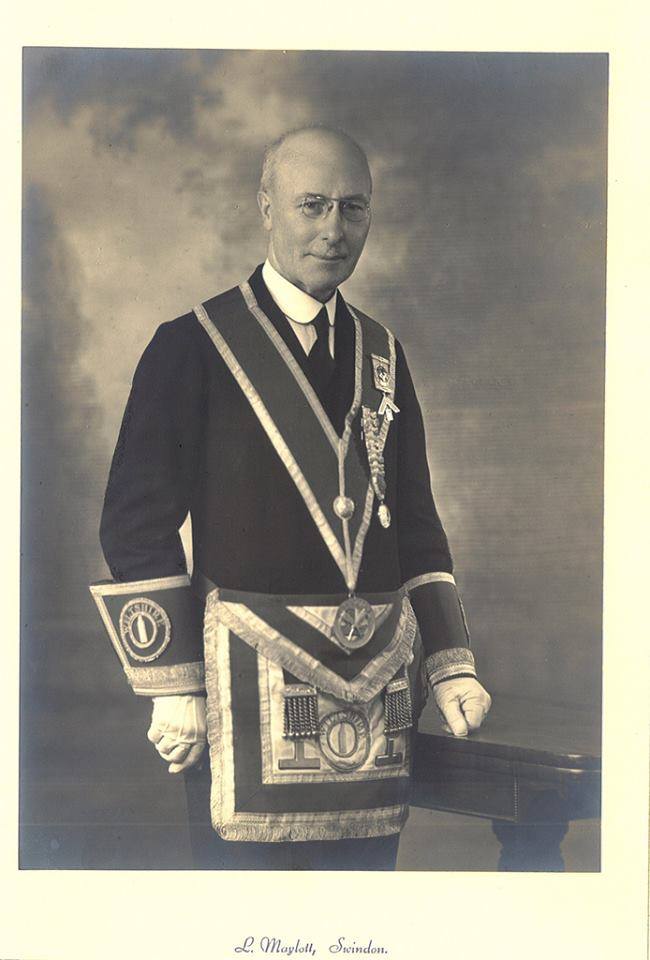
Harry was also a prominent Mason, a member of the Calley Lodge No 7525 that used to meet at the Corn Exchange. Harry C. Preater was Provincial Secretary from 1942 to 1951 and Deputy Provincial Grand Master from 1952 to 1966.

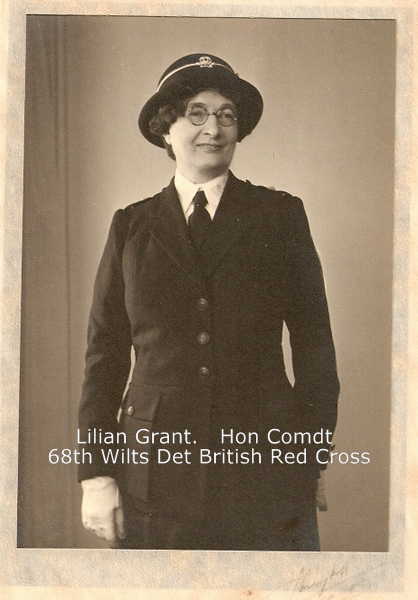
During the Second World War Harry and his wife Lilian played an active role in the Red Cross. Lilian was the Honorary Commandant of the 68th Wilts Detachment of the British Red Cross and Harry was Secretary of the Swindon Penny a Week Fund which raised £16,500 towards supporting prisoners of war.

Harry C. Preater and his wife Lilian and sister Ada

Harry died in 1968 but his name lived on in the Harry C. Preater Masonic Lodge. The Consecration Ceremony took place that same year at the Civil Defence Centre, Savernake Street, Swindon and the banquet was held in the Civil Defence garage. The Lodge then held its meetings at the Masonic Hall, The Square, finally moving to the Planks when that building was completed.

Lilian died in 1970 aged 90. She was buried with her husband and Harry’s sister Ada.

Lilian Preater nee Grant

Swindon’s working class history

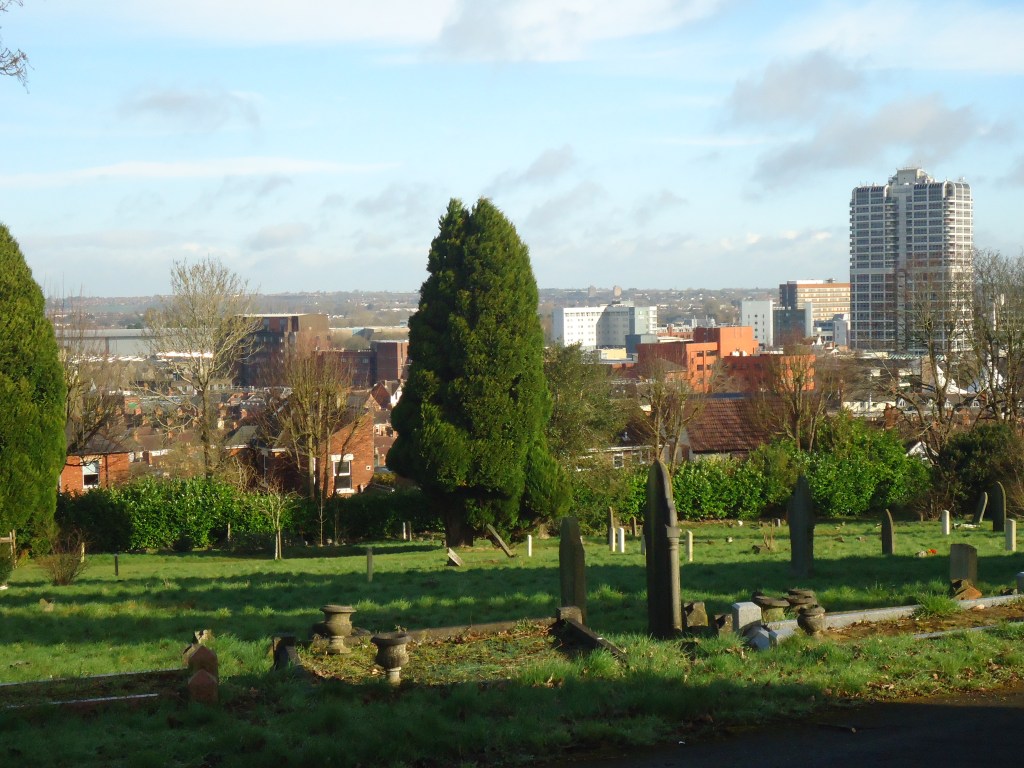
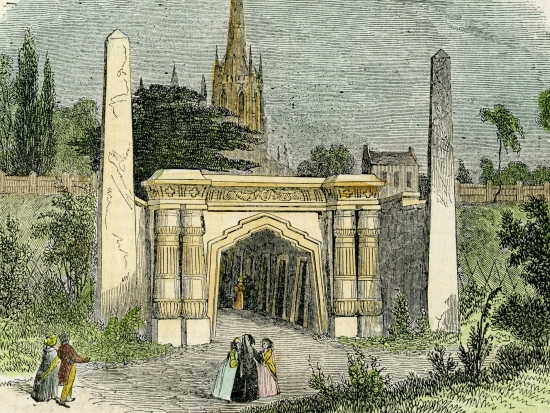
Unlike Highgate Cemetery in London, Radnor Street Cemetery is not a tourist destination. Plenty of Swindonians don’t even know of its existence. There are no elaborate mausolea, no Egyptian Avenue or Terrace Catacombs and although at first sight there appear to be large numbers of headstones, the vast majority of graves are unmarked.

The GWR Works opened in 1842 and employed more than 1,700 men twenty years later. At the same time a shortage of burial spaces in the town became of critical concern, but the Radnor Street cemetery was not opened until 1881.

Highgate Cemetery has been the setting for numerous books, several films and in the 1970s was subject to a bizarre vampire obsession. Radnor Street cemetery online archives include just a few early 20th century photographs and a 1980s music video filmed by Swindon music legend XTC.

Highgate Cemetery is famous for being famous; for the number of people of note and celebrities interred there. Radnor Street cemetery is all about working class history. The men who rose through the ranks of the railway engineering hierarchy and others who spent a lifetime on the factory floor in the GWR Works. Those men who served in two world wars and died as the result of their service. The women who trained as nurses, who taught in Swindon’s schools, worked in factories, shops and offices and raised large families who began the cycle all over again.

This is Swindon’s working class history – stories of the triumphs and the tragedies and the sheer hard work.

The Egyptian Avenue at Highgate Cemetery

Elsie Wootten White

Just how much sorrow can one family endure?

Mary Ann Harwood and Ferdinand Turner grew up in the small rural parish of Lydiard Tregoze, on the outskirts of Swindon, most of which was owned by the St John family at Lydiard Park.

Ferdinand Turner was baptised at the parish church of St Mary’s on October 11, 1829, the son of Emma Turner, an unmarried woman who worked as an agricultural labourer. Mary Ann was the daughter of Robert Harwood, an agricultural labourer, and his wife Susannah. She was baptised on April 1, 1832 also at St Mary’s Church.

The young couple married on December 22, 1855 at St Mary’s. In 1871 they were living in Toothill where they both worked as agricultural labourers. Their elder daughters Sarah Jane and Elizabeth worked on the land with them, and possibly their younger daughters Susan and Lucy as well. Their youngest two children were Mary Ellen, aged 3 and 5 month old Frederic William.

But change was on the way and you have to ask yourself just how much sorrow can one family endure?

Mary Ann’s younger brother Robert died in 1872 in a shocking accident while out poaching on land at Toothill Farm.

Shocking Death. – An inquest was held on Monday at Toothill Farm, about four miles from Swindon, on the body of Robert Harwood, aged 27, an engine-driver in the employ of the Great Western Railway Company, who had been found dead on the farm on Sunday, with a gunshot wound through the head upwards. The spot where the body was found commanded a view of several fields, and it is conjectured the deceased went to the farm on Sunday early and shot rabbits from this point, two being found near him. It is supposed that he was drawing his gun towards him to shoot again, when it became entangled, and, the trigger being moved, the gun exploded. The charge entering the throat under the left ear in an upward direction, death of course was instantaneous. When the body was found the muzzle of the gun was towards it, and the butt end in the hedge. Verdict “Accidentally killed by a gun while unlawfully shooting rabbits.”

Southern Times Saturday, July 27, 1872.

The grave of Robert Harwood in St Mary’s Churchyard, Lydiard Tregoze

Robert was buried with his father in the old country churchyard at St. Mary’s. The ripples of shock and grief swept through the family and no doubt Mary Ann drew close to support her widowed mother. But within three years another tragedy hit the family.

By 1875 the Turner family had moved into Swindon and a home in Haydon Street close to the GWR Works where Ferdinand was employed as a labourer. One Saturday morning in March 1875 their two younger children, Mary Ellen and Frederick, walked back to Mannington to visit the neighbours they had once been so close to.

Burned to death – Mr Coroner Whitmarsh held an inquest at the Great Western Hotel, Swindon Station, on Wednesday, on the body of Mary Ellen Turner, seven years of age, daughter of Ferdinand Turner, of New Swindon, a laborer. It appeared that deceased, accompanied by a brother five years of age, left home at ten o’clock on Saturday morning for the house of a person named Carter who lived at Mannington, and was formerly a neighbor of deceased’s mother. The children got there safe enough and, at twelve o’clock, had some dinner with Mrs. Carter, and on the latter again going out to her work in the fields the children with others followed her. They played in the same meadow as that in which Mrs Carter was engaged, and amused themselves for sometime in gathering the early spring flowers which they were fortunate enough to find. In about half an hour, however, Mrs Carter was startled at hearing dreadful screams, and on going in the direction from which they proceeded she saw deceased, whose clothes were in flames, running towards her. It seemed that in putting some sticks on a small fire which was near, and which Mrs Carter’s daughter (a girl about fourteen years old) had lit to keep herself warm while bird-keeping, deceased’s water-proof became ignited. She instantly took it off, but the flames caught her dress, and, finding they had attained a mastery, the child screamed aloud, which as before shown, attracted Mrs Carter’s attention. She did what she could under the circumstances, and deceased was taken to a neighbor’s house. The doctor was sent for, and in a very short time Mr Simon, an assistant to Messrs. Swinhoe and Howse, attended. He dressed the wounds, and the child was removed home to Swindon in a dog-trap. The case, however, was a hopeless one from the first, and deceased died the same night, at a quarter to nine o’clock, from exhaustion and shock to the system, the result of the injuries received. The jury returned a verdict of “Accidentally burnt.”

The North Wilts Herald, Saturday, March 27, 1875.

Poor little Mary Ellen was buried in the churchyard at St Mark’s Church in the railway village on March 25, 1875.

And then in 1886 the couple lost their daughter Susan who died aged 25. Without access to her death certificate we do not know what the cause of death was. A death announcement was published in the Swindon Advertiser, but there is no account of how she died. As a young, unmarried woman it is doubtful she died during childbirth so we can only suspect she died from an illness. She was buried on January 21st, 1886 in grave plot A415 where this elegant headstone was later erected.

Was this all there was to discover about this family? I hoped there would be no further tragic deaths.

Ferdinand died in 1904 aged 72 years old and is buried in the plot next to his daughter, A414. Mary Ann died two years later aged 70 and joined Ferdinand.

Almost thirty years later Susan was joined by a brother-in-law she had never known as he came on the scene long after her death. David L.H. Price was the husband of her elder sister Elizabeth. David worked as a striker in the Works and died at his home 95 Linslade Road, Rodbourne. His funeral took place on May 4, 1915. He was 48 years old.

Cheltenham Street

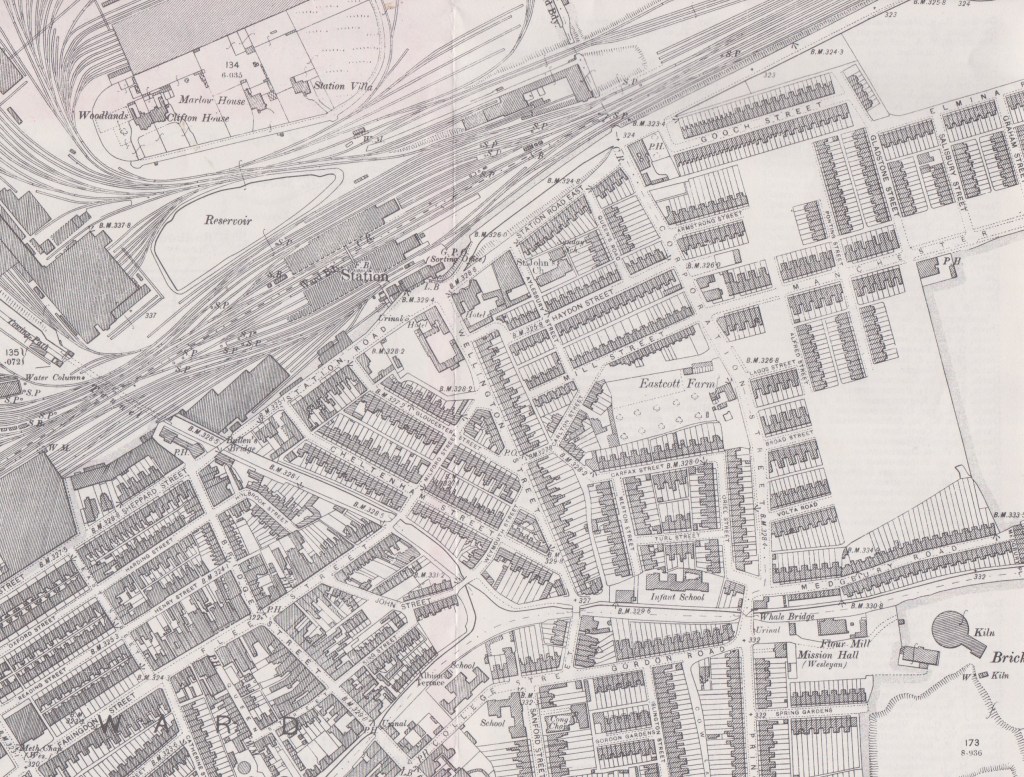
Job Day, Jabez Henry Forshaw and C. Joyce were among the builders who begun work on a New Swindon street in 1869/70. By the time of the 1871 census Cheltenham Street was a busy residential town centre street extending from Station Road to the canal. It vanished in all but name with the demolition of more than 80 houses and the later construction of the Tri Centre complex built in the 1980s.

Photographs taken recently show the Fleming Way area as work begins on the ambitious £33m bus boulevard project due for completion in 2024. Reduced to the Cheltenham Street car park for many years this latest project may be the final death knell for a street that provided homes for a busy town centre community. This aerial view is believed to date from the late 1950s before the area was ‘improved’ during an earlier regeneration scheme.

So, what brought James Hager Adnams and his wife Elizabeth to Swindon following their marriage in London in 1863. Two years previously James had served as a Chief Quartermaster on HMS Ganges before the ship was converted into a training ship however, by 1871 the couple were living at 47 Cheltenham Street in a house they shared with Zacharias Peskett and his wife Ann. James describes his status as Seaman Pensioner. James and Elizabeth continued to live with Zacharias when in 1881 their address is 75 Cheltenham Street. They may have moved into another house in the same street or the street may have been renumbered as further properties were added.

James died at number 75 Cheltenham Street in April 1887 and was buried in a public grave in Radnor Street Cemetery plot number B1392. Elizabeth continued to live in the same house, taking a lodger by the time of the 1901 census. Elizabeth died in April 1910 and was buried on April 9, the anniversary of her husband’s funeral. She is also buried in a public grave plot B2360.

In 1912 Cheltenham Street was the former home of retired GWR foreman Benjamin Howard 63, and his wife Ellen 61, when they decided to join their two sons in America. Having sold up their belongings and said goodbye to friends they set sail in style on the ill-fated, luxury liner, the Titanic. Benjamin and Ellen were among more than 1,500 people who died on the ship’s maiden voyage. Their bodies were never recovered.

The lost Alley family babies

It was my great good fortune to recently meet up with some overseas visitors researching the Alley family. Di, George and Kay are all descended from Frederick Alley and his wife Elizabeth. When we visited the couple’s grave in Radnor Street cemetery with local Alley family historian Wendy, we talked about their large family (18 children) and the seven who had died, whose burial places were unknown.

Originally from Westbury and Trowbridge the young couple arrived in Swindon in the late 1860s, appearing on the 1871 census living at 64 Cheltenham Street with their two sons, Frederick 4 and one year old Albert, both born in Trowbridge. Two children had already died.

So many of their lost children were born and died in between the taking of the 10 yearly census returns, but the visiting family members knew their names and all I had to do was discover where they were buried.

Eldest daughter Annie Phedora, born in 1865 who died in 1870 was buried in St Mark’s churchyard. George Martin, born in 1868 died in 1871 and was also buried at St Marks.

View of St Mark’s taken from the cemetery

Three boys and another little girl are all buried in Radnor Street Cemetery although, sadly not together.

Charles was 9 months old when he died in April 1883. He was buried in a public plot number A490 which he shares with six other babies and young children who died between 1883 and 1902.

Later that same year Frederick and Elizabeth lost another baby son. Sidney was only 16 hours old when he died in November 1883. He was buried in a public plot number A62 which he shares with two others; a girl aged 11 years who died in 1901, almost 20 years later. The third burial was that of a gentleman aged 89 who died in 1928, so again another long gap between interments.

Arthur was 11 months old when he died in November 1885. He is buried in plot number A110 with five other babies and young children who died between 1885 and 1915.

The family home at the time these babies died was at 65 Gooch Street.

Lizzie died aged 3 years old and was buried on January 1, 1891. She is buried in a public plot number B1922 with five other babies aged 2 – 13 months who died between 1891 and 1917. At the time of her death the family lived at 16 Princes Street.

Unfortunately, I have been unable to find the burial place of one remaining daughter. Elizabeth Maria was born in 1873 and died before her first birthday, but at least we now know where six of those seven little children are buried. I didn’t like the thought of them being ‘lost’.

James Hinton – a return visit

So, what did James Hinton ever do for us? Not me personally, but Swindon in general. Here is a quick resume of the roles he played in both his personal life and his public one.

Published courtesy of Local Studies, Swindon Central Library.

He was born in 1842 in Newport Street, Swindon but grew up on the family farm at Wanborough. In 1860 he married Sarah Ann May and the following year the couple were living in Lambourn where he worked as a Corn, Seed and Flour Factor. He next worked as a butcher, first in Longcot and then in Wroughton. Sarah died in 1870 and after his second marriage to Sarah Honor Whiteman he moved back to Swindon and emerged on the Swindon scene as a businessman of considerable influence.  A builder and brick maker he soon became an auctioneer with premises in Regents Circus. He was a railway entrepreneur, a Freemason and a Forester, New Swindon Local Board member, Alderman and Mayor of Swindon in 1903. 

But his biggest legacy has to be the numerous properties he built across the town, which still survive to this day. Perhaps his two largest building projects were the development in Kingshill where he laid out the Mount Pleasant housing estate in 1877, building 35 houses in 1878. In 1879 he laid out land between Dixon, Stafford and Clifton Streets where he continued to build in 1883 and 1884. In 1881 he built a brick kiln in Kingshill, obviously to keep up with the demand for bricks while work continued. In 1889 he began work on the Gorse Hill Farm housing estate, meanwhile continuing with further projects across both New and Old Swindon.

published courtesy of Local Studies, Swindon Central Library

There can be no denying that James Hinton made a tidy penny for himself. After his death in 1907 his effects were valued at £18,910 4s 1d (worth today approximately £2.1m) but without his investment in the fabric of the town it is questionable that it would have developed so extensively or so rapidly as it did in the 1870/80s.

James Hinton died in 1907 and is buried in Radnor Street Cemetery with his wife Sarah who died in 1928.