Down Your Way – Taunton Street

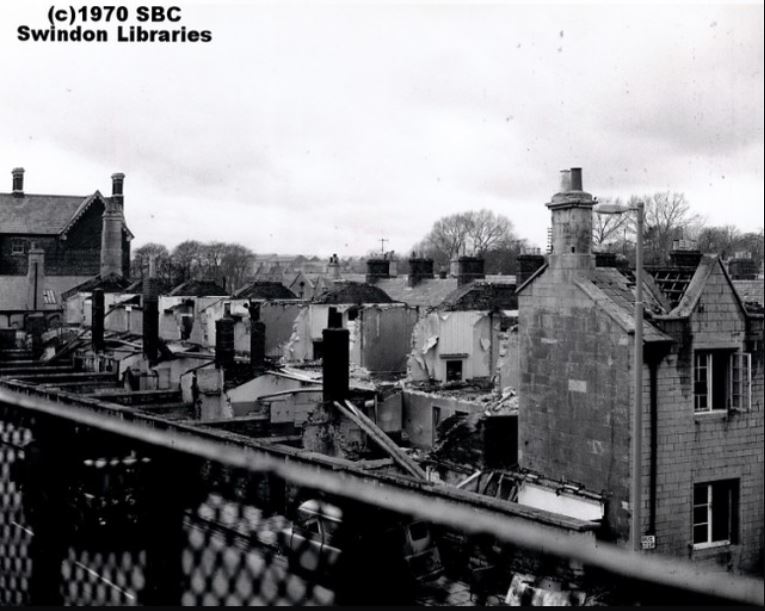
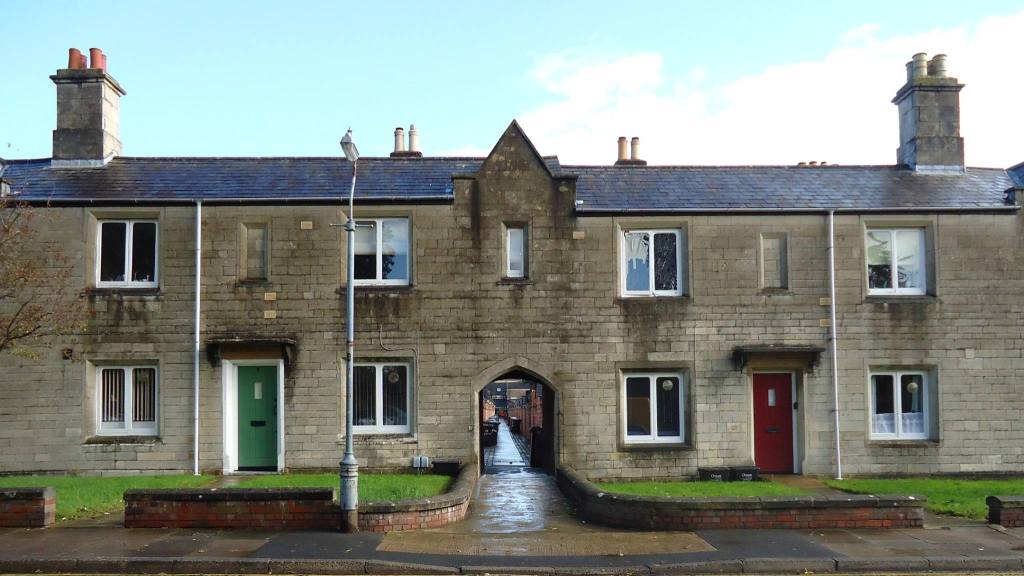
We are extremely lucky to still have the Railway Village for in the 1960s it was under threat of demolition. Purchased by the local authority in 1966 the 19th century cottages were in a state of dilapidation and Swindon Borough Council was intent upon a project of demolition and rebuilding. However, a passionate local campaign and the vocal support of Sir John Betjeman, Poet Laureate, rescued the village and a programme of renovation began.

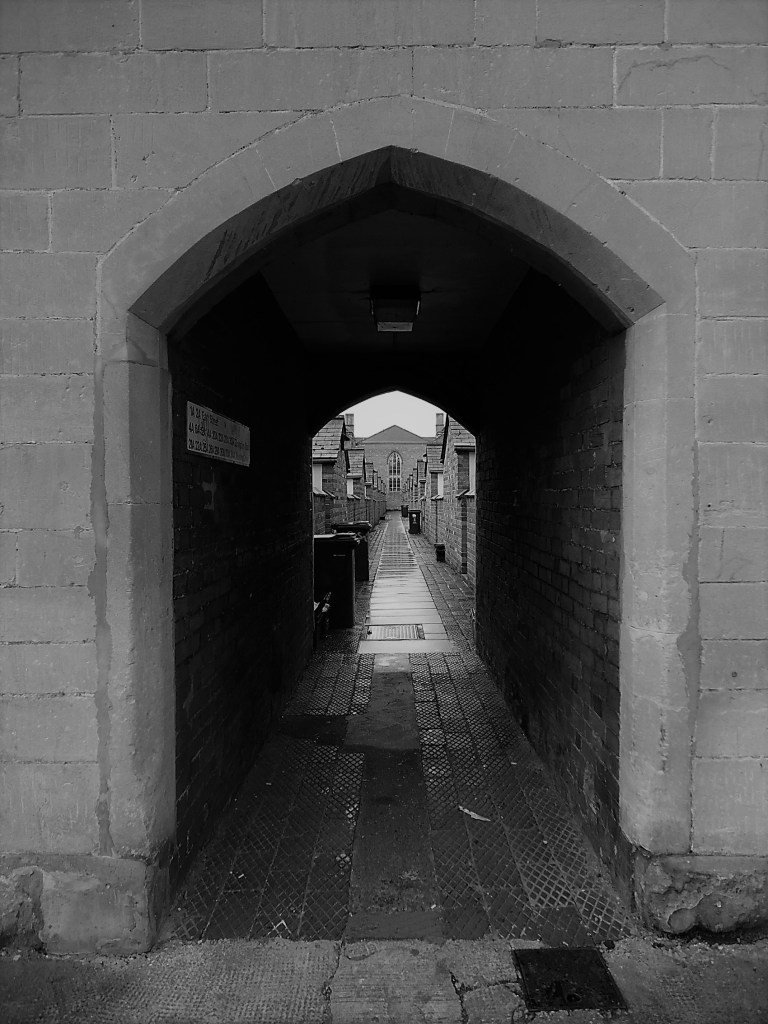
Without these properties it would be difficult to imagine the lives of the first railway families who arrived in Swindon in the 1840s. But today you can still walk down the backsies and hear the distant echoes of children at play; hear the tramp of the men’s feet as they return home after a hard day’s work and re-imagine life in Swindon 180 years ago.

Green, G. Peter M.; Swindon Railway Village, c.1935; STEAM – Museum of the Great Western Railway; http://www.artuk.org/artworks/swindon-railway-village-c-1935-65327

If you lived in Taunton Street you rubbed shoulders with royalty – railway royalty, that is. The first members of the Mechanics’ Institute Council Mr Grandison and Mr Fairbairn, lived in Taunton Street. Even old Mr Hurst, the first locomotive driver on the GWR, lived there although that was much later. Read more …

Thomas Oswald Hogarth – Howzat!

Peter Bremner was born in Dundee in about 1819 and arrived in Swindon around 1848. It is possible the family came straight from France where a daughter Erskine was born in 1847. For more than 35 years Peter lived at 5 Taunton Street at the very centre of life in New Swindon. Read more …

Peter Bremner – railway pioneer

It is seldom we have the opportunity to read the words of an ordinary railwayman. When George House died in 1903 the Advertiser republished extracts from an earlier interview made in 1899. Read more …

George House – a Swindon veteran

John Ham – 29 Reading Street

In the 1960s Swindon’s iconic railway village was under threat of demolition. Purchased by the local authority in 1966 the 19th century cottages were in a state of dilapidation and Swindon Borough Council were intent upon a project of demolition and rebuilding. However, a passionate local campaign and the vocal support of Sir John Betjeman, Poet Laureate, rescued the village and a programme of renovation began.

John Ham was born in 1860 in Pontnewyndd, Pontypool. His parents moved to Swindon soon after John’s birth and he spent the rest of his life living in the railway village. He appears on the 1871 census, a schoolboy aged 11, living at 29 Reading Street with his widowed mother Ann, his uncle and aunt, and his elder brother 13 year old William. William was already working as an office boy in the GWR Works and as soon as he was able to John joined him.

In 1881 John was head of the household at 29 Reading Street where he lived with his mother Ann and three engine fitting apprentices.

On September 10, 1885 John married near neighbour Emily Solven who lived at 21 Reading Street. John and Emily began married life at 29 Reading Street where they were living at the time of the 1891 census with their young son William, and John’s cousin George Rushton.

By 1901 the family had moved to 15 Faringdon Street where John died in May 1905 aged 44 years. Despite his premature death John had contributed considerably to life in Swindon as can be seen from the brief obituary published in the Wiltshire Times. He was buried in grave plot D80 on May 19, 1905 where he was joined by Emily following her death in 1926.

Death of Mr J. Ham – The death is announced of Mr John Ham, a well known member of the Council of the GWR Mechanics’ Institute, Swindon. Deceased, who was only 47 [44] years of age, had been a clerk in the GWR Works for the past 33 years, going there immediately on leaving school. He had been an active member of the Council of the Institute for the past 12 years. He was a prominent Oddfellow, being a member of the “Widow’s Hope” Lodge, and also a good cricketer. He leaves a widow and two little children – a son and daughter.

The Wiltshire Times, Saturday, May 20, 1905.

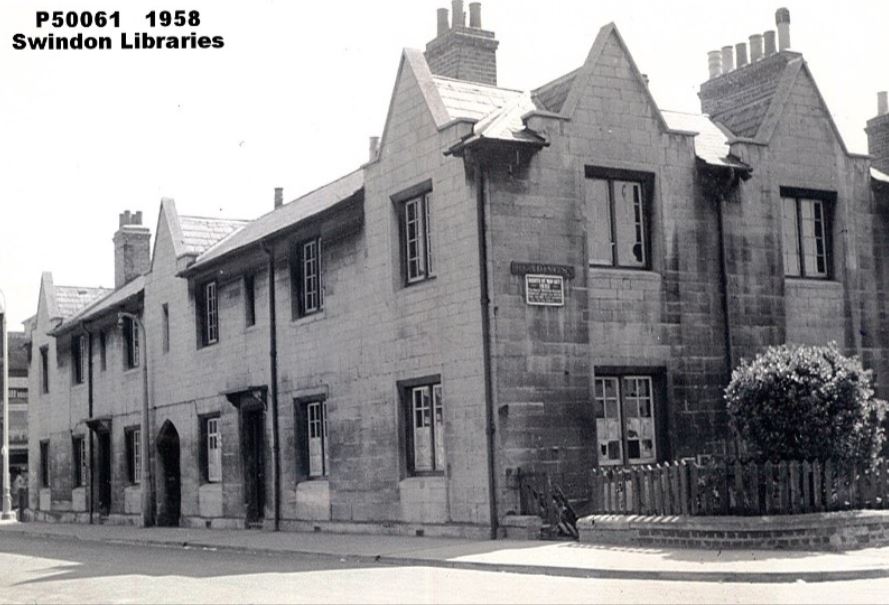
Corner of Reading Street

Images published courtesy of Local Studies, Swindon Central Library.

A Bench with a View

It was a blustery Monday at the cemetery with a chill in the air and rain on the wind, but it didn’t prevent me from stopping at my favourite bench.

There are four benches (I’m honour bound to keep the 4th one secret) in the cemetery; but this is my favourite one with a view across what was previously known as New Swindon, a railway town.

Here the eye is drawn to the housing development built in the early 2000s on the site of the ‘A’ (Erecting) Shop. A Shop covered more than 11 acres (coincidentally the same size as Radnor Street Cemetery) and was one the largest covered workshops in the world. The red brick apartment blocks, clearly seen from the bench, and the surrounding houses are named in honour of George Jackson Churchward Locomotive Works Manager at the GWR Swindon Works 1902-1916 and Chief Mechanical Engineer from 1916 until his retirement in 1922.

From this bench you can see what remains of the 19th century railway works, more familiar to a younger generation as the McArthur Glen Designer Outlet Village and the railway village, the company houses once home to the early workforce. So many of those railway men and their families moved up the hill to rest in peace in this cemetery.

It was at this bench that I composed the ghostly story of Edie and her soldier son – a tribute to one Swindon family, yet typical of so many others.

This is my favourite bench. Perhaps we’ll meet here one day.

Robert and Margaret Patterson

During a period when we might have thought people stayed in the area in which they were born, railwaymen and their families were frequently on the move.

Born in about 1805 in Lamesley, Durham, Robert had already moved about a fair bit by the time he arrived in Swindon. His route can be traced by the birth place of his children in Penshaw and Shields in Durham, Paddington and then Swindon.  

Engine driver Robert Patterson appears on the 1851 census in Swindon when street numbering was still to be established. He lived in No. 2 or 5 Farringdon Street with neighbours Robert Laxon at No. 1 or 4 and William Laverick at No. 3 or 6, although that was not the end of his travels. Between 1871 and 1881 (when he was 78 years of age) he was still working as an engine driver and living in Milford Haven, Pembrokeshire, which is a bit of a coincidence as I lived there as well exactly a hundred years later.

The couple had seven children – two sons Thomas and Michael, who sadly died aged 20 in 1856, and five daughters, two of who died aged 22 and 24. Hannah and Barbara Patterson died in identical circumstances in 1862 within just five weeks of each other, their tragic deaths reported in the local press.

New Swindon

Singular Circumstance – Four weeks ago to-day we recorded the death of Miss Barbara Patterson, of New Swindon, in a peculiarly sudden and lamentable manner, and we have to-day to announce the death of her elder sister, Miss Hannah Patterson, under similar circumstances.

It was be remembered that Miss Barbara Patterson was taken ill on the Sunday evening after having been about as usual during the day, and after lingering until about the same hour on the following day she expired. A post mortem examination of the body subsequently disclosed the cause of death to have been the rupture of an internal abscess, the discharge from which had flooded the heart.

On Sunday week, Miss Hannah Patterson was apparently in her usual state of health, and was out walking both in the afternoon and evening. Some time after she had returned home in the evening she complained of sudden illness; medical aid was at once procured, and, notwithstanding that Mr. Swinhoe was in almost constant attendance upon her, she, after being ill to within half an hour of the period of her sister’s illness, expired; and from the symptoms under which she laboured, there appears to be no doubt whatever but that the cause of death in both instances was precisely the same.

The death of two young women – the one 22 and the other 24 years of age – in so sudden and peculiar a manner, has produced quite a sensation in New Swindon.

Wiltshire Independent, Thursday, November 6, 1862.

The late Trevor Cockbill, railway and local historian, writes in his book A Drift of Steam that the Choral Society arranged a Sacred Concert, conducted by Mr Albert Sykes, which included Mozart’s Twelfth Mass to be held in the Mechanics’ Institution. The proceeds were donated to provide a memorial for Miss Hannah Patterson’s grave in St. Mark’s churchyard. Trevor writes that the programme included a tribute to Miss Patterson “who for so many years past contributed, by the aid of her great vocal talent to the edification and pleasure of this and the surrounding neighbourhood. Her services were at all times cheerfully and gratuitously rendered.”

Robert Patterson died in December 1884 aged 82 at 2 Gloucester Terrace, Swindon. He was buried in grave plot A1093. Margaret died in August 1887 aged 77. Her last address was in Brigstock Road, Bristol. She was buried with her husband on September 1, 1887.

William Barnes Keylock – Railway Clerk and Licenced Victualler

After some 15 years of research the Radnor Street Cemetery archives are becoming quite extensive. Between us Andy, Noel and I have many hundreds of photos and items of ephemera and it was while looking through one of my boxes that I came across this cache of documents.

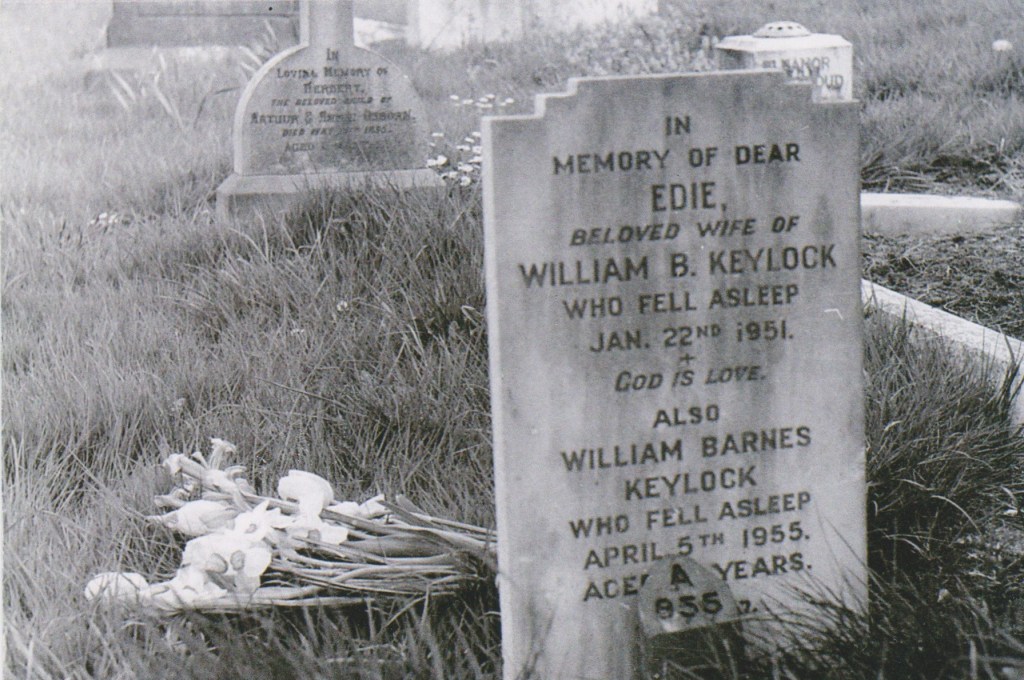
Rose contacted me some years ago as she feared her family headstones had been removed from the cemetery. The passage of time had seen the memorials sink and tilt and become very discoloured and almost unrecognisable, but I was able to confirm they were still there. At the time Rose provided me with family documents regarding graves and burials and several photographs including one of the grave of William Barnes Keylock and his wife Edie.

William was born on December 2, 1872 and baptised at Christ Church on December 10. He was the only surviving child of William John White Keylock and his wife Susanna. In 1881 William J.W., a pattern maker, Susanna and William B. were living at 9 Read Street. William B. started work as a Railway Clerk on April 2, 1888 and at the time of the 1891 census he was living with his parents at the Bakers Arms in the Railway Village where his father was the inn keeper.

William Barnes Keylock married Edith Prideaux Dymond on July 27, 1895 at the parish church in Porlock. The couple had two children, William Harold and Dorothea Edith May. Sometime after Dorothea’s birth in 1901 the family moved to London where William was licenced Victualler at the White Hart, Clerkenwell and later The Eagle in Woolwich.

By 1939 the family had returned to Swindon and William, Edie and Dorothea were living at 11 College Street.

Edie died aged 77 at the Victoria Hospital. She was buried in plot A855 on January 26, 1951. William died aged 82 on April 5, 1955 at St Margaret’s Hospital. He was buried here with Edie on April 9, 1955.

My thanks to Rose for providing so much information and my apologies for taking so long to publish her family story.

To be continued …

Photograph believed to be William Barnes Keylock as a boy – published courtesy of Ancestry

The Perkins family rediscovered

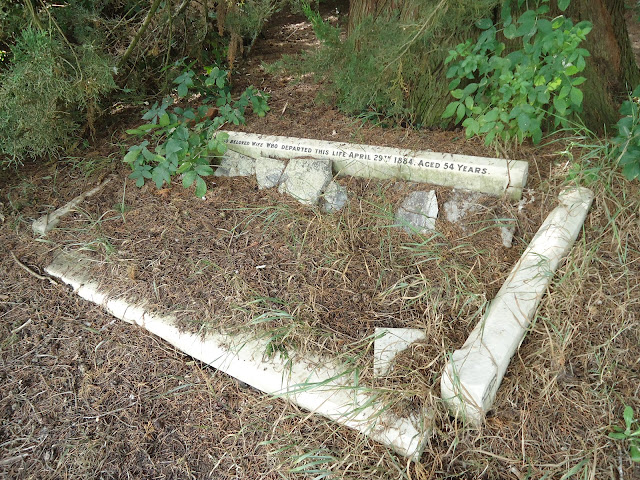
You may think that when a memorial is in this condition that it is impossible to discover who is buried there.

Aha! Not if you have access to comprehensive records such as the ones existing for Radnor Street Cemetery.

The burial registers for Radnor Street Cemetery come in various forms. There is a set of alphabetical indices plus a set of chronological volumes. I was able to check the date closest to Mary’s death on April 29, 1884 and soon found her surname and the date of her burial on May 3. The entry in the burial registers provided her address as 10 Bridge Street, Swindon and, helpfully, that she was the wife of John Perkins. From here I was able to search the grave plot register and discover with whom she was buried.

Then it was back to the Ancestry website to piece together the family history.

In 1881, three years before Mary’s death, the family were living at 10 Bridge Street. John aged 47, was born in Banbury, Oxfordshire and worked as an Iron Moulder in the railway factory. Mary was 51 and was from Burton upon Trent, Staffs. Living with them were their three children, Mary A. 23, Joseph 21 who also worked as an Iron Moulder in the Works, and Emily 16. They also had a year old baby living with them, Seth John Perkins who is described as John’s nephew and was born in Bristol. There appears to be some confusion concerning this baby as he is described on subsequent census returns as son and grandson.

Following Mary’s death, John married for a second time in 1886. The marriage took place in Brackley, Northamptonshire and in 1891 John is still living at 10 Bridge Street with his second wife Sarah 49 and Seth aged 11. By 1901 John, Sarah and Seth are living at 63 Curtis Street.

Sarah died at her home 39 Bathampton Street in February 1911 and was buried with Mary in grave plot A529.

John remained living at Bathampton Street until his death in 1915 aged 81 years old.  He was buried with his two wives.

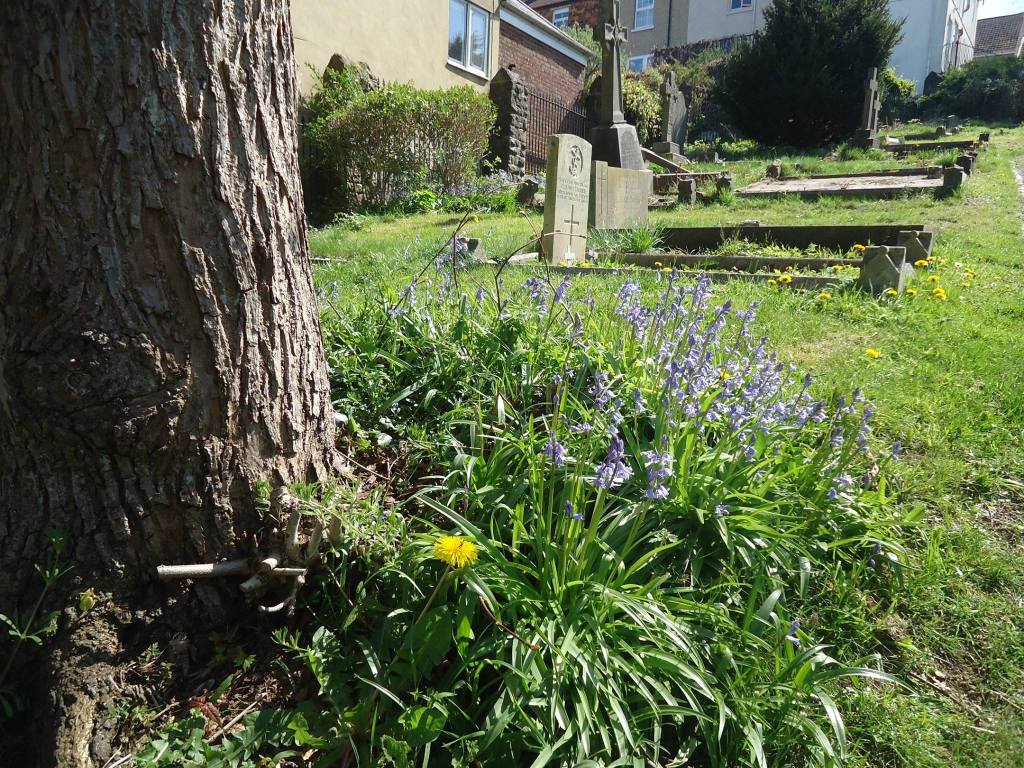
And I bet they wonder who planted the blooming great tree next to their grave.

William Laverick – Forge Foreman

The re-imagined story …

New Swindon has been much criticised for its rows and rows of red brick housing, but it wasn’t always like that. In the beginning there was the Works and the company houses, constructed from stone quarried locally at Kingshill and Bath and Corsham. But granddad said those early cottage were built just for show.

“Railway men and their families began arriving in such numbers that those building their homes couldn’t finish them quickly enough. The first cottages were little more than hovels, just two rooms often with two large families sharing one property.”

Mr granddad used to say Swindon was a work in progress.

“The whole place was one big building site.”

Granddad could remember Bath Street before it was renamed Bathampton Street and Faringdon Street before it became Faringdon Road.

“Mr Hall lived at number 1, Mr Laxon at number 2 and the Laverick family at number 3,” he recalled. “Mr William Laverick senior lived there first and then his son, William junior took on the property.

There was a sad story surrounding young Mr William Laverick, but granddad would never tell me what it was.

“Old Mr Laverick was the Superintendent at the Wesleyan Sunday School. My mother would have had me go, but my father wasn’t insistent so I managed to avoid it.” That made him chuckle, which brought on his cough.

My granddad used to say Swindon was a work in progress. I wonder what he would say if he could see it now.

Wesleyan Methodist Chapel published courtesy of Local Studies, Swindon Central Library.

The facts …

William Laverick was born in Bedlington, Northumberland on September 16, 1843 the son of William and Mary Ann.

He entered employment in the GWR Works on July 3, 1858 as a Door Boy in the Loco Factory before beginning his apprenticeship as a forgeman in 1860. In 1885 he was made a foreman.

The family were Wesleyan Methodists and William Laverick senior was Superintendent of the Wesleyan Methodist Sunday School for 35 years.

William Laverick junior and his wife Maria had a large family and the registers for the Wesleyan Methodist Chapel, Faringdon Road list the baptisms of six of their children.

Sadly, four of their children died young – Henry Allen Laverick at 9 months old and Arundel Laverick also died before his first birthday. Francis Charles died aged 2 and James Lightford Laverick aged 6 years. James died shortly after the opening of Radnor Street Cemetery and is buried in plot A100. Henry Allen died the following year and is buried in plot E7035. The other two children died before the cemetery opened in 1881 and are most likely buried in the churchyard at St. Marks. There is a mention of the four children on William’s memorial, but the inscription is badly weathered and incomplete.

William was admitted to the County Asylum at Devizes on July 22, 1890 where he died on November 9, aged 46 years.

William was buried in plot A2497 on November 13. In the 1891 census William’s widow Maria continued to live at number 3 Faringdon Street with her three remaining children, William Richard a 19 year old Engine Pattern Maker apprentice, Muriel Beatrice, 18, and six year old Arthur George. She married Francis Davies Morgan in 1895. Maria died in 1904 and is buried with her first husband in Radnor Street Cemetery.

Elizabeth Lyall Embling – the first woman to be buried in Radnor Street Cemetery

Elizabeth Lyall Embling was the first woman to be buried in Radnor Street Cemetery.

Elizabeth’s funeral took place on September 21, 1881 – the cemetery had been open 6 weeks and 5 days. She is entry number 25 in the chronological registers. In the preceding 47 days there had been the burials of 6 adults – a house painter, an undertaker, an auctioneers clerk, a labourer, a medical student and a baker – and 18 children. The details in the register tell us that she was married and worked as a confectioner. Her husband Benjamin provided the death certificate and the committal was attended by the Rev Godfrey A. Littledale. Elizabeth was 41 years old at the time of her death. She was buried in a public grave plot number A179.

Section A was the first area of the cemetery to receive burials when the cemetery opened. It stretches up the hill as you enter at the Dixon Street gate and turn left and continues to the Kent Road gate and down to the chapel. Today it is an area with numerous trees and shrubs but probably fewer headstones than in other sections of the cemetery. This is an area where many of the early settlers in the railway town of New Swindon are buried. Elizabeth herself was the daughter of one such man.

Elizabeth Lyall Watson was born in Scotland, the eldest daughter of David Watson, a fitter, one of the early railwaymen to arrive in Swindon in the 1840s. Elizabeth appears on the 1851 census living at 7 Reading Street with her parents David and Elizabeth and her four younger sisters. They share the property with Eliza Eames, a 47 year old widow from Ireland, a retired needlewoman, and her two sons Edward 18 and Homan 13. Just these few details tell us a lot about the early days of New Swindon. People had come from all corners of the UK to work at in the Great Western Railway Works and that accommodation was hard to come by causing overcrowding in the company houses.

Elizabeth married Benjamin Embling in the September quarter of 1863. We find the family on the 1871 census living at 23 Queen Street where Benjamin worked as a labourer in the GWR Iron Works. The couple had three children, William 6, David 3 and two year old Elizabeth. Lodging with them was John Beckett, a 22 year old labourer, who worked in the nearby gas works.

And then sometimes the official records reveal inexplicable details. The 1881 census taken on the night of Sunday April 3, 1881 records the Embling family living at No. 9 Mill Street in New Swindon, described as a General Shop. Benjamin occupation is that of shop keeper and he states that he is a widower (this is somewhat difficult to understand as Elizabeth did not die until September of that year). The family number six children – William 16, David 13, Elizabeth 11, Benjamin 8, James 6 and 3 year old Jessie. Benjamin employed 13 year old Margaret Morgan as a domestic servant.

Elizabeth’s death certificate might provide clarification but unfortunately we cannot afford to purchase certificates for the numerous burials we research. So, is this all we can retrieve about the life of this working class woman. There are no surviving letters (if she ever wrote any), no last will and testament, no diary. Perhaps there is a carte de visite photograph somewhere taken in one of the town’s numerous photographic studios. These small photographs survive in great numbers but unfortunately can seldom be identified.

This is a very brief account of one working class woman’s life – the first woman to be buried in Radnor Street Cemetery.

You might also like to read:

David Watson – railway and political pioneer

Frederick Gore – the closing of the churchyard

Standing at the Graveside

First Impressions

Have you seen the doctor?

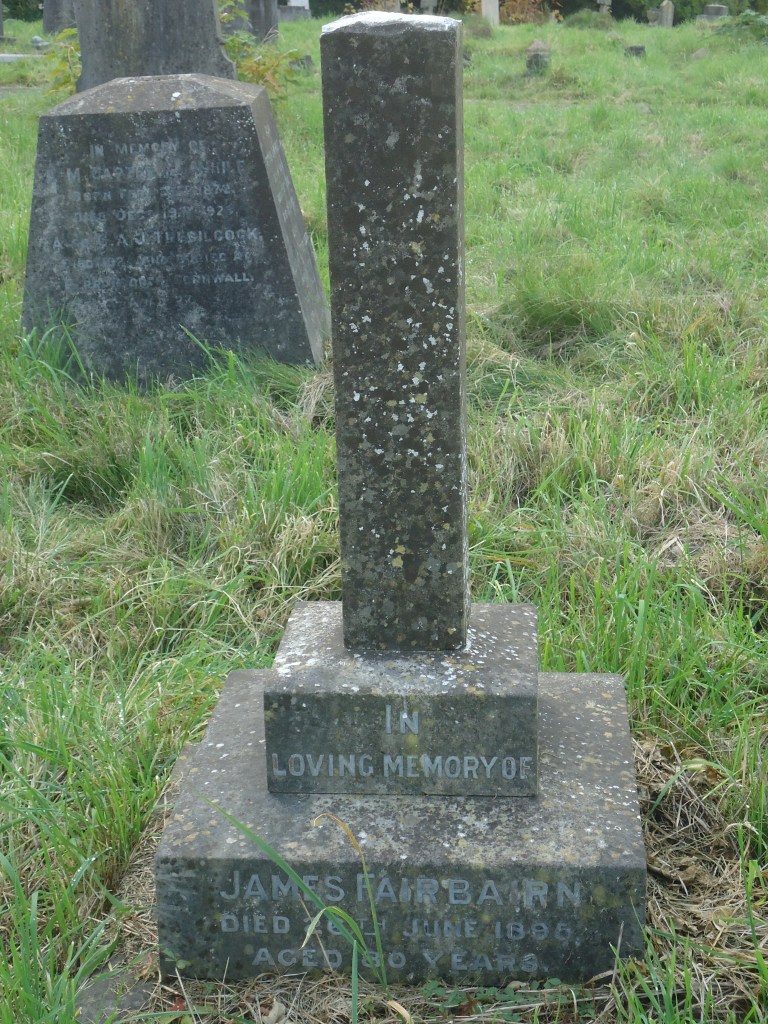
James Fairbairn – pioneer railwayman

The re-imagined story …

We were promised a company house when we moved to New Swindon but when we arrived we discovered they were still being built!

So we ended up in one of twelve wooden cottages built in the back of beyond.

New Swindon was referred to as a pioneer town and out at Hay Lane we certainly felt we were living on the frontier. It would never have surprised me to see a herd of buffalo come bounding across the fields with Red Indians whooping and yelling behind them.

When the young Fairbairn couple moved into the empty cottage next to ours Margaret was heavily pregnant. It was her first child, but she was remarkably calm about giving birth in such primitive conditions.

Margaret’s pains came on in the middle of the night. We could hear her moans through the thin wooden partition that separated our homes. I left my own children in their beds and went next door to see what I could do to help. The poor girl laboured for many hours and I feared for her life and that of her baby. And at the end of her travails there was not just one, but two babies. They were small and I didn’t hold out much hope for either of them, but they thrived and survived.

And those draughty wooden cottages, well they were moved to Eastcott and survived as well. The GWR hated waste!

The facts …

James Fairbairn was born in c1816 in Dundee in Scotland and was one of the early railway men to settle in Swindon. James moved first to Newcastle and then to London working for Daniel Gooch and Archibald Sturrock. He married Margaret Armstrong at St Mary, Newington on 2nd October 1841.

James Fairbairn worked as an Engine Erector and later became one of the most senior Foremen in the Works. He was one of the first subscribers to the Sick Fund in 1843 and an early member of the Mechanics’ Institution, elected to its ruling Council in 1855. He was also one of the first subscribers to the Medical Fund.

James and Margaret Fairbairn arrived in Swindon in 1842 at the very beginning of the railway transformation, before the company houses were completed. Like so many other newcomers, James and his pregnant wife Margaret were accommodated in temporary housing. In their case they were housed in buildings at the Hay Lane Station (Wootton Bassett Road).

Brunel had first considered siting the GWR workshops at Hay Lane and designed for employees a row of twelve, single storey wooden cottages erected by building contractor J.H. Gandall. However, Daniel Gooch considered that the Swindon location was more suitable and that is where the workshops were eventually built.

Conditions at the Hay Lane cottages were basic and it was there that Margaret Fairbairn gave birth to twins George and Elizabeth Ann in the Spring of 1842. The babies were baptised at Wroughton parish church on June 5, perhaps they were not expected to survive. George followed his father into the railway works as an engine fitter. He married Catherine Gosling and the couple had one daughter. George died at his home in Havelock Terrace in 1892 aged 49. He is buried in Radnor Street cemetery in plot B2070. His sister Elizabeth Ann married and moved away. Her husband, Charles While, a roll turner, moved to Swindon with the opening of the Rolling Mills in the 1860s. The couple lived at addresses in Workington and Sheffield before settling in Lancashire where Elizabeth died in 1912.

James and Margaret Fairbairn lived at various addresses in New Swindon, including 12 Reading Street, No 2 Fleetway Terrace, 25 Fleet Street and finally at 20 Harding Street where they both died in 1895. Margaret died in March aged 78 and James three months later in June aged 80.

You may also like to read

William and Isabel Hogarth and the old days

Thomas Oswald Hogarth – Howzat!

Thomas Oswald Hogarth – Howzat!

Taunton Street (3)The re-imagined story …

If you lived in Taunton Street you rubbed shoulders with royalty – railway royalty, that is. The first members of the Mechanics’ Institute Council Mr Grandison and Mr Fairbairn, lived in Taunton Street. Even old Mr Hurst, the first locomotive driver on the GWR, lived there although that was much later.

As a boy I was always in and out of the houses where so many of my friends lived. I used to play with James Bremner, his father was born in Scotland and was one of the first railwaymen to arrive in New Swindon.

But my best friend was Tom Hogarth and his twin brother George. Like my father theirs had moved down from the north-east in the early days of New Swindon.

Me and the Hogarth boys used to have a knock about in the park with an old cricket bat and ball. They were strict in those days, mind. The Works Manager Mr. Gooch published a notice warning parents to keep their children under control and to stop them damaging trees in the Cricket Ground. It was no idle threat either – if caught that boy would never be employed in the Works and his father could lose not only his job but his home as well.

DSC00136

Me and Tom never got up to any trouble though – or at least I don’t remember if we did. My mum would give me a clip round the ear for the slightest thing in those days. I was nimble on my feet, although that could make things worse and lead to a proper pasting when my father got home from work.

We were passionate about our cricket. I was a good little player as a boy, but not as good as Tom and George Hogarth. They went on to play for the GWR team and became famous when they played against the legendary W.G. Grace. Grace was having an unusually bad day and accused the GWR team of foul play and that they had fielded the same player twice. Tom and George had to be brought forward and stood side by side until the great man was convinced there was a pair of identical twins on the GWR team.

I liked James Bremner but Tom Hogarth was always my best friend. We had some fun together, though we never got into any trouble – well, not that I can remember.
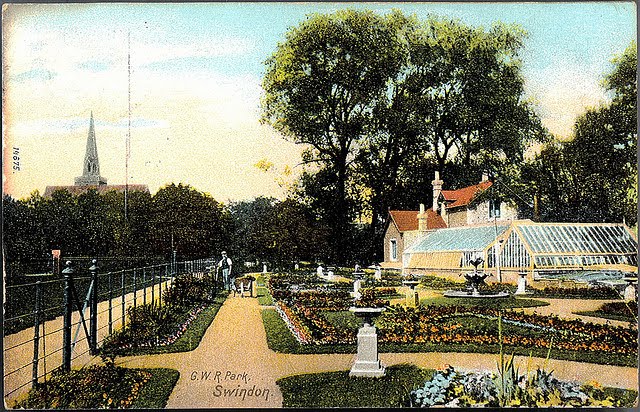
GWR Park

The facts …

Thomas Oswald Hogarth was one of twin sons born in a house in Taunton Street on September 10, 1850, the children of William and Isabel[la] Hogarth.

Thomas entered the GWR Works in February 1865 and during a long career served in many roles, firstly as a draughtsman. He then went on to become Timber Inspector in 1883, Assistant Manager of the Saw Mill in 1887, Assistant Manager in the Carriage and Wagon Works in 1895 and in 1901 the Manager. In 1902 he moved to the Saltney & Colcham Carriage Works, Cheshire where he worked until his retirement in 1911.

Thomas led a varied and active life in Swindon, serving on the newly incorporated Swindon Borough Council.

Borough of Swindon

Election of Councillors 1901

To the Burgesses of the North Ward

Ladies and Gentleman – I thank you most sincerely for the honour you have done me in again returning me unopposed as one of your representatives on the above Council and I hope that by carefully guarding your interest, to maintain the confidence reposed in me.

I am, Ladies and Gentlemen,

Yours obediently,

Thomas Oswald Hogarth “Woodlands” Swindon

Swindon Advertiser Friday November 8, 1901


Among his other interests he served as a director of The Swindon Steam Laundry Co Ltd in 1891.

Thomas married Eliza Ann Morgan, a neighbour from Taunton Street, in 1874 in the Cookham, Berkshire registration area. They began married life back in Taunton Street where they had their four children. Eliza died on April 12, 1890 and at the time of the 1891 census the widowed Thomas was living at 1 Rolleston Crescent with their four children. In 1901, the year before Thomas left Swindon for Cheshire, he was living at Woodlands House, a property allocated to GWR managers.

Old Railway Servant

News was received at Swindon on Friday of the death at Chester of Mr Thomas Oswald Hogarth a prominent Great Western Railway official who retired two years ago.  Mr Hogarth, who was 64 years old, was born at Swindon, and entered the service of the Great Western Company as an apprentice in 1866. He became a draughtsman and rose to the position of assistant manager in the carriage and wagon works, retiring two years ago. Mr. Hogarth was a prominent Freemason and his father was the first foreman in the smith’s shop of the company’s works at Swindon.

The Midland Daily Telegraph, Saturday, January 10, 1914

Mr Thomas Oswald Hogarth of The Groves, Chester, engineer, manager of the Great Western Carriage and Waggon Works at Saltney for ten years £1,794.

The Manchester Courier Thursday February 19, 1914.

Hogarth Thomas Oswald of 20 the Groves Chester died 7 January 1914 Probate Chester 6 February to Ethel Pearman (wife of Thomas Edward Alliman Pearman) and William John Hogarth clerk in the Great Western Railway Company. Effects £1794 6s 1d. Resworn £1874 18s 10d.
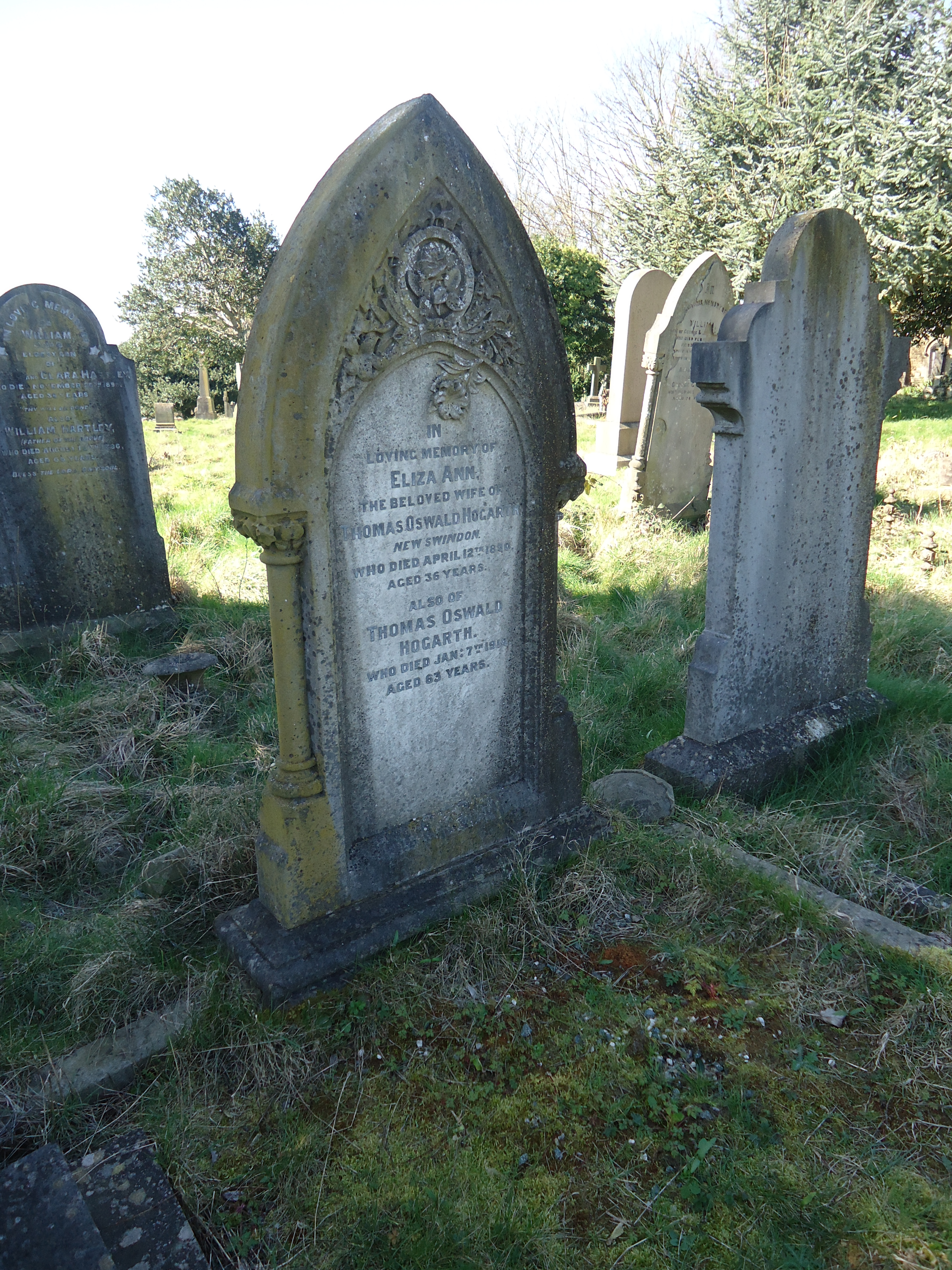
Eliza A and Thomas Oswald Hogarth

Thomas died at his home in Chester. The family returned his body to Swindon where he was buried on January 10, 1914 in plot E8245 joining his wife Eliza. Their daughter Beatrice, her husband Henry and two of their children John Robert and Harriet Elizabeth Pease are buried in the neighbouring plot E8246. 
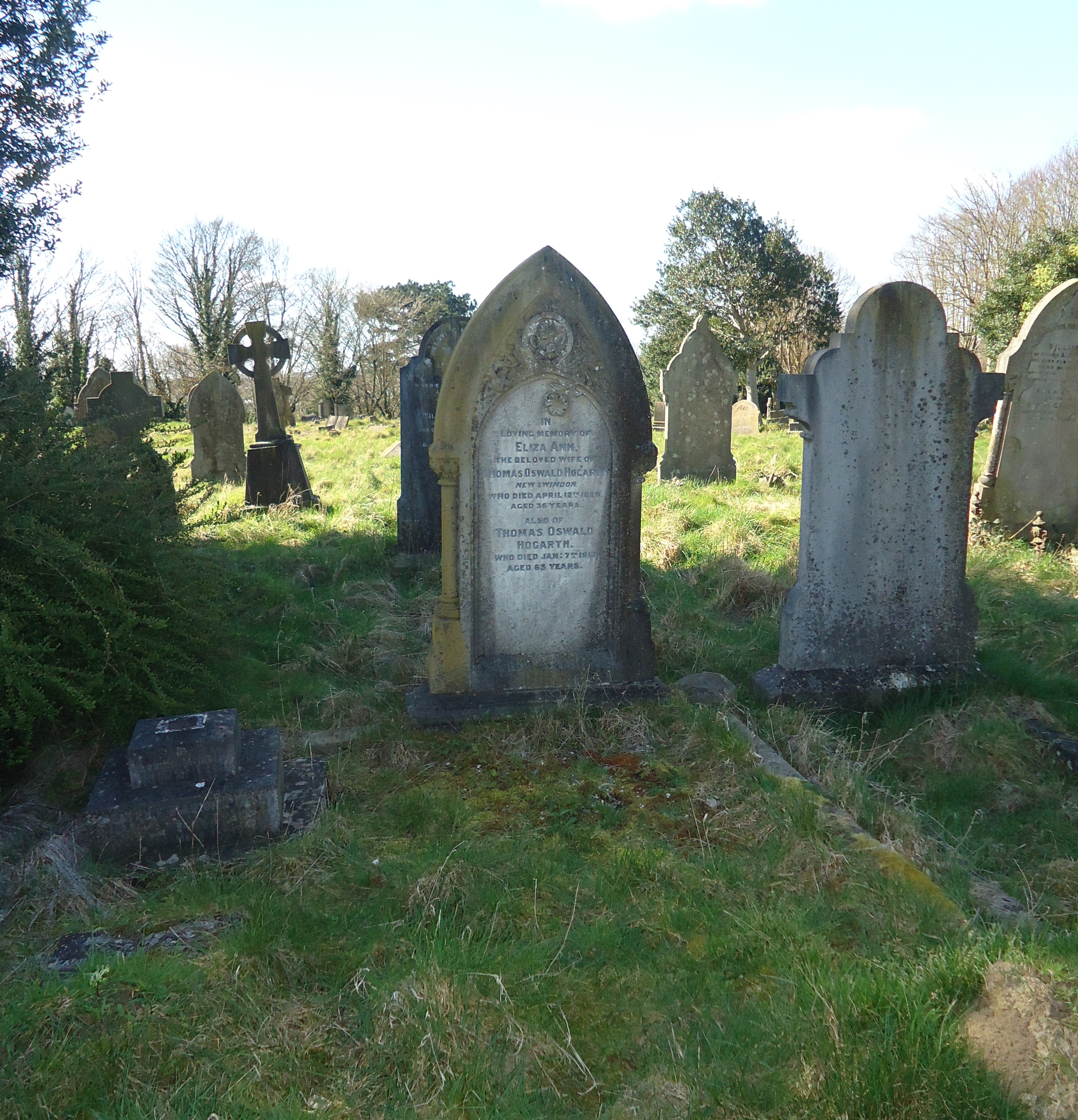
Eliza A and Thomas Oswald Hogarth (2)

You may also like to read

William and Isabel Hogarth and the old days