Snap village and the Bates family

The re-imagined story …

My mother wasn’t an emotional type of woman, but when John and Hannah Bates moved away she was inconsolable. I don’t think I’d ever seen her cry before, so it came as quite a shock.

The Bates boys Bill and Tom had already gone and with the selfishness of youth all I could think was how lucky they were to escape. There was nothing in Snap anymore, but to be honest the village probably never had a thriving social life; not like Swindon where there were theatres and clubs and pubs.

But what there had been in Snap was a sense of community, and now even that had gone. I think that’s probably what upset mother as much as the departure of John and Hannah Bates. The families she had lived alongside had all left – the babies born at the same time she had hers, the children raised, the hardships shared, the good times celebrated, all in the past.

I hoped we might follow the Bates family but my parents were loathe to leave. We stuck it out a while longer, but things were never going to improve. There would be no new jobs, no one moving into the empty cottages; no one even came back to visit those of us still here.

I never made it to the bright lights of Swindon. My parents moved up the road to Aldbourne, and now I find, like mother, I don’t like change much either.

The facts …

The first recorded mention of Snap, or Snape as it was sometimes called, is in a medieval document dated 1268. In the 14th century Snap was the smallest settlement in the parish of Aldbourne and one of the poorest in Wiltshire.

During the last decades of the 18th century the village consisted of five cottages built on the southern side of the valley and by 1851 there were just 41 inhabitants. For more than one hundred years Snap village was the home of the Bates family.

Three generations of the Bates family made their home in Snap. They worshipped at the Wesleyan Methodist Chapel at Woodsend where John Bates was a trustee, and worked as agricultural labourers on the two farms that supported the village.

In 1861 John Waldron owned Snap Farm where he employed 8 men, 7 boys and a groom on his 411 acre holding. Thomas Bates was employed as a carter, living in one of the larger properties in the village which had an extension to accommodate the cart and stable the horses.  His son Joseph boarded at Snap Farm where he worked as under carter. Thomas’ father Joseph lived in the village and at the age of 76 he was still working as an agricultural labourer.

The difficult years 1871-1880 saw the onset of an agricultural depression. A series of cold, wet summers resulted in a succession of poor harvests and the residents of Snap began to move away.

At the time of the 1881 census there were just seven occupied cottages and a property described as a hut where the young shepherd William Marten lived.

John Bates lived at Snap Cottage with his wife Hannah and their three youngest children, William 14, Emily 10 and Thomas 7. For William, already working as an agricultural labourer, and his younger brother Thomas, there was no future for them in Snap.

William moved to Swindon where there were jobs aplenty in the railway factory. He married Ada Florence Gerrard at St Mark’s Church on September 30, 1893 and at the time of the 1901 census the couple and their three young children Dorothy 6; Hubert 4 and 8 month old Frances, were living at 13 Curtis Street. William’s brother Thomas was boarding with them and the brothers both worked as Machinemen in the GWR Works.

Back home in Snap a series of events would sound the death knell for the village. William’s parents had already left the cottage that had been their home for more than thirty years and moved to East Garston near Lambourn. Then in 1905 Henry Wilson, a butcher and sheep dealer from Ramsbury, bought both Snap and Leigh Farms. He quickly turned the land to grass and shipped in a more profitable crop – sheep.

Snap was all but deserted with just two remaining residents, James and Rachel Fisher. Following the death of her husband, Rachel was persuaded to move into Aldbourne, which she found too quiet, missing the birdsong and the barking of foxes in her cottage garden at Snap.

Following the outbreak of war in 1914 the village was used by the War Office for military training. The cottages fell into ruin, the stones robbed for new building in neighbouring Woodsend during the 1940s.

William Bates died on September 26, 1925 at his home in Curtis Street. His funeral at Radnor Street Cemetery took place on September 30th when he was buried in plot D907 where he was later joined by his son Hubert who died in 1932 and [Ada] Florence, his wife, who died in 1943.

William and Hubert and Florence Bates

Snap 3

Snap 2

Above photograph pictures the ruins of Snap farmhouse in the 1930s.

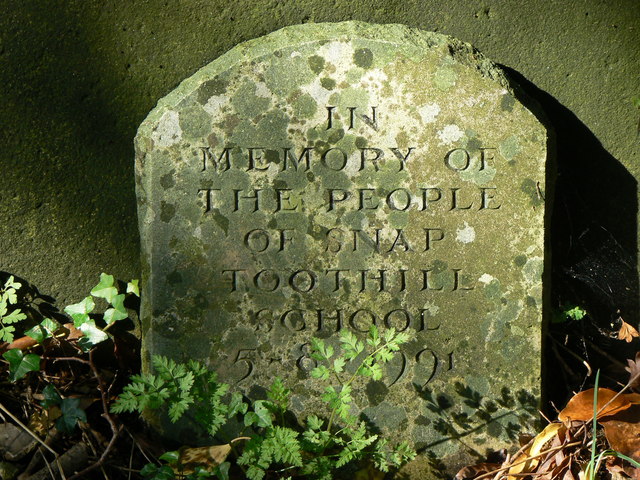
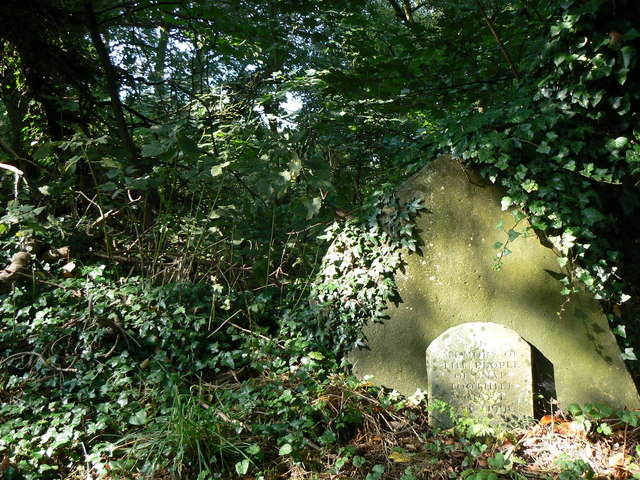
In 1991 the pupils of Toothill School, Swindon placed a stone in memory of the people of Snap. Photograph is published courtesy of Brian Robert Marshall.
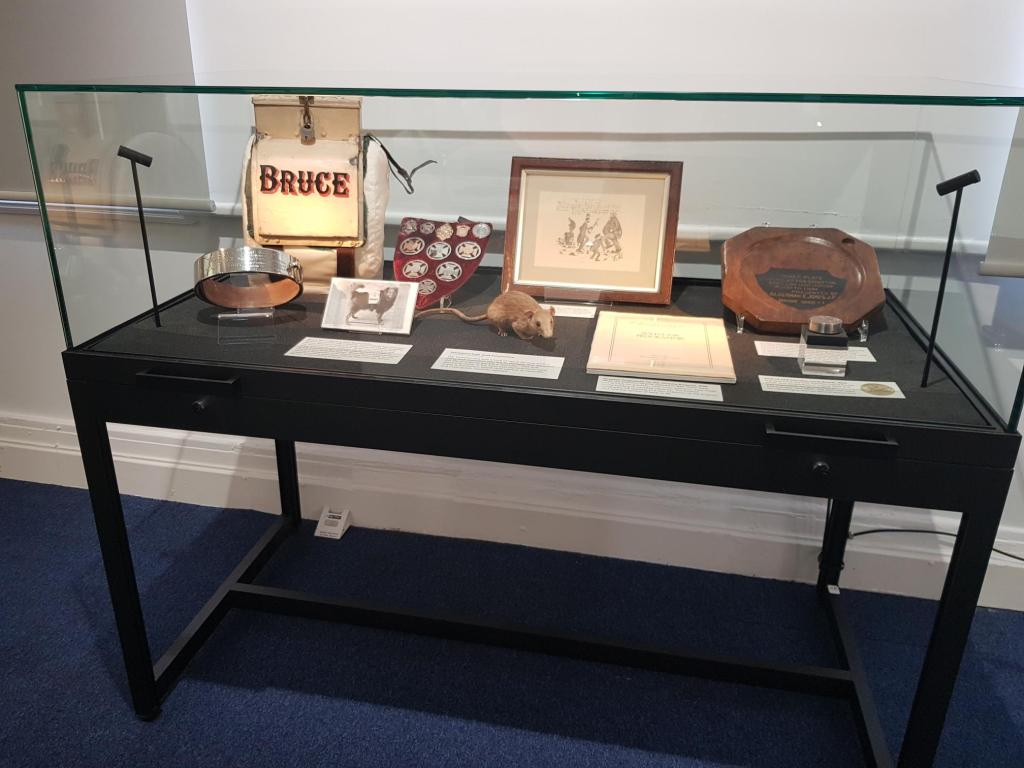
Percy Albert Cook and the new Museum

Such a novelty is it to have our museum back in Swindon that I’ve already visited twice.

The Swindon Museum and Art Gallery at Apsley House closed with the advent of Covid in 2020 and never re-opened. Apparently there was (and possibly still is) a plan in the pipeline to build an all singing, all dancing building in Swindon’s ‘Cultural Quarter.’ But it was a very long pipeline; a ten year long pipeline.

But, to cut a long story short, we now have a new museum on the first floor of the Civic Offices in Euclid Street, and what a cracker it is!

And, of course, I went round with my notebook collecting names of those people who might be buried in Radnor Street Cemetery. I already knew that Charles Herbert Henry Gore, the first curator in post in 1928 was buried in grave plot B3248.

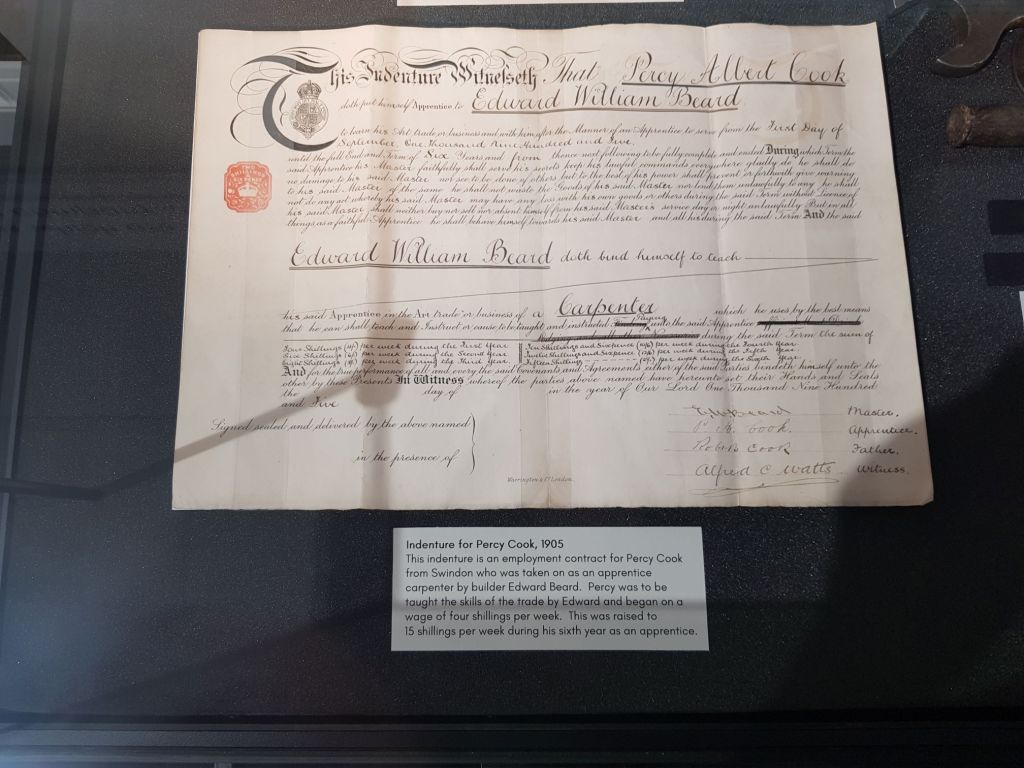
Then I came across an indenture between *Edward William Beard, builder, and 14 year old Percy Albert Cook.

Born in Fareham, Hampshire in 1891, Percy was the son of Robert Bray Cook (whose signature is on the bottom of the document) and Elizabeth Mary Cook nee Cable. The family first appear in Swindon on the 1901 census when they lived at 114 Commercial Road. Young Percy successively completed his apprenticeship and in 1920 he married Gertrude Hawkins. In 1939 the couple and their two sons were living at 13 Commercial Road where Percy describes his occupation as ‘Carpenter, Decorator and Jobbing Builder (Master).’

Gertrude died in 1963 and Percy in 1976 but unfortunately neither of them are buried in Radnor Street Cemetery.

Percy’s father Robert had worked at a variety of jobs. Perhaps this is why he wanted Percy to have a trade and a secure future. By 1911 the family were living at 13 Commercial Road, the property where Percy was living in 1939.

Robert died that same year. He is buried in an unmarked public grave, plot B2332 which he shares with his son Barlett Alfred Cable Cook who died aged 24 in 1909.

* The firm founded by Edward William Beard is still in operation and is presently working on the Health Hydro building in Milton Road.

Samuel Chappell – boot maker and Minister of the Gospel

The re-imagined story…

We always bought our shoes and boots from Mr Chappell’s shop in Bridge Street. I say ‘always’ as if it were a weekly event. Buying shoes and boots in our family was a big occasion and only done after much forethought and deliberation.

Father patched up our footwear until it was beyond repair and the new purchase was only embarked upon at the moment of absolute need, never on a whim or a fancy.

My sister always chose a dainty pair of shoes with buckles and bows. Of course these were never the ones she ended up with. I was just happy to have a pair of boots that kept my feet dry and didn’t scrunch up my toes.

My sister told me that Mr Chappell was born in America; New York, she said, but I knew that couldn’t be true. He didn’t look American and he certainly didn’t sound American. And why on earth would you leave New York and move to Swindon?

She also said he was a Minister of the Gospel and I didn’t believe that either. Why would he sell boots and shoes if he was a man of God?

Girls have some funny notions.

invoice from Chappell

The facts …

This is the final resting place of Samuel Chappell, master shoemaker, boot and leather seller and as inscribed on the headstone, 40 years a Minister of the Gospel.

Samuel was the eldest son of Eli and Ann Chappell.  His father was born in Castle Combe where he worked for many years as a tailor.

Samuel, however, was born in New York in 1847.  By the time of the 1851 census the Chappell family were back in Wiltshire and living in Hullavington where Eli was working as a Master Tailor.  Living with him were his wife Ann, 8 year old daughter Ann who was born in Castle Combe, obviously before the family’s big American adventure, and a baby son John, born in Hullavington on their return.

Samuel appears to have been raised in Castle Combe by his aunt and uncle, Susanna and William Chappell.  William was a master shoemaker and in 1861 Samuel was working as his apprentice.

The 1871 census has two entries for Samuel, one living in Stratton St Margaret with his parents and two brothers. The other entry shows him lodging with the Keylock family at 5 Albert Street in Old Swindon.

Samuel opened his own boot and leather shop at 26 Bridge Street in 1872. In 1874 he married Sarah Ann Sainsbury.  On the 1911 census Samuel and Sarah Ann are living at 68 Eastcott Hill and state that they had six children, four of whom were still living.

This photograph shows Samuel and his eldest son William outside the shop in the early 1900s.  According to a family member who kindly sent me this photograph, the shop remained open until the 1950s. 

Samuel Chappell

Samuel died at his home in Eastcott Hill and was buried in plot A2560 in Radnor Street Cemetery on January 19, 1926.  He shares the grave with his wife Sarah who died in 1916 and their youngest son Samuel, who died aged 24 in 1909 following a leg injury sustained whilst playing football. 

All of us back together again – the Alley sisters

Alley sisters

The re-imagined story …

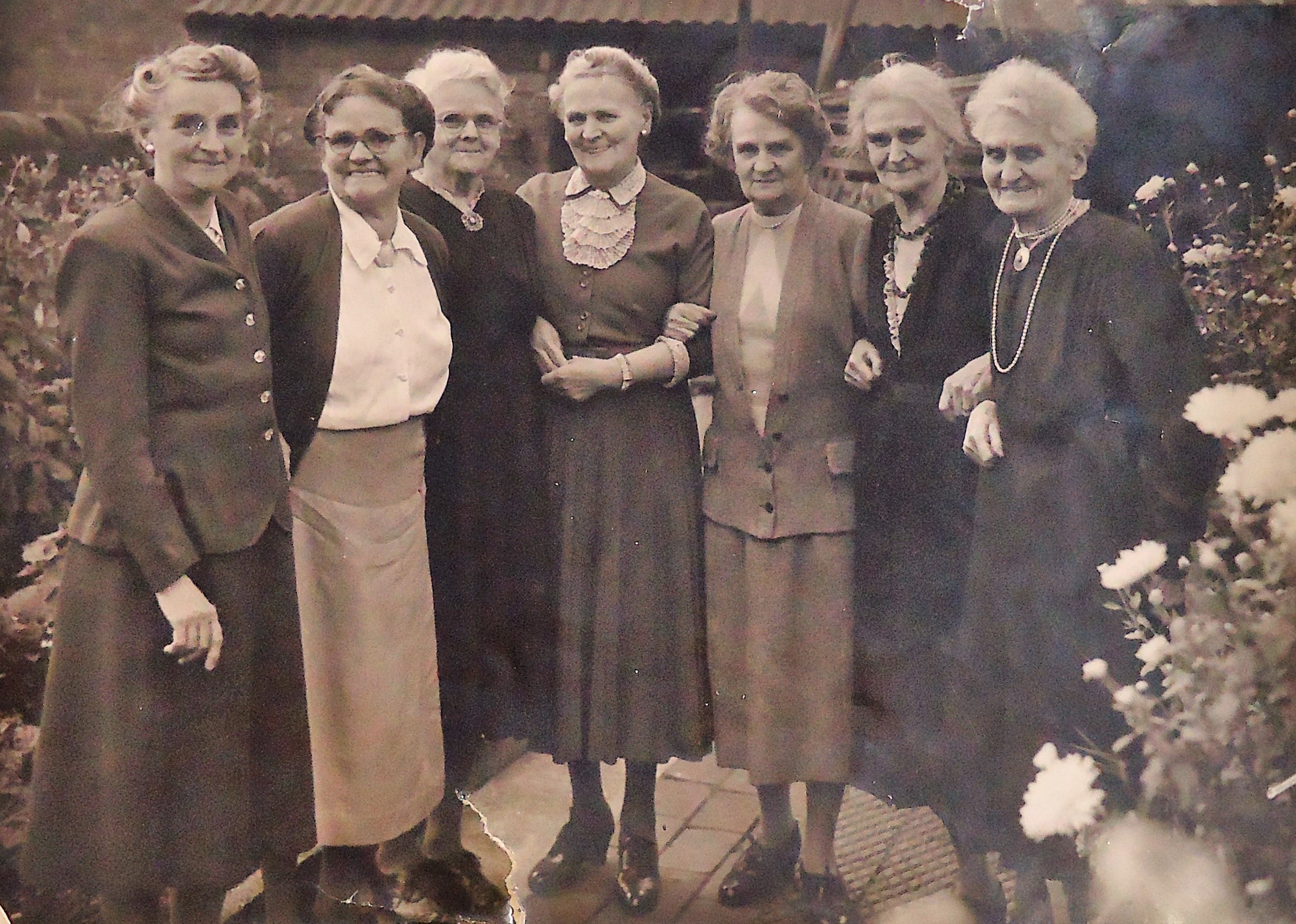
I was shown into the neat front parlour at 131 Faringdon Road where the ladies were enjoying a celebratory tea party. A trill of voices punctuated by laughter and cries of “Do you remember when …” greeted me.

The occasion was the return to Swindon of eldest sister Louisa after more than 50 years of living in Bournemouth. Today the seven sisters were enjoying tea together and had invited the Evening Advertiser to join them.

This was just the kind of human-interest story my editor liked and I had been sent to take the ladies’ photograph.

“Do you know young man we have a combined age of 517 years?”

“Oh Min, you’re exaggerating.”

“No, she’s quite right. If Louisa is 85 next month that would make Maud … “ Mabel proceeded to quote everyone’s age.

“My goodness Mabel, you’re not reckoning up in the Post Office now.”

“Where do you want us to pose, young man?” asked Ethel with a twinkle in her eye, obviously the cheekiest of the seven sisters.

The parlour was rather dark and I had caught a glimpse through the window of the pretty little back garden.

“Shall we move out into the garden?” I suggested.

“That would be perfect, let me grab my cardigan,” said Ethel.

“I hope my hair won’t be spoilt,” Eva tucked the hair grips more securely into her coiffure.

Standing at the bottom of the garden there was more chattering and giggles.

“Tallest in the middle,” former teacher Flora organised her sisters.

“Surely as the eldest Louisa should be in the middle? Would you like a chair darling? I’ll get you one from the dining room.”

I decided it was time to assert some order.

“Ladies, why don’t we form a semi-circle with the eldest at one end, down to the youngest at the other end?”

“You are a clever young man,” said Flora. “What a perfect idea. Right, Louisa you stand there, then we’ll have Maud and Mabel next. Stand next to me Min, there and Ethel and Eva on the end.”

“Lovely. Ladies, are we ready then?”

“Mummy and daddy would just love this. All of us back together again.”

The women linked arms and just as I clicked the shutter on the camera Min said something to make her sisters laugh. Ethel peeped out of place and Louisa closed her eyes.

Alley wedding photo (2)

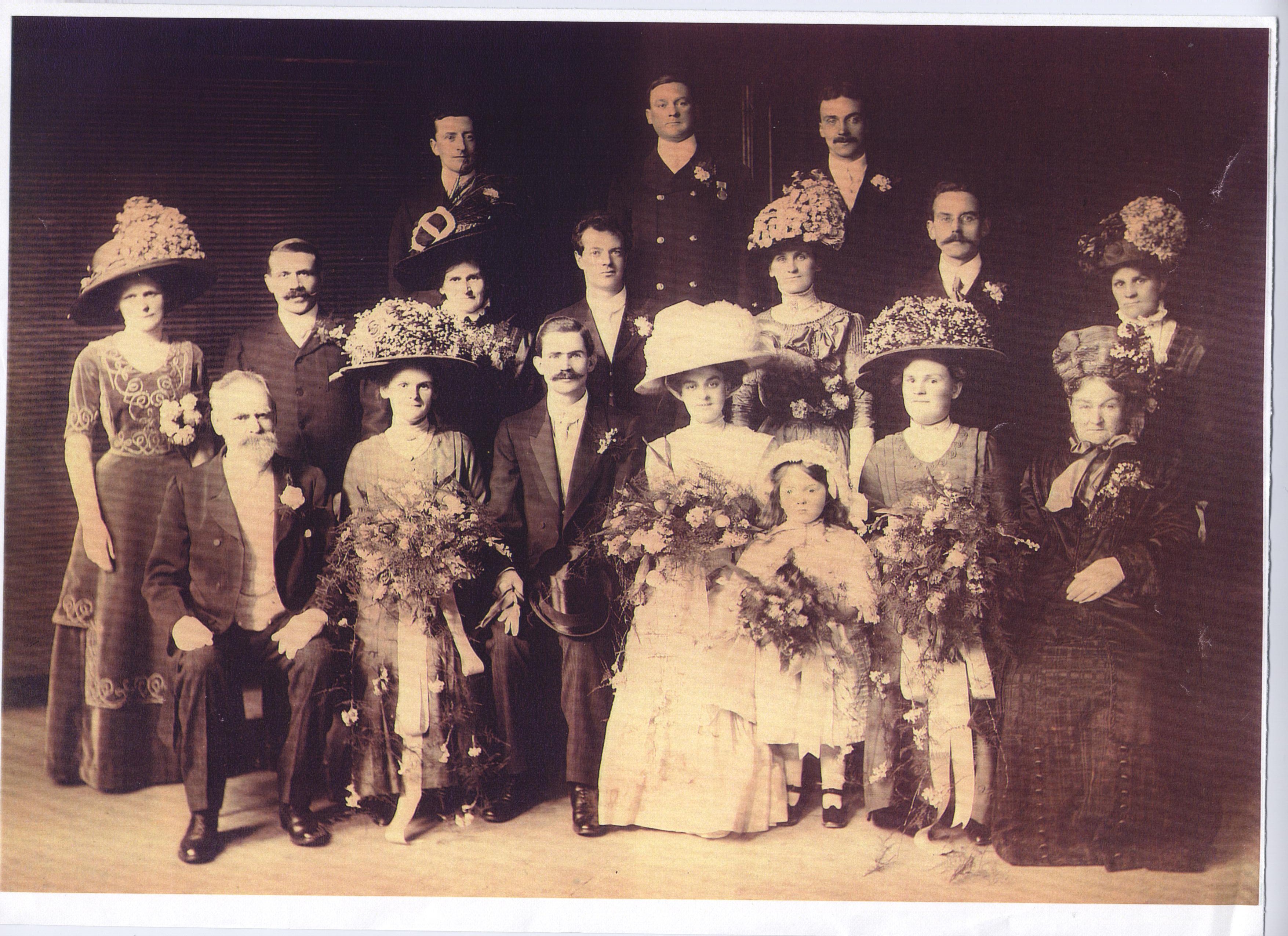
Youngest sister Eva’s wedding to George Babington in 1911. Photograph courtesy of the Alley family.

You can read more about the amazing Alley sisters in my book Struggle and Suffrage in Swindon available from Amazon

The facts …

By 1881 George Richman Alley and his wife Emma had moved to Swindon. George worked as a body maker and later a wheelwright’s foreman in the GWR Works. The couple lived first at 3 Carfax Street and then at 8 Merton Street where George died in 1925. Emma survived him by seven years. The couple are buried together in a grave in Radnor Street Cemetery, close to the Chapel.

Alley family 2

As ever my thanks go to Wendy Burrows, Kay Prosser, Di Edelman and Christine Price.

You may like to read:

The amazing Alley family

George Richman Alley and his family

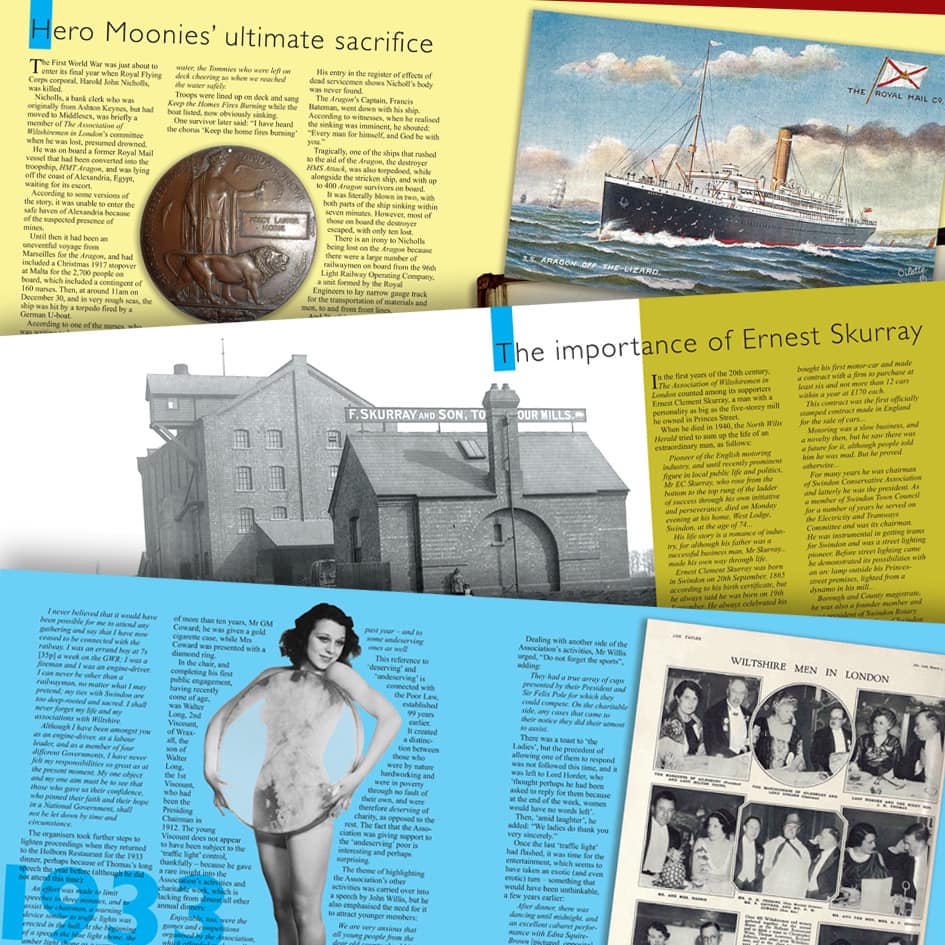
Moonies, Movers & Shakers

My friends and former Swindon Heritage magazine colleagues, Graham Carter and Noel Ponting, have written and produced a stunning new book.

Their third collaborative work is called Moonies, Movers & Shakers and is a history of the charitable fraternity called the Association of Wiltshiremen in London – nicknamed The Moonies in London. The inaugural dinner of this association (an event to bring together former Swindon railwaymen who found themselves in London) was held on March 13, 1886 in Plumstead.

Among the fascinating stories Noel and Graham have discovered during their research is that of the musically talented James brothers, the sons of William James and his wife Mary Ann.

William, an engine fitter born in Brecon in about 1830, married Mary Ann Hawkins at St. Mark’s Church in 1858. The young couple lived at various addresses in New Swindon where they raised a family of 7 children, 5 sons and 2 daughters. And while the 4 surviving sons initially followed their father into apprenticeships in the railway works, the future of three of them turned out quite differently.

You can read about the musical James brothers in Moonies, Movers & Shakers available from the Library Shop, Swindon Central Library; Hobnob Press and Amazon.

William James died in November 1904 and Mary Ann in 1908. They are buried together in grave plot E7581.

You may also like to read:

William David James – a well known Swindon musician

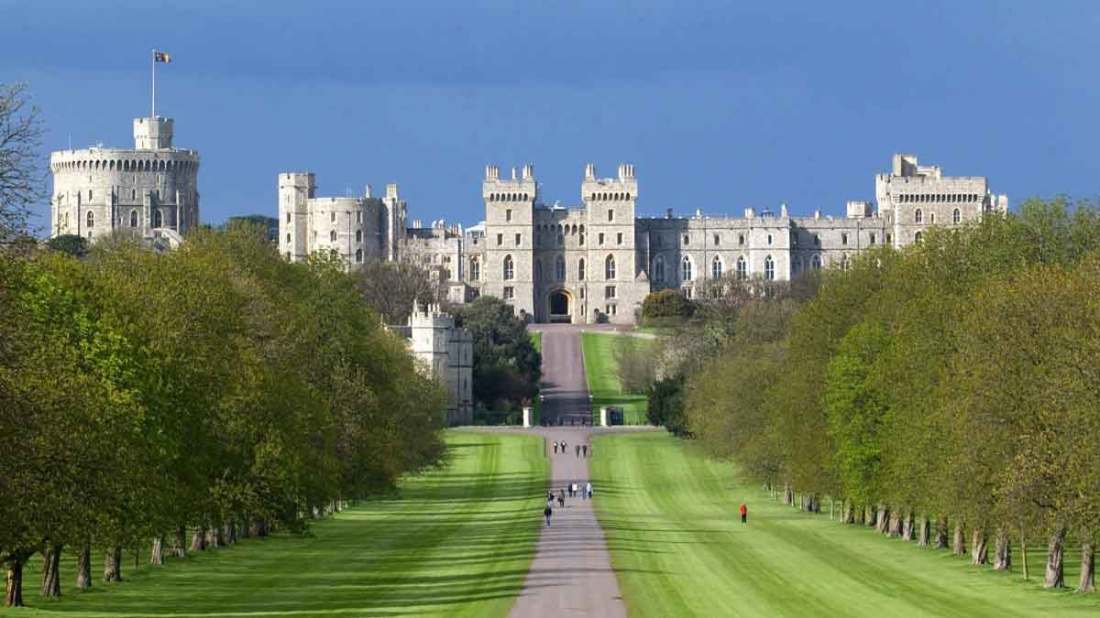
Up at the Castle

The re-imagined story …

Rosa Christelow and I started work as housemaids at Windsor Castle on the same day. Rosa was older than me and had lots of experience. I had grown up in Oakley Mere, a small village on the outskirts of Windsor, and had lots to learn. Rosa also used to say I had a lot of cheek.

People couldn’t understand how we were such good friends; we were like chalk and cheese. Perhaps that’s why.

Rosa got me out of a lot of scrapes, I can tell you. And me, well I could always make her laugh. Once I demonstrated how to dance the Charleston in a corridor outside the library where some of the young royal cousins were playing a gramophone. I nearly lost my job over that, but Rosa managed to intercede for me.

It was a wonderful life working up at the Castle. The things we saw and the people we met. Well, not met exactly. Most of the guests barely noticed us, but we would peep round corridors and over the top of stairs to watch them arrive and depart. And of course, there were occasions when the household staff were presented to the King and Queen. And Christmas – oh Christmas was a wonderful time. Hard work, but wonderful.

And sometimes the staff had the place to ourselves. What we got up to then, well I couldn’t possibly tell you.

I left in 1913 when I married Robert one of the footmen up at the Castle, but I always kept in touch with Rosa. When she retired, I visited her once or twice at the house she shared with her sister in Swindon. Her home was as neat as a pin. You could tell she had been a housemaid; little touches I noticed, ways of doing things she had taught me. I didn’t envy the little girl who came in to clean for them. I bet Rosa put her through her paces.

Goddard 2
Goddard Avenue

The facts …

Rosa Harriet Christelow was born on October 25, 1879 the third child and second daughter of John Christelow, a boilermaker, and his wife Priscilla. Rosa was baptised at St Mark’s Church on November 30, 1879 and grew up at 42 Wellington Street, the family home for more than 70 years.

In 1907 she entered the Royal Household at Windsor Castle as one of the 38 Class 3 housemaids earning £25 per annum. Rosa was later promoted to a Class 2 housemaid on £30 per year. She was still employed at Windsor Castle during the First World War and records list her there in 1924, the date at which published figures close.

At the time of the 1911 census Rosa was one of 33 housemaids, a total of 51 female servants. Royals in residence in 1911 were Princess May of Teck who was five years old and her three-year-old brother Prince Rupert of Teck. These children were Queen Victoria’s great-grandchildren.

By 1939 Rosa was living at 42 Wellington Street with her sister Rhoda where she is described as a paid domestic servant. There are gaps in what is known about Rosa’s whereabout between 1891 to 1901 and 1924 to 1939 probably due to a mis-transcription of her surname.

Rosa’s parents, John and Priscilla, are buried with two of their daughters, Laura Priscilla and Rhoda Annie, in plot D1350.

Rosa eventually moved into 125 Goddard Avenue, a home she shared with her brother Samuel. After several years working in the railway factory, Samuel Christelow travelled to Zimbabwe where he was ordained. Widowed and retired he returned to Swindon where he lived with Rosa at 125 Goddard Avenue. He died in St Margaret’s Hospital in 1972 and is buried in plot D1587.

Rosa died at St Margaret’s Hospital in 1972. She was aged 92. She is buried with her grandmother in plot B1877.

Christelow - Copy
Rosa was buried with her grandmother

Samuel James Christelow
Samuel Christelow

You may also like to read:

Archdeacon Samuel Christelow – missionary

Elderly Man Expires in the Cemetery

The re-imagined story …

I leaned back on the bench and closed my eyes, my face turned towards the sun. Bird song filled the air on this glorious summer’s day. But how could there ever be a glorious summer’s day again? All I could think about were the days so many had been robbed of, and yet here was I in my 60th year, an old woman, enjoying the bird song and the sunshine.

I often come to sit in the cemetery. There is usually someone here, tending a grave. We exchange a few words, pleasantries. Sometimes we even talk about our boys.

The guns have been silent for many months, the servicemen returned home. Even those who were prisoners of war are back, aimlessly walking the streets of Swindon. They stop and speak. Everyone knew my boy.

I wish I could have brought his body home and buried him here in the cemetery. I’ve seen photographs of the battlefield cemeteries, row upon row of crosses. My boy has no known grave.

A parent shouldn’t out live their child. Will this be a country full of old people now? Parents mourning sons.

I open my eyes, ahead of me there is an old man, walking slowly up the hill. I think I recognise him. Another old man. This world is full of old people, all the young ones are dead.

He stops and lays the flowers he holds on a grave. I watch as he appears to stumble. I stand up and begin to walk towards the Dixon Street gate. I’ve had enough now, watching other old people. I shouldn’t be here, none of us old people should be here.

DSC07141

The facts …

Elderly Man Expires in the Cemetery

The death of a well known Swindonian, Mr Donald Macdonald Andrew, a retired GWR foreman, occurred under tragic circumstances in Swindon Cemetery on Saturday last. It appears that Mr Andrew, who was 72 years of age, and resided at 142 William Street, went on Saturday morning to the Cemetery, with the intention of placing some flowers on his wife’s grave. When walking along the pathway towards the grave he was seen by Mrs Amy Haynes, wife of Ald. A.W. Haynes, ex Mayor of the Borough, to fall. She ran to his assistance, and also a gravedigger, named Sidney Iles, who was working nearby. But deceased expired in a few minutes.

The Faringdon Advertiser Saturday June 21 1919.

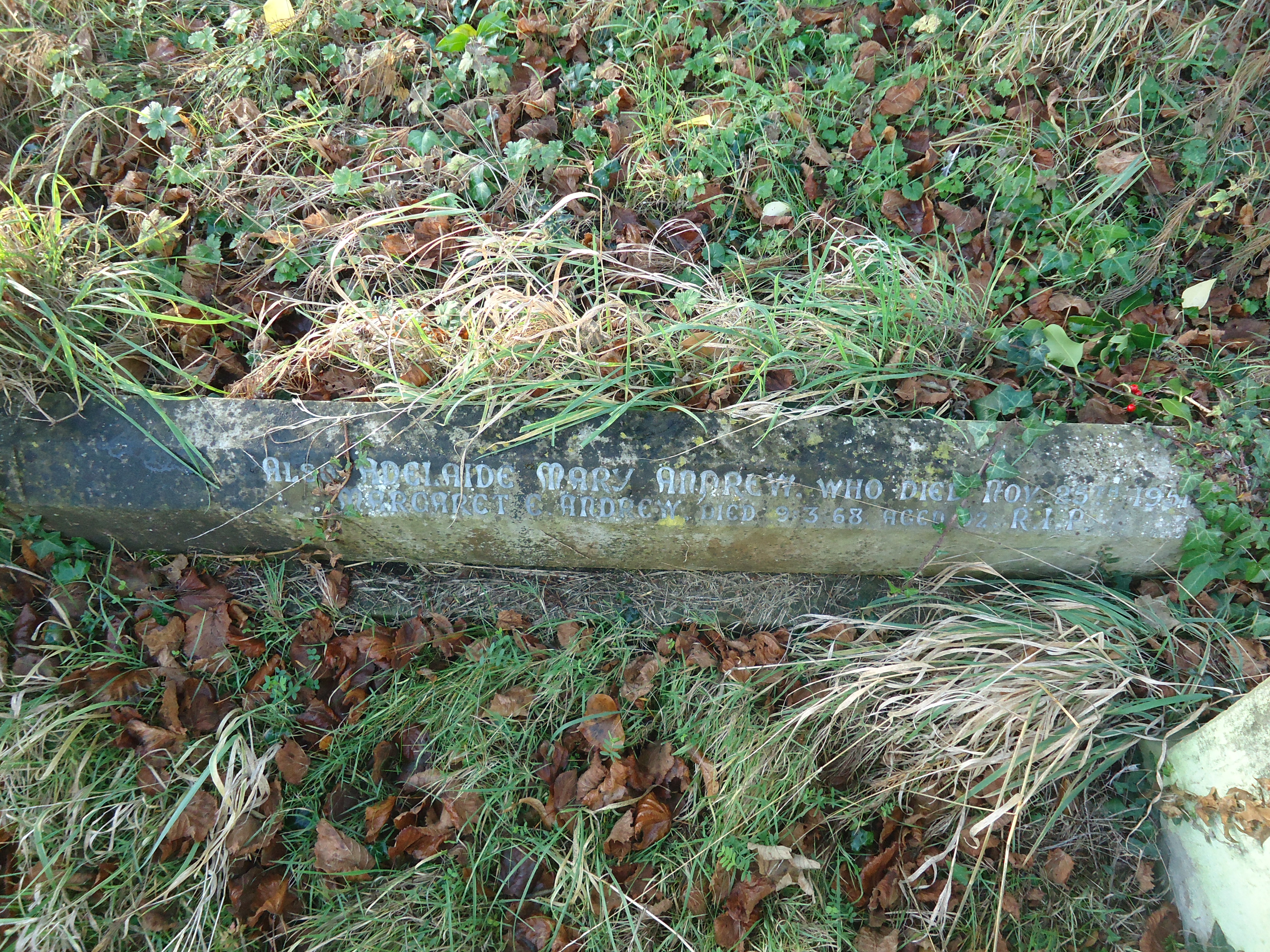
The Andrew family lived at 142 William Street for more than sixty years. Donald Macdonald Andrew, an engine fitter in the Works, and his wife Emily Jane had six children, a seventh had died before the 1911 census – Samuel Henry, George Edward, Ralph Macdonald, Florence K and twins Adelaide Mary and Margaret Elizabeth.

Donald’s funeral took place on June 17, 1919. He is buried in a double grave plot E8347/8 with his wife, son Ralph and daughters Adelaide and Margaret.

Adelaide Mary and Margaret Andrew

The Foyle and Finney families

The Radnor Street cemetery volunteers are a versatile group. Not only do they care for the CWGC graves and identify others with a military connection, but they mow and hoe, weed and clean and also locate lost graves. Bex recently helped Liz, a visitor to Swindon, to find her great grandparents grave and in doing so revealed yet another fascinating Swindon family history.

Liz helpfully had the cemetery paperwork concerning two family graves – plots D937 and D938. These proved to be the graves of two brothers, William John and James Henry Foyle with their respective wives, Margaret Ann and Mary Jane. The brothers were two of four sons born to Isaac and Rebecca Foyle. All four sons were born and raised in Swindon and all four followed their father Isaac, a labourer in the GWR iron works, into the railway factory; William as a boiler smith, James a brass finisher, George a railway clerk and Alfred an electrical fitter. William would eventually move to Wolverhampton, but following his death he was buried next to his brother James.

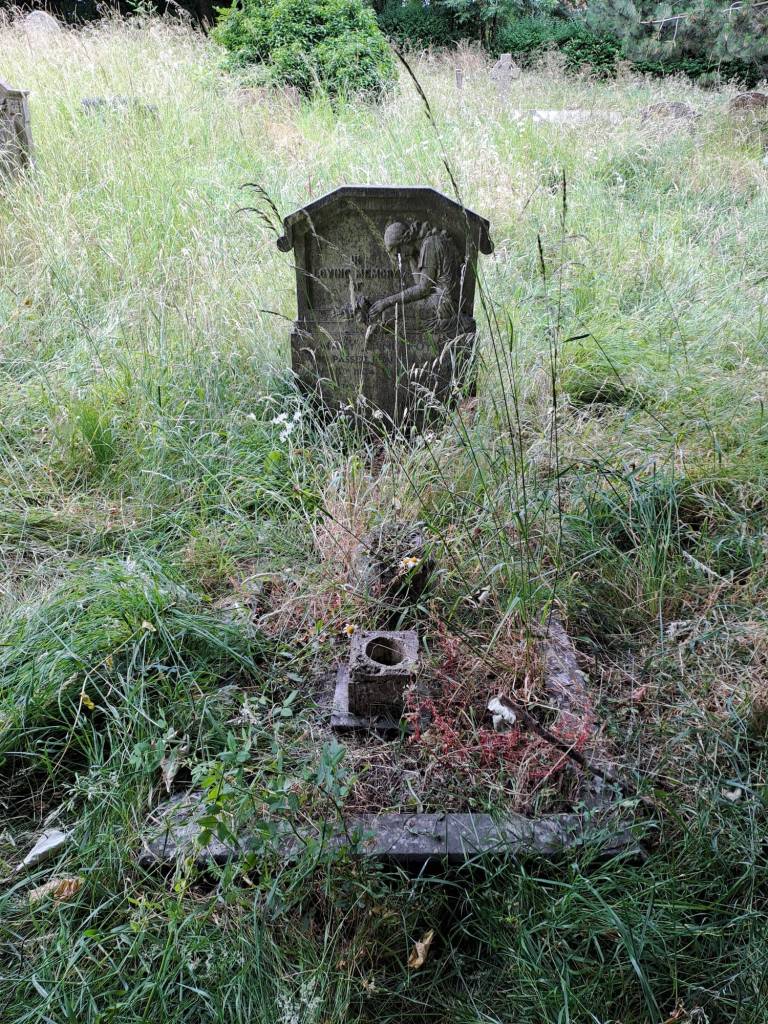
James’s grave with its elegant headstone was easy to locate. See below two before and after photographs taken by Bex.

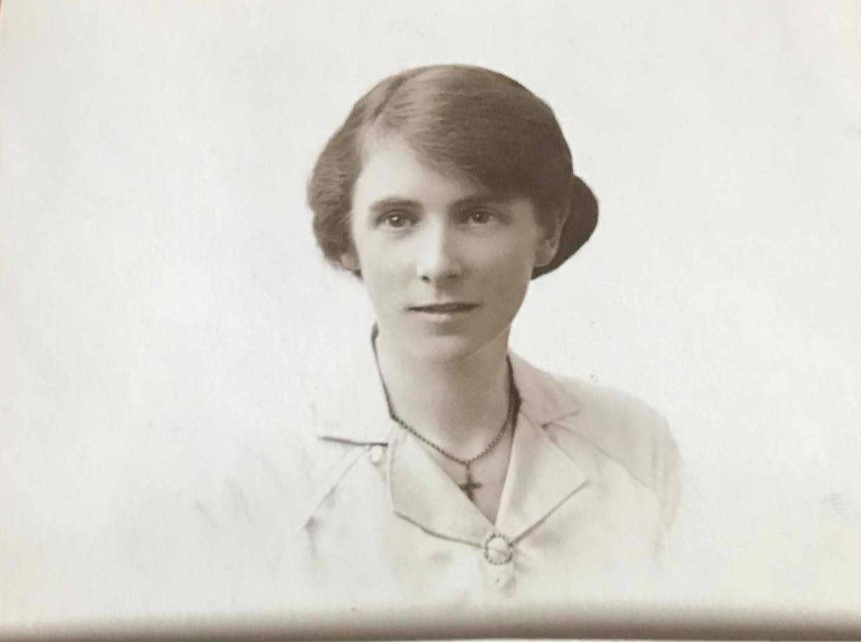
Liz was also keen to find other family graves, including those of Esther and Kate Finney. Research revealed that the two sisters were the daughters of William and Emma Finney.

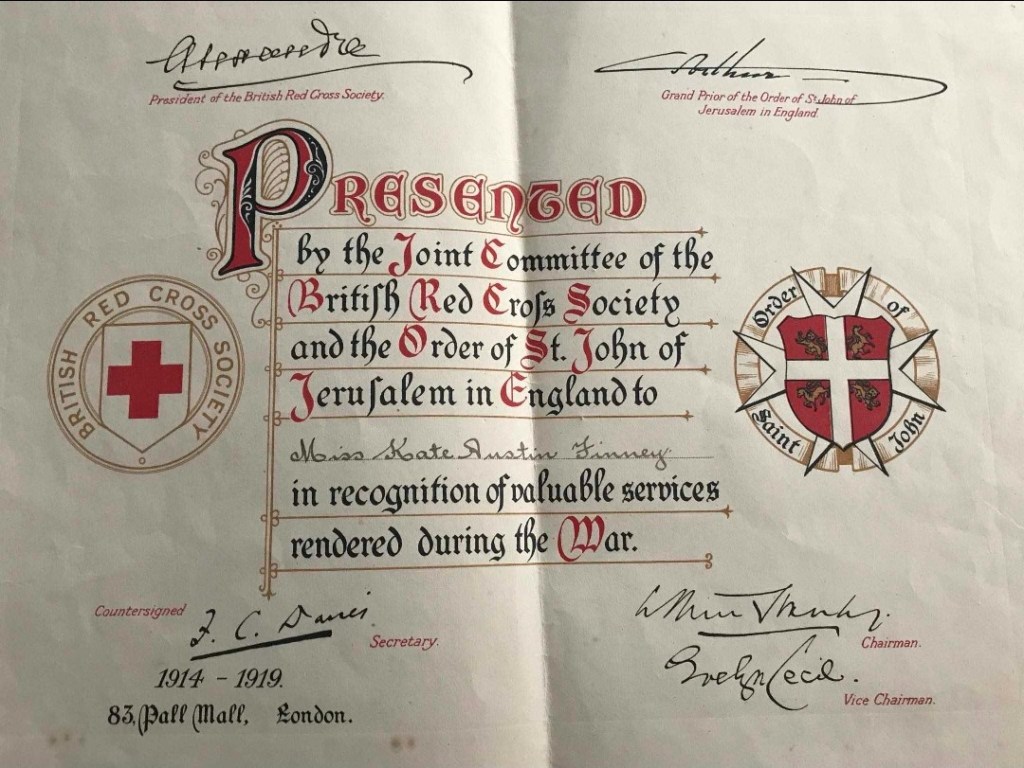
Esther and Kate both served as Red Cross nurses during WWI. Esther was a volunteer at the Red Cross Hospital In Taunton in 1917 while Kate stayed closer to home and served as a Ward Helper at the Red Cross Hospital in Stratton in 1918.

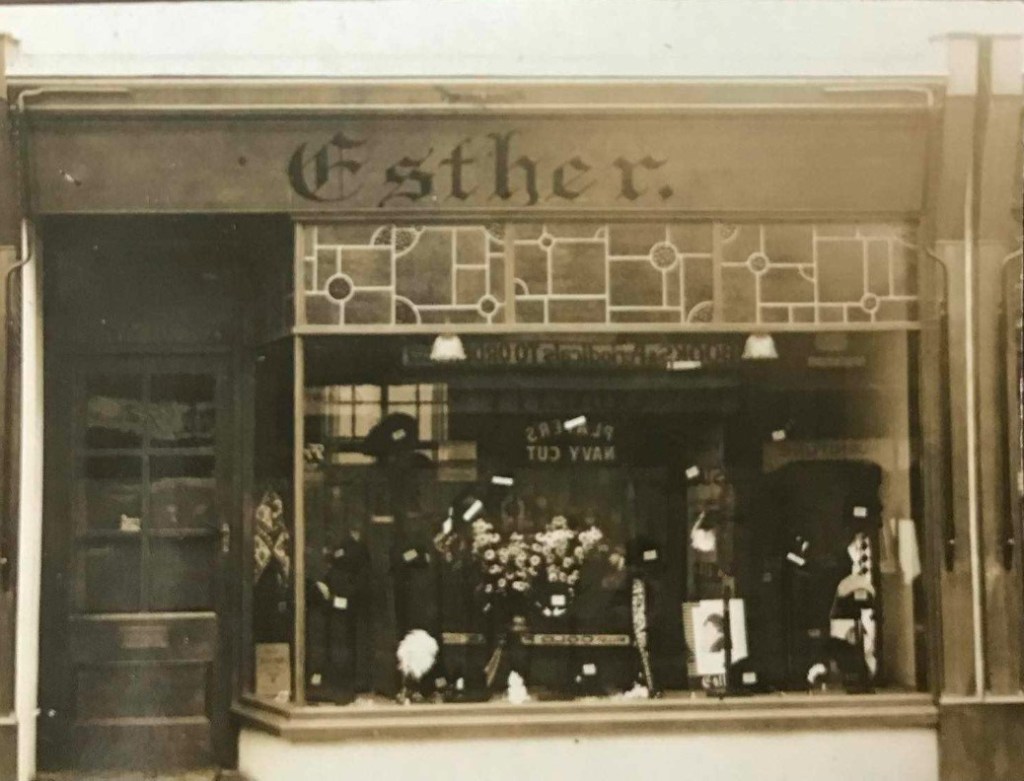
In 1939 Esther, Kate and their brother William lived with their widowed mother at 11 Clifton Street. Esther is described as a Shopkeeper (Gown and Millinery) and Liz was able to provide a photograph of the shopfront.

Esther died in 1959 and Kate in 1970 and they are buried together in grave plot E8298 with their brother William who died in 1957.

The connection between the Foyle and Finney family is that Esther and Kate’s brother John Marshall Finney, married James and Mary Jane Foyle’s daughter Elsie Gladys Foyle.

Hopefully Liz will keep in touch with Bex and even more family stories will emerge.

The terracotta grave markers

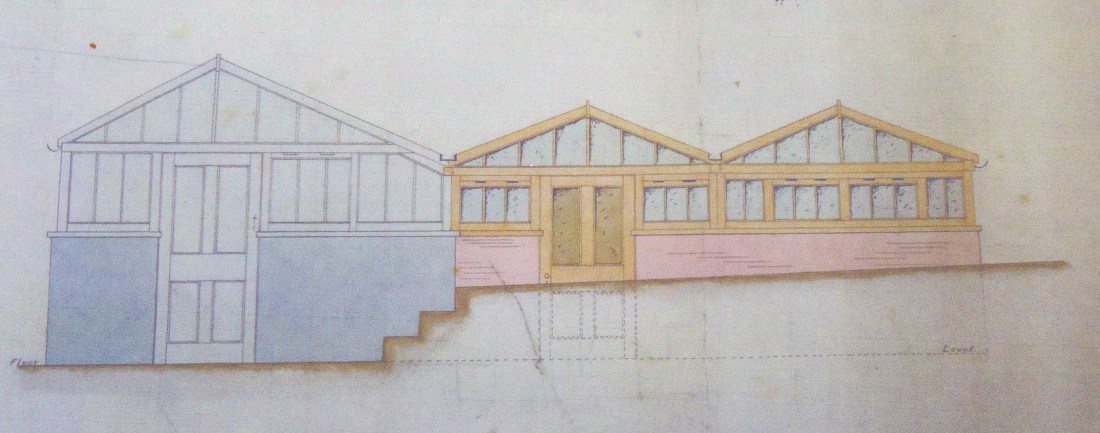
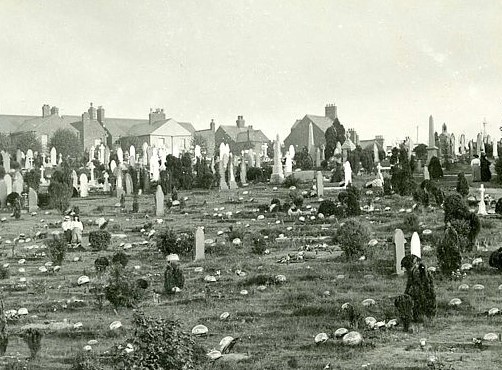
Back in the day there were flowers everywhere, right across the cemetery, displayed beneath glass domes; cultivated in the greenhouses. In 1907 the groundsmen were so busy that planning permission was sought for additional glasshouses to be built behind the caretakers lodge (see above illustration).

For those families who could not afford a headstone the flowers were a monument among the graves so densely arranged with barely a foot’s breadth between each plot.

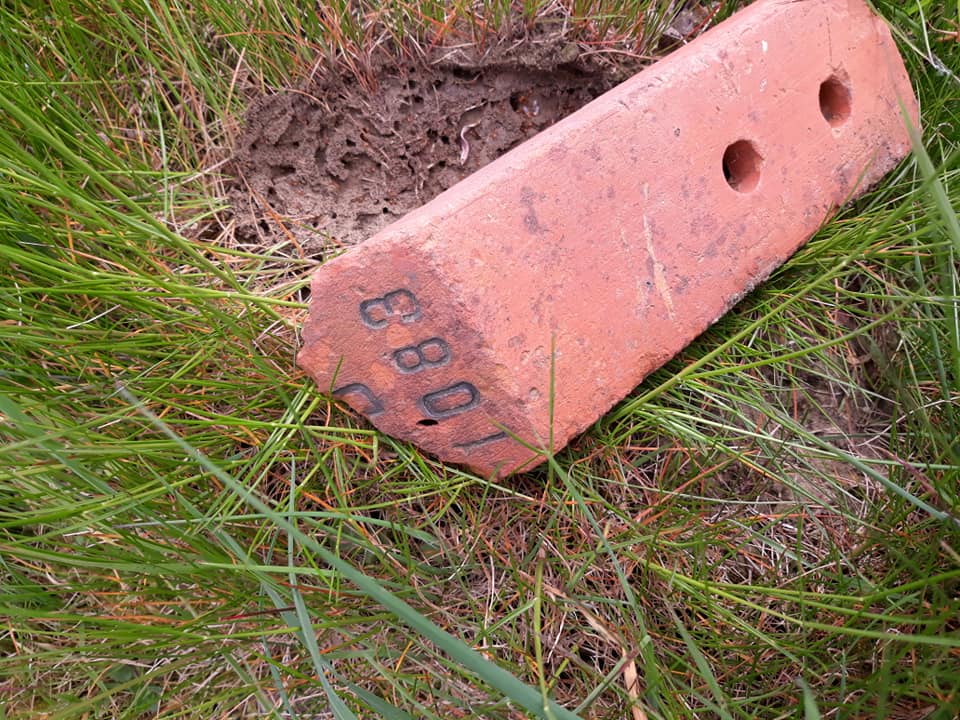
Every grave was identified by a terracotta marker, sadly an unsatisfactory method. The system had worked well when a caretaker and gravediggers were employed in the busy cemetery but today they lie broken and scattered about. Some graves sport several of the brick like markers, others have none, and when searching for a grave they should be used with caution and only as a rough guide.

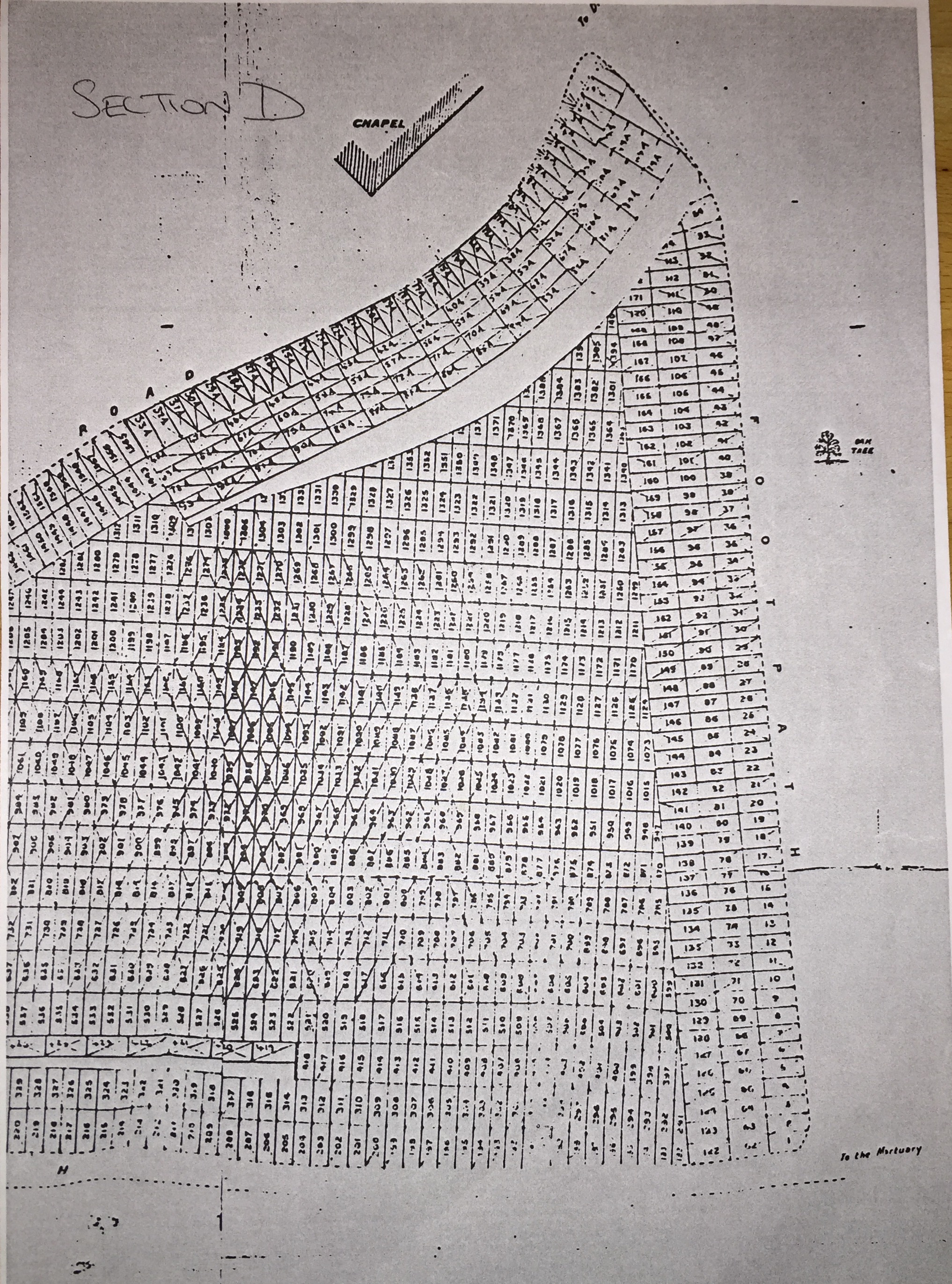
Section D 3 of 3

So what about the marker pictured here, found on a mound of earth. Is there a fallen headstone buried somewhere beneath? There are no clues, but it is possible to trace who was buried in plot D1083…

Molden 2

The facts …

The Radnor Street Cemetery burial registers reveal that there is only one person buried in plot D1083. His name was William John Molden, a boilermaker at the Works, who died on March 3, 1919 at his home, 145 Clifton Street. He was 44 years old and his funeral took place on March 8. Administration of William’s estate was awarded to his widow, Emily and his effects were valued at £179 5s.

Without applying for William’s death certificate we cannot ascertain his cause of death. Unfortunately we do not have a budget to pay for all the death certificates we need when researching the cemetery.

William was born on February 23, 1875 in Purton, the son of Eli and Hannah Molden. He began a six year boilermaking apprenticeship in the Works on February 23, 1890 aged 15. The 1891 census lists William as a 16 year old GWR Boiler Maker Apprentice living with his parents and older brother Sidney at Battle Well, Purton.  

William married Emily Painter in 1898 and at the time of the 1901 census they were living at 65 Redcliffe Street, Rodbourne with their four month old daughter Dorothy.

The family appears on the 1911 census living at 122 Clifton Street where William lists his occupation as Boilermaker Rivetter. The couple have three children, Dorothy Maud aged 10, Muriel Louise Hetty, 8 and Harold Sydney John 2. Another son, Raymond Edward Joseph was born in 1917.

William was a relatively young man when he died. Perhaps he died as a result of the post-war ‘flu epidemic which raged through Swindon as it did everywhere else.

SWINDON - RADNOR ST CEMETARY (3) 1905(2) - Copy

Miss Blount’s tea party

The re-imagined story …

I really didn’t want to visit Miss Blount. I liked her well enough; she was a kind, patient teacher, but she was dying. We all knew it. She had been ill for a long time and this would probably be the last time anyone other than her family would be invited to visit.

As the senior pupil teacher I was selected to deliver the presents the children had produced. The infants had drawn pictures while the older children had written diary entries telling her what was happening at school. The girls in Standard IV had baked a Victoria Sandwich cake, named after the Queen who was known to have a sweet tooth. My contribution was a bunch of dahlias grown in my dad’s greenhouse.

The Blount family lived at 14 Park Lane. I expected the house to be shrouded and shuttered, the family sombre and in premature mourning, but it wasn’t like that at all. Miss Blount was sitting in the sheltered back garden where her mother served the tea. The flowers were placed in a cut glass vase and set upon the garden table while both ladies exclaimed over the lightness of the sponge cake. The younger children’s pictures caused much delight and the diary entries were pored over with great interest.

Our little tea party was so relaxed and jolly that I began to think perhaps the reports of Miss Blount’s ill health had been exaggerated. Then suddenly she was overcome by a paroxysm of coughing, and her mother rushed to her side. When eventually the attack subsided I noticed the handkerchief she held to her mouth was spotted with blood. She looked exhausted and Mrs Blount thanked me for calling, which I took to be my cue to leave.

Miss Blount was very pretty and so young, just 27, but of course as a 14 year old school girl I didn’t truly appreciate the sorrow.

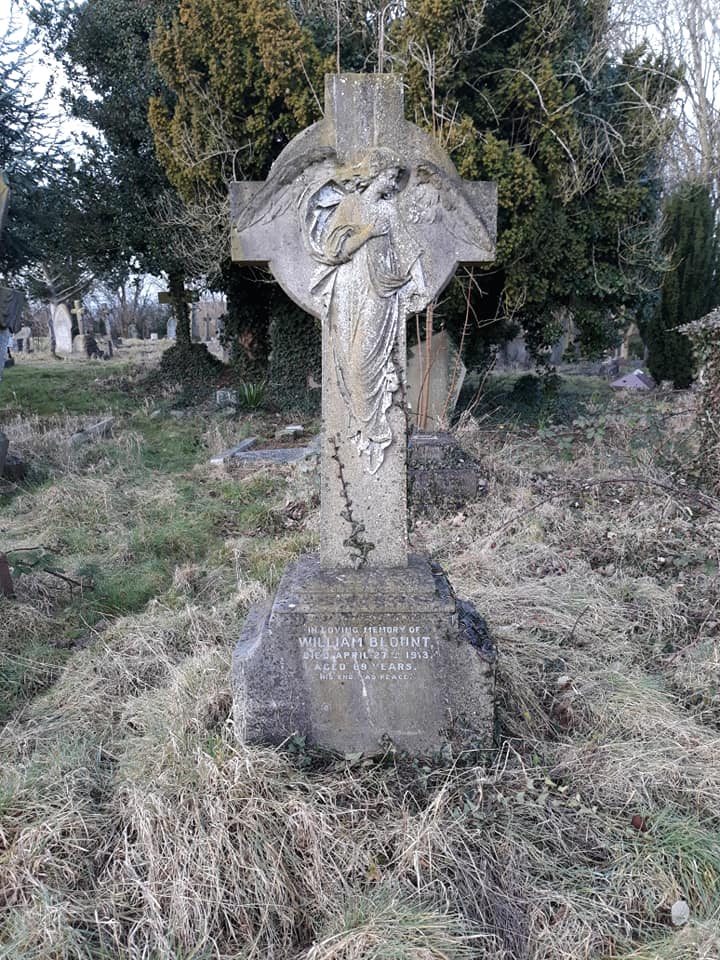
There’s a beautiful monument on her grave, a floating angel, delivering her soul to heaven. When I visit my parents’ grave I take some flowers for Miss Blount. She told me she thought the dahlias were a cheerful flower, that day of the tea party.

Blount family

The facts …

Eleanor Marian Blount was born in Hereford, the eldest of William and Ann Blount’s eight children, but she was not the first to die.

William married Ann Lane on August 6, 1866 at St Peter’s, Hereford. They moved to Swindon in about 1868 where William started work as a Moulder in the railway factory. Their first home was in Havelock Street in 1869 before they moved to 43 Cheltenham Street. Their third child, Mary Emma Blount was born in Cheltenham Street but died at 8 months old. She was buried on August 22, 1871 in the churchyard at St Mark’s. In 1881 the family were living at 22 Cheltenham Street and by 1891 they were living at 14 Park Lane.

Three of their children went on to become teachers, Eleanor, Lily and Edgar. William John Lane Blount turned up in the US sometime around 1888-91. George followed his father in the Works as a Brass Finisher, but later he also emigrated to the US. Alexander (Henry) Blount worked as a mechanical engineer in the railway factory. Youngest son Frederick Walter, also worked in the railway factory as a fitter.

William died on April 27, 1913 aged 69. Ann survived him by more than twenty years. She died in 1934 aged 87. They were buried with their daughter Eleanor in a large double plot E8158/8159.