Minnie Louisa Day – a soldier’s wife

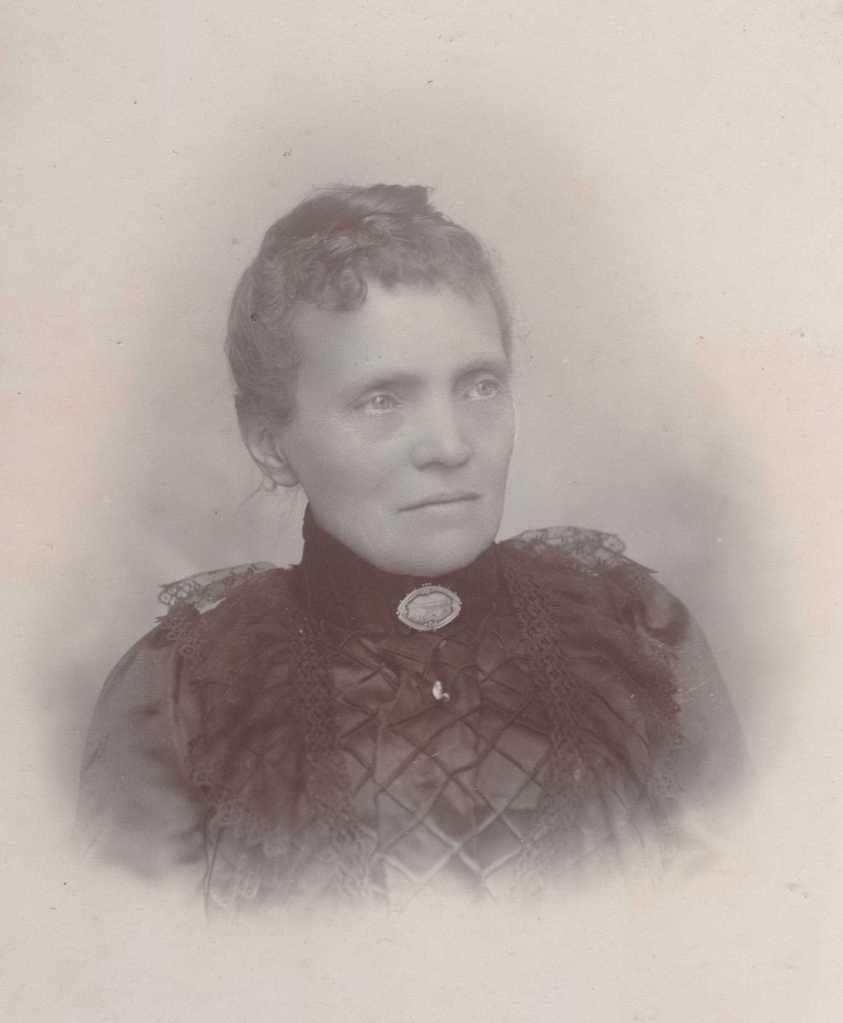
Every cemetery story is a recognition, a celebration of a life, but sometimes that story is one so sad it is difficult to write and to read. Such is the story of Minnie Louisa Roach whose future looked promising when she was born in 1874. Her father John Roach was an erector employed in the Works, her mother was Louisa Roach and she had a brother William born in 1873. By the turn of the new century the family were living in Avenue Road.
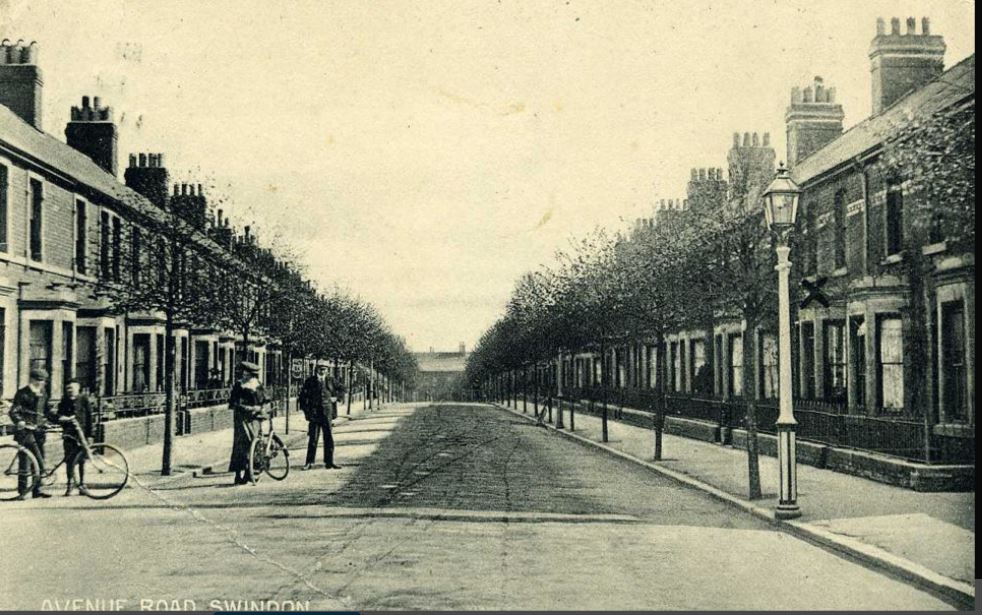
Image published courtesy of Swindon Museum and Art Gallery

Minnie married Frederick William Gilchrist, a railway clerk, at the Wesleyan Chapel Bath Road on March 23, 1901. He was 38 years old and she was 26. They began married life at 39 Dean Street, but sadly less than 3 years later Frederick died.

A Well Known Volunteer

For 7 Years Bugle-Major

The death took place on Thursday, Dec. 31st at his residence, 4 Lethbridge-road, Swindon, of Mr F.W. Gilchrist, a well-known Swindonian, who has been a great sufferer for the past two years or more, his illness being induced by the after effects of influenza. He has been taken in
the prime of life – he was only 40 years of age, – and leaves a sorrowing widow, but no children. Deceased, who was the son of Capt. G. Gilchrist, of the Royal Artillery, was for many years employed in the Drawing Office, GWR Works, Swindon. But he was best known to the public as a prominent member of the Wilts Rifle Volunteers. He was a man of fine physique and good soldierly bearing. He was a member of the F and G Companies for 27 years, during 7 of which he held the position of bugle-major.

Extracts from The Swindon Advertiser, Friday, January 8, 1904.

Minnie moved back into 45 Avenue Road where she lived with her widowed mother. In 1913 she married again. Her second husband was Frederick Charles James Perry Day, the illegitimate son of Kate Day. Frederick was a coach body maker in the GWR Works and had spent most of his life living with Charles and Elizabeth Davies, presumably relatives, at 101 Stafford Street. At the time of her second marriage Minnie was 39 and Frederick 34. They should have been looking forward to a long and financially secure marriage, but of course a war was just around the corner and Frederick enlisted.

Perhaps the fear and anxiety proved too much for Minnie. She died in 1917, a patient in the Devizes Asylum.

A Soldier’s Wife’s Death – The death took place on Tuesday, at the age of 42 years, of Minnie Louisa Day, wife of Corporal Day, RFA now on active service at Salonika.

Deceased was the only daughter of the late Mr John Roach, of 45, Avenue Road, Swindon, and leaves her husband, an only brother, and a widowed mother to mourn a heavy loss.

The funeral took place on Saturday at Swindon Cemetery amid many tokens of respect on the part of friends and neighbours.

Amongst the beautiful wreaths was the following – “With deep sympathy and in grateful remembrance of much kindness shown in 1907 – from Mrs L.A. Baugh – ‘Thy will be done.’”

The relatives of deceased desire to return sincere thanks for the many kind expressions of sympathy received in their sad bereavement.

North Wilts Herald, Friday, May 25, 1917.

Stafford Street

Minnie was buried in grave plot E7888 on May 19, 1917. The burial registers record her address as 101 Stafford Street, the home where Frederick grew up. She was buried with Charles Henry Davies who had died in 1904 and was later joined in 1919 by Elizabeth, his wife, the couple who had raised Frederick.

The continuing story of James Henderson

When I began researching the Henderson family grave I suspected this might be a story that would run and run.

First there was the account of how James Henderson averted a train collision with Royalty on board the “Lord of the Isles” loco. Next came Noel’s story about the Musical Stones of Skiddaw. Today we have an account of James Henderson’s career upon his retirement complete with a photograph of the man himself!

Swindon. – On November 7 Mr James Henderson, who for the last twenty years has been an inspector attached to the Locomotive Running Department, retired from the service, and was made the recipient of a handsome testimonial, subscribed to by the officers and staff, and a large number of enginemen and firemen, throughout the system. Mr. Henderson joined the GW Railway as a fireman at Paddington in 1865, and acted in that capacity on the engine “Lord of the Isles,” which frequently worked royal trains between Windsor and Paddington. He quickly reached the position of driver, and from 1874 until his removal to Swindon as inspector was a familiar figure on express broad-gauge engines. Mr W.H. Waister, in making the presentation, which consisted of a solid silver cigar case and a purse of gold, stated that during the time Mr. Henderson had been inspector he had won the respect and esteem of all the staff. It is interesting to note that during the Olympic Regatta at Henley in August last Mr. Henderson was presented with a silver cup and an illuminated address by the Traffic Department staff in appreciation of his work there, he having taken charge of the locomotive arrangements during the Henley Regatta for a number of years.

Great Western Railway Magazine

You may like to read:-

Sarah A. Witcomb – Head Mistress

When I begin my research I never know how much I can actually find out about any given person. This time I found an obituary, a career profile and several family photographs, although unfortunately none of Sarah Annie Witcomb.

Sarah Annie Witcomb was born in Trevethin, Monmouthshire in about 1863. She was the second of Alfred and Sarah Witcomb’s seven children. By 1864 the family had moved to Swindon and in 1871 they were living at 3 Brunel Street where Alfred worked as a Forgeman in the Works. By 1881 they had moved to 31 Carfax Street where they would remain for more than 35 years until Alfred’s death in 1916.

As you can read in the obituary, Sarah became a teacher and eventually moved away from Swindon. She was one of four siblings who all entered the teaching profession.

The Late Miss Witcomb – The remains of Miss Sarah A. Witcomb, eldest daughter of the late Mr Alfred Witcomb, were laid to rest in Swindon Cemetery on Wednesday. Miss Witcomb’s end came with unexpected suddenness. She felt very deeply the recent death of her father, and an attack of influenza, resulting in heart failure, caused her death. As a young teacher in Swindon, there are many who will remember her, from when a pupil teacher she worked under Mrs Watson at College Street School. After leaving Southlands Training College she worked for a few years at Peckham, leaving there to take up a headship at Barking, Essex. Here the last 26 years of her active life have been spent as head mistress of a girls’ school of over 500 scholars.

The first portion of the burial service was held in the Wesleyan Chapel, Faringdon Street of which in her early days the deceased had been a member. The Rev. John Hall and Mr Godber were the officiating ministers. As the mourners entered the building the hymn, “Now the labourer’s task is o’er,” was sung. The hymn during the service was “Rock of Ages,” and as the procession left the chapel “O Rest in the Lord” was played by the Organist (Mr. H.C. Reynolds). The committal at the graveside was impressively performed by the Rev. John Hall.

Amongst those who attended to pay a last tribute to Miss Witcomb were Mr. G. Jackson (Essex County Council), representing the Barking Education Committee, and Mr W. Weston, an old and esteemed associate in former Sunday School work in Swindon.

Extract from the North Wilts Herald, Friday, October 13, 1916.

Family historians on Ancestry have shared photographs of Alfred, Sarah and another daughter Mary Jane.

Alfred Witcomb

Sarah Witcomb

Mary Jane (teacher)

Alfred died in July 1916 aged 75 years and was buried in grave plot E8161. Sarah Anne died just three months later, aged 53 and was buried with her father. Alfred’s wife Sarah died in April 1918 aged 77 years and was buried with her husband and daughter.

St Mark’s – ‘all spikes and prickles outside’

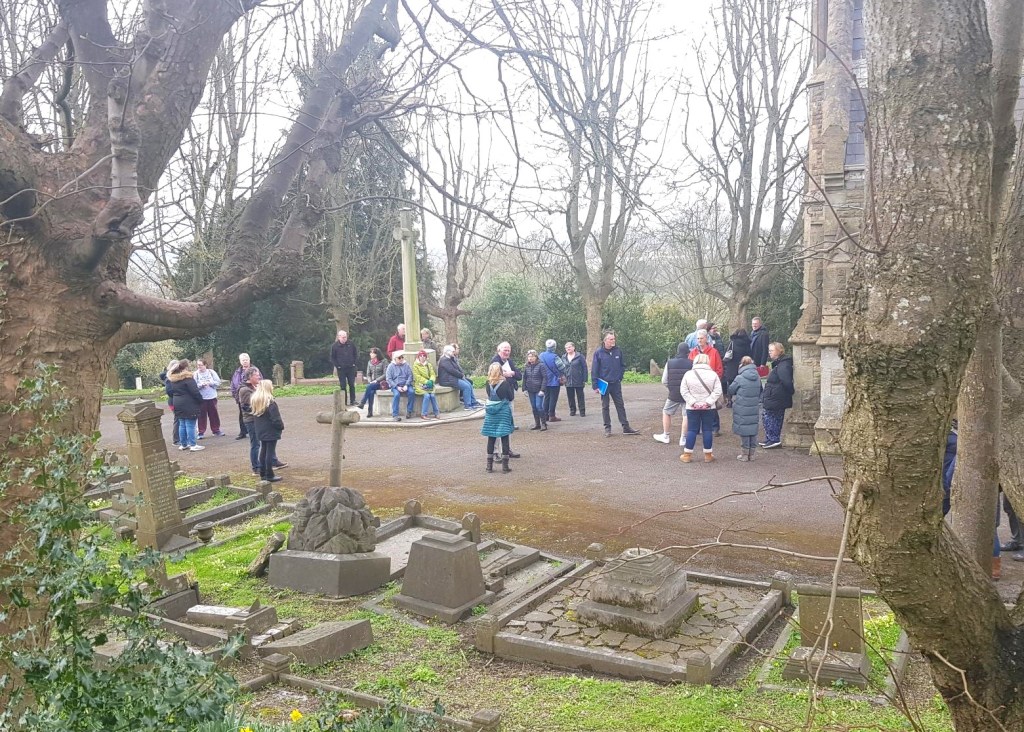
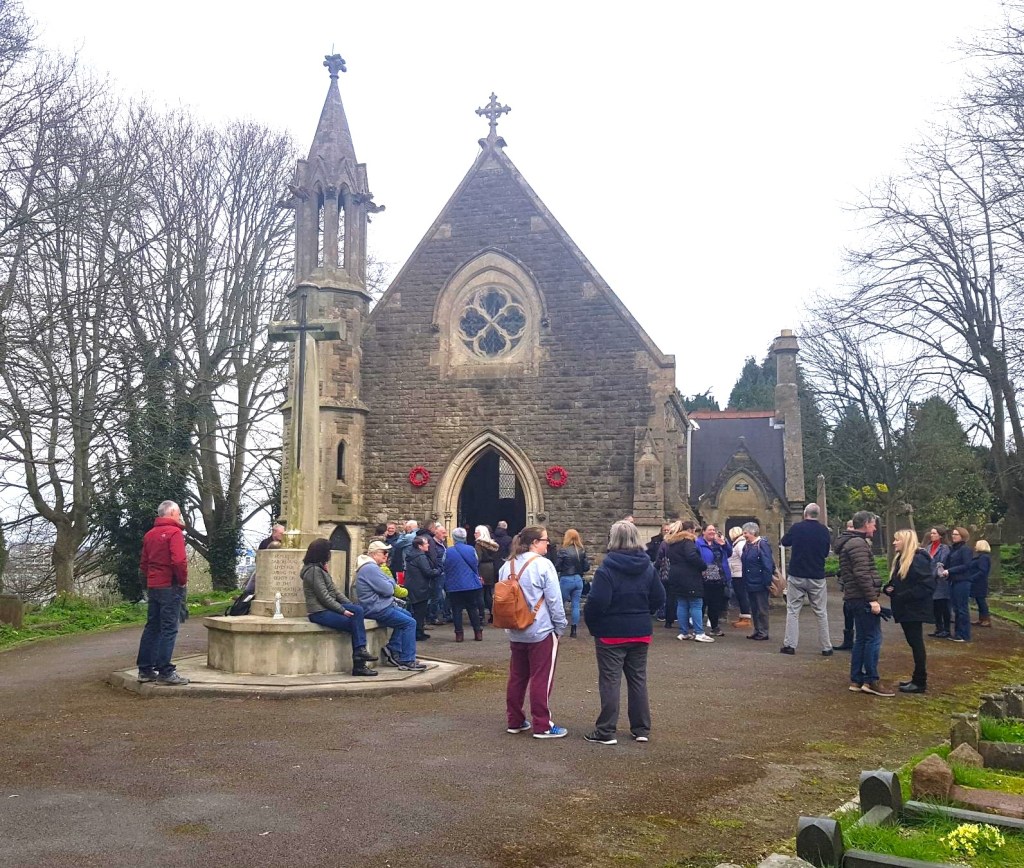
A large number of people attended our last Radnor Street Cemetery walk as you can see from the photograph below. However, perhaps surprisingly, far fewer attended the walks we organised at St Marks several years ago.

Among those buried in the churchyard by the railway track are Engineer William Frederick Gooch the younger brother of Sir Daniel Gooch, employed as Manager at the Swindon GWR Works at the time of the 1861 census.

A hugely influential man in the early history of the Works and the Railway Village was Works Manager Minard C. Rea. who died in 1857. His memorial is published below.

And, probably most famously, is the memorial to Joseph Armstrong, Locomotive, Carriage and Wagon Superintendent at the Great Western Railway 1864-1877.


The churchyard was closed to new burials in 1881 – after a mere 36 years it was already full. The new Swindon Cemetery on Kingshill, better known today as Radnor Street Cemetery, opened on August 6 that same year.


Poet Laureate John Betjeman was a big fan of St. Mark’s.


‘The parishioners of St Philip and St Jacob in Bristol entreated the Great Western to build a church for their workers; directors stumped up money, subscriptions were raised, land was presented and by 1845, St Mark’s church was built.


There it stands today close beside the line on the Bristol side of the station. A stone building, all spikes and prickles outside, designed by Gilbert Scott who was then a young man and who lived to build hundreds of rather dull copy-book churches all over Britain, and to build St Pancras Hotel, the Foreign Office in London and to restore many cathedrals.


One cannot call it a convenient site. Whistles and passing trains disturb the services, engine smoke blackens the leaves and tombstones, and eats into the carved stonework of the steeple. But it is a strong church and though it is not much to look at, it is for me the most loved church in England. For not carved stones nor screen and beautiful altars, nor lofty arcades nor gilded canopies, but the priests who minister and the people who worship make a church strong. If ever I feel England is Pagan, and that the poor old Church of England is tottering to its grave, I revisit St Mark’s, Swindon. That corrects the impression at once. A simple and definite faith is taught; St Mark’s and its daughter churches are crowded. Swindon, so ugly to look at to the eyes of the architectural student, glows golden as the New Jerusalem to eyes that look beyond the brick and stone…

Extracts published from First and Last Loves a collection of essays on architecture published in 1952.

With so many interesting stories to tell we were a little surprised that these walks did not prove more popular. Perhaps it is because Radnor Street Cemetery has an extra special place in the hearts and memories of 21st century Swindonians.

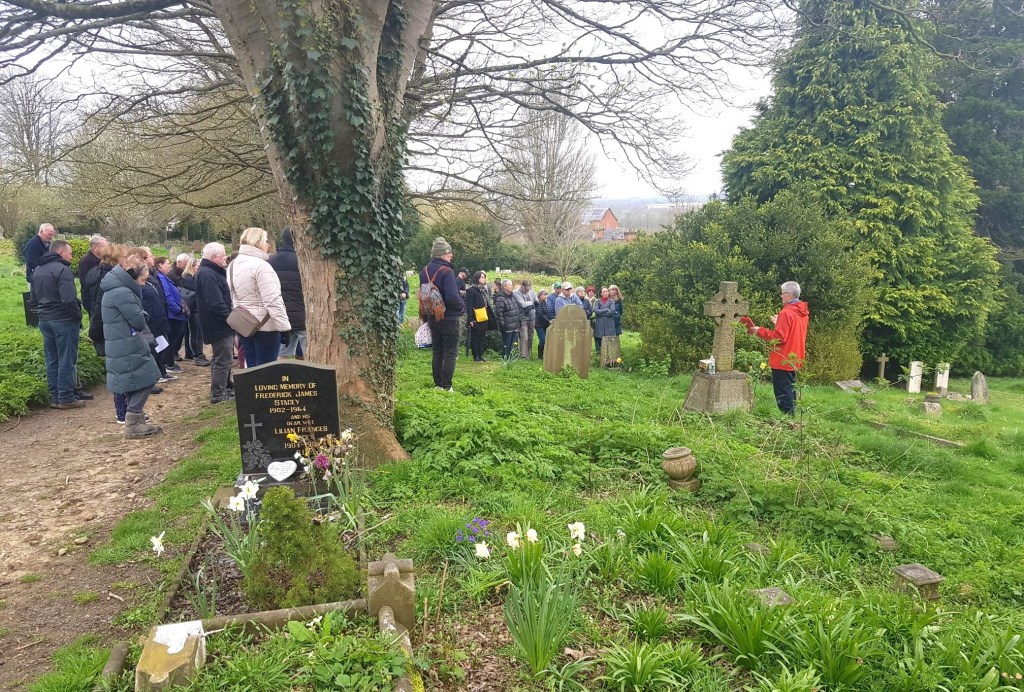
Photograph from our most recent guided cemetery walk at Radnor Street Cemetery

A profusion of primroses

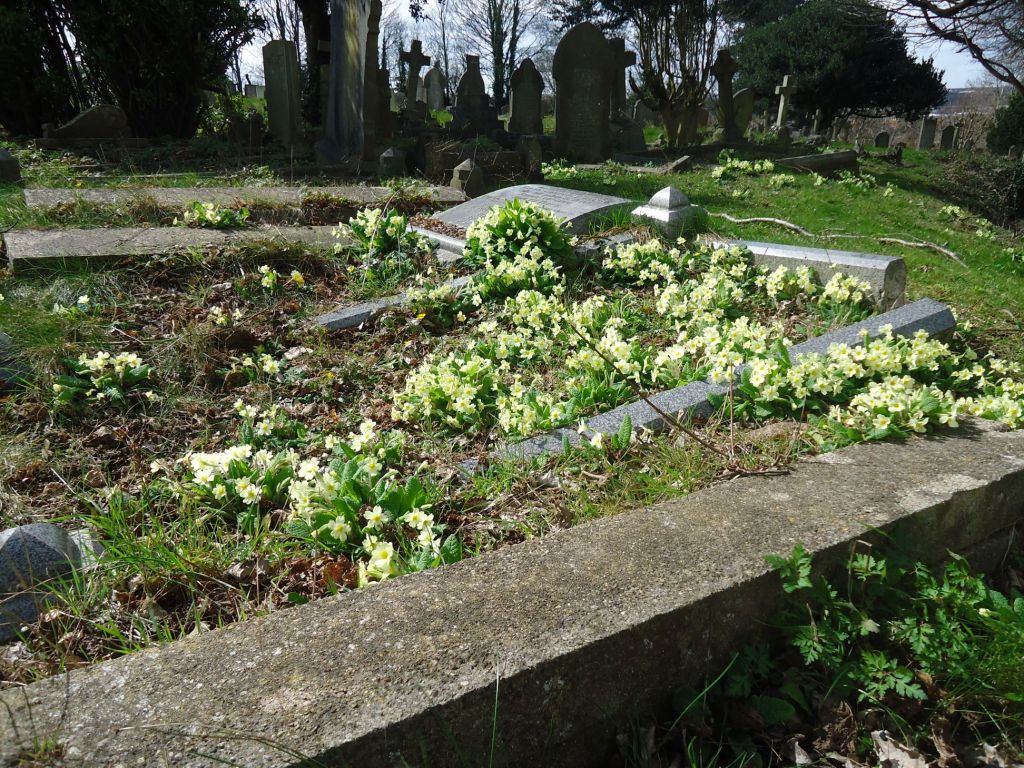
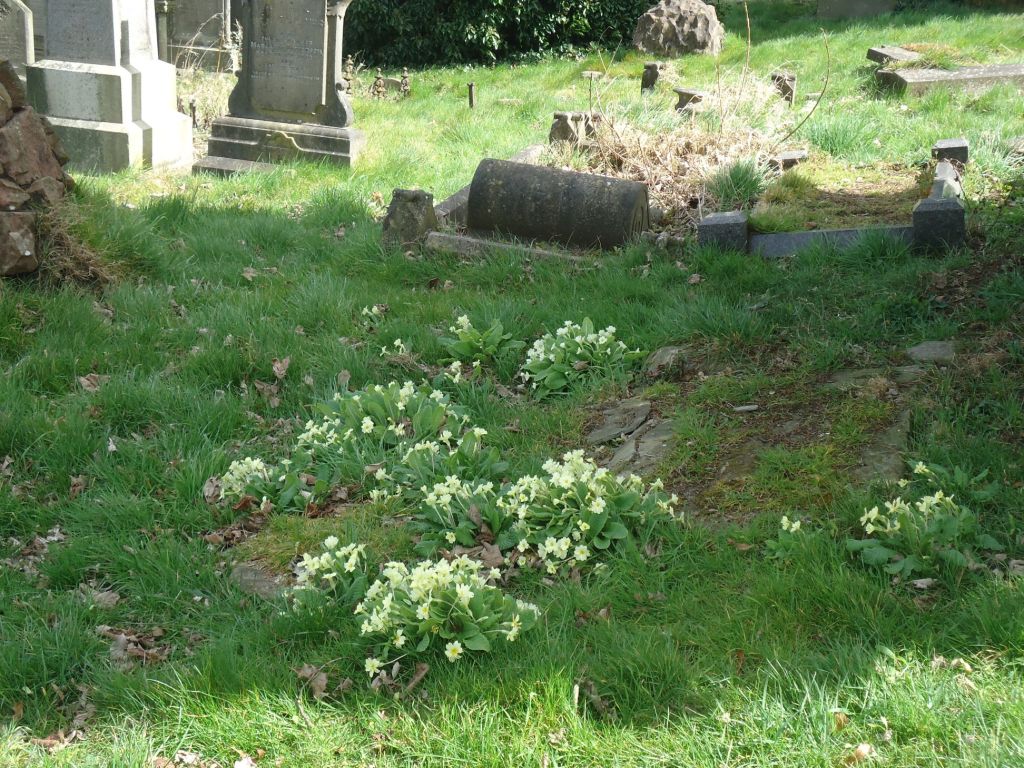
Despite the persistent rain of recent weeks the cemetery is boasting a profusion of primroses. You may like to read again the story of James Shopland whose grave is wreathed in the cheery little spring flower, whatever the weather.

James Shopland, a civil engineer, was born in Purton in 1873, the son of James Rew Shopland, also an engineer.

By 1900 James had moved to the Southampton area and on July 6, 1900 he was at the Southampton Sewage Works, although it was pointed out at the inquest that he had nothing to do with the works, but was assisting in the rescue.

Three labourers working in the press house at the Sewage Works had attempted to free a blockage in a lime vat, firstly by ramming a rod down from the top, which was the usual way of clearing it. However, when this didn’t work, one of them went down into the ejector chamber and tried to free the pipe by undoing it. They tried to remove the cap but this wouldn’t move either, so they proceeded to remove a flange from the bottom and then the upright pipe. This immediately set off a fast flow of sludge and released a smell that rendered the men semi-conscious.

Passing workmen attempted to rescue the three men who were all lying unconscious in the sludge. As a call went out for volunteers, James Shopland arrived on the scene. A witness at the inquest described how as Mr Shopland descended the ladder he saw him put his hand to his head.

At one point someone tried to stop any more men going into the chamber, declaring that at this rate there would soon be fifty dead at the bottom.

James was brought to the surface where artificial respiration was attempted, but he was already dead. At the subsequent post mortem the cause of death was found to be due to congestion of the lungs brought about by carbolic acid gas poising.

The jury at the inquest recorded a verdict of accidental death and commended the noble endeavour made by James Shopland and four others who had attempted to rescue the men.

James was 26 years old and had been married for just a year. He is buried in plot D100 with his wife Helena (Nellie) Elizabeth Shopland. Helena moved to Bournemouth where she lived with her widowed mother-in-law, but she eventually came back to Swindon. At the time of the 1911 census she was living at 159 Goddard Avenue with her sister Violet Blanche Brown. She died just a few weeks later, on June 16, 1911. Her funeral took place on June 20 and she is buried with her husband.

James John Brown – a colourful life

When James John was born in Bristol in 1857 he shared the family surname Green. His parents, James Henry Green and Sarah Kettle Cummings, had married at St. James, Bristol on December 25, 1856. In 1861 they were still living in Bristol, still under the name of Green but sometime after this they adopted the name Brown and so far I haven’t been able to discover why.

Their eldest son James John Green/Brown led an equally colourful life. He had three wives (not all at the same time) and 9 children.

In 1879 he married Annie Russell the first of his three wives and by 1881 they were living with the Brown family at 13 Holbrook Street, Swindon where James worked as a Hair Carder.

By 1891 he had set up in business as a Furniture Dealer at 8 Station Road where the couple were living with their five children Annie 9, Charles 8, Nellie 6, Mabel 4 and three year old Archibald. It is here that Annie sadly died in 1899 aged 37 years and the couple’s daughter Nellie in 1906 aged 21.

In 1900 James John married Emma Harrison who died in 1903. His third wife was Elizabeth Nutman whom he married in 1908. She died in 1920. Neither of these two wives appear to be buried in Radnor Street Cemetery.

In 1911 James John Brown was the licensed victualler at the Bell Hotel in Old Town. In 1915 he was a candidate in the local elections where he represented Queens Ward.

James John Brown died on November 27, 1921 at the Duchess of Sutherland Public House in Hornsey, London where his son was the landlord. His home address was given as The Burlington, 8 Buenos Ayres, Margate.

His body was returned to Swindon where he was buried Radnor Street Cemetery in grave plot D40. He is buried with his first wife Annie and their daughter Nellie. The grave is marked by an obelisk memorial. All things Egyptian were popular in the 19th century and remained so into the 20th. The Egyptian obelisk is a symbol of eternal life and resurrection and represents the sun god Ra. Perhaps James John Brown was hoping to have a go at continuing his colourful life!

Guided cemetery walk

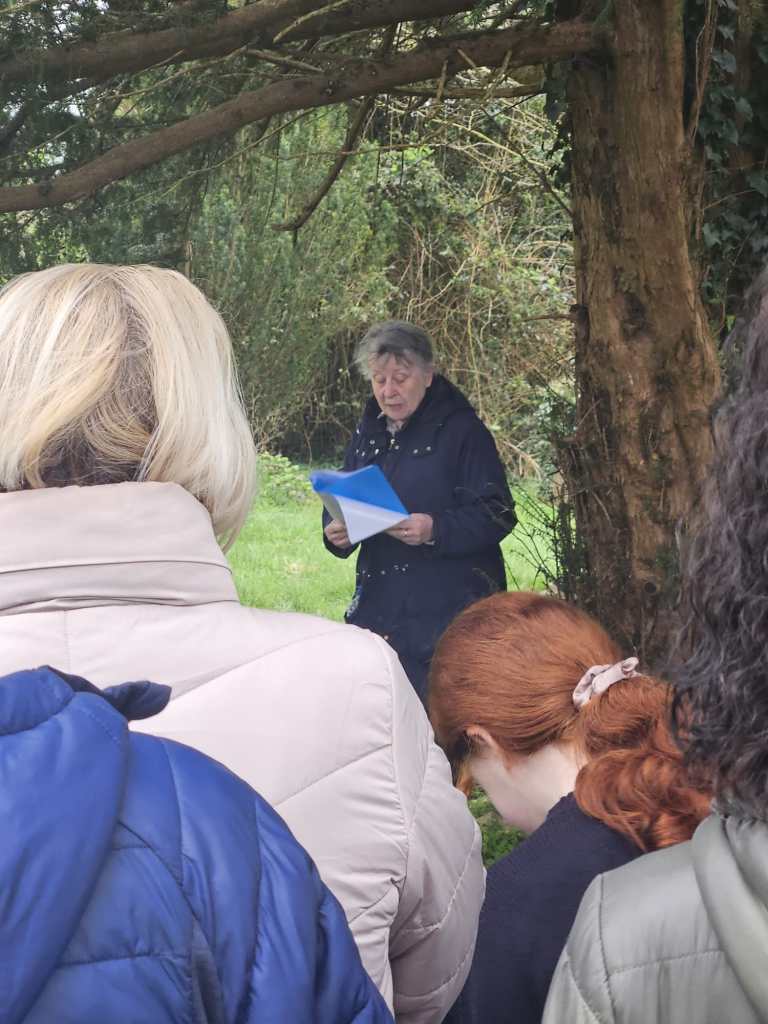
Many thanks to everyone who joined us for the first of this season’s walks. The weather was kind and the rain held off.

We were joined by members of the Menham family as Andy spoke about Swindon Town football legend Bob Menham. Kevin followed by telling us of the military career of his son Reginald Menham and reading a poignant letter taken from Mark Sutton‘s book Tell Them of Us.

Further talks included the stories of Frederick and Elizabeth Alley, Minnie Price, Ethelwyn May Collet, Elsie Wootten White and another sporting legend Scottish rugby player Dr. Charles Reid. Jon told us about the continuing work of the volunteers and introduced members of the team who give so much of their time to looking after the war graves and helping visitors find family graves.

There were lots of fascinating conversations as visitors shared their family history stories with us. It was lovely to meet Clare and I hope you found your family grave. I look forward to receiving your information and photographs to publish here.

Our next walk will take place on Sunday April 28. Meet at the chapel for 2 pm.

James Henderson – how a railway disaster was averted

Today’s story is one for the railway enthusiasts among you and another example of the fascinating ordinary people who lie in Radnor Street Cemetery.

Swindon Inspector’s Reminiscences

How a Railway Disaster was Averted

An interesting incident has been recalled by the frontispiece in the Great Western Railway Magazine for April, showing the “Lord of the Isles,” bedecked to draw the royal train, conveying the Shah of Persia, on the occasion of his visit to England in 1873. The name of the fireman was given as Hetherington, but it transpires that Mr James Henderson (late inspector at Swindon), is the man referred to. An exciting occurrence attended the journey of the royal train, and is related in this month’s magazine by Mr. Henderson thus:-

“I have good reasons for remembering the day the photograph was taken – June 24th, 1873. We left Paddington with the Shah of Persia, the late King Edward with Queen Alexandra, and the late Czar of Russia and his Consort on the train, attended by many distinguished persons. In honour of the Shah’s visit, a great review was being held at Windsor, and many excursion trains were being run. All went well with the train until we were passing through Slough Station. At that time there was no “locking gear” there, and trains had to pass from the down main line and go through the down platform road to reach Windsor. At the western end of the platform there was a pair of points turned by hand, which led either to Windsor, or across the Windsor Branch to the main line. On passing through Slough Station I noticed that these points were wrong, being set for the main line instead of for Windsor. I shouted to my driver. “Whoa, mate, the points are wrong,” and we stopped the train just in time to avert a collision with an empty train coming from Windsor. We put the train back over the points, and I jumped down and turned the points myself, the man whose duty it was to attend to them being so overcome that he was unable to do any more work.

Mr Tyrrell (then Superintendent of the Line), was on the platform, and witnessed the whole affair. He got on to the engine and rode with us to Windsor. After we started from Slough he enquired from my driver who had first noticed that the points were wrongly set, and the engineman, who was Jos. Groves, replied, “My fireman, sir.” Mr Tyrrell turned to me and expressed his pleasure at my having observed the position of the points. Subsequently I was sent to Swindon to see Mr. Joseph Armstrong, (late Locomotive Superintendent), who promised that I should receive recognition for the occurrence. Shortly afterwards I was promoted to be a driver, and before long made a driver on the broad gauge expresses, being the youngest man ever promoted to that position. Many people wondered at the time at my early promotion, but it was the prevention of that collision that led to it. It may be imagined that the occasion on which the photograph was taken stands out as a red-letter day in my life.

“I may say that during my service with the Company I had the good fortune to be the means of preventing five other collisions with passenger trains.”

The Evening Swindon Advertiser, Saturday, June 1, 1912.

James Henderson died aged 89 years at his home, 51 Rolleston Street. He was buried on November 14, 1934 in grave plot A2526.

William Dicks and the tunnel

The GWR Works was a dangerous place in which to work and until the construction of the main entrance tunnel it was even a dangerous place to get inside.

The original Workmen’s East Gate Works entrance was a route that involved crossing the mainline track and was the scene of numerous fatal accidents. There were 3 deaths in a single month in 1869, the year before the tunnel opened.

Joseph Armstrong, the first Locomotive, Carriage and Wagon Superintendent ushered in a period of rapid expansion during the 1870s which included the construction of the Carriage Works and a new, safer route into the railway factory. The main entrance into the Works was built on Bristol Street, opposite the Mechanics’ Institution and consisted of a tunnel measuring approximately 100 yards [91.4m] that ran northwards beneath the mainline track.

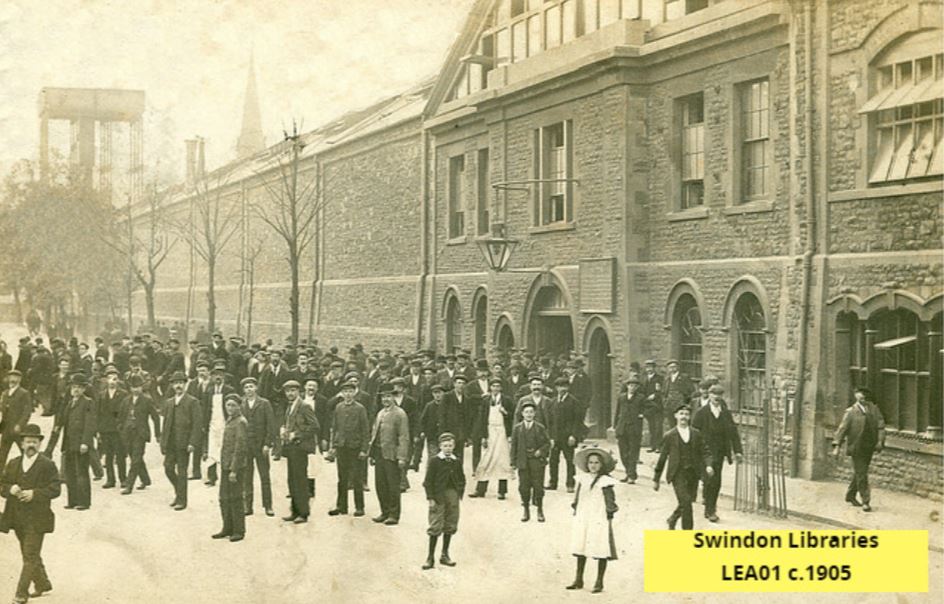
Contemporary photographs record the hundreds of men streaming out of the tunnel at the end of the working day, however, even after the tunnel opened on February 5, 1870 accidents continued to occur as men still cut across the railway line to work.

In 1905 William Dicks was struck down and killed going back to work on Saturday January 14. The report of the inquest published in the Wiltshire Times makes for gruesome reading.

Fatal Accident

Man Killed at the Works

A shocking fatality occurred on the Great Western Railway at Swindon on Saturday. William Dicks, an employe in the locomotive works had just returned from breakfast and crossed the rails in order to reach the check office. He failed to notice the approach of an engine which was out on its trial trip, and though his workmates tried to warn him of his danger, it was without avail, and he was knocked down by the locomotive and injured so terribly that he died on his removal to the hospital. Both his legs were severed, and his head was frightfully battered. Deceased, who was 52 years of age, was well known as a clarionist. [clarinetist].

At the inquest on Monday it was stated that deceased had no business to cross the line, a tunnel being provided for the men. – Dr Swinhoe said the man was practically cut in half.

The Coroner said he thought they could only return a verdict of “Accidental death” but they might add a rider to the effect that notice boards should be fixed in prominent places to warn the men not to cross the line. The Company certainly took every precaution in protecting employes, and the men should use the tunnels which had been provided for their express use.

The jury concurred, and returned a verdict accordingly.

The Wiltshire Times, Saturday January 21, 1905.

William Dicks was buried on January 18, 1905 in grave plot C1445, a public grave, which he shares with his wife Jane who died in 1909, and one other person

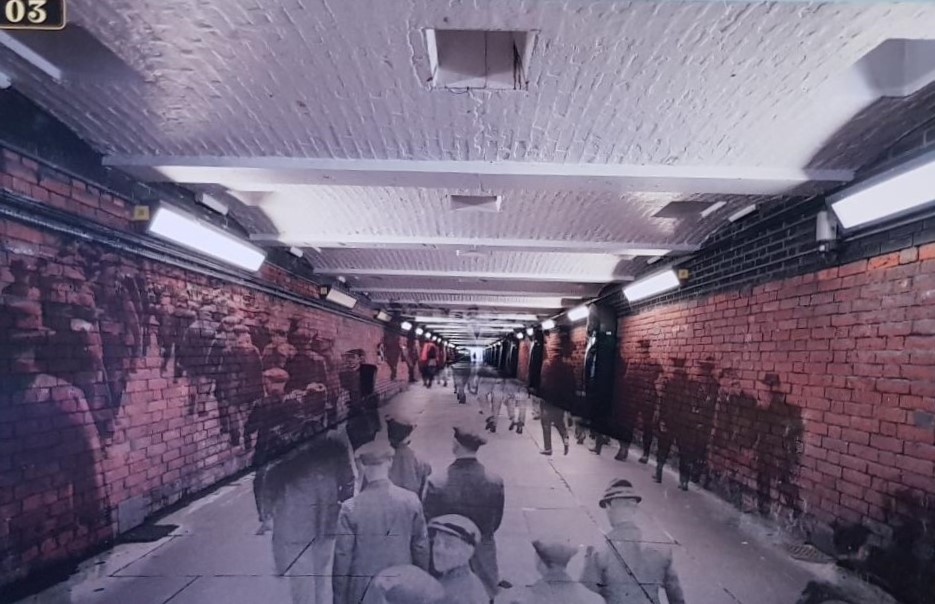
Today the Grade II listed former Carriage Works is the subject of a Heritage Action Zone project. Work has included improvements to the Sheppard Street underpass, London Street and the Bristol Street tunnel has also received a makeover. New interpretation boards at the entrance tell the story of the railway factory and the railway families who made New Swindon.

Image dated c1905 published courtesy of Kevin Leakey

Image dated c1950 published courtesy of Local Studies, Swindon Central Library.

Ghostly railway workers superimposed on a photo of the tunnel – see new interpretation boards at the tunnel entrance

Arthur Jefferies Lewis White – Prominent GWR Official and Swindon F.C.’s Chairman

Arthur Jefferies Lewis White was born on November 23, 1872, the son of Richard Lewis and Elizabeth Corbett White. He entered employment in the GWR on January 3, 1887, a month after his 15th birthday. A year later at a GWR Board Meeting to consider the promotion of the Lad Clerks Arthur was described as shorthand writer with previous office experience. He was already on a career path that would see him become Chief Clerk and Chief Accountant to Charles B. Collett, Chief Mechanical Engineer.

Arthur married Emily Sendell at Christ Church on October 2, 1917. He was 44 years old and she was 42.

A keen musician and mandolin player, Arthur White was chairman of the Great Western Railway Amateur Operatic and Dramatic Society and President of the Swindon Great Western Railway Social and Education Silver Band. He was a director of the New Swindon Permanent Building Society and a Freemason and member of the Sussex Lodge of Emulation, No. 355. He was also a writer and wrote several books about the Swindon Railway Works. But it is probably fair to say his greatest love (after his wife, of course) was football.

Arthur White was elected Chairman of the directors of Swindon Town Football Club in the 1910-11 season and served for nearly 20 years. The obituary published in the North Wilts Herald on Friday November 1, 1929 declared his pride of the club knew no bounds.

Swindon Town Football Club 1910-11 squad – the year in which Arthur J.L. White was elected Chairman

Arthur Jefferies Lewis White died at his home at 13 Okus road, Swindon after suffering a year of poor health.

The funeral service at St. Saviours Church was attended by a great many mourners and the North Wilts Herald reports that:

Practically every shop in the GWR Works was represented, and directors, players and officials of the Swindon Town Football Club also attended.

A guard of honour was formed by the local Freemasons, who led the procession and behind the coffin walked the family mourners, representatives of the Great Western Railway, the different societies with which Mr White was connected and the Town footballers.

Arthur Jefferies Lewis White was buried in grave plot E8134. His wife Emily survived him by nearly 40 years. She died aged 92 years of age at the Cheriton Nursing Home and was buried in the neighbouring plot E8134A.