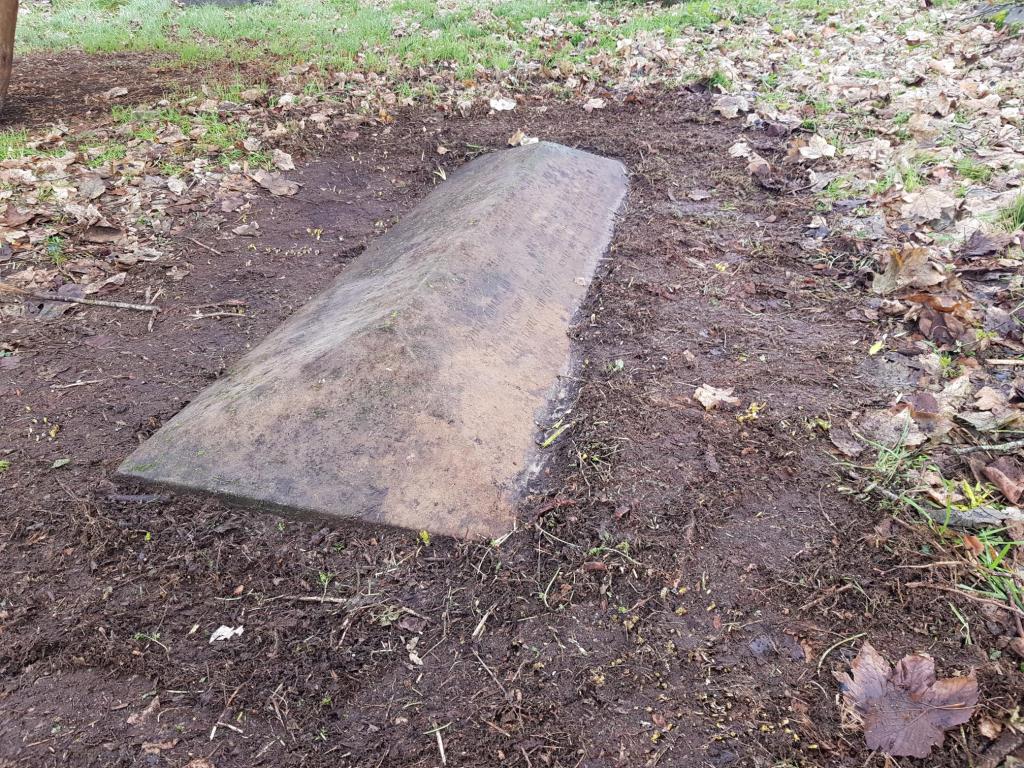
I thought I would rescue the identity of the woman buried in this grave before the inscription disintegrated completely. It turned out this was the easy bit.
At the time of the census 1881, a few months before she died, Mary Jane and her husband Joseph were living at 40 Prospect Hill where Joseph worked as a furniture broker. Joseph was 29 years old and Mary Jane was 23. The couple had married on December 18, 1880 at the parish church, Cirencester, less than a year before Mary Jane died. The burial registers record that Mary Jane Gunter lived at 14 Haydon Street when her funeral took place on November 21. She was buried in grave plot A404, only the 62nd burial to take place in what was then a new cemetery.
Ten years later, on the 1891 census returns Joseph described himself as a widower working as an Engine Fitter’s Labourer and lodging with the Hand family at 128 William Street. Life didn’t treat Joseph kindly. In 1901 he was a patient at the district asylum in Devizes. In 1907 he was a patient in an asylum in Dorset where he died in 1910.
I then checked the grave plot details to see if Joseph was buried with Mary Jane, but what I discovered was not what I had expected. Although a privately purchased grave with a substantial memorial in place, 22 years later the plot was reused.
Charles Hitchings a grocer and shopkeeper lived with his wife Elizabeth and their family at 38 Belle Vue Road where he died suddenly on Sunday July 5, 1903. Mr W.E. Nicolson Browne (county coroner) held an inquest where it was heard that the deceased complained of pains near his heart after which he shortly fell dead. A verdict of “Death from syncope” was recorded and on July 8, 1903 39-year-old Charles Hitchings was buried in plot A404.
And then 35 years later grave plot A404 was used for the third and final time. Charles Edward Iles aged 74 and formerly of the Rolleston Hotel, died in the Stratton Infirmary and was buried on October 5, 1938.
Was there any family connection between Mary Jane and the two men later buried with her? Am I missing a clue somewhere?
Image published courtesy of Local Studies, Swindon Central Library.
Opportunities for women to serve in public office in the 19th century were few and far between but in 1894 significant changes came about. The Local Government Act of that year removed restrictive property, gender and status qualifications, enabling single and married women to vote and stand for election on the newly constituted urban rural district councils.
The local government reforms also extended to the Poor Law Board of Guardians, a bastion of male dominance, responsible for apportioning poor relief and in charge of the local Workhouse.
On January 2, 1895 the new Board of Guardians met for the first time. The Returning Officer laid before the Board his certificate of the result of the Elections of Guardians and Rural District Councillors with the names of four women among their number; Miss Elizabeth House, Mrs Elinor L. Buller, Mrs Elizabeth Williams and Mrs Maria Matthews. Three of these remarkable women are buried here in Radnor Street Cemetery.
The first four women elected to the Highworth & Swindon Poor Law Board of Guardians came from widely different backgrounds.
Elizabeth Williams was born in Wanborough in 1846 in a house attached to the Shepherd’s Rest public house. She was one of ten children, nine daughters and a son Henry who died aged 10. Her father Thomas Edwards, was an agricultural labourer and by the age of 15 Elizabeth was working as a general servant in Upper Stratton. Elizabeth married Henry Williams, a gas and water fitter and they had three children. The family lived at various addresses in Swindon and at the time of Elizabeth’s election to the Board of Guardians they lived at 23 Oxford Terrace, Faringdon Road.
Elizabeth served on the Ladies Workhouse Visiting and Boarding Out Committee for many years and in 1901 she was elected on to a new committee set up to address the payment of the Foster Children’s Quarterly Clothing Allowance. In 1902/3 Elizabeth also served on the Finance and House Committee where she objected to the proposal to award the Workhouse Master Mr Kilby seven guineas for his services in the preparation of Dietary Tables.
Elizabeth was a devout Primitive Methodist and strictly teetotal. Her great granddaughter Mrs Hazel Grace tells of how Elizabeth once tried to stop the male inmate’s Christmas beer allowance, a matter recorded in the Minute Book on November 20, 1901 during a discussion about the Workhouse Christmas dinner. The amendment ‘that no Beer be given but that Tea, Coffee or aerated waters be substituted,’ was proposed by local businessman Henry Raggett and seconded by Mrs Williams. However, the amendment was defeated by 16 votes to 12 and the inmates received their Christmas cheer.
In later years Elizabeth lived with her granddaughter’s family and Hazel remembered her great grandmother as a forceful character.
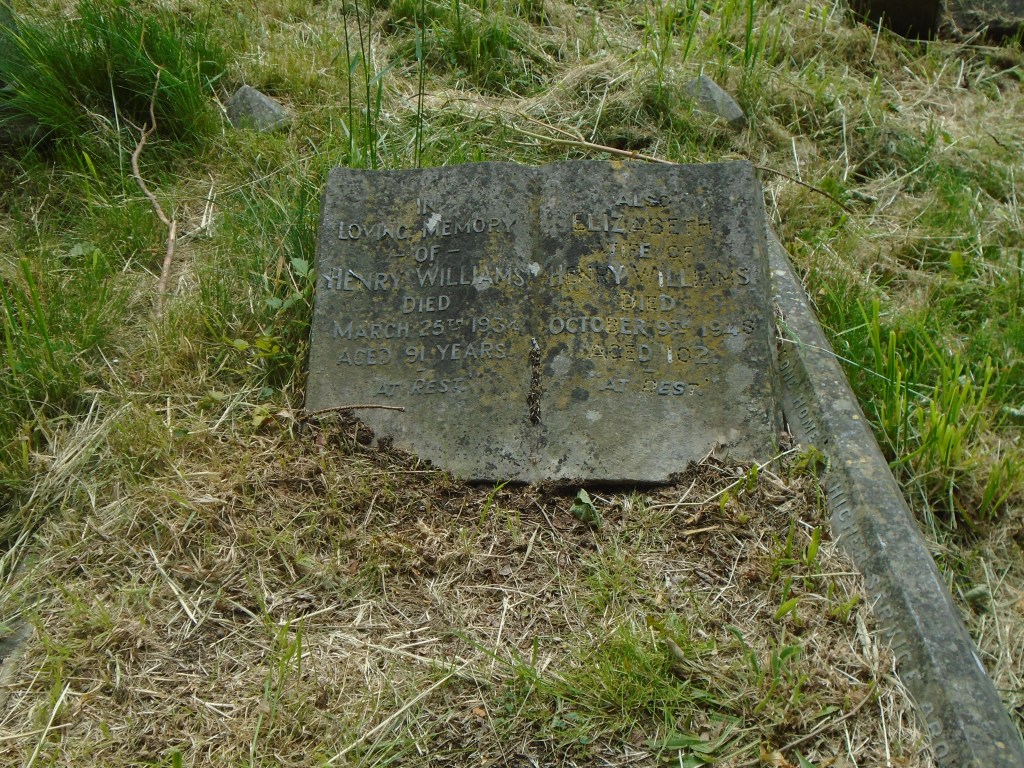
Elizabeth Williams died in 1948, aged 102. She is buried here, her grave marked by a headstone in the shape of an open book, symbolic of a love of learning and religious faith.
Tonight I shall raise a glass to Mr William Drew, although sadly not in The Lamb and Flag, a favourite watering hole of mine back in the day. When it came to pubs William Drew knew what he was talking about.
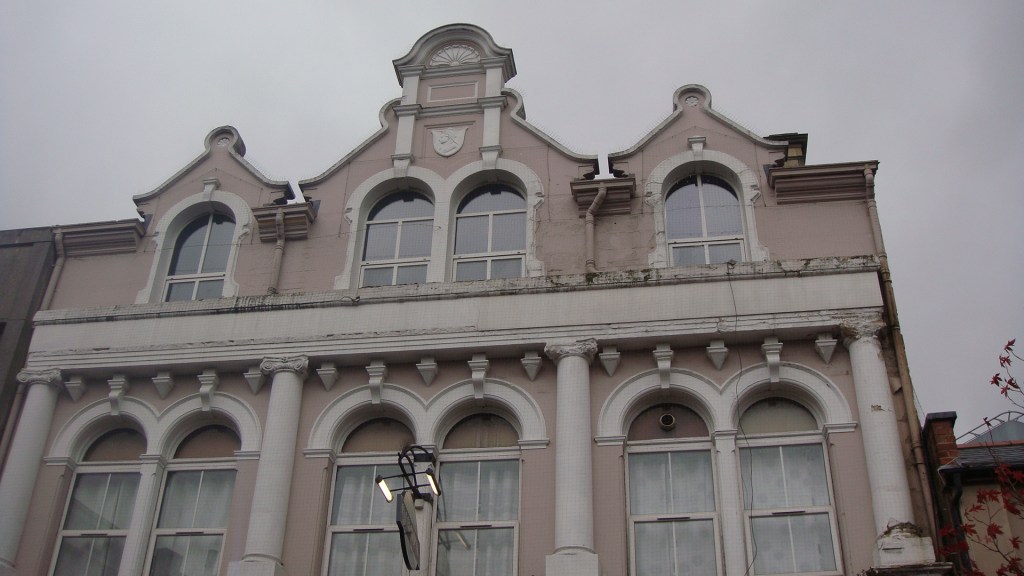
You youngsters might remember The Litten Tree in Fleet Street but of course that building was never designed as a pub, oh no, that property began life as the North Wilts Conservative and Liberal Unionist Club. It was built by Charlie Williams in 1897, the year of the old Queen’s Diamond Jubilee. You can see the commemorative plaque if you look up – past the blocked gutters and peeling paint.
They say some developer has got a plan for the building – well, they all have don’t they?
Death of an Architect. – The death occurred at Swindon on Monday of Mr William Drew, senior member of the firm of Messrs W. Drew and Sons, architects and surveyors. The deceased gentleman was at one time a very familiar figure in Swindon and the neighbourhood, but during the past three or four years he has more or less been confined to his house by illness.
Deceased was in his 68th year, and was one of the oldest members of the Society of Architects, having been admitted in 1887. He commenced practice at Highworth, where he remained for 12 years, and then removed to Swindon, where he has always earned and received the esteem and regard of his patrons and of all with whom he has had business or social relations. As a hotel valuer he was known over a wide district, while the results of his skill as an architect are to be seen in many large buildings in Swindon and the surrounding neighbourhood.
For over 30 years he has held the responsible position of architect to Messrs T. and J. Arkell, of Kingsdown Brewery, and he designed the majority of that firm’s licenced houses at Swindon, Faringdon, Lechlade, Cirencester, and many other towns and villages in the district.
Amongst other large buildings for the plans of which Mr Drew was responsible were the Clarence Street Schools (at that time amongst the finest in the west of England), the Rodborne Road Schools and enlargements, the Gorse Hill Schools (the first in the district conducted on the central hall principle), the Upper and Lower Stratton Schools, the Rodborne Cheney and Haydon Wicks Schools, Mr E. Arkell’s residence at Kingsdown, the Conservative and Unionist Club in Fleet Street, Faringdon Post Office, the Primitive Methodist Chapels at Rodborne Road and Stratton St. Margaret, the Cricklade Road Baptist Chapel and many others. Mr Drew prepared the plans of the original sewage tanks at Rodborne for the New Swindon Local Board; he developed the Kingshill Estate for Mr J. Hinton, the first street laid out being Clifton Street; and he also laid out and developed the Even Swindon Estate for Mr J. Morrison. –
The deceased gentleman has been assisted in the conduct of his business by his sons, Messrs Edward and William Drew, and they will continue to act in the same capacity as their late father.
The Faringdon Advertiser, Saturday, May 20, 1905.
*Rodborne is a spelling error in the original text.
As a valuer his services were constantly in demand, and no man was more conversant with the growth and growing importance of Swindon during the past forty years.
Deceased never took any part in the public life of the town, preferring a quiet life. In politics he was a staunch Conservative, but the only occasion on which he took an active part in the political arena was in support of the late Sir Daniel Gooch, when he was returned for the old Cricklade Division.
Mr Drew leaves a widow and family of nine children:- four sons and five daughters – for whom the deepest sympathy will be felt in their bereavement.
Some few years ago deceased took into partnership in his business two of his sons, Mr Edward Drew and Mr William Drew, by whom the bulk of the work has been carried on during their father’s long illness.
The Funeral
The mortal remains of the late Mr William Drew, were laid to rest in the Swindon Cemetery on Thursday. The funeral cortege left deceased’s late residence in Victoria Road at half-past three. Deceased was a man of great weight – considerably over 20 stone – and the remains were enclosed in an elm shell, within a coffin of immense size, of polished oak, with massive brass fittings. The inscription on the breast-plate was as follows:- “William Drew, born 29th October, 1837; died 15th May, 1905.”
The coffin was conveyed in a hearse, and there were six mourning carriages.
At the graveside there was a large assembly of sympathising friends, the funeral service being conducted by the Vicar of Swindon, the Rev. Canon Estcourt.
The funeral arrangements were satisfactorily carried out by Mr J. Williams, of Bath Road, Swindon, assisted by his son, Mr Fred J. Williams.
Extract from the obituary published in The Swindon Advertiser, Friday, May 19, 1905.
For more and better photographs of this building you might like to visit Duncan and Mandy Ball’s website.
When David Watson heard about the new railway town being built in Wiltshire, he decided to apply for a job.
He packed his apprenticeship indentures in a leather pouch, kissed his wife and his two daughters goodbye and set off from his home in Scotland. He intended making the journey of 500 miles on foot.
That was the story handed down through generations of railwaymen. Today such an epic effort is unfathomable. In 1843 the railway network was in its infancy and the road system was basic and hazardous. Today a journey by car travelling on the M6 would taken an estimated 7 and a half hours and even a train journey would take more than 8 hours. How long did it take David Watson and which route did he follow? Did he hitch a ride with a passing carter or did he travel part the way by stagecoach? Did he stop to sleep on route at a roadside inn or did he shelter in the hedgerow over night? Did he really walk 500 miles?
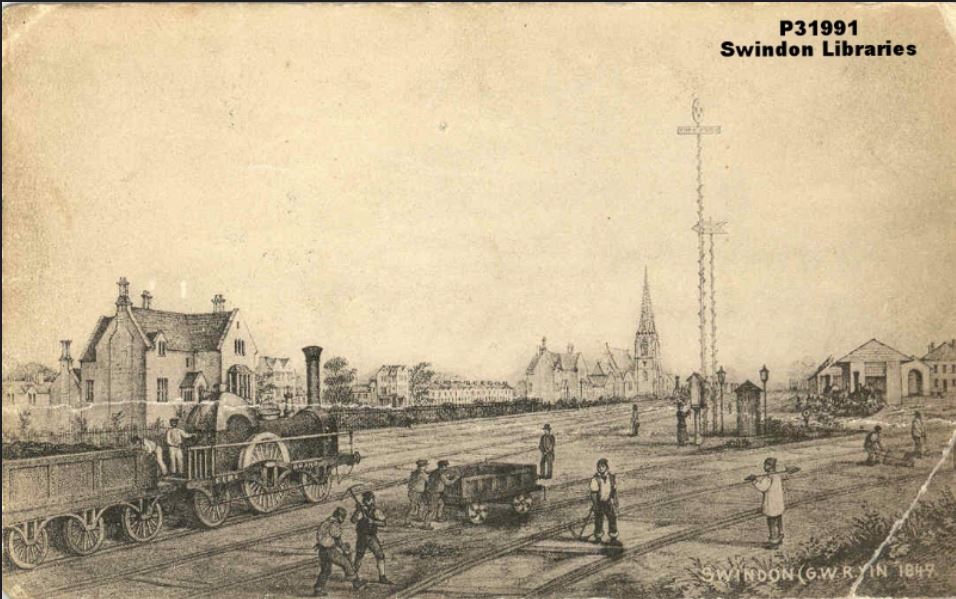
New Swindon 1847
The facts …
Death of Mr David Watson
ASwindon Octogenarian
The news of the deathof Mr. David Watson which occurred on Wednesday at the residence of his son, Mr. Alex. Watson, 24 Cambria Place, will be received with keen regret by a host of friendsamongst the older generation of Swindonians. Mr. Watson was 89 years old about a month ago, but, notwithstanding his great age, he had until recently been a familiar figure in that part of the town near his home. As recently as a week before his death, the old gentleman was seen out, but on Friday he had an attack of bronchitis, to which he succumbed shortly after noon on Wednesday.
A fine, burly figure of a Scotsman, Mr. Watson was born at Cragie, near Glasgow, in 1824. Serving his apprenticeship as a fitter in Dundee, he came to Swindon as long ago as 1843, and obtained employment in the GWR Factory. For about 30 years, the old gentleman, whose hearty and genial manner soon won him a large circle of friends, was chargeman over the fitters in the R Shop, and even after advancing years compelled him to give up the chargemanship he continued to work “Inside.” Indeed, it was only 11 years ago, in ’99, when Mr Watson had reached the age of 79 years, that he finally left the GWR Company’s employ, thus severing a 56 years’ connection with the Railway Company.
Mr Watson had been a member of the ASE for about 71 years, being superannuated by that Society when he gave up work. One of the first members of the Mechanics’ Institution and Medical Fund Society he was President of the latter on one occasion in the “fifties.”
In politics, the deceased was an ardent Liberal. During the whole of his residence in Swindon he had staunchly supported the Progressive cause, and took a prominent and active part in local contest in the old days.
Mr Watson, it might be mentioned, was one of the earliest contributors to the columns of the “Advertiser.” He was living in Swindon when this paper was founded in 1854, and he was a friend of the late Mr. William Morris, the founder, and, for nearly forty years, editor of this paper. Amongst his most treasured possessions was an old copy of the Swindon Advertiser, dated June 31st 1859, containing a report of a speech given by Mr Watson when presiding over a “Bobbie Burns” Centenary dinner at the Union Hotel, Swindon.
Mr Watson leaves three sons and two daughters out of a family of eleven, to mourn his loss.
The funeral of deceased will take place in Swindon Cemetery tomorrow (Saturday) afternoon.
The Swindon Advertiser, Friday, April 15, 1910.
At the time of the 1851 census David and Elizabeth and their five children were living at 7 Reading Street. By 1881 the widowed David was living at 31 Sheppard Street, his four sons were all working as engine fitters in the railway factory.
David Watson aged 89 of 24 Cambria Place was buried in grave plot B2967 on April 16, 1910. Hewas later joined by his son Alexander and daughter-in-law Eliza.
There can be no doubt about who is buried in this grave.
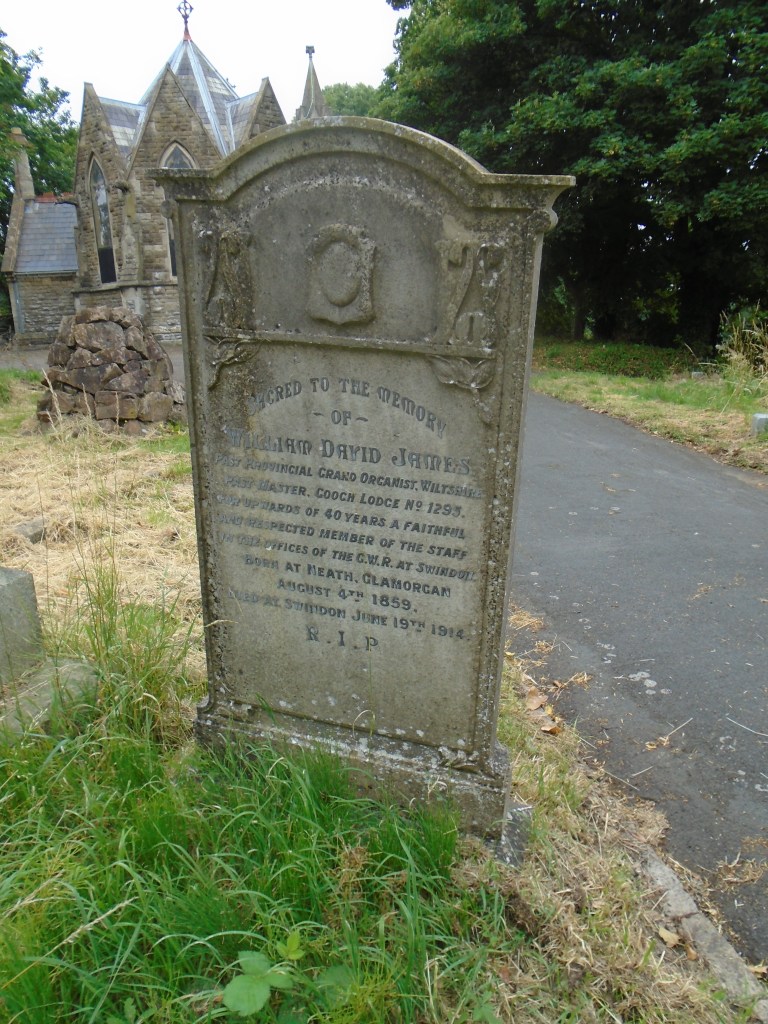
Mr James had led a very interesting and eventful life, as you will read in the detailed obituary published in the North Wilts Herald, but I do have one quibble. Well, not just one. In the obituary there is but a passing reference to the wife who predeceased him. She is however, mentioned on the kerbstone of this elaborate headstone along with her mother. Sadly, both sides have sunk into the heavy clay soil and are almost lost.
Death of Mr. W.D. James
A Well-Known Swindon Musician
The death has taken place, at the age of 55, of Mr William David James, of Victoria Road, Swindon, a member of a well-known family of musicians and one of four brothers who have achieved considerable renown in musical circles.
Deceased was, perhaps, the least famous of the quartet, but there were few more accomplished violinists in the West of England, and there is little doubt that, had he chosen, he would have made his mark, as his brothers have done.
What he knew about music he learned from his uncle, Mr. William Hawkins, of Wellington Street, Swindon, who for nearly a quarter of a century was bandmaster in the 2nd Battalion Wilts Volunteers and for many years musical director to the GWR Mechanics’ Institute. Mr. Hawkins took his nephews in hand when they were quite youngsters, and under his tuition they soon became proficient. Deceased played the trombone, both in the Regimental Band and the New Swindon Amateur Minstrels, which was an orchestra of 40 performers, and of which Mr. Hawkins was also conductor.
Subsequently, heleft the GWR Works to enter the musical profession, and for a short period he played first violin in the Royal Aquarium Orchestra at Brighton, but family considerations induced him to return to Swindon, and he took up his old position as a clerk in the Locomotive Department at the Great Western Works.
Practically the whole of Mr James’ life was spent in Swindon. As a boy he sang in St. Mark’s Church choir, his uncle being choirmaster, and in later years his services as a violinist were in great demand at local concerts. On many occasions he played first violin at performances given by the Swindon ChoralSociety and the Cirencester Choral Union, and, following in the footsteps of his uncle, he conducted an excellent orchestra of his own. Devotees of dancing invariably found it a pleasure to indulge in their favourite pastime to musicfurnished by Mr. James’s orchestra, and for many years it has been one of the best known in the district.
Deceased’s three brothers – Messrs. Edwin Fred James, Frank G. James and Wilfred G.T. James – are all at the top of the tree in their profession, being members of the King’s Private Band and also professors of the Royal College and the Royal Academy of Music. At one time and another they have been engaged at all the principal musical festivals in the country, and some time ago they visited the United States with the London Symphony Orchestra, under the direction of Arthur Nikisch. Mr. Frank James plays the trumpet, and the other two brothers are the principal bassoon players at Covent Garden Opera and all the great London concerts. It was as a old employe in the Great Western Works that Mr. Wilfred James gained a scholarship at the Royal College ofMusic, and from Swindon he went to London and quickly made a name for himself in the profession. At the present time he is the principal bassoon player in the Queen’s Hall Orchestra, under Sir Henry J. Wood.
The late Mr. James, in addition to being a well-known musician, was prominently identified with Freemasonry in Swindon. He was initiated into the Gooch Lodge in 1896, and, having passed the various degrees, was 10 years later made Worshipful Master of the Lodge. Latterly, his health had not been robust. He had a seizure some time ago and was compelled to go into a convalescent home at Weston-Super-Mare. After treatment at that institution he returned to Swindon, much improved in health, but some months back he had a second stroke, from which he never really recovered, and on Friday he passed away, to the regret of a wide circle of friends and acquaintances in Swindon and the neighbourhood.
Mr. James’s wife pre-deceased him some years ago. He leaves four sons and one daughter.
Extracts from the North Wilts Herald, Friday, June 26, 1914.
If Ada Hack’s grave ever had a headstone it has sadly been lost.
Ada Hack stood for election to the Swindon School Board in 1883. There was some opposition to her suitability, although not on account of her gender or her teaching experience. The 33-year-old mother of two had taught for 12 years in Board Schools and had run a private, middle class school of her own but W.H. Stanier, chief clerk to William Dean, Chief Locomotive Engineer for the Great Western Railway, challenged her impeccable qualifications, arguing that she was a relative newcomer to Swindon, so apparently didn’t know how the town worked. Ada responded by drawing attention to the election of Rev Ponsonby in 1880 when he too was a newcomer to the town.
Ada was born in Lambeth in 1850, the daughter of Charles Brocklehurst, a merchant clerk, and his wife Eliza. She studied at the British and Foreign School Society’s Training College for Mistresses in Stockwell, South London. She married Ebenezer Hack, a postal clerk, in 1880 and soon after moved to Swindon.
Standing as an Independent candidate, Ada voiced her opinion that school boards had nothing to do with politics and that political interest should not override the interests of the children. As a Quaker, Ada was against corporal punishment, conceding while it may be necessary to use the cane on some occasions, but she had never had cause to use it.
Ada came top of the 1883 poll, beating her nearest rival by more than 650 votes and defeating two newspaper proprietors, William Morris of the Swindon Advertiser and Joshua Piper of the North Wilts Herald. Her nomination was said to have received support from ‘some members of the Bristol and London school boards and from women all over the country.’
Having secured an unqualified victory in 1883 Ada unfortunately made little impression on the running of the School Board as she attended few meetings due to ill health. She was persuaded to stand for re-election in 1886 much against her wishes and received just 394 votes, finishing 14th in the poll.
But this was not the end of her involvement in the public sector. Ada became a member of the Women’s Peace and Arbitration Association and also the Moral Reform Union, an organisation that pressed for the need to eradicate sexual double stands in society and focused on the Contagious Diseases Acts, and the poor moral conduct of public figures.
At the time of the 1891 census Ada lived at 26 Belle Vue with her husband and two young sons where she described her occupation as ‘Artist Sculp.’
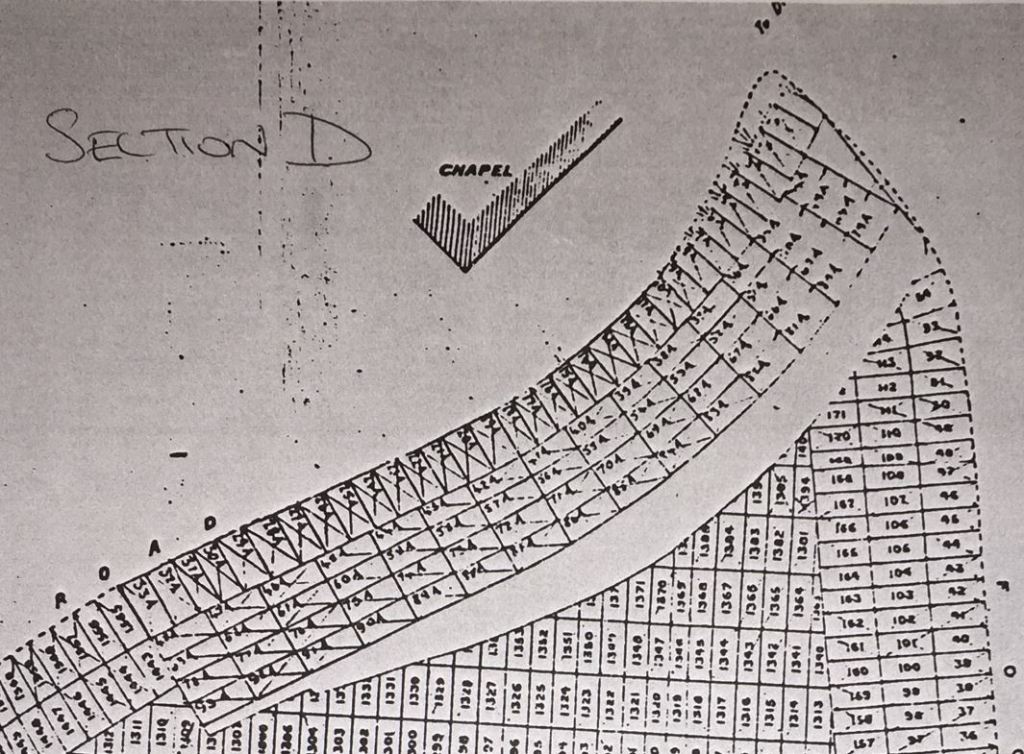
The 1883 newcomer to Swindon died at her home, Elm Villa, Wellington Street in January 1931. She is buried in grave plot D89A, close to the cemetery chapel, with her husband Ebenezer Benjamin, her son John Victor Campbell Hack and her daughter-in-law Alice Margaret Louisa Hack.
The image of the Mechanics’ Arms is published courtesy of Mr D. New and Local Studies, Swindon Central Library.
The re-imagined story …
My dad used to drink in the Mechanics’ Arms so when he said they were looking for a barmaid I decided to apply. We lived just around the corner in Wellington Street, so not far to walk home at the end of the evening. Dad knew Mr and Mrs Leighfield well.
“They’re a nice couple. They’ll look after you well – won’t take advantage of you.” Dad knew most of the regulars, all men from the Works.
Mrs Leighfield told me to call in on Tuesday afternoon.
It was pandemonium when I got there, yet no one seemed to know what was going on.
“There’s been an accident.”
“Has anyone sent for Dr Swinhoe?”
“He’s on his way.”
“Do they need any help in there?”
“We could hear a woman screaming, but it’s all gone quiet now.”
I decided not to hang around. There was nothing I could do anyway.
The pub was closed that evening, but the news was already spreading. Dad couldn’t believe it.
“He was such a nice man. Always had a cheery word for everyone, even though his health was poor.”
I decided against applying for the barmaid’s job, although I felt a bit guilty. Mrs. Leighfield probably needed the help more than ever now, but I just couldn’t face going in that kitchen where it had all happened.
The facts …
Swindon
An inquest was held by the county coroner (Mr A.L. Forrester), at the Mechanics’ Arms Inn, on the body of Frederick George Leighfield, the landlord of the house, who committed suicide by cutting his throat. The evidence showed that deceased had been unwell and depressed. On Tuesday afternoon his wife found him in the kitchen in the act of cutting his throat. He had succeeded in inflicting a severe wound with a razor, and although he received immediate attention, he succumbed early on Thursday morning. The jury returned a verdict of “Suicide while temporarily insane.”
The Western Daily Press, Bristol Monday August 23, 1909
Funeral on Sunday
Impressive Service in Swindon Cemetery
The funeral of the late Mr Frederick G. Leighfield, of the Mechanics’ Arms Inn, Cheltenham Street, whose sad death was recorded in our columns last week, took place in Swindon Cemetery on Sunday afternoon, the mortal remains being laid to rest in the same grave as those of his father, the late Mr Alfred Leighfield, who died two and a half years ago.
The cortege left deceased’s late residence at 3 pm and proceeded direct to the Cemetery, where a short service was conducted in the Chapel by the Rev. F.C. Shellard, Baptist Minister, who also officiated at the graveside.
The coffin, which was covered with lovely floral tributes, was conveyed in a hearse, and the chief mourners were in four carriages, whilst a very large concourse of people in the Cemetery, but the best of order was maintained, and the roped enclosure was kept clear by a number of policemen, under Inspector Buchanan and Sergt. Millard.
A number of members of the Swindon and District Licensed Victuallers’ Association, of which Mr Leighfield was a member, also attended to pay their tribute of respect to the memory of deceased.
The coffin was of polished elm, with brass fittings, and the breast-plate bore the following inscription: “Frederick George Leighfield, died Aug 19th, 1909, aged 39 years.”
The funeral arrangements were satisfactorily carried out by Messrs H. Smith and Son, of Gordon Road.
Extracts printed from The Swindon Advertiser Friday August 27 1909
Radnor Street Cemetery followers will surely recognize the name Cleo Laine. Jazz singer and actress, her long and illustrious 50+ year career took off when she joined the Johnny Dankworth Band in 1951. The couple later married and went on to co-found the charity The Wavendon Allmusic Plan and created the Stables theatre in the grounds of their home near Milton Keynes. Cleo Laine received an OBE in 1977 and was made a DBE in 1997.
But did you know that her grandparents, Charles and Elizabeth Hitchings, are buried in Radnor Street Cemetery?
Dame Cleo Laine
Clementine Dinah Hitchings was born in Southall on October 28, 1927, the daughter of a Jamaican father Alexander Sylvin Campbell and Minnie Blanche Hitchings who was born in Wiltshire. Alexander and Minnie were an unconventional couple. For a start they were unwed and it seems likely Minnie already had a husband when they first met.
Minnie Blanche Hitchings was born in 1889 in Cleverton,Wiltshire the daughter of Charles Hitchings and his wife Elizabeth. The 1891 census finds the family living at Cleverton where 27 year old Charles describes himself as a ‘farmer and dealer.’ The young couple have three children, Arthur 6, Ethel 4 and one year old Minnie.
By 1901 Charles had brought his family to Swindon where he ran a Grocer’s shop at 24 Little London. The 1901 census records him as Charles Hitchings 37, Grocer Shopkeeper born in Lea. His wife Elizabeth, also 37, was born in Fulham, London and they now had five children – Arthur 16, who worked as a clothier’s assistant, Ethel 14, Minnie 11, Emily 7 and four year old Frank.
Charles Hitchings
In 1903 the family lived at 38 Belle Vue Road where Charles died suddenly on Sunday July 5, 1903. Mr W.E. Nicolson Browne (county coroner) held an inquest where it was heard that the deceased complained of pains near his heart after which he shortly fell dead. A verdict of “Death from syncope” was recorded and on July 8, 1903 39-year-old Charles Hitchings was buried in Radnor Street Cemetery in plot A404.
Did Elizabeth move back to family in London? It was there just five years later that she died in the Metropolitan Hospital. Her body was returned to Swindon where she was buried in Radnor Street Cemetery in plot A784, a public grave, on December 4, 1908.
By 1911, then aged 22, Minnie was working as a waitress in an hotel at No. 1 Bridge Street run by Henry Moore. Perhaps this was where she met Frederick W.H. Bullock whom she married in 1913. The couple left Swindon and moved to Hounslow but the marriage soon ran into trouble and by 1921 Minnie had left Frederick. By 1925 Minnie had met Jamaican born Alexander and the couple had their first child.
Clementine Dinah (Cleo Laine) was born in 1927 before her parents married in 1933. Dame Cleo is recorded as saying it was only when she applied for a passport as an adult that she learned her parents were not married at the time of her birth.
Sir John Dankworth was created a knight in 2006. He died in 2010 aged 83. The couple have two children, their daughter Jacqui is a singer/actress and their son Alec is a bassist and composer. Their granddaughter Emily Dankworth is also a jazz singer/songwriter.
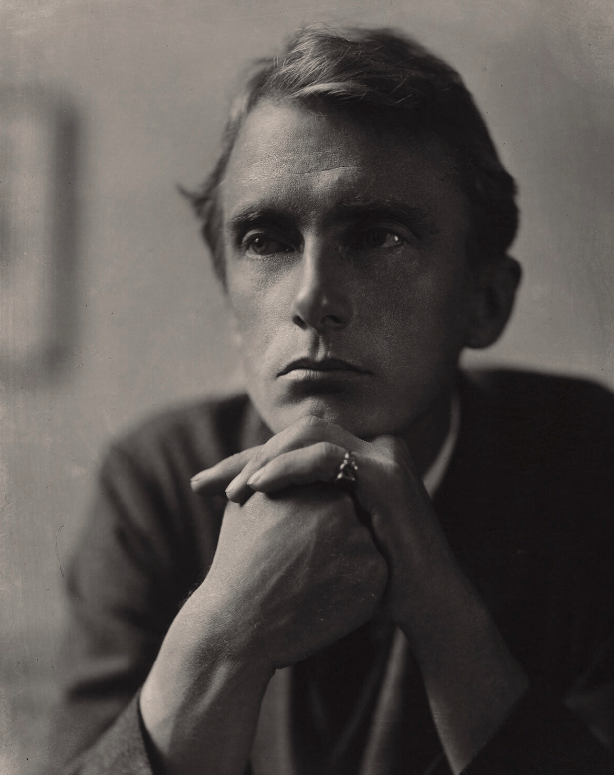
Edward Thomas was born in 1878 in Stockwell, South London. He began his writing career in 1906, working as a journalist, literary critic and book reviewer. Thomas began to write poetry in 1914 and today his name is associated with war poets Wilfred Owen and Rupert Brookes.
Edward Thomas enlisted with the Artists Rifles in July 1915 and was later commissioned into the Royal Garrison Artillery. He was killed in action at Arras on Easter Monday April 9, 1917 and is buried in the CWGC Agny Military Cemetery in the Pas de Calais region.
Thomas is mostly associated with South Wales where he maintained ties with his large extended family, and Steep in Hampshire where he lived with his wife and children (there is a study centre dedicated to him in the Petersfield Museum). His association with Swindon is perhaps less well known.
Edward Thomas’s father, Philip Henry Thomas was born in Tredegar in 1855, the son of Henry Eastaway Thomas an Engine Fitter. The Thomas family moved to Swindon in 1867 and appear on the 1871 census living at 5 High Street, later renamed Emlyn Square.
Henry Eastaway Thomas died shortly after the census was taken and was buried in the churchyard at St Mark’s on April 8, 1871. Sadly, the death of two of their sons occurred shortly afterwards, Daniel Eastaway Thomas in 1873 aged 12 years old and Edward Treharne Thomas in 1877 aged 11 years. Both boys are buried in St Mark’s churchyard though it is not know if they are together. According to this memorial (see below) youngest son Harry Eastaway Thomas died in South Africa in 1900.
By 1881 Rachel was living at 19 Cambria Place, which remained her home for the rest of her life.
Edward Thomas retained his close ties with Swindon, regularly visiting his grandmother Rachel at her home.
Death of Mrs R. Thomas. – A Swindon Octogenarian. – The death took place on Tuesday last, at her residence, 19 Cambria Place, Swindon, of Mrs Rachel Thomas, an old inhabitant of Swindon, who had attained to the great age of 86 years. She has been a widow since 1873. With her late husband, Mrs Thomas came to Swindon in 1867, from Tredegar, Mon., and Mr Thomas was employed in the GWR Works, which, like the town, was very small compared with its great extent today, and she lived to see many changes take place here. Mrs Thomas leaves a family of two children – a son and a daughter. The son is Mr P.H. Thomas, I.S.O., of the Board of Trade. It will be of added interest to our readers to know that a grandson of the deceased is Mr. Edward Thomas, author of the Life of Richard Jefferies, a work which has received most favourable notice in the London and Provincial Press. Mr Edward Thomas spent a whole summer in Swindon and district a year or two ago in collecting material for his work. Like Jefferies, he is a lover of nature, and when a boy used to live in Swindon with his grandmother.
Swindon Advertiser, Friday, December 31, 1909.
Rachel Thomas was buried on December 31, 1909 in grave plot C1609 where she lies alone.
On the reverse side of the memorial is the second verse of a hymn by Horatius Bonar.
Think truly and thy thought shall the world’s famine feed.
Speak truly and each word of thine shall be a fruitful seed
Live truly, and thy life shall be a great and noble creed
The plot has recently been cleared by Radnor Street Cemetery volunteer Jon.
Pretty things; pretty things for pretty clothes to be worn by pretty women. Can they have any idea how these buttons are made or the conditions under which they are produced?
Macassar and manila shells were sourced from exotic places for the iridescent pearl buttons; hoofs and horns for the more mundane, everyday buttons were collected from the slaughter houses, stinking and crawling with maggots.
Small workshops huddled around filthy court yards where entire families labour in the dust and dirt and noise. The men sort through the shells, sawing and shaping the raw materials, deciding where to make the best cut. Women’s work; a light but practised touch was required to polish the buttons as the materials were fragile and easily broken. And the girls, sewing the buttons on cards, 14 to each card. They were expected to sew more than 3,500 buttons each day. The button manufacturer paid one penny sometimes a penny ha’penny a card and for her labours the girl might earn 7 shillings for a long, hard working week.
Pretty things; pretty things for pretty clothes to be worn by pretty women.
The facts …
Emma Bradley was born in 1855 and Sarah in 1860, the younger daughters of James Bradley, a miller (a milling machine operator) and his wife Maria.
In 1861 the family lived at Poole Street, (3 Court 3 House) Erdington, Aston Manor, Birmingham. Eldest daughter Mary Theresa 17 worked as a Glass Button Cutter while second daughter Ann Maria 11 worked as a Pearl Button Carder. James 9 and Emma 6 were at school and youngest child Sarah was just 9 months old.
At the time of the 1871 census Emma was working as a general servant at the home of Charles Watson, a pearl button manufacturer, but by 1881 she was back home in Poole Street with her widowed father James and her sister Sarah. Emma worked as a button polisher and Sarah as a press worker.
What brought the Bradley sisters from Birmingham to Swindon? Sarah Bradley married William Stanley, a blacksmith, in 1888. By 1891 they were living in two rooms in 14 Princes Street, Swindon and William was employed in the railway factory.
Emma appears in Swindon on the 1911 census as boarding at 30 Fleet Street where she works in a clothing factory, most probably Compton’s who had a factory in Sheppard Street.
The two sisters lived together again at the end of their lives. Emma died on March 3, 1924 at 52 Deacon Street. Sarah died on November 18, 1936 and her husband William on December 10, 1939 both at 52 Deacon Street. The two sisters and Sarah’s husband William are buried together in plot E8124.










 Radnor Street Cemetery