
James Henry Thomas – he knew his place.

The re-imagined story …

Now I don’t know your political persuasion, and to be quite honest, neither do I want to know it. Nothing starts a row quicker than a political argument. I can rub along with most people, but politics – bah – I keep my opinion to myself and I’d ask you to do the same.

My old man always said only ever trust the pound in your pocket. But it was the pound in his pocket that saw the end of Jimmy Thomas’s political career, so to speak.

Jimmy and I worked together. Well, I say ‘worked together’ we both worked for the GWR, but then so did most of Swindon. I worked as a boiler smith while Jimmy was an engine driver, so our paths seldom crossed, but everyone knew Jimmy.

His political career took off in Swindon, but my memory of him was always as a working man and a trade unionist, but mostly a working man. He had come up the hard way, he knew what it was like for us.

When the scandal broke there were some who found it difficult to believe what we were reading in the newspapers. But there were many who said his head had been turned hobnobbing with all those fine folk; that he had become a ‘Champagne Socialist’ and that he’d lost touch with his roots.

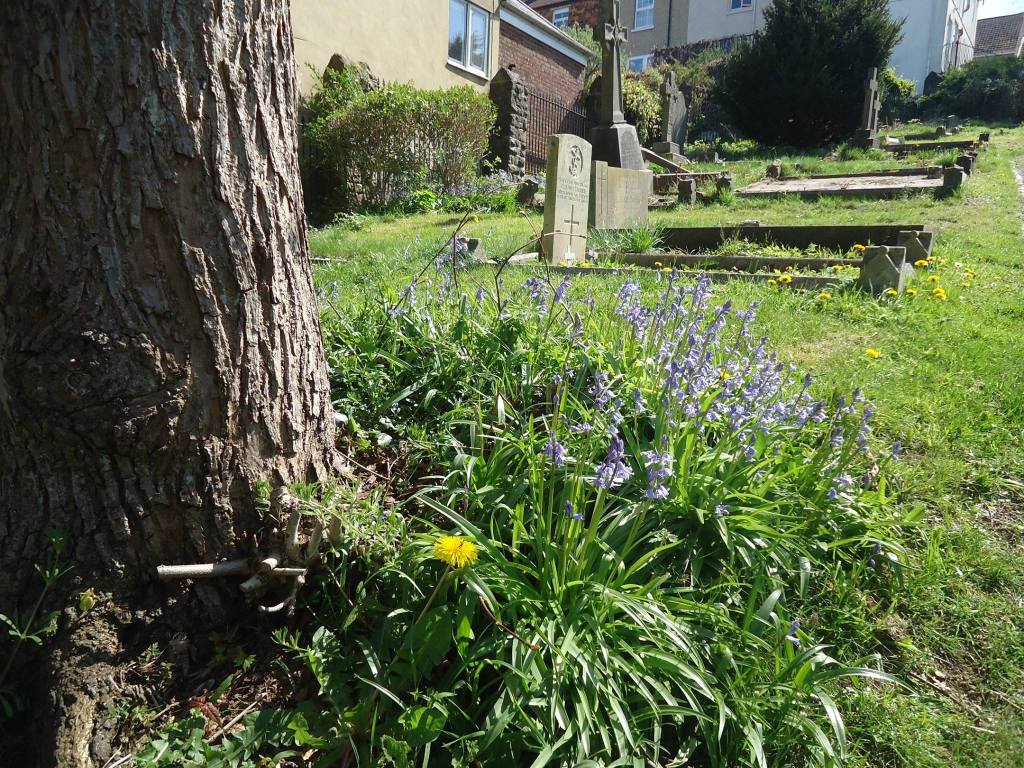
I kept my opinions to myself, but I tell you what convinced me that whatever he had done or not done, Jimmy was still that working class man who had pulled himself up by his bootstraps. Just five days after his death his ashes were returned to Swindon and buried in Radnor Street Cemetery. It must have been his wishes, to return to the place where his political career had taken off. Buried with the old railwaymen he had worked alongside. He knew his place.

The facts …

Born in Newport, Monmouthshire in 1874, the illegitimate son of Elizabeth, a domestic servant, James Henry Thomas was raised by his grandmother Ann. In 1881 the six year old boy lived at 40 George Street, Newport with his mother’s three siblings and his grandmother, who supported the family by taking in washing.

Nine year old Thomas began part time work as an errand boy, leaving school at the age of 12. After a succession of jobs he joined the GWR, beginning his railway career as an engine cleaner, then a fireman eventually becoming an engine driver and transferring to Swindon at the end of the 19th century.

His trade union career began when he joined the Amalgamated Society of Railway Servants in South Wales as a 15 year old, becoming chairman of the local union branch in 1897. His political career began in Swindon when he took W.H. Stainer’s Queens Ward seat in the 1901 local elections.

Thomas went on to become chairman of the Finance and Law committee in 1904/5 and the Electricity and Tramways committee in 1905/6.

Elected onto the national executive committee of the ASRS in 1902, Thomas became the youngest ever president just three years later. In 1906 he became organising secretary, a full time post, which saw him leave the GWR and Swindon.

He stood for parliament as Labour candidate for Derby in the 1910 general election, a constituency he represented until the devastating events of 1936.

In what had previously been an unblemished political career, Thomas was found guilty by a Tribunal of Inquiry of leaking budget secrets to his stockbroker son Leslie and Sir Alfred Butt, Conservative MP for Balham & Tooting.

And a £15,000 handout paid by wealthy businessman Alfred ‘Cosher’ Bates was claimed to be an advance for Thomas’s as then unwritten autobiography.

Despite the guilty verdict, Thomas continued to protest his innocence. In an emotional statement made to the House of Commons on June 11, 1936 he declared he never ‘consciously gave a Budget secret away,’ and that he had now only his wife who still trusted him and loved him.

Thomas’s period of public service included a world war and a national depression. A champion for the working man, he also enjoyed the trappings of public life which earned him the title of ‘Champagne Socialist.’

In retirement Thomas eventually wrote ‘My Story’ the previously untold autobiography whose so say ‘advance’ had contributed towards his downfall.

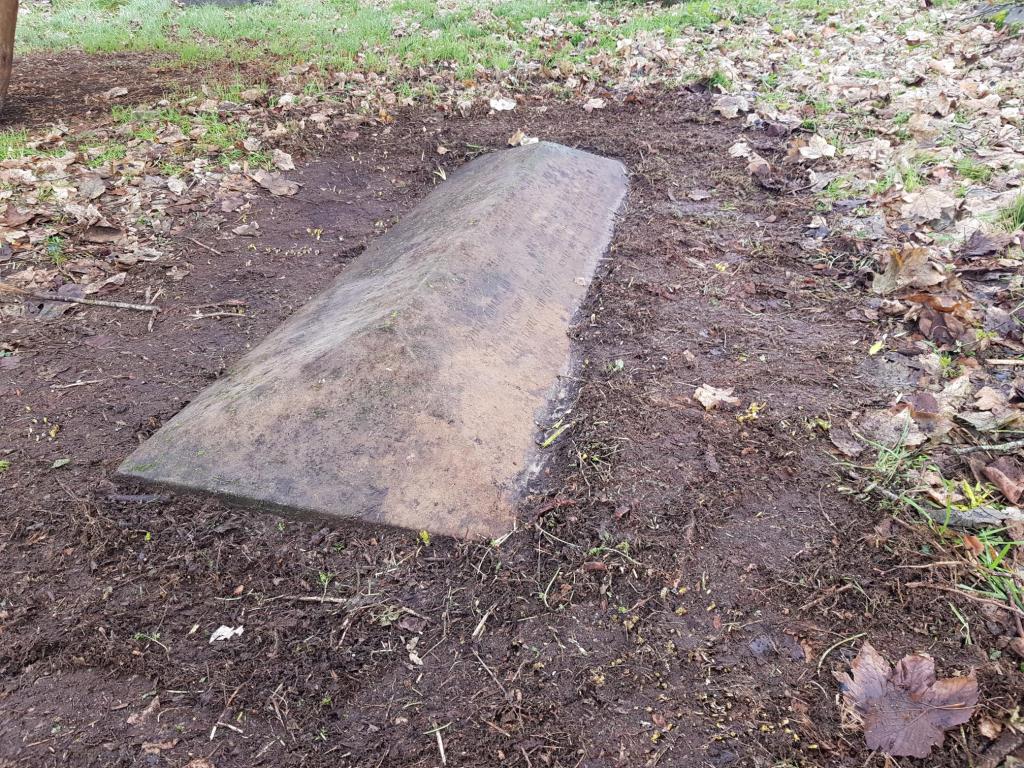
He died at his London home on Friday January 21, 1949 aged 74 years. His ashes were later returned to Swindon where he is buried in Radnor Street Cemetery.

‘Jimmy’ Thomas left £15,000

In his will, published yesterday, the Right Hon. James Henry Thomas, P.C., former Cabinet Minister and ex-engine driver, who died last January, left £15,032 (net £10,949).

He left all diaries and documents of a political or historical nature and his collection of cartoons to his trustees to dispose of “as they shall think fit.” He made similar directions about articles presented to him by heads of States Ministers of the Crown, and public bodies.

Yorkshire Observer Bradford, Wednesday, 23 November 1949.

James Henry Thomas PC (Casket Ashes) 74 years Dulwich (place of death) 107A Thurlow Park Road (address) 26th January 1949 (burial) plot number E7807

1901 census

6 Salisbury Street,

James H. Thomas 27 Railway Engine Driver born Mon. Newport

Agnes Thomas wife 28 born Mon. Newport

Anthony J. Thomas son 1 year old born Mon. Newport

Elizabeth Hill widow visitor 67 born Mon. Newport

George House – a Swindon veteran

It is seldom we have the opportunity to read the words of an ordinary railwayman. When George House died in 1903 the Advertiser republished extracts from an earlier interview made in 1899.

The facts …

The Oldest GWR Employee

Reminiscences of Early Days in Swindon

As showing what a contrast there is between Swindon of today and of Mr House’s youth, we cannot do better than reproduce an interview with Mr House, which was published in the “Advertiser” in April 1899. A representative of this paper called upon Mr House in the latter part of April of that year, and found him reading his “Evening Advertiser,” and quite delighted to have a chat about his early days in Swindon. The interviewer commenced the conversation:-

“Good evening, Mr House; and is it true that I behold in you the oldest railway servant in the United Kingdom? A correspondent, in answer to a request in the ‘Advertiser’ so informs me?” I said when Mr House had assured himself that I was comfortably seated in his cosy room.

“Yes; I think so,” was his ready response. “I have a record of over 60 years’ service with the GWR Company. I started work with them in the construction of the line there under the supervision of Brunel.”

“When did you come to Swindon?” I queried.

“In 1838” was the reply, “there was no railway station here then, and no factory. When the coaches began to run from Bristol to Swindon the only place where passengers could alight was at Hay Lane.”

“You almost remember the open carriages then?”

“Yes, very well. And the coaches used to leave here at eight o’clock at night, and get to London some time in the morning. It was travelling in those days and no mistake. The ladies’ dresses used to be entirely spoilt by the smoke and dirt in one journey.”

“Now as to the GWR Works at Swindon, which was the first shop built?”

“Well, when I came here there was no factory at all. Not a stick nor stone. I assisted to fix up the first machinery. The D Shop, F Shop, and G Shop were the first shops that were erected.”

“How many men were employed here when you first came to Swindon?”

“Well, there were practically no men employed here till I and others came from Maidenhead, and Messrs Whitworth, of Manchester, fitted up some machinery. Then, for a start, there were not so many men employed as there are clerks now.”

“What a number of dead and gone faces such remembrances must bring before you. The chiefs of the Works, foremen and others, for instance.”

“Yes, I think I have a record in that direction, for I have worked under no less than five managers and eight foremen at the Swindon Works. I can tell you their names in a moment.”

“Who were the managers?”

“Well, first, there was Mr Sturrock, then Mr Rae, and Mr William Gooch (brother to Sir Daniel Gooch). And in more recent times the late Mr Samuel Carlton, and Mr G.J. Churchward.”

“You say you have worked under eight different foremen: who were they?”

Yes, there was Charles Hurt, Alf. Cootes, Peter Bremner, Dodson, Robinson, E. Dingley, William Booth, and A. Nash.”

“Of course, in those early days there was no Mechanics’ Institute. What recreation was provided for the workmen?”

“Oh, there used to be a small theatre in the Works – in the O Shop. Here a dancing class was held, and amateur theatricals were performed there. The Mechanics’ Institute was not built till several years later. Lord Methuen came down and laid the first stone, and a fete was held to celebrate the event. I remember well the Great Exhibition of 1851. All of us workmen who had joined the Mechanics’ Institution – in fact, every one of the employees of the Company who were working here then – were given an free railway pass to London to go and see the Exhibition. On another occasion when we were give a free trip to London, I took my wife and family of ten children. And when we arrived at Paddington, I hailed a cabby, who stared at my family, and remarked, “What’s this, sir, a whole school!”

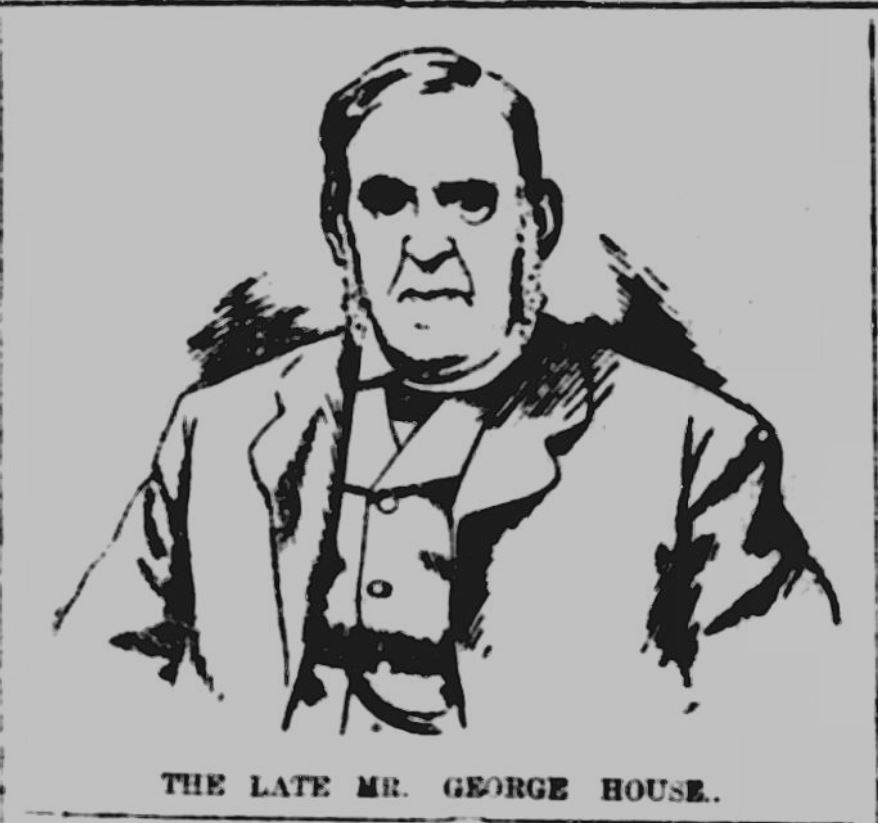
The Late Mr George House

Funeral Last Saturday

The funeral of the late Mr George House, of Taunton street, took place on Saturday afternoon amidst every sign of mourning. The cortege left deceased’s late residence shortly after 2.30 pm for St. Mark’s Church, where the first part of the sad service was impressively read by Canon, the Hon Maurice Ponsonby, vicar and rural dean, who also officiated at the graveside in the Cemetery, where a goodly number of persons had assembled to pay their last mark of respect to one who chief aim in life was the care of his less fortunate brethren. The body was enclosed in a beautiful casket of polished elm, with heavy brass furniture, the breast plate bearing the following inscription:-

George House

Died January, 1903,

The funeral arrangements were carried out by Mr H. Smith, of Gordon Road.

Extracts from The Swindon Advertiser, Friday, January 16, 1903

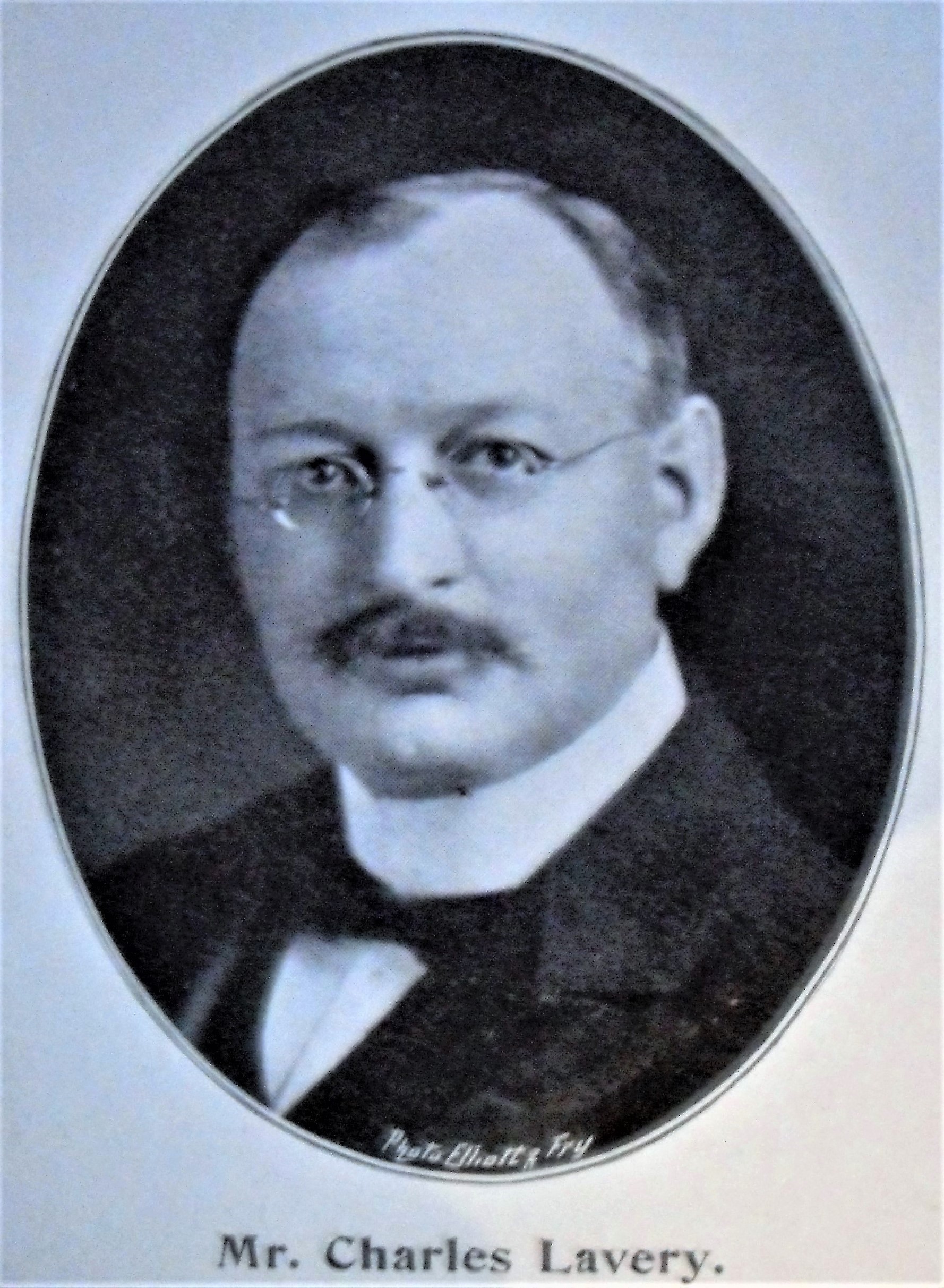
Charles Lavery – Swindon’s oldest doctor

The re-imagined story …

When Dr Lavery told me I needed to have my tonsils removed I had nightmares for weeks and it was all my granddad’s fault.

My tonsils were repeatedly getting infected and Dr Lavery said it was affecting my general health and they need to come out. No one could understand why I was so frightened. Dr Lavery even arranged for me to visit the Victoria Hospital and talked me through what he said was a very simple operation, but I wasn’t having any of it – the explanation or the operation. In the end dad said everyone should stop pandering to me and a date was arranged. 

When it was all over and I had recovered, mum asked me why I had been so frightened.

“Granddad told me when he had to have his tonsils out the doctor did it on the kitchen table with his mother’s carving knife.”

I won’t repeat here what my mum said to my granddad.

VLUU L100, M100  / Samsung L100, M100

The facts …

Swindon’s Oldest Doctor

Solemn Requiem Mass Sung by Bishop

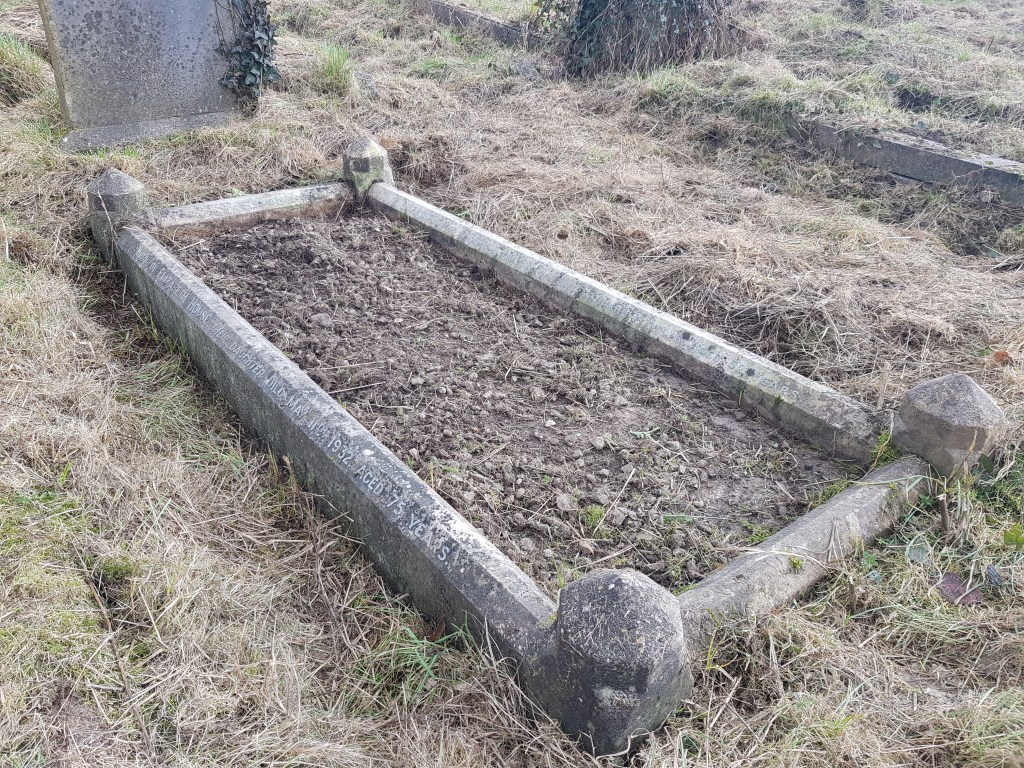
Solemn requiem Mass was sung by the Bishop of Clifton, at Holy Rood Roman Catholic Church, Swindon, on Saturday for Swindon’s oldest medical man, Dr Charles Lavery (72) MB., Ch.B.

Dr Lavery, who was a cousin of the Bishop, had been a medical practitioner in Swindon for 46 years.

He was a member of the British Medical Association, and was a prominent member of the Holy Rood Roman Catholic Church. He was married in 1901, and his wife died in 1924. He leaves four sons, one of whom, Dr Anthony Lavery, carries on his father’s practice.

At the Mass those assisting the Bishop were Canon Noonan (Swindon), Father Louis Valluet (Devizes), Father Sweeney (Fairford), and Father Meynet (Malmesbury). Other priests attending were Dr Staunton (Cirencester), Dr Grimshaw (St Joseph’s, Fishponds, Bristol). Father Judge (Weston Super Mare, and formerly of Swindon), Canon Cashman (Bristol), and Father Chamonin (Malmesbury).

The chief mourners were deceased’s four sons, and others included the Rev. Ronald Royal (vicar of St Mark’s Church, Swindon) and the Rev. J. Tickner (curate at St Mark’s). Dr Dunstan Brewer, M.O.H. of Swindon (representing the British Medical Association) and many local doctors.

The Bishop afterwards officiated at the graveside.

Extracts taken from the Western Daily Press Monday 19th December 1938

Dr Lavery is mentioned in many of the stories in the Radnor Street Cemetery archives. You might like to read the following:

Poor Little Freddy Whitby

Joseph and Charles Williams – busy building Swindon

Swindon Tram Disaster

Drowning Fatality at New Swindon

Elizabeth Lyall Embling – the first woman to be buried in Radnor Street Cemetery

Elizabeth Lyall Embling was the first woman to be buried in Radnor Street Cemetery.

Elizabeth’s funeral took place on September 21, 1881 – the cemetery had been open 6 weeks and 5 days. She is entry number 25 in the chronological registers. In the preceding 47 days there had been the burials of 6 adults – a house painter, an undertaker, an auctioneers clerk, a labourer, a medical student and a baker – and 18 children. The details in the register tell us that she was married and worked as a confectioner. Her husband Benjamin provided the death certificate and the committal was attended by the Rev Godfrey A. Littledale. Elizabeth was 41 years old at the time of her death. She was buried in a public grave plot number A179.

Section A was the first area of the cemetery to receive burials when the cemetery opened. It stretches up the hill as you enter at the Dixon Street gate and turn left and continues to the Kent Road gate and down to the chapel. Today it is an area with numerous trees and shrubs but probably fewer headstones than in other sections of the cemetery. This is an area where many of the early settlers in the railway town of New Swindon are buried. Elizabeth herself was the daughter of one such man.

Elizabeth Lyall Watson was born in Scotland, the eldest daughter of David Watson, a fitter, one of the early railwaymen to arrive in Swindon in the 1840s. Elizabeth appears on the 1851 census living at 7 Reading Street with her parents David and Elizabeth and her four younger sisters. They share the property with Eliza Eames, a 47 year old widow from Ireland, a retired needlewoman, and her two sons Edward 18 and Homan 13. Just these few details tell us a lot about the early days of New Swindon. People had come from all corners of the UK to work at in the Great Western Railway Works and that accommodation was hard to come by causing overcrowding in the company houses.

Elizabeth married Benjamin Embling in the September quarter of 1863. We find the family on the 1871 census living at 23 Queen Street where Benjamin worked as a labourer in the GWR Iron Works. The couple had three children, William 6, David 3 and two year old Elizabeth. Lodging with them was John Beckett, a 22 year old labourer, who worked in the nearby gas works.

And then sometimes the official records reveal inexplicable details. The 1881 census taken on the night of Sunday April 3, 1881 records the Embling family living at No. 9 Mill Street in New Swindon, described as a General Shop. Benjamin occupation is that of shop keeper and he states that he is a widower (this is somewhat difficult to understand as Elizabeth did not die until September of that year). The family number six children – William 16, David 13, Elizabeth 11, Benjamin 8, James 6 and 3 year old Jessie. Benjamin employed 13 year old Margaret Morgan as a domestic servant.

Elizabeth’s death certificate might provide clarification but unfortunately we cannot afford to purchase certificates for the numerous burials we research. So, is this all we can retrieve about the life of this working class woman. There are no surviving letters (if she ever wrote any), no last will and testament, no diary. Perhaps there is a carte de visite photograph somewhere taken in one of the town’s numerous photographic studios. These small photographs survive in great numbers but unfortunately can seldom be identified.

This is a very brief account of one working class woman’s life – the first woman to be buried in Radnor Street Cemetery.

You might also like to read:

David Watson – railway and political pioneer

Frederick Gore – the closing of the churchyard

Standing at the Graveside

First Impressions

Have you seen the doctor?

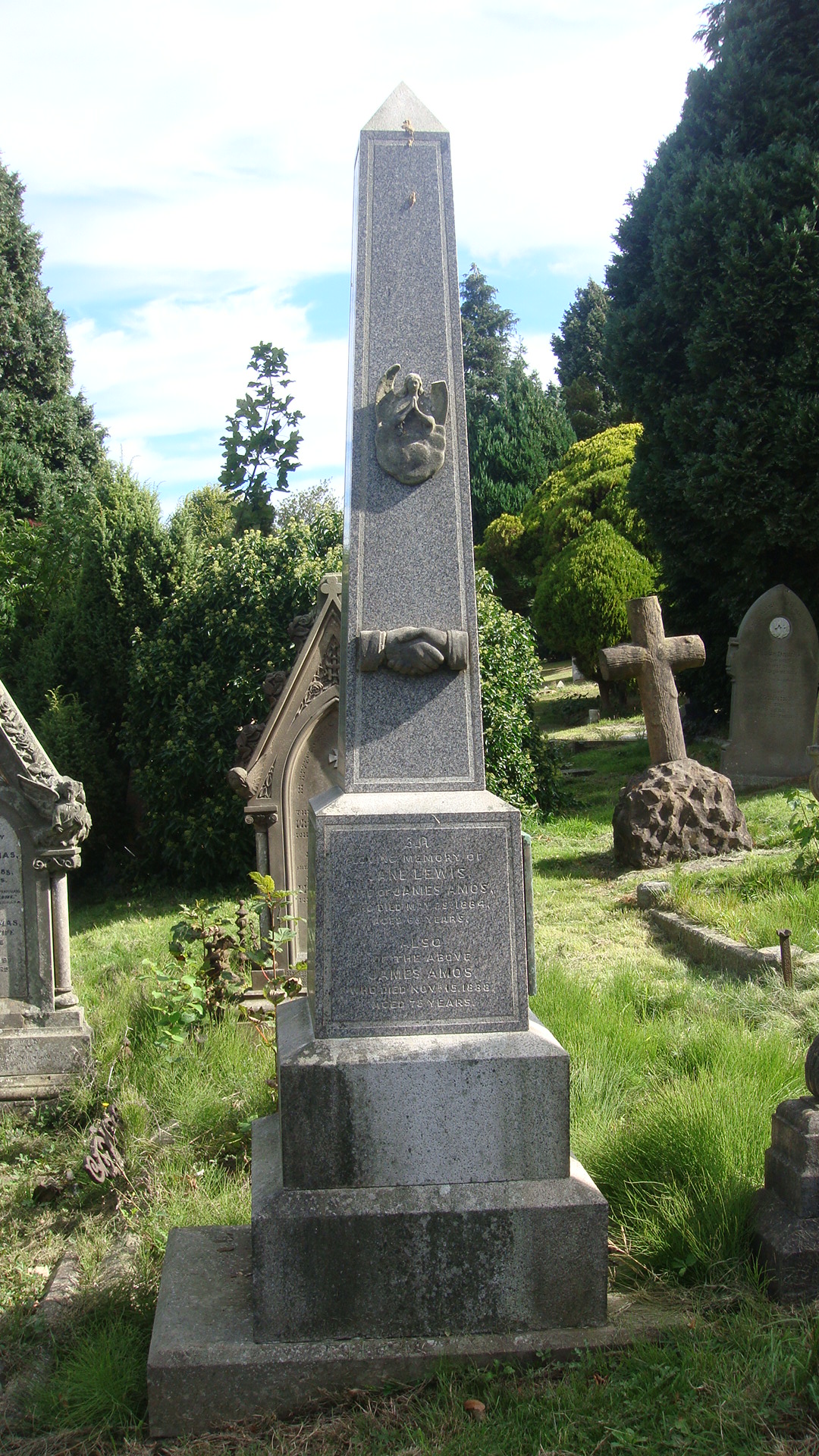
James Amos – member of the Boilermakers Society

amosThe re-imagined story …

A report in yesterday’s Advertiser both shocked and saddened me. It began – An old man named James Amos, aged 75, a boiler maker at the GWR works, committed suicide…

Mr Amos was one of the first members of the Boilermakers Society. He joined at Bristol in 1836 before moving to Swindon.

He was one of the first practising trade unionists in our town, campaigning for better and safer working conditions for men in the railway factory.

As a young apprentice in V Shop, Mr Amos took me under his wing. Management was not much impressed by the trade unionist members and we have a lot for which to thank those early, pioneering members. The example of Mr Amos encouraged me to join the union and I remain a member to this day.

James Amos had a tragic and lonely end; and he was so much more than just ‘an old man.’

James Amos

The facts …

Suicide – An old man named James Amos, aged 75, a boiler maker at the GWR works, committed suicide, on Thursday morning, at 41 Regent-street. He had been in ill health during the past two months, and never seemed to have recovered from the effects of the death of his wife several years since. He lived alone, but was attended to by Mrs Poole, a niece who lived next door. She went into the house that morning, and was shocked to find Amos hanging from the bannisters. P.C. Crook was immediately called in, and the body was cut down, but life was found to be extinct. Dr Johnson was also in attendance, and gave it as his opinion that deceased had been dead some time.

Wilts and Gloucestershire Standard, Saturday, November 17, 1888

William Y. Stock – friend and neighbour

Image of Milton Road published courtesy of P.A. Williams and Local Studies, Swindon Central Library.

The re-imagined story …

My wife says she sees less of me now I’ve retired than she did when I was working – not that I think she’s complaining, mind you.

I like to take a brisk walk around the park each morning and I get down to the allotments most days. There’s always some of my pals down there. We have a brew and a natter and put the world to rights. I’ve recently taken up swimming again after more than twenty years. I go to the Medical Fund Baths a couple of times a week and swim a leisurely length or two.

It’s important to look after yourself, no matter what age you are –  I learnt how precious and how fragile life is when my friend Bill passed away.

Bill and I grew up as neighbours in Farnsby Street. We went to the same school, joined the same clubs, played football in the winter and cricket in the summer. We started work together as clerks in Works. Then in March 1904 he left – too ill to continue work. Six months later he was gone, aged just 21 years old.

I’ve never taken my life for granted, the Great War taught me that, and losing Bill. I’ve had a good life, a smashing wife and four healthy children and a family that grows and grows, fifteen grandchildren and now the great grandchildren are coming along.  I count my blessings every day and I remember my pal Bill.

Image published courteys of Local Studies, Swindon Central Library.

The facts …

This impressive memorial surrounds two plots D152 and D153. Buried in plot D152 are Walter George Stock and his wife Mary Anne. In the second plot D153 lies their eldest son William Y. Stock.

Walter George Stock and Mary Ann Thomas were married on July 24, 1882 at St. Luke’s Church, Paddington. By the time of the birth of their first child they were living at 4 High Street, New Swindon (later renamed Emlyn Square). By 1891 the couple were living at 48 Farnsby Street and ten years later they were living at No 5 Milton Road with their three sons, a boarder by the name of Francis Shebbeare who was an Engineer’s Pupil, and Elizabeth Williams, a general servant.

The 1911 census provides more information about the Stock family’s circumstances.

5 Milton Road

Walter George Stock 54 Engineer in Testing House born London, Bayswater.

Mary Anne Stock 56 married 28 years 3 children 2 living 1 had previously died Tobacconist Shopkeeper born Coatbridge, Lanark.

Walter Harry Stock 26 Civil Engineer Rly construction born Swindon

Victor Arthur Stock 15 School born Swindon.

Eldest son William Youri was born on September 17, 1883. The UK, Railway Employment Records 1833-1956 state that he entered employment in the Stores Dept at Swindon Works on October 23, 1899. He is recorded as being ‘absent ill’ from March 1904 and died September 19, 1904. A further addition is made that he was previously employed from July 12, 1897.

Walter Harry Stock trained as a draughtsman in the Loco & Carr Drawing Office. He left the Swindon Works in 1909 and died in Belfast, Northern Ireland in April, 1944.

Youngest son Victor Arthur Stock followed his father into the Works. He later trained as an Analytical Chemist and worked for the Buenos Aires Western Railway. He died in La Pampa, Argentine on June 5, 1929.

Walter George Stock of 5 Milton Road died on January 15, 1922. He left effects valued at £610 to his wife Mary Ann. Mary Ann died on October 5, 1930. Her last home was 11 Stourcliffe Street, St Marylebone, Middx. Mary Ann left administration of her estate to Lloyds Bank Limited. Her funeral in Radnor Street Cemetery took place on October 8.

Stock brothersStock brothers (2)

Bessie Symons Sparkes and the restored headstone

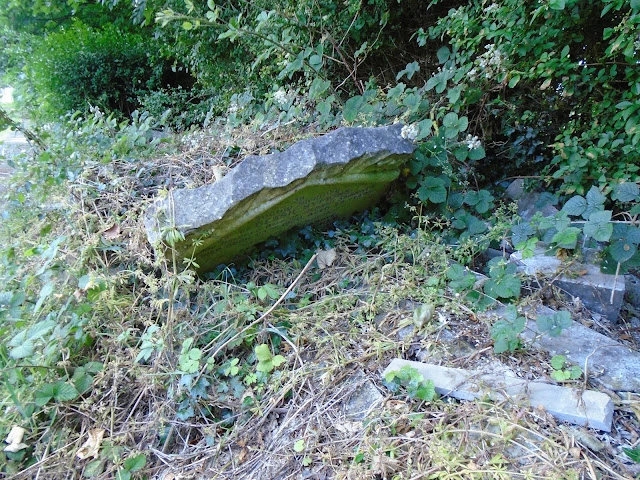
After more than fifteen years of research at the cemetery, I had never before seen this headstone, dumped in one of the cemetery’s peripheral verges.

In Loving Memory of Bessie Symons the beloved wife of Albert Sparkes died April 23rd 1920 aged 53 years. The rest of the inscription is difficult to read. The headstone was not far from its original site on plot E8516, removed for who knows what reason.

The Sparkes family were well known Swindon butchers at the turn of the 20th century. Frederick Sparkes had a shop at 47 Regent Street while his cousin Albert’s shop was at 60 Fleet Street.

The census returns reveal a large household living over the Fleet Street shop in 1911. Albert and Bessie with their three daughters – Gladys Delia Alberta 19, a student teacher, Elsie Muriel Bessie 17, still at school part time while working as a book keeper for her father’s business and nine year old Dorothy Irene Audrey, still at school.

George Howard, a butcher’s apprentice, Ernest Salter, an assistant in the shop and May Beard, butcher’s book keeper, all lodged with the family along with Winifred Hunt, a domestic servant. The property  comprised nine rooms, not including the scullery, warehouse, shop and office, so quite a squeeze to accommodate eight adults and a child.

According to the headstone and burial registers Bessie died at her home at 15 Okus Road, Swindon on April 23, 1920 aged 53 and was buried four days later on April 27. However, confusingly the entry in England & Wales, National Probate Calendar (Index of Will and Administrations) 1858-1995 states that she died on 19 May 1919 and that administration was awarded to ‘Albert Sparkes butcher’ on 30 December 1926 when her effects were valued at £45 2s 6d.

Bessie was buried in plot E8516 with her husband Albert who died in 1937 and their daughter Gladys Delia Alberta who died in 1970. Is it possible the headstone was never replaced on the grave after the burial of Gladys?

And then I came across the Sparkes family tree published on the Ancestry website by philipacore and some fab photos.

Bessie and Audrey Sparkes
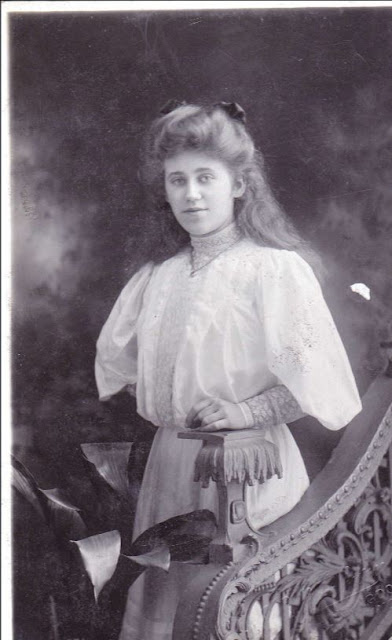
Gladys Delia Alberta Sparkes
Elsie Muriel Bessie Sparkes

The Radnor Street Cemetery volunteers have rescued Bessie’s headstone and it now sits on her grave.

Charles Frederick Angell – marry in haste, repent at leisure

The re-imagined story …

Marry in haste, repent at leisure was one of my mum’s often repeated phrases. As an impressionable young girl with a tendency to fall in love, I was never sure if this maxim was a piece of warning advice for me or a comment on her own life. Turned out it was both!

But this story isn’t about me and my mum. It’s about Mr Charles Angell who worked in the stores with my dad. Mr Angell and his wife Mary lived just round the corner from us in Florence Street.

Dad knew him well – they had worked together for many years. ‘Unless he has come into a secret inheritance he can’t be worth a lot of money,’ my dad said.

You’ll understand what I’m getting at when I tell you the rest of the story.

Mary Angell died in August 1917. Mum didn’t even know she was ill. She would have helped out had she known. Dropped off a hot meal for the couple, done a bit of shopping for them, that kind of thing. Then just seven months after his wife died, Mr Angell upped and married again. People do funny things in grief, dad said but mum said he was old enough to know better.

His new wife was a Miss Neall. Dad said she was a nice looking woman, not young, but nice looking. That got a glare from mum.

“Well I hope he knows what he’s doing. Marry in haste, repent at leisure.”

The facts …

Charles Frederick Angell married Mary Tanner at St Mark’s Church on August 31, 1889. He worked as a labourer and she worked as a domestic servant. Two years later they were living at 21 Avenue Road, Old Town.

By 1901 they had left the leafy suburbs of Old Town for a more modest property in Beatrice Street, Gorse Hill where they lived with Mary’s widowed father Daniel and her sister Emma and nephew William.

At the time of the 1911 census they had moved just down the road to 28 Omdurman Street. They state on the census returns that they had been married for 21 years and had no children.

Mary died in August 1917 when the couple lived at 9 Florence Street. The funeral took place on August 20th when Mary was buried in grave plot A2534 in Radnor Street Cemetery.

Charles Frederick Neall was 61 years of age when he married Julia Elizabeth Neall 54, at St. John’s Church, Paddington on March 30, 1918 but less than a year later the marriage had obviously soured.

The following notice was published in the North Wilts Herald, Friday 10th January, 1919.

I, Charles Frederick Angell, late of 3 Florence Street, Swindon, will NOT BE RESPONSIBLE for any DEBTS incurred by my wife, JULIA ELIZABETH ANGELL, now residing at 7 Market Street, Swindon.

Julia eventually left Swindon and when she died in the September quarter of 1923 her death was registered in the Tonbridge area of Kent.

Within a year, Charles took the plunge again. He married Alice Pring Johnson on June 9, 1924 at St Mary’s church, Charlton Kings, Glos.

Charles died on January 1, 1930 at his home 28, Hunter’s Grove, Swindon. He was 72 years old. The death announcement published in the North Wilts Herald described him as ‘the loving husband of Alice Angell.’ His funeral took place on June 4, when he was buried with his first wife Mary.

Sidney James Maidment – Veteran Fireman

The re-imagined story …

Mr Day, my head teacher at Even Swindon School, spoke up for me. He said there was a lack of supervision in the family home, that my mother couldn’t cope after my father left her, that I was seldom in school and had fallen behind in my education.

I wanted to be a fireman when I left school. I didn’t know how you went about it though. Was it like the army, did you have to enlist somewhere? Or did you have to do an apprenticeship like in the Works? Did your dad have to put your name down somewhere – well that wasn’t going to happen. Sometimes I’d wait outside the fire station – you probably don’t remember the old station in Cromwell Street – just in case there was a call out.

I remember Mr Maidment. He attended the fire at the Great Western Hotel garage. I’m one of the boys in the photograph. What a blaze that was. They thought it had been caused by the heat from the laundry next door.

The facts …

Sidney James Maidment is pictured proudly wearing his long service medal awarded for 25 years’ service in the Swindon Fire Brigade. Yet despite a funeral service attended by representatives from Swindon Corporation and the Fire Brigade, Sidney Maidment was buried in a public grave with three other unrelated people.

Theatre Tragedy

Swindon Attendant’s Sudden Death

Veteran Fireman

There was a tragic incident at the Empire Theatre, Swindon, on Monday evening. Mr Sidney James Maidment, of 2, Rolleston Street, had for the past 22 years acted as evening bar attendant, and he went to the Theatre as usual on Monday. He was seen to go into the circle bar, and was then apparently in his usual health. Some ten minutes or a quarter of an hour later, Mr. R. Manners, son of Mr. Alfred Manners, had occasion to go to the bar. Noticing that the electric light had not been switched on, Mr Manners opened the door and went in, and was startled to find Maidment lying motionless on the floor. Apparently deceased had fallen down on entering the bar, and he lay there lifeless. Death is attributed to heart failure.

A doctor was summoned, but life was extinct, and the body was removed on the borough ambulance to deceased’s home. He had been at home ill for several weeks, and only returned to his duties quite recently.

Deceased had been in the employ of the Swindon Corporation for many years as steam-roller driver, being the oldest driver. He was also for many years a member of the Swindon Fire Brigade, holding the position of engineer. He was a member of the Brigade before it was taken over by the Corporation, and in the old days he used to drive the horses when the engine was conveyed by that means to outbreaks of fire.

Deceased, who was 65 years of age, was a widower, his wife having died some years ago. He leaves a grown-up family of two sons and three daughters. There was no inquest, as deceased had been attended by Dr. Rattray.

The Funeral

The remains of the late Mr Maidment were laid to rest yesterday afternoon amid very impressive scenes. The Swindon fire engine was used as a hearse, and the brigade turned out in practically full force, under Capt. Baker. Many of the deceased’s colleagues, who served in the brigade with him were present to pay a last tribute. There were numerous wreaths, which were placed on the coffin and on the engine. Large crowds lined the route from Rolleston street to St. Paul’s Church.

The cortege was met at the church by the Vicar (the Rev. Alan Leslie), who conducted the service. Afterwards the procession was reformed and made its way to the Cemetery, where the curate of St. Paul’s (the Rev N.S. Willis) performed the last rites.

The mourners were: Mr Sidney W. Maidment and Stanley G. Maidment (sons), Misses Kate E. Maidment, Gladys Maidment, and Maud Maidment (daughters), Mr. H. Boreham, Mrs M.G. Maidment, Mrs. S.G. Maidment, Mrs Oakley, Mrs Titchener, Mr. W. Oakley, Mr and Mrs Anger, Mr Trevor Matthews, Councillor H.R. Hustings, and representatives of the Empire Theatre staff and of the High Street and Prospect Working Men’s clubs. Messrs J.J. Hamp and J. Boulton also attended at the graveside to pay a tribute of respect to an old employee of the Corporation. Past members of the Fire Brigade present included ex-Captains Reeves and Cox, and ex-Firemen Wiltshire, Ludlow, Eden, Woolford, and Hinton. The bearers were Firemen Frampton, W. Smith, and Ludlow, and Engineer Rogers.

North Wilts Herald, Friday, October 31, 1924.

Sidney James Maidment pictured left attending the fire at the Great Western Hotel in 1913. Image published courtesy of P.A. Williams Local Studies, Swindon Central Library.

Sidney James Maidment’s long service medal published courtesy of P.A. Williams, Local Studies, Swindon Central Library.