Sapper J.E. Paintin – Tell Them of Us

John Edward Paintin was born on September 6, 1883 and baptised at the ancient church of St. Aldgate, Pembroke Square, Oxford. He was the second of six children born to John Edward Paintin Snr and his wife Julia Betsey.

In the summer of 1906 John Edward jnr married Florence Alice Hazlewood. In 1911 the couple lived with their two young children (a baby had recently died) at 54 Sunningwell Road, Oxford. But by 1913 the family had moved to Swindon and were living at 84 Beatrice Street. John had arrived in Swindon not in search of a job in the GWR Works but as an attendant in the Electric Palace [cinema] in Gorse Hill. A daughter Dorothy Lorna Mary was born on May 3, 1913 and baptised on July 12 at St. Barnabas Church, Gorse Hill. A last child, Gordon, was born and died in 1917.

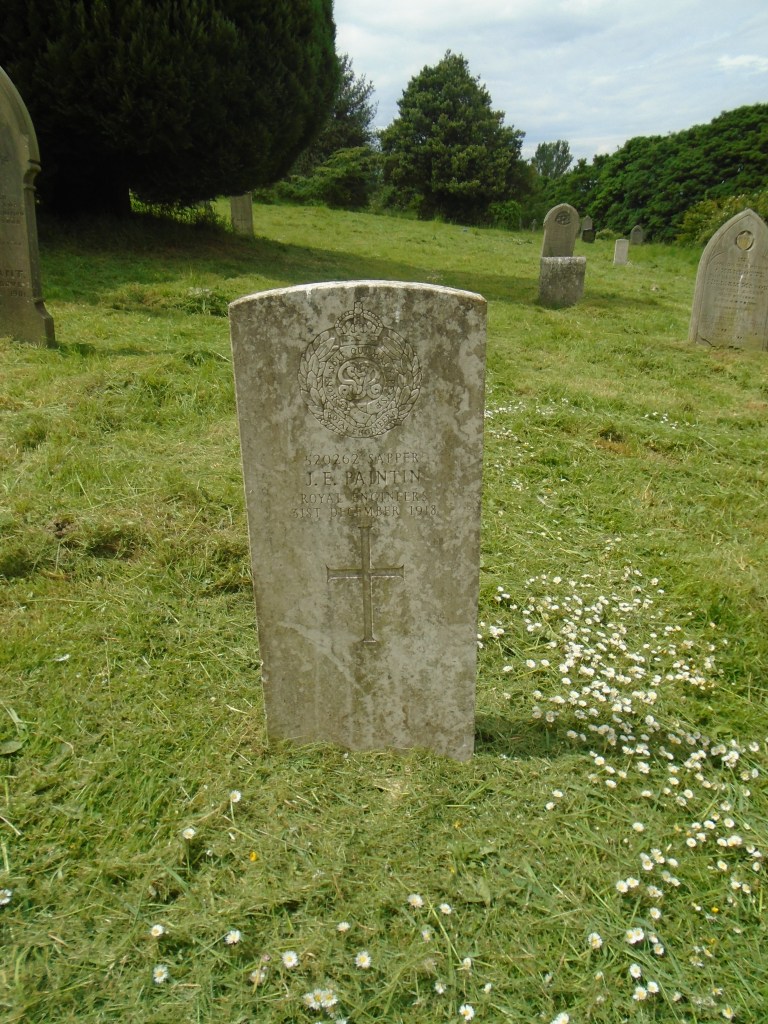
It is likely John was conscripted in 1916 but unfortunately his military records have not survived and we only know the briefest details about his service from the UK Army Register of Soldiers’ Effects 1901-1929. He died on December 31, 1918 at the Military Hospital, Chiseldon. The hospital was established at the training camp in June 1915 and was soon receiving casualties from the battlefields in France and Flanders. The hospital opened with six wards and 24 beds but was soon extended and supplemented with tented accommodation. By 1917 an additional hospital was built on the site, reserved for patients suffering from sexually transmitted diseases and known locally as the ‘Bad Boys’ Camp.’

John Edward Paintin was buried in Radnor Street Cemetery on January 6, 1918 in a public grave with four others. His last address is given as 15 Handel Street. He was 35 years old.

Florence Alice quickly remarried, as did many young war widows with a family to support, but she was sadly misled by her second husband. Austin Oliver Rogers was a Corporal in the South African Native Labour Corps and the couple met while he lodged with Florence awaiting demobilisation. They married on April 7, 1919 and sailed for South Africa that September. But when they arrived at Barberton in the Eastern Transvaal, Florence discovered Austin’s circumstances were not as he had described. He had promised her that he was well off and that he could provide for her and her children, giving her boys a college education. But the reality was quite different. Austin and his widowed mother lived as tenants on a small farm. The marriage broke down because Austin’s mother refused to accept Florence and her children.

Florence left the family home, placing her children in lodgings, but despite her best efforts and working two jobs her three younger children ended up in a children’s home. Florence died in 1925 in the Johannesburg General Hospital as a result of pneumonia contracted in hospital following an appendectomy.

The two sons that John barely knew both joined the military in their adopted home of South Africa. Edward James joined the SAMC Active Citizen Force later enlisting with the South African Permanent Force.
James ‘Raggy’ Powell – one of nature’s princes.

The re-imagined story …

My father loved a bargain. Our house was full of them. But sadly, everything he bought home was broken and he wasn’t what you’d call ‘handy.’ In a town full of men who could make and mend anything, usually ‘on the quiet’ in the Works, my father was the exception.

“They can see you coming,” my mother said. She was the fixer in our house.

My mother loved a bargain too and as fast as the battered and broken objects came into our house, mother got rid of them.

“Is that Raggy on his rounds,” she would call to me at play in the street. “Ask him to stop by.”

Raggy regularly came round the streets with his horse and cart, ringing his bell, buying the flotsam and jetsam of people’s lives.  He would take most items, a bit like my father, and he always gave mother a fair price. He particularly liked a painting in a broken frame she sold him. That was the only thing father was ever really angry about, that painting of the Old Parish Church.

“I was going to mend the frame and hang it in the front room.”

Mother raised her eyebrow. We both knew he would never have got the job done and the painting would have stood in his shed behind the door forever.

“And if you don’t do something with the marble maiden in the garden, I’ll see what Raggy will give me for that as well,” mother threatened. “Blooming thing gives me the creeps.”

Image published courtesy of Local Studies, Swindon Central Library.

The facts …

Little is known of the early life of James Powell who was born in Dublin in about 1850. It was previously thought he had not arrived in Swindon until the 1890s but he is found living at 15 Rolleston Street with his parents and five boarders at the time of the 1871 census. Then aged 21, James was working as a hawker, another word for an itinerate street seller. James never moved far from the town centre. In 1881 he and his first wife Theresa lived over a green grocer’s shop at No 1 Byron Street. Theresa Clancey Powell died in 1889 and she is also buried in Radnor Street Cemetery.

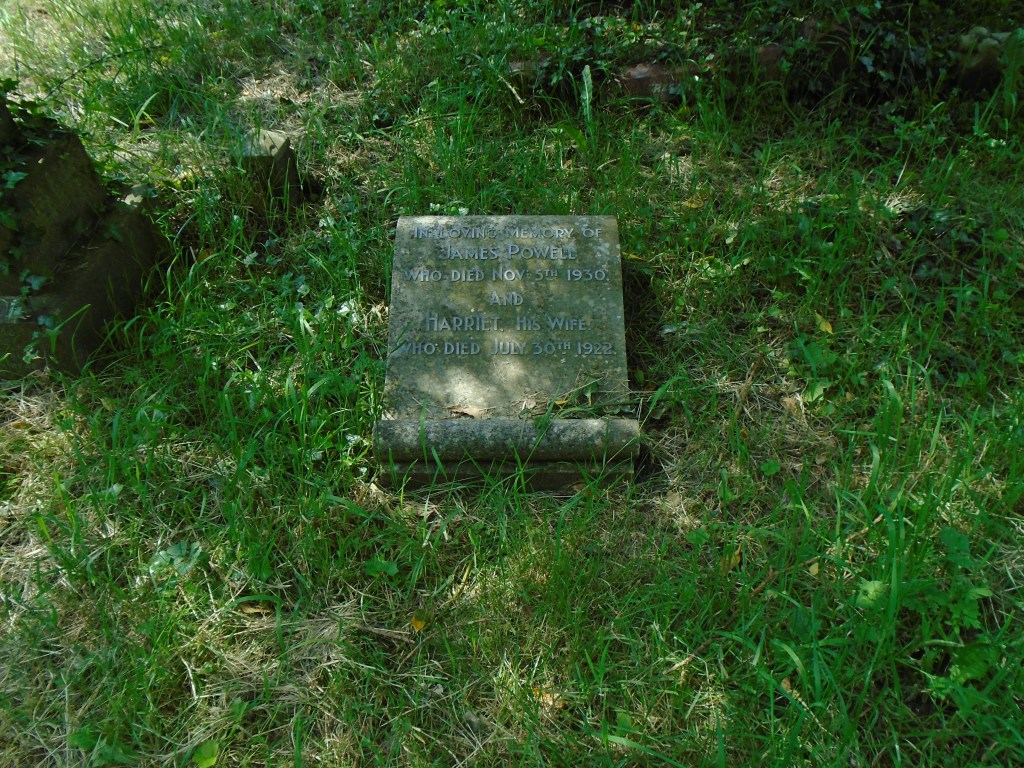
By the 1890s James had set up home in Regent Close where he worked as a Marine Store Dealer. This was the name given to a licensed broker who bought and sold used rags, timber and general waste material; a rag and bone man, an occupation that earned him the nickname Raggy. In 1891 he married his second wife Harriet Maggs, a widow with two children, and it is with her that he is buried in Radnor Street Cemetery.

James had received little education but he constantly sought to improve himself by attending lectures at the Mechanics’ Institution and he turned to that other great champion of the people, Reuben George, who taught him how to read.

Although James was uneducated he appreciated the pieces of artwork he came across on his rounds, repairing broken frames and putting the paintings in good order before donating them to Swindon’s first museum housed in a former Catholic Church called Victoria Hall in Regent Street. Paintings by local artists George Puckey, John Hood and David Gaddon, donated by James still form part of the collection once housed in the Swindon Museum and Art Gallery in Bath Road.

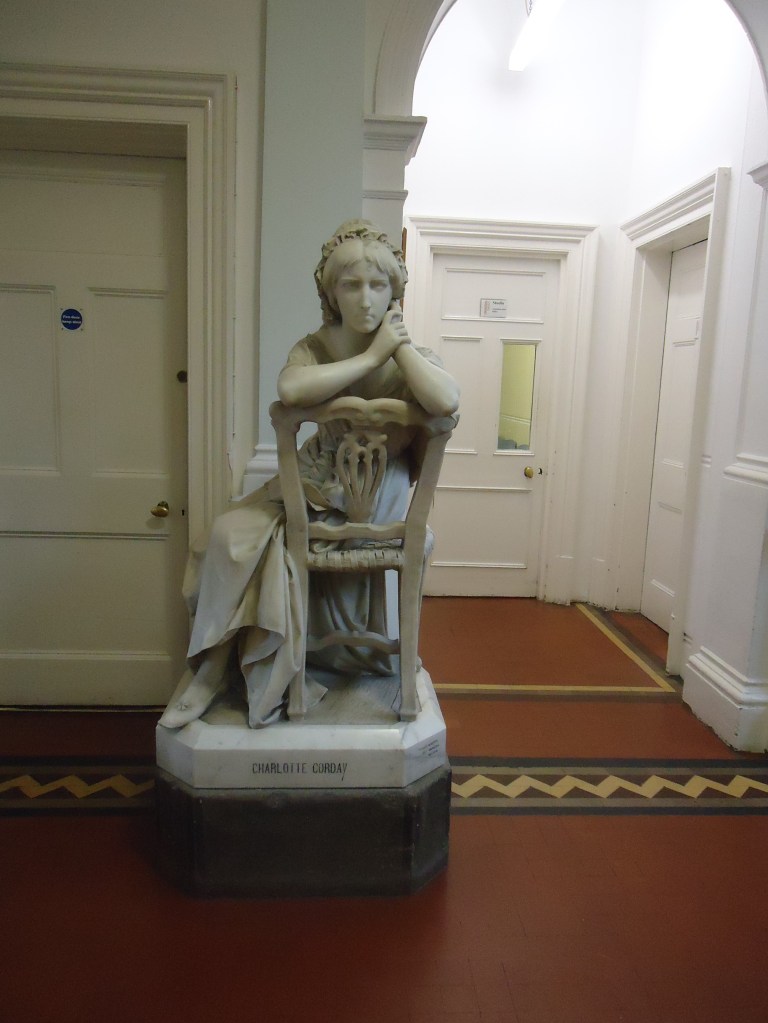
Perhaps one of the most extraordinary objects donated to the people of Swindon by James is the statue that stands in the foyer of the Town Hall. The white Carrara marble statue by Italian sculptor Pasquale Miglioretti depicts Charlotte Corday who in 1793 stabbed and murdered Jean-Paul Marat, a radical journalist during the period of the French Revolution. How James came across this work of art on his Swindon rounds remains unknown but it surely deserves a more prominent position where more people can see it.

Charlotte Corday

James stood for election following the incorporation of the Borough of Swindon in 1901 and served as a councillor for both the North and West Wards until the 1920s. One of his fellow Councillors later described him as ‘one of nature’s princes.’

He was an Alderman and also made a Freeman of the Borough in 1920 along with George Churchward, Chief Mechanical Engineer of the Great Western Railway, the first two men to be so honoured.

James owned various tracts of land, which he later gifted to the people of Swindon. A parcel of land in Savernake Street was given ‘for the benefit of scholars’ along with a plot in Gorse Hill.

James Powell was at the very heart of fund raising in Swindon during the Great War, arranging flag days and working with the Central Cinema and the Empire Theatre, organising family events. In 1917 he arranged numerous tea parties held in Town Gardens for members of The Social Club for the Wives and Mothers of Members of the Armed Forces.

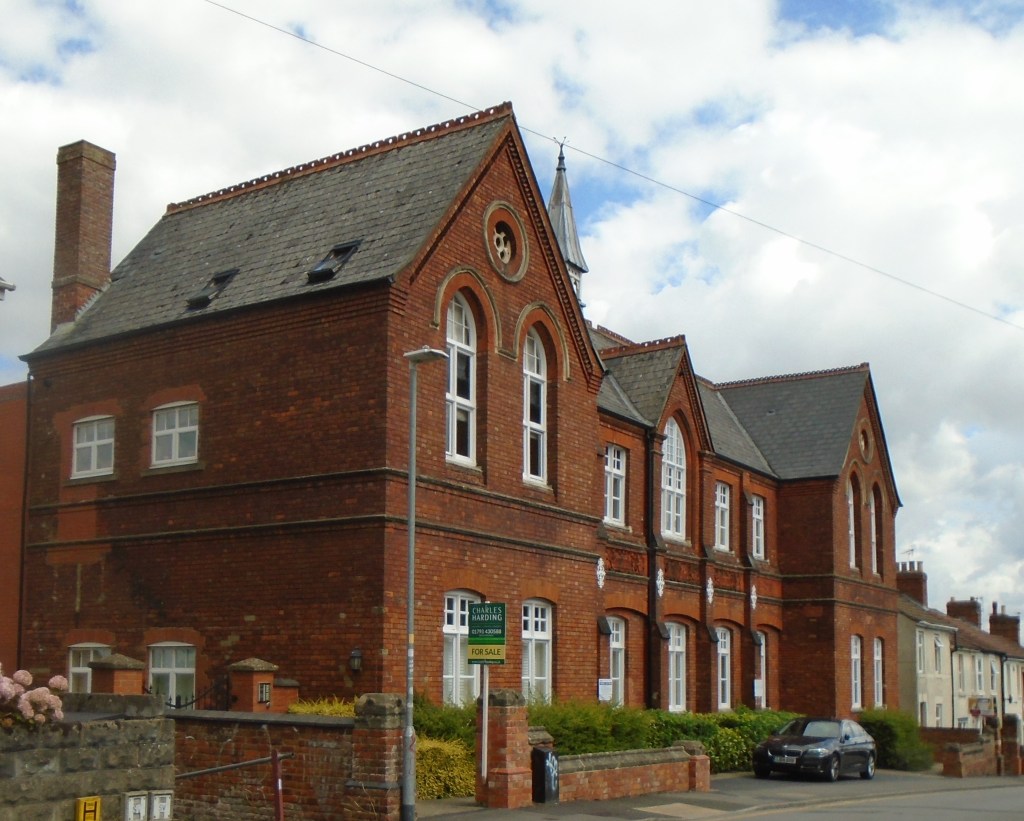
Access to Gilbert’s Hill School

The Swindon Advertiser, Saturday, September 10, 1881.

Gilbert’s Hill School – A letter was read from the mistress of the Gilbert’s Hill School pointing out that the making of the cemetery would cut off one of the principal roads by which her children came to school, and asking that some arrangement should be made for allowing children to pass through the cemetery at certain times during the day. – It was decided to send the letter to the Burial Board.

Swindon School Board. – fortnightly meeting

The Swindon Advertiser, Saturday, July 30, 1881.

The next question considered was one of considerable importance to the children attending the Gilbert’s hill School and the welfare of that school. When the new Cemetery was laid out a member of the Cemetery Committee pointed out to his fellow committee men that unless the bottom fence was set back four or five feet so as to allow of a footpath being formed the district known as Kingshill would be entirely severed from the town, and the new schools could only be reached by a long circuitous route. The answer this member received was that the committee had nothing to do with footpaths, and that the public must look after themselves. The Board finding that their scholars were not allowed to use the old track through the Cemetery ground, wrote to the Burial Board and asked them to allow the children use of the footpath as heretofore, in reply to which the Board wrote stating that they had considered the application and while they would have been glad, if possible, to accommodate the School Board, they could not see their way clear to do so. – The Board considered the question at some length, and it was suggested that the Clifton-street children were sent to the Westcott street schools, but it was pointed out that those schools were already crowded.- The Board saw many difficulties arising from the closing of the road, and a committee, consisting of the Chairman, Rev H.G. Baily and Rev J. Chew, was appointed to further consider the matter, and report thereon.

School Board fortnightly meeting

The Swindon Advertiser, Monday, August 29, 1881.