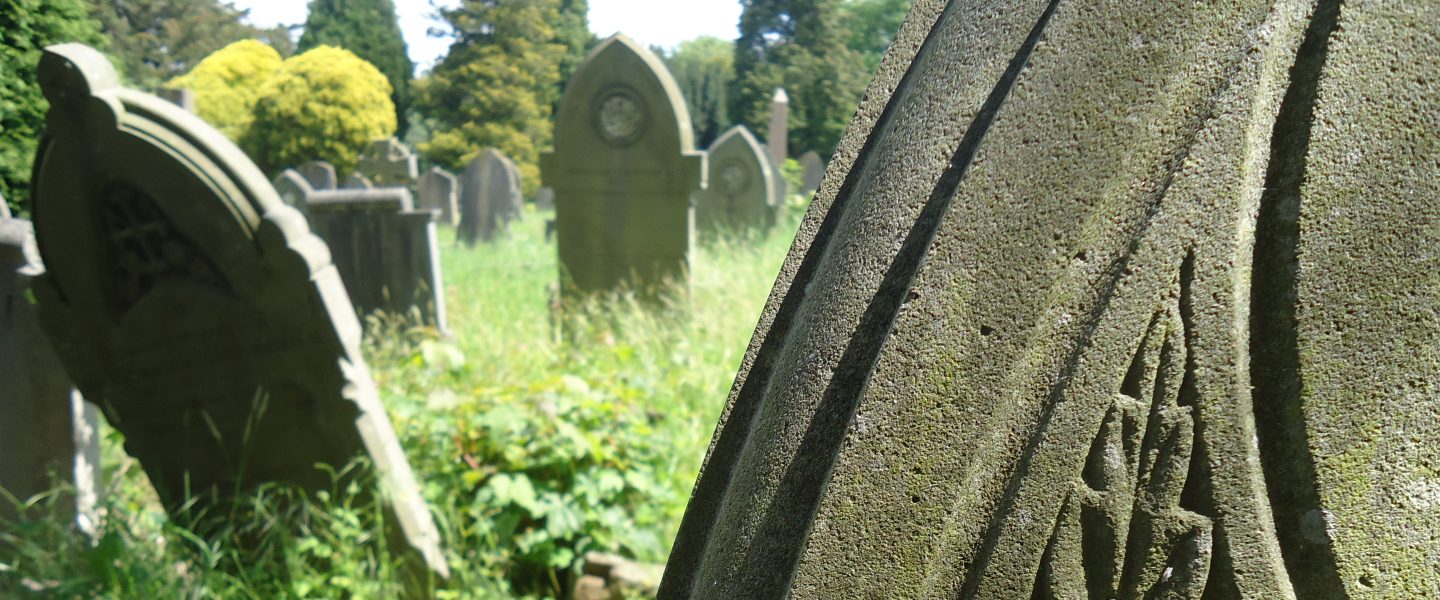
Season of mists – last day

Sadly, we have arrived at the last day of our virtual walk through Radnor Street Cemetery – it’s been fun, hasn’t it and the weather wasn’t too bad? It could have been worse. We conclude by stopping off at the grave of William Chambers.

Despite a shortage of readily available building land and a depression in the railway industry during the 1870s, Swindon enjoyed a building boom throughout much of the late Victorian period.  Many of our street names bear testimony to a number of local builders, George Street, Crombey Street, Colbourne Street, Ponting Street, Turner Street.

William Chambers lived and worked as builder and funeral director in the end house in Ashford Road, the one with the Calvary cross in the brickwork.  The silhouette of the shop sign can still be seen.  As we have already discovered William Chambers was building on the Kingshill estate in the 1890s.

William was born in Stroud in 1839 the son of Samuel, a handloom weaver, and his wife Maria.  In 1859 he married Sarah Tyler and the couple raised their family of eight children in nearby Bisley where William then worked as an agricultural labourer.

In 1871 he was working as a bricklayer and by 1884 the family had moved to Swindon where William established himself as a builder and contractor.  His four sons would eventually join him in the business, William and Alfred both bricklayers and Robert and Samuel who were joiners.
From 1884-1897 William was engaged in building projects in Stafford Street and Hythe, Kent and Maidstone Roads.  In the last decade of the nineteenth century William was also busy building in Ashford Road.

At the time of the 1891 census eldest married sons Alfred and William both had homes in Stafford Street.  Family folklore tells how so many relatives once lived in Stafford Street that it was known locally as Chambers Street.

William’s son Samuel took over the family business after his father’s death.  A 1906 trade directory entry describes the business at 1 Ashford Road as under new management – S. Chambers (late W. Chambers) builder & contractor, dealer in all kinds of building material, funerals completely furnished, repairs promptly attended to at moderate charges.

William died in 1901 and Sarah in 1926.  I think this stylish headstone befits a couple who spent their lives in the funeral business.

I’ve very much enjoyed your company this week. You may like to join us for ‘an in person’ cemetery walk this Sunday September 29. Meet at the chapel 1.45 pm for a 2 pm start.

Extracts taken from To Autumn by John Keats
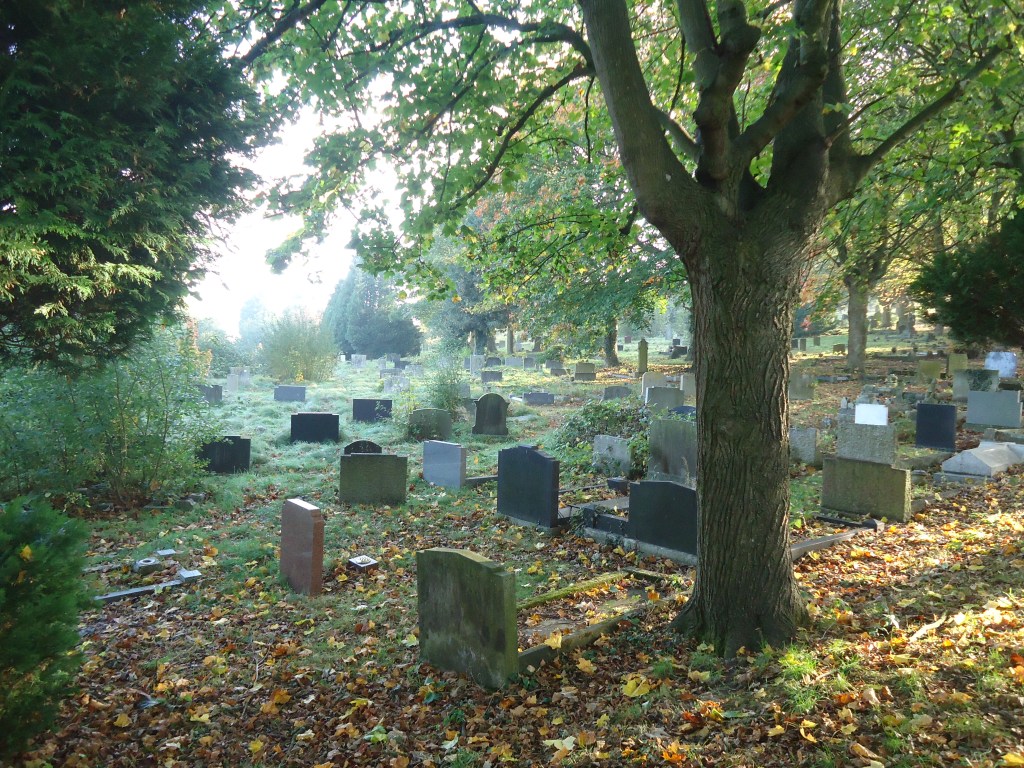
Season of mists Pt IV

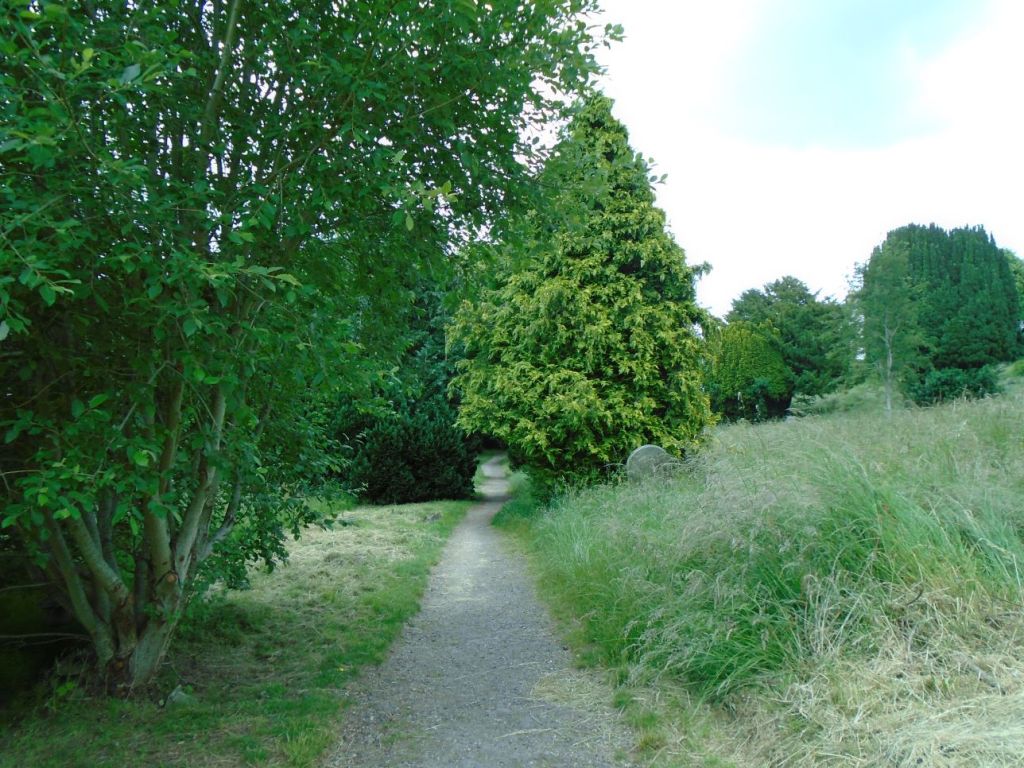
The sun is shining brightly this morning, but will the weather hold? I’ll make an early start, just in case, but you can relax at the kitchen table and take your breakfast at leisure. Join me on a virtual walk around the cemetery.

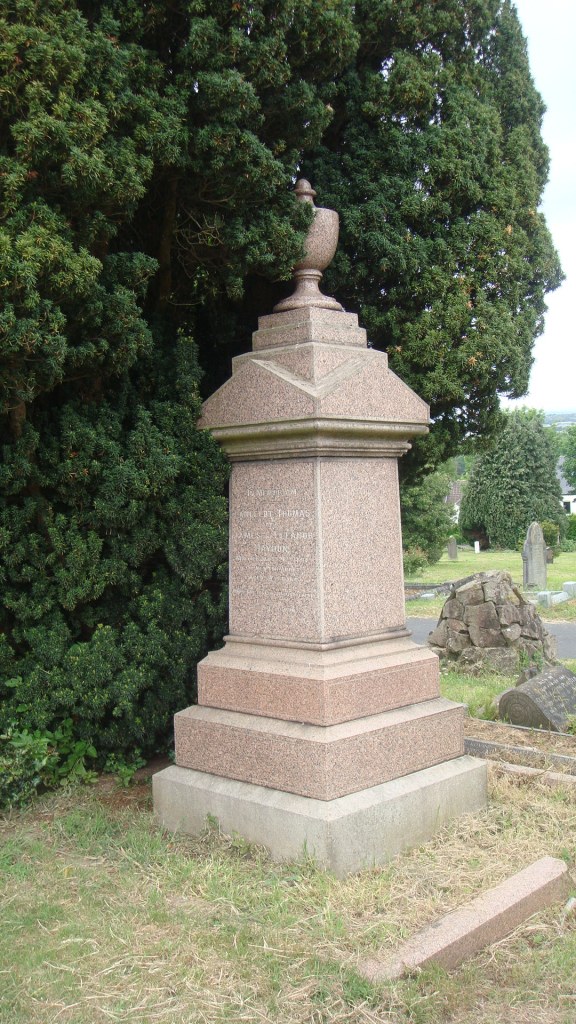
It’s easy to almost miss this magnificent pink granite monument to another railway father and son, encompassed by this large yew tree.  Like the Carlton obelisk opposite that we visited on our summer walk, this memorial was also paid for by employees at the GWR Works. 

James Haydon was born in Bristol in 1826.  The Railway Employment Records available on the Ancestry website, indicate that James entered the railway employment in March 1851 when he was about 25 years old.

By 1861 he was working as an engine fitter in the Swindon Works.  He lived with his wife Ellen, their young son Lancelot and his wife’s nephew Henry Wardle at 9 London Road.  Sharing number 9 were Thomas Watson and his wife Ann along with Ellen’s parents, Lancelot Young (who at 64 was still working as a boilersmith) Eleanor Young and several other Wardle children. Things must have been very cosy at number 9.

By 1871 James Haydon was Deputy Manager at the Works and was living in a house in what was then still known as Sheppard Fields.  This later became Sheppard Street, named after the former owner of this area, John Harding Sheppard.

James died on July 5, 1888.  He had been Assistant Manager in the Loco Works for 22 years. The inscription reads ‘this monument has been erected as a token of affection and esteem by his fellow officers and employes.’

Also remembered on this memorial is James’s son, Lancelot who died in 1894 aged just 38. Lancelot followed his father into the works and his career can be charted through the same railway records. He began work as a pattern maker apprentice in 1871.  In 1877 after he had finished his apprenticeship, he transferred to the Drawing Office. In 1881, by then a mechanical draughtsman, Lancelot left the GWR for an appointment on the Swindon, Marlborough and Andover Railway, but by 1888 he was back at the GWR firstly as Assistant Draughtsman and later as Chief Draughtsman.

At the time of the 1891 census he was living at his old family home, 21 Sheppard Street, with his wife Isabella and their young daughter. The following year Lancelot was on the move again, this time to Newton Abbott as Assistant District Superintendent Loco Carriage Dept.  He died less than two years later.

Tomorrow we meet another man who has left his mark on Swindon but now I will take a brisk walk down the hill as I’m sure I just felt some spots of rain.

Season of mists Pt III

Where are the songs of Spring? Ay, where are they?
Think not of them, thou hast thy music too –
While barred clouds bloom the soft-dying day,
And touch the stubble-plains with rosy hue;
Then in a wailful choir the small gnats mourn
Among the river sallows, borne aloft
Or sinking as the light wind lives or dies;

To Autumn by John Keats

Join me on another virtual cemetery walk from the comfort of your home.

There has been heavy rainfall over night and underfoot is very damp and slippy.  But I have come prepared as today I am taking you to a crowded corner of the cemetery where there are some magnificent monuments with some classic funeral iconography. 

The IHS on this cross is the Greek representation of Jesus Christ’s name.  The garland of flowers around the cross represents victory in death. This is the last resting place of Edward Henry Sammes.  It’s interesting that his family should make a point of adding ‘of Swindon’ to the inscription because Edward was not originally from Swindon but was born in Lambeth in January 1842, the son of William and Sarah Sammes.

The first reference to Edward in Swindon is in the 1871 census when he is 29 years old and living a 1 Belle Vue Road where he describes himself as a grocer.  That same year he married Sarah Anne Spackman from Wootton Bassett. The couple had two children William and Millicent who are both buried here as well.

At the time of the 1881 census Edward described himself as a retired grocer.  By 1889 he was a member of the Old Swindon Local Board, so well placed to know plans for development in the town.  The family were then living at Wycliffe House in Devizes Road.

In 1892 Edward submitted a planning application to build eight houses on the corner of Kent Road and Maidstone Road. The land had orginally come on the market in the 1870s but development was slow to take off. However, by the 1890s the area was pretty much one huge building site. 

A map of Edward’s project shows an empty site next door on the corner of Kent Road and Ashford Road with another empty site opposite.  The building specifications for Edward’s houses describe three bedrooms, a parlor, sitting room, kitchen, conservatory, scullery, WC, coals and pantry. At the other end of the road rival builder William Chambers had a yard opposite his own development at Ashford Terrace.  

Edward died in 1897 aged 55. He left £5,814 18s 6d to his widow Sarah and son William, worth today somewhere in the region of £2.7 million.

I’m not sure if his son William ever worked or whether he spent his whole life living off his inheritance.  In the 1911 census the family are living at 31 Devizes Road where William, then aged 35, and his sister Millicent 27 are both living on private means.

We have been fortunate with the weather today. And doesn’t the cemetery look beautiful in its Autumn finery. But then it always looks beautiful to me. I look forward to keeping your company tomorrow.

Call yourself a Swindonian?

Can you call yourself a Swindonian? Many an argument has ensued about how long you have to live in Swindon before you’re considered a local; 20 years, 30 years, 2 generations – or more?

Walter Rumble was born in Chieveley, Berkshire in 1864 and began his working life as a Carter Boy (a farm servant). In 1890 he married Annie Caines and by the time of the 1891 census the couple were living at 128 Stafford Street. Walter worked as a general labourer, most probably in the GWR Works where he remained for the rest of his working life.

Yesterday I met Walter’s great-grandson at the Swindon Society Open Day held at the Lawn Community Centre, Guildford Avenue. There were displays from the Society’s extensive photographic collection (including the many albums of Beaney photos) talks about Alfred Williams and Radnor Street Cemetery and more local historians on call than you could shake a stick at!

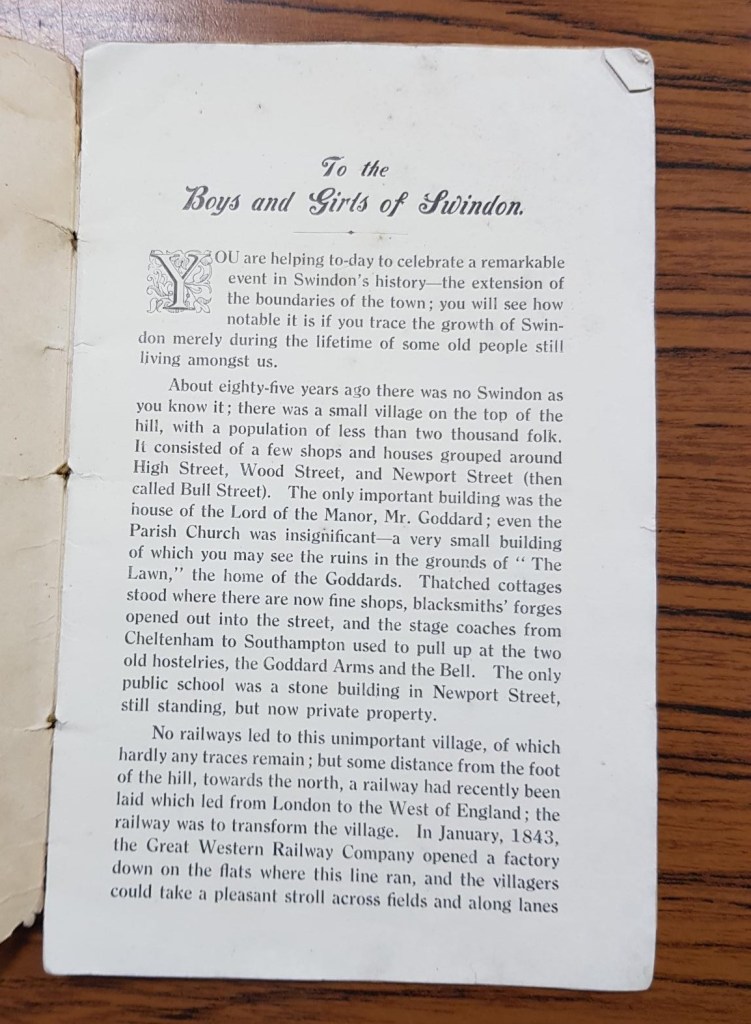
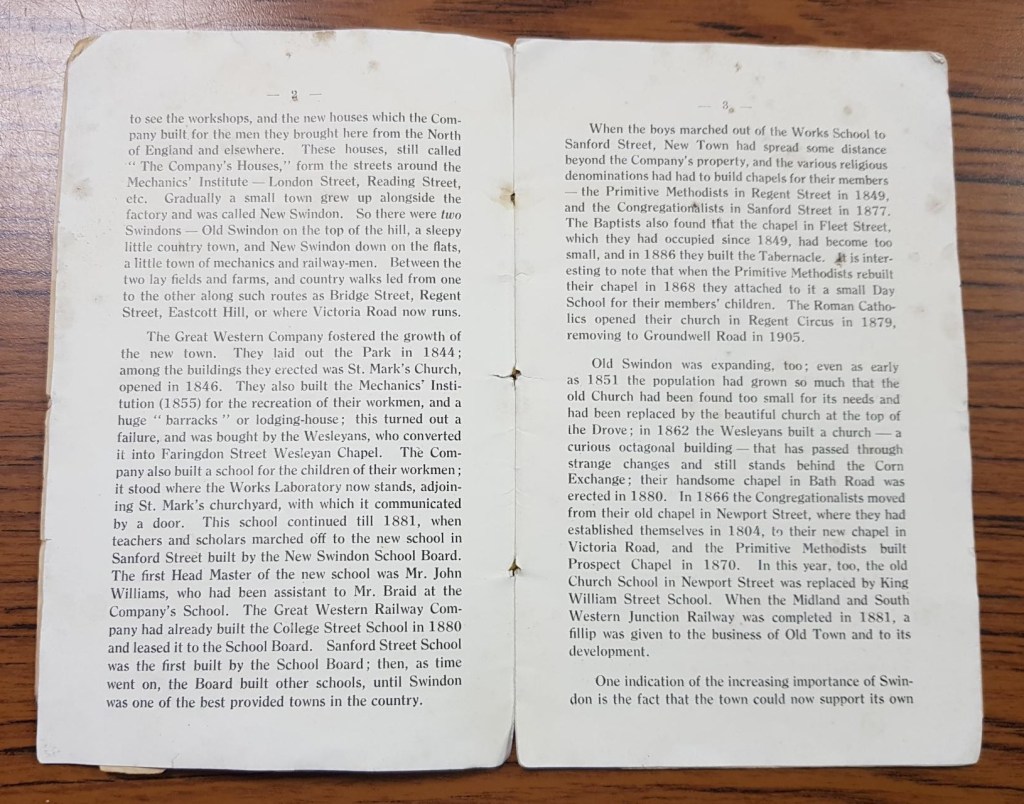
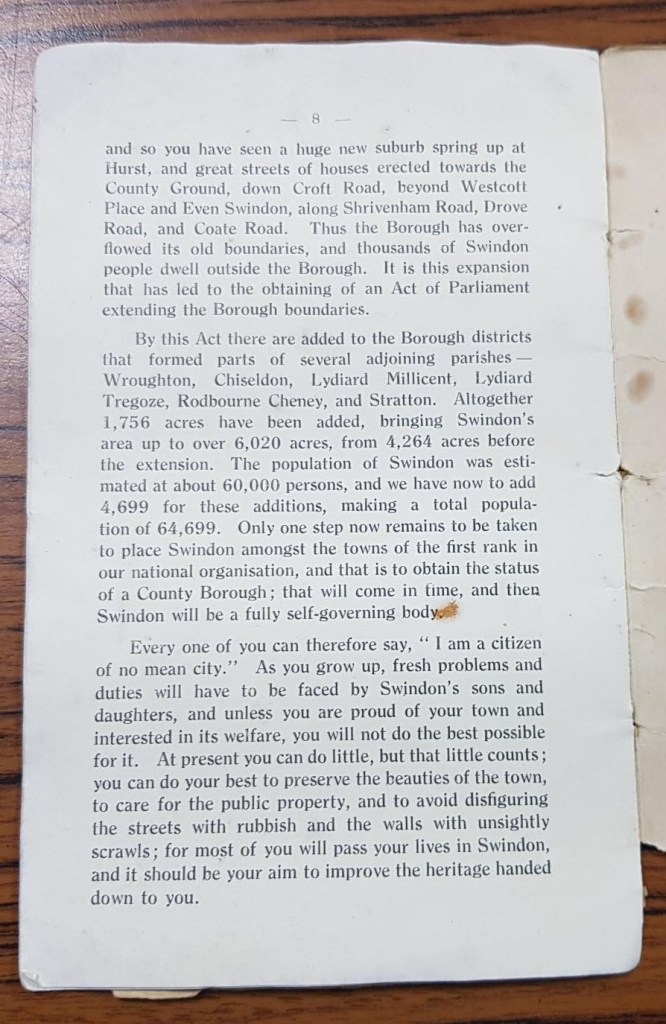
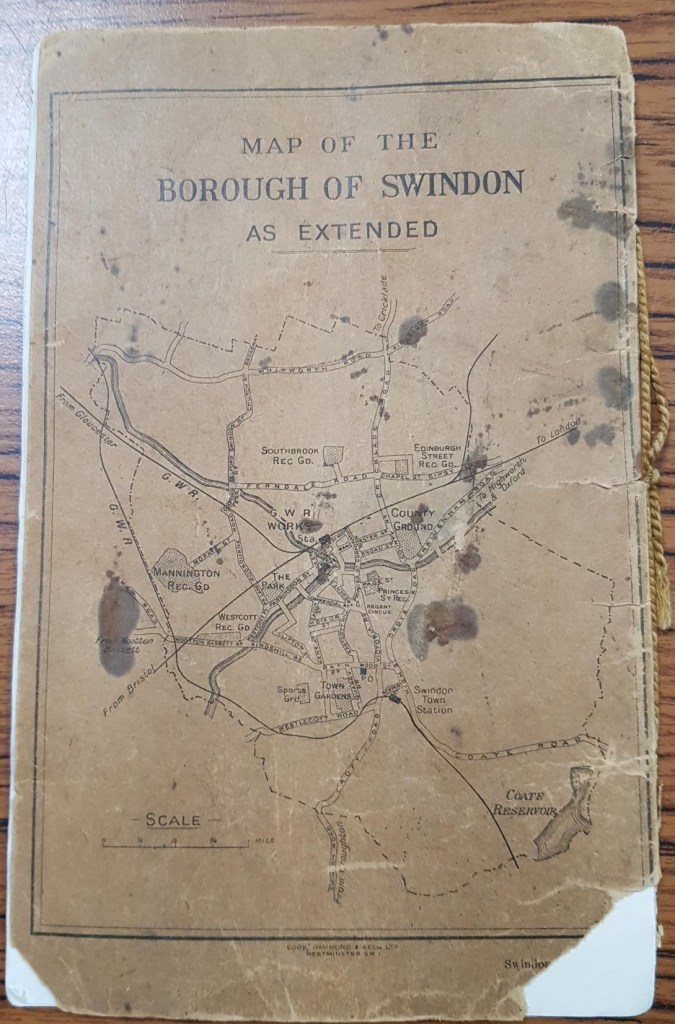
And then Mr Rumble showed me a booklet his father was presented with as a schoolboy in 1928 – Borough of Swindon – Extension of the Borough 1st October 1928.

Walter and Annie lived at various addresses in Stafford Street where Annie died at No. 105 in 1926. She was buried in Radnor Street Cemetery in grave plot D826.

Walter later lived with his son Frank and daughter-in-law Violet at 134 Ferndale Road where he died aged 80 and was buried with his wife in 1944.

I think members of the Rumble family can consider themselves Swindonians – but what about you?

Edward Thomas William Robins – Swindon Veterans of Industry

In December 1930 more than 200 men retired from the Great Western Railway Works, an event of such importance to warrant a detailed article in the first January edition of the North Wilts Herald published in 1931.

The names and addresses of those men forced to retire under the introduction of the 66 years age limit were recorded in appreciation of their long years employed in the Works.

Mr E.T.W. Robins – A large number of different interest have claimed the attention of Mr. Robins. He has had 52 years’ service as a fitter with the GWR Co., and has been a chargeman for 37 years, working as a fitter in the B Erecting Shop.

He is now 66 years old. A Londoner by birth, he has lived in Swindon since he was a child.

Mr Robins was one of the first secretaries of the Swindon Hospital Saturday Fund in 1894 and 1895, and has also been a member of the Hospital Management Committee.

He has done a great deal of church work at St. Mark’s, Swindon.

He is a member of the Foresters (Court Britain’s Pride). He was at one time secretary of the Swindon Chrysanthemum Society.

Swindon Veterans of Industry – North Wilts Herald, Friday, January 2, 1931.

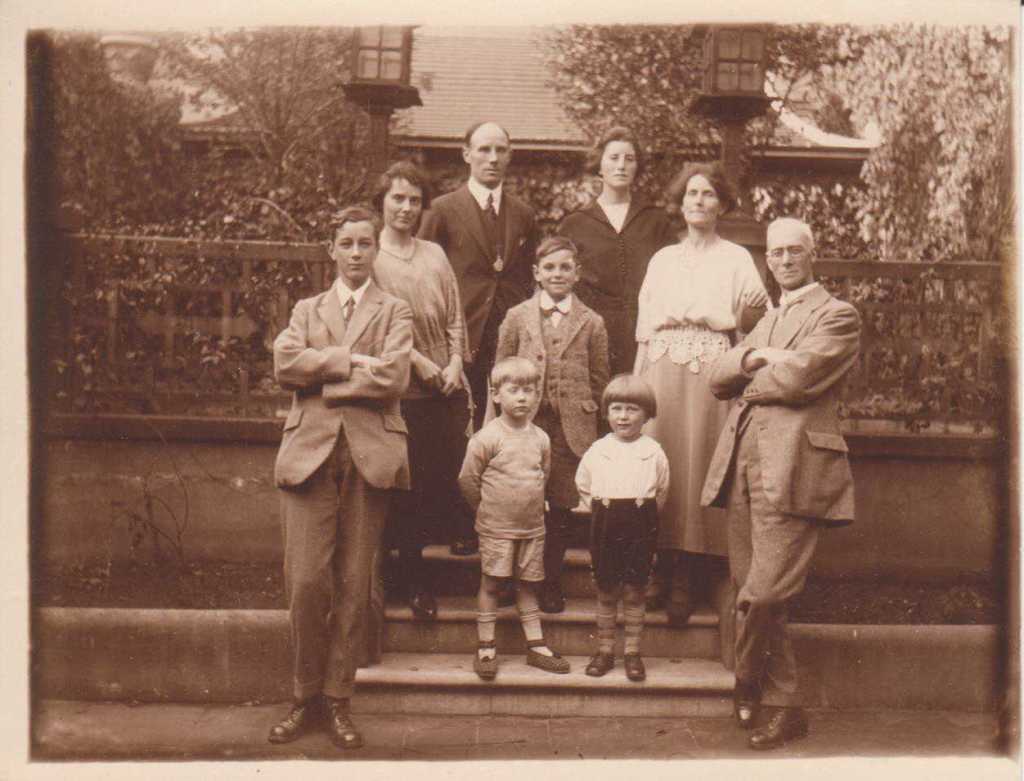
Agnes and Edward Thomas William Robins are pictured to the right of the photograph

Edward Thomas William Robins was born in March 1864 and baptised at St. Stephen’s Paddington June 26, one of Thomas and Henrietta’s 11 children. The family appears on the 1871 census as living at 16 Reading Street.

Edward married his first wife Hannah Williams on February 10, 1889 at the Independent Church, Victoria Street. Following her death he married his second wife Agnes Thomas at St. Mark’s on April 17, 1897. The couple had two sons Thomas Arthur and Cecil.

Edward Thomas Wm Robins died aged 82 years and was buried on March 25, 1947 in grave plot B3102 where Agnes joined him when she died in 1948.

Herbert Pinnegar – killed at work aged 14

Emma Pinnegar’s five sons all followed their father into the railway works. Francis and Ernest became fitters, Nelson a blacksmith and Levi a coppersmith. Her youngest son Herbert had been employed just a few months when he was killed at work one Monday afternoon.

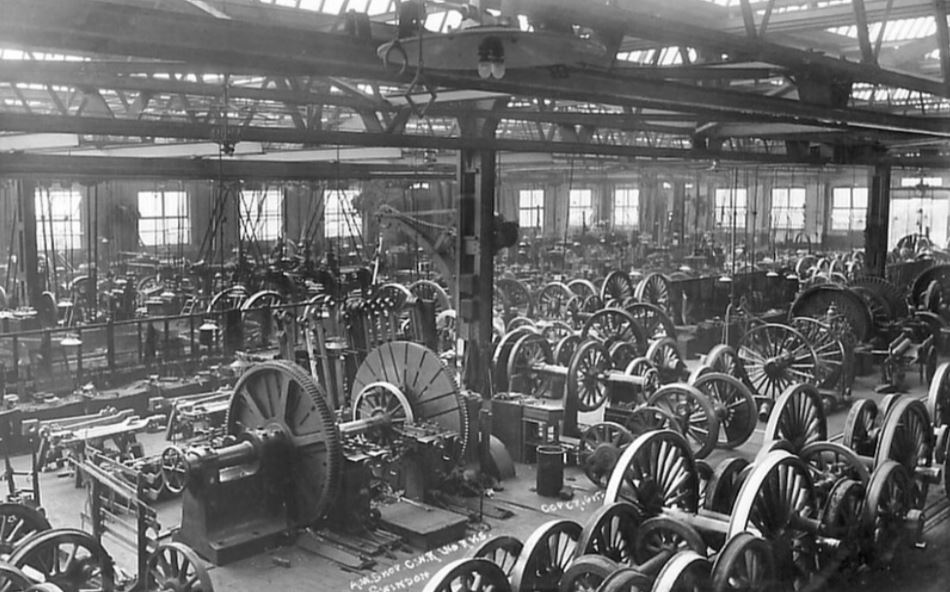
Herbert was working in D Shop “cutting of tyres for the wheels of railway carriages.” He was rather short sighted, according to the newspaper report, and working with heavy machinery. Do you suppose he was wearing glasses? I doubt it. Do you suppose anyone was supervising him? I doubt it.

In Swindon Works – The Legend, Dr. Rosa Matheson devotes a chapter to accidents. She writes: “The causes of accidents could be put down to a number of things – workers’ carelessness, difficult and horrendous conditions, over work, inexperience, lack of supervision, inattention, youth, old age, bad luck.”

It would seem young Herbert ticked a number of these boxes.

The railways brought employment and prosperity to Swindon; the railways brought life and they also brought death. Emma’s husband had been killed ten years previously walking home to Purton along the railway line. It appears he had been doing some shopping in Swindon that evening after work – it was the week before Christmas.

Fatality at Swindon

A terrible fatal accident occurred in the D Shop of the GWR Works on Monday afternoon. A lad named Pinnegar, aged about 14, was engaged upon a machine for the cutting of tyres for the wheels of railway carriages. Pinnegar, who was rather short sighted, was looking down to see if his work was placed in a right position, when going too near the large wheel, he was knocked down between the chisel and another part of the machine. The top of the poor boy’s head was cut completely off. Death, of course, was instantaneous. Deceased’s father, about six years ago, was killed on the railway while returning home from work.

The Bristol Mercury, Wednesday, September 16, 1891.

Herbert was buried in Radnor Street Cemetery in grave plot B1592, a public grave. He is buried with three other unrelated persons.

Fatal Railway Accidents Near Swindon – Between twelve and one o’clock on Saturday morning the stoker on a goods engine passing the Rifle Butts, between Swindon and Purton, saw what he thought to be the body of a man lying by the side of the rails. On search being made the body of a man named Frank Pinniger, a boilersmith in the Great Western Railway Works, but living at Purton, was found. He had been in Swindon shopping on the previous night, and left Rodbourn Lane about eleven o’clock to walk to his home down the line. The night was rough and windy, and it is supposed he was struck by the 11.20 mail train from Swindon. His body was removed to the mortuary at Swindon to await an inquest. Deceased was between 40 and 50 years of age, and leaves a wife and eight children.

The Stroud News and Gloucestershire Advertiser Friday, December 24, 1880.

Frank was buried on December 24, in St. Mark’s graveyard ‘by Coroner’s Order.’

A William Hooper image of A W Shop taken in 1907 and published courtesy of Local Studies, Swindon Central Library.

Clara Ada Rumming and an unmarked grave

Distressing Accident – On Monday an inquest was held at the Castle inn, Swindon, on the body of Clara Ada, aged 15, daughter of John Rumming, 4, Dover-street, New Swindon, striker in the Great Western Railway Works. The evidence went to show that the mother left the deceased at home with other children about eleven o’clock on the 27th of October. About four o’clock the deceased must (as she stated to a neighbour) have prepared to clean up the grate, when she became giddy. On recovering she found her clothes in flames, and having unsuccessfully attempted to extinguish them under a water tap, ran out, when they were put out by some neighbours, who, with oil dressed the burns she had sustained. Dr. Howse attended the deceased, but she died on Sunday last from exhaustion, consequent upon the injuries received. All the lower parts of the body were burnt more or less. The jury returned a verdict of “Accidental death.”

Trowbridge Chronicle, Saturday, November 12, 1881.

Ada was buried on November 9, 1881 only the 56th burial in the new cemetery. She was buried in an unmarked public grave, plot A460 where she lay alone for more than 20 years. In 1902 Elizabeth Painter, a 52 year old widow from Ponting Street was buried with her in this public grave and in 1916 they were joined by Walter William Palmer.

Walter William Palmer joined the Coldstream Guards, later transfering to the Grenadier Guards and served from 1894 for 12 years. As a former soldier Walter was called up as a reservist at the outbreak of the Great War. He enlisted with his old regiment on September 12, 1914 and left for France as part of the Expeditionary Force on November 11.

In 1917 Major General Sir Fabian Ware founded the Imperial War Graves Commission (now known as the Commonwealth War Graves Commission) and a programme of installing a headstone on the graves of the war dead was begun. Walter William Palmer had died as a result of his military service and was awarded an official headstone in recognition of his sacrifice.

Unfortunately, the names of those buried with him in the public grave are not recorded on this headstone, but if you visit the grave of Walter William Palmer please spare a thought for young Clara Ada Rumming (and Elizabeth Painter) who are buried with him.

Hungry for more history?

Sunday September 15 saw the last day of the fab Heritage Open Days 2024 event. Apparently Swindon had more events on offer than historic Bristol, so we were well proud. Thank you to the fantastic Karen Phimister for all her hard work.

At Radnor Street Cemetery we welcomed more than 80 people to a guided cemetery walk. Yes, it was a bit crazy and yes, we were concerned that people couldn’t hear us, but we can’t turn people away and Andy and I both have loud voices!

I managed to attend quite a few other events (not as many as I would have liked) including an excellent talk at Swindon Central Library – Electric Wonderland? Women and the 1930s Modern Home by Sarah Yates.

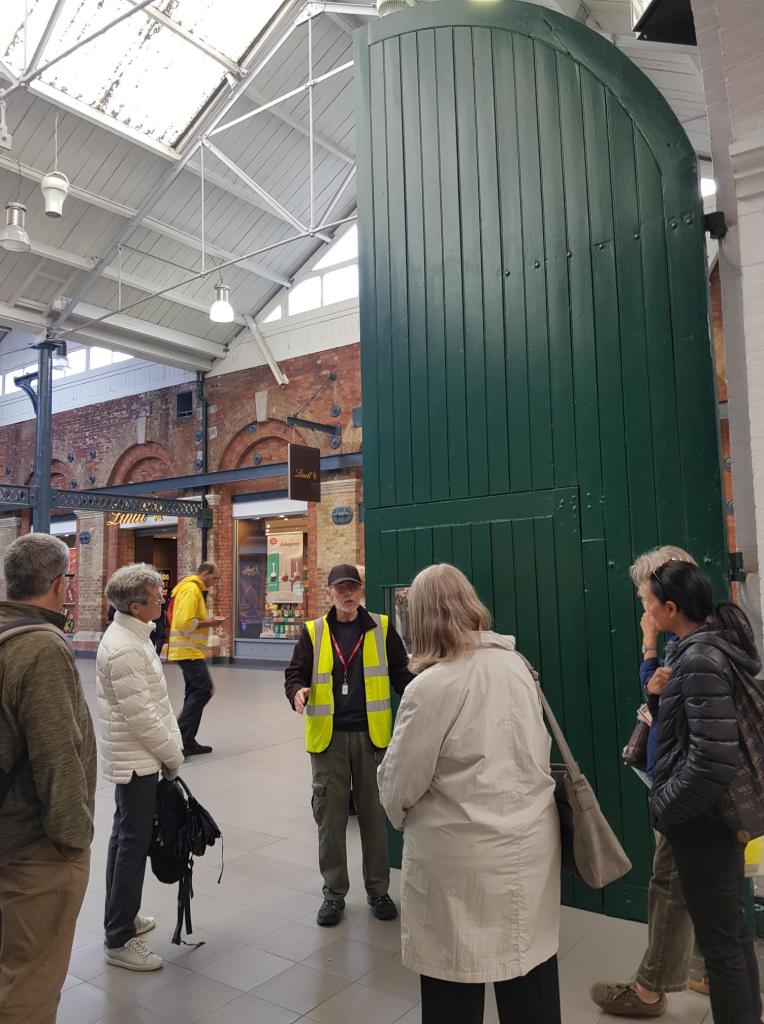
A guided tour of the Railway Village with Karen followed by a GWR Factory Tour with Gordon.

And then a guided tour of the Prospect Place Conservation Area with Michael and Geoff.

Here are a few photographs.

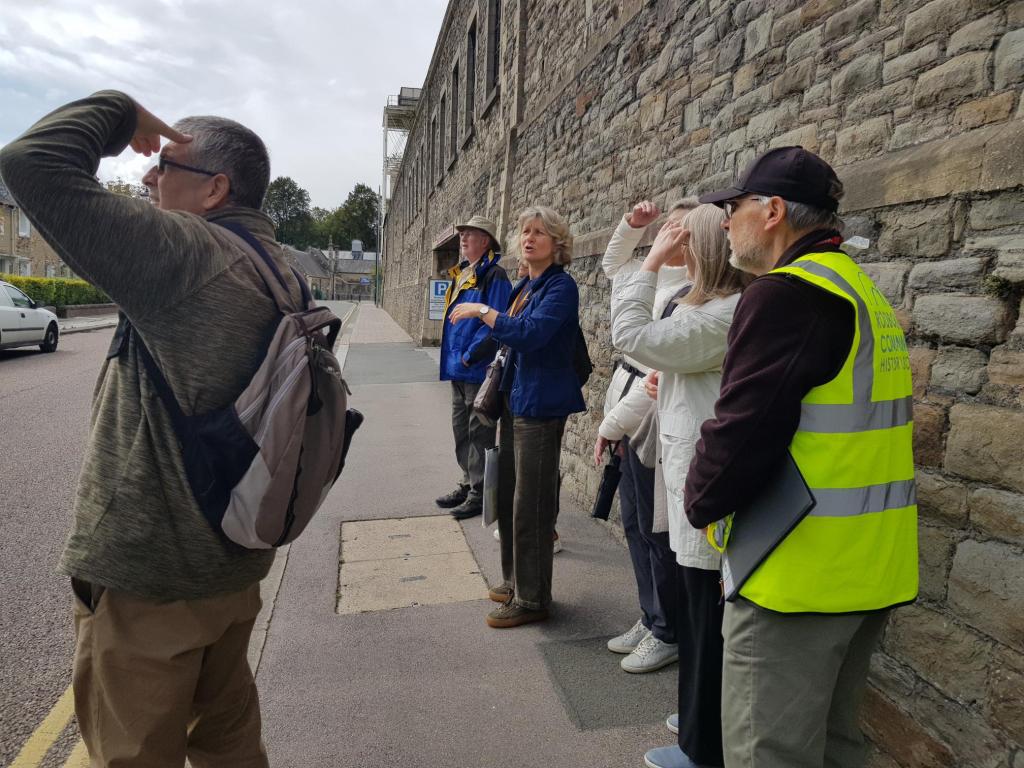
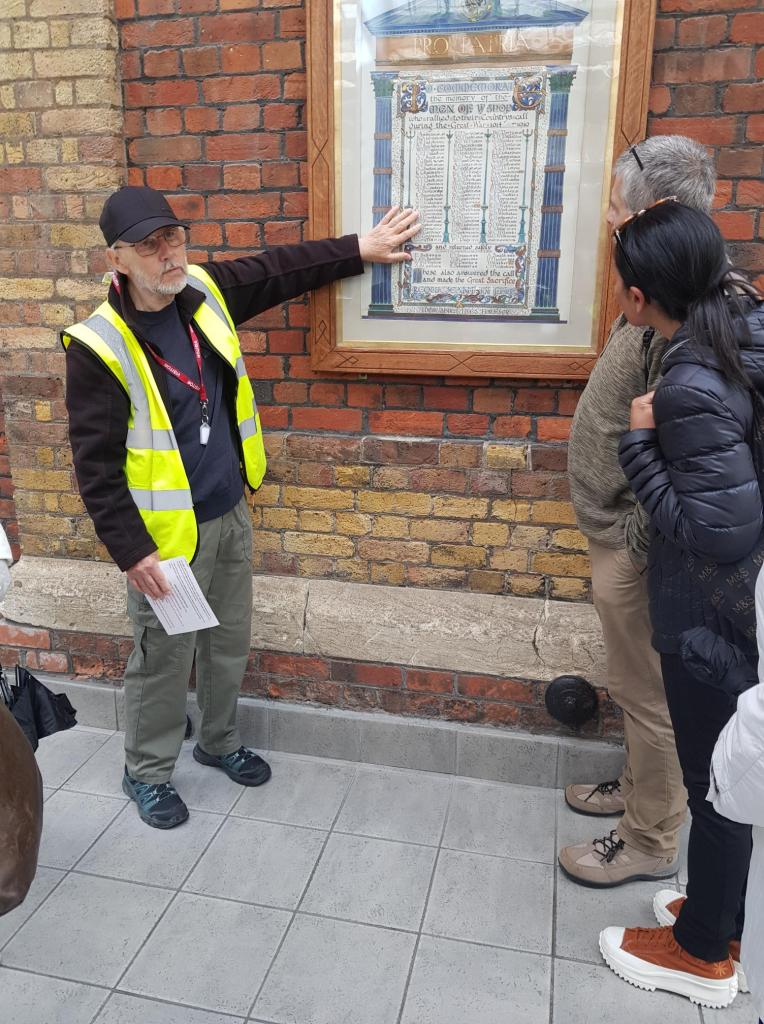
Radnor Street Cemetery guided walk

Guided tour of the Prospect Place Conservation Area

Railway Village with Karen

GWR Factory Tour with Gordon

And if you’re hungry for still more history join the Swindon Society for an Open Day this Saturday September 21, at the Lawn Community Centre on Guildford Avenue, running between 10.00am and 4.00pm.

Ben Lawson Hook – Fitter’s apprentice

Do you have a 15 year old son? Maybe you have a 15 year old grandson. He’s probably still in bed as you read this or perhaps, he’s playing some online computer game with his mates.

On Tuesday May 7, 1895 15 year old Ben Lawson Hook was at work in the R Shop (Loco Department) at the GWR Works. He was 18 months into a 6 and a half year Fitters apprenticeship. But that day he was mucking about, as 15 year olds are wont to do. A witness at the inquest said the boy ‘had no business to be swinging on the tyre’ (the metal wheel or tyre weighed 9cwt 15lbs and was in the yard outside the shop).

Ben Lawson Hook was born on June 8, 1879 one of Frederick and Elizabeth Hook’s large family. Frederick was from Eastbourne and the family lived in Bexhill for sometime before moving to Swindon in the late 1870s. Elizabeth died in 1892 and Frederick in 1894. By the time of the 1901 census 17 year old Sidney was recorded as head of the household, living with his sisters Millie 30, housekeeper, Caroline 28, tailoress, Katie 23, laundress and 9 year old Norah. But this was more than five years after the tragic events of that day in May, 1895.

At the inquest held in the Cricketers Arms on Thursday May 9, 1895 the jury returned a verdict of “Accidental death.” No blame being attached to anyone.- Mr J. Fordyce Stephenson was present to watch the case on behalf of the GWR authorities. The boy was buried the next day.

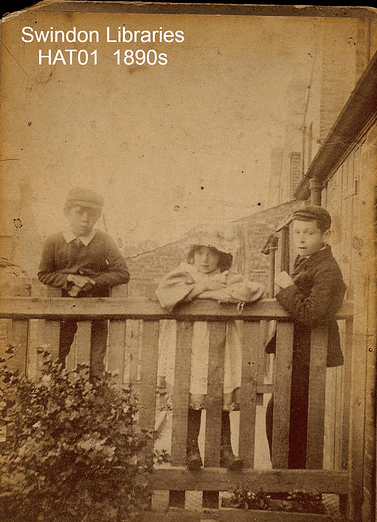
Image published courtesy of S.C. Hatt Local Studies, Swindon Central Library.

Fatal Accident to a Boy in the GWR Works – On Thursday afternoon, Mr W.E.N. Browne, County Coroner, held an inquest at the “Cricketers’” Arms, New Swindon, on the body of Lawson Hook, aged 15 years, of Maxwell street, New Swindon, who was killed on Tuesday last.

Deceased was employed in the R Shop (Loco Department) of the GWR Works. It appears that deceased and two other boys were amusing themselves in various ways, and deceased swung himself on to a large wheel, weighing over nine cwt., which over balanced and fell on him, inflicting such serious injuries that he died three hours later.

Mr Alfred Adams was chosen foreman of the jury, and after viewing the body, which was lying at the GWR Medical Fund Hospital, the following evidence was taken. Mr. Frank Apted produced a plan of the place where the accident occurred, and a sketch showing how it happened. – Robert Hook, brother of the deceased, identified the body.

David Turnbull was the next witness. He said he saw the boy swinging on a large wheel or tyre – one of 34 which were resting against the wall. He saw the wheel overbalancing, and shouted out, “Good gracious, that boy will be killed.” The wheel fell across deceased’s thighs, and he immediately hurried to his assistance. With assistance he removed the tyre, and deceased was at once taken to the hospital. Deceased had no business to be swinging on the tyre; it weighed 9cwt 15lbs, and was in the yard outside the shop.

Wm. H. Green, an apprentice in the GWR Works, said he saw deceased swinging on the wheels or tyres. Just after witness left him the accident happened, and witness heard deceased groaning. Witness went back and tried to lift the tyre off deceased, but could not do so, and Mr Turnbull and three or four other men came up at the time.

Dr Crowther, assistant to Dr Swinhoe, said he was called to the hospital to see deceased. He was suffering from collapse, and died three hours later from shock to the system.

The jury returned a verdict of “Accidental death.” No blame being attached to anyone.- Mr J. Fordyce Stephenson was present to watch the case on behalf of the GWR authorities.

The Swindon Advertiser, Saturday, May 11, 1895.

Lawson Hook was buried in a public grave in Radnor Street Cemetery on May 10, 1895. He shares the grave with his two sisters. Clara Hook who died in November 1897, aged 15 years old. Millie Hook, who held the family together after the truly awful 1890s, and died in March 1909 aged 38.

Frederick and Elizabeth Hook are buried in a public grave, plot B1711 with their daughter Nora who died aged 16 years of age in the Stratton Infirmary, also in March 1909.

Arthur James aged 7 – died from alcohol poisoning

This is the sad and shocking story of Arthur James who died from alcohol poisoning aged just 7 years old. We learn how 5 year old George Ockwell was called to give evidence at the inquest and how his mother, Emily Ockwell, had walked past the stricken boy who was vomitting and unable to stand or speak. And then we hear how his 14 year old sister Anne James arrived on the scene and picked up her brother. An unnamed man came to the girl’s assistance and carried her brother home where he died the following day.

More than 130 years later this story still shocks and saddens the reader.

Death from drinking spirits – An inquest was held on Monday morning, by Mr. Coroner Baker, at the Clifton Hotel, Clifton Street, New Swindon, on the body of Arthur James, aged 7, son of Simeon James, of 17 Kingshill Cottages, Swindon, who died on Friday afternoon from convulsions caused by drinking spirits which he obtained by forcibly entering a pavilion at the Ranger Cricket ground, Old Swindon.

Mr W.E. Morris was chosen foreman of the jury. Mr W.H. Kinneir and Mr E. Smith were present as representing the Ranger Cricket Club, and Mr. E.G. Lay, of Wood Street, Swindon, was also present.

George Ockwell, aged five years, son of Walter Ockwell, was called before the Coroner, and from him was elicited the information that the deceased, with the witness and another juvenile, were in the Ranger cricket field Thursday morning. The deceased entered the window of the pavilion and got out two bottles of spirits. With these the trio went down Lansdowne Road, and witness stated James drunk the contents of the bottles. After doing this he lay down, and the other boys left him, taking one of the empty bottles with them home. One of the bottles was now produced and also broken pieces of the other (found near the deceased by his father). From these it appeared that their contents were spirits.

Emily Ockwell, mother of the first witness, stated that on Thursday about two o’clock she was going to work along Lansdown Road, with her son, who had been with the deceased, when she found James in Vickery’s field. A lad was trying to hold him up, but he was insensible and could not stand or speak. Witness, understanding that deceased’s sister was coming to take him away, left him lying there. Whilst there he vomited a little, and had vomited a great deal before she arrived. He smelt strongly of spirits.

Anne James, deceased’s sister, stated that on Thursday, about 2.30 p.m., she found her brother lying in Vickery’s field, insensible. She picked him up, and he opened his eyes once. She carried him a short distance, and a man carried him the rest of the way. He told her that deceased was in a fit. He vomited after reaching home, and smelt strongly of spirits. He died on Friday afternoon, about half past three o’clock.

Dr. J.B. Fry deposed that on Thursday, about 4.30 p.m., he saw the deceased lad. He was then in a state of insensibility; his skin was cold and pale. The pupils of the eyes were very widely dilated, and insensible to light. Deceased was also in convulsions, which continued until his death. There was a bruise about the size of a pigeon’s egg on his forehead, and also a bruise on the right temple, which might have been caused by his falling. He could detect no smell of spirits either in the breath on on the clothes, and there was then no vomiting. From the history of the case it was probable that the convulsions were the result of an overdose of alcohol.

The Coroner, in summing up, said there was little doubt that the deceased got hold of the bottles of spirits, and through drinking too much of the spirit convulsion resulted, which caused death.

Before the jury gave their verdict, Mr. E.G. Lay stated that he had the management of the pavilion in the Ranger cricket ground. Two bottles, with some brandy and whisky in them, and a whole bottle of rum had been left in the pavilion, which he believed were securely fastened. The three bottles were missed on Thursday evening. An entrance had been effected into the pavilion, and then through an inner window into his compartment.

The jury returned a verdict of death from convulsions due to alcoholic poisoning.

The North Wilts Herald, Friday, September 17, 1886.

Arthur James, seven years old, of 17 Kingshill was buried on September 14, 1886 in a public grave plot A659. The following day a 5 month old baby, Ethel Maud Tilley was buried in the same plot.