Like so many other town centres, Swindon’s has lost its way. Built on a mid-Victorian industrial new town model, its retail heyday is long past and even the big High Street chain stores that arrived a century later have also gone.
In 2006 the Rodbourne Community History Group published Walk Down the Lane, a celebration of the enduring commercial viability of their neighbourhood where business has continued to survive and thrive for more than 140 years.
Take, for example, 178 Rodbourne Road on the corner of Jennings Street, opposite the Dolphin. In 2006, at the time Walk Down the Lane was published, it was a Tool Hire Centre. By 2009 MotoShop had recently closed and the shop was boarded up, available to rent, but this premise in such a prime location wouldn’t remain closed for long. In 2012 it was operating as The Furniture Box and four years later the Second Skin Tattoo parlour. Today it is the Beauty Base – Salon and Nail Academy.
Number 178 Rodbourne Road was built in 1884 for Mr T. Phipps and by 1891 the grocer’s shop and accommodation above was occupied by Charles Baghurst and his wife and their large family of eight children. On the census returns of that year Charles states his occupation as both carpenter and grocer. His wife Annie is also credited with the job of grocer as it was probably she who did the lion’s share of the work in the shop while Charles was employed full time in the Works. By 1901 the family had moved on and John and Elsie Wise had taken over.
Charles and Annie Baghurst moved first to 1 Milton Road and later to 220 Country Road where Annie died in 1908 aged 56 years. Just five months later her 19 year old son Harold Fawlk Baghurst died. Charles later moved to Euclid Street where he died in 1919 aged 65. Annie, Charles and Harold are buried together in Radnor Street cemetery in grave plot D1466.
178 Rodbourne Road – Beauty Base – Salon & Nail Academy
published courtesy of Rodbourne Community History Group
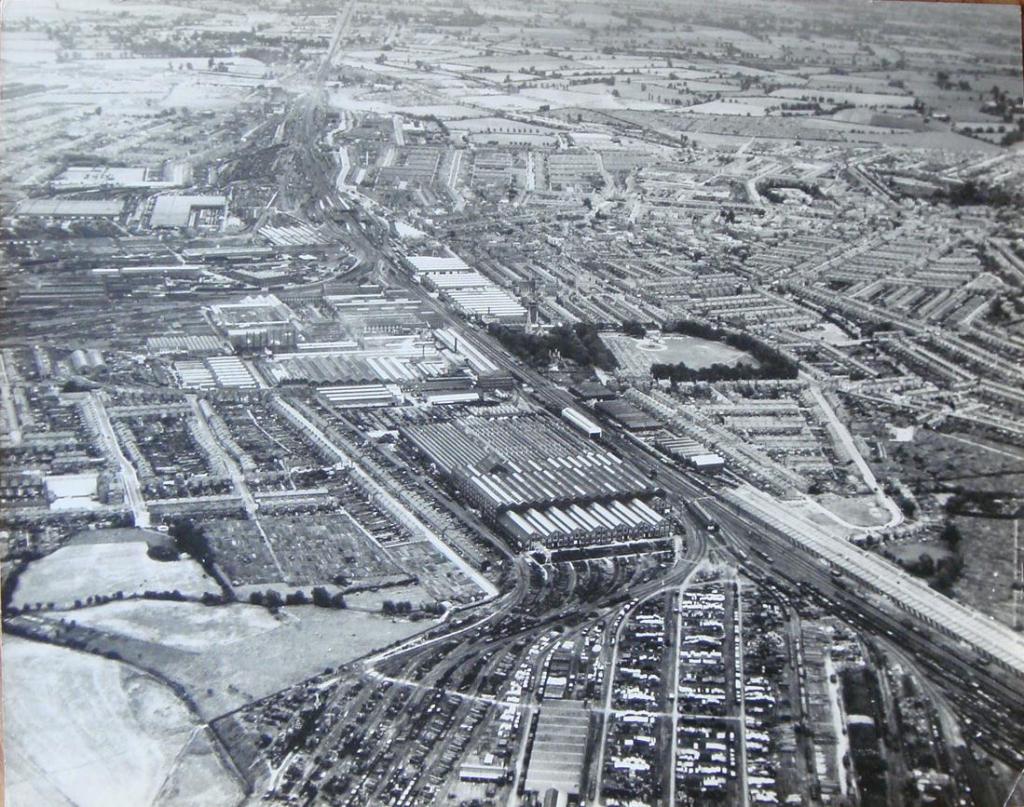
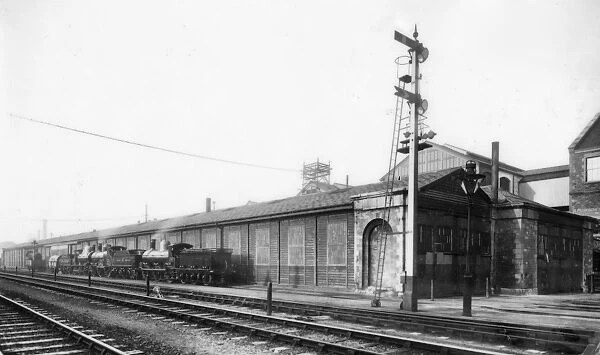
This Saturday you’ll find Rodbourne a busy place, as it is most Saturdays. The big attraction is the McArthur Glen Designer Outlet Village housed in the former railway works building. Rodbourne was a busy place back in the day as well and in this account of a fatal accident on the railway line you get a glimpse of the area as it was nearly 100 years ago.
Mr G. Brown, district organiser for the NUR, tried to establish if a shortage of manpower had contributed to the accident, but David Wirrell did not grasp this lifeline. You can’t help but wonder how the poor man coped in the aftermath of the accident.
Knocked Down By An Engine.
Swindon Man Dies From His Injuries.
Leg Severed
A verdict of accidental death was returned at the inquest on Tuesday attending the death of Stephen Amor, 63 of 101 Linslade Street, Swindon, a GWR employee, who was knocked down by an engine near the Rodbourne Road siding, and who died shortly afterwards in the Medical Fund Hospital.
The jury returned a rider that David Wirrell, who was with deceased at the time of the accident and who was acting as “look-out” man, committed an error of judgment in using his brook instead of devoting all his time to “looking out.”
Mr G. Brown, district organiser for the NUR watched the proceedings on behalf of the local branch of the Union, and Mr A.T. Tyrrell was present with Mr Hannington representing the GWR Co.
Mrs Isabella Amor widow of the deceased, said he had been in good health during the past 39 years.
Henry Harold Greenwood, chief surgeon at the GWR Medical Hospital at Swindon, said when admitted he found deceased was suffering from haemorrhage and compound fracture of the right ankle. Amor was taken to the hospital immediately after the accident.
In the course of his evidence, Mr Greenwood paid a very warm tribute to the St. John Ambulance Association for their valuable assistance in rendering first aid.
A Marvellous Escape
David Wirrell, switch cleaner, living at Devonshire Villas, Rodbourne Cheney, said that on Saturday morning he started work at 7.30 with Amor. He first got his tools and started cleaning switches.
“I was the look-out,” he continued, “and proceeded as far as the third compound, which is nearly opposite Rodbourne Road Signal Cabin. We were proceeding from one point to the other, and I looked up to see if anything was coming from the factory, from where most of the traffic comes in the morning.
“There was nothing close to us in that direction, and so I stepped over into the road and gave a few strokes with the broom looking out at the same time.
“When I looked round in the opposite direction to the factor I saw an engine was close upon us, within about four feet. I tried to give the alarm, but the engine pushed me down and ran over me, without causing injury.
“I got up, ran to my mate Amor and found him badly injured. I spoke to him, but he never answered.”
Witness said that he had been about 20 years in his occupation, and always worked towards Swindon Station.
The Coroner: Are you always the look-out man? – No. Every other day. It is my turn on Saturdays.
Don’t you look out both ways? Yes, I do.
Witness explained that Saturday’s incident occurred in a minute or so, and he was not quick enough in looking behind.
There were always two men on the job and sometimes three, but the third man had been ill for some weeks.
Heard No Whistle
Replying to the Coroner, he said that he heard no whistle.
The Coroner: Was a train passing? I believe one had previously passed along the main side.
As a general rule witness looked one way first, but the engine came from another and it all happened in a minute or two.
Mr Brown (who was representing the NUR): As a look-out man, shouldn’t you confine yourself to looking-out? – Yes.
Mr Brown: Is there a signal at that point? – Yes.
Did you observe the signal? No. I can’t say whether it was on or not.
Witness added that the points in question were worked by a lever, and the signals were not of much use to them.
Mr Brown: Did the fact that there were only two men cause you to do additional work?
Witness: No, that made not a bit of difference to looking out.
He heard no warning from the driver of the train.
Mr Brown: Had there been three men would the look out man have to do more work? No.
John Thomas Thorpe of 5, Deacon Street said that at about 8.15 he was standing on the engine line at the siding opposite the Rodbourne Road cabin when he saw an engine approaching the compound or double-switch. He then saw two men either knocked down or fall under the engine.
He ran to where Amor lay and found his leg severed. Hen then went to the AE Shop for the ambulance men.
In answer to the coroner, witness said the men had their backs to the engine.
A Slow Speed
Edward Price, 15 Beatrice Street, locomotive driver, said he was driving a crane engine from the subway to the loco yard in the factory sidings. About 8.15 he was informed that he had run over two men in the compound near Rodbourne Road signal box. There was a signal post with a loop signal, and that was off for him to proceed. He was going at two miles an hour, and at that pace he could have stopped instantly if he had seen anyone on the line.
The Coroner: When shunting, who gives you orders to proceed?
Witness said that he was given orders at the subway. He was also guided by the signal. He touched his whistle just before or as he passed the signals. He was in charge of the engine. When shunting he was given orders by the shunter, but in the present case he was not shunting.
There was a fireman and a shunter in the engine besides himself, but he went across the footplate and looked at the signal.
The Coroner: You did not see anybody on the line?
Witness: No, I saw no sign. He could see nothing from his side, he added.
The Coroner: When people are cleaning points you know that they are guarded – I know they are supposed to be guarded.
Mr. Brown. You were working round a curve? Yes.
Was there anything on the next set of rails? Yes, a number of tenders.
Heard People Shouting.
Herbert Arthur Nash, 173 Rodbourne Road, fireman to Driver Price, said that when they were approaching Rodbourne Road signal box they were keeping a sharp look-out for signals in case they were put at danger against them. Traffic was clear as far as he could see. The driver blew his whistle and went on to the compound. He saw no-one, and was not aware anyone had been knocked down until he heard someone shouting to them to stop. They stopped immediately.
The Coroner: Were you going slowly? – About 2 miles an hour – we were going at a slow walking pace.
Albert William Dew, 6 Spring Gardens, a shunter, said he was in charge of shunting on an engine and crane. He was riding on the left-hand footplate, and was looking out, but saw no-one in the road, as they came round the left-hand curve.
Summing up, the Coroner said that the man who had been killed was working with another man whom they had had as a witness. The man who was not run over was supposed to have been on the look-out for his mate, who was cleaning points. According to his own evidence he was not carrying a flag or horn as he should have done. The cleaners were supposed to be guarded by “look-outs” and the jury would have to determine whether the man was guilty of criminal negligence. His duty was to obey the rules.
Mr R.G. Hannington, manager of the locomotive department, expressed, on behalf of the GWR Company, his very deep sympathy with Mrs. Amor and relatives and his very great regret at the occurrence.
North Wilts Herald Friday April 30, 1926
Rodbourne and the Swindon railway works
Stephen Amor, aged 63 years, of 101 Linslade Street and killed on the GWR Line, was buried on April 29, 1926 in grave plot D819. Isabella Amor died 10 years later. She was buried with her husband on April 25, 1936.
Looks like we might all see some rain today. But spring is just around the corner and our guided cemetery walks will begin again at the end of this month.
The Spring walks are scheduled for:
March 31, April 28 and May 26.
Summer walks are yet to be arranged but our Autumn walks are already in the diary.
September 1 and 29 and October 27.
Our Remembrance Day Service is Sunday November 10.
Well, what can you expect from a typical guided cemetery walk?
A gentle meander through 11½ acres of our picturesque Victorian cemetery. Our CWGC volunteers will tell you about their work to maintain the war graves and the incredible stories they have discovered. Learn about the people who made Swindon; from the boilermakers to the businessmen. Hear about the women who contributed to every aspect of life in Swindon from the home, the factory floor and the magistrates bench! This year we will have even more stories to tell.
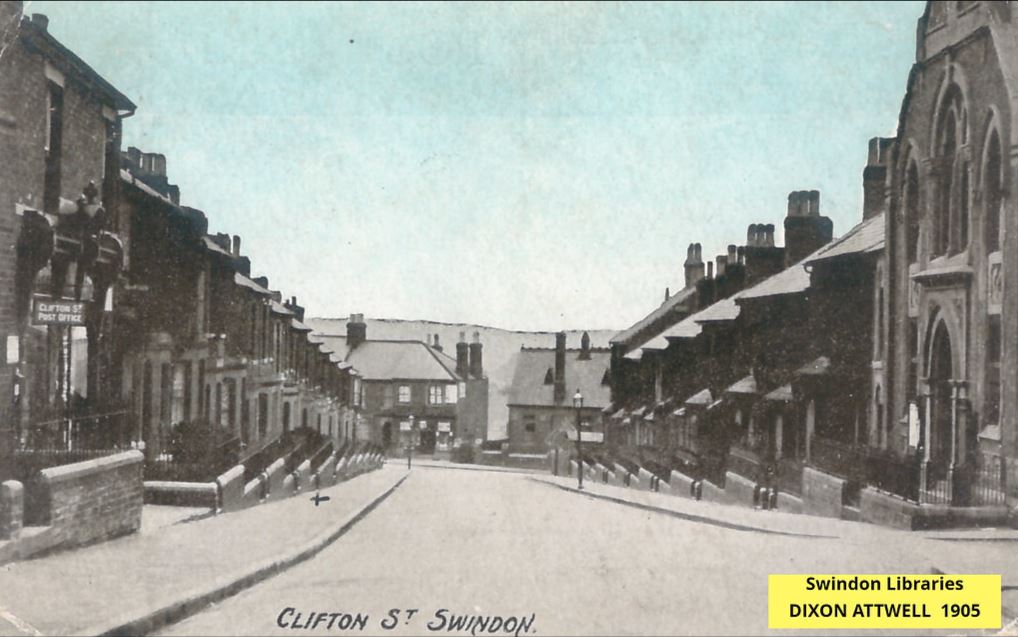
Building began in Clifton Street in about 1879. There were a lot of builders involved, Job Day, James Hinton, Richard Leighfield, which is why the houses all look a little different. There is the Clifton Hotel and 180 houses in Clifton Street; some detached, semi detached, some terraced. Some of them have extensions and loft conversions or porches and some have a name incised in the stonework above the front door, a remnant of a bygone era. There’s a blue house and another with a pink front door and a pink gate and artificial flowers and a heart in the window. The Clifton Stores, still there, stood opposite the the Primitive Methodist Chapel, long gone. There were probably other shops along this long street that stretches from the top of Kingshill to Radnor Street. And tucked away behind is the cemetery.
In the 19th century Clifton Street was home to a lot of railwaymen and their families, now all gone as well.
You might like to read about some of the former residents of Clifton Street who now reside in the cemetery.
Back in the day people worked until they couldn’t work any longer. Engine Maker and Fitter George House continued to work into his 80s and Robert Laxon was working as a foreman in the Copper Smith Shop into his late 70s. By 1930 the GWR introduced the compulsory retirement age of 66 years but William John Culley Plaister was forced to retire in 1932 aged 61 years. It would be good to think he had a nice little nest egg that made this possible but unfortunately it was ill health that forced him to retire early.
Sadly, William didn’t have long to enjoy his retirement or to indulge his hobbies of cricket and football.
Running Shed Foreman
Mr W.J.C. Plaister Retires After 18 Years’ Service
Mr W.J.C. Plaister, of 24 Exmouth street, Swindon, who for the past 18 years has been mechanical foreman of the GWR Running Sheds, was the recipient of a barometer, presented to him by his colleagues, on his retirement.
The presentation was made in the Running Shed mess room by Mr A. Tyrell, Mr W.N. Pellows, superintendent of the division, was to have made the presentation, but was unable to attend.
Mr. Plaister has been forced by ill health to retire earlier than he should have done. He was very popular with his staff, and during his 18 years’ service has taken a keen interest in the social side.
He was president of the cricket and football clubs, and had taken an active interest in these two branches of the Running Shed’s sports activities.
As trustee of the N.G. Sick and Benevolent Fund, he has given valuable assistance in many ways.
North Wilts Herald, Friday, September 2, 1932.
William John Culley Plaister died on May 11, 1940 aged 69 years. He was buried in grave plot E7254. His brother John Cyprus Plaister and his wife Florence Louisa are buried in the neighbouring plot E7253.
In a blogpost last year I mentioned that there were very few old photographs of the cemetery. There were only three pre-dating the 1920s and two of these were taken by William Hooper. And then when I looked more closely into the work of this prolific Swindon photographer I found another taken at the funeral of his mother-in-law Eleanor Stroud.
Eleanor (sometimes known as Ellen) was born in Aldbourne in 1834, the daughter of agricultural labourer Thomas Brind and his wife Mary. She married James Stroud, also from Aldbourne, a railway guard, in 1864.
In 1871 Eleanor and James lived in Leominster with their two little daughters, Mary Jane 3 and Alice Kate 1. By 1881 the family had moved to 22 Merton Street, Swindon. On census night James and his daughters were at home. Eleanor, meanwhile, was employed as a monthly nurse at number 10 Merton Street where Annie Hacker had given birth three days previously.
In 1891 Mary Jane married William Hooper, a stationery engine driver with a passion for photography.
Two years later James Stroud was involved in a fatal shunting accident at Tetbury Road station when he was crushed between a waggon and the goods shed. He was brought to the GWR Medical Fund Hospital in Swindon but sadly died as a result of his injuries the following day on January 14, 1893.
After the death of her husband Eleanor lived with her elder daughter Mary Jane and her husband William Hooper. By 1911 William was working full time as a Portrait and Landscape Photographer. Eleanor is pictured here with William and Mary in their roof garden at Cromwell Street.
Eleanor Stroud died at her daughter’s home 6 Cromwell Street. She was buried on April 29, 1915 in grave plot A823 alongside her husband. William took this photograph at her funeral.
Three brothers died in the First World War, another returned with his health compromised. But what was it like for the two brothers who never went to war but stayed at home?
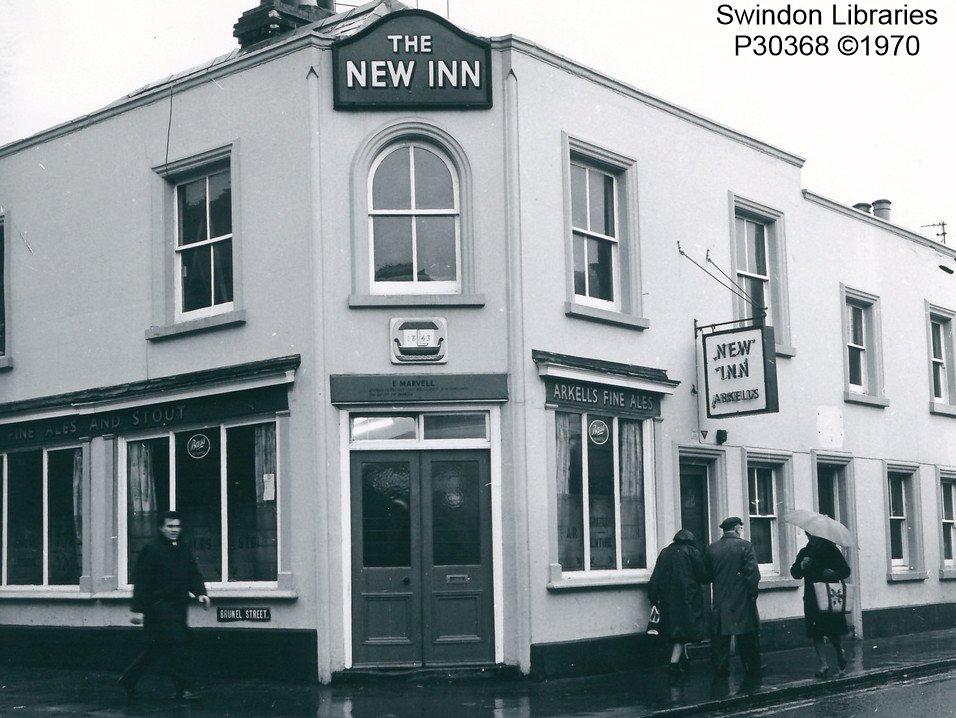
At the beginning of the 20th century the busy Preater family were running two businesses. Charles Preater ran first a haulage business before becoming licensee at the New Inn in Cromwell Street with his wife Mary Jane.
Harry Charles Preater was born on April 25, 1880 and baptised at St. Mark’s Church on May 27. He was the eldest of Charles and Mary Jane Preater’s nine children. In old photographs of Swindon you will see H.C. Preater’s garage at the Whale Bridge close to where the Leonardo Hotel now stands. Harry became a prominent business man and a Freemason. During the Second World War Harry was Secretary of the Swindon Penny a Week Fund, which raised £16,500 towards supporting prisoners of war. Harry died in 1968 and is buried in grave plot D65A.
Second son Jesse John Preater was born on April 2, 1882 and baptised at St Paul’s Church on May 14. By 1901 Jesse, then aged 18, was working alongside his father in the haulage firm. Ten years later his younger brothers Charles and John had joined him in that side of the family business.
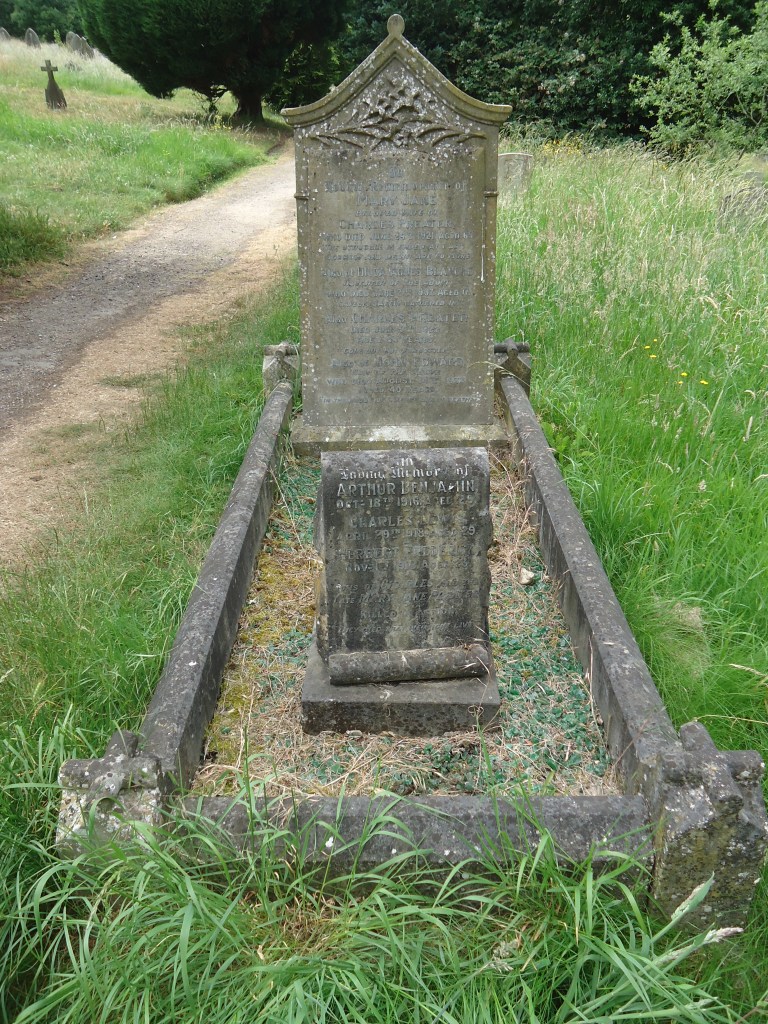
Arthur Benjamin Preater, Charles Lewis Preater and Herbert Frederick Preater were all killed in action, Arthur in 1916 and Charles and Herbert in 1918. John Edward Preater served and returned home.
Why did neither Harry nor Jesse go to war? I’m sure their parents were relieved to save these two sons, but what was life like for them during and in the aftermath of the war. They shared their fate with many other men, but that couldn’t have made it any easier. Today we have a name for this condition ‘survivor guilt.’
Jesse married May Wallis at St Mark’s Church on October 4, 1915. Their son Charles Wallis Jesse was born in 1922. They are buried together in grave plot B2693 close to the grave where Jesse’s parents, his sister Hilda and John Edward, the brother who survived the war, are buried. A separate memorial commemorates the three brothers who were killed in action.
And this time I need some help identifying a couple of photographs.
We’ve already met David Uzzell – the inspiration behind the work of war poet Edward Thomas, so now let’s meet his brother John.
John married Rachel Bennett on Christmas Day 1864 at the parish church in Cirencester. He worked as a baker and in 1871 lived with Rachel and their two children Emily 6 and Frank 4 in Gloucester Street, Cirencester. His parents lived in nearby Factory Yard alongside his brother David and his wife Fanny and their son William.
John and Rachel went on to have a large family of at least nine children. Four sons – Frank, Harris, James John and Raymond and five daughters – Emily Rosina, Edith Ellen, Mabel Harris, Mary Maria and Minnie Bennett. In 1881 they lived in Ashton Keynes; in 1891 they were at 27 Stepstairs Lane, Cirencester and in 1901 they were in South Cerney.
At the time of her death in 1907 Rachel was living at 17 Ipswich Street, here in Swindon. A couple of her married daughters had moved to Swindon, which maybe how she came to be here. She was buried in grave plot B2754 on November 12, 1907.
John survived her by 15 years. He died aged 79 at the Purton Infirmary and was buried with Rachel on September 12, 1922.
And now those photos.
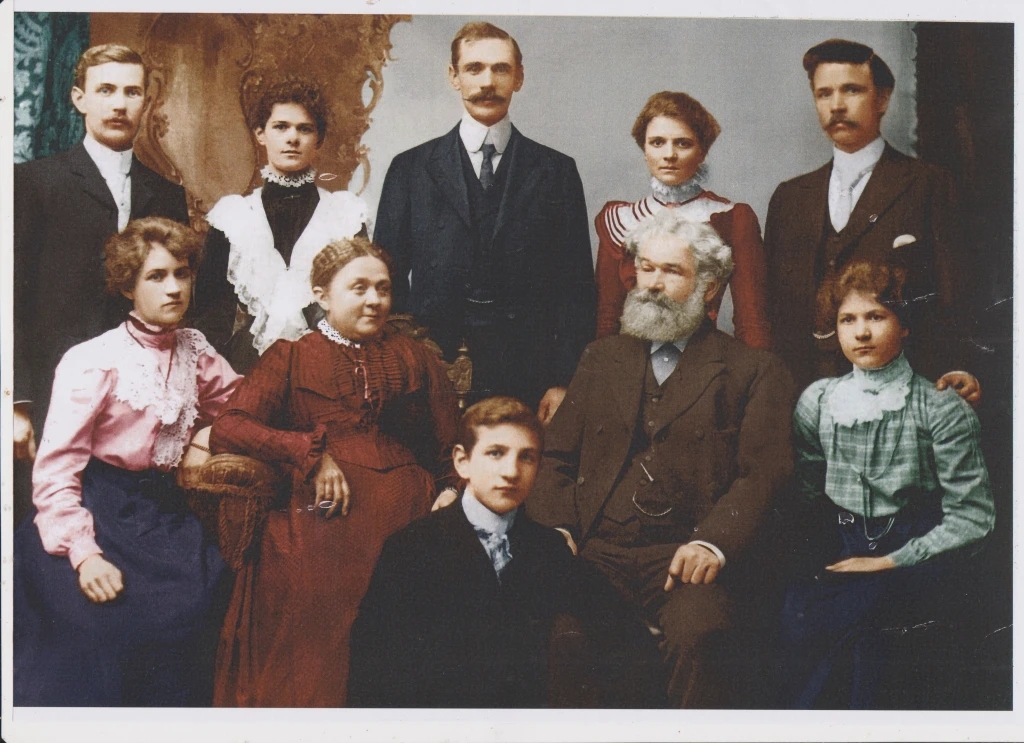
Is this John and Rachel with their children? Or is it John Uzzell the elder with his wife Sarah and their children? Unfortunately, the photograph is undated.
And who is this? John Uzzell the elder or the younger? Is this Rachel? Again, undated.